An illuminated manuscript begins with a page, not a wall
An illuminated manuscript asks you to read image, text and page together. Explore Persian and Indian manuscript paintings without losing their original context.
An illuminated manuscript is a book whose written pages are enriched with decoration, painted images or other visual work. The term often brings medieval European books to mind, but looking at Persian and Indian manuscript painting opens other ways of understanding the relationship between a page, a story and its reader. A painting that now hangs alone may once have belonged to a sequence held in the hands.
The works here come from Fable's catalogue and the museum records linked in their evidence. They are not interchangeable examples of a single style, and not every decorated page was made for the same kind of book. Their titles and holding records help recover some of the distinctions that can disappear when a leaf becomes a standalone image.
Begin by asking what sort of page you are seeing. Is it part of a narrative, a poetic sequence, a musical system or a technical account? The answer changes what it means to look closely.
A leaf can carry a story beyond its borders
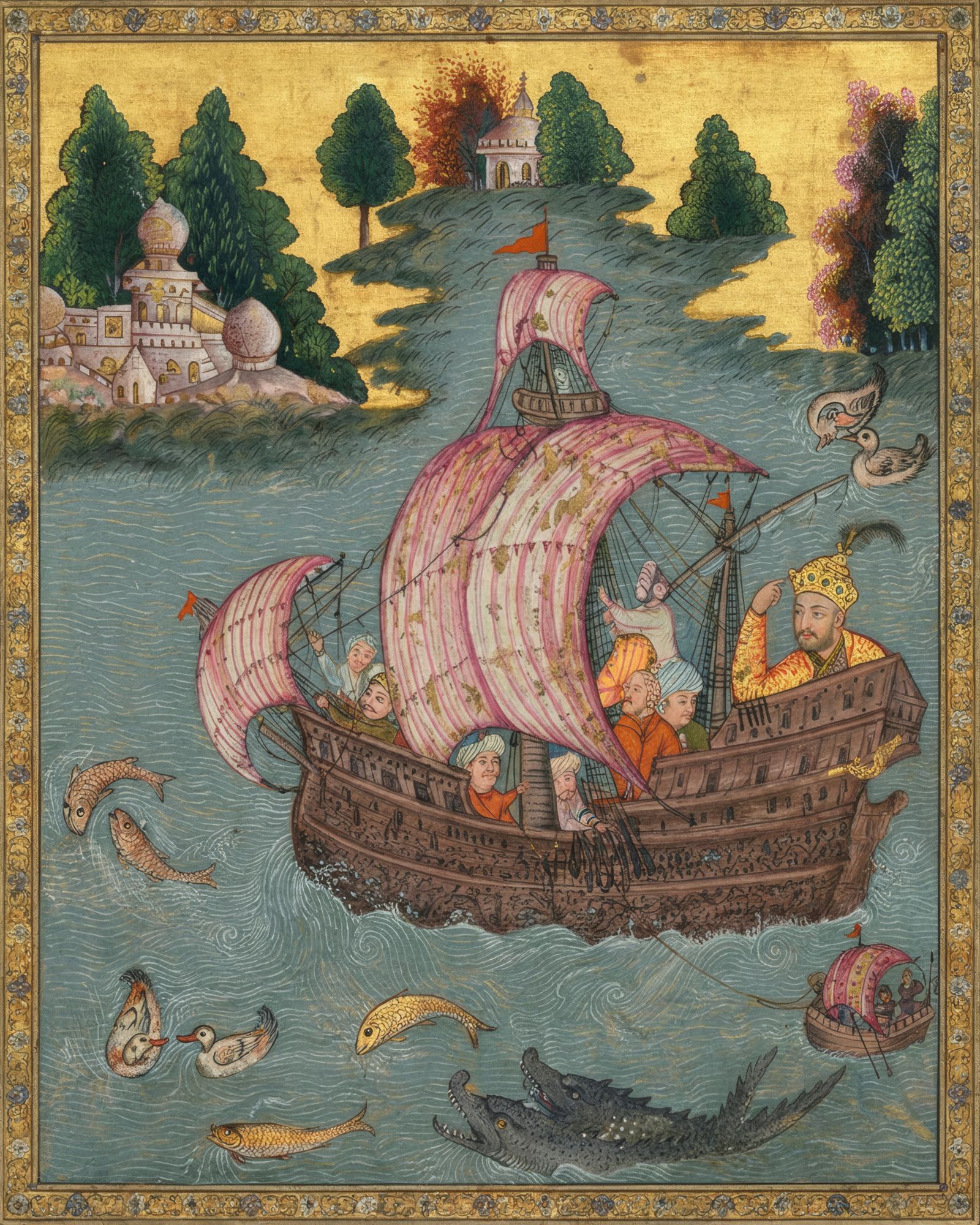
Kai Khusrau Crosses the Sea · Abu'l Qasim Firdausi · ca. 1610 · The Metropolitan Museum of Art
Kai Khusrau Crosses the Sea is identified by the Metropolitan Museum as a folio associated with the Shahnama, the Book of Kings. That information matters before you interpret the picture as a self-contained landscape. The image belongs to a narrative world, even when the surrounding volume is not in front of you.
When looking at manuscript paintings, keep the catalogue title close. It can identify a person, episode or text that is not obvious from the image alone. Avoid filling the gaps with an invented story. You can describe what you see, then use the holding museum's record to distinguish the named subject from your own response to the composition.
A page is also an object with a history
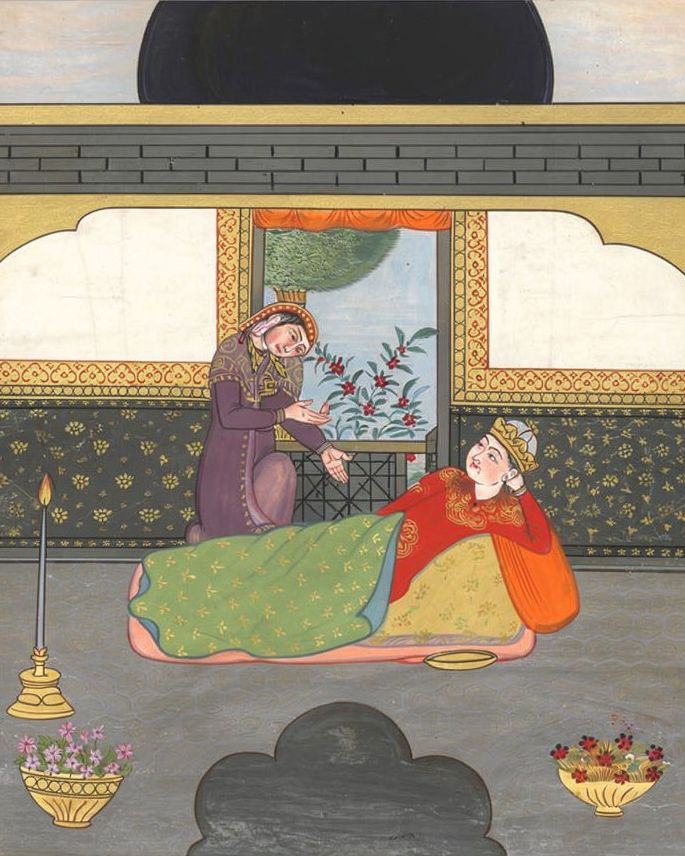
The Black Pavilion · Artist not identified in the catalogue · c. 1400–1410 · Cleveland Museum of Art
The Cleveland Museum's record identifies the subject of The Black Pavilion through Bahram Gur and the princess of India. A short display title can make a work easier to find, but the fuller catalogue identity gives it a more specific narrative setting. Keep both in view when you compare it with other manuscript art.
A detached folio also raises questions the screen cannot answer by itself. Was it once part of a complete manuscript? What information survives about its production and ownership? Not every record supplies every answer. Respecting that uncertainty is more useful than treating an attractive page as a complete account of the culture that made it.
Poetry gives a painting a different kind of time
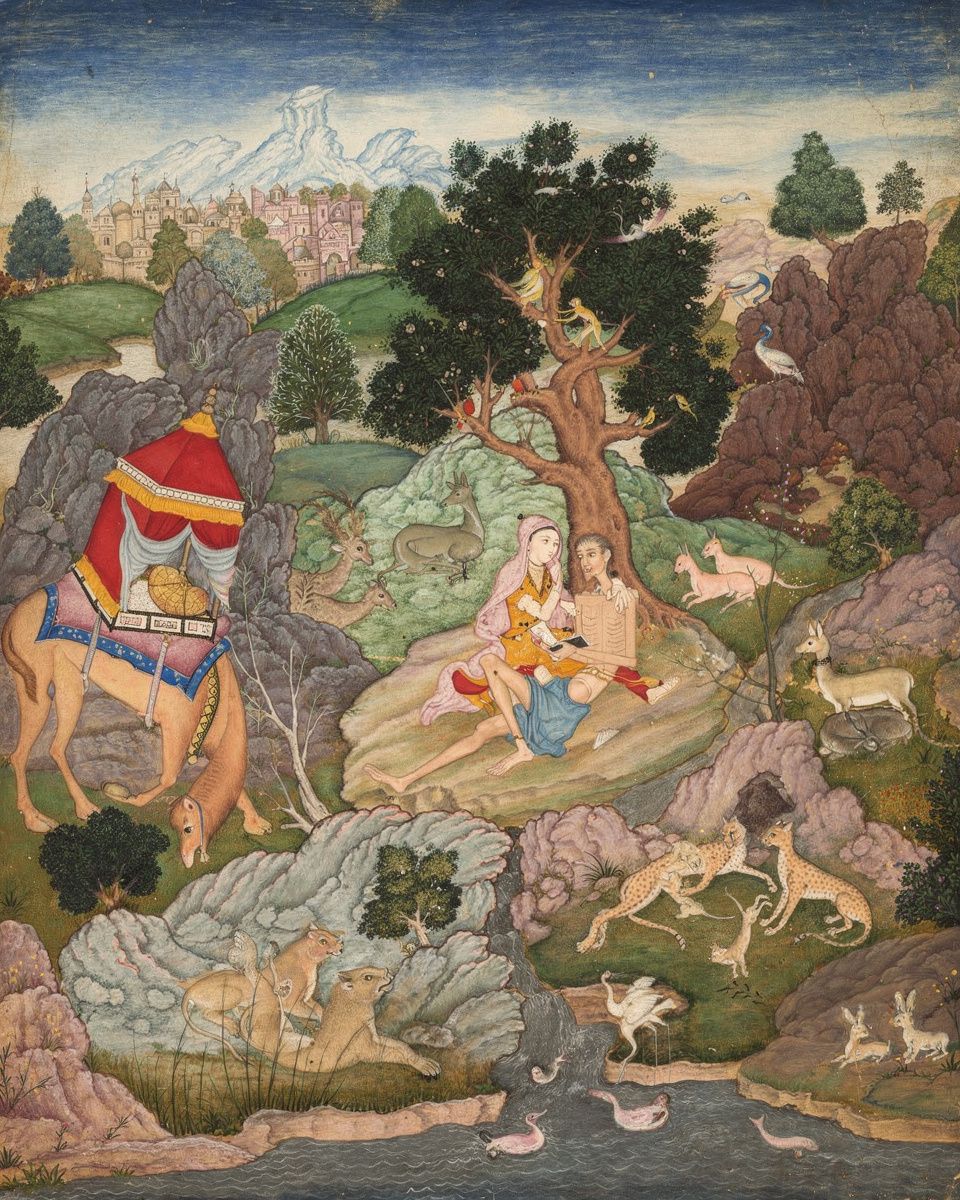
Layla and Majnun in the Wilderness · Sanwalah · c. 1590–1600 · Cleveland Museum of Art
Layla and Majnun in the Wilderness, attributed in the catalogue to Sanwalah, belongs to a literary context. The Cleveland Museum's record is the place to begin with that identification. The names should not be replaced by a generic description such as romantic miniature, even when the work is being considered for a home.
A poem and a picture can direct attention differently. The text may unfold events over time, while the image brings selected figures and relationships into one page. Look first at the whole composition, then return to the catalogue account. That movement between seeing and reading lets the work retain more than a decorative mood.
Not every manuscript image illustrates a continuous narrative
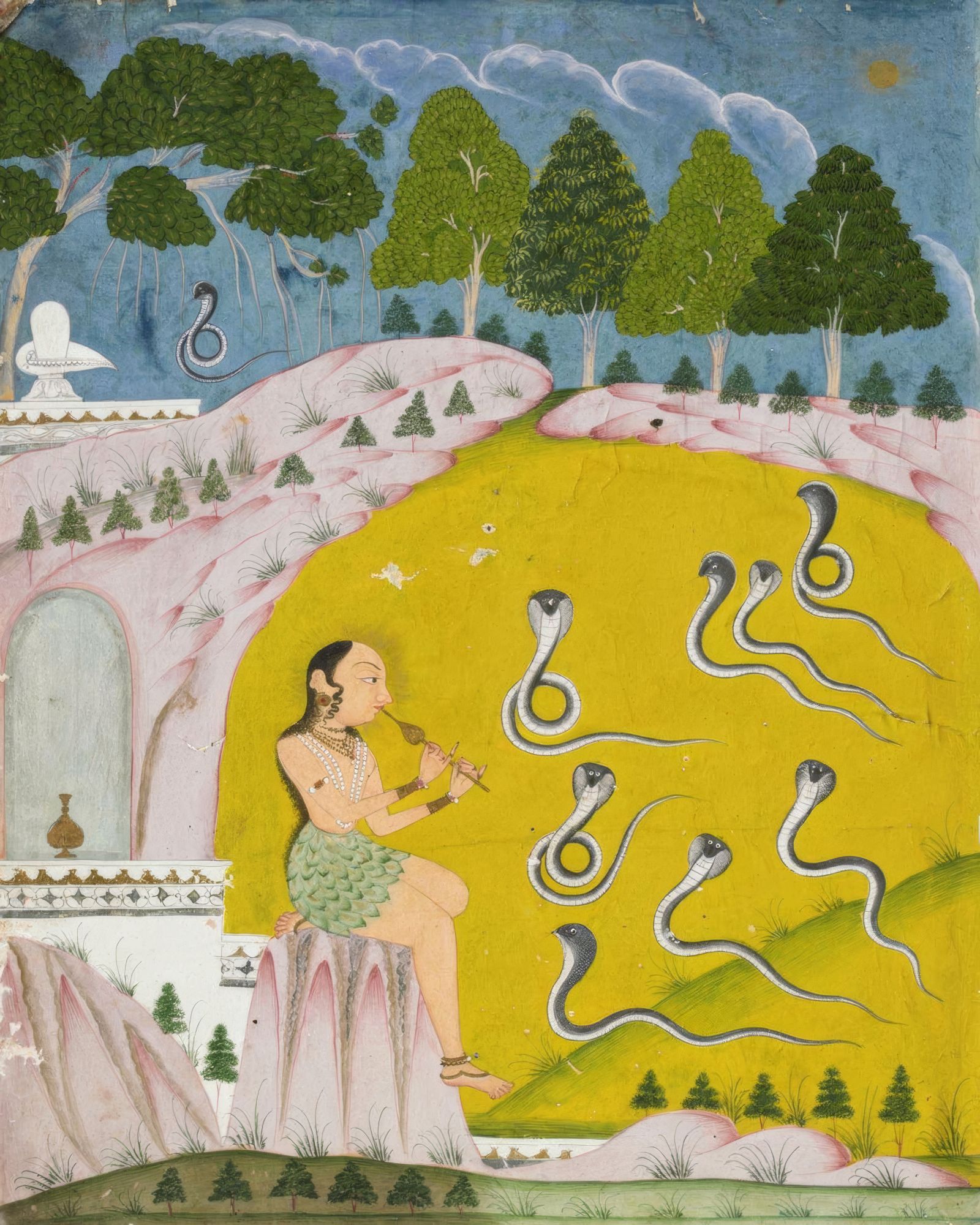
Asavari Ragini · Jai Kisan of Malpura · c. 1756 · Harvard Art Museums
Asavari Ragini is identified as a painting associated with a Ragamala, and its Harvard record notes text on the reverse. Those details distinguish it from a folio illustrating an episode in a long narrative. Do not assume that every page with a figure belongs to the same kind of book or has the same relationship to words.
The reverse is particularly easy to forget on a screen. A public image may show one side while the object record describes more. Read the record before treating the visible painting as the whole object. The side you cannot see may still change how you understand the side that has become familiar.
A named figure can also describe a type
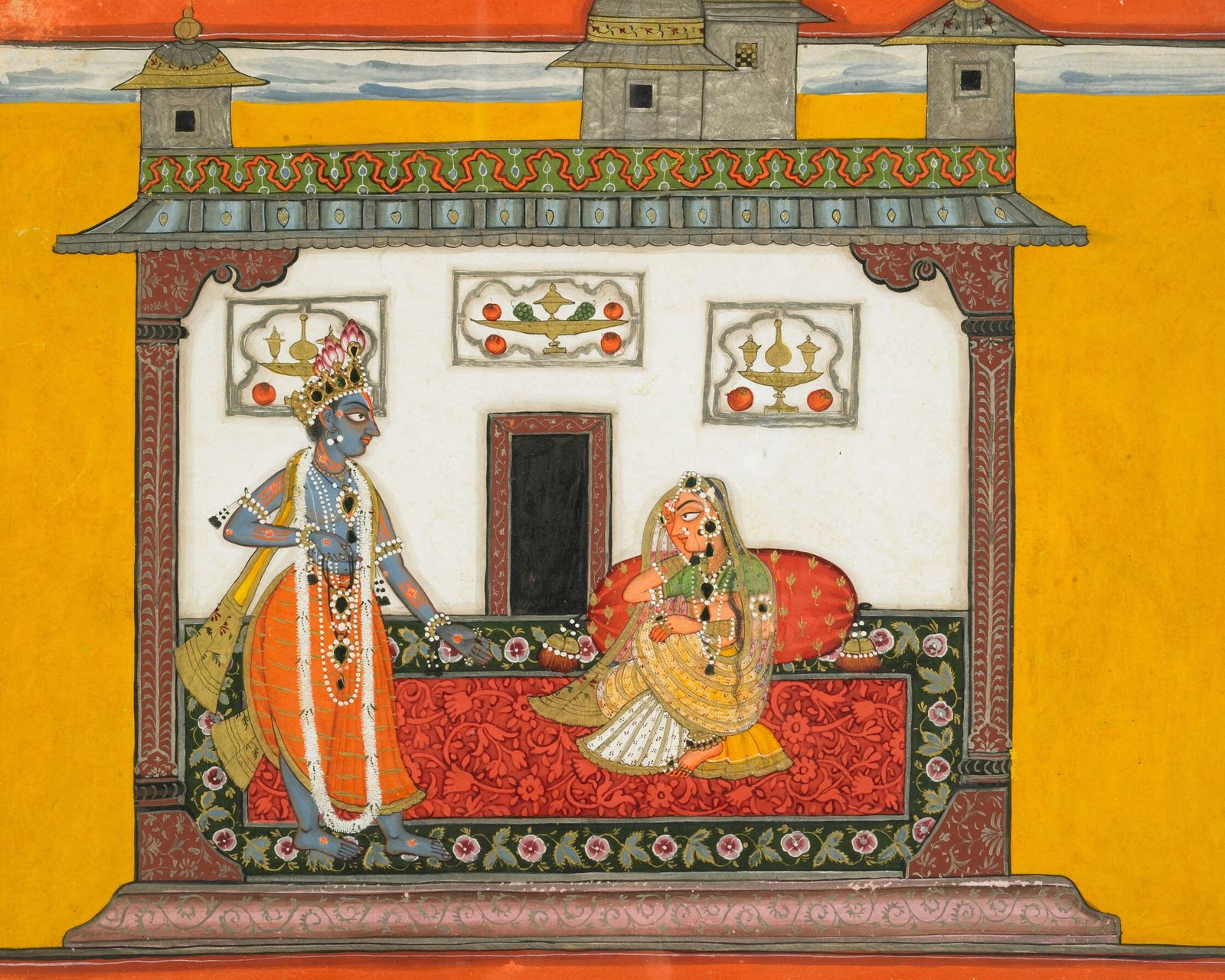
A Nayika and Her Lover · Artist not identified in the catalogue · c. 1660-1670 · Harvard Art Museums
A Nayika and Her Lover is recorded by Harvard as a page from a dispersed Rasamanjari series. The museum's title provides the context for the figures; it is safer to keep that identity than to assign them a different romance because the image feels familiar.
Words such as miniature can be useful search terms, but they can also make very different traditions seem interchangeable. Ask what the specific record tells you about text, series, date and attribution. If an artist is not named, leave that uncertainty intact. The absence of a recorded name does not mean the work was made without skill or individual decisions.
A group can be the subject, rather than a single hero
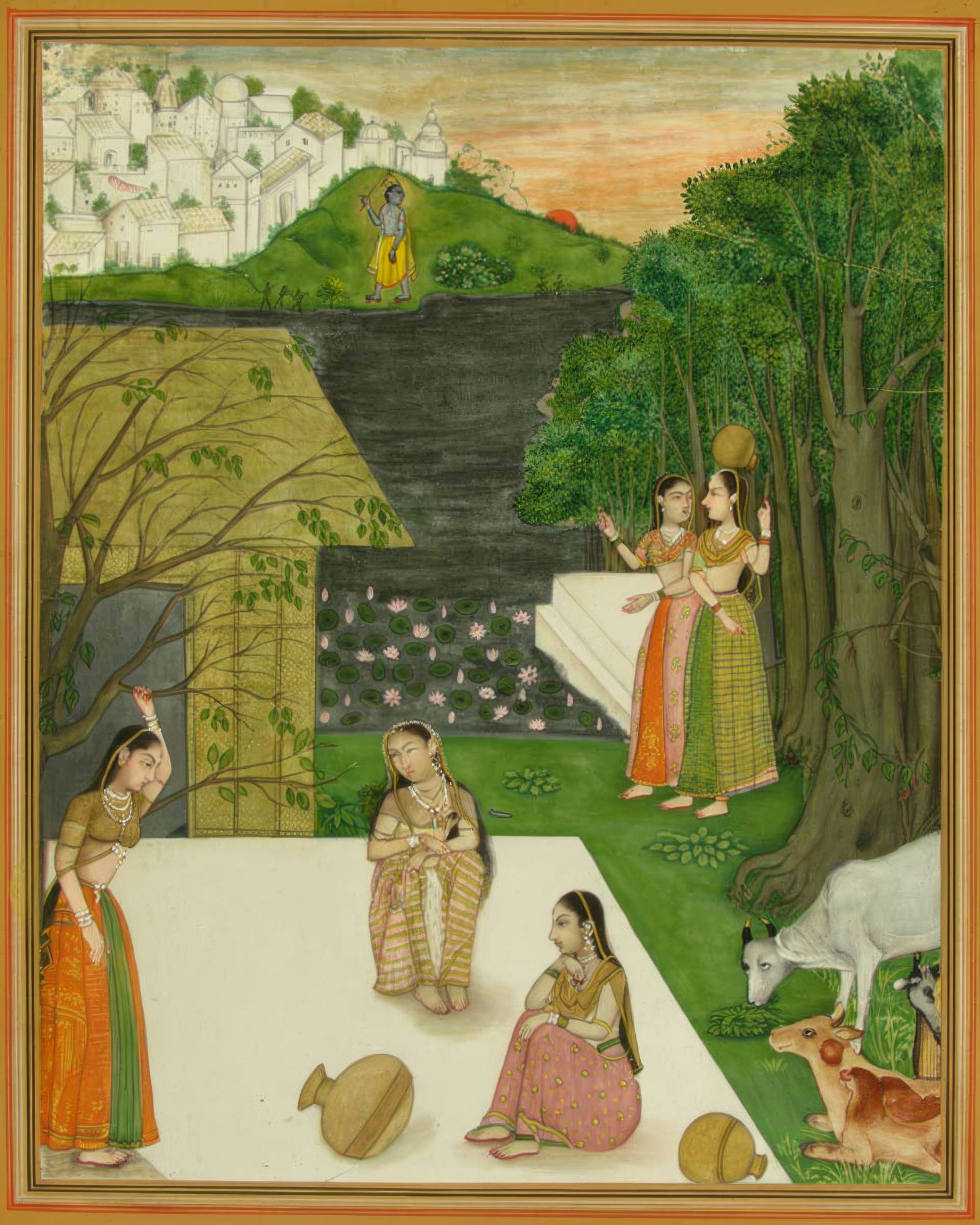
Gopis Thinking of Krishna · Artist not identified in the catalogue · c. 1690 · Harvard Art Museums
Gopis Thinking of Krishna, held in Harvard's collection, offers another specific subject. Begin with the museum's identification rather than treating the figures as anonymous decorative companions. Religious and literary contexts deserve the same care you would give a familiar European biblical or mythological painting.
When comparing pages, notice how each work distributes attention across the composition. That is an observation you can make without claiming to know every figure's thoughts. Keep interpretation separate from identification. A catalogue title can tell you who or what is represented, while your response to the arrangement remains one way of encountering the work rather than its only meaning.
An illustrated page can explain how something works
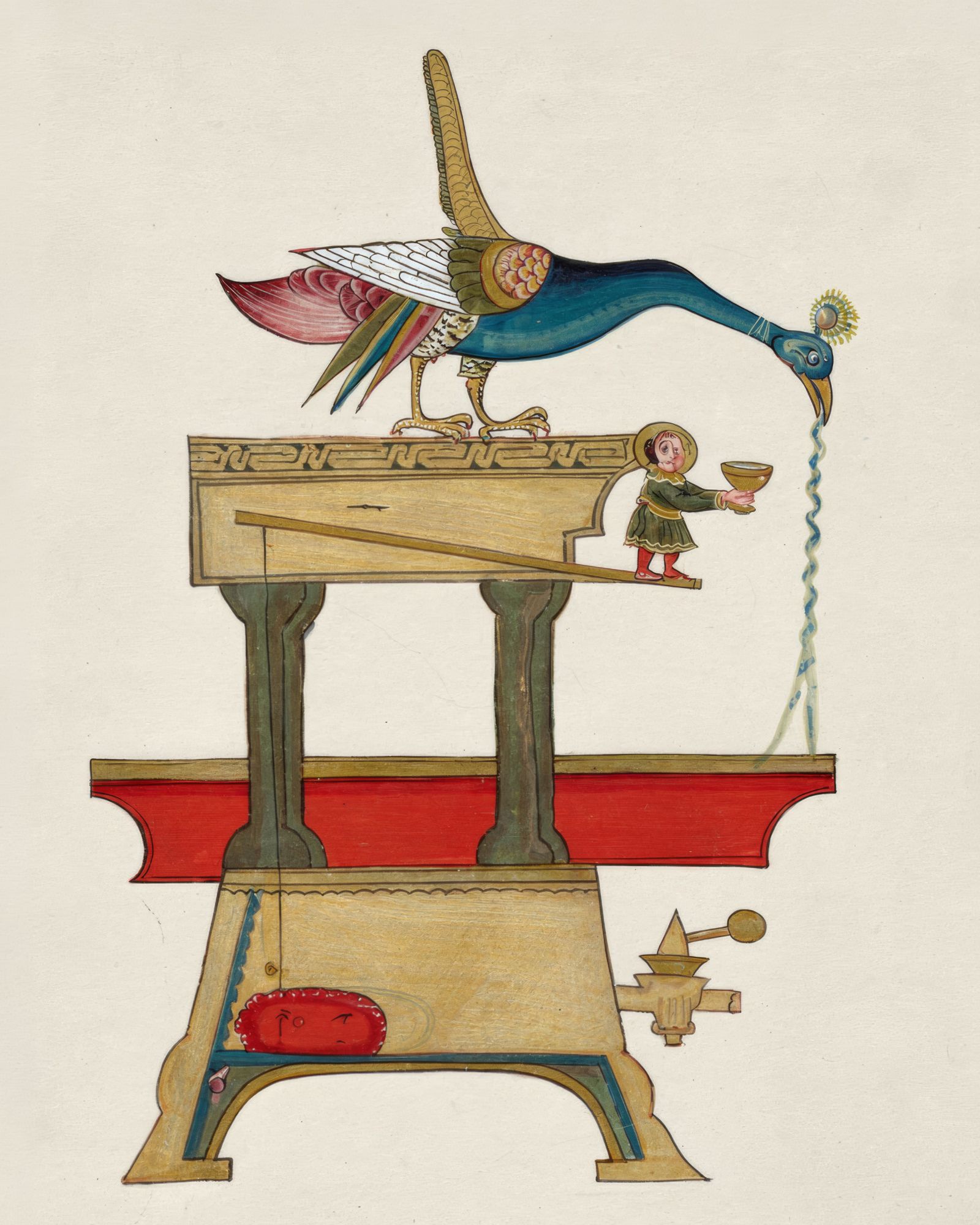
The Golden Peacock · Artist not identified in the catalogue · 1315 · Cleveland Museum of Art
The Golden Peacock is a shorter title for a page identified by the Cleveland Museum as a peacock-shaped hand-washing device, with Arabic text. It is a useful reminder that manuscript illustration extends beyond stories and devotional subjects. A picture can communicate an apparatus or process as well as a scene.
That distinction matters when a page becomes a print. The object should not lose its technical identity merely because the image is visually appealing. Keep the full catalogue information available, and avoid calling every elaborate manuscript picture an illumination of a poem. Looking carefully includes noticing what the museum actually says the page was made to show.
Look at the whole page before looking for details
Kai Khusrau Crosses the Sea · Abu'l Qasim Firdausi · ca. 1610 · The Metropolitan Museum of Art
A manuscript page has proportions, boundaries and a relationship between image and any surviving text. Those are part of the work, not empty areas to remove for a more convenient format. When viewing or displaying the image, keep the complete composition visible rather than cropping to the most dramatic figure.
A small screen can make it tempting to zoom straight into faces or ornament. Start with the page as a whole, then look closer, and finally return to the overall arrangement. This simple sequence helps details remain connected with the object they belong to. It is also a useful habit when comparing a reproduction with the holding museum's source record.
A manuscript print remains a reproduction of a particular leaf
Layla and Majnun in the Wilderness · Sanwalah · c. 1590–1600 · Cleveland Museum of Art
Bringing manuscript art into a room is not the same as recreating the experience of reading the original book. A print makes one page available for repeated looking, with its catalogue identity and source retained. Choose it because you want to spend time with that work, not because it seems to stand for an entire region or period.
Open the individual masterwork to inspect the complete image and current print options. Use the museum record to continue reading about the original object. If you are comparing several pages, let their differences remain visible: narrative, poetry, music and technical explanation are distinct reasons for an image to appear beside text.
An illuminated manuscript rewards more than a quick search for ornate decoration. A title, an attribution and a note about the original volume can change the way you see a page. The most useful approach is to move between the whole image and the holding museum's record, allowing each to clarify the other without pretending that every uncertainty has been solved.
Explore the manuscript masterworks to continue with a particular leaf and its current reproduction options. Keep the full composition visible, preserve the artist or attribution exactly as recorded and retain the source collection in the caption. A reproduction is an opportunity to look closely; it should also leave a clear path back to the original object.
The painted page can belong on a wall while still reminding you that it once belonged to a book. That earlier context is part of what makes the image worth returning to.
Explore manuscript masterworks
- Is every manuscript painting an illuminated manuscript?
- The terms overlap but are not identical. A manuscript is a handwritten book or document; its decoration and images can take different forms. Use the holding museum’s description for the particular object.
- Are all the pages here Persian miniatures?
- No. The selection includes different Persian and Indian manuscript contexts and a technical Arabic-text page. Their catalogue titles and museum records preserve those distinctions.
- Why keep the whole page visible in a print?
- The proportions and relationship between image, text and boundaries belong to the composition. Cropping can remove context that helps the page make sense.
- Where should I check dates and attributions?
- Begin with the holding museum’s object record linked in the article evidence. If an artist is not named or an attribution is qualified, preserve that uncertainty.