Atelier Editions
A contemporary Surrealium colour interpretation, not a claim to recover the artist's intended colours.
artist: Giovanni Battista Piranesi (Italian, 1720–1778)
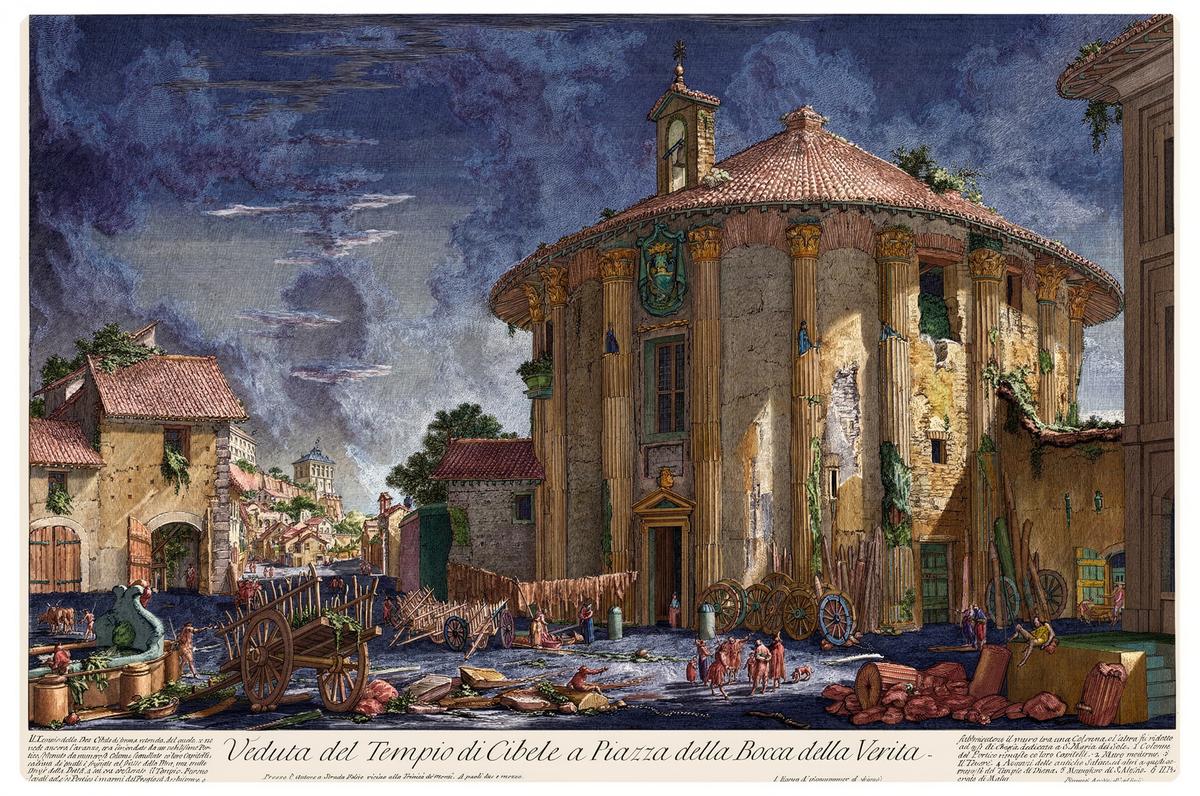
Museum original and attributionThis Atelier Edition is a contemporary, AI-assisted color interpretation of The Temple of Cybele, a celebrated 1758 etching by the master printmaker Giovanni Battista Piranesi. Where the original captured Rome’s monumental ruins in dramatic black and white, this version introduces a new dimension of color developed by Surrealium: weathered limestone, patinated bronze, muted verdigris, and deep blue shadows that articulate the architectural forms in a new light.
Piranesi’s original work is a masterclass in composition and shadow. This color interpretation honors that foundation while offering a distinct visual experience. It imagines the atmosphere of the ancient site, translating the dramatic contrasts of the etching into a rich, painterly palette suitable for a modern home, bridging Rococo grandeur with contemporary interior aesthetics.
These exclusive Surrealium color editions are available to purchase as archival fine-art prints or gallery-wrapped canvases, with no subscription required. For Fable members, the experience goes a step further: an active subscription unlocks the ability to customize the color palette of this work, creating a piece that is truly unique.
As statement wall art, its grand scale and classical subject bring history and gravitas to a living room, study, or entryway. Each piece is made to order on heavyweight, museum-grade matte paper using archival pigment inks for lasting color. This edition is digitally interpreted by the Surrealium atelier at Kastellet, a 17th-century sea fortress in the Stockholm archipelago.