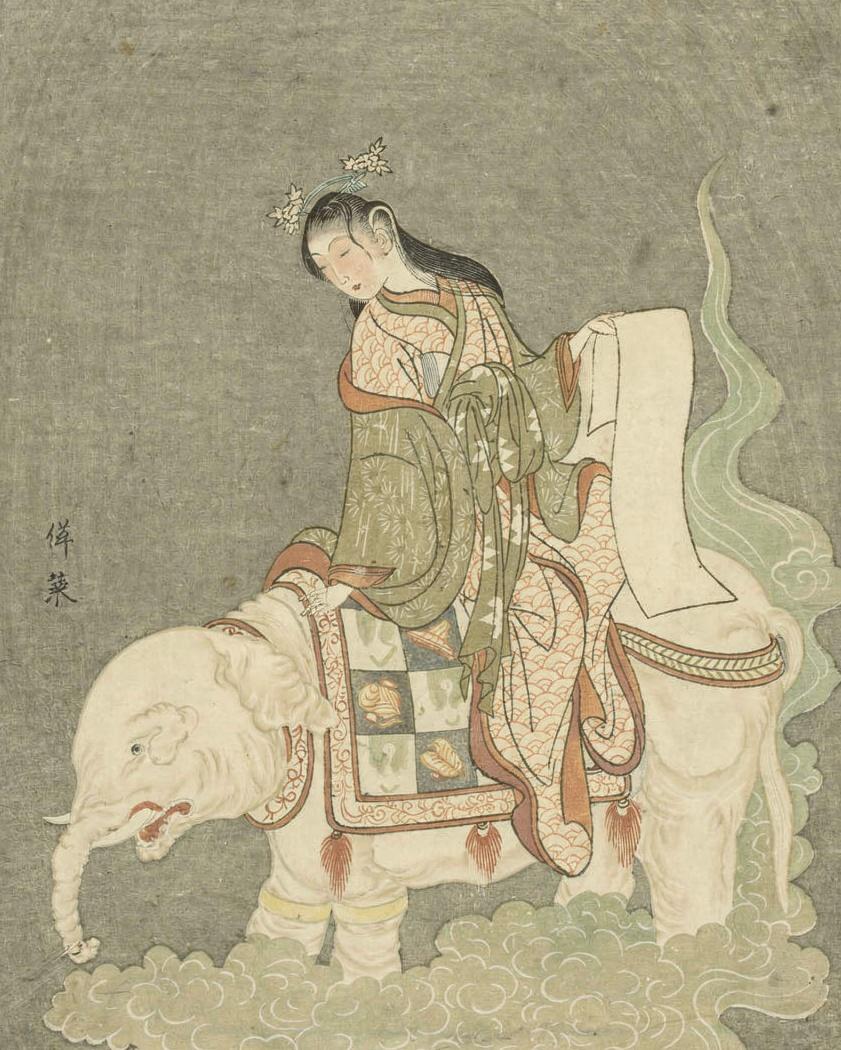
In a celebrated work of Ukiyo-e wit, a beautifully dressed courtesan rides upon a white elephant. On closer look, the elephant is a composite of several human figures, playfully creating its form. This visual puzzle, known as a mitate-e, recasts a traditional Buddhist image of the bodhisattva Samantabhadra into a scene from the everyday floating world of Edo-period Japan.
The composition, attributed to the master Suzuki Harunobu, is balanced by delicate lines and a serene, considered palette. The soft tones and intricate patterns of the courtesan's kimono contrast with the dynamic, clever shape of the elephant, lending an air of gentle sophistication and quiet contemplation to a space.
As wall art, this piece brings a touch of classic Japanese aesthetics to both modern and traditional interiors. Its intricate detail invites closer viewing, making it an excellent focal point for a living room, study, or bedroom. It pairs well with other vintage prints as part of a curated gallery wall.
Originally created in 1765 by Suzuki Harunobu, a pioneer of full-color woodblock printing, this work is a landmark of the Ukiyo-e movement. This archival reproduction is printed on matte, museum-grade paper with pigment inks to ensure fidelity to the original's soft beauty. Each print is restored and certified by the Surrealium atelier at Kastellet, a 17th-century sea fortress in the Stockholm archipelago, and made to order.