Aquarius gifts: ten open landscapes and gardens
Aquarius gifts through sky, water and cultivated places, with the sign treated as a theme and the recipient’s interests leading the choice.
Aquarius gifts often begin with the water-bearer emblem, but that does not make Aquarius a water sign in the usual astrological tradition: it is classed as an air sign. Neither category establishes a person’s character. Here sky, weather, gardens and shared outdoor spaces provide a loose visual theme, with the actual gift chosen through what the recipient likes to look at.
The astrology gifts story explains the distinction between a symbolic theme and a claim about personality. The adjacent Aries gift story takes another route through historic pictures. These ten works are not historical illustrations of Aquarius. They are options for someone who might enjoy an open view, a cultivated patch of ground or the changing colour of the sky, considered through the practical approach of our personalized gifts guide.
1. Light between clouds and mountains
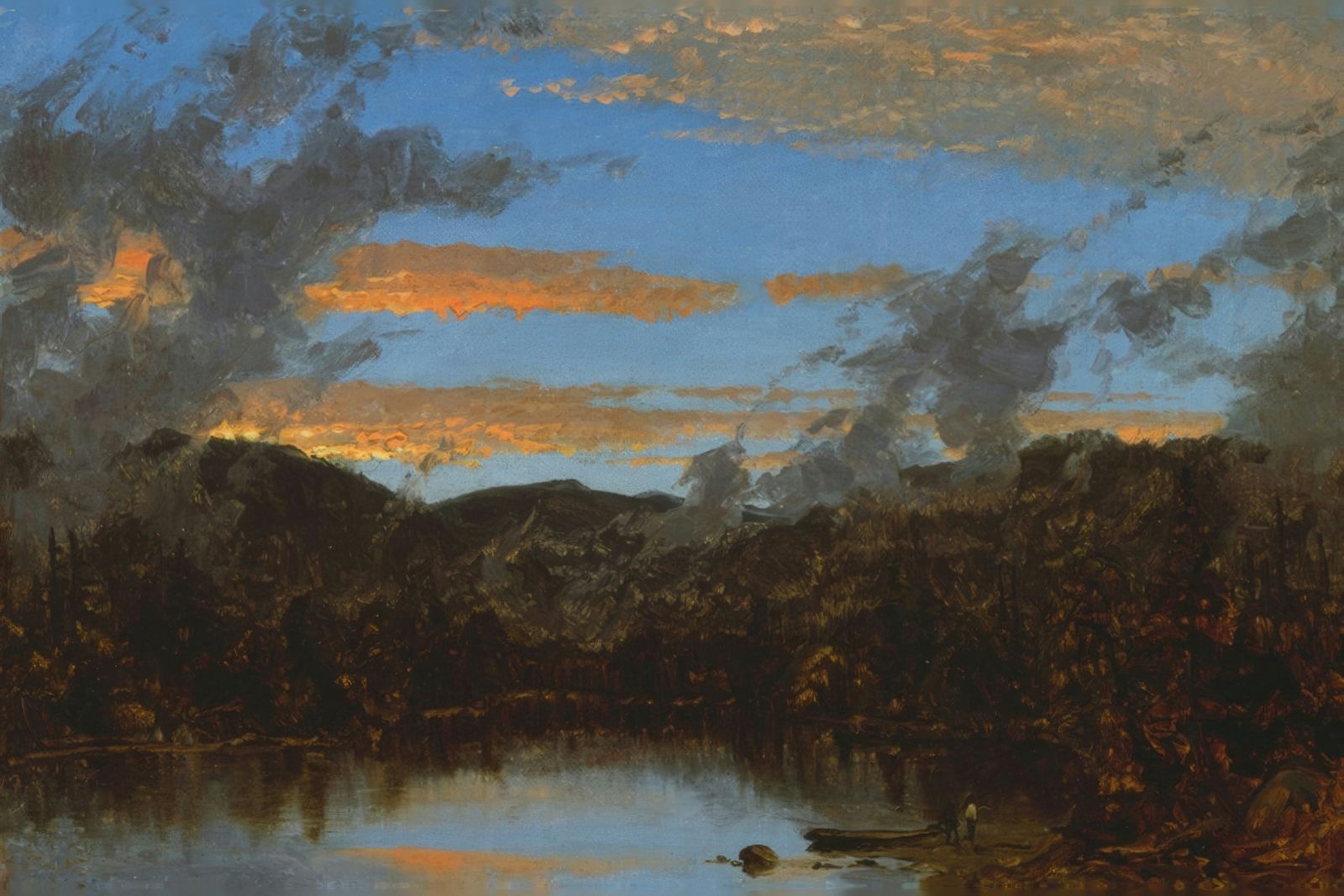
Mist Rising at Sunset in the Catskills — Sanford Robinson Gifford, c. 1861. Art Institute of Chicago. Prepared for print by Surrealium at Vaxholm Fortress, Sweden.
Gifford’s Catskills view lets an orange opening in the clouds draw the eye across dark water and wooded slopes. Its subject is not a star chart but the changing visibility of a landscape. Choose it for a recipient who enjoys watching weather or remembering mountain journeys, and let the airy, expansive feeling be a visual observation rather than a supposed consequence of their astrological element.
2. A small study of a large sky
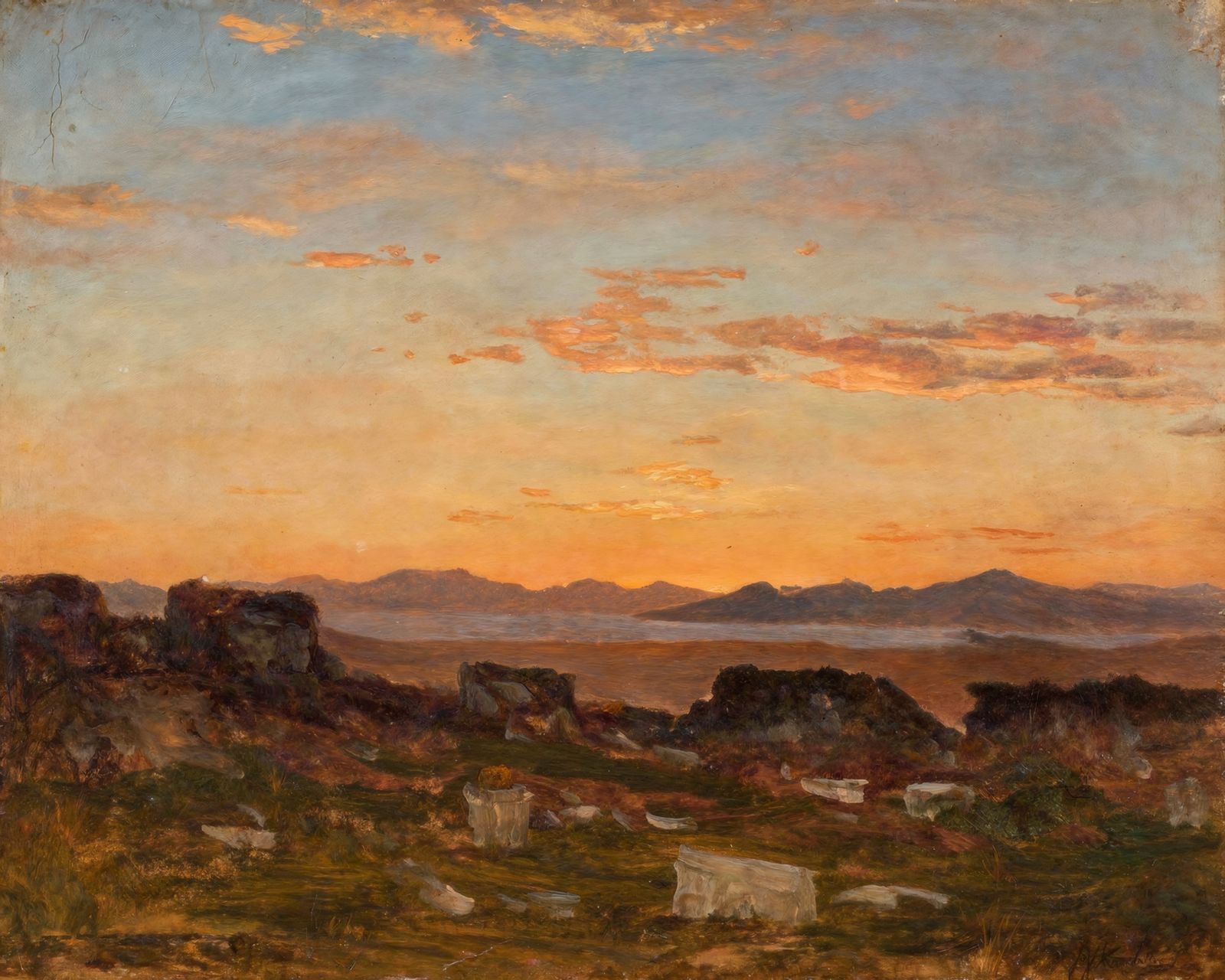
Orange Sky with Scattered Clouds, Greece — Lockwood de Forest, February 22, 1878. Art Institute of Chicago. Restored by Surrealium at Vaxholm Fortress, Sweden.
Lockwood de Forest’s Greek landscape gives thin orange clouds a prominent place above low hills and a rocky foreground. The scene has the directness of a particular observation rather than a generalized celestial symbol. It can suit someone who enjoys travel studies or the small changes of evening light, especially if the accompanying note refers to a real sunset you both remember.
3. A house within flowering growth
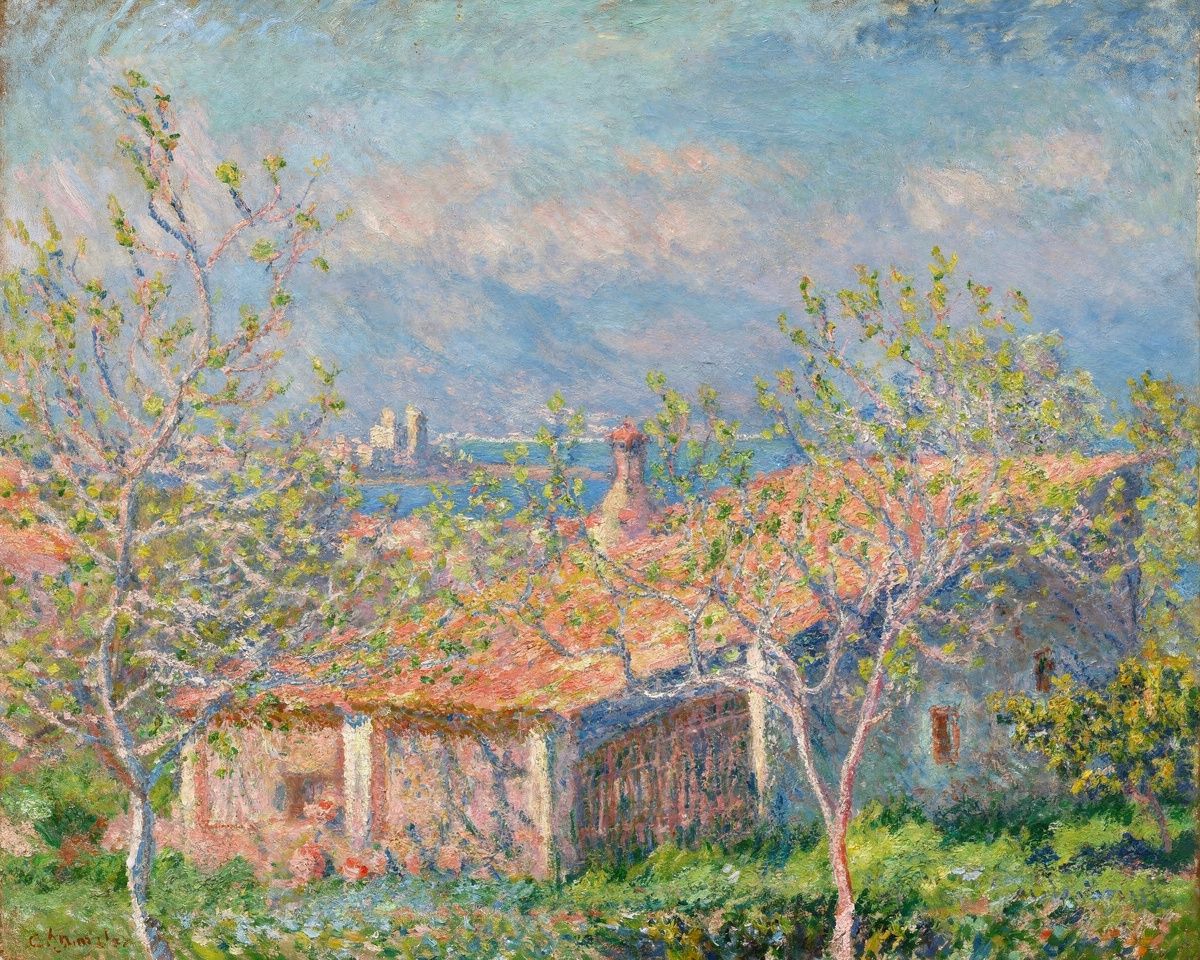
Gardener's House at Antibes — Claude Monet, 1888. Cleveland Museum of Art. Restored by Surrealium at Vaxholm Fortress, Sweden.
Monet’s Gardener’s House at Antibes nearly dissolves the building into surrounding colour. Short strokes make the trees, walls and sky participate in one lively surface, while the house still gives the eye somewhere to settle. This is a candidate for a recipient who likes gardens and visible brushwork, with a warm Mediterranean setting that may be more relevant to their taste than the birthday season.
4. A garden with several kinds of green
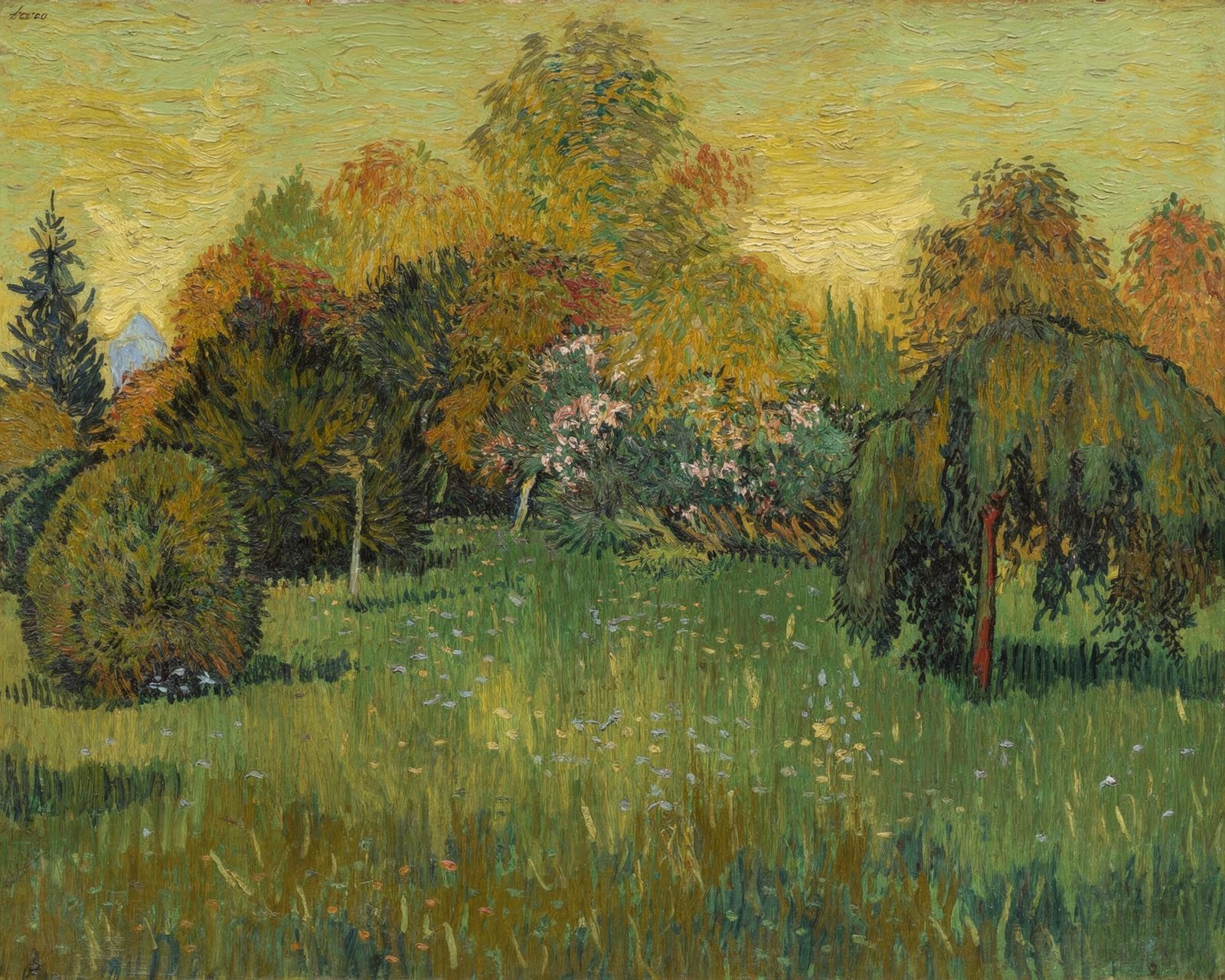
The Poet's Garden — Vincent van Gogh, 1888. Art Institute of Chicago. Restored by Surrealium at Vaxholm Fortress, Sweden.
Van Gogh’s Poet’s Garden brings rounded shrubs, taller trees and a broad lawn beneath a yellow sky. The different green areas remain distinct even while the whole scene feels closely woven. Someone who enjoys parks as everyday places may appreciate that structure; the gift need not come with a claim that the picture will inspire originality or reveal an Aquarian way of seeing.
5. Fields arranged around a distant settlement
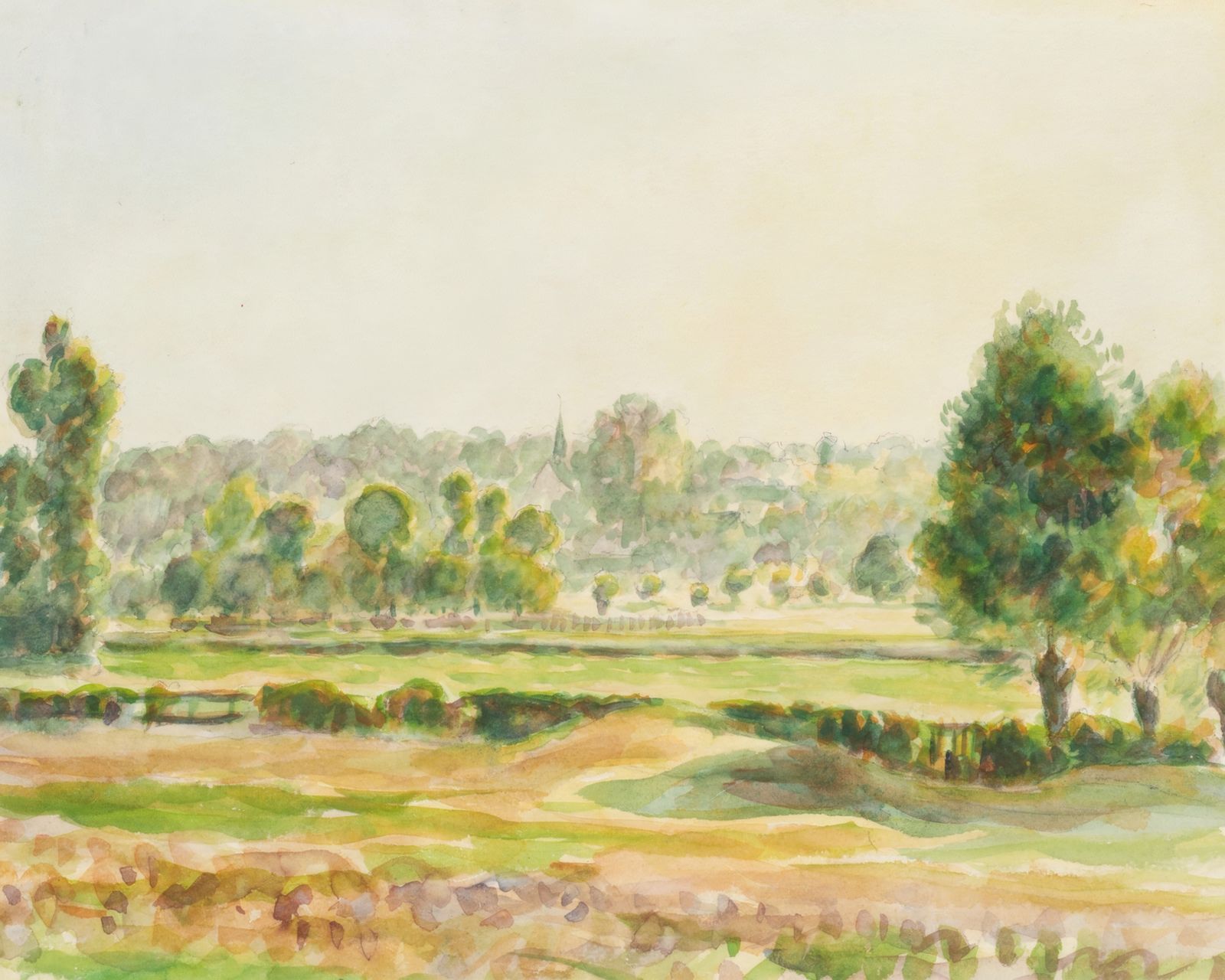
Landscape, Eragny — Camille Pissarro, 1890. Harvard Art Museums. Restored by Surrealium at Vaxholm Fortress, Sweden.
Pissarro’s Landscape, Eragny opens a view through soft trees and cultivated ground. It is quieter than a dramatic mountain scene, with the interest carried by paths, fields and small shifts of colour. Choose it for someone whose pleasure in landscape concerns working land and familiar routes, and keep the whole horizon visible so the modest divisions of the scene can do their work.
6. Rocks at the edge of the wood
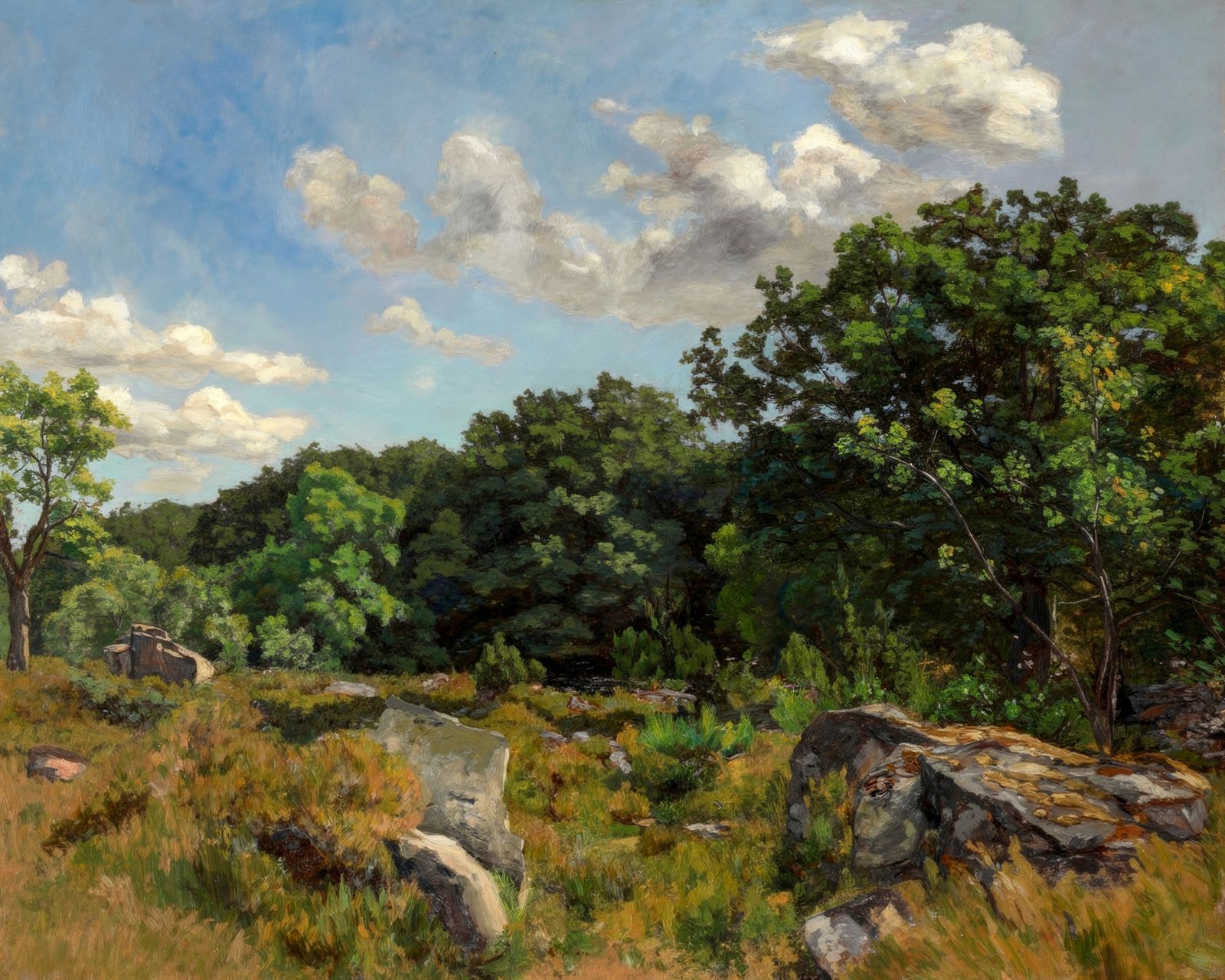
Landscape at Chailly — Frédéric Bazille, 1865. Art Institute of Chicago. Restored by Surrealium at Vaxholm Fortress, Sweden.
Bazille’s Landscape at Chailly gives the foreground a rough, sunlit texture before the eye reaches the trees. The contrast between exposed stone and dense foliage makes the picture feel like a place one could explore on foot. It may suit a walker or a person who likes woodland edges, offering a concrete connection to a pastime instead of a vague promise of adventurous energy.
7. A garden built for shared looking
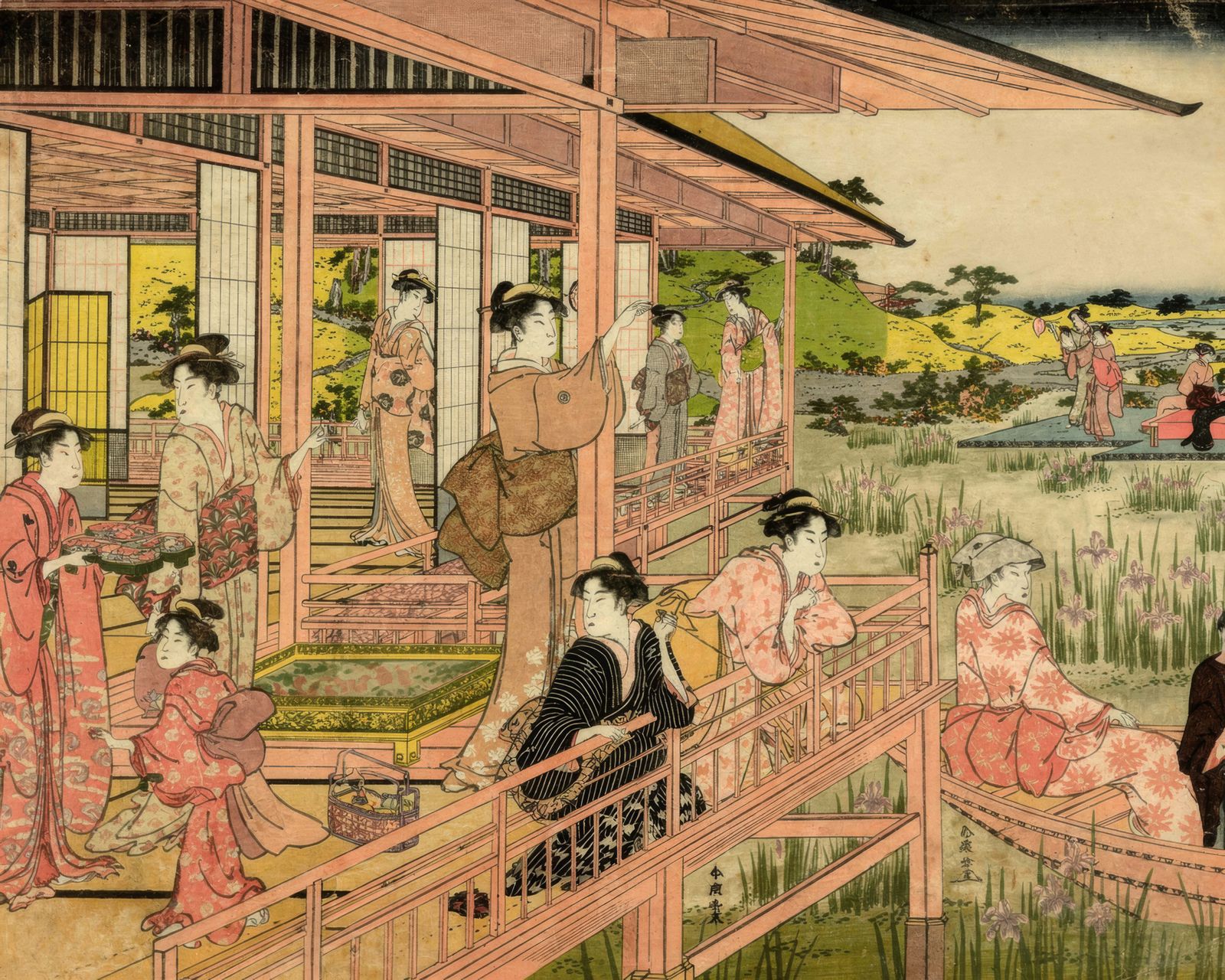
Iris Garden — Katsukawa Shuncho, c. 1781/89. Art Institute of Chicago. Restored by Surrealium at Vaxholm Fortress, Sweden.
Shuncho’s Iris Garden includes people gathered around terraces and a pavilion, making the cultivated setting a social space. The architecture, clothing and plants create several bands of activity across the print. Give it to someone interested in Japanese prints or garden design, while preserving the difference between a historical scene and a modern garden photograph; its patterns are part of the pleasure.
8. Snow as a change in how a garden reads
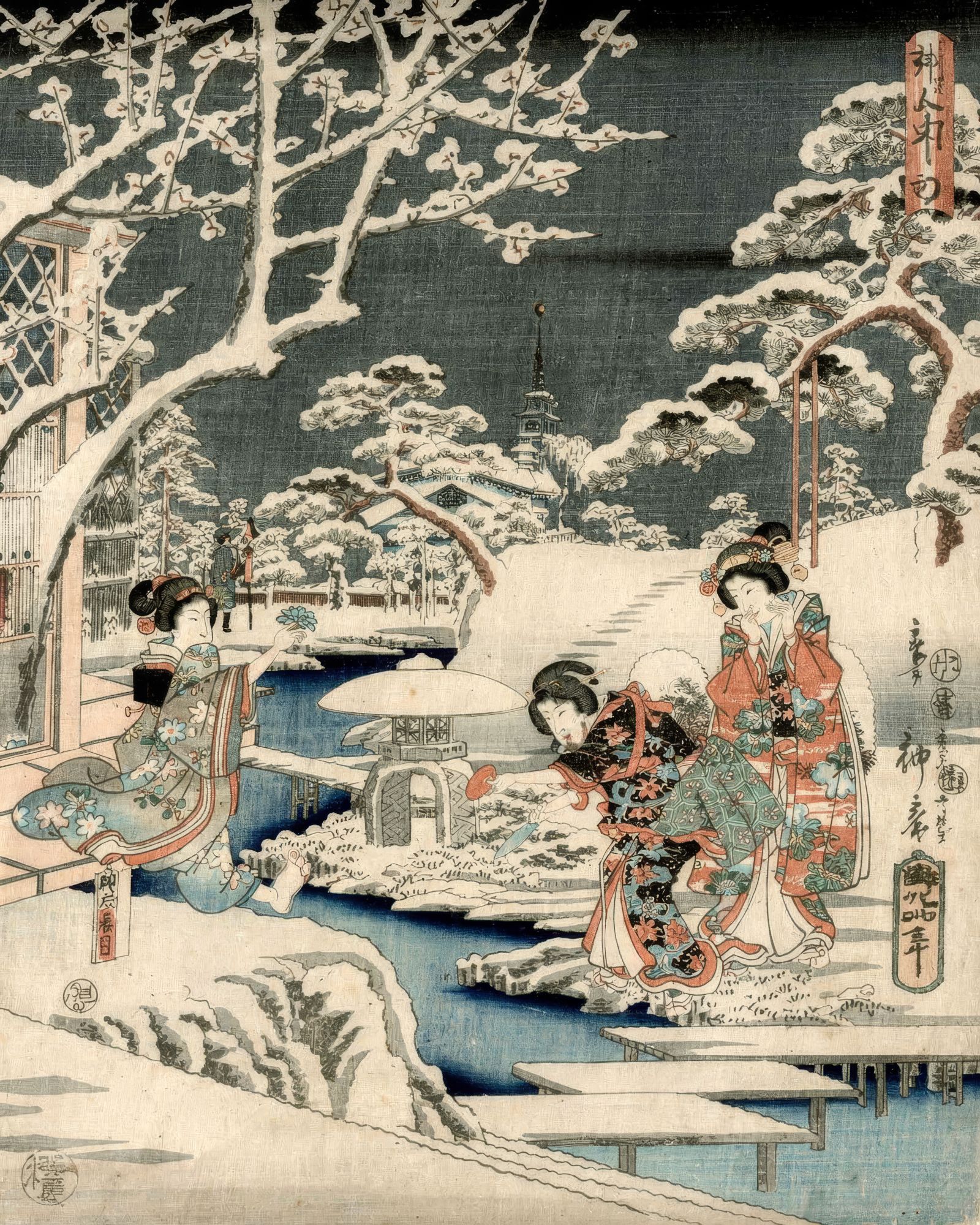
The Snowy Garden — Utagawa Hiroshige (Japanese, 1797–1858), Utagawa Kunisada, 1854. Cleveland Museum of Art. Restored by Surrealium at Vaxholm Fortress, Sweden.
Hiroshige and Kunisada’s Snowy Garden makes bare branches, roofs and paths newly visible through white covering. The people at the edge of the scene supply warmth and scale without taking over the whole view. For a recipient who enjoys winter gardens, the print can connect to a specific seasonal pleasure, rather than relying on a general idea that Aquarius birthdays require cold colours.
9. Water held inside a fruit
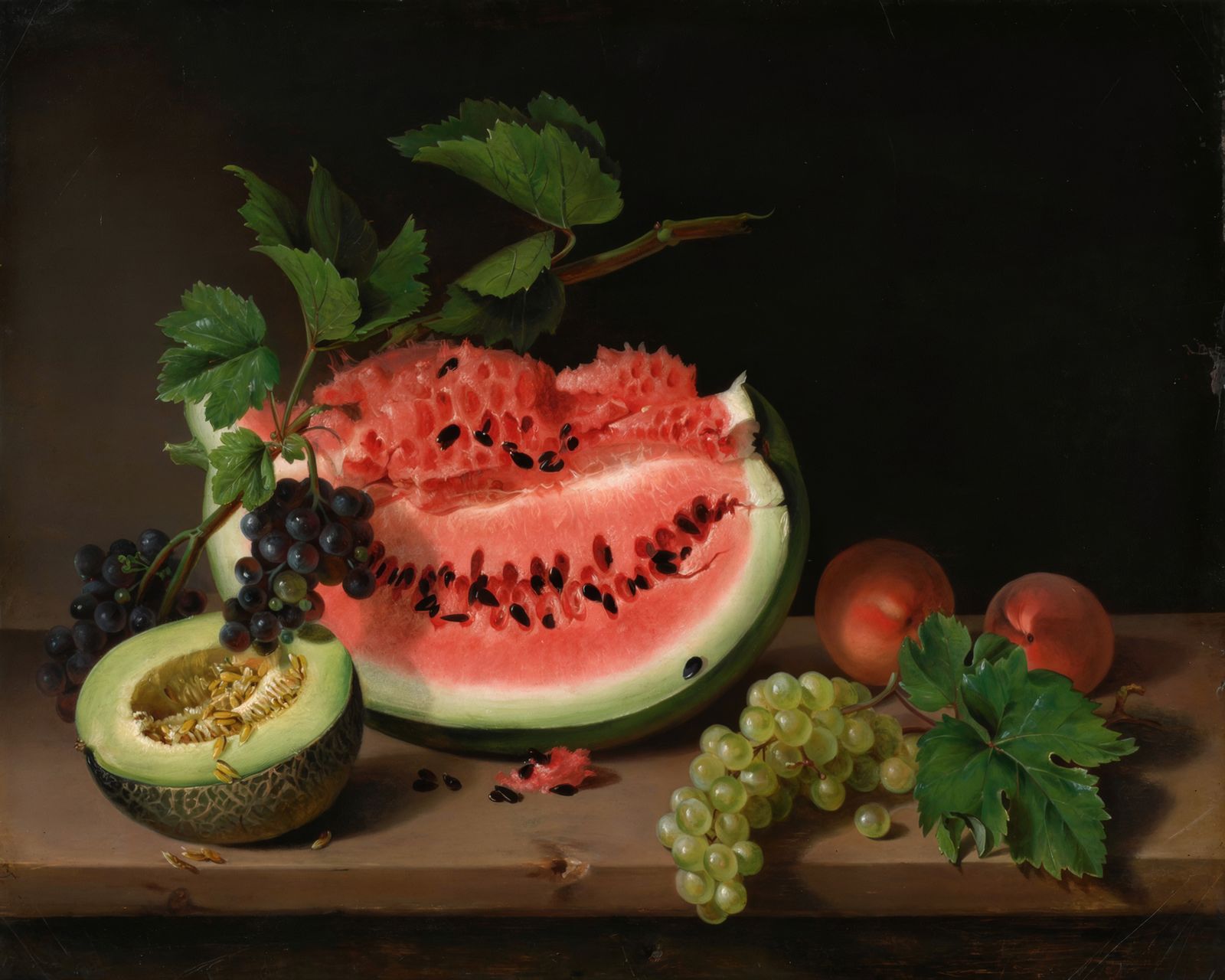
Still Life with Watermelon — Sarah Miriam Peale, 1822. Harvard Art Museums. Restored by Surrealium at Vaxholm Fortress, Sweden.
Sarah Miriam Peale’s cut watermelon offers a different route into the theme: a vivid interior exposed against dark surroundings. Seeds, rind and neighbouring fruit make the picture about attentive looking at an ordinary object. It can work for someone who prefers still life to landscape, especially when a remembered summer meal gives the gift a personal association that the sign alone could never supply.
10. A crossing at an ordinary pace
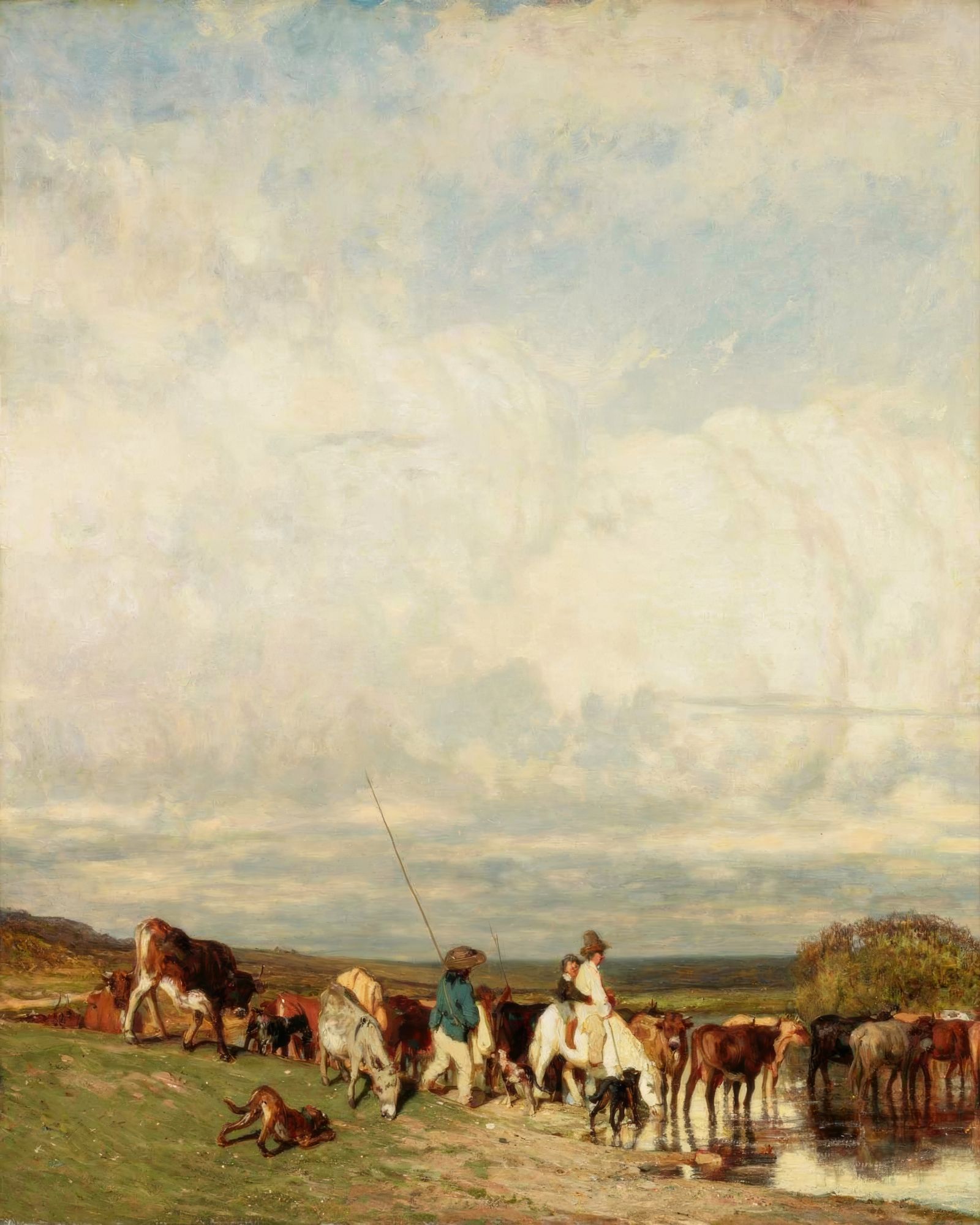
Cows Crossing a Ford — Jules Dupré, 1836. The Metropolitan Museum of Art, New York. Restored by Surrealium at Vaxholm Fortress, Sweden.
Dupré’s cattle move through a ford beneath a very large sky. The low placement of animals and people makes the weather and open space as important as the crossing itself. Choose it for a recipient drawn to pastoral scenes and slow movement, while remembering that the picture’s calm is an effect of composition rather than a promise about the mood it will produce in every room.
Fable offers a personalised astrology reading and a tarot desk for symbolic reflection. They should be offered by preference, without predictive or personality claims.
Ask which kind of openness the recipient enjoys: a broad horizon, a patch of garden, a winter view or the close examination of a single object. The answer may lead away from the most obvious water-bearer image, and that is fine. Keep the gift note connected to a real interest or memory. The Masterworks collection is the next place to compare the complete pictures and their proportions.
- Is Aquarius a water sign?
- In the usual Western astrological grouping, Aquarius is an air sign despite its water-bearer emblem. These are traditional classifications, not evidence of a person’s temperament.
- Why include gardens as Aquarius gifts?
- They provide an editorial connection through open air, shared space and cultivation. None of the pictures is presented as an original Aquarius illustration, and the recipient’s interests remain the reason to choose one.
- Where can an interested recipient explore the symbols?
- A reading can offer a setting for symbolic reflection if that interests them. Their own preferences matter more than any assumption based on a zodiac sign.