Gifts for art lovers: 15 museum masterpieces to give
Friedrich’s wanderer, Van Gogh’s irises, Seurat’s Grande Jatte, Hilma af Klint’s Ten Largest: fifteen masterpieces from the world’s great museums, each as a print that would make an art lover’s day.
Buying art for an art lover is intimidating: they know more than you do and they have opinions. The safe and delightful answer is a print of a masterpiece they already love, or one they will love the moment they see it.
The fifteen works below come from the Met, the Art Institute of Chicago, Tate, the Uffizi and other great collections, and each has a story worth telling when you hand it over. Every one can be ordered as a print, and one, Van Gogh’s Irises, is also a Fable style that paints flowers from your own photo.
1. Wanderer above the Sea of Fog
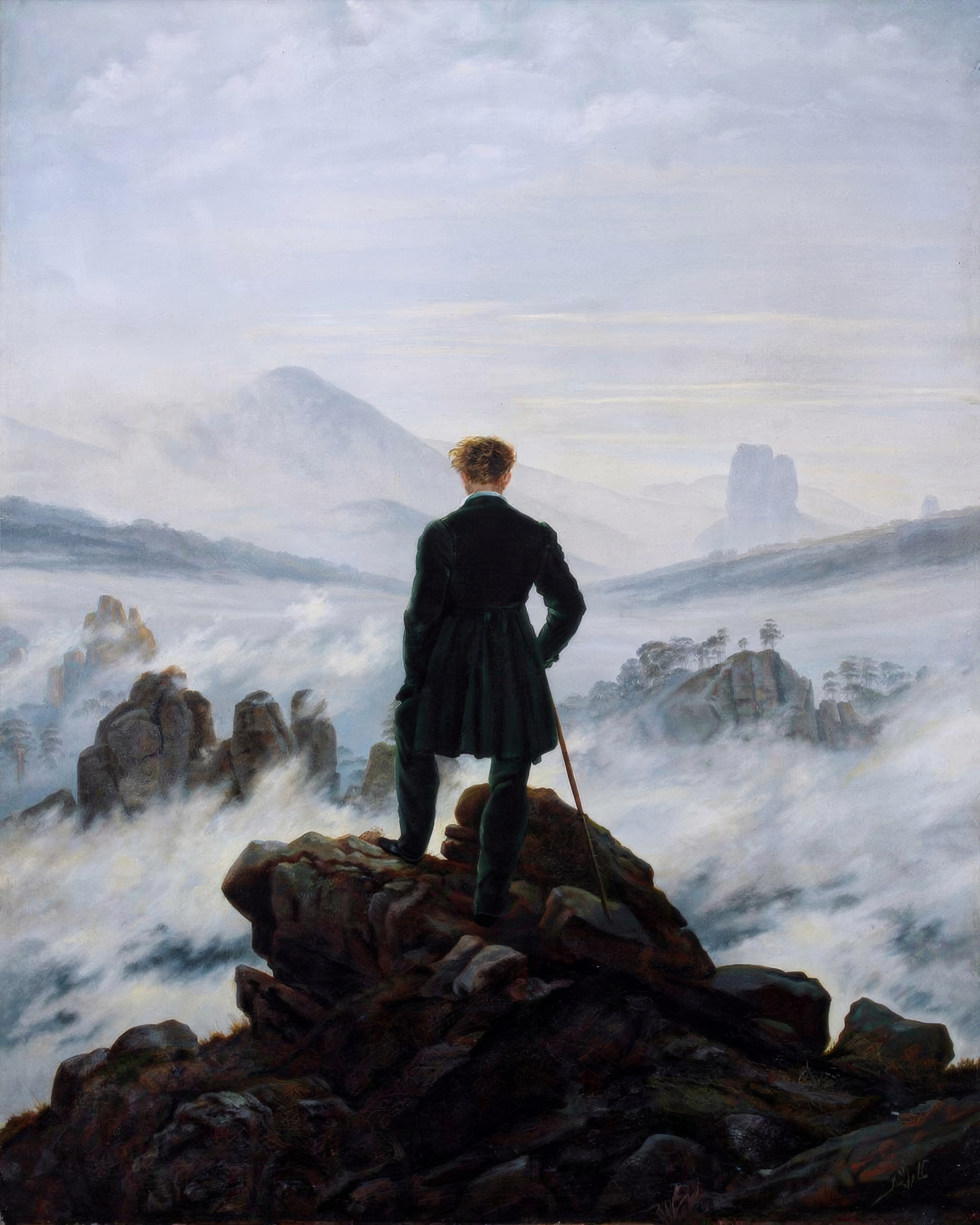
Caspar David Friedrich, Wanderer above the Sea of Fog, c. 1817. Oil on canvas. Hamburger Kunsthalle.
The defining image of Romanticism: a lone man on a summit, his back to us, looking out over a sea of fog. Friedrich painted it around 1817, and it has been on book covers ever since.
For the art lover who also loves mountains, or philosophy.
2. Irises
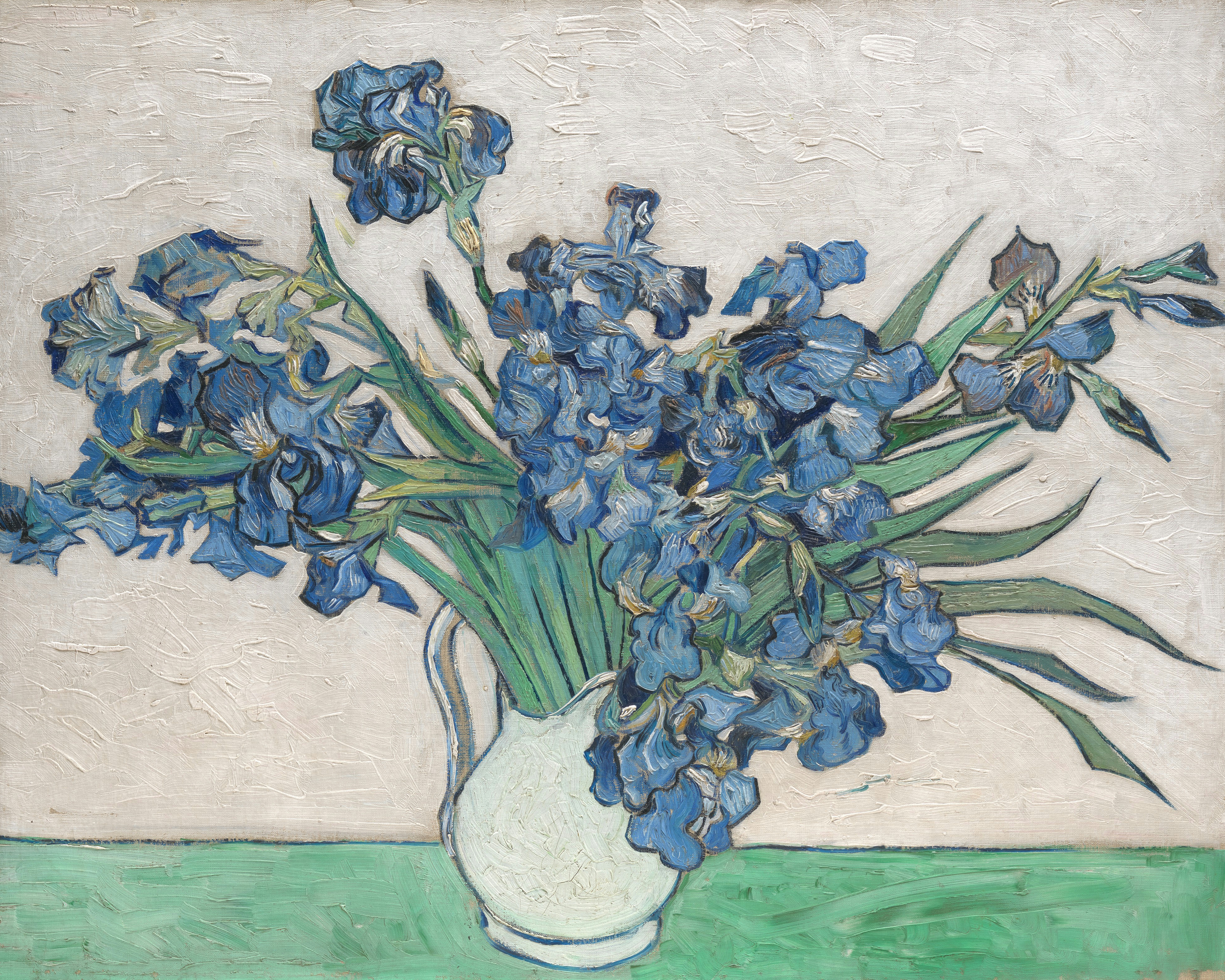
Vincent van Gogh, Irises, 1890. Oil on canvas. The Metropolitan Museum of Art, New York.
Van Gogh painted these irises in May 1890 at Saint-Rémy, just before he left. The Met’s version, one of his last great still lifes, is a burst of blue and violet against a pale ground.
The style made from it can paint flowers from your own photo, too.
Create your portrait in this style
3. L'Arlésienne
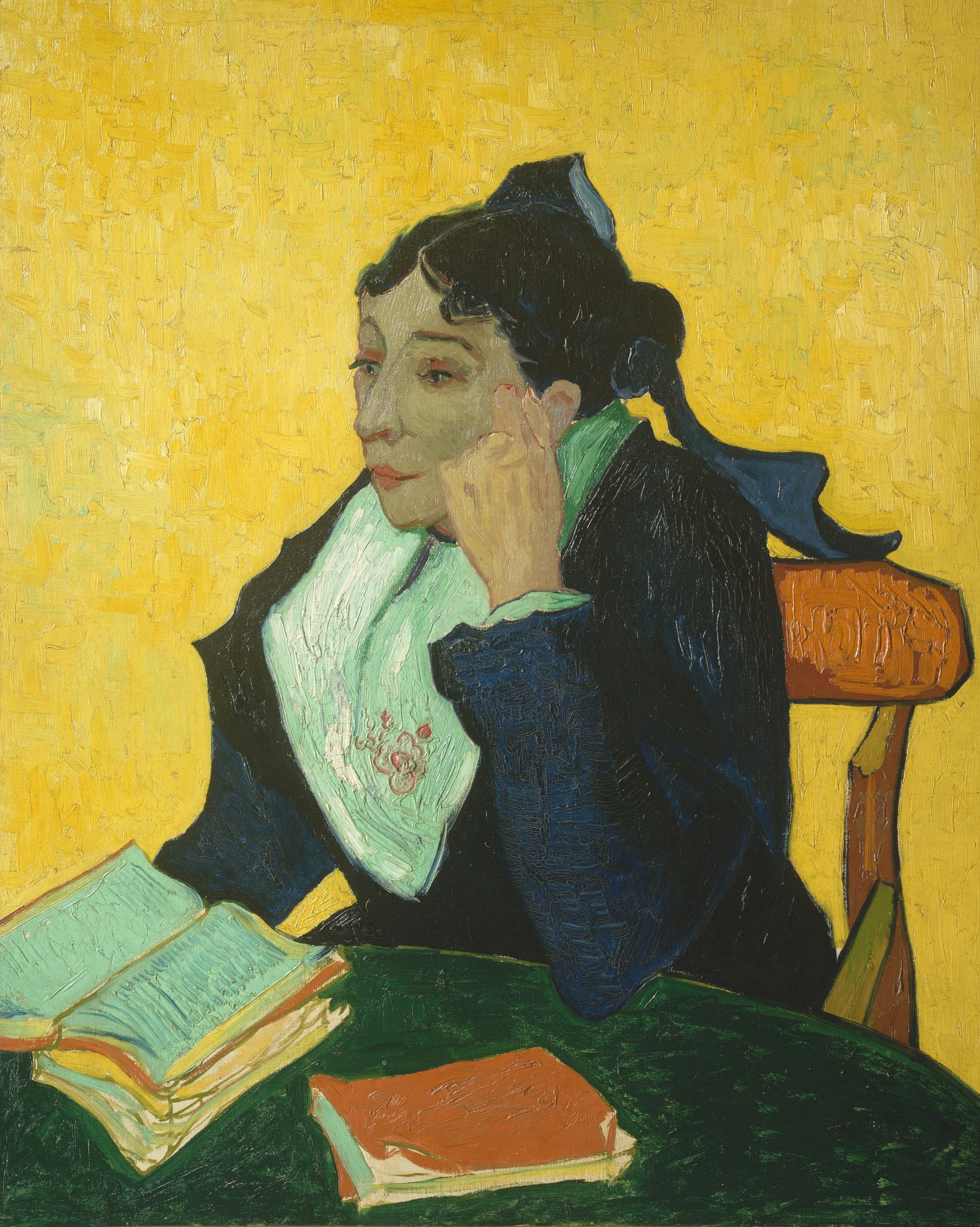
Vincent van Gogh, L'Arlésienne, 1888–89. Oil on canvas. The Metropolitan Museum of Art, New York.
Marie Ginoux ran the Café de la Gare in Arles where Van Gogh lodged. He painted her against a blazing yellow ground, with her books on the table, in 1888.
Bold yellow and deep blue, for a confident modern room.
4. Oil Sketch for "A Sunday on La Grande Jatte — 1884"
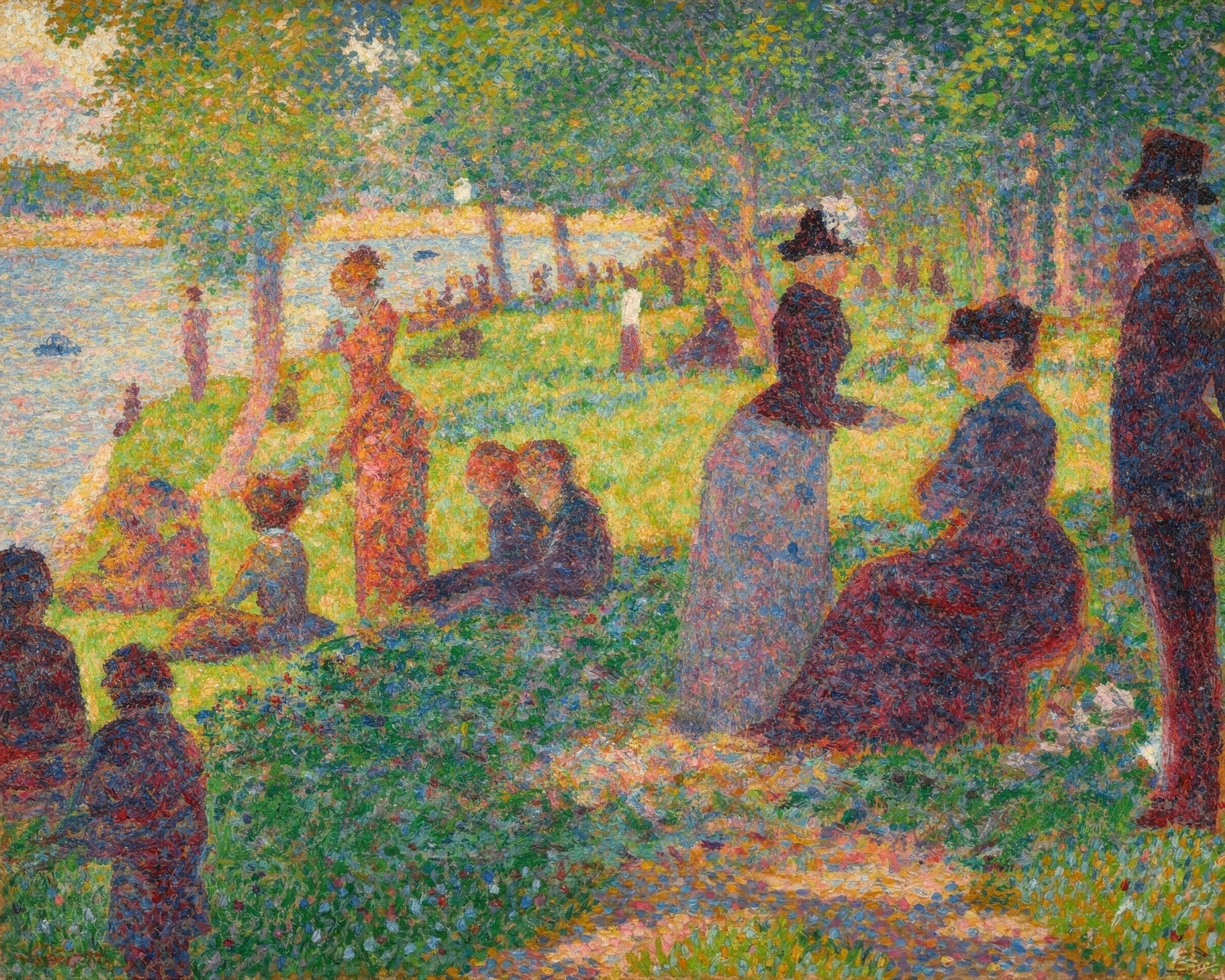
Georges Seurat, Oil Sketch for "A Sunday on La Grande Jatte — 1884", 1884. Oil on panel. Art Institute of Chicago.
Before he painted his famous dotted masterpiece, Seurat made dozens of small oil sketches on the island of La Grande Jatte. This one shows the scene coming to life in quick, fresh strokes.
A clever gift for someone who has seen the big painting in Chicago.
5. Poppy Field (Giverny)
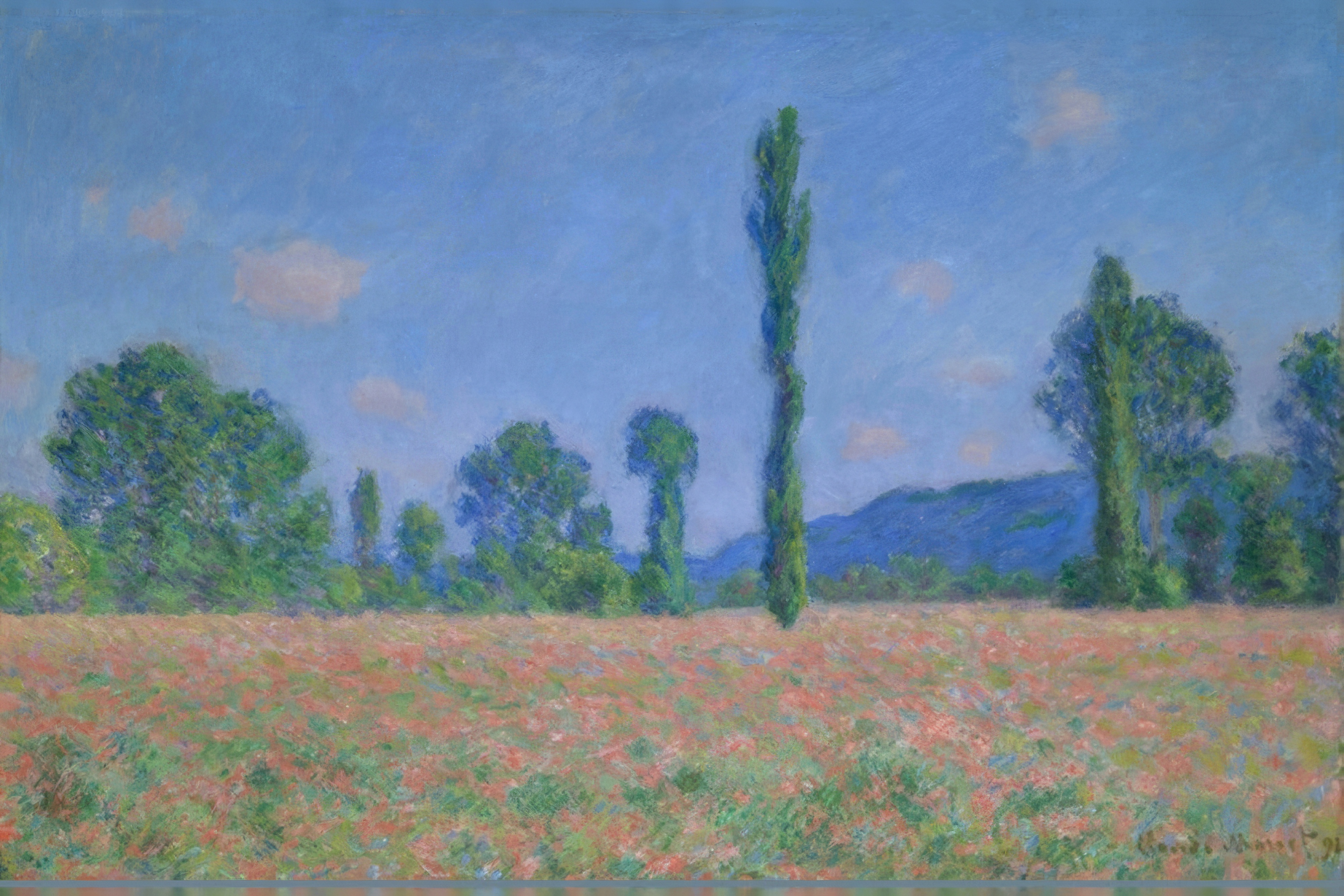
Claude Monet, Poppy Field (Giverny), 1890–91. Oil on canvas. Art Institute of Chicago.
Monet painted the poppy fields near his house at Giverny again and again. This version, from 1890 to 1891, is all red flowers and summer air.
The safest and happiest gift on the list.
6. The Rehearsal of the Ballet Onstage
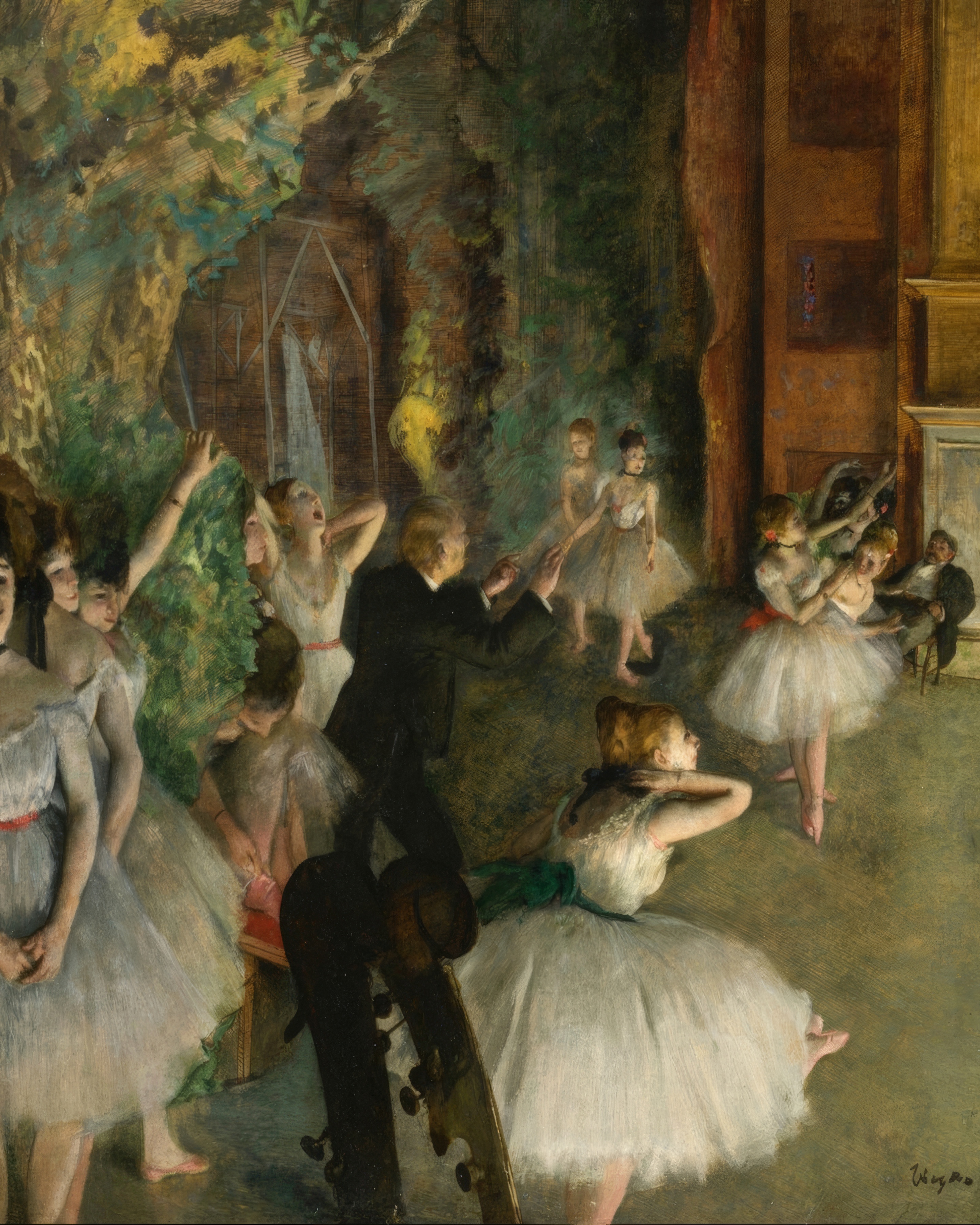
Edgar Degas, The Rehearsal of the Ballet Onstage, ca. 1874. Oil colors freely mixed with turpentine, with traces of watercolor and pastel over pen-and-ink drawing on cream-colored wove paper, laid down on bristol board and mounted on canvas. The Metropolitan Museum of Art, New York.
Degas was fascinated by what happened behind the scenes at the Paris Opéra. This rehearsal, painted around 1874, shows dancers stretching, waiting and working, not performing.
For a dancer, or anyone who loves the theatre.
7. Saint George and the Dragon
Raphael, Saint George and the Dragon, c. 1506. Oil on panel. National Gallery of Art, Washington.
Raphael painted this small Saint George around 1506, when he was in his early twenties. It is now one of the jewels of the National Gallery of Art in Washington.
Small, perfect and full of energy; lovely in a study.
8. Sunrise with Sea Monsters
J. M. W. Turner, Sunrise with Sea Monsters, c. 1845. Oil on canvas. Tate, London.
Late in life Turner painted pictures that were almost pure light. Sunrise with Sea Monsters, from around 1845, is a glowing haze with strange shapes in the water. It looks like modern art painted 180 years ago.
For the art lover who prefers the abstract.
9. The Ten Largest, No. 7, Adulthood
Hilma af Klint, The Ten Largest, No. 7, Adulthood, 1907. Tempera on paper, mounted on canvas. Hilma af Klint Foundation, Stockholm.
Hilma af Klint painted The Ten Largest in 1907, years before Kandinsky’s first abstractions, and kept them hidden for decades. Number 7, Adulthood, is a burst of yellow flowers and spirals on lilac.
The most talked about painter of the last decade, and a superb modern gift.
10. Hylas and the Nymphs
John William Waterhouse, Hylas and the Nymphs, 1896. Oil on canvas. Manchester Art Gallery.
Waterhouse painted the myth of Hylas, lured into a pool by water nymphs, in 1896. It is one of the most loved paintings in Manchester Art Gallery.
For lovers of myth and the Pre-Raphaelites.
11. Dulle Griet (Mad Meg)
Pieter Bruegel the Elder, Dulle Griet (Mad Meg), 1563. Museum Mayer van den Bergh, Antwerp.
Bruegel’s Mad Meg marches across a landscape of monsters toward the mouth of hell, carrying loot. It is one of the strangest masterpieces of the Renaissance, and endless fun to look at.
For the art lover with a dark sense of humour.
12. Medusa
Caravaggio, Medusa, 1597–98. Oil on canvas mounted on a convex poplar shield. Gallerie degli Uffizi, Florence.
Caravaggio painted Medusa on a real wooden shield in 1597 to 1598 as a gift for the Grand Duke of Tuscany. The scream, the snakes and the blood make it unforgettable.
A dramatic choice for a dark wall.
Create your portrait in this style
13. Cranes on snow-covered pine
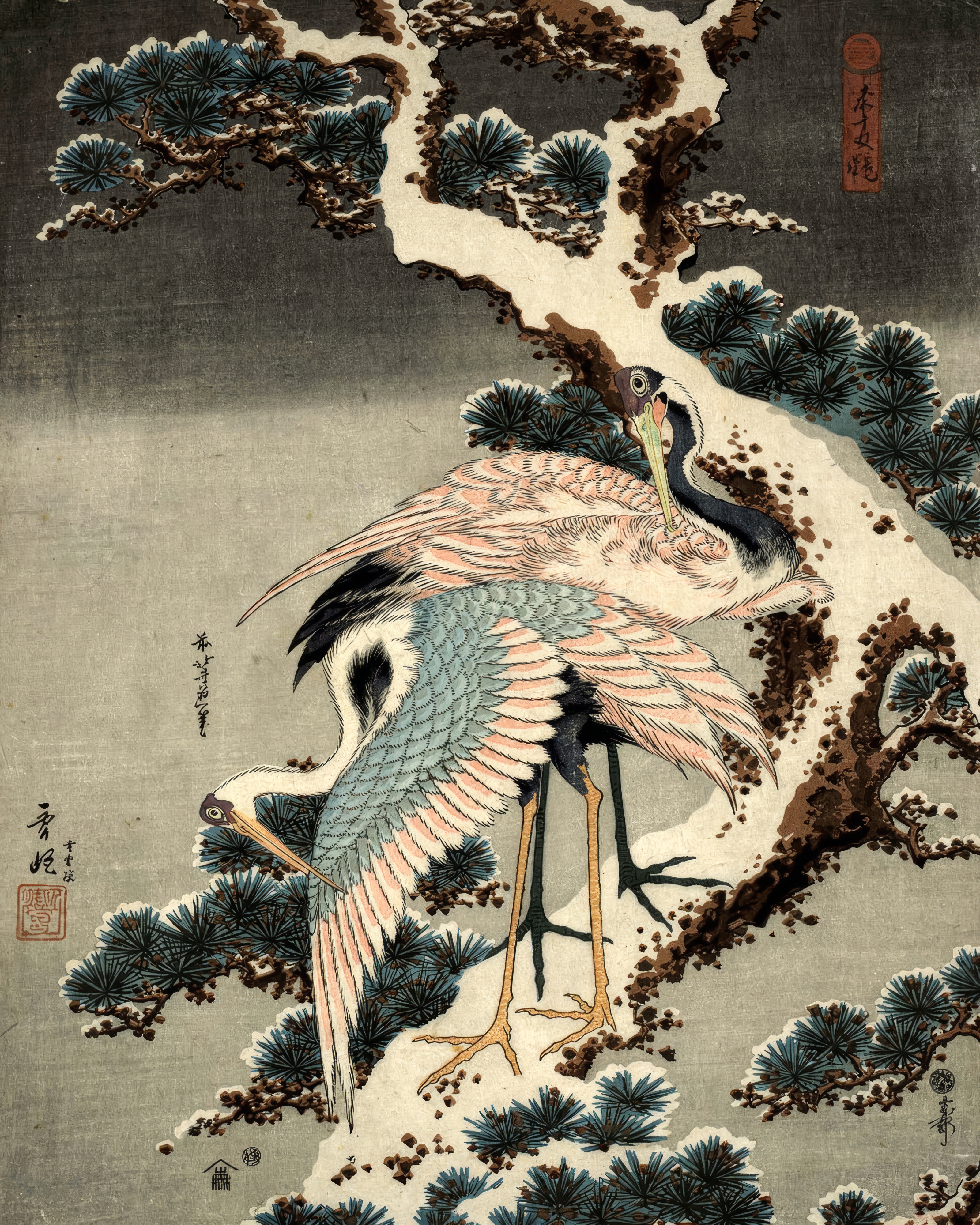
Katsushika Hokusai 葛飾 北斎, Cranes on snow-covered pine, c. 1834. Color woodblock print; vertical nagaban. Art Institute of Chicago.
Hokusai’s tall, narrow print shows two cranes, symbols of long life, on a pine laden with snow. Calm, elegant and very Japanese.
Its tall format suits a narrow wall.
14. The Brioche
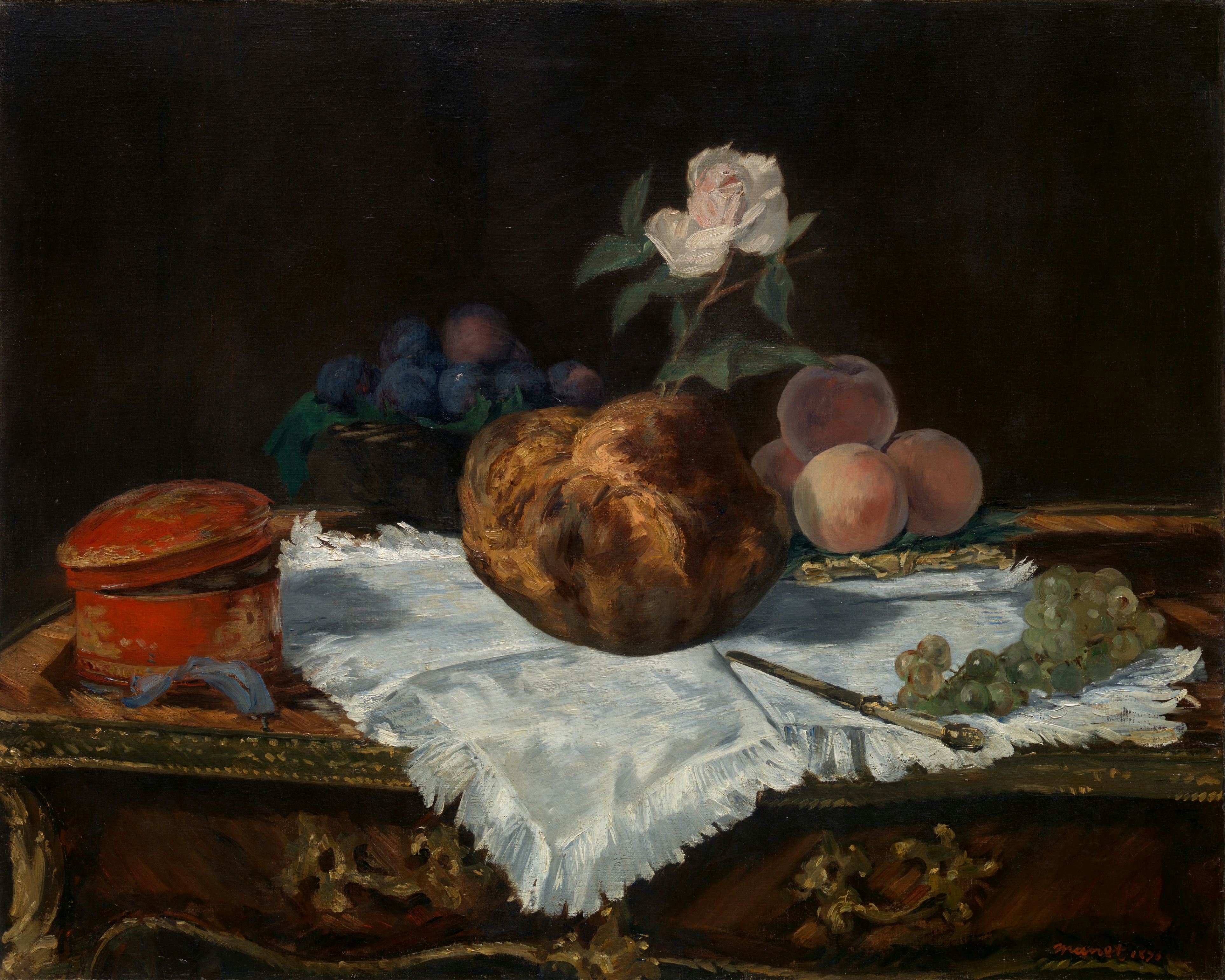
Edouard Manet, The Brioche, 1870. Oil on canvas. The Metropolitan Museum of Art, New York.
Manet painted a brioche in 1870 in homage to Chardin, who had painted one a century earlier. It is a lesson in how to make bread look magnificent.
For the art lover who also loves to cook.
15. Variations in Violet and Grey—Market Place, Dieppe
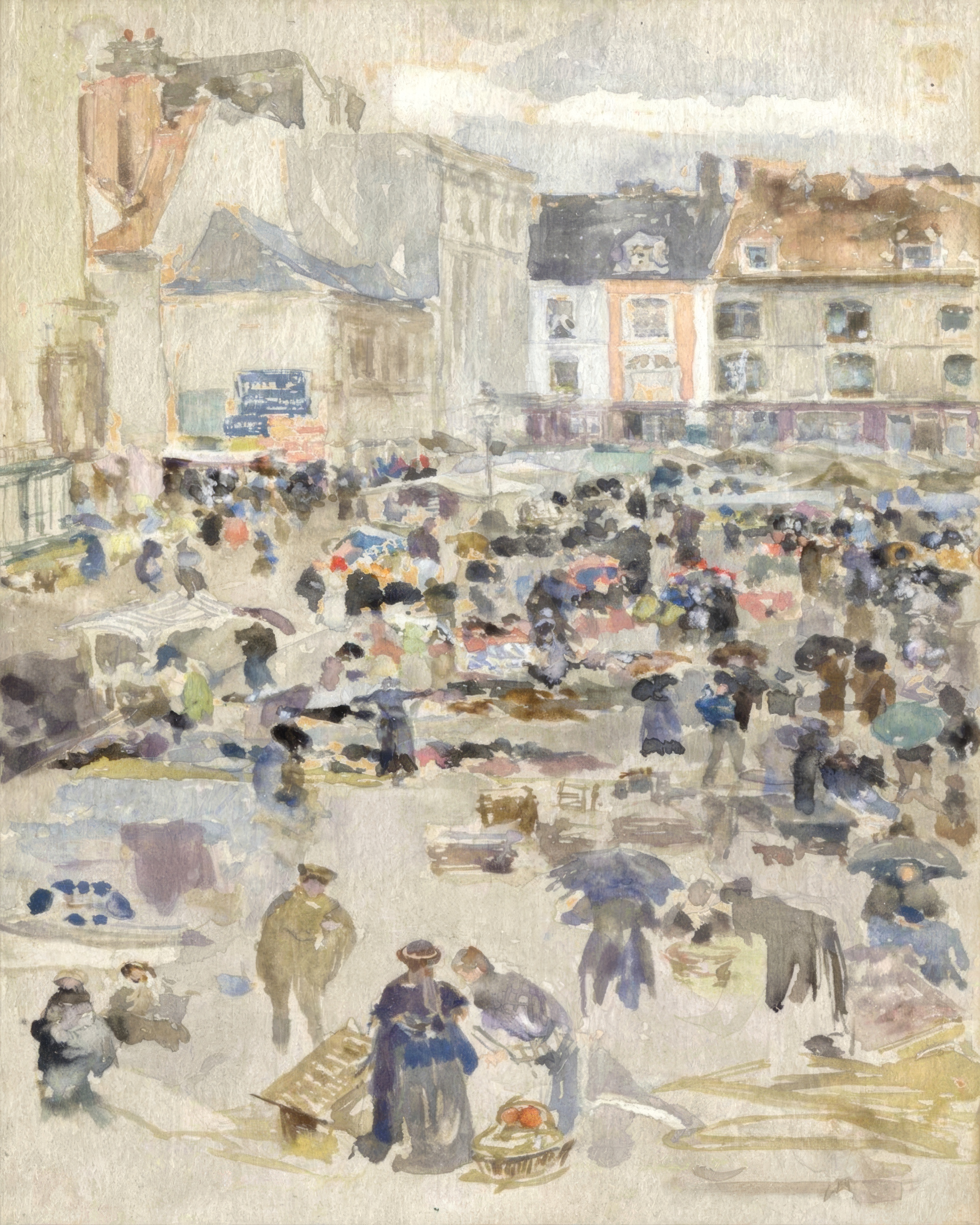
James McNeill Whistler, Variations in Violet and Grey—Market Place, Dieppe, 1885. Gouache and watercolor on off-white wove paper, mounted on academy board. The Metropolitan Museum of Art, New York.
Whistler painted the market square at Dieppe in 1885 in a few washes of violet and grey. It is a lesson in how little a painter needs.
Small, soft and sophisticated.
If you are not sure which way their taste leans, choose by mood: Friedrich and Turner for drama, Monet and Seurat for light, Hokusai for calm, Hilma af Klint for the modern. Every print here is a museum masterpiece, so you cannot go far wrong.
Questions
What do you buy an art lover?
A print of a museum masterpiece, chosen for its story as much as its look, or a book or portrait connected to an artist they love.
Are these prints of real museum paintings?
Yes. Every work here is a real painting or print in a public collection, reproduced from a high resolution museum scan.
Which painting is the safest choice?
Van Gogh’s Irises or Monet’s Poppy Field: both are loved by almost everyone and look beautiful in any room.