30 famous paintings you can hang at home, room by room
Friedrich’s wanderer, Van Gogh’s irises, Renoir’s rowers, Rembrandt, Velázquez, Hokusai and Monet: thirty of the world’s best-known pictures, and the room each one suits.
The most famous paintings in the world were mostly made to be lived with. Bruegel’s Harvesters hung in a merchant’s dining room, Renoir’s rowers in a collector’s apartment, Van Gogh’s irises in his brother’s flat. A great picture still does the same thing on your own wall: it sets the mood of a room every time you walk into it.
We have sorted thirty famous works by the room where each one shines: big views and crowded scenes for the living room, calm and tender pictures for the bedroom, still lifes for the kitchen and dining room, and portraits and dramatic pieces for halls and studies. Each comes from a museum scan, each can be ordered as a print, and where a picture is the source of a Fable portrait style, you can have your own portrait made in it.
For the living room
Big views, wide horizons and lively groups of people give a living room depth and something to talk about.
1. Wanderer above the Sea of Fog
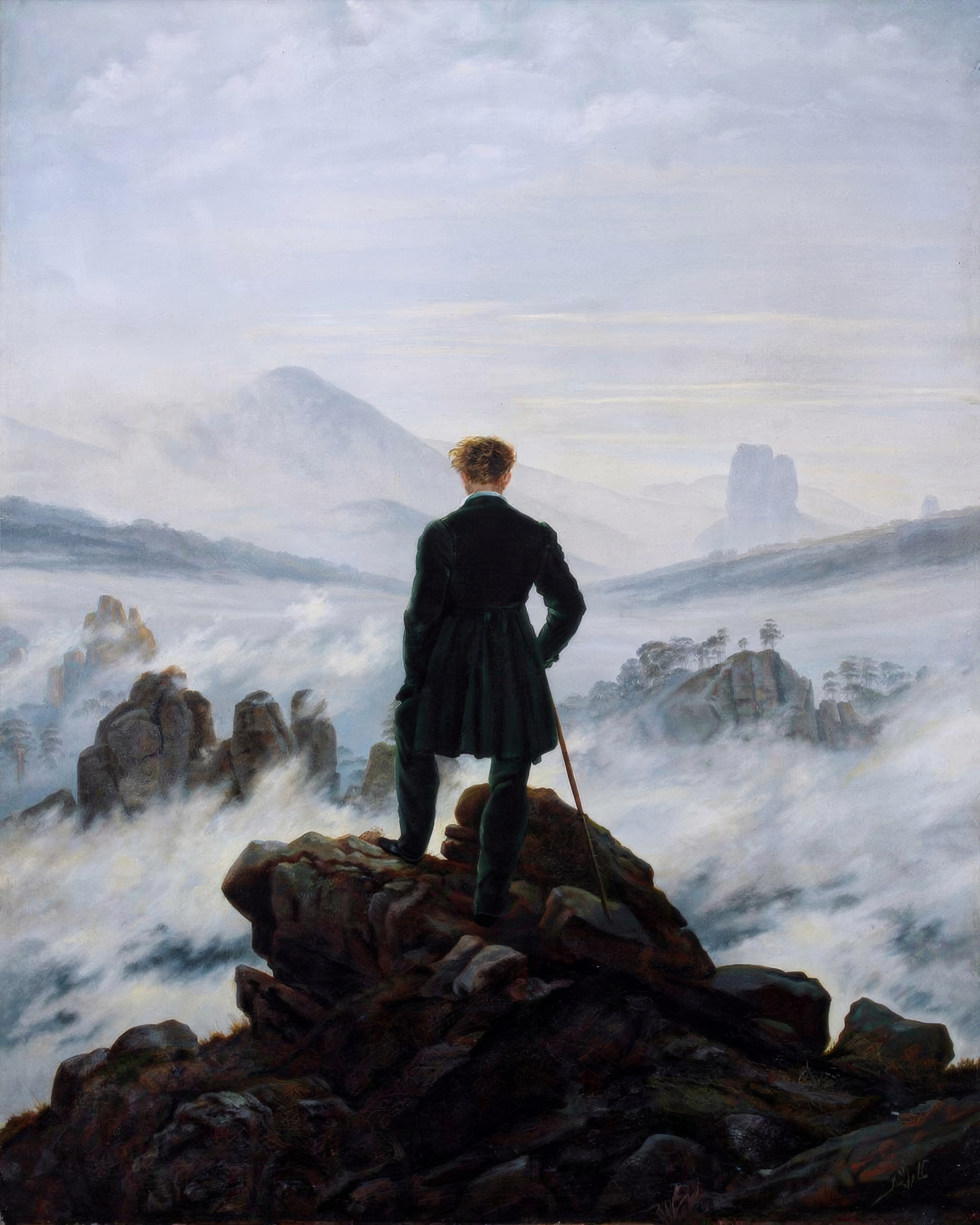
Caspar David Friedrich, Wanderer above the Sea of Fog, c. 1817. Oil on canvas. Hamburger Kunsthalle.
The most famous image of Romanticism: a lone wanderer on a peak, his back to us, looking out over fog and mountains. Friedrich painted it around 1817, and it has stood for the human spirit facing nature ever since.
A commanding picture above a sofa or a fireplace.
2. Isle of the Dead
Arnold Böcklin, Isle of the Dead, 1880.
Böcklin painted five versions of this silent island of cypresses, and in the early twentieth century a print of it hung in countless European homes. Rachmaninov wrote a tone poem after it. It is mysterious, still and unforgettable.
A dark, dramatic picture for a living room with deep walls or a library.
3. The Harvesters
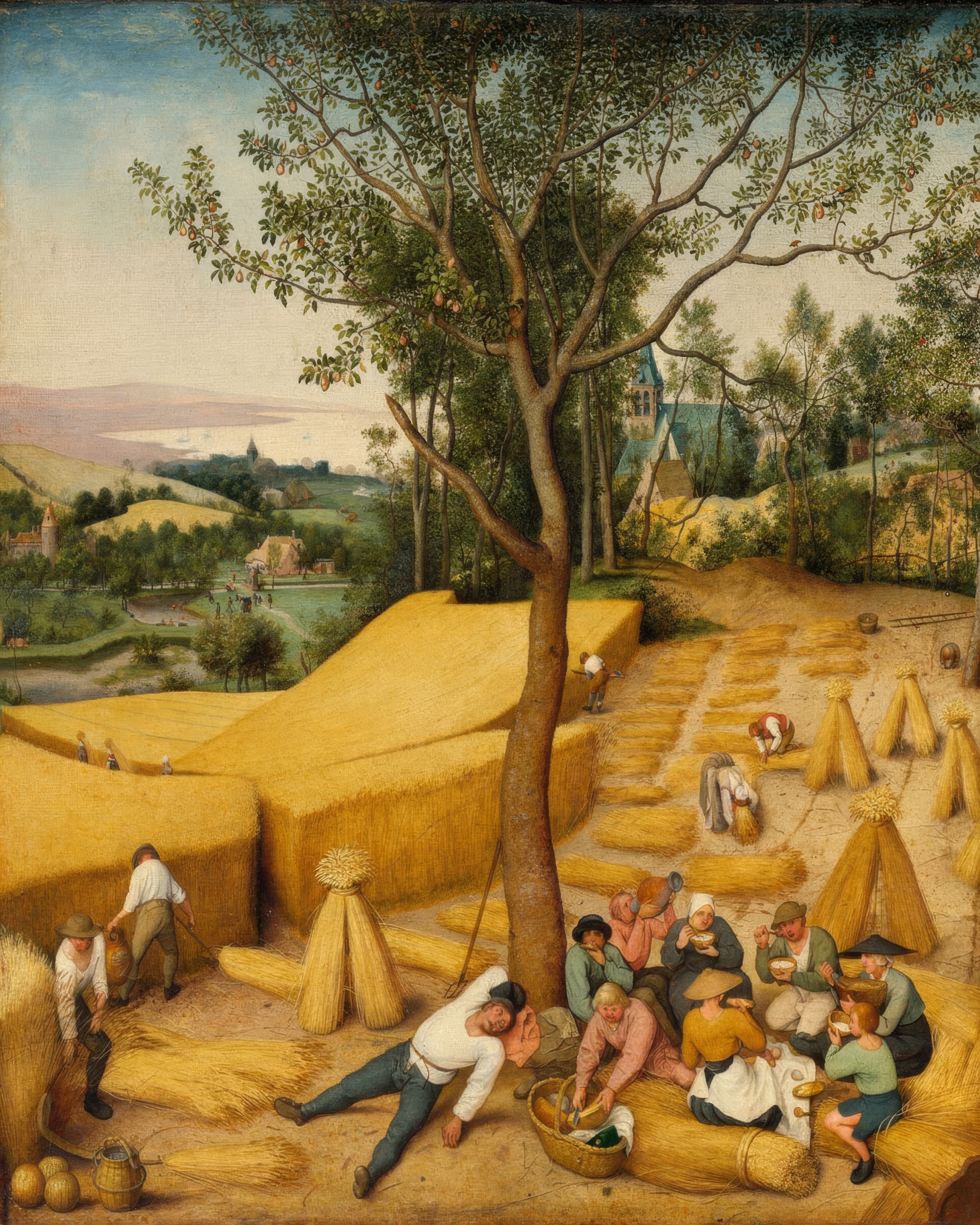
Pieter Bruegel the Elder, The Harvesters, 1565. Oil on wood. The Metropolitan Museum of Art, New York.
Bruegel painted The Harvesters in 1565 as one of a series of six months for a merchant’s house in Antwerp. Workers eat lunch under a pear tree while the golden wheat falls behind them, and the landscape runs all the way to the sea.
A wide, warm picture to read from across the room, ideal above a long sofa.
4. Lunch at the Restaurant Fournaise (The Rowers' Lunch)
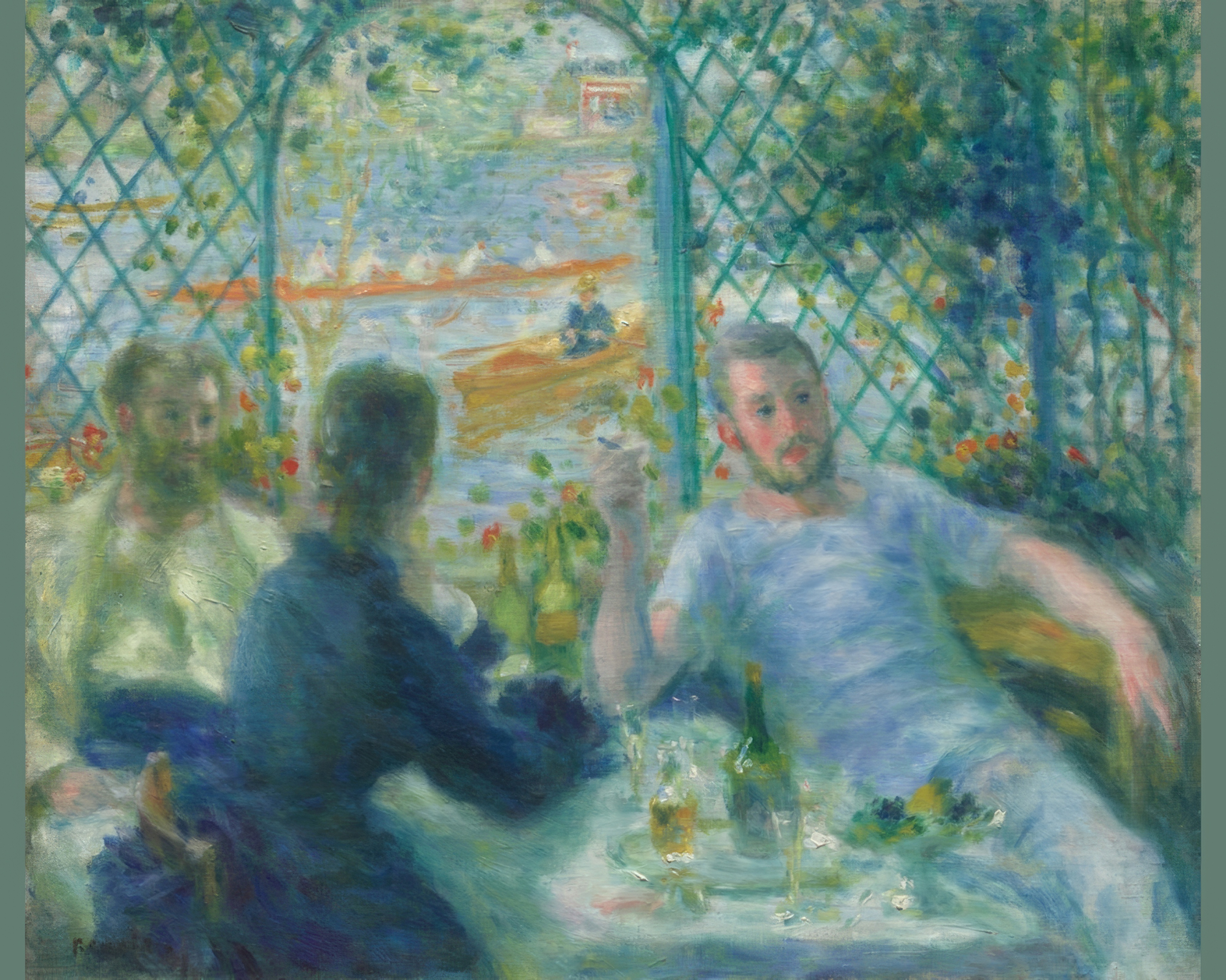
Pierre-Auguste Renoir, Lunch at the Restaurant Fournaise (The Rowers' Lunch), 1875. Oil on canvas. Art Institute of Chicago.
Renoir loved the riverside restaurant Fournaise at Chatou, where rowers came to eat and drink. Painted in 1875, this lunch is all sun, conversation and dappled shade, a first sketch of the mood that made his Luncheon of the Boating Party famous.
A sociable, sunny picture for a living room where friends gather.
5. Poppy Field (Giverny)
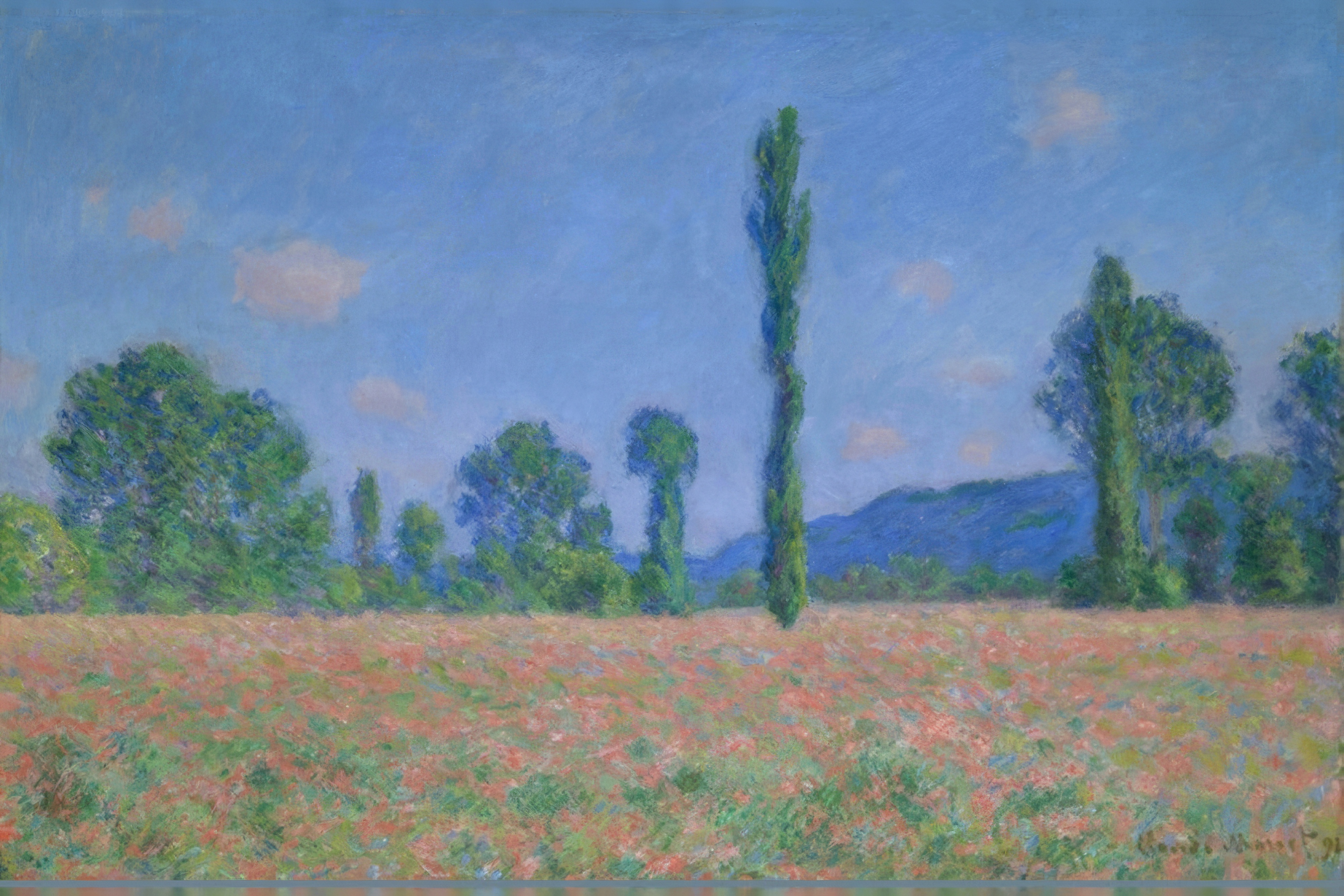
Claude Monet, Poppy Field (Giverny), 1890–91. Oil on canvas. Art Institute of Chicago.
Monet painted the poppy fields near his house at Giverny in 1890 and 1891, at the same time as his famous haystacks. Red flowers run through the green field in quick dabs of colour.
A bright, cheerful picture that lifts a pale living room.
6. Oil sketch for A Sunday on La Grande Jatte
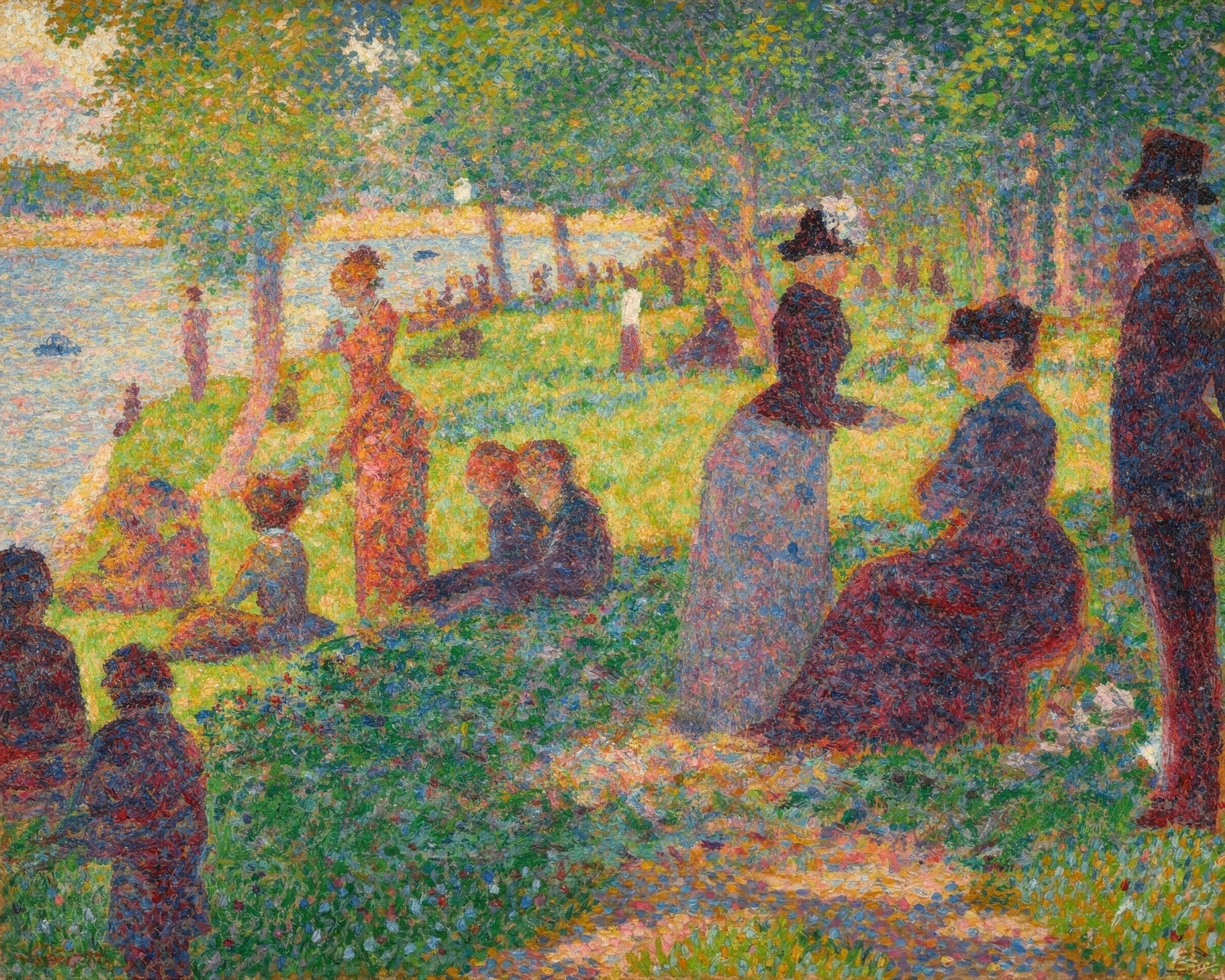
Georges Seurat, Oil sketch for A Sunday on La Grande Jatte, 1884. Oil on panel. Art Institute of Chicago.
Before painting his famous Sunday on La Grande Jatte, Seurat went out to the island in the Seine again and again with small panels. This sketch of 1884 catches the shade, the sun and the strollers in quick, bright strokes.
A small, joyful picture for a reading corner or beside a bookshelf.
7. View of Cotopaxi
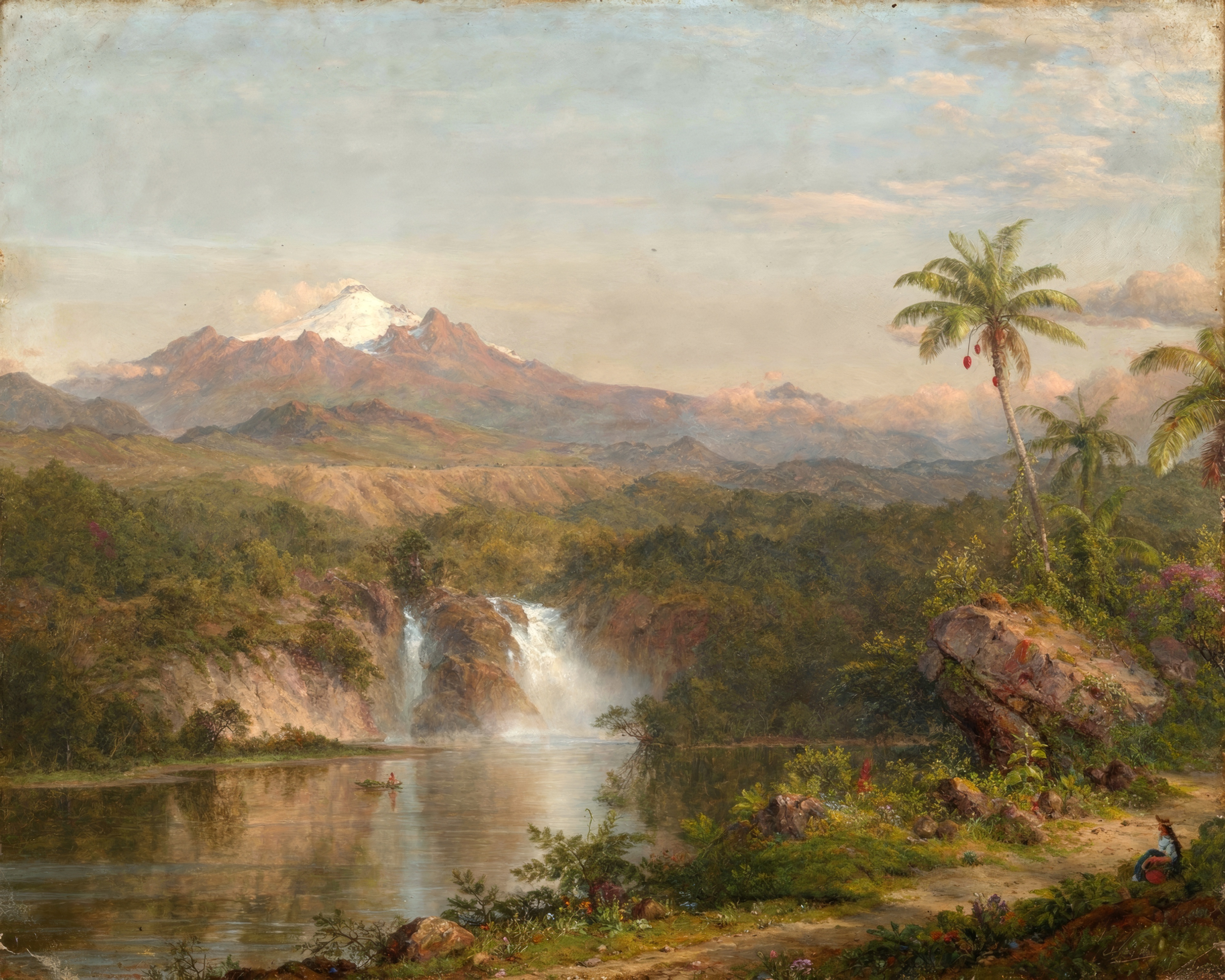
Frederic Edwin Church, View of Cotopaxi, 1857. Oil on canvas. Art Institute of Chicago.
Frederic Edwin Church travelled to Ecuador to paint the Andes, and his pictures drew crowds who paid to see them. Here, in 1857, the volcano Cotopaxi rises in the morning haze above a tropical valley.
An epic landscape for a large wall in a living room or a stairwell.
8. Prout's Neck, Breakers
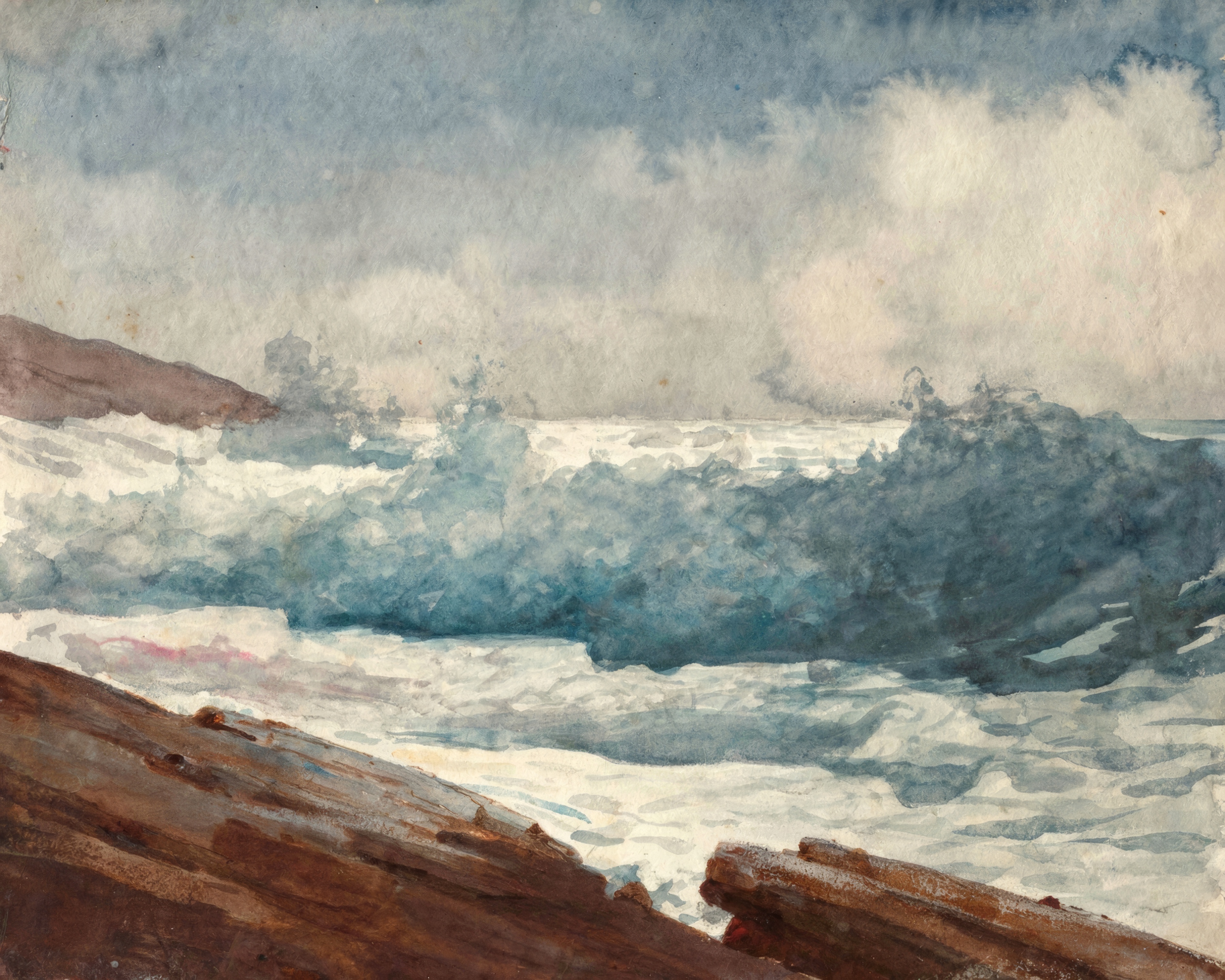
Winslow Homer, Prout's Neck, Breakers, 1883. Watercolor, with blotting and sanding, over charcoal, on moderately thick, moderately textured, ivory wove paper. Art Institute of Chicago.
Winslow Homer moved to Prout’s Neck in Maine and spent the rest of his life painting the sea. This watercolour of 1883 is pure energy: waves, spray and dark rock.
A fresh, powerful seascape for a coastal living room or a bathroom.
For the bedroom
Soft colour, tender subjects and quiet moods make the best company in a bedroom.
9. Irises
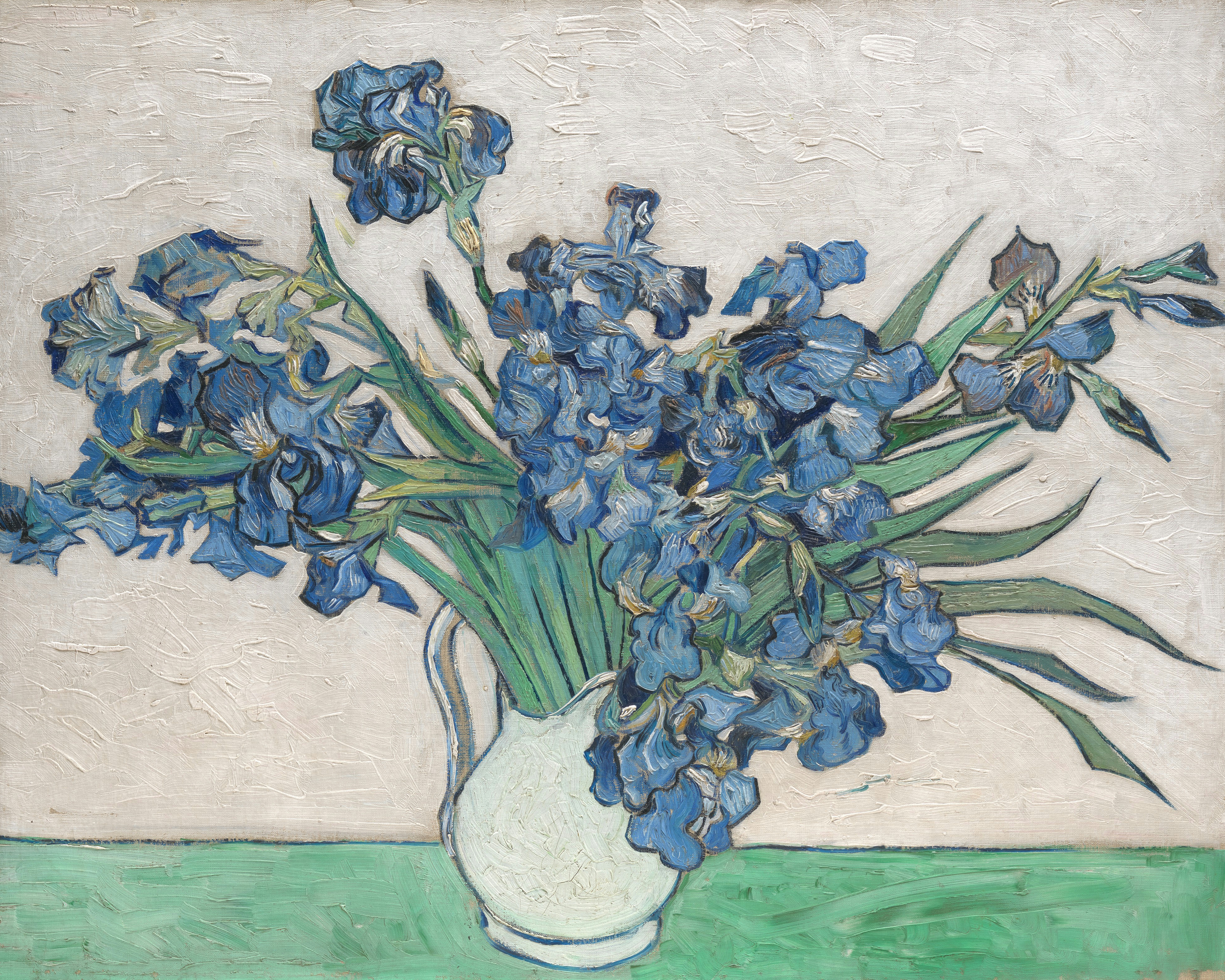
Vincent van Gogh, Irises, 1890. Oil on canvas. The Metropolitan Museum of Art, New York.
Van Gogh painted these irises in May 1890, just before he left the asylum at Saint-Rémy. The tall purple flowers burst out of the vase against a pale ground, full of energy. It is also the masterwork behind Fable’s Irises style.
A fresh, luminous picture for a bedroom with white or pale green walls.
Create your portrait in this style
10. Lady Lilith
Dante Gabriel Rossetti, Lady Lilith, 1867. Watercolor and gouache (bodycolor). The Metropolitan Museum of Art, New York.
Rossetti’s Lilith combs her long red hair among roses, entirely absorbed in her own beauty. This watercolour of 1867 is a smaller version of his famous oil, and the Pre-Raphaelite colours are at their most jewel-like.
A romantic picture for a dressing room or a bedroom.
11. Summer Evening at Skagen
Peder Severin Krøyer, Summer Evening at Skagen, 1892. Oil on canvas. Skagens Museum.
Krøyer painted his wife Marie and their dog on the beach at Skagen in 1892, in the blue light of a Danish summer night. It is the masterwork behind Fable’s Summer evening at Skagen style, for a portrait of you and your dog.
A calm blue picture for a bedroom, and a lovely style for owners and their dogs.
Create your portrait in this style
12. Woman in a Garden
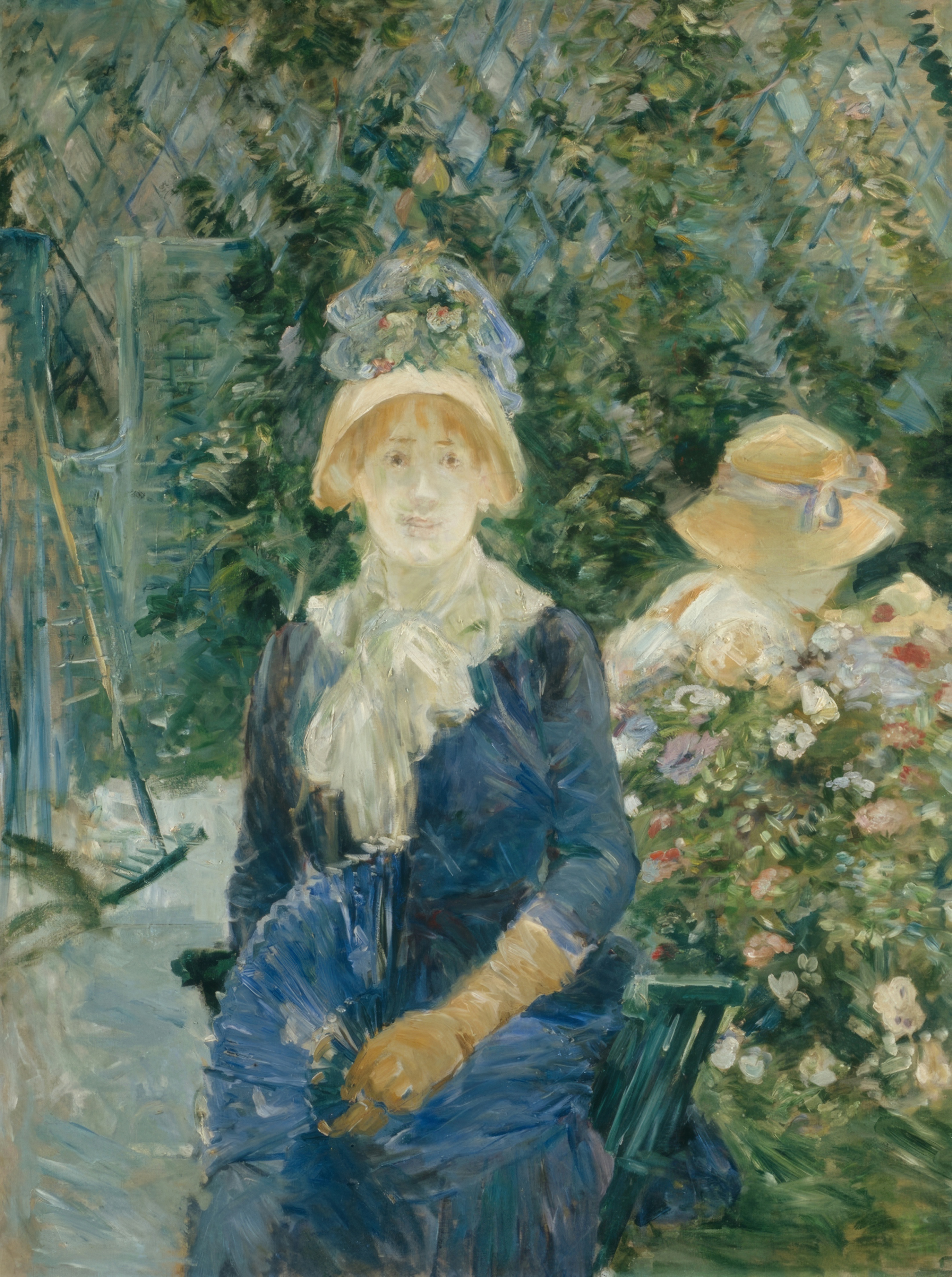
Berthe Morisot, Woman in a Garden, 1882–83. Oil on canvas. Art Institute of Chicago.
Berthe Morisot was a founding Impressionist, and her brushwork was the freest of them all. In this garden of 1882 to 1883 the woman and the flowers almost melt into one another.
A soft, green picture for a bedroom or a garden room.
13. Lovers Beneath an Umbrella in the Snow
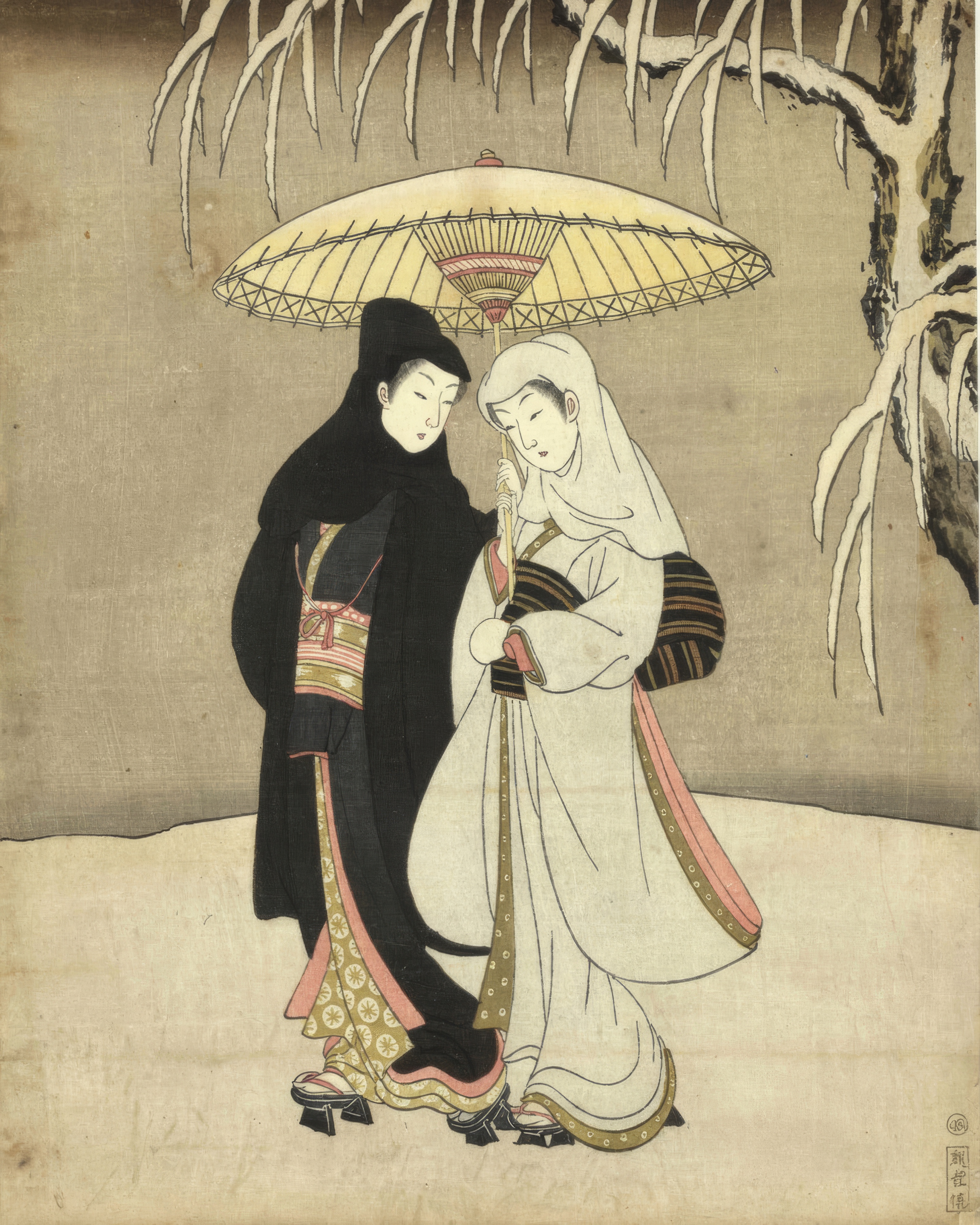
Suzuki Harunobu, Lovers Beneath an Umbrella in the Snow, c. 1767. Color woodblock print; chuban. Art Institute of Chicago.
A young couple share one umbrella in the snow, one of the most loved images in Japanese art. Harunobu made it around 1767, just after he invented the full colour woodblock print.
A tender, graphic picture for a bedroom or a guest room.
14. Julie Manet
Pierre-Auguste Renoir, Julie Manet, 1887. Oil on canvas. Musée d'Orsay, Paris.
Renoir painted Julie Manet, the daughter of Berthe Morisot, in 1887, with a sleeping cat in her arms. It is one of the gentlest portraits of childhood in French painting, and the masterwork behind Fable’s Julie Manet style, for a portrait with your cat.
A sweet picture for a child’s room, and a style made for a portrait with your cat.
Create your portrait in this style
15. The Birth of Venus
Gustave Moreau, The Birth of Venus, ca 1866.
Moreau’s Venus rises from a dark sea while figures kneel on the rocks, a far stranger birth than Botticelli’s. Painted around 1866, it shows the jewel-like Symbolism that made Moreau famous.
A rich, mysterious picture for a bedroom with deep colours.
For the kitchen and dining room
Still lifes were painted for dining rooms: fruit, flowers, fish and silver bring warmth to a table.
16. Still Life with Flowers
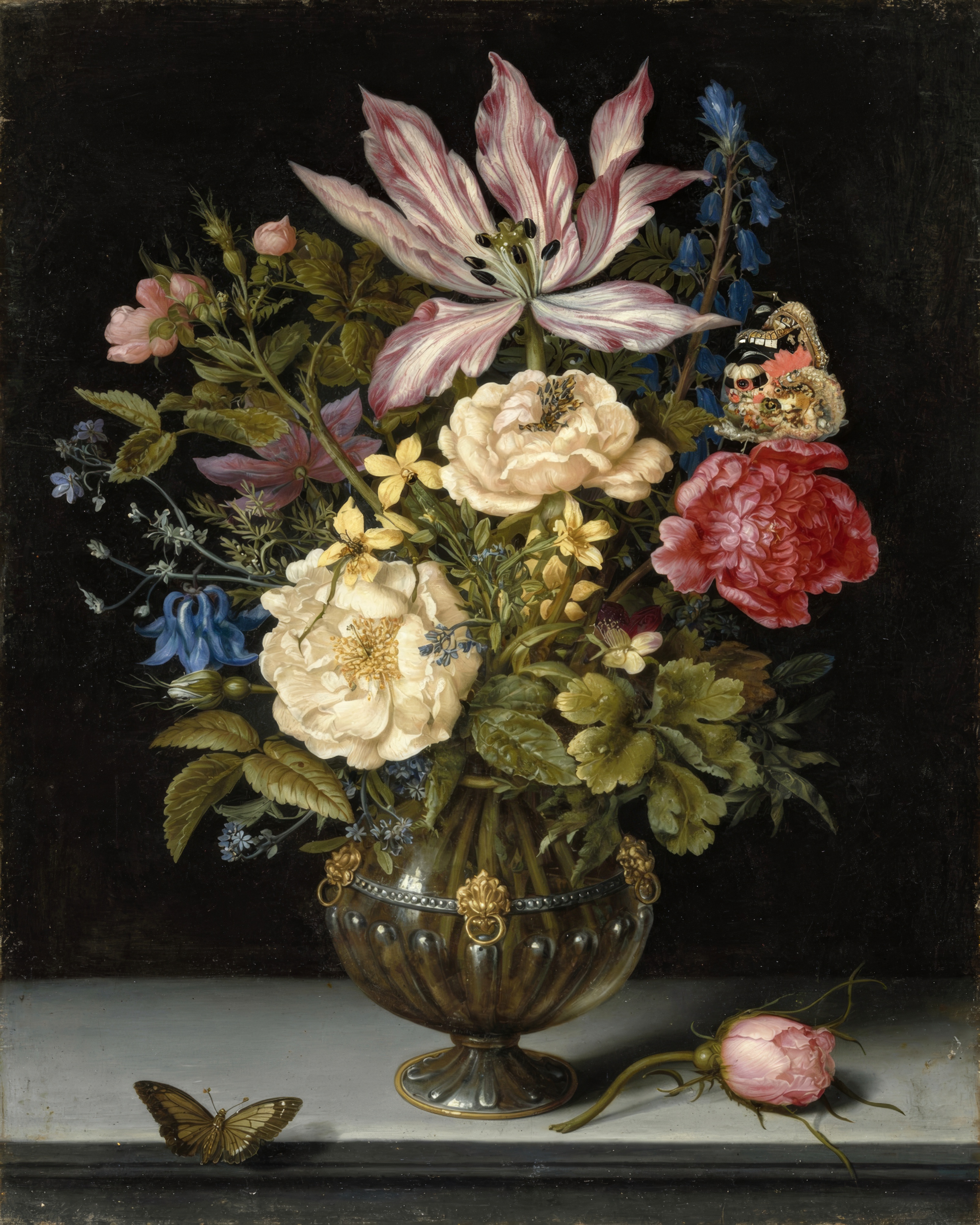
Ambrosius Bosschaert the Elder, Still Life, 1617.
Ambrosius Bosschaert was one of the first painters of flower still lifes, and his bouquets gathered flowers that never bloomed at the same time. This one of 1617 sets tulips, roses, carnations and irises in a Chinese Wanli vase, in perfect, impossible harmony.
A jewel-like flower piece for a dining room or a breakfast room.
17. Still Life with Fruit, Glassware, and a Wanli Bowl
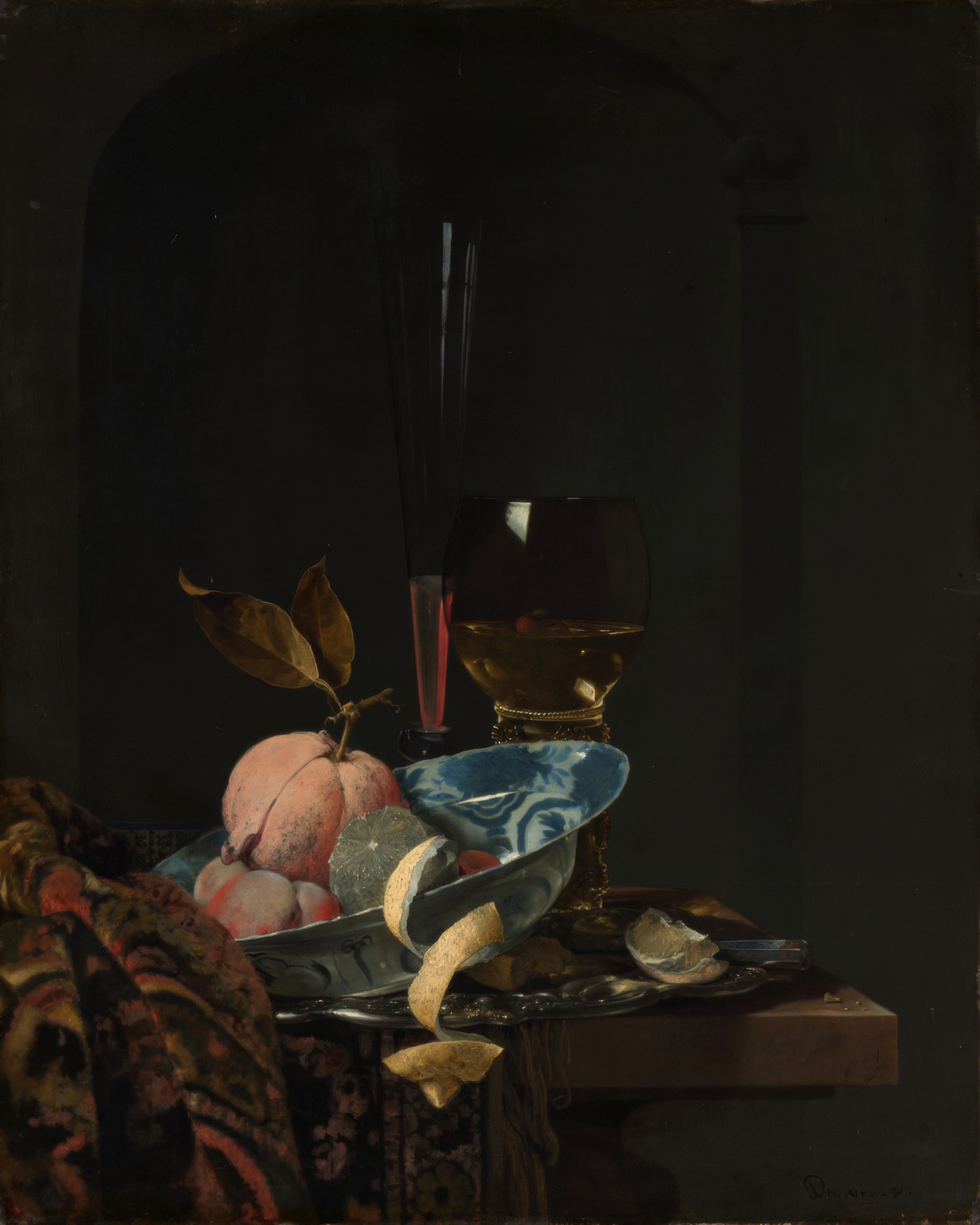
Willem Kalf, Still Life with Fruit, Glassware, and a Wanli Bowl, 1659. Oil on canvas. The Metropolitan Museum of Art, New York.
Willem Kalf painted luxury out of darkness: Chinese porcelain, Venetian glass and southern lemons, glowing on a table in 1659. It is the masterwork behind Fable’s Fruit and glassware style.
A deep, glowing still life for a dark dining room.
Create your portrait in this style
18. Still Life with Apples and Pears
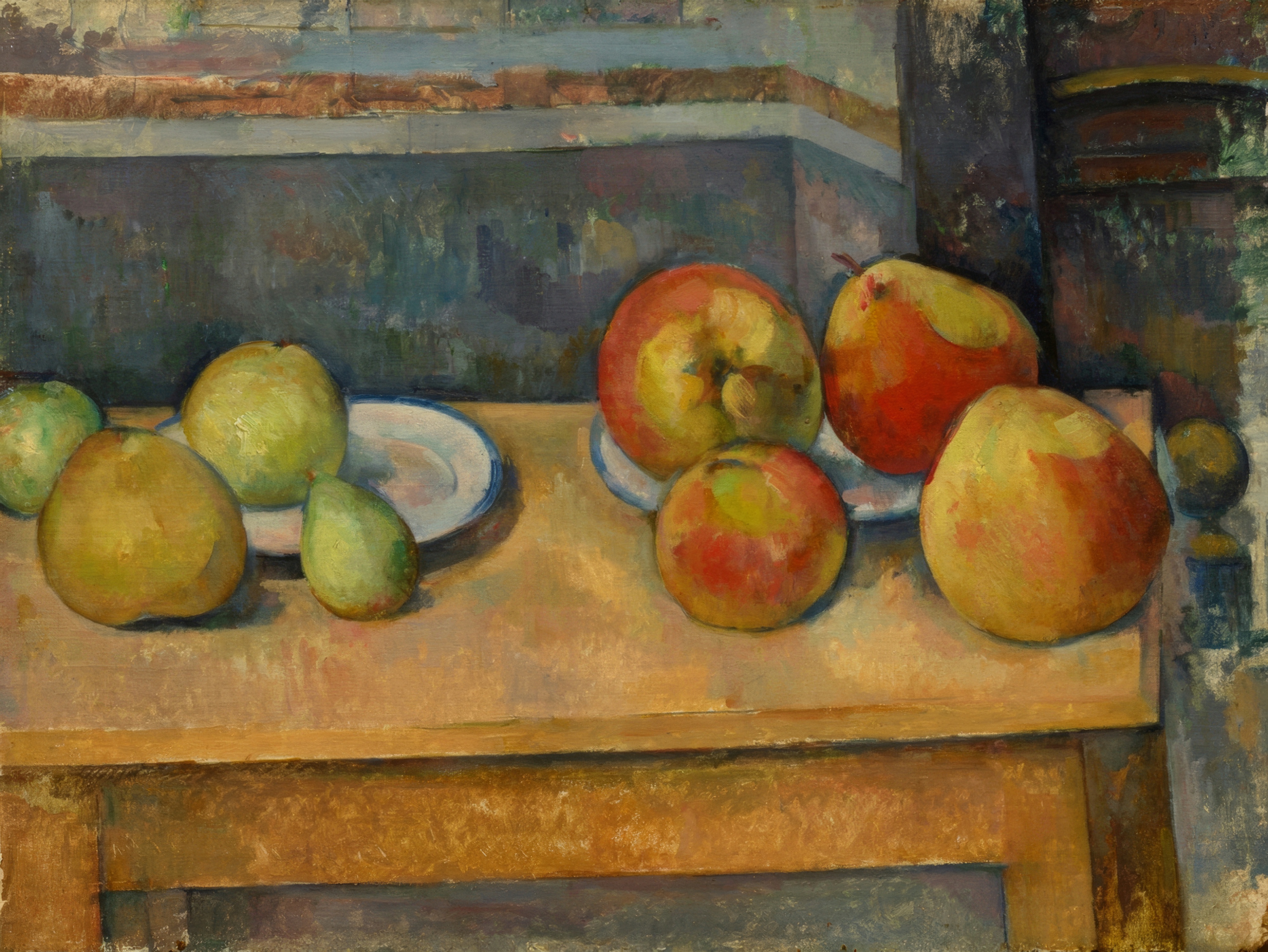
Paul Cézanne, Still Life with Apples and Pears, ca. 1891–92. Oil on canvas. The Metropolitan Museum of Art, New York.
Cézanne’s apples changed modern art. In this picture of the early 1890s the fruit sits heavy on a rumpled cloth, seen from several angles at once. It is the masterwork behind Fable’s Apples and pears style.
A warm, modern picture for a kitchen.
Create your portrait in this style
19. Fish (Still Life)
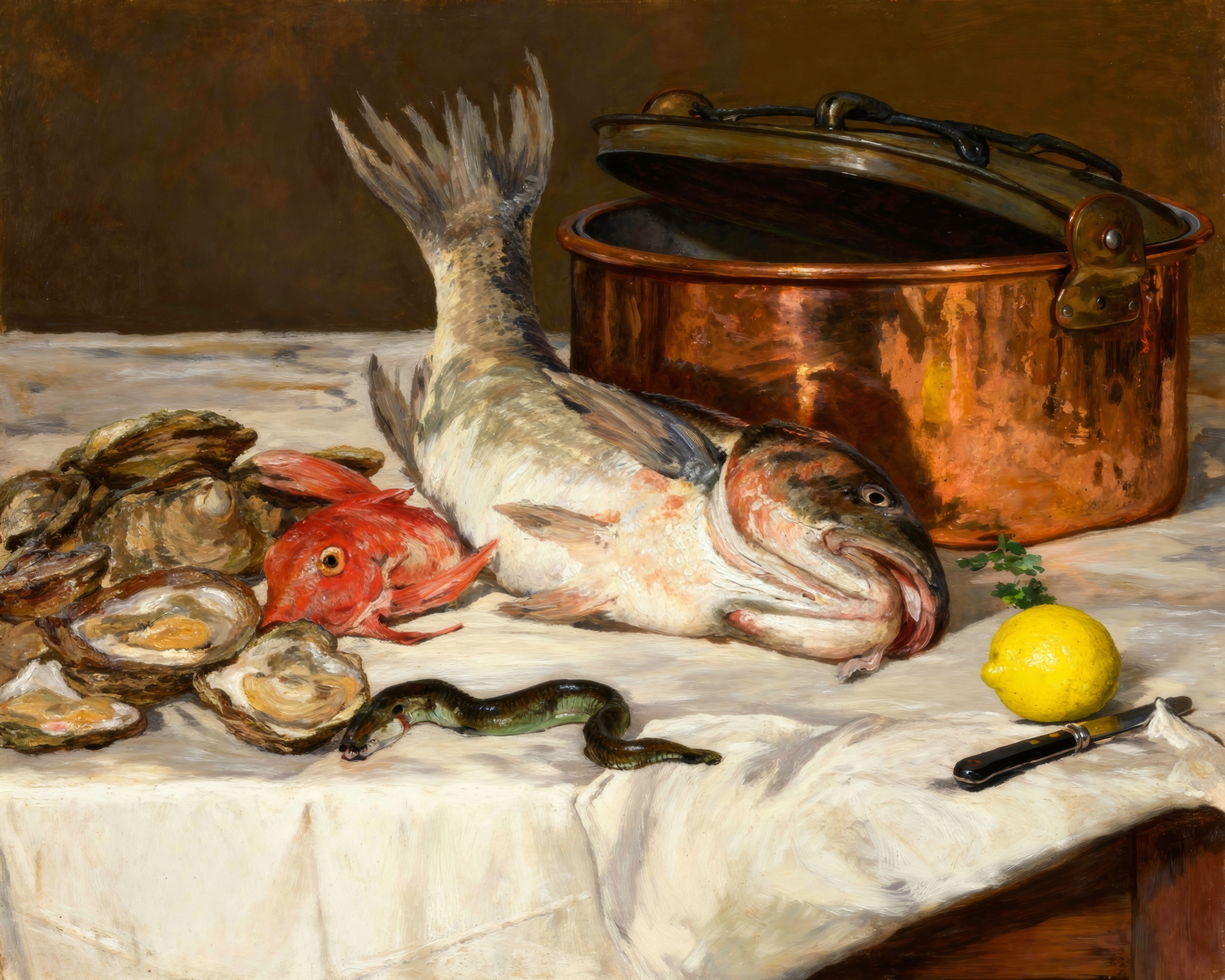
Édouard Manet, Fish (Still Life), 1864. Oil on canvas. Art Institute of Chicago.
Manet painted fish the way he painted people, with fast, confident strokes and dazzling whites. In this still life of 1864 the fish, oysters and lemon lie on a crumpled white cloth beside a copper pot.
A crisp, striking picture for a kitchen or a seafood lover’s dining room.
20. Still Life: Corner of a Table
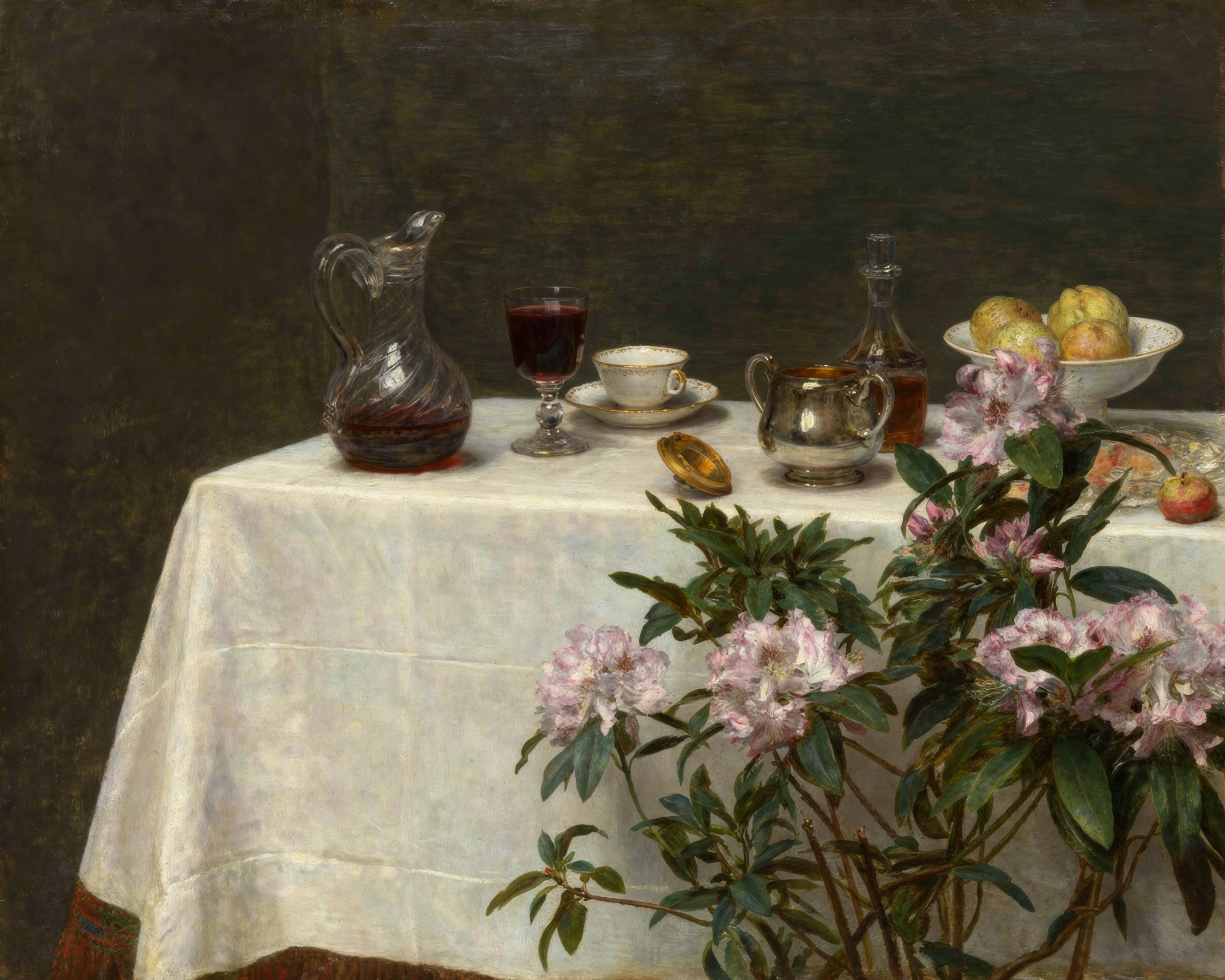
Henri Fantin-Latour, Still Life: Corner of a Table, 1873. Oil on canvas. Art Institute of Chicago.
Henri Fantin-Latour made quiet tables like this one in 1873: a cup and saucer, a primrose in a glass, a silver spoon and a book. Nothing happens, and everything glows. It is the masterwork behind Fable’s Corner of a table style.
A calm, elegant picture for a small dining room or a breakfast corner.
Create your portrait in this style
21. Roses
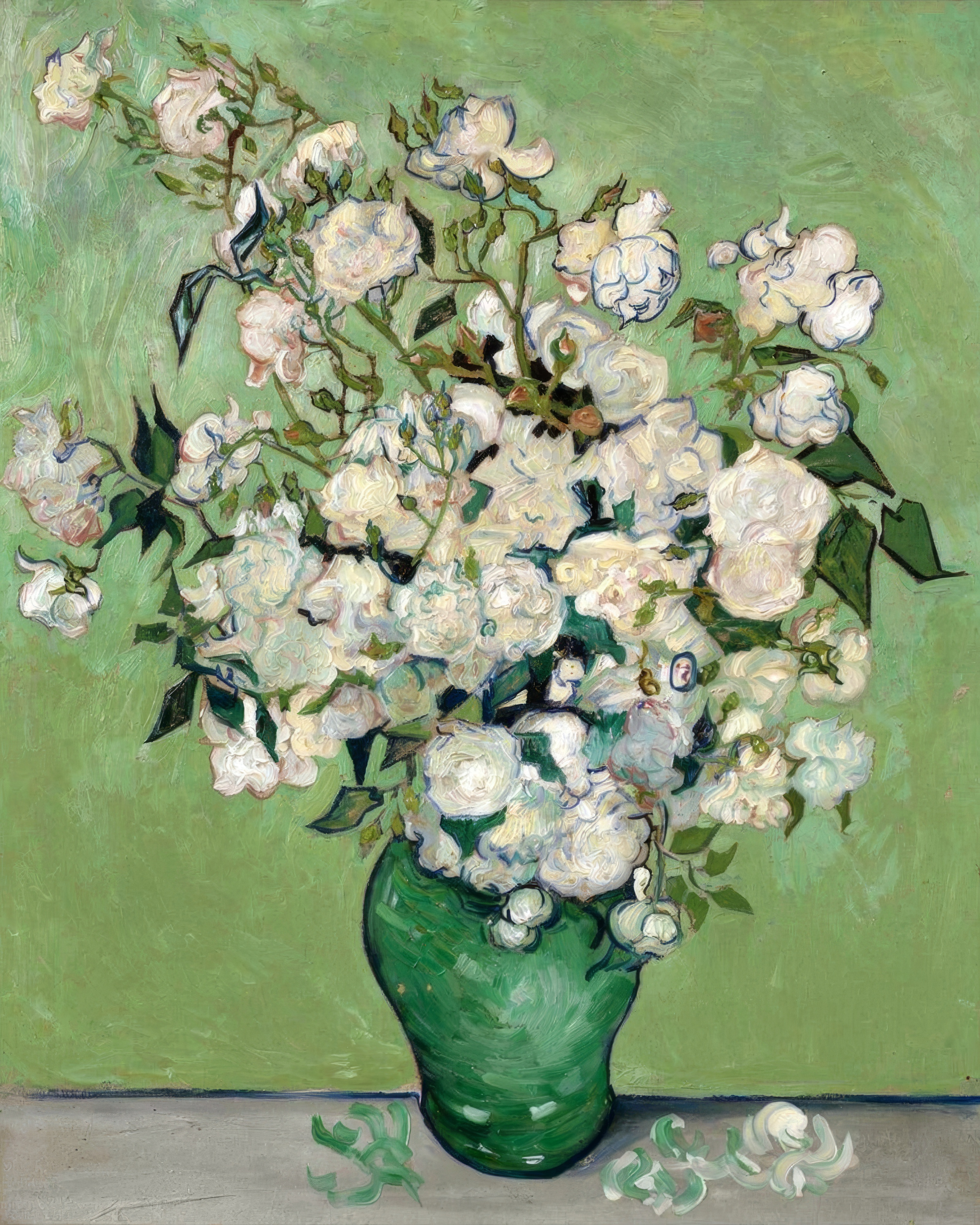
Vincent van Gogh, Roses, 1890. Oil on canvas. The Metropolitan Museum of Art, New York.
Van Gogh painted a great bunch of roses in May 1890, as a pair to his Irises. The roses were once pink and have faded to white over time, which only makes them softer.
A soft, generous flower picture for a dining room or a bedroom.
Create your portrait in this style
For the hallway and study
Strong faces, dramatic stories and graphic prints hold their own in passing spaces and rooms for thinking.
22. Young Woman at an Open Half-Door
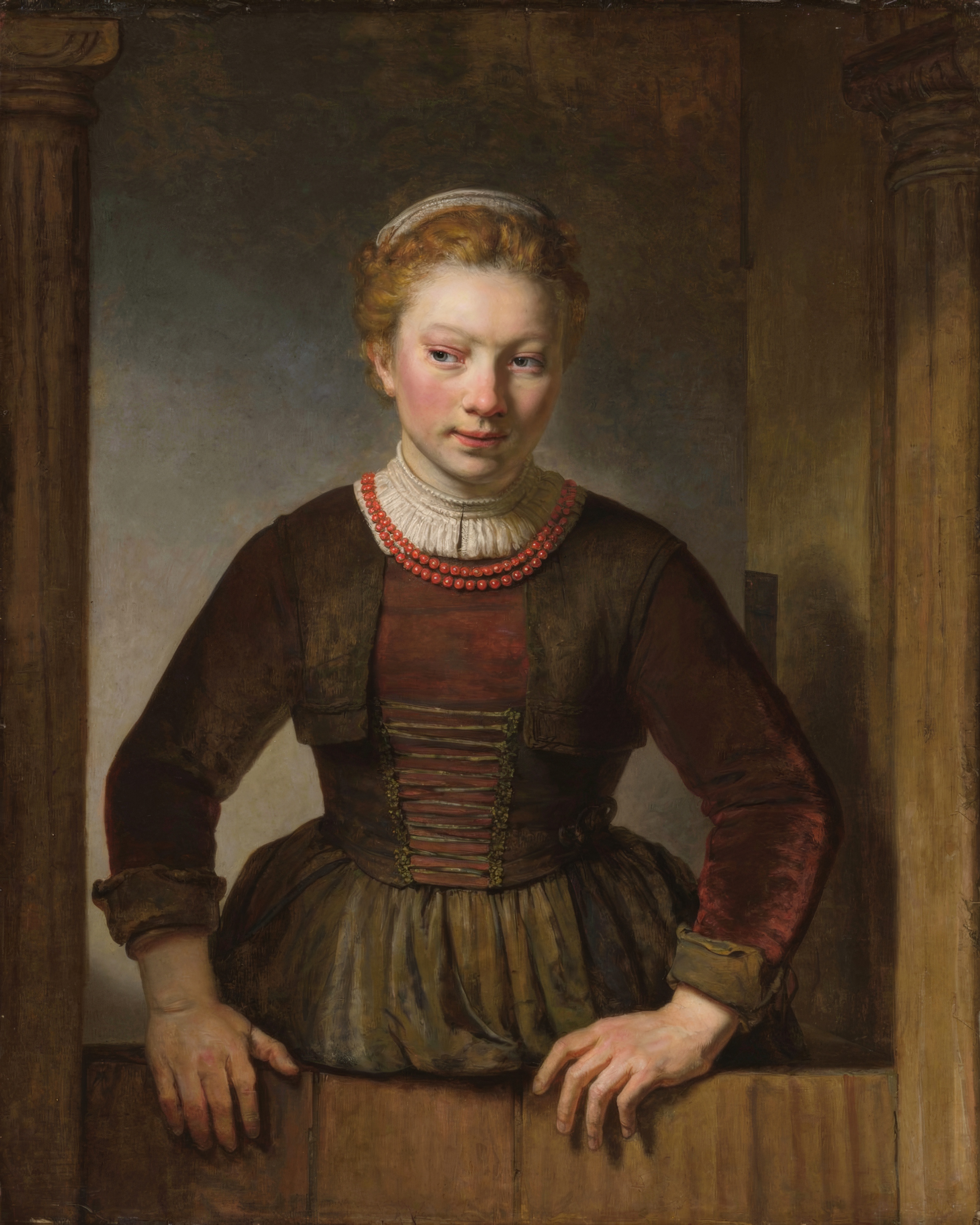
Rembrandt van Rijn, Young Woman at an Open Half-Door, 1645. Oil on canvas. Art Institute of Chicago.
Rembrandt painted a young woman leaning on a half-door in 1645, as if she has just heard someone arrive. She looks out of the dark straight at you.
The perfect picture for an entrance hall, where she greets every visitor.
23. Juan de Pareja
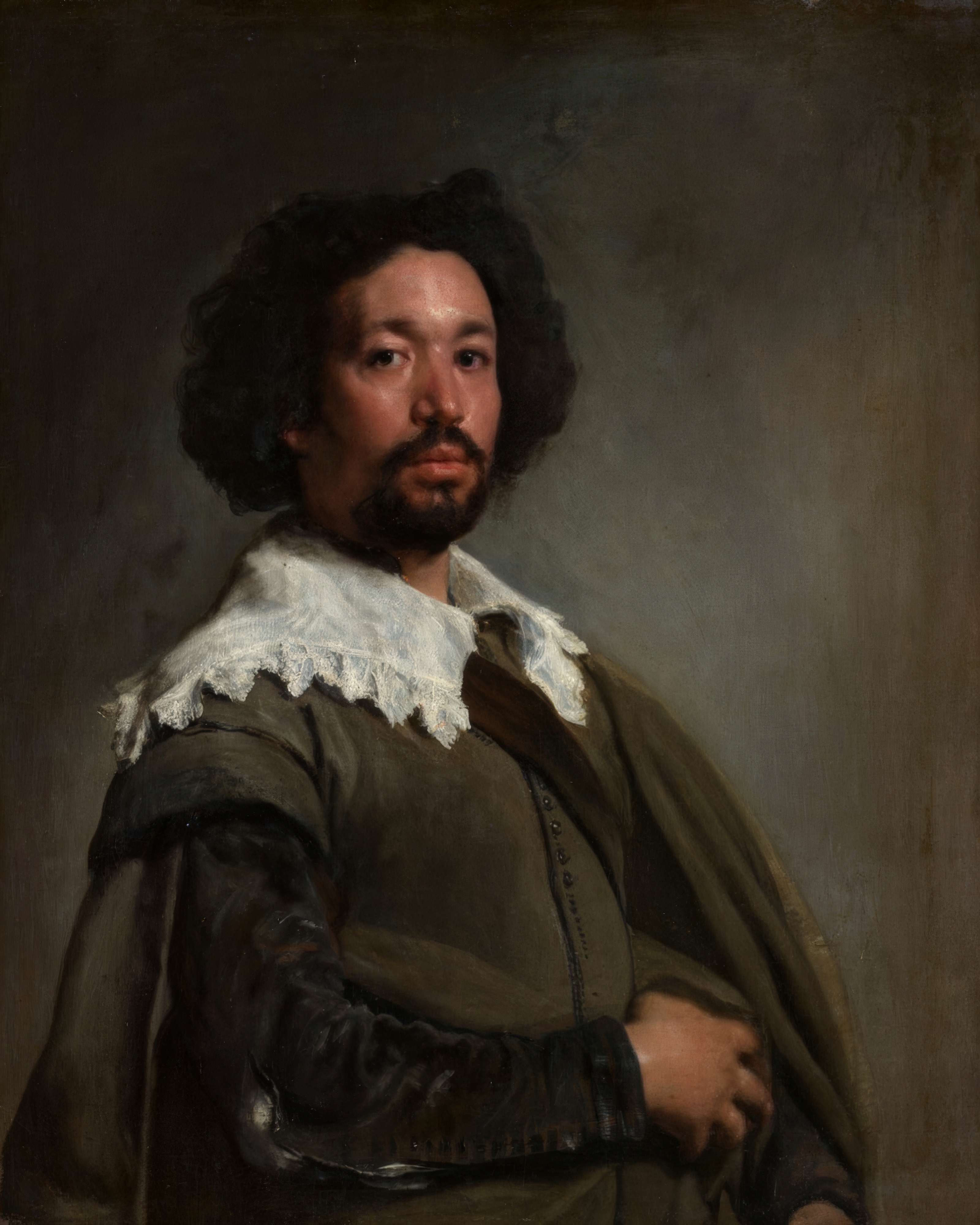
Velázquez, Juan de Pareja (ca. 1608–1670), 1650. Oil on canvas. The Metropolitan Museum of Art, New York.
Velázquez painted his assistant Juan de Pareja in Rome in 1650, and when it was shown at the Pantheon it was said to be the only truth among the pictures. Velázquez signed Pareja’s freedom papers in Rome the same year. In 1970 the Met paid a record price for it.
A portrait of great dignity for a study or a hallway.
24. The Rehearsal of the Ballet Onstage
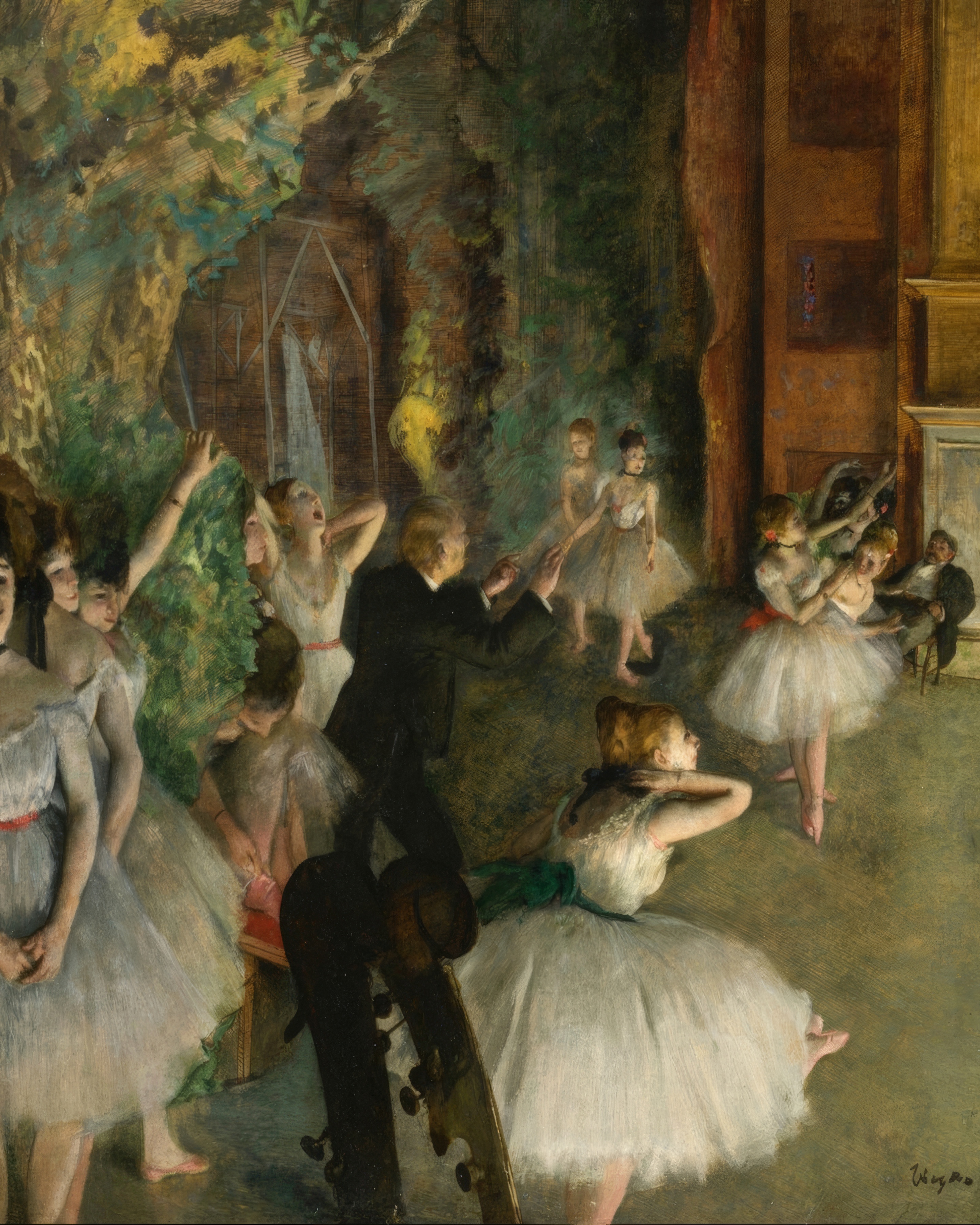
Edgar Degas, The Rehearsal of the Ballet Onstage, ca. 1874. Oil colors freely mixed with turpentine, with traces of watercolor and pastel over pen-and-ink drawing on cream-colored wove paper, laid down on bristol board and mounted on canvas. The Metropolitan Museum of Art, New York.
Degas spent years backstage at the Paris Opéra, and his dancers are often tired, bored or waiting. In this rehearsal of about 1874 the ballet master watches, the dancers stretch and the stage glows.
A graceful picture for a dressing room, a dance lover’s study or a hallway.
Create your portrait in this style
25. Stack of Wheat (Snow Effect, Overcast Day)
Claude Monet, Stack of Wheat (Snow Effect, Overcast Day), 1890–91. Oil on canvas. Art Institute of Chicago.
Monet painted the stacks of wheat beside his house again and again in 1890 and 1891, in every light and season. This winter version is all soft greys, whites and violets.
A quiet, wintry picture for a study or a hallway.
26. The Ancient of Days
William Blake, The Ancient of Days, 1794.
William Blake’s Ancient of Days, from his book Europe, a Prophecy of 1794, shows a creator measuring the world with a golden compass. Blake called it his favourite of all his designs.
A dramatic picture for a study, a library or a creative workspace.
27. The Fisherman at Kajikazawa
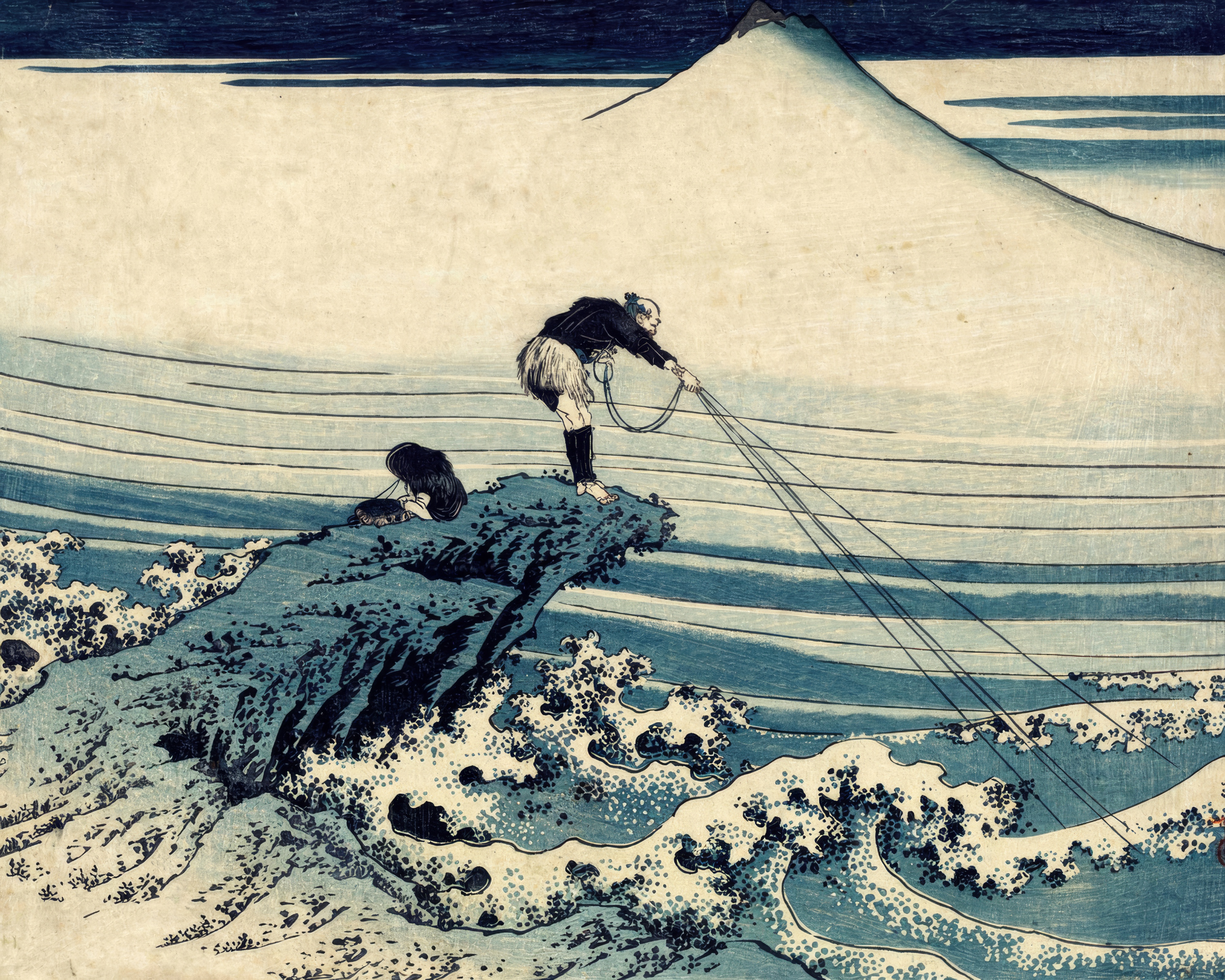
Katsushika Hokusai, The Fisherman at Kajikazawa, c. 1830/33. Color woodblock print; oban. Art Institute of Chicago.
From the same series as the Great Wave, Hokusai’s Thirty-Six Views of Mount Fuji: a fisherman on a rock over a swirling river, with Fuji faint behind. The deep Prussian blue made these prints famous.
A graphic, cool blue print for a hallway or a bathroom.
28. Plum Garden at Kameido
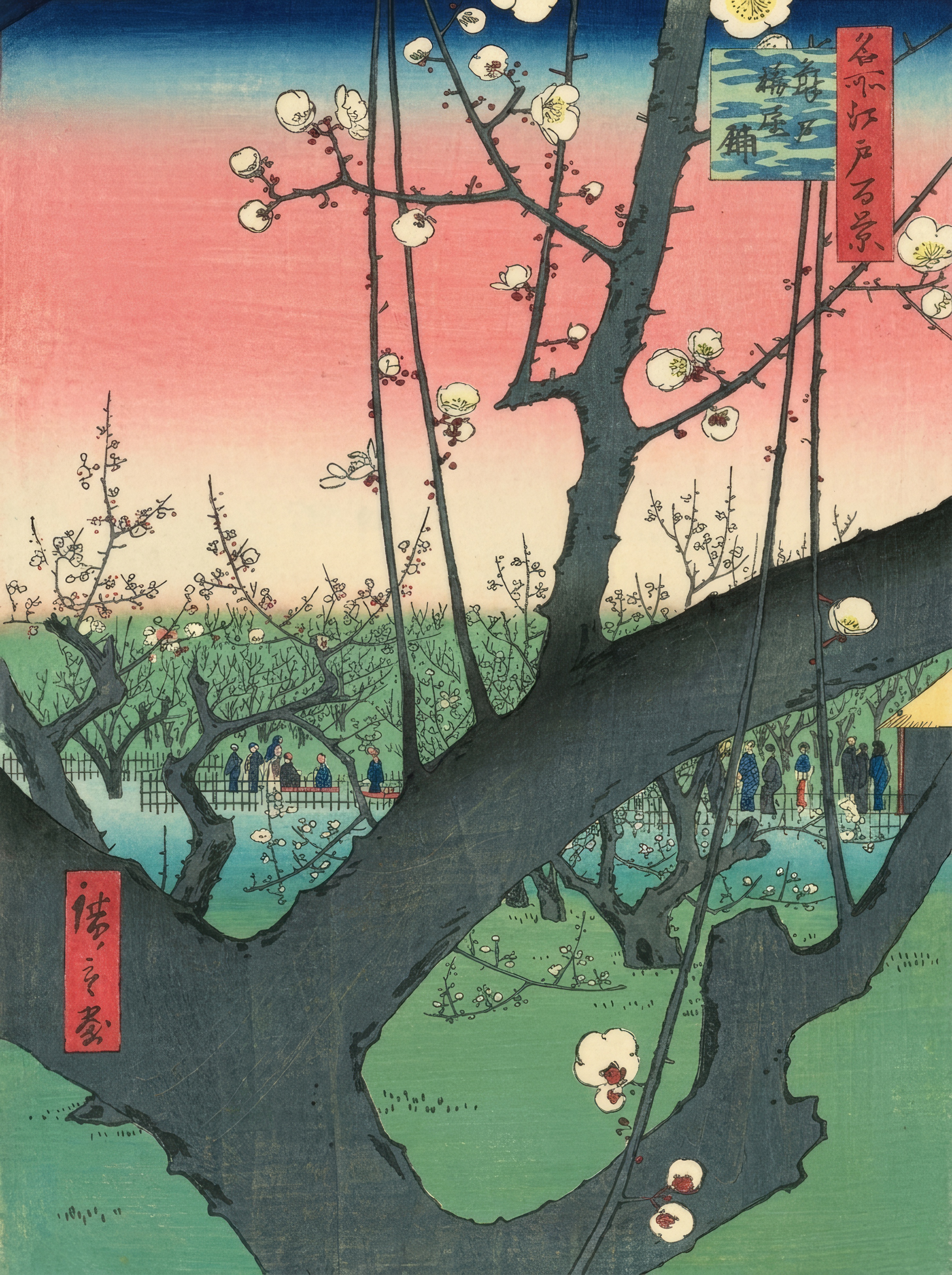
Utagawa Hiroshige, Plum Garden at Kameido, 1857. Color woodblock print; ōban. Art Institute of Chicago.
Hiroshige’s plum garden of 1857 is so bold that Van Gogh copied it in oil thirty years later. A dark branch crosses the picture in the foreground, and the garden blooms beyond it.
A bold, graphic print for a hallway, a stair or a Japandi room.
29. The Three Trees
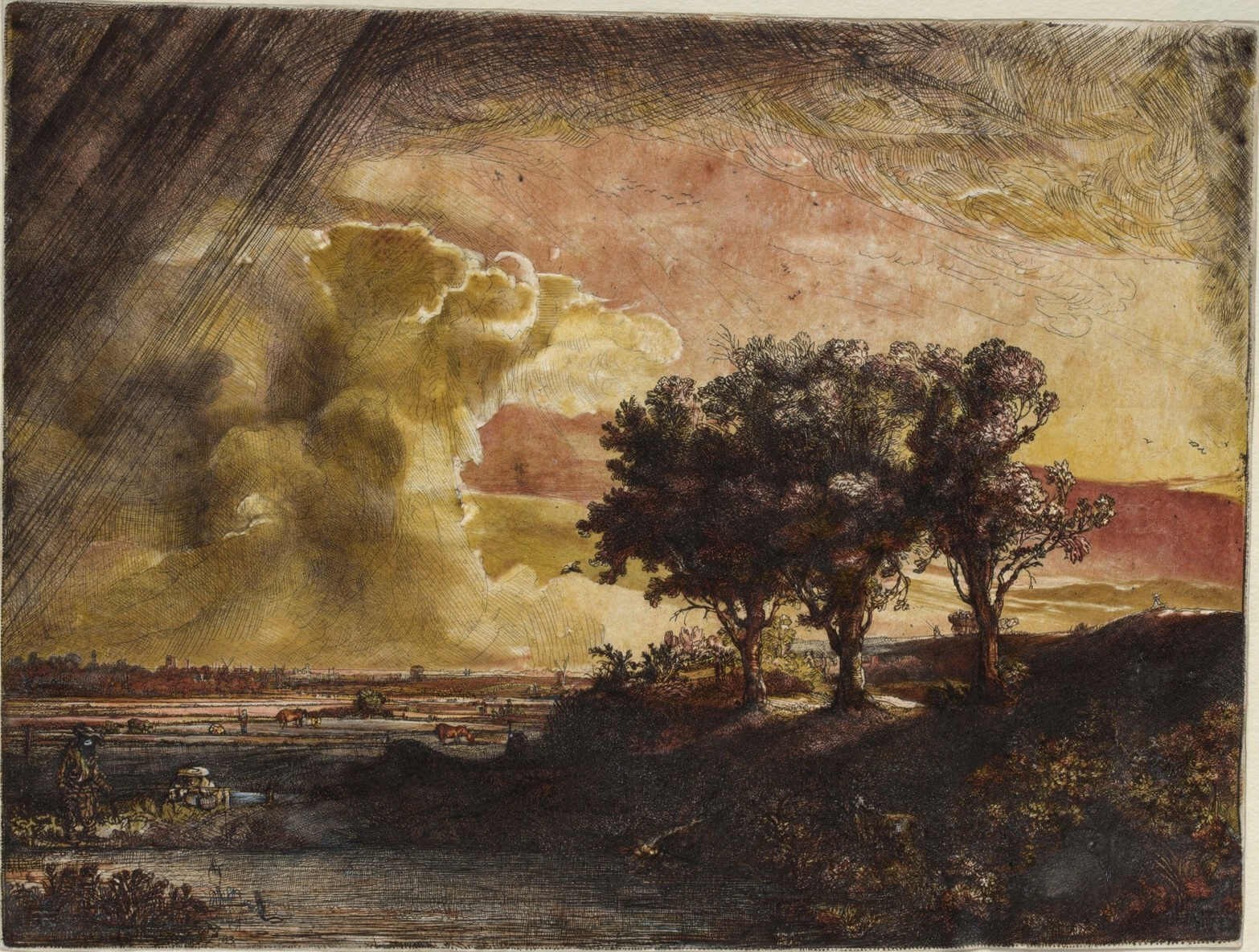
Rembrandt van Rijn, The Three Trees, 1643. Atelier colour edition of the etching. Cleveland Museum of Art.
Rembrandt’s Three Trees of 1643 is his largest landscape etching, with rain sweeping in on one side and sunlight breaking through on the other. Our atelier edition adds soft colour to his lines.
A wide, atmospheric print for above a desk.
30. Madame Charpentier and Her Children
Auguste Renoir, Madame Charpentier and Her Children, 1878. Oil on canvas. The Metropolitan Museum of Art, New York.
Renoir’s portrait of Madame Charpentier and her children was the success of the Paris Salon of 1879 and made his name. The children, the big dog and the fashionable Japanese drawing room still feel lively. It is the masterwork behind Fable’s Madame Charpentier style, for a family portrait.
A warm family portrait for a hallway or a family room.
Create your portrait in this style
Any of these pictures can move from room to room, of course: the rule is simply to match the mood of the work to the mood of the space. Wide, bright pictures open up living rooms, soft ones calm bedrooms, rich still lifes warm a table and strong faces hold a hallway. Every print is made from a museum scan and printed whole, never cropped to fit. For more by subject, browse famous landscape paintings, famous portrait paintings and famous still life paintings.
Questions
Can I buy prints of famous paintings?
Yes. Every painting in this list is in the public domain, and Fable prints it from the museum’s own scan as a fine art paper print or a canvas, without cropping.
What is the most famous painting I can hang at home?
Among the works here, Van Gogh’s Irises, Friedrich’s Wanderer above the Sea of Fog, Bruegel’s The Harvesters and Böcklin’s Isle of the Dead are some of the most recognised pictures in Western art.
Which famous painting is best for a living room?
Choose a wide picture with depth and plenty going on, such as The Harvesters, a Monet field or a Hudson River landscape. They give the eye somewhere to travel from across the room.
How big should a print be above a sofa?
Aim for a print, or a group of prints, about two thirds of the width of the sofa, hung with its lower edge 20 to 25 centimetres above the back.