Famous landscape paintings: 20 views to live with
From Bruegel’s harvest to Böcklin’s Isle of the Dead: twenty famous landscapes from Dutch skies to American mountains, what makes each one great, and where it looks best at home.
For most of history a landscape was only a background. Saints and kings stood in front, and the hills behind them were scenery. That changed slowly: Bruegel made the countryside the subject, the Dutch made the sky the subject, and by the nineteenth century painters from England to the Hudson River were treating a view as a way to talk about God, time, history and feeling.
The twenty landscapes below follow that story from 1565 to 1889. They come from the Met, the Art Institute of Chicago, the Cleveland Museum of Art, the V&A and collections across Europe, and each can be ordered as a print prepared from the museum’s own scan. Two of them, Warwick Castle and Linlithgow Palace, are also the masterworks behind Fable house portrait styles.
1. The Harvesters
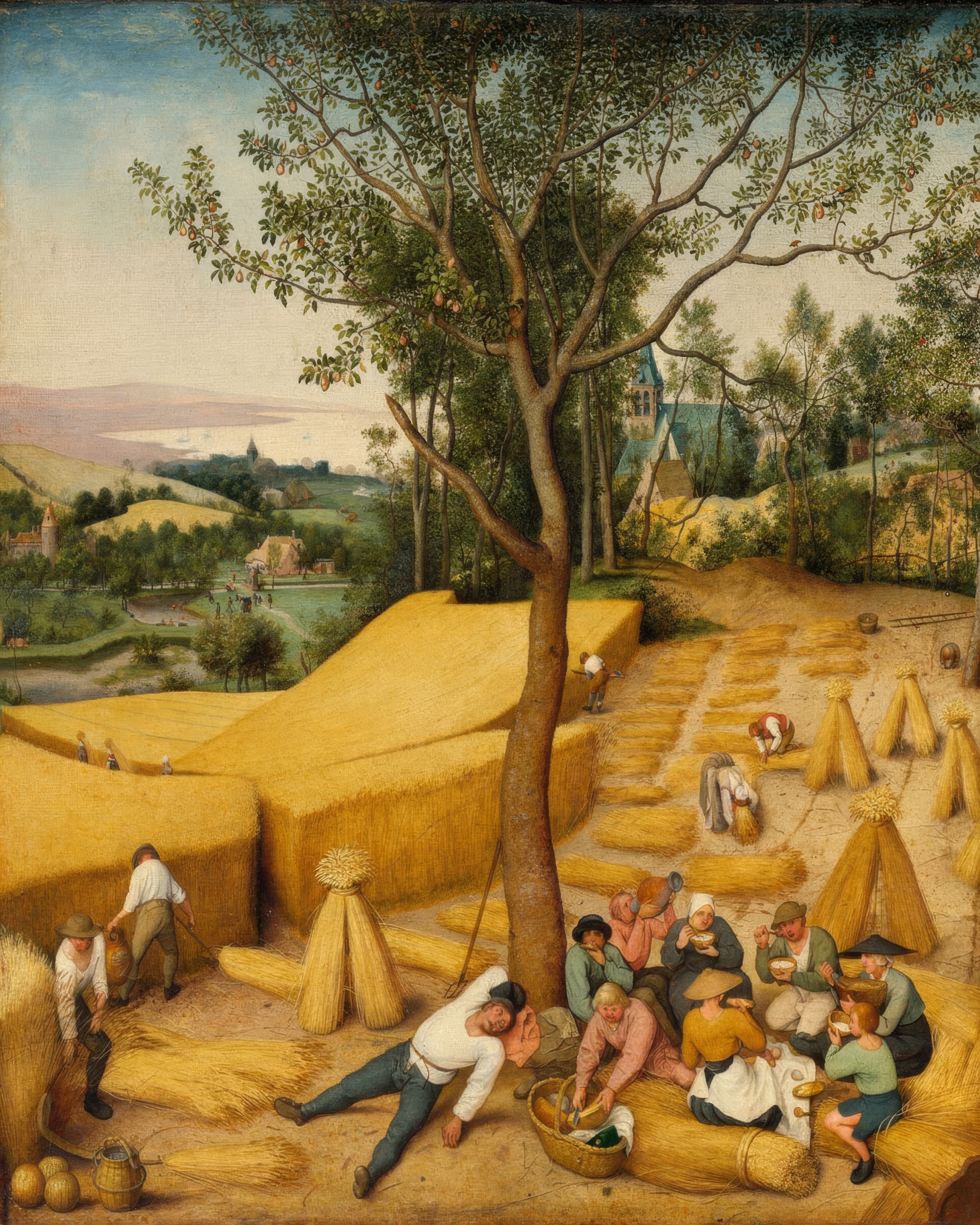
Pieter Bruegel the Elder, The Harvesters, 1565. Oil on wood. The Metropolitan Museum of Art, New York.
In 1565 Bruegel painted six pictures of the seasons for a merchant’s dining room in Antwerp. The Harvesters is late summer: some workers scythe the wheat, others eat bread and soup under a tree, one sleeps with his legs spread. Behind them the land runs all the way to the sea. It is one of the first great landscapes in European art.
2. Landscape with the Ruins of the Castle of Egmond
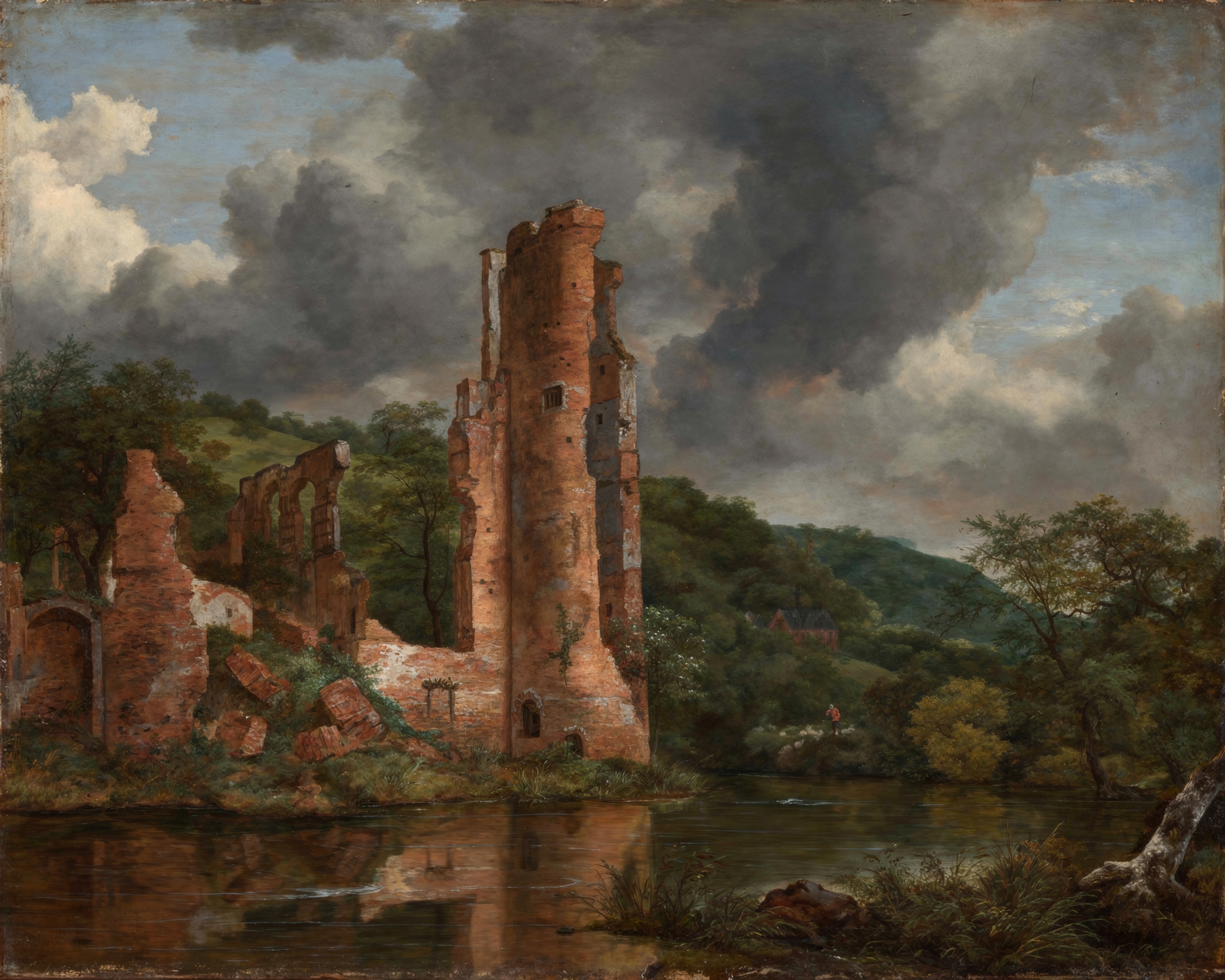
Jacob van Ruisdael, Landscape with the Ruins of the Castle of Egmond, 1650–55. Oil on canvas. Art Institute of Chicago.
Jacob van Ruisdael was the greatest of the Dutch landscape painters, and his true subject was the sky. Here clouds take up two thirds of the canvas, and the sunlight that breaks through them falls on fields, a village and the ruins of Egmond castle, destroyed in the war with Spain.
3. The Watermill with the Great Red Roof
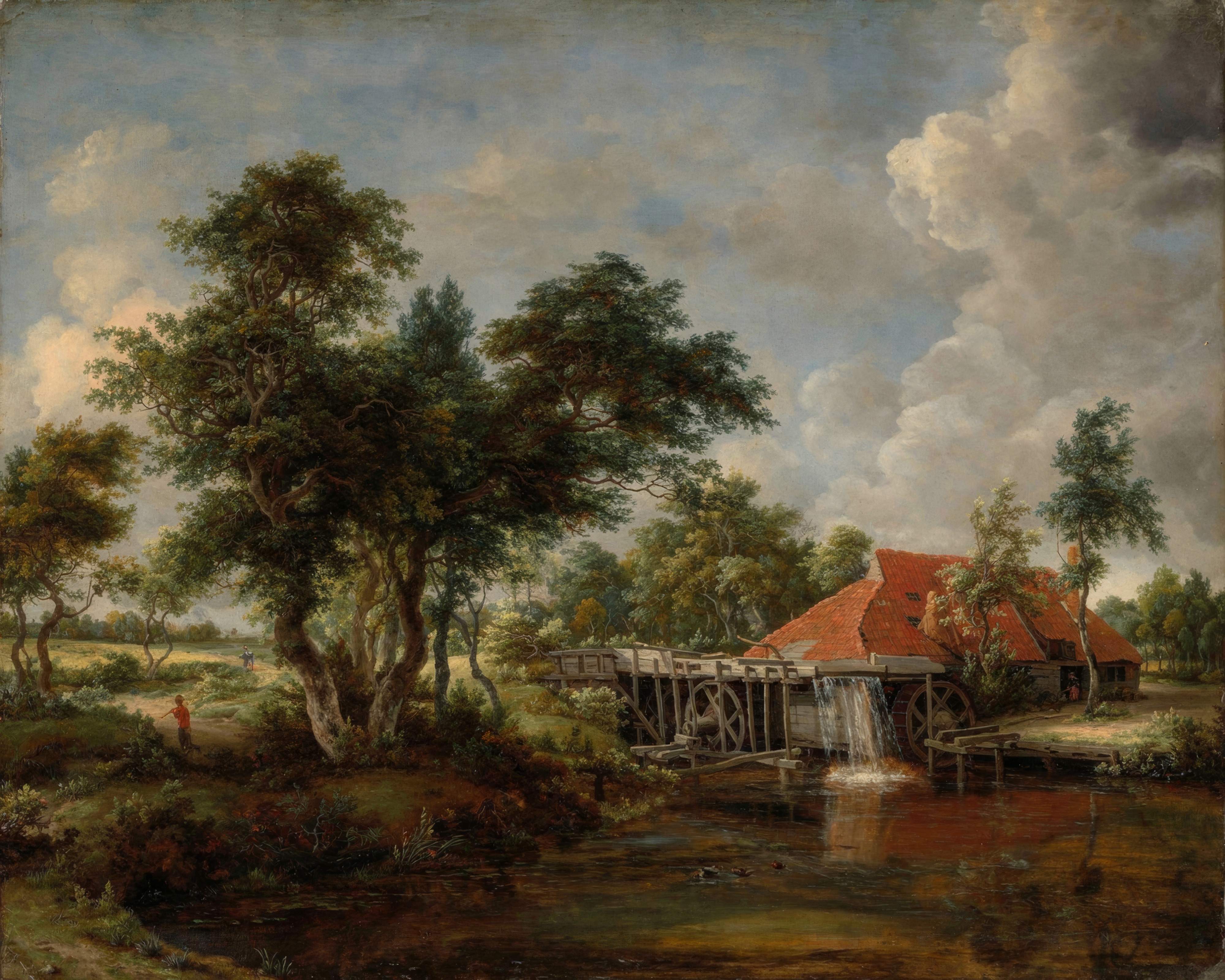
Meindert Hobbema, The Watermill with the Great Red Roof, c. 1665. Oil on canvas. Art Institute of Chicago.
Meindert Hobbema was Ruisdael’s pupil, and he made the watermill his signature subject. This one, with its bright red roof among dark woods, is among his best: calm, cool and full of quiet detail, from the wheel to the woman by the door.
4. View of Delphi with a Procession
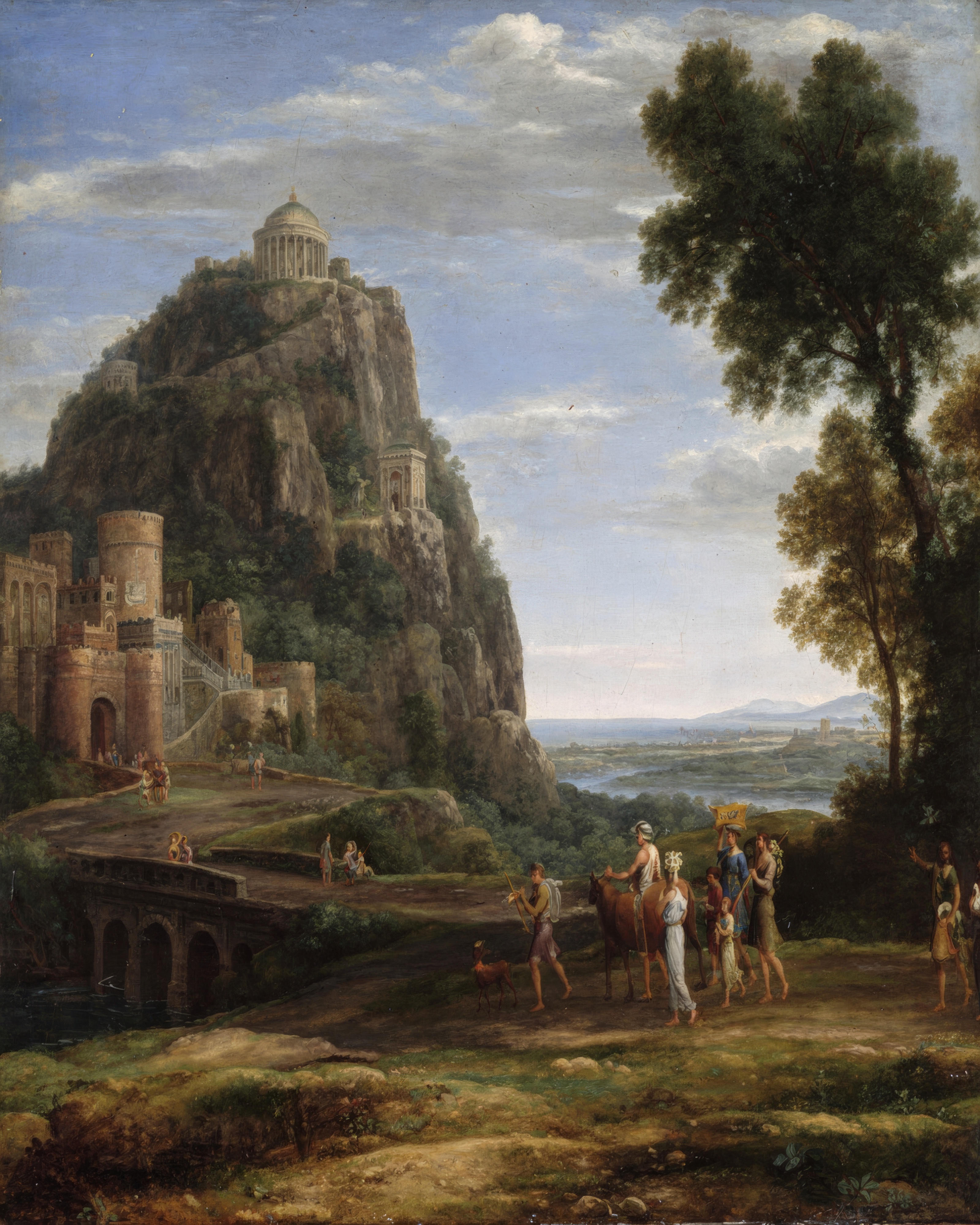
Claude Lorrain, View of Delphi with a Procession, 1673. Oil on canvas. Art Institute of Chicago.
Claude Lorrain invented the ideal landscape: soft golden light, feathery trees, a classical building and a distant view, arranged like a stage. Painted in 1673, this view of the sacred city of Delphi was copied by painters and garden designers for two hundred years.
5. The Waterfalls at Tivoli
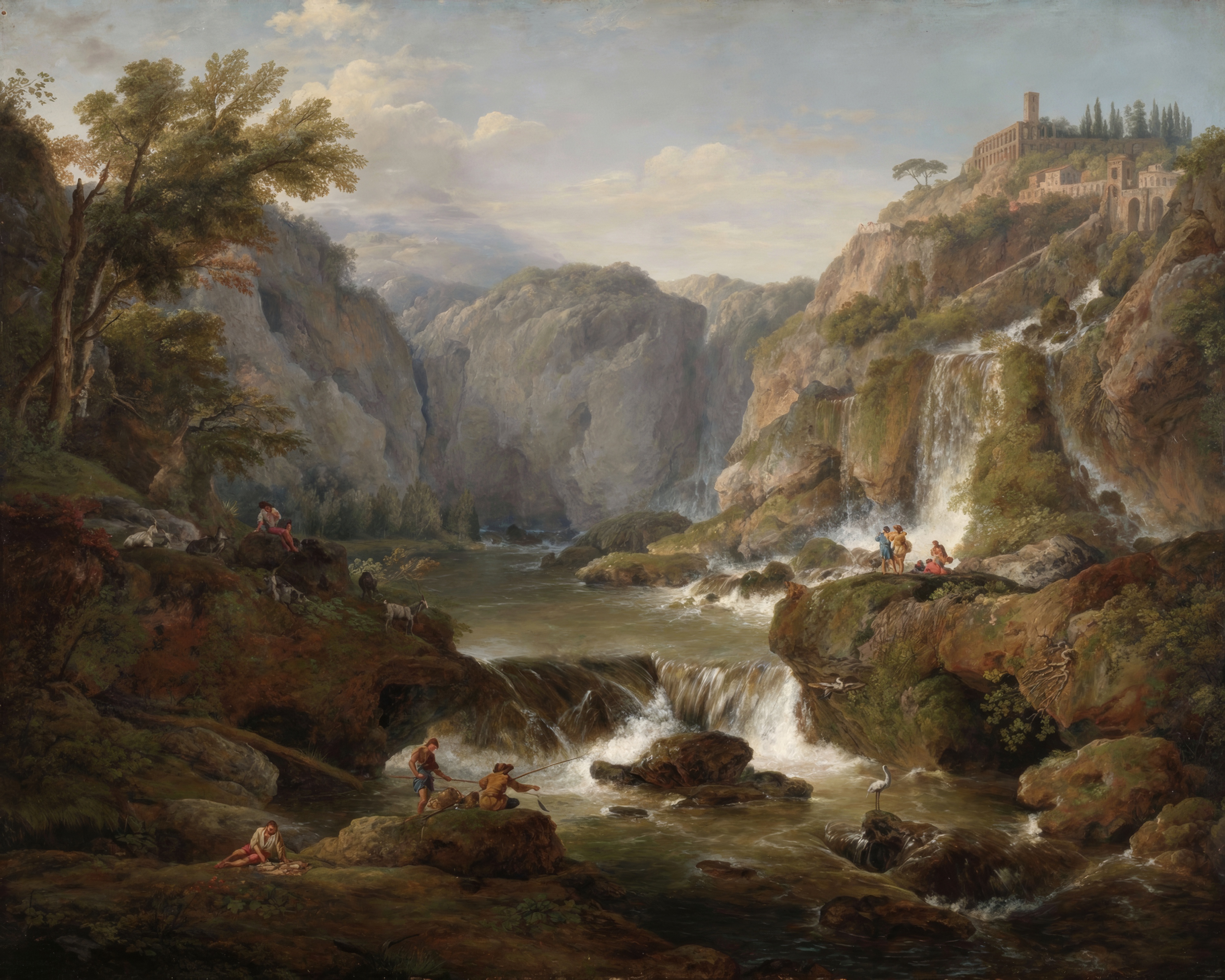
Claude-Joseph Vernet, The Waterfalls at Tivoli, 1737. Oil on canvas. Cleveland Museum of Art.
Every young painter in Rome made the trip to Tivoli to draw its waterfalls and its round Temple of the Sibyl. Claude-Joseph Vernet painted them at twenty-three, with the water crashing through the rocks and the old town catching the light above.
6. The South Front of Warwick Castle
Canaletto, The South Front of Warwick Castle, 1748. Oil on canvas. Museo Nacional Thyssen-Bornemisza, Madrid.
Canaletto spent nine years in England painting its great houses, and Warwick Castle was one of his favourite clients. He shows the south front glowing in clear light, with tiny figures strolling on the lawn below the towers.
This is the masterwork behind Fable’s Warwick Castle house portrait style: send a photo of your home and see it painted in Canaletto’s light.
Create your portrait in this style
7. Trees at Hampstead: The Path to Church
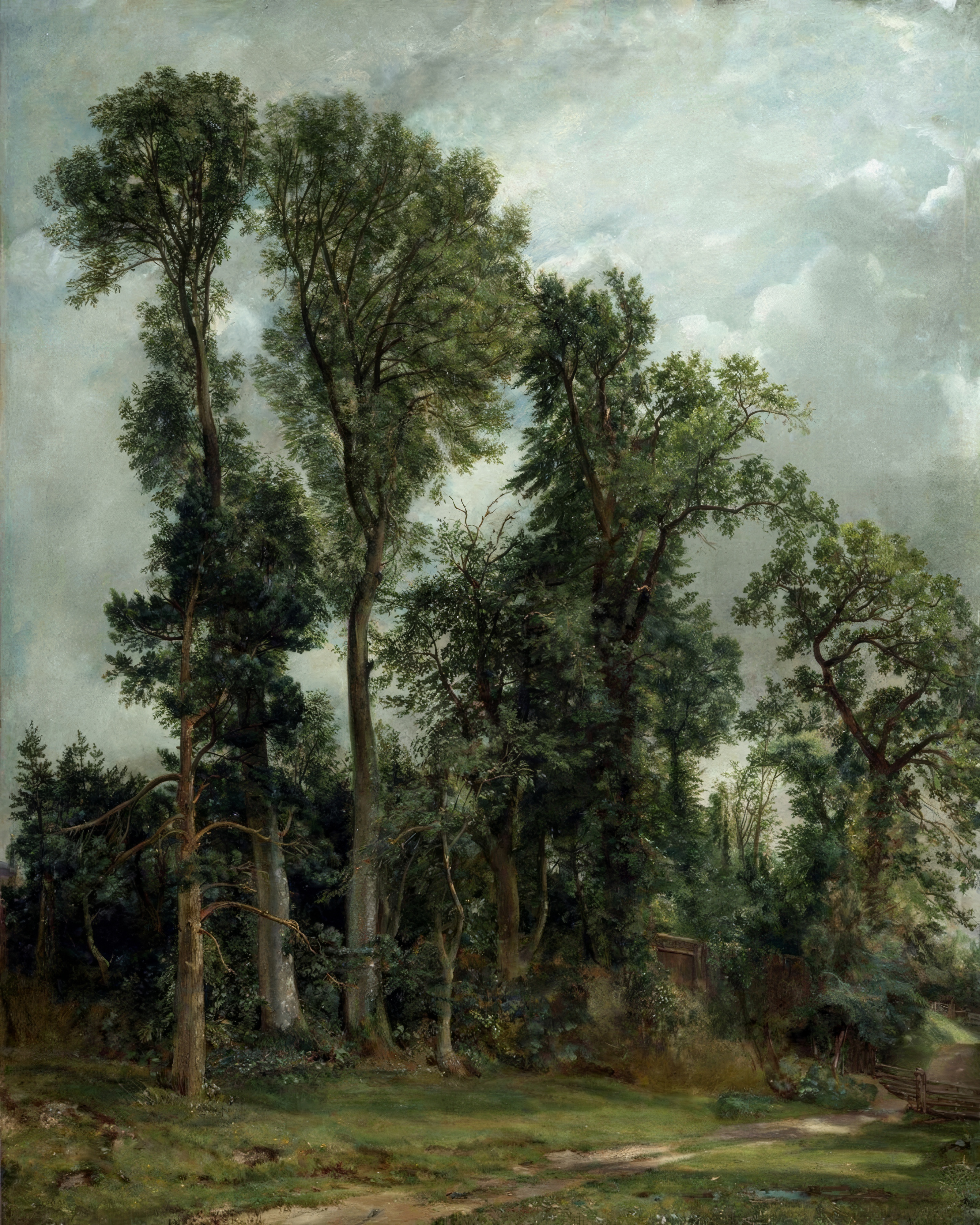
John Constable, Trees at Hampstead: The Path to Church, 1821. Victoria and Albert Museum, London.
Constable lived in Hampstead, then a village on the hill above London, and painted its trees and skies obsessively. These tall trees by the path to the church are studied like portraits, each one with its own shape and light.
8. Old Sarum
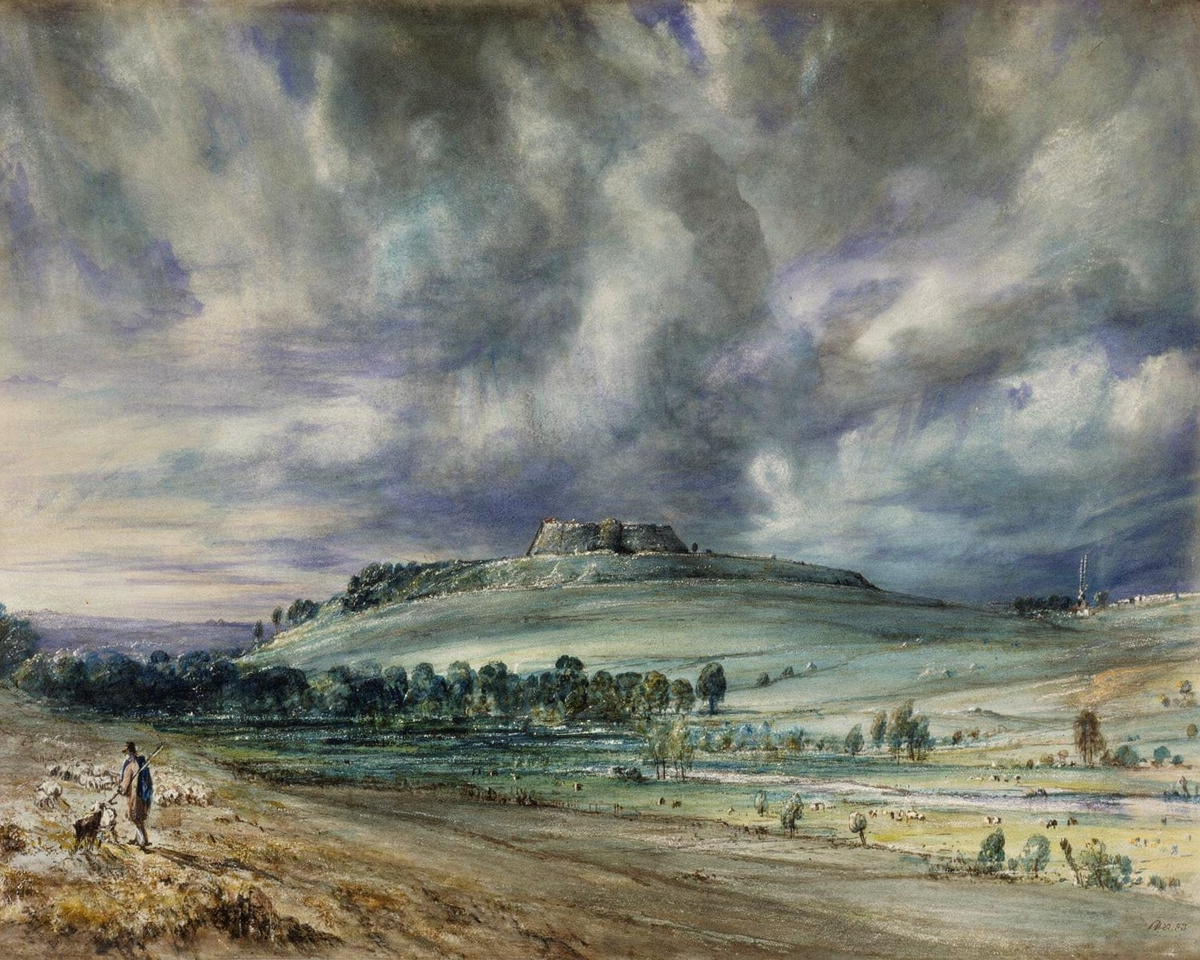
John Constable, Old Sarum, 1834. Victoria and Albert Museum, London.
Old Sarum was the site of the first Salisbury, abandoned in the Middle Ages and left as grassy mounds. Constable made this watercolour in 1834, after the death of his wife, and turned it into a picture of time and loss, with storm light and a rainbow over the empty hill.
A moody, dramatic picture for a study or a hallway with good light.
9. Linlithgow Palace
J. M. W. Turner, Linlithgow Palace, 1806. Oil on canvas. Walker Art Gallery, Liverpool.
Linlithgow, near Edinburgh, was the palace where Mary, Queen of Scots, was born. Turner painted it in 1806 as a ruin glowing in the evening sun above its loch, borrowing Claude Lorrain’s golden light for a Scottish view.
This is the masterwork behind Fable’s Linlithgow Palace house portrait style for your own home.
Create your portrait in this style
10. Wanderer above the Sea of Fog
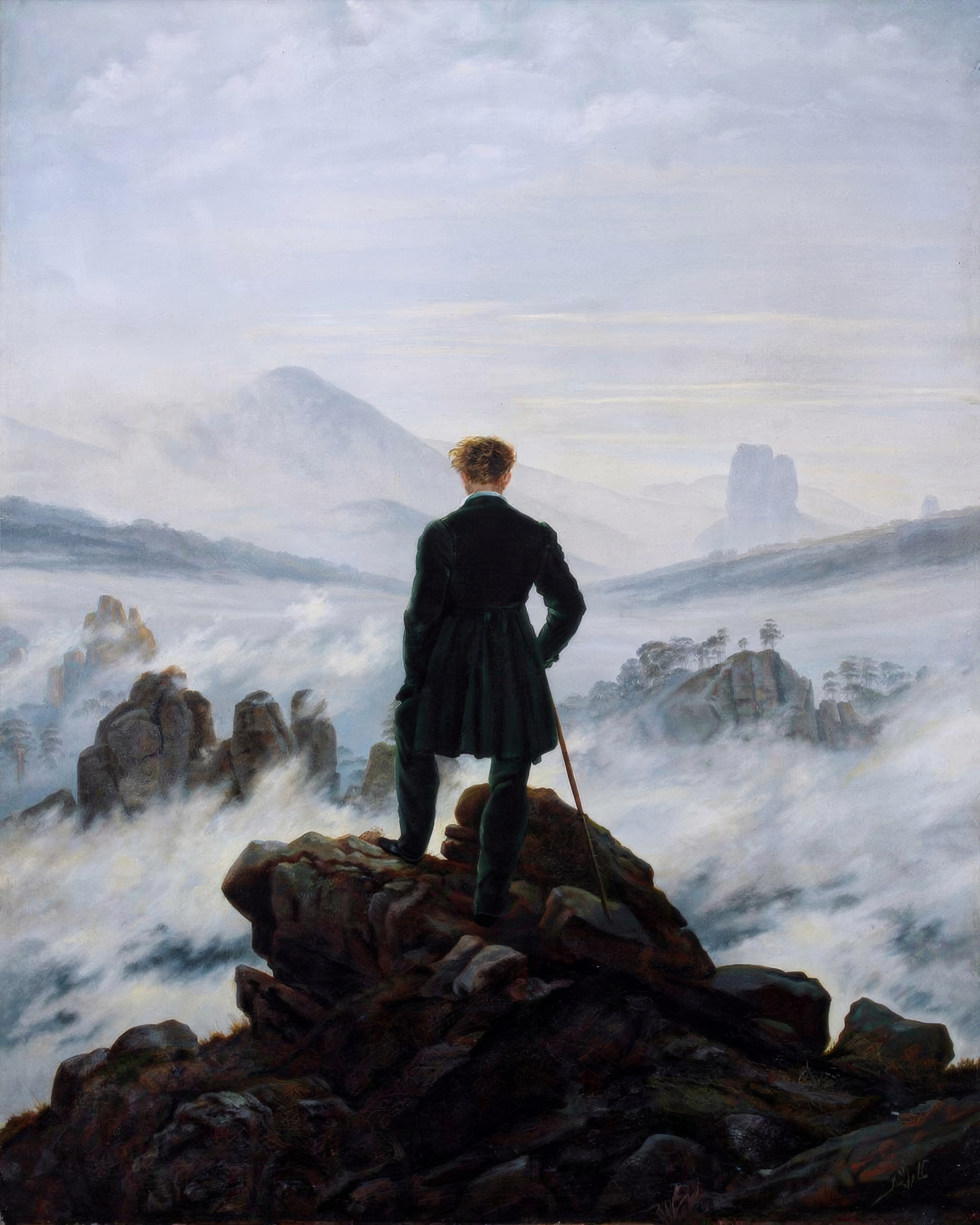
Caspar David Friedrich, Wanderer above the Sea of Fog, c. 1817. Oil on canvas. Hamburger Kunsthalle.
The most famous image of the Romantic movement. A man stands on a peak, his back turned, and looks out over fog that hides everything but distant rocks. We see what he sees, and we feel what he feels: smallness, awe and a kind of freedom.
11. View of Saleve, near Geneva
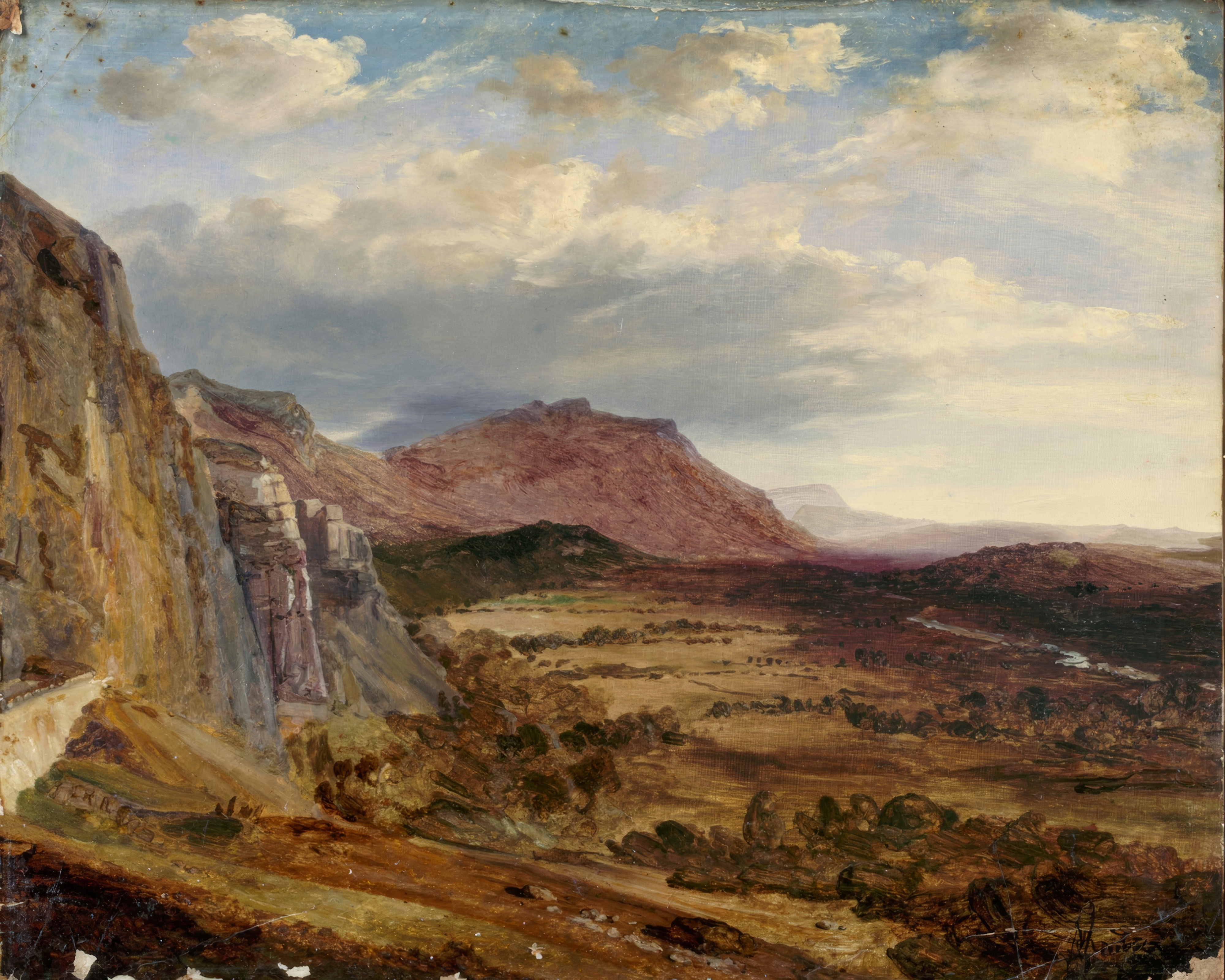
Théodore Rousseau, View of Saleve, near Geneva, 1834. Oil on paper, mounted to canvas. Art Institute of Chicago.
Théodore Rousseau was the leader of the Barbizon painters, who worked outdoors in the forest of Fontainebleau and paved the way for the impressionists. He painted this sweeping view of the Salève mountain near Geneva at twenty-two, in oil on paper.
12. The Valley of Les Puits-Noir
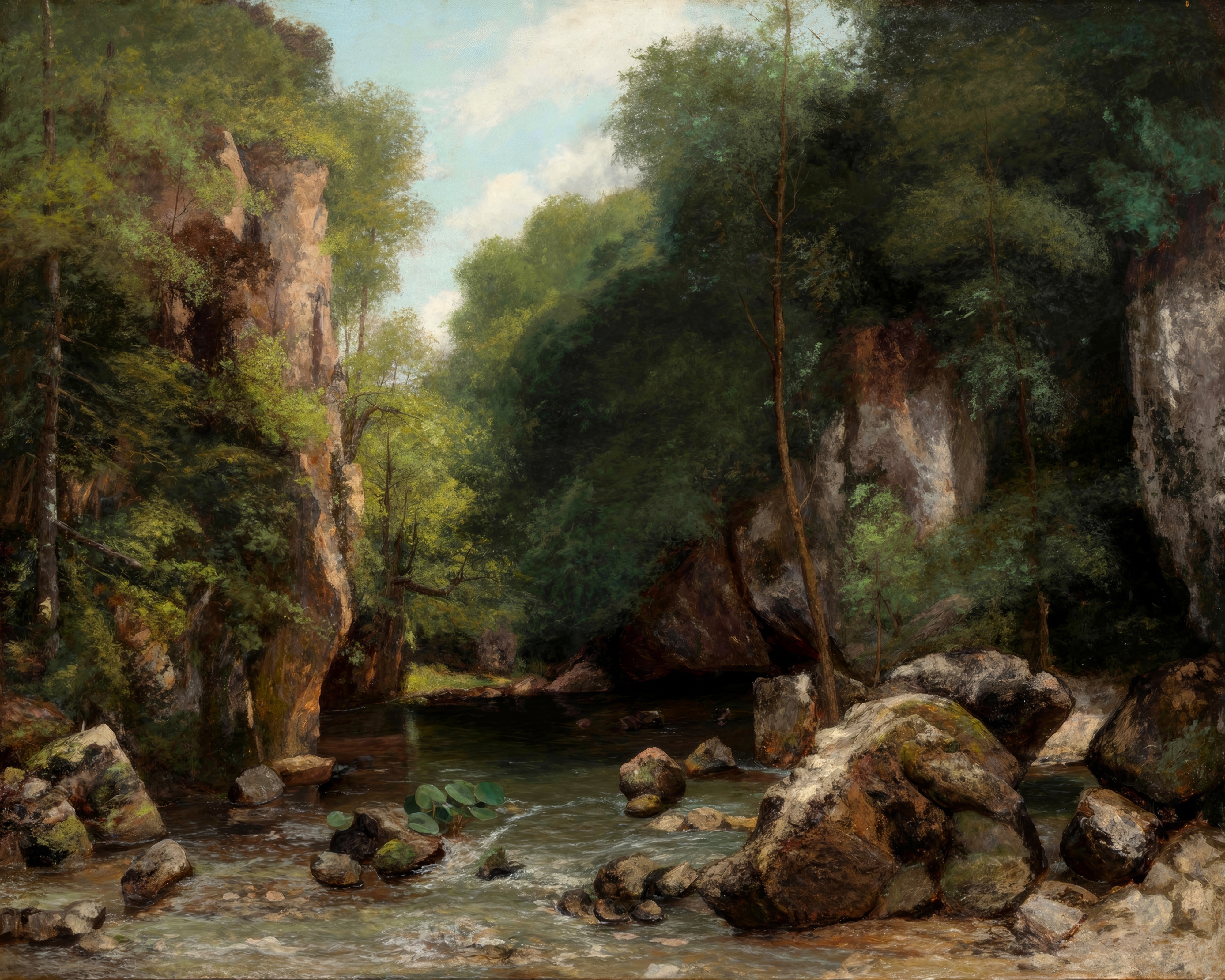
Gustave Courbet, The Valley of Les Puits-Noir, 1868. Oil on canvas. Art Institute of Chicago.
Courbet came from the Jura mountains and painted his home valleys with a palette knife, building up rock and moss like a mason. The Puits-Noir, the black well, was a secret ravine near his village of Ornans where a stream runs between steep green walls.
13. View of Cotopaxi
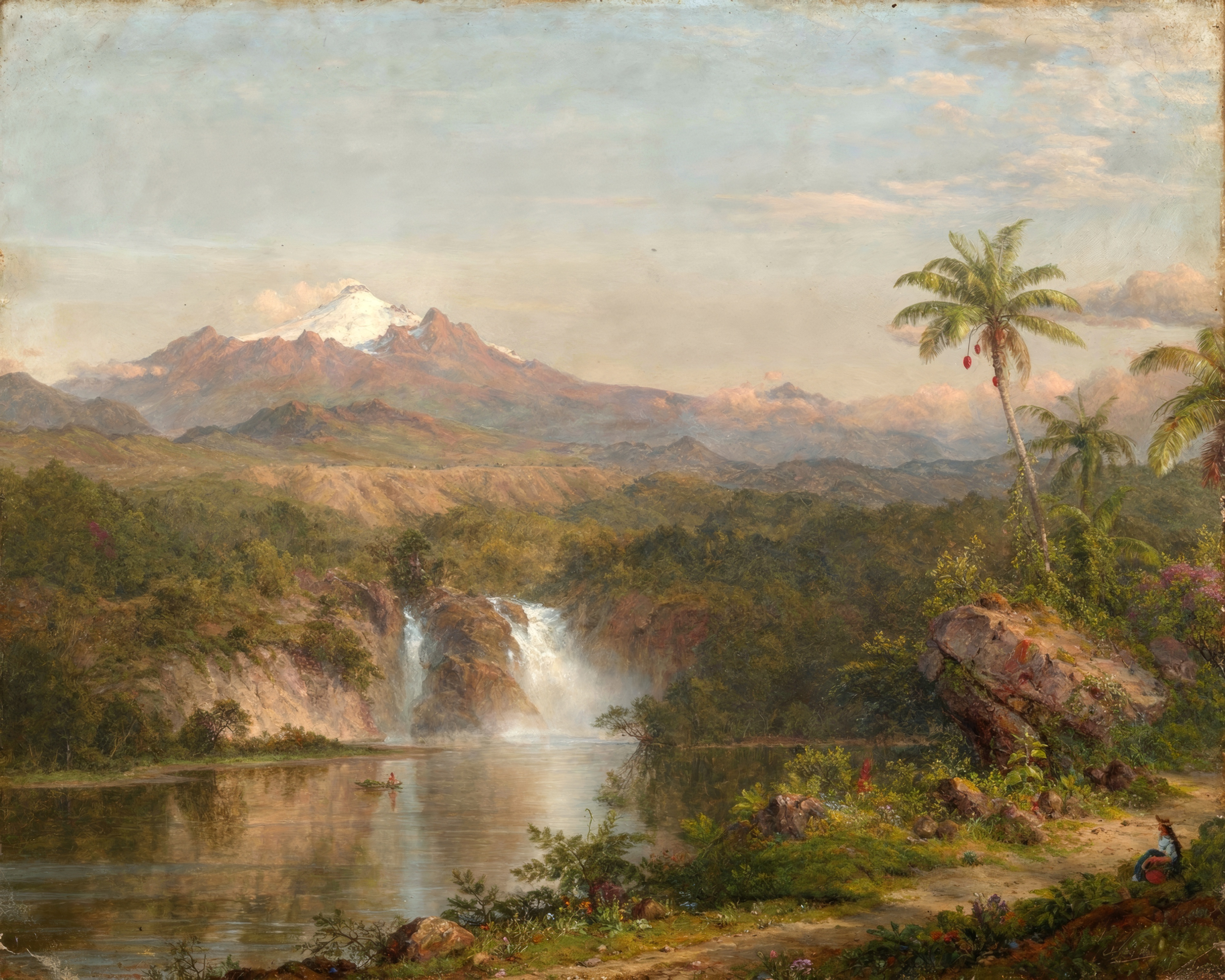
Frederic Edwin Church, View of Cotopaxi, 1857. Oil on canvas. Art Institute of Chicago.
Frederic Edwin Church followed the explorer Alexander von Humboldt to South America and came back with paintings no one in New York had seen before. Cotopaxi, a perfect cone of snow in the Ecuadorian Andes, rises above a valley of mist and waterfalls.
14. Mist Rising at Sunset in the Catskills
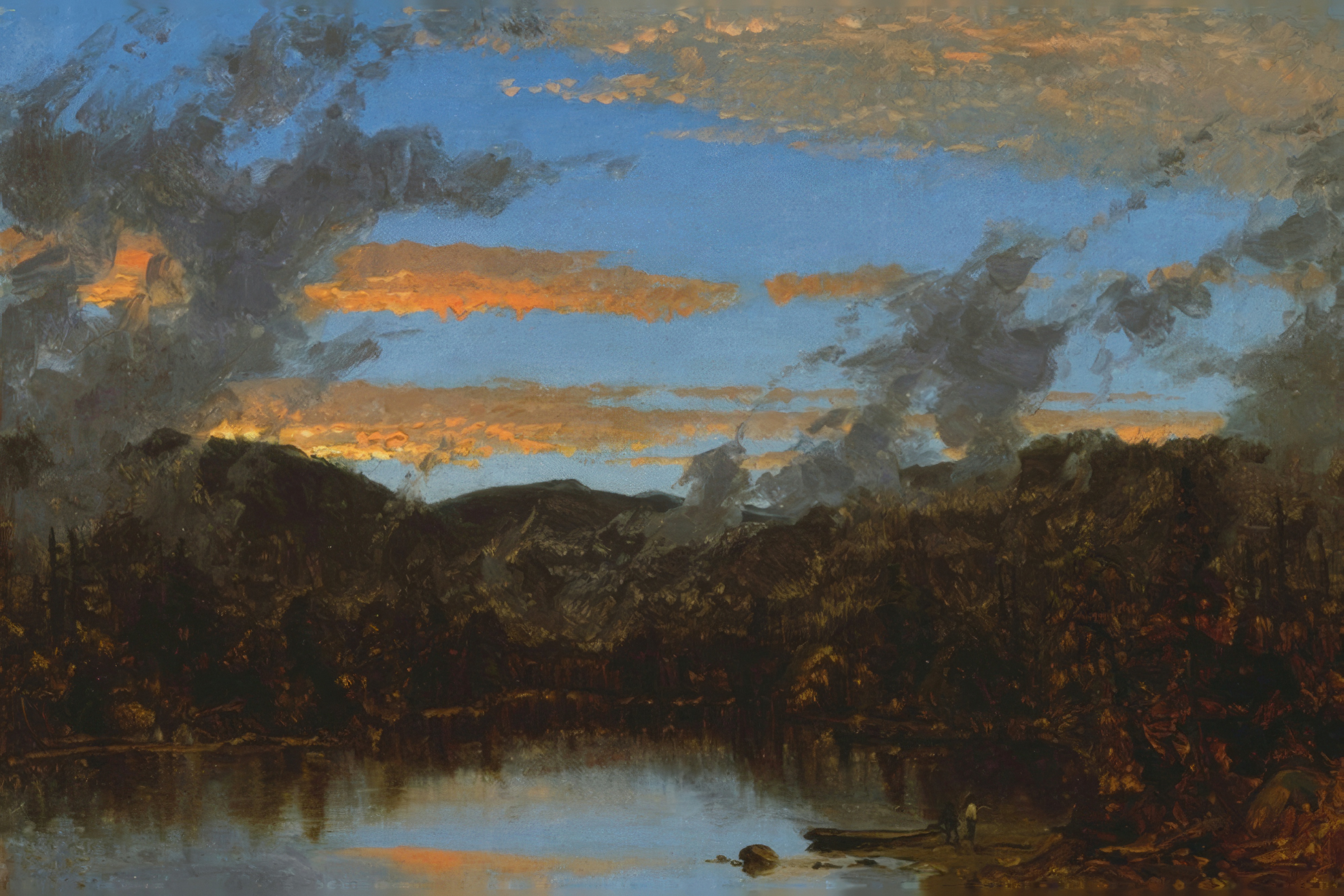
Sanford Robinson Gifford, Mist Rising at Sunset in the Catskills, c. 1861. Oil on canvas. Art Institute of Chicago.
Sanford Robinson Gifford was the poet of light among the Hudson River painters. In the Catskills at sunset, the mist rises off the lake and turns everything to gold, so that the hills seem to float.
Calm, warm and wide, it is a perfect picture to hang above a sofa or a bed.
15. Wyoming Valley, Pennsylvania
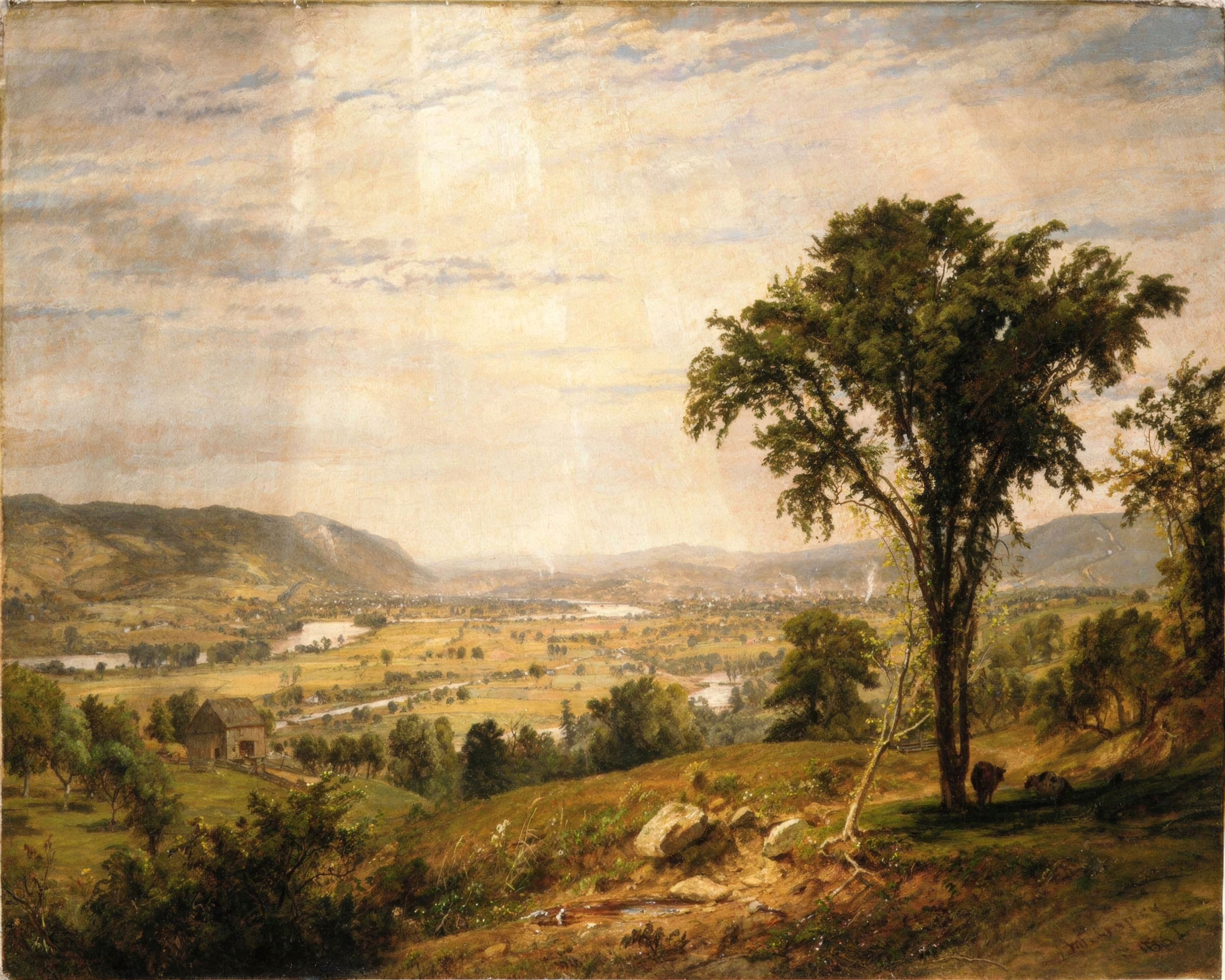
Jasper Francis Cropsey, Wyoming Valley, Pennsylvania, 1864. Oil on canvas. The Metropolitan Museum of Art, New York.
Jasper Francis Cropsey was famous for his autumn colour, and this panorama of the Wyoming Valley in Pennsylvania shows it at its best: a river winding through farms, with the trees beginning to turn.
16. Mount Vesuvius at Midnight
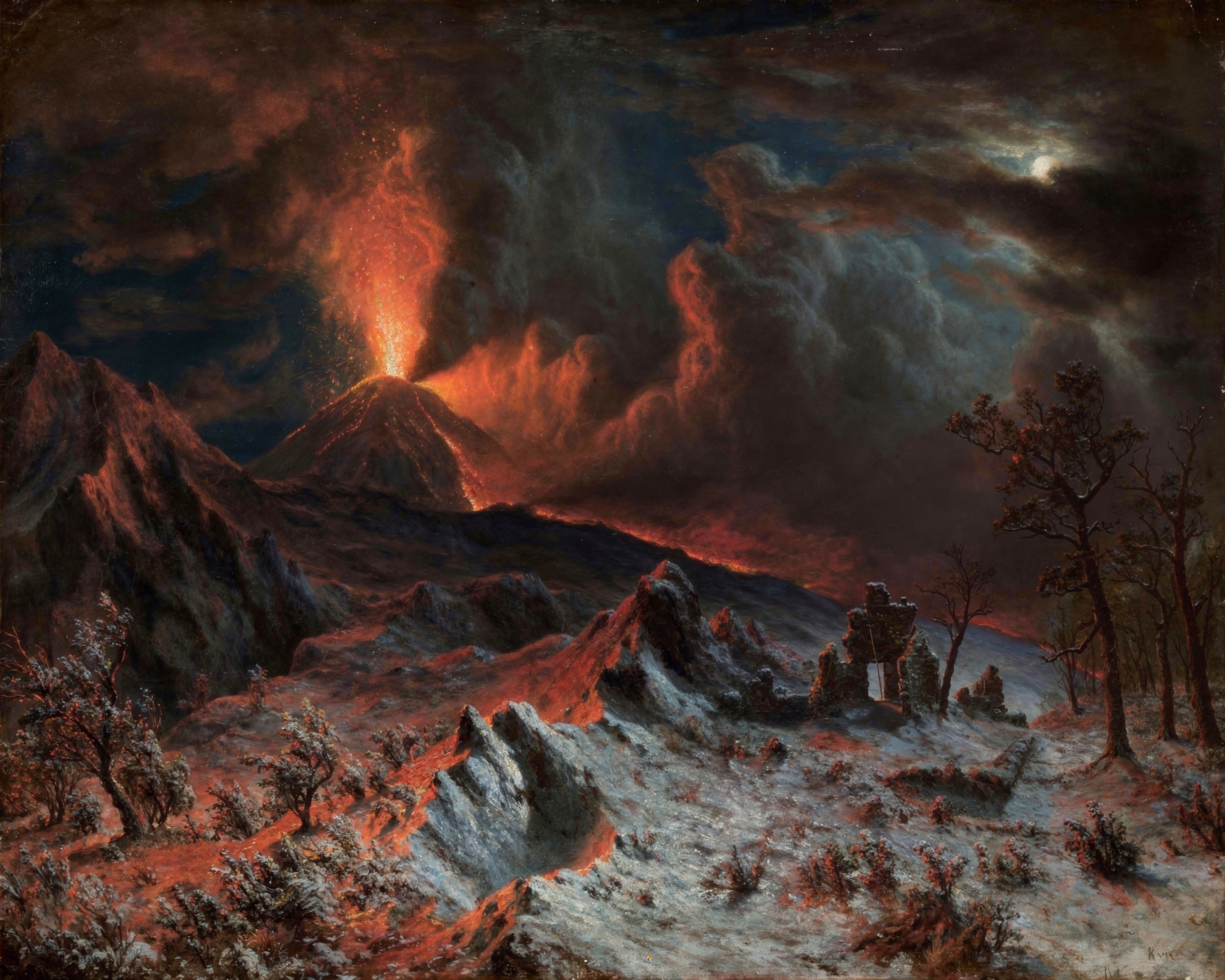
Albert Bierstadt, Mount Vesuvius at Midnight, 1868. Oil on canvas. Cleveland Museum of Art.
Albert Bierstadt is best known for the Rocky Mountains, but on a trip to Italy in 1868 he painted Vesuvius erupting at midnight, glowing red above the dark Bay of Naples. It is a picture made for a dramatic wall.
17. Vale of Kashmir
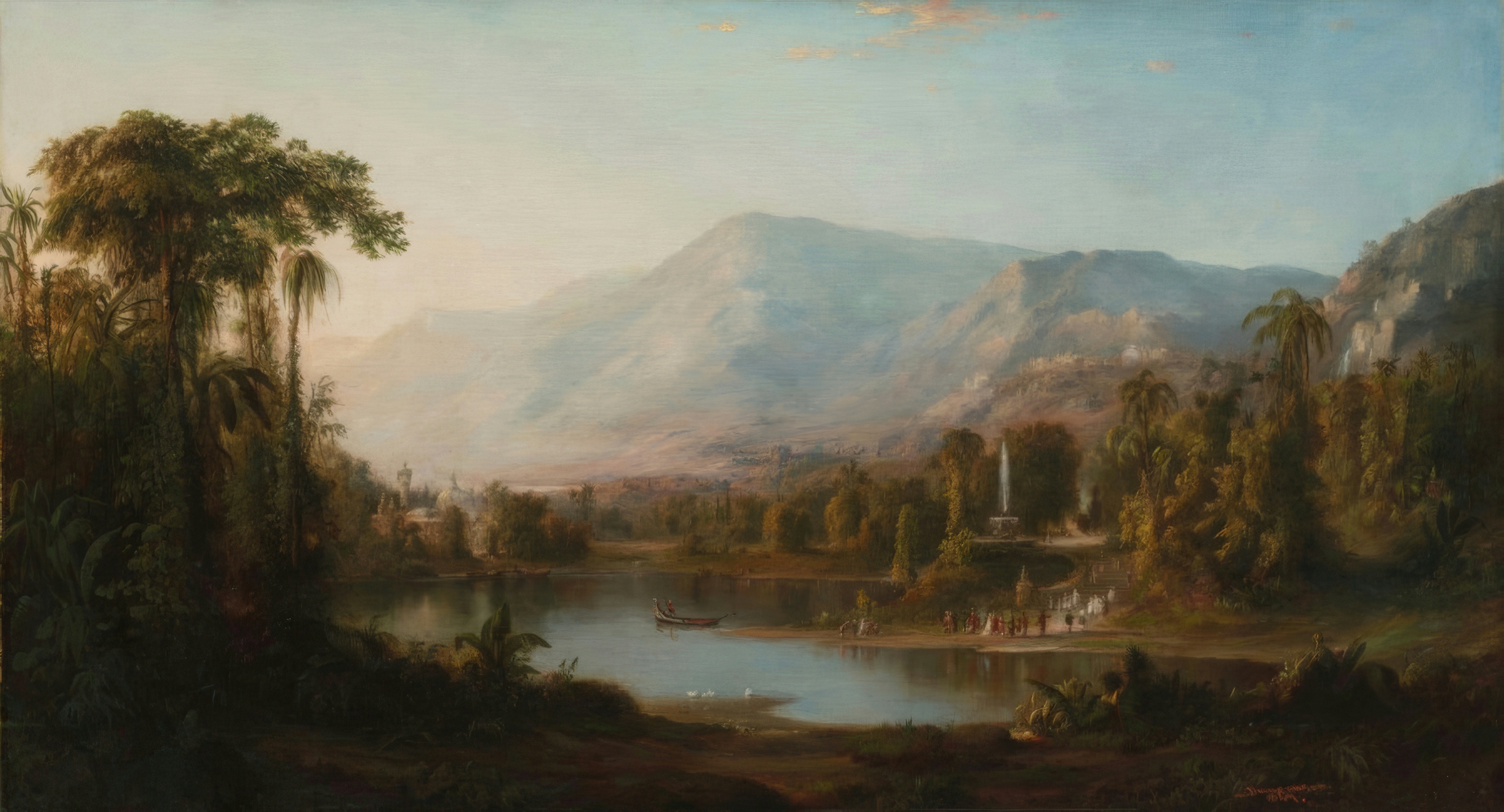
Robert S. Duncanson, Vale of Kashmir, 1867. Oil on canvas. Cleveland Museum of Art.
Robert S. Duncanson was the first African American painter to win international fame. He never went to Kashmir: this dreamy valley, painted in 1867, was inspired by a popular poem, Lalla Rookh, and shows the paradise of the poet’s imagination.
18. The Mill Pond
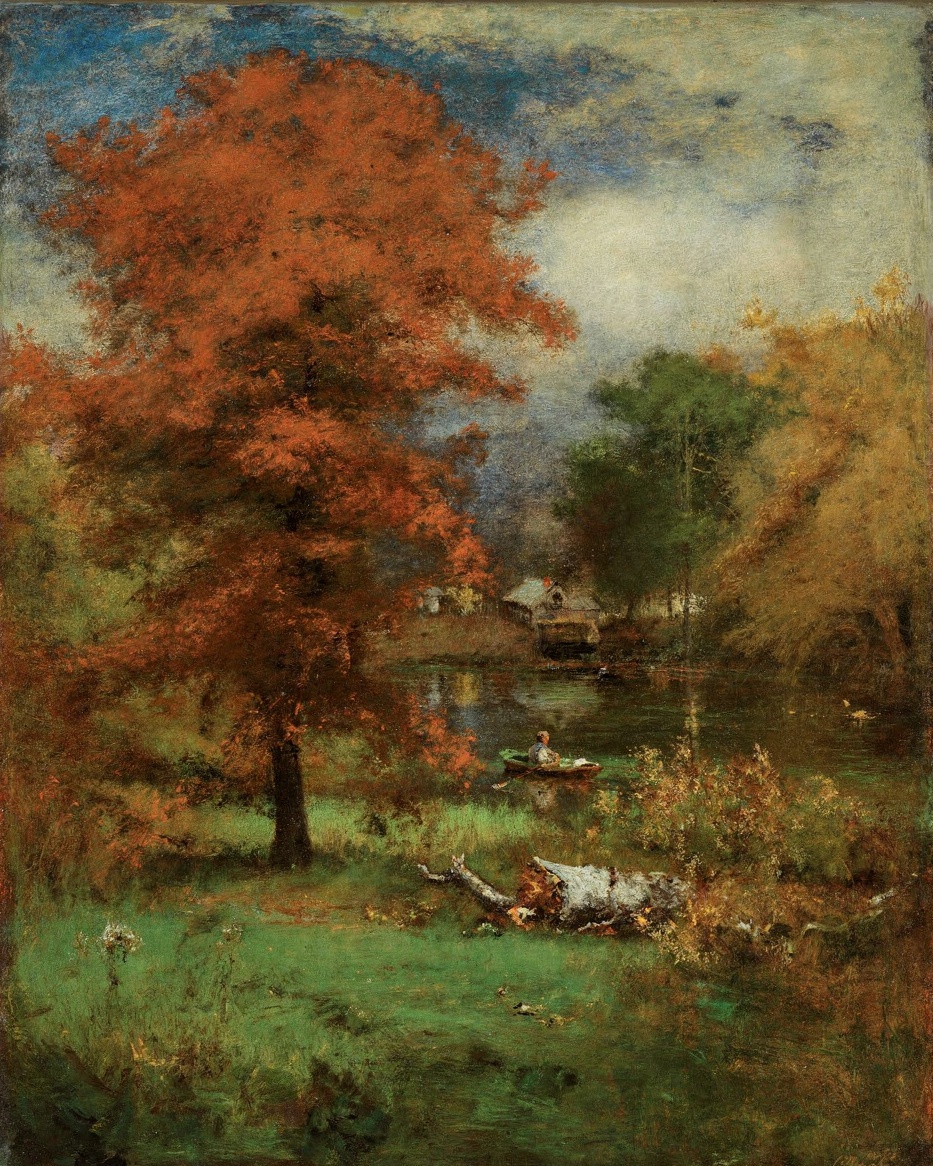
George Inness, The Mill Pond, 1889. Oil on canvas. Art Institute of Chicago.
In his later years the American painter George Inness stopped painting places and started painting moods. The Mill Pond, from 1889, is a landscape almost dissolving into haze and warm light, closer to a memory than a view.
19. Prout's Neck, Breakers
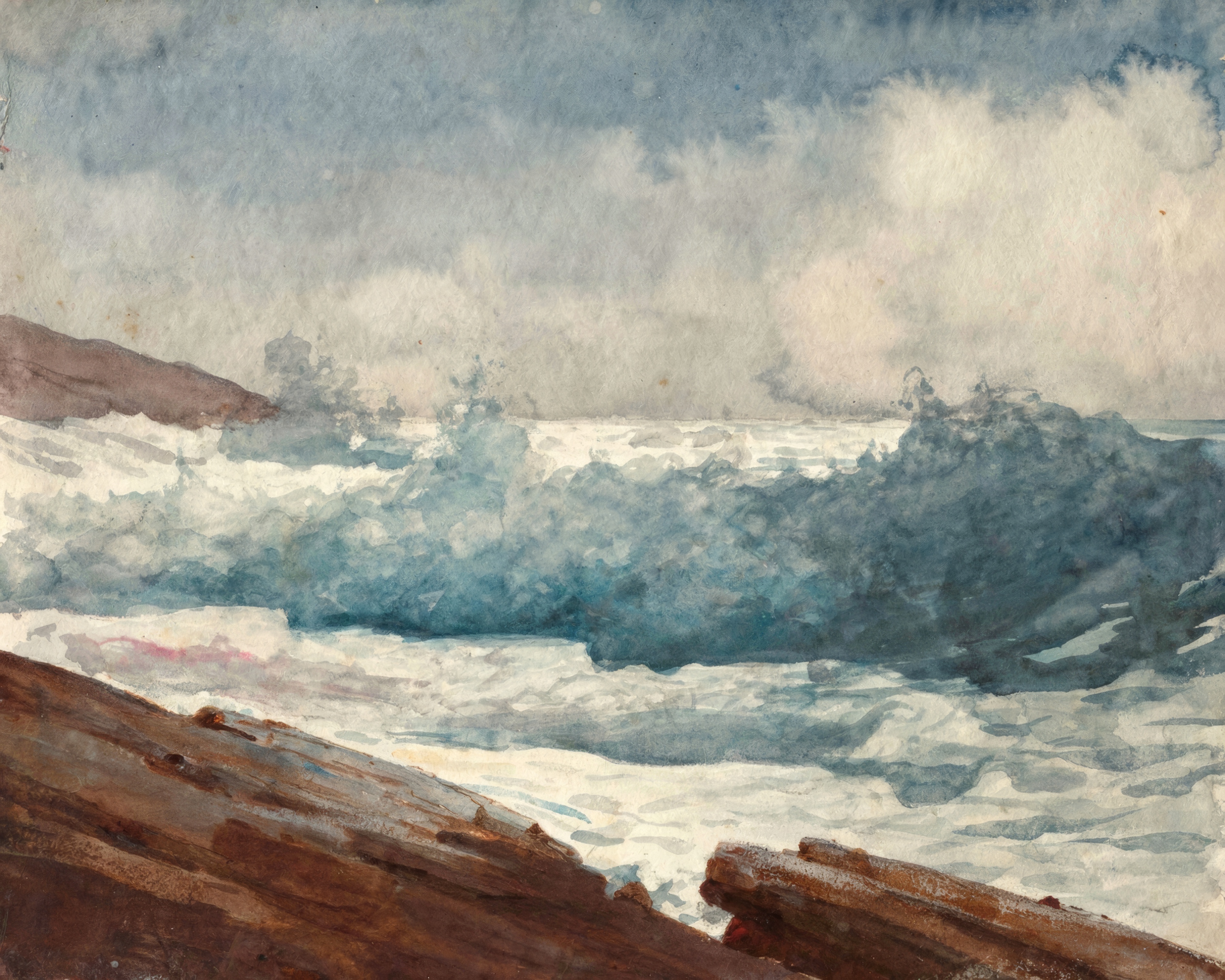
Winslow Homer, Prout's Neck, Breakers, 1883. Watercolor, with blotting and sanding, over charcoal, on moderately thick, moderately textured, ivory wove paper. Art Institute of Chicago.
Winslow Homer moved to Prout’s Neck on the coast of Maine in 1883 and spent the rest of his life painting the sea against its rocks. This watercolour, one of the first he made there, catches a breaker at the moment it explodes.
20. Isle of the Dead
Arnold Böcklin, Isle of the Dead, 1880. Oil on canvas. Kunstmuseum Basel.
Arnold Böcklin painted five versions of this mysterious island between 1880 and 1886. A boat carries a white figure and a coffin across still water towards a rocky island of cypresses. Rachmaninov wrote a tone poem after it, reproductions hung in thousands of homes, and it remains one of the most haunting landscapes ever painted.
A landscape is the most forgiving picture you can hang. It opens a wall like a window, it suits almost any room, and it never tires. Hang a wide view, such as Cotopaxi or the Wyoming Valley, above a sofa or a sideboard where its horizon can sit at eye level. Keep the moody ones, Old Sarum or the Isle of the Dead, for a study or a hallway. For seasonal picks, see our guides to winter landscape paintings and autumn paintings.
Questions
What is the most famous landscape painting?
The Great Wave off Kanagawa, The Starry Night and The Hay Wain are often named, along with Bruegel’s Hunters in the Snow and Friedrich’s Wanderer above the Sea of Fog. Bruegel’s The Harvesters at the Met is one of the most famous landscapes in America.
Who are the greatest landscape painters?
Pieter Bruegel the Elder, Jacob van Ruisdael, Claude Lorrain, J. M. W. Turner, John Constable, Caspar David Friedrich, Claude Monet, and in America Frederic Edwin Church, Albert Bierstadt and the Hudson River School.
Which landscape painting suits a living room?
A wide, calm view with a clear horizon and plenty of sky, such as Ruisdael’s Egmond, Cropsey’s Wyoming Valley or Gifford’s Mist Rising. Hang it large, with its centre at about eye level.
Can I order a famous landscape as a print?
Yes. Every landscape in this list can be ordered as a print on paper or canvas, prepared from the museum’s own high-resolution scan.