Winter landscape paintings: 15 snowy scenes for the season
Monet’s snowy roads, Courbet’s village, a frozen Dutch canal, Hiroshige’s snow garden and a Christmas morning in Denmark: fifteen winter scenes to hang from the first frost to spring.
Snow is one of the hardest things to paint. It is white, but never only white: blue in shadow, pink at sunset, grey under cloud, gold where the light hits. The painters who loved winter learned to see all of those colours, and the best winter pictures are among the most beautiful in art.
The fifteen below range from a Chinese scroll and a frozen Dutch canal to Monet’s first snow scenes and a Danish Christmas morning. Each can be ordered as a print prepared from the museum’s own scan, and Monet’s Cart on the Snowy Road at Honfleur is also the masterwork behind a Fable house portrait style, so you can see your own home under the same snow.
1. Traveling through Snow-Covered Mountains
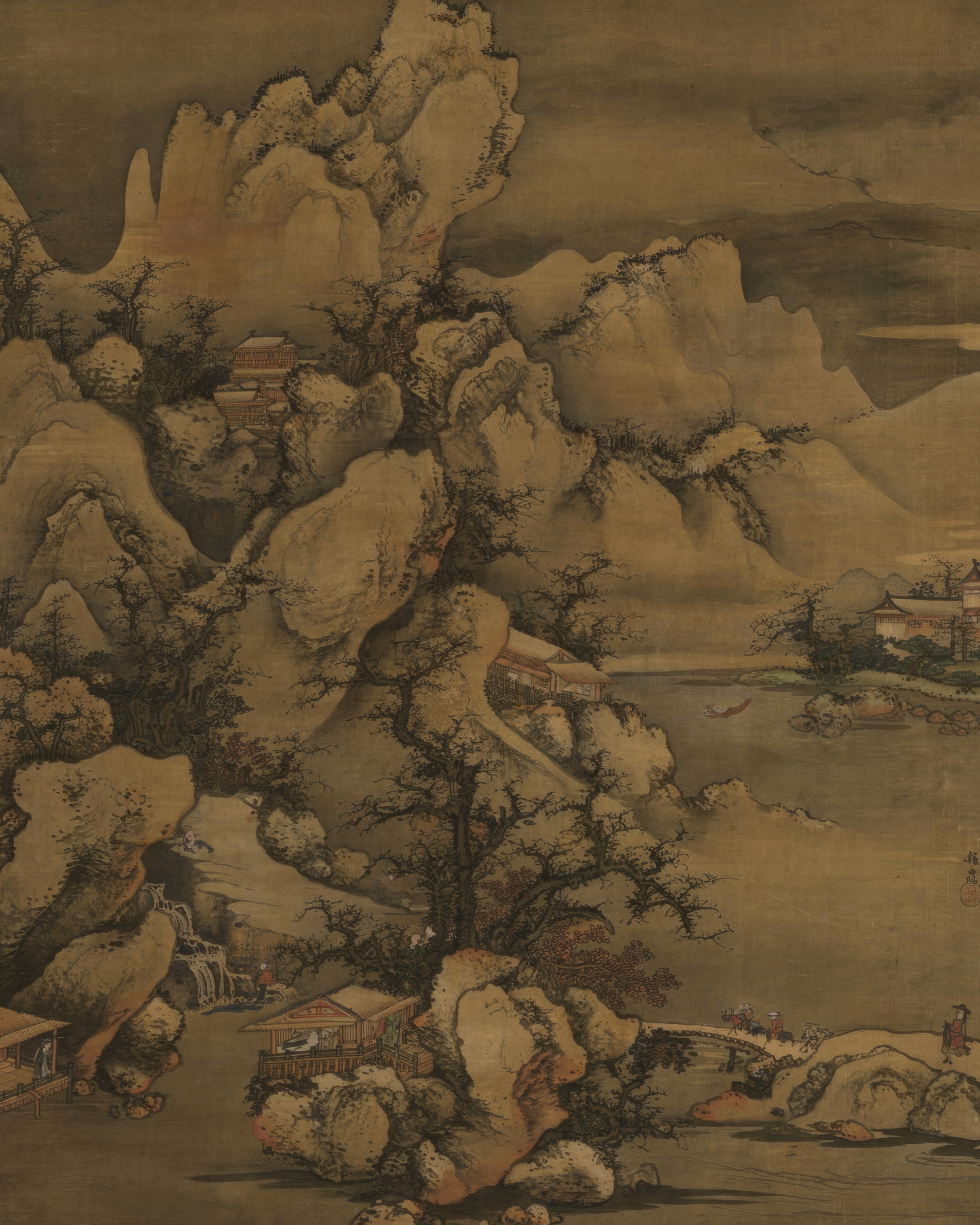
Yao Yanqing, Traveling through Snow-Covered Mountains. Hanging scroll; ink on silk. The Metropolitan Museum of Art, New York.
The oldest picture here, painted in China in the Yuan dynasty. A lone traveller and his donkey cross a small bridge beneath towering snowy peaks, and the empty silk around them becomes the cold air. Chinese painters loved winter journeys as images of patience and endurance.
2. Winter Scene
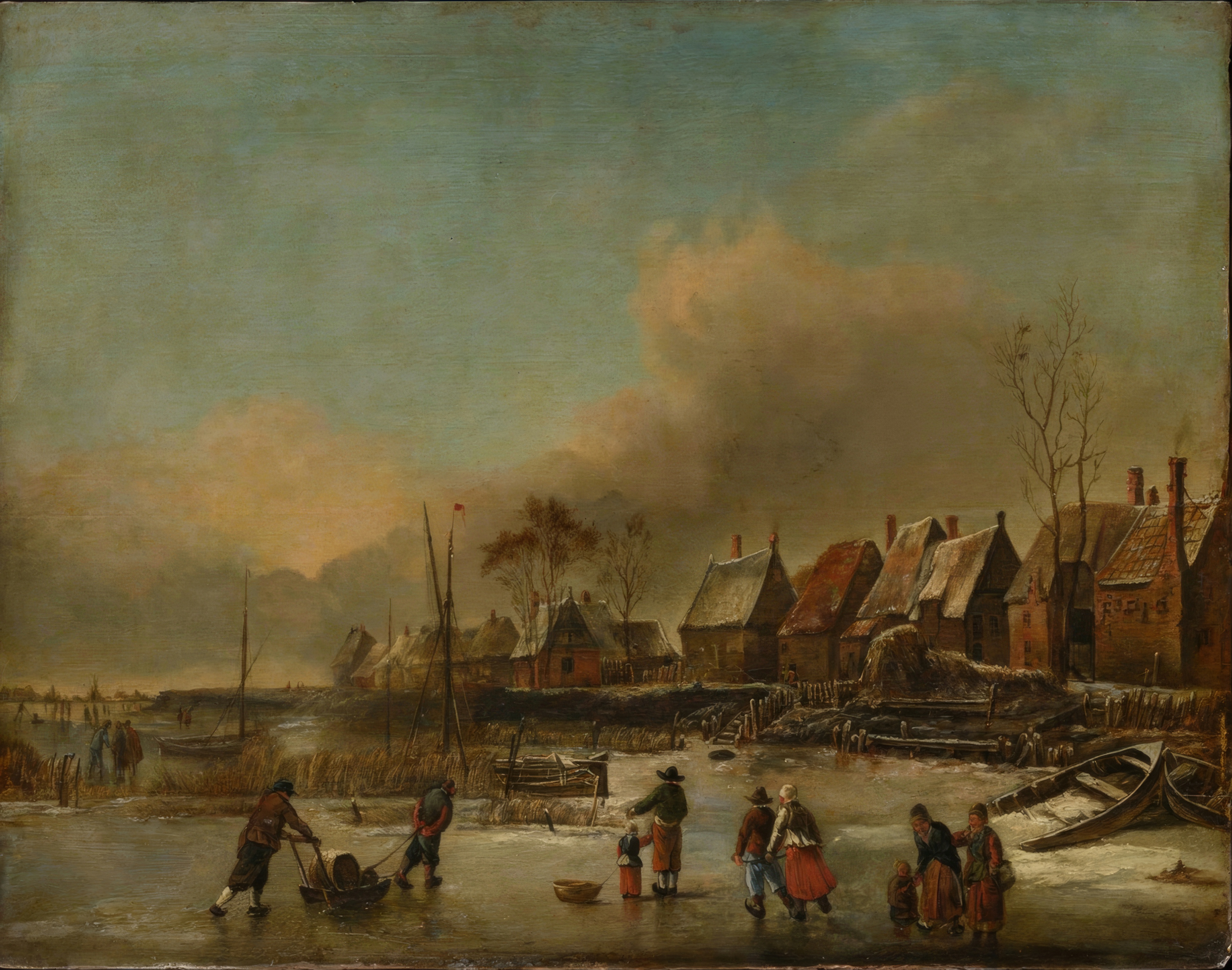
Jan van de Cappelle, Winter Scene. Oil on oak. The Metropolitan Museum of Art, New York.
Jan van de Cappelle was a rich dye-works owner who painted for pleasure, and he was one of the finest painters of Dutch skies. Here a frozen canal runs to a low horizon, with skaters and a few houses beneath a vast, soft winter sky.
3. Winter Scene
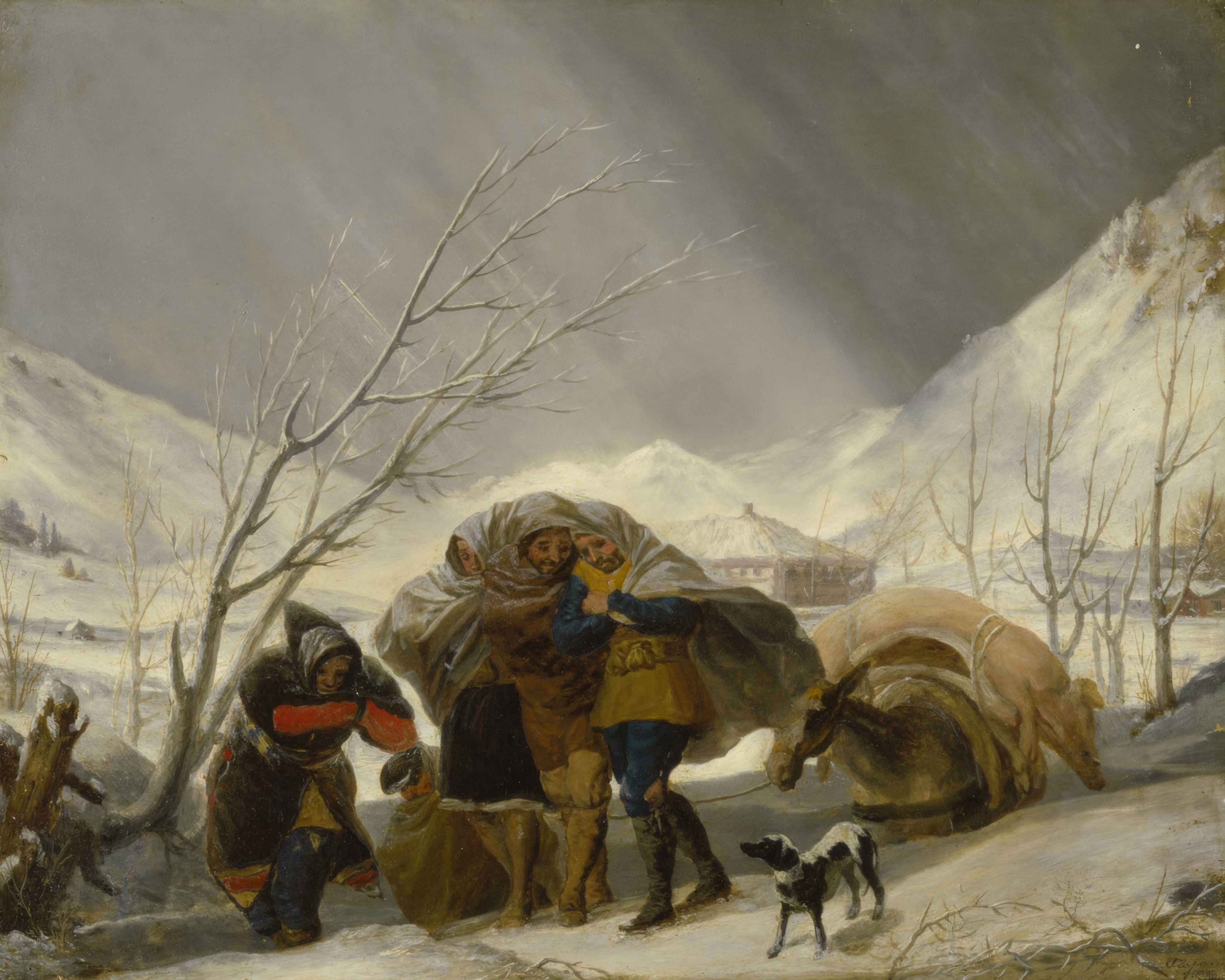
Francisco José de Goya y Lucientes, Winter Scene, c. 1786. Oil on canvas. Art Institute of Chicago.
Before he painted the horrors of war and witchcraft, Goya designed tapestries for the Spanish royal palaces. This study for one of them shows peasants battling through a snowstorm, their cloaks pulled tight, a dog trotting beside them. You can feel the wind.
4. A Cart on the Snowy Road at Honfleur
Claude Monet, A Cart on the Snowy Road at Honfleur, 1865. Oil on canvas. Musée d'Orsay, Paris.
Monet painted this at twenty-four, near Honfleur on the Normandy coast. A cart rolls down a road between snowy farm buildings, and everything is painted in shades of white, cream, grey and blue. It was the start of his lifelong fascination with snow.
This is the masterwork behind Fable’s Cart on the Snowy Road house portrait style: send a photo of your home to see it in Monet’s snow.
Create your portrait in this style
5. The Road in Front of Saint-Siméon Farm in Winter
Claude Monet, The Road in Front of Saint-Siméon Farm in Winter, 1867. Oil on canvas.
Two winters later Monet painted the road outside the Saint-Siméon farm inn, where he and his friends stayed and drank. The heavy grey sky and the soft, trodden snow make it one of the quietest pictures he ever made.
6. Village Street in Winter
Gustave Courbet, Village Street in Winter, 1868. Oil on canvas.
Courbet painted snow with a palette knife, laying it on thick so you can feel its weight on the roofs. Here a village street in the Jura sits under a dark sky, with a few figures making their way through the cold.
Shown in a room, it brings a quiet, wintry calm to a living room or a study.
7. A Winter Sky
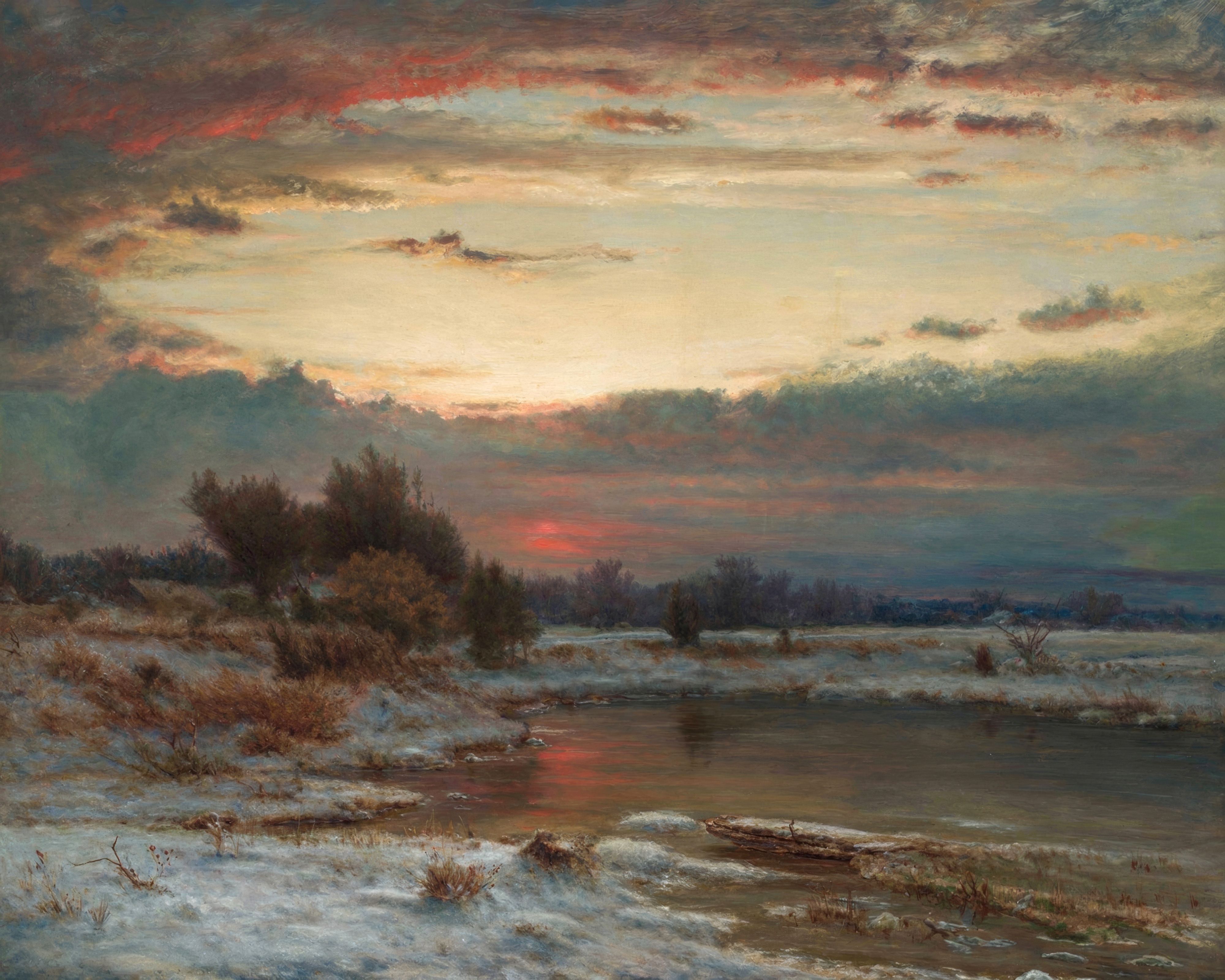
George Inness, A Winter Sky, 1866. Oil on canvas. Cleveland Museum of Art.
George Inness painted a winter afternoon in the Hudson Valley as the sun goes down, with one figure walking home. The warm light on the horizon and the cold blue above are the whole subject.
8. Snow Field, Morning, Roxbury
John La Farge, Snow Field, Morning, Roxbury, 1864. Oil on beveled mahogany panel. Art Institute of Chicago.
John La Farge painted almost nothing but snow and soft grey light in this little panel from Roxbury, Massachusetts. It is so plain it feels modern, decades before the minimalists.
9. Winter Landscape, Christmas Eve
Fritz von Uhde, Winter Landscape, Christmas Eve, 1890. Oil on canvas.
Fritz von Uhde was known for setting Bible stories among ordinary German villagers. This Christmas Eve walk through the snow at dusk may be Mary and Joseph on the way to Bethlehem, or simply a poor couple going home.
10. Christmas Eve in Siberia
Jacek Malczewski, Christmas Eve in Siberia, 1892. Oil on canvas. National Museum in Kraków.
Jacek Malczewski’s Polish exiles share Christmas Eve supper in Siberia, far from home. The white tablecloth, the bare walls and the faces turned inward make it one of the most moving winter pictures of the century.
11. Churchgoers on Christmas Morning
Hans Andersen Brendekilde, Churchgoers on Christmas Morning, 1898. Oil on canvas.
In Denmark people walked to church through the snow on Christmas morning, and Hans Andersen Brendekilde paints them in bright, cold sunshine, with wagon ruts leading the eye to the church on the hill.
12. The Snowy Garden
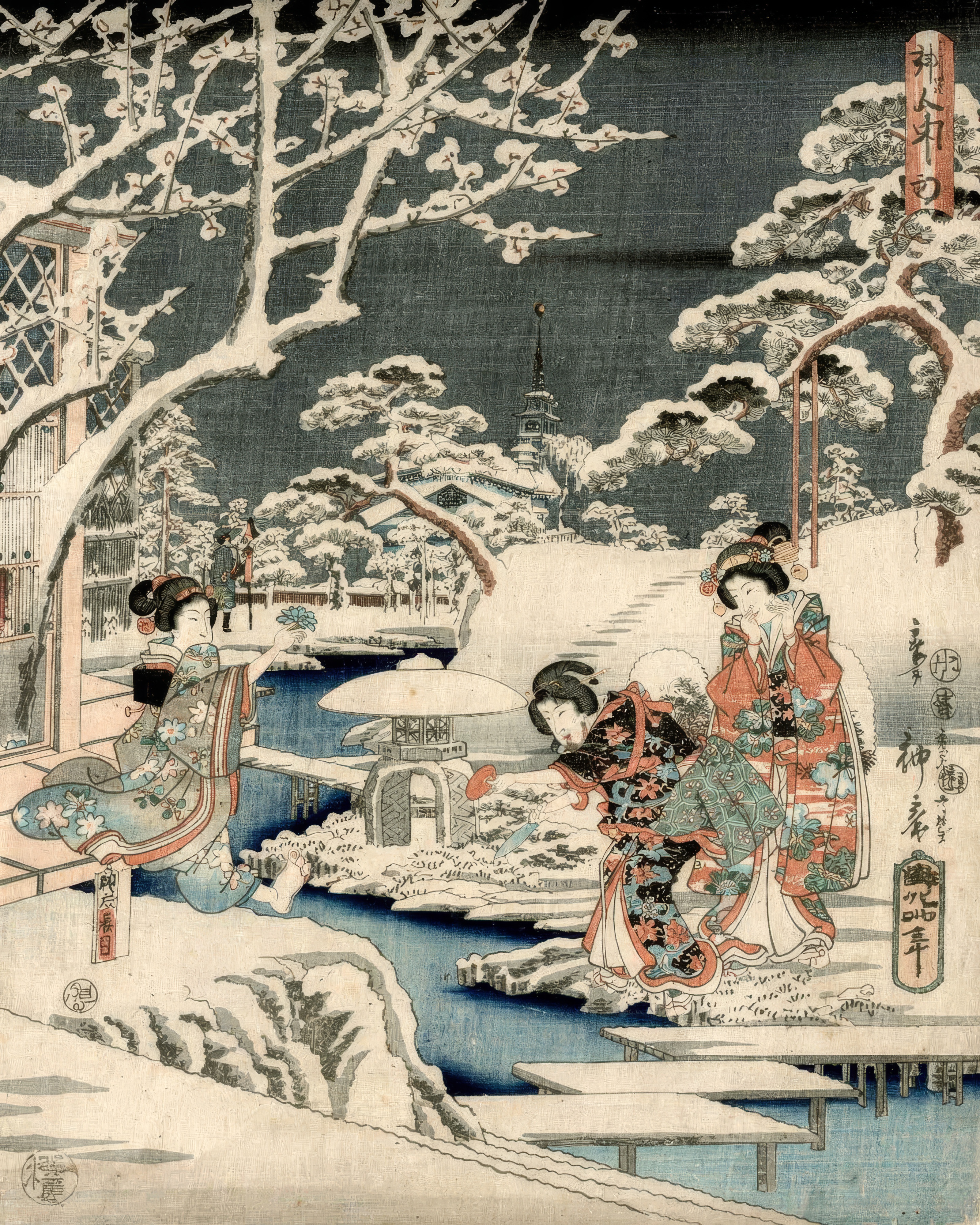
Utagawa Hiroshige, The Snowy Garden, 1854. Triptych of color woodblock prints, ink and color on paper. Cleveland Museum of Art.
Hiroshige spread this snowy garden across three sheets, so it reads like a scroll. A figure with an umbrella crosses a little bridge, and the pines and lanterns are hidden under white.
13. Mallard and Snow-covered Reeds
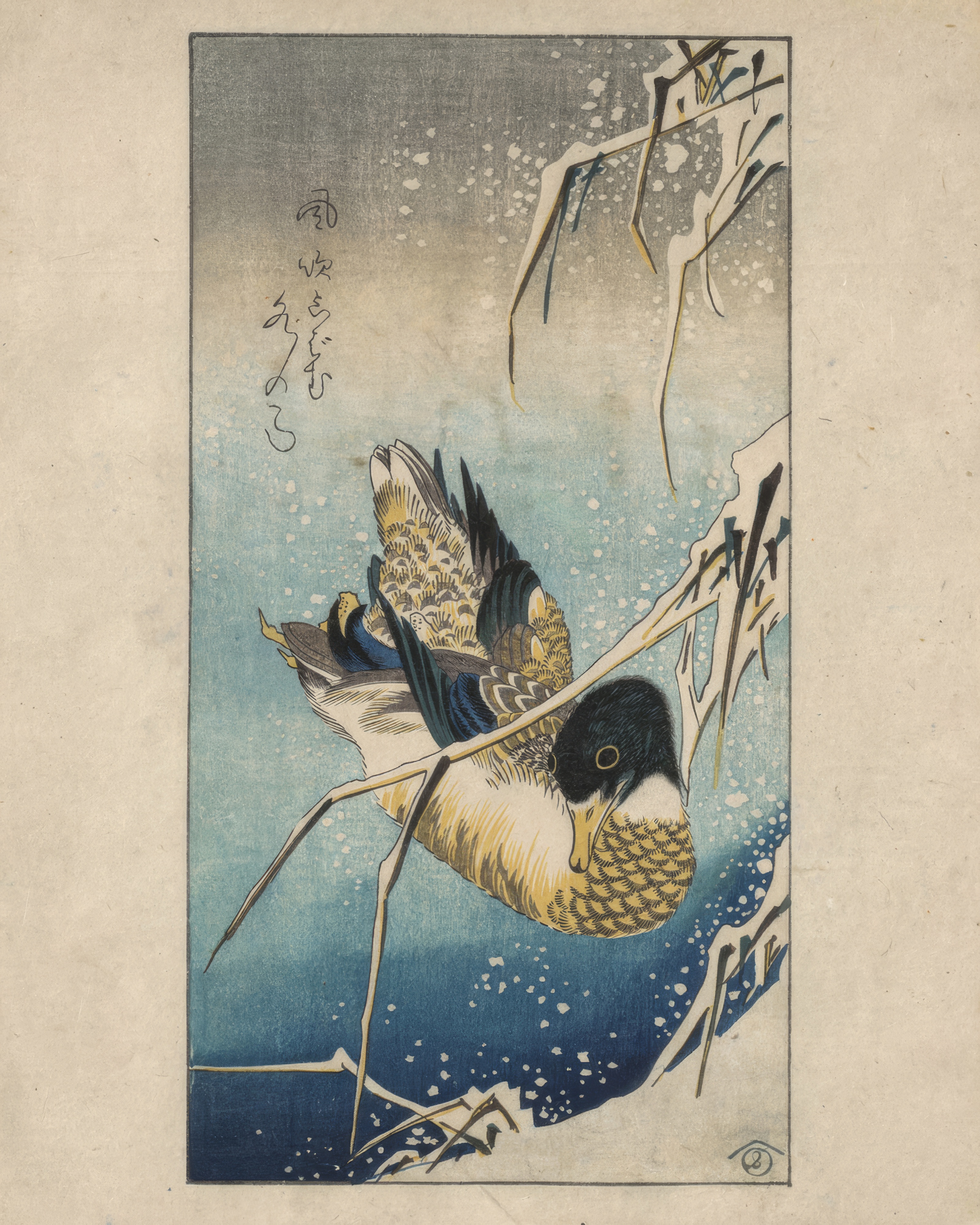
Utagawa Hiroshige, Mallard and Snow-covered Reeds, ca. 1843. Woodblock print; ink and color on paper. The Metropolitan Museum of Art, New York.
A single mallard drifts beside snowy reeds in Hiroshige’s gentle winter print. The green of the duck’s head is the only bright colour in a world of white and blue.
14. Pheasant on a Snow-Covered Pine Tree
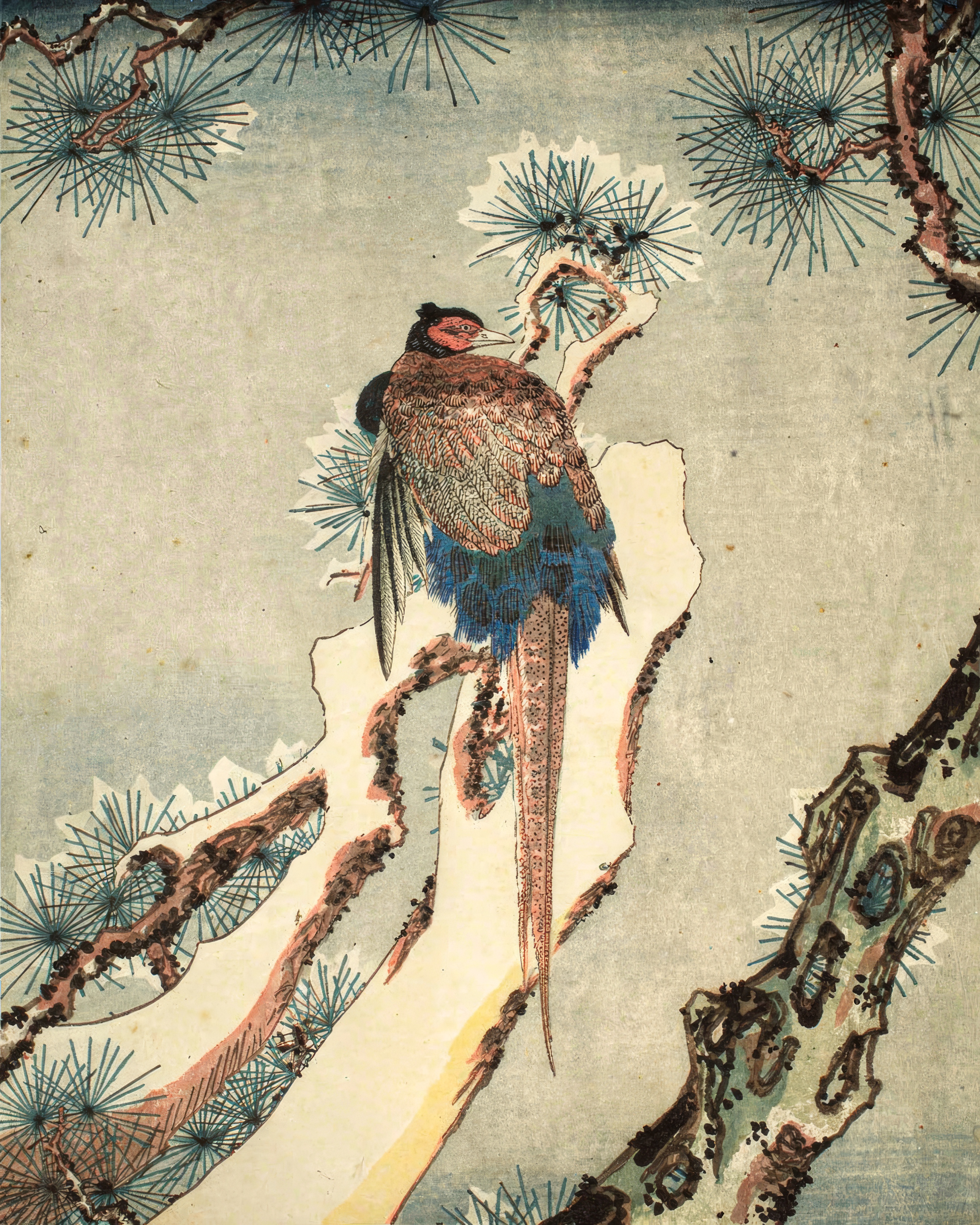
Utagawa Hiroshige, Pheasant on a Snow-Covered Pine Tree, mid–1830s. Color woodblock print; chu-tanzaku. Art Institute of Chicago.
In a tall, narrow print made for a pillar, a pheasant balances on a pine branch bowed with snow. The space is so tight the bird almost spills out of it.
15. The Snow-Clogged Geta
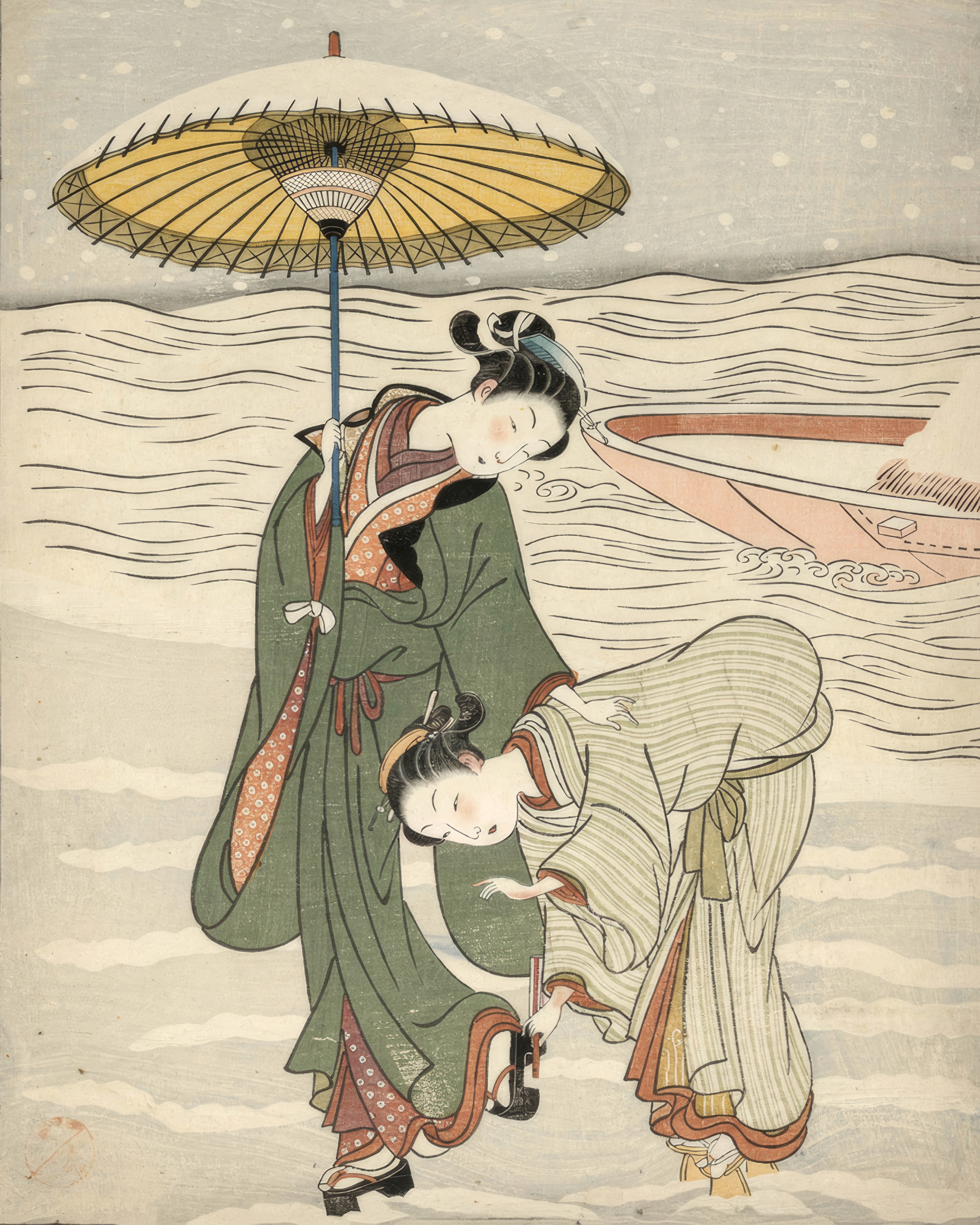
Suzuki Harunobu, The Snow-Clogged Geta, c. 1767/68. Color woodblock print; chuban. Art Institute of Chicago.
Harunobu turns a tiny everyday moment into poetry: a young woman stops on a snowy path to knock the snow out of her geta, her wooden sandal, holding on to her friend for balance.
A winter picture is a seasonal joy. Hang one in November in the hallway where guests come in out of the cold, or above a fireplace where the warmth of the room plays against the white of the snow. Many people swap a summer landscape for a winter one each year; a print in a simple frame makes that easy. For more seasonal art, see our guides to autumn paintings and moonlit art.
Questions
What are the most famous winter paintings?
Bruegel’s Hunters in the Snow, Monet’s The Magpie, Caspar David Friedrich’s winter landscapes, Hendrick Avercamp’s skating scenes and Hiroshige’s snow prints are among the best known. Monet painted about 140 snow scenes in his life.
Why does snow look blue in paintings?
Because it really is blue in shadow. Snow reflects the blue of the sky into every hollow, and the impressionists were among the first to paint that colour honestly.
Where should I hang a winter painting?
In a hallway, above a fireplace or in a cosy living room, where the cool picture contrasts with a warm room. Winter scenes with a warm sky or lit windows suit bedrooms too.
Can I have my house painted in a snowy scene?
Yes. Fable’s Cart on the Snowy Road at Honfleur style is based on Monet’s painting. Send a photo of your home and see a free preview first.