Moon art: 14 moonlit paintings and night skies
A full moon over Rotterdam harbour, Murasaki writing by moonlight, an Indian terrace at midnight and Blake’s Hecate: fourteen moonlit works, from Edo prints to Victorian lanes.
Before electric light, the moon was the only light most people had at night. It decided when you could travel, harvest, meet a lover or hide. No wonder painters everywhere, from Edo Japan to Victorian England, turned to it again and again.
The fourteen works below are all lit by the moon or the night: harbours and lanes, a novelist at her desk, a princess on a terrace, a flight into Egypt by lantern light, and the moon goddess herself. Each can be ordered as a print prepared from the museum’s scan.
1. Moonrise
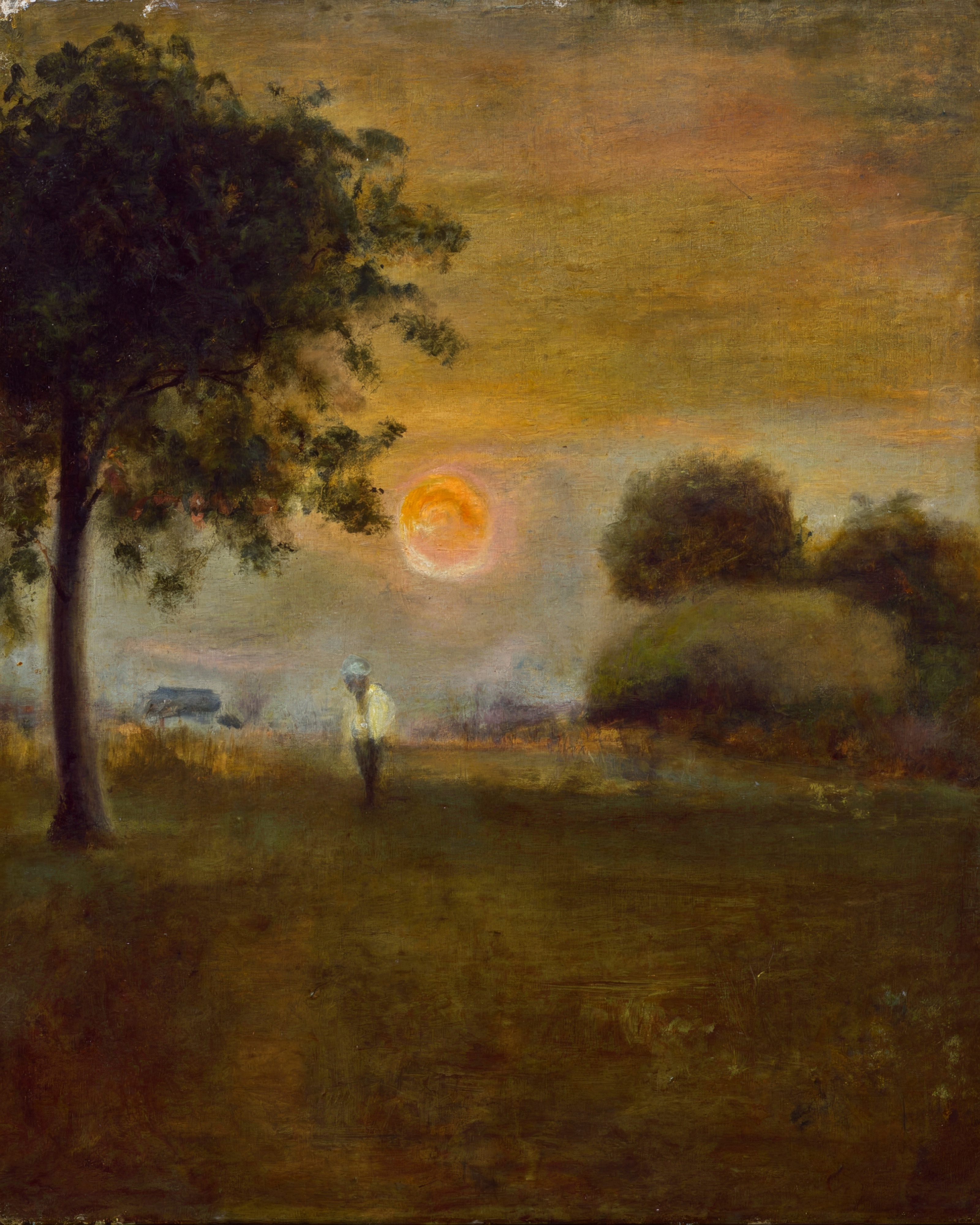
George Inness, Moonrise, 1891. Oil on canvas. Art Institute of Chicago.
George Inness painted this near the end of his life, when he had turned from landscapes to moods. A full moon lifts over a dim field and everything else dissolves into warm brown shadow. It is less a view than a feeling.
2. Moonlit Landscape
Arnold Böcklin, Moonlit Landscape, 1849.
Painted when Böcklin was only twenty-two, this moonlit ruin already has the theatrical mood of his later Isle of the Dead. The moon is hidden behind cloud, and its light falls on broken walls like a spotlight on a stage.
3. Lane Scene at Night
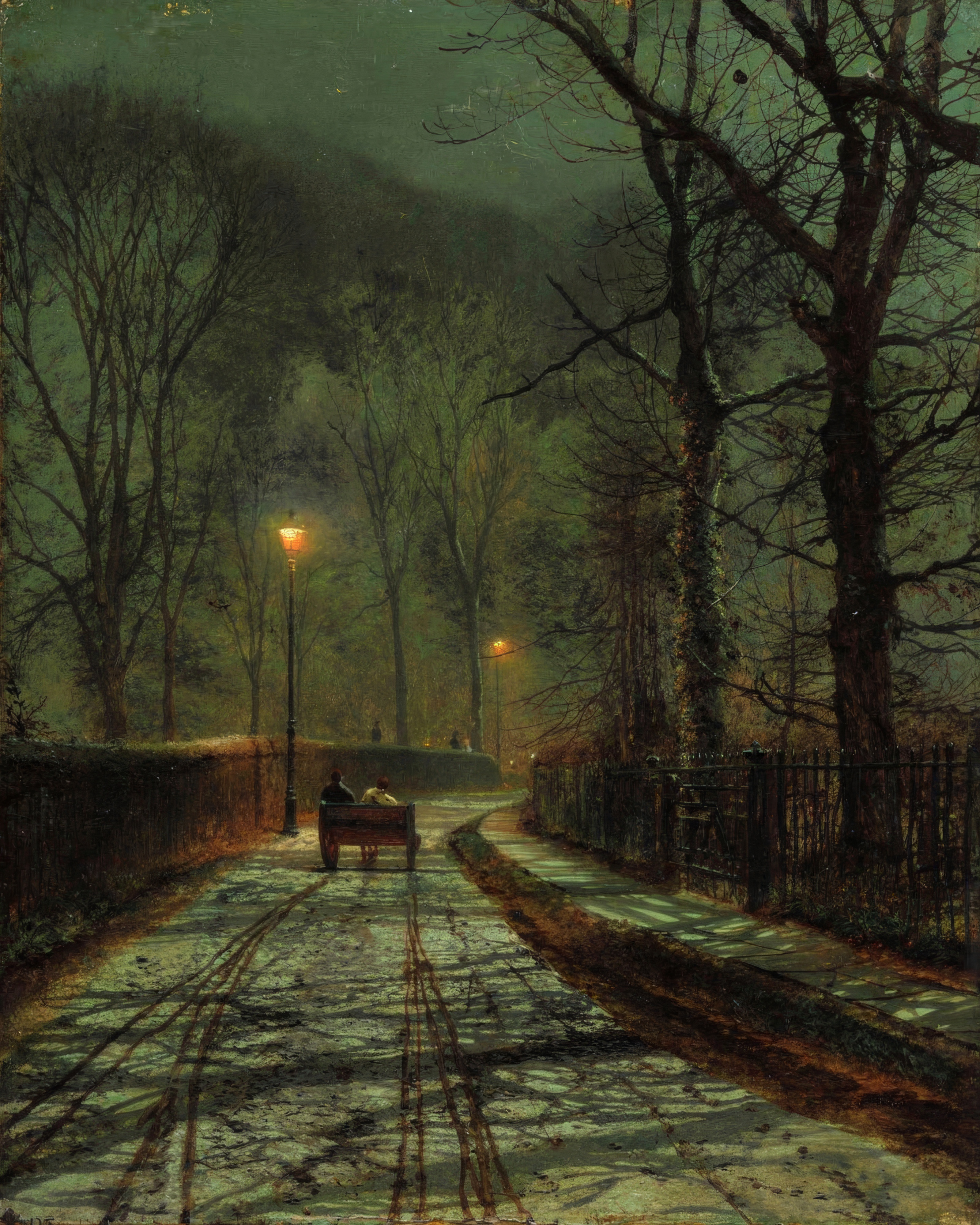
John Atkinson Grimshaw, Lane Scene at Night, 1872. Oil on paperboard. Art Institute of Chicago.
John Atkinson Grimshaw was the great painter of Victorian moonlight. His lanes and docks glow under a full moon, every puddle and wet stone catching the light.
4. Night Scene, Rotterdam
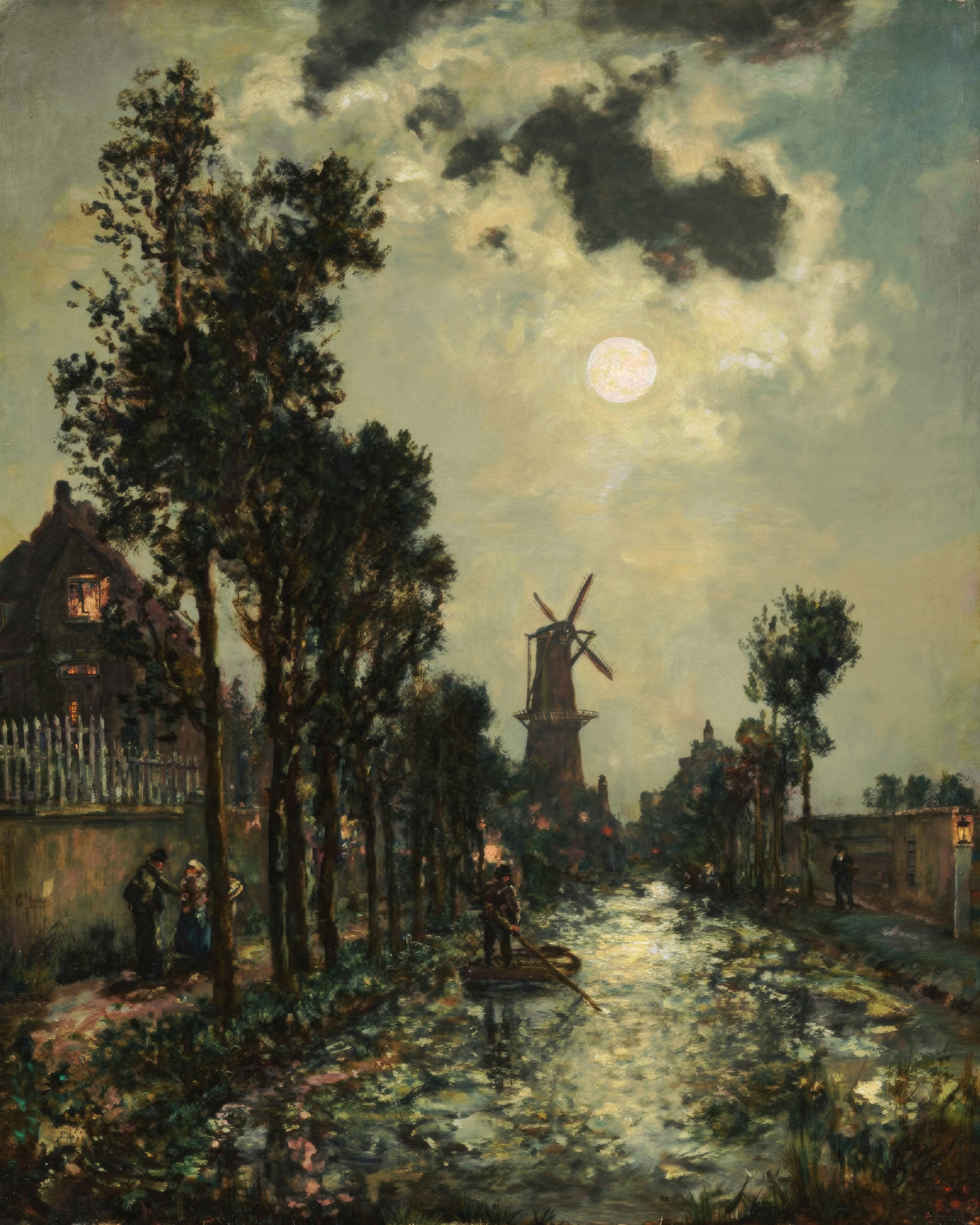
Johan Barthold Jongkind, Night Scene, Rotterdam, 1868. Oil on canvas. Harvard Art Museums.
Johan Barthold Jongkind was a Dutch painter in Paris whom Monet called his real teacher. His moonlit Rotterdam harbour, painted in deep blues with the moon reflected in the water, is a lesson in how to paint night with colour.
5. The Flight into Egypt: A Night Piece
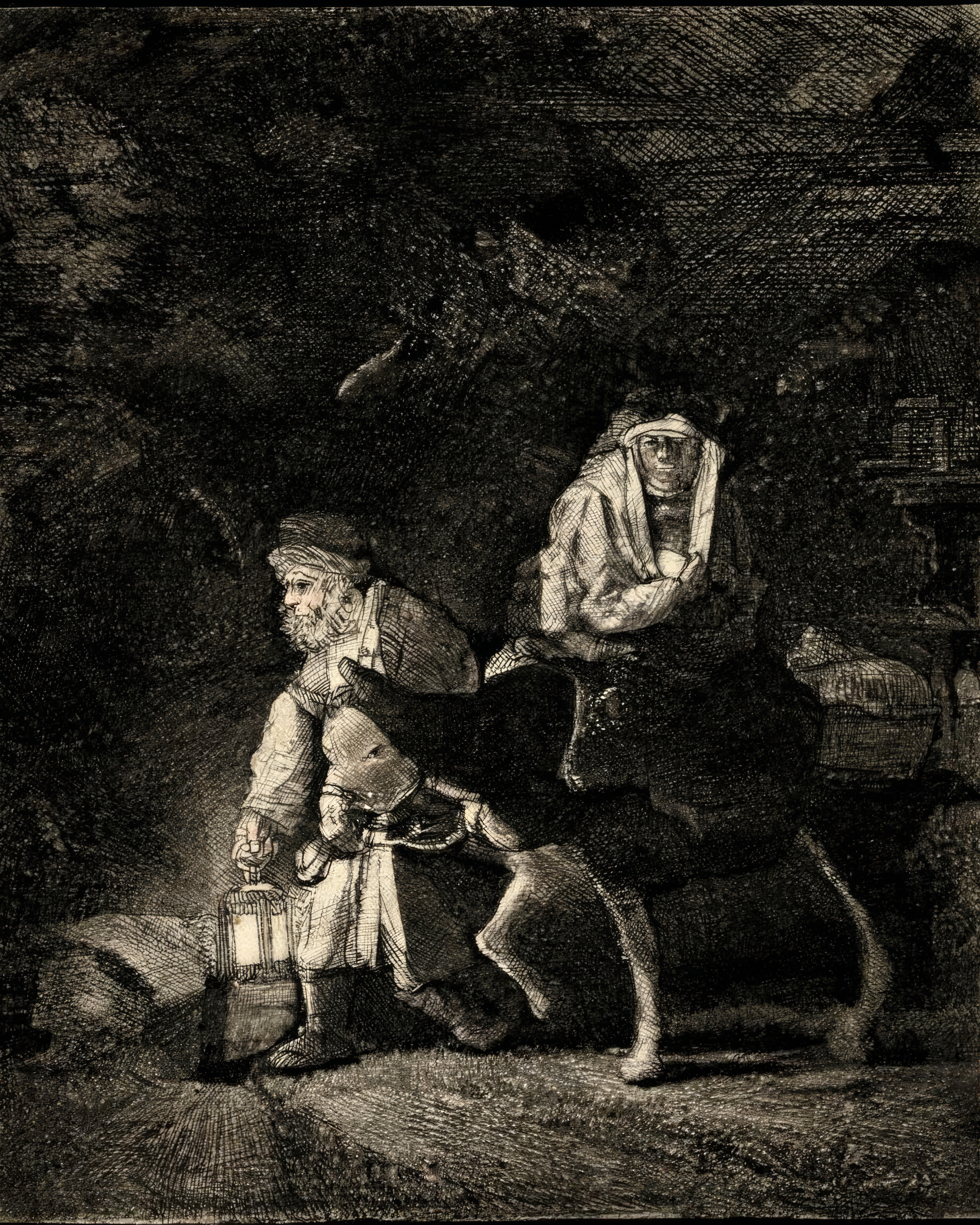
Rembrandt van Rijn, The Flight into Egypt: A Night Piece, 1650s. Etching and drypoint on laid paper. Smithsonian American Art Museum.
Rembrandt made this etching in near-total darkness: only a small lantern lights Joseph leading Mary and the child on their escape into Egypt. He reworked the plate several times, making it darker and darker until the night became the subject.
6. Moon at Ishiyama-dera
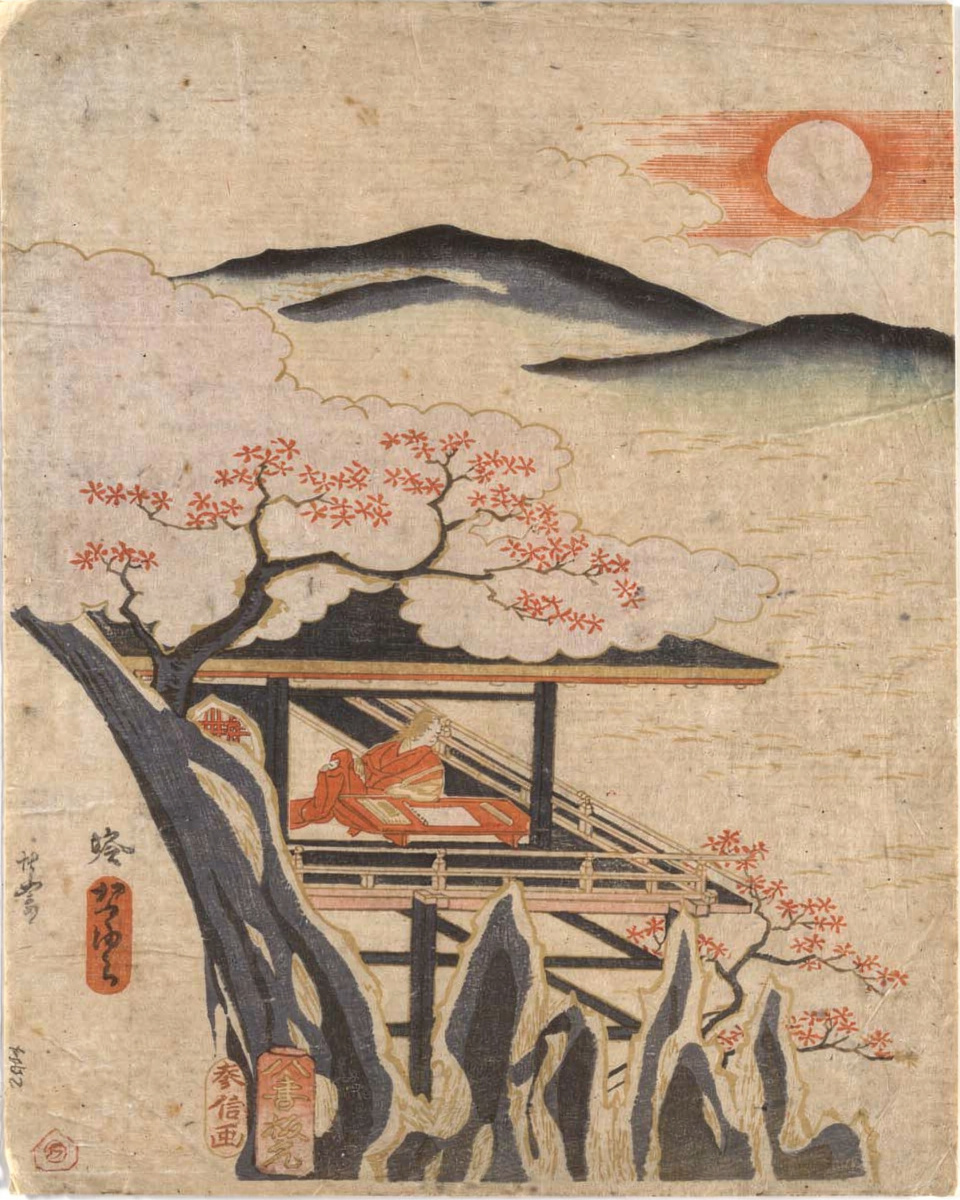
Suzuki Harunobu, Moon at Ishiyama-dera, c. 1762–64. Ukiyo-e woodblock print ("mizu-e") in "hosoban" format; ink and light colors on paper, with printed signature reading "Suzuki Harunobu ga". Harvard Art Museums.
Legend says that Murasaki Shikibu began writing The Tale of Genji, the world’s first great novel, on a moonlit night at the Ishiyama temple above Lake Biwa. Harunobu shows her at her desk, looking out at the moon for inspiration.
7. The Autumn Moon in the Mirror
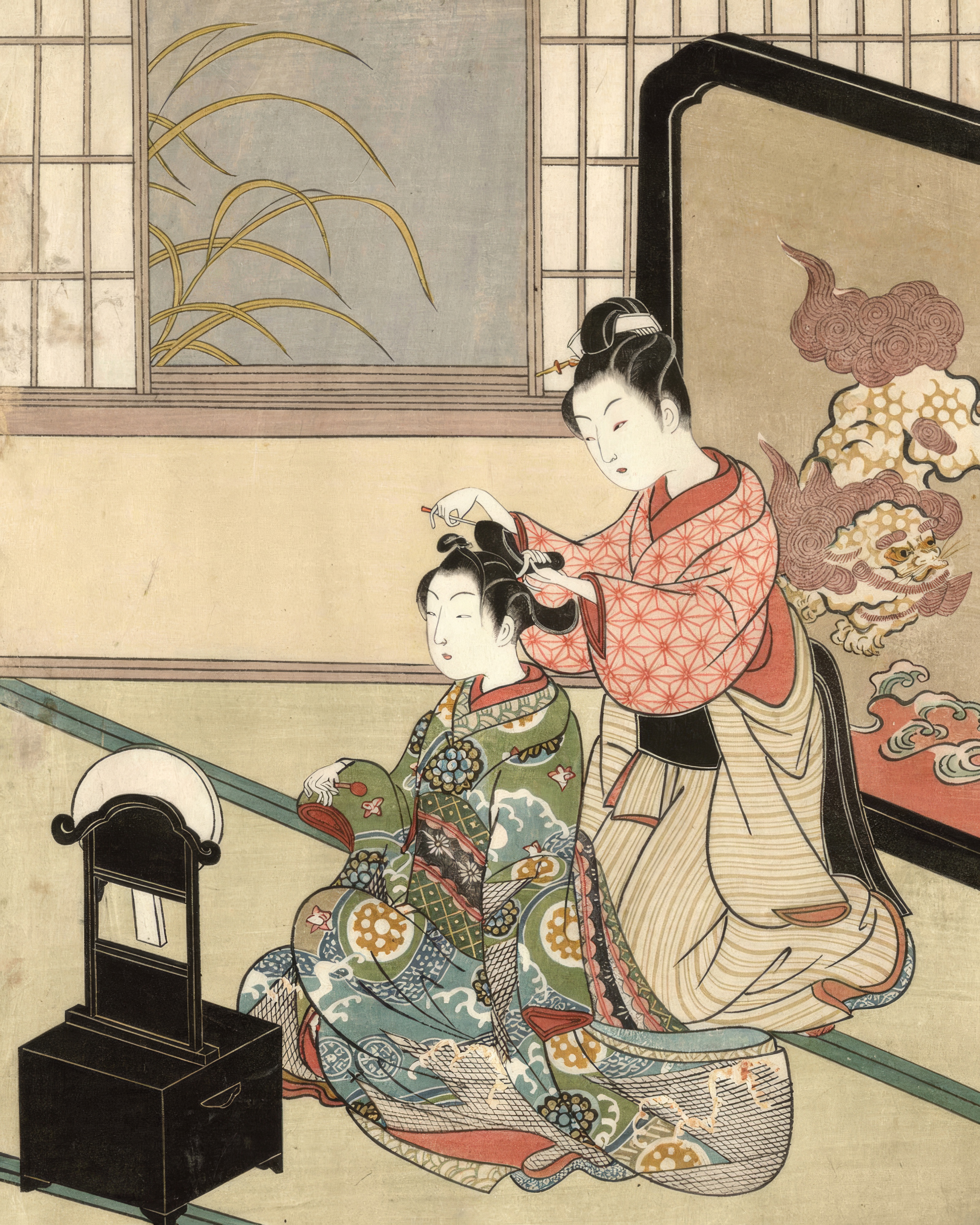
Suzuki Harunobu, The Autumn Moon in the Mirror, c. 1766. Color woodblock print; chuban. Art Institute of Chicago.
Harunobu turned the classic Eight Views of Lake Biwa into scenes of everyday life. The autumn moon becomes a round mirror on a stand, while a woman and a child sit on the veranda in the cool evening.
8. Nightfall on Saruwaka Street
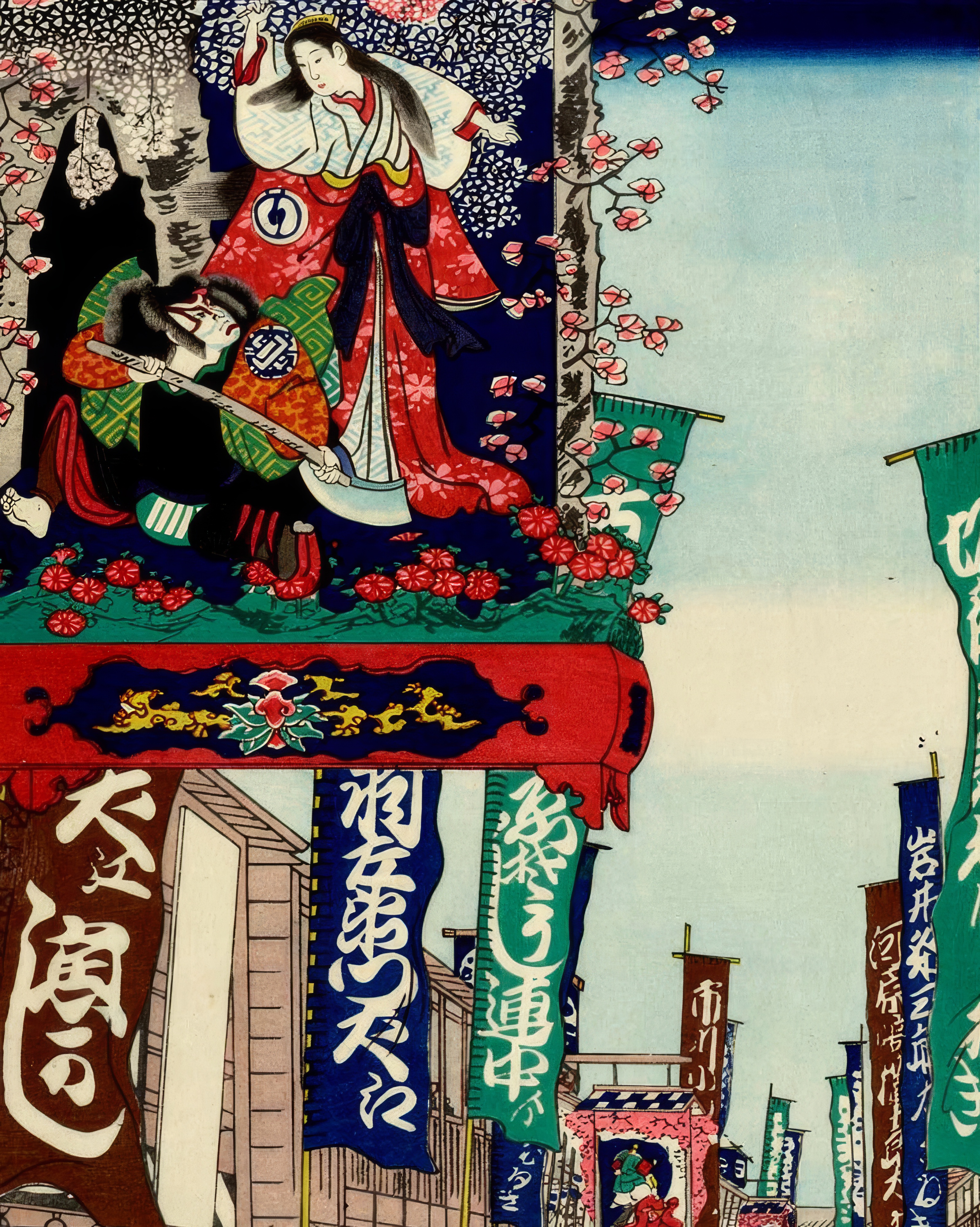
Utagawa Hiroshige II, Nightfall on Saruwaka Street, 1859. Ink on paper. Harvard Art Museums.
Saruwaka Street was Edo’s theatre district, crowded until late with audiences going home. Hiroshige’s pupil and successor, Hiroshige II, shows it under a full moon, with long shadows across the street.
9. Seduction Scene on a Terrace by Moonlight
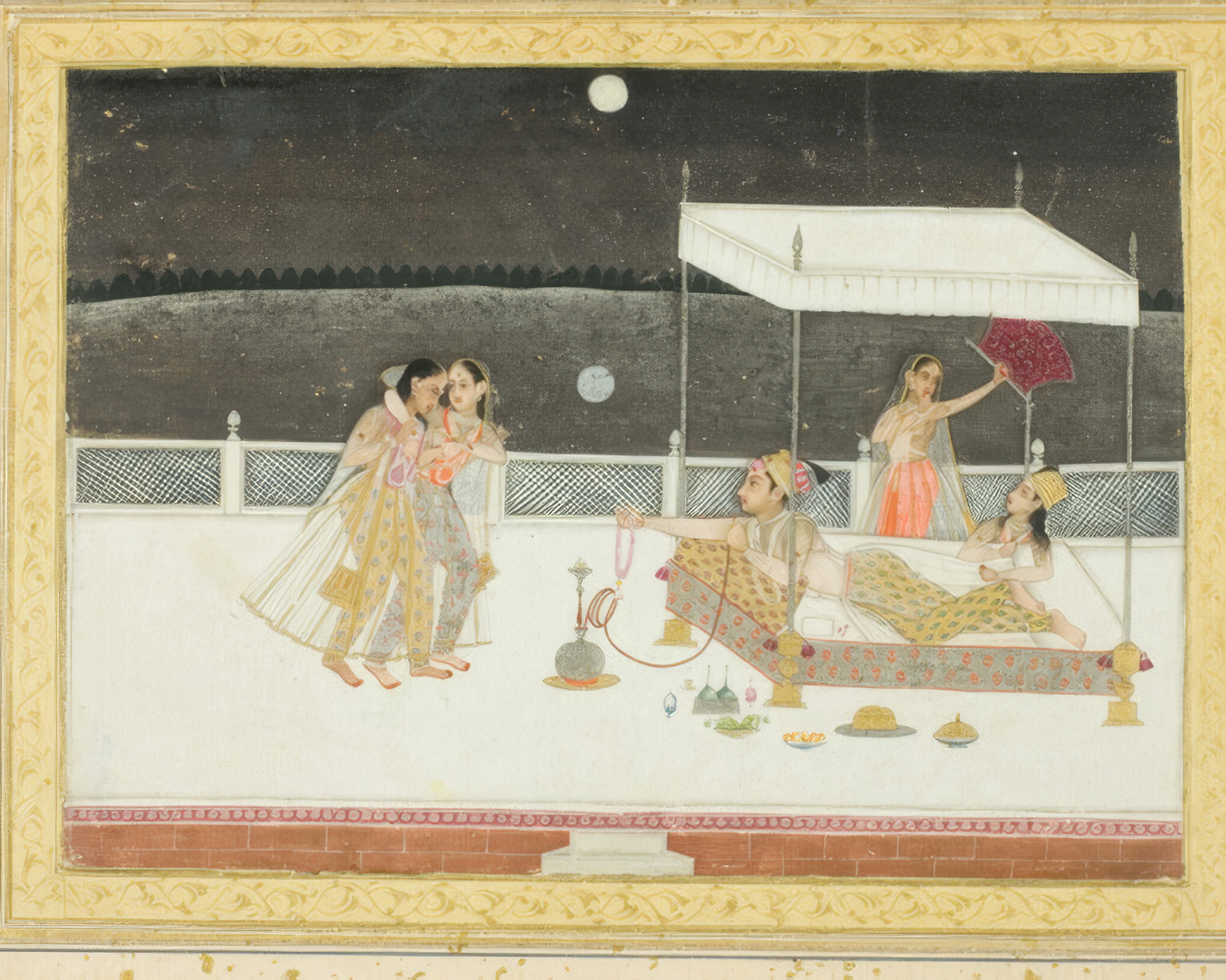
India, probably Murshidabad, Seduction Scene on a Terrace by Moonlight, 18th century. Opaque watercolor with gold on paper. Art Institute of Chicago.
In eighteenth-century Bengal, painters at the Murshidabad court made delicate night scenes of lovers on white terraces under the moon. The marble glows and the gold catches the light, and the whole picture feels like a cool summer night.
10. The Midnight Terrace
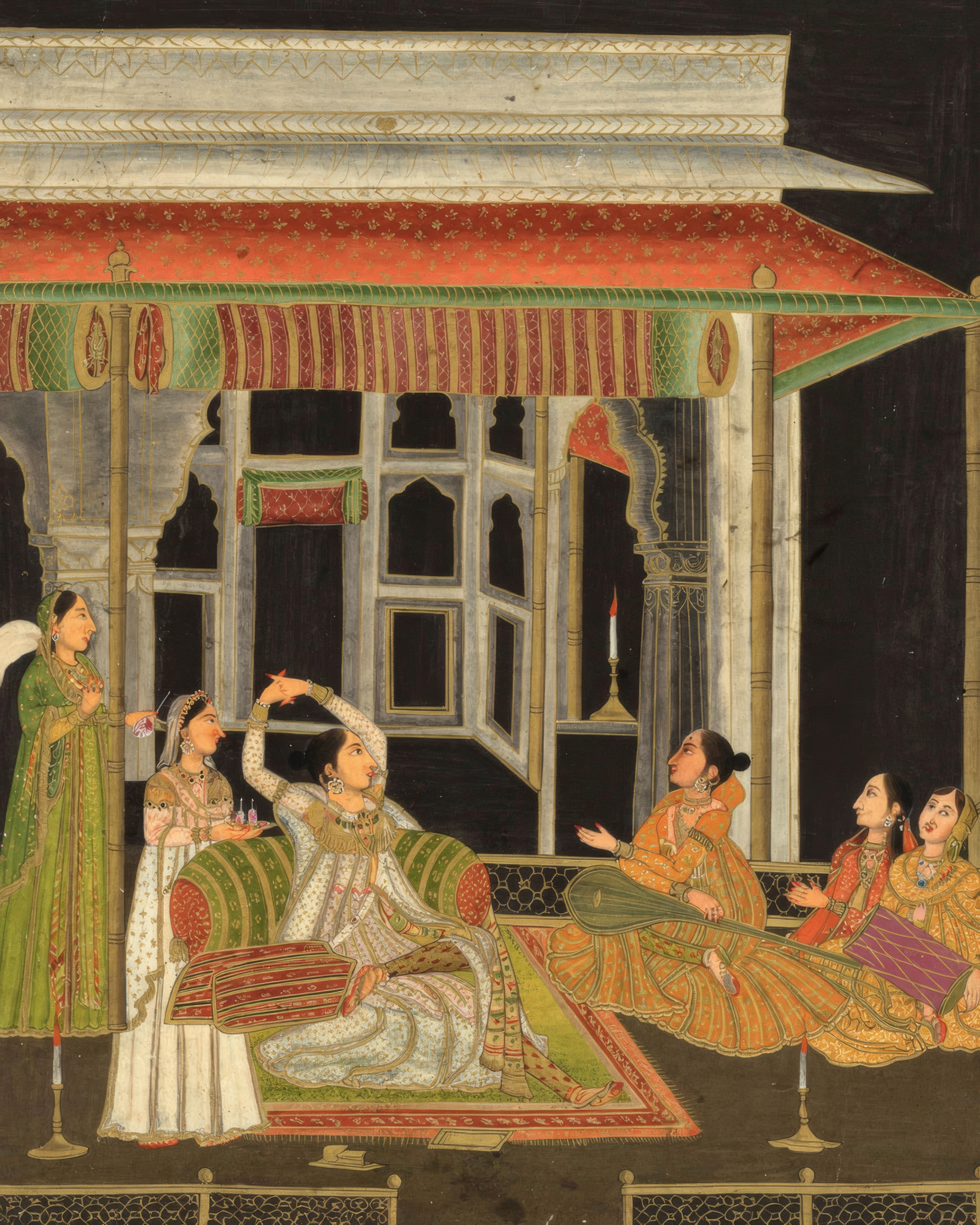
India, The Midnight Terrace, c. 1760. Gum tempera, ink, and gold on paper. Cleveland Museum of Art.
A princess sits on her terrace at night while her attendants bring music and refreshment. Indian court painters loved these hushed nocturnes, in which the dark sky makes every jewel and textile glow.
11. Sun and Moon
Matthäus Merian the Elder, Sun and Moon, 1618. Atelier colour edition of the engraving. Science History Institute, Roy G. Neville Historical Chemical Library.
Atalanta Fugiens, published in 1618, is a book of alchemical emblems with music for each one. In this plate the sun and the moon appear as king and queen, the two great principles of alchemy. Fable has coloured the original engraving for this edition.
12. The Moon and Endymion
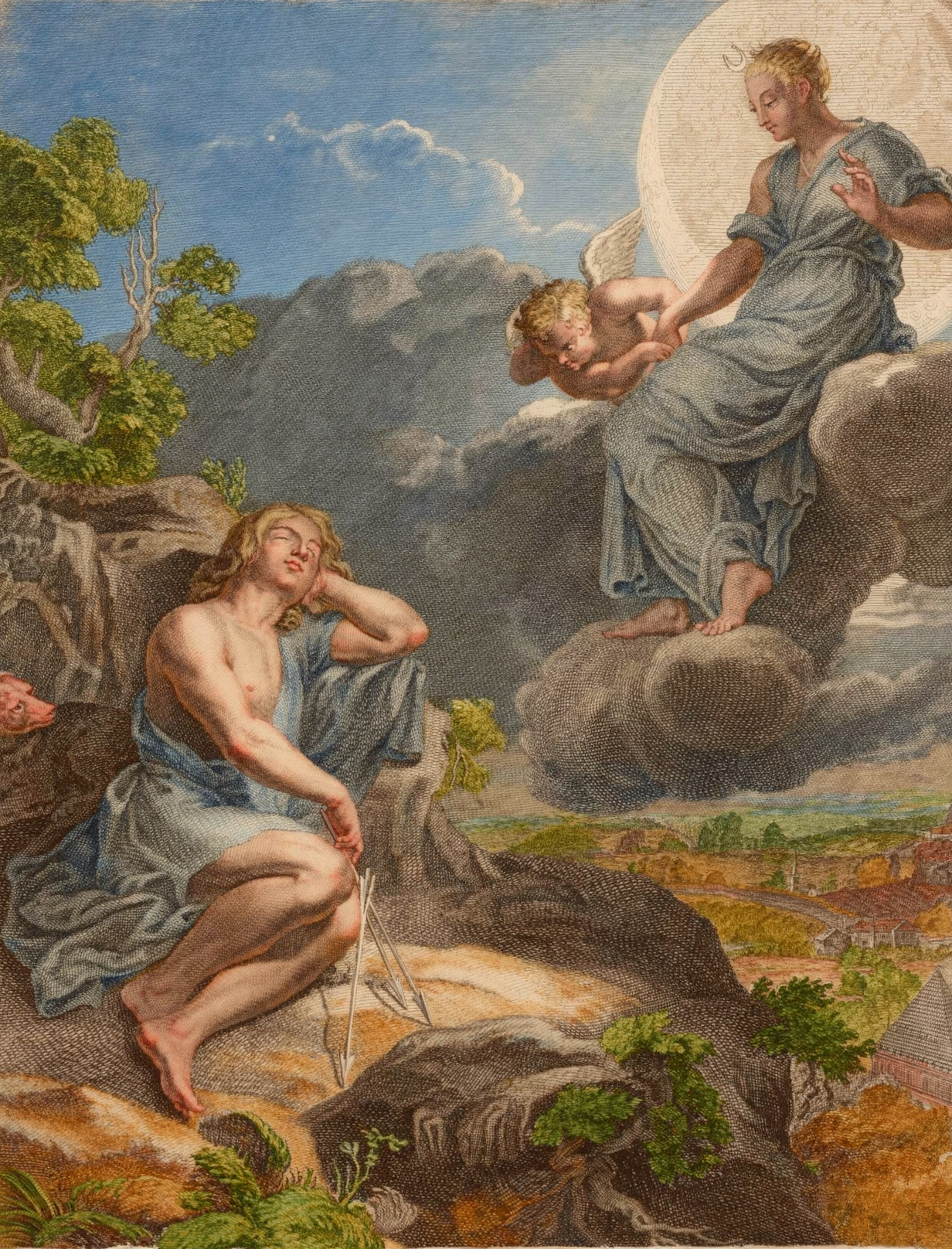
Bernard Picart and others, The Moon and Endymion, 1749. Atelier colour edition of the book engraving. Getty Research Institute.
Selene, the moon, fell in love with the shepherd Endymion and asked that he sleep forever so she could visit him every night. This engraving from an eighteenth-century edition of Ovid shows her descending to him on Mount Latmus.
13. The Night of Enitharmon's Joy (Hecate)
William Blake, The Night of Enitharmon's Joy (Hecate), c. 1795. Colour print finished with ink and watercolour.
Blake’s Hecate, goddess of night and witchcraft, sits in a dark wood with her familiars: an owl, a bat, a donkey and a strange beast. It is one of his great colour prints of 1795, printed and then finished by hand.
14. The Bride of the Night (The Song of Songs)
Gustave Moreau, The Bride of the Night (The Song of Songs), circa 1892.
From the Song of Songs: the bride searches the city at night for the one she loves. Moreau places her on dark steps under a stormy sky, glowing like a jewel in the shadows.
Moonlit pictures are made for the bedroom, the reading corner and the hallway that only gets lamp light. They are calm, dark and cool, and they look most beautiful in the evening. Two or three together, one Japanese print, one Victorian nocturne and one Indian miniature, make a striking little gallery. For more, see our guides to Japanese woodblock prints and symbolism art.
Questions
What is a nocturne in painting?
A night scene. The word was borrowed from music by James McNeill Whistler for his paintings of the Thames at night, and is now used for any moonlit or night-time picture.
Who painted the most famous moonlit scenes?
John Atkinson Grimshaw in Victorian England, Caspar David Friedrich in Germany, Aert van der Neer in the Dutch Golden Age, Whistler, Arkhip Kuindzhi in Russia, and the Japanese print masters Hiroshige and Yoshitoshi.
Which moon picture suits a bedroom?
A calm, softly lit one such as Inness’s Moonrise or Harunobu’s Autumn Moon in the Mirror. Avoid the most dramatic night scenes by the bed and keep them for a study or hallway.
Can I order a moonlit print from Fable?
Yes. Every work in this list can be ordered as a print on paper or canvas, prepared from the museum’s own scan.