Famous portrait paintings: 20 faces from five centuries
Botticelli, Hals, Velázquez, Rembrandt, Goya, Rossetti and Sargent: twenty famous portraits from 1440 to 1893, who the sitters were, and what makes each painting unforgettable.
A portrait has to do two things at once: look like someone, and say something about them. For most of history only rulers, saints and the rich could ask for one, and painters learned to flatter, to idealise and sometimes to tell the truth anyway. The best portraits still feel like meeting a person.
The twenty below span the centuries from an Italian couple at a window around 1440 to an American millionaire painted by Anders Zorn in 1893. They come from the Met, the Art Institute of Chicago, the Cleveland Museum of Art, the V&A and Harvard, and each can be ordered as a print prepared from the museum’s scan. If you would like a portrait of your own family, every one of Fable’s portrait styles begins with a masterwork like these.
1. Portrait of a Woman with a Man at a Casement
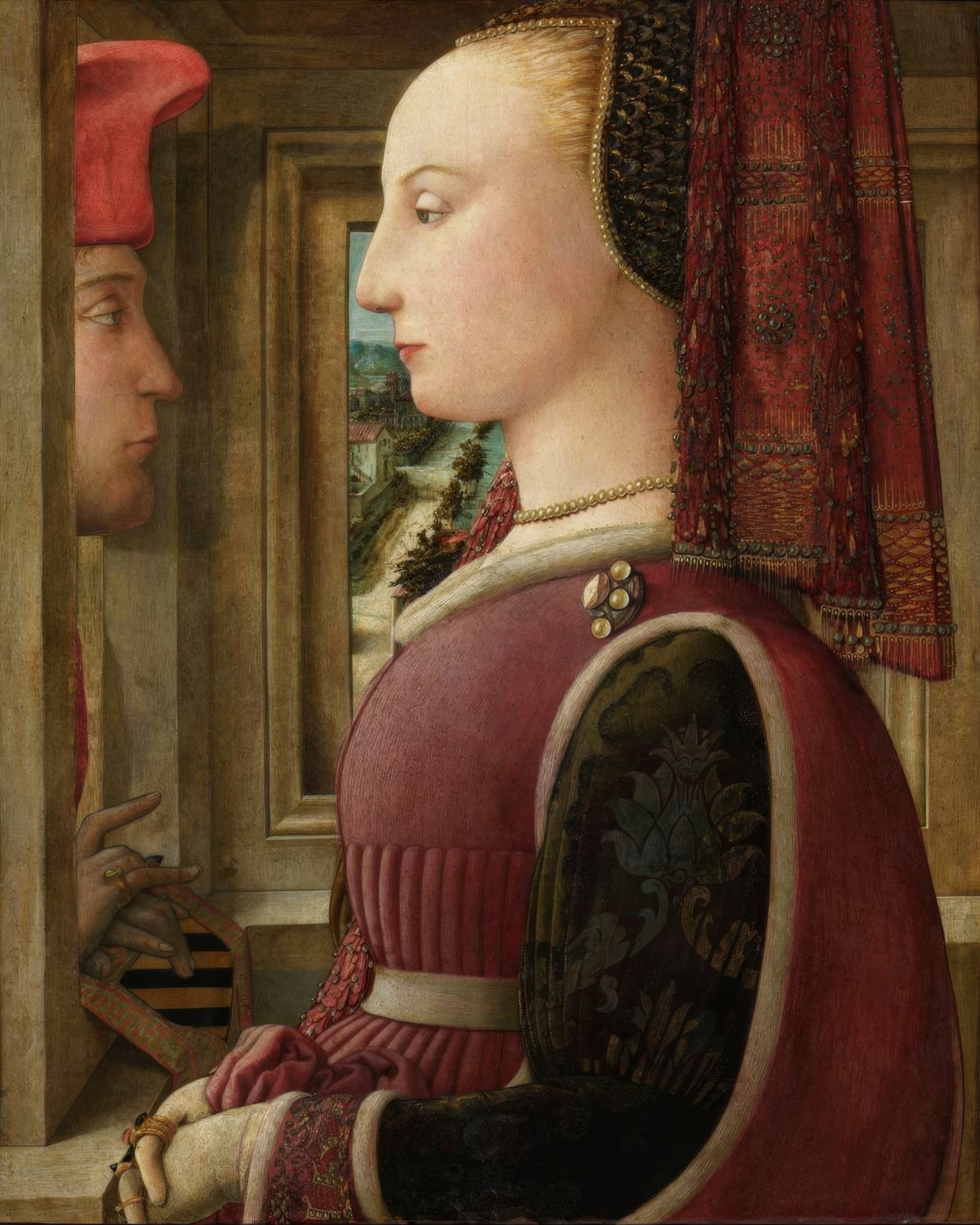
Fra Filippo Lippi, Portrait of a Woman with a Man at a Casement, ca. 1440. Tempera on wood. The Metropolitan Museum of Art, New York.
Probably the earliest surviving double portrait in Italian art. A young Florentine woman in profile wears her wealth, a jewelled headdress and pearls, while a man peers at her through a window. It is likely a betrothal or marriage portrait, painted by Fra Filippo Lippi around 1440.
2. Portrait of a Lady known as Smeralda Bandinelli
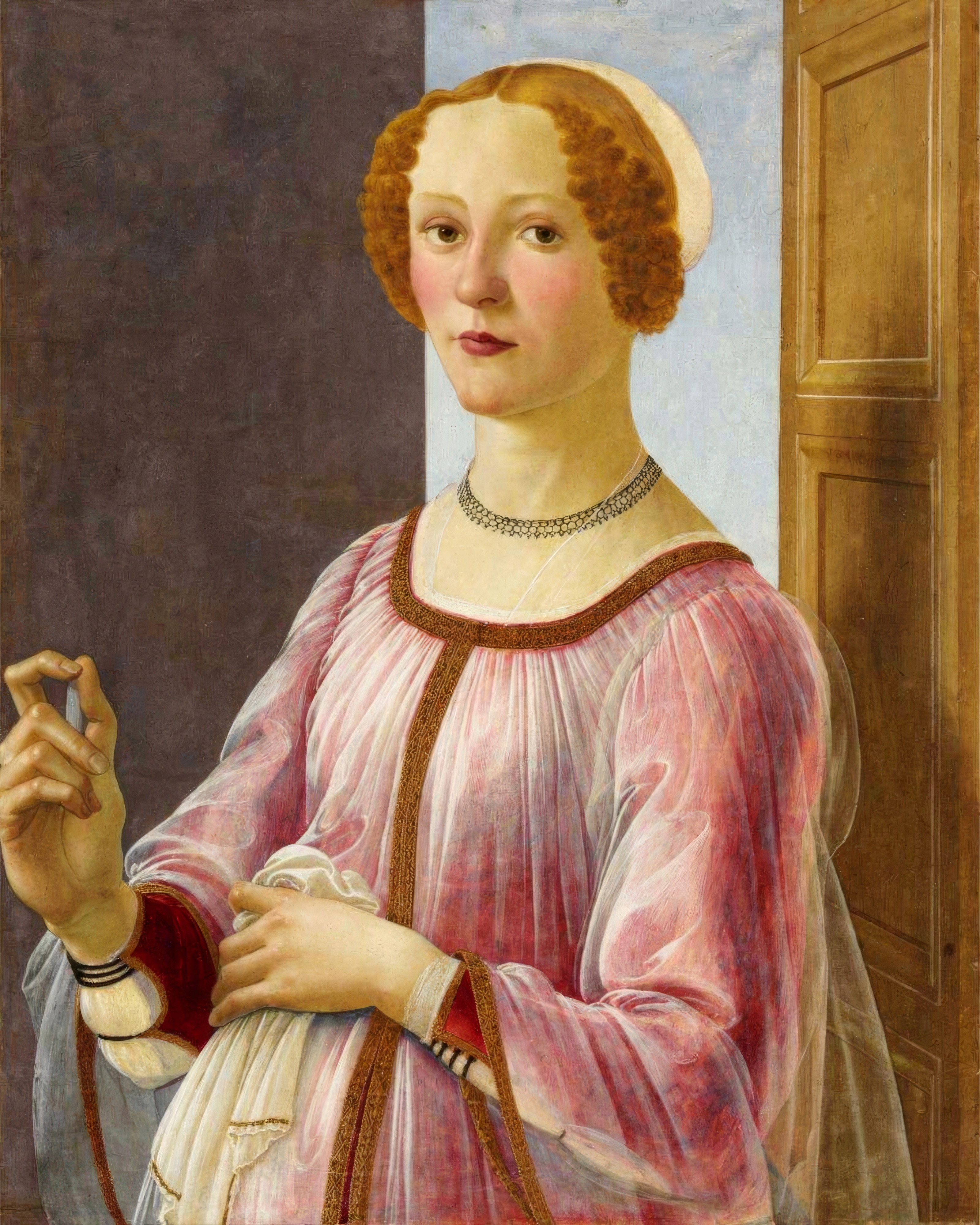
Sandro Botticelli, Portrait of a Lady known as Smeralda Bandinelli, 1470-1480. Victoria and Albert Museum, London.
Smeralda Bandinelli was a Florentine lady, and her portrait by Botticelli now hangs in the V&A in London. She stands at a window with her hand on the sill, a pose that made portraits feel less like coins and more like people.
3. Portrait of a Man with Gloves
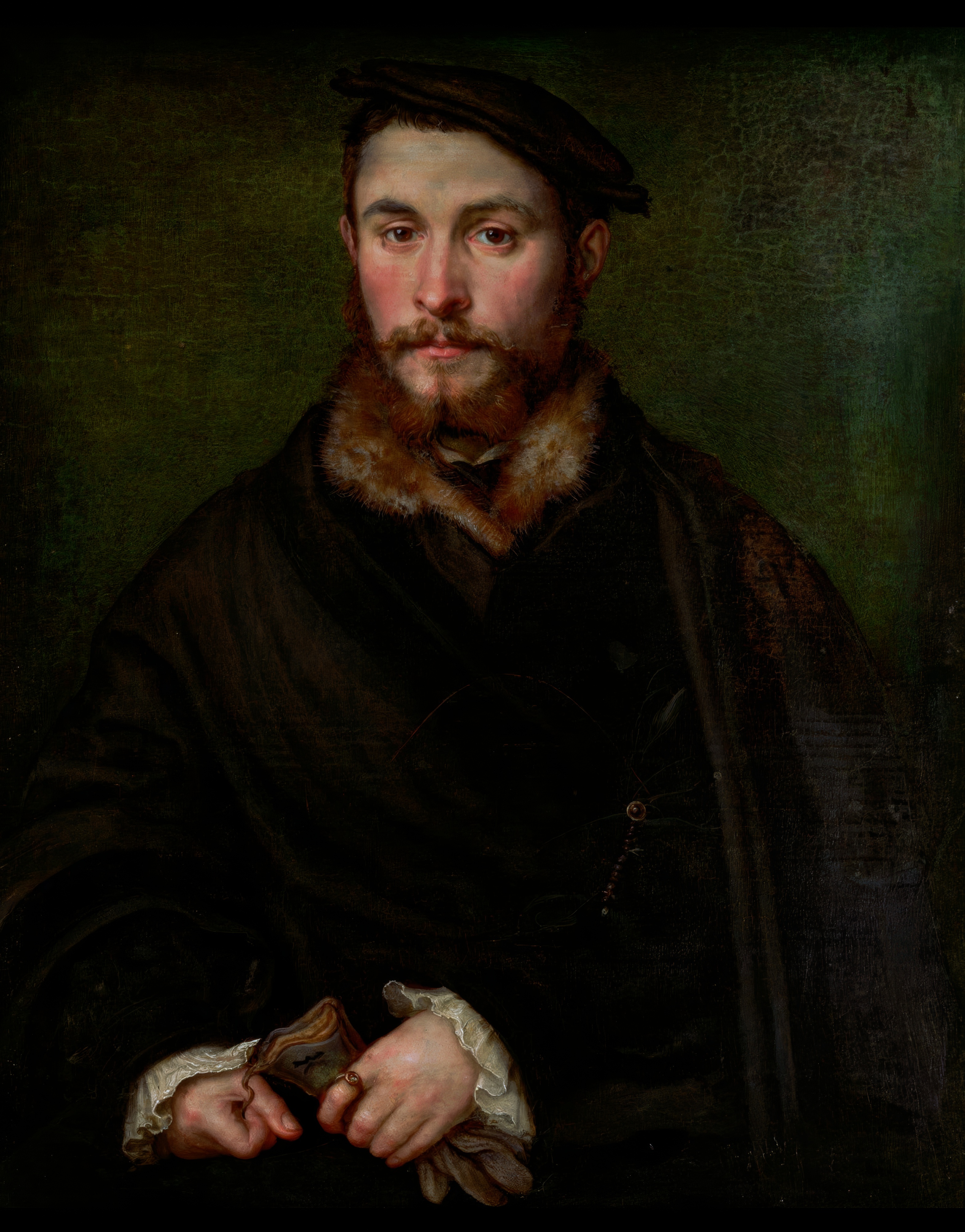
Corneille de Lyon, Portrait of a Man with Gloves, ca. 1535. Oil on wood. The Metropolitan Museum of Art, New York.
Corneille de Lyon was a Dutch-born painter at the French court, famous for small portraits against plain green or blue grounds. They were so lifelike and so fashionable that courtiers visited his studio to choose from his collection of faces.
4. Portrait of a Young Man with a Skull
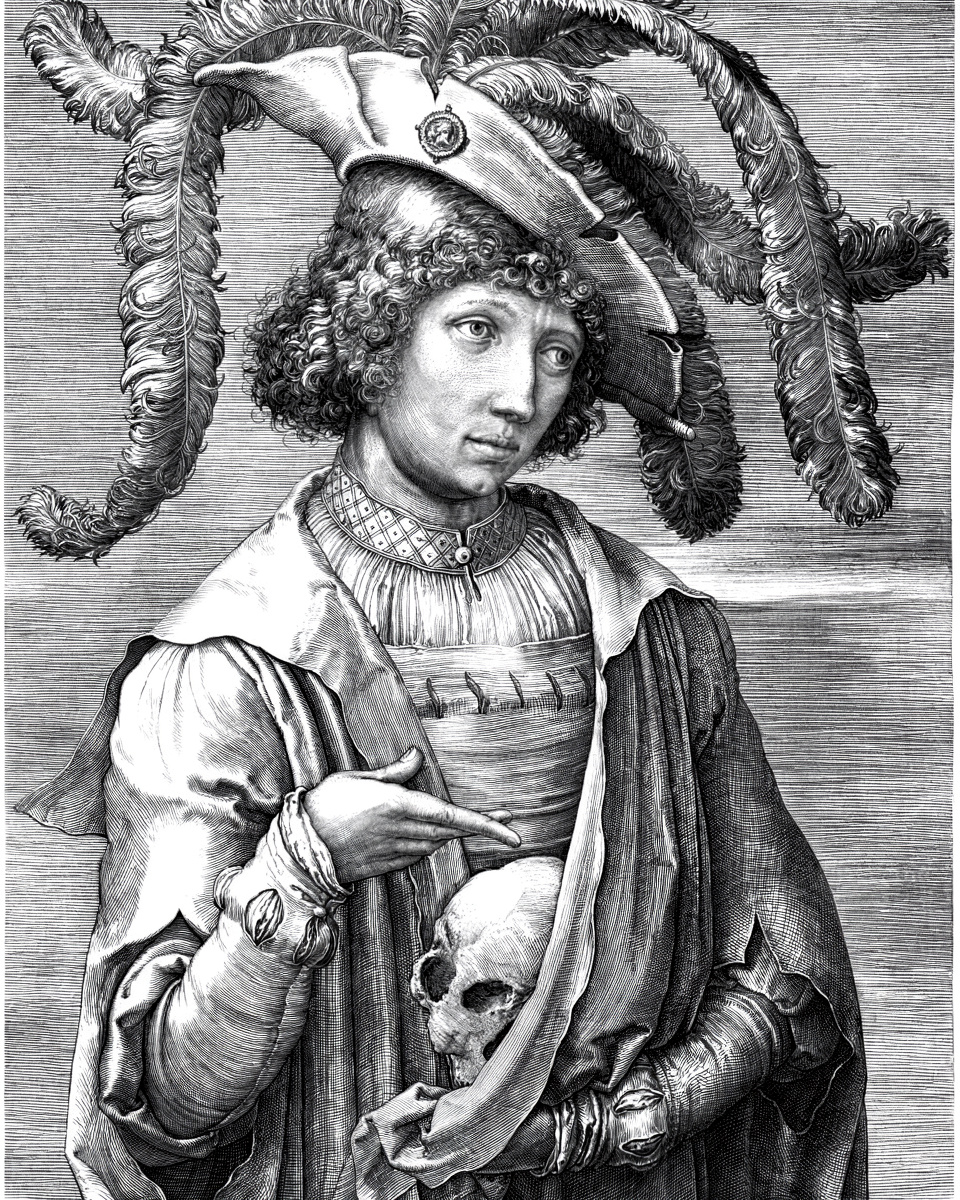
Lucas van Leyden, Portrait of a Young Man with a Skull, c. 1519. Engraving. Cleveland Museum of Art.
A young man in a fashionable hat points to a skull: whatever you are now, you will be this. Lucas van Leyden was a child prodigy of engraving, and this print, made around 1519, is a portrait and a sermon at once.
5. Portrait of Susanna Lunden
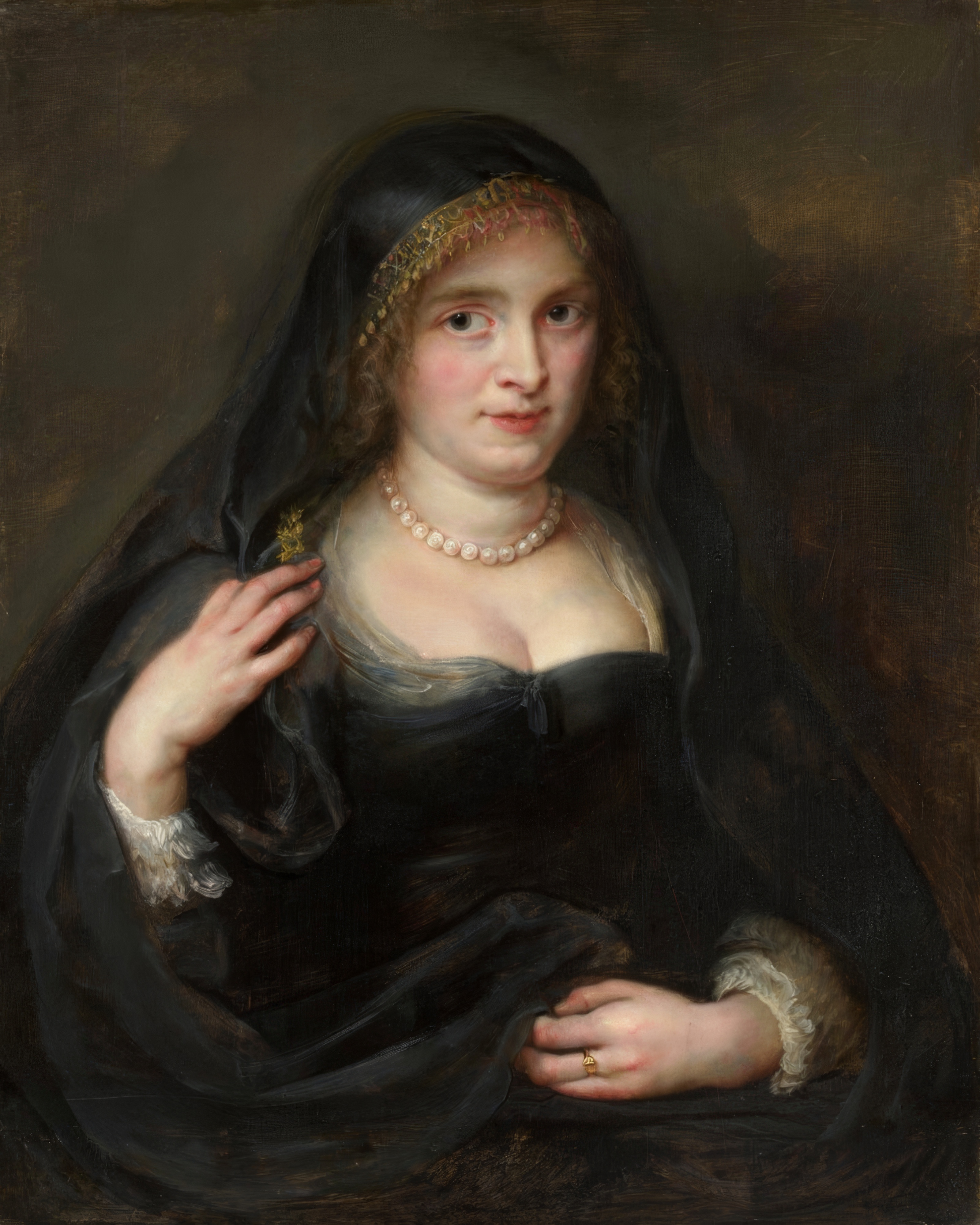
Peter Paul Rubens, Portrait of Susanna Lunden, ca. 1625–27. Oil on wood. The Metropolitan Museum of Art, New York.
Rubens painted the Fourment sisters several times; he married the youngest, Helena. This one is probably Susanna, his sister-in-law, painted on wood with a warmth and directness that make her look about to speak.
6. Portrait of Charlotte and Sarah Carteret-Hardy
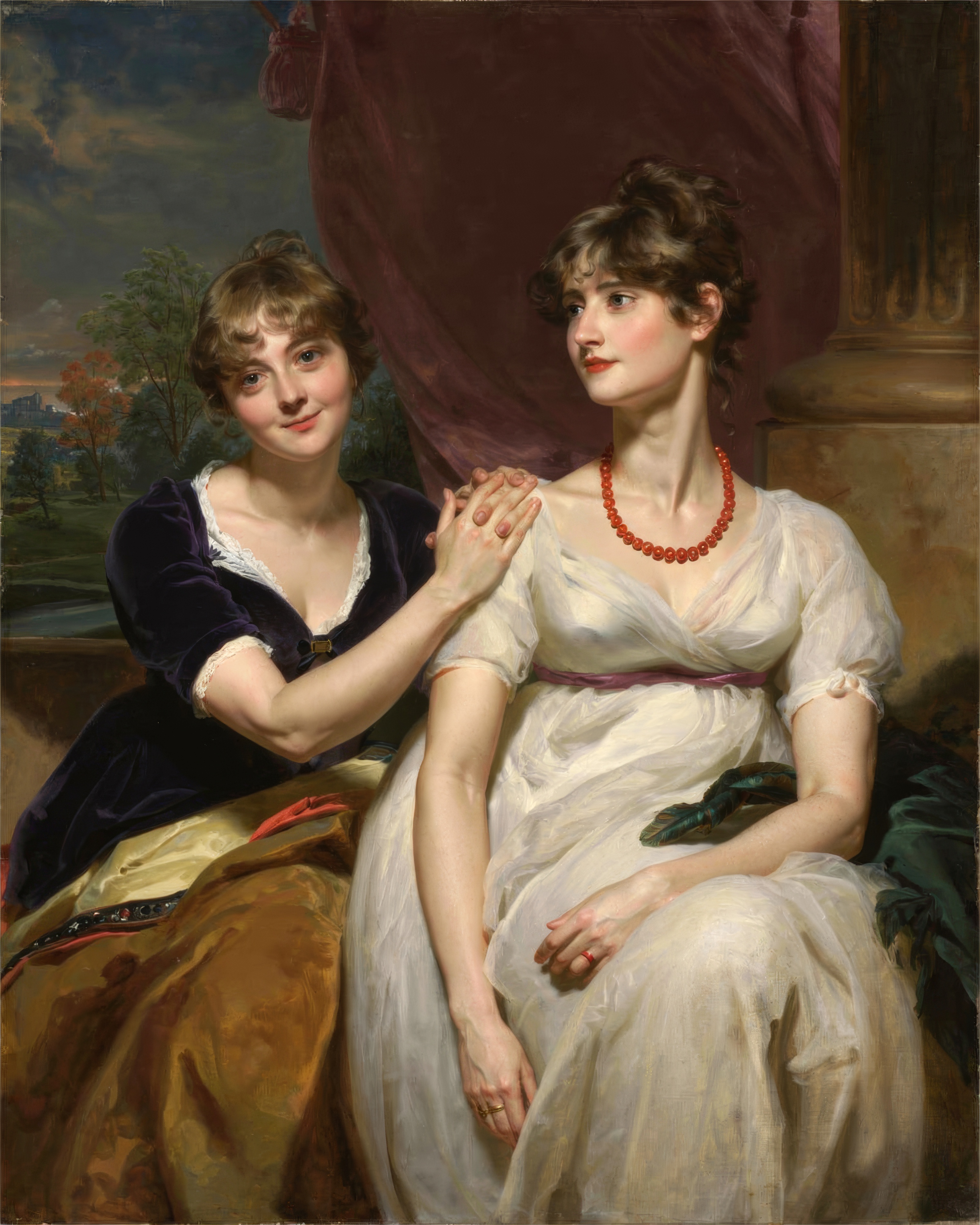
Thomas Lawrence, Portrait of Charlotte and Sarah Carteret-Hardy, 1801. Oil on canvas. Cleveland Museum of Art.
Thomas Lawrence was the most fashionable portrait painter in Regency England. His double portrait of the Carteret-Hardy sisters, in white muslin against a stormy sky, is a picture of closeness and of the new taste for natural, unposed children.
7. Portrait of Nicolaes van Voorhout
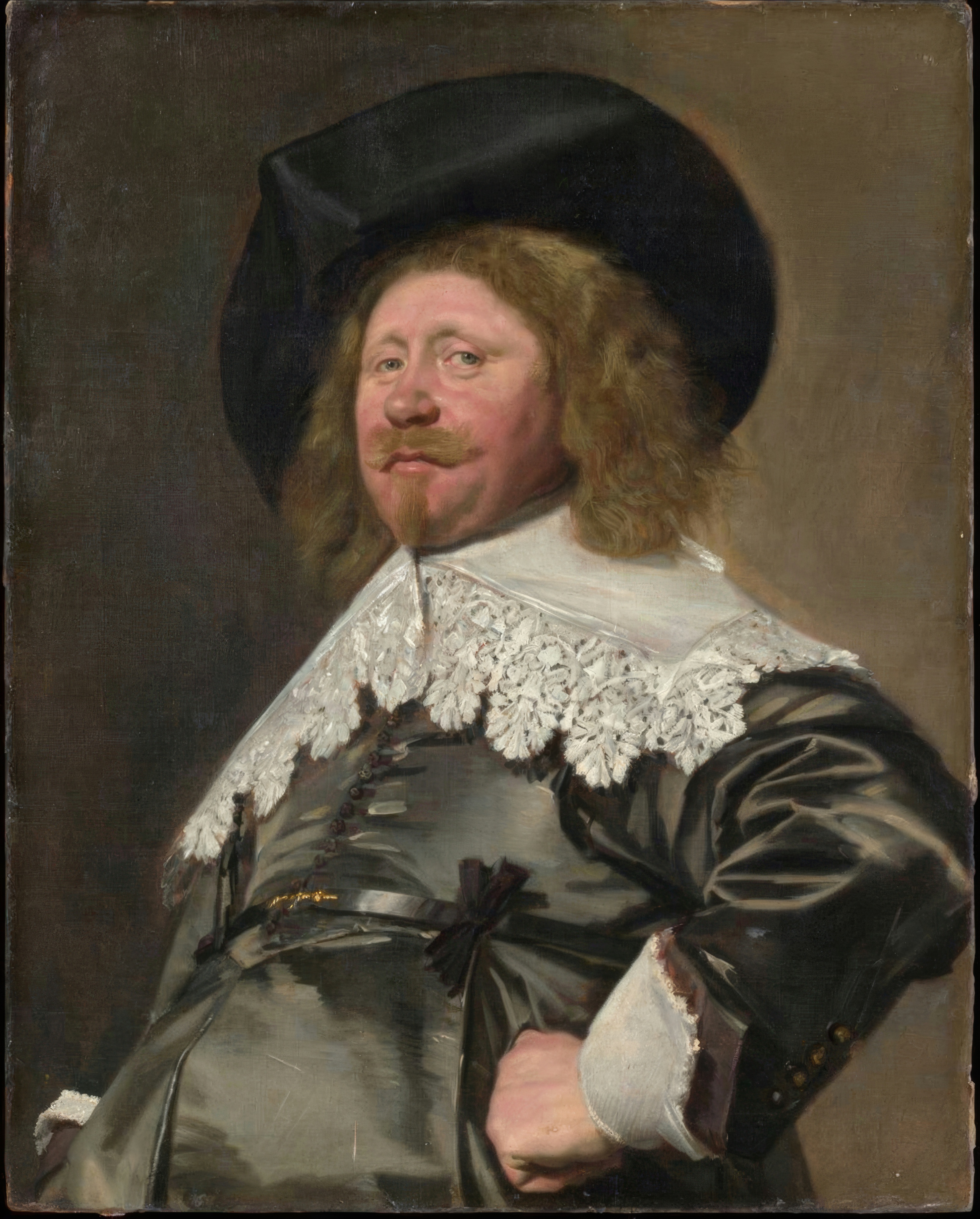
Frans Hals, Portrait of Nicolaes van Voorhout, ca. 1636–38. Oil on canvas. The Metropolitan Museum of Art, New York.
Frans Hals painted the merchants and brewers of Haarlem with quick, slashing strokes that make them look as if they have just turned to greet you. This man, probably the brewer Nicolaes van Voorhout, fills the canvas with confidence.
8. Juan de Pareja (ca. 1608–1670)
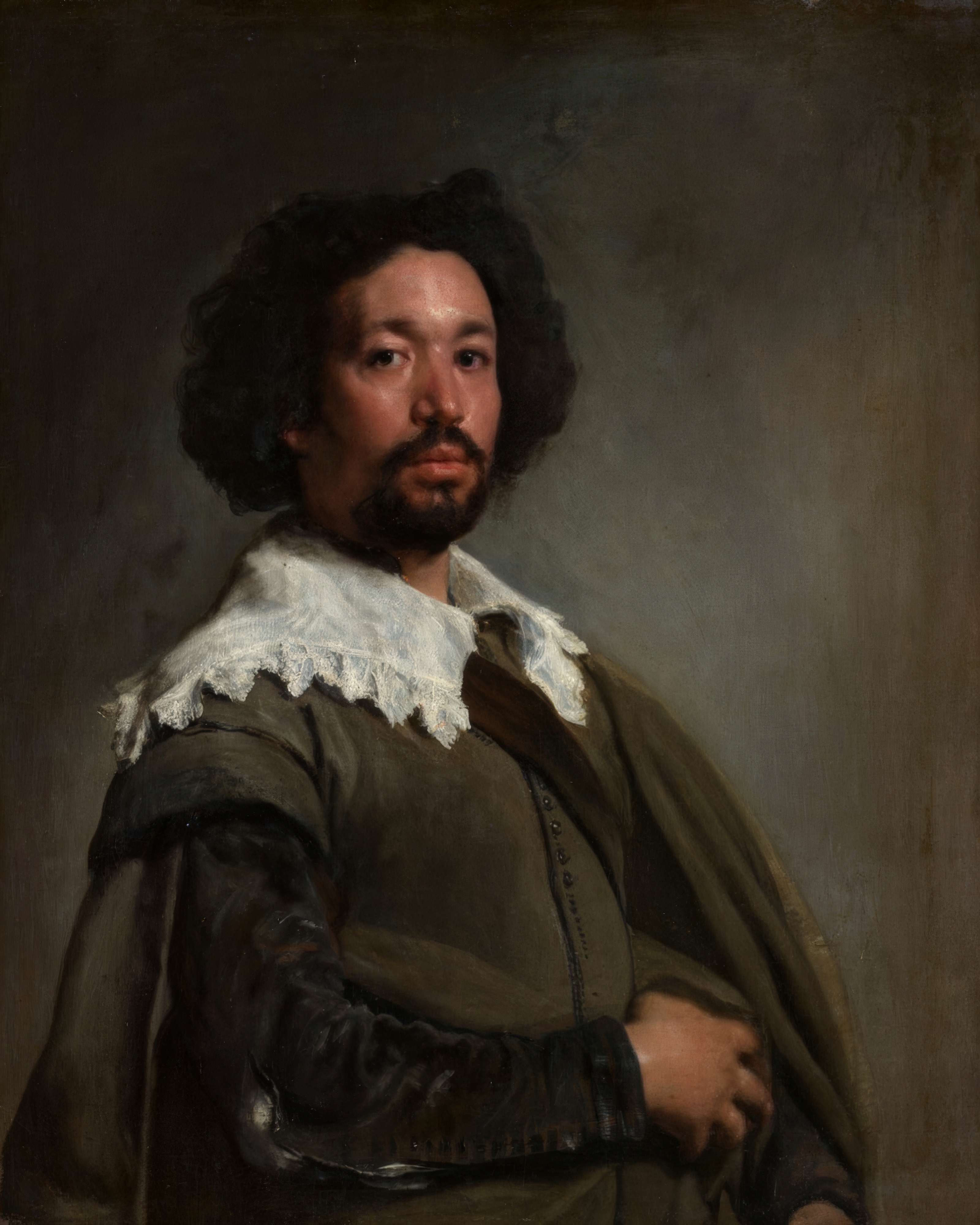
Velázquez, Juan de Pareja (ca. 1608–1670), 1650. Oil on canvas. The Metropolitan Museum of Art, New York.
Juan de Pareja was born into slavery and worked as Velázquez’s assistant; Velázquez signed his freedom papers in Rome the year this portrait was painted, and became a painter himself. Velázquez painted him in Rome in 1650, and when it was shown in public, other artists said everything else looked like painting and this alone looked like truth. The Met paid a world record price for it in 1970.
9. Young Woman at an Open Half-Door
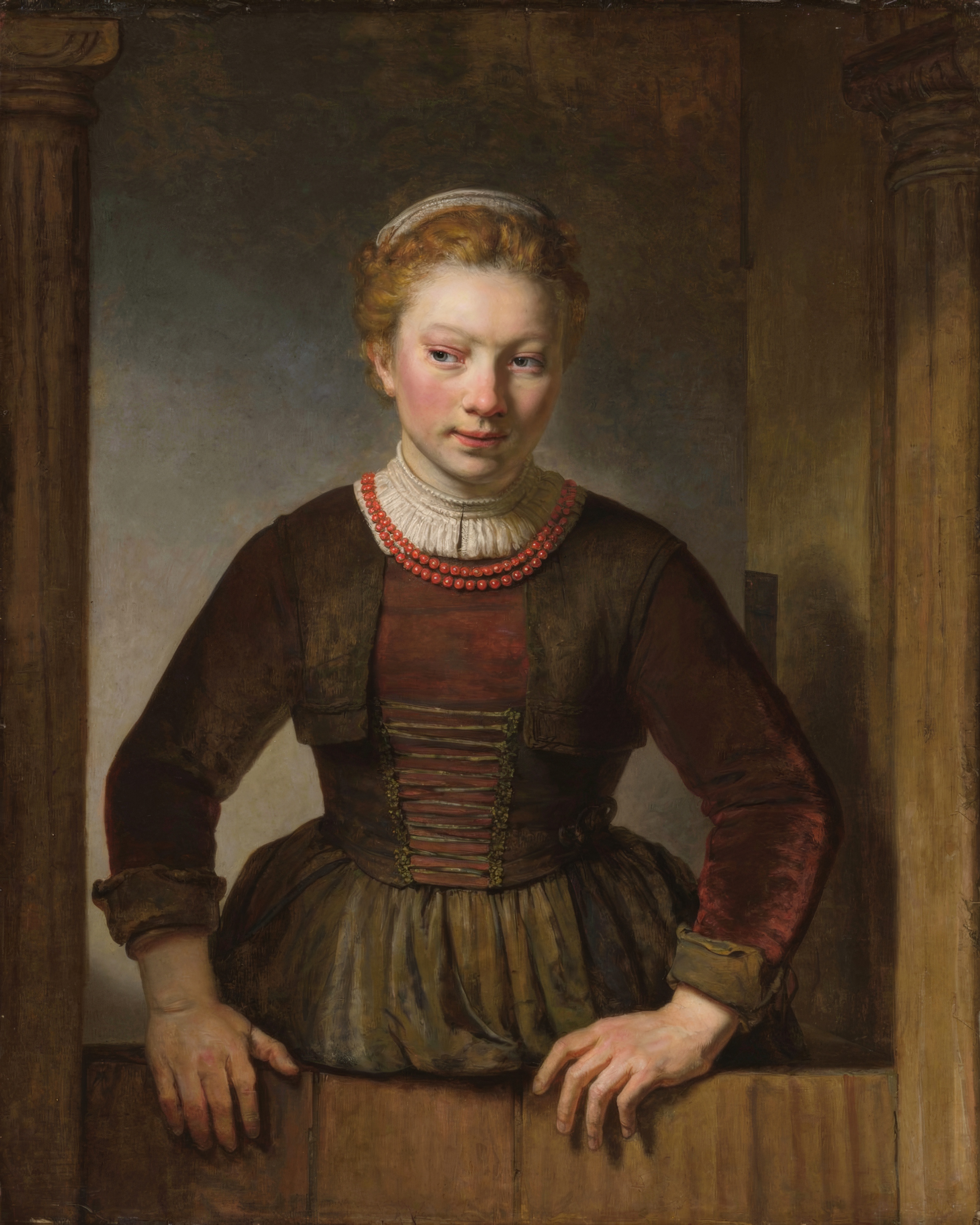
Rembrandt van Rijn, Young Woman at an Open Half-Door, 1645. Oil on canvas. Art Institute of Chicago.
Rembrandt painted this young woman leaning on a Dutch half-door in 1645, with light falling softly on her face and hands. Nobody knows who she was, and that is part of the spell: she seems caught between the house behind her and the world in front.
10. Portrait of the Marquise d'Aguirandes
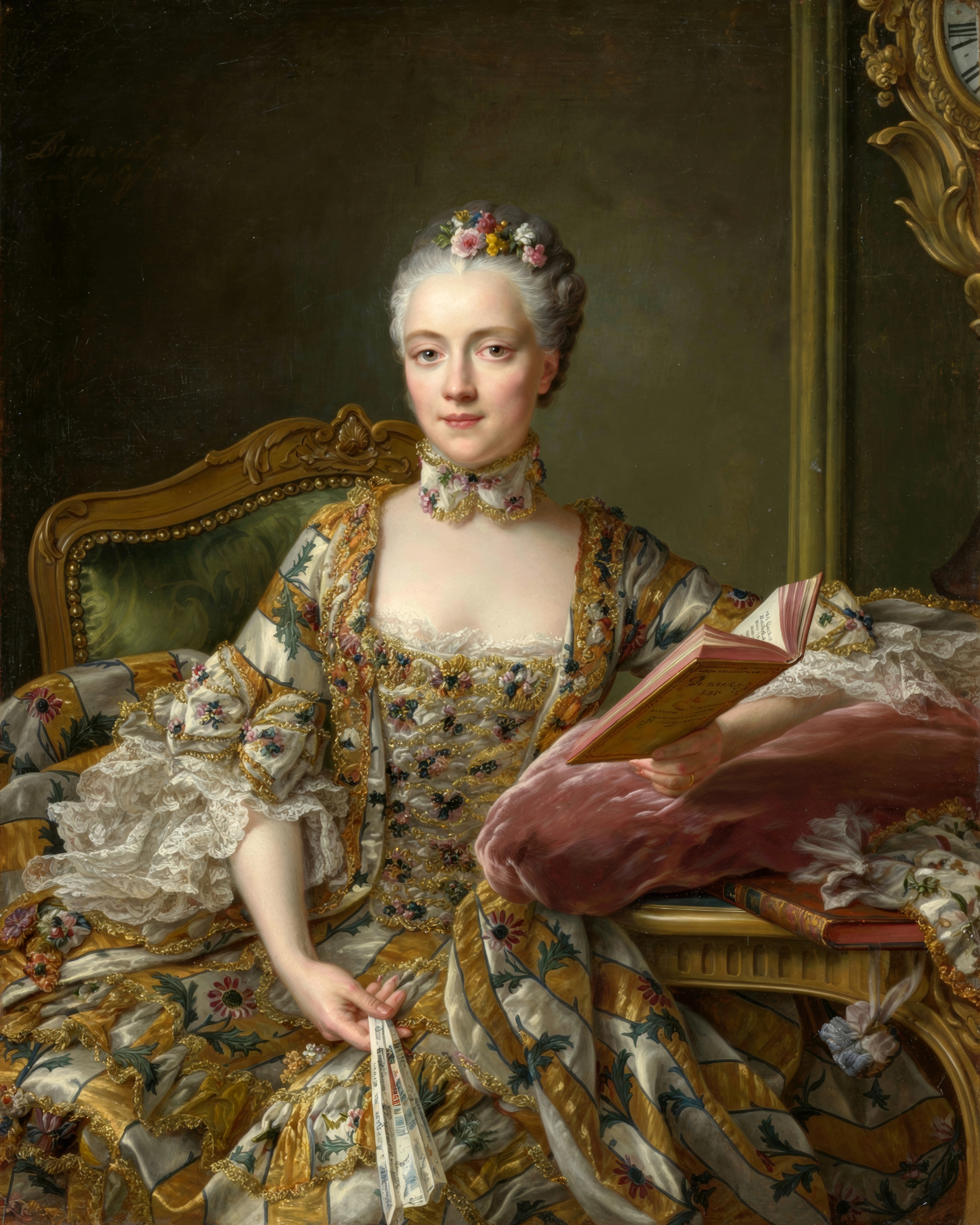
François Hubert Drouais, Portrait of the Marquise d'Aguirandes, 1759. Oil on canvas. Cleveland Museum of Art.
François-Hubert Drouais was a favourite of Madame de Pompadour, and his portraits are the rococo at its most charming. The Marquise d’Aguirandes sits in silvery satin, a book in her hand, perfectly composed.
11. Portrait of Madame de Mondonville
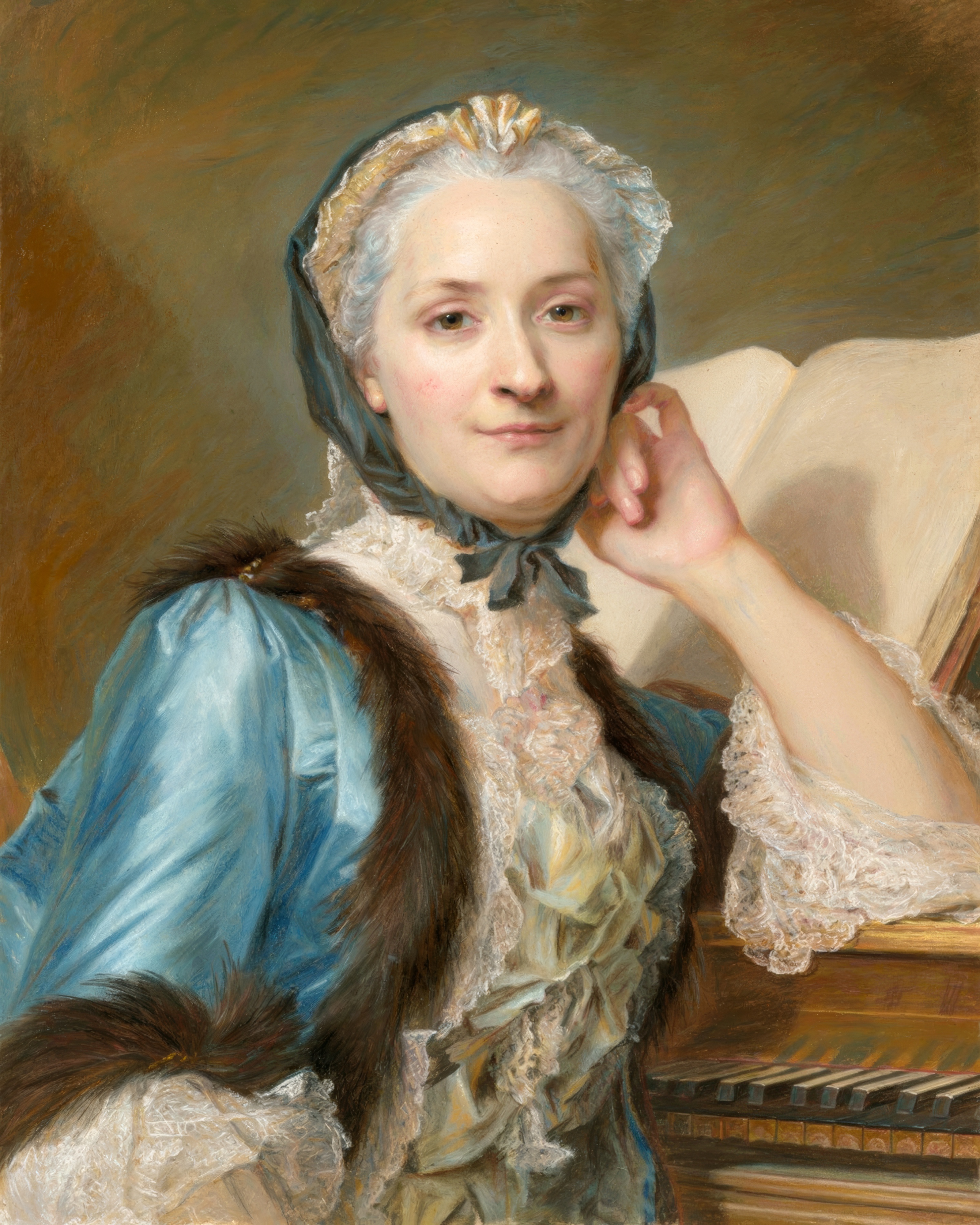
Maurice-Quentin de La Tour, Portrait of Madame de Mondonville, c. 1752. Pastel on blue-gray laid paper, laid down on canvas and wrapped around a strainer, enlarged by the artist with a band of paper about 3 cm high. Art Institute of Chicago.
Maurice-Quentin de La Tour was the king of pastel portraiture in eighteenth-century Paris. Madame de Mondonville, a harpsichordist and the wife of a composer, turns from her music with an amused, intelligent look, drawn in soft chalk on blue paper.
12. Portrait of a Young Boy with Blue Eyes
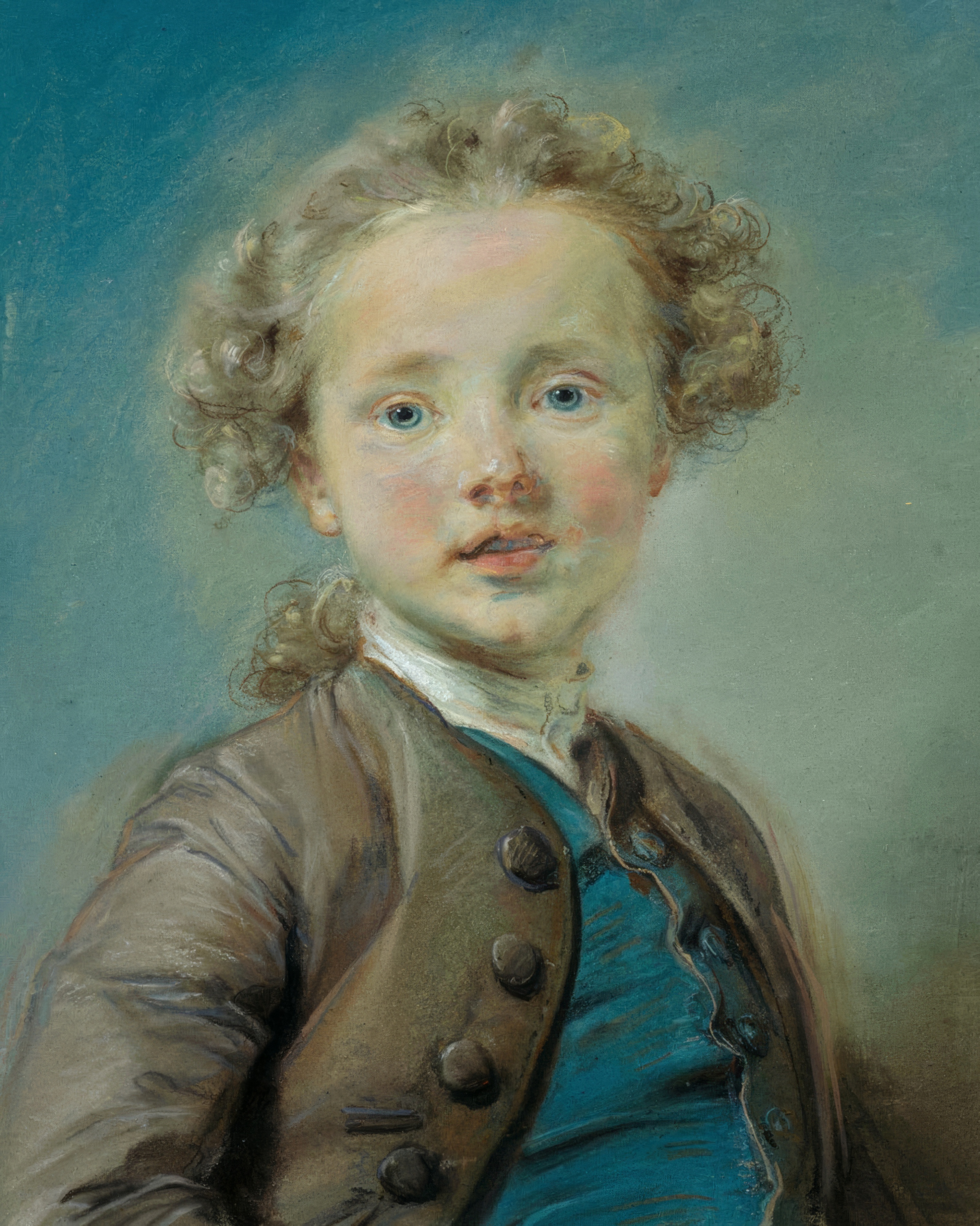
Jean-Baptiste Perronneau, Portrait of a Young Boy with Blue Eyes, c. 1750. Pastel on blue laid paper, laid down on canvas. Art Institute of Chicago.
Jean-Baptiste Perronneau was La Tour’s great rival in pastel. His boy with blue eyes is a study in blues, the eyes, the coat and the background, and one of the most direct child portraits of the century.
13. Young Woman with a Turban
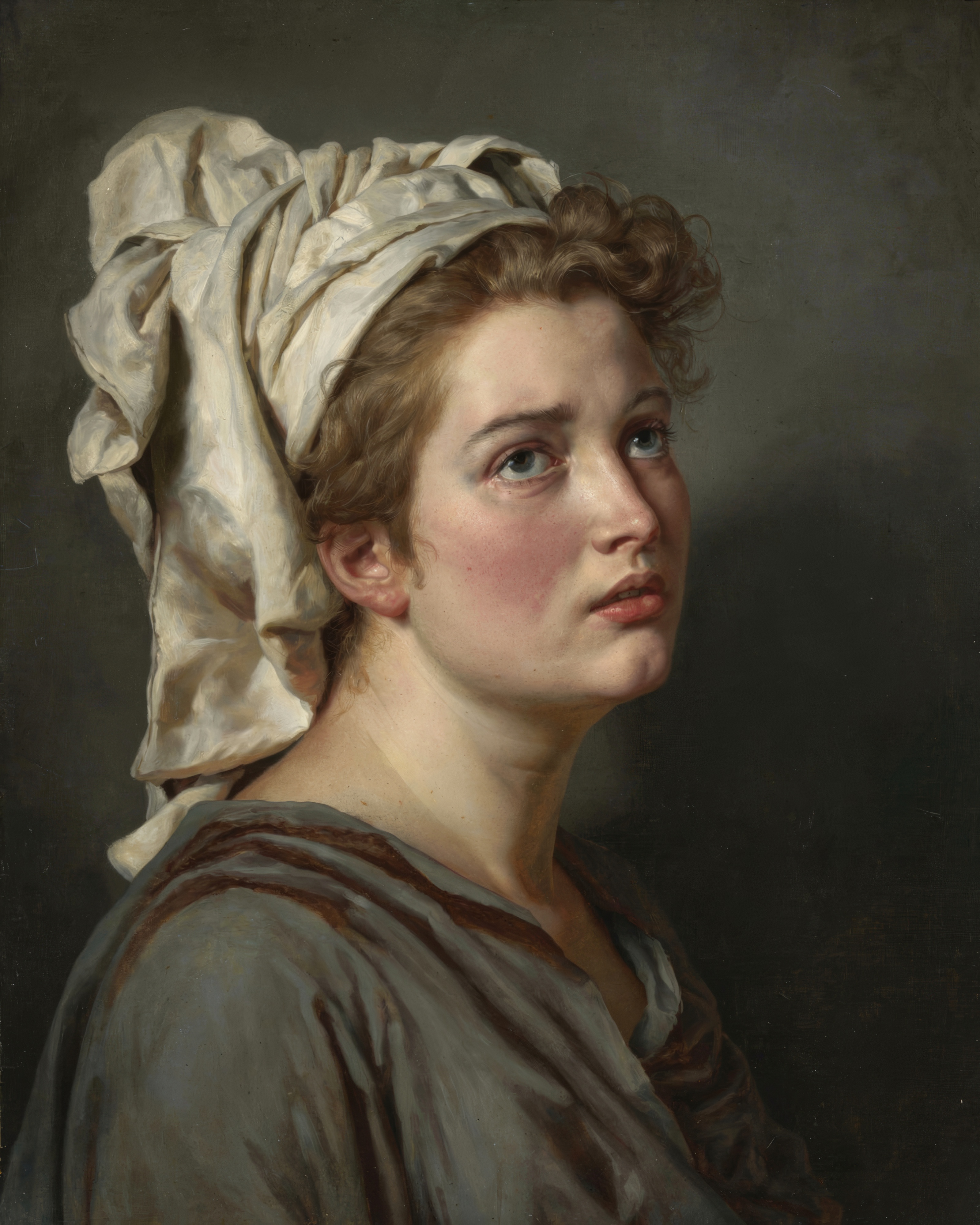
Jacques-Louis David, Young Woman with a Turban, c. 1780. Oil on canvas. Cleveland Museum of Art.
Before he became the painter of the French Revolution, Jacques-Louis David painted this young woman in a loose white turban. It is a study more than a formal portrait, and you can see his calm, sculptural style taking shape.
14. Mrs. Francis Russell
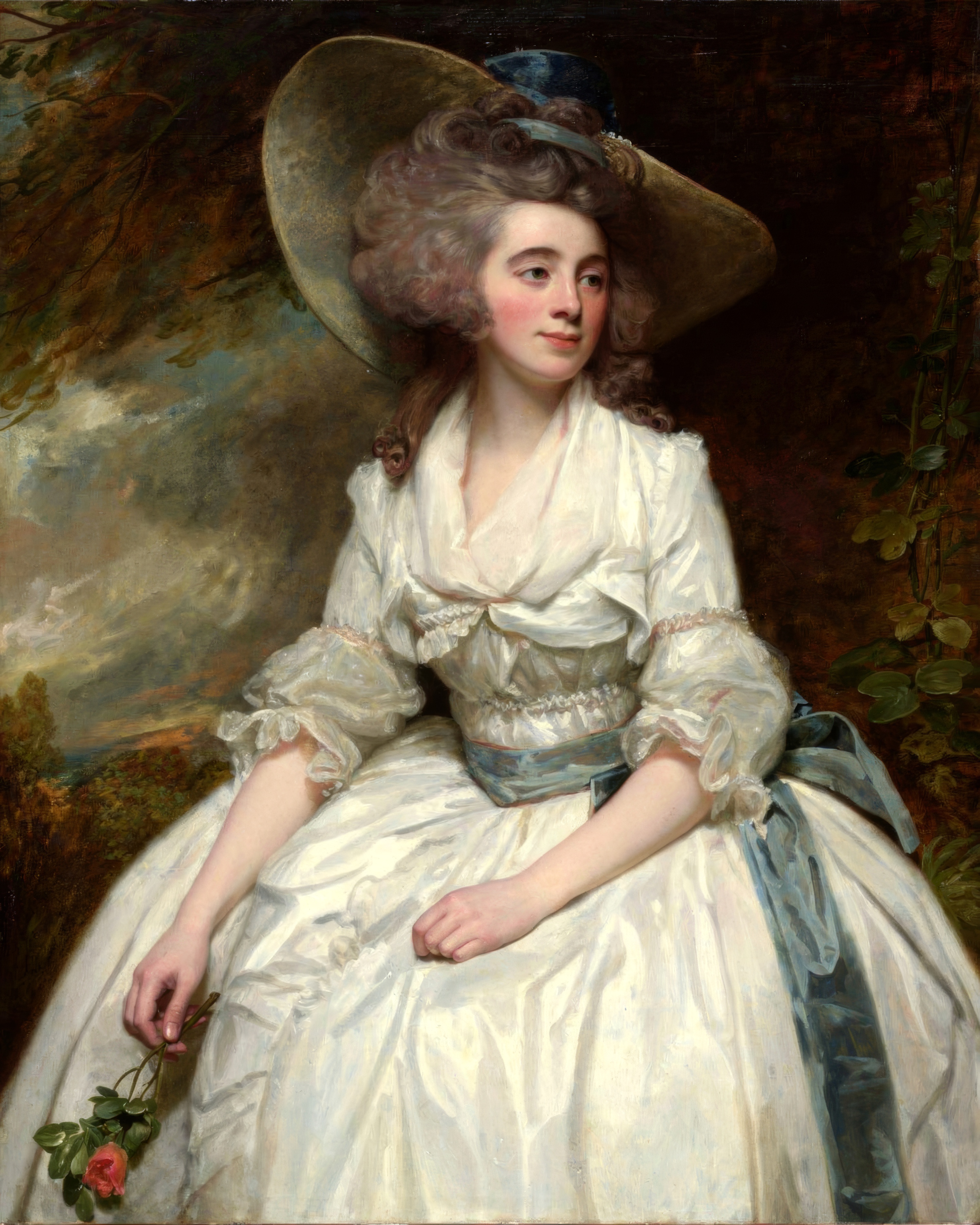
George Romney, Mrs. Francis Russell, 1785–87. Oil on canvas. Art Institute of Chicago.
George Romney was one of the three great portrait painters of Georgian England, with Reynolds and Gainsborough. His Mrs Francis Russell, in white against a darkening landscape, is all softness and grace.
15. Portrait of Josefa de Garcini
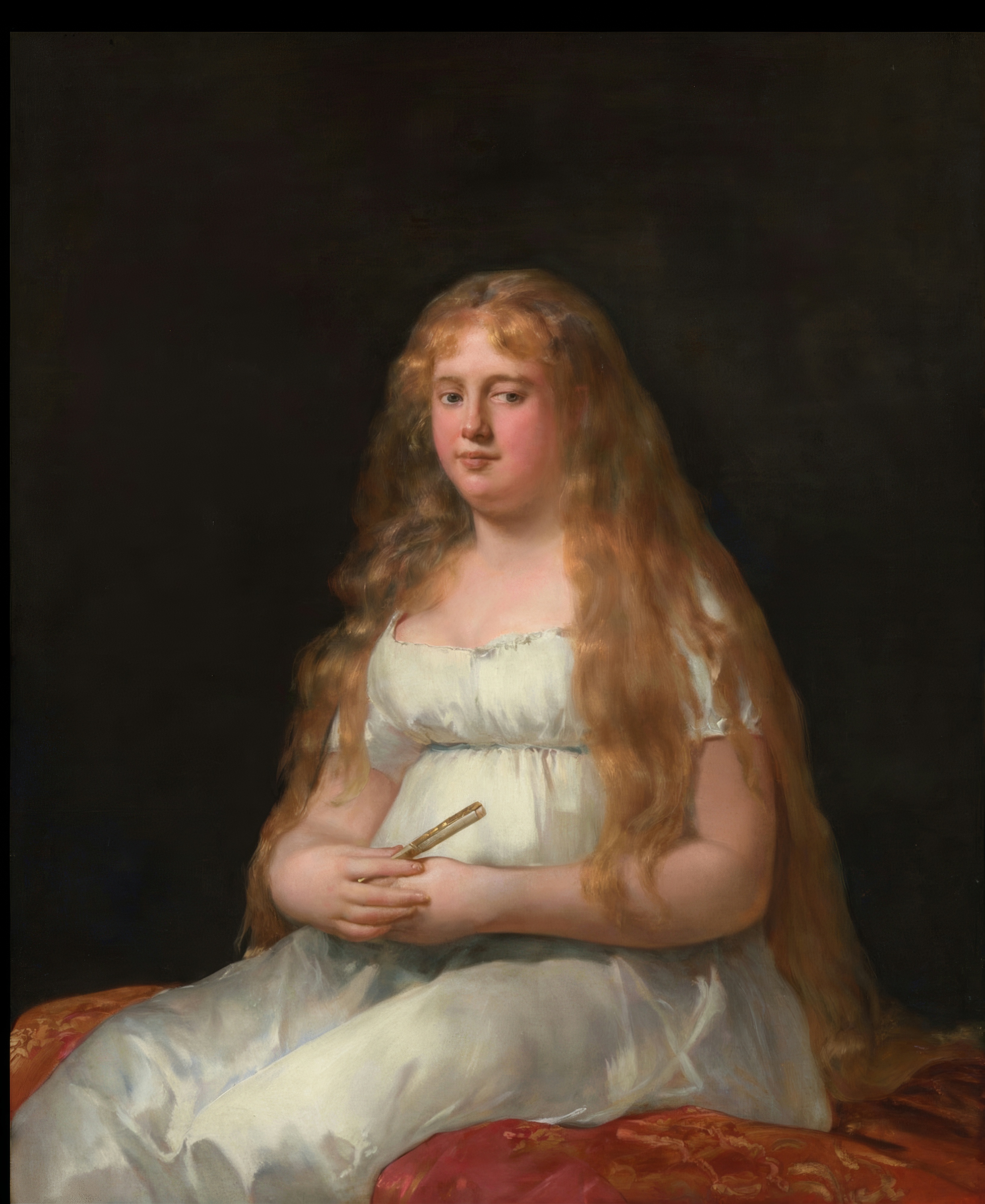
Francisco de Goya, Portrait of Josefa de Garcini, 1804. Oil on canvas. The Metropolitan Museum of Art, New York.
Goya painted Josefa de Garcini and her husband as a pair in 1804. She looks straight out with a quick, sharp intelligence, in a white dress and golden shawl that Goya paints in a few loose strokes. Spanish portraiture never looked back.
16. Rêverie (Portrait of Gabrielle Borreau)
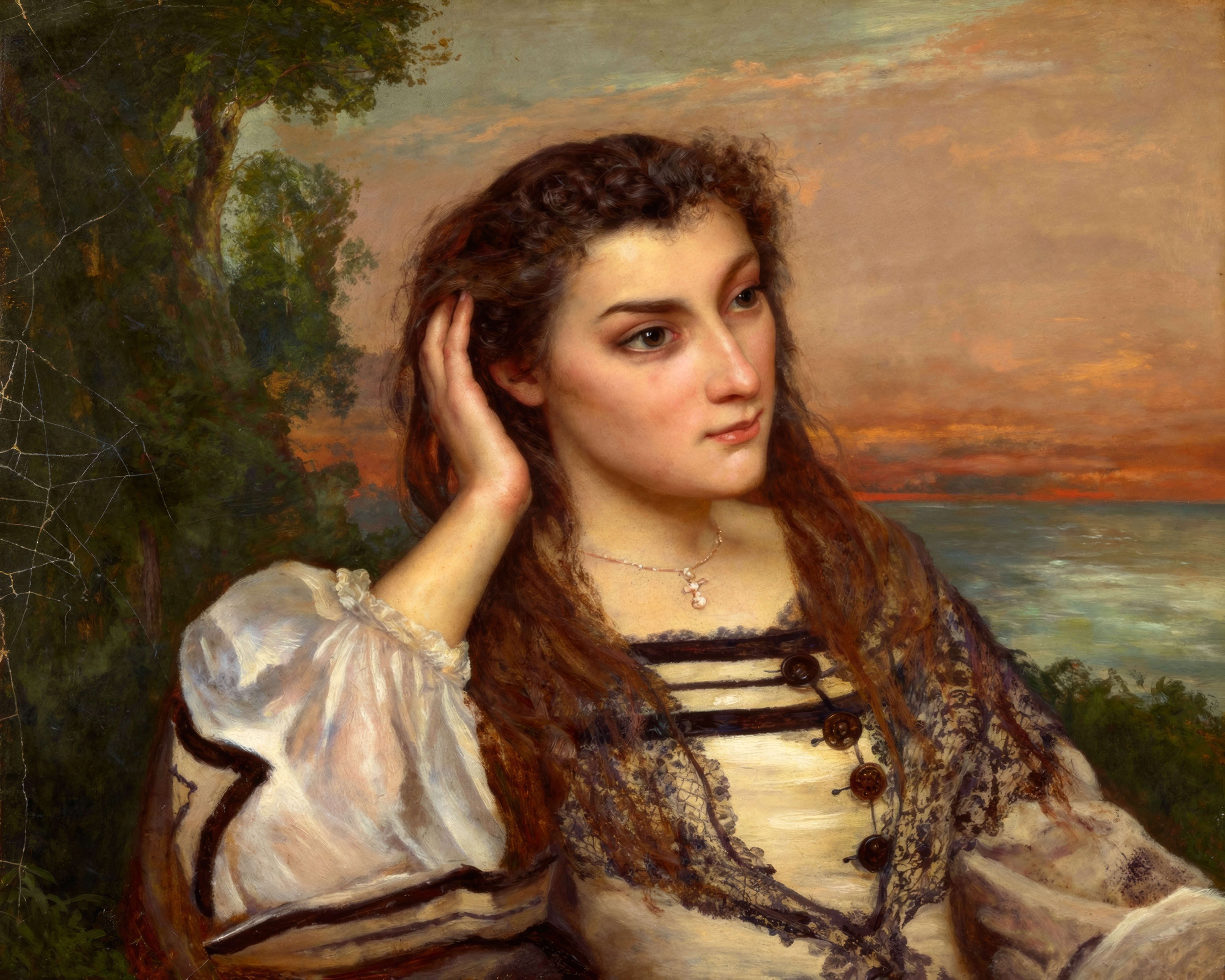
Gustave Courbet, Rêverie (Portrait of Gabrielle Borreau), 1862. Oil on paper, mounted on canvas. Art Institute of Chicago.
Courbet was the leader of realism, the painter of peasants and stonebreakers, but he also painted this tender portrait of Gabrielle Borreau lost in thought. It was painted on paper in a single sitting, and it shows.
17. Young Lady in 1866
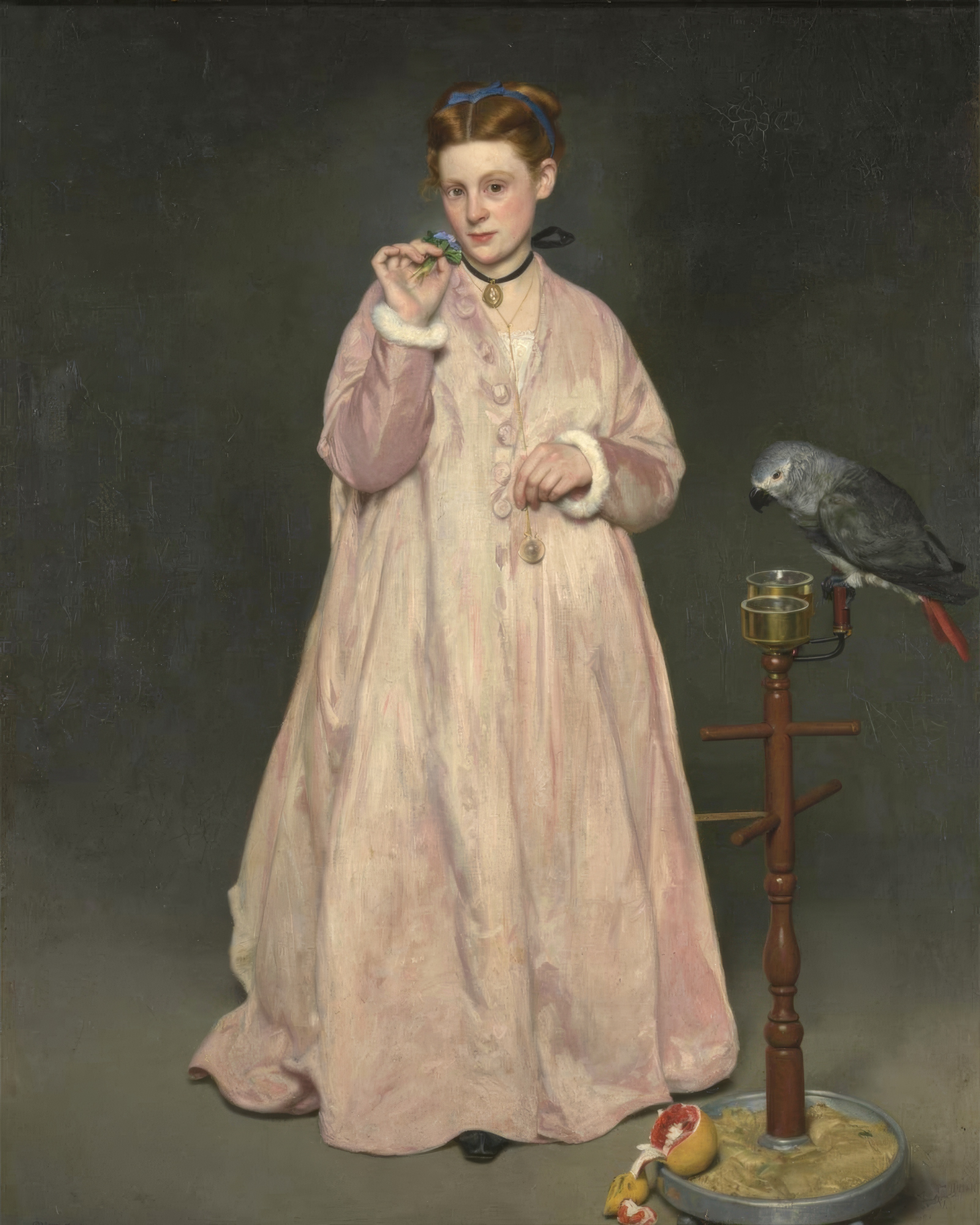
Édouard Manet, Young Lady in 1866, 1866. Oil on canvas. The Metropolitan Museum of Art, New York.
Manet’s favourite model, Victorine Meurent, stands in a pink silk dressing gown beside a parrot, holding a small bunch of violets. The title is deliberately plain: a young woman, in 1866, as she is.
18. Lady Lilith
Dante Gabriel Rossetti, Lady Lilith, 1867. Watercolor and gouache (bodycolor). The Metropolitan Museum of Art, New York.
Lilith, in legend Adam’s first wife, was the Pre-Raphaelites’ image of dangerous beauty. Rossetti painted her combing her long hair among roses and foxgloves, absorbed in her own reflection. This watercolour version is at the Met.
19. Madame Paul Escudier (Louise Lefevre)
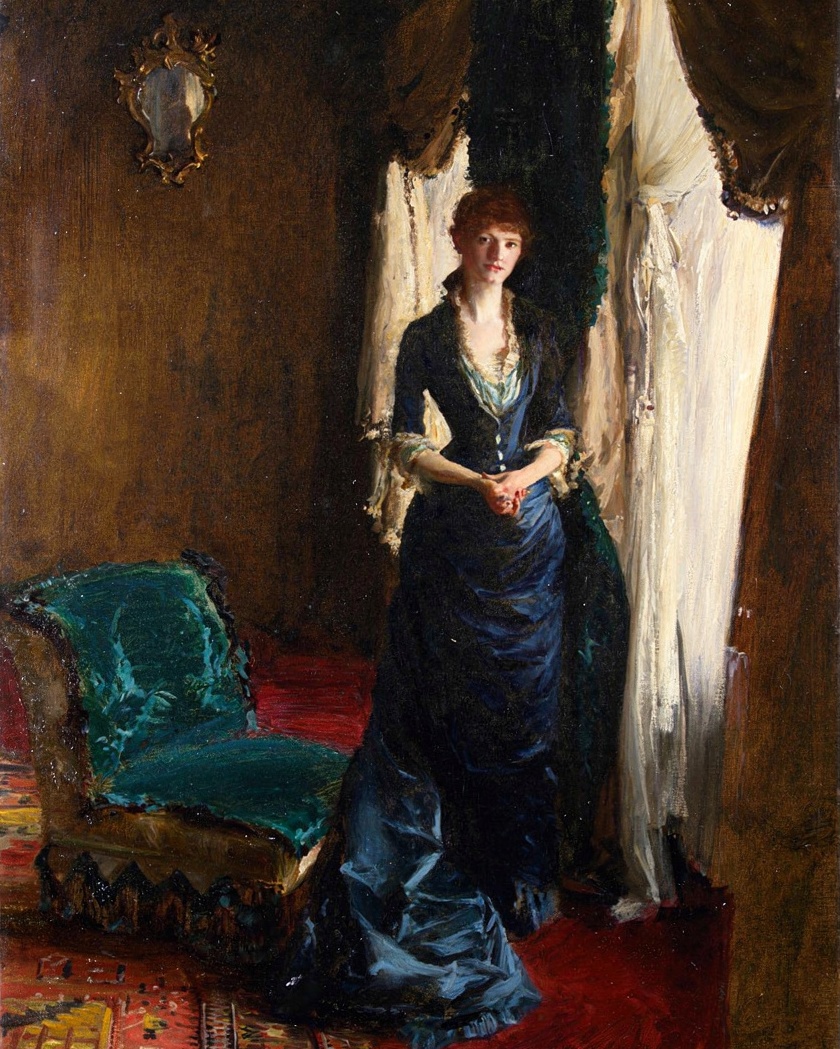
John Singer Sargent, Madame Paul Escudier (Louise Lefevre), 1882. Oil on canvas. Art Institute of Chicago.
Two years before the scandal of Madame X, John Singer Sargent painted Louise Escudier in a dim Parisian drawing room. The figure is half lost in shadow, and the brushwork is loose and confident: Sargent was twenty-six and already a master.
20. Mrs. Potter Palmer
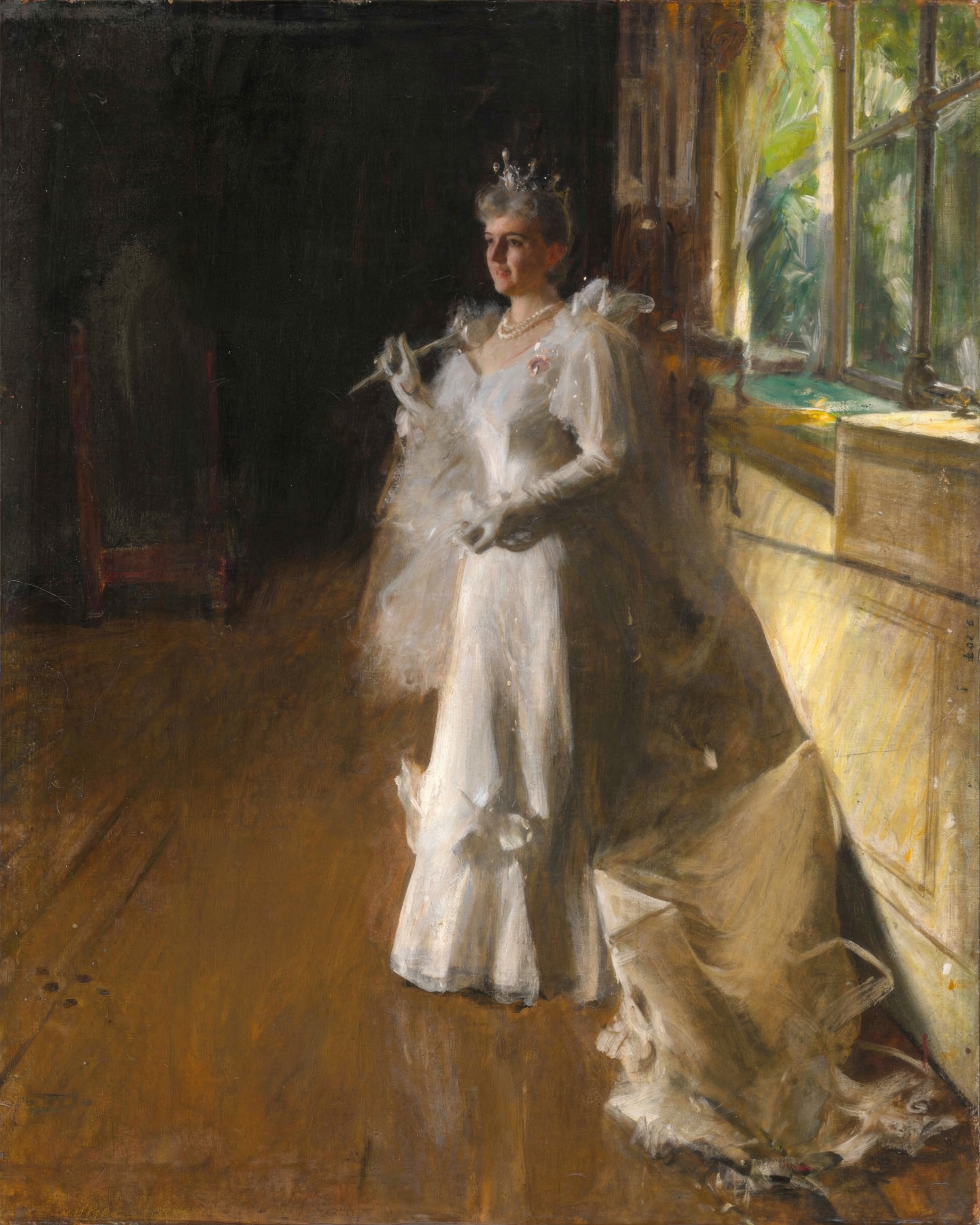
Anders Leonard Zorn, Mrs. Potter Palmer, 1893. Oil on canvas. Art Institute of Chicago.
Bertha Palmer was the queen of Chicago society, an early collector of the impressionists and president of the women’s board at the 1893 World’s Fair. Anders Zorn, the Swedish master, painted her in white with a tiara and the gavel of her office, and her collection later made the Art Institute’s impressionist rooms famous.
A great portrait changes a room, because it adds a presence. Hang one where you can meet its eyes: above a desk, at the end of a corridor, or on the wall you face from your favourite chair. A pair of portraits from the same century, one man and one woman, has hung over fireplaces for five hundred years for good reason. For more faces, see famous self-portraits and Renaissance portraits of women, or turn your own photo into a painting.
Questions
What is the most famous portrait painting?
Leonardo’s Mona Lisa, followed by Vermeer’s Girl with a Pearl Earring, Velázquez’s Las Meninas and Rembrandt’s self-portraits. In America, Velázquez’s Juan de Pareja at the Met and Sargent’s Madame X are among the most famous.
Who are the greatest portrait painters?
Jan van Eyck, Titian, Holbein, Van Dyck, Rembrandt, Frans Hals, Velázquez, Gainsborough, Goya, Ingres and John Singer Sargent are among the names most often listed.
Why do old portraits look so serious?
Partly custom and partly time: sitters posed for many hours, smiling was thought foolish or rude, and a portrait was meant to show dignity, rank and character rather than a passing mood.
Can I commission a portrait in an old master style?
Yes. Fable’s portrait styles are each based on a masterwork. Send a photo, see a free preview, and order only if you love it.