Famous self portraits: 12 artists who looked in the mirror
From Rembrandt frowning at 24 to Böcklin listening to Death play the fiddle, twelve self portraits that show how artists saw themselves, and how to hang one at home.
A self portrait is the one commission an artist never had to win. There is no client to flatter, so the painter can try a frown, a costume, a pose borrowed from Titian, or a skeleton at the shoulder. That freedom is why self portraits are often the most honest pictures an artist made.
The twelve below run from Salvator Rosa in the 1640s to Whistler in the 1890s, with Rembrandt at the heart of the list, because no painter studied his own face more. Every one can be ordered as a print, and the Rembrandt and Goya pieces come as Fable’s Atelier Editions: new colour editions of the original etchings.
1. Self-Portrait
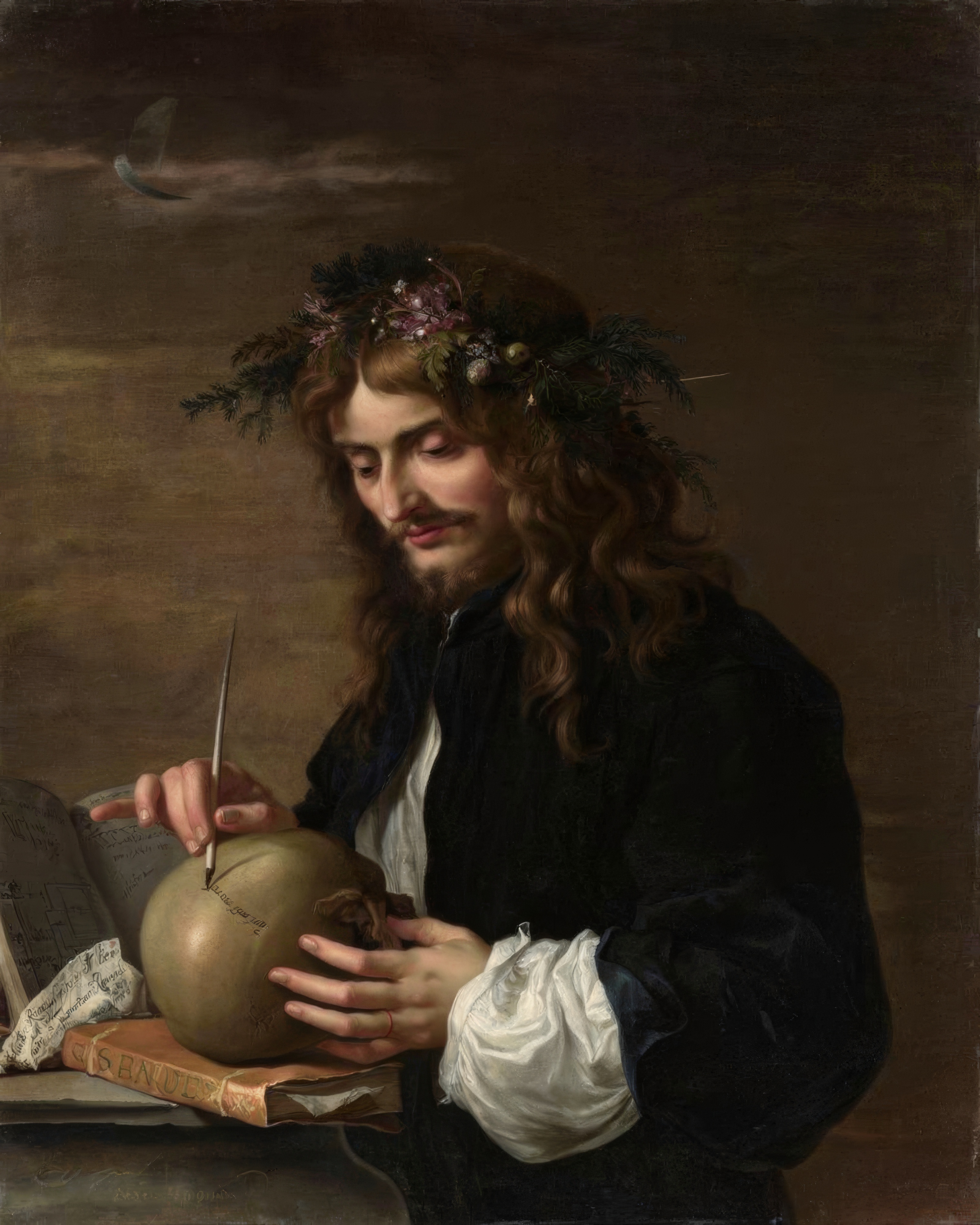
Salvator Rosa, Self-Portrait, ca. 1647. Oil on canvas. The Metropolitan Museum of Art, New York.
Salvator Rosa was a painter, poet, actor and satirist, and he cultivated the reputation of a dangerous outsider. This self portrait, painted in Florence in the 1640s, is all shadow and stare: a man daring you to argue with him.
Hang it where you want a little gravity: above a desk or in a library corner.
2. Self-Portrait Frowning
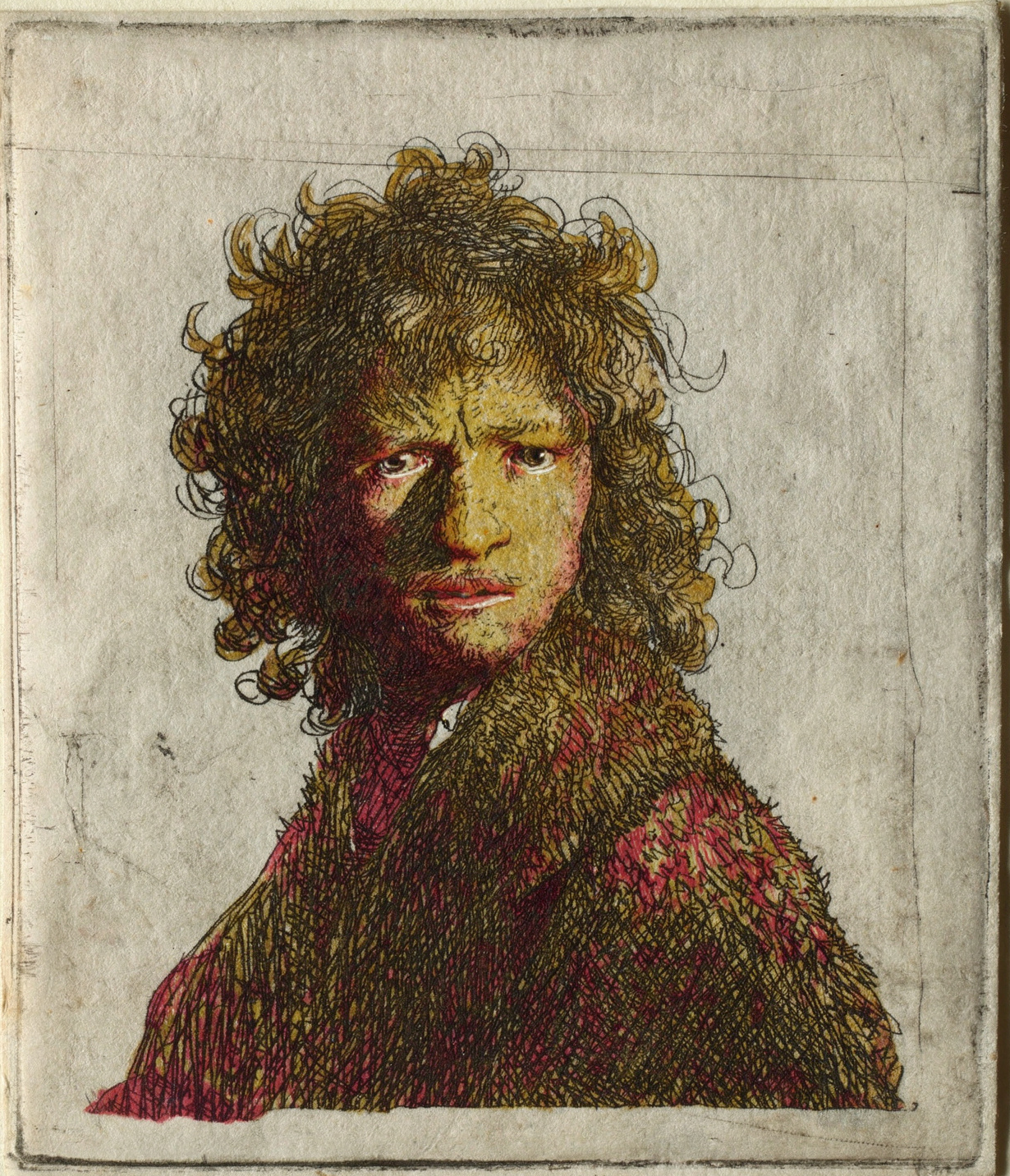
Rembrandt van Rijn, Self-Portrait Frowning, 1630. Atelier colour edition of the etching. Cleveland Museum of Art.
In 1630 Rembrandt was 24 and practising expressions on himself in the mirror, etching his own face scowling, laughing and startled. This frowning bust is one of the best of those studies, tiny in the original and full of nerve.
A strong choice for a study or a gallery wall, where a small, intense face holds its own.
3. Self-Portrait in a Velvet Cap with Plume
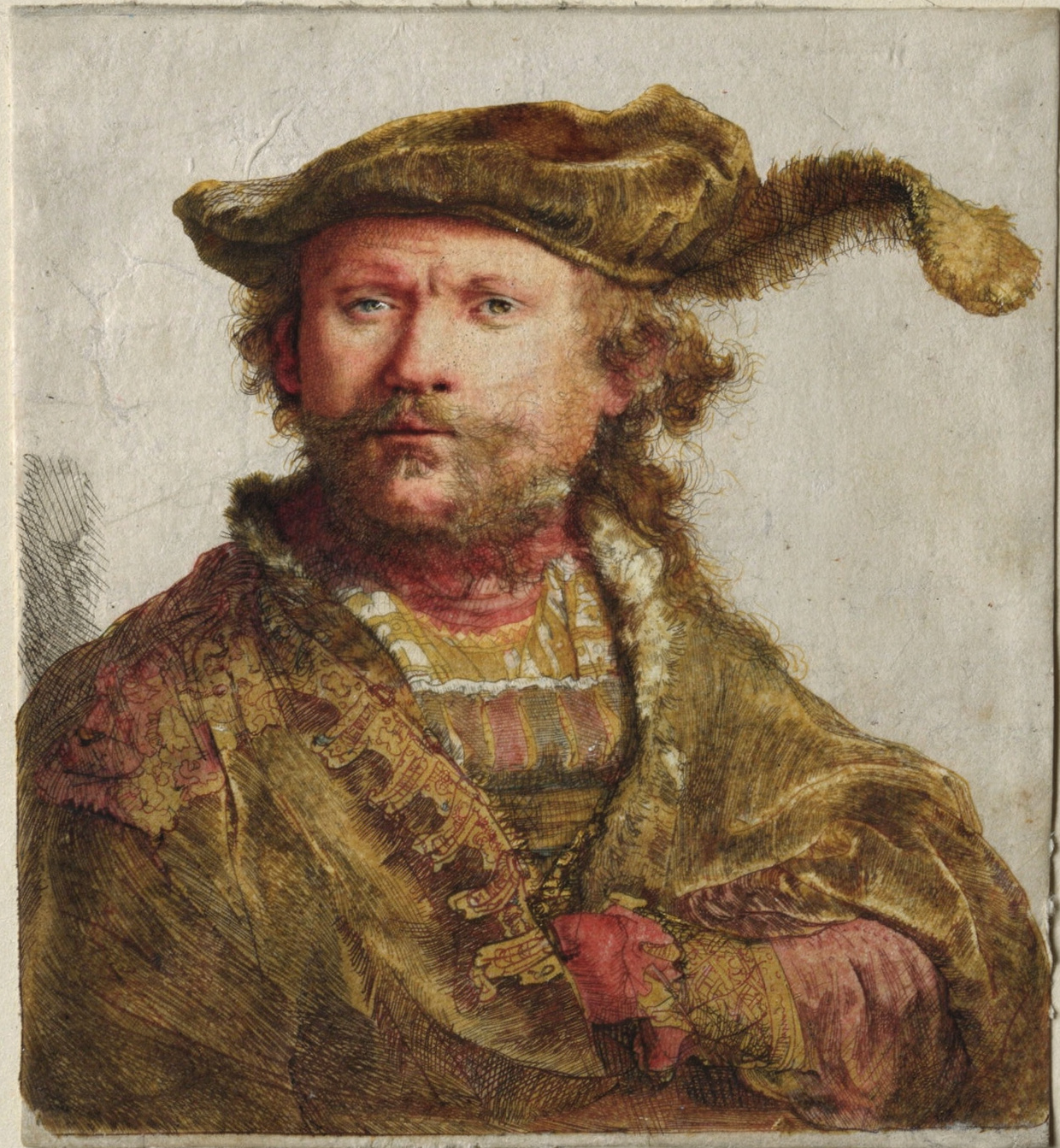
Rembrandt van Rijn, Self-Portrait in a Velvet Cap with Plume, 1638. Atelier colour edition of the etching. Cleveland Museum of Art.
Eight years later Rembrandt was successful and dressed for it. The plumed velvet cap is costume rather than everyday wear, a way of placing himself among the gentlemen in the portraits he admired.
Pairs well with the frowning bust: the same face, before and after success.
4. Self-Portrait Leaning on a Stone Sill
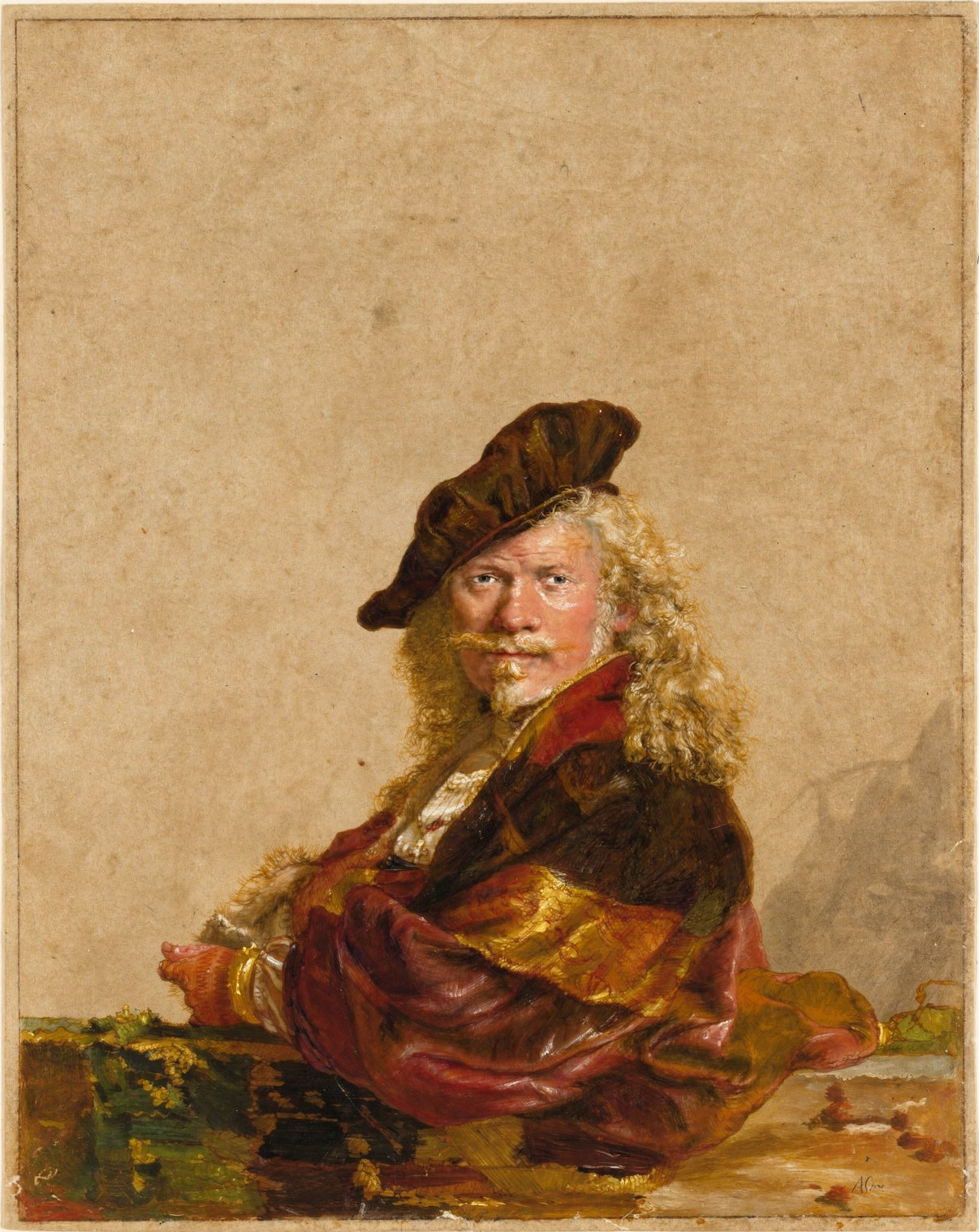
Rembrandt, Self-Portrait Leaning on a Stone Sill, 1639. Atelier colour edition of the etching. The Metropolitan Museum of Art, New York.
Rembrandt had just seen Raphael’s portrait of Castiglione and Titian’s so-called Ariosto, and he borrowed their pose: the arm on a ledge, the body turned, the face calm. It is a 33-year-old painter putting himself beside the Italian masters.
The most elegant of the Rembrandt group, and the one that works best on its own.
5. Self-Portrait Drawing at a Window
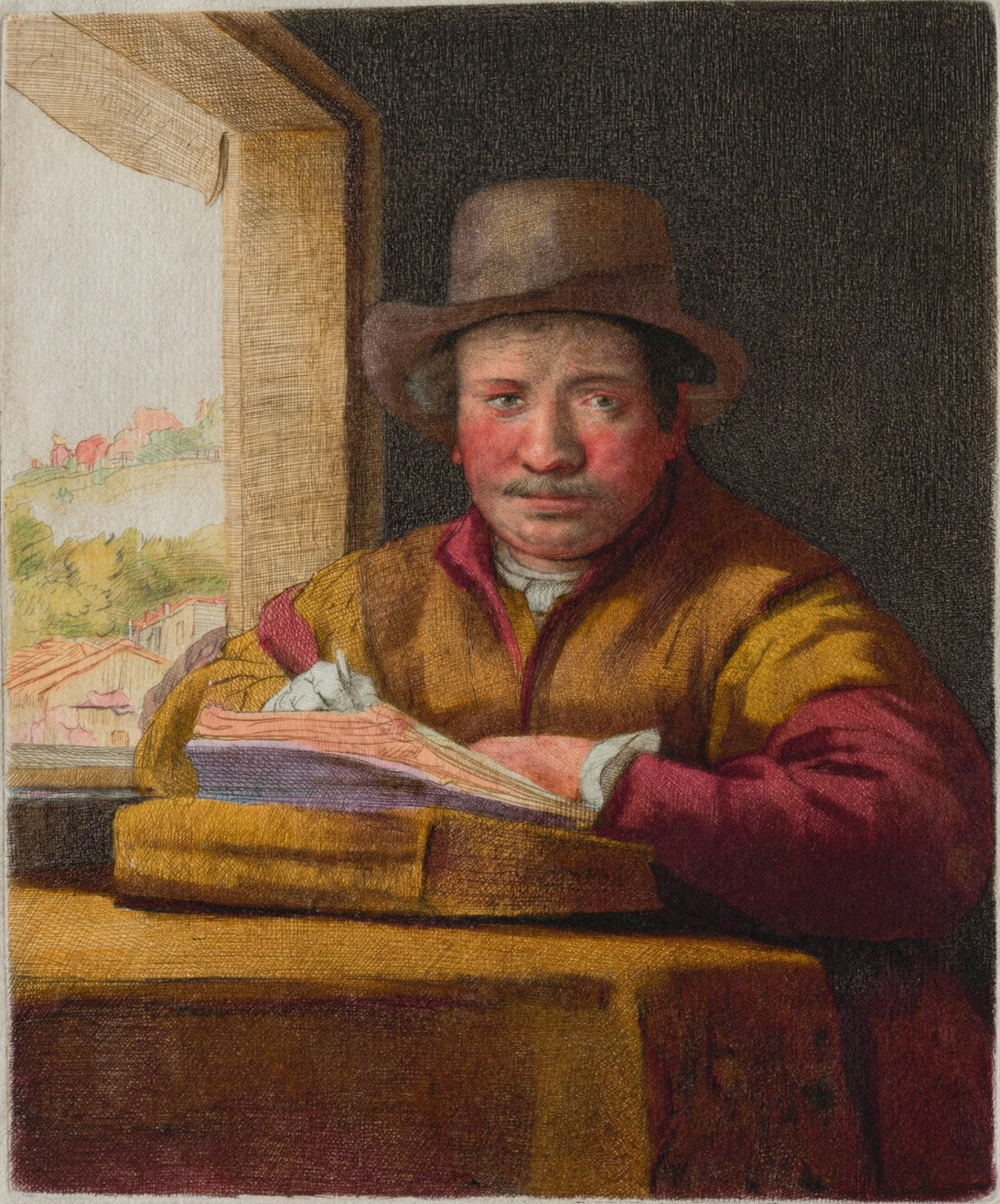
Rembrandt van Rijn, Self-Portrait Drawing at a Window, 1648. Atelier colour edition of the etching. Cleveland Museum of Art.
By 1648 the costumes are gone. Rembrandt shows himself in a plain hat at a table by the window, working, older and quieter. Many people find it the most moving of his etched self portraits.
Lovely above a working desk, for anyone who draws, writes or makes things.
6. Self-Portrait
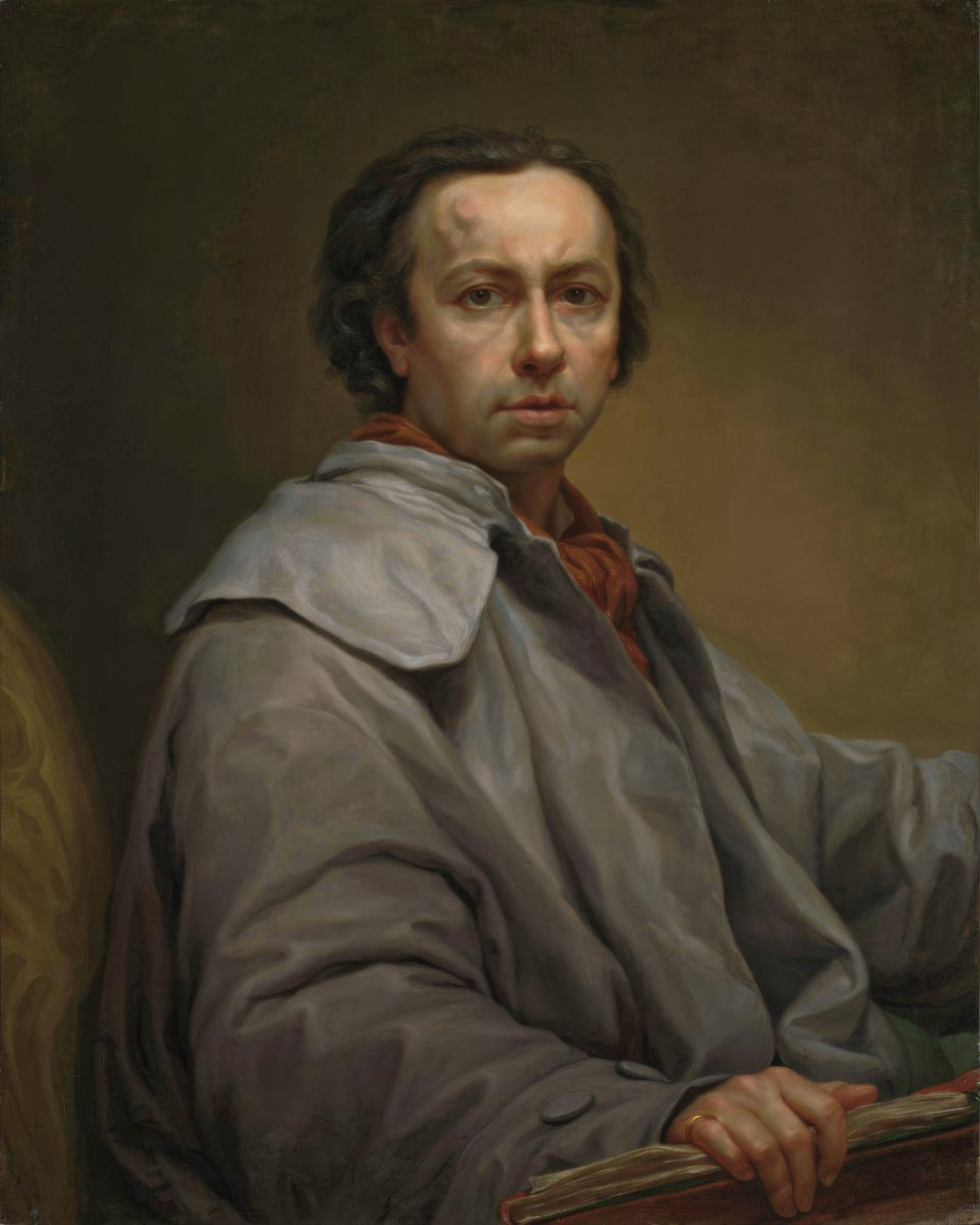
Anton Raphael Mengs, Self-Portrait, 1776. Oil on canvas. The Metropolitan Museum of Art, New York.
Mengs was the most famous painter in Europe in the 1770s, court painter in Madrid and a hero of the new classical taste. He painted himself as a thinker with a drawing in his hand rather than a courtier, and the result is cool, clear and direct.
Its quiet greys and browns sit easily in a calm, neutral room.
7. Goya: Self-Portrait
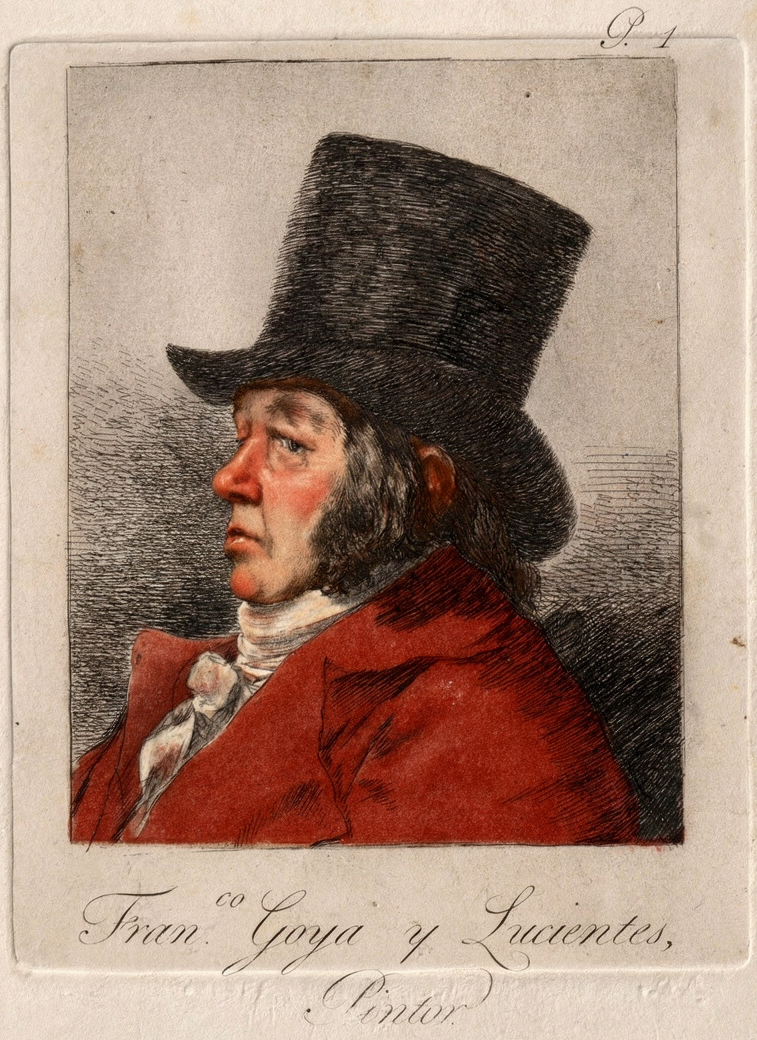
Francisco de Goya, Goya: Self-Portrait, 1799 (printed c. 1855). Atelier colour edition of the etching and aquatint. Cleveland Museum of Art.
Goya opened Los Caprichos, his set of eighty biting prints about the follies of Spain, with this portrait of himself in a top hat, looking sideways at the world he was about to mock. It is the cover image of one of the great works of art history.
For a reader, a satirist or anyone with a dry sense of humour.
8. Self-Portrait with a Black Dog
Gustave Courbet, Self-Portrait with a Black Dog, 1842. Oil on canvas. Petit Palais, Paris.
Courbet was 23 when he painted himself on a rocky hillside near his home town of Ornans, with his black spaniel at his side. It was his first picture accepted at the Paris Salon, and it already has his swagger: the long hair, the pipe, the faithful dog.
The one self portrait here you can turn into your own: send a photo of yourself with your dog and see the free preview in this style.
Create your portrait in this style
9. Self-Portrait with Death Playing the Fiddle
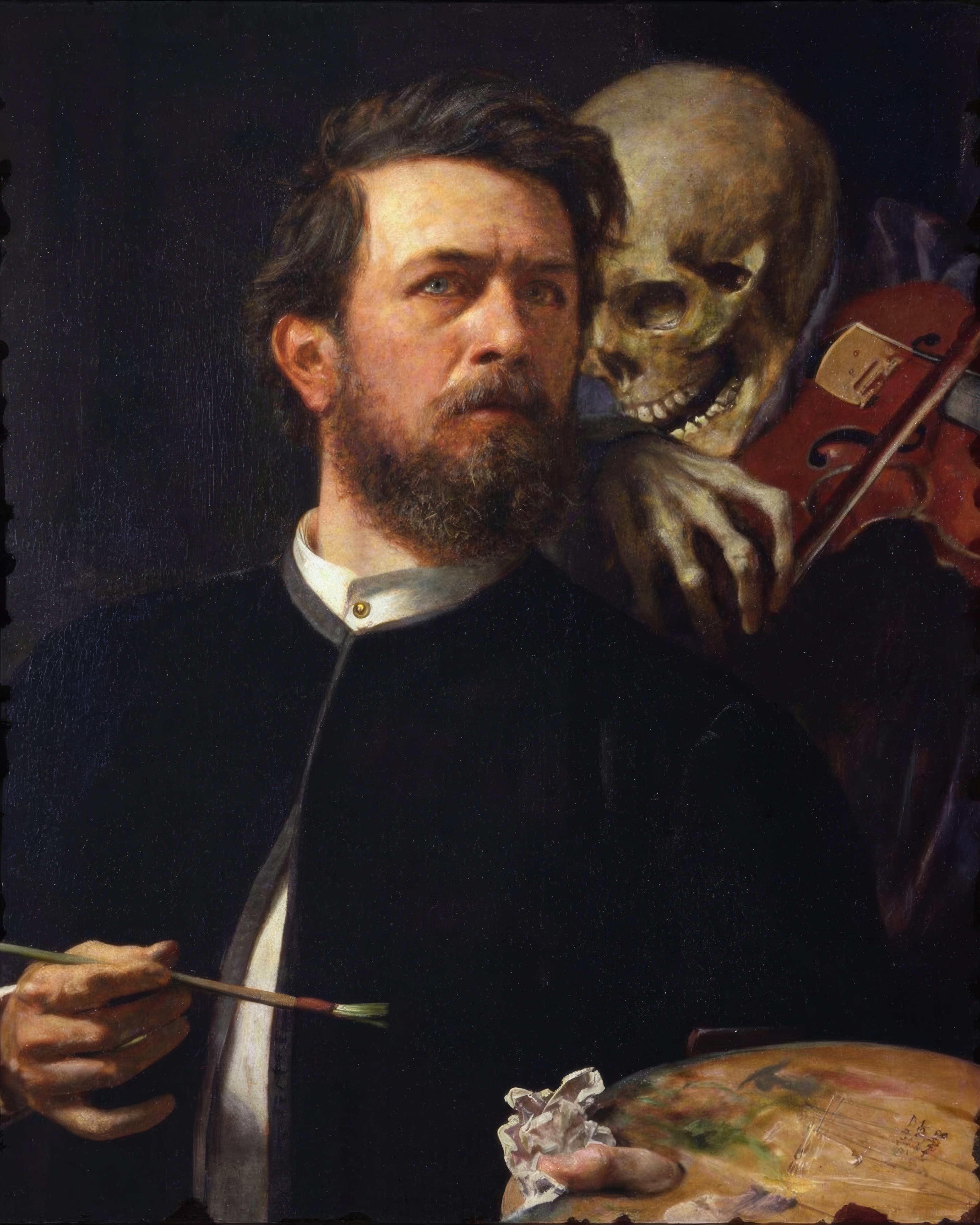
Arnold Böcklin, Self-Portrait with Death Playing the Fiddle, 1872. Oil on canvas. Alte Nationalgalerie, Berlin.
Böcklin turns from his canvas to listen while Death, just behind his shoulder, plays a fiddle with one string. It is the most famous self portrait of the Symbolist age, and less grim than it sounds: the painter looks curious, not afraid.
A conversation piece for a dark, dramatic wall, or for anyone who loves Gothic art.
10. Self-portrait with a Wine Glass
Arnold Böcklin, Self-portrait with a Wine Glass, 1885.
Thirteen years later Böcklin painted himself again, this time raising a glass. The light falls on his face, his collar and the wine; everything else drops into shadow. It is a toast to the viewer, and to being alive.
Made for a dining room or a bar cart wall.
11. Self-Portrait in the Studio
Arnold Böcklin, Self-Portrait in the Studio, 1893.
In his last great self portrait Böcklin stands before an empty canvas, brush ready, at 66. It is a portrait of beginning again, painted by a man who had already made the pictures he would be remembered for.
A good gift for an artist, or for anyone starting a new chapter.
12. Self-Portrait
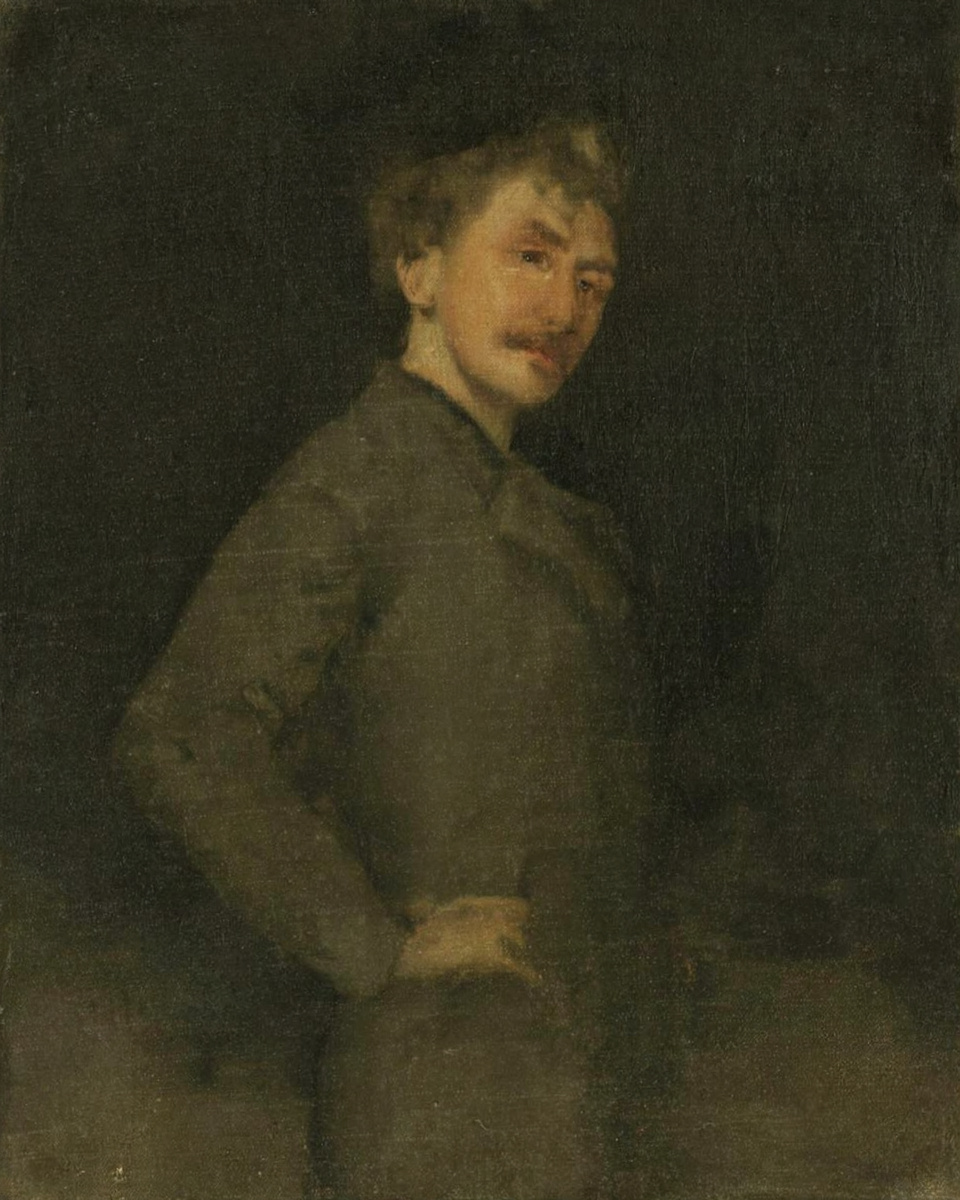
James Abbott McNeill Whistler, Self-Portrait, c. 1893-1899. Oil on canvas. Harvard Art Museums.
Whistler, the American in London who believed painting should be arranged like music, painted himself almost dissolving into shadow. Only the face, the collar and the famous monocle come forward: a self portrait as an exercise in restraint.
Its soft, near-black tones look superb in a deep green or charcoal room.
A self portrait is also the oldest proof that a face is worth looking at closely. If you want one of your own, or of someone you love, every portrait style in Fable’s library starts from a masterwork like these, and the preview is free.
Questions
Who painted the most self portraits?
Rembrandt is usually counted as the great self portraitist: around eighty self portraits in paint, etching and drawing survive, made across his whole life from his early twenties to the year he died.
What are the Atelier Editions in this list?
Rembrandt and Goya made these self portraits as etchings, printed in black ink. The Atelier Editions are Fable’s own colour editions of those etchings, made from museum scans, so they are new interpretations rather than reproductions of a coloured original.
Where should I hang a self portrait print?
Portraits want to meet the eye, so hang the centre of the picture at about 145 to 150 cm from the floor. A study, a hallway or a reading corner suits a single dark portrait; a group of two or three works well above a desk.