Renaissance portraits of women: 14 faces from the 1400s and 1500s
Botticelli, del Sarto, Cranach and the court painters of Flanders and France: fourteen portraits of women from the Renaissance, who they were and what their clothes tell us.
Renaissance portraits of women were rarely casual. A portrait marked a betrothal, a marriage or a family alliance, and every detail of dress, jewel and pose said something about rank and virtue. Yet the best of them still feel startlingly alive: a glance, a set mouth, a hand at the edge of a ledge.
These fourteen portraits run from Flanders around 1450 to Mantua around 1605, through Florence, Venice, Saxony and the French court. Each one can be ordered as a print, and if you would like to see someone you love painted in this spirit, Fable’s portrait styles start from works like these, with a free preview first.
1. Portrait of a Lady known as Smeralda Bandinelli
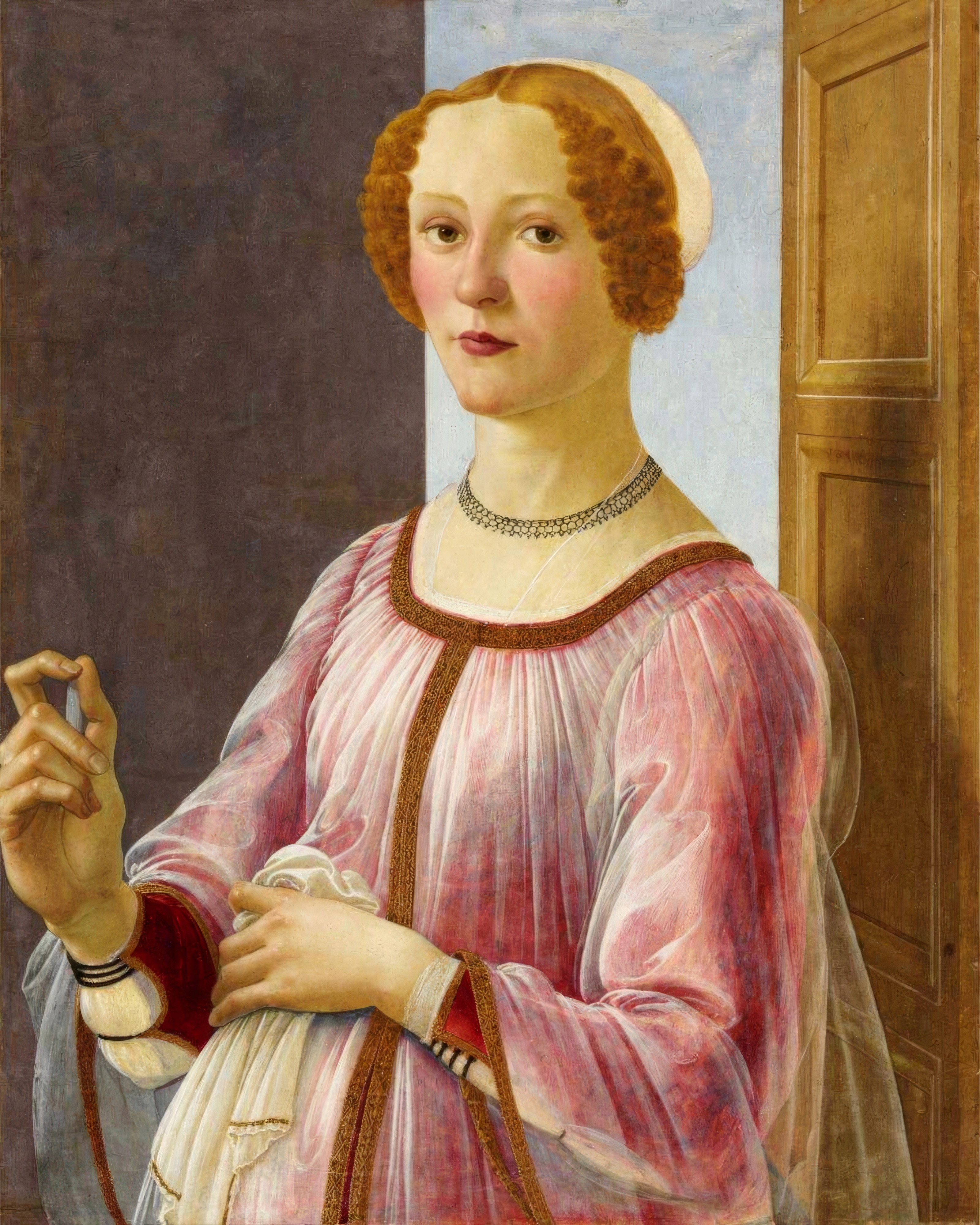
Sandro Botticelli, Portrait of a Lady known as Smeralda Bandinelli, 1470-1480. Victoria and Albert Museum, London.
At a time when Florentine women were painted in strict profile, Botticelli turned this sitter to face us and let her rest a hand on the window sill. The name Smeralda Bandinelli was written on the panel later, but the directness is pure Botticelli.
The most modern feeling portrait on this list; it suits a bedroom or a dressing room beautifully.
2. Portrait of a Young Woman
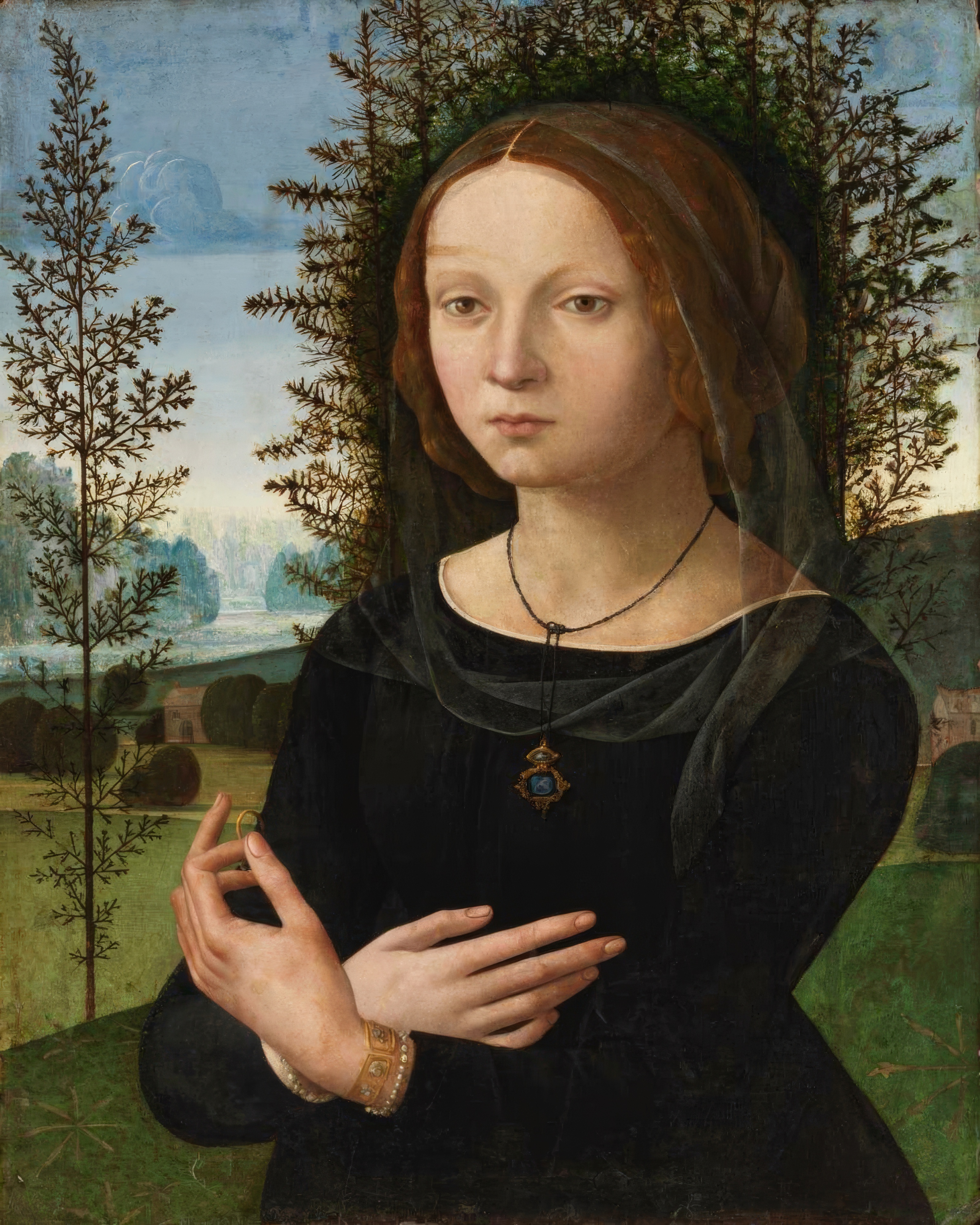
Lorenzo di Credi, Portrait of a Young Woman, ca. 1490–1500. Oil on wood. The Metropolitan Museum of Art, New York.
Lorenzo di Credi trained alongside Leonardo in Verrocchio’s workshop, and it shows in the soft modelling of this face. The sitter wears a wedding ring, so the portrait was probably painted to mark her marriage.
A gentle, green-toned picture that pairs well with botanical prints.
3. Portrait of a Woman, Possibly a Novice of San Secondo
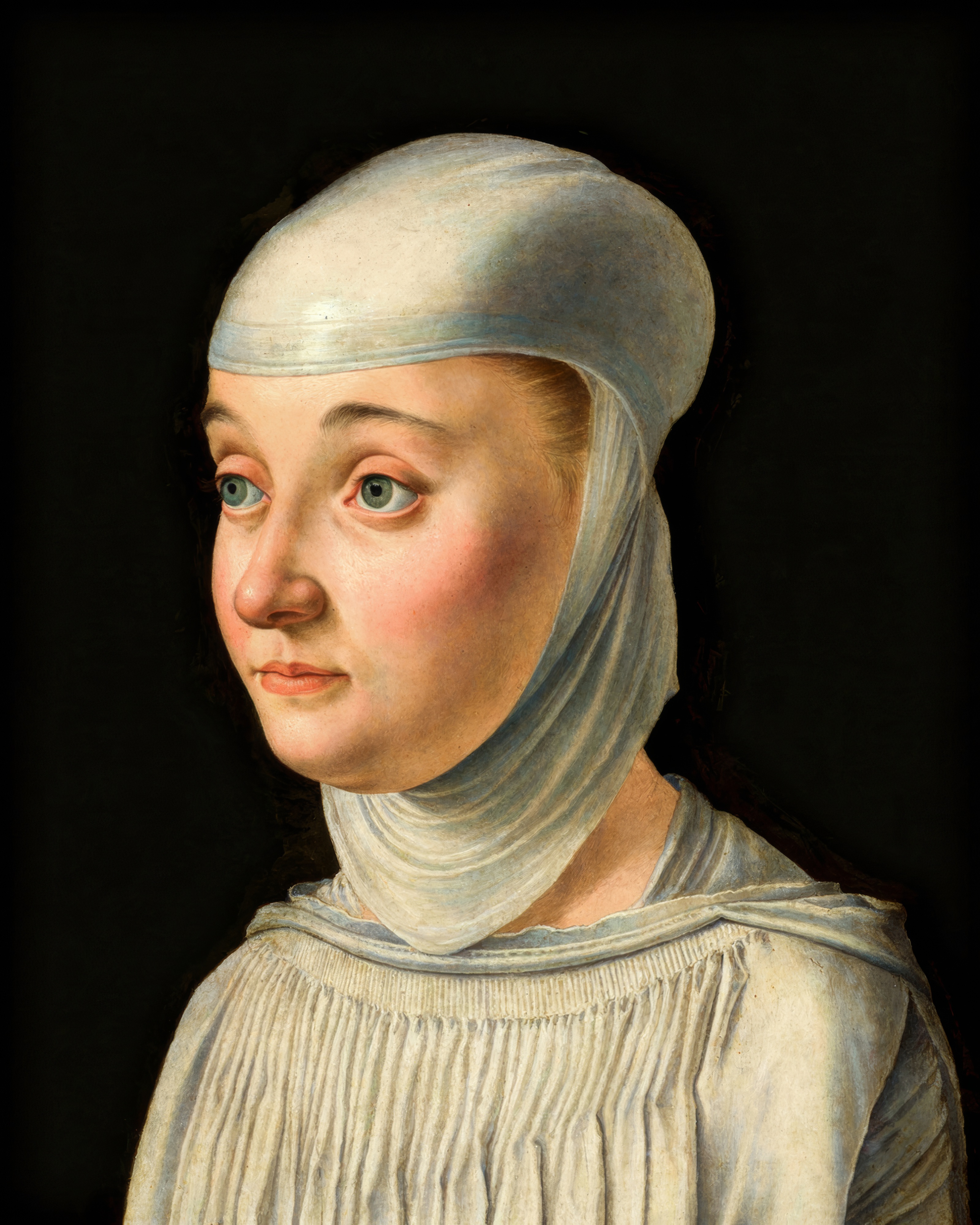
Jacometto Veneziano, Portrait of a Woman, Possibly a Novice of San Secondo, c. 1490. Oil on wood. Cleveland Museum of Art.
Jacometto was a Venetian painter of tiny, jewel-like portraits, and very few of his works survive. The white veil and plain dress suggest this sitter was a novice at the convent of San Secondo in Venice.
Its black and white palette is perfect for a minimal, monochrome wall.
4. Profile of a woman facing left
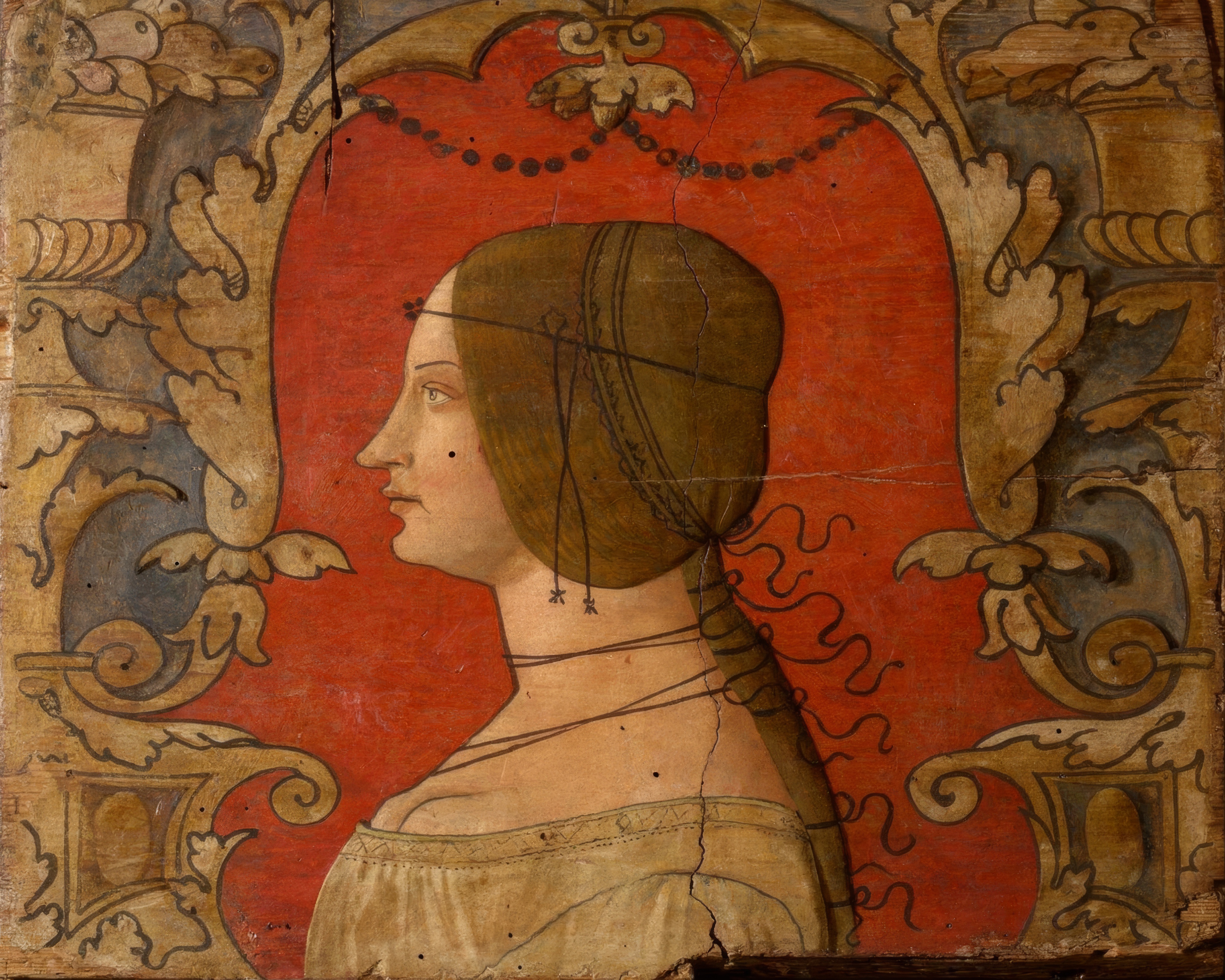
Profile of a woman facing left, ca. 1500. Victoria and Albert Museum, London.
The classic Italian profile: hair dressed with pearls, a red gown, the face as clear as a portrait on a coin. The painter is unknown, but the format was the formal way to paint a woman in fifteenth century Italy.
A single profile is wonderful in a narrow space, such as beside a door or at the end of a hallway.
5. Portrait of a Woman
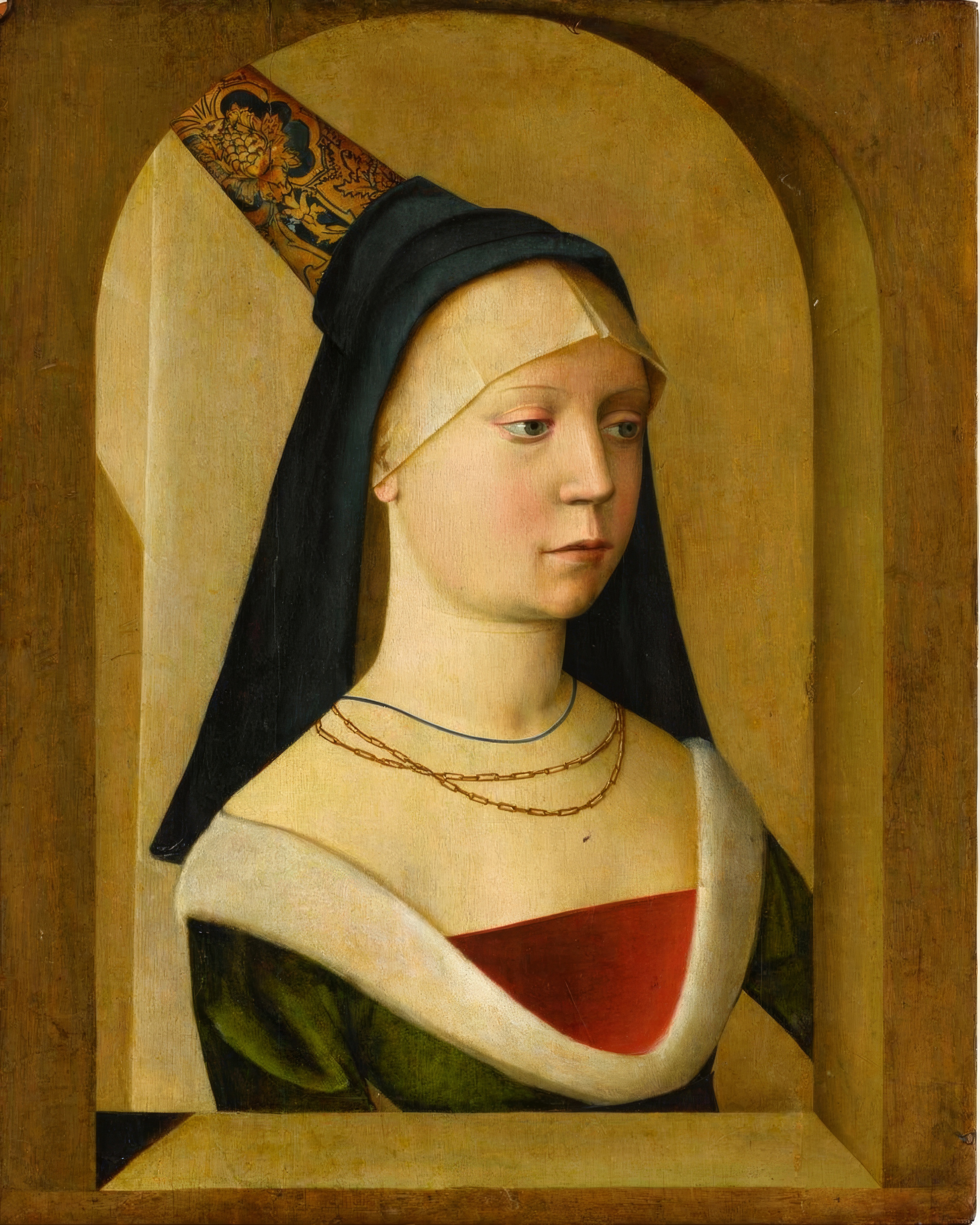
Netherlandish or French, Portrait of a Woman, ca. 1470–80. Oil on oak panel. The Metropolitan Museum of Art, New York.
North of the Alps the profile looked different: a high, dark headdress, plucked forehead and fur-trimmed gown, painted with Flemish precision on an oak panel. Scholars still debate whether the painter was Netherlandish or French.
Hang it with the Italian profile above to show two traditions side by side.
6. Portrait of Isabella of Portugal
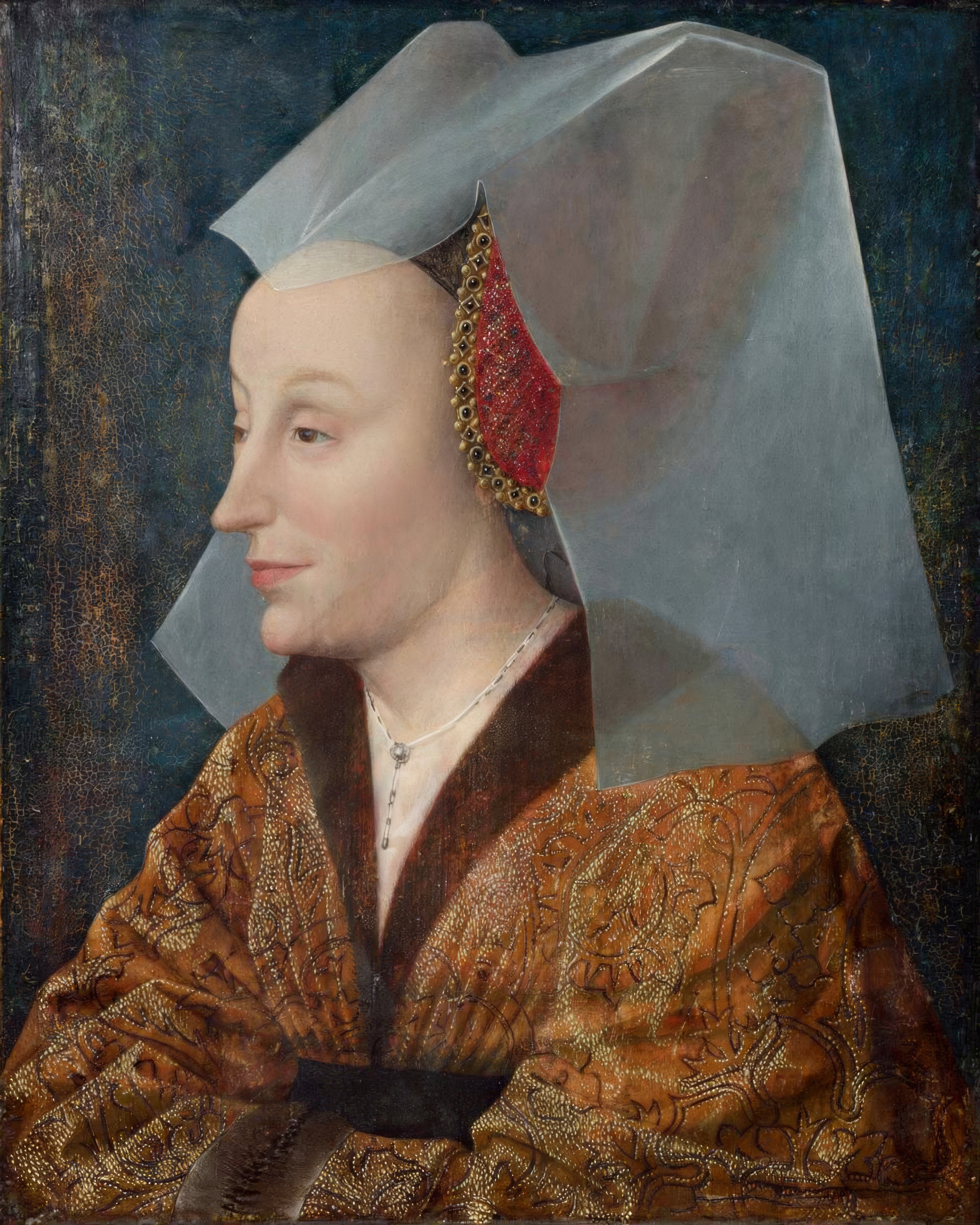
Netherlandish Painter, Portrait of Isabella of Portugal, 15th century. Oil on wood. The Metropolitan Museum of Art, New York.
Isabella of Portugal married Philip the Good, Duke of Burgundy, and was one of the most influential women of her time. This portrait follows a likeness made by the Burgundian court painters, perhaps from the workshop of Rogier van der Weyden.
Its cool blue and white tones look superb in a pale grey room.
7. Portrait of a Woman
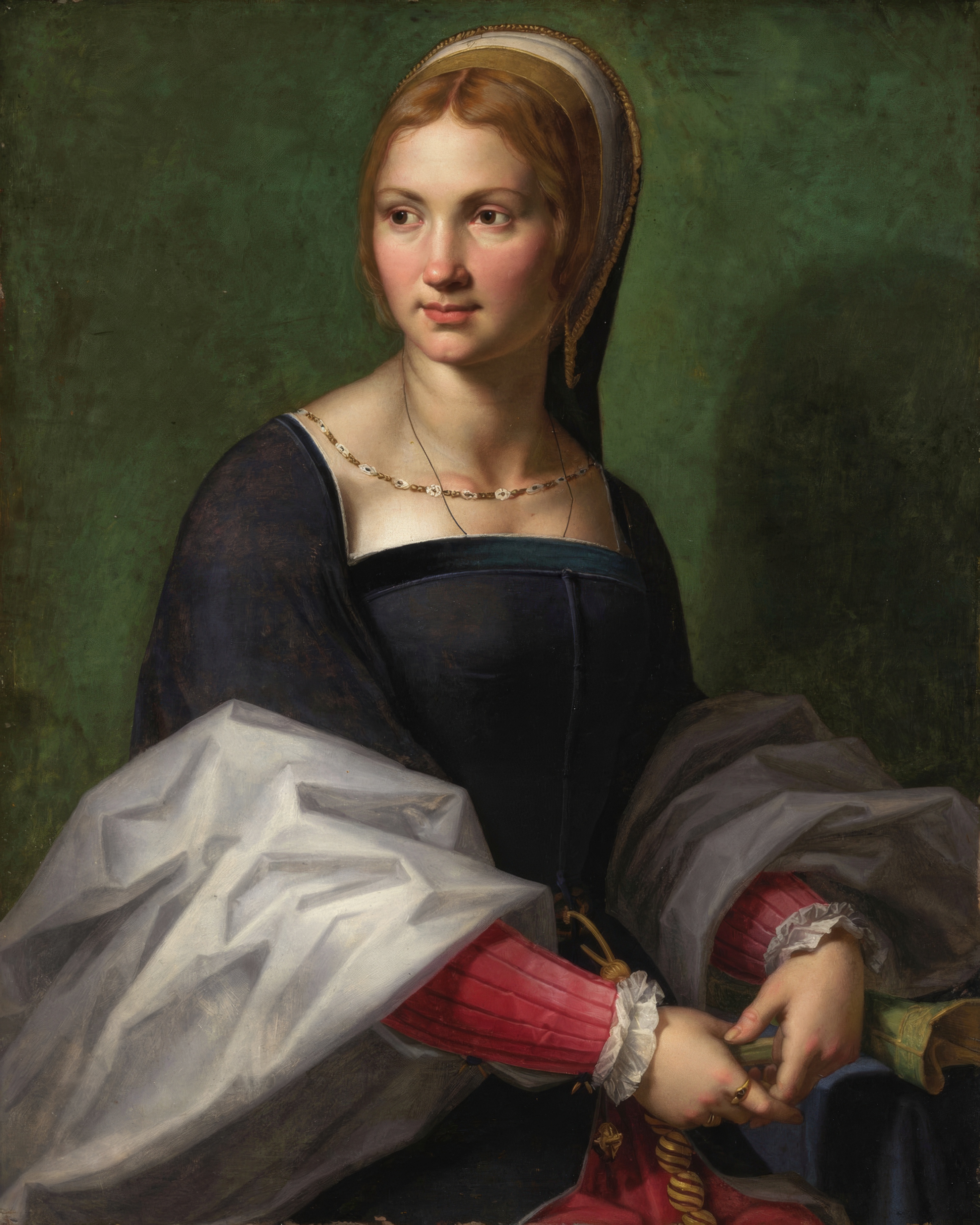
Andrea del Sarto, Portrait of a Woman, c. 1518. Oil on wood. Cleveland Museum of Art.
Andrea del Sarto was called the painter without errors in Florence. This portrait, painted around 1518, shows his soft, smoky modelling, learned from Leonardo, and an unusual quiet in the sitter’s face.
Calm enough for a bedroom, strong enough for a living room.
8. Lucrezia di Lippo di Iacopo Guidi
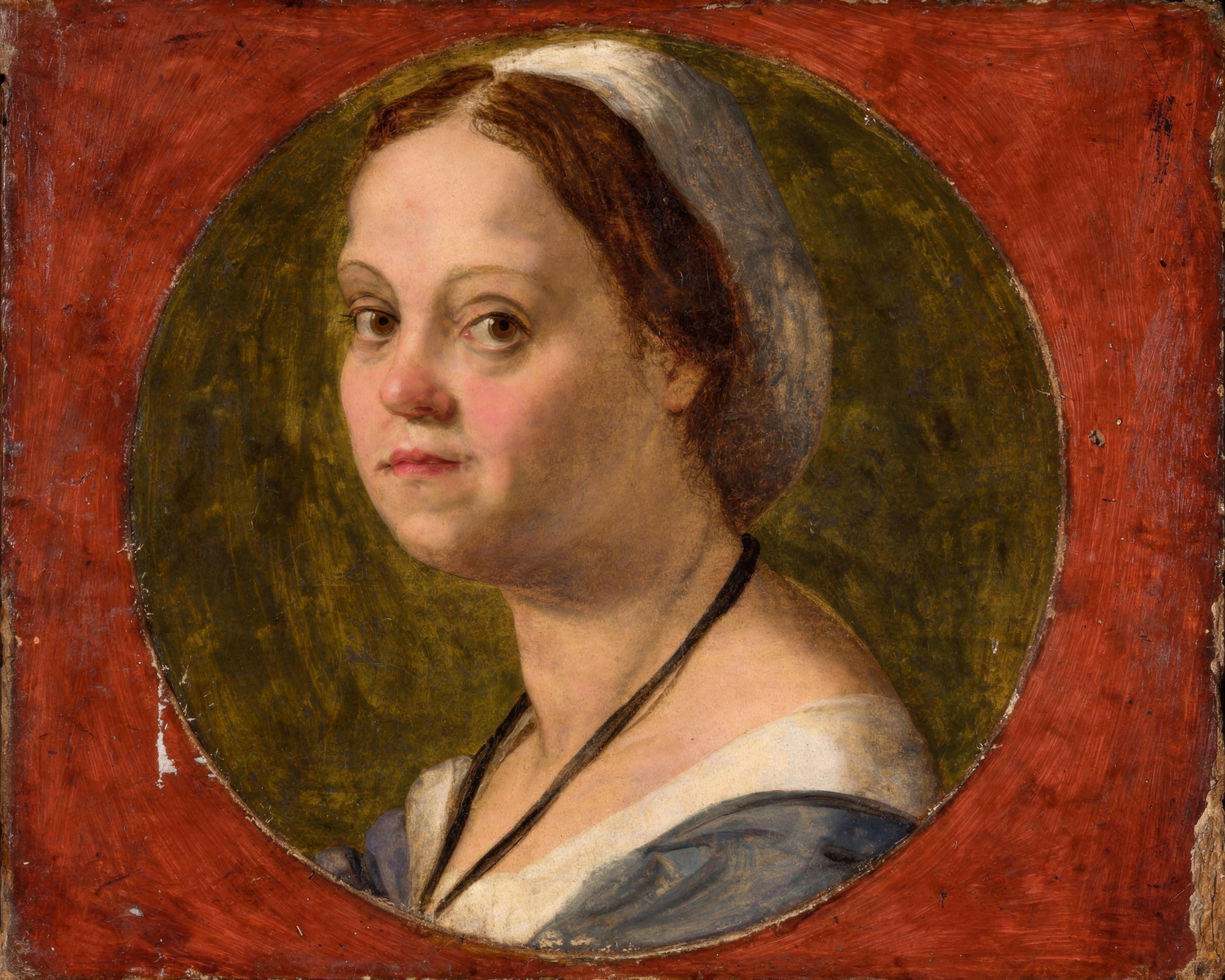
Andrea del Sarto, Lucrezia di Lippo di Iacopo Guidi, 1525–28. Oil on panel. Art Institute of Chicago.
This is Lucrezia, del Sarto’s wife and his favourite model, whose face appears in many of his Madonnas. Painted in the late 1520s, it is one of the most intimate portraits of the High Renaissance: a husband painting the woman he saw every day.
A natural anniversary or wedding gift for lovers of Italian art.
9. Magdalena of Saxony
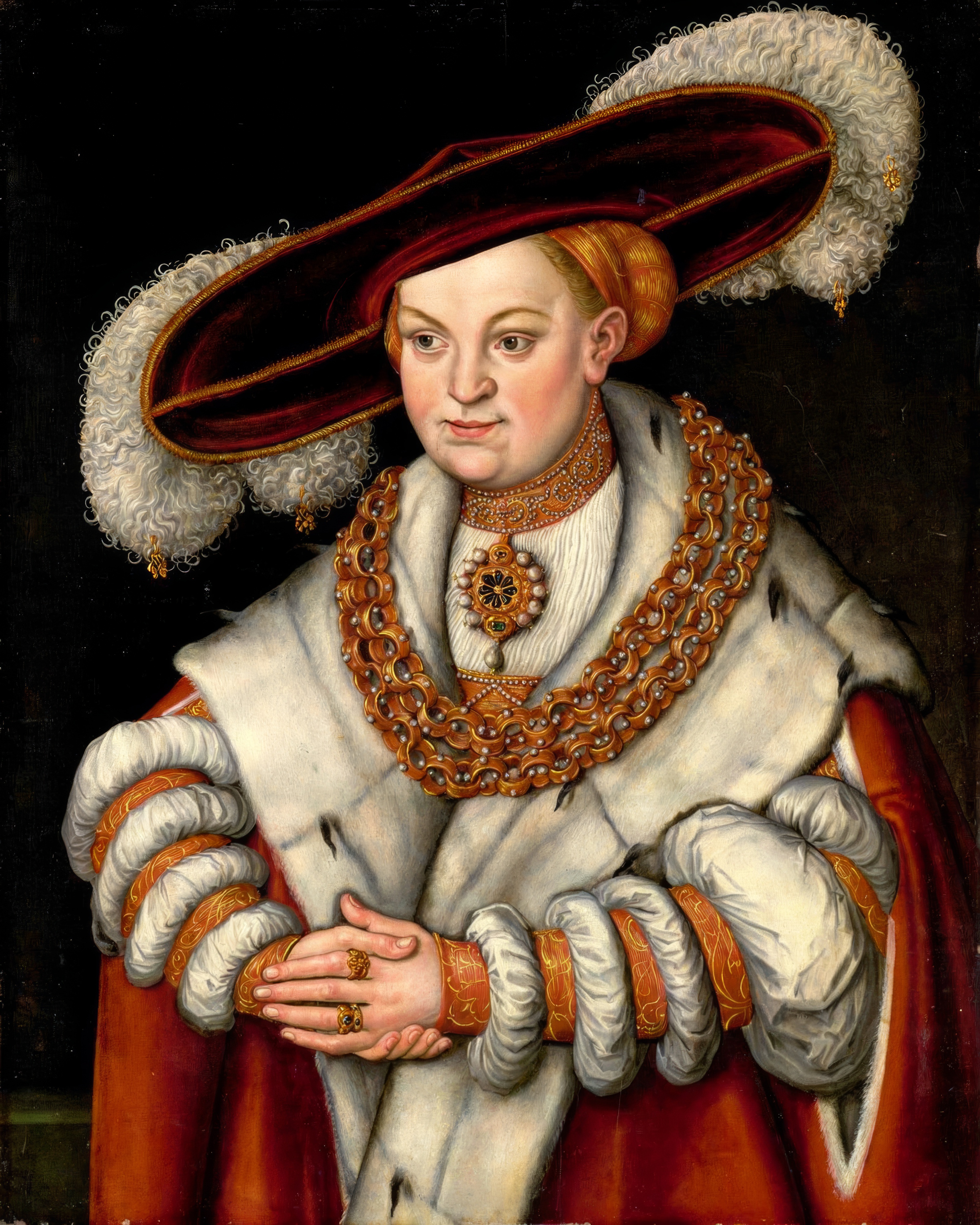
Lucas Cranach the Elder, Magdalena of Saxony, c. 1529. Oil on panel. Art Institute of Chicago.
Lucas Cranach the Elder was court painter in Saxony and painted the family’s princesses again and again, with their almond eyes, red gowns and heavy gold chains. Magdalena became Electress of Brandenburg when she married Joachim II.
The red and gold will warm a dark wall; it is a superb dining room portrait.
10. Portrait of Maria Kitscher, Frau von Freyberg
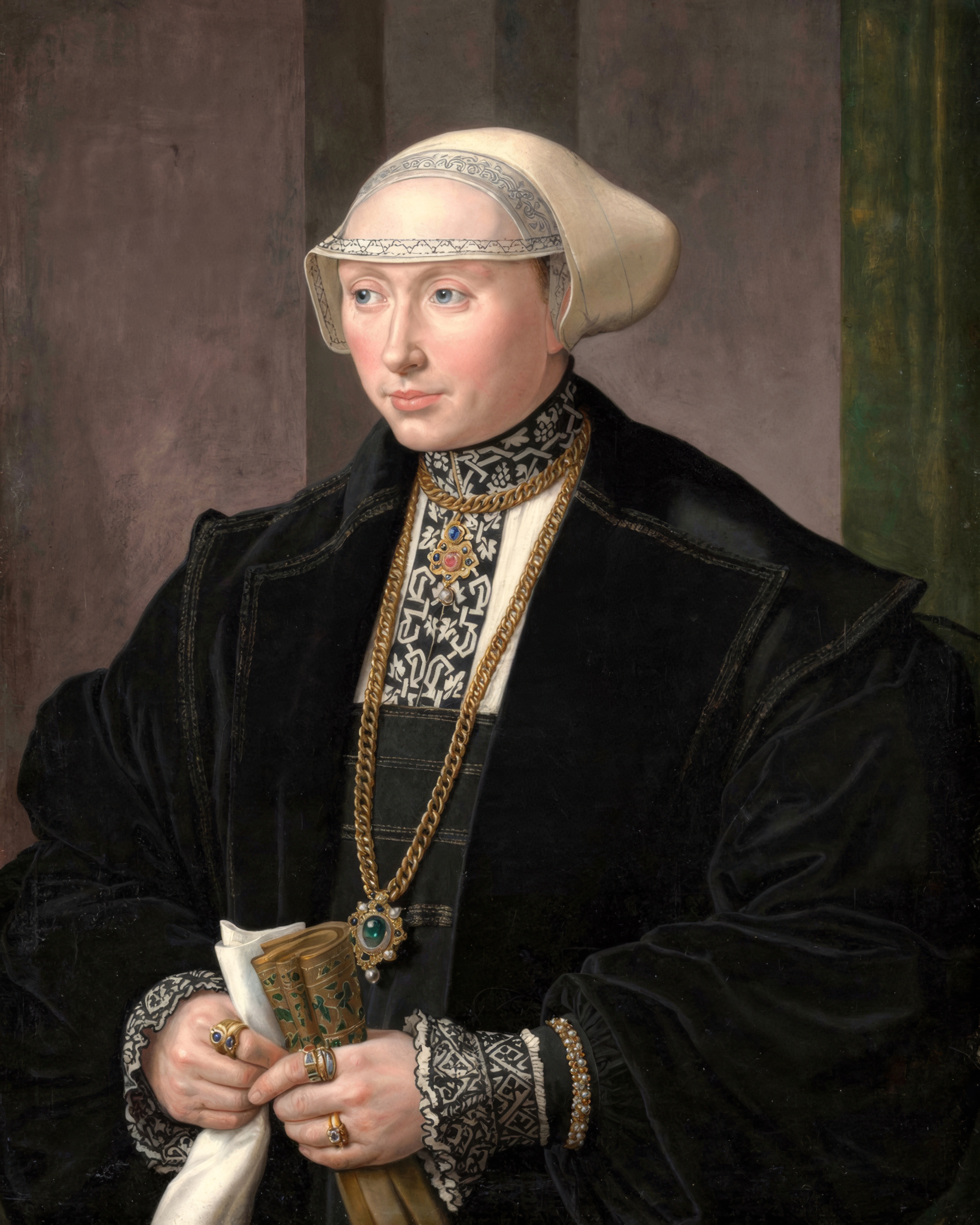
Hans Mielich, Portrait of Maria Kitscher, Frau von Freyberg, 1545. Oil on wood. Cleveland Museum of Art.
Hans Mielich was a Munich painter who worked for the Bavarian court, and his portraits record every stitch. Maria Kitscher’s gold-embroidered bodice and jewelled cap tell you exactly how wealthy her husband’s family was in 1545.
Hang it with Cranach’s Magdalena for a pair of German Renaissance women.
11. Mary (1505–1558), Queen of Hungary
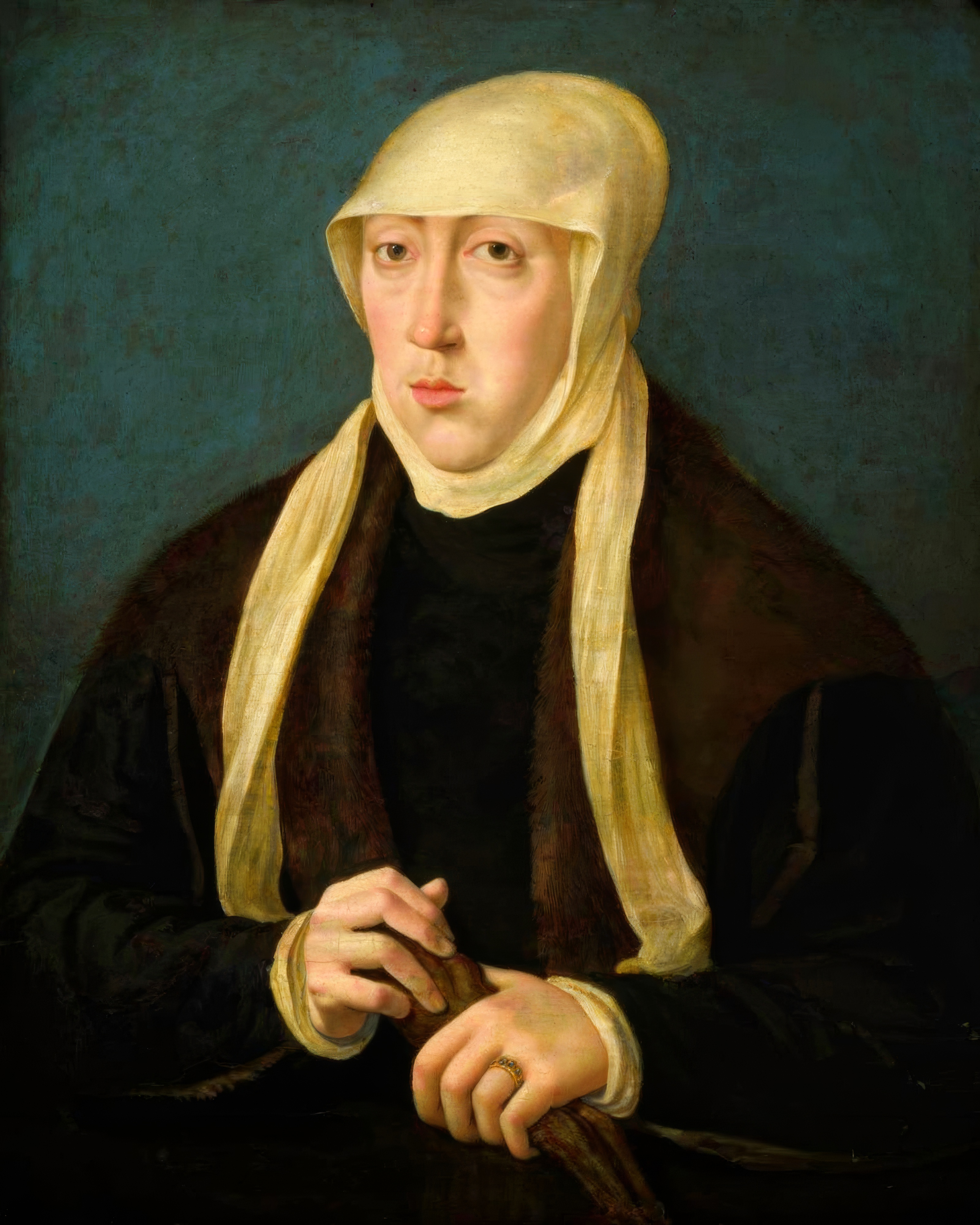
Jan Cornelisz Vermeyen, Mary (1505–1558), Queen of Hungary, about 1530. Oil on wood. The Metropolitan Museum of Art, New York.
Widowed at twenty when her husband fell at the battle of Mohács, Mary of Hungary went on to govern the Netherlands for her brother, Emperor Charles V, for a quarter of a century. Vermeyen painted her in mourning dress, sharp-eyed and composed.
For anyone who admires a woman who ran an empire.
12. Portrait of Louise de Halluin, dame de Cipierre
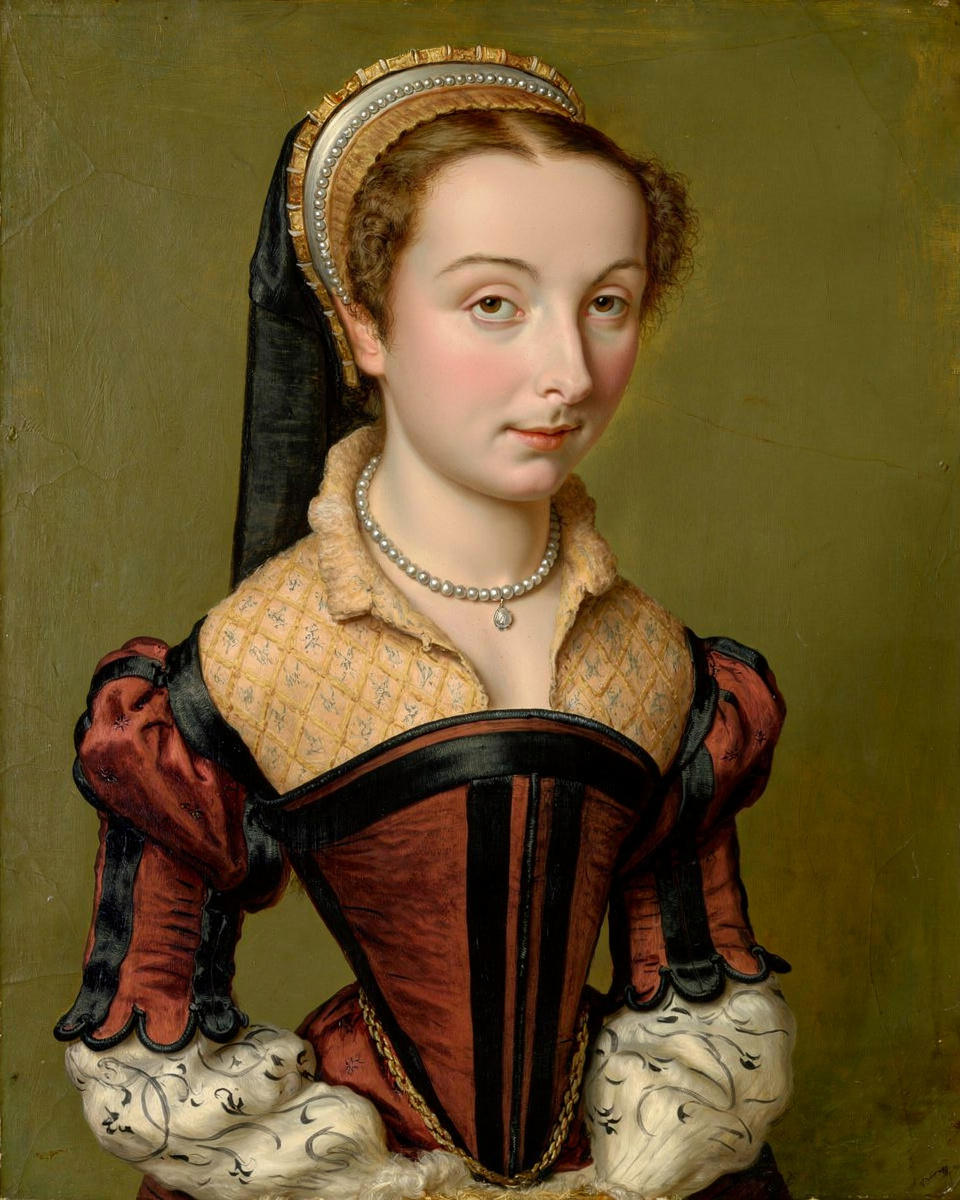
Corneille de Lyon, Portrait of Louise de Halluin, dame de Cipierre, c. 1555. Oil on panel. Art Institute of Chicago.
Corneille de Lyon painted small portraits of the French court against plain green or blue grounds, almost like photographs. Louise de Halluin was a lady at the court of Catherine de’ Medici.
Small and intimate; lovely on a bookshelf or a narrow wall.
13. Portrait of Bianca Capello
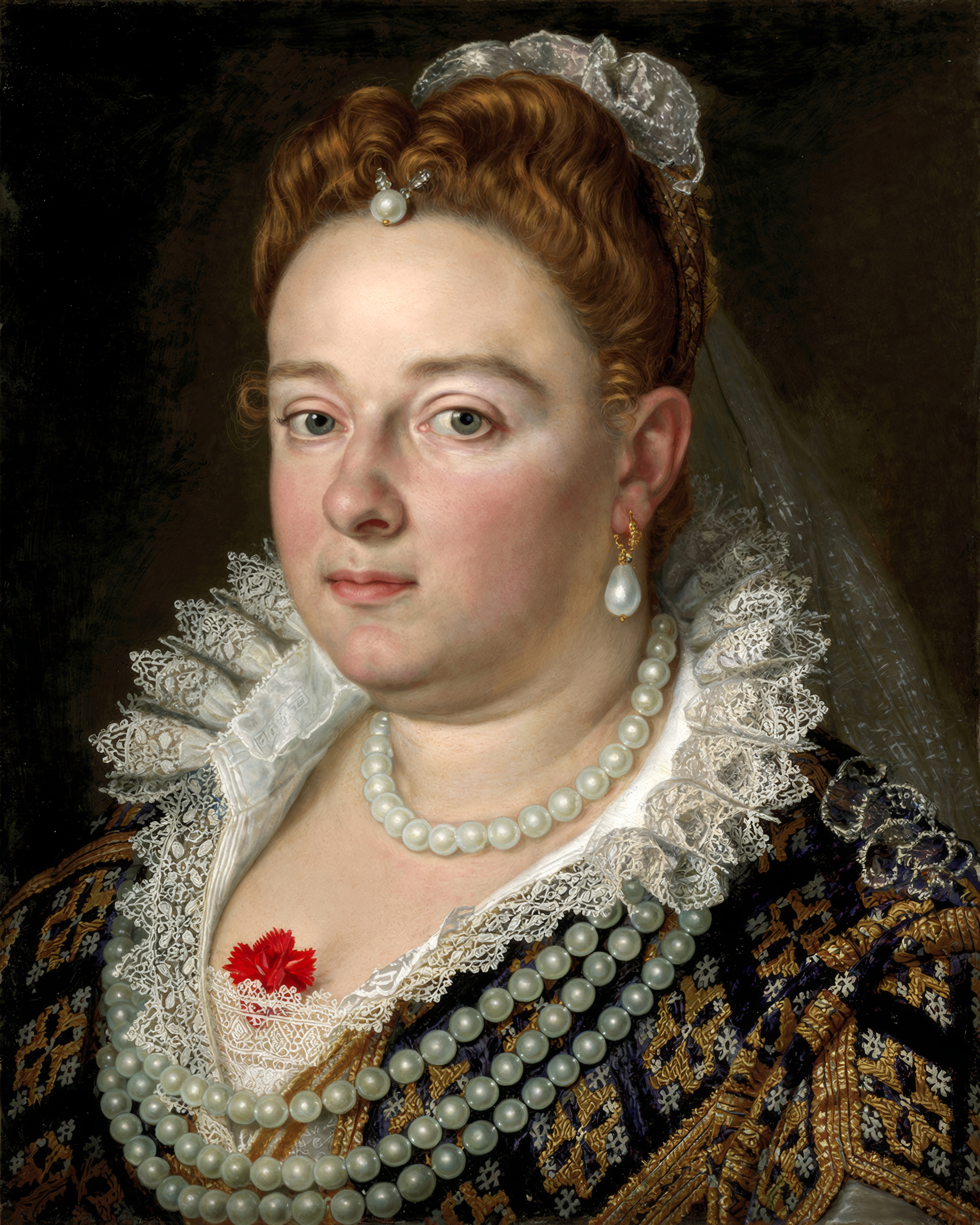
Scipione Pulzone, Portrait of Bianca Capello, 1584.
A Venetian noblewoman who eloped to Florence, Bianca Capello became the mistress and then the wife of Grand Duke Francesco de’ Medici. Scipione Pulzone painted her in 1584 in a towering lace ruff, three years before the couple died on the same day.
A dramatic, high-contrast portrait for a hallway or a dark study.
14. Margherita Gonzaga (1591–1632), Princess of Mantua
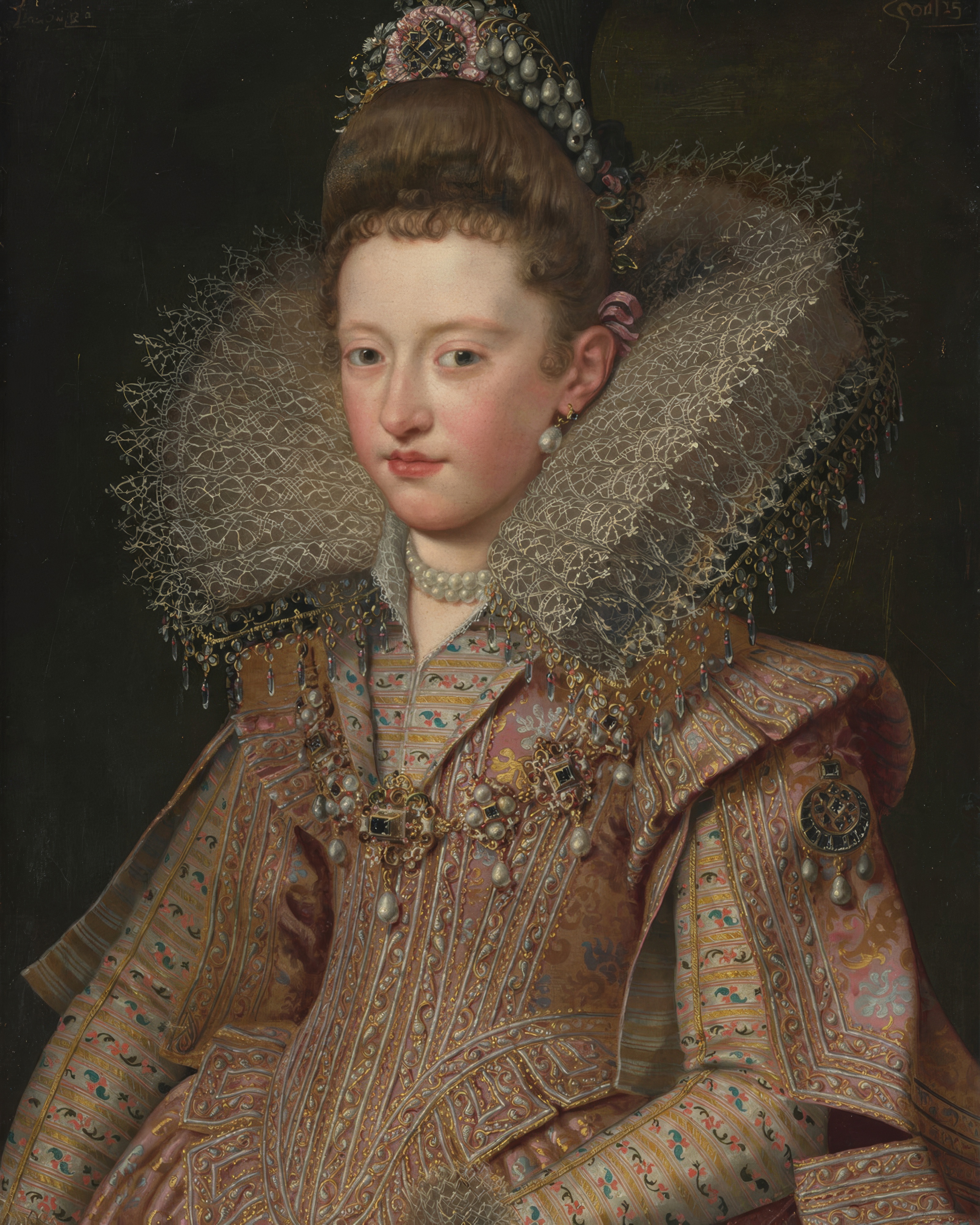
Frans Pourbus the Younger, Margherita Gonzaga (1591–1632), Princess of Mantua, about 1605. Oil on canvas. The Metropolitan Museum of Art, New York.
Frans Pourbus the Younger was court painter in Mantua, and here he paints the duke’s daughter in a gown stiff with embroidery. It closes the Renaissance: within a few years Pourbus would take this grand style to Paris.
A rich, warm portrait to anchor a gallery wall of older works.
What unites these women across two centuries is how carefully they were looked at. If you would like a portrait made with the same attention, from a photo, browse Fable’s portrait styles: every one starts from a masterwork, and the preview costs nothing.
Questions
Why are so many Renaissance women painted in profile?
In fifteenth century Italy the profile portrait was the formal norm for women, borrowed from coins and medals. It showed dress, jewels and hair clearly and kept the sitter composed and distant. From about 1480 painters such as Botticelli and Leonardo turned their sitters toward the viewer.
Who were the women in Renaissance portraits?
Mostly brides, wives and daughters of wealthy merchant families and courts. Many are now anonymous; others, like Mary of Hungary, Magdalena of Saxony or Bianca Capello, were powerful figures in their own right.
How do I hang a group of Renaissance portraits?
Small panel portraits look best hung close together at eye level, as a row or a tight grid of three or four, with the faces turned toward each other where you can.