The Garden of Earthly Delights explained, and 11 works from Bosch’s world
What happens in each panel of Bosch’s great triptych, what it means, and eleven works you can hang at home from Bosch, his workshop and the painters he inspired, from Bruegel’s Mad Meg to Arcimboldo.
Hieronymus Bosch painted The Garden of Earthly Delights around 1490 to 1510, and it has never stopped puzzling people. It is a triptych: three panels that open like doors, now in the Prado in Madrid. Closed, the outer shutters show the world on the third day of creation, a glass globe in grey.
Opened, the left panel shows Paradise: God presents Eve to Adam among strange animals and a pink fountain. The huge centre panel is the garden itself: hundreds of naked figures riding animals, climbing into giant fruit and bathing in pools, a world of pleasure with no sign of consequence. The right panel is Hell: musical instruments turned into instruments of torture, a bird-headed monster on a throne swallowing sinners, and the famous Tree Man, whose face may be Bosch’s own.
Most scholars read it as a warning: paradise, then the folly of earthly pleasure, then punishment. Others see in the middle panel a lost dream of innocence. The original cannot leave Madrid, but the eleven works below, from Bosch’s own workshop and from the painters who followed him, bring his world home.
1. The Garden of Paradise
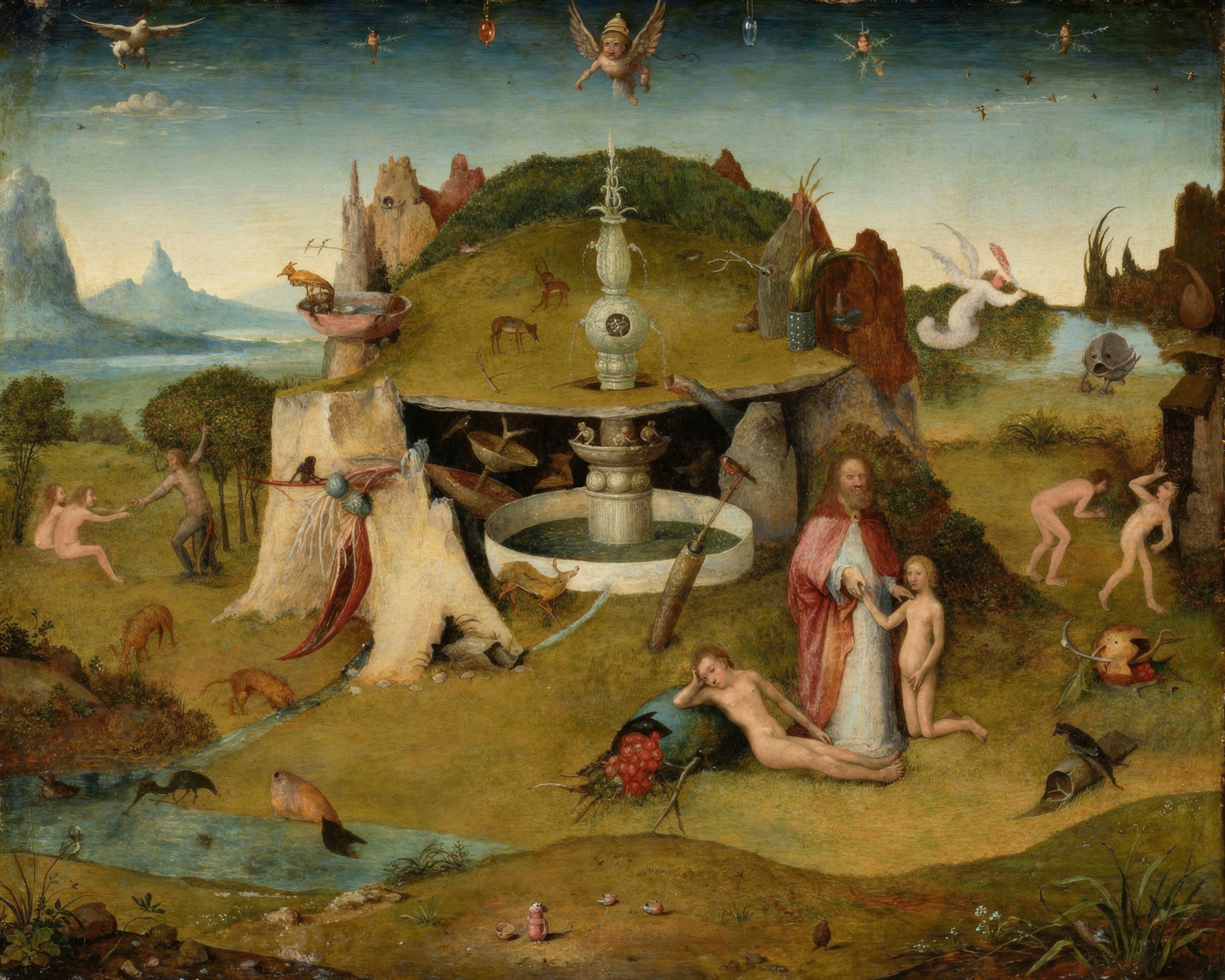
Workshop of Hieronymus Bosch, The Garden of Paradise, c. 1500–c. 1520. Oil on panel. Art Institute of Chicago.
From Bosch’s own workshop, this Garden of Paradise is the closest thing on our walls to the left panel of the great triptych: a fountain, wandering animals and tiny figures in a green world before the Fall.
The natural first choice for anyone who loves the Garden.
2. Christ's Descent into Hell
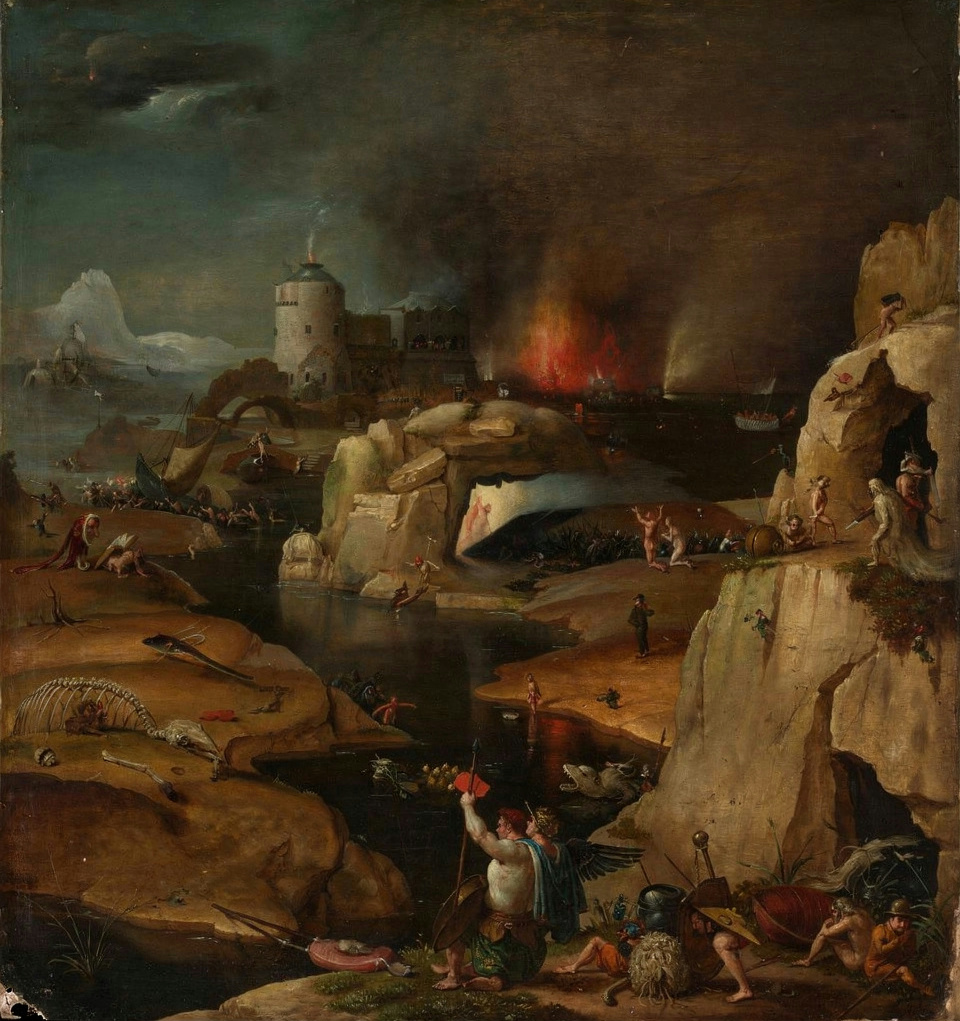
Hieronymus Bosch, Christ's Descent into Hell. Oil on wood. The Metropolitan Museum of Art, New York.
Christ breaks open the gates of Hell to free the souls of the righteous, while Bosch’s demons scatter. All the strange hybrid creatures of the right panel of the Garden are here.
3. The Temptation in the Garden of Eden
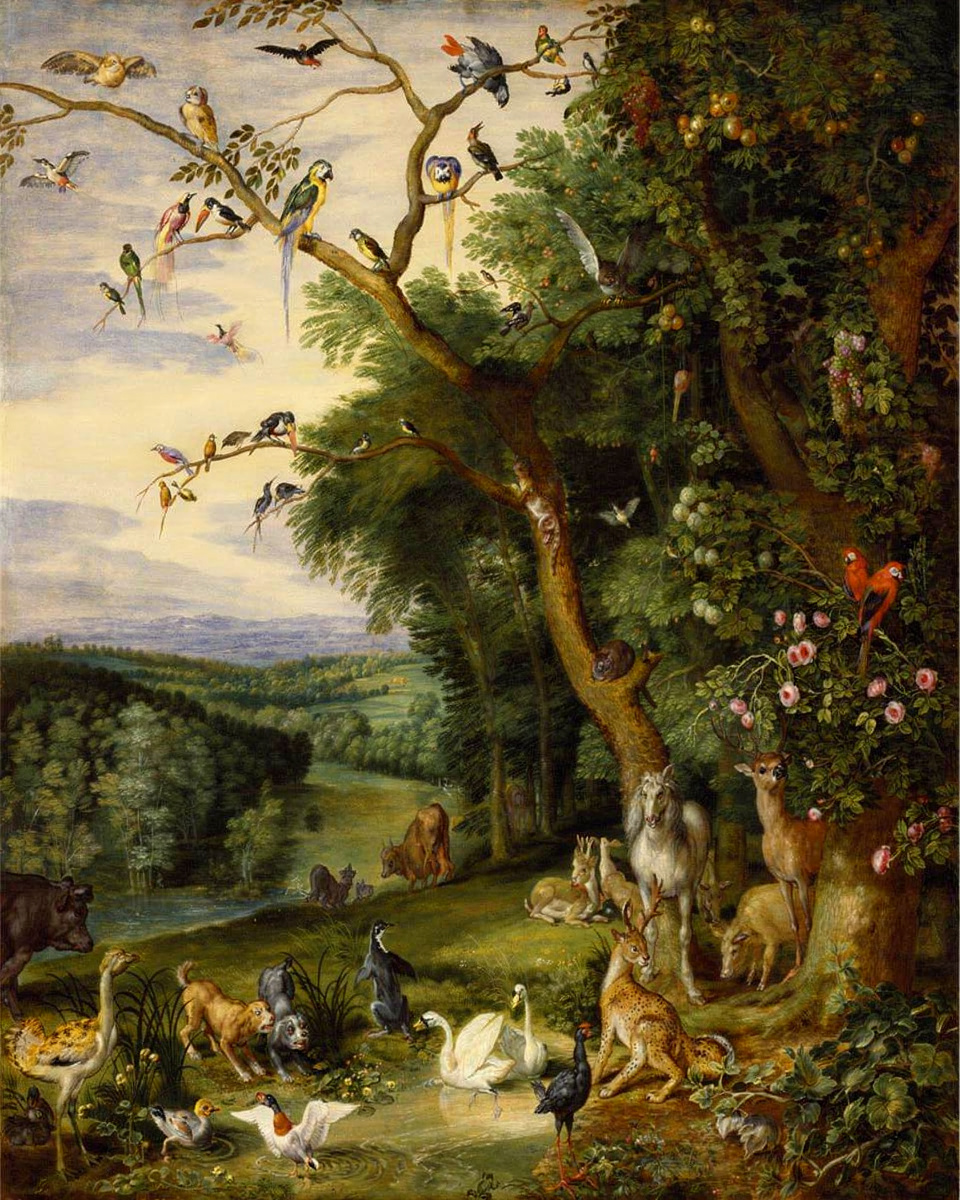
Brueghel, Jan the elder, The Temptation in the Garden of Eden, ca. 1600. Victoria and Albert Museum, London.
Jan Brueghel the Elder, Bruegel’s son, painted Eden as an encyclopaedia of animals, from lions to insects. Adam and Eve are tiny beneath the tree: the animals are the real subject.
4. Adam and Eve
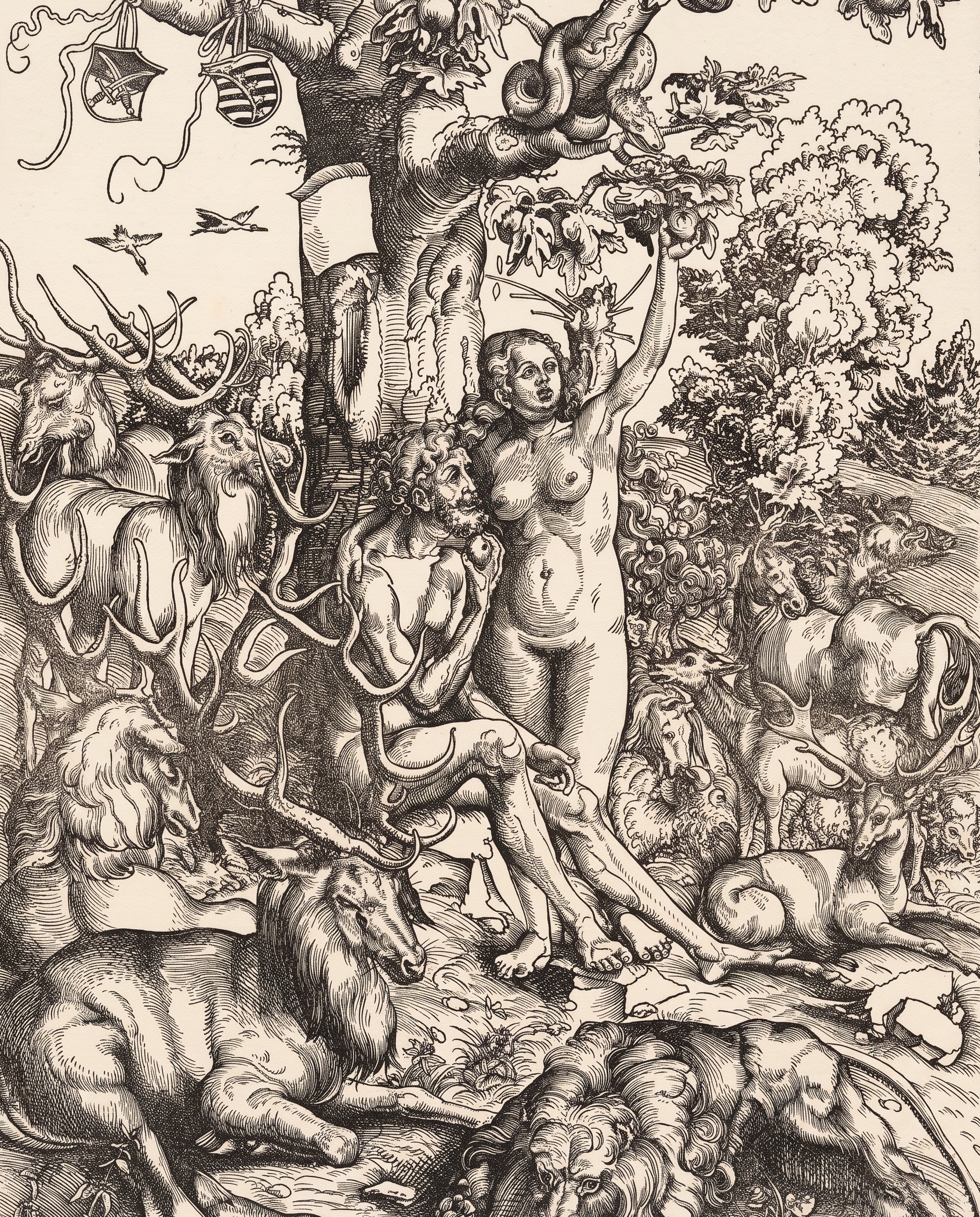
Lucas Cranach the Elder, Adam and Eve, 1509. Woodcut on off-white antique laid paper. Harvard Art Museums.
Cranach’s Adam and Eve, made in 1509 while Bosch was still alive, shows the moment just before the Fall. Eve holds the apple; the serpent waits above.
5. The Expulsion from Paradise
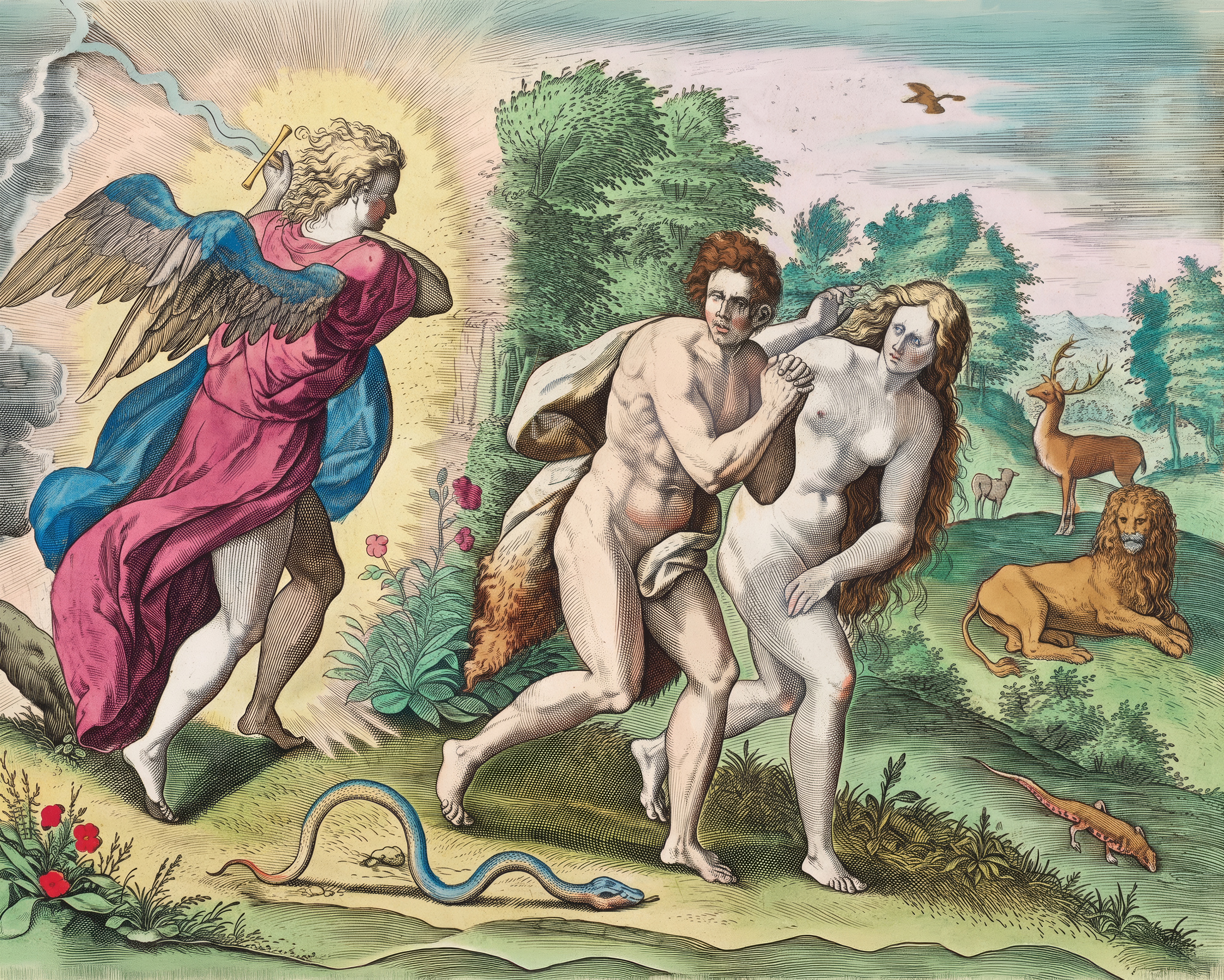
Johann Sadeler I, Chrispijn van den Broeck, Gerard de Jode, The Expulsion from Paradise, 1575. Engraving printed in black ink with added transparent and opaque watercolor and metallic gold on white antique laid paper, darkened to cream. Harvard Art Museums.
A Flemish engraving of 1575: the angel with the flaming sword drives Adam and Eve out into the world. The story that begins in Bosch’s left panel ends here.
6. Dulle Griet (Mad Meg)
Pieter Bruegel the Elder, Dulle Griet (Mad Meg), 1563. Museum Mayer van den Bergh, Antwerp.
Bruegel’s Mad Meg, painted in 1563, is the most Bosch-like picture ever made: a giant woman in armour marches toward the mouth of Hell, through a landscape of monsters, carrying stolen pots and pans.
The perfect partner for the Garden of Paradise.
7. The Festival of Fools
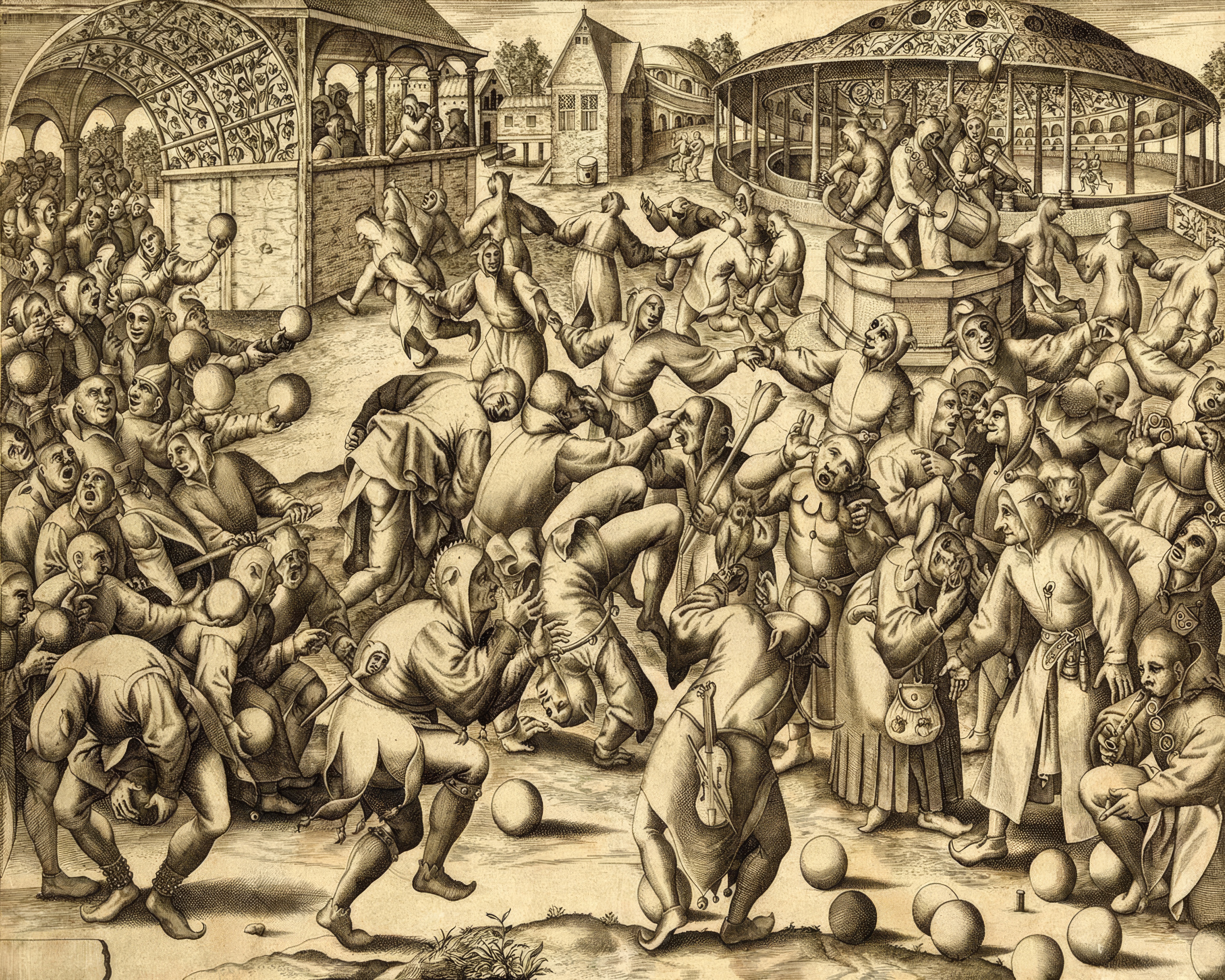
Pieter Bruegel the Elder, The Festival of Fools, after 1570. Engraving; second state of three. The Metropolitan Museum of Art, New York.
Bruegel’s Festival of Fools, engraved after his design, is a crowd of human folly very like the Garden’s centre panel, only in Flemish village clothes.
8. Sea Wonders and Strange Beasts
After Sebastian Münster, Sea Wonders and Strange Beasts, c. 1570. Hand-coloured woodcut (from Münster's Cosmographia).
This hand-coloured woodcut from Sebastian Münster’s Cosmographia shows the sea monsters sailors believed in: whales that swallow ships, sea pigs and lobsters the size of boats. Bosch would have recognised every one.
9. The Witches
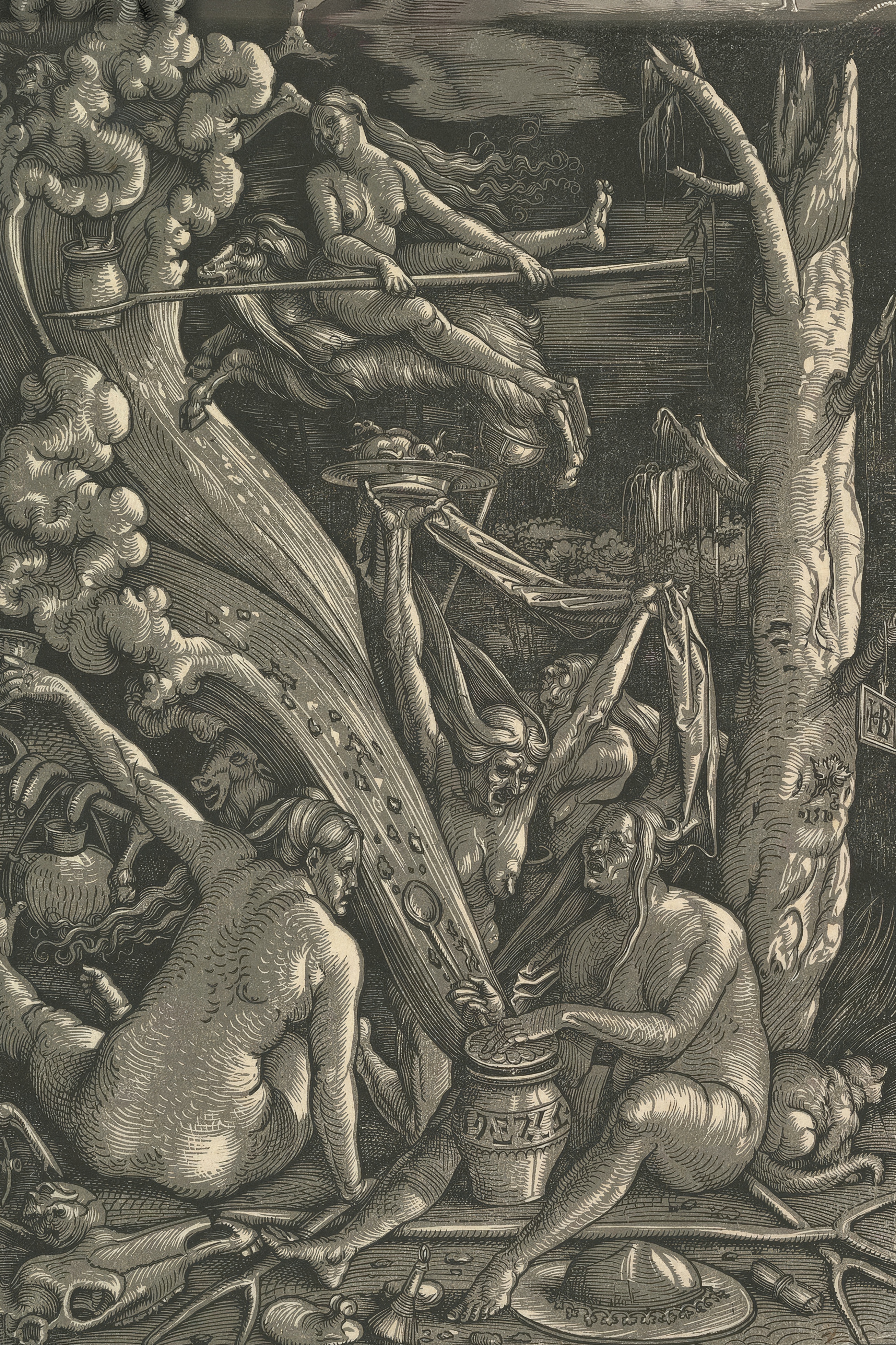
Hans Baldung Grien, The Witches, 1510. Chiaroscuro woodcut printed from two blocks. The Metropolitan Museum of Art, New York.
Hans Baldung Grien’s Witches of 1510 belongs to the same world of fear and fascination as Bosch’s Hell. Smoke pours from the pot as a witch rides off on a goat.
10. Vertumnus
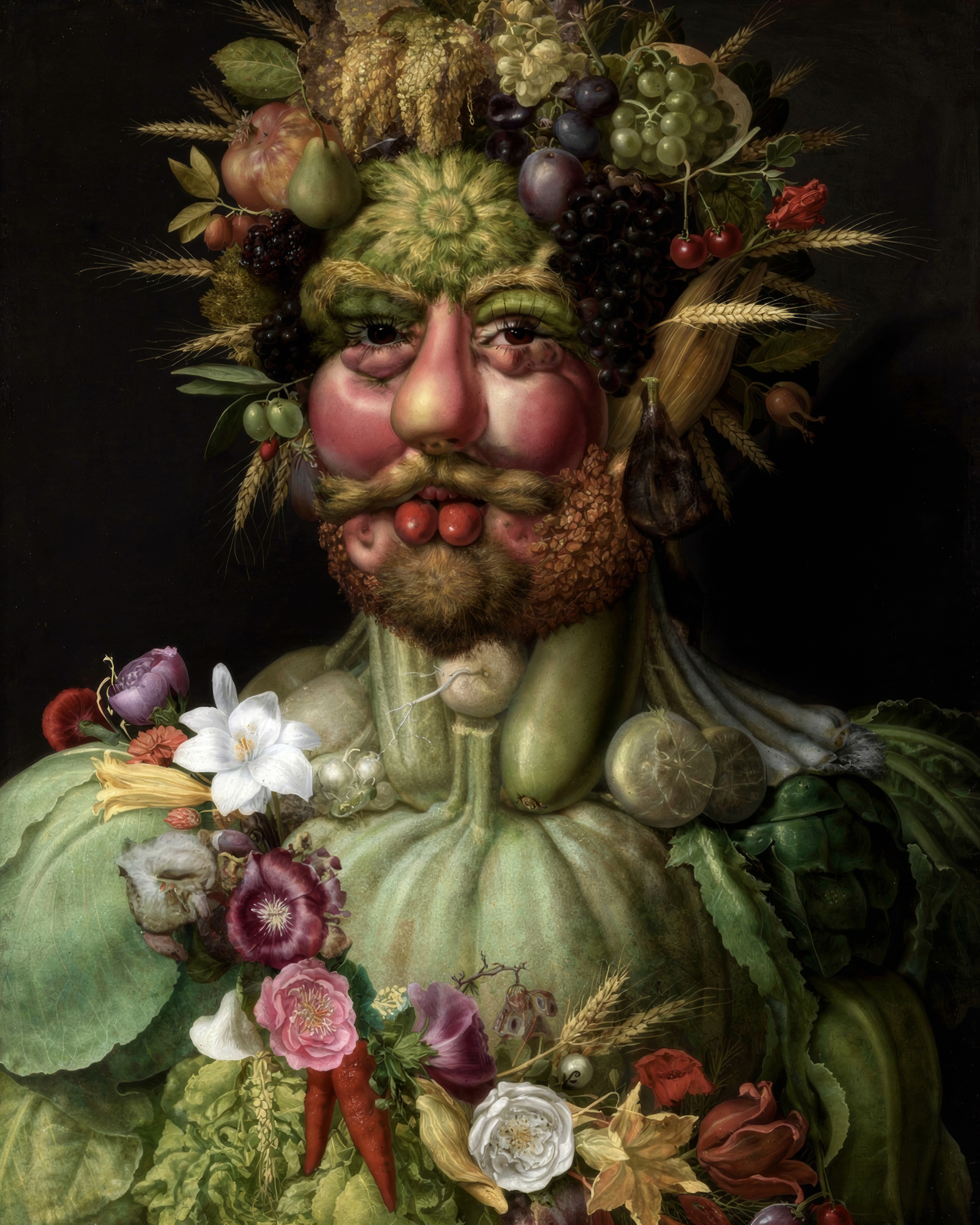
Giuseppe Arcimboldo, Vertumnus, 1591. Oil on panel. Skokloster Castle, Sweden.
Arcimboldo’s fruit-and-vegetable portrait of Emperor Rudolf II is the playful cousin of Bosch’s giant strawberries and human-fruit hybrids. Nature turned into a person.
Create your portrait in this style
11. Saint Anthony the Abbot in the Wilderness
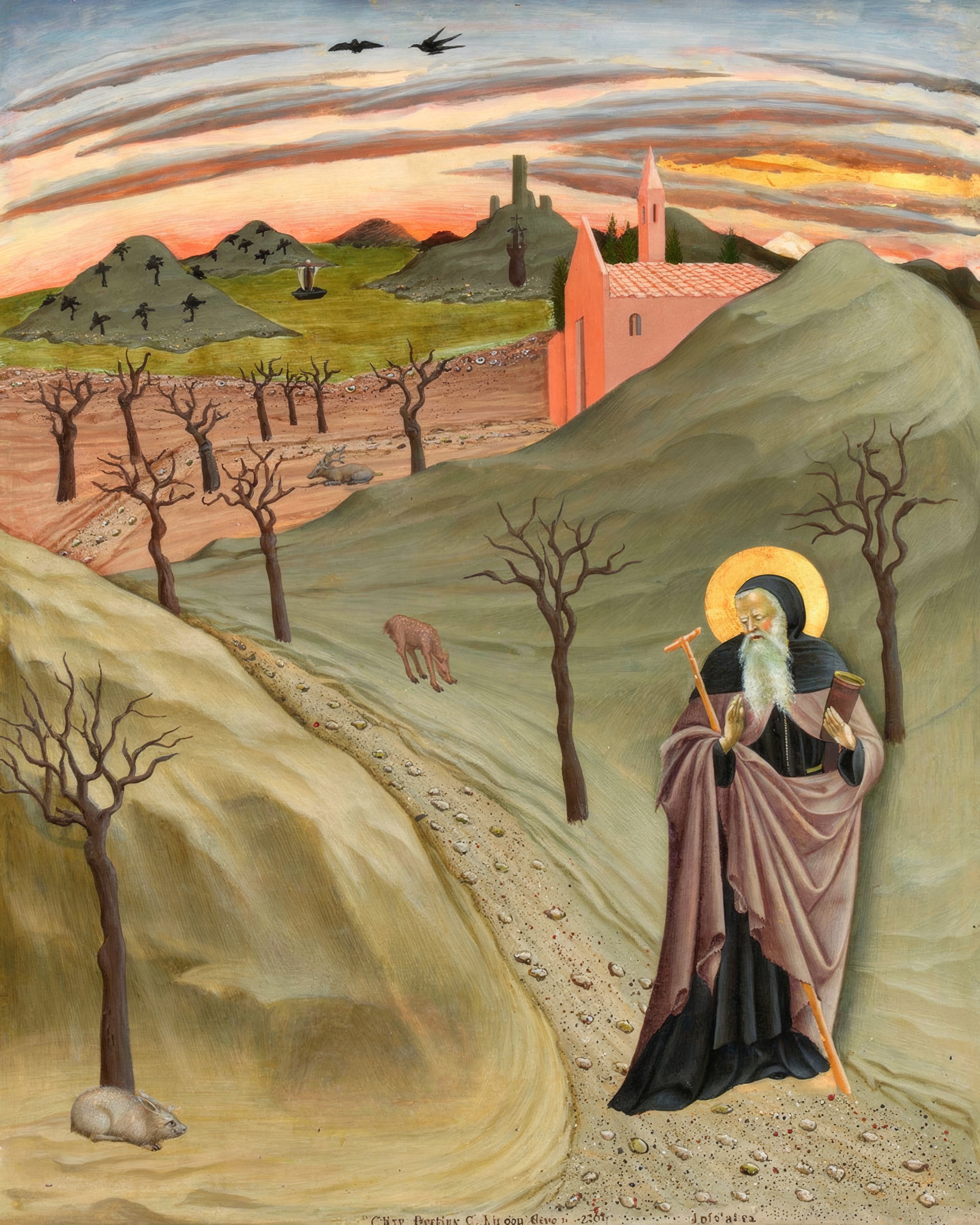
Sano di Pietro, Saint Anthony the Abbot in the Wilderness, ca. 1440. Tempera and gold on wood. The Metropolitan Museum of Art, New York.
Saint Anthony, tempted by demons in the desert, was one of Bosch’s favourite subjects. Sano di Pietro’s Sienese version is gentler: the saint walks alone through a golden wilderness.
Bosch’s world is crowded, so give these pictures space and good light, and hang them where people can come close. A pair of Paradise and Hell, the Garden of Paradise beside Mad Meg, makes a superb conversation piece.
Questions
What is the meaning of The Garden of Earthly Delights?
The most common reading is moral: the left panel is Paradise, the centre shows humanity lost in earthly pleasure, and the right shows the punishment that follows in Hell. Bosch left no explanation, so other readings exist.
Where is The Garden of Earthly Delights?
In the Museo del Prado, Madrid. It was owned by King Philip II of Spain, who collected Bosch passionately.
Who painted in the style of Bosch?
His workshop and many followers in the Netherlands, and above all Pieter Bruegel the Elder, whose early prints and paintings, such as Mad Meg, were sold as the new Bosch.