Famous still life paintings: 15 tables worth looking at
Oysters and lemon peel, skulls and candles, watermelon and Cézanne’s apples: fifteen still lifes from the Dutch Golden Age to the impressionists, what they mean, and where they belong at home.
A still life is a picture of things that do not move: food, flowers, glass, silver, books, a skull. It sounds like the humblest kind of painting, and for centuries the academies ranked it last. Yet painters loved it, because it let them show off everything paint could do, from the shine on a lemon to the rim of a wine glass, and because ordinary objects could carry big ideas about wealth, appetite and time.
The fifteen still lifes below run from the Dutch and Flemish masters of the 1600s to the Americans and the French of the 1800s. Each can be ordered as a print prepared from the museum’s scan, and three of them, by Kalf, Fantin-Latour and Cézanne, are the masterworks behind Fable art styles.
1. Still Life with a Skull and a Writing Quill
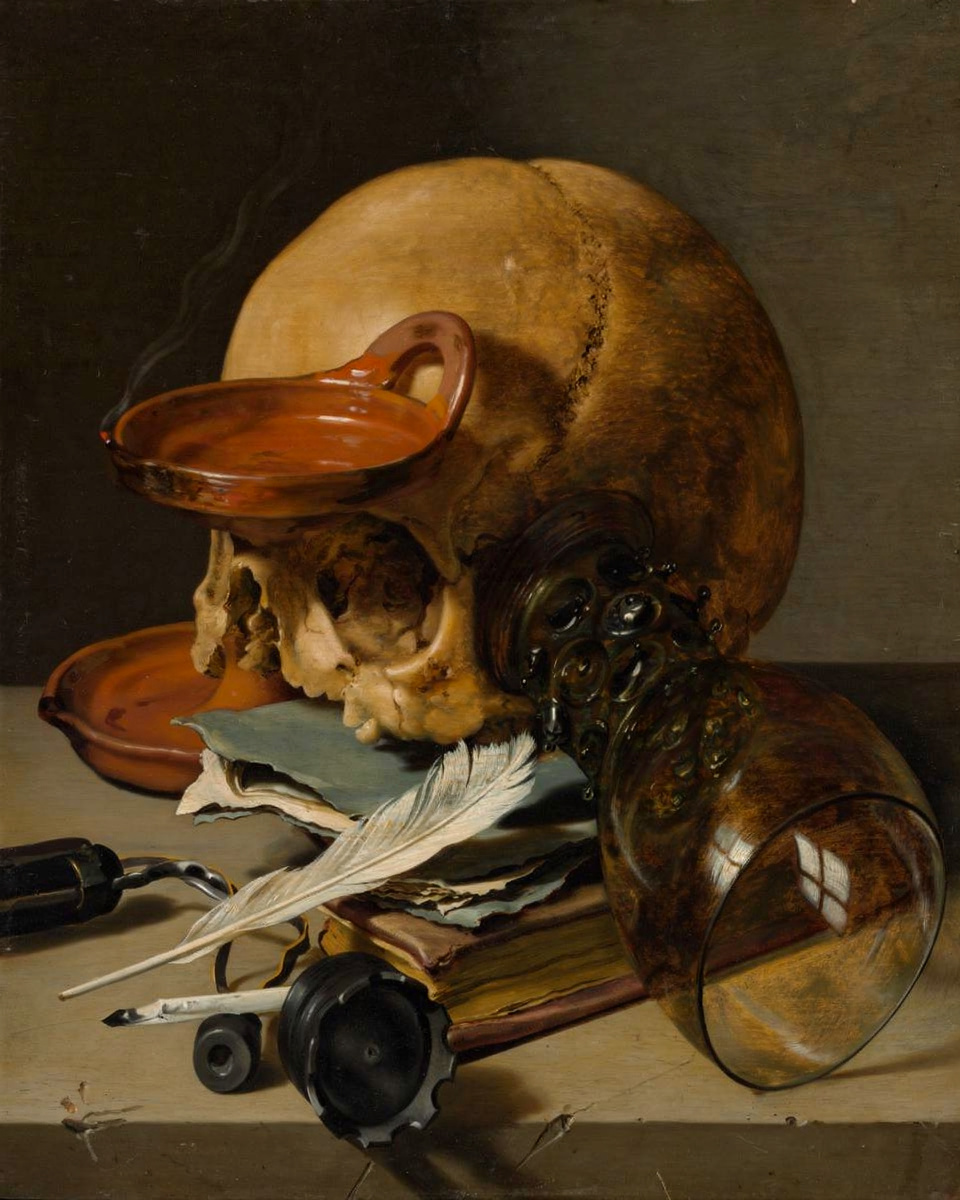
Pieter Claesz, Still Life with a Skull and a Writing Quill, 1628. Oil on wood. The Metropolitan Museum of Art, New York.
Pieter Claesz of Haarlem painted in a near-monochrome of browns, greys and greens, and made it look rich. Here a skull rests on a book beside a quill, an overturned glass and an oil lamp that has just gone out. It is a vanitas: a reminder that learning, writing and life itself all come to an end.
2. Still Life with Lobster and Fruit
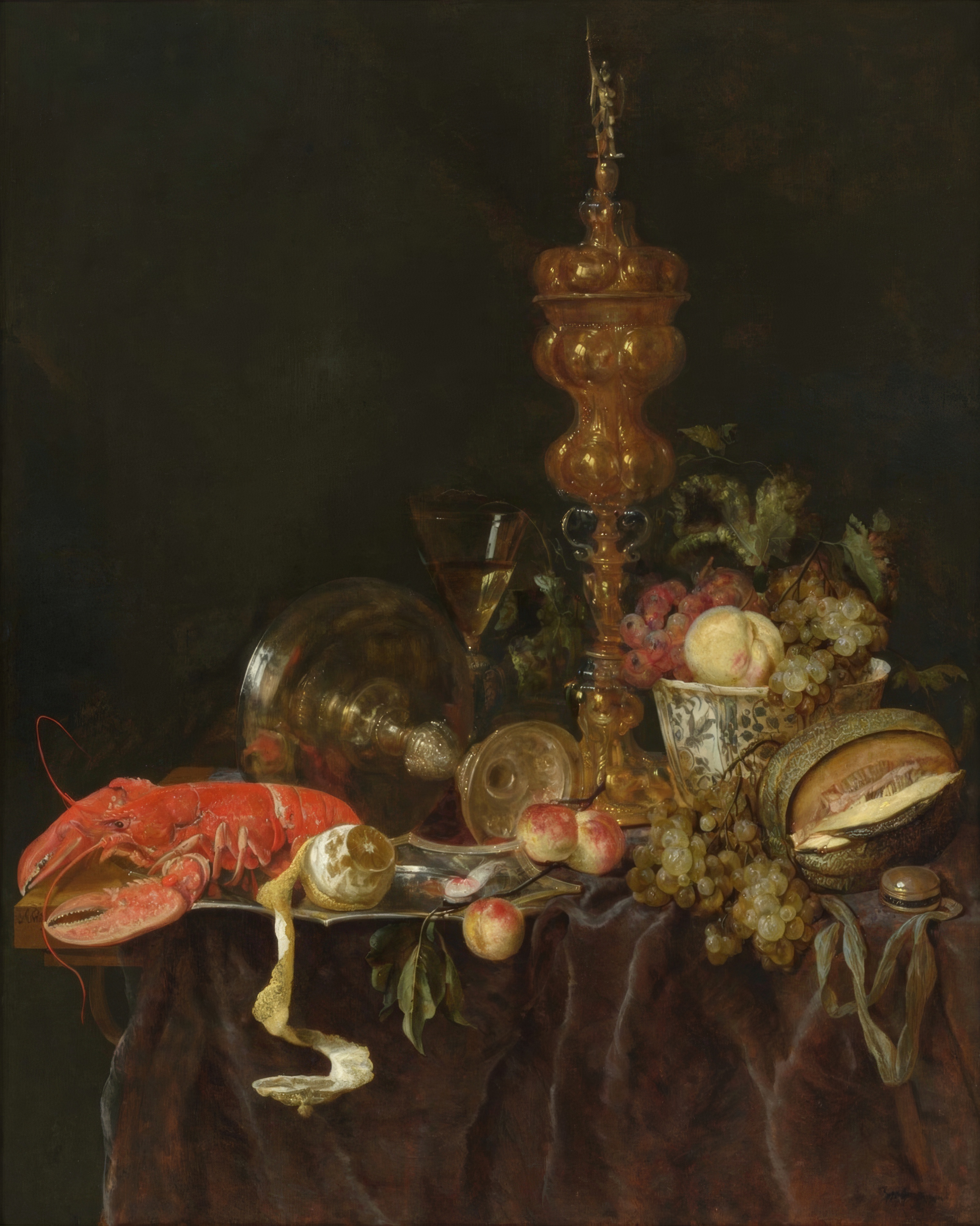
Abraham van Beyeren, Still Life with Lobster and Fruit, probably early 1650s. Oil on wood. The Metropolitan Museum of Art, New York.
Abraham van Beyeren painted pronkstillevens, show-off still lifes, crammed with expensive things. A cooked lobster gleams red beside silver, glass, grapes and a peeled lemon. It was a portrait of wealth, and a warning about where it leads.
3. Still Life with a Glass and Oysters
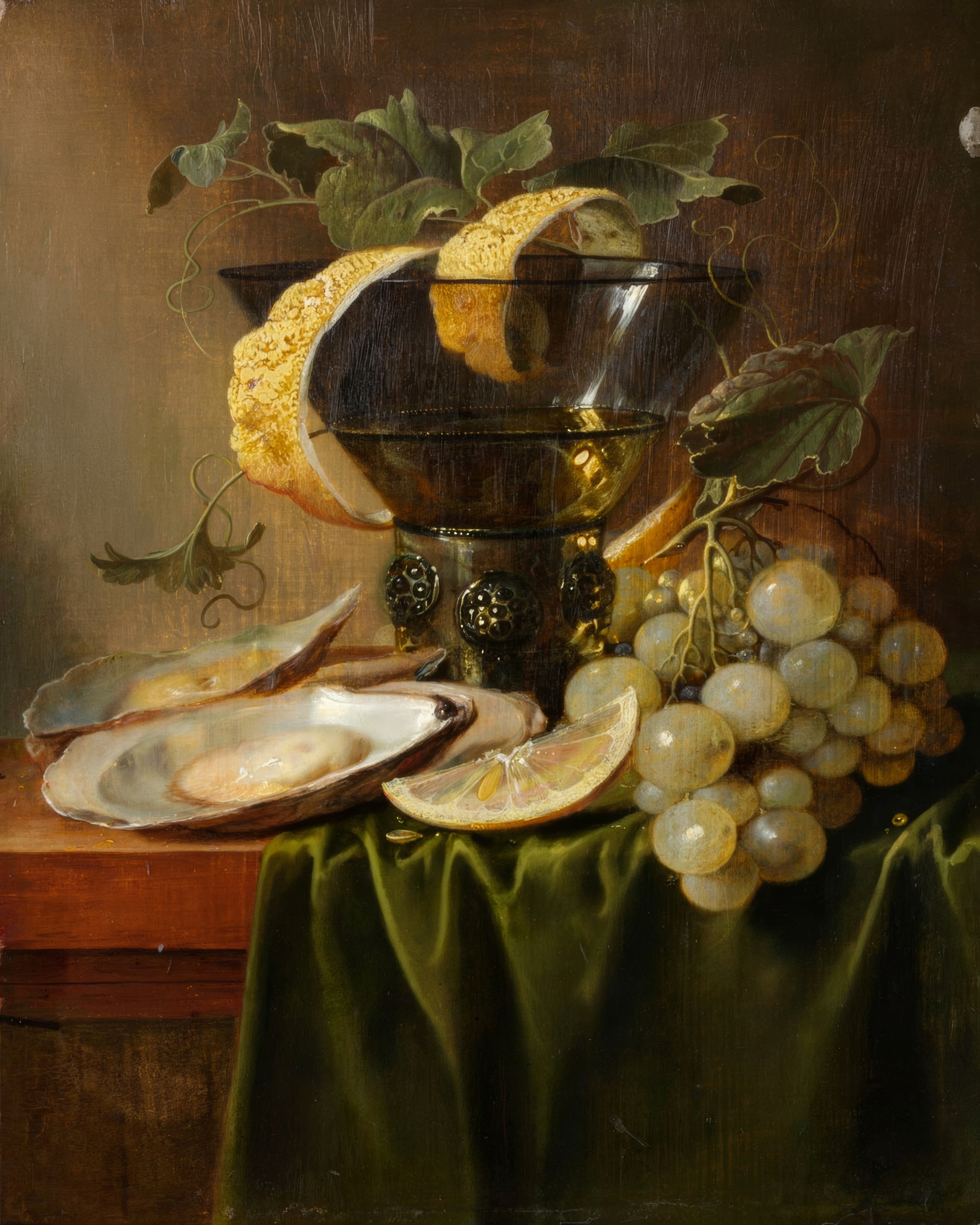
Jan Davidsz de Heem, Still Life with a Glass and Oysters, ca. 1640. Oil on wood. The Metropolitan Museum of Art, New York.
A small, perfect picture by Jan Davidsz de Heem, the most admired still life painter of his day. Oysters glisten, a lemon spirals out of its peel, and the wine in the glass catches the light. Every surface is different, and every one is convincing.
4. Still Life with Fruit, Glassware, and a Wanli Bowl
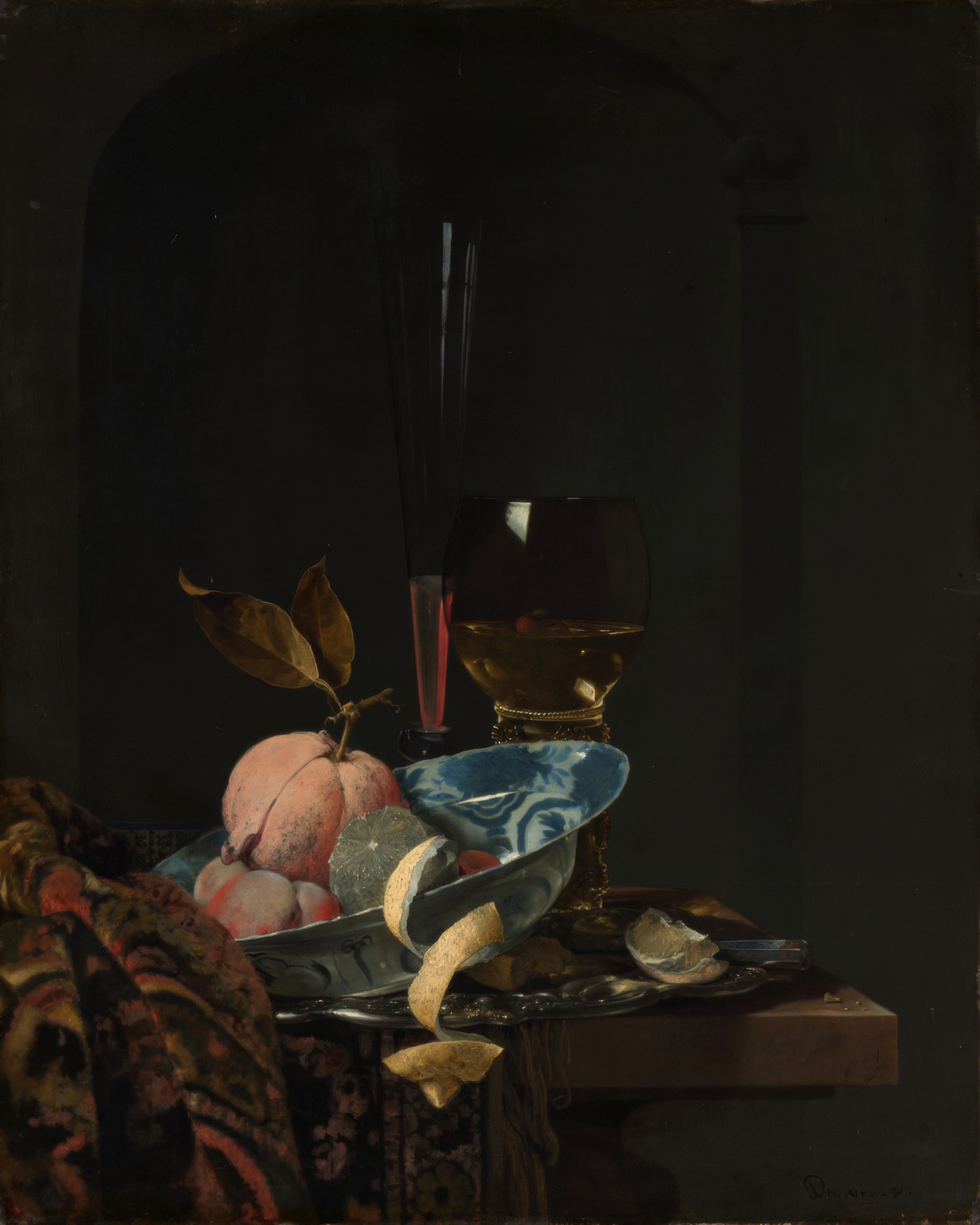
Willem Kalf, Still Life with Fruit, Glassware, and a Wanli Bowl, 1659. Oil on canvas. The Metropolitan Museum of Art, New York.
Willem Kalf painted fewer objects than his rivals, set in deeper darkness, and made them glow like jewels. A Chinese Wanli bowl, a Venetian glass of white wine and a peeled lemon shine out of the shadow.
This is the masterwork behind Fable’s Fruit and Glassware art style.
Create your portrait in this style
5. Vanitas Still Life
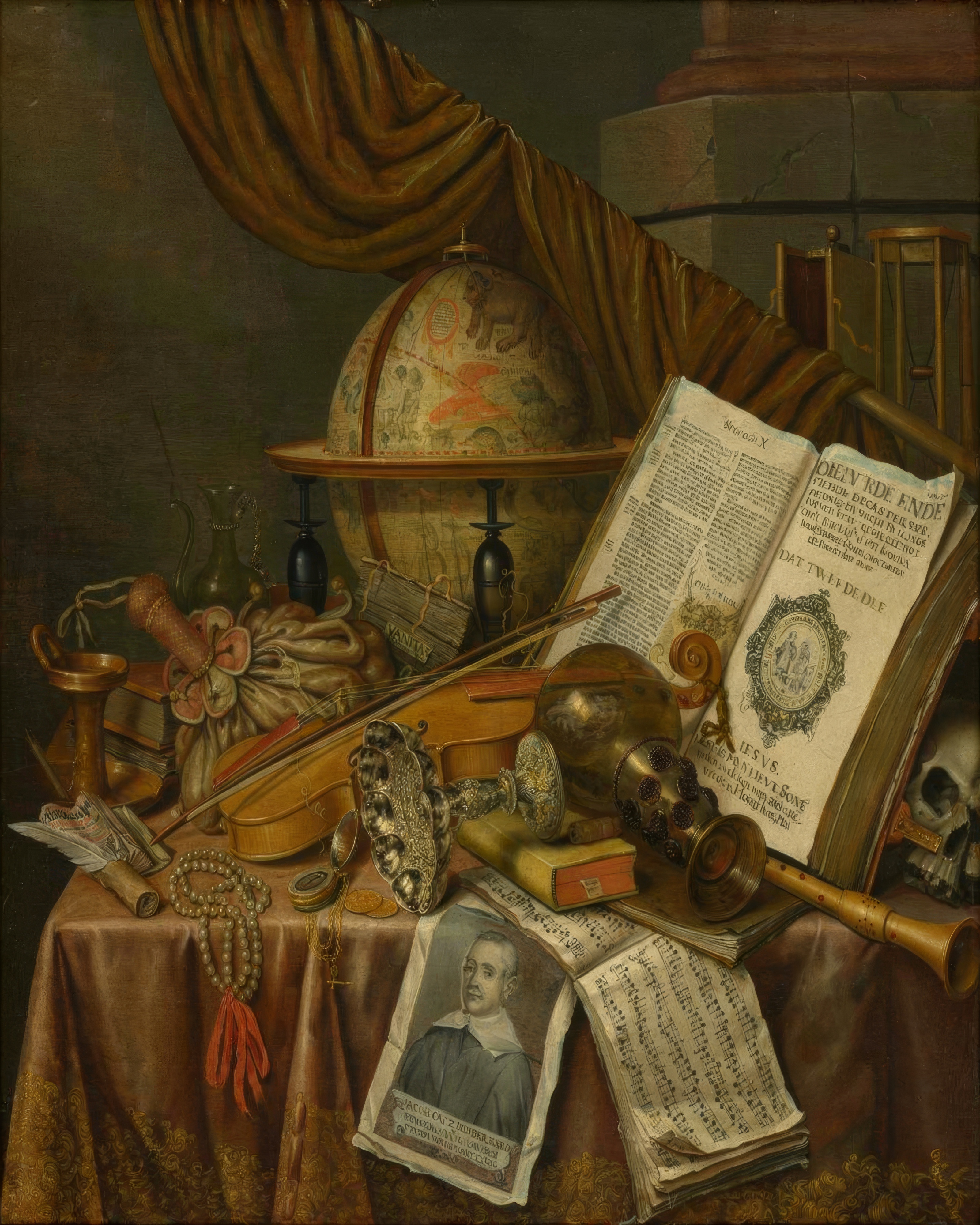
Edwaert Collier, Vanitas Still Life, 1662. Oil on wood. The Metropolitan Museum of Art, New York.
Edwaert Collier specialised in the vanitas, and this one has the full set: a skull, an hourglass and watch for passing time, books and music for vain learning and pleasure, and a crown for worldly power.
6. Still Life with Fruit and Asparagus
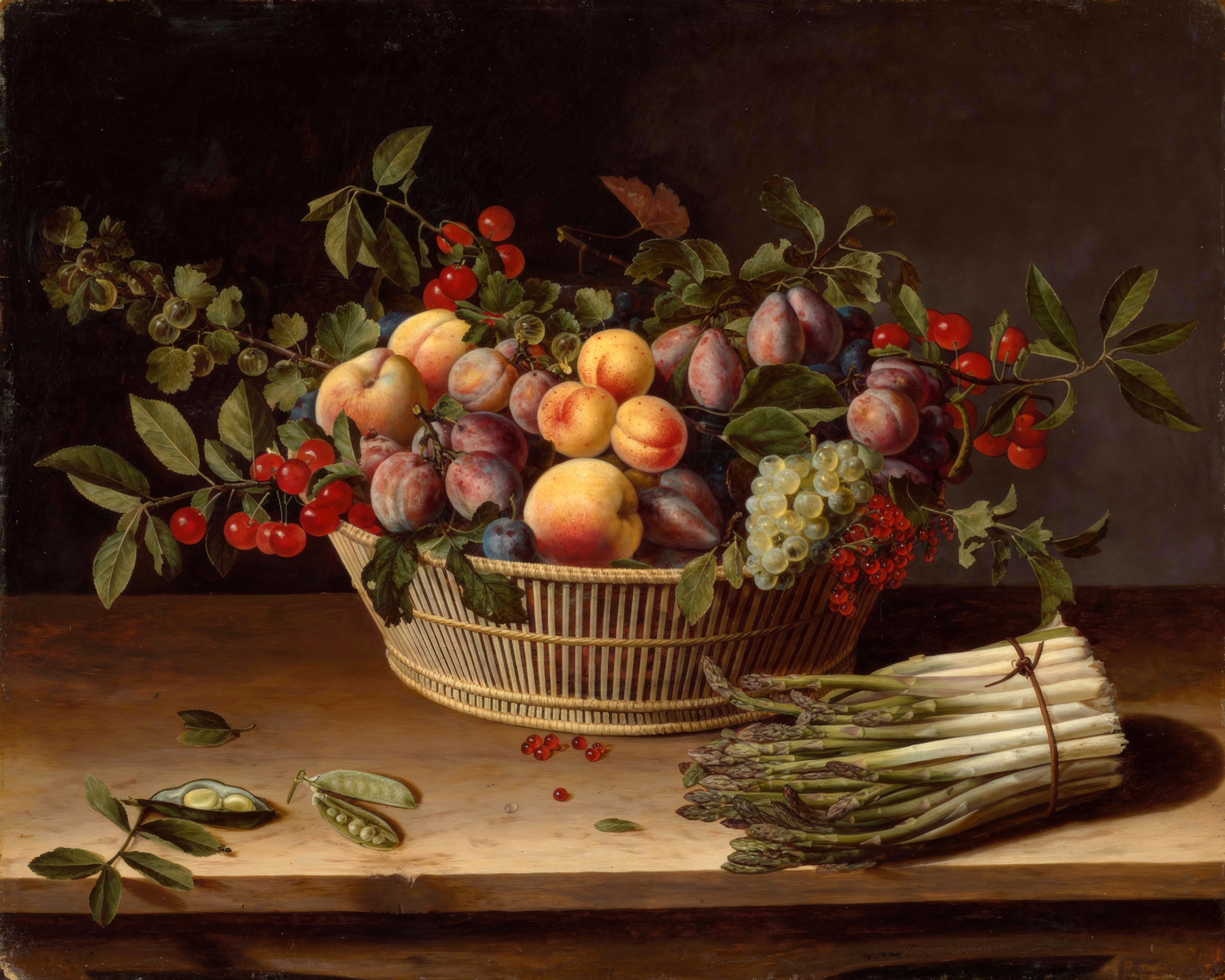
Louise Moillon, Still Life with Fruit and Asparagus, 1630. Oil on panel. Art Institute of Chicago.
Louise Moillon was one of the finest still life painters in France, and one of very few women working professionally in Paris in the 1630s. Her baskets of fruit are quiet, symmetrical and full of light.
7. Still Life with Birds and Fruit
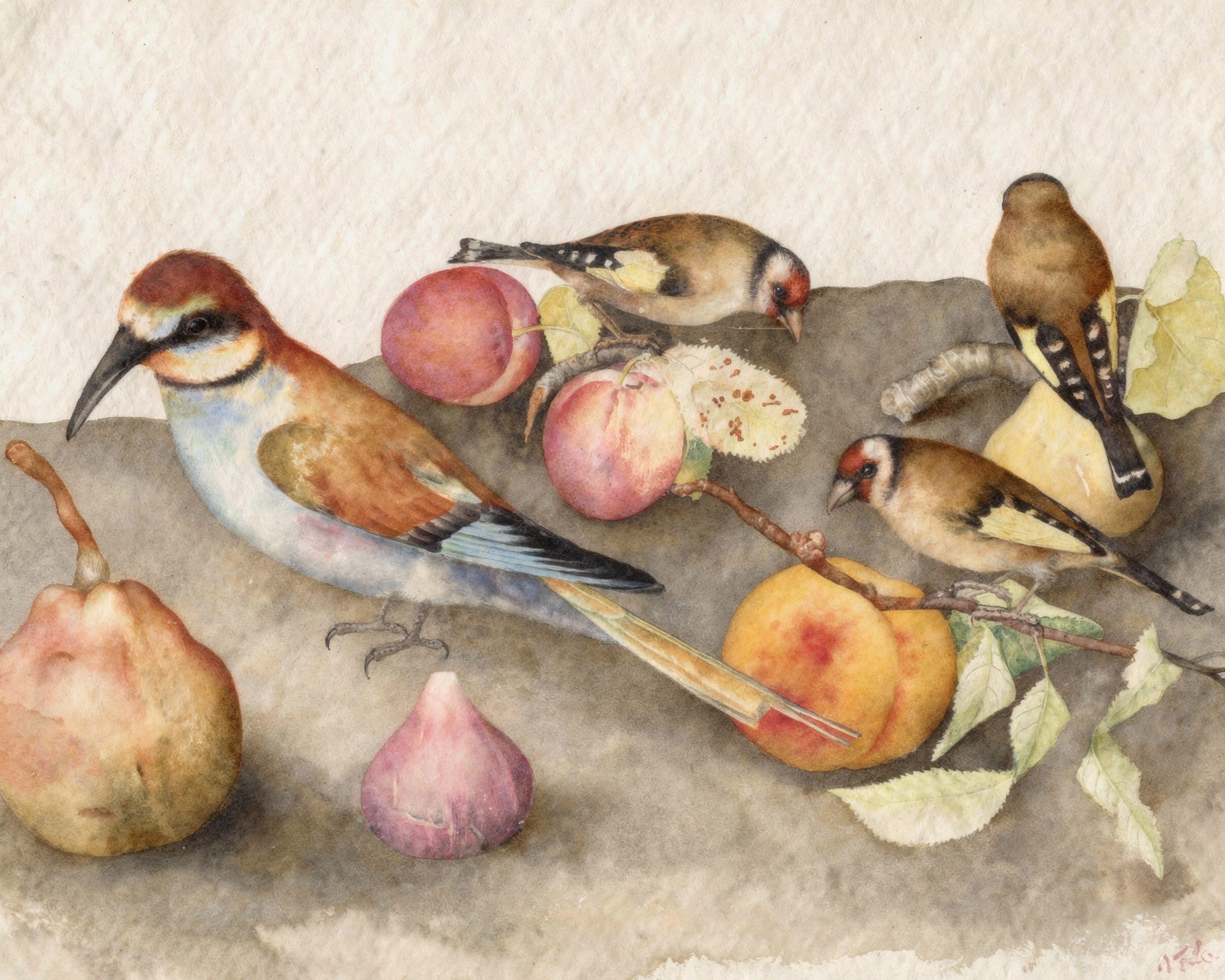
Giovanna Garzoni, Still Life with Birds and Fruit, c. 1650. Watercolor with graphite, heightened with lead white. Cleveland Museum of Art.
Giovanna Garzoni painted in watercolour on vellum for the Medici and other princes, and was paid fortunes for it. Her birds and fruit are tiny, exact and tender, closer to a naturalist’s study than to a banquet.
8. The Huntsman's Bounty
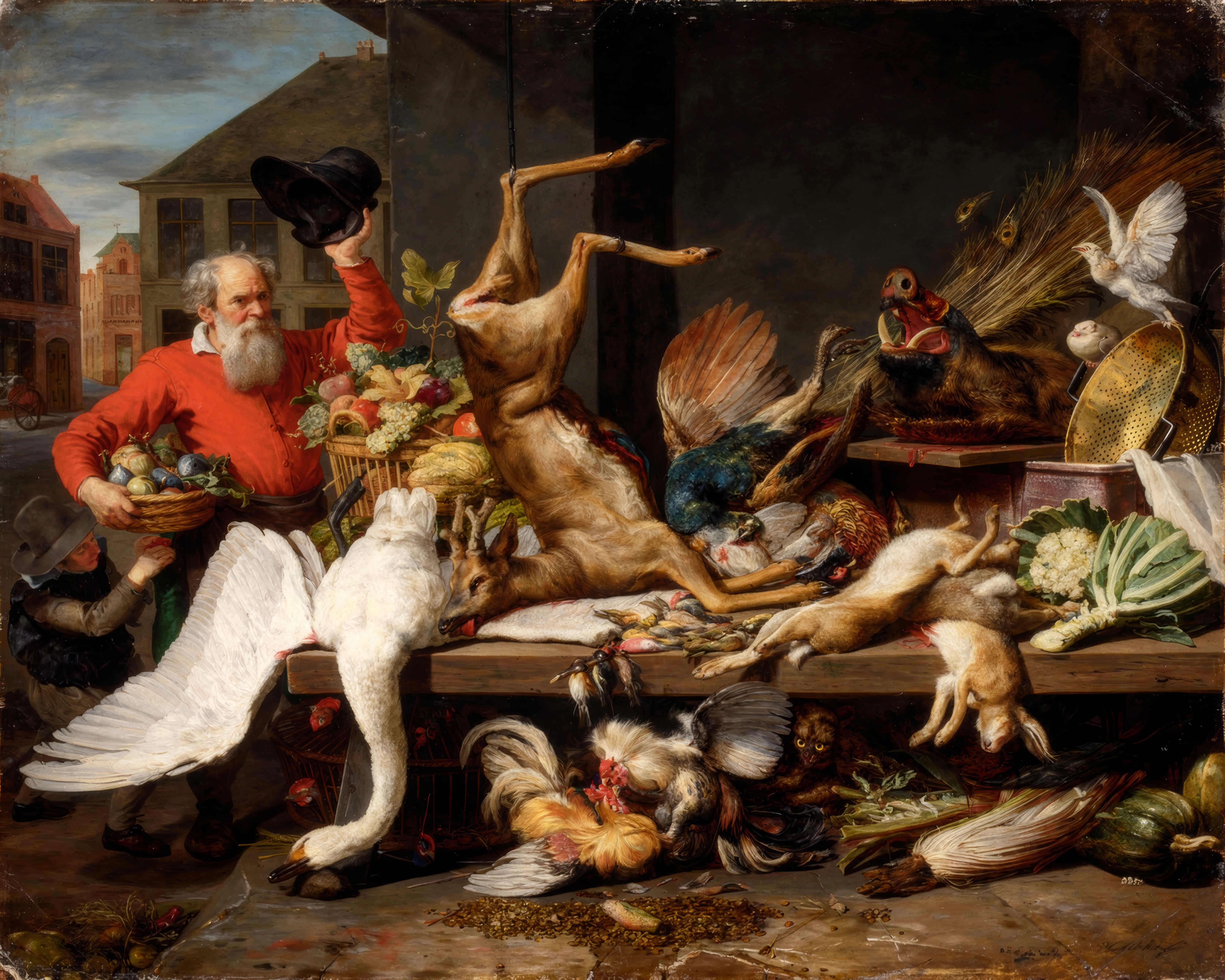
Frans Snyders, The Huntsman's Bounty, 1614. Oil on canvas. Art Institute of Chicago.
Frans Snyders worked with Rubens in Antwerp and painted the animals and food in many of his pictures. His own market stalls are huge, overflowing and almost overwhelming: a celebration of plenty after years of war.
9. Still Life with Silver
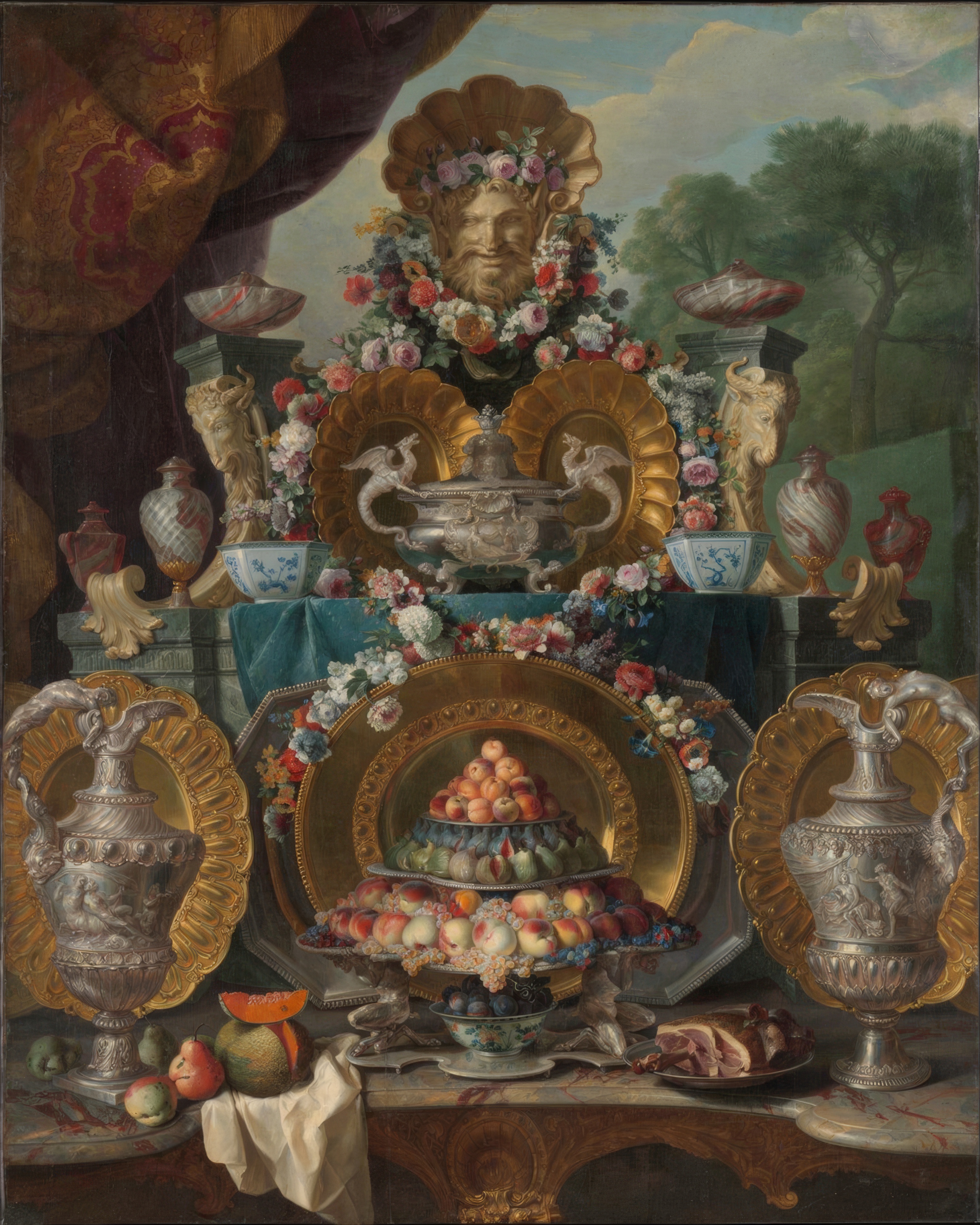
Alexandre François Desportes, Still Life with Silver, 1720s. Oil on canvas. The Metropolitan Museum of Art, New York.
Alexandre-François Desportes was painter of the hunt to Louis XIV and Louis XV. In this grand still life, a silver ewer and tureen reflect the fruit and game around them, a picture made for a palace dining room.
10. Still Life with Watermelon
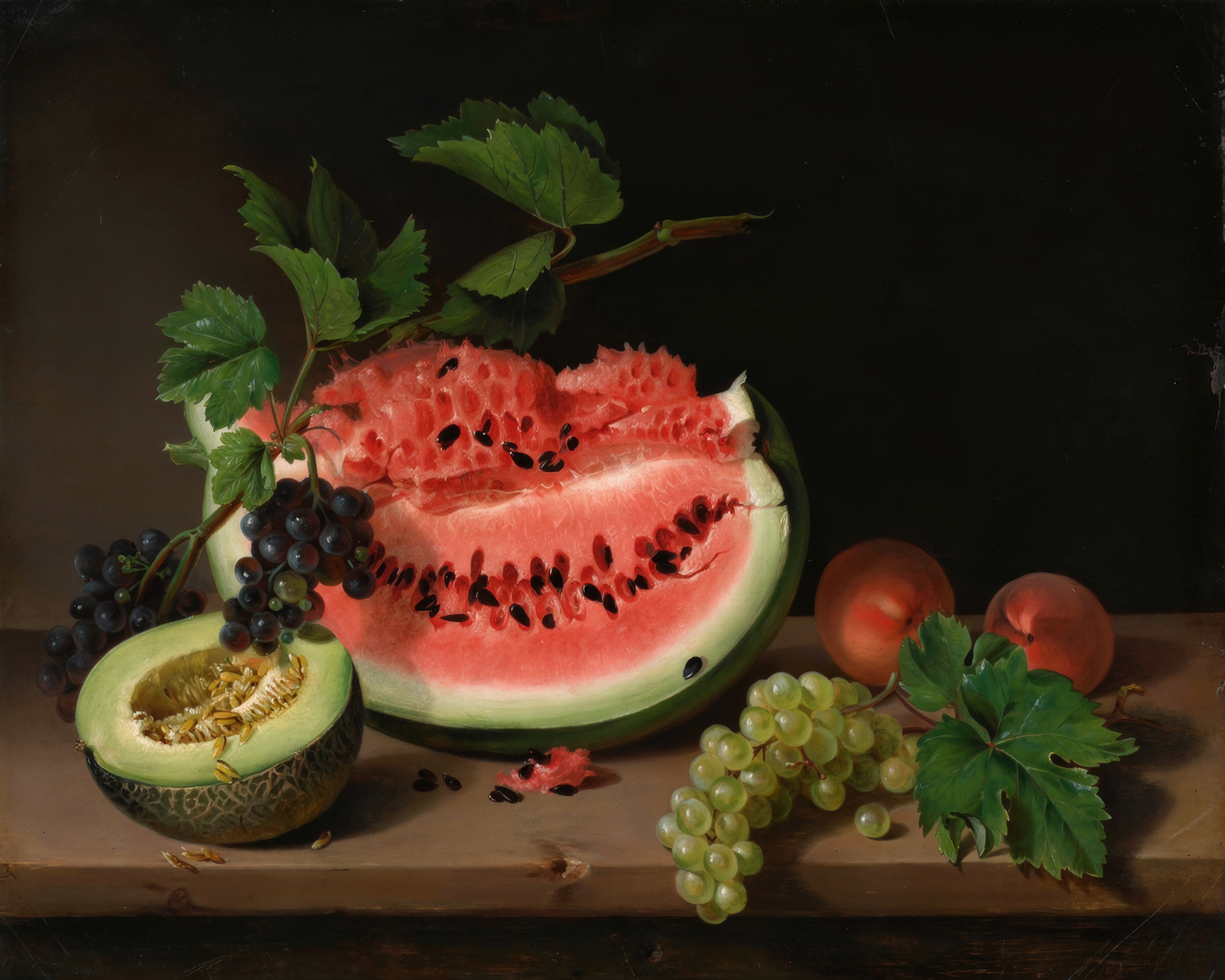
Sarah Miriam Peale, Still Life with Watermelon, 1822. Oil on panel. Harvard Art Museums.
Sarah Miriam Peale came from the great painting family of Philadelphia and was one of the first American women to make a living as a professional artist. Her watermelon, split open to show its glistening red flesh, is a small American classic.
11. Wine, Cheese, and Fruit
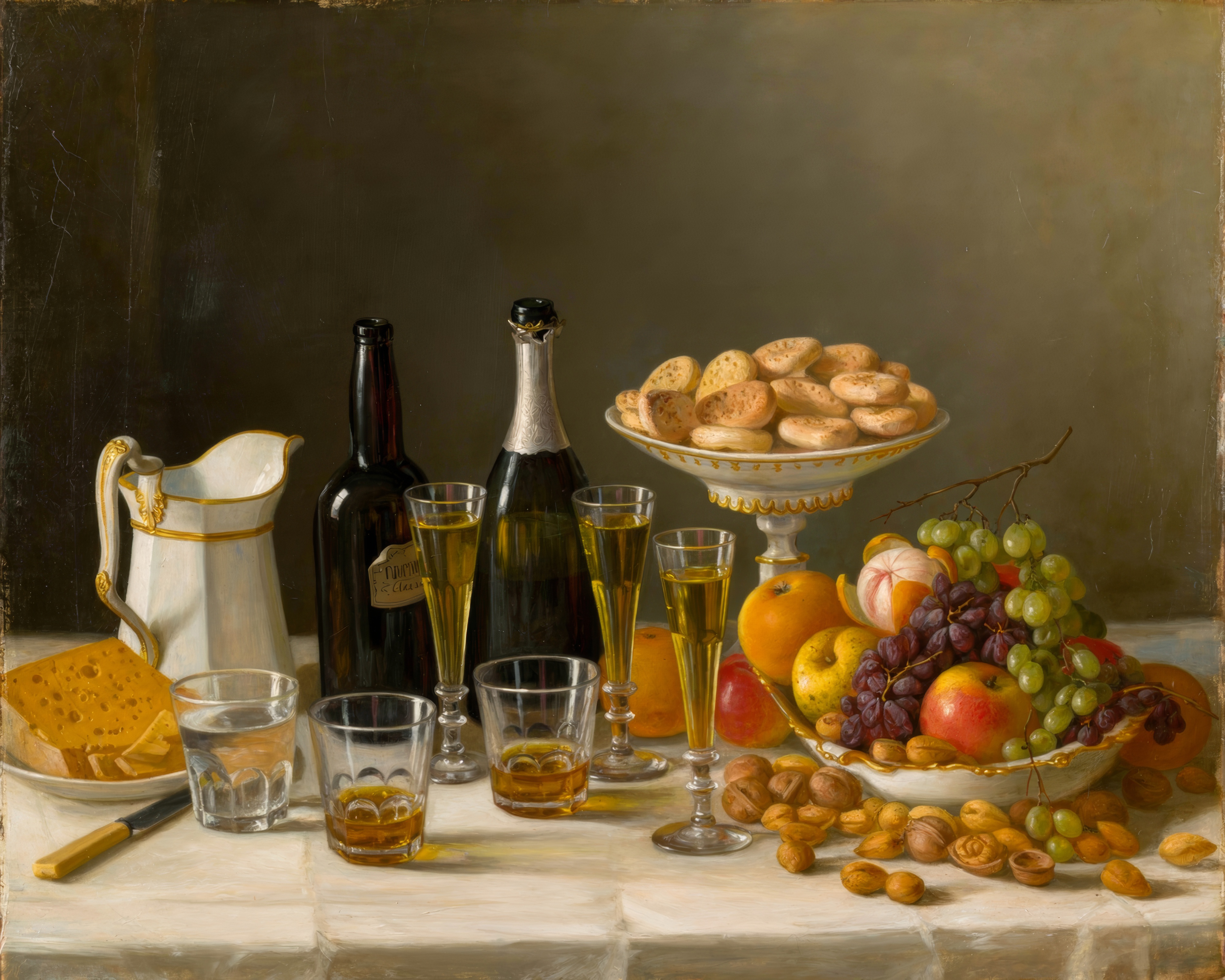
John F. Francis, Wine, Cheese, and Fruit, 1857. Oil on canvas. Art Institute of Chicago.
John F. Francis painted the generous lunch and dessert tables of mid-century America: wine, cheese, apples, cake. They are friendlier than the Dutch originals, and made to hang in real dining rooms.
12. Fish (Still Life)
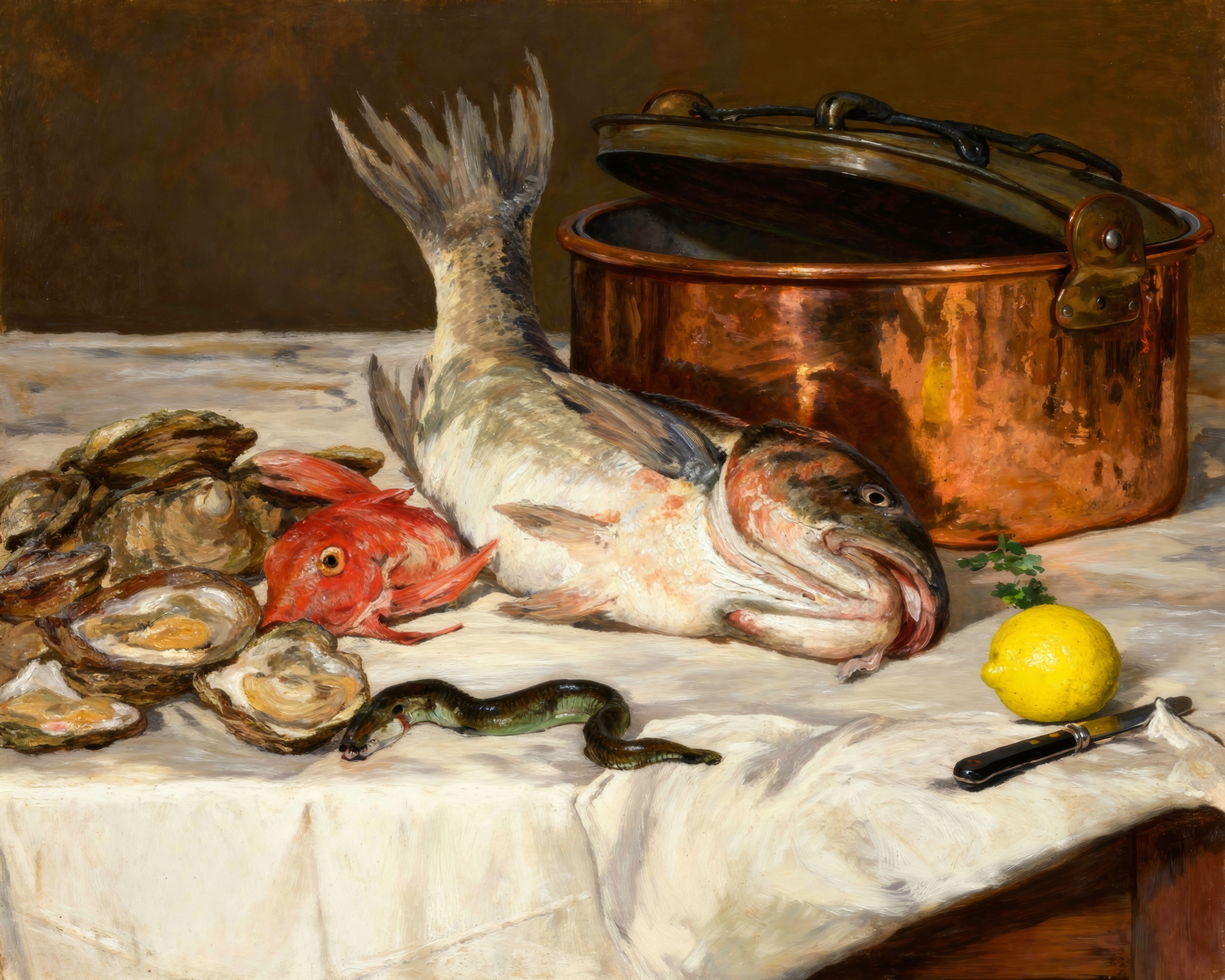
Édouard Manet, Fish (Still Life), 1864. Oil on canvas. Art Institute of Chicago.
Manet painted this pile of fish in 1864 in homage to the Spanish and Dutch masters he admired. The flat, quick brushwork and the bold white cloth make the old subject look completely new.
13. Still Life: Corner of a Table
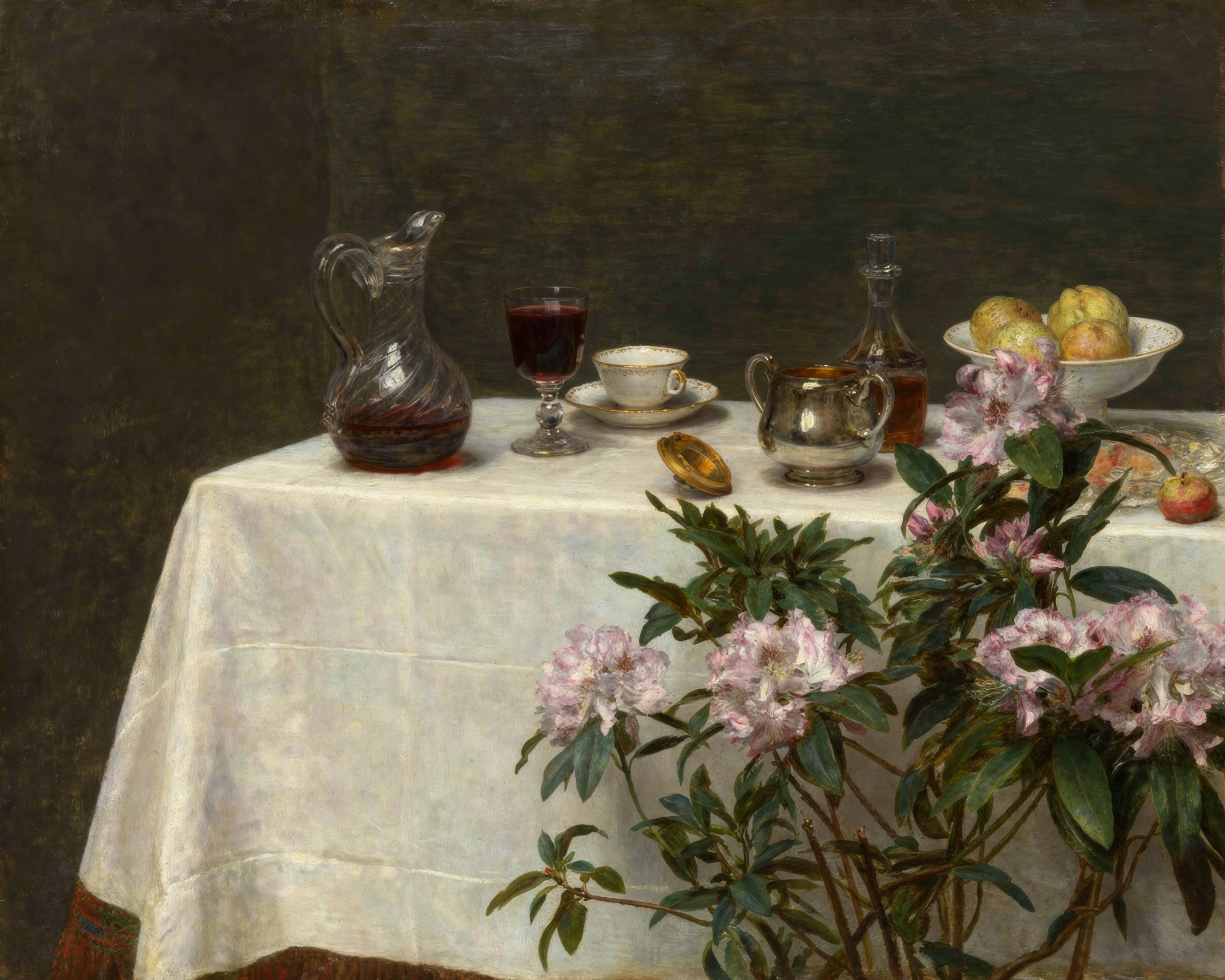
Henri Fantin-Latour, Still Life: Corner of a Table, 1873. Oil on canvas. Art Institute of Chicago.
Fantin-Latour painted a simple table corner with a white cloth, a glass, fruit and a little vase of flowers, and the quietness is the point. No banquet, no moral, just a calm moment in the light.
This is the masterwork behind Fable’s Corner of a Table art style.
Create your portrait in this style
14. Still Life with Apples and Pears
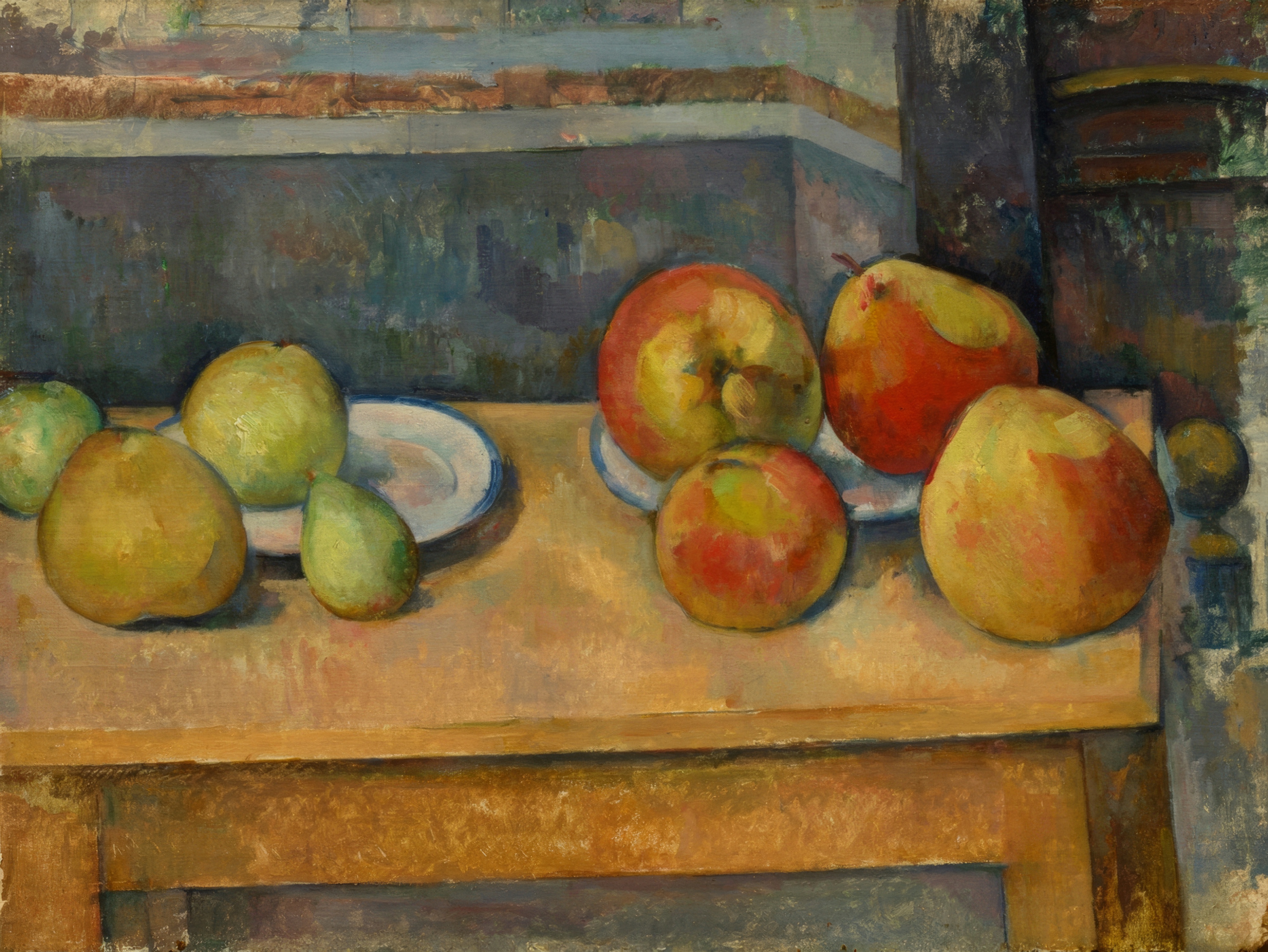
Paul Cézanne, Still Life with Apples and Pears, ca. 1891–92. Oil on canvas. The Metropolitan Museum of Art, New York.
Cézanne said he wanted to astonish Paris with an apple. He painted fruit hundreds of times, tilting tables and changing viewpoints so that each piece looks as solid and permanent as a mountain. Cubism began here.
This is the masterwork behind Fable’s Apples and Pears art style.
Create your portrait in this style
15. Still Life with Apples and Pitcher
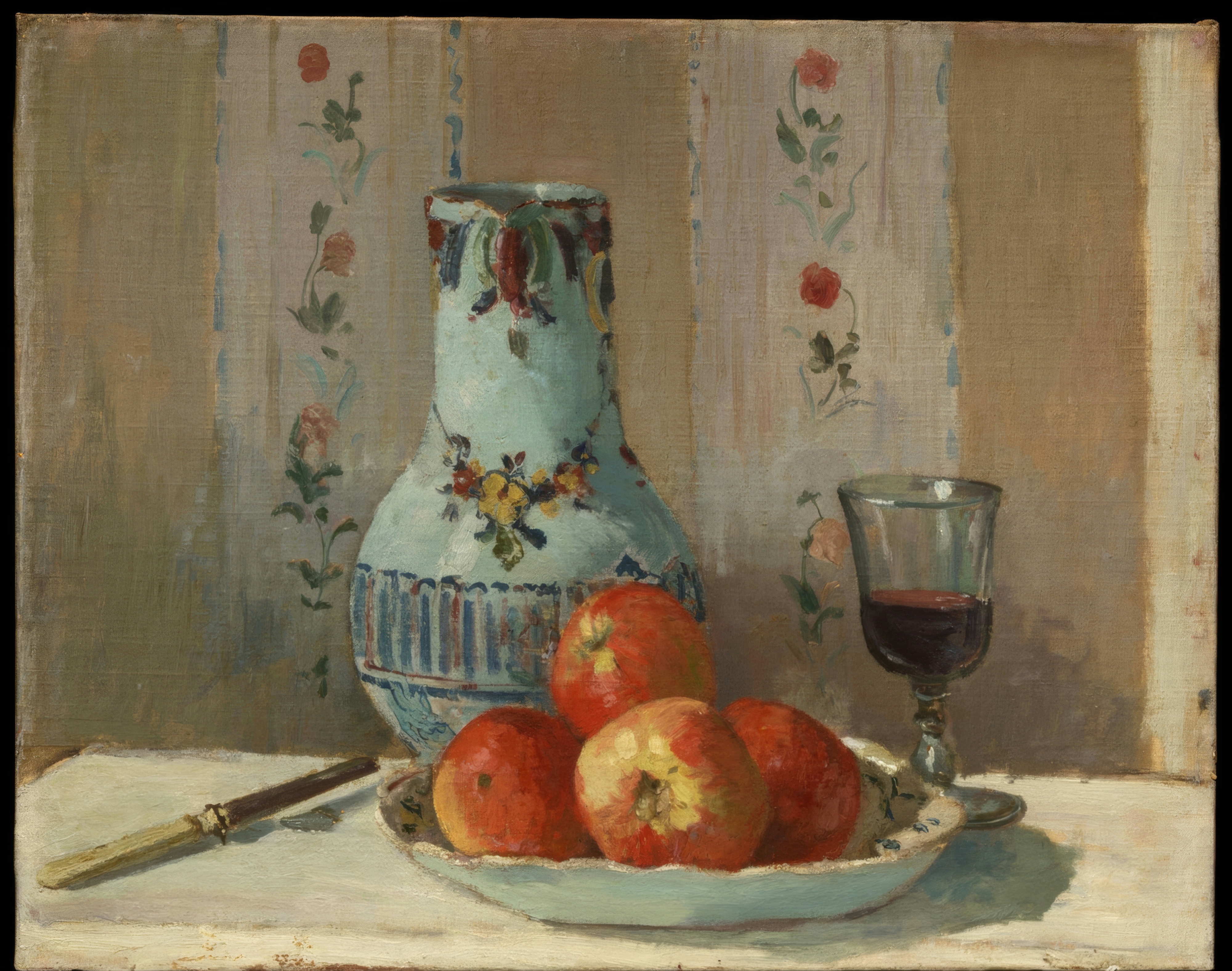
Camille Pissarro, Still Life with Apples and Pitcher, 1872. Oil on canvas. The Metropolitan Museum of Art, New York.
Pissarro painted very few still lifes, and this one, from 1872, shows how the impressionist eye worked on a table: a white jug, a scatter of apples, and light that turns everything slightly blue and pink.
Still lifes belong where people eat and talk. A dark Dutch banquet piece gives a dining room weight and glow; a light impressionist table suits a kitchen or a breakfast nook. Hang them at eye level when you are seated, a little lower than you would hang a landscape, so the table in the picture lines up with the table in the room. For bouquets, see our guide to famous flower paintings.
Questions
What is a still life painting?
A painting of objects that do not move, such as fruit, flowers, food, glass, books or musical instruments, arranged by the artist. The French call it nature morte, dead nature; the Dutch word stilleven, still model, gave English its name.
What does vanitas mean in a still life?
Vanitas is Latin for emptiness, from the Bible’s vanity of vanities. A vanitas still life includes a skull, a guttering candle, a watch or a fallen glass to remind the viewer that life is short and possessions are passing.
Who painted the most famous still lifes?
Pieter Claesz, Willem Claesz Heda, Jan Davidsz de Heem and Willem Kalf in the Dutch Golden Age, Chardin in eighteenth-century France, and Paul Cézanne, whose apples changed modern art.
Where should I hang a still life?
In a dining room, kitchen or breakfast nook. Hang it at seated eye level so the table in the picture echoes your own.