Famous flower paintings: 18 bouquets from Ruysch to Van Gogh
Four centuries of bouquets, from the Dutch masters who painted every petal to Fantin-Latour, Renoir, Cézanne and Van Gogh: eighteen flower paintings and how to hang them.
The flower painting was born in the Netherlands around 1600, during the tulip craze, when a single rare bulb could cost as much as a house. Painters built impossible bouquets of flowers that bloomed in different months, painted every petal from separate studies, and sold them to people who could not afford the real thing. Some of the best of them were women, including Rachel Ruysch, the most successful flower painter of her age.
The eighteen pictures below run from those Dutch bouquets to the looser, brighter flowers of the impressionists and Van Gogh. Each one can be ordered as a print, and five of them, by Veerendael, Ruysch, Fantin-Latour, Renoir and Van Gogh, are the masterworks behind Fable art styles.
1. Still Life
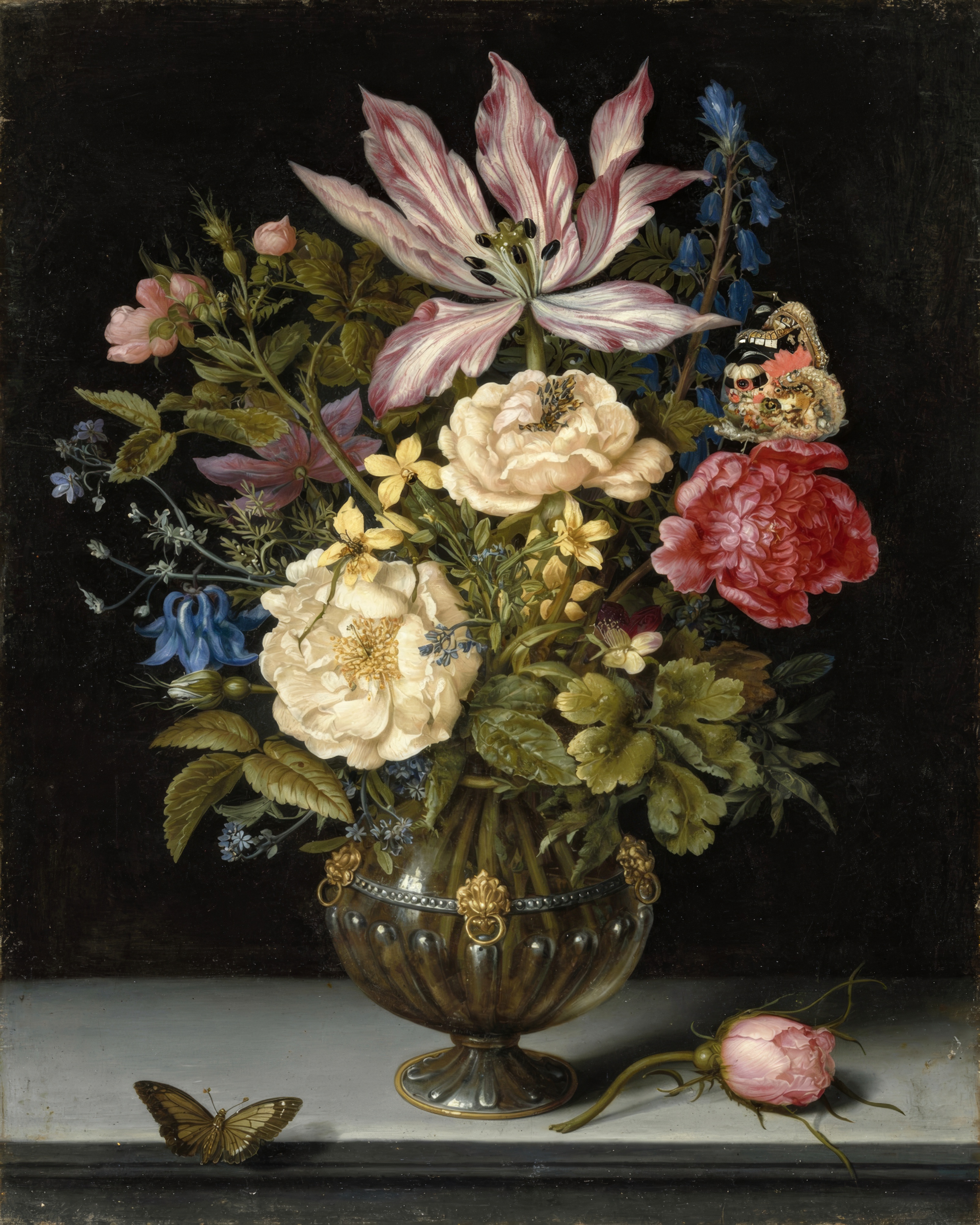
Ambrosius Bosschaert the Elder, Still Life, 1617.
Ambrosius Bosschaert was one of the first painters to make the flower piece a subject of its own. His bouquets are symmetrical, crisp and impossible: flowers from spring and summer in one vase, each turned to show its best face, in a precious Chinese porcelain vase.
2. Fruit and Flowers
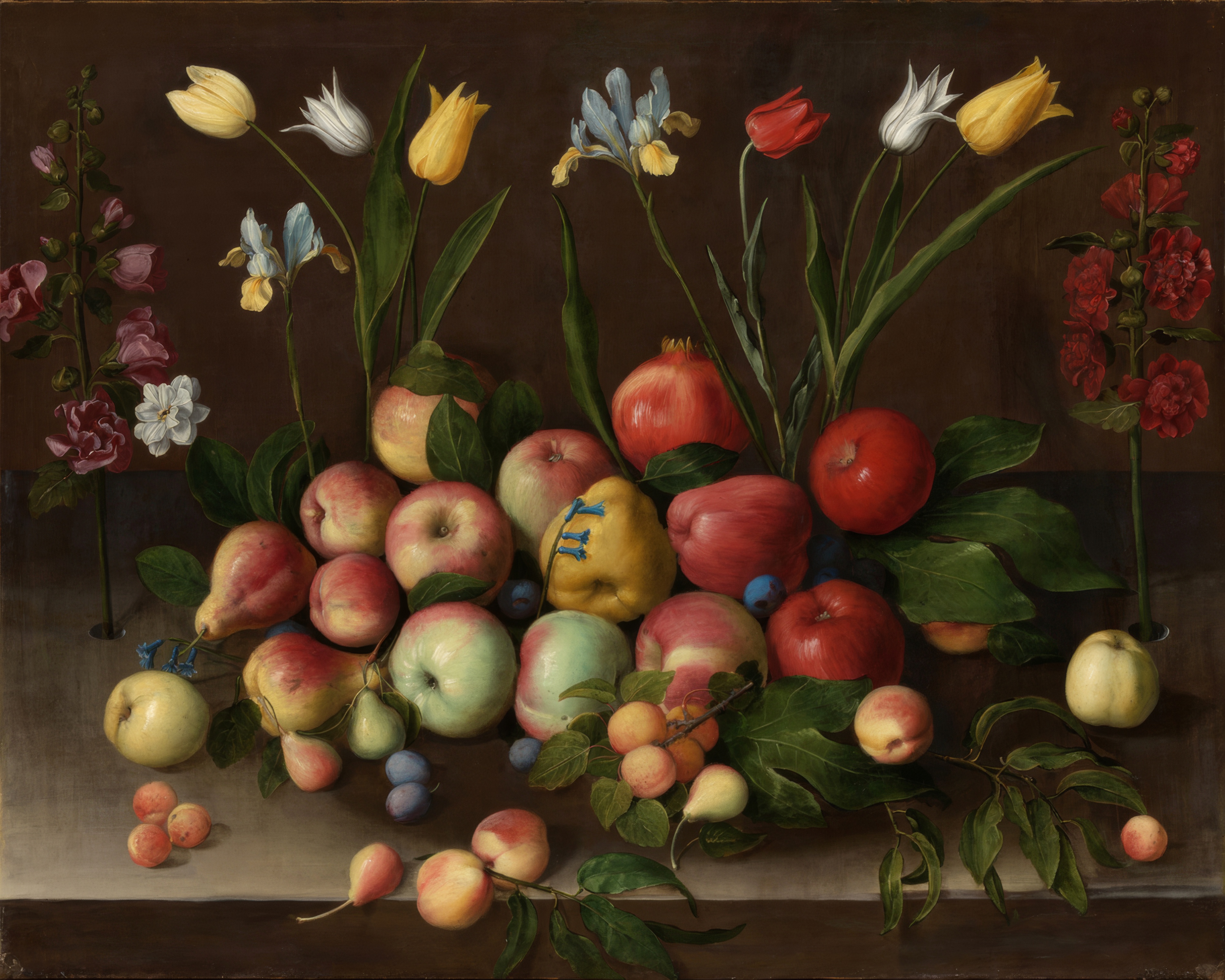
Orsola Maddalena Caccia, Fruit and Flowers, ca. 1630. Oil on canvas. The Metropolitan Museum of Art, New York.
Orsola Maddalena Caccia was a nun in Piedmont who ran a painting studio inside her convent. Her still lifes have a simple, almost devotional clarity, with each flower and fruit set out like an offering.
3. Still Life of Flowers and Small Animals on a Ledge
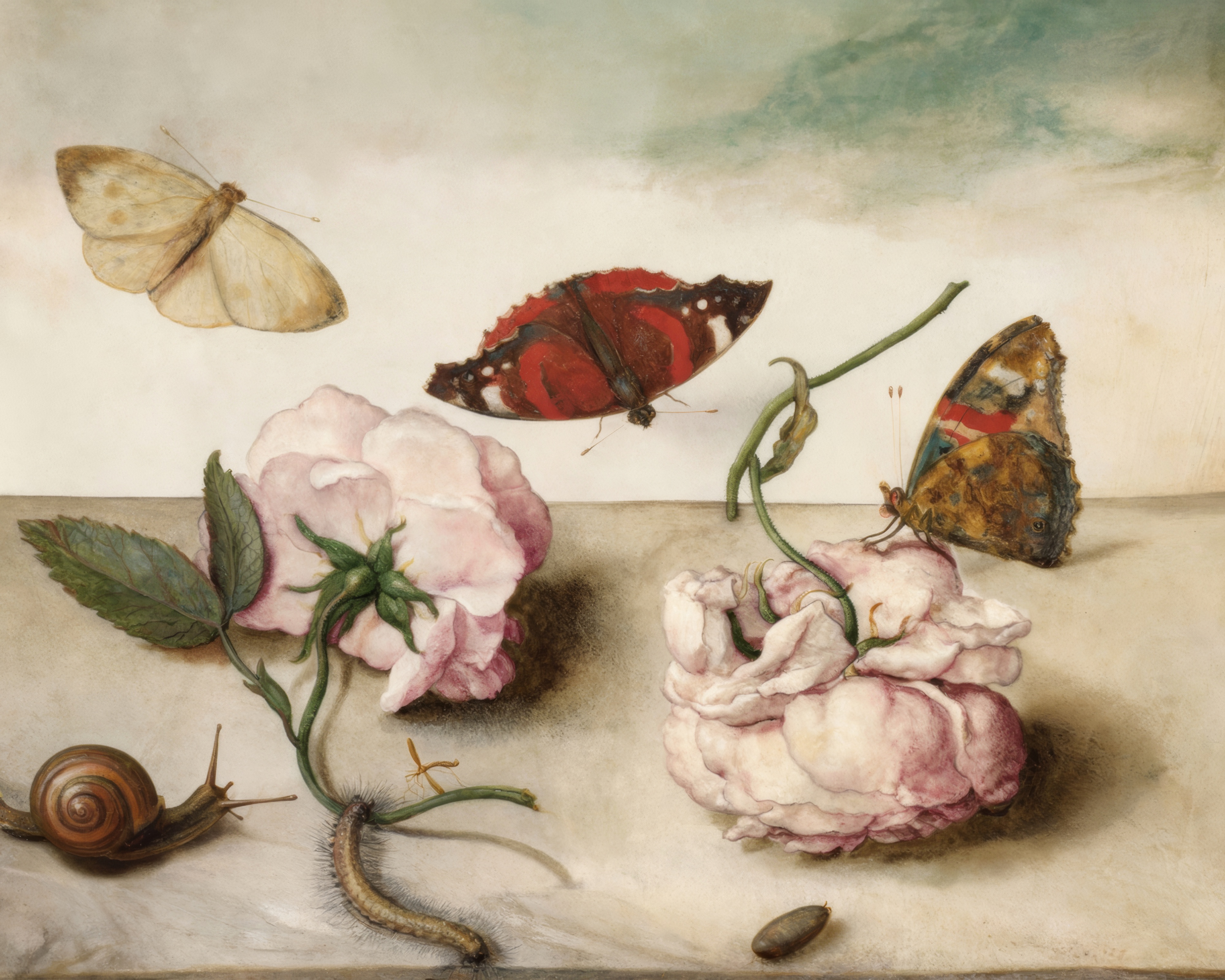
Margareta de Heer, Still Life of Flowers and Small Animals on a Ledge, 1642. Transparent and opaque watercolor and black chalk on parchment. Harvard Art Museums.
Margareta de Heer painted in watercolour and gouache on paper, laying single flowers along a ledge with insects crawling among them. It is lighter and more intimate than an oil painting, like a page from a collector’s album.
4. A Bouquet of Flowers in a Crystal Vase
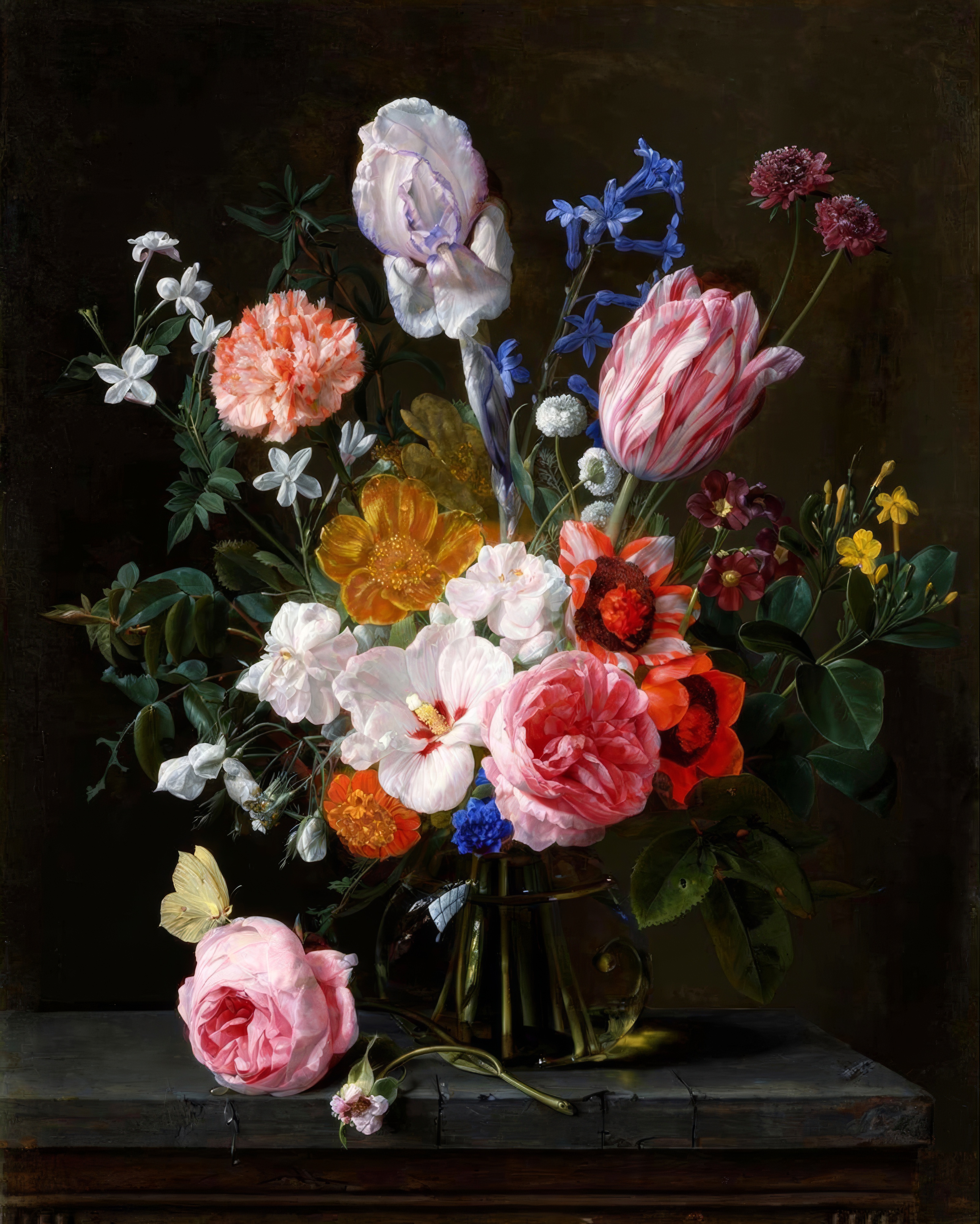
Nicolaes van Veerendael, A Bouquet of Flowers in a Crystal Vase, 1662. Oil on canvas. The Metropolitan Museum of Art, New York.
Nicolaes van Veerendael was famous for his tulips, and here striped tulips, roses and carnations burst out of a crystal vase that reflects the window of the studio. The darkness behind makes every petal glow.
This is the masterwork behind Fable’s Crystal Vase Bouquet art style.
Create your portrait in this style
5. Flowers in a glass vase
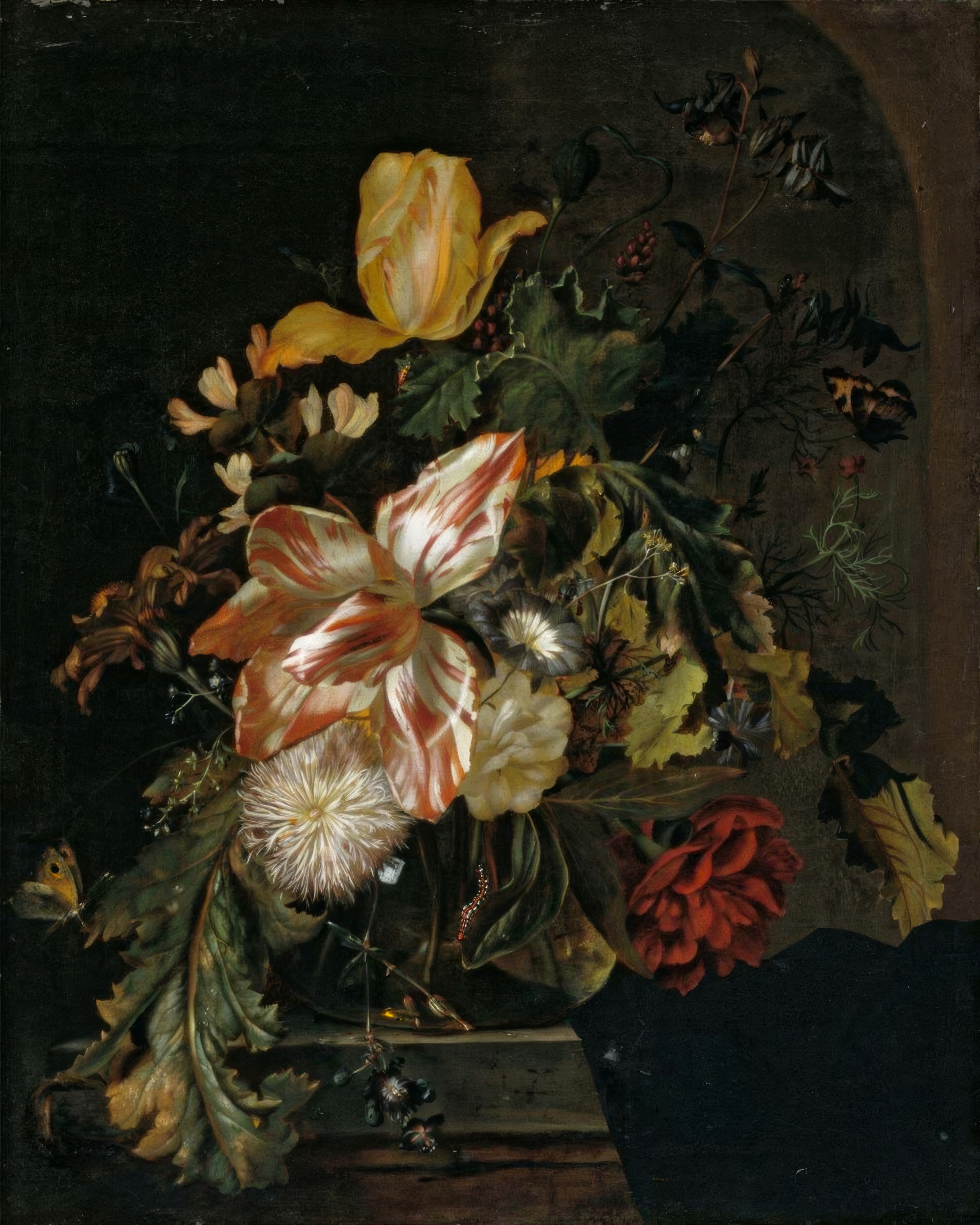
Carel Borchaert Voet, Flowers in a glass vase, ca. 1686-1743. Victoria and Albert Museum, London.
Carel Borchaert Voet worked for the Dutch court and later in England. His bouquet is tall and airy, with a few big flowers set against the dark, and a plain glass vase that lets you see the stems.
6. A still-life with a spray of flowers
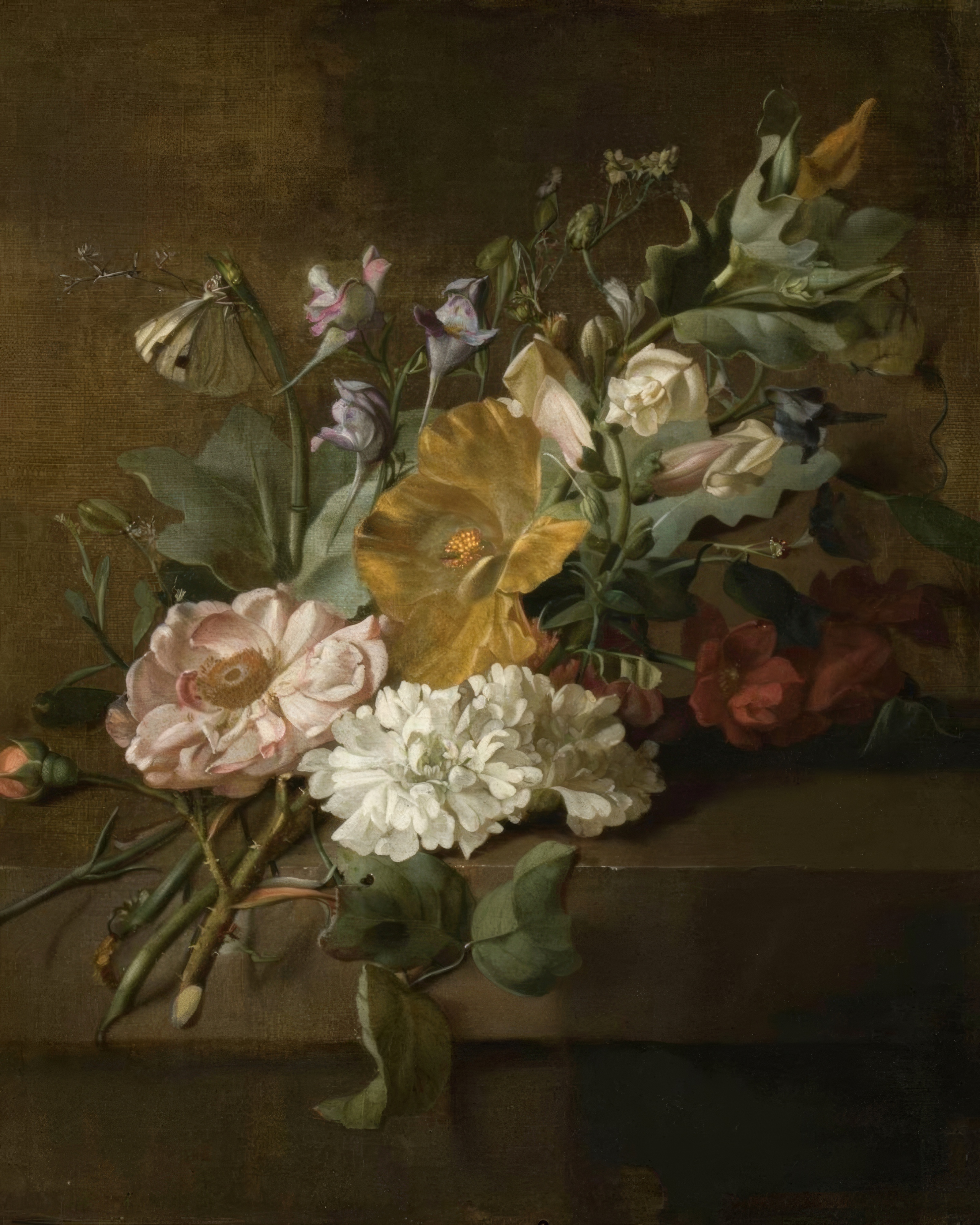
Rachel Ruysch, A still-life with a spray of flowers, ca. 1685-1700. Victoria and Albert Museum, London.
Rachel Ruysch painted for seventy years, was court painter in Düsseldorf and sold her pictures for more than Rembrandt ever got for his. Her bouquets are looser and livelier than her predecessors’: they curve and spill across the canvas as if a breeze had passed through them.
This is the masterwork behind Fable’s Spray of Flowers art style.
Create your portrait in this style
7. A Vase of Flowers
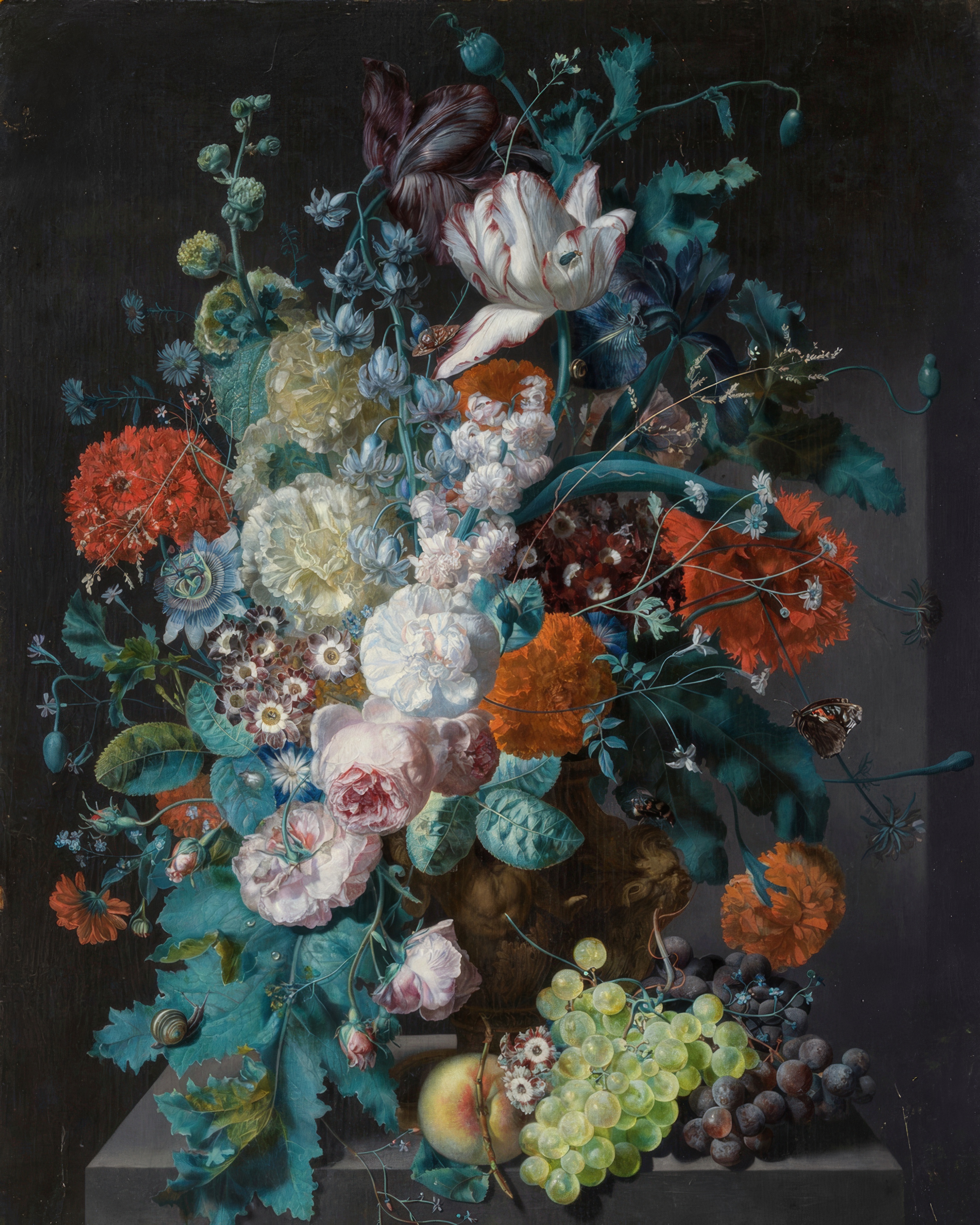
Margareta Haverman, A Vase of Flowers, 1716. Oil on wood. The Metropolitan Museum of Art, New York.
Margareta Haverman was the only pupil of the great Jan van Huysum, and in 1722 she became the first woman admitted to the French Académie royale. This vase of flowers, with a nest of eggs on the ledge, is one of only two of her paintings known today.
8. A Noble Still Life
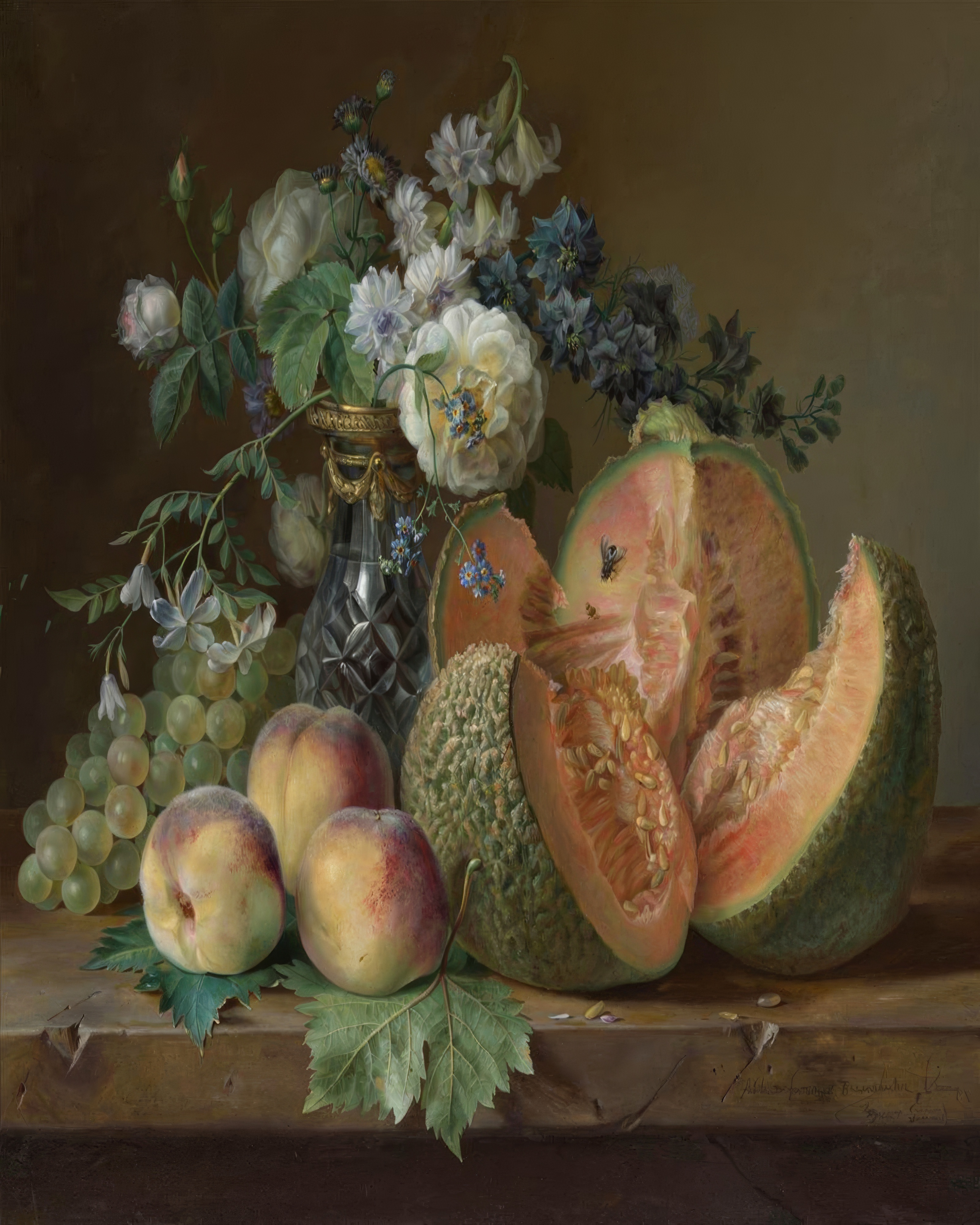
Marquise de Grollier, A Noble Still Life, 1780. Oil on canvas. The Metropolitan Museum of Art, New York.
A rare work by an aristocratic amateur, the Marquise de Grollier, who painted flowers in the Dutch manner and was admired by professionals in Paris. Here a stone urn overflows with summer flowers beside fruit, in the soft light of the late eighteenth century.
9. Still Life with Flowers
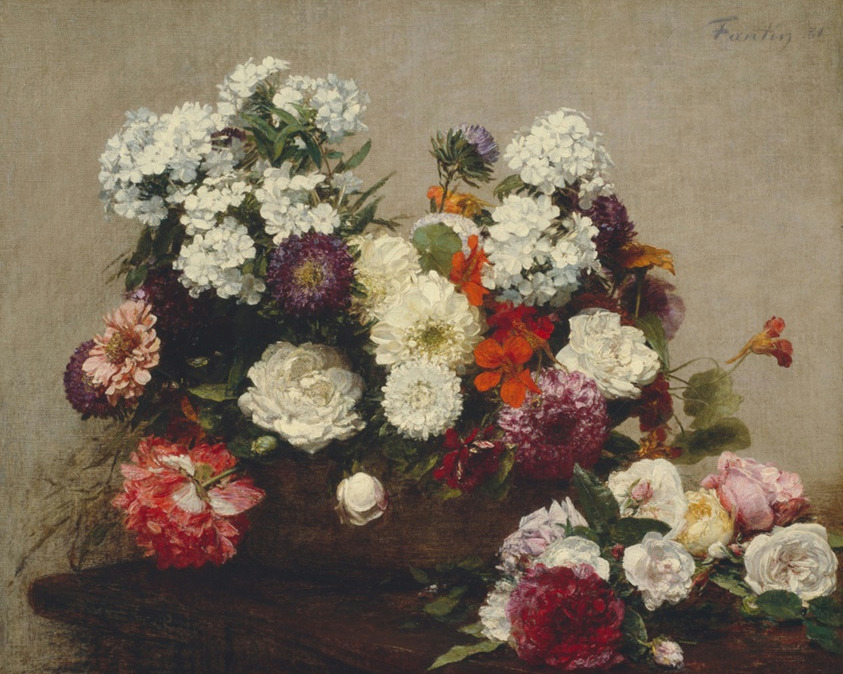
Henri Fantin-Latour, Still Life with Flowers, 1881. Oil on canvas. Art Institute of Chicago.
Henri Fantin-Latour was a friend of the impressionists, but his flowers were all his own: quiet, soft, painted against plain grey walls. English collectors loved them so much that he painted hundreds for the London market.
10. Still Life with Pansies
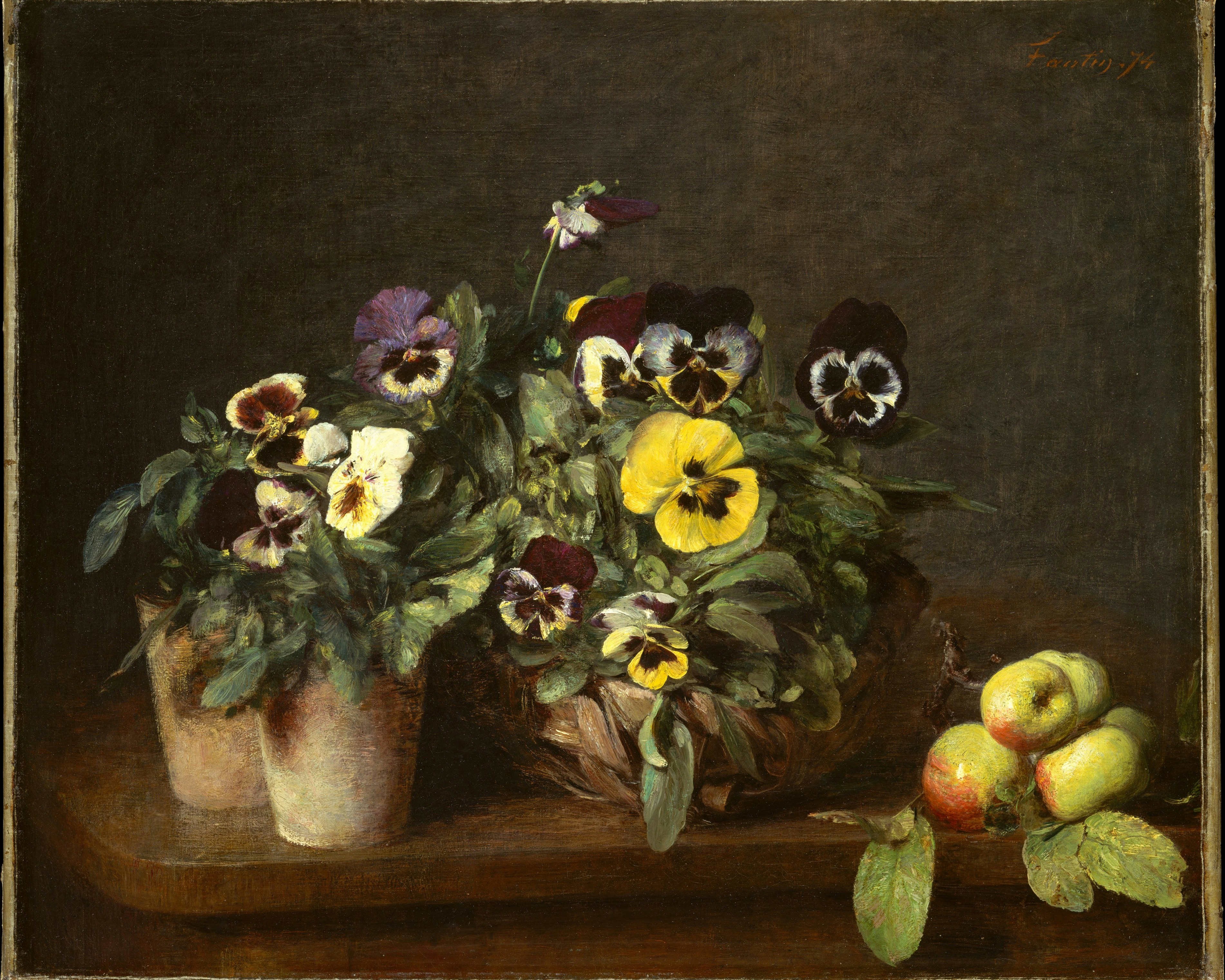
Henri Fantin-Latour, Still Life with Pansies, 1874. Oil on canvas. The Metropolitan Museum of Art, New York.
Fantin-Latour at his most modest: a pot of pansies on a table, painted as carefully as a portrait. Pansies take their name from the French pensée, a thought, and they were given as a token of remembrance.
This is the masterwork behind Fable’s Pansies art style.
Create your portrait in this style
11. Spring Flowers
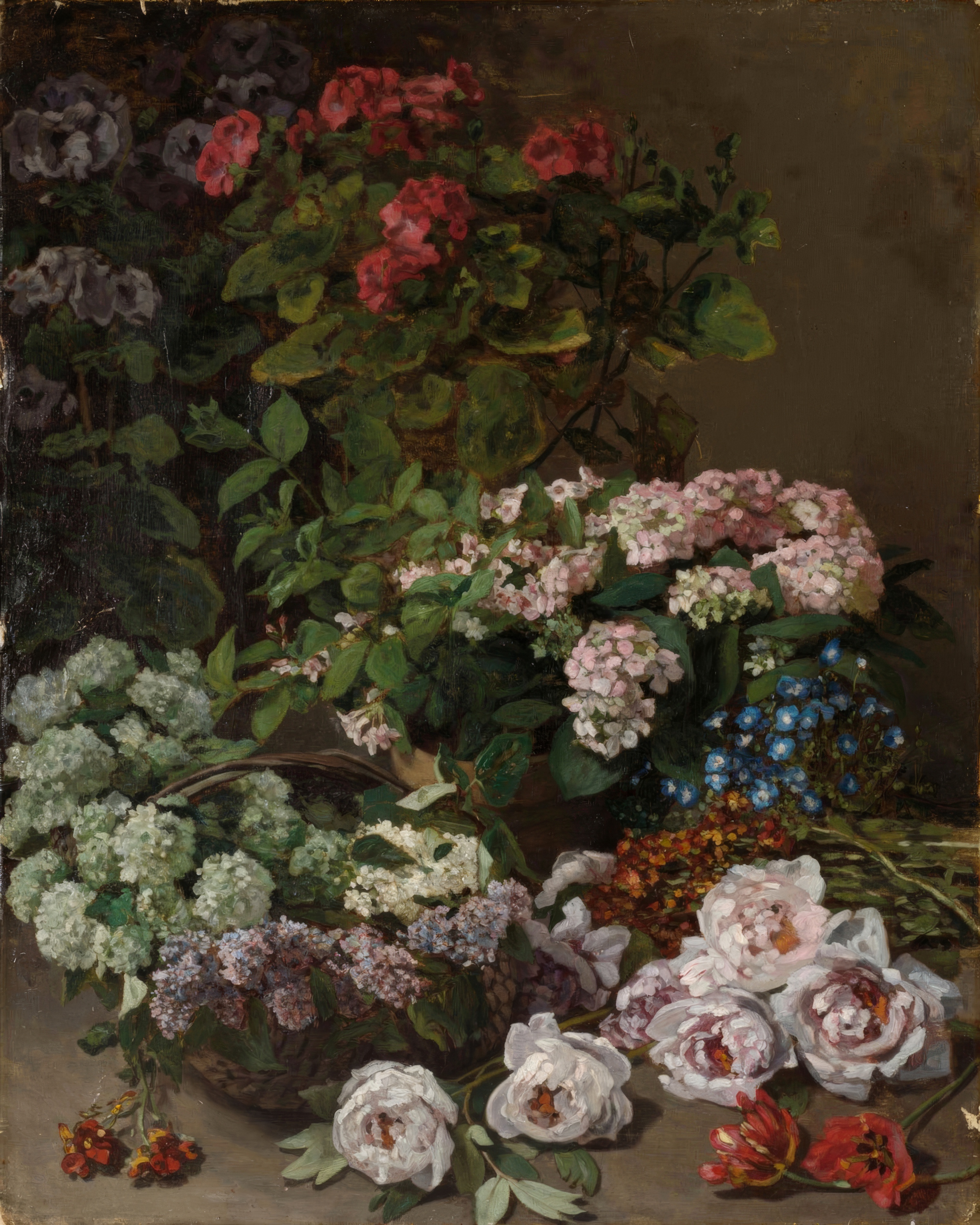
Claude Monet, Spring Flowers, 1864. Oil on fabric. Cleveland Museum of Art.
Monet painted this at twenty-four, before impressionism had a name. It is one of his rare flower still lifes: lilac, tulips, peonies and guelder rose heaped together in rich, solid colour, with none of the broken strokes that came later.
12. Spring Bouquet
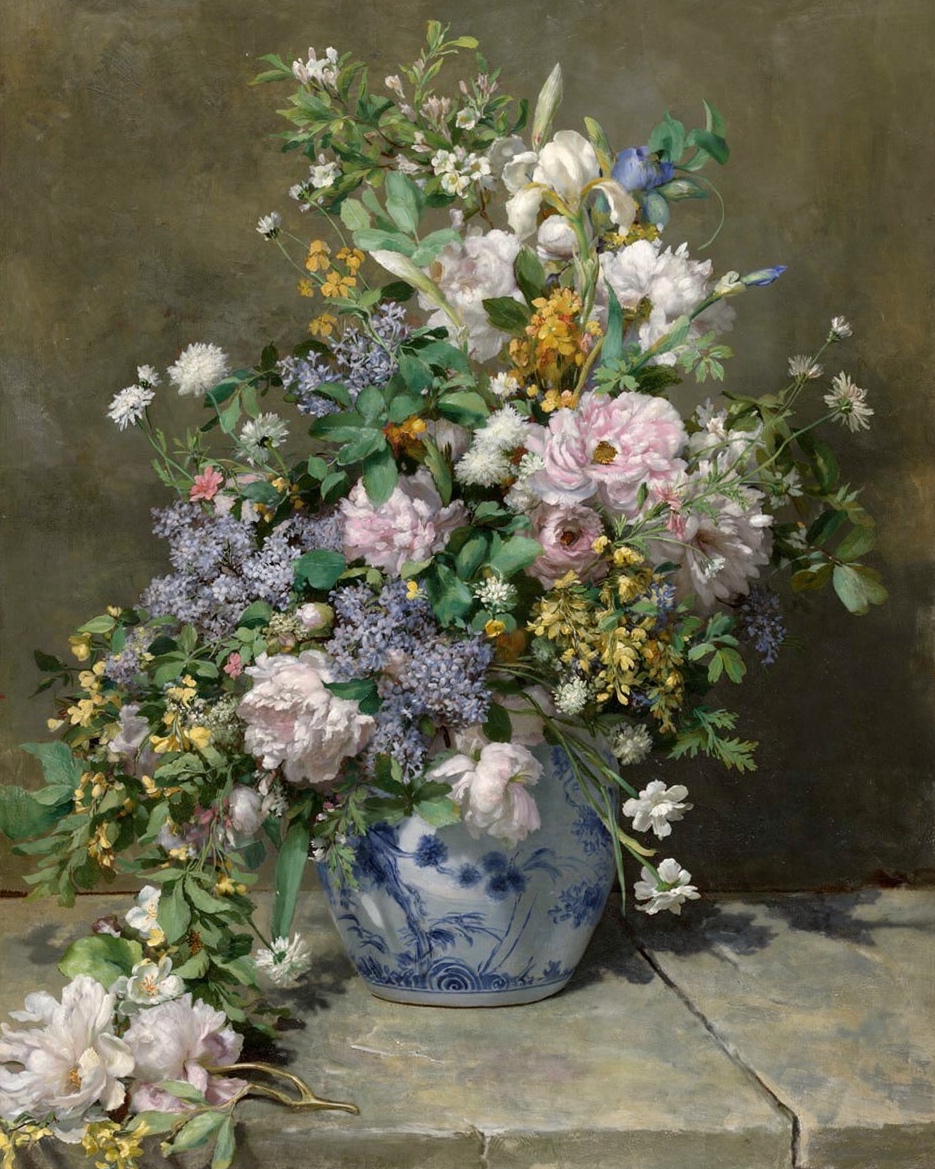
Pierre-Auguste Renoir, Spring Bouquet, 1866. Oil on canvas. Harvard Art Museums.
Renoir painted this bouquet in 1866, at twenty-five, when he was still poor and painting flowers to practise colour. Lilac, tulips and narcissus spill out of a vase, already full of the warmth he would become famous for.
This is the masterwork behind Fable’s Spring Bouquet art style.
Create your portrait in this style
13. Still Life with Flowers and Prickly Pears
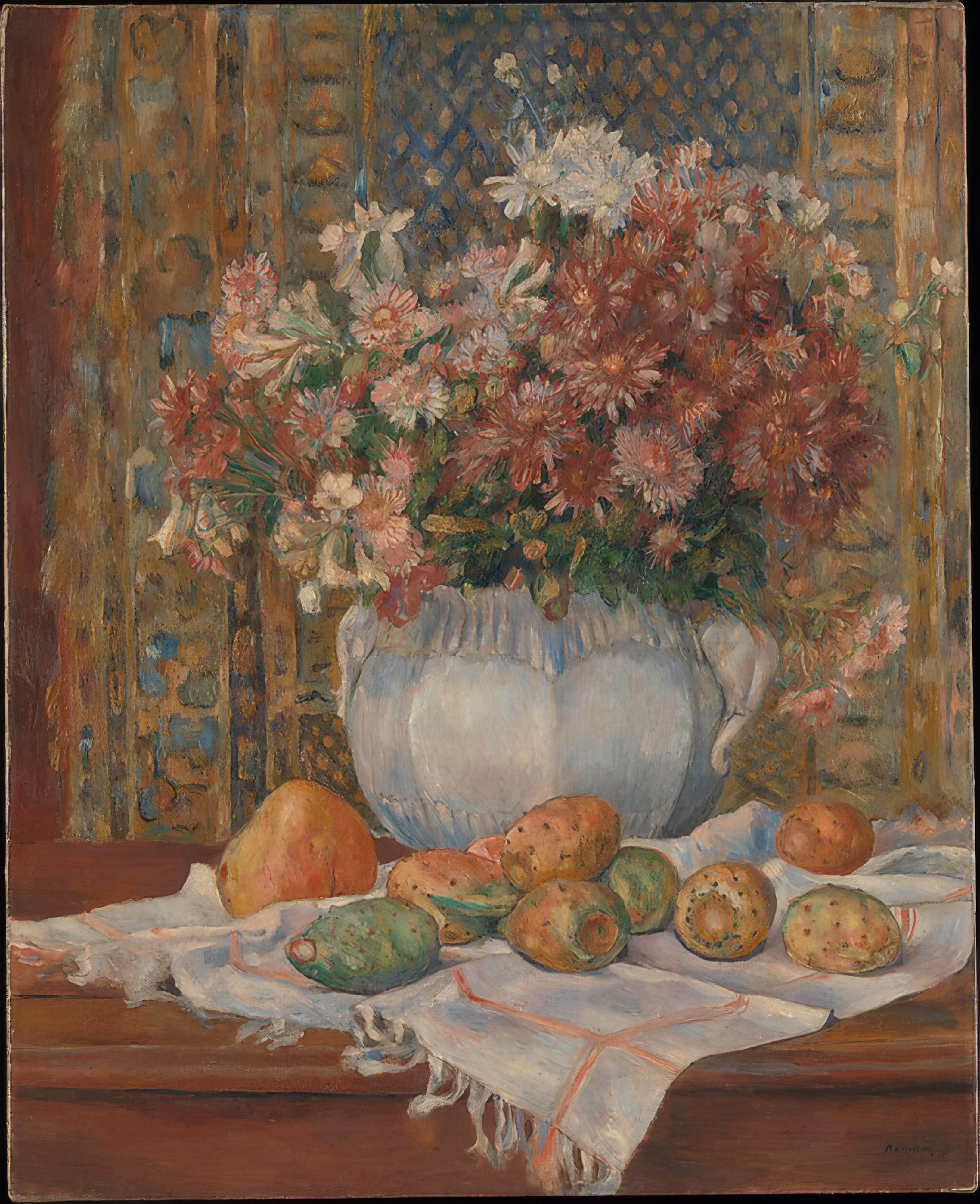
Auguste Renoir, Still Life with Flowers and Prickly Pears, ca. 1885. Oil on canvas. The Metropolitan Museum of Art, New York.
Twenty years later Renoir had found his famous soft, feathery touch. He painted these flowers and prickly pears in the south of France, where he went to find stronger light.
14. The Vase of Tulips
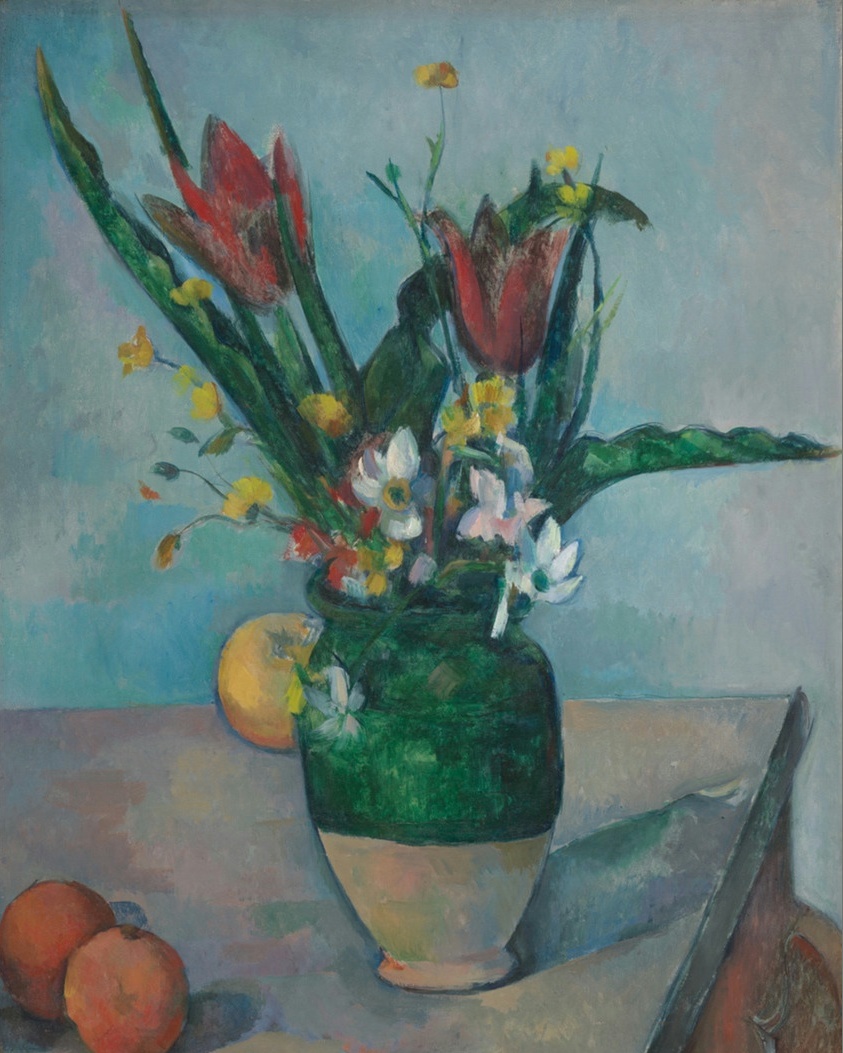
Paul Cezanne, The Vase of Tulips, c. 1890. Oil on canvas. Art Institute of Chicago.
Cézanne wanted to make painting as solid as the art of the museums, and his flowers stand like buildings. A handful of tulips in a tall vase, with apples on the table, is turned into a picture of weight and balance.
Shown in a room, it proves how well a small still life holds a modern wall.
15. Orchid Blossoms
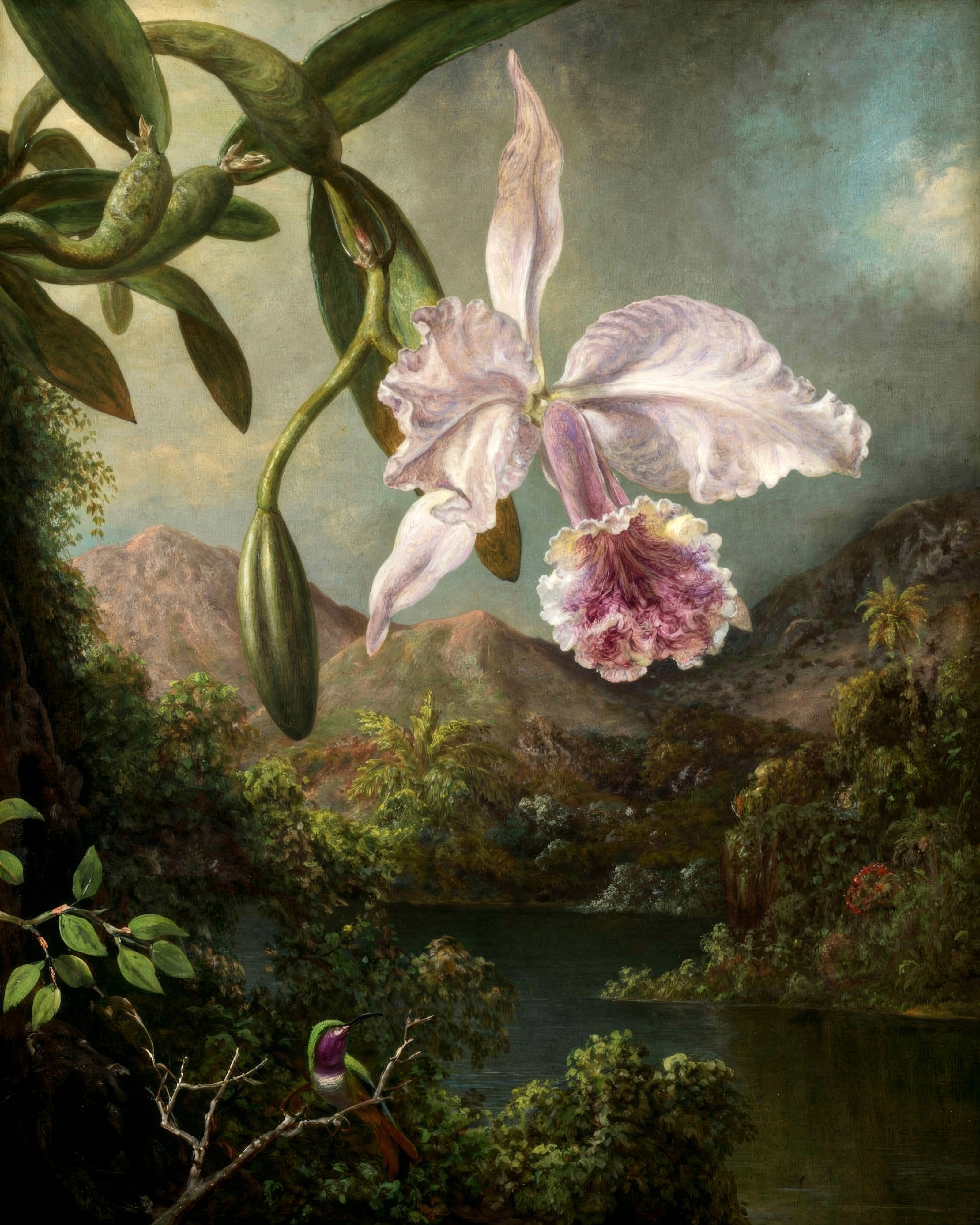
Martin Johnson Heade, Orchid Blossoms, 1873. Oil on canvas. Cleveland Museum of Art.
Martin Johnson Heade travelled to Brazil and Central America and painted orchids where they grow, in the misty forest, sometimes with hummingbirds. They are part flower painting, part landscape, and they glow.
16. Vase of Roses
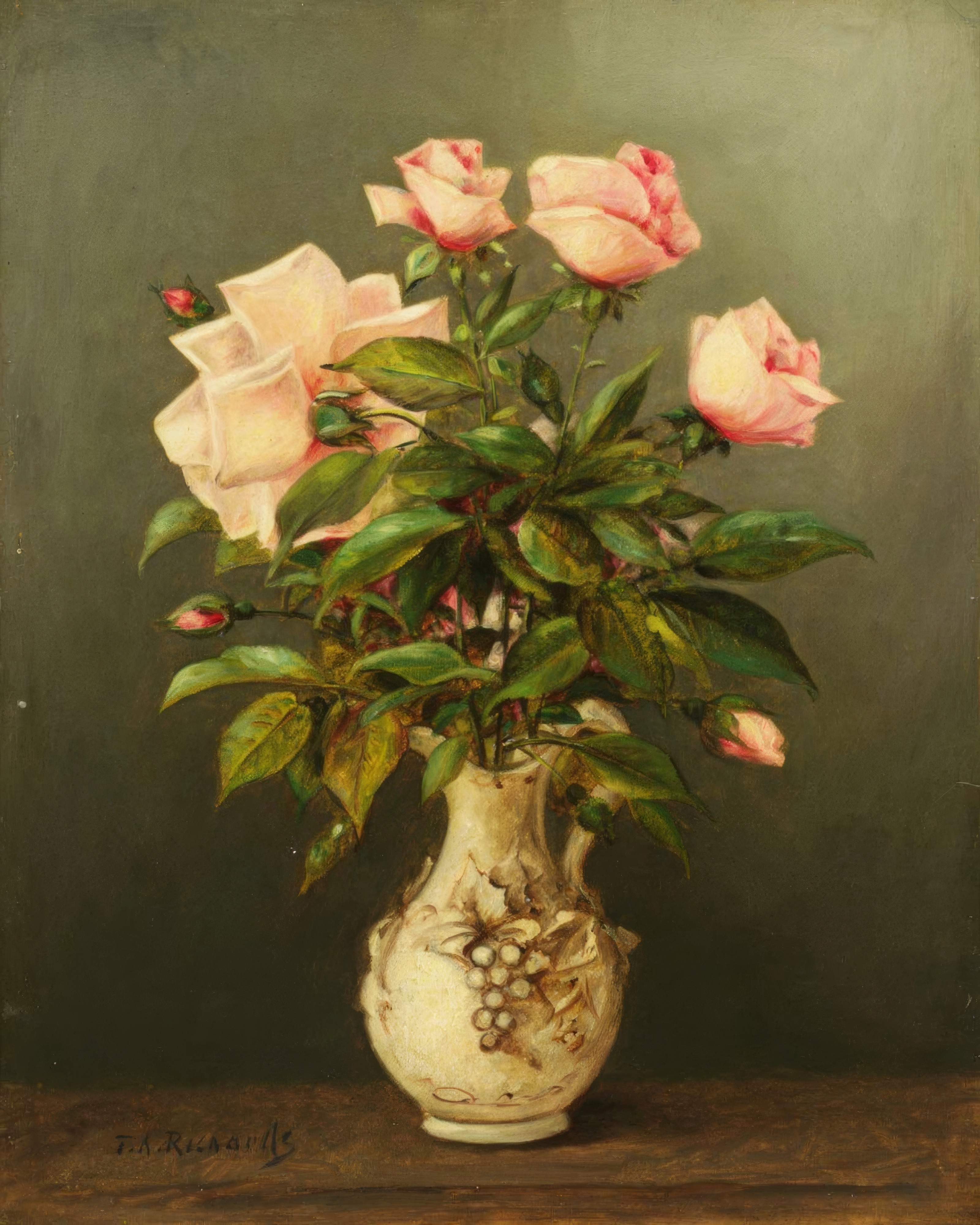
Thomas Addison Richards, Vase of Roses, c. 1865. Oil on canvas. Harvard Art Museums.
Thomas Addison Richards was an American painter, writer and teacher who worked in New York. His vase of pink and white roses, painted around 1865, has the soft, generous feel of a Victorian garden.
17. Irises
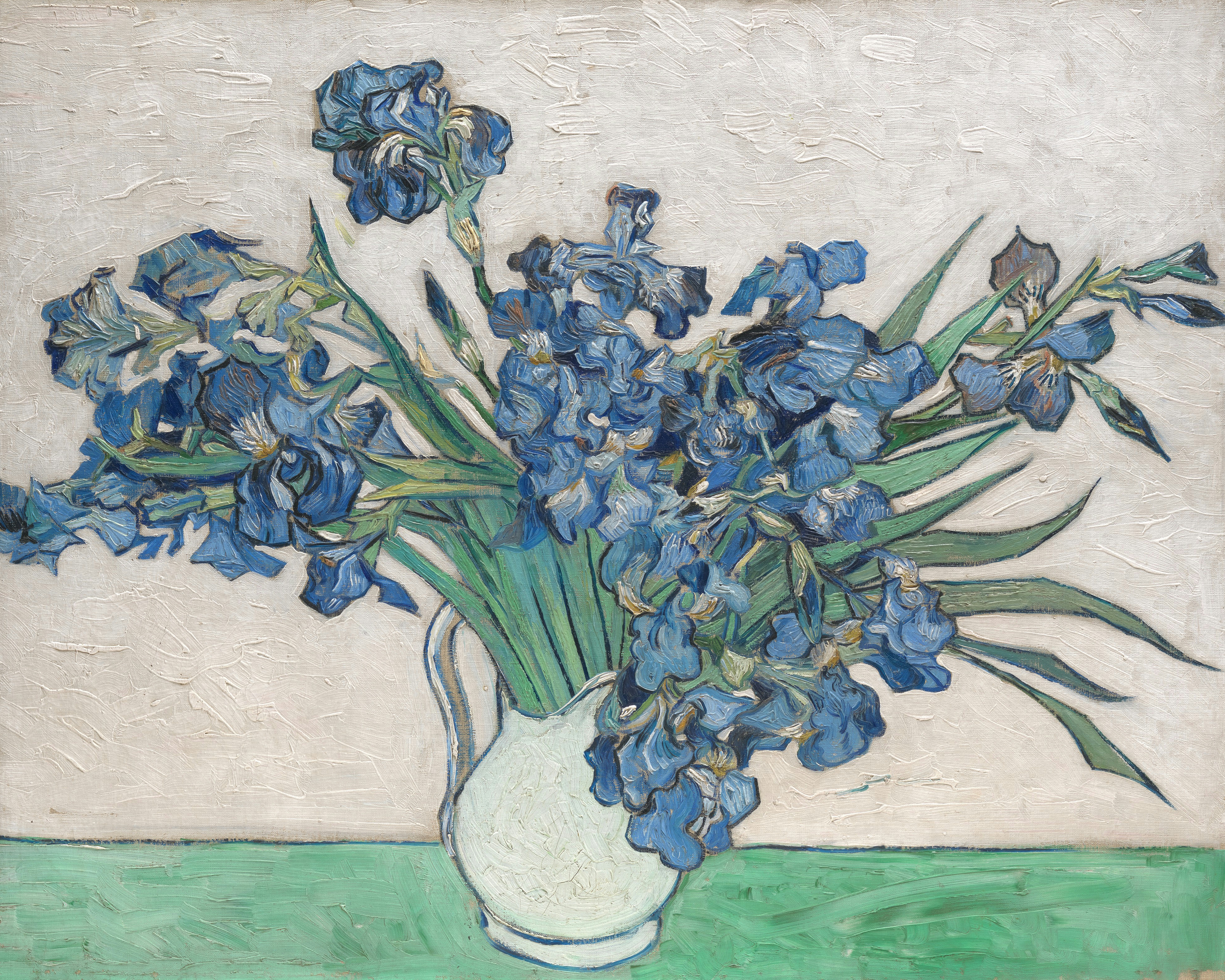
Vincent van Gogh, Irises, 1890. Oil on canvas. The Metropolitan Museum of Art, New York.
Van Gogh painted his irises in May 1890, in his last days at the asylum in Saint-Rémy, and he was well and happy. The flowers twist and tumble out of the vase against a pale ground, all energy and colour.
This is the masterwork behind Fable’s Irises art style.
Create your portrait in this style
18. Roses
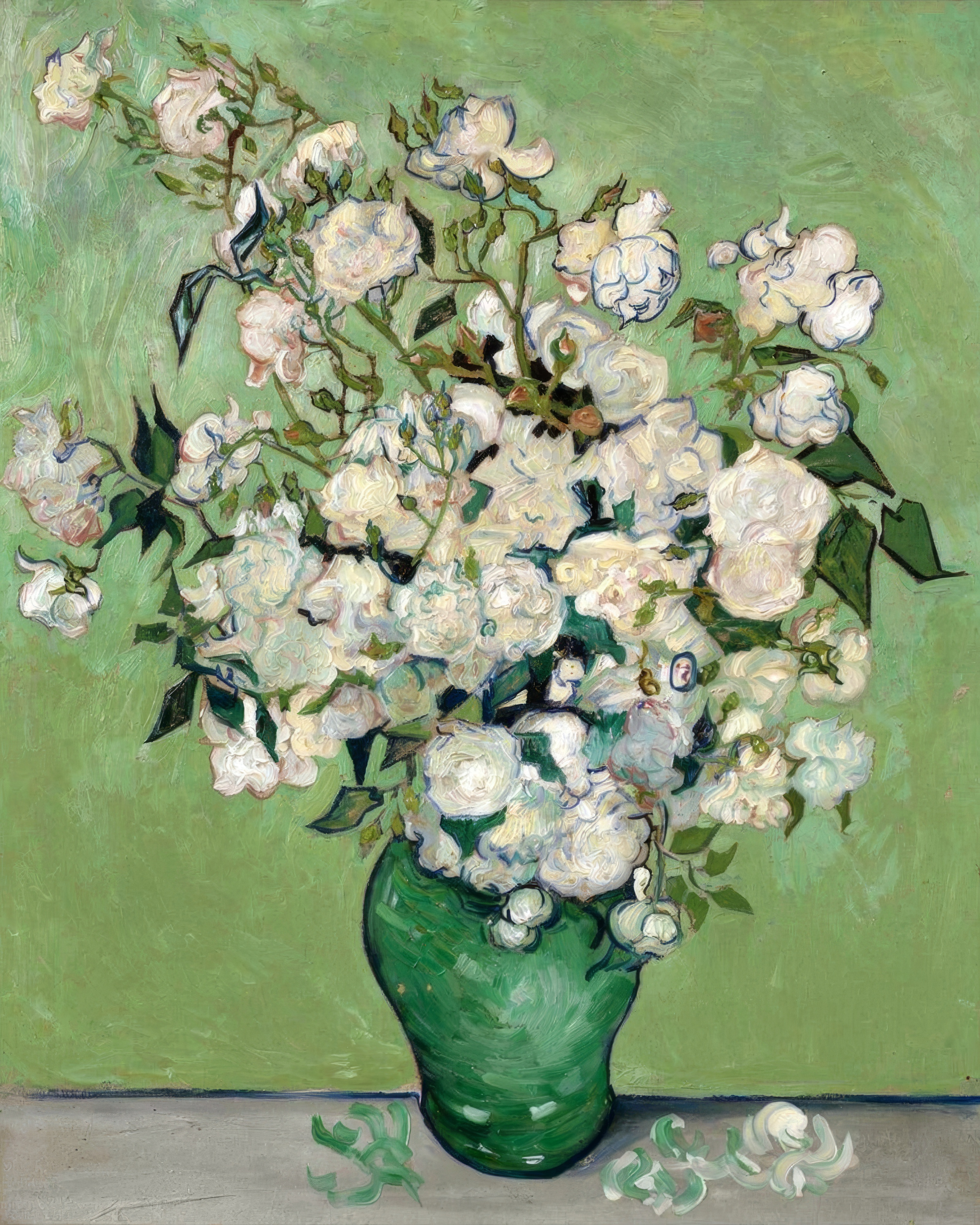
Vincent van Gogh, Roses, 1890. Oil on canvas. The Metropolitan Museum of Art, New York.
Painted in the same last weeks as Irises. The roses were once pink, but the red pigment has faded to almost white, and today they float on a sea of green. It is one of the most joyful flower paintings ever made.
This is the masterwork behind Fable’s Roses art style.
Create your portrait in this style
Flower paintings are the easiest pictures to place. A dark Dutch bouquet gives a dining room or a hallway depth and drama; a light impressionist one brightens a kitchen, a bedroom or a guest room. They also make a pair beautifully: two bouquets of the same size either side of a mirror or a bed. For more, see our guides to famous still life paintings and vintage botanical prints.
Questions
Who is the most famous flower painter?
Rachel Ruysch and Jan van Huysum were the most celebrated in the Dutch Golden Age, Henri Fantin-Latour in the nineteenth century, and Vincent van Gogh is now the most famous of all for his sunflowers, irises and roses.
Why are there insects in Dutch flower paintings?
Partly to show off the painter’s skill, and partly as a reminder that beauty fades. Snails, flies and a fallen petal turned a bouquet into a quiet meditation on time.
Which flower painting suits a bedroom?
A pale, soft bouquet such as Van Gogh’s Roses, Fantin-Latour’s Still Life with Flowers or Renoir’s Spring Bouquet. Dark Dutch flower pieces are better in a dining room or hallway.
Can I have a flower painting made in one of these styles?
Yes. Veerendael’s Crystal Vase Bouquet, Ruysch’s Spray of Flowers, Fantin-Latour’s Pansies, Renoir’s Spring Bouquet, Van Gogh’s Irises and Roses are all masterworks behind Fable art styles.