Vintage botanical prints: 12 plants and flowers from the archive
Illuminated flowers, florilegium plates, hand-coloured engravings and a few surprises: twelve botanical pictures from four centuries, each ready to print.
Before photography, every new plant had to be drawn. Princes paid illuminators to paint their gardens on vellum, nurseries published flower calendars to sell bulbs, and botanical magazines hand-coloured thousands of engravings for their subscribers. The best of these pictures are as beautiful as any painting, and they look wonderful on a wall.
The twelve below come from museum collections and run from 1589 to the 1860s. Some are scientific plates, some are still lifes full of insects and snails, and one is a poem by William Blake. Every one can be ordered as a print.
1. Still Life with Flowers, a Snail and Insects
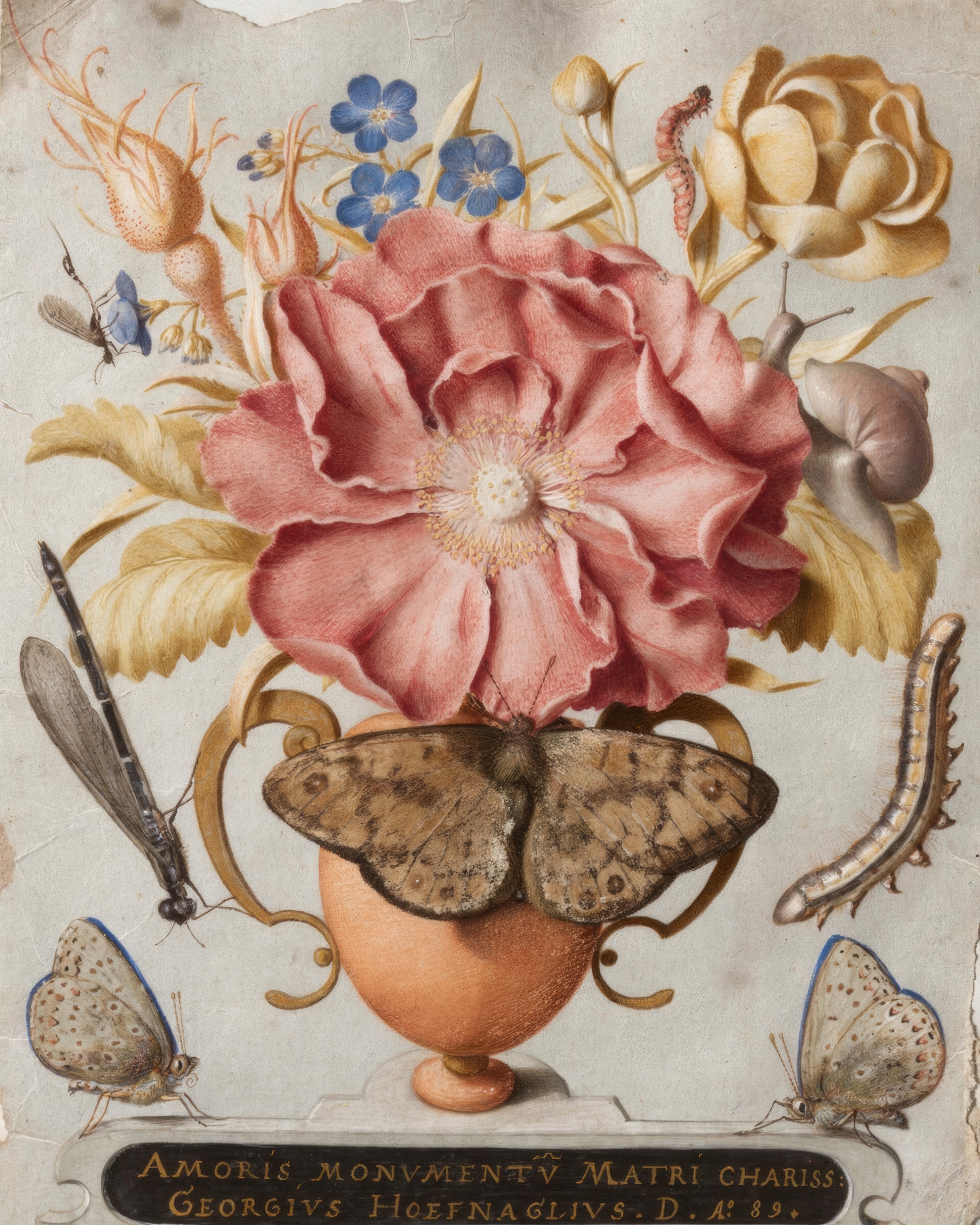
Joris Hoefnagel, Still Life with Flowers, a Snail and Insects, 1589. Watercolor, gouache, and shell gold on vellum. The Metropolitan Museum of Art, New York.
Joris Hoefnagel was one of the last great manuscript illuminators, and he worked for the emperor Rudolf II, who collected nature as eagerly as art. In this tiny painting of 1589 the flowers share the page with a snail and insects drawn as carefully as jewels.
A delicate, detailed picture for a bedroom or a small wall where it can be seen up close.
2. Still Life of Flowers and Small Animals on a Ledge
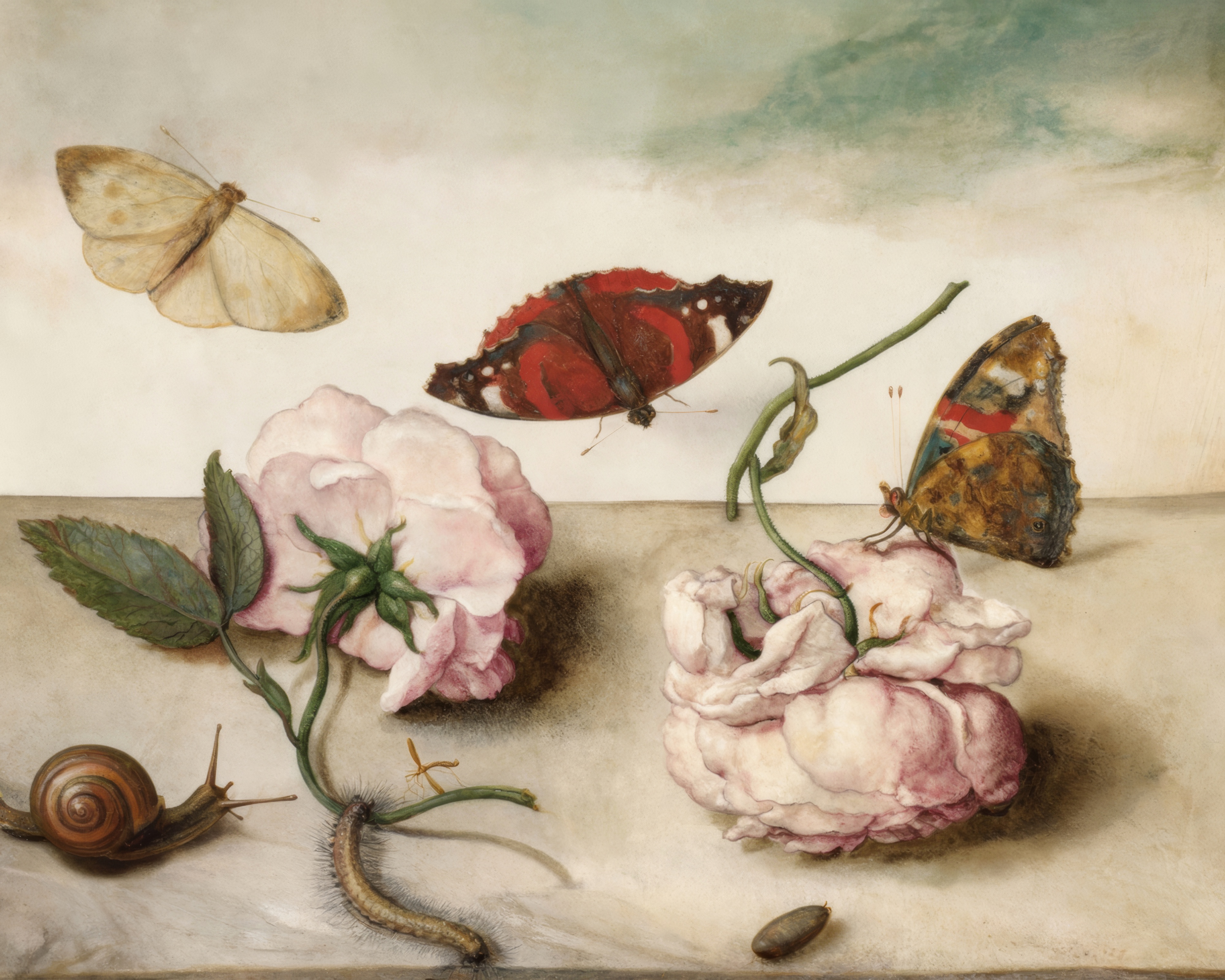
Margareta de Heer, Still Life of Flowers and Small Animals on a Ledge, 1642. Transparent and opaque watercolor and black chalk on parchment. Harvard Art Museums.
Margareta de Heer worked in Leeuwarden in Friesland, one of the few Dutch women who made a living as a painter. In this watercolour of 1642 she lays fresh flowers on a ledge and lets the garden’s small creatures crawl among them.
A light, fresh picture for a kitchen, a bathroom or a guest room.
3. Still Life with Birds and Fruit
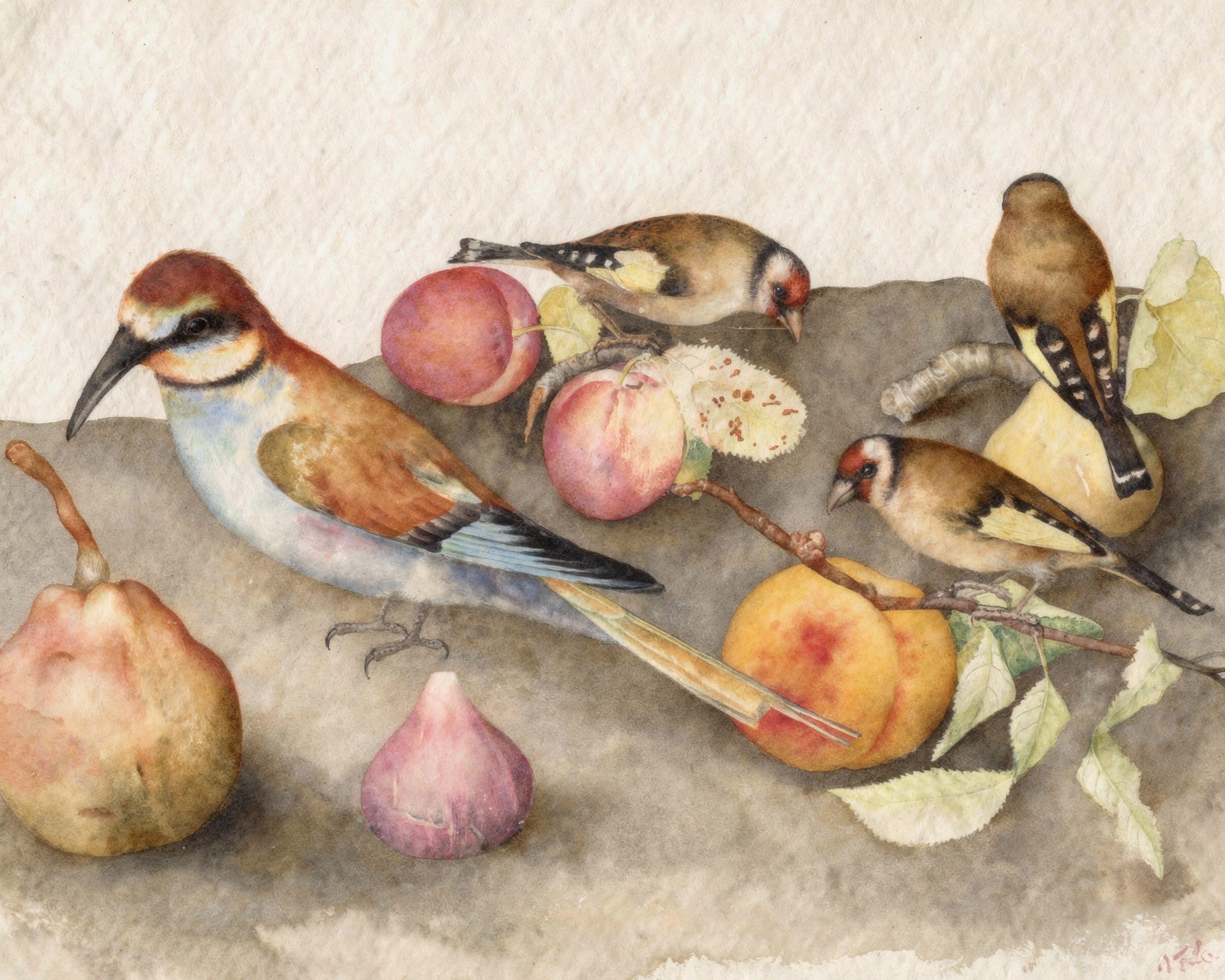
Giovanna Garzoni, Still Life with Birds and Fruit, c. 1650. Watercolor with graphite, heightened with lead white. Cleveland Museum of Art.
Giovanna Garzoni painted for the Medici in Florence and was famous for her watercolours of fruit, flowers and birds. Around 1650 she set these small birds among cherries and figs with a precision that makes every feather and stalk readable.
A soft, warm picture for a breakfast room or a kitchen.
4. April, from Twelve Months of Flowers
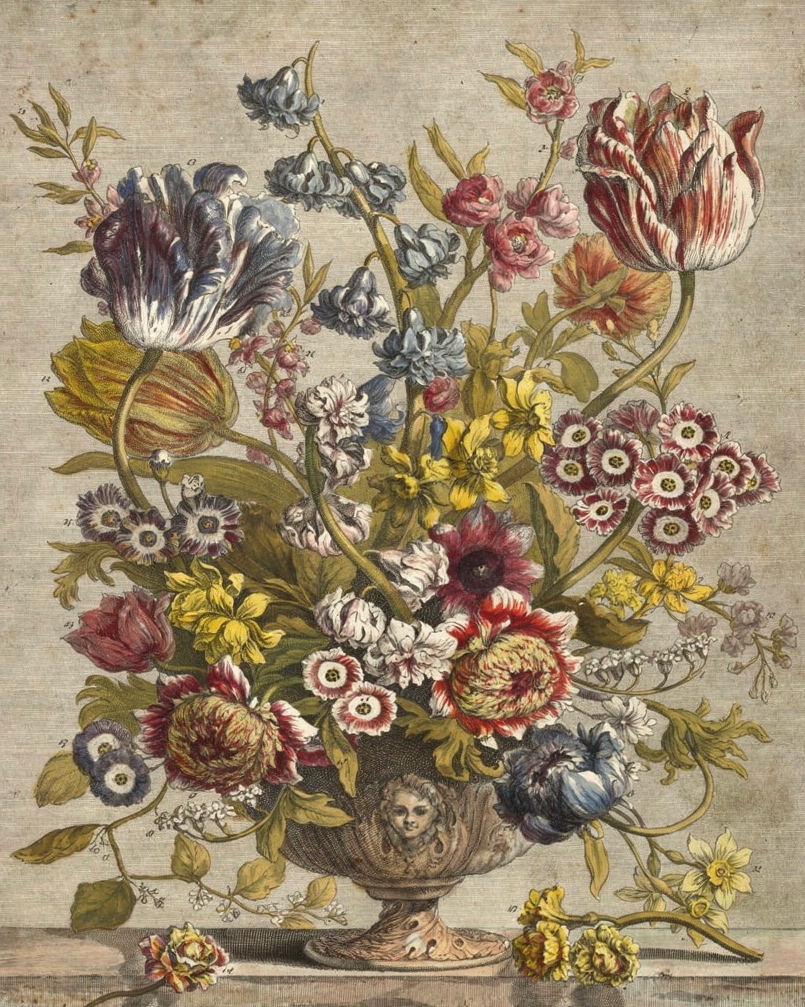
Henry Fletcher after Pieter Casteels, April, from Twelve Months of Flowers, 1730. Engraving in black ink with opaque and translucent watercolor on cream laid paper. Art Institute of Chicago.
In 1730 the London nurseryman Robert Furber published Twelve Months of Flowers, a calendar of plates that doubled as a catalogue: each flower is numbered so customers could order it. April is a riot of tulips, narcissi and anemones in a classical urn.
Hang it in a pair with August for spring and summer side by side.
5. August, from Twelve Months of Flowers
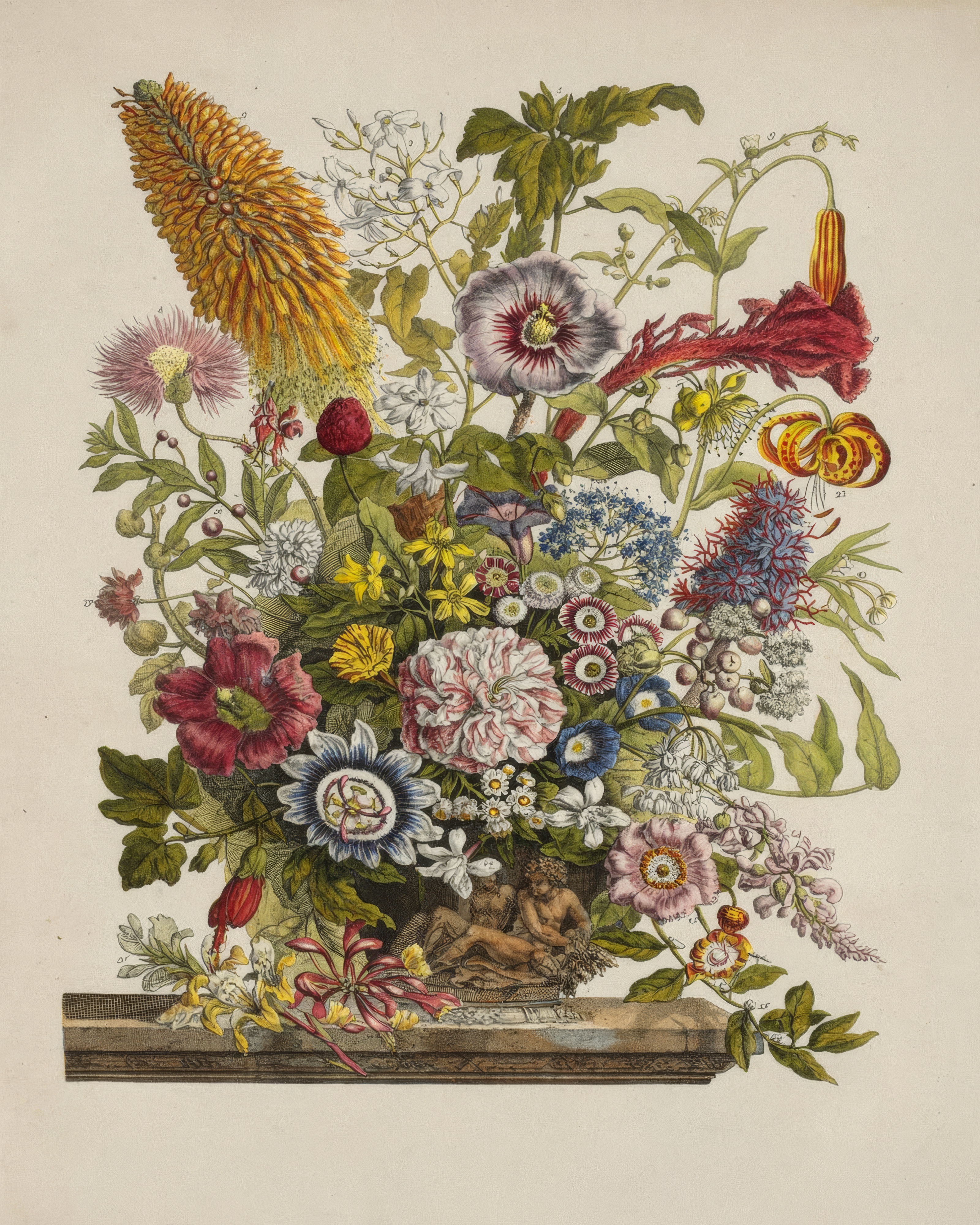
Henry Fletcher after Pieter Casteels, August, from Twelve Months of Flowers, 1730. Engraving in black ink with opaque and translucent watercolor on cream laid paper. Art Institute of Chicago.
August from the same series swaps spring bulbs for the tall flowers of late summer: hollyhocks, lilies, carnations and roses. Engraved by Henry Fletcher after the Flemish painter Pieter Casteels, these plates were coloured by hand, one at a time.
A cheerful, colourful print for a dining room or a sunny hallway.
6. Persian Buttercup
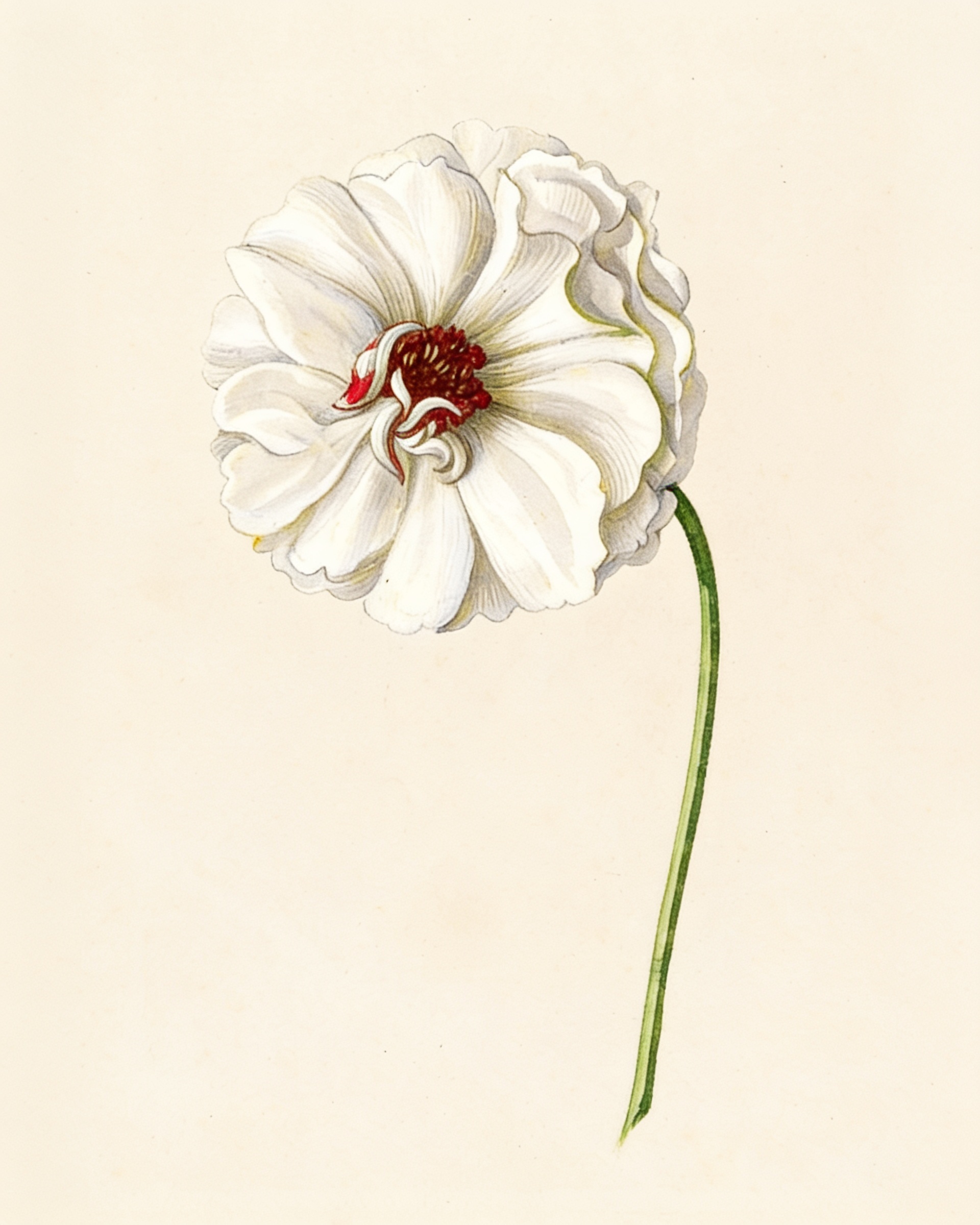
Persian Buttercup (Ranunculus asiaticus), early 19th century. Victoria and Albert Museum, London.
Persian buttercups were a florist’s flower, grown and shown by enthusiasts who prized their perfectly layered petals. This study gives one bloom the whole page, so you can follow the spiral of red petals from the edge to the centre.
A single bold flower that looks striking in a small frame on a pale wall.
7. The American Cowslip, Plate 26
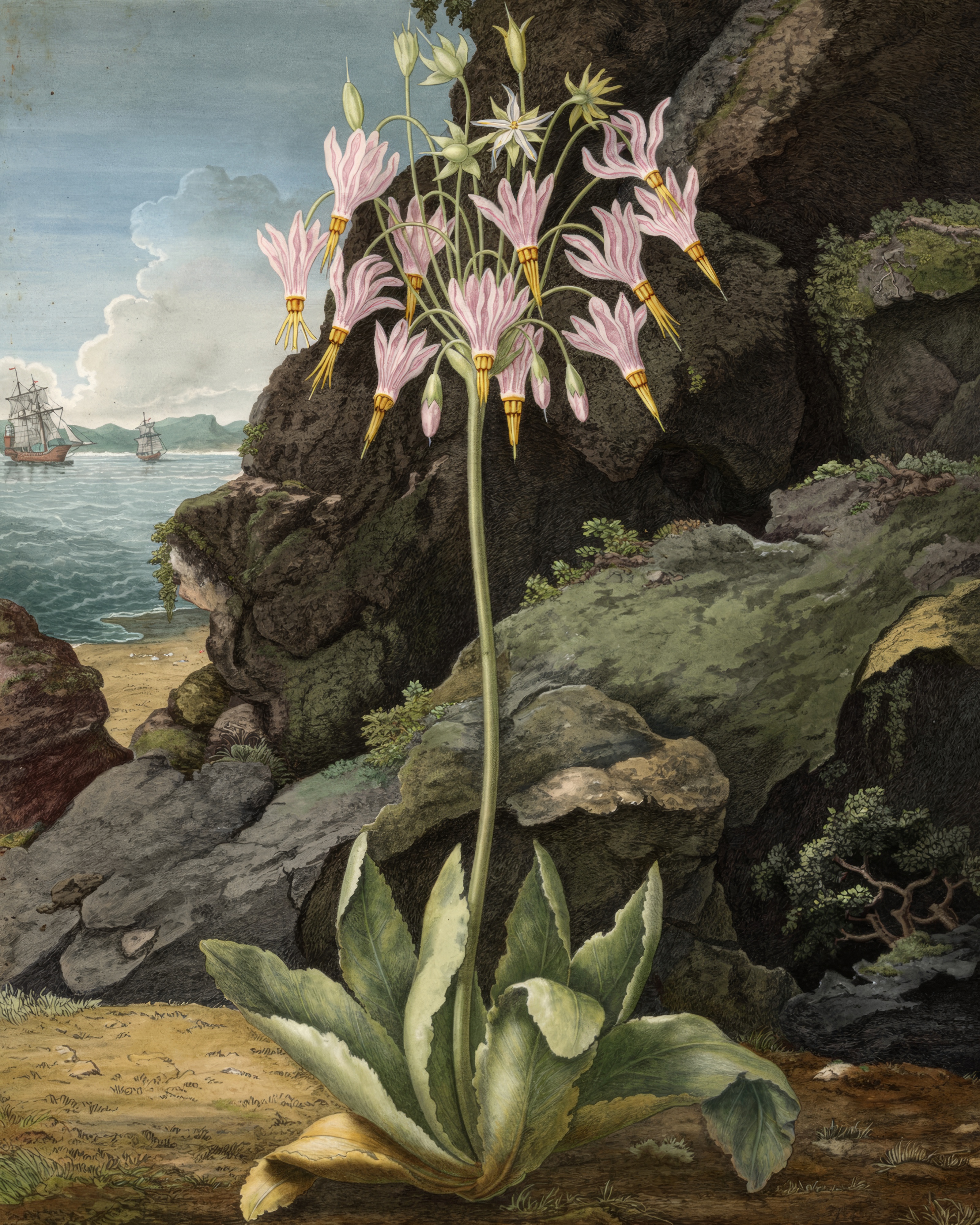
Thomas Warner, The American Cowslip, Plate 26, 1801. Etching with printed and hand-applied color, aquatint, stipple, and engraving. Cleveland Museum of Art.
Robert Thornton’s Temple of Flora was the most theatrical flower book ever made: each plant is set in a landscape, like an actor on a stage. The American cowslip, now called the shooting star, rises against a moody sky in this plate engraved by Thomas Warner in 1801.
A dramatic botanical for a dark-walled study or a dining room.
8. The White Cape Lily, 1806
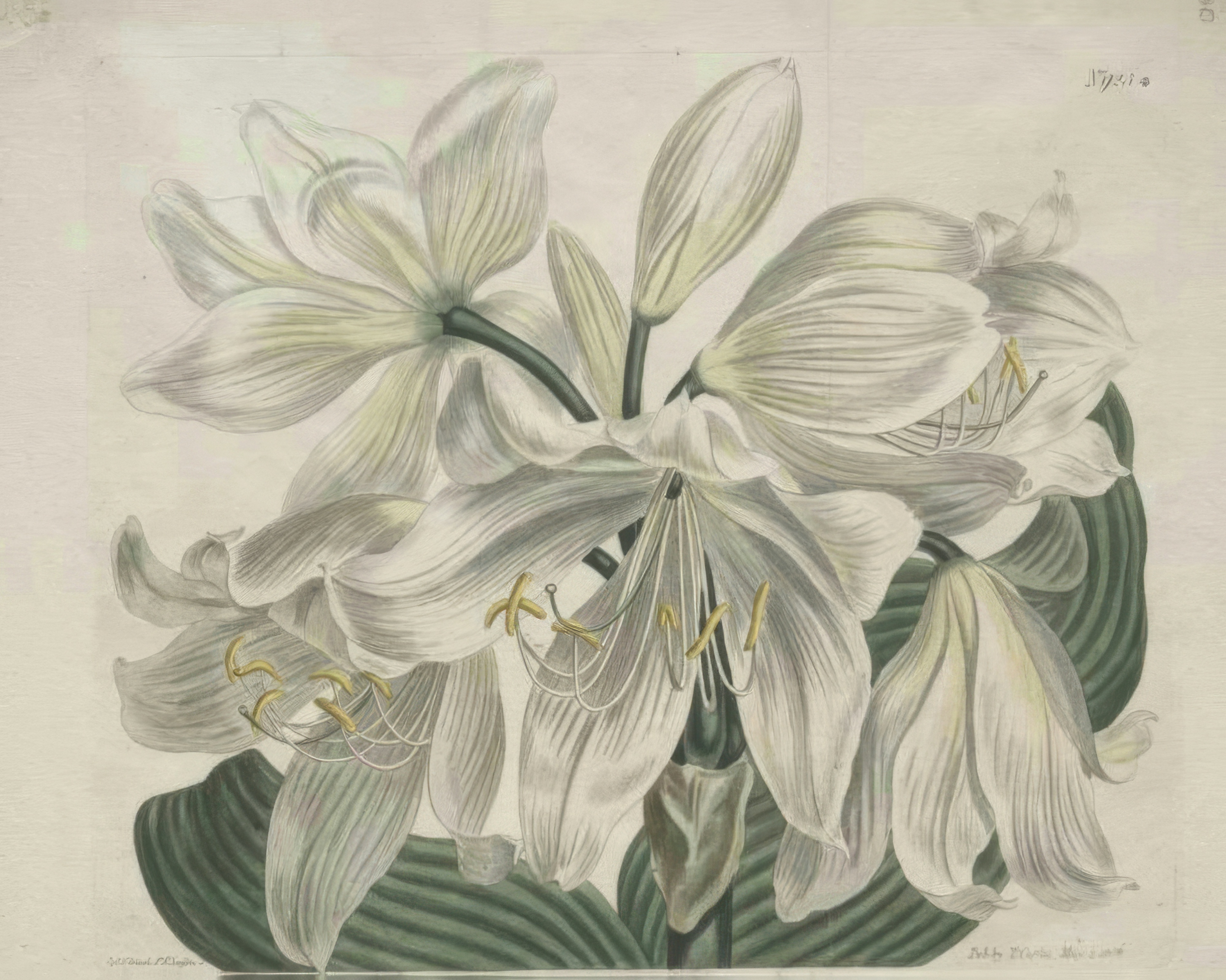
Sydenham Edwards, The White Cape Lily, 1806, 1806. Engraving, hand-colored. Cleveland Museum of Art.
Curtis’s Botanical Magazine began in 1787 and is still published today, the longest running botanical periodical in the world. Sydenham Edwards drew hundreds of its plates, including this white Cape lily of 1806, coloured by hand for every subscriber.
A clean, airy plate for a bathroom, a bedroom or a white kitchen.
9. Mexican sage
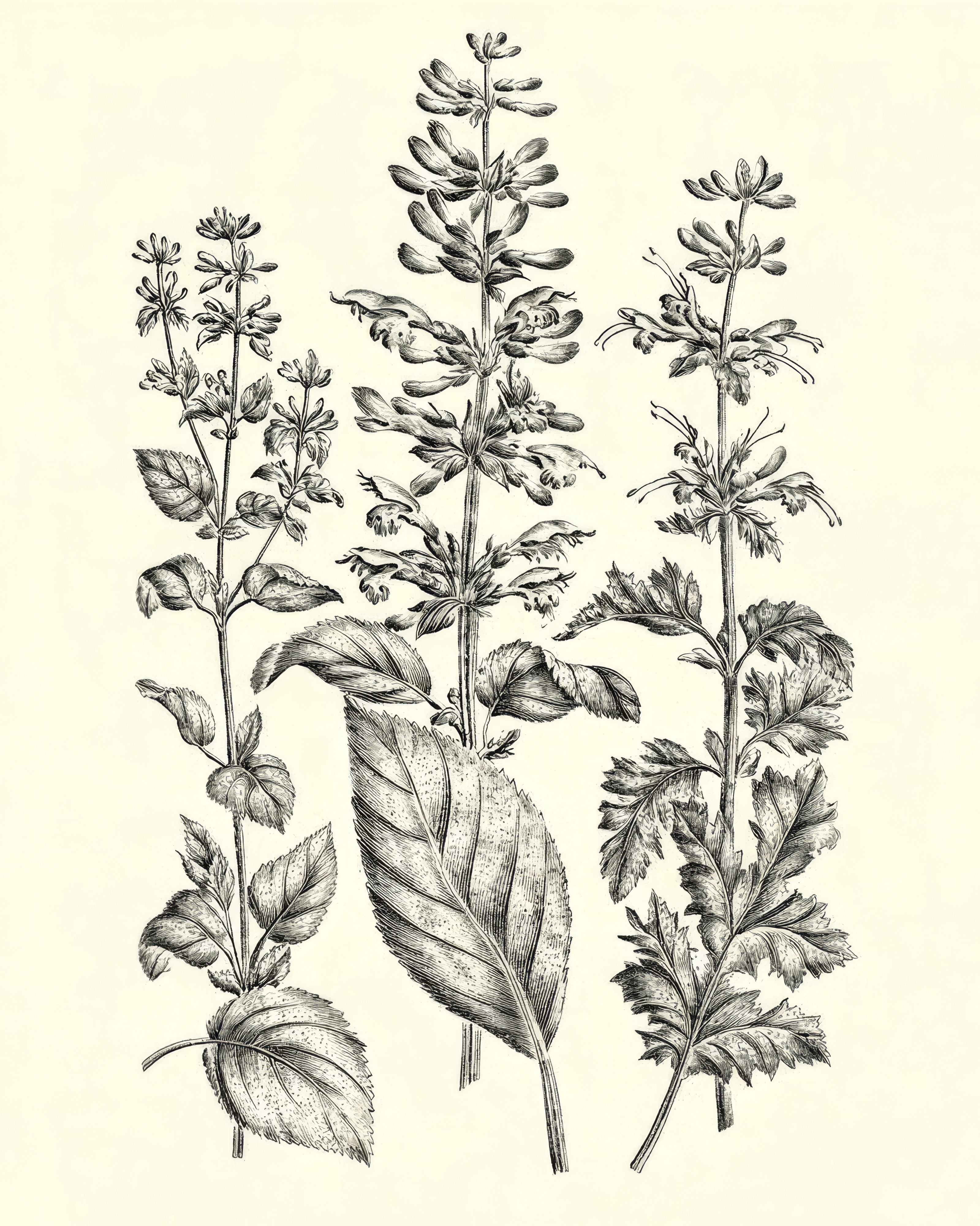
Mexican sage, botanical study, 1770.
This study of 1770 belongs to the age of scientific expeditions, when artists drew new plants from the Americas leaf by leaf for European botanists. Mexican sage is shown from stem to flower, plain and exact.
A quiet, graphic plant study that works beautifully in a grid with other botanicals.
10. Bird's Nest and Ferns
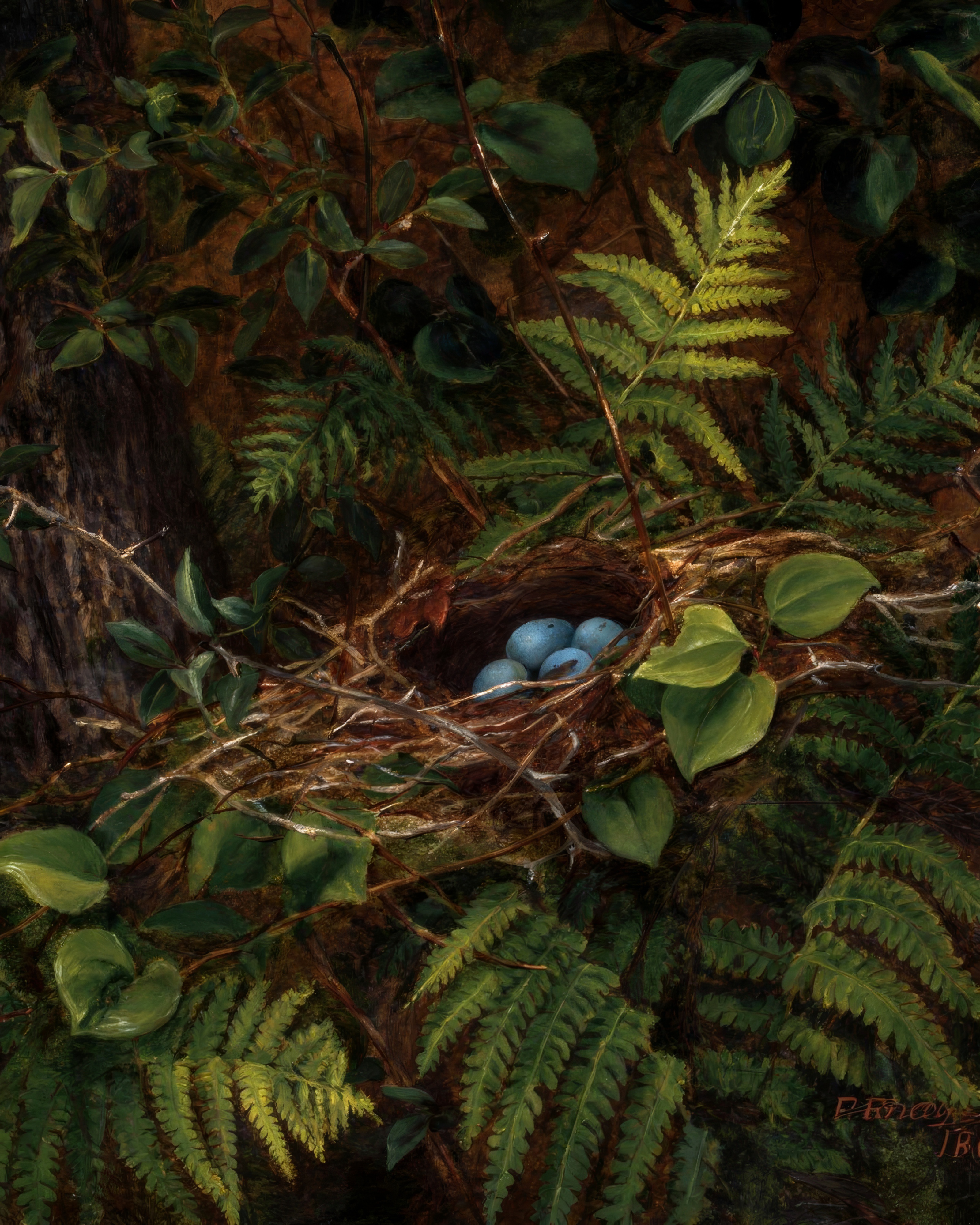
Fidelia Bridges, Bird's Nest and Ferns, 1863. Oil on panel. Art Institute of Chicago.
Fidelia Bridges was one of the first American women to make a career as a nature painter. In this small panel of 1863 she looks down at a bird’s nest hidden among ferns, painted with the close attention of the English Pre-Raphaelites she admired.
A deep green picture that brings the forest into a bedroom, a study or a nursery.
11. Sketches of Snails, Flowering Plant
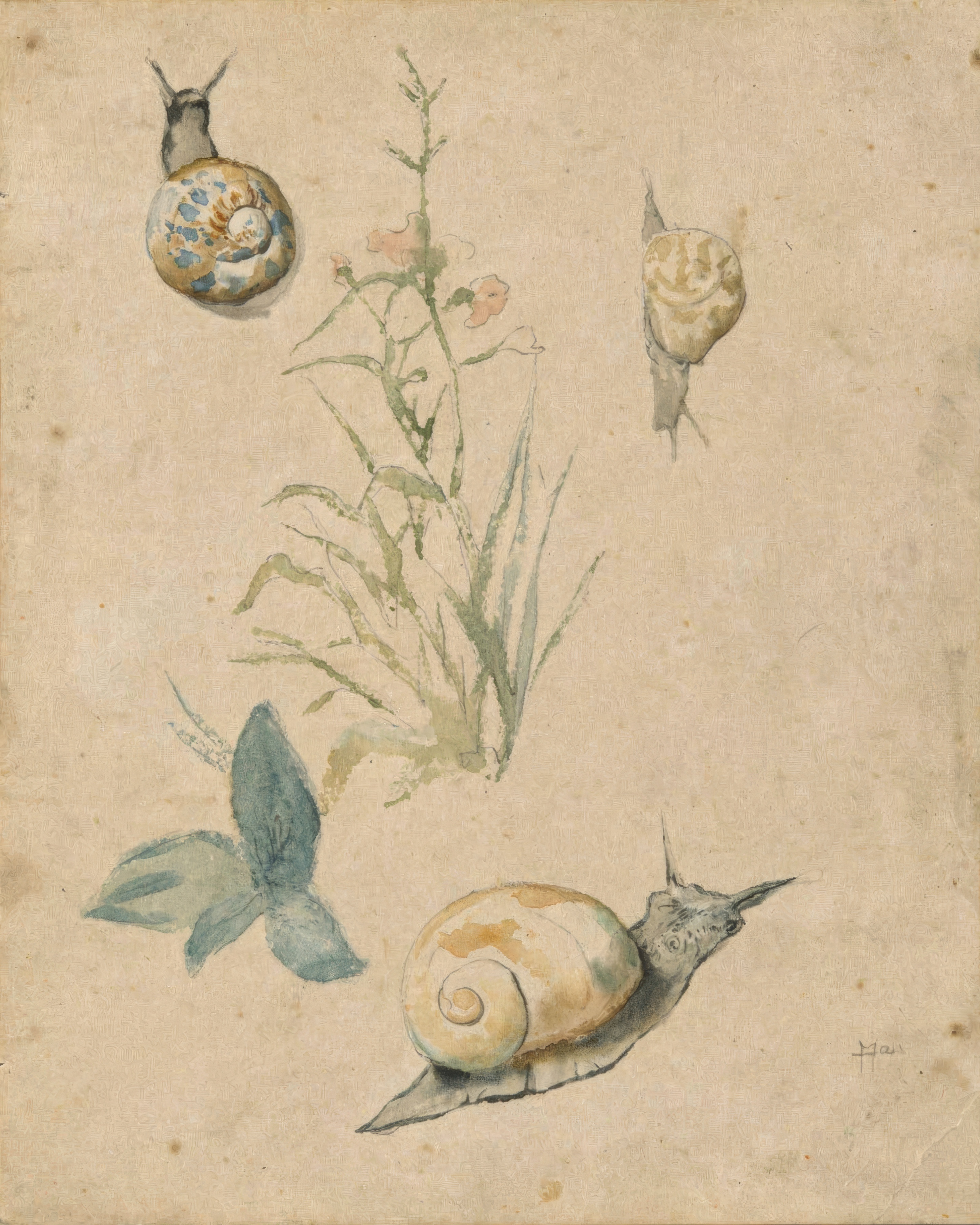
Édouard Manet, Sketches of Snails, Flowering Plant, 1864/68. Watercolor over graphite pencil on cream laid paper. Art Institute of Chicago.
Édouard Manet is famous for scandalous Paris paintings, but he also made quiet studies like this one, in the 1860s: snails watched as they move and hide, around a small flowering stem. It is a reminder that the modern painters learned from looking at little things.
A charming, light study for a kitchen, a garden room or a child’s room.
12. The Sick Rose
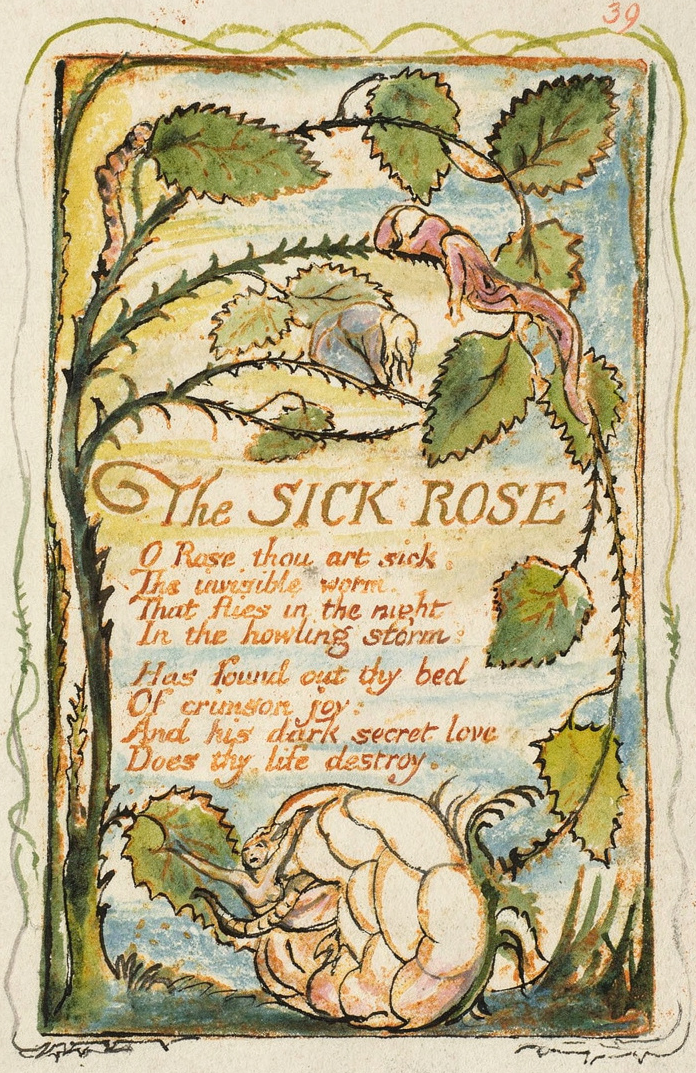
William Blake, The Sick Rose, 1794, printed about 1825. Atelier colour edition of the relief etching. The Metropolitan Museum of Art, New York.
William Blake wrote, etched, printed and coloured his own books. The Sick Rose, from Songs of Experience, wraps an eight-line poem in thorny stems and falling blooms, with tiny figures hidden among the leaves. Our atelier edition brings out the colour of the page.
A poetic botanical for a library, a reading corner or a bedroom.
Botanical prints work best in groups. Hang two or three plates in a row above a bed or a sideboard, or build a small grid in a kitchen or a hallway. Pale backgrounds suit white and light green walls, while the darker still lifes look best on deep colours. Every print here is made from a museum scan and printed whole. For more flowers, see our guide to famous flower paintings, and for whole gardens, read garden paintings.
Questions
What is a botanical print?
A botanical print is a picture of a plant made to show it accurately, usually printed from an engraving or etching and coloured by hand. The term is also used today for any plant picture in that tradition.
Are vintage botanical prints good wall art?
Yes. Their pale grounds and clear shapes suit almost any room, and they look especially good hung in pairs or grids in kitchens, bathrooms, hallways and bedrooms.
What is a florilegium?
A florilegium is a book of flower pictures, made to record the plants in a garden or a collection. Many famous botanical prints first appeared in one.
How are these botanical prints made?
Each print is made from the museum’s own scan of the original, printed whole on archival paper or canvas, so nothing of the plant or its border is cut away.