Dining room wall art: 12 still lifes and table scenes
A de Heem banquet, a Claesz breakfast, a Larsson Sunday table and a Monet evening after dinner: twelve masterpieces made for the room where you eat, with the colours of each.
The dining room has its own tradition of painting. For four hundred years people have hung pictures of laid tables, ripe fruit and shared meals in the rooms where they eat, and the best of them still make a meal feel like an occasion.
Here are twelve, in three moods: golden age feasts for a formal room, warm table scenes for a family one, and bright fruit for a light, modern space. Each comes with its colour palette, and each can be ordered as a print.
For a formal dining room
The great Dutch and Flemish tables, rich in silver, fruit and candlelight colours.
1. Still Life: A Banqueting Scene
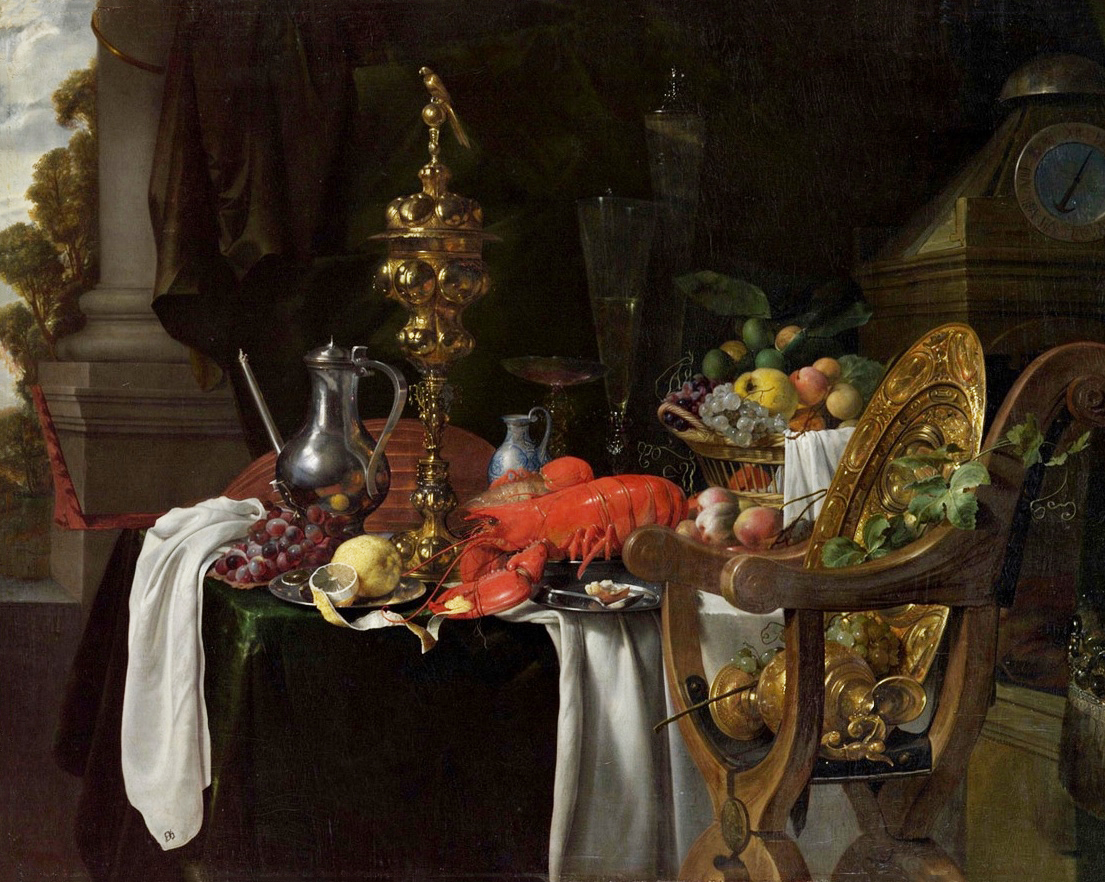
Jan Davidsz de Heem, Still Life: A Banqueting Scene, ca. 1640–41. Oil on canvas. The Metropolitan Museum of Art, New York.
Jan Davidsz de Heem painted this banquet in Antwerp around 1640. It is a feast that has just ended: a lute put down, a lemon half peeled, silver tipped over in the candlelight.
Made for a formal dining room with dark walls, candles and polished wood.
Create your portrait in this style
2. Still Life with a Turkey Pie
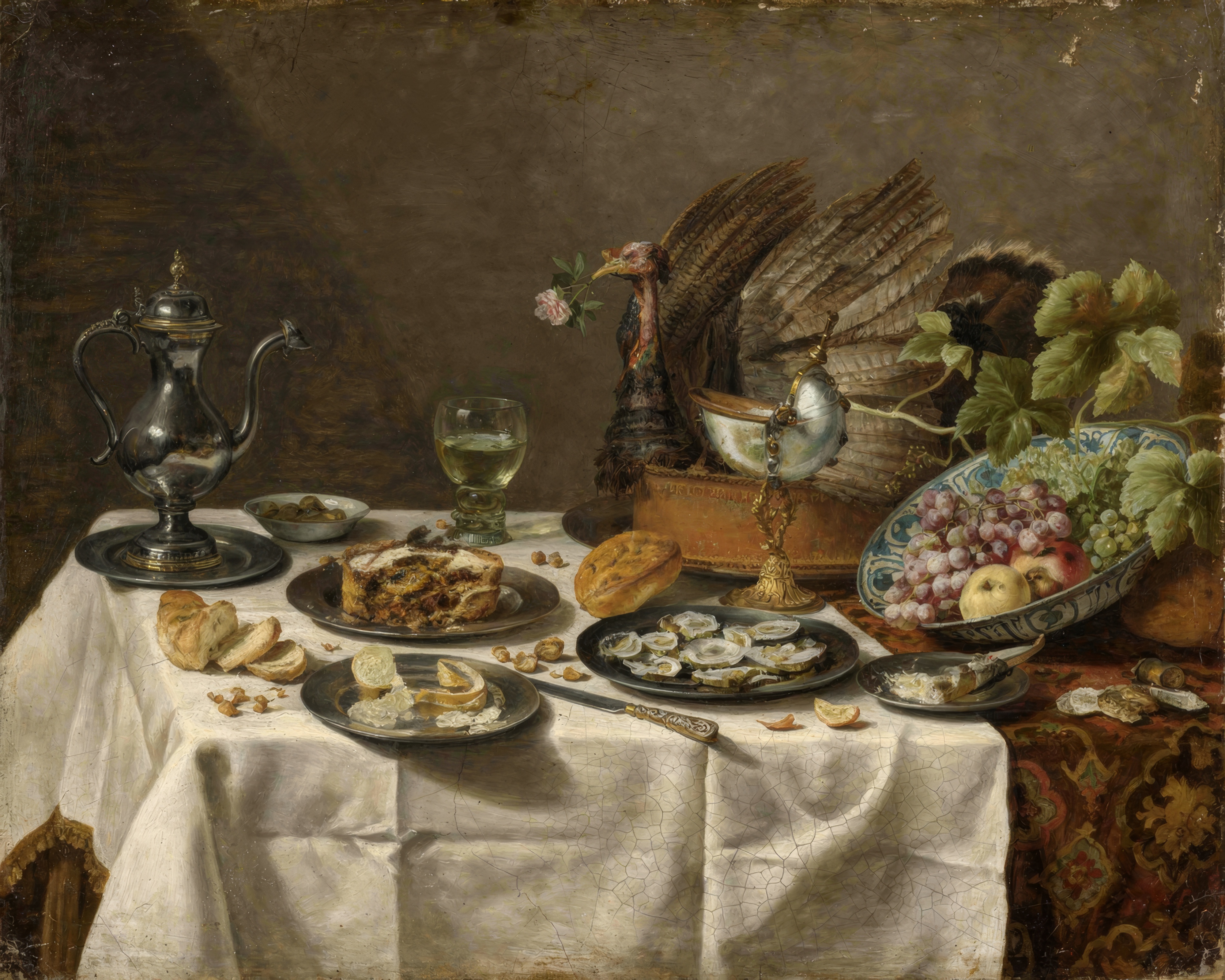
Attributed to Pieter Claesz, Still Life with a Turkey Pie, 1627.
This feast of 1627 is attributed to Pieter Claesz of Haarlem, the master of the breakfast piece. Light sweeps across linen, pewter and glass and the broken crust of a pie.
Its silvery greys and warm browns suit a dining room in stone, taupe or deep green.
3. Still Life
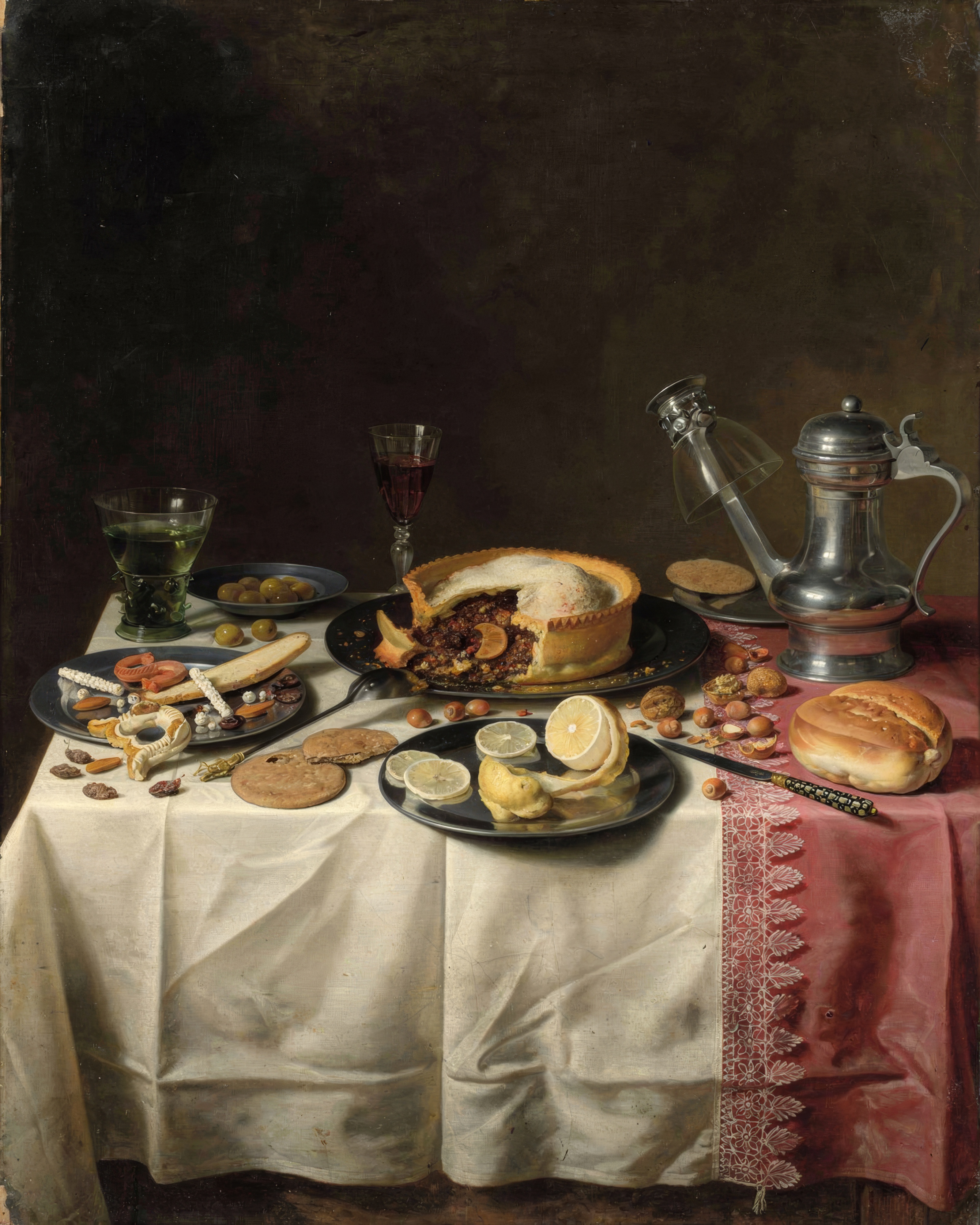
Pieter Claesz, Still Life, c. 1625. Oil on panel. Art Institute of Chicago.
Pieter Claesz painted this small breakfast piece around 1625. Almost monochrome, in greys, browns and one note of wine red, it is the quietest of feasts.
An elegant choice for a smaller dining room or above a narrow sideboard.
4. Still-Life with Crayfish, Oysters, and Fruit
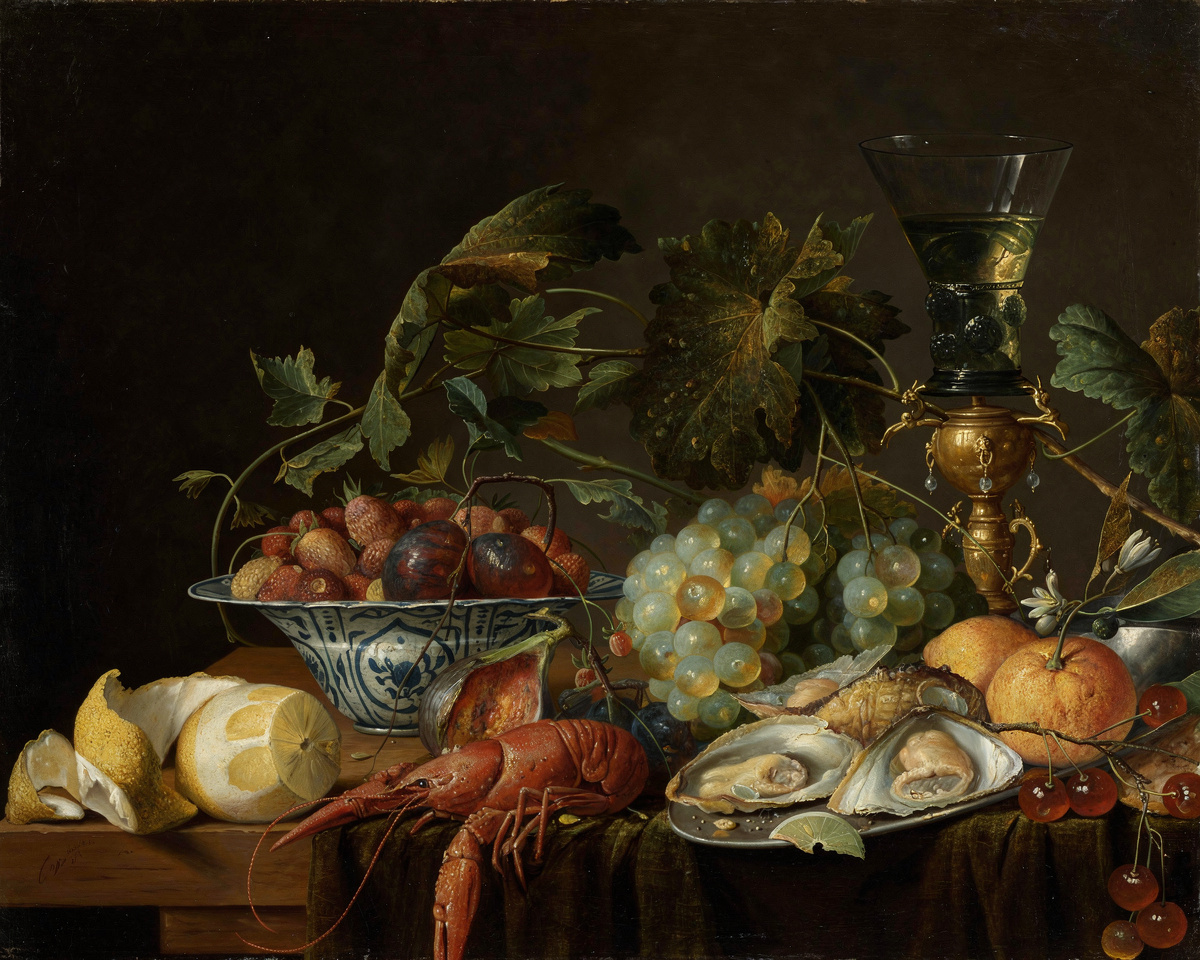
Cornelis de Heem, Still-Life with Crayfish, Oysters, and Fruit, late 1600s or early 1700s . Oil on canvas. Cleveland Museum of Art.
Cornelis de Heem, son of Jan Davidsz, painted this rich still life in the late 1600s or early 1700s. Coral red crayfish and pale green grapes glow against the dark.
Wonderful for a seafood lover’s dining room, especially with deep green or navy walls.
5. Fruit Still Life with Two Parrots
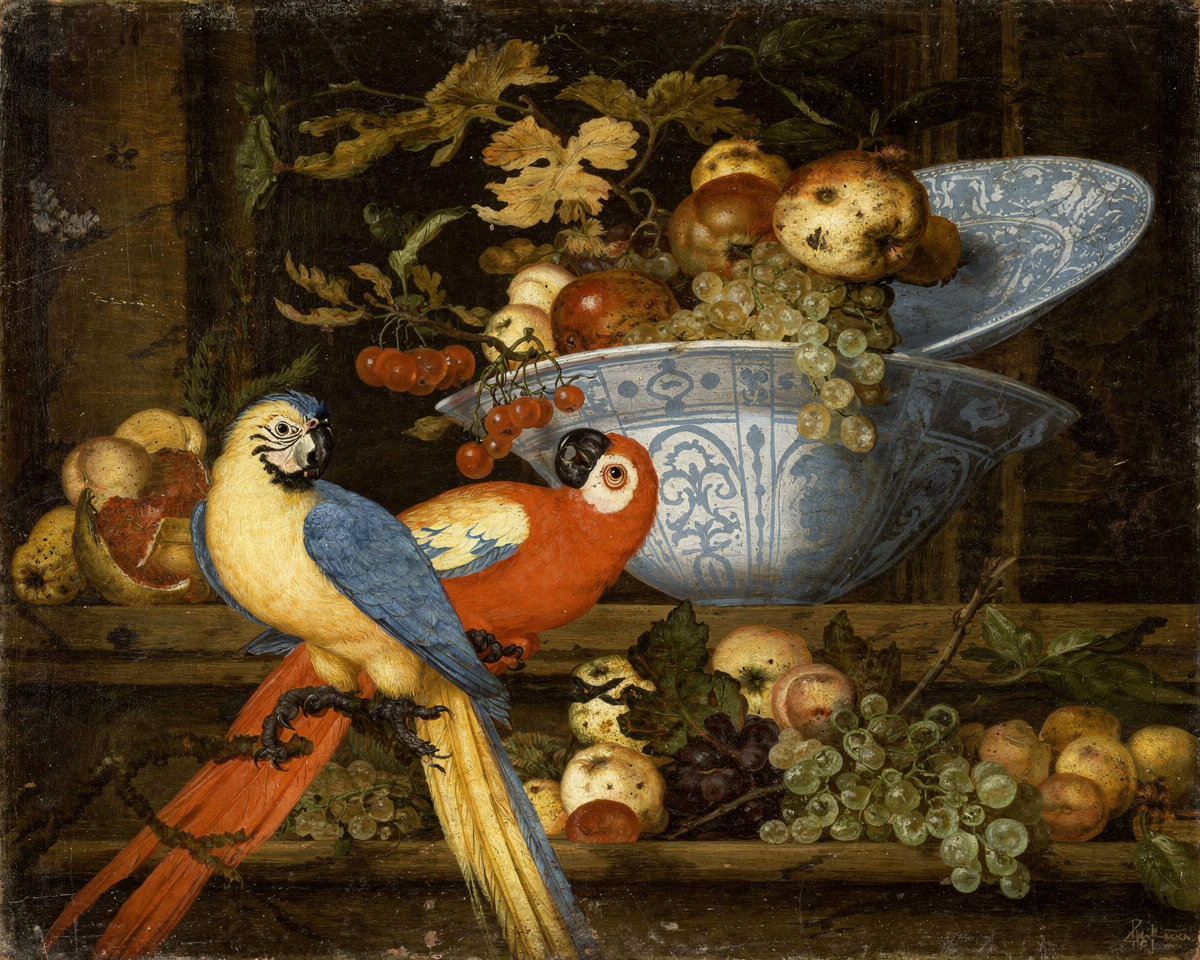
Fruit Still Life with Two Parrots, 1623.
This still life of 1623 adds two parrots, in blue and flame orange, to a table of fruit. Exotic birds were a sign of wealth and travel in the seventeenth century.
A lively piece for a dining room that needs a spark of colour.
6. Still life with silver tankard
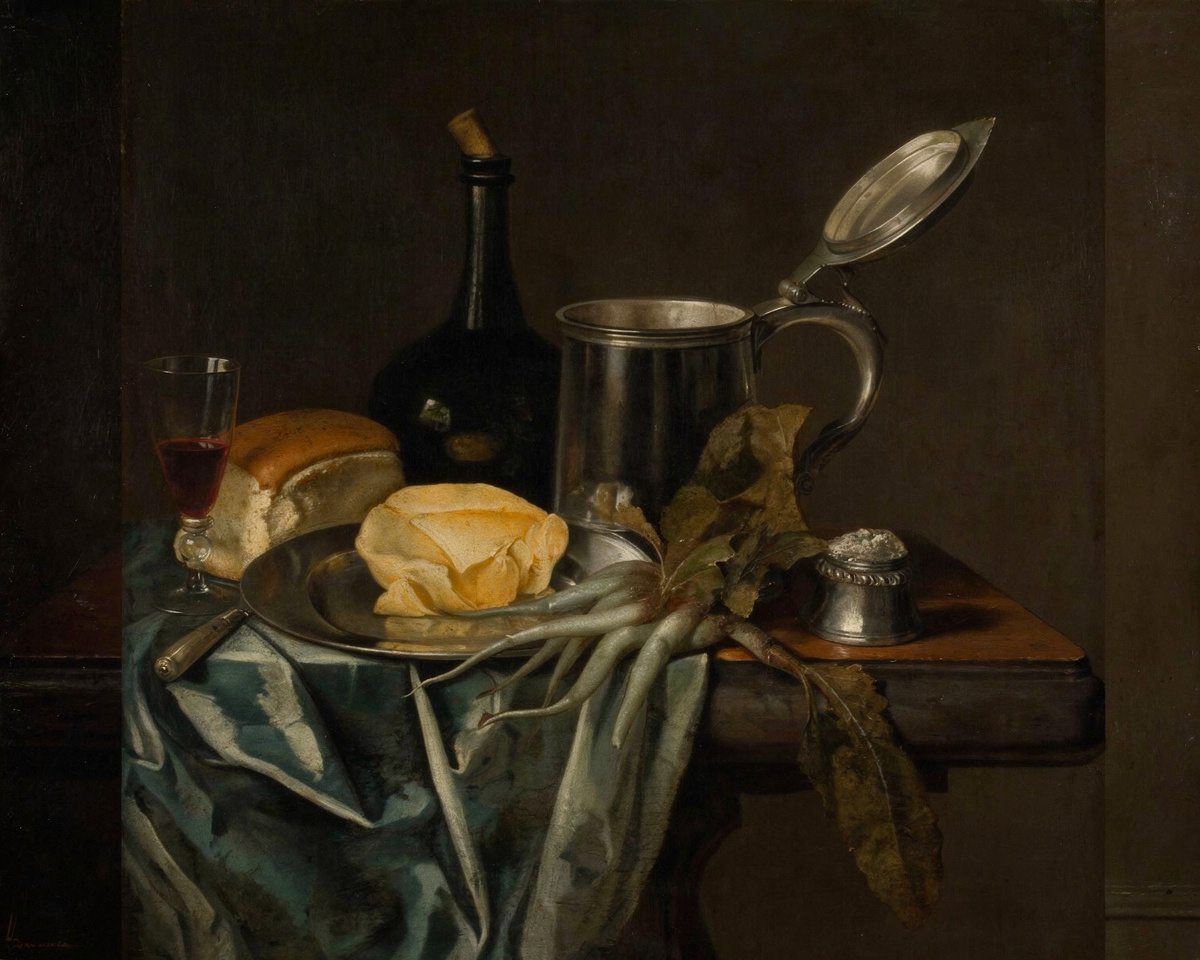
Pieter Gerritsz van Roestraten, Still life with silver tankard, ca. 1700. Victoria and Albert Museum, London.
Pieter van Roestraten, Dutch born, worked in London, where he painted silver and porcelain for English collectors around 1700. Light runs over every curve of the tankard.
A refined choice for a classic dining room with silver, glass and dark wood.
For a family dining room
Meals, Sundays and evenings by lamplight.
7. Interior, after Dinner
Claude Monet, Interior, after Dinner, 1868–1869. Oil on canvas.
Claude Monet painted this evening scene in 1868 or 1869, long before his water lilies. Dark greens and golden lamplight make a calm family evening after dinner.
A lovely picture for a dining room used in the evening, with warm lights and dark walls.
8. Sunday Rest
Carl Larsson, Sunday Rest, 1900. Nationalmuseum, Stockholm.
Carl Larsson painted Sunday Rest in 1900 in his home at Sundborn. It shows the stillness of a Sunday table, with deep teal and red against warm wood.
Perfect for a Scandinavian dining room with white walls and pine or oak.
9. Spanish Feast
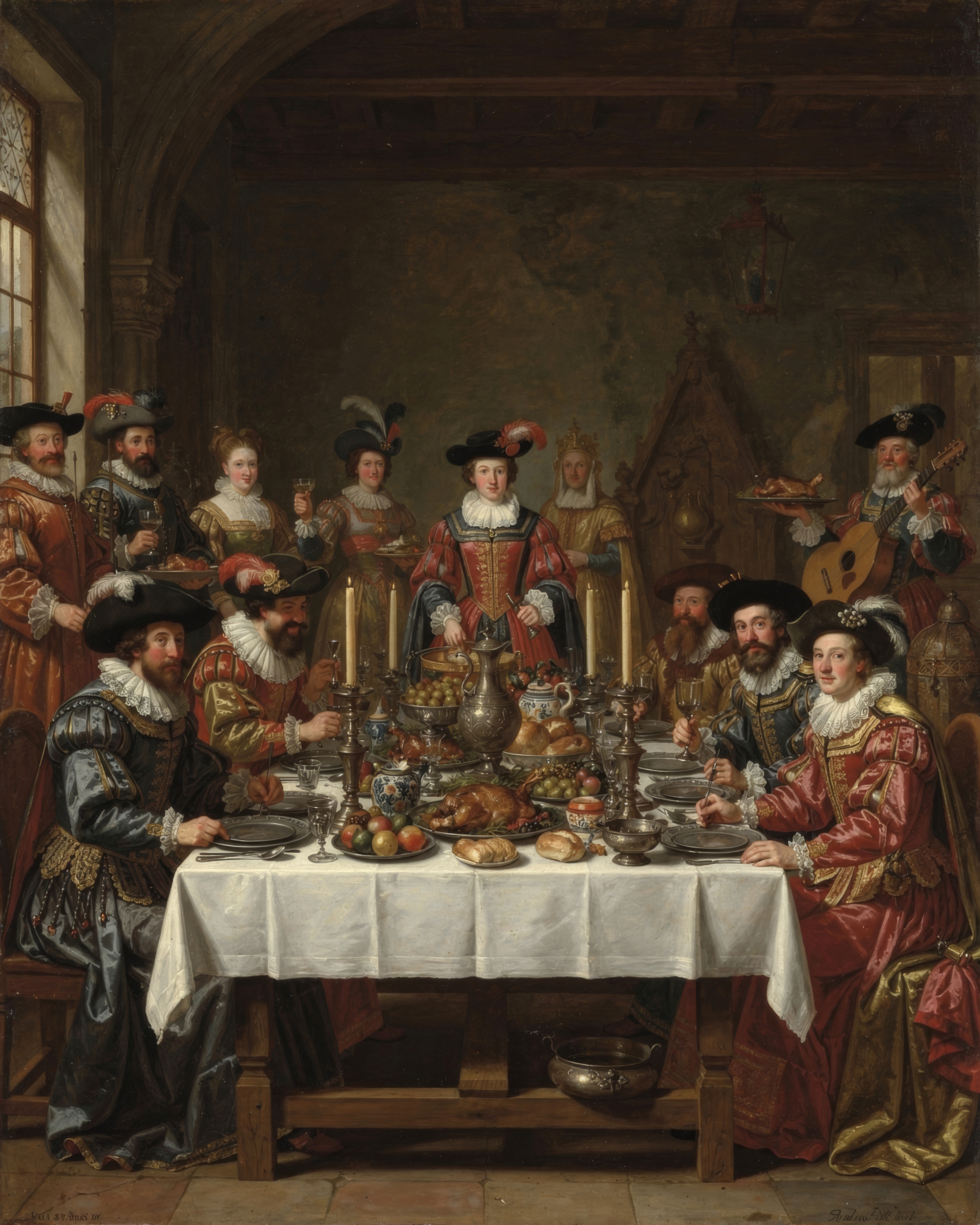
Palamedes Palamedesz. Louis Simon Lempereur, Spanish Feast, 18th century. Harvard Art Museums.
Louis Simon Lempereur engraved this feast in the eighteenth century after a painting by Palamedes Palamedesz. Every corner is full of conversation, music and food.
A sociable picture for a dining room in warm browns and cream.
For a light, modern dining room
Fruit painted by the Impressionists and their successors.
10. Fruits of the Midi
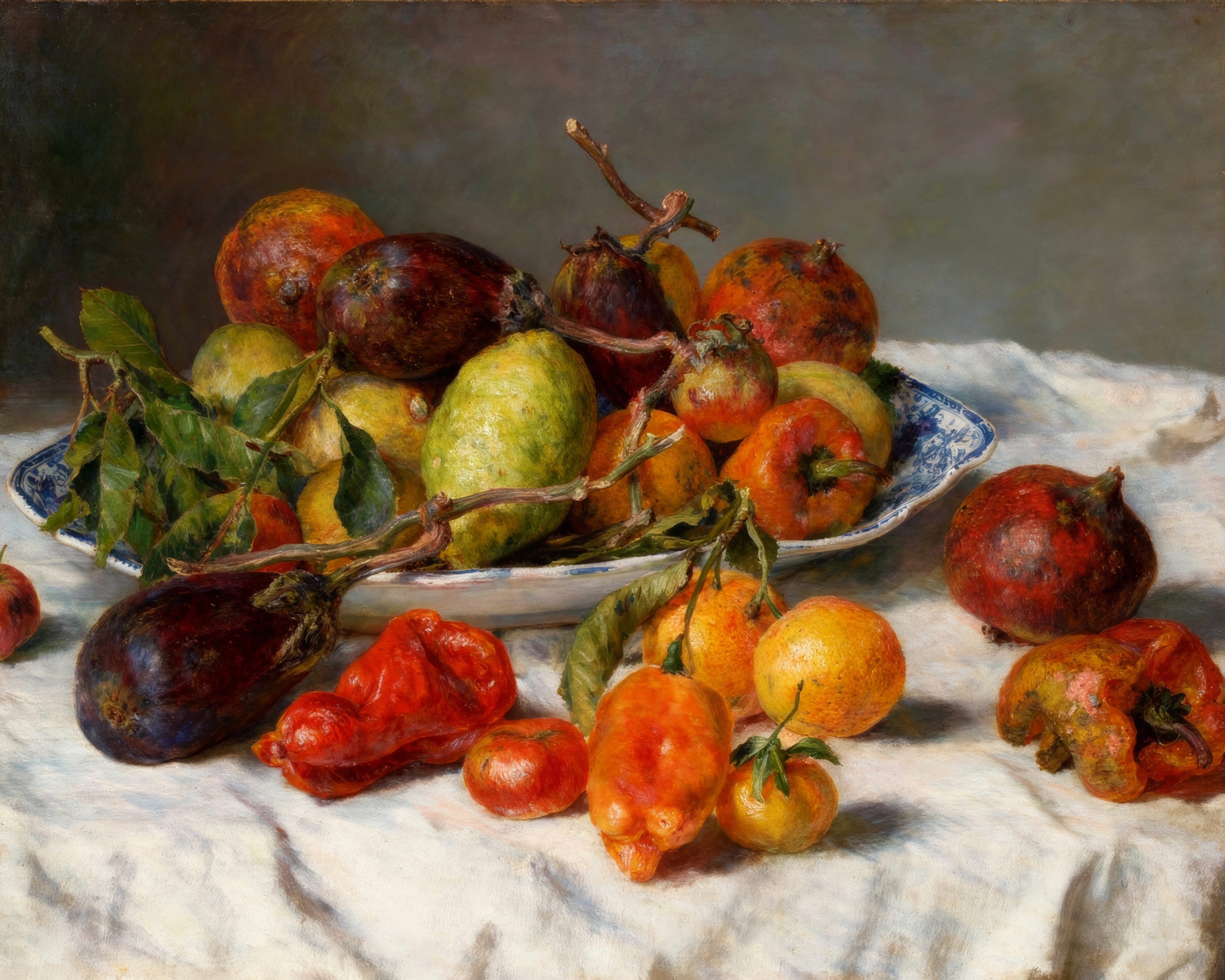
Pierre-Auguste Renoir, Fruits of the Midi, 1881. Oil on canvas. Art Institute of Chicago.
Renoir painted Fruits of the Midi in 1881, after travelling in the south of France and Algeria. Its orange, yellow and red feel like sunshine on a table.
Brings warmth to a white dining room with natural wood.
11. Still Life with Jar, Cup, and Apples
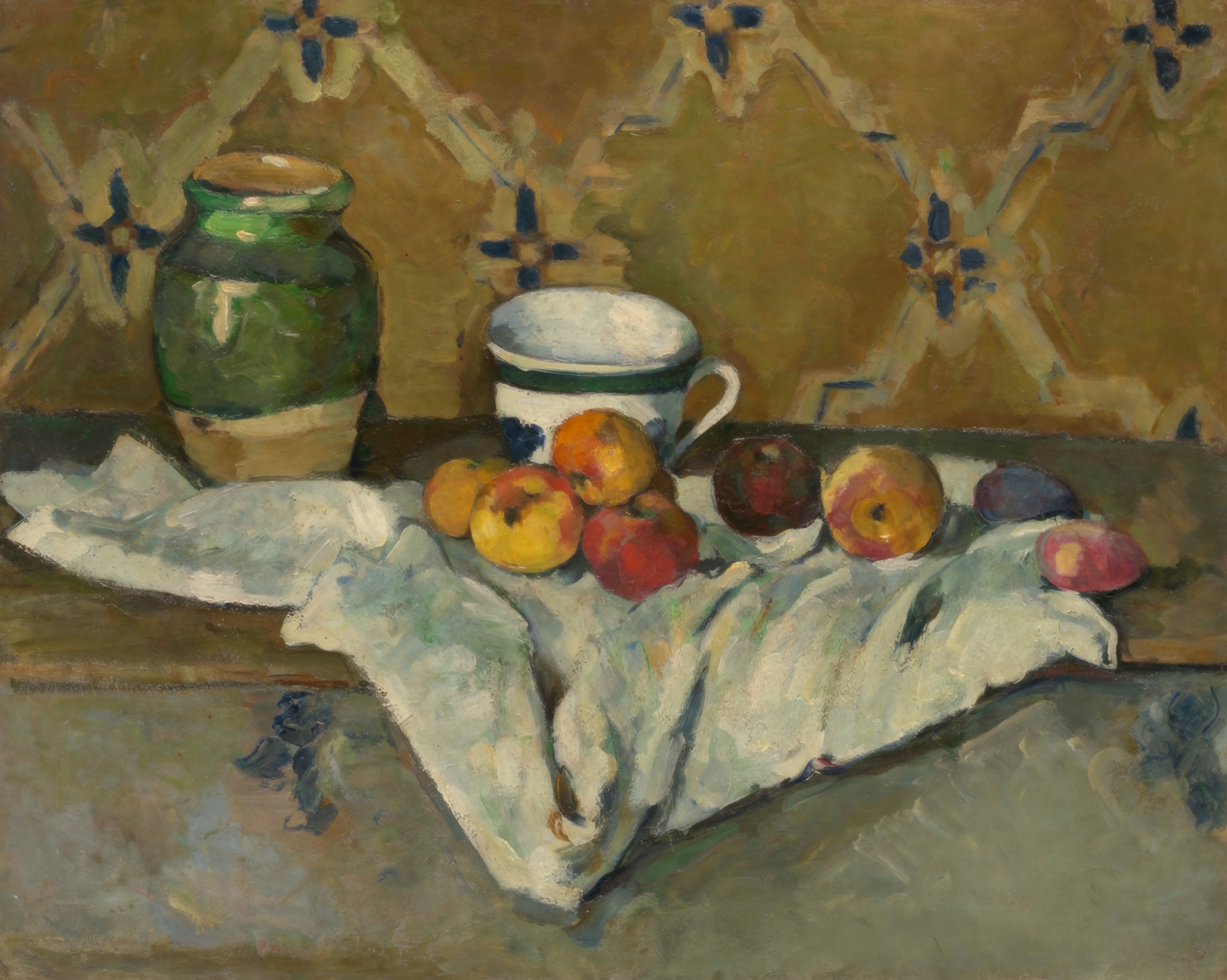
Paul Cézanne, Still Life with Jar, Cup, and Apples, ca. 1877. Oil on canvas. The Metropolitan Museum of Art, New York.
Paul Cézanne painted this still life around 1877. The apples and jar are simple, but their weight and colour show why Cézanne is called the father of modern painting.
Suits a modern dining room with olive, green or earthy tones.
12. Still Life: Peaches and Grapes
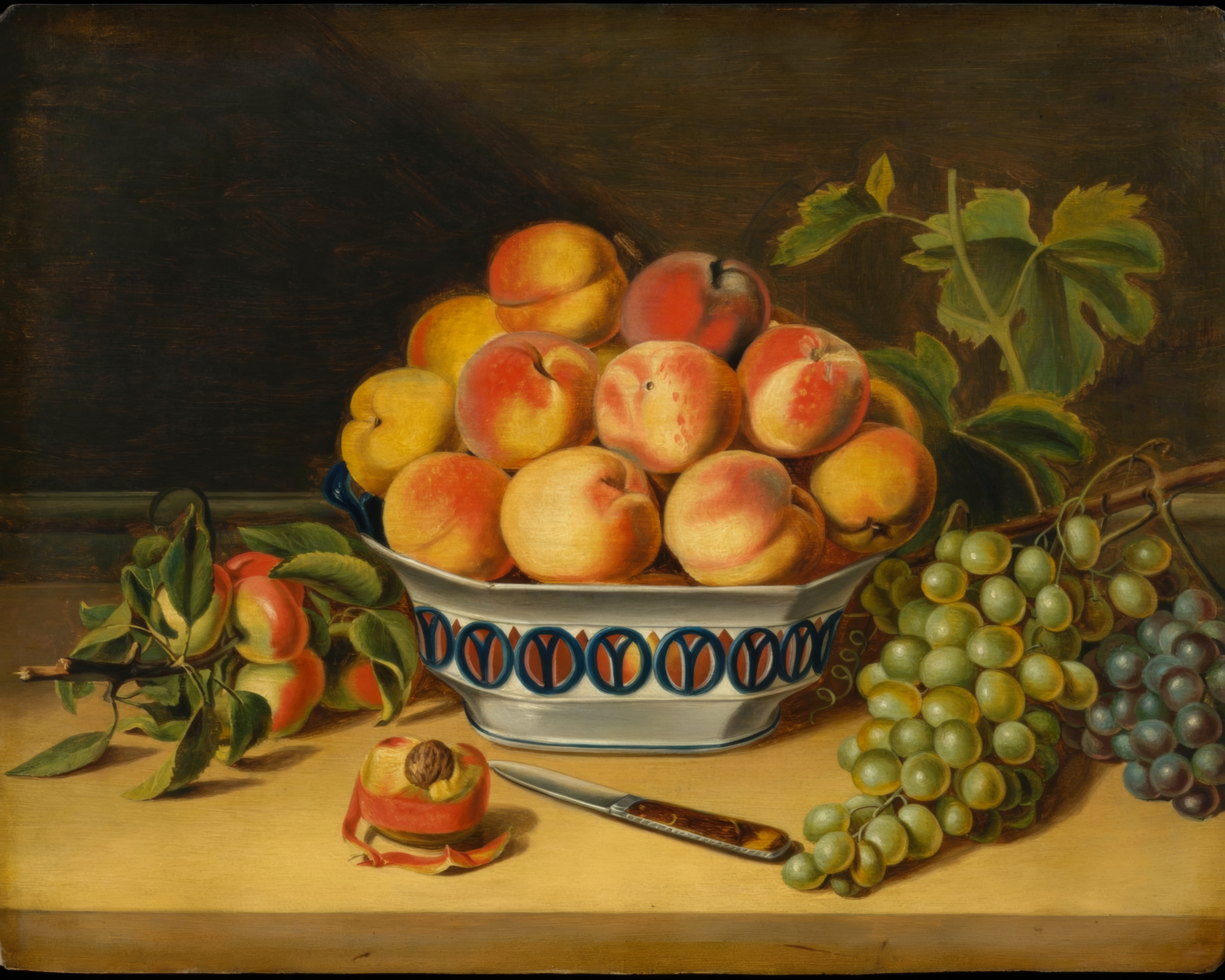
John A. Woodside, Still Life: Peaches and Grapes, Ca. 1825. Oil on wood. The Metropolitan Museum of Art, New York.
John A. Woodside of Philadelphia painted this small, plain still life around 1825. It shows that a few pieces of fruit, painted with care, can be as beautiful as a banquet.
A simple, warm picture for a small dining area or a breakfast nook.
Hang dining room art a little lower than elsewhere, with its centre about 140 centimetres from the floor, because people see it while sitting. A long sideboard or a wall facing the table is the best place, and one large picture usually works better than many small ones. Dark baroque still lifes love deep green, navy or oxblood walls; brighter fruit pieces suit white or stone. For the kitchen, see kitchen wall art.
Questions
What art is traditional in a dining room?
Still lifes of food, flowers and laid tables, and scenes of meals and gatherings. The tradition goes back to the Dutch and Flemish painters of the seventeenth century.
How high should art hang in a dining room?
A little lower than in other rooms, with the centre about 140 centimetres from the floor, so it is at eye level for people sitting at the table.
What size picture works above a sideboard?
About two thirds the width of the sideboard, with its lower edge 20 to 30 centimetres above the top.
Do dark still lifes work in a modern dining room?
Yes. A dark baroque still life on a white or deep coloured wall gives a modern room depth and a sense of occasion.