Le Temple des Muses and the art of transformation
A close reading of the 1749 mythological volume behind Fable’s developing Temple des Muses colour editions.
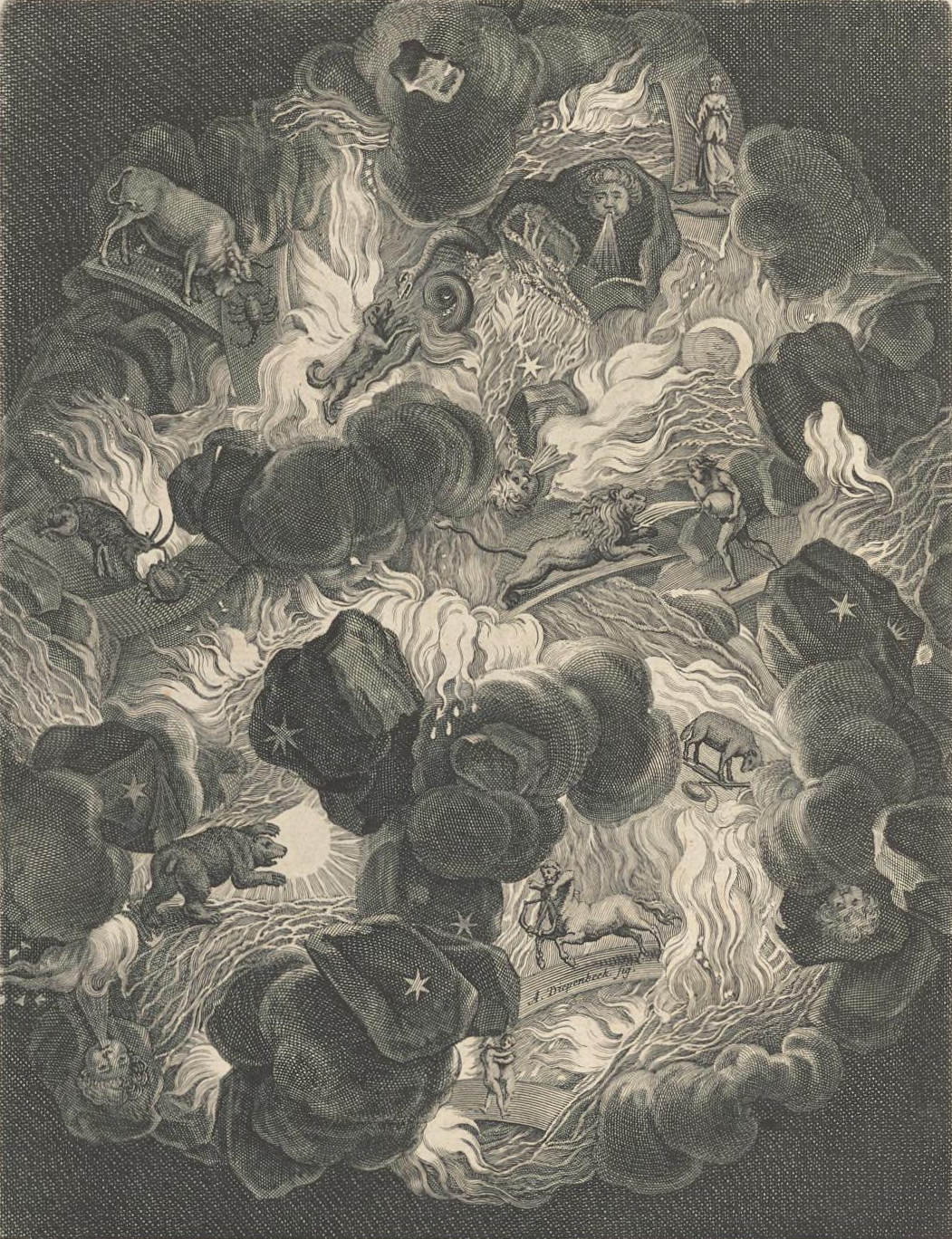
A river becomes an escape route. A sleeping figure draws the moon down towards the earth. A palace opens its doors to dreams that cannot be trusted. In Le Temple des Muses, the ordinary laws of the world are always close to breaking.
That makes the book a compelling starting point for Fable Masterworks. Surrealium’s Atelier is developing a collection of contemporary colour editions from its engraved scenes, carrying their strange narratives out of the book and towards the wall.
Narratives available beyond the book
These released Atelier Editions explore myth, visionary worlds and transformation. They are not Temple des Muses plates.
 Historical original
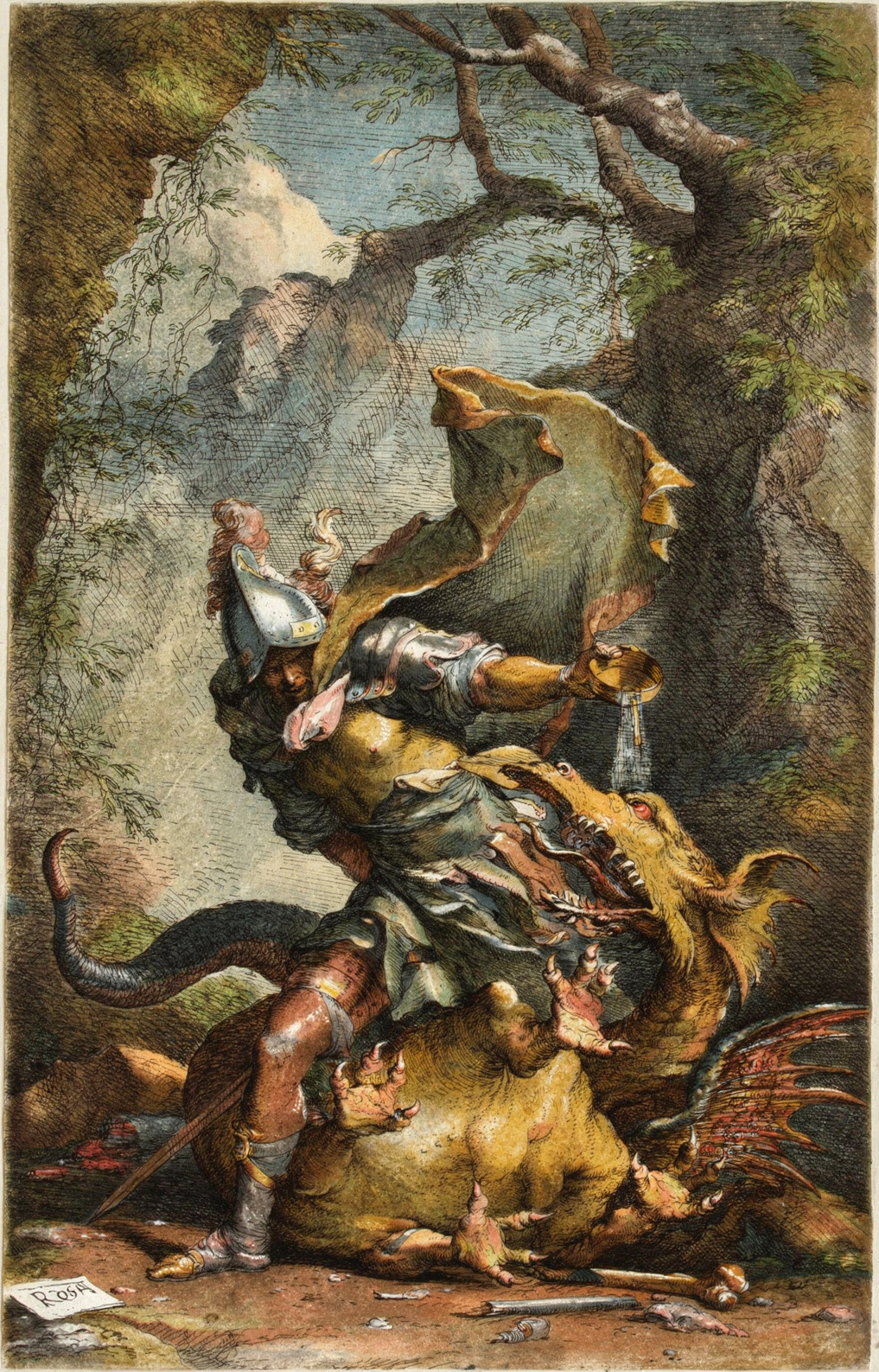
Jason and the Dragon
Buy-ready print · Contemporary colour edition
A mythological creature encounter gives the room a narrative tension beyond a matching colour palette.
From $39
 Historical original
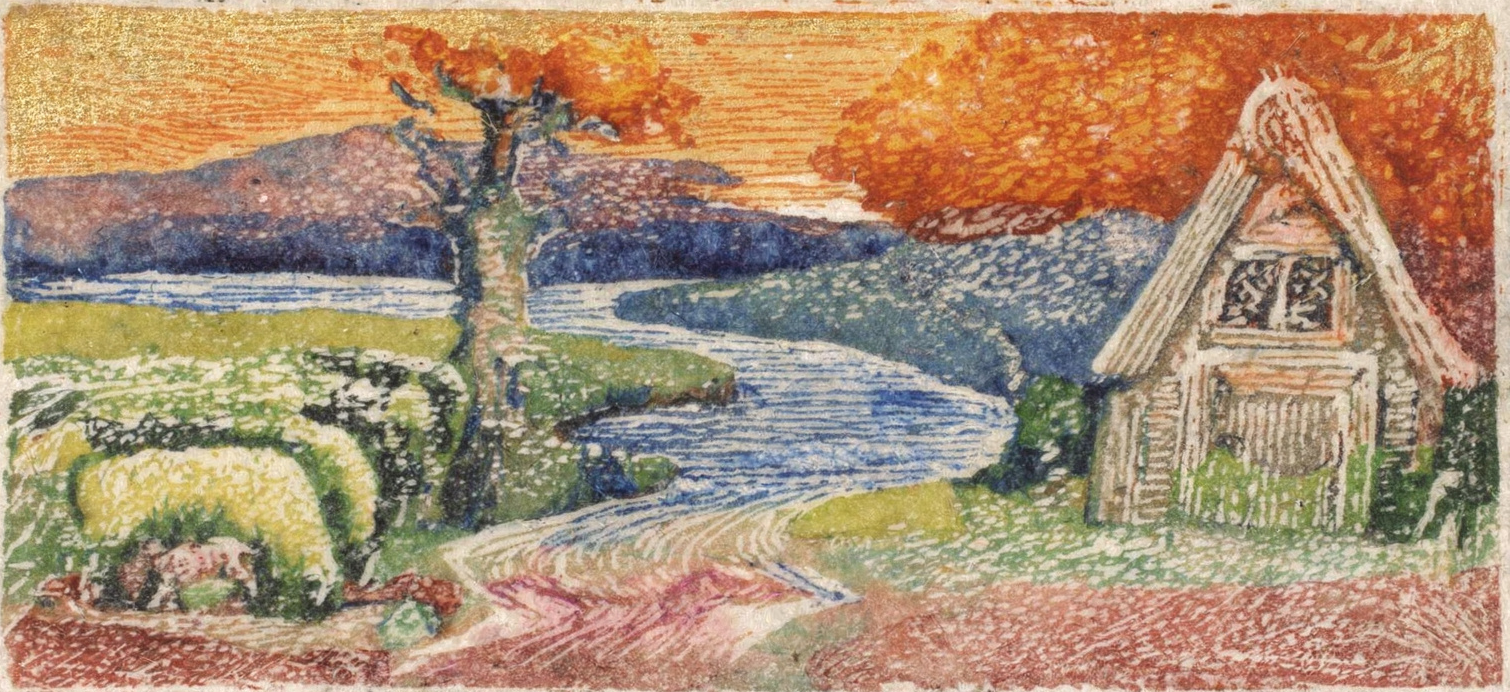
Sabrina’s Silvery Flood
Buy-ready print · Contemporary colour edition
A literary water spirit continues the article’s interest in rivers, transformation and a story carried by the landscape.
From $39
 Historical original
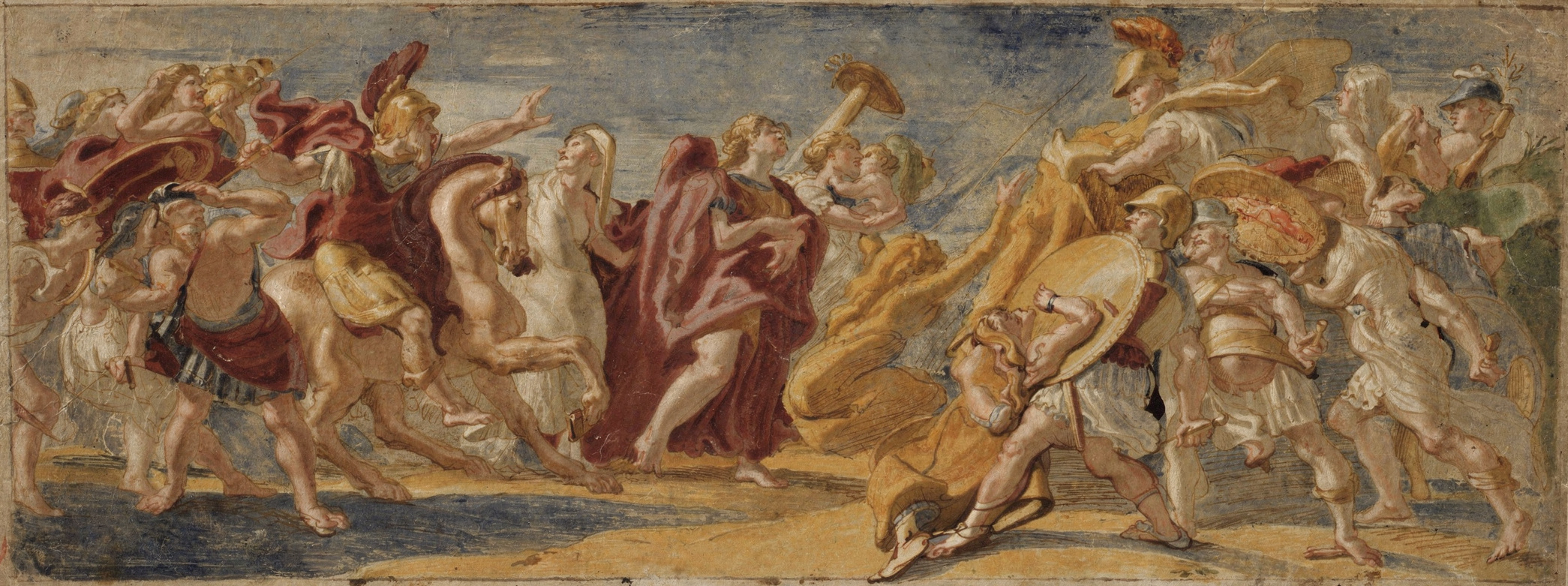
The Romans and the Sabines Reconciled
Buy-ready print · Contemporary colour edition
A classical narrative of conflict and reconciliation offers a different story to live with on the wall.
From $39
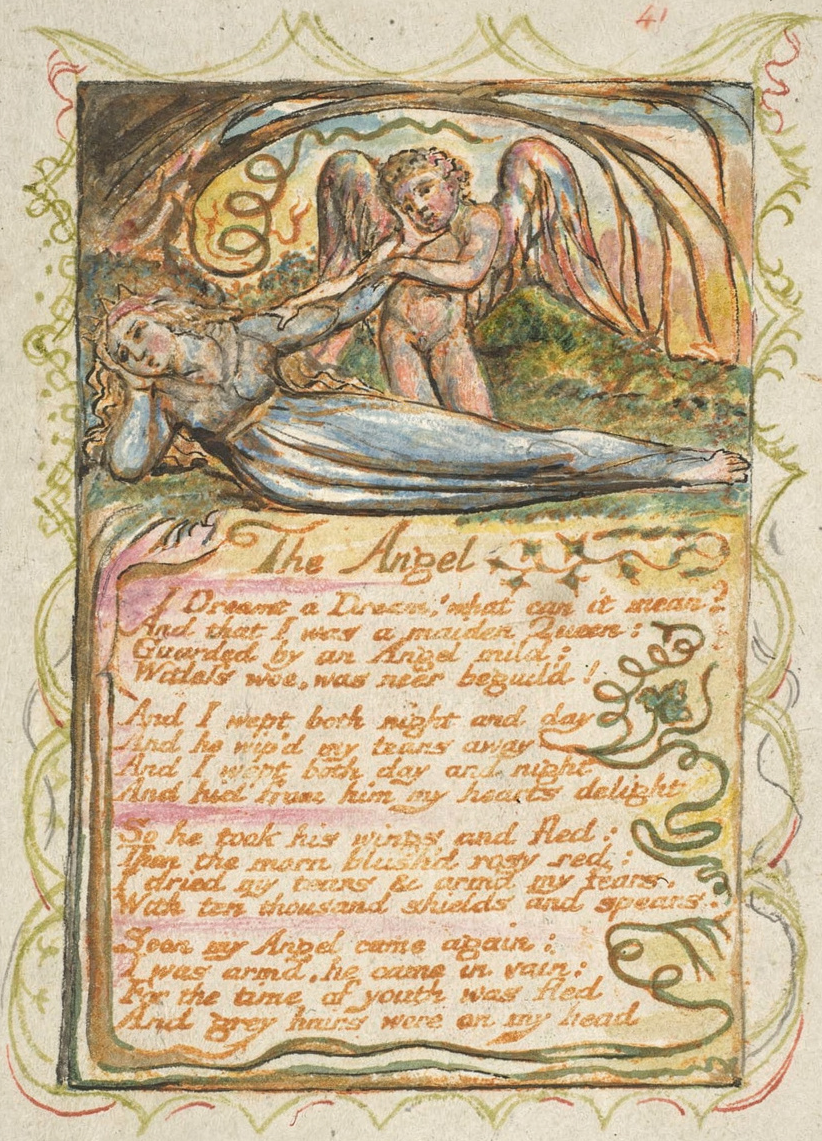
 Historical original
The Angel
Buy-ready print · Contemporary colour edition
A visionary figure offers a quieter counterpart to scenes of confrontation and upheaval.
From $39
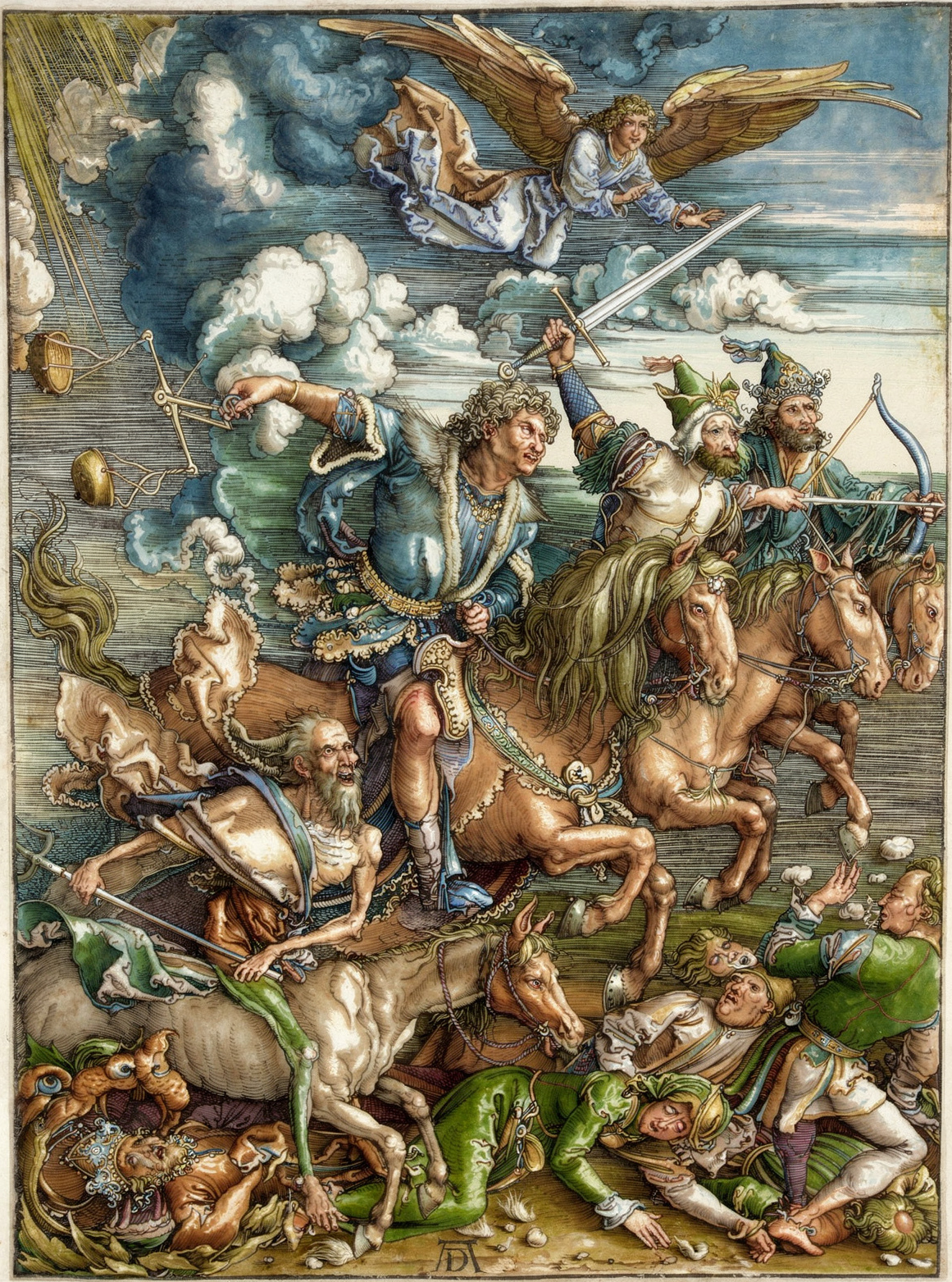
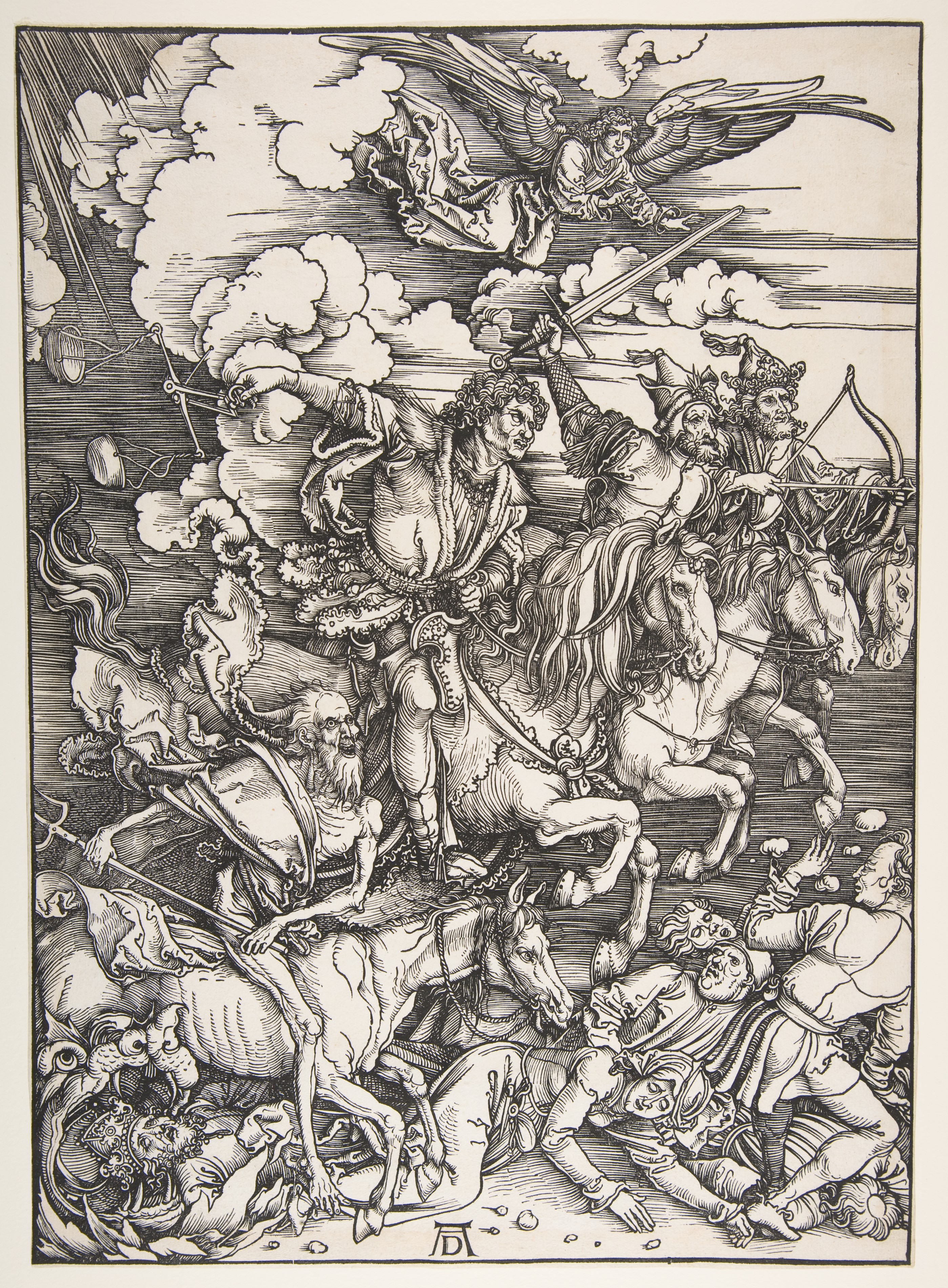 Historical original
The Four Horsemen
Buy-ready print · Contemporary colour edition
A densely narrated encounter rewards reading the complete composition and its small details.
From $39
 Historical original
Faust
Buy-ready print · Contemporary colour edition
A scholar, concentrated light and supernatural uncertainty connect naturally with a reading room and interpretive colour.
From $39
The book behind the collection
The source is the 1749 Amsterdam edition published by Zacharie Chatelain, preserved in a Getty Research Institute copy digitised on Internet Archive. It contains sixty leaves of plates, accompanied by French explanations and remarks by Antoine de La Barre de Beaumarchais. The volume draws on an earlier illustrated tradition; its images have several artistic contributors, so attribution belongs to the individual work rather than a single name applied to the whole book. Explore the digitised volume.
The attraction is partly visual: elaborate architecture, tangled landscapes and bodies caught in moments of change. But the text adds something a thumbnail cannot. It explains an attribute, retells a myth, then sometimes proposes another way to understand it. A monster might become a landscape in the commentator’s reading. A sleeping lover might also be an observer of the heavens.
Those interpretations belong to their historical moment. Read alongside the image, they reveal how one eighteenth-century book assembled and explained the ancient world.
The story continues beyond the caption
Consider Pan and Syrinx. Its reeds are the destination of a desperate escape and the material from which a musical instrument will be made. The surrounding commentary then expands Pan into an allegory of the universe, connecting parts of his body and his pipes with the earth and heavens. A woodland scene acquires a second scale: the landscape begins to suggest a whole cosmos. Read the chapter.
At the other end of the volume, The Palace of Sleep gathers dreams, nocturnal figures and symbolic gates into an architectural fantasy. Its detail rewards the same habit as reading: pause, look back, and discover that a small element changes the larger meaning.
A contemporary colour edition
Fable’s process begins with the scanned page. The inner scene is straightened and separated from the ornamental surround and caption before AI-assisted colour interpretation. The historical engraving remains available for comparison, while the print description retains its connection to the book.
Colour is a new artistic decision. These editions do not claim to recover a lost original palette, and they are contemporary prints rather than antique impressions. Their appeal lies in the encounter between the source’s intricate design and the Atelier’s interpretation.
For a collector, that gives the image several ways to hold attention: its composition at a distance, its details close up, and the story that returns when someone asks about it.
Begin with a story you want to live with
Choose the work whose tension interests you. Perhaps it is escape, sleep, courage or the instability of a dream. That connection can be more lasting than finding a picture that matches a cushion.
Explore Fable’s available Atelier Editions to compare the current collection and see print options. The Temple des Muses editions are being prepared for release within the same Fable Masterworks collection.