Libra gifts: ten still lifes with room to breathe
Libra gifts through balanced arrangements, flowers and tables, chosen for actual taste rather than a personality assigned by a sign.
Libra gifts can take a light cue from the scales, the sign’s familiar emblem, without claiming that everybody born under it values the same things. In art, balance need not mean symmetry. A dark bottle can hold its own against a pale cloth; a low basket can answer a tall vase. These are visible relationships, and a recipient may enjoy them without sharing any belief about astrology.
The astrology gift story and the companion Aries selection use signs as starting points for looking. Here the focus is still life, with one interior to open the subject into a room. Begin with the recipient’s colours, habits and available wall space, as in our personalized gifts guide, then let the sign add a small note of occasion rather than dictate the picture.
1. A tall arrangement with a grounded base
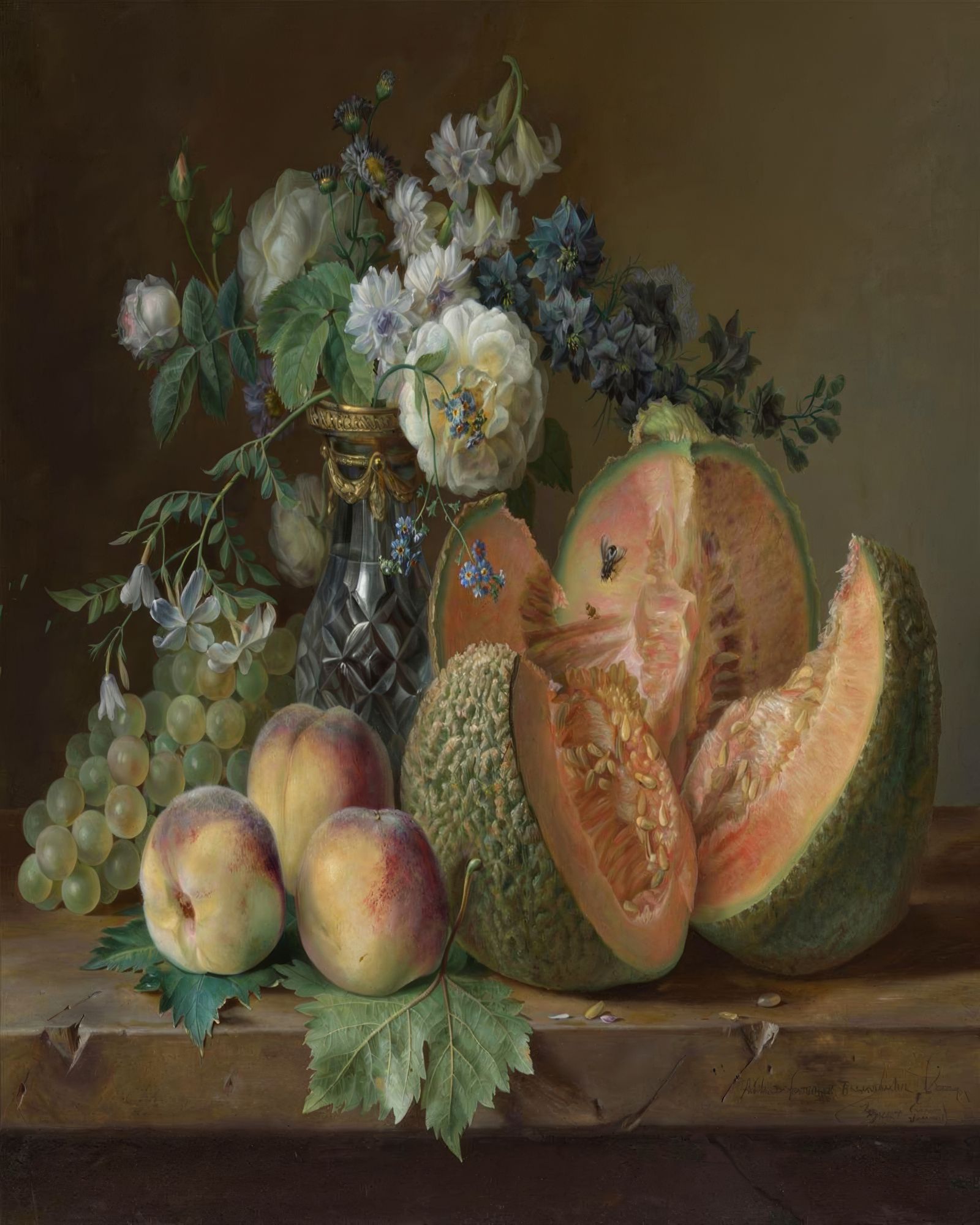
A Noble Still Life — Charlotte Eustache Sophie de Fuligny Damas, marquise de Grollier, 1780. The Metropolitan Museum of Art, New York. Restored by Surrealium at Vaxholm Fortress, Sweden.
The marquise de Grollier’s fruit and flowers rise from a ledge in a carefully weighted arrangement. The cut melon opens a broad pale shape against the darker foliage, while the peaches and grapes keep attention near the bottom. Consider it for a recipient who enjoys formal still life and botanical detail, with its balance supplied by unequal shapes rather than a literal pair of scales.
2. A basket and a bundle
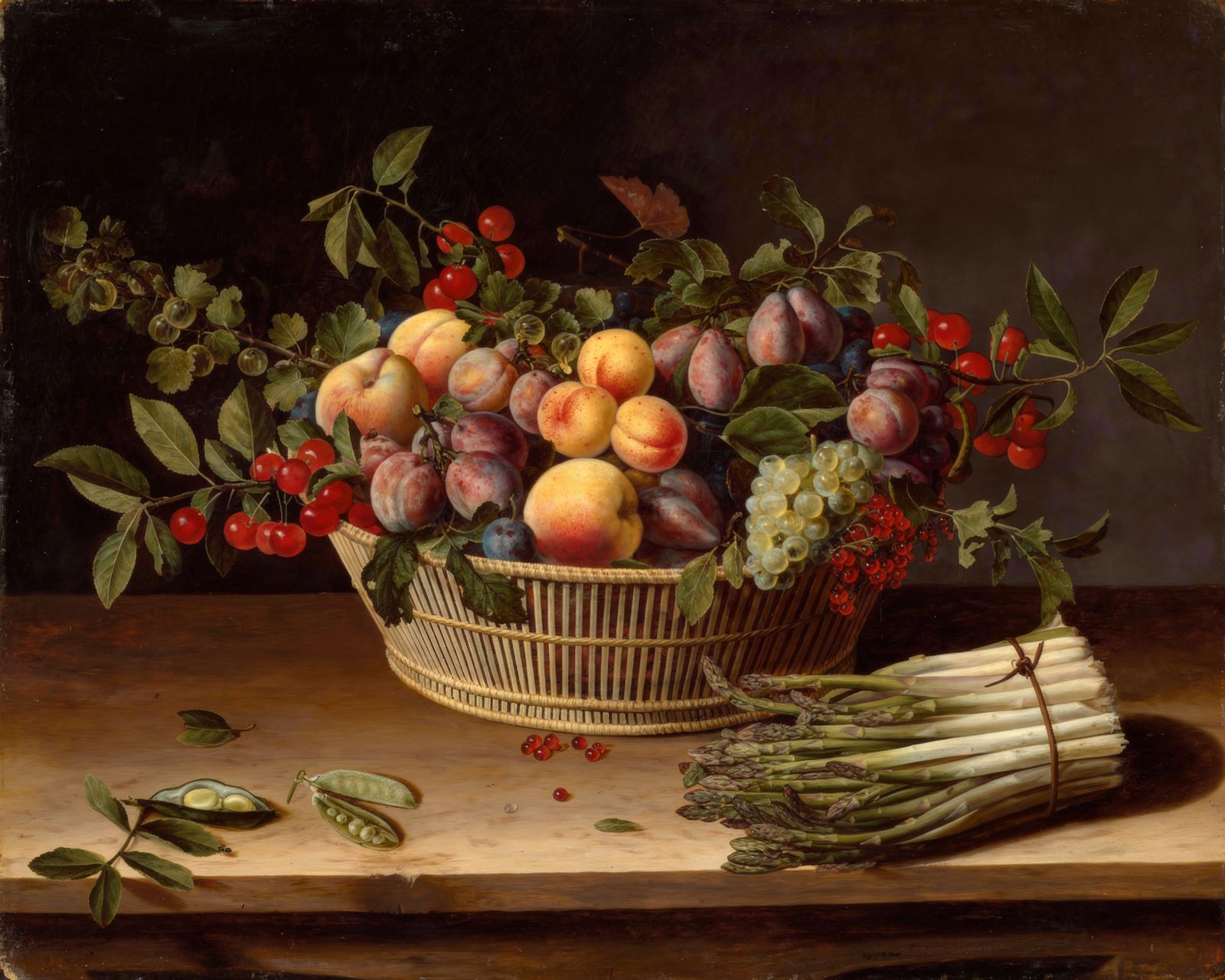
Still Life with Fruit and Asparagus — Louise Moillon, 1630. Art Institute of Chicago. Restored by Surrealium at Vaxholm Fortress, Sweden.
Louise Moillon gives a basket of fruit and a tied bundle of asparagus different textures within one low composition. The wicker, skins and pale stalks encourage close looking, while the quiet background lets their differences remain clear. It is a thoughtful choice for someone who enjoys markets or cooking, especially if you can connect the gift to a shared habit rather than a general claim about refined taste.
3. Flowers at an ordinary scale
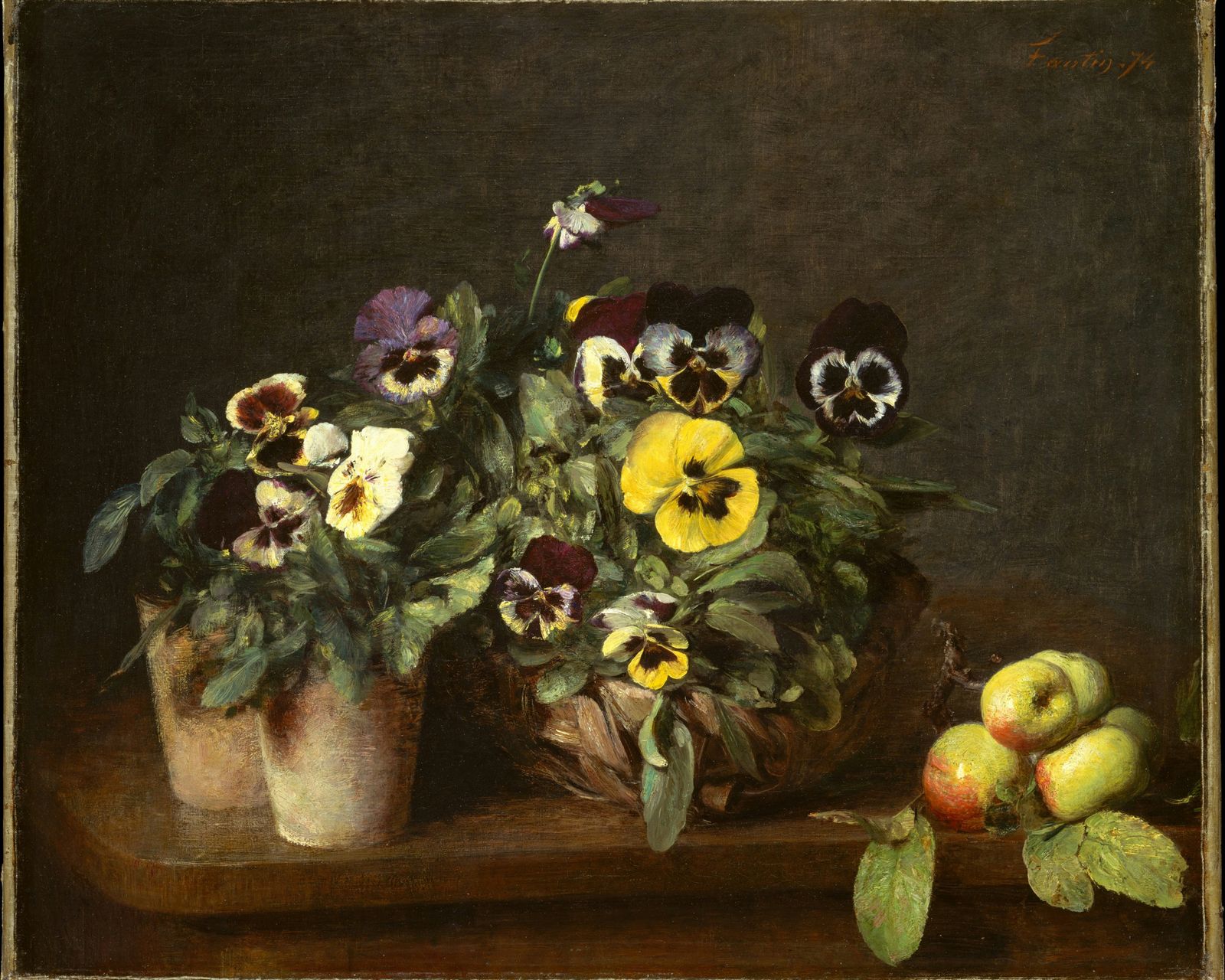
Still Life with Pansies — Henri Fantin-Latour, 1874. The Metropolitan Museum of Art, New York. Restored by Surrealium at Vaxholm Fortress, Sweden.
Fantin-Latour’s pansies sit in a modest pot beside a few pieces of fruit. The small faces of the flowers and the warm earthenware make the picture feel intimate without needing an elaborate vase or a grand interior. Choose it for someone who likes restrained floral arrangements, and compare that preference with the more abundant bouquets elsewhere in the selection before deciding which kind of fullness they actually enjoy.
4. A table made for several pleasures
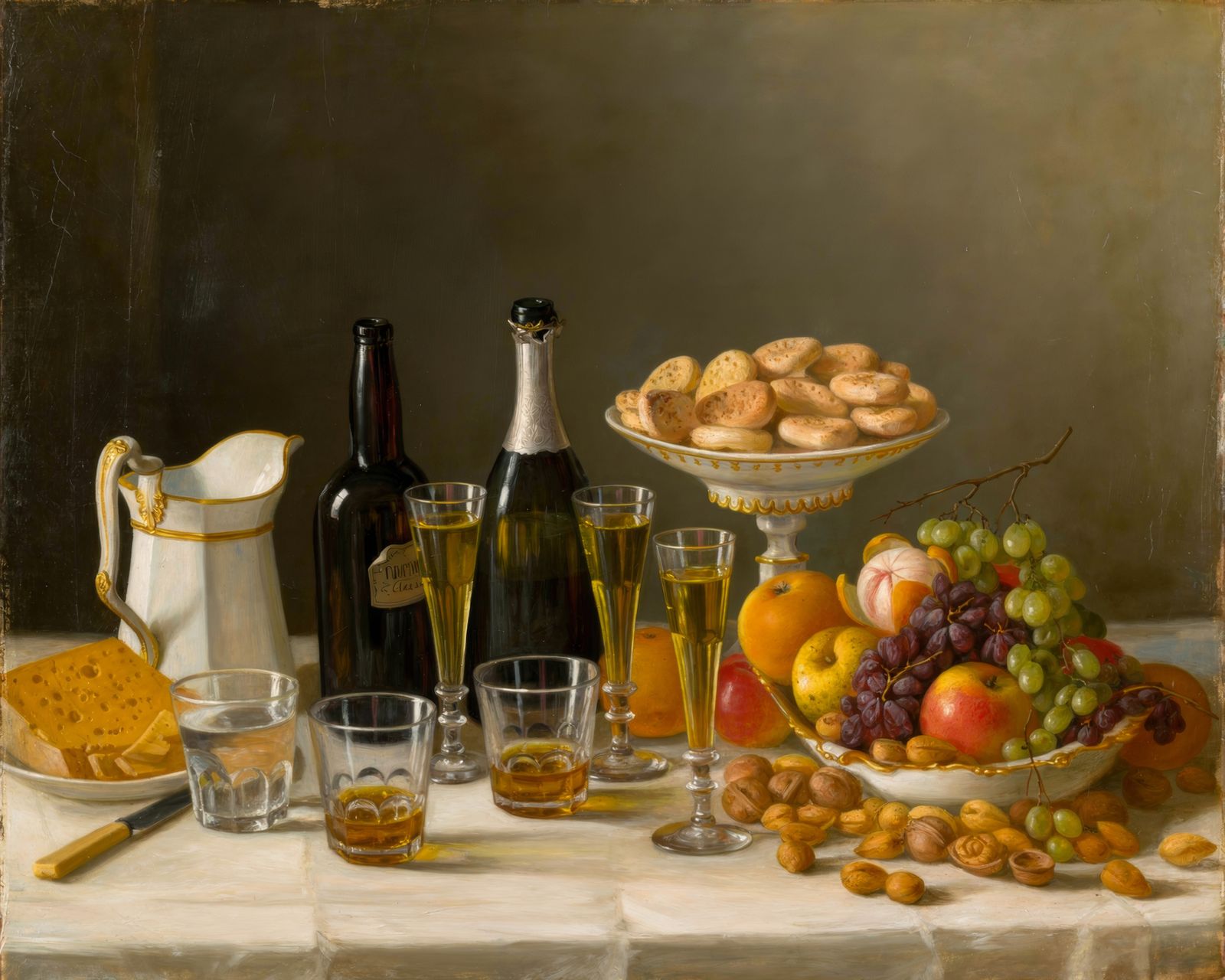
Wine, Cheese, and Fruit — John F. Francis, 1857. Art Institute of Chicago. Restored by Surrealium at Vaxholm Fortress, Sweden.
John F Francis arranges wine, cheese, fruit and glassware across a long surface. Repeated vessels make a rhythm, but differences in transparency and colour stop the scene becoming a row of identical forms. The picture can recall hospitality or a pleasure in setting a table; make that connection specific to the recipient, rather than assuming that a Libra birthday implies an interest in entertaining.
5. A bright peel in a dark room
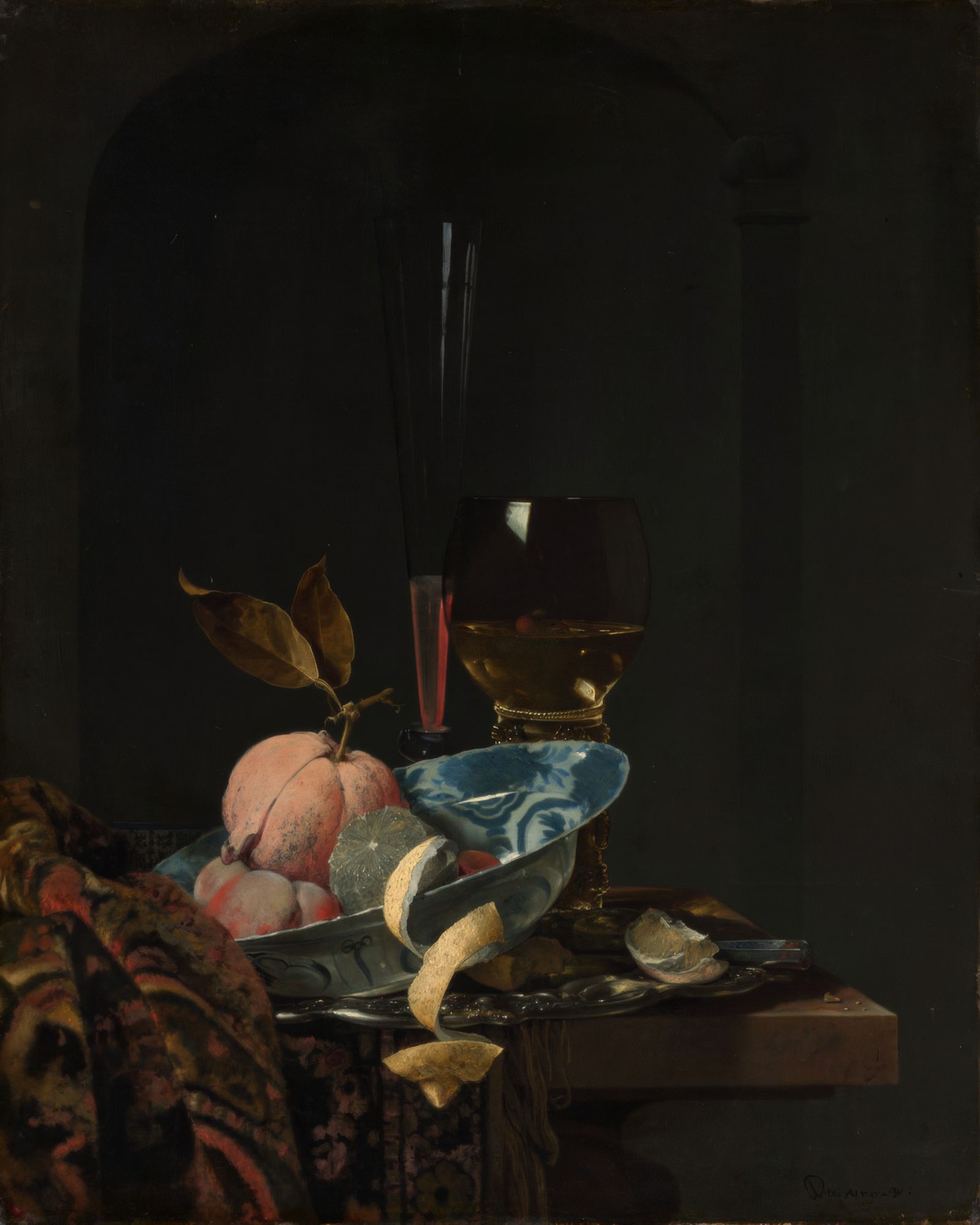
Still Life with Fruit, Glassware, and a Wanli Bowl — Willem Kalf, 1659. The Metropolitan Museum of Art, New York. Restored by Surrealium at Vaxholm Fortress, Sweden.
Kalf’s still life draws attention to a curled lemon peel, a glass and the patterned surface of a bowl. The surrounding darkness is active: it gives the illuminated objects their intensity and allows small highlights to matter. This may suit a recipient who likes quiet, concentrated pictures, but it is worth checking that they enjoy dark grounds before treating the painting’s elegance as universally appealing.
6. Fruit that makes the table tilt
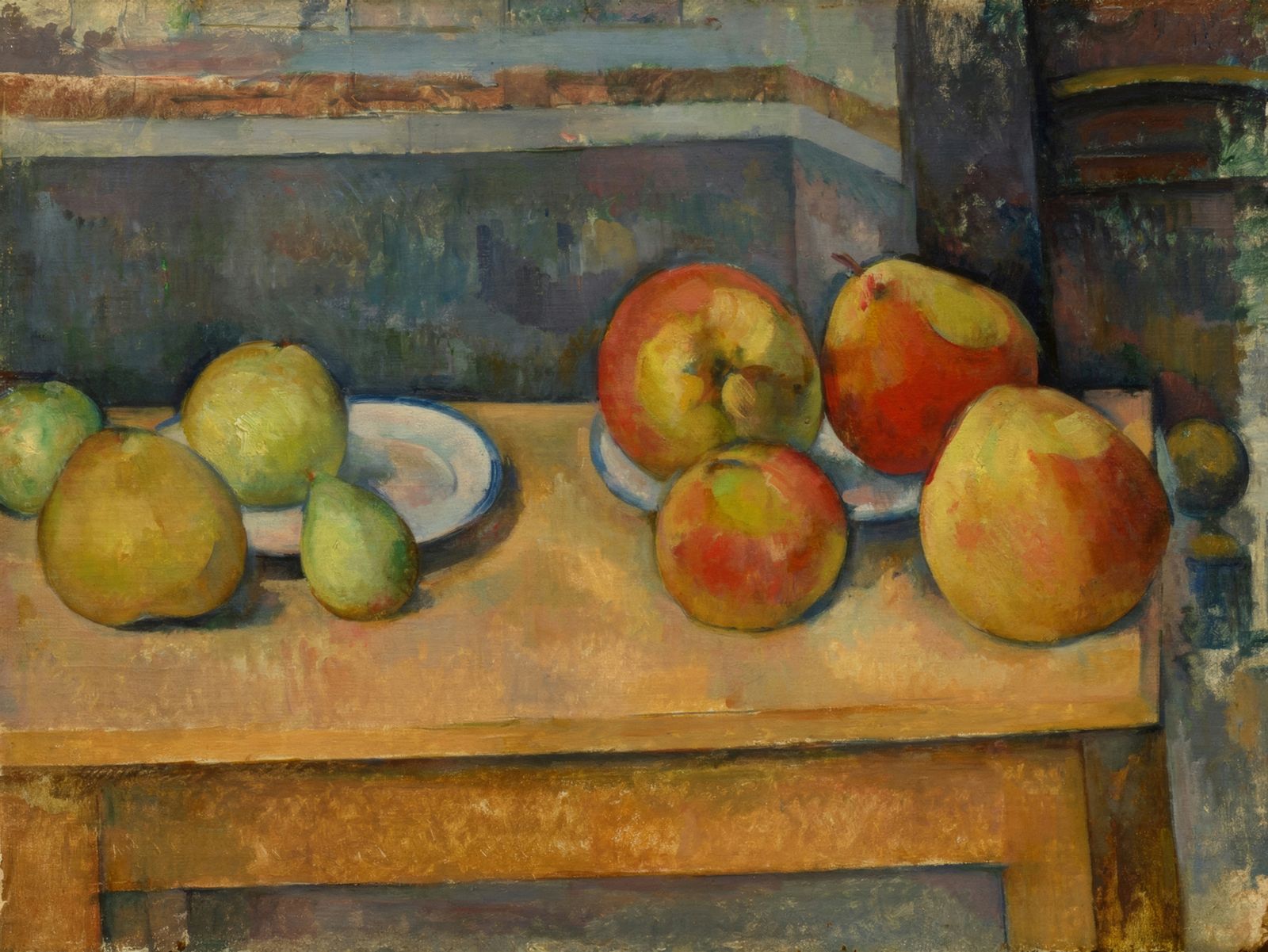
Still Life with Apples and Pears — Paul Cézanne, ca. 1891–92. The Metropolitan Museum of Art, New York. Restored by Surrealium at Vaxholm Fortress, Sweden.
Cézanne’s apples and pears occupy a yellow surface that feels slightly unsettled beneath them. The painting’s balance comes from colour and weight rather than tidy alignment, making it useful for someone interested in how pictures are built. Give it with a note about a shape or colour you noticed, leaving room for the recipient to find their own route through an arrangement that resists a single fixed viewpoint.
7. White cloth, dark ground, clear space
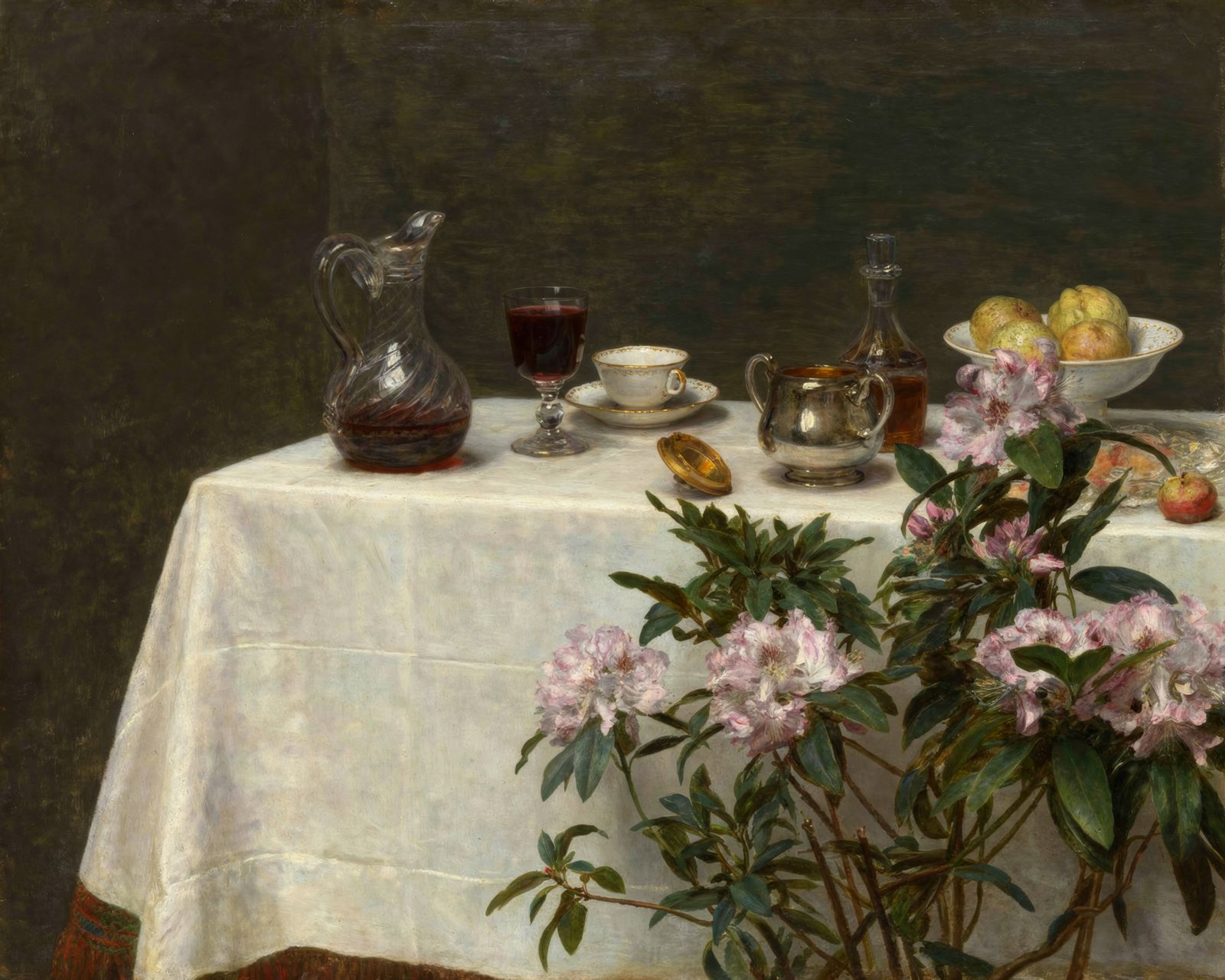
Still Life: Corner of a Table — Henri Fantin-Latour, 1873. Art Institute of Chicago. Restored by Surrealium at Vaxholm Fortress, Sweden.
Fantin-Latour’s Corner of a Table lets a few vessels and flowering stems occupy a broad white cloth. There is enough empty surface to make each object’s placement noticeable, so the picture can feel generous without being crowded. It offers a good comparison with the fuller still lifes here: the right gift depends on whether the recipient enjoys abundance or the quieter pleasure of a few things well separated.
8. A bouquet that refuses to stay small
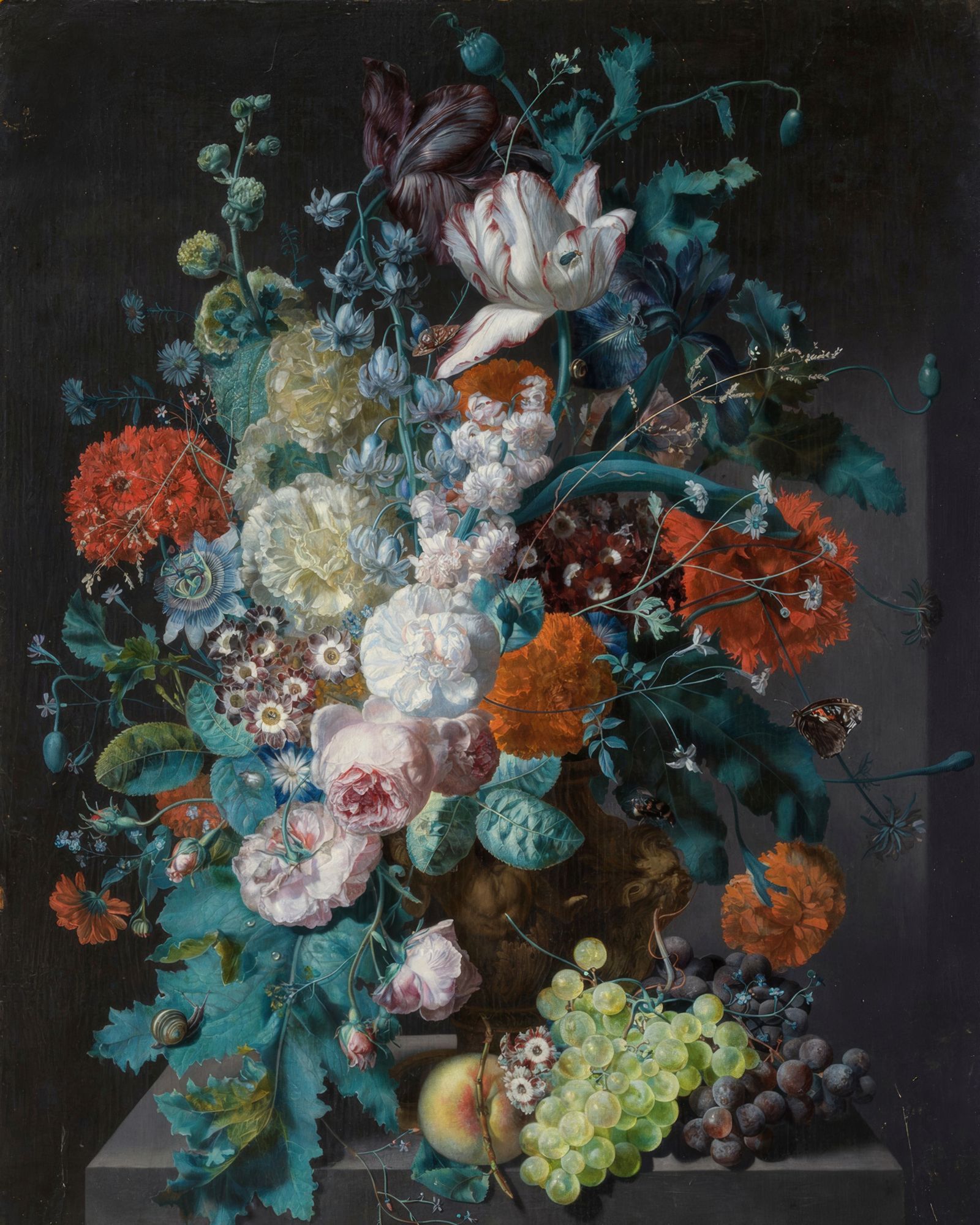
A Vase of Flowers — Margareta Haverman, 1716. The Metropolitan Museum of Art, New York. Restored by Surrealium at Vaxholm Fortress, Sweden.
Haverman’s vase of flowers builds a tall, intricate column of petals, leaves and fruit. The dark background supports many small colour changes, rewarding a viewer who likes to return and discover another stem or edge. Choose it for someone who enjoys botanical abundance, while keeping the full outline of the arrangement visible; cropping the top or sides would remove the very relationships that make its fullness coherent.
9. A useful jug and the signs of preparation
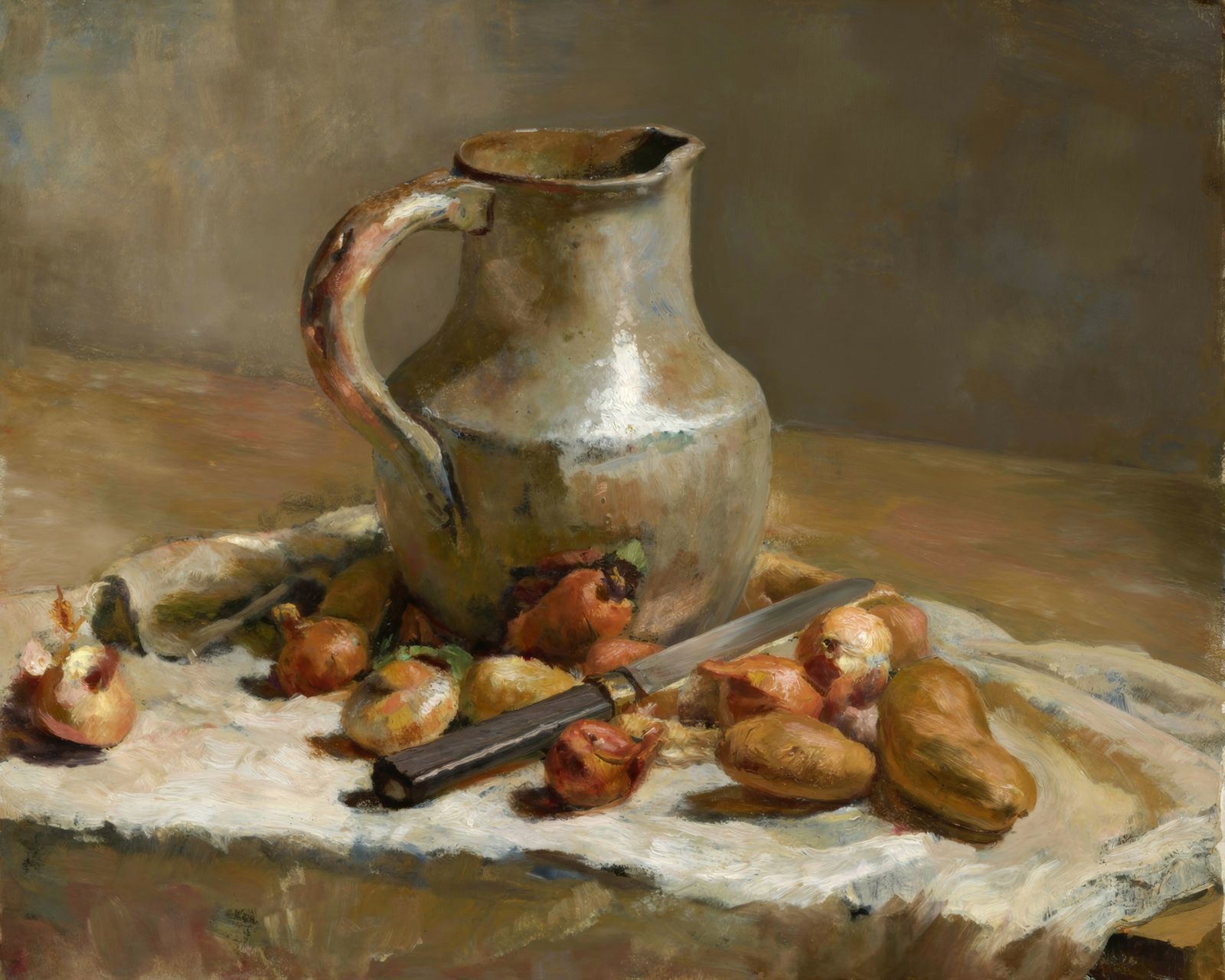
Still Life with Jug and Knife — Édouard Vuillard, 1888–89. Art Institute of Chicago. Restored by Surrealium at Vaxholm Fortress, Sweden.
Vuillard’s jug, knife and vegetables bring still life close to the work of a kitchen. The folded cloth is loosely described, and the objects feel available to be handled rather than displayed as distant treasures. This can suit a recipient whose interest in food is practical and daily, offering a warmer personal connection than an impressive but unfamiliar banquet scene chosen only for its decorative richness.
10. Balance expanded into an interior
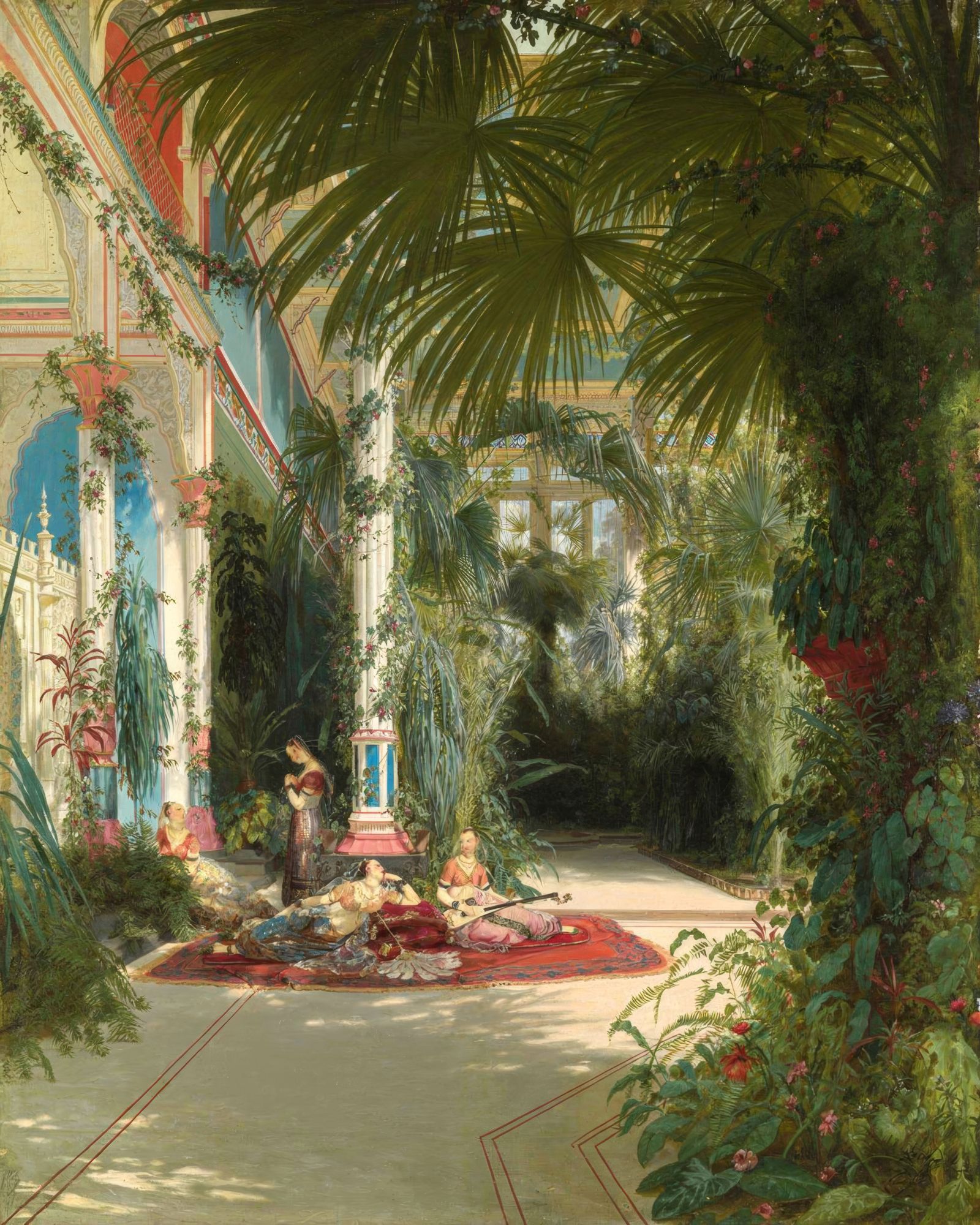
The Palm House Interior — Carl Blechen, 1834. Art Institute of Chicago. Restored by Surrealium at Vaxholm Fortress, Sweden.
Blechen’s Palm House Interior places tall plants within an ornate architectural setting. The contrast between growing leaves and constructed enclosure lets the eye move between natural forms and human arrangement. It is the broadest option here, suited to someone who enjoys glasshouses or interiors; the presence of figures and ornamental architecture gives it a different character from a neutral botanical study.
For an interested recipient, a personalised astrology reading or the tarot reading desk offers another reflective experience. Present it as optional, without claiming that it measures character or predicts a relationship.
Compare the darkest picture with the lightest before choosing. A recipient who likes flowers may still prefer a modest pot to an overflowing bouquet, and a keen cook may prefer a working jug to a formal table. A short note naming the preference you noticed will make the choice clearer than a list of zodiac traits. Continue through the Masterworks collection with that preference in mind.
- Must a Libra gift show scales?
- No. Scales are a traditional motif, but visual balance is a looser editorial theme. A gift works best when it matches something the recipient already likes.
- Does balance mean a symmetrical picture?
- Not necessarily. Artists can balance different shapes, colours and areas of light. Several still lifes here feel composed precisely because their objects are unequal.
- Can I add a symbolic reading?
- Yes, for an interested recipient. Present it as an optional reflective experience, without claiming that it measures character or predicts a relationship.