Pan and Syrinx and the landscape of escape
The river, the reeds and the commentary’s cosmic Pan reveal a landscape shaped by Syrinx’s escape.
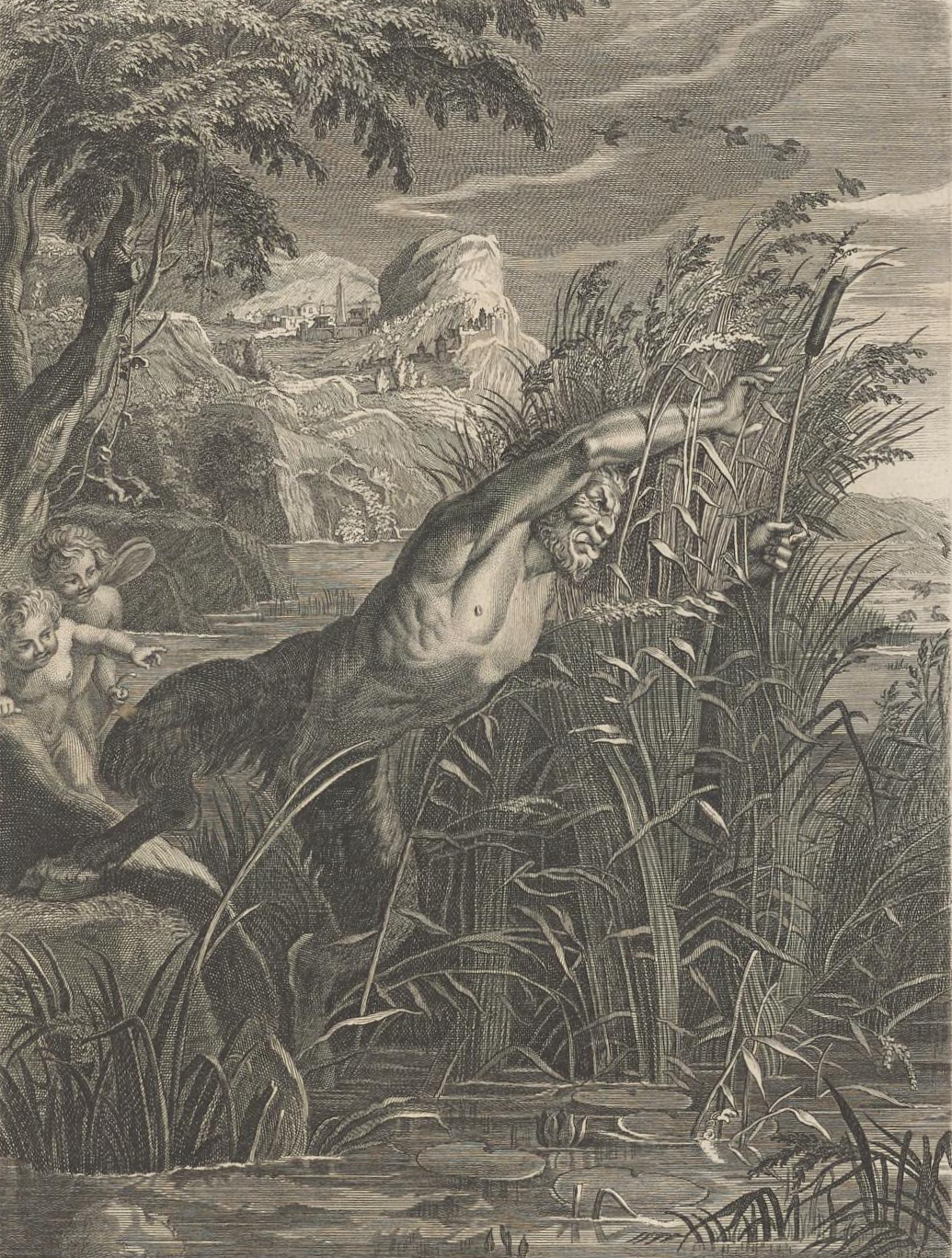
Pan reaches forward, but the figure he pursues is already beyond his grasp. The reeds carry the turning point of the story. What first looks like a dense riverbank is a place where a body has changed form.
In the Temple des Muses engraving of Pan and Syrinx, the landscape is inseparable from the action. Understanding the myth changes what we see in its vegetation, its water and the movement of the central figure.
Water, landscape and transformation
Available works that continue the article’s riverside and mythological themes, not prints of the unreleased Pan and Syrinx study.
 Historical original
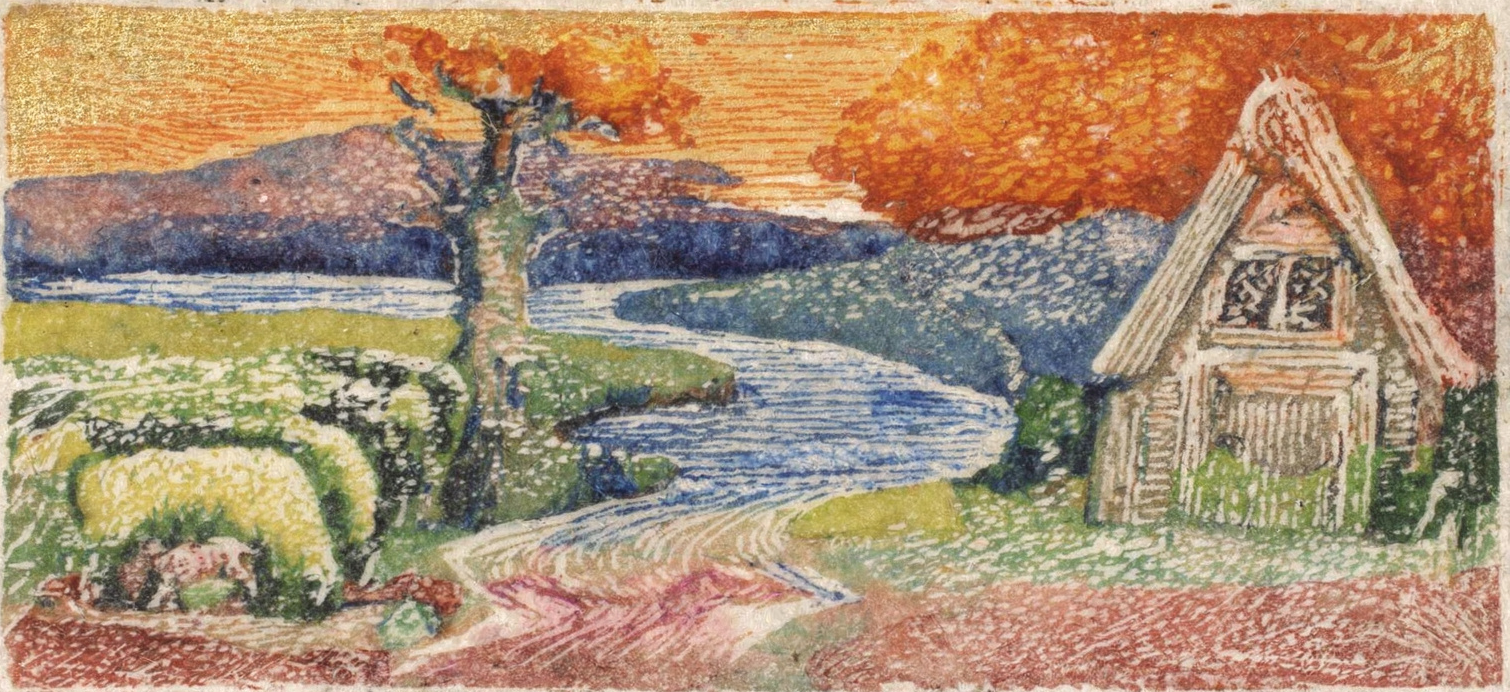
Sabrina’s Silvery Flood
Buy-ready print · Contemporary colour edition
A literary water spirit continues the article’s interest in rivers, transformation and a story carried by the landscape.
From $39
 Historical original
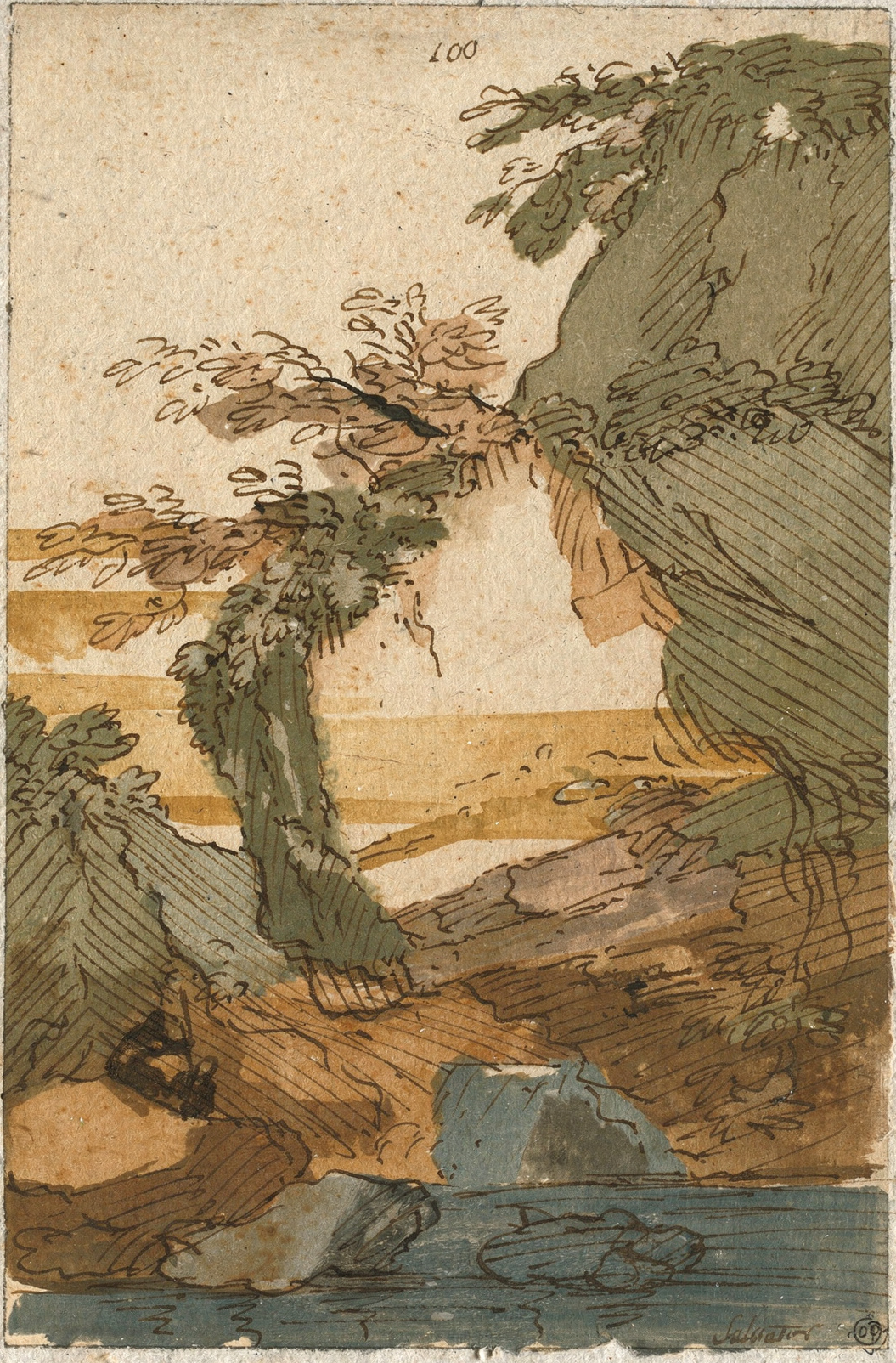
Figures by a Rocky Pool
Buy-ready print · Contemporary colour edition
Water and a secluded landscape connect to the Pan and Syrinx article without claiming to depict that myth.
From $39
 Historical original
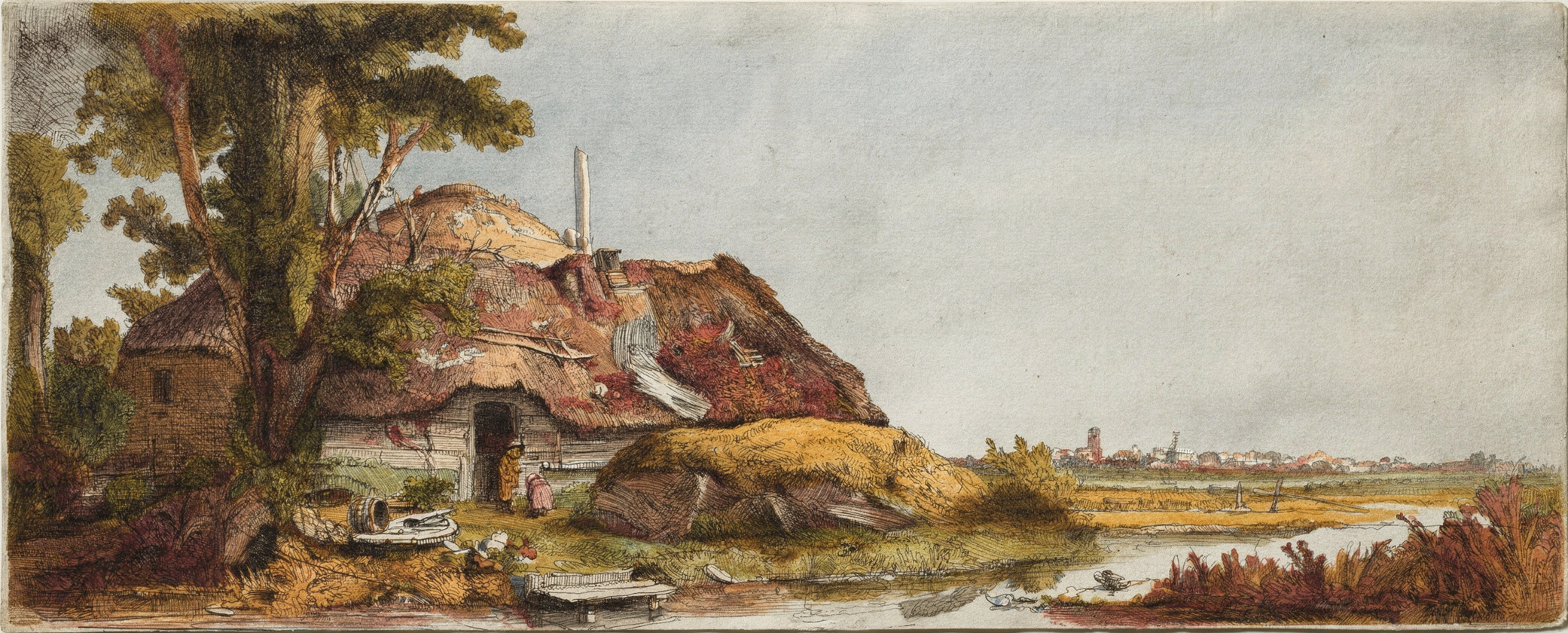
Landscape with a Cottage and a Large Tree
Buy-ready print · Contemporary colour edition
A wooded landscape offers a quieter companion to the article’s riverside narrative of escape.
From $39
 Historical original
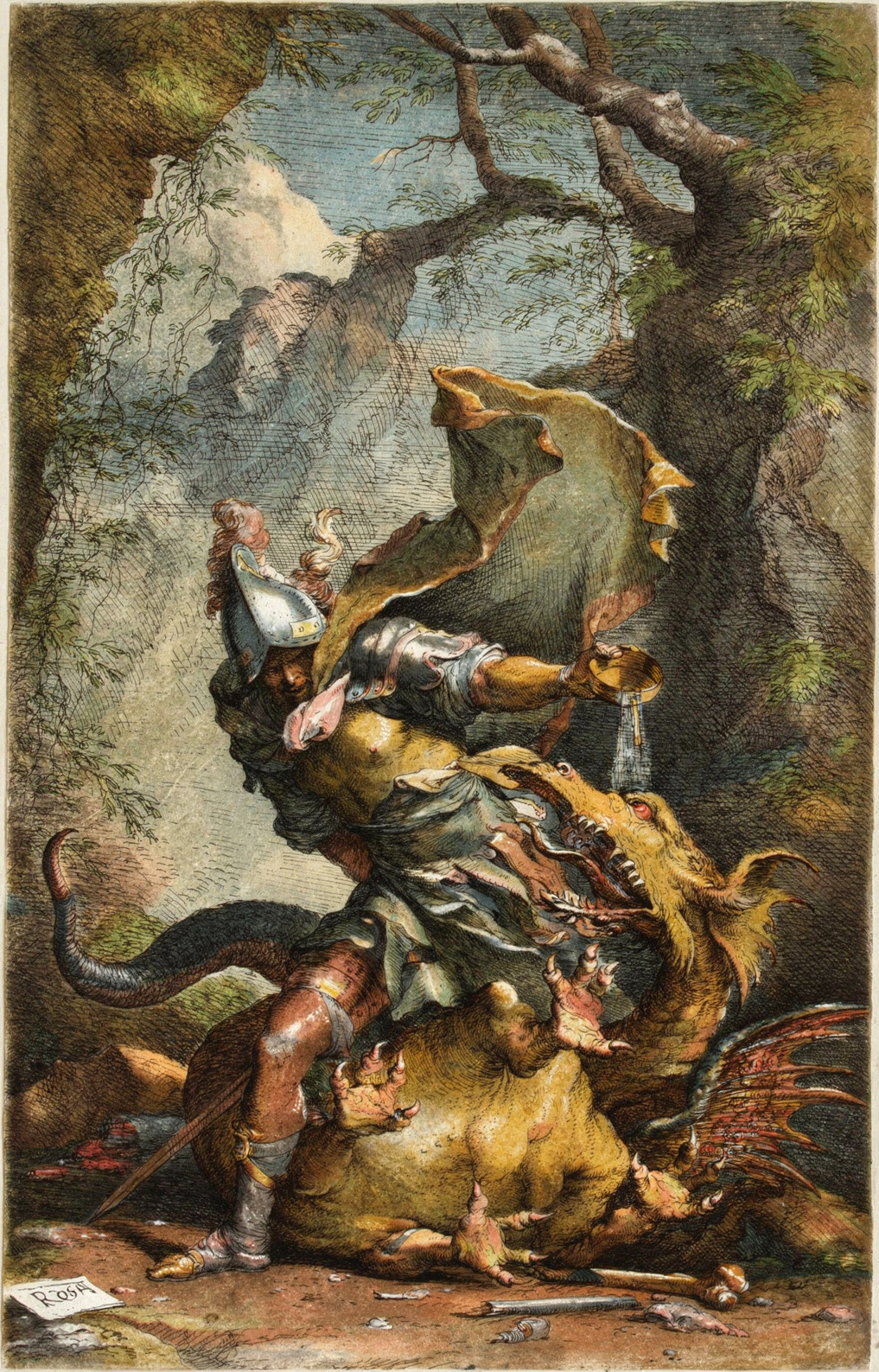
Jason and the Dragon
Buy-ready print · Contemporary colour edition
A mythological creature encounter gives the room a narrative tension beyond a matching colour palette.
From $39
Why Syrinx becomes reeds
The book introduces Syrinx as an Arcadian nymph devoted to Diana. When Pan pursues her, she flees until the river Ladon blocks her path. She asks the water nymphs for another form. Pan reaches her, but his embrace closes around reeds.
The reeds make a plaintive sound, and Pan joins lengths of them to create the pipes associated with his name. The instrument preserves Syrinx’s name as well. This is a story about transformation and the origin of music, but the escape comes first. Describing it simply as a love scene would erase the central action. Read the book’s account.
That sequence also explains why the image can feel unsettled even when its landscape appears inviting. Water and plants are active participants in the event. The river stops Syrinx; the reeds become the means by which she escapes possession.
Pan as an image of the universe
The chapter does not end with the flute. Its continuation records a symbolic interpretation of Pan as the whole universe. In that account, his human upper body relates to the heavens, while his hairy lower body suggests the earth and its vegetation. His horns are associated with the moon; the seven pipes with the seven planets of the historical scheme.
These are interpretations presented in the eighteenth-century commentary, rather than a single explanation accepted by every reader of the myth. They nevertheless offer an unusually rich way to return to the engraving. The figure in the woodland becomes a meeting point between nature, music and the sky. Read the continuation.
How to look at the scene
Begin with the diagonal of Pan’s reaching body. Then follow the reed stems, which give the action a vertical counterweight. Finally, look beyond the struggle towards the distant landscape.
Moving between those areas changes the pace of the image. The foreground is immediate and physical; the distance opens a world beyond the pursuit. A print large enough to let those different spaces remain legible can reward both a first glance and closer looking.
Fable’s developing colour edition removes the page’s surrounding frame and captions after straightening the inner scene. The colour is a contemporary AI-assisted interpretation by the Surrealium Atelier; the source engraving remains its visual and historical reference.
Choosing a place for a difficult story
This is a work for someone interested in mythology’s ambiguities, rather than a purely pastoral picture. A reading room or study offers space for that layered response. Natural materials may echo its woodland subject, while a quiet wall allows the dense scene to hold attention.
Before choosing mythological art as a gift, consider the story as well as the appearance. Here, a meaningful conversation begins with Syrinx’s agency and escape.
Explore the available Fable Atelier collection. The Temple des Muses project brings this kind of close reading into the print description, so the story can travel with the image.