Rococo art and style: 15 paintings in pastel and gold
Boucher’s Pompadour, Tiepolo’s Cleopatra, Canaletto’s Grand Canal and Liotard’s pastel lady in Turkish dress: fifteen Rococo paintings, what makes the style, and how to bring it into a room.
Rococo was the art of eighteenth century pleasure. After the weight of the Baroque, painters in Paris and Venice lightened everything: pastel skies, flirting couples, silk dresses, gods lounging on clouds and gilded rooms full of mirrors. The word comes from rocaille, the shell and rock ornament of garden grottoes.
The fifteen works below run from Paris boudoirs to Venetian palaces. Each is available as a print, and together they make the best case for a little frivolity on the walls.
1. Pompadour at Her Toilette
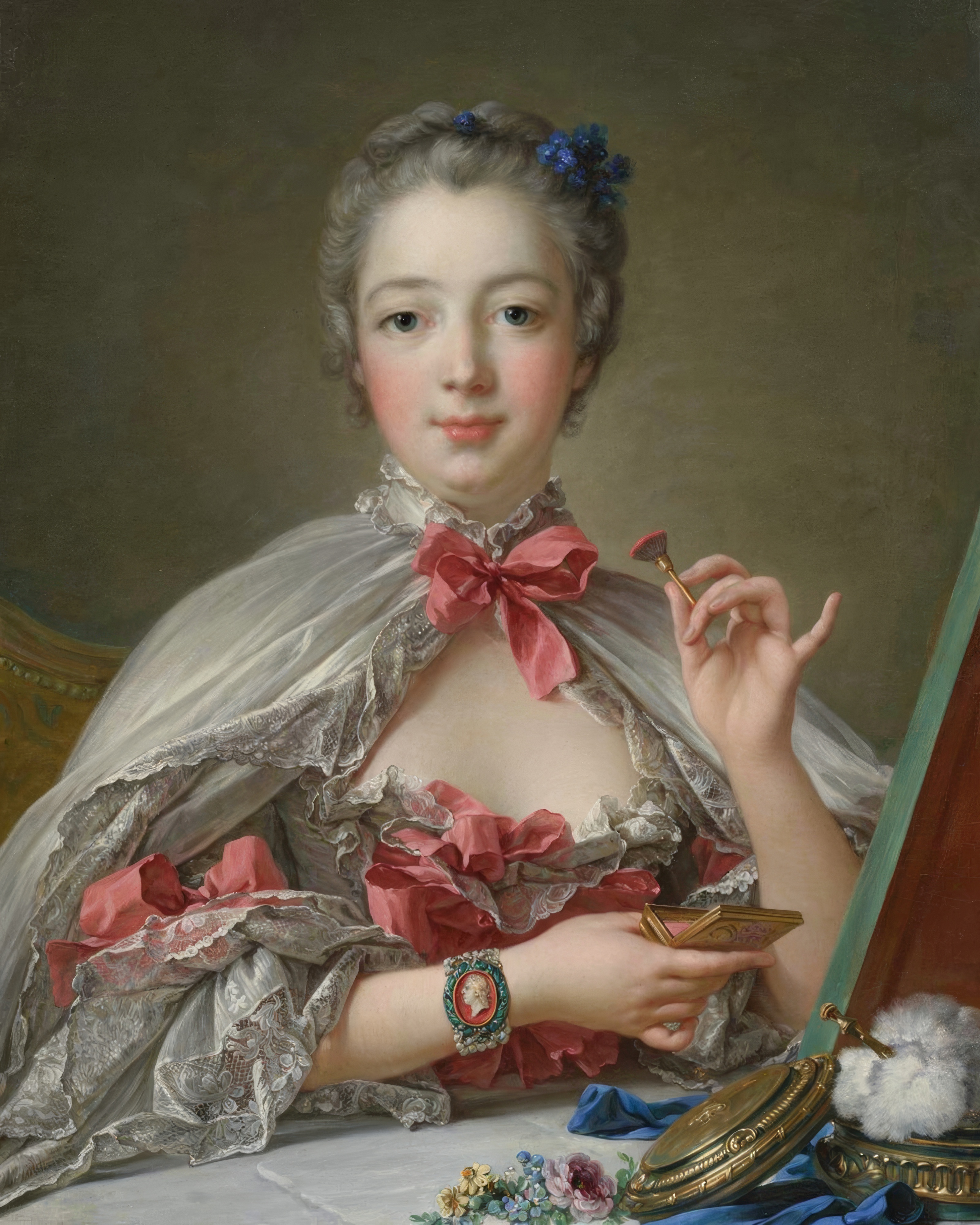
François Boucher, Pompadour at Her Toilette, 1750, with later additions. Oil on canvas. Harvard Art Museums.
Madame de Pompadour, mistress of Louis XV and great patron of the arts, was Boucher’s most important client. He painted her at her dressing table in 1750, a portrait of Rococo taste itself.
Made for a dressing room or bedroom.
2. Declaration of Love
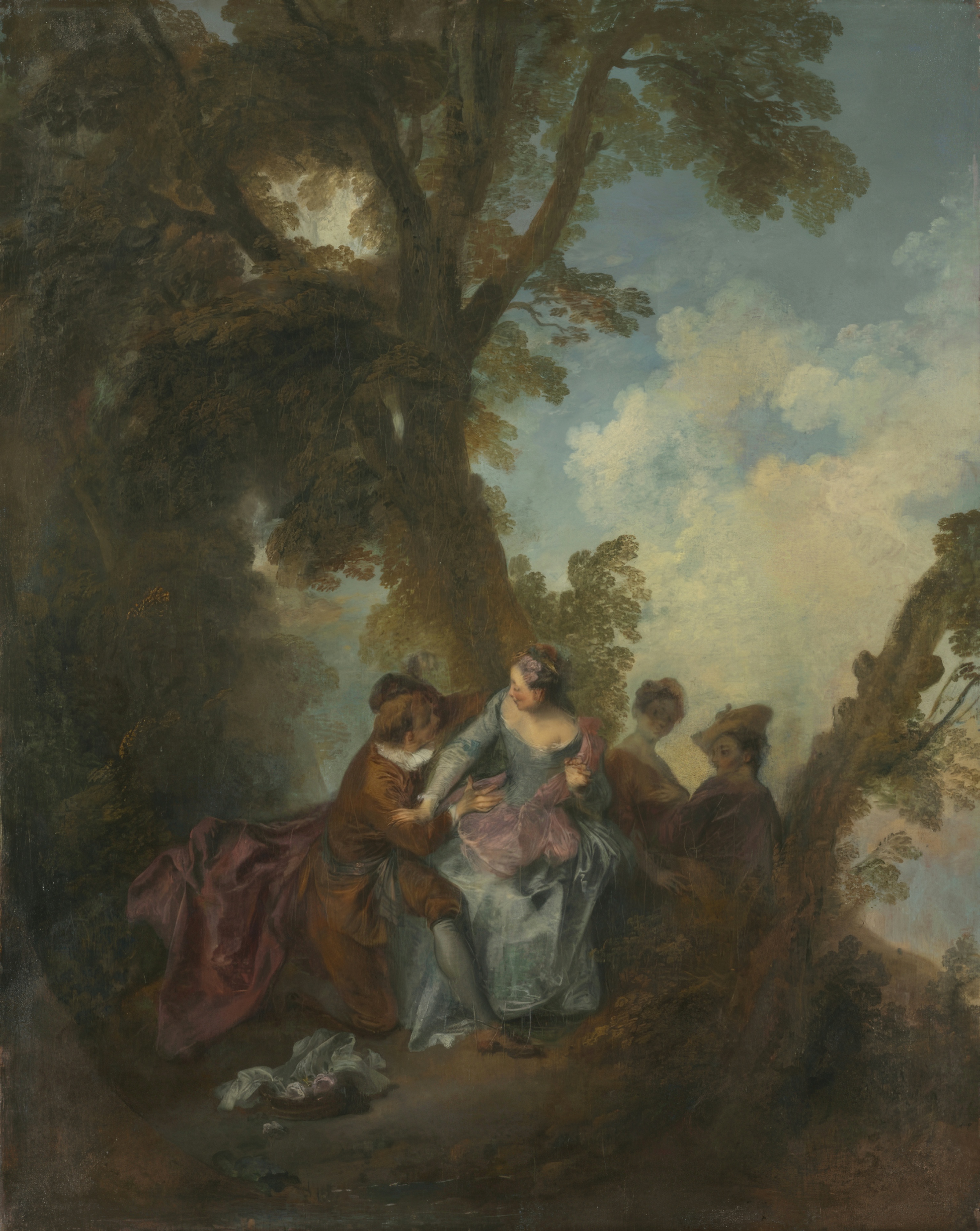
Nicolas Lancret, Declaration of Love, c. 1720. Oil on canvas. Cleveland Museum of Art.
Lancret set this courtship in a sunlit garden around 1720: a suitor makes his declaration to a lady with her lute, beside a statue and a fountain. Romance as a pretty performance, the Rococo way.
3. The Alarm
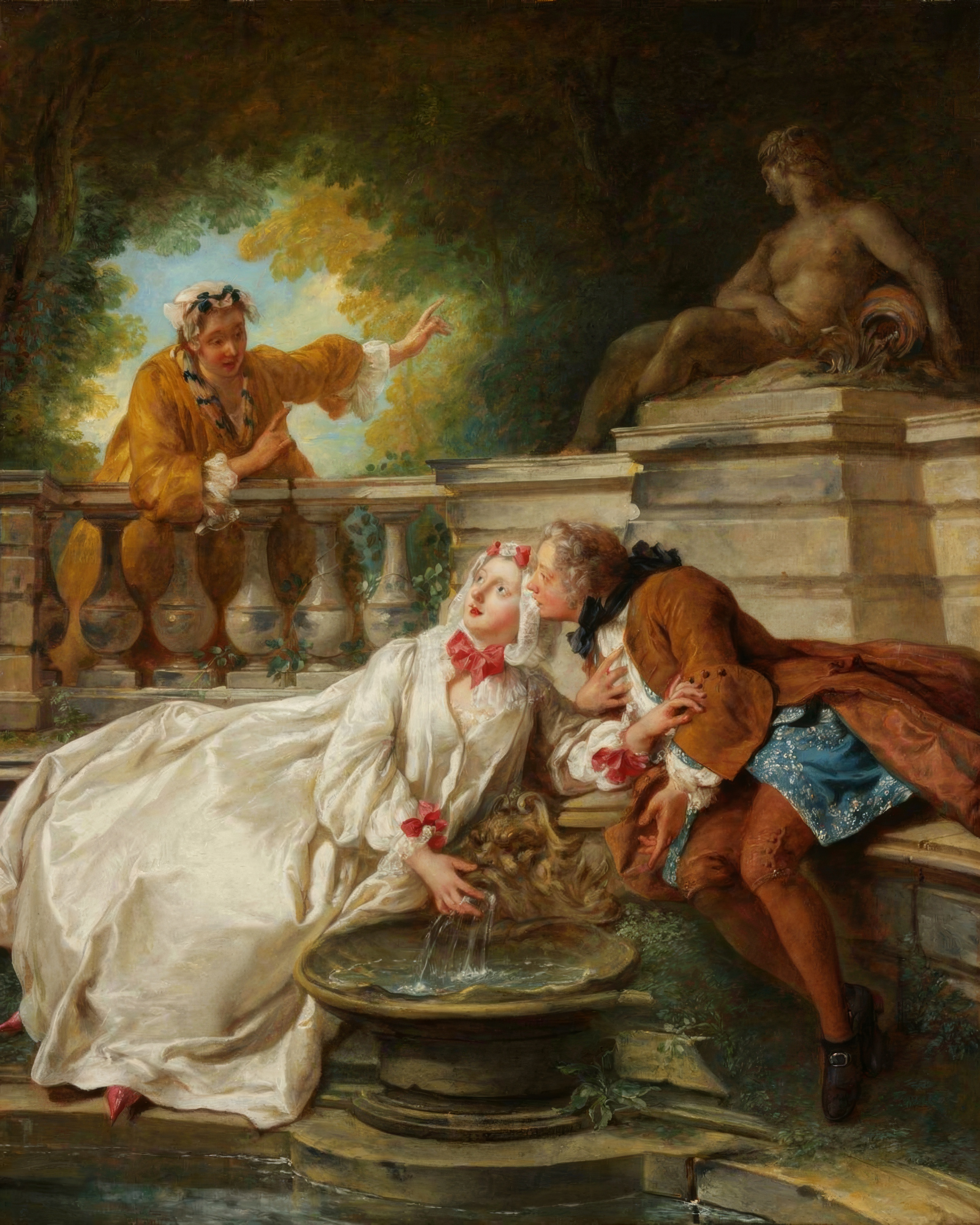
Jean-François de Troy, The Alarm, 1723. Victoria and Albert Museum, London.
Jean-François de Troy painted The Alarm in 1723: a flirtation in a lavish room, interrupted at the worst possible moment. Rococo comedy at its best.
4. The Beautiful Greek Woman
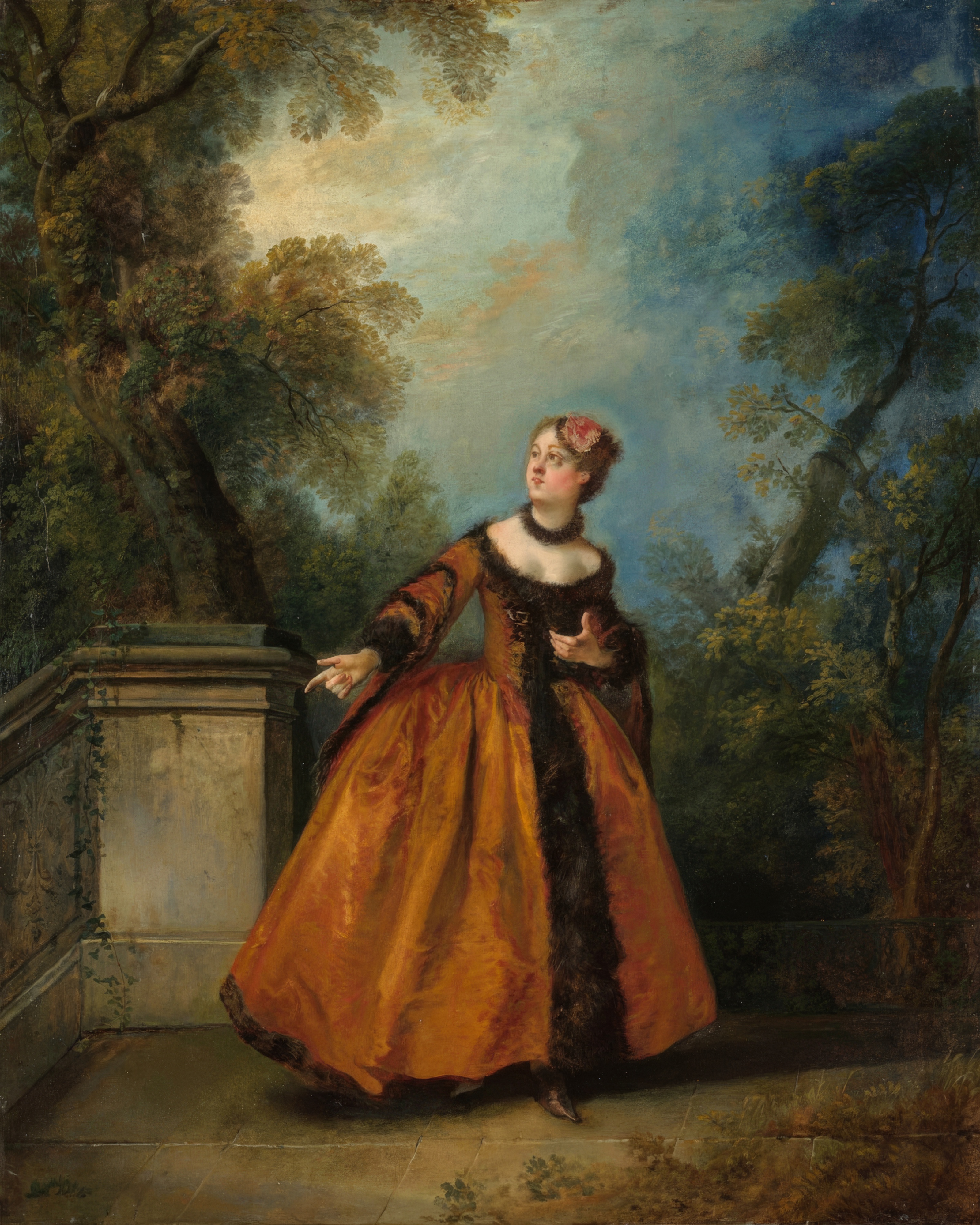
Nicolas Lancret, The Beautiful Greek Woman, 1731–36. Oil on canvas. Art Institute of Chicago.
Nicolas Lancret, Watteau’s rival, painted The Beautiful Greek Woman in the 1730s, part of the Rococo fashion for costumes from the East.
5. Portrait of a Woman
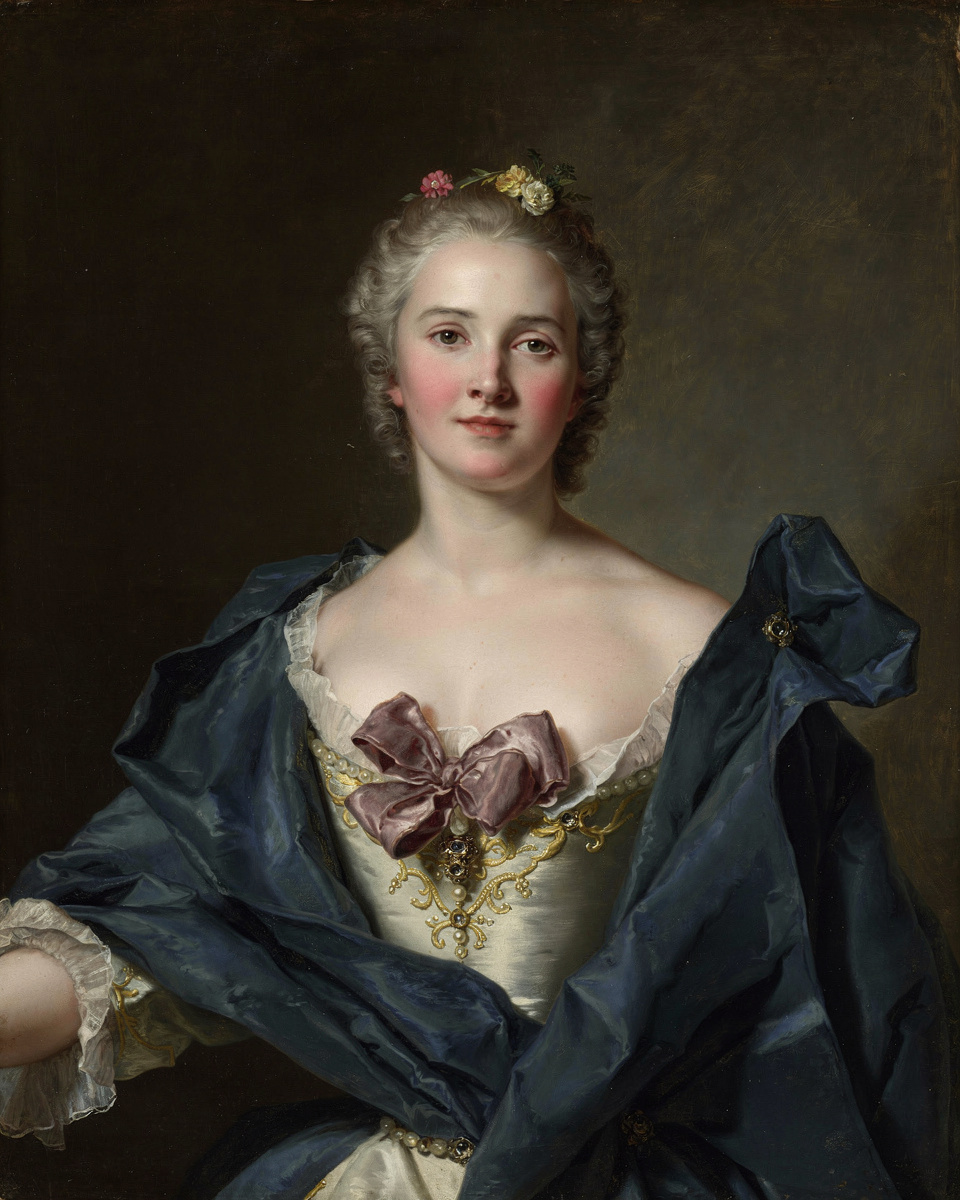
Jean-Marc Nattier, Portrait of a Woman, c. 1748. Oil on canvas. Cleveland Museum of Art.
Jean-Marc Nattier painted the ladies of the French court with porcelain skin and silk in soft blue. His portraits defined Rococo elegance.
6. Woman in Turkish Dress, Seated on a Sofa
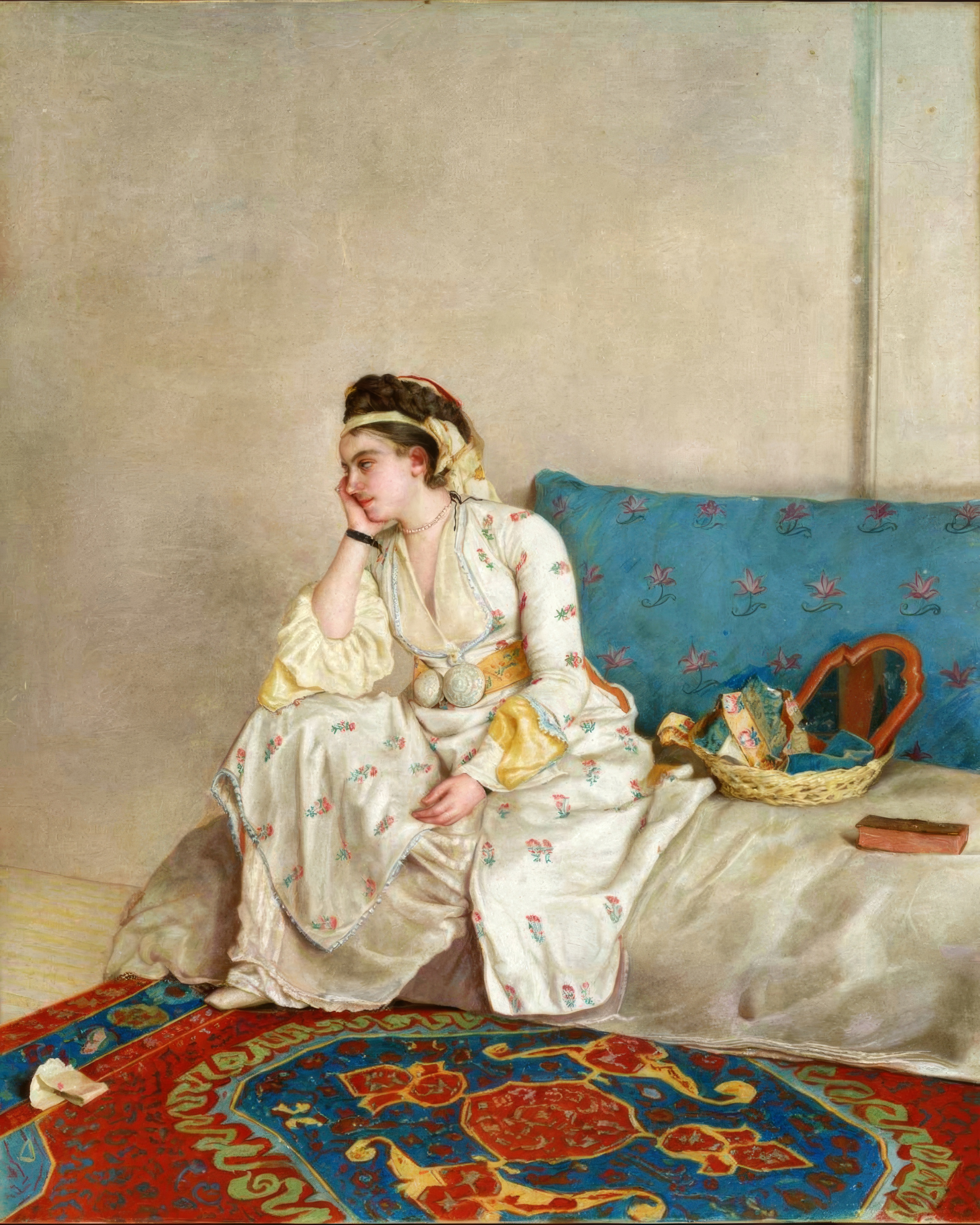
Jean Etienne Liotard, Woman in Turkish Dress, Seated on a Sofa, ca. 1751–52. Pastel over red chalk underdrawing on parchment. The Metropolitan Museum of Art, New York.
Jean-Étienne Liotard lived in Constantinople and wore Turkish dress himself. His pastel of a woman on a sofa, around 1751, is crisp, cool and modern.
7. Still Life with Monkey, Fruits, and Flowers
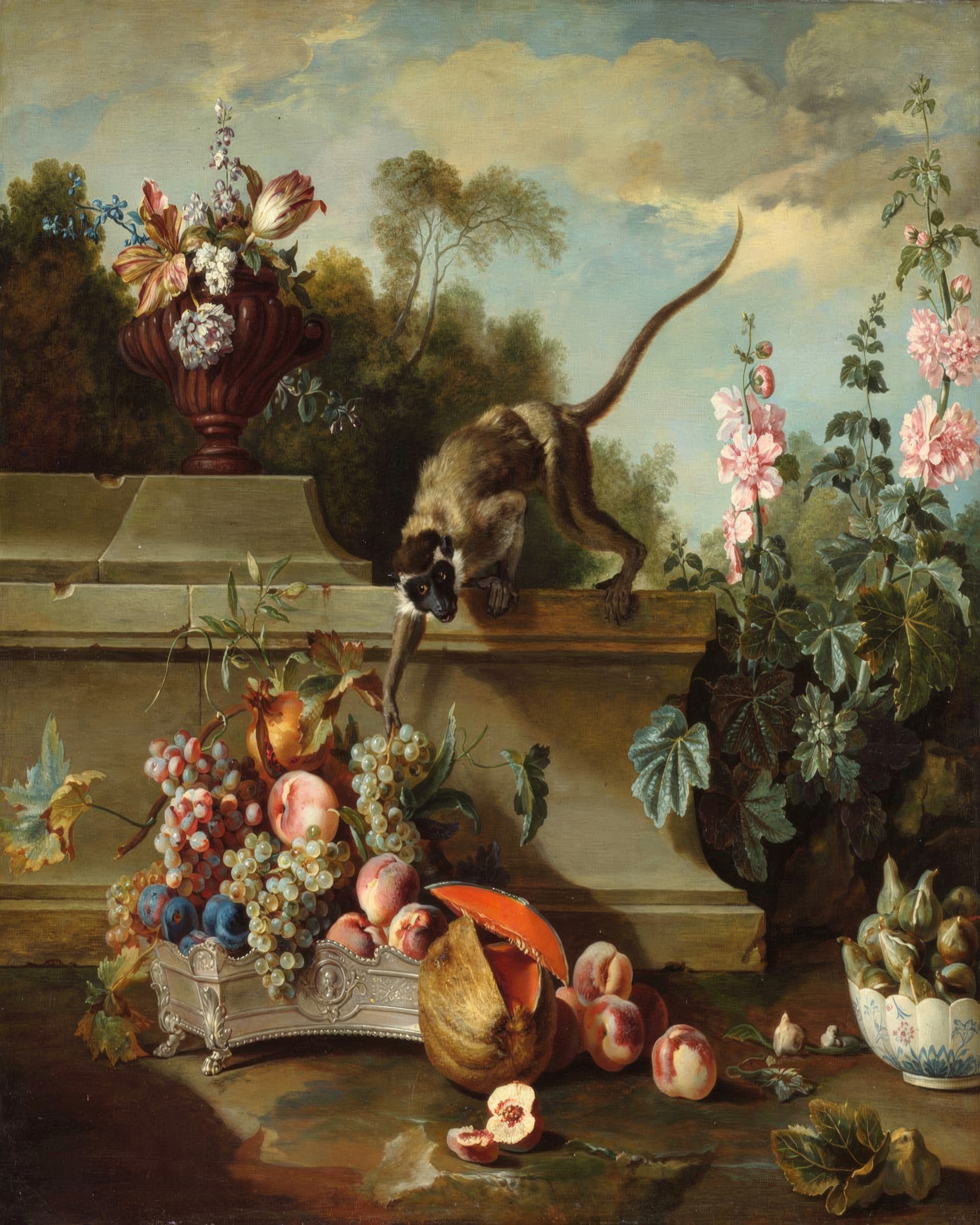
Jean Baptiste Oudry, Still Life with Monkey, Fruits, and Flowers, 1724. Oil on canvas. Art Institute of Chicago.
Jean-Baptiste Oudry painted a mischievous monkey stealing fruit from a lavish display in 1724. The Rococo even made still life funny.
A witty piece for a kitchen or dining room.
8. Lady at Her Toilette
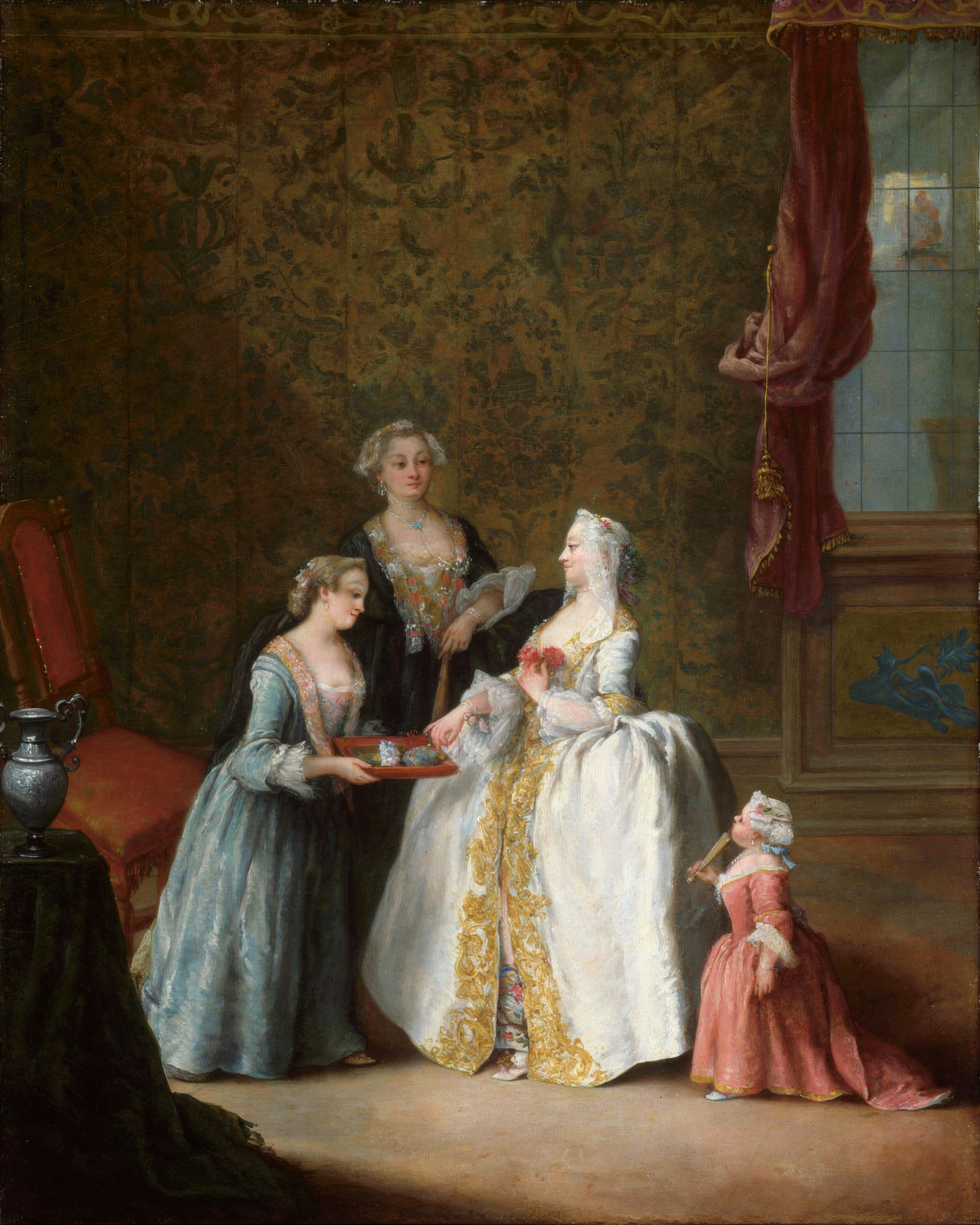
Pietro Longhi, Lady at Her Toilette, Late 1740s. Oil on canvas. Art Institute of Chicago.
Pietro Longhi painted the daily life of Venetian aristocrats in the 1740s: dressing, receiving visitors, gossiping. Small, sly and charming.
9. The Meeting of Antony and Cleopatra
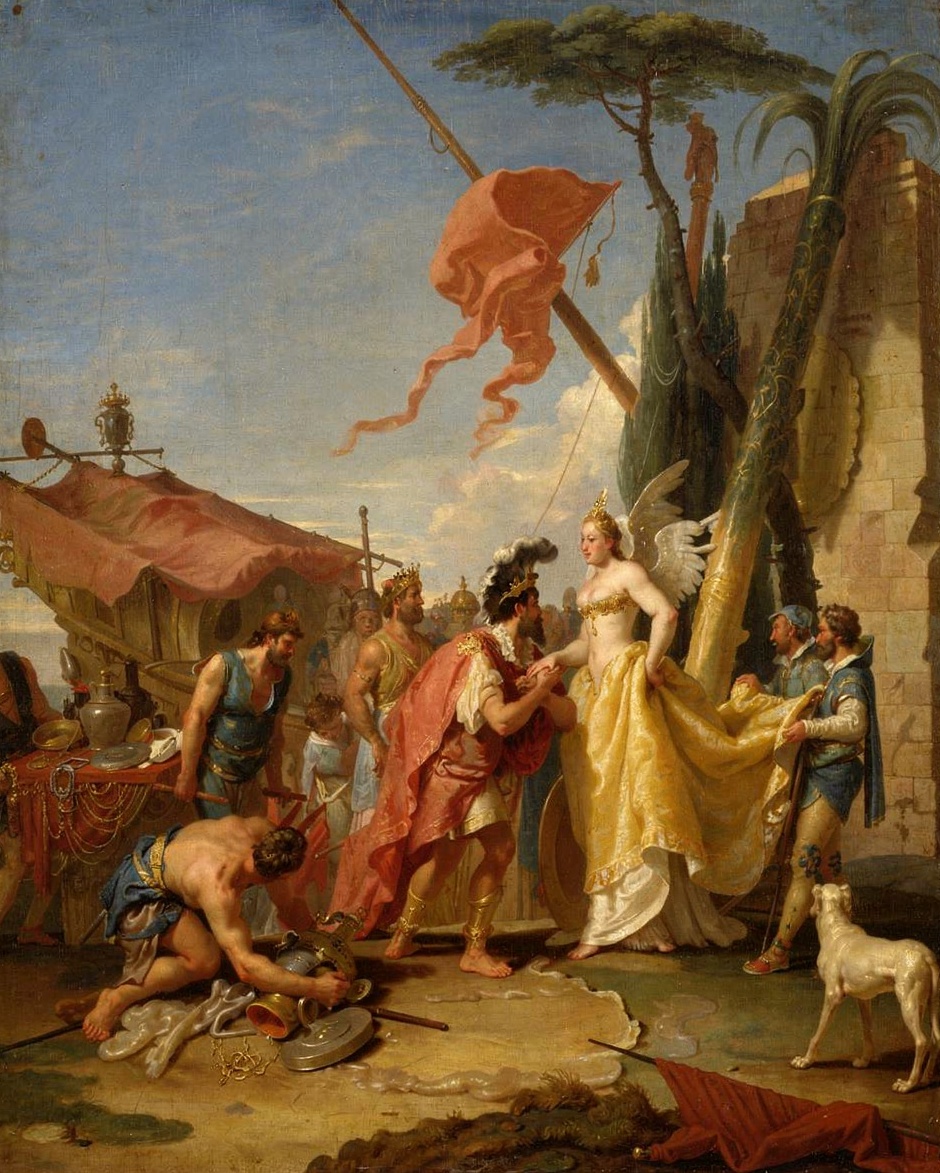
Giovanni Battista Tiepolo, The Meeting of Antony and Cleopatra, ca. 1745–47. Oil on canvas. The Metropolitan Museum of Art, New York.
Giovanni Battista Tiepolo was the greatest decorative painter of the century. His Meeting of Antony and Cleopatra is all silk, sky and ceremony, a Venetian fantasy of ancient Egypt.
10. Rinaldo and Armida in Her Garden
Giovanni Battista Tiepolo, Rinaldo and Armida in Her Garden, c. 1742–45. Oil on canvas. Art Institute of Chicago.
From Tasso’s epic poem: the knight Rinaldo, enchanted by the sorceress Armida, forgets his crusade in her garden. Tiepolo paints the spell in gold and blue.
11. Neptune Offering Gifts to Venice
Giovanni Battista Tiepolo, Neptune Offering Gifts to Venice, c. 1745–50. Oil on canvas. Palazzo Ducale, Venice.
In the Doge’s Palace, Tiepolo painted Neptune pouring the riches of the sea at the feet of Venice herself. Few pictures are more confident.
12. The Grand Canal and Rialto Bridge
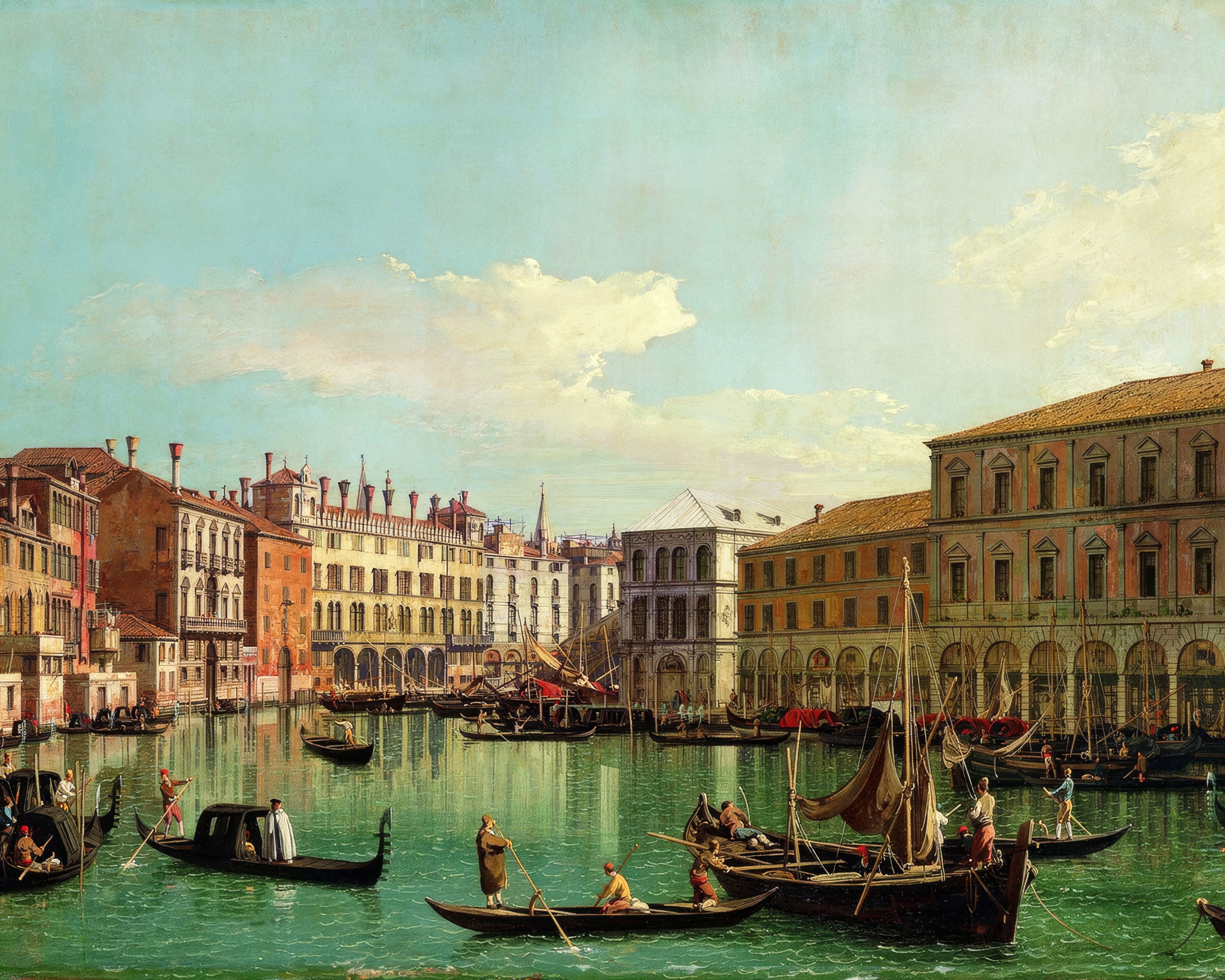
Canaletto, The Grand Canal and Rialto Bridge, 1730s. Oil on canvas. The Metropolitan Museum of Art, New York.
Canaletto painted Venice for the young English lords of the Grand Tour. His view of the Grand Canal toward the Rialto is the souvenir every visitor wanted.
A bright, crisp picture for a living room or hallway.
13. Festival in Piazza Navona
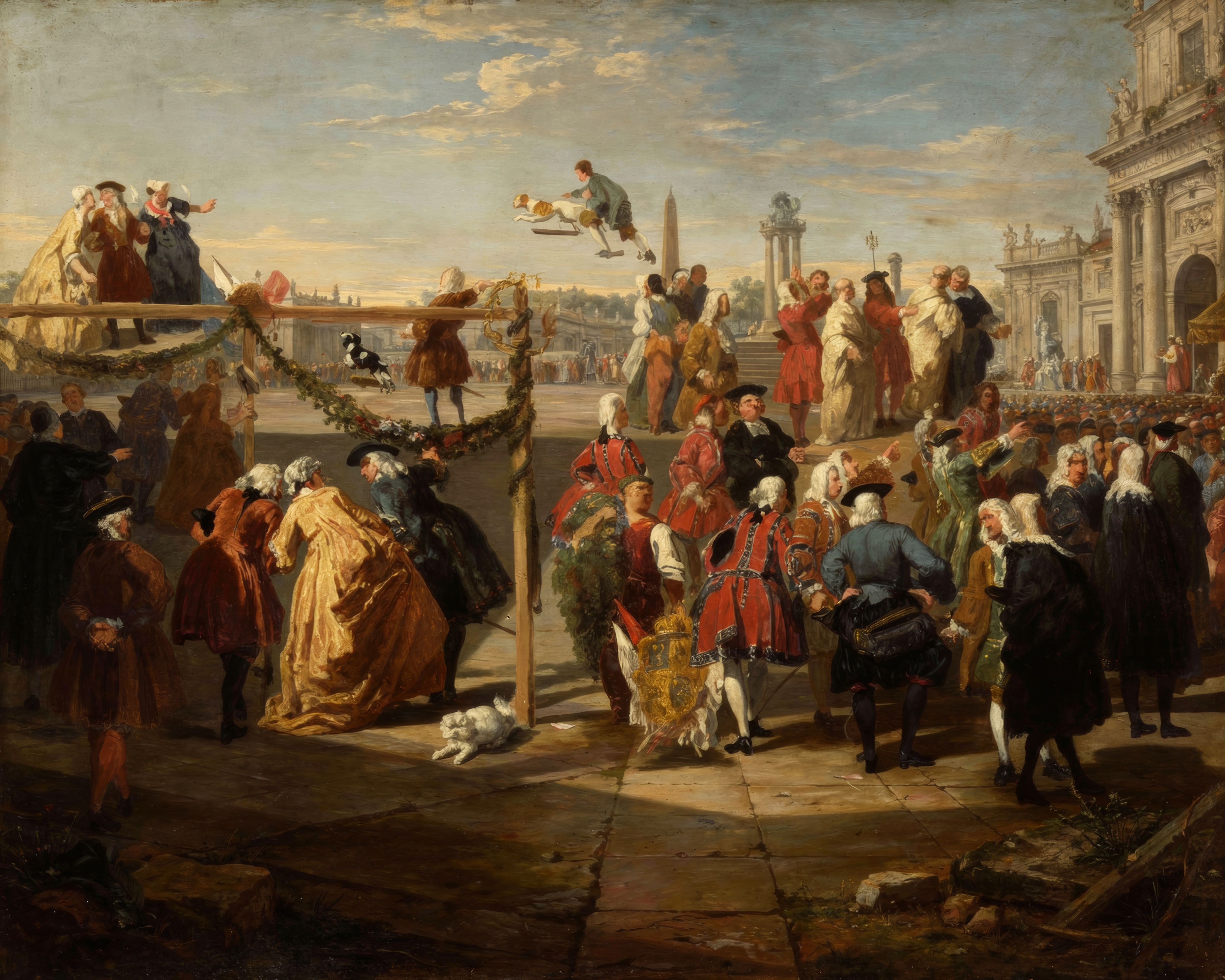
Giovanni Paolo Panini, Festival in Piazza Navona, 1729. Oil on canvas. Art Institute of Chicago.
Giovanni Paolo Panini painted Rome’s great festivals. Here Piazza Navona fills with carriages and celebrants beneath Bernini’s fountain.
14. The Grand Staircase of the Villa d'Este at Tivoli
Jean-Honoré Fragonard, The Grand Staircase of the Villa d'Este at Tivoli, c. 1760. Oil on canvas. Minneapolis Institute of Art.
The young Fragonard spent a summer at the Villa d’Este outside Rome around 1760, drawing its overgrown gardens. This view of the great staircase is romantic before Romanticism.
15. A Woman with a Dog
Jean-Honoré Fragonard, A Woman with a Dog, 1769. Oil on canvas. Metropolitan Museum of Art, New York.
Fragonard’s lady with her little white dog, painted in 1769, ends our list with a brushstroke-quick portrait. It is also one of Fable’s portrait styles: send a photo of you and your dog and see a free preview.
Create your portrait in this style
Rococo prints look best on soft colours, such as duck egg blue, blush, sage or cream, with a touch of gold in a frame or lamp. Group two or three over a sofa or a dressing table, and let one big Tiepolo hold a whole wall.
Questions
What is Rococo style?
A light, playful style of art and decoration from about 1720 to 1770, with pastel colours, curving ornament, gilding and subjects of love, leisure and mythology.
Who are the main Rococo painters?
In France, Watteau, Boucher, Fragonard and Lancret; in Venice, Tiepolo, Canaletto, Guardi and Pietro Longhi.
How do I use Rococo art in a modern home?
Use it as a counterpoint: one pastel Rococo print in a simple, modern room feels fresh and witty, especially with a gold or painted frame.