Taurus gifts: ten pictures of fields and tables
Taurus gifts through the bull’s pastoral world, fruit and everyday objects, with real art chosen for a real person.
Taurus gifts can borrow a pastoral note from the sign’s bull emblem without turning that emblem into a theory of someone’s habits. A field, a bowl of fruit or a well-used jug may connect to things a recipient actually enjoys. The sign is a theme for the occasion; their preferences are the evidence for the choice.
This approach follows the astrology gift story and the companion Aries selection. The works below move between landscape and still life, from cattle in shallow water to fruit defined by colour. They are not presented as astrological paintings, nor as objects that will supply comfort or prosperity. Begin with a kitchen, garden, walk or meal you associate with the person, as our personalized gifts guide suggests, and compare the pictures from that starting point.
1. Cattle beneath an immense sky
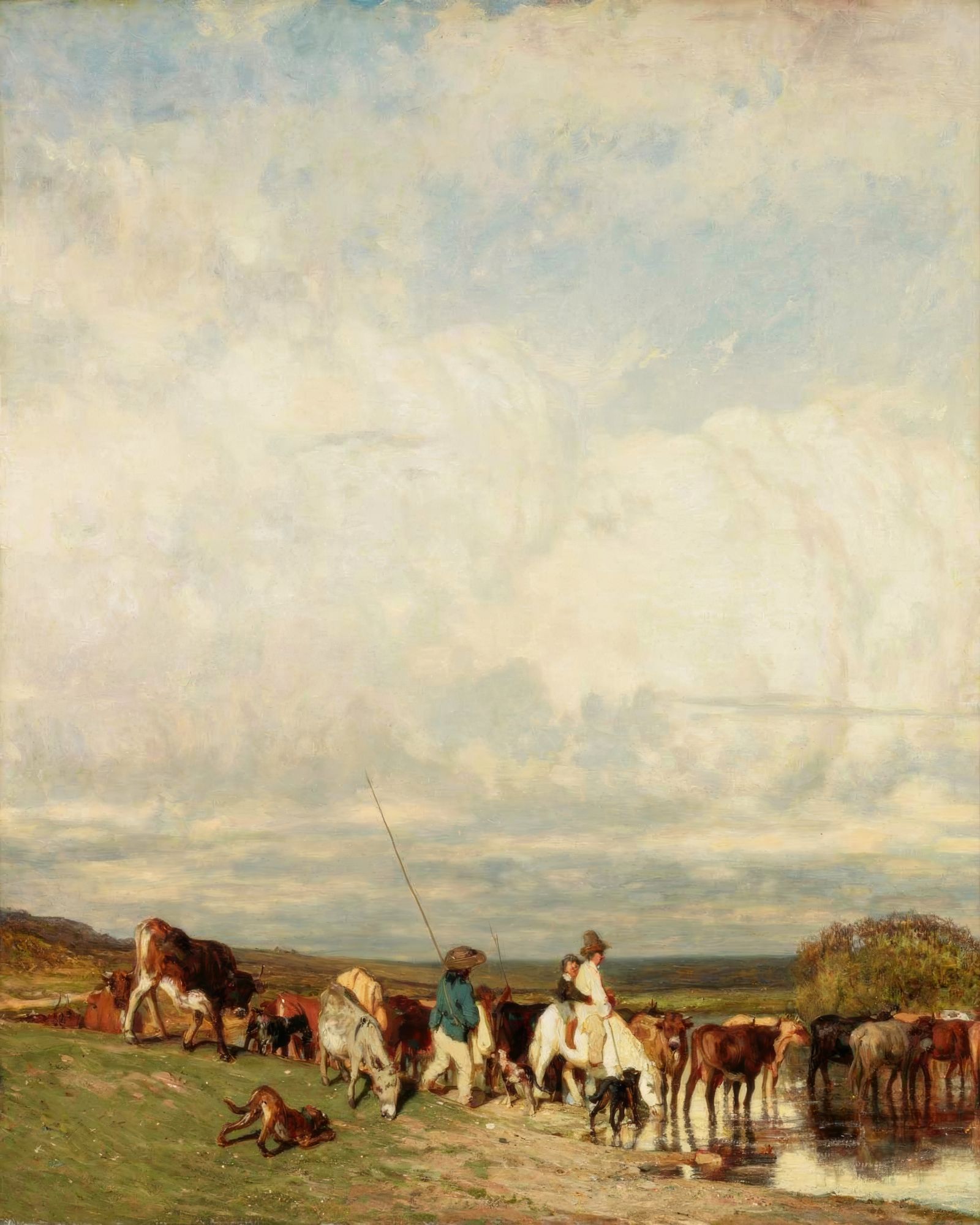
Cows Crossing a Ford — Jules Dupré, 1836. The Metropolitan Museum of Art, New York. Restored by Surrealium at Vaxholm Fortress, Sweden.
Dupré’s Cows Crossing a Ford gives the animals a patient movement across the lower edge of a large landscape. People, cattle and water share the scene without a single bull being isolated as an emblem. It offers a subtle link to Taurus for someone who already enjoys rural views, while the broad sky makes it worth considering as a landscape in its own right.
2. The cut surface of a watermelon
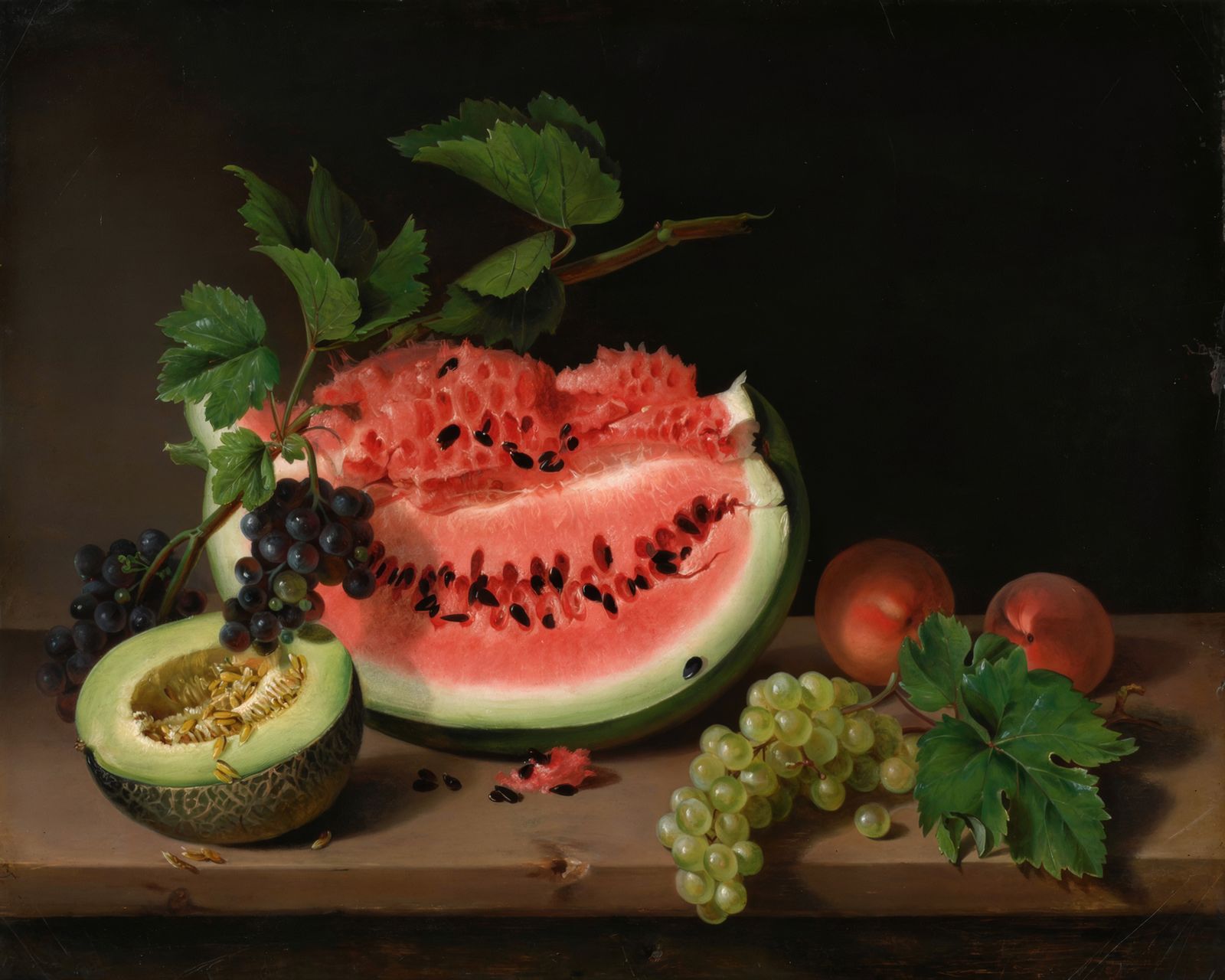
Still Life with Watermelon — Sarah Miriam Peale, 1822. Harvard Art Museums. Restored by Surrealium at Vaxholm Fortress, Sweden.
Peale sets a bright slice of watermelon among other fruit against a dark ground. The seeds and pale rind make the exposed interior as interesting as the outside shape, turning an ordinary food into a subject for close observation. Choose it for a recipient who likes rich still-life colour or has a particular memory of summer meals, rather than assuming that every Taurus wants an indulgent gift.
3. A bowl full of warm colour
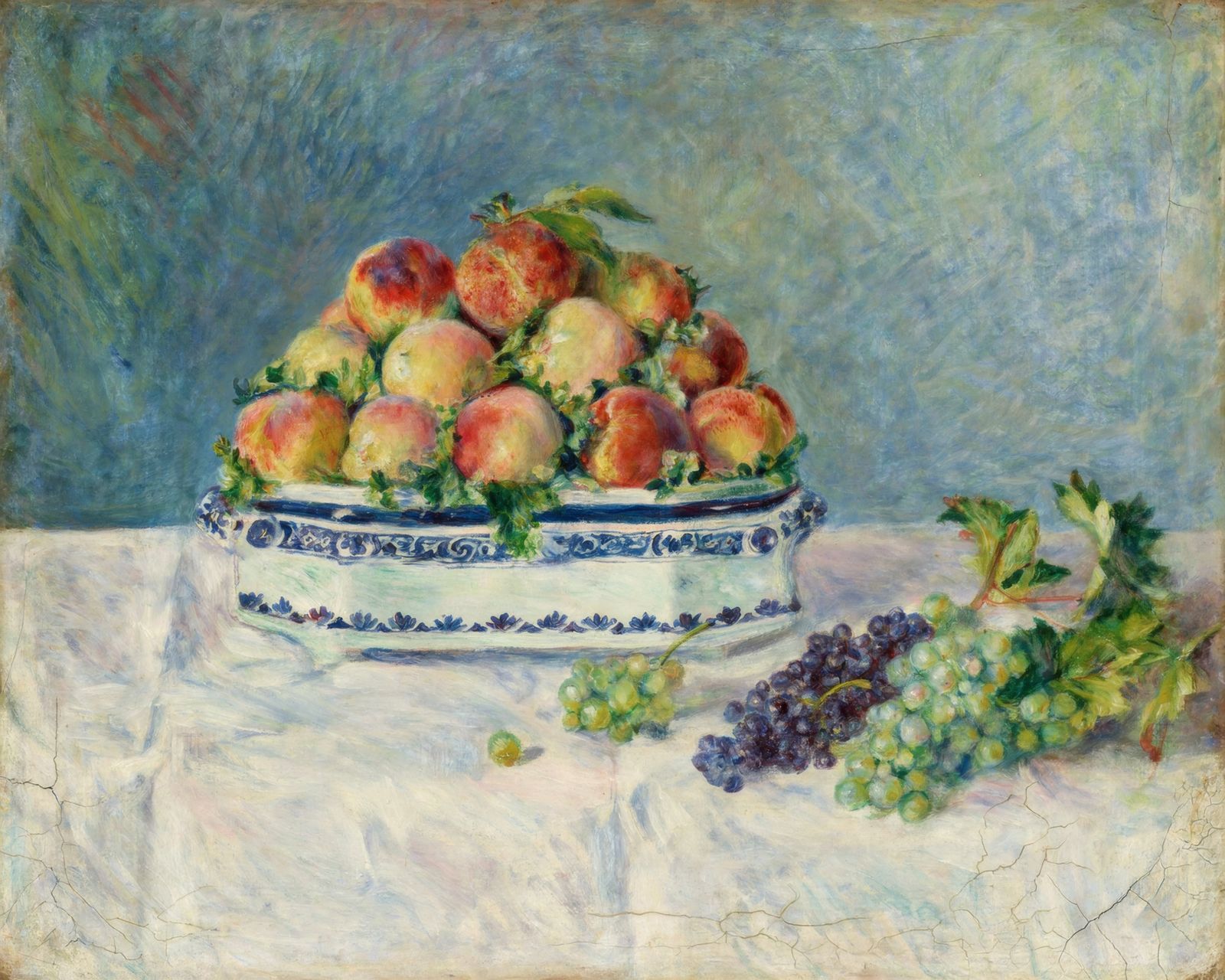
Still Life with Peaches and Grapes — Auguste Renoir, 1881. The Metropolitan Museum of Art, New York. Restored by Surrealium at Vaxholm Fortress, Sweden.
Renoir’s peaches and grapes spread across a pale cloth, with blue decoration on the bowl answering the warm fruit. The brushwork keeps the surface lively instead of describing every skin with hard precision. This may suit someone who enjoys colour and a loose painted touch, especially if their room already welcomes pale backgrounds rather than the darker grounds of traditional banquet still lifes.
4. Apples and pears as a construction
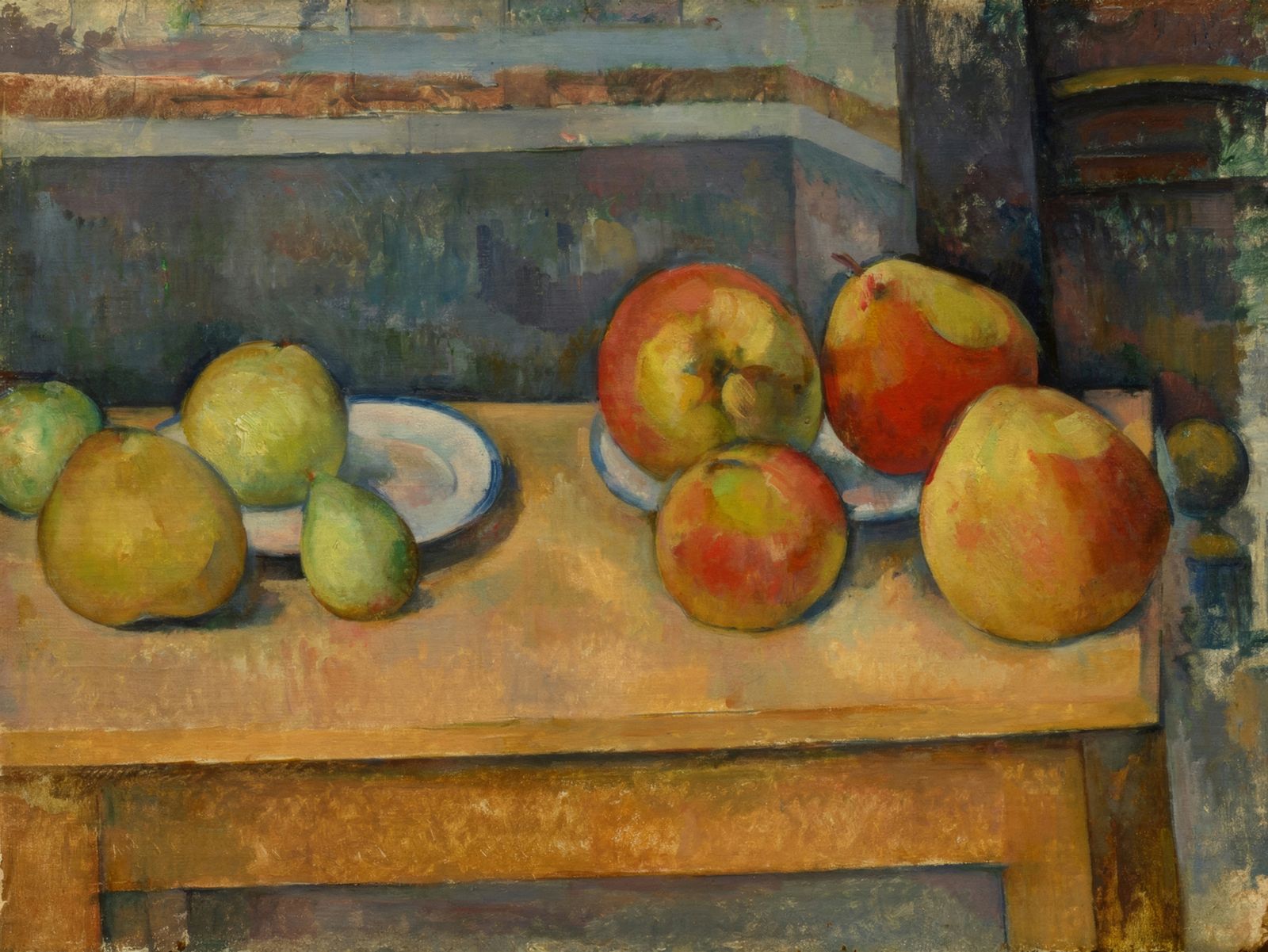
Still Life with Apples and Pears — Paul Cézanne, ca. 1891–92. The Metropolitan Museum of Art, New York. Restored by Surrealium at Vaxholm Fortress, Sweden.
Cézanne arranges fruit across a yellow table so that each rounded form seems to hold its own weight. The surrounding lines and planes remain slightly unsettled, giving an everyday subject an unexpected structural interest. For a recipient who likes to study how an artist builds a picture, that tension may be more compelling than the fruit itself or any symbolic association with abundance.
5. A simple arrangement made strange by colour
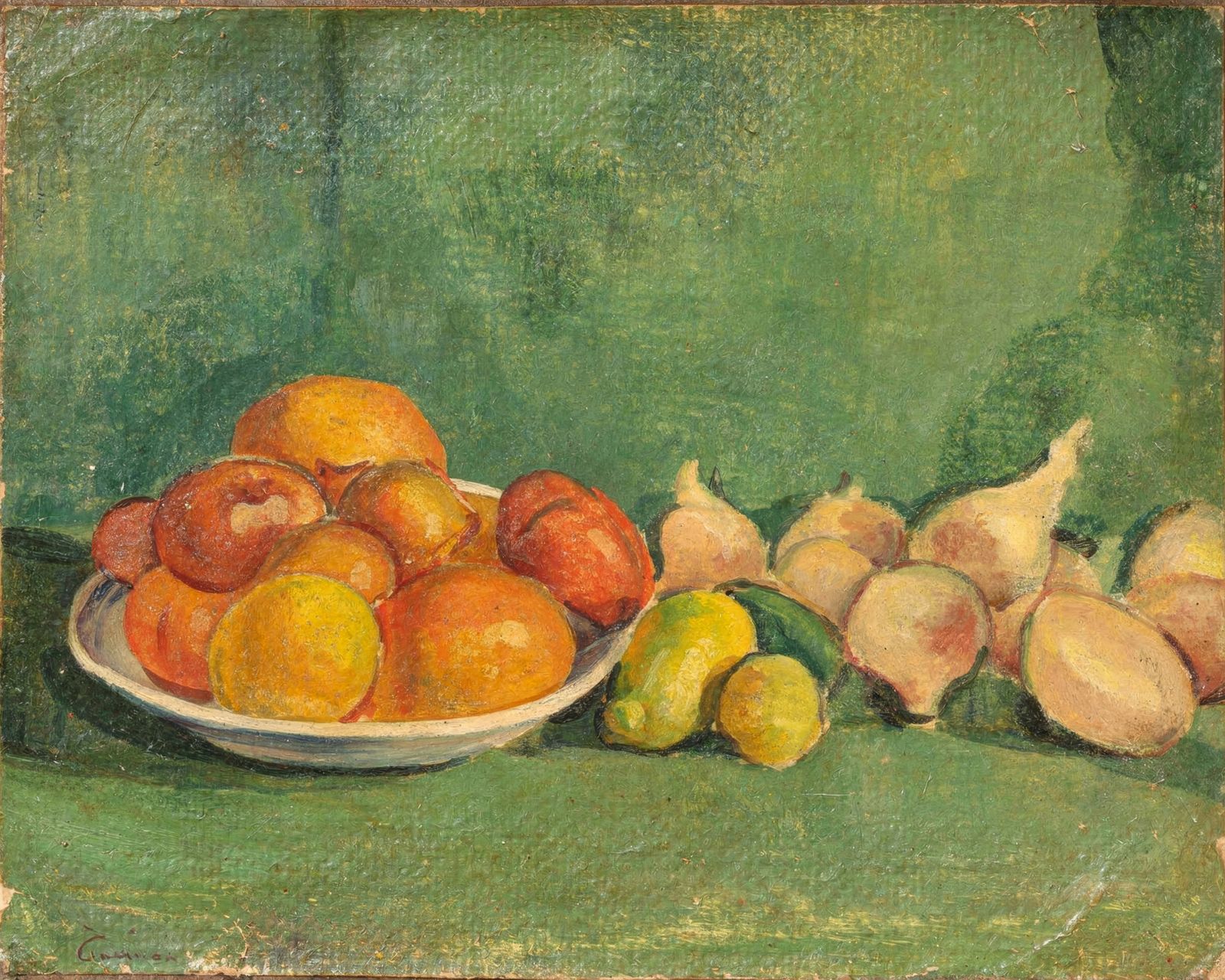
Still Life with Fruit — Émile Bernard, 1890. Art Institute of Chicago. Restored by Surrealium at Vaxholm Fortress, Sweden.
Bernard’s Still Life with Fruit reduces the setting to broad areas of green and warm orange. The fruit does not need elaborate glassware or a distant view to establish its presence; colour and outline do the work. It is a useful choice for someone who likes direct, uncluttered compositions, with enough visual boldness to stand apart from a more conventional kitchen picture.
6. A cup, a jar and an uneven cloth
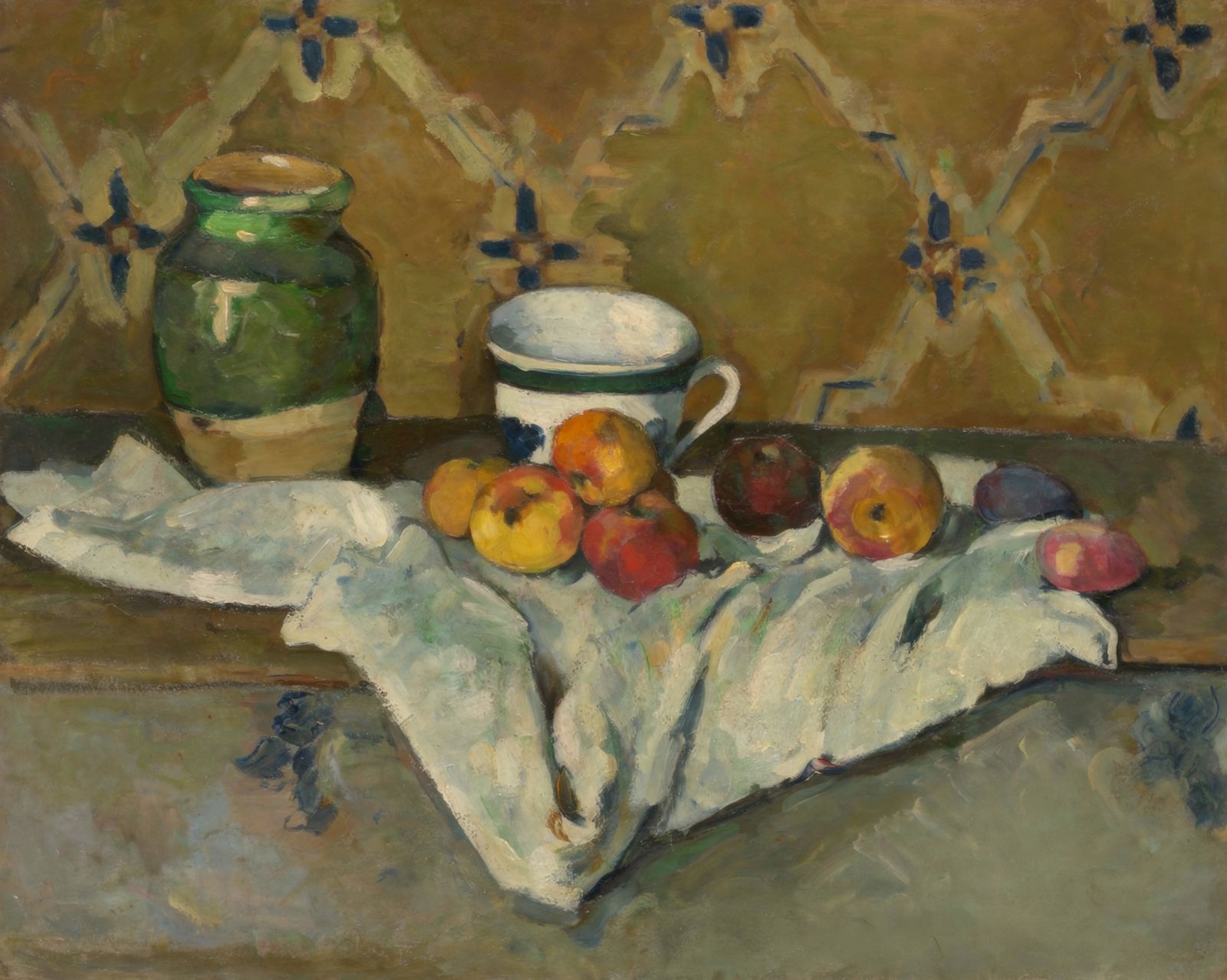
Still Life with Jar, Cup, and Apples — Paul Cézanne, ca. 1877. The Metropolitan Museum of Art, New York. Restored by Surrealium at Vaxholm Fortress, Sweden.
Cézanne’s Still Life with Jar, Cup, and Apples gives ordinary containers a strong presence among the folds of a white cloth. The objects feel related but not perfectly aligned, and the patterned background keeps the room involved in the arrangement. Choose it for a recipient who enjoys the character of daily things, making the gift about their attention to objects rather than a stereotype about possession or comfort.
7. Fruit with an unexpected visitor
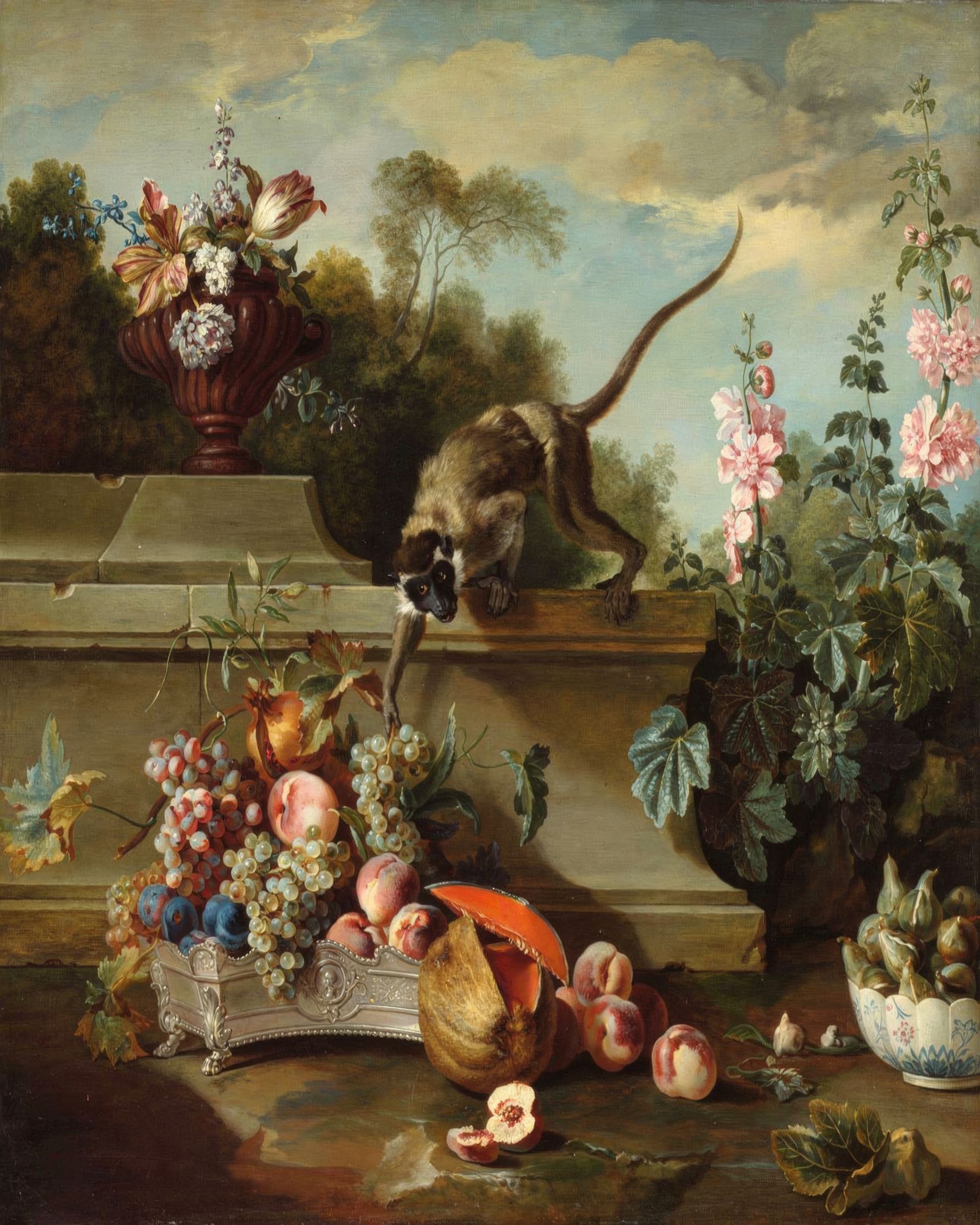
Still Life with Monkey, Fruits, and Flowers — Jean Baptiste Oudry, 1724. Art Institute of Chicago. Restored by Surrealium at Vaxholm Fortress, Sweden.
Oudry’s monkey interrupts a lavish display of flowers and fruit on stone. The animal’s movement shifts the still life towards a small drama, while the many textures give an attentive viewer plenty to revisit. It may suit a person who enjoys playful detail and historical decorative painting, but it is worth checking that they like busy compositions before choosing it simply for the richness of the subject.
8. A formal bouquet and a cut melon
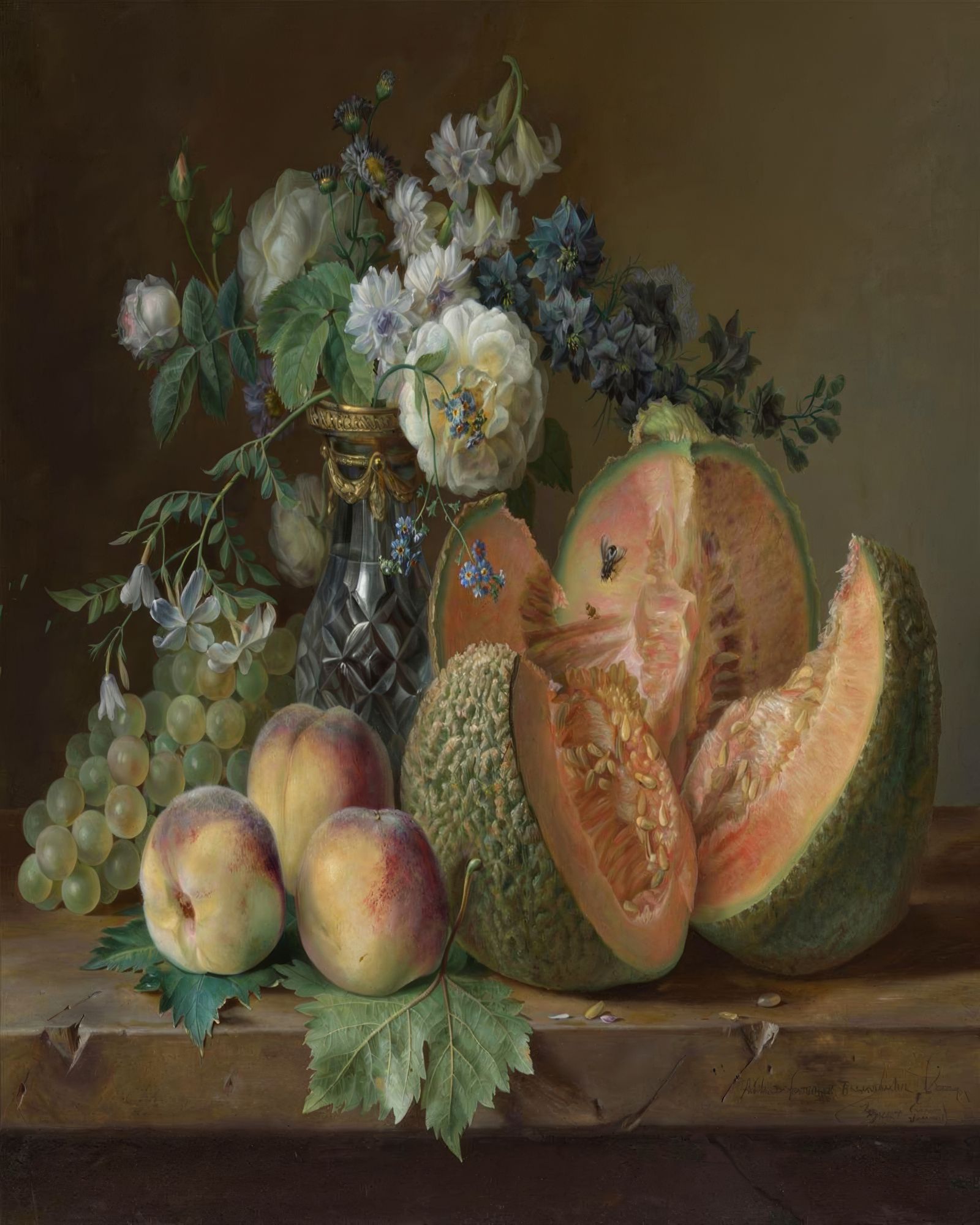
A Noble Still Life — Charlotte Eustache Sophie de Fuligny Damas, marquise de Grollier, 1780. The Metropolitan Museum of Art, New York. Restored by Surrealium at Vaxholm Fortress, Sweden.
The marquise de Grollier combines tall flowers with fruit arranged along a ledge. The exposed melon and carefully described leaves keep the painting’s abundance specific, with distinct surfaces rather than a general haze of colour. Consider it for someone interested in botanical painting or women artists, and use that interest in the gift note instead of assigning the picture a promise of fertility or wealth.
9. A table set for company
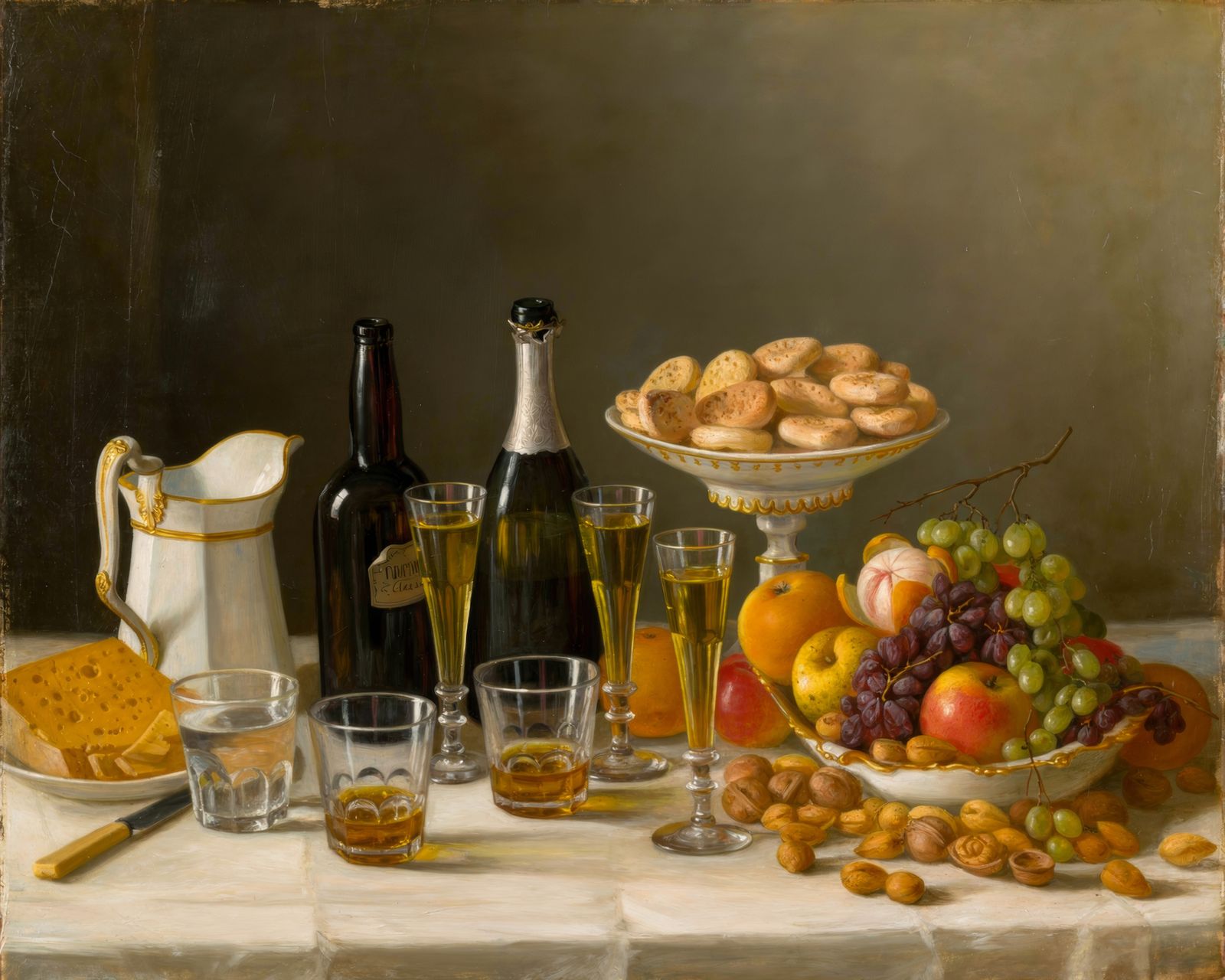
Wine, Cheese, and Fruit — John F. Francis, 1857. Art Institute of Chicago. Restored by Surrealium at Vaxholm Fortress, Sweden.
Francis’s Wine, Cheese, and Fruit arranges bottles, glasses and food across a long surface. The repeated transparent vessels make the light itself part of the subject, while the provisions suggest a gathering without showing its guests. A shared pleasure in hosting or preparing a meal can make the choice personal, provided the recipient actually enjoys the objects and associations visible in the painting.
10. The quiet work of a kitchen
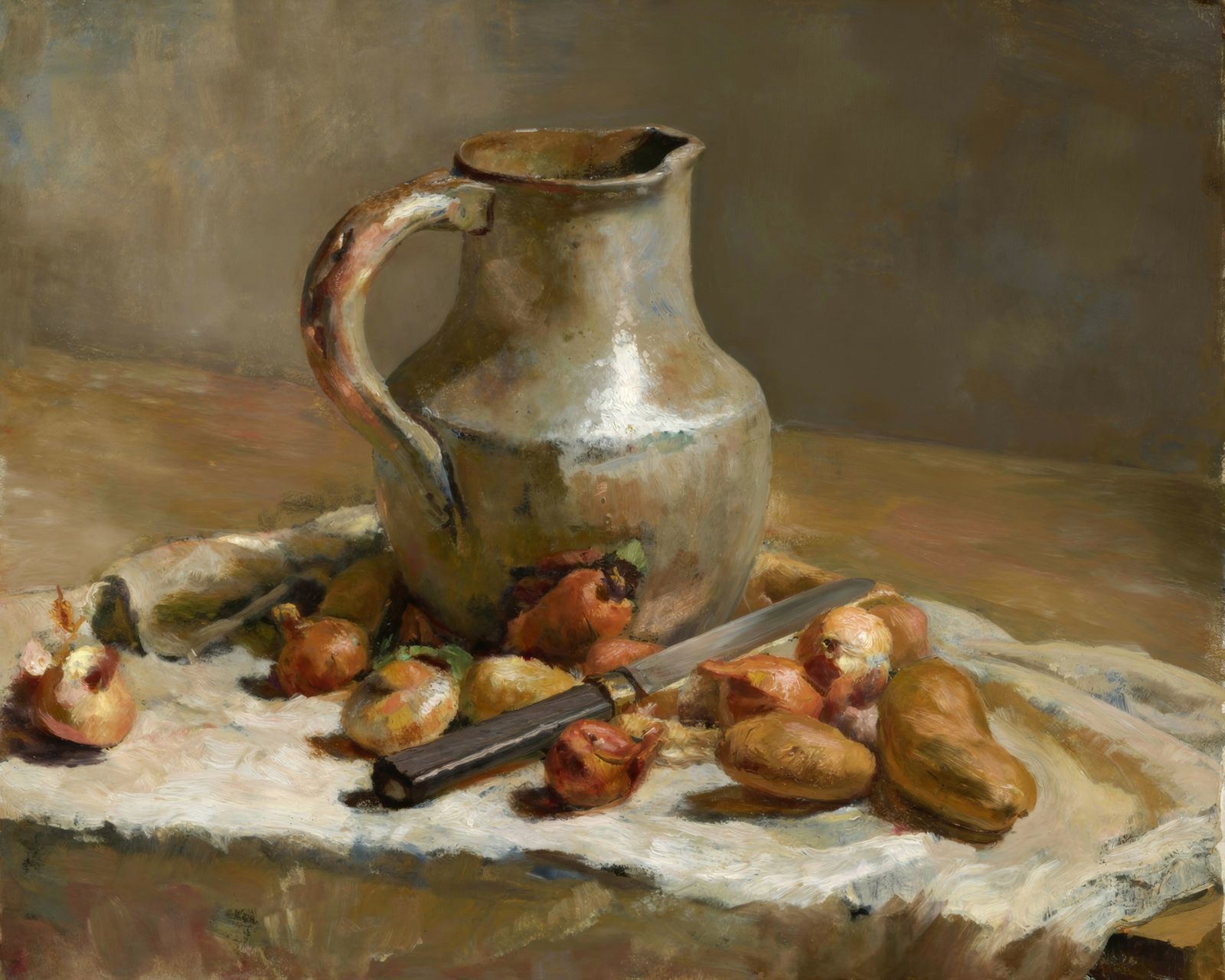
Still Life with Jug and Knife — Édouard Vuillard, 1888–89. Art Institute of Chicago. Restored by Surrealium at Vaxholm Fortress, Sweden.
Vuillard’s jug and knife sit among small vegetables and a folded cloth, keeping the subject close to preparation rather than ceremony. The brushwork leaves edges soft enough for the objects to feel used and handled. This is a good alternative to the more lavish tables above for someone who likes ordinary domestic scenes, with a connection that can be explained in a few sincere words.
For someone who enjoys it, Fable’s personalised astrology reading or tarot desk offers symbolic reflection. Neither should be described as a forecast or a factual assessment of character.
Compare a formal still life with the simpler jug before deciding. Both concern everyday material things, but they offer different kinds of attention: one displays abundance, the other the traces of work. The recipient may have a clear preference that matters far more than the sign. Once you can explain that preference, continue through the Masterworks collection and choose the complete composition that fits it.
- Does a Taurus gift need a bull?
- No. The bull is a traditional emblem, but it can be a small reference rather than the whole subject. Choose the picture through the person’s taste and the place where it might live.
- Are fruit and food traditional Taurus symbols?
- The bull is the direct sign motif. The still lifes here are an editorial extension through fields, tables and familiar objects, not a claim that their artists intended a Taurus meaning.
- Can the gift include an astrology experience?
- Yes, if the recipient enjoys it. Treat the reading as symbolic reflection rather than a forecast or a factual assessment of character.