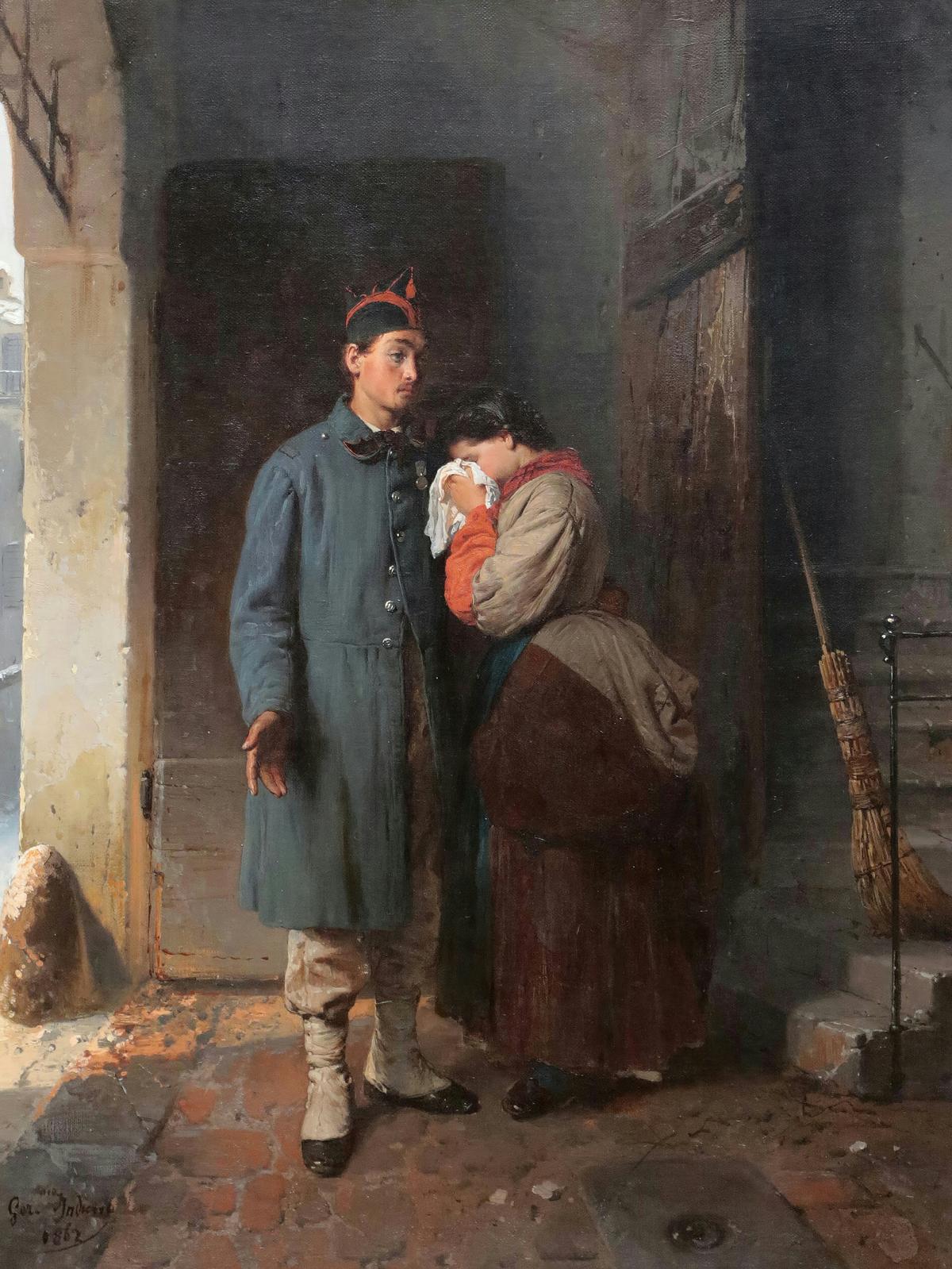
Two figures stand in the shadowed threshold of an arched stone doorway, caught in a quiet, heavy moment of farewell. A young soldier in a long, muted blue coat and traditional headwear looks forward with a steady, somber gaze. Beside him, a woman buries her face in a white cloth, leaning into his shoulder as she weeps. The composition centers entirely on this intimate, devastating connection, set against the rough, worn textures of a heavy wooden door, brick flooring, and a stone staircase where a simple broom rests.
The palette is grounded in the earthy realities of 19th-century life, deep browns, faded ochres, and the striking, dusty blue of the conscript's uniform. A flash of red in the woman's collar adds a brief warmth to the cool, shadowed light filtering into the entryway. This masterful use of shadow and texture brings an intense, atmospheric weight to the space, creating a mood that is both deeply personal and universally understood.
This piece brings a sense of quiet narrative and profound humanity to a room. Its traditional styling and deep, moody tones make it an arresting addition to a classic study, a formal living room, or as an anchor piece in a vintage-inspired gallery wall. The rich textures and emotional depth of the painting draw the eye, offering a moment of reflection and historical gravity.
Painted by Italian artist Gerolamo Induno in 1862, The Departure of the Conscript is a poignant example of the Realism movement, capturing the everyday, deeply felt impacts of military life. Today, it is available as a museum-quality reproduction, prepared for print by Surrealium at Vaxholm Fortress, Sweden, from a high-resolution scan. Printed to order on matte museum-grade paper using archival pigment inks, this piece ensures the subtle shadows and evocative tones of Induno’s original work endure in your home.