50th anniversary gift: ten ways to picture a family
Choose a family portrait around the people, gestures and shared occasions that matter after fifty years.
A 50th anniversary gift can honour a long marriage through the family and friendships that surround it. A family portrait is one way to do that, provided the couple's own preferences lead the choice. Decide whether they want a broad gathering, a quieter image of a few people or a photograph from a particular period of their life together.
These ten historic paintings offer different ways to organise a group. They are not templates that every family must fit. Look at how people share a room, an activity or a gesture, then choose source photographs that give each person a recognisable place. Avoid turning the project into a surprise negotiation about who belongs in the family picture. Agreeing the group is part of making the gift considerate.
1. Begin at the table
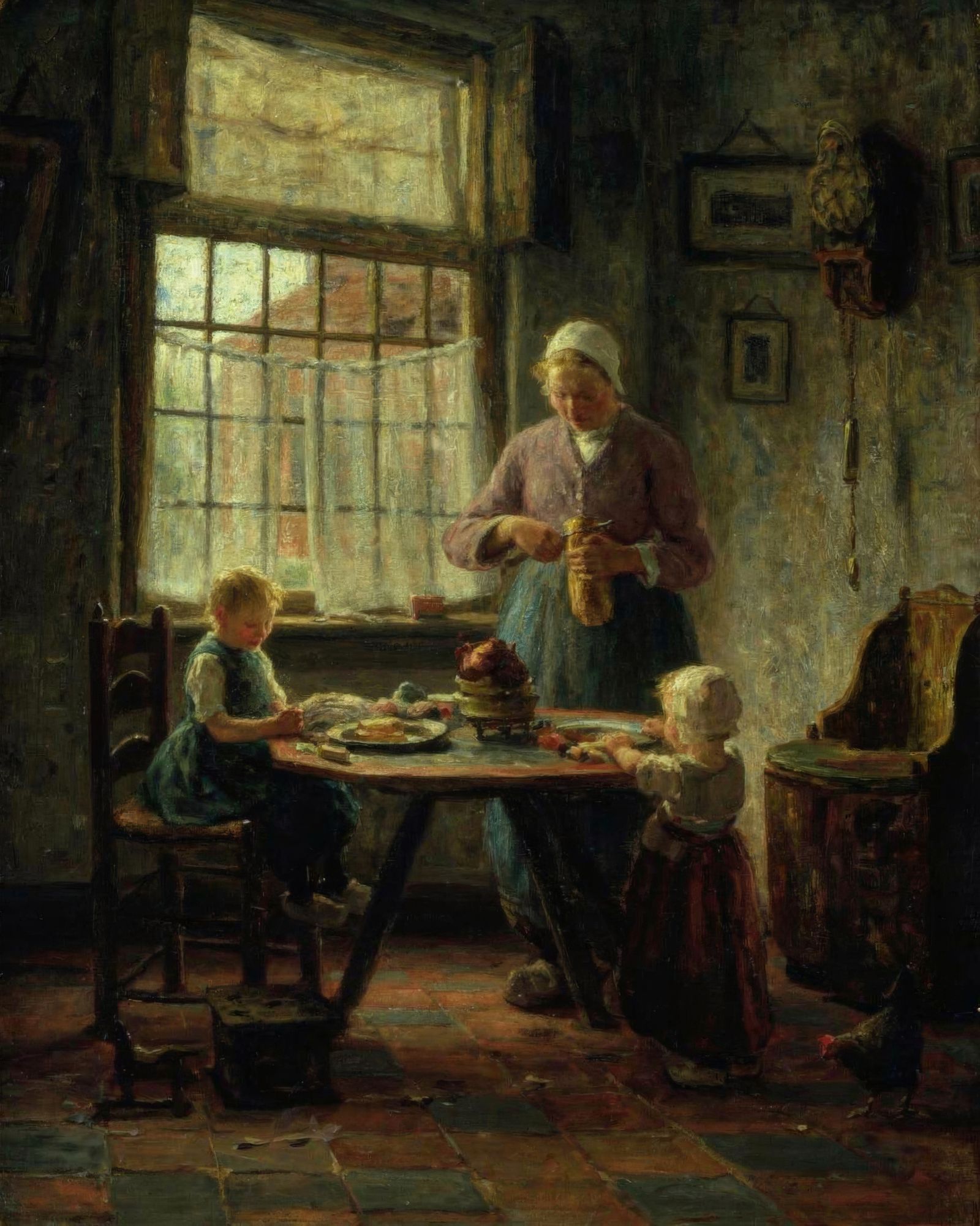
A Family Meal · Evert Pieters · 1890s (?) · Art Institute of Chicago. Restored by Surrealium at Vaxholm Fortress, Sweden
Evert Pieters's family meal brings people together around an ordinary domestic activity. For an anniversary portrait, a table can suggest the meals, visits and conversations that have accumulated over many years without requiring every sitter to pose ceremonially. Choose a photograph in which faces remain visible above dishes and hands. The connection to the couple's own habits matters more than recreating the historic room or its furnishings.
2. Include the outdoor life
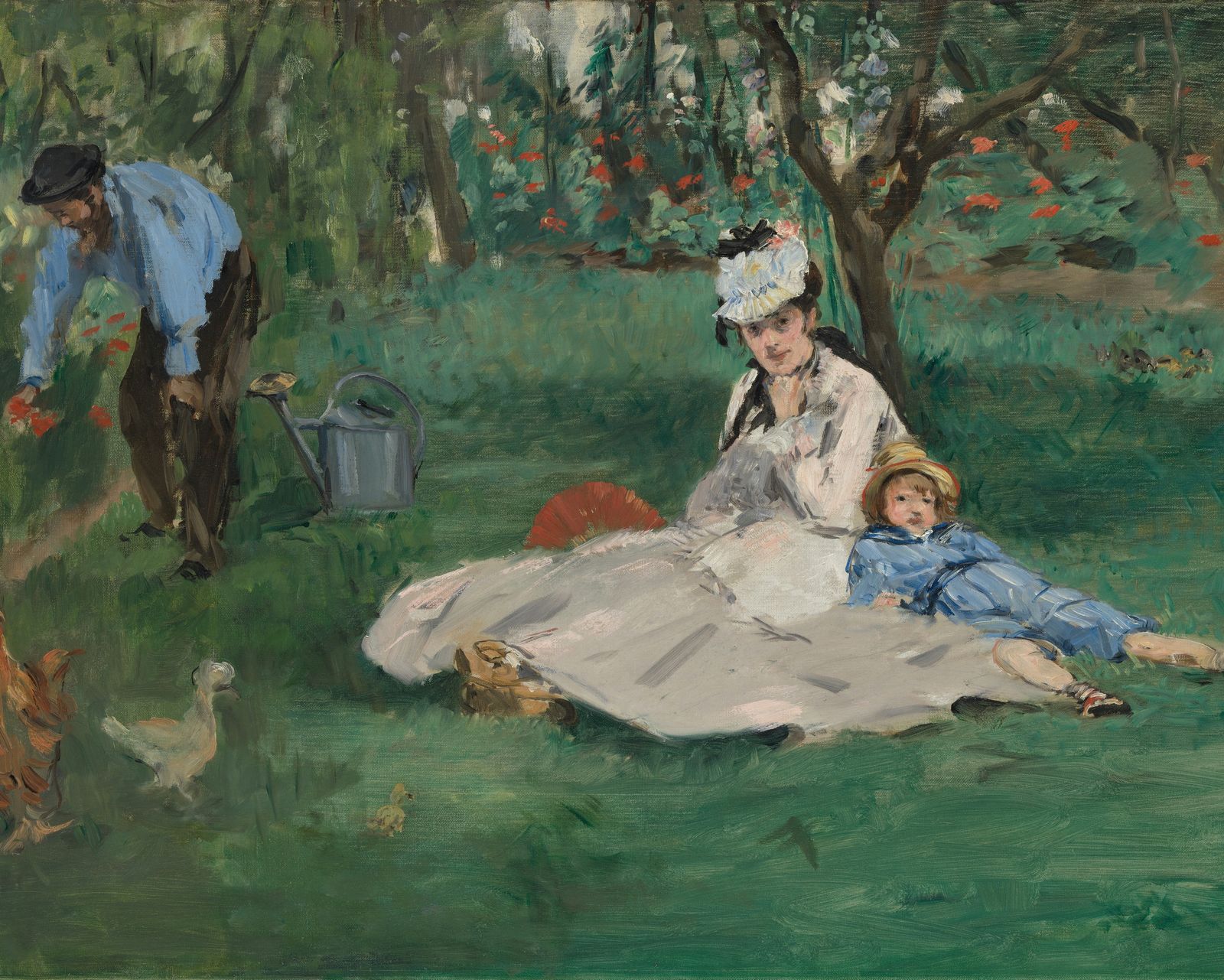
The Monet Family in Their Garden at Argenteuil · Edouard Manet · 1874 · The Metropolitan Museum of Art. Restored by Surrealium at Vaxholm Fortress, Sweden
Manet's image of the Monet family places the group in a garden, with different figures engaged in the space. It suggests a portrait based on an outdoor gathering that the couple actually enjoyed, rather than an invented grand setting. Check the light across each face and avoid a distant group photograph in which the garden is clearer than the people. The setting should support the family, not replace it as the subject.
3. Give children their own scale
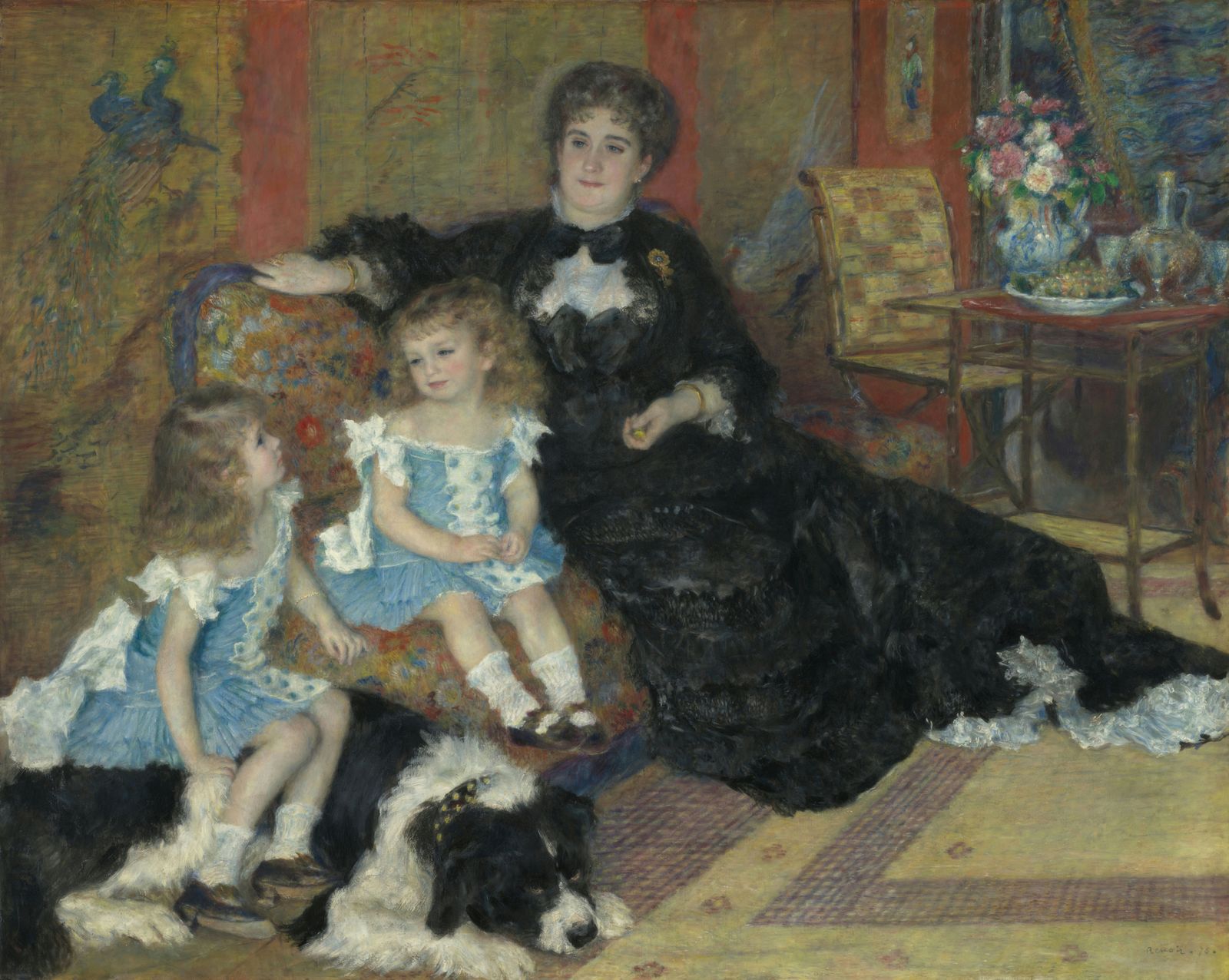
Madame Charpentier and Her Children · Auguste Renoir · 1878 · The Metropolitan Museum of Art. Prepared for print by Surrealium at Vaxholm Fortress, Sweden
Renoir's Madame Charpentier and Her Children accommodates adults, children and a large dog within one room. The figures do not need identical poses to belong together. For a multigenerational gift, let younger people appear at a comfortable scale and in recognisable postures instead of forcing them into adult formality. Confirm the intended grouping with the couple, especially when the source photographs come from different occasions.
4. Consider a smaller grouping
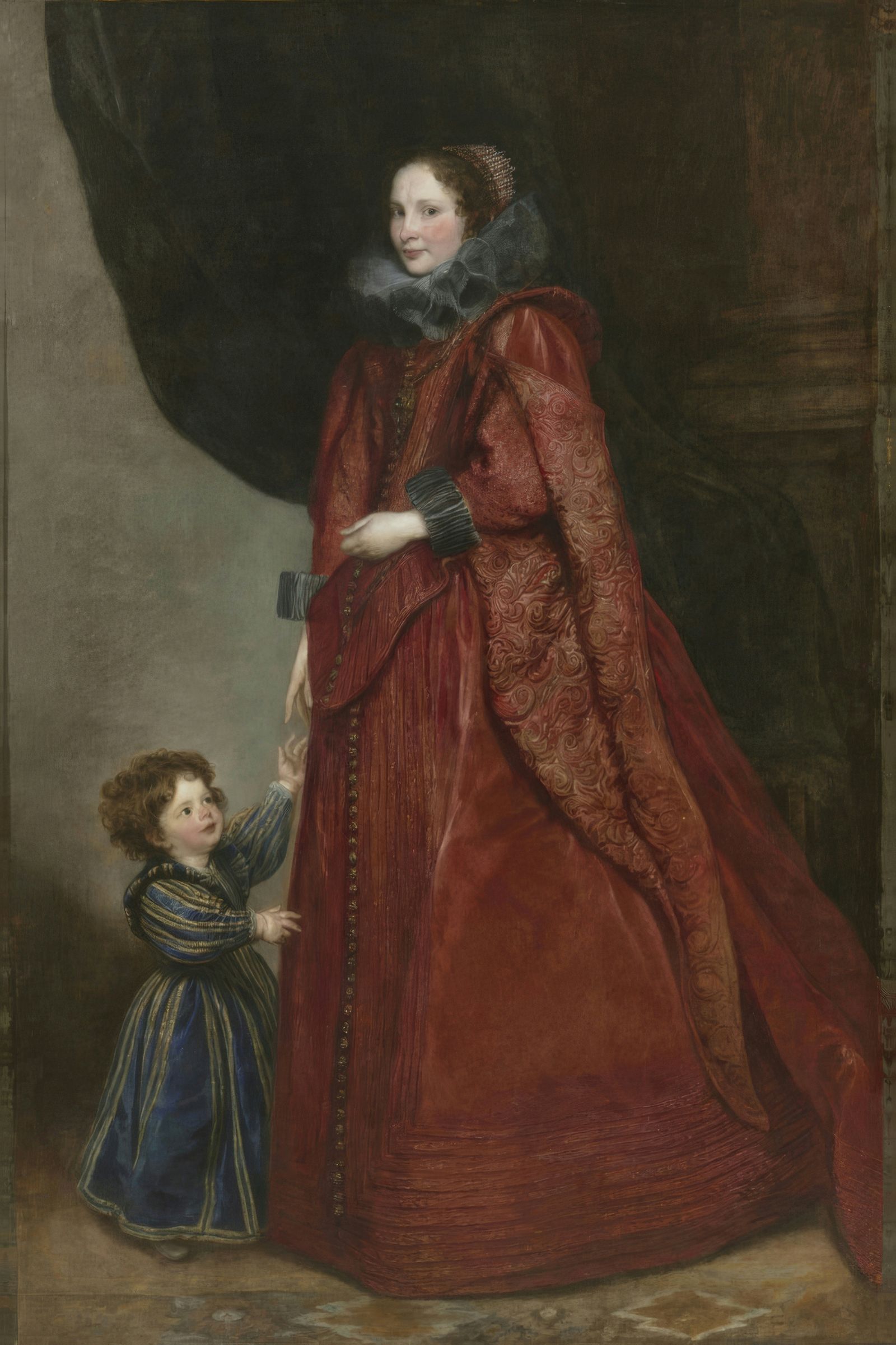
A Genoese Lady with Her Child · Anthony van Dyck · c. 1623–25 · Cleveland Museum of Art. Prepared for print by Surrealium at Vaxholm Fortress, Sweden
Van Dyck's Genoese lady and child make the relationship between two figures central to a formal portrait. A fiftieth-anniversary gift does not have to include every descendant and friend in order to acknowledge a family's history. A smaller grouping may preserve clearer faces and a more intimate memory. Choose the scope deliberately, and explain the particular moment the picture holds in the note that accompanies the gift.
5. Find affection in a close gesture
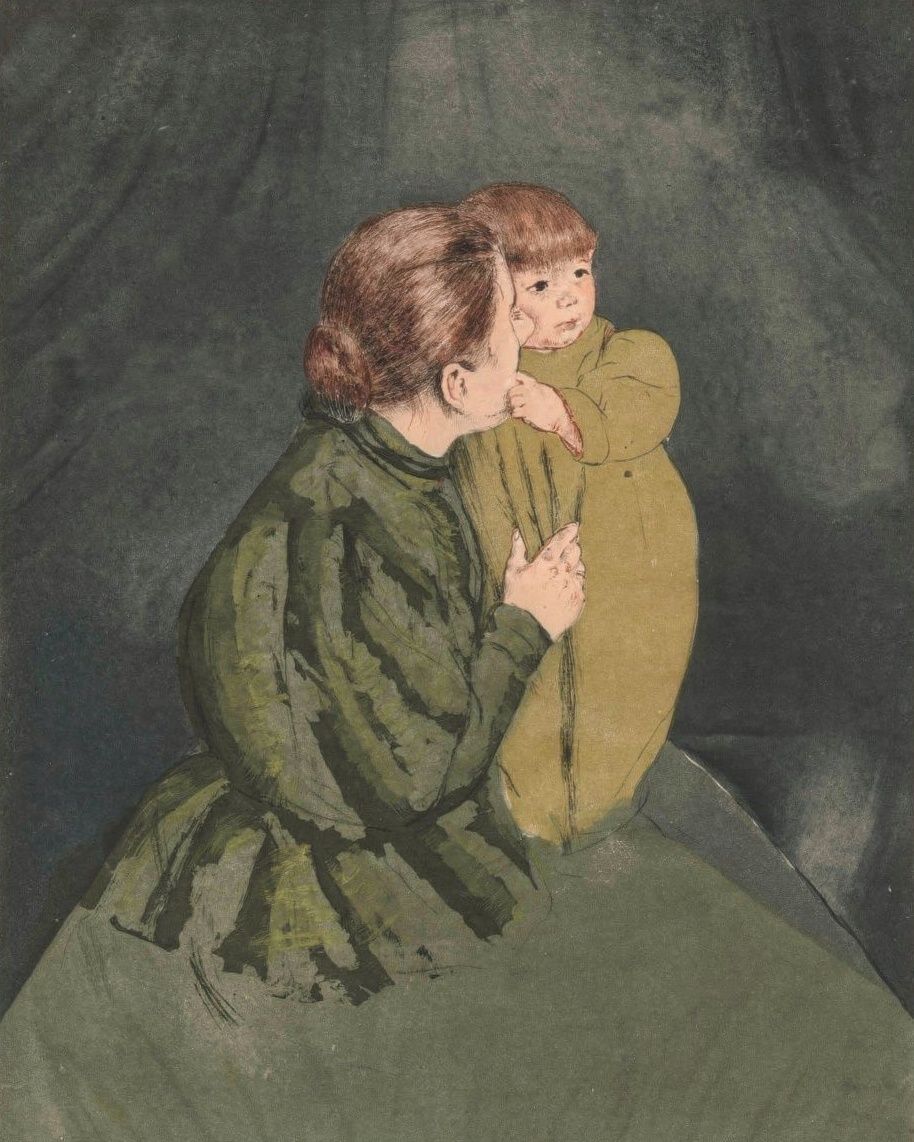
Peasant Mother and Child · Mary Cassatt · c. 1894 · Art Institute of Chicago. Restored by Surrealium at Vaxholm Fortress, Sweden
Cassatt's Peasant Mother and Child draws attention to the closeness between the figures. It is a reminder that a family photograph can carry meaning through a small gesture rather than a formal lineup. Look for an image the couple already values, with a clear relationship and comfortable expressions. Do not assume that the oldest surviving photograph is automatically the most emotionally important one for the people receiving it.
6. Let siblings share the picture
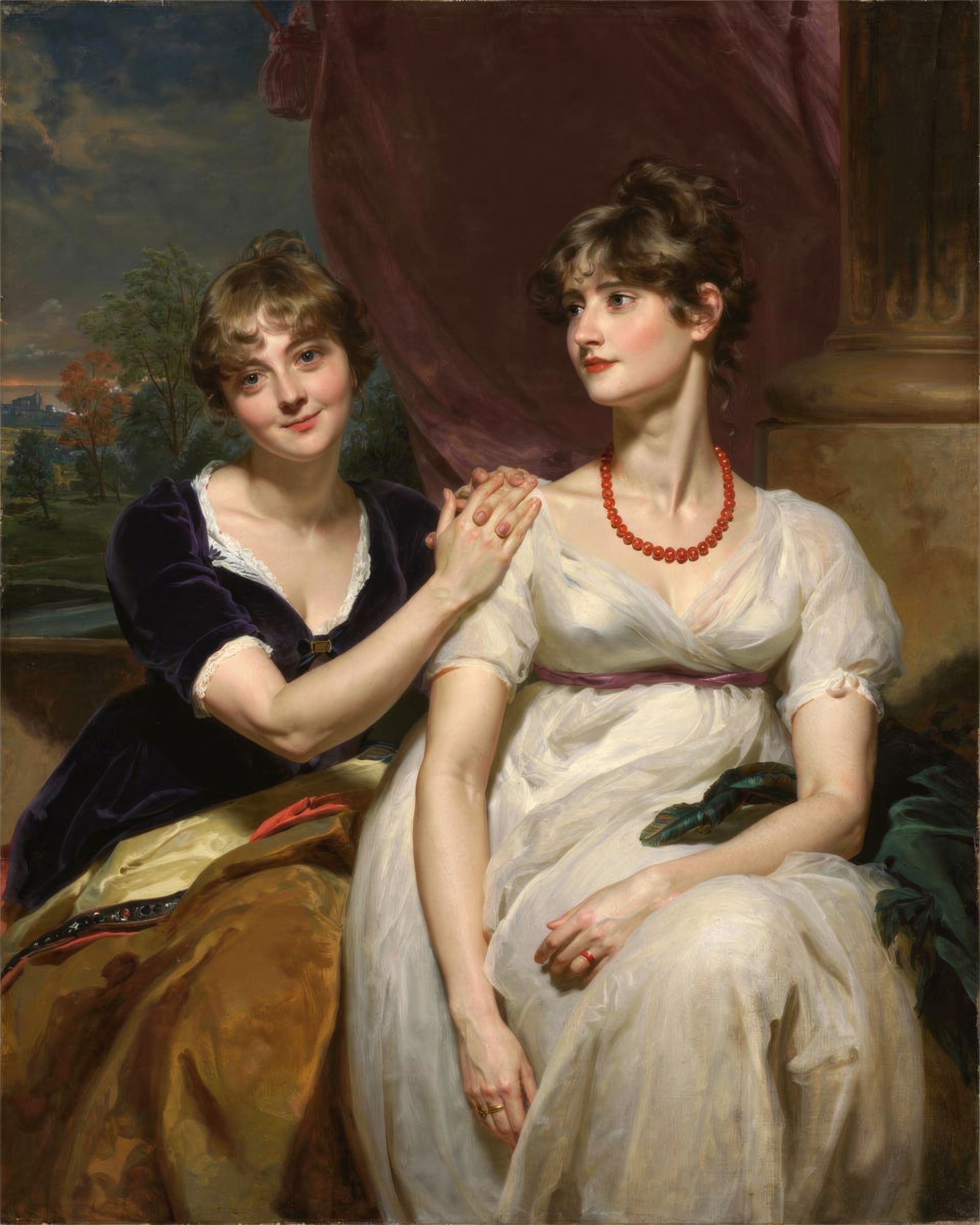
Portrait of Charlotte and Sarah Carteret-Hardy · Thomas Lawrence · 1801 · Cleveland Museum of Art. Restored by Surrealium at Vaxholm Fortress, Sweden
Lawrence's portrait of Charlotte and Sarah connects the two sitters through their close arrangement. It offers a way to think about siblings within a wider anniversary gift, particularly when their shared history matters to the couple being celebrated. Keep each person's identity distinct rather than treating the grouping as a single decorative shape. A clear source photo and agreement about the intended period of life help keep that choice grounded.
7. Recognise the work of care
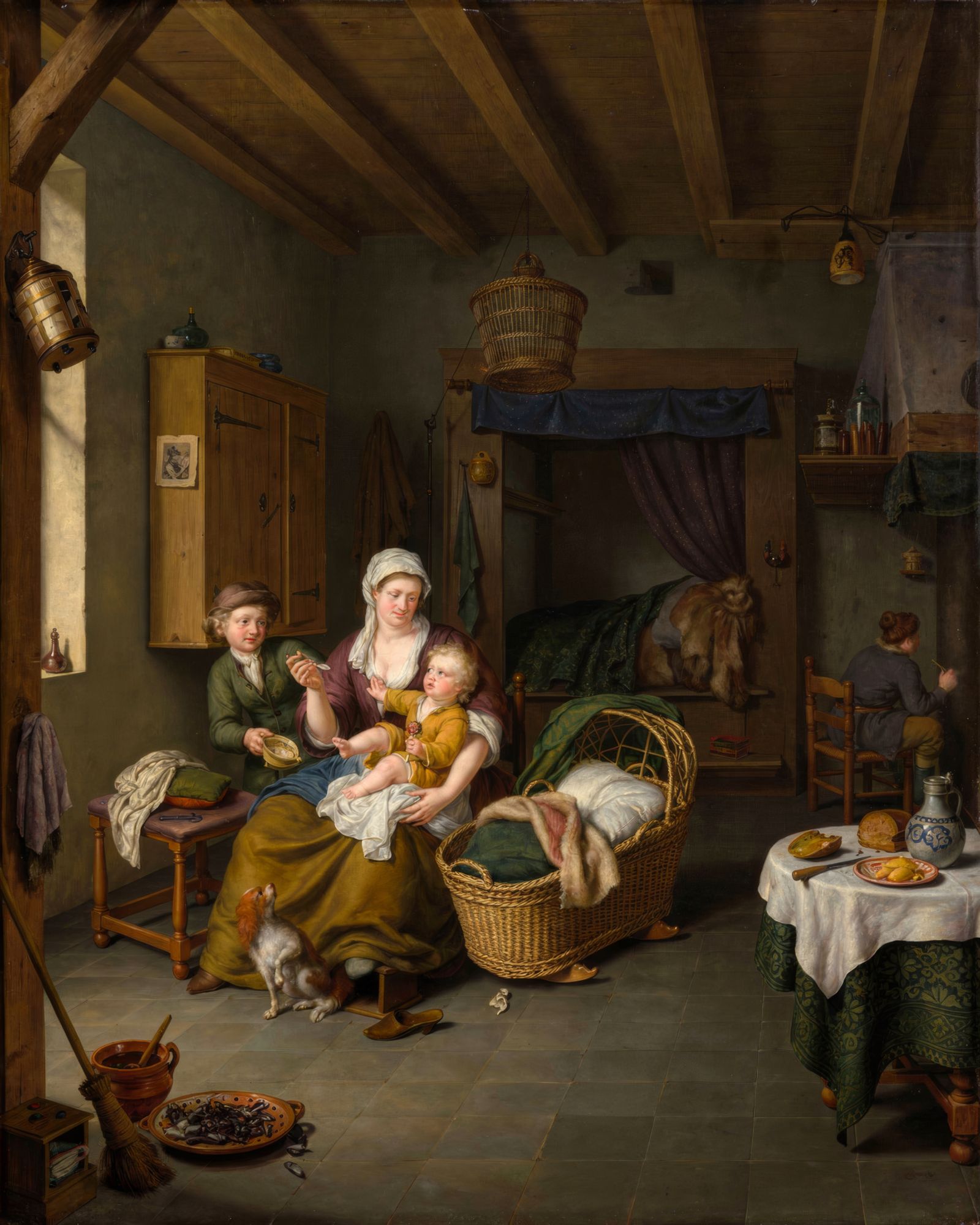
A Mother Feeding her Child (The Happy Mother) · Willem van Mieris · 1707 · Art Institute of Chicago. Restored by Surrealium at Vaxholm Fortress, Sweden
Van Mieris's mother feeding her child centres a domestic act of care. It can prompt a family to look for photographs that record how affection was expressed in everyday life, beyond weddings and formal celebrations. Choose such an image sensitively, with attention to whether the people shown would want that private moment displayed. The gift should recognise care without reducing anyone's whole life to a single family role.
8. Keep a tender two-person memory
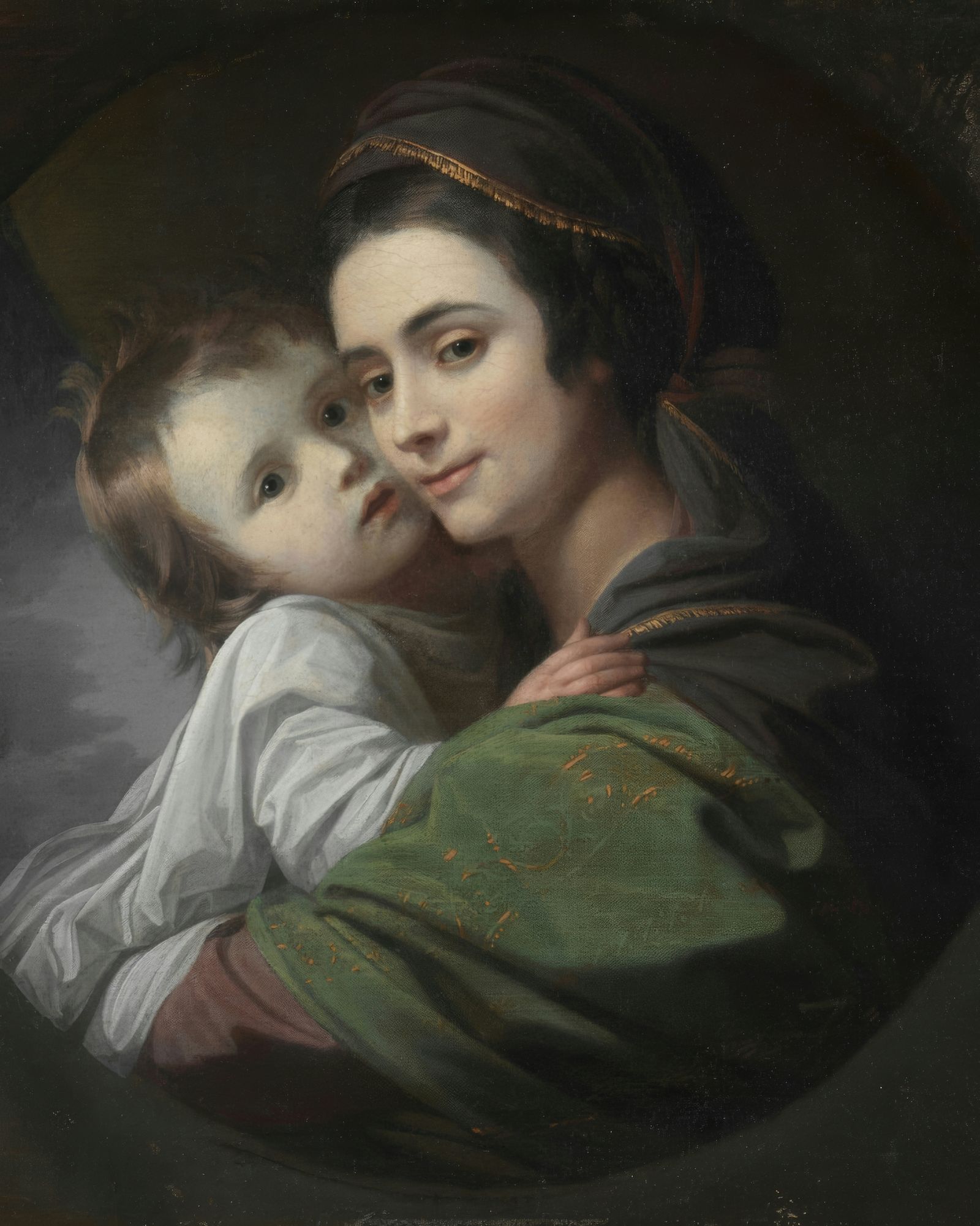
Elizabeth Shewell West and Her Son, Raphael · Benjamin West · c. 1770 · Cleveland Museum of Art. Prepared for print by Surrealium at Vaxholm Fortress, Sweden
Benjamin West's mother-and-son image makes physical closeness the organising idea. A small relationship within a large family can be a meaningful anniversary subject when it holds a memory the couple treasure. Check that the source has enough detail to preserve both faces and the gesture between them. If the image includes someone who has died, discuss the choice rather than assuming a surprise memorial element will be welcome.
9. Build around a shared interest
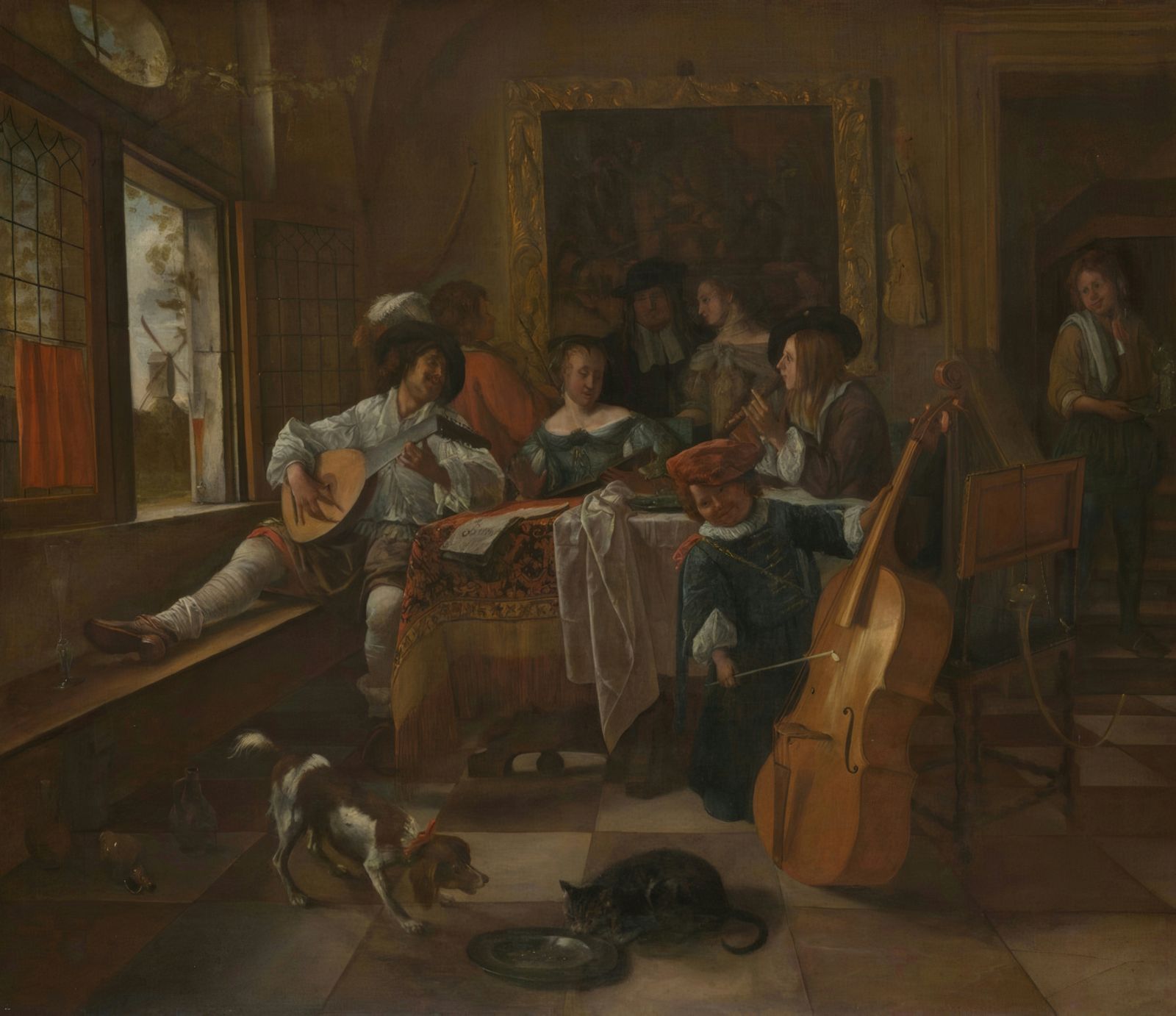
The Family Concert · Jan Steen · 1666 · Art Institute of Chicago. Prepared for print by Surrealium at Vaxholm Fortress, Sweden
Jan Steen's family concert gives the group a common activity while allowing several figures to occupy the room differently. A family that gathers around music, games or another shared interest may prefer that sense of participation to a formal pose. Use the activity to explain the composition, but keep objects from hiding the people. The historic painting supplies an idea about togetherness, not a promise of a selectable Fable scene.
10. Let the whole household have room
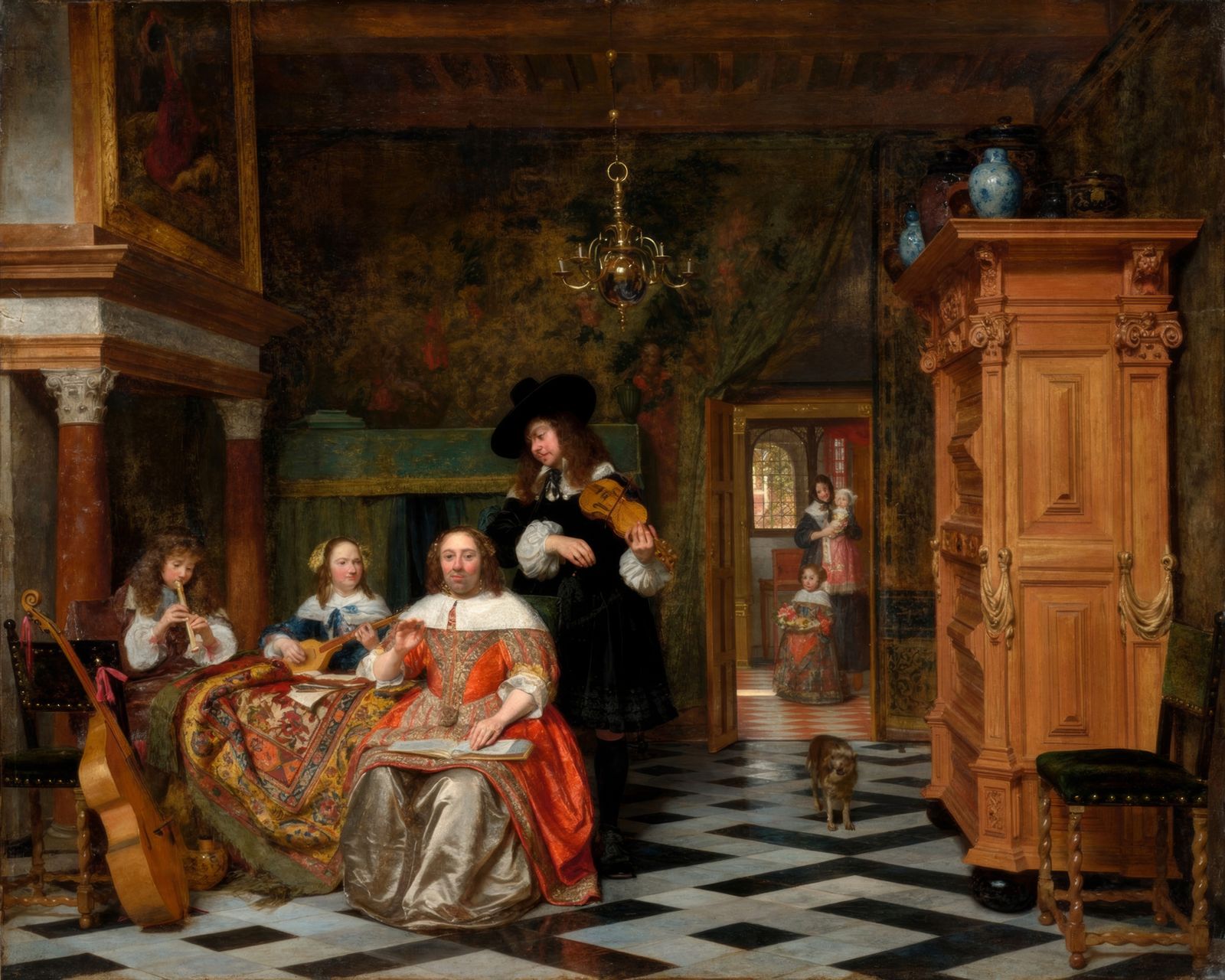
Portrait of a Family Playing Music · Pieter de Hooch · 1663 · Cleveland Museum of Art. Restored by Surrealium at Vaxholm Fortress, Sweden
Pieter de Hooch's musical family sits within an interior that connects several areas of activity. For a larger portrait, the lesson is to make the relationships legible rather than simply adding more faces. Agree the group, compare the clarity of the source photos and decide which people or gestures should lead. A thoughtful anniversary gift can hold a family together visually without pretending that everyone must occupy the same role.
Continue with anniversary gifts by year: 11 milestones, each with a masterpiece, a 25th anniversary gift for the life after the wedding, personalized gifts: ten ways to begin with a real person, gifts for couples: ten ways to recognise two people, the full catalogue record for A Family Meal, and the portrait direction based on A Family Meal.
Use the family portrait route after agreeing the people, the source photographs and the kind of memory you want to preserve. Add a short note explaining why that moment belongs to the couple's fifty years. The meaning comes from their life, not from making the picture as crowded or ceremonial as possible.
- Is a family portrait a suitable fiftieth-anniversary gift?
- It can be, if the couple would enjoy it and have a say in the grouping and photograph. Some prefer a small intimate image; others value a wider family gathering. Their taste matters more than a general rule about milestone gifts.
- Who should appear in an anniversary family portrait?
- Agree this with the recipients or someone who knows their wishes well. Do not let a surprise gift create uncertainty about inclusion. A smaller, clearly chosen grouping can be as meaningful as a large one.
- Should I use a wedding photo or a recent family photo?
- Choose the image that holds the memory you want to mark. A recent photograph can celebrate the life built since the wedding, while an older image can recall a particular beginning. Clarity and the couple’s preference should guide the choice.
- Do these paintings show the available portrait layouts?
- They are historic compositional references, not customer examples or guaranteed layouts. The family portrait route shows the current choices. Keep the source photographs and intended group ready when exploring it.