Gifts for book lovers, chosen through ten works of art
Ten pictures of readers, writers and shared stories, with a practical way to choose an art book for someone who reads.
The best gifts for book lovers begin with how someone reads. A person who annotates every page may want a different kind of present from the reader who disappears into a novel on a Sunday afternoon. These ten works offer ways to notice that difference: private concentration, a shared passage, a desk, a family making something together. They are historical pictures, not photographs of the books Fable sells.
Start with the recipient's shelves. Look for repeated subjects, the size of books they keep beside a chair, and whether they return to pictures as readily as words. An art book can give an already enthusiastic reader a new way into an old interest. Our guide to choosing art books as gifts considers that decision more broadly; here the paintings and prints supply the clues. Keep the choice personal without assuming that every book lover wants another object shaped like a book.
1. For the reader who lives inside a letter

Lady Reading the Letters of Heloise and Abelard · Bernard d'Agesci, c. 1780 · Art Institute of Chicago. Restored by Surrealium at Vaxholm Fortress, Sweden.
A woman pauses with an open volume in her lap, her face turned away from the page. The interruption is the pleasure of the picture: reading continues in thought even when the eyes have stopped moving. Choose this kind of subject for someone drawn to correspondence, diaries or intimate fiction, and write why it reminded you of them rather than inventing the story they must be imagining.
2. For a reader of Japanese literature
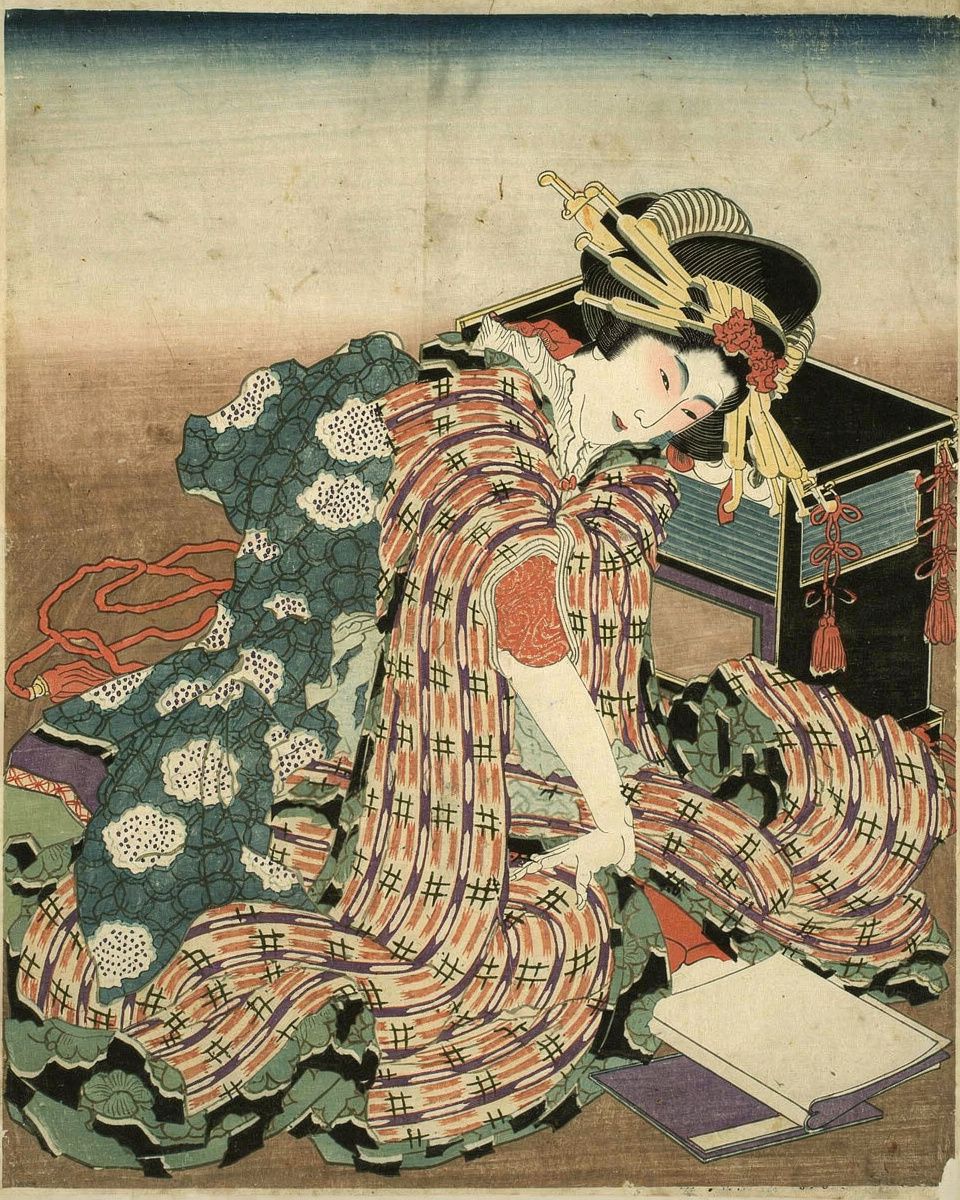
Young woman reading "The Pillow Book (makura no soshi)" · Katsushika Hokusai 葛飾 北斎 Japanese, 1760-1849, 1822 · Art Institute of Chicago. Restored by Surrealium at Vaxholm Fortress, Sweden.
The open book lies low in the composition, while patterned robes and a dark box occupy much of the space. Reading belongs to a physical world of textiles, surfaces and small arrangements, rather than an abstract list of famous authors. A book that reproduces Japanese prints generously would suit someone who enjoys examining those details; check that its captions distinguish artist, subject and period before choosing it.
3. For the friend who lends you everything

Two Young Women Reading Books · Suzuki Harunobu 鈴木 春信 Japanese, 1725 (?)-1770, c. 1767/68 · Art Institute of Chicago. Restored by Surrealium at Vaxholm Fortress, Sweden.
Two women share an interior with books, one standing and the other seated close to an open volume. Their different positions make reading look sociable without turning it into a formal lesson. For a friend whose recommendations travel through your whole circle, a note recalling one book they lent you will make an art gift more particular than a printed slogan about loving books.
4. For the reader who studies the page

The Courtesan Karauta · Kitagawa Utamaro, late 1790s · Cleveland Museum of Art. Restored by Surrealium at Vaxholm Fortress, Sweden.
Utamaro brings the book near the face, giving the act of looking almost the same emphasis as the elaborate hair and clothing. The small marks on the page invite close attention even when the viewer cannot read them. Choose a richly illustrated volume for someone who notices typography, marginal notes and the construction of a page, and give them time to browse without expecting an immediate verdict.
5. For someone with a favourite reading corner
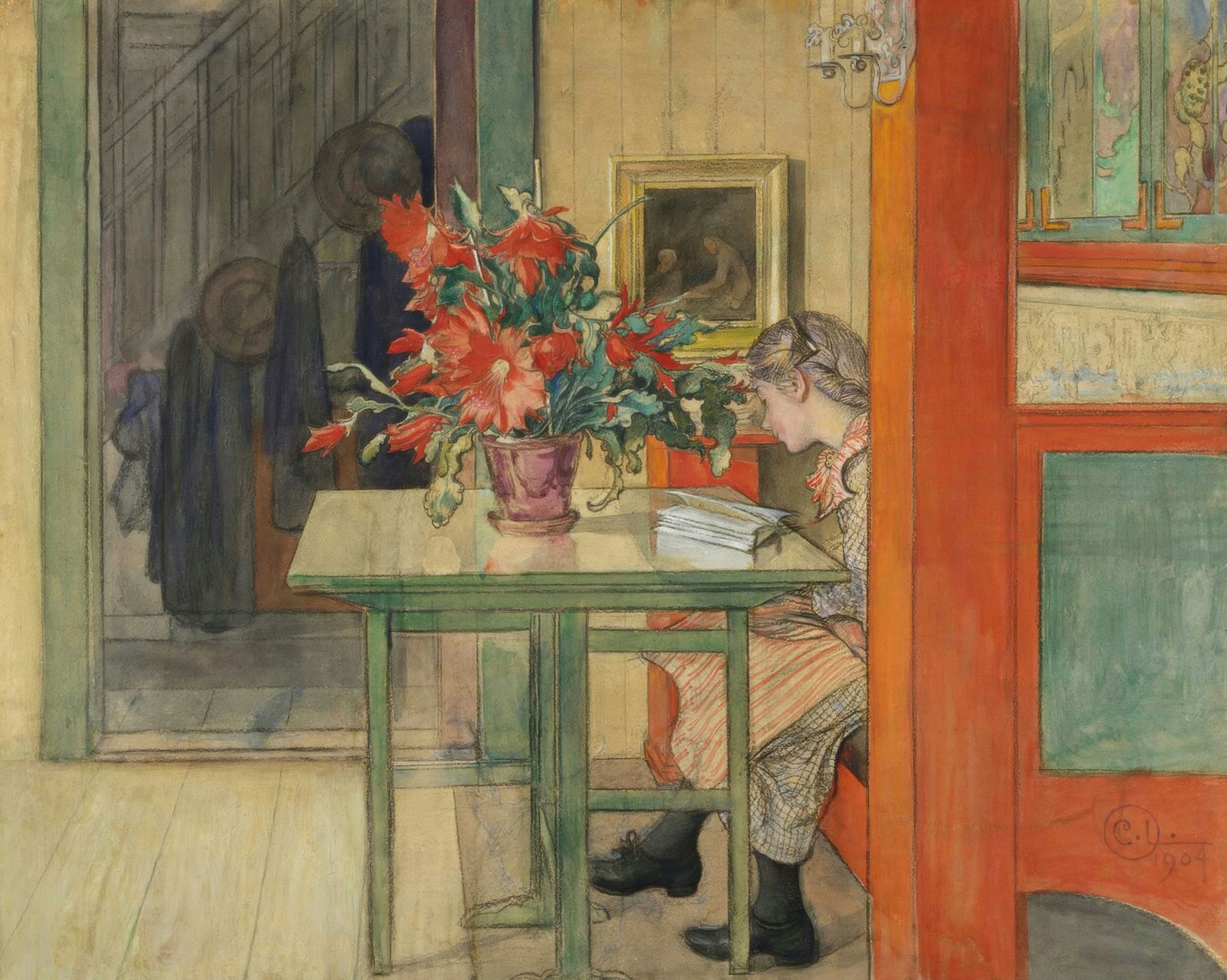
Lisbeth Reading · Carl Larsson, 1904 · Nationalmuseum, Stockholm. Restored by Surrealium at Vaxholm Fortress, Sweden.
In Larsson’s interior, flowers dominate the table and a reader is tucked behind them. The room feels lived in because the activity does not have to occupy the centre of every object. This is a useful prompt for someone who values the ritual around reading: a familiar chair, a small table and a book that can remain open without becoming another household task.
6. For the reader who likes a long view
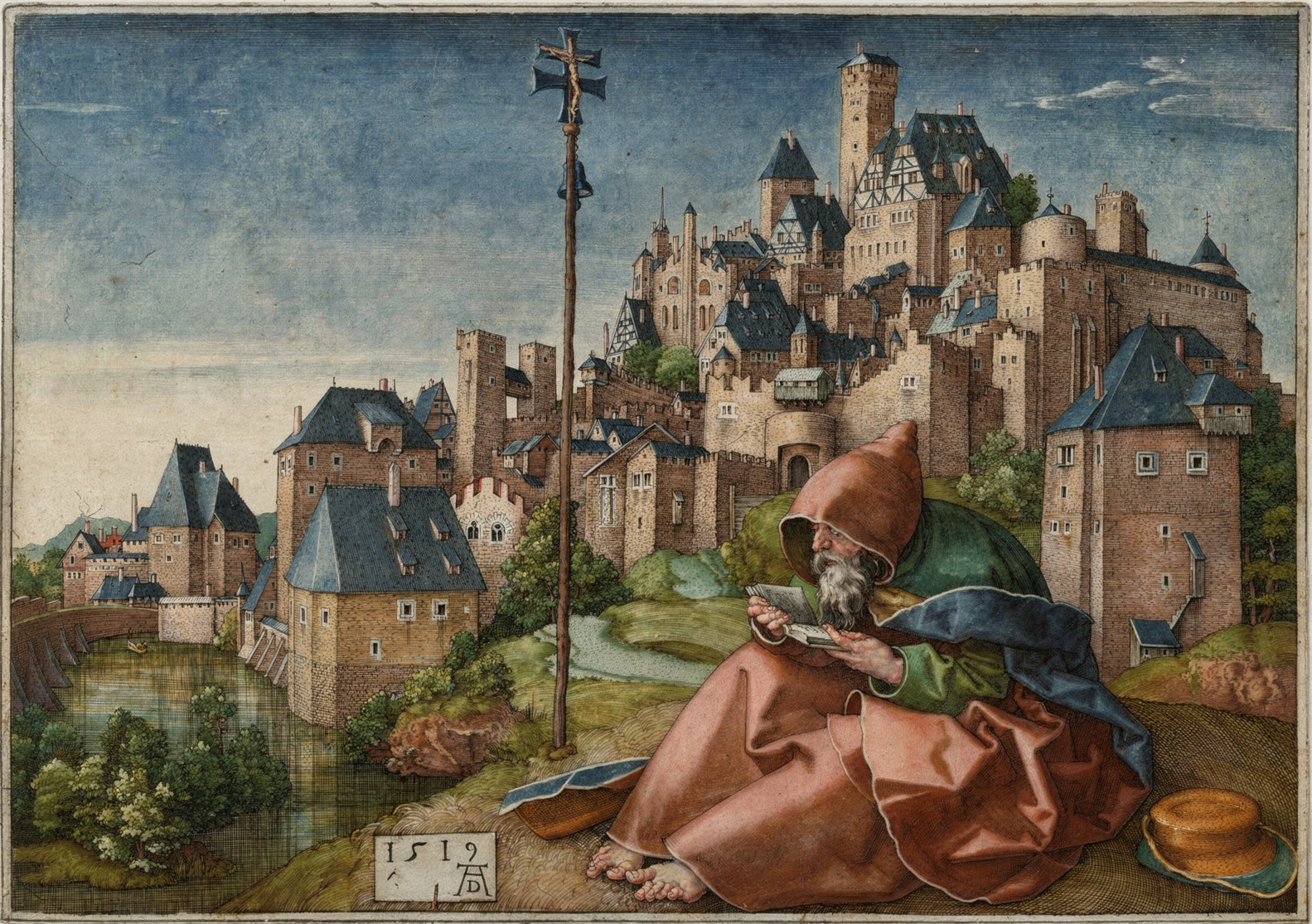
Saint Anthony Reading · Albrecht Dürer, 1519 · Cleveland Museum of Art. Contemporary Fable colour edition after the historical print. Restored by Surrealium at Vaxholm Fortress, Sweden.
Dürer places the reading saint low against a detailed town, so a quiet activity shares the image with a much larger world. Fable’s displayed version is a contemporary colour edition after the historic print, not evidence of Dürer’s original palette. For a reader of history, look for an art book that makes similar room for context, with whole works and captions that explain what has changed in reproduction.
7. For the reader of ideas

Aristotle with a Bust of Homer · Rembrandt, 1653 · The Metropolitan Museum of Art. Restored by Surrealium at Vaxholm Fortress, Sweden.
Rembrandt’s Aristotle rests a hand on a sculpted head while the other hand catches light near his waist. A book need not be visible for a picture to concern reading, memory and intellectual companionship. This choice suits someone who likes an essay that stays with them; pair the gift with a question you would enjoy discussing together, rather than a demand that they agree with your interpretation.
8. For the writer as well as the reader
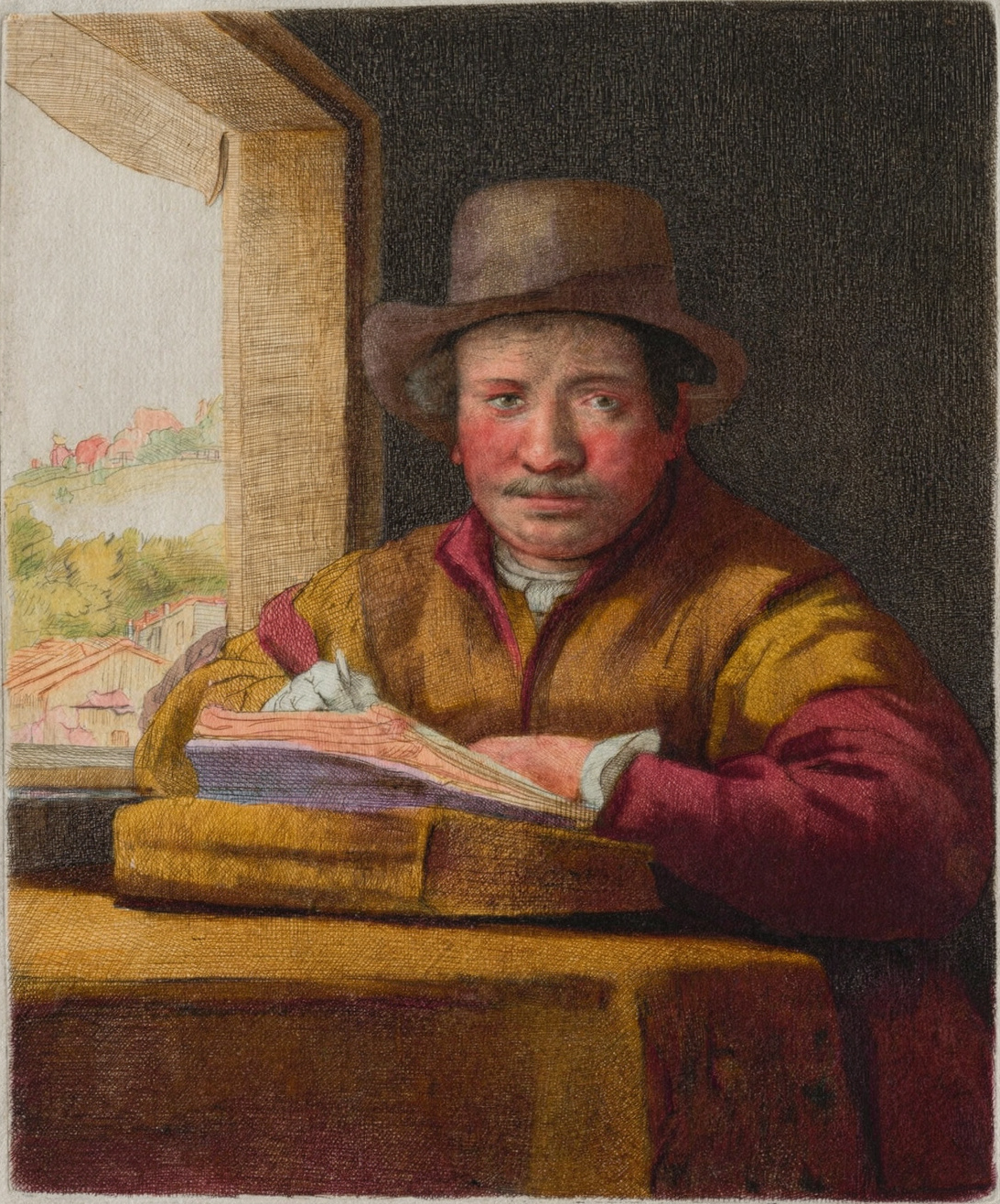
Self-Portrait Drawing at a Window · Rembrandt van Rijn, 1648 · Cleveland Museum of Art. Contemporary Fable colour edition after the historical print. Restored by Surrealium at Vaxholm Fortress, Sweden.
The artist sits at a window with a working surface immediately before him, looking outward while his hands remain occupied. The picture links concentration with making, and its coloured presentation is Fable’s edition after Rembrandt’s print. Someone who keeps notebooks may appreciate a book that shows process as well as finished images, especially when the reproductions let them inspect marks and changes of direction.
9. For a household that reads together
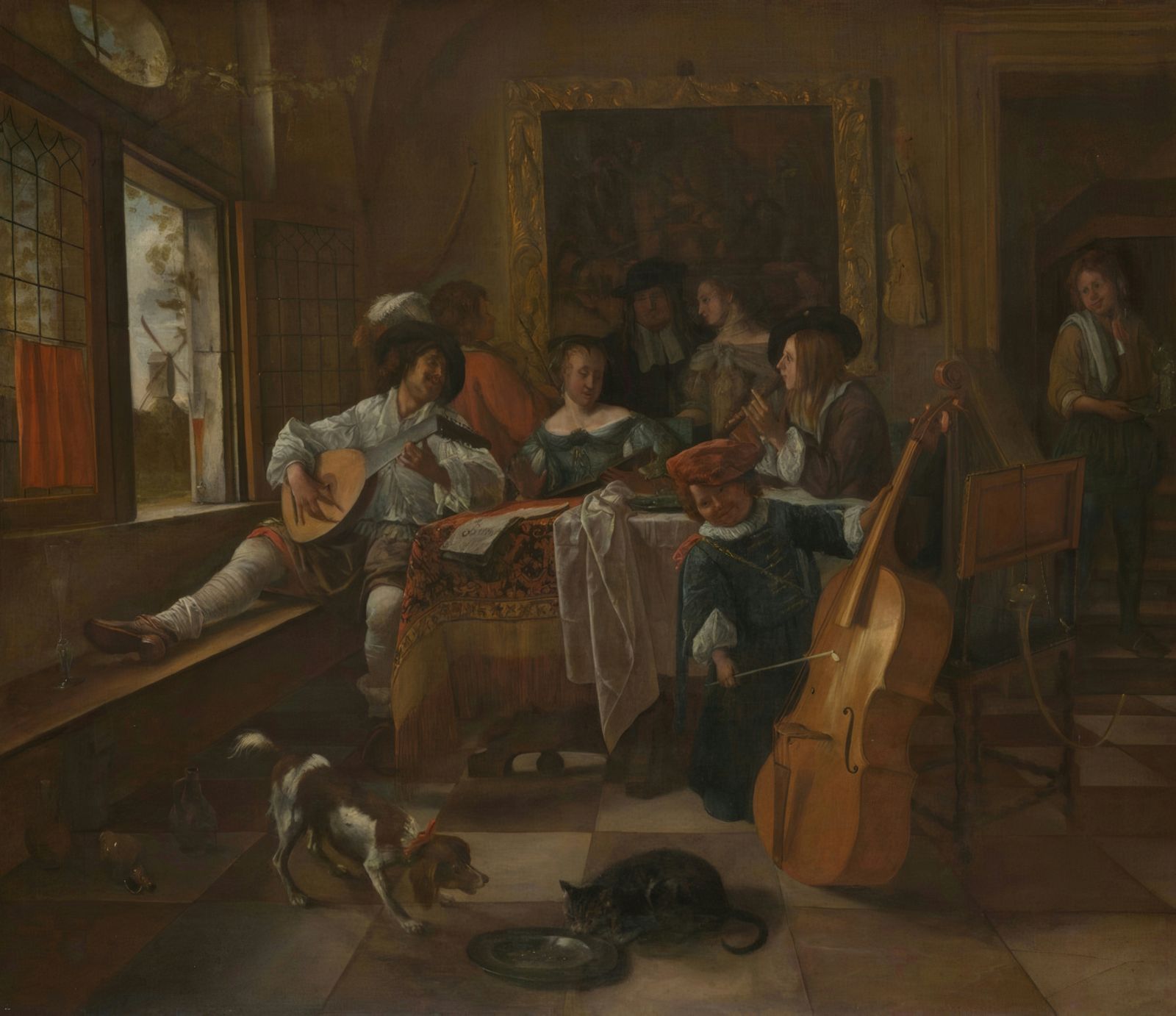
The Family Concert · Jan Steen, 1666 · Art Institute of Chicago. Restored by Surrealium at Vaxholm Fortress, Sweden.
Jan Steen’s family gathers around music and its written pages, with instruments spreading the activity across the room. It broadens the idea of a bookish gift to include the person who reads scores or shares stories aloud. Choose for the household’s actual interest rather than its imagined ideal evening; a book can invite company without requiring everyone to gather at a prescribed time.
10. For the curious reader who never leaves school
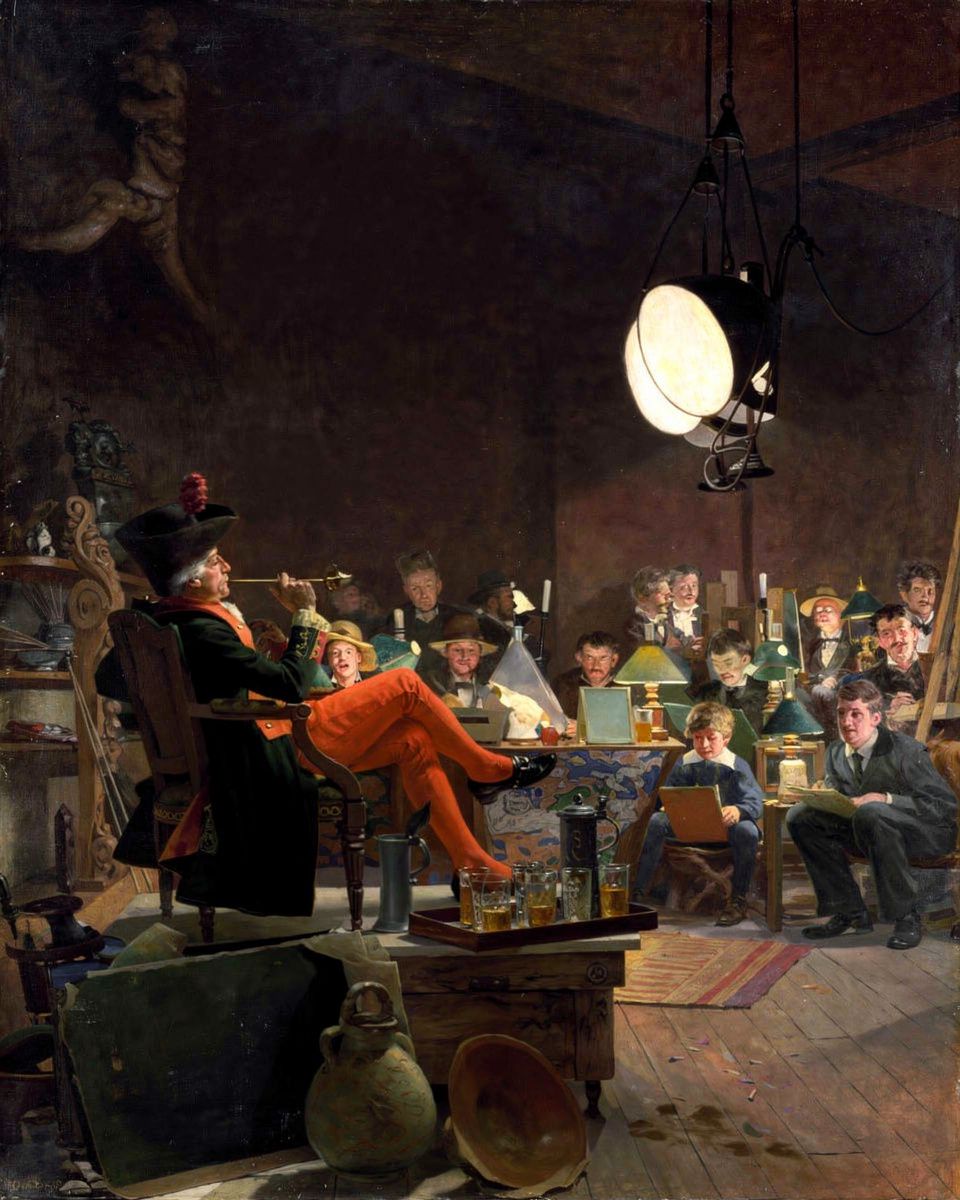
A Night Class · Jehan-Georges Vibert, c. 1881 · Cleveland Museum of Art. Restored by Surrealium at Vaxholm Fortress, Sweden.
Vibert’s crowded interior puts attention, distraction and theatrical lighting into the same room. It is a lively alternative to the solitary reader, particularly for someone whose shelves range across subjects. A wide-ranging art volume can suit that curiosity, but inspect the contents first: an attractive cover is less useful than a sequence of pictures the recipient will genuinely want to return to.
Before buying, choose the subject first and the format second. If you know only that someone reads a great deal, ask which book they have enjoyed recently; that small conversation gives more useful direction than a list of supposed reader personality types. The broader personalised gift guide helps when you want a gift to refer to a particular person, while Christmas gifts for parents considers a shared family choice.
You can compare the whole pictures in Masterworks, then browse the current Fable Editions selection for an art book. Check the actual contents and format on its page. These ten images are ways to choose a subject, not a promise that any particular work appears in every edition.
- What can I give a book lover who already has many books?
- Choose around a specific interest they return to, rather than the fact that they own books. An illustrated art volume may open a different route into history, music or literature. Check their shelves or ask discreetly so the gift does not become an avoidable duplicate.
- Is an art book a good gift for someone who mainly reads novels?
- It can be, especially when the pictures connect with a setting, period or subject they enjoy. Look at several interior spreads, not only the cover, and choose a book that welcomes browsing without requiring specialist knowledge.
- Are these photographs of Fable Editions?
- No. They are historical artworks used to explore different reading interests. The Editions page shows the current books and their contents; use that information for the final purchase decision.