Dark academia decor: 12 paintings for a scholar’s room
Blake’s visions, Böcklin’s melancholy, Moreau’s sphinx and a candlelit class of cardinals: twelve dark, learned pictures for a room of books, candles and old wood.
Dark academia is the look of an old college library after dark: leather, dark wood, candles, books in piles and a hint of poetry and mystery. The pictures that suit it are dark, learned and a little strange: visions from old poems, melancholy portraits, philosophers and ancient forests.
Here are twelve real masterpieces for that room, in three moods: poets and visions, melancholy faces, and libraries and forests. Each is shown with its colour palette, and each can be ordered as a print.
Poets and visions
Pictures from old poems and prophecies.
1. The Bard, from Gray
William Blake, The Bard, from Gray, 1809.
William Blake painted The Bard in 1809, after Thomas Gray’s poem about the last Welsh bard cursing a conquering king. Golden spirits swirl out of the darkness.
A golden, mysterious picture for a library with dark wood and brass.
2. Young's Night Thoughts, page 95
William Blake, Young's Night Thoughts, page 95, by 1827.
Blake illustrated Edward Young’s long poem Night Thoughts with hundreds of watercolour designs around the text. This page is all fire, wonder and awe.
A literary picture for a reading room or a poet’s desk.
3. Sphinx in a Grotto (Poet, King and Warrior)
Gustave Moreau, Sphinx in a Grotto (Poet, King and Warrior), 1840–98.
Gustave Moreau returned to the sphinx again and again. Here a poet, a king and a warrior have all failed her riddle, in a dim grotto glowing with gold.
Mysterious and learned, beautiful against oxblood or deep green.
4. Flying Folly
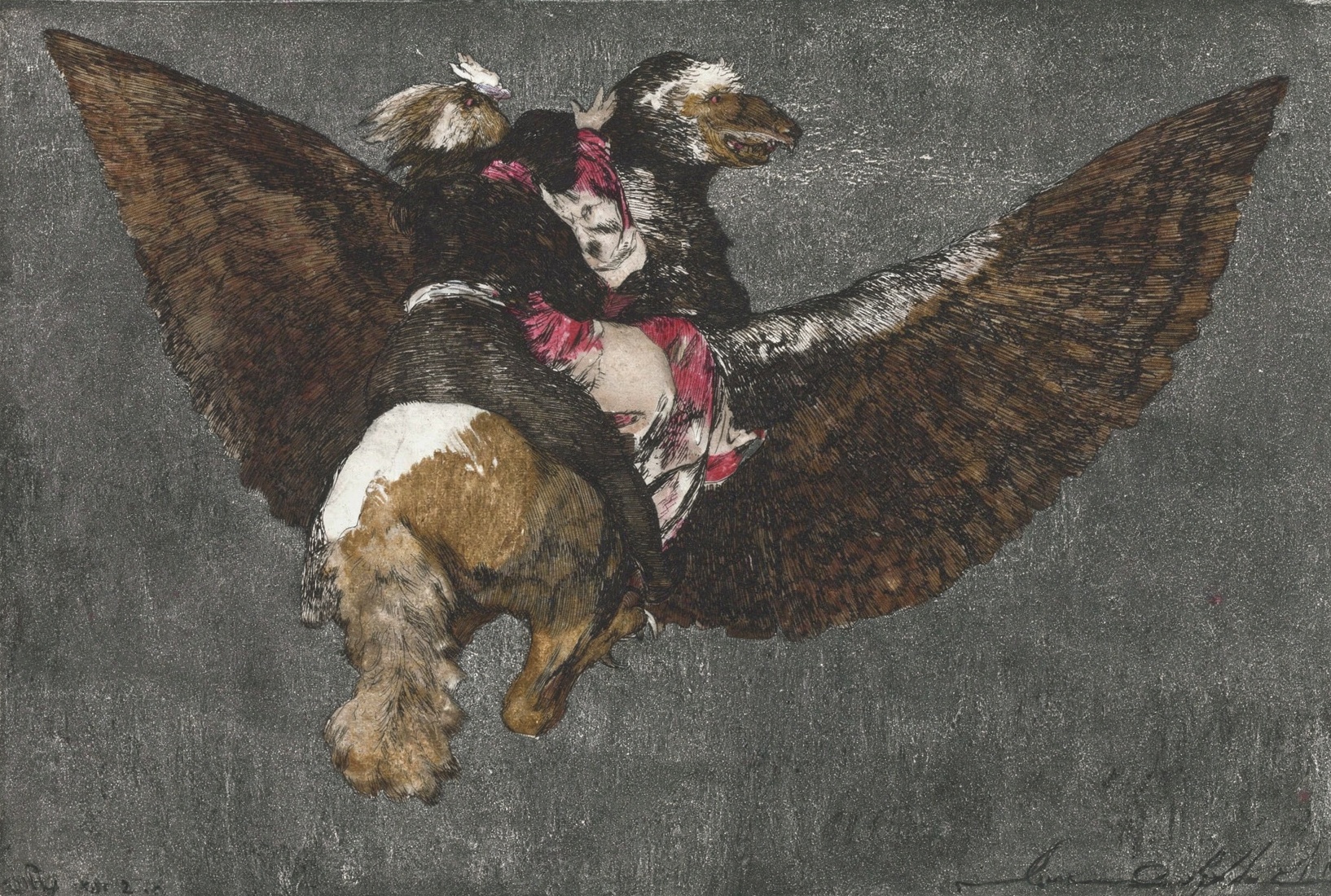
Francisco de Goya, Flying Folly, 1864. Atelier colour edition of the etching and aquatint. Cleveland Museum of Art.
Goya etched his series of Proverbs, or Follies, in his last years in Spain; they were only published in 1864. This is an atelier colour edition of Flying Folly.
An enigmatic picture for a study full of curiosities.
Melancholy faces
Portraits of thought, doubt and quiet intensity.
5. Self-Portrait
Arnold Böcklin, Self-Portrait, 1862.
Arnold Böcklin painted himself in 1862, in profile, his face lit against a dark coat. It is the portrait of an artist deep in thought.
A brooding portrait for a dark library wall.
6. Portrait of Anna Kopf as Melancholy
Arnold Böcklin, Portrait of Anna Kopf as Melancholy, by 1901.
Böcklin painted Anna Kopf as Melancholy, the old figure of scholarly sadness, framed by dark pillars and a deep blue evening sky.
Navy and slate tones for a study painted in deep blue.
7. The Hermit
Arnold Böcklin, The Hermit, by 1901.
In Böcklin’s The Hermit, an old man plays his violin before a small shrine, and angels gather in the warm light to listen.
A gentle, glowing picture for a music room or reading corner.
8. Portrait of a Man
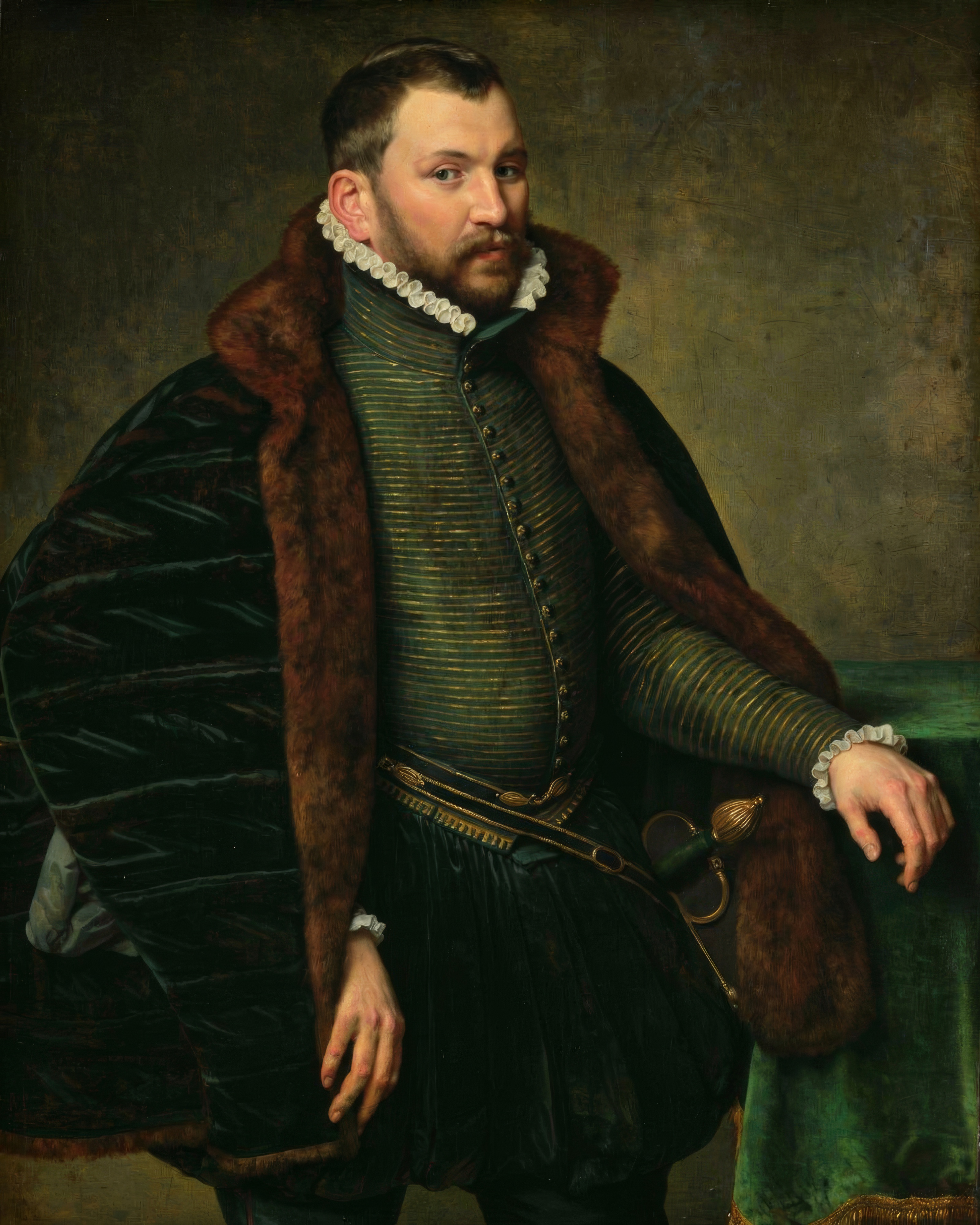
Attributed to Antonis Mor, Portrait of a Man, c. 1565. Oil on panel. Art Institute of Chicago.
This portrait of about 1565 is attributed to Antonis Mor, the court painter of the Habsburgs, whose sitters look out with cool, intelligent directness.
The perfect old master portrait for a book lined room.
Libraries and forests
Lamplit studies, precious objects and ancient woods.
9. A Night Class
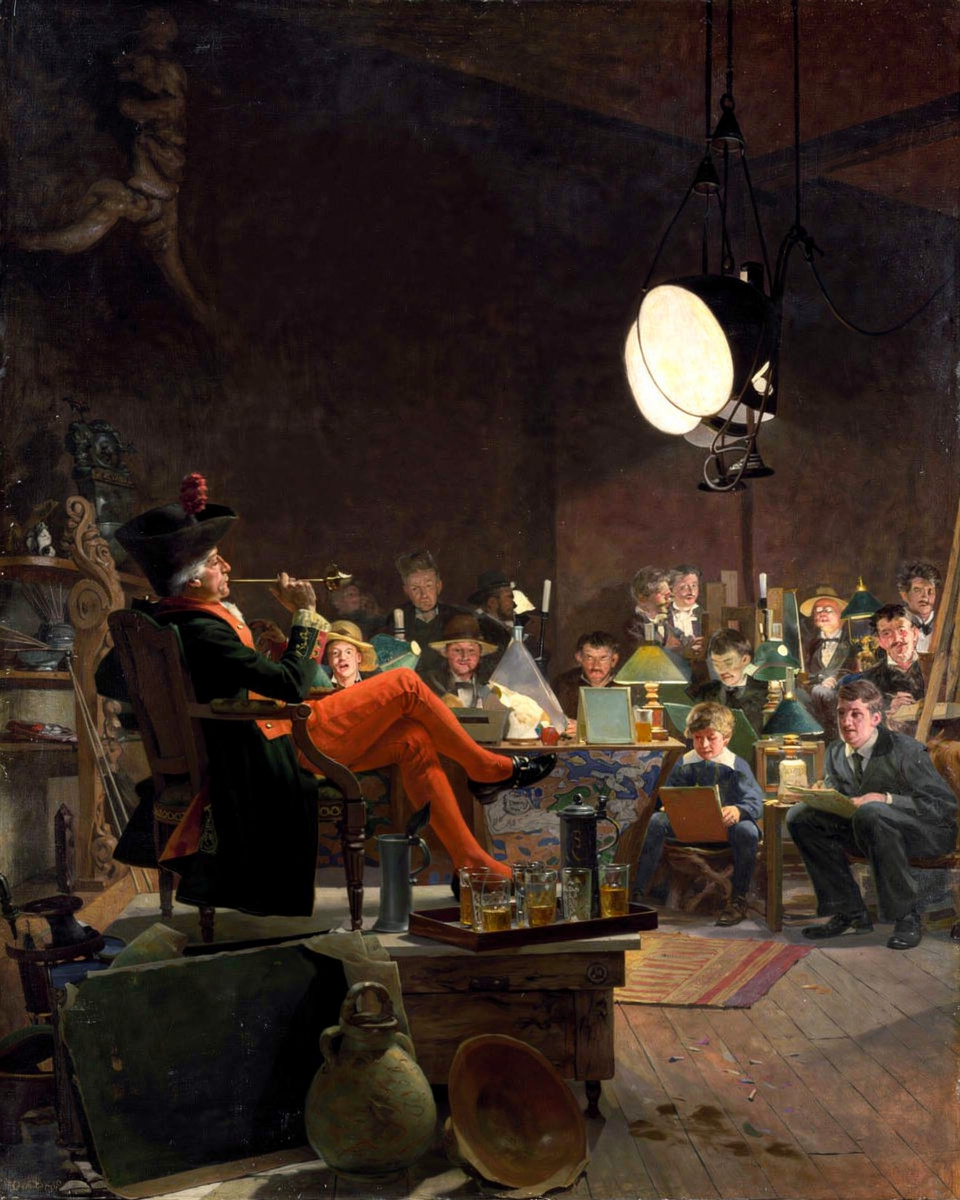
Jehan-Georges Vibert, A Night Class, c. 1881. Oil on wood panel. Cleveland Museum of Art.
Jehan-Georges Vibert painted this lamplit class around 1881. A circle of cardinals in brilliant red bends over a globe in a shadowy study.
Red robes and lamplight for a library with burgundy accents.
10. Porringer and Nautilus Cup
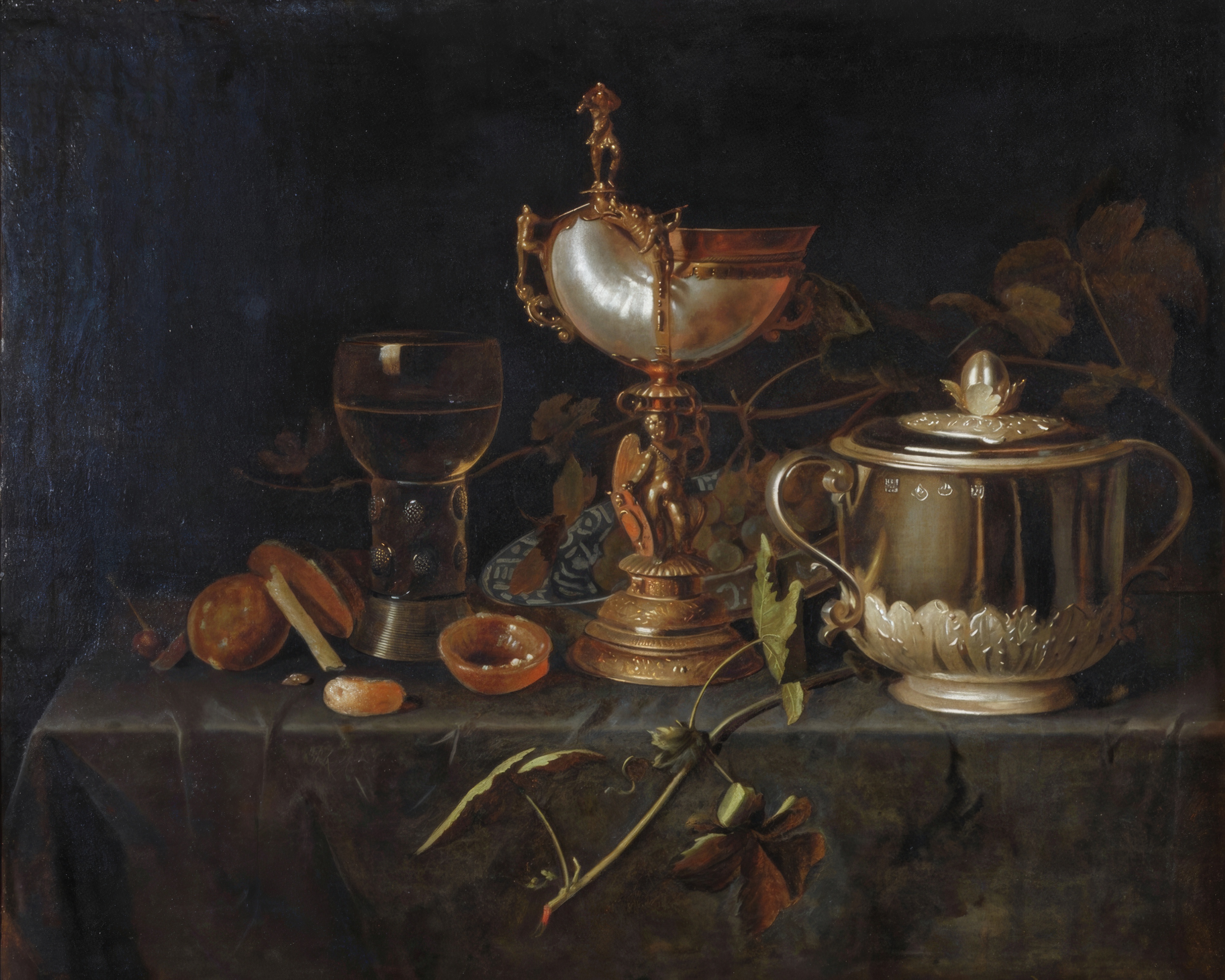
Pieter Gerritsz van Roestraten, Porringer and Nautilus Cup, ca. 1660-ca. 1680. Victoria and Albert Museum, London.
Pieter van Roestraten painted rare and precious objects for collectors in London between about 1660 and 1680. A nautilus shell cup was the pride of any cabinet of curiosities.
A precious little still life for a desk or a shelf of curiosities.
11. Saint George in the Forest
Albrecht Altdorfer, Saint George in the Forest, 1510. Oil on parchment on limewood. Alte Pinakothek, Munich.
Albrecht Altdorfer painted Saint George in the Forest in 1510, one of the first pictures in which the landscape is the real subject. The knight is almost lost among the trees.
Forest green and gold, the colours of a scholar’s den.
12. Blasted Tree
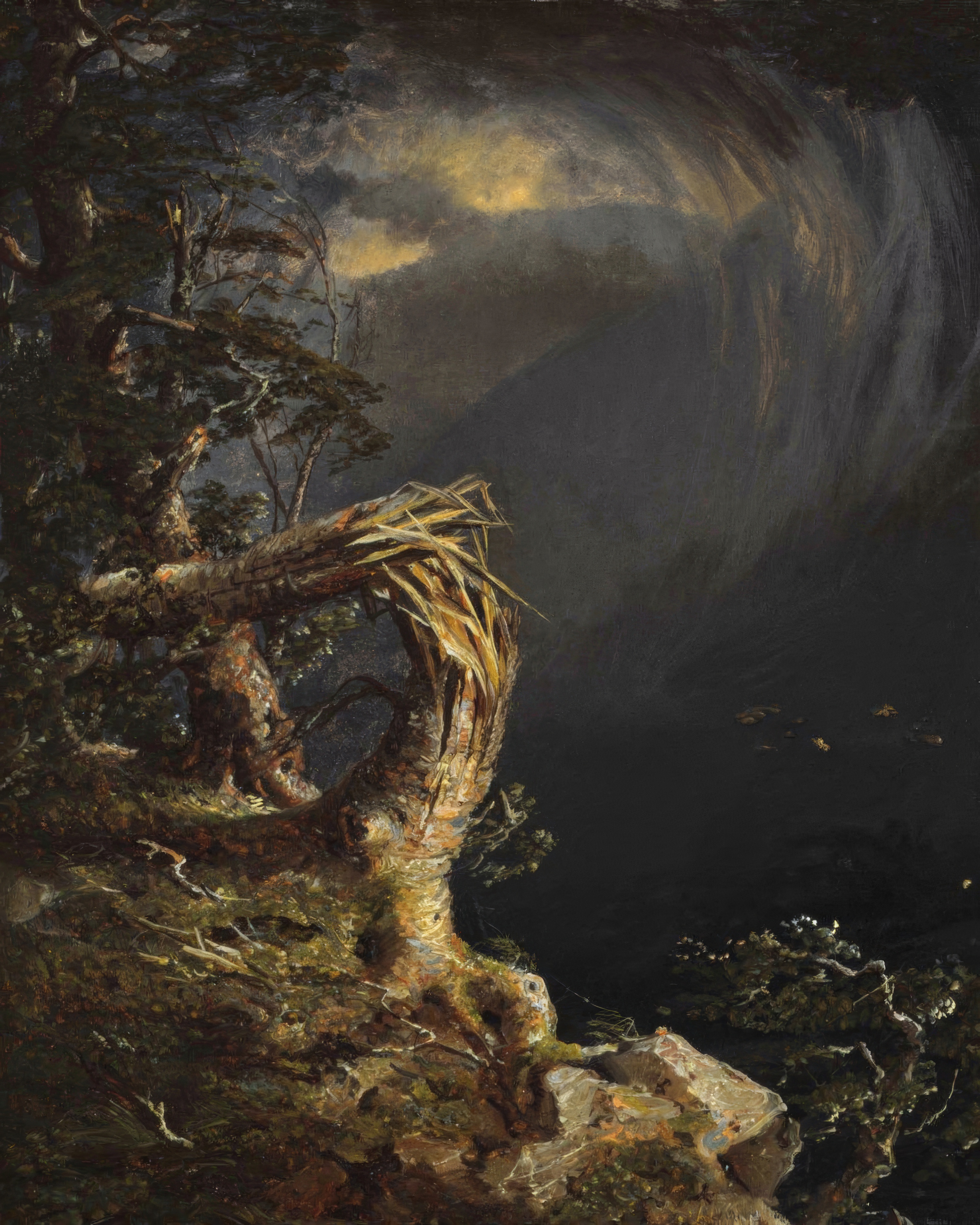
Jasper Francis Cropsey, Blasted Tree, 1850. Oil on canvas. Art Institute of Chicago.
Jasper Francis Cropsey painted this blasted tree in 1850. The shattered trunk stands like a ruin against a valley full of light.
A romantic, dramatic landscape for a dark green study.
Dark academia rooms look best with pictures hung close together and slightly low, among the books rather than above them. Dark walls in green, oxblood or deep brown make old pictures glow; brass picture lights or candles finish the effect. For more, see moody wall art and Victorian decor.
Questions
What is dark academia decor?
A style inspired by old universities and libraries: dark wood, leather, books, candles, classical busts and old paintings, in deep browns, greens and burgundy.
What paintings suit dark academia?
Dark, learned and slightly mysterious pictures: poetic visions, melancholy portraits, philosophers, classical ruins, old forests and still lifes of precious objects.
What colours are dark academia?
Deep brown, forest green, burgundy, navy, charcoal and antique gold, with cream for paper and candlelight.
How do I hang art in a dark academia room?
Hang pictures close together, among bookshelves or in a tight gallery wall, and light them with warm picture lights or lamps.