Art for a quiet room: 12 paintings for reading nooks and calm corners
Readers by Larsson and Utamaro, Corot’s woman in meditation, Shitao’s misty mountains and Millet’s shepherdess: twelve pictures that slow the room down.
Every home needs one quiet corner: a reading chair, a window seat, a room for thinking. The pictures there should do the opposite of an advertisement. They should ask nothing of you, slow you down and reward a long look.
Here are twelve calming pictures in three moods: readers, mountains and mist, and quiet country. Each is shown with its colour palette, and each can be ordered as a print.
Readers
People lost in a book, a letter or a scroll.
1. Lisbeth Reading
Carl Larsson, Lisbeth Reading, 1904. Nationalmuseum, Stockholm.
Carl Larsson painted his daughter Lisbeth reading in 1904, so absorbed that the bright flowers beside her go unnoticed.
Perfect above a reading chair in a light Scandinavian room.
2. By the Evening Lamp
Carl Larsson, By the Evening Lamp, 1908.
Larsson painted a family evening by the lamp in 1908: needlework, a book and the quiet of the end of the day.
Warm golden light for a cosy reading room.
3. Woman Meditating
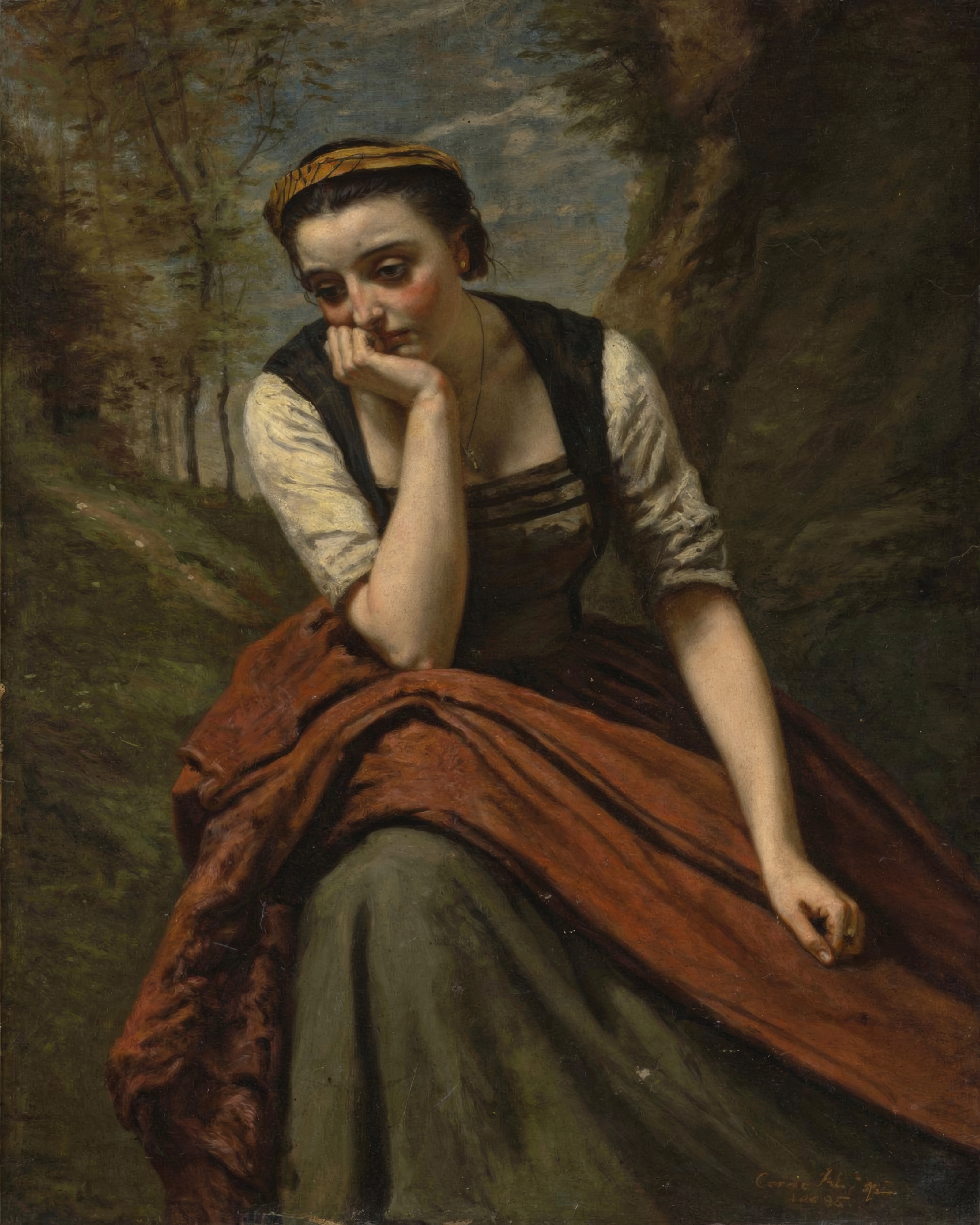
Jean Baptiste Camille Corot, Woman Meditating, after 1868. Oil on fabric. Cleveland Museum of Art.
Camille Corot painted this woman lost in thought after 1868, late in his life, when his figure pictures became softer and more inward.
A deeply calm picture for a study or quiet sitting room.
4. Courtesan Reading a Letter
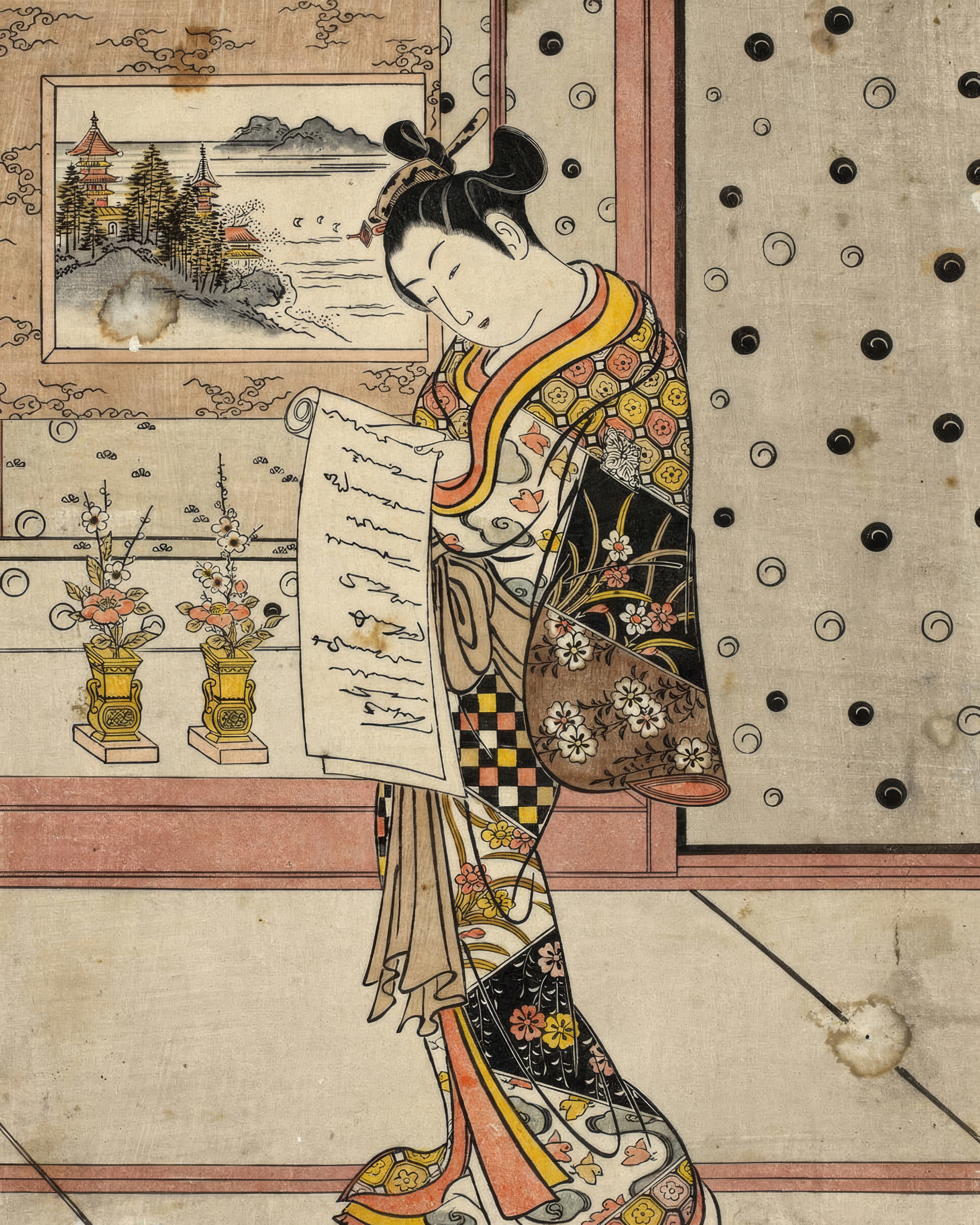
Ishikawa Toyonobu, Courtesan Reading a Letter, c. 1745. Hand-colored woodblock print; toku-oban, urushi-e. Art Institute of Chicago.
Ishikawa Toyonobu made this hand coloured print around 1745. A woman stands absorbed in a letter, drawn in long, graceful lines.
A tall, quiet print for a narrow wall beside a reading chair.
5. Woman of the Yoshiwara Reading Scroll
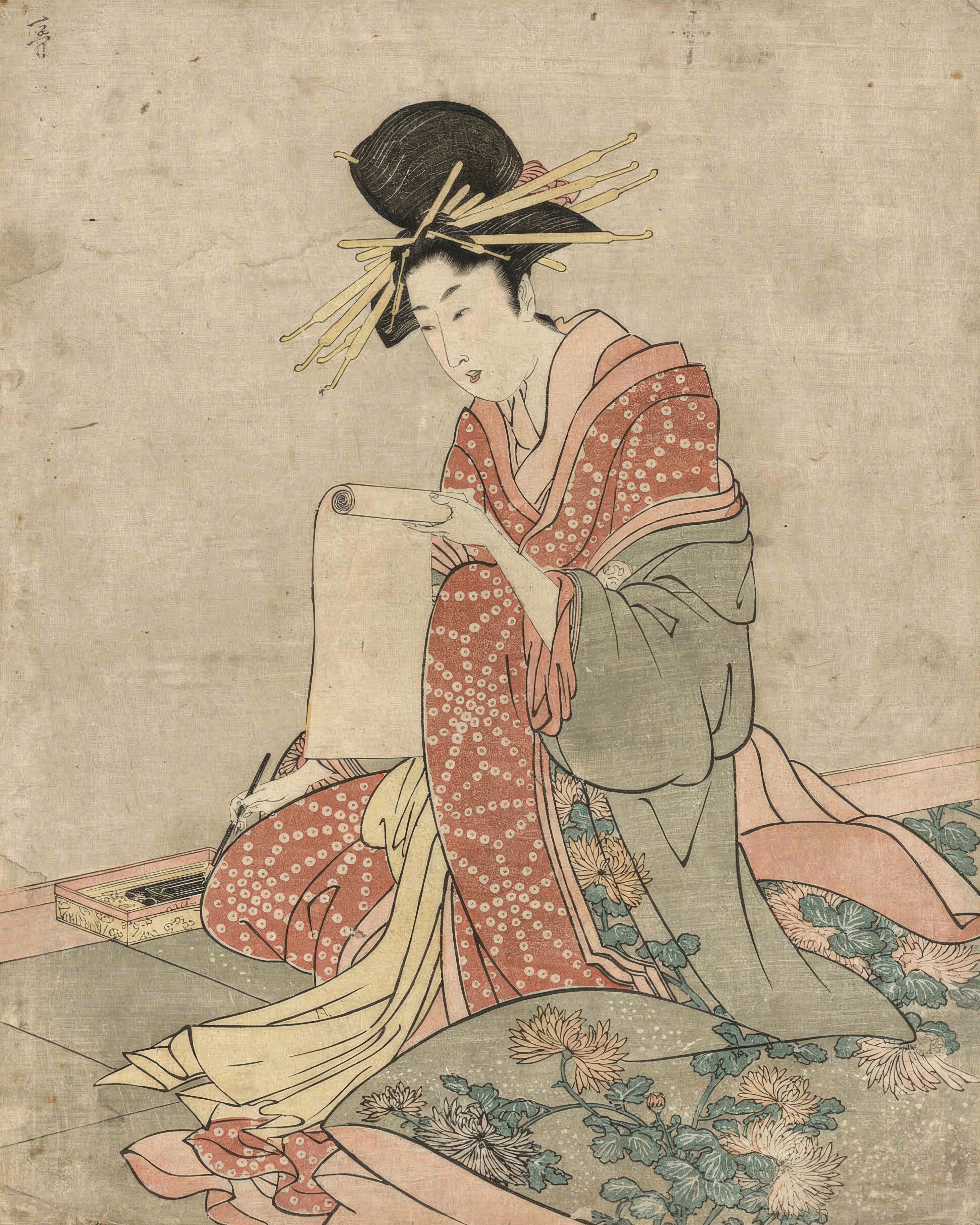
Kitagawa Utamaro, Woman of the Yoshiwara Reading Scroll, 1753–1806. Color woodblock print. Cleveland Museum of Art.
Kitagawa Utamaro, the great printmaker of women, shows a woman completely absorbed in a scroll. Her stillness fills the picture.
Soft cream, rose and sage for a calm reading nook.
Mountains and mist
Chinese ink landscapes made for quiet contemplation.
6. Landscapes
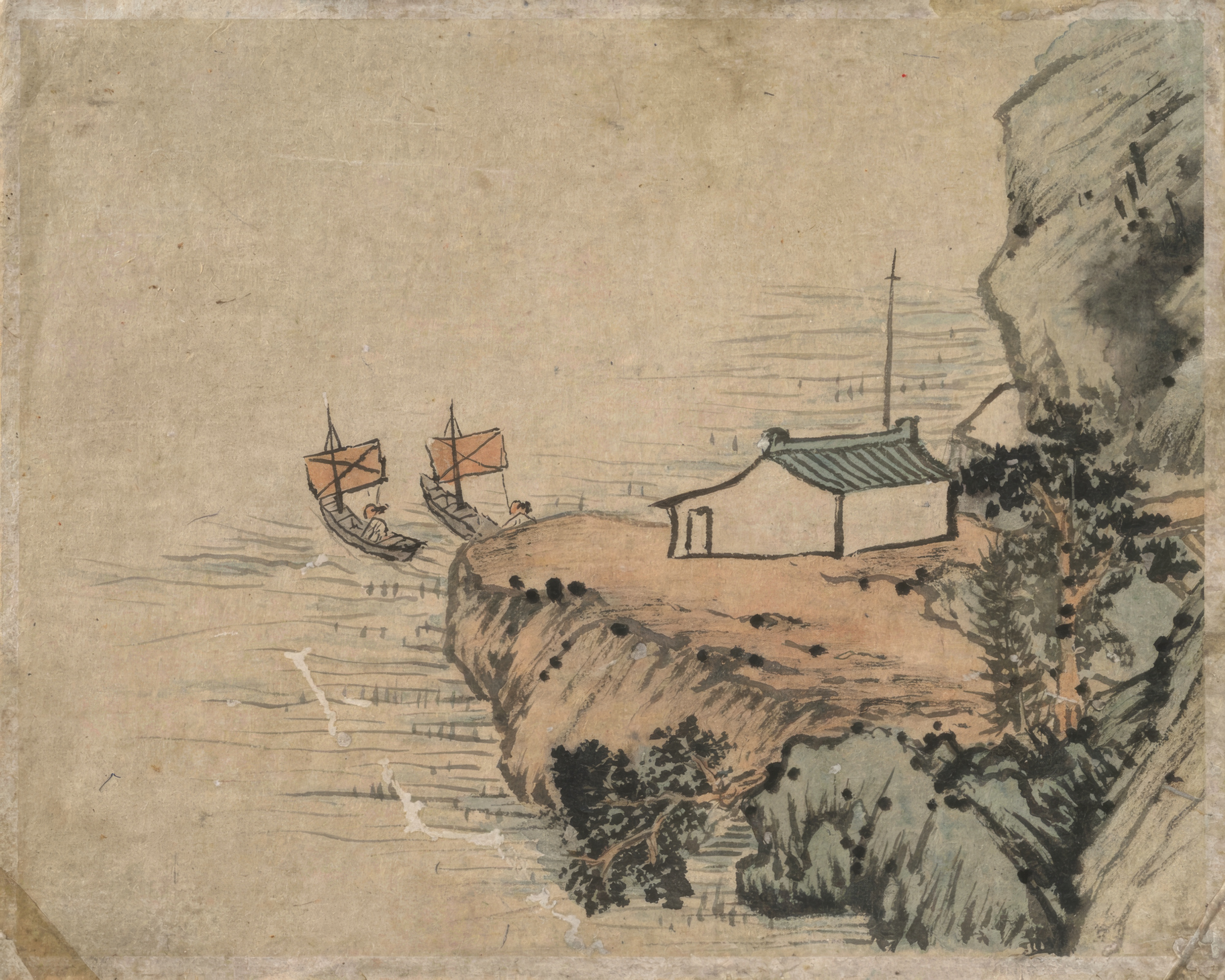
Shitao, Landscapes, ca. 1690. Album of eight leaves; ink and color on paper. The Metropolitan Museum of Art, New York.
Shitao, one of the most original Chinese painters, made this album of landscapes around 1690. His free, calligraphic brushwork makes mountains and mist feel alive.
Soft grey and sand for a minimal or Japandi room.
7. Landscapes after historical painters
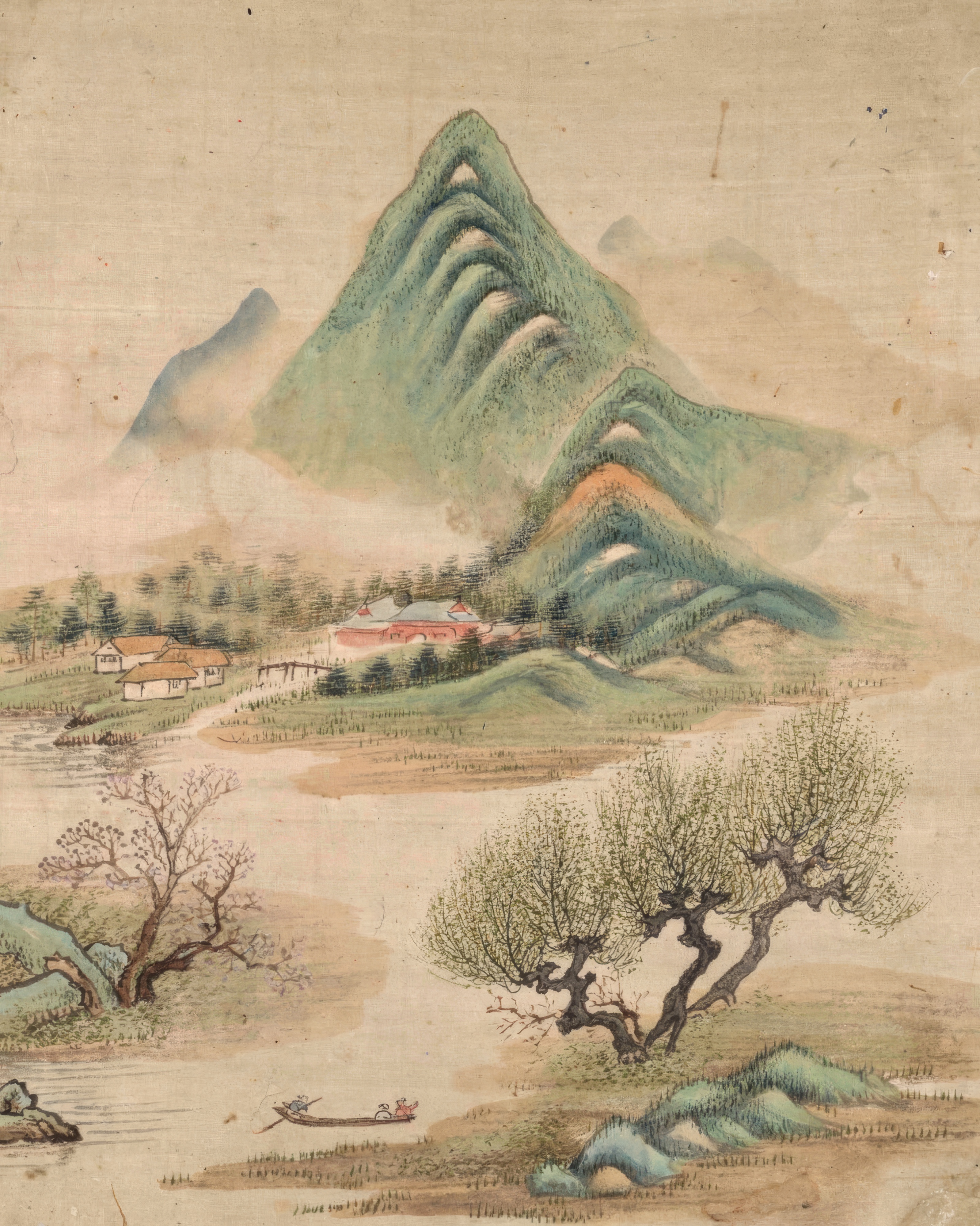
Yun Xiang, Landscapes after historical painters, datable to 1638 or 1650. Album of ten leaves; ink and color on paper. The Metropolitan Museum of Art, New York.
Yun Xiang painted this album of landscapes in the manner of earlier masters around 1638 to 1650. Mist and space give it a quiet, timeless calm.
Muted greens and sand for a calm, natural room.
8. Cranes on Branch of Snow-covered Pine
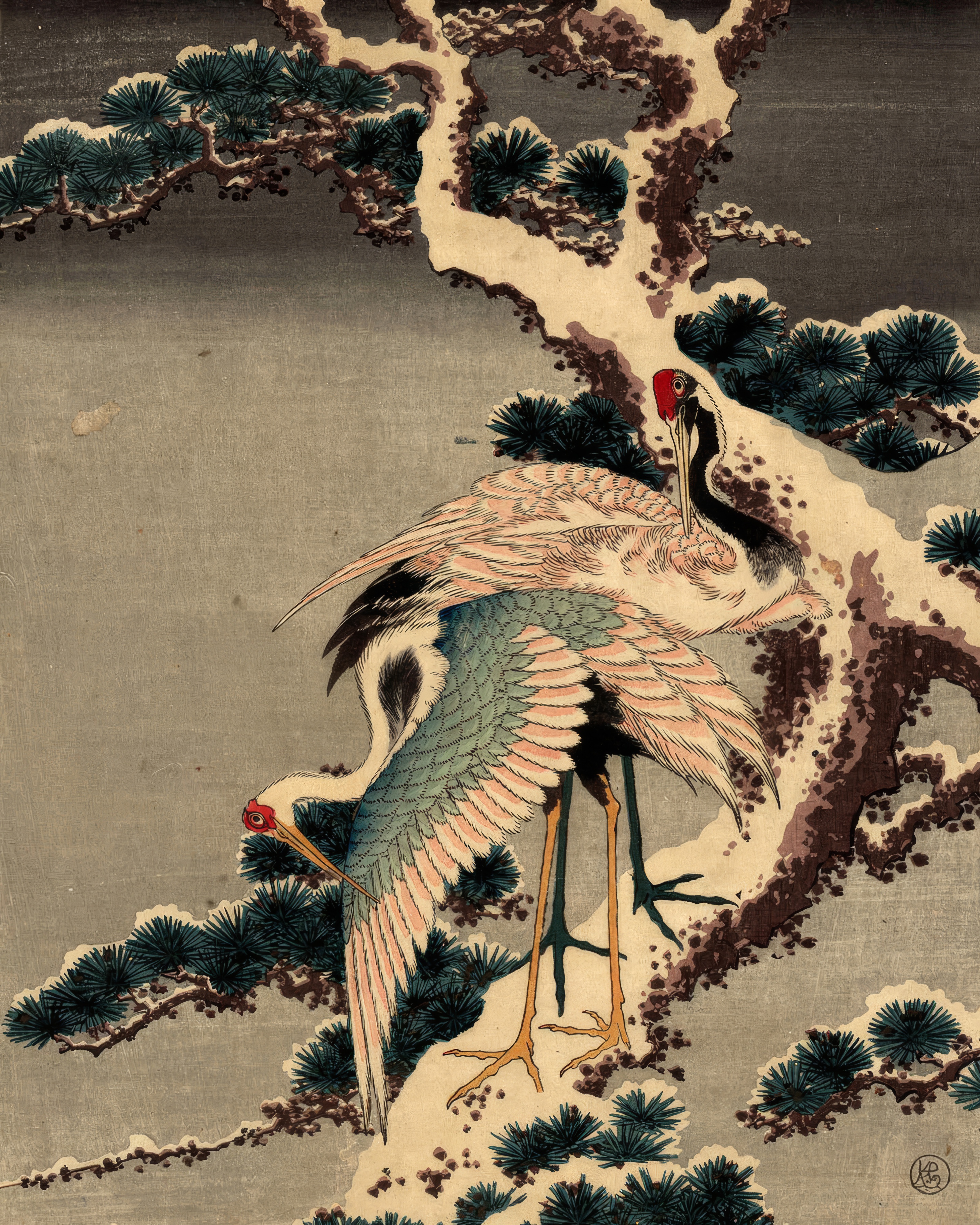
Katsushika Hokusai, Cranes on Branch of Snow-covered Pine, late 1820s. Woodblock print; ink and color on paper. The Metropolitan Museum of Art, New York.
Hokusai made this print in the late 1820s. Two cranes, symbols of long life, rest on a snowy pine in perfect stillness.
A restrained, graphic print for a quiet corner in grey and white.
Quiet country
Shepherds, rivers and forest lanes.
9. The Keeper of the Flock
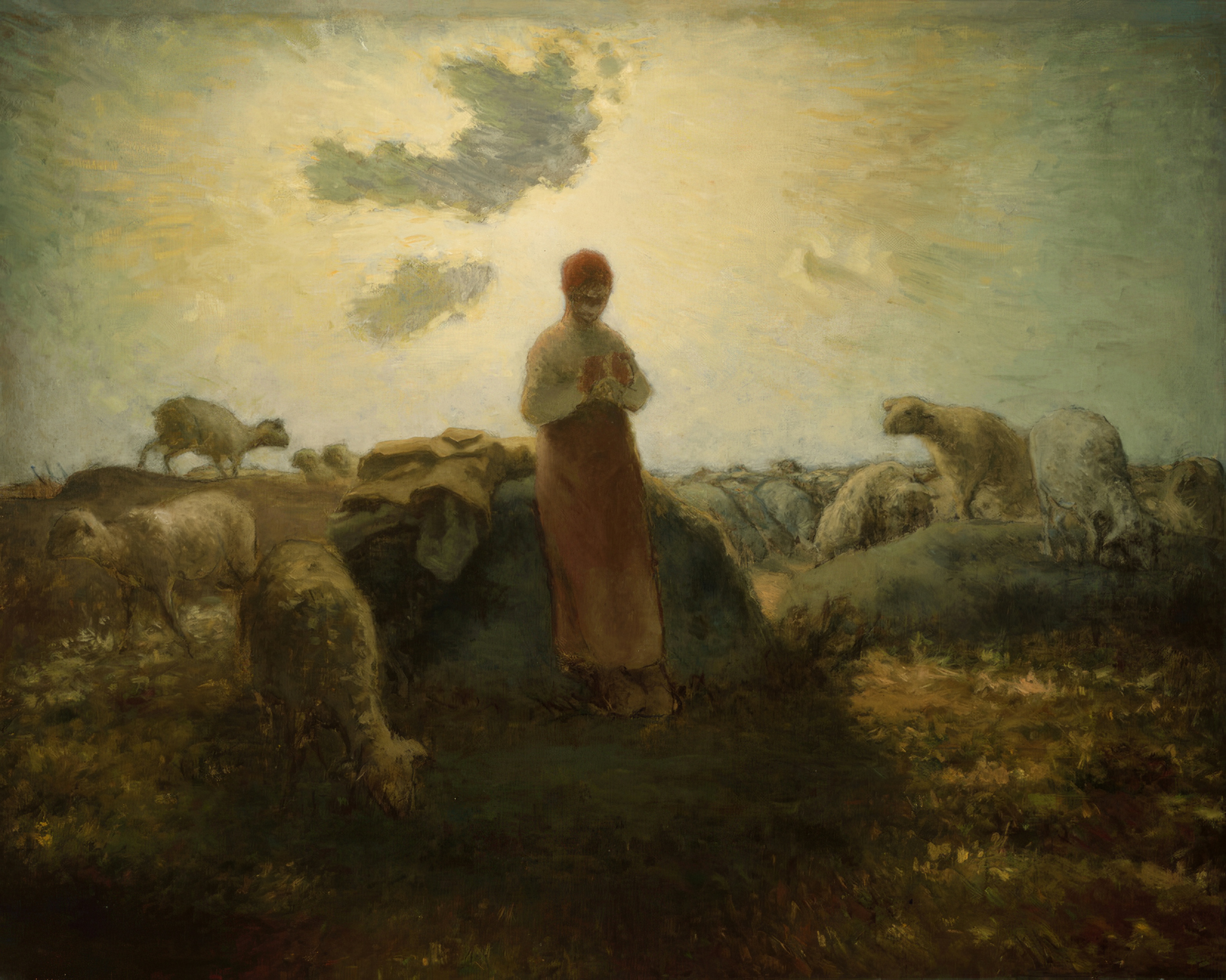
Jean-François Millet, The Keeper of the Flock, 1871–74. Oil on canvas. Art Institute of Chicago.
Jean-François Millet painted The Keeper of the Flock in the early 1870s. A shepherdess knits while her sheep graze, a picture of patience and calm.
Soft gold and stone for a quiet country room.
10. Landscape
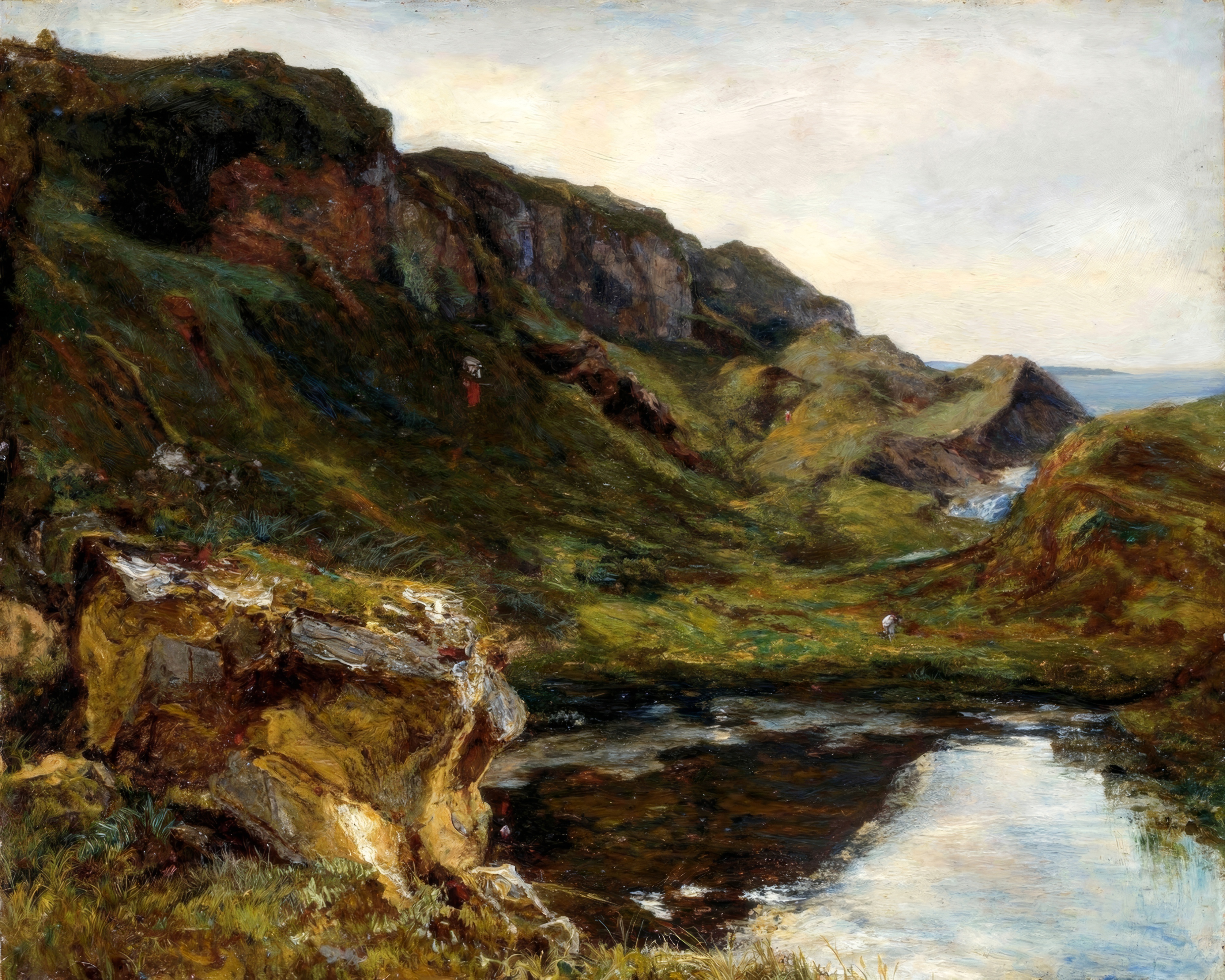
Théodore Rousseau, Landscape, c. 1835. Oil on canvas. Art Institute of Chicago.
Théodore Rousseau painted this forest lane around 1835. The path draws you deep into the trees and the green quiet.
Deep greens for a calm room with wood and leather.
11. River Boat
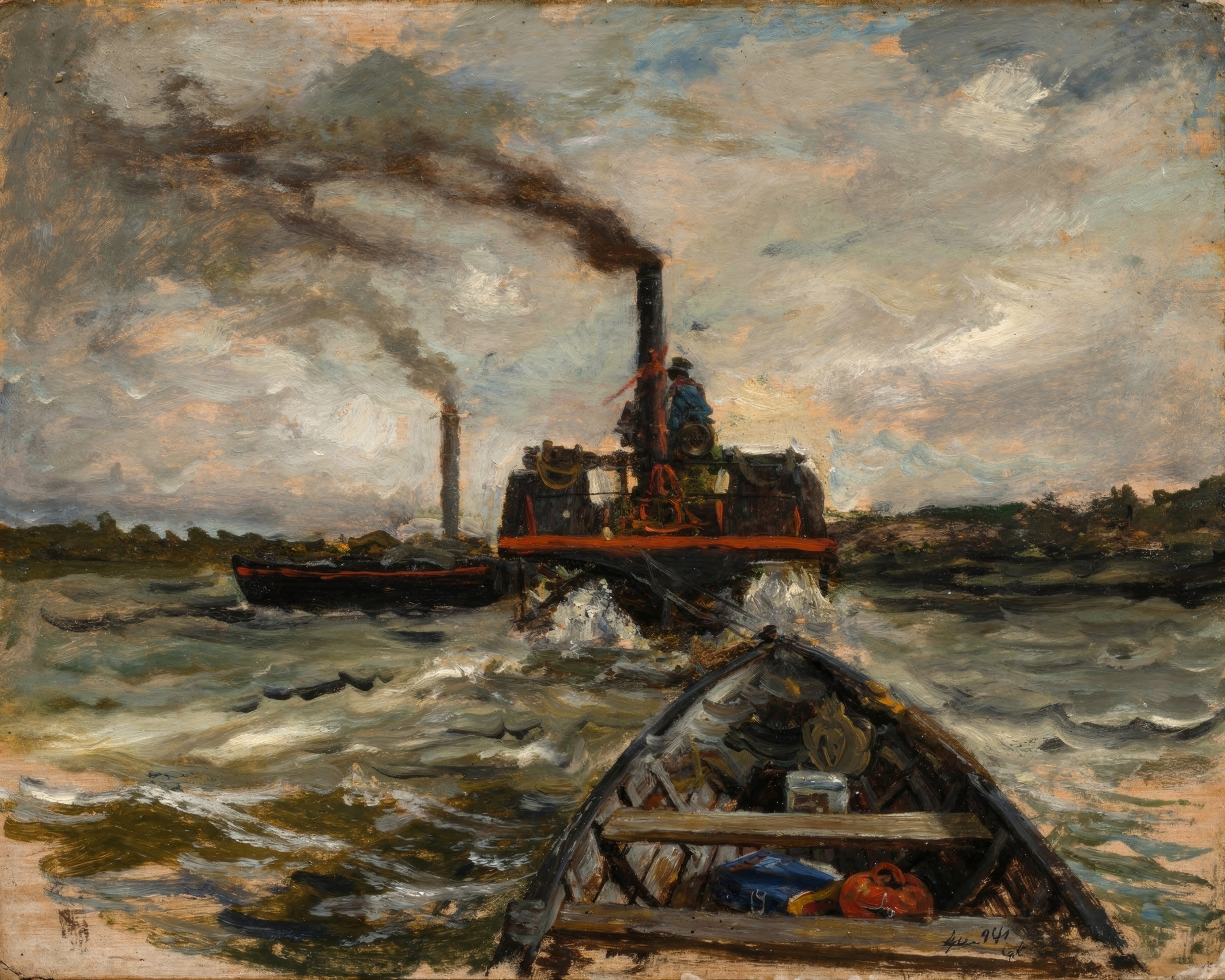
Charles François Daubigny, River Boat, c. 1860. Oil on board. Art Institute of Chicago.
Charles François Daubigny painted rivers from his own floating studio boat. In this small picture of about 1860 a steamboat slides quietly along the water.
Soft greys for a calm, minimal room.
12. Spanish Chestnut
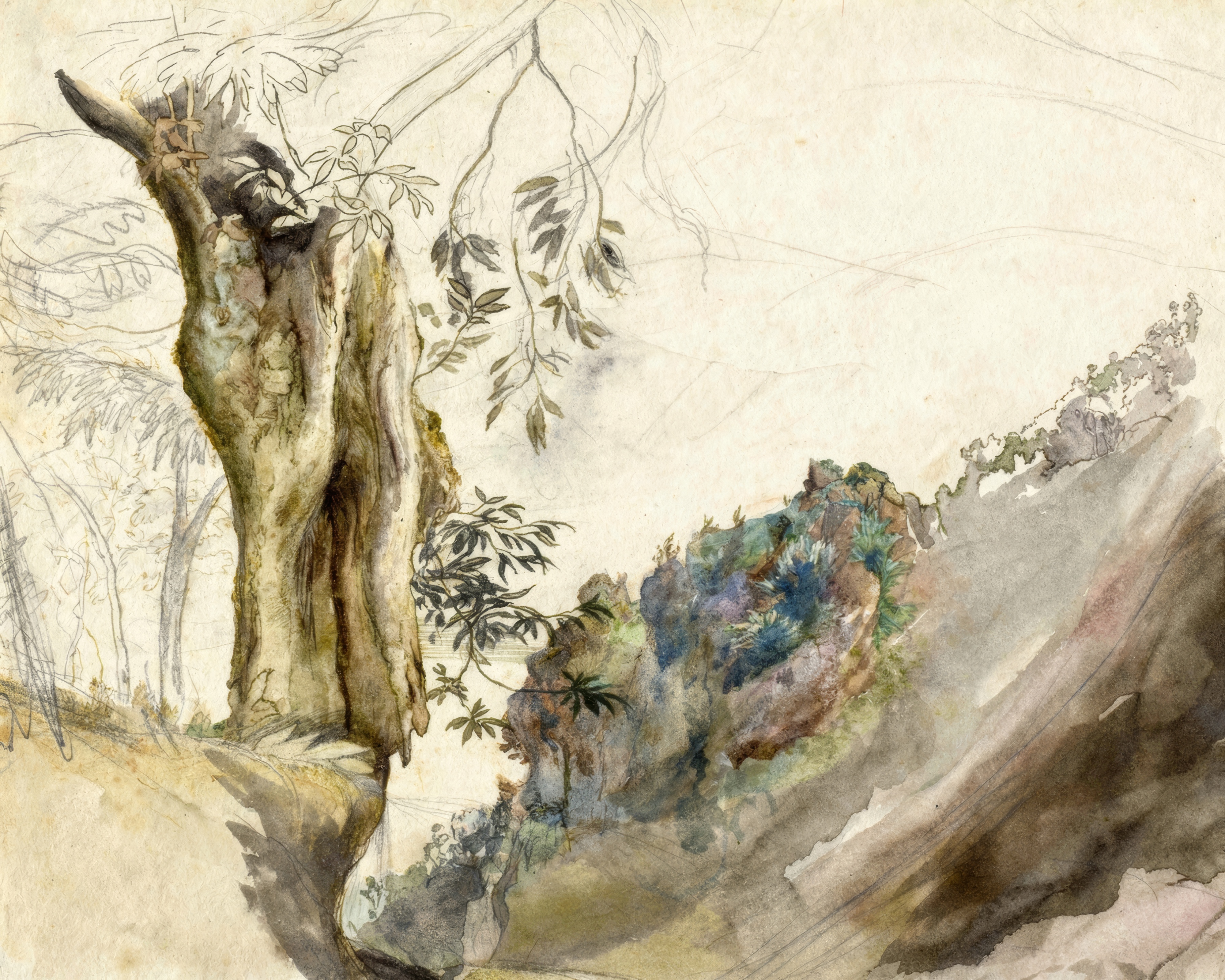
John Ruskin, Spanish Chestnut, n.d.. Pen and brown ink, with brush and watercolor, over graphite, on ivory wove card. Art Institute of Chicago.
John Ruskin, the great Victorian critic, drew nature with patient precision. This study of a Spanish chestnut branch is a lesson in looking slowly.
A delicate, natural study for a calm study or reading corner.
In a quiet room, hang fewer pictures and give each one space. Put the calmest picture where you will see it from your chair, at a seated eye level, about 120 to 130 centimetres from the floor. Muted colours and plenty of empty space in the picture help the room feel still. For a bedroom, see bedroom wall art.
Questions
What makes wall art calming?
Soft or muted colour, open space, gentle light and quiet subjects such as readers, still water, mist and mountains. Pictures with one clear focus are calmer than busy ones.
What art suits a reading nook?
Pictures of readers and quiet interiors, small landscapes and ink paintings. Hang one at seated eye level where you can see it from the chair.
How many pictures should a calm room have?
Fewer than you think. One or two pictures with space around them feel calmer than a full wall.
Are Chinese ink landscapes good for a calm room?
Yes. Their mist, empty space and soft greys were made for quiet contemplation, and they suit both modern and traditional rooms.