Bedroom wall art: 12 calm paintings to wake up to
Soft pinks from Hilma af Klint, a sunlit sickroom by Carl Larsson, a river meadow by Rousseau: twelve quiet masterpieces for the room where you rest, with the colours of each.
A bedroom picture is the first thing you see in the morning and the last thing at night, so it has a different job from the art in the rest of the house. It should settle the eye rather than wake it up. Soft colour, gentle light, open space and quiet figures all help.
We have chosen twelve paintings that do exactly that, in three moods: soft and luminous, quiet interiors, and green and restful. Each one is shown with its colour palette, so you can match it to your bedding and walls, and each one can be ordered as a print.
Soft pinks and pale light
Pictures that glow gently rather than shout.
1. The Ten Largest, No. 9, Old Age
Hilma af Klint, The Ten Largest, No. 9, Old Age, 1907. Tempera on paper, mounted on canvas. Hilma af Klint Foundation, Stockholm.
Hilma af Klint painted The Ten Largest in Stockholm in 1907, a series on the ages of human life. Old Age, the ninth, is the calmest of them: blush pink, white and pale blue, arranged in perfect symmetry.
Its pinks and powder blues suit a light bedroom, and its balance makes it restful to look at for a long time.
2. The Dove, No. 1
Hilma af Klint, The Dove, No. 1, 1915. Oil on canvas. Hilma af Klint Foundation, Stockholm.
In 1915 Hilma af Klint painted The Dove, a series about the union of opposites. The first canvas is built on a quiet symmetry of white, rose and soft grey.
A modern, meditative choice above a bed, beautiful with white linen and pale wood.
3. Woman at Her Toilette
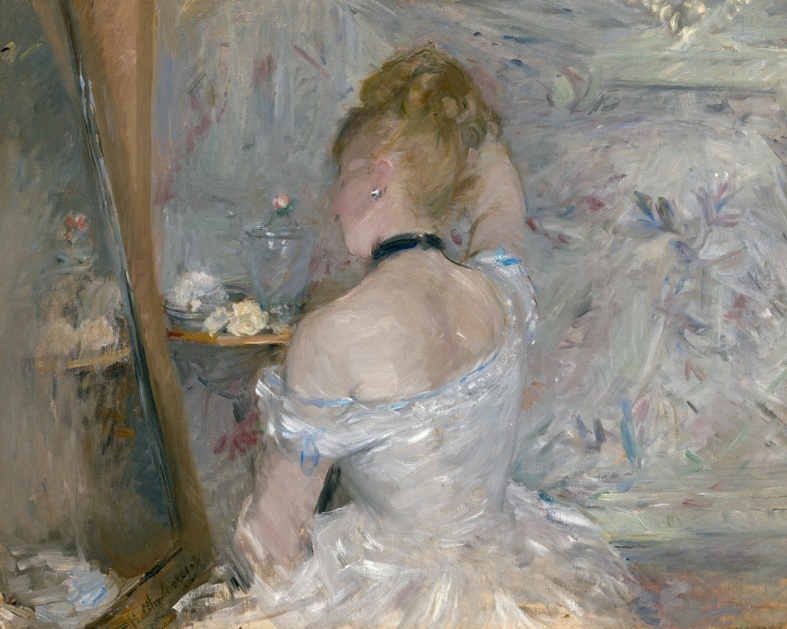
Berthe Morisot, Woman at Her Toilette, 1875–80. Oil on canvas. Art Institute of Chicago.
Berthe Morisot painted this private moment in the late 1870s with quick, feathery strokes of white, silver and rose. Few paintings are so full of morning light.
A natural fit for a bedroom, especially one with white or pale grey walls.
4. Seaside (July: Specimen of a Portrait)
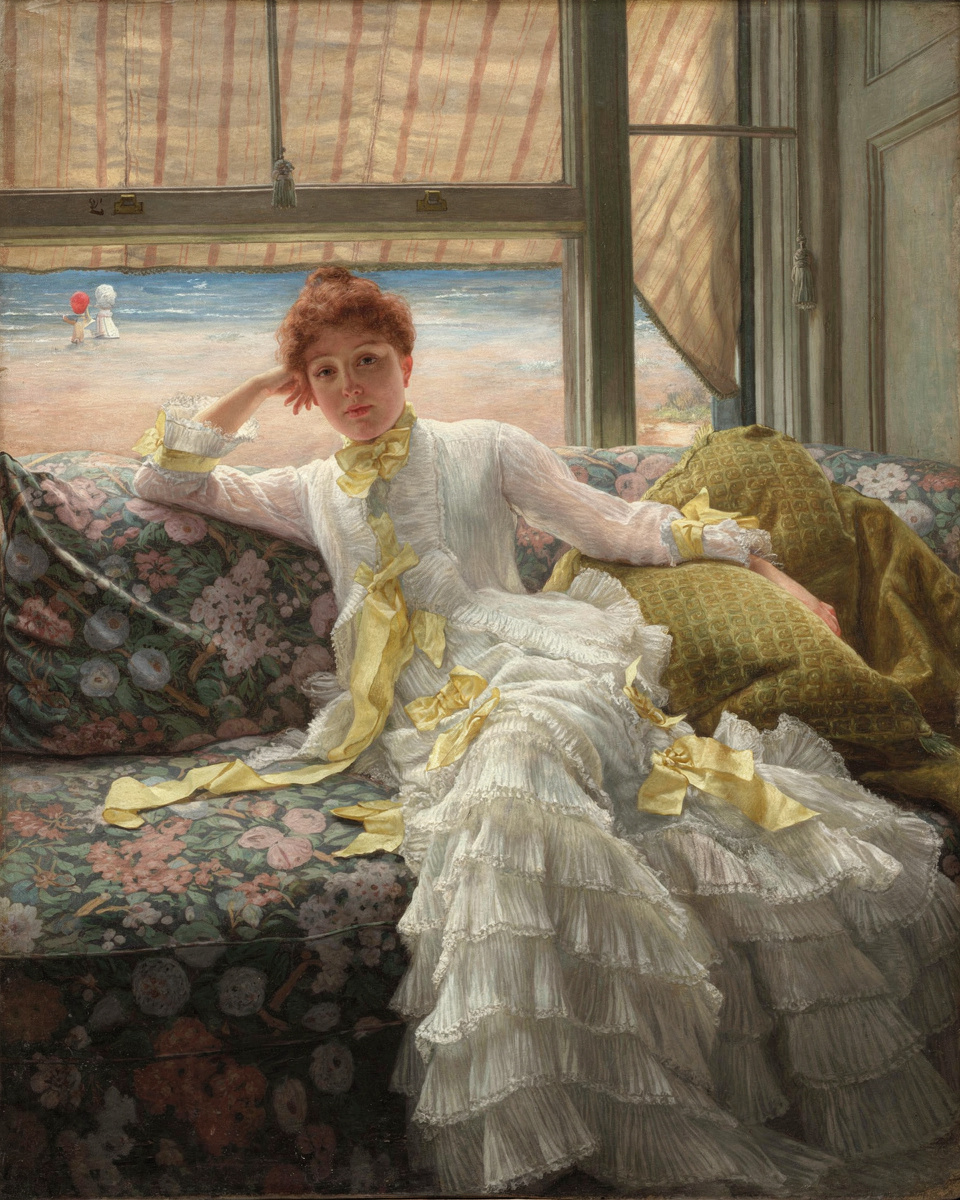
James Tissot, Seaside (July: Specimen of a Portrait), 1878. Oil on fabric. Cleveland Museum of Art.
James Tissot painted this portrait in 1878 in London, where he lived with his companion Kathleen Newton. The quiet sea and the reader lost in her book give it a stillness that suits the end of the day.
Lovely in a guest bedroom or a reading corner by the bed.
5. Romaine Lacaux
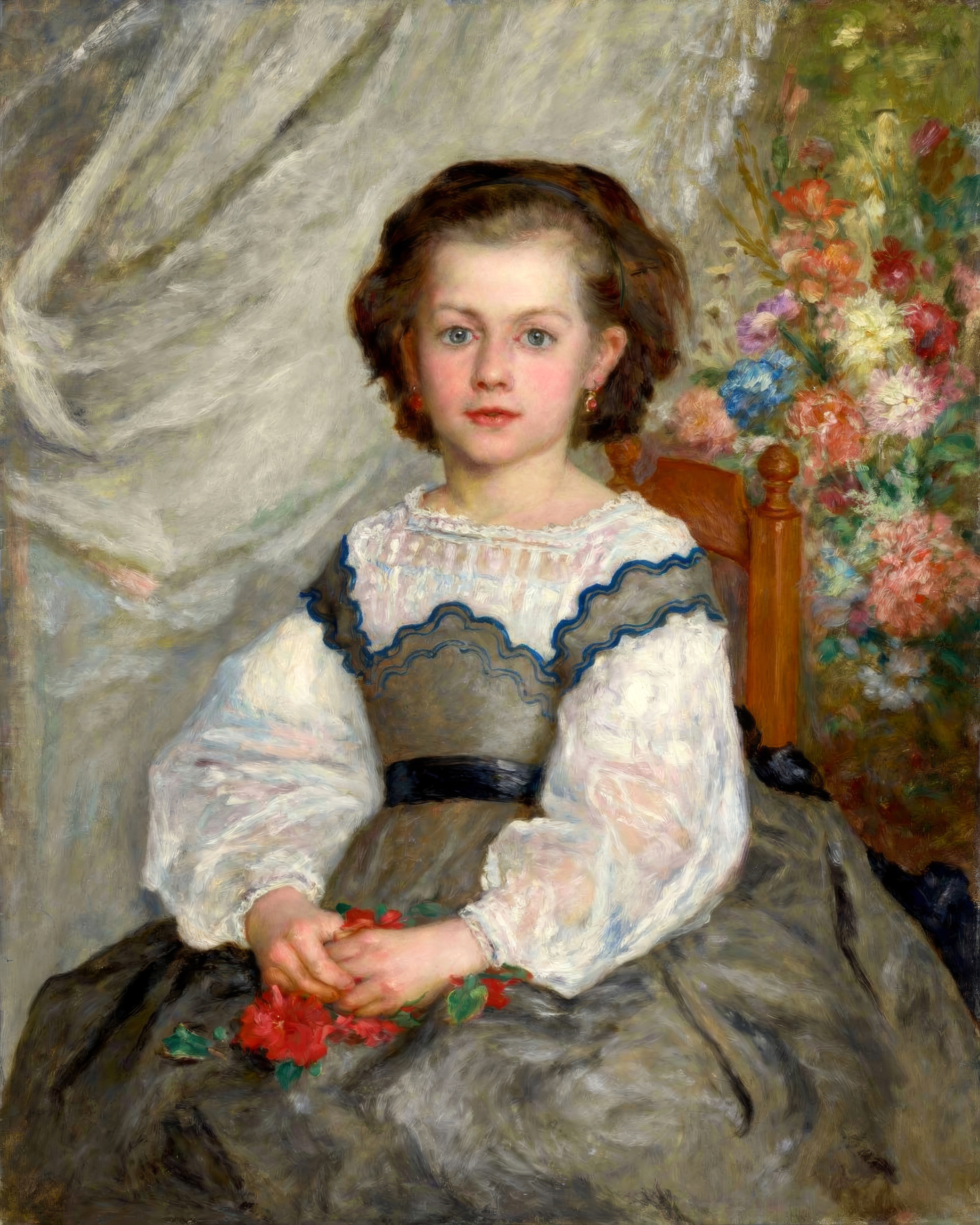
Pierre-Auguste Renoir, Romaine Lacaux, 1864. Oil on fabric. Cleveland Museum of Art.
Renoir was only twenty three when he painted Romaine Lacaux in 1864. Its silvery greys and soft whites already show the gentleness he became known for.
A tender portrait for a child’s room or a quiet bedroom with grey walls.
Rooms within rooms
Bedrooms and sitting rooms painted by artists who loved them.
6. Convalescence
Carl Larsson, Convalescence, 1899. Watercolour. Nationalmuseum, Stockholm.
Carl Larsson painted his family’s home in Sundborn again and again. In this watercolour of 1899 a young woman recovers in a sunny bedroom, surrounded by tulips, tea and pale painted furniture.
Made for a Scandinavian bedroom with white walls, pale wood and soft pink textiles.
7. Cosy Corner. From A Home
Carl Larsson, Cosy Corner. From A Home, 1894. Watercolour. Nationalmuseum, Stockholm.
Cosy Corner comes from Carl Larsson’s book A Home, the watercolours of 1894 that made his house in Sundborn famous. It shows the kind of corner everyone wants: a sofa, a blanket, books and a dog asleep on the rug.
Brings warmth to a bedroom with blue, cream or soft wood tones.
8. The Little White Sofa
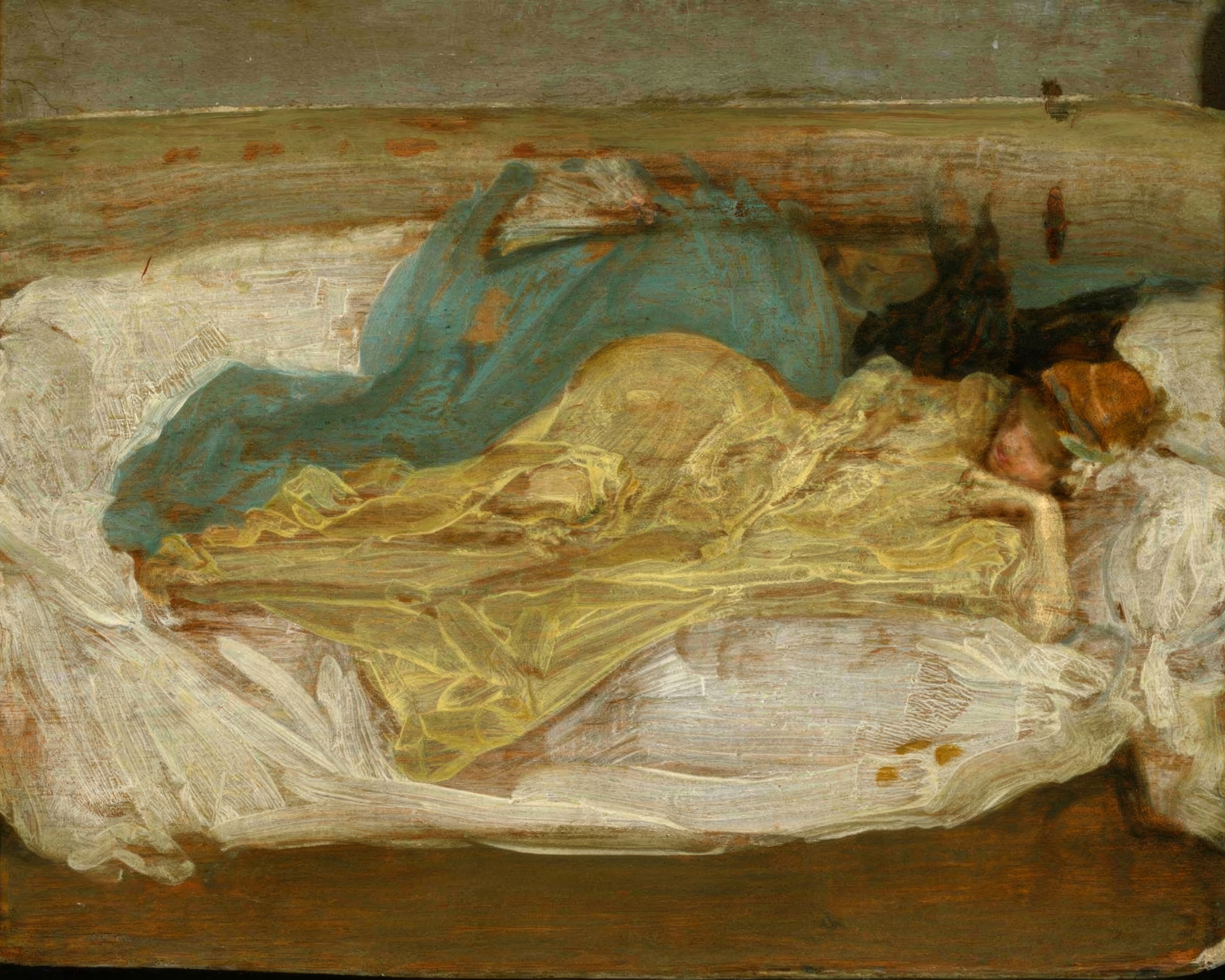
James Abbott McNeill Whistler, The Little White Sofa, c. 1883-1884. Oil on wood panel. Harvard Art Museums.
Whistler painted this small panel in the early 1880s, when he was arranging his own rooms in pale, harmonious colours. It is less a scene than a mood: soft, restrained and calm.
Perfect for a minimal bedroom with whites, linen and a single warm accent.
9. Young Woman Looking at a Pot of Pinks
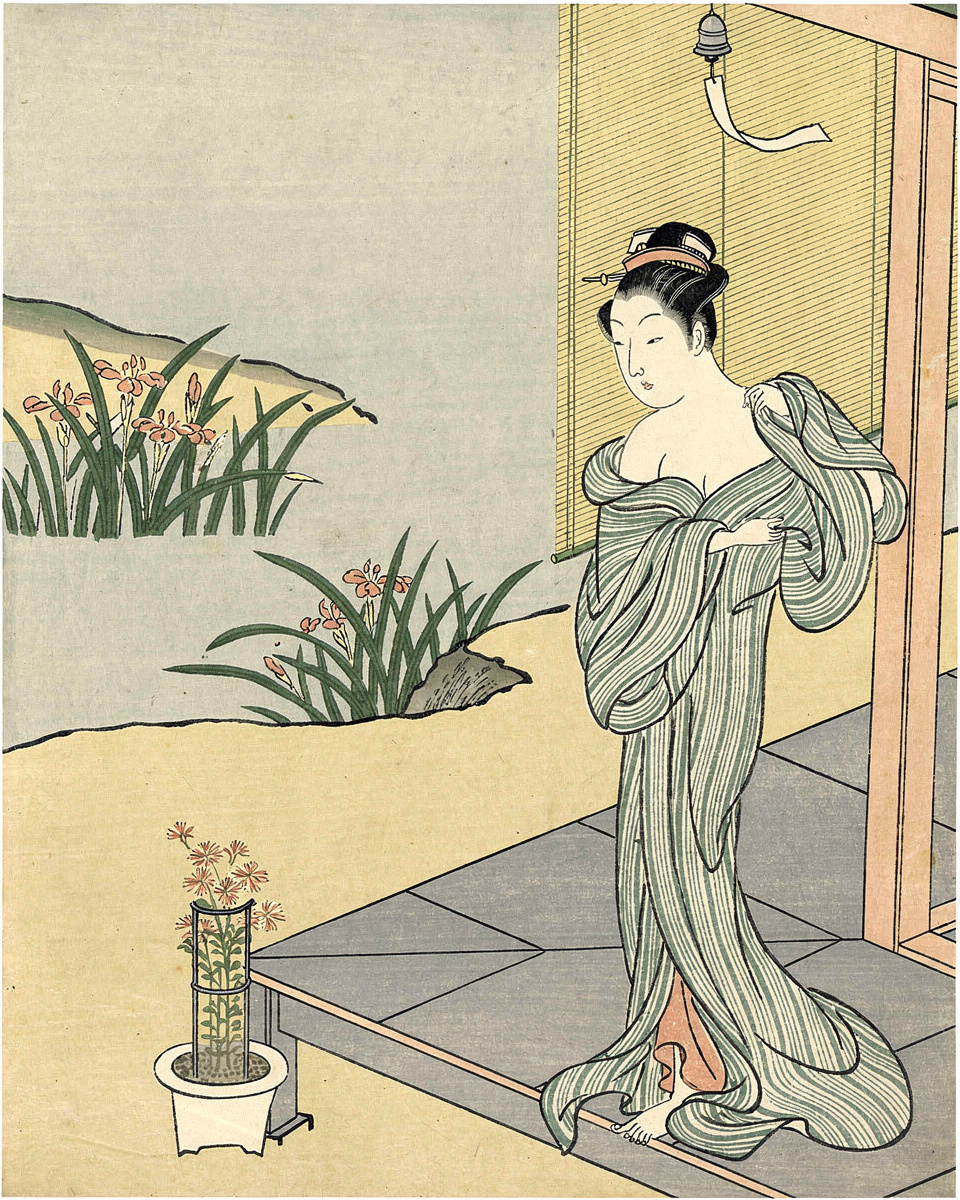
Suzuki Harunobu, Young Woman Looking at a Pot of Pinks, c. 1767. Color woodblock print, with embossing. Cleveland Museum of Art.
Suzuki Harunobu, who pioneered full colour woodblock prints in Edo around 1765, often pictured young women in quiet moments. This print of about 1767 is gentle in line and colour, from sage green to pale gold.
Lovely in a calm bedroom with natural wood, paper lamps and soft green accents.
Slow rivers and quiet hills
Landscapes that slow the breathing down.
10. A River in a Meadow
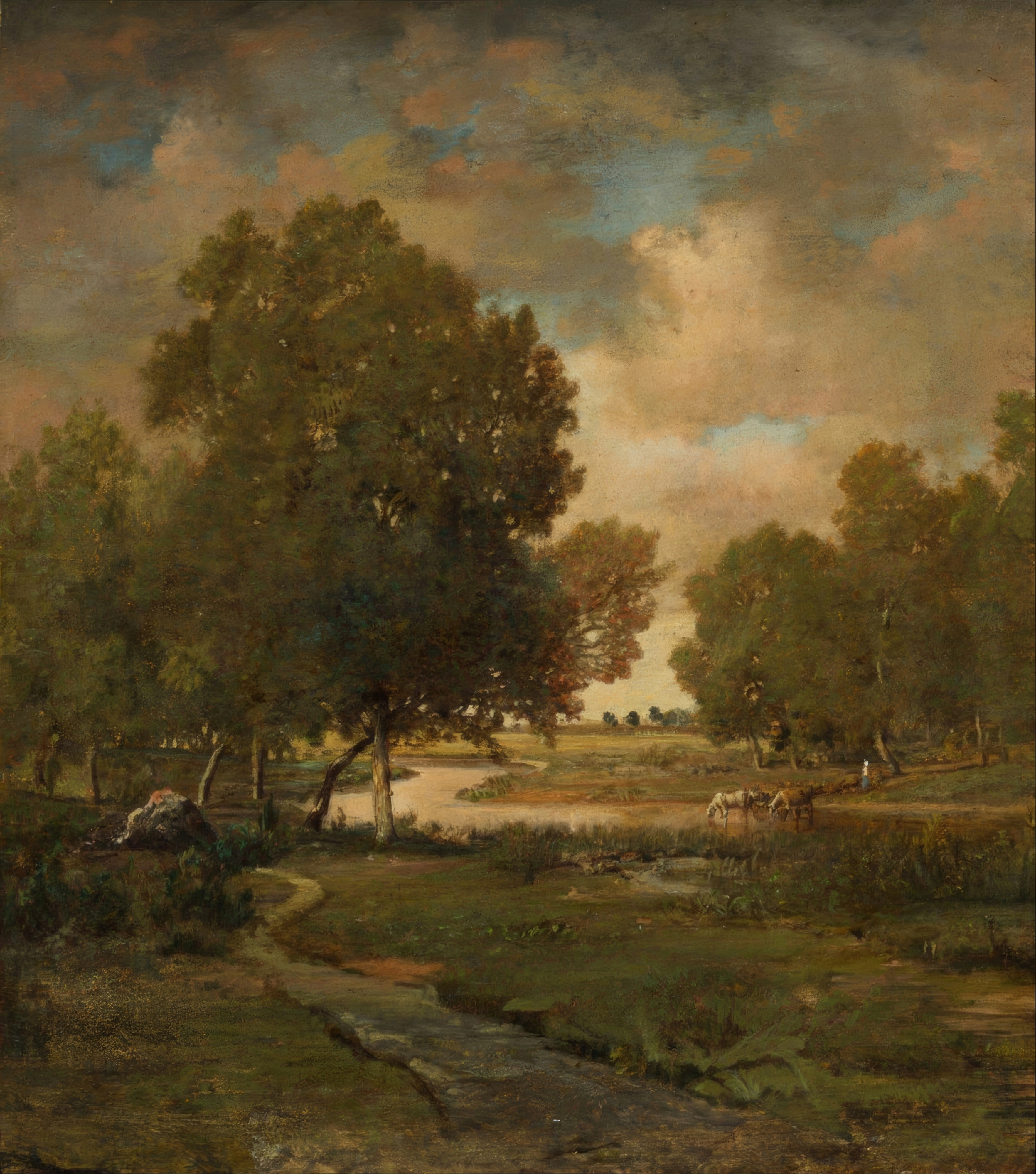
Théodore Rousseau, A River in a Meadow, ca. 1840. Oil on wood. The Metropolitan Museum of Art, New York.
Théodore Rousseau, leader of the Barbizon painters, painted the French countryside directly from nature. This small panel of about 1840 is made of moss greens and soft olive tones.
A grounding picture for a bedroom with sage, olive or warm grey walls.
11. Cows Crossing a Ford
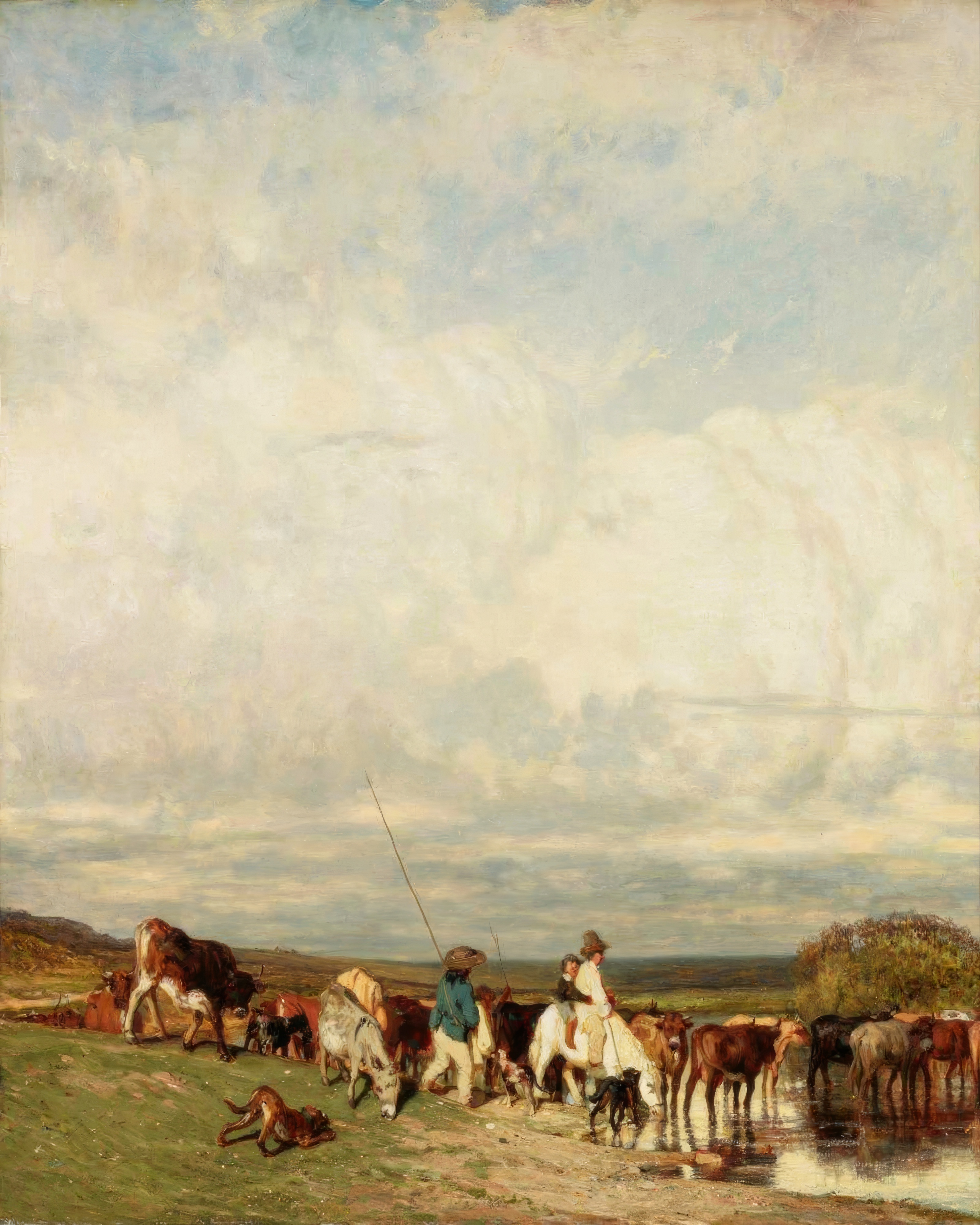
Jules Dupré, Cows Crossing a Ford, 1836. Oil on canvas. The Metropolitan Museum of Art, New York.
Jules Dupré painted Cows Crossing a Ford in 1836, at the start of the Barbizon movement. Pale blue light on the water and a calm herd make it one of the most peaceful pictures in the collection.
Suits a country style bedroom in blue grey, cream and soft brown.
12. Landscape with Gentle Peaks
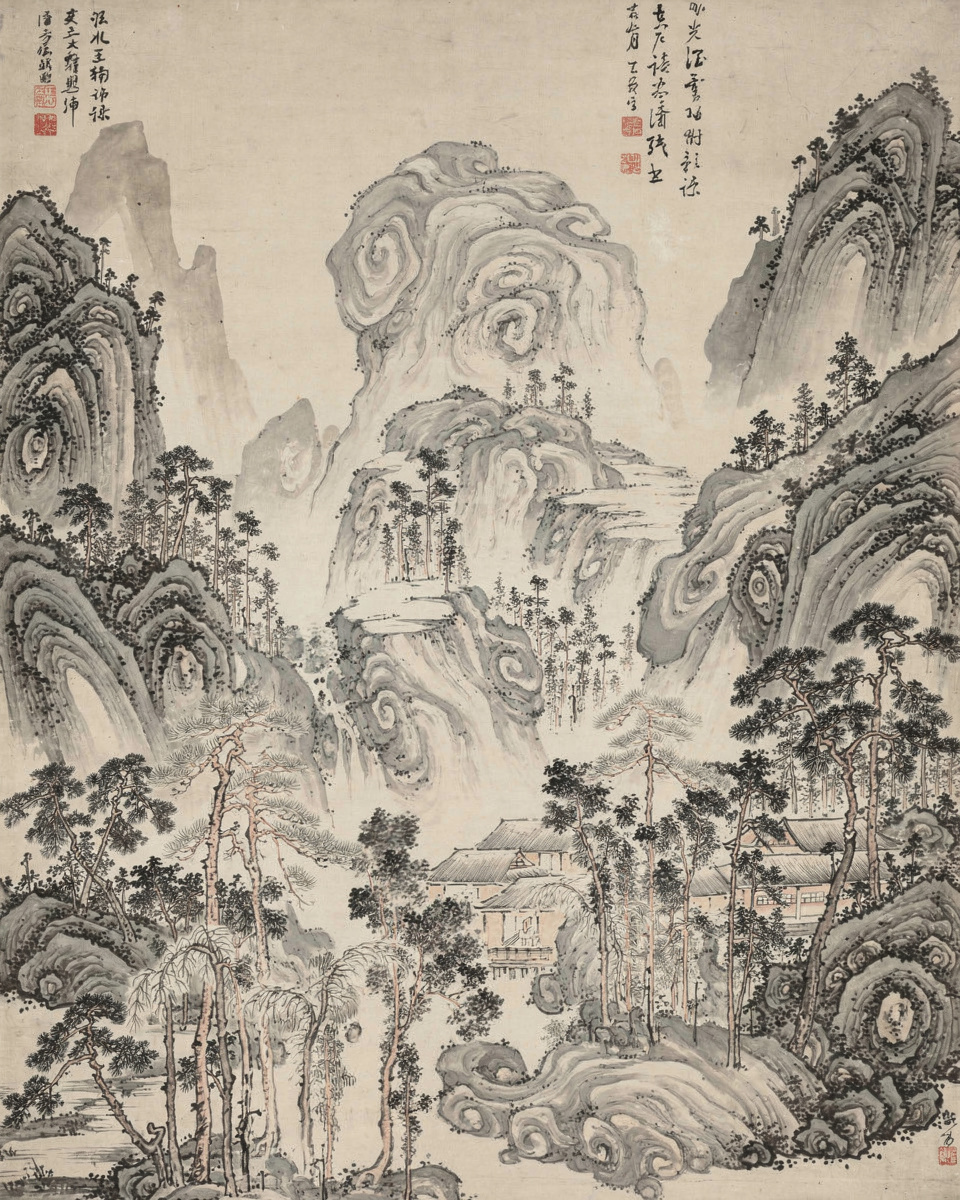
Kan Tenju, Landscape with Gentle Peaks, 1767. Hanging scroll; ink and light color on paper. Cleveland Museum of Art.
Kan Tenju painted this hanging scroll in 1767 in ink and light colour. With only greys, blacks and the warm tone of the paper it creates complete calm.
Ideal for a minimal or Japandi bedroom, and lovely in a tall, narrow space beside the bed.
Above a bed, choose a picture about two thirds the width of the headboard and hang it with its lower edge 15 to 25 centimetres above the top. Repeat one colour from its palette in a throw or cushion. If you want more ideas for a restful room, read our guides to calming bedroom colours and art for a quiet room.
Questions
What kind of art is best for a bedroom?
Calm pictures with soft colour and gentle light: quiet landscapes, interiors, still waters and serene figures. Avoid loud contrast and busy scenes on the wall you see from the bed.
How big should art above a bed be?
About two thirds the width of the bed or headboard. For a double bed that usually means a picture 90 to 110 centimetres wide, or a pair of smaller pictures side by side.
How high should I hang art above a bed?
Leave 15 to 25 centimetres between the top of the headboard and the lower edge of the picture, so it reads as part of the bed rather than floating above it.
What colours are calming for bedroom art?
Soft pinks, pale blues, sage and grey greens, warm whites and gentle ochres. Each painting in this guide is shown with its palette so you can see its colours at a glance.