Canvas wall art: 12 oil paintings made for canvas prints
Van Gogh’s Drinkers, Gauguin’s Tahiti, Renoir’s fruit and a Sargent cathedral: twelve oil paintings whose brushwork looks its best printed on canvas.
A canvas print is the closest thing to the painting itself: the same weave under the colour, no glass in between, and edges that wrap around a wooden frame. Not every picture suits it. Prints and drawings belong on paper, but oil paintings, with their visible brushstrokes, come alive on canvas.
Here are twelve oil paintings that were painted on canvas and look superb printed on it, in three groups: brushwork you can feel, light and colour, and big statement canvases. Each is shown with its colour palette, and each can be ordered as a canvas print.
Brushwork you can feel
Thick, vigorous paint that comes alive on canvas.
1. The Drinkers
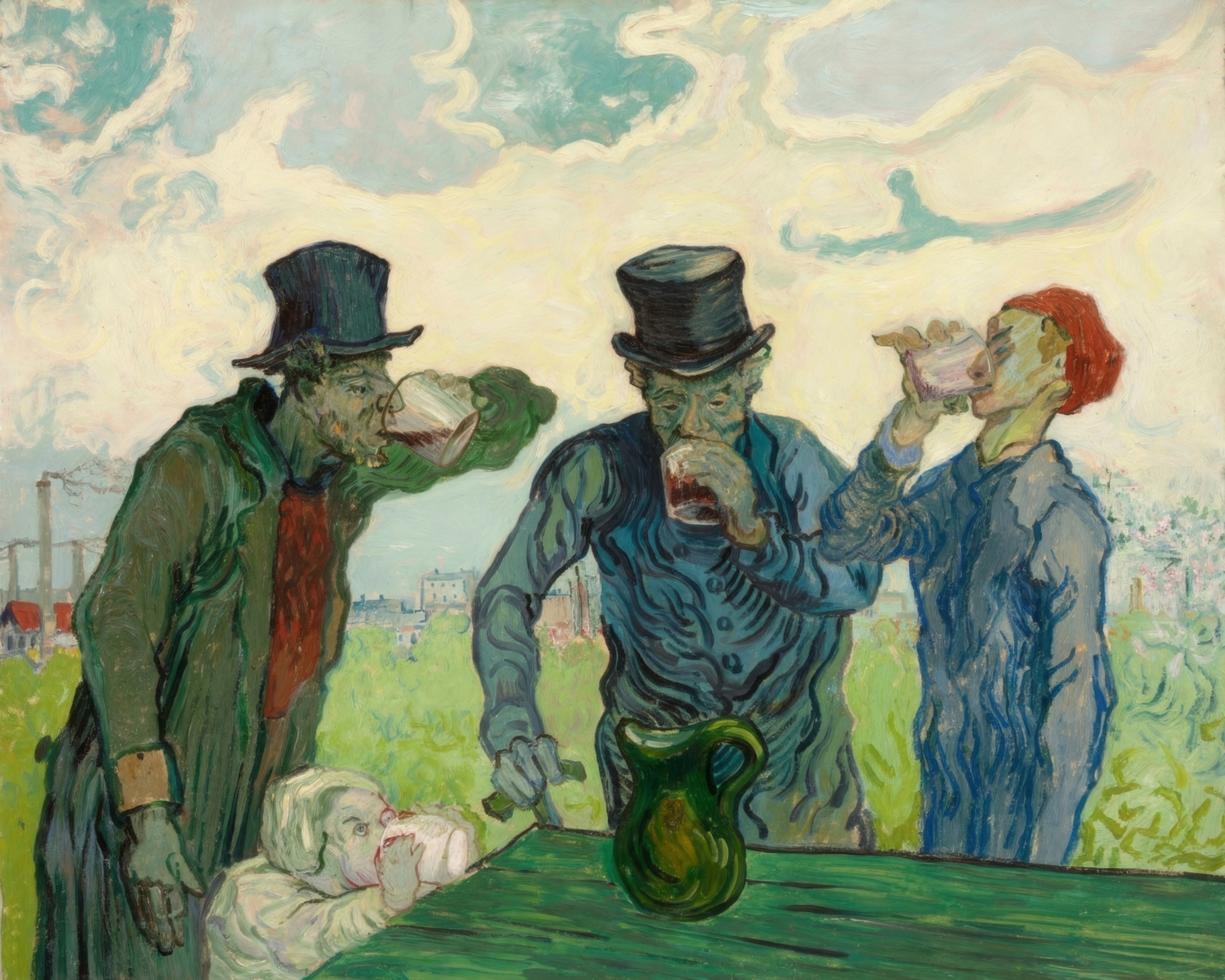
Vincent van Gogh, The Drinkers, 1890. Oil on canvas. Art Institute of Chicago.
Vincent van Gogh painted The Drinkers in 1890, in the last months of his life, after a print by Honoré Daumier. Every stroke of his brush is visible.
Fresh greens and blues, perfect on canvas in a kitchen or dining room.
2. Te burao (The Hibiscus Tree)
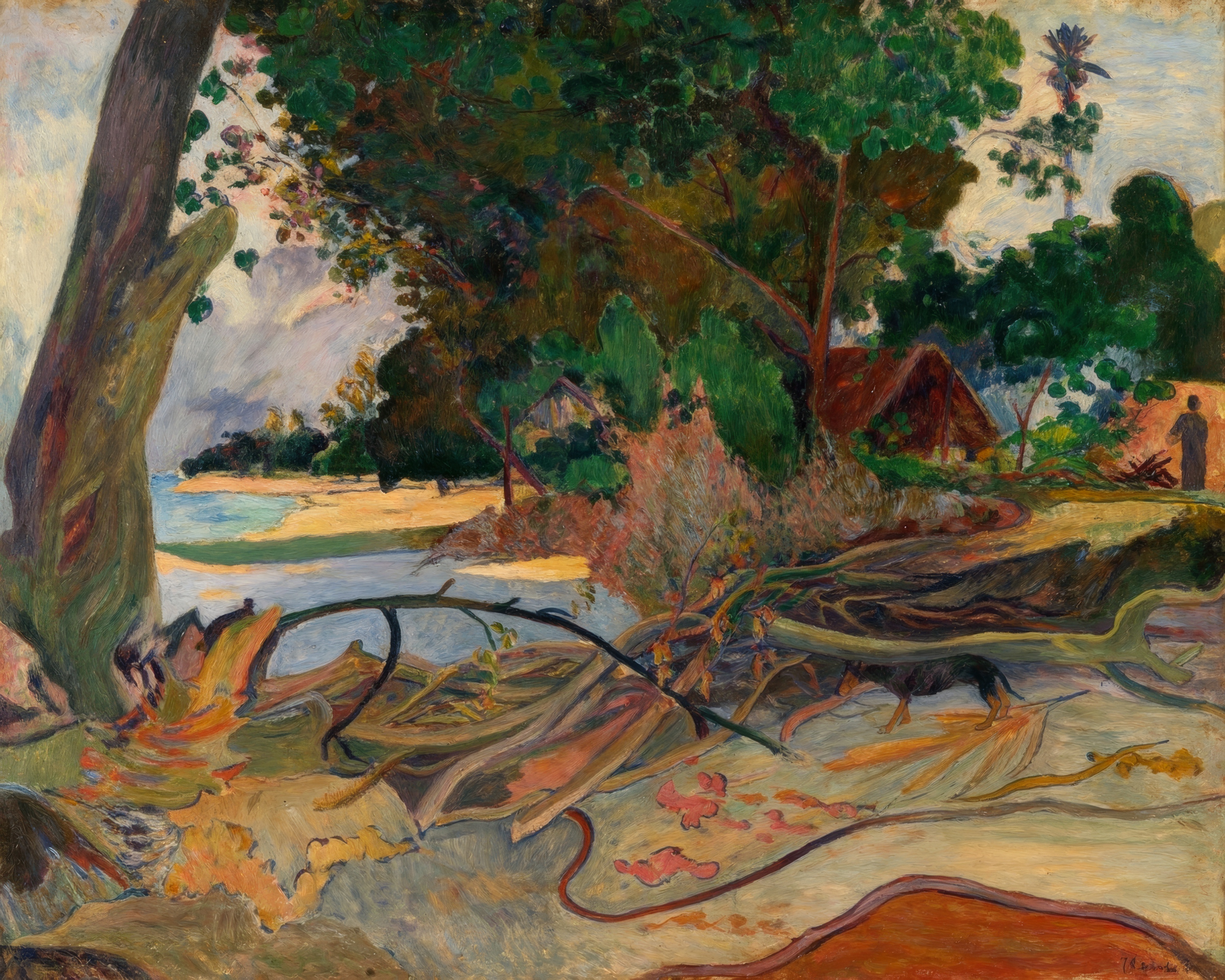
Paul Gauguin, Te burao (The Hibiscus Tree), 1892. Oil on canvas. Art Institute of Chicago.
Paul Gauguin painted Te burao in Tahiti in 1892, on the coarse canvas he used there, which gives his colour its soft, matte glow.
Deep greens and ochre for a warm living room.
3. An Alpine Scene
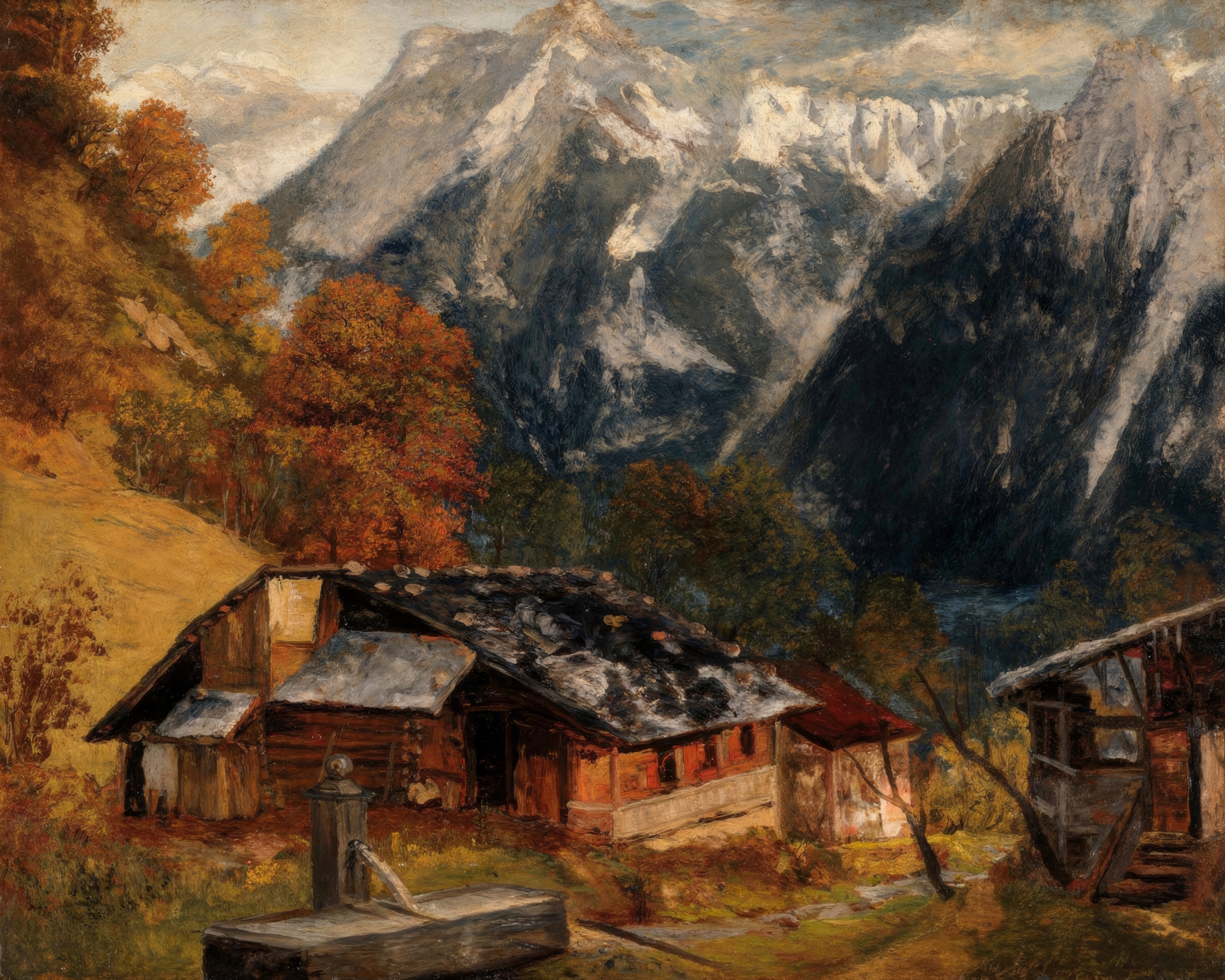
Gustave Courbet, An Alpine Scene, 1874. Oil on canvas. Art Institute of Chicago.
Gustave Courbet lived in exile in Switzerland in his last years and painted the Alps with a palette knife, laying on paint like plaster. This is from 1874.
Strong contrast and texture for a modern room.
4. Autumn Woods
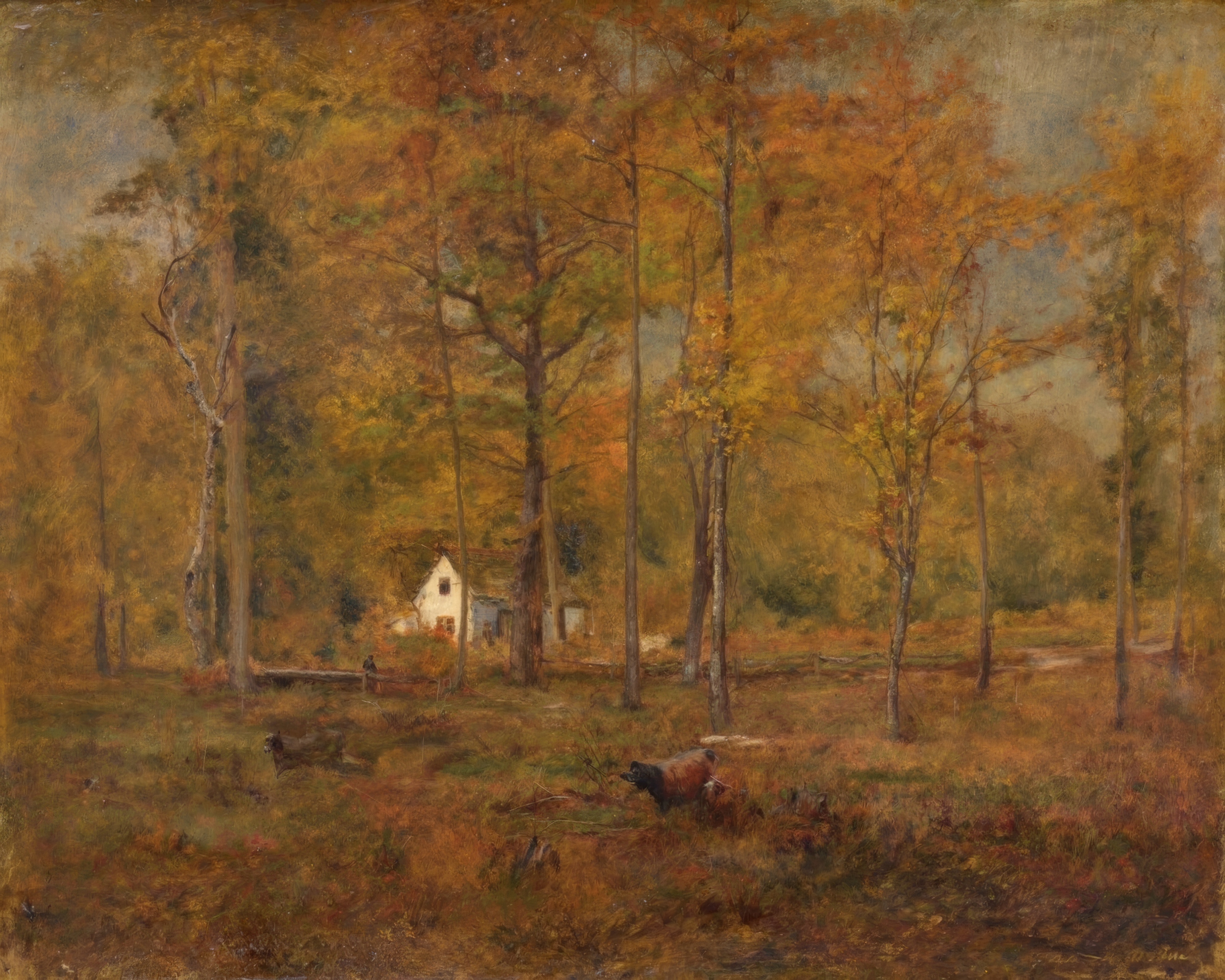
George Inness, Autumn Woods, 1891–94. Oil on canvas. Art Institute of Chicago.
George Inness painted these autumn woods in the early 1890s, when he dissolved landscape into glowing, soft light.
Warm amber and brown, beautiful in a study or den.
Light and colour
Sunshine and bright colour painted in oil.
5. Croquet Scene
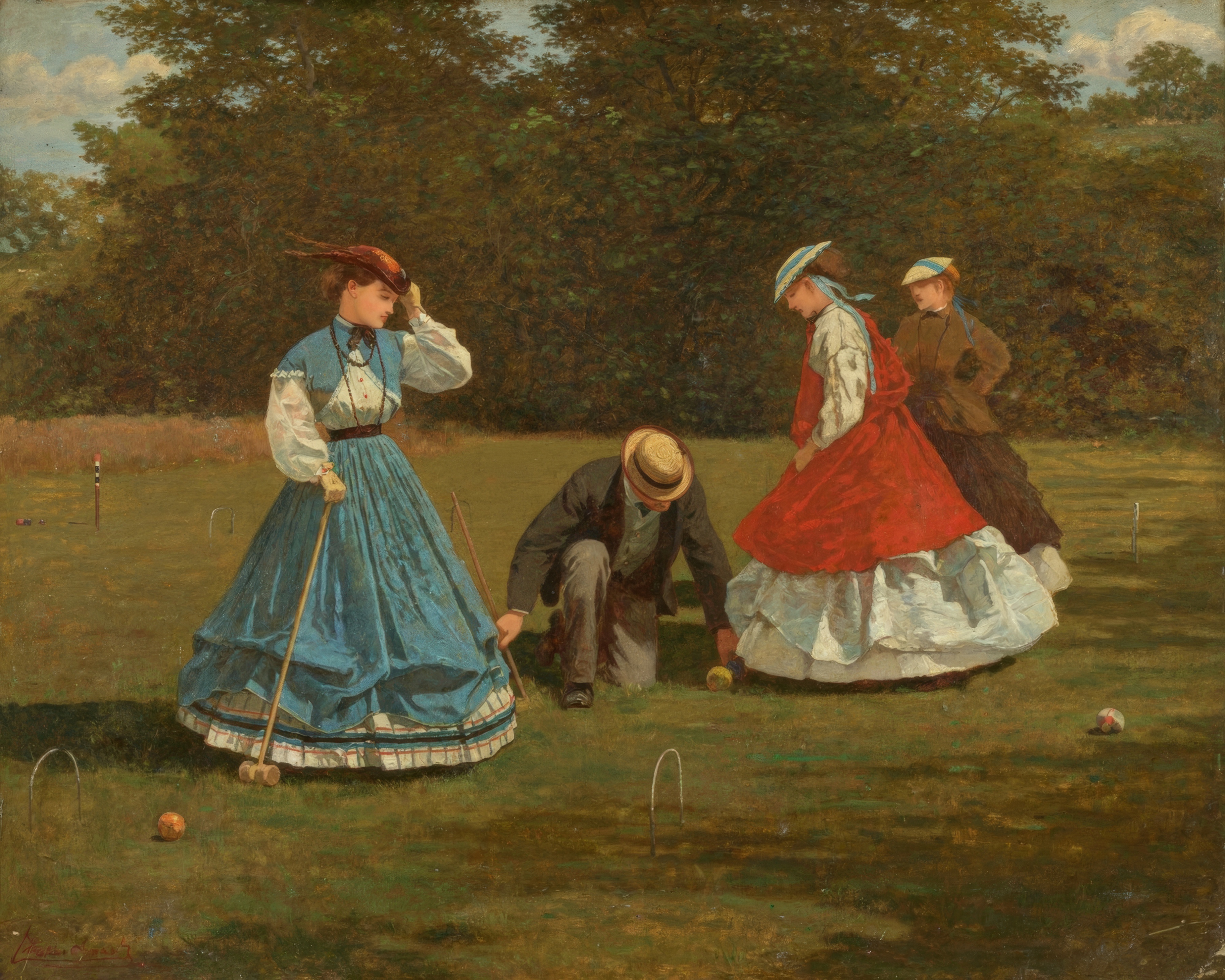
Winslow Homer, Croquet Scene, 1866. Oil on canvas. Art Institute of Chicago.
Winslow Homer painted Croquet Scene in 1866. The new game was the fashion of the summer, and he painted it with bright sun and sharp shadows.
Greens and a flash of red for a cheerful living room.
6. Fruits of the Midi
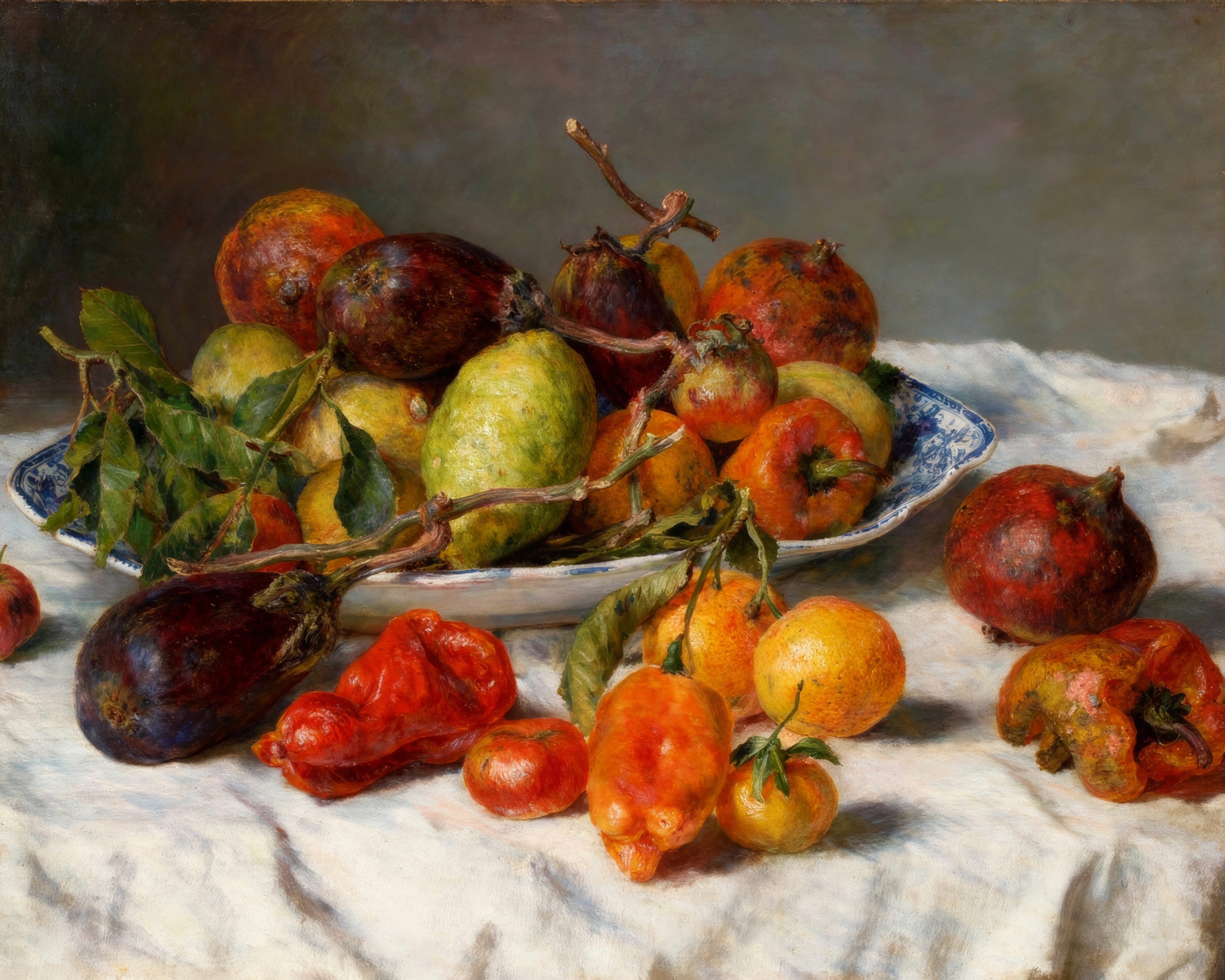
Pierre-Auguste Renoir, Fruits of the Midi, 1881. Oil on canvas. Art Institute of Chicago.
Pierre-Auguste Renoir painted the fruits of the south of France in 1881, after a trip to Algeria and the Midi that brightened his colour.
Bright orange and red for a kitchen.
7. Still Life with Fruit
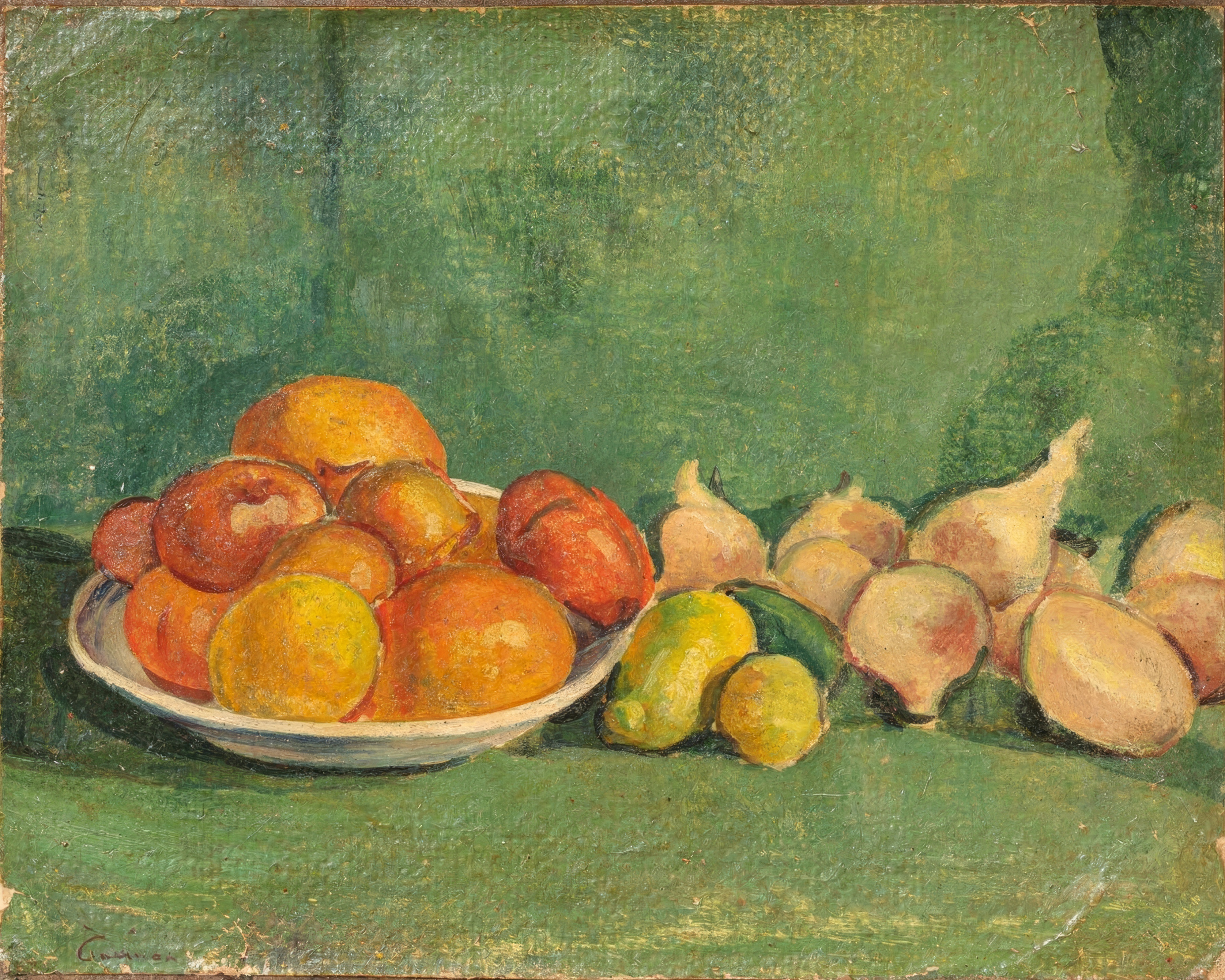
Émile Bernard, Still Life with Fruit, 1890. Oil on canvas. Art Institute of Chicago.
Émile Bernard, friend of Van Gogh and Gauguin, painted this still life in 1890 with strong outlines and flat colour, the style he helped invent.
Orange, green and gold, bold on a plain wall.
8. Moscow Courtyard
Vasily Polenov, Moscow Courtyard, 1878. Oil on canvas. State Tretyakov Gallery, Moscow.
Vasily Polenov painted this quiet Moscow courtyard in 1878. It became one of the best loved pictures in Russian art.
Fresh green and sky blue for a bright family room.
Big statement canvases
Pictures with the scale and drama for a large canvas.
9. The Storm
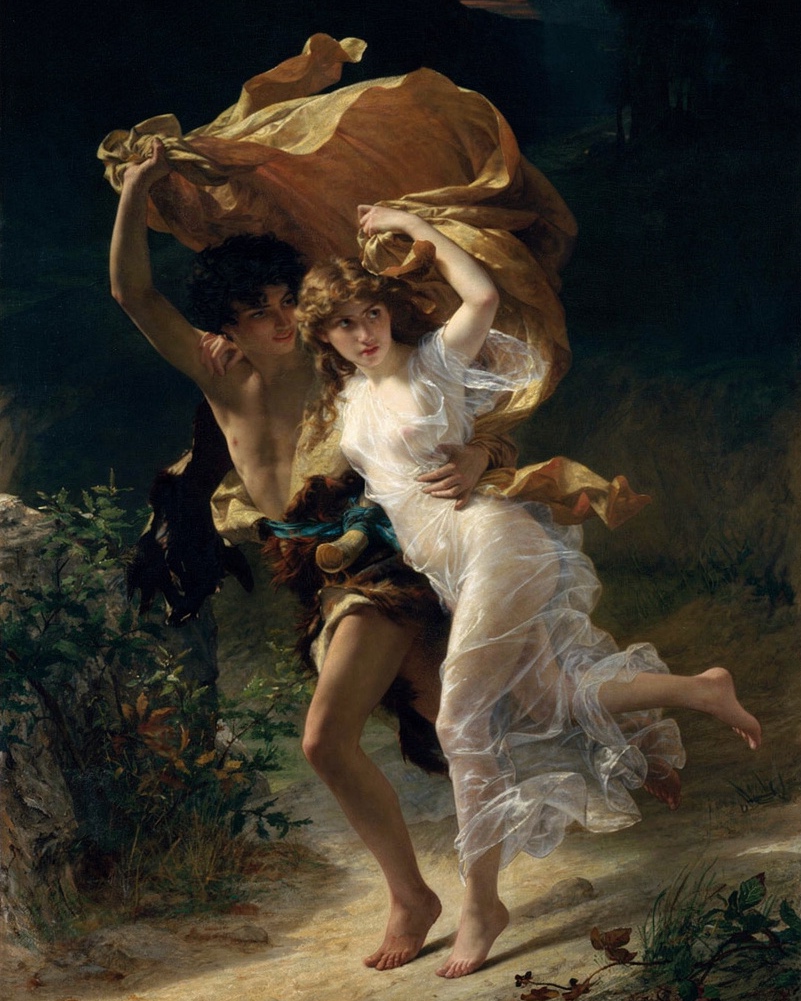
Pierre-Auguste Cot, The Storm, 1880. Oil on canvas. The Metropolitan Museum of Art, New York.
Pierre-Auguste Cot painted The Storm in 1880. It was a sensation at the Paris Salon and remains one of the most popular paintings in the Metropolitan Museum.
Gold and shadow, magnificent as a large canvas.
10. Santa Sofia
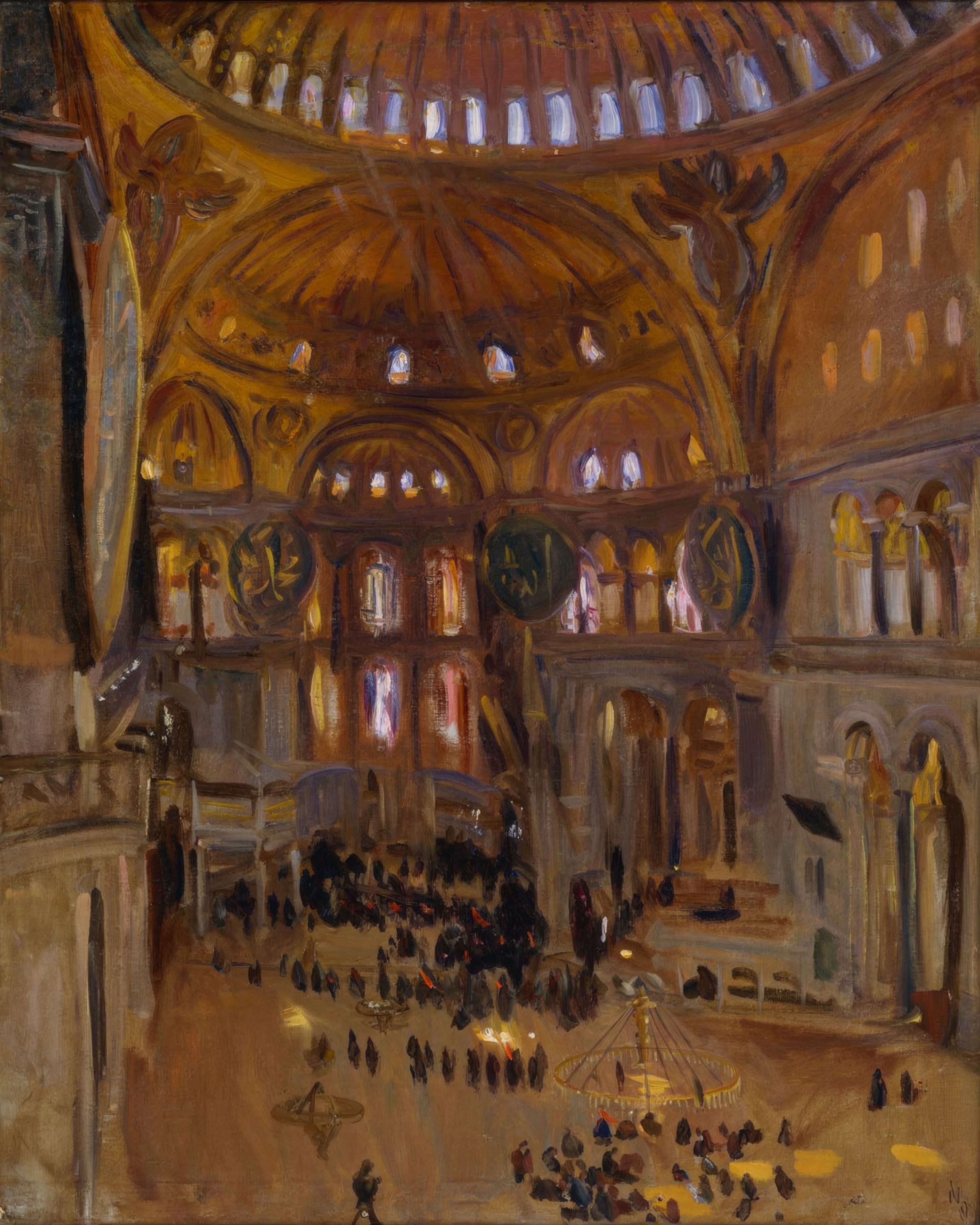
John Singer Sargent, Santa Sofia, 1891 (?). Oil on canvas. The Metropolitan Museum of Art, New York.
John Singer Sargent painted the interior of Hagia Sophia in Istanbul around 1891, catching the light falling through its great arches.
Warm gold and umber for a high wall.
11. Night Scene, Rotterdam
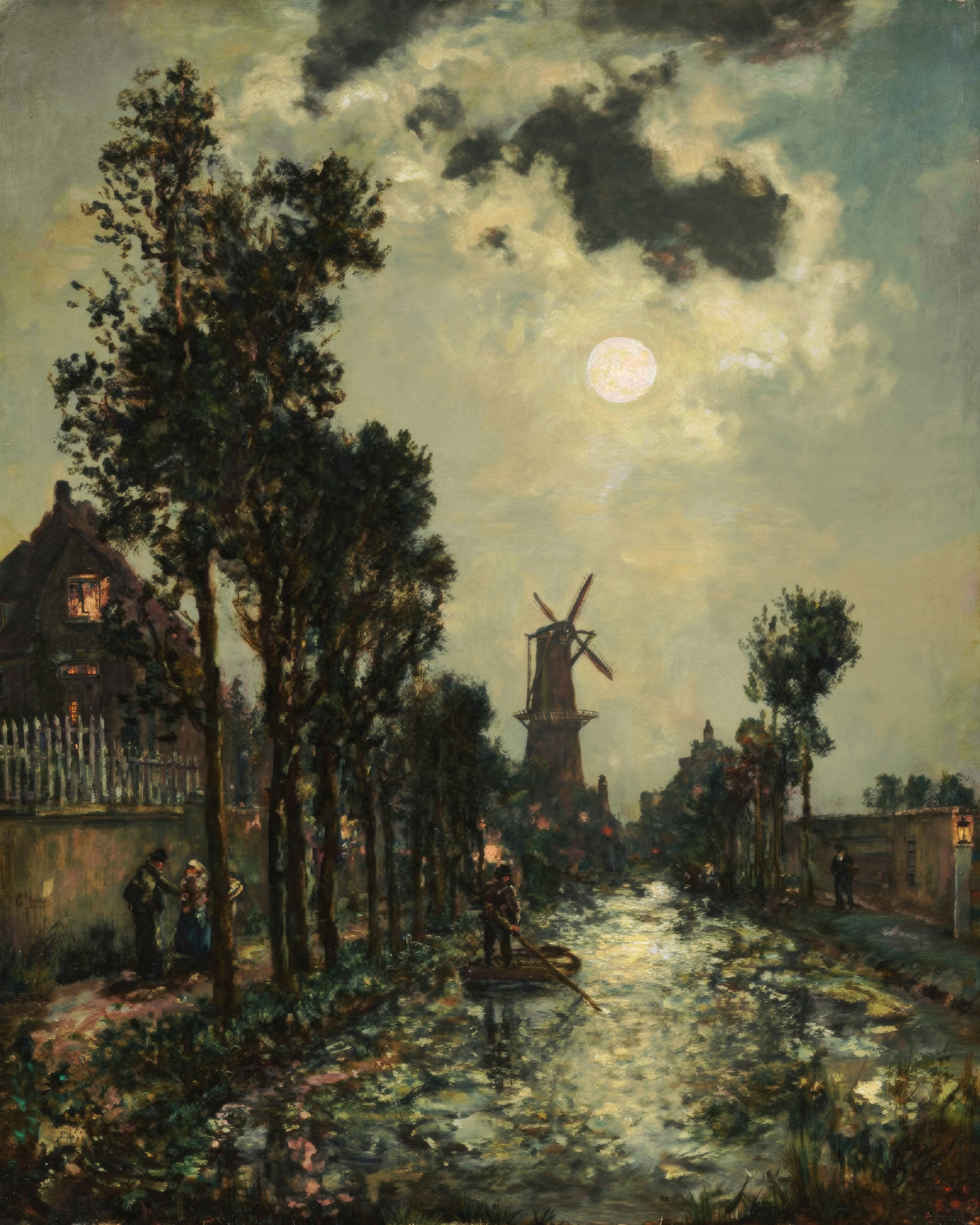
Johan Barthold Jongkind, Night Scene, Rotterdam, 1868. Oil on canvas. Harvard Art Museums.
Johan Barthold Jongkind, a forerunner of Impressionism, painted Rotterdam harbour by moonlight in 1868.
Deep moonlit blues for a bedroom.
12. Getting Ready for a Game
Carl Larsson, Getting Ready for a Game, 1901. Oil on canvas. Nationalmuseum, Stockholm.
Carl Larsson painted this evening at home in 1901, the lamp lit and the family ready for a game of cards.
Warm lamplight and red for a dining room.
Canvas prints need no glass and no mount, so they suit big sizes and rooms with strong light, where glass would reflect. Hang a large canvas alone above a sofa or bed, or a pair of matching sizes side by side. A thin floating frame in oak or black gives a gallery finish. For more, see large wall art and horizontal wall art.
Questions
What art looks best on canvas?
Oil paintings, especially those with visible brushwork, because the canvas weave echoes the original surface.
Is canvas or paper better for prints?
Canvas suits oil paintings and large sizes without glass; paper suits drawings, watercolours, etchings and Japanese prints, which were made on paper.
Do canvas prints need a frame?
No. They are stretched over a wooden frame and can hang as they are, though a floating frame adds a finished look.
Where should a canvas print hang?
Anywhere glass would catch reflections: sunny living rooms, above a bed, or in a stairwell.