Large wall art for a living room: how big, and what to hang
How to size a big picture for your wall, and ten grand landscapes and views by Claude, Church, Bierstadt, Panini and Canaletto that hold a large print beautifully.
A large picture is the quickest way to give a living room presence. One big print reads as a decision; several small ones can look like clutter. But a large print needs a picture made for scale: a wide view with depth, strong composition and enough detail that it rewards you up close.
First, the sizing. For a print above a sofa or sideboard, aim for about two thirds of the furniture’s width. On an empty wall, about half to two thirds of the wall’s width works well. For a 220 centimetre sofa that means a print around 140 to 150 centimetres wide. Then choose the picture: the ten below were all painted to be seen big, and they come from museum scans with the detail to be printed large.
1. View of Delphi with a Procession

Claude Lorrain, View of Delphi with a Procession, 1673. Oil on canvas. Art Institute of Chicago.
Claude Lorrain invented the ideal landscape: tall trees framing a view that recedes in golden light toward distant hills. This View of Delphi of 1673 leads the eye step by step into the distance, which is exactly what a big print needs.
Its deep greens and soft blues suit a large traditional living room.
2. Wyoming Valley, Pennsylvania
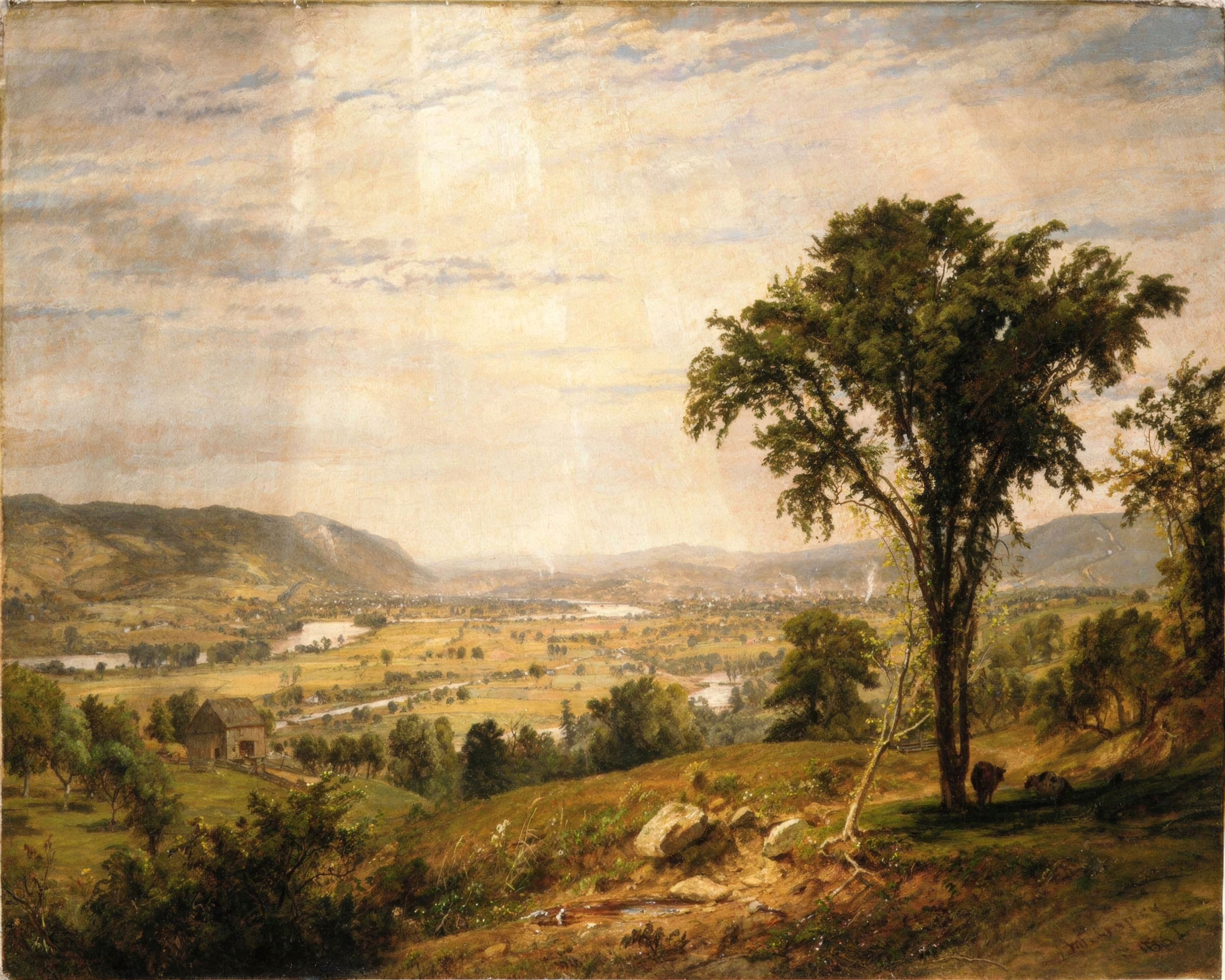
Jasper Francis Cropsey, Wyoming Valley, Pennsylvania, 1864. Oil on canvas. The Metropolitan Museum of Art, New York.
Jasper Francis Cropsey painted American valleys from the hilltops. In 1864 the Wyoming Valley in Pennsylvania spreads out below in golden light, a river winding through it to the horizon.
Wide and warm, ideal above a long sofa or a low sideboard.
3. Mountain Brook

Albert Bierstadt, Mountain Brook, 1863. Oil on canvas. Art Institute of Chicago.
Albert Bierstadt is famous for his giant Western views, but this forest brook of 1863 is just as immersive. The eye travels from cool shadow along the water toward a clearing full of light.
A deep green picture for a living room with wood, leather and natural textures.
4. Alpine Landscape: The Handegg, Switzerland
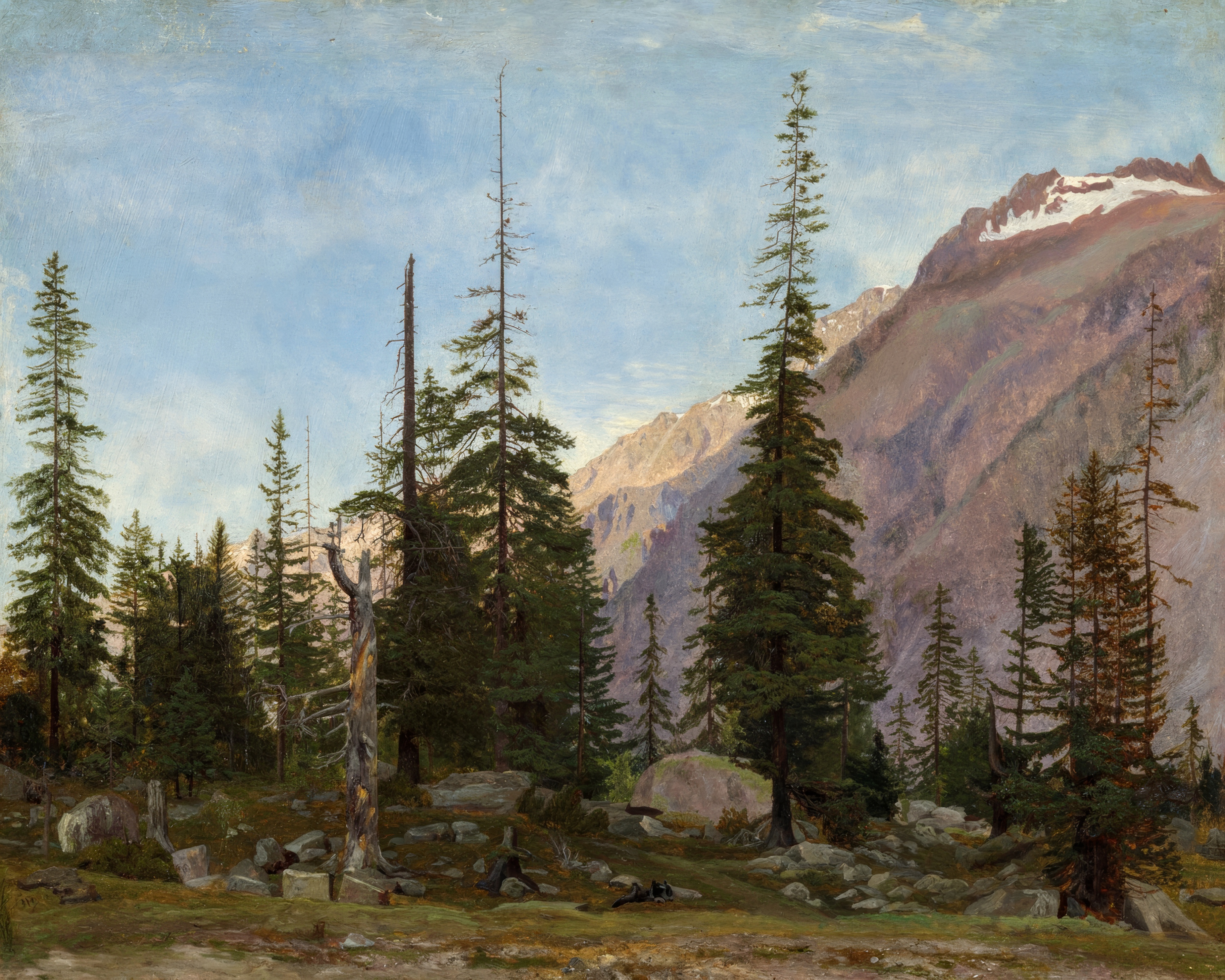
Jean-Léon Gérôme, Alpine Landscape: The Handegg, Switzerland, 1850s. Oil on fabric. Cleveland Museum of Art.
Jean-Léon Gérôme was known for exotic history paintings, but in the 1850s he painted this Alpine gorge at the Handegg, with water thundering through the rock.
A powerful picture for a tall wall or a stairwell.
5. The Waterfalls at Tivoli

Claude-Joseph Vernet, The Waterfalls at Tivoli, 1737. Oil on canvas. Cleveland Museum of Art.
Claude-Joseph Vernet painted the famous cascades at Tivoli near Rome in 1737. The tiny figures in the foreground make the falls look enormous, a trick that works even better at large size.
A dramatic landscape for a high-ceilinged living room.
6. Maine Coast, Mt. Desert Island
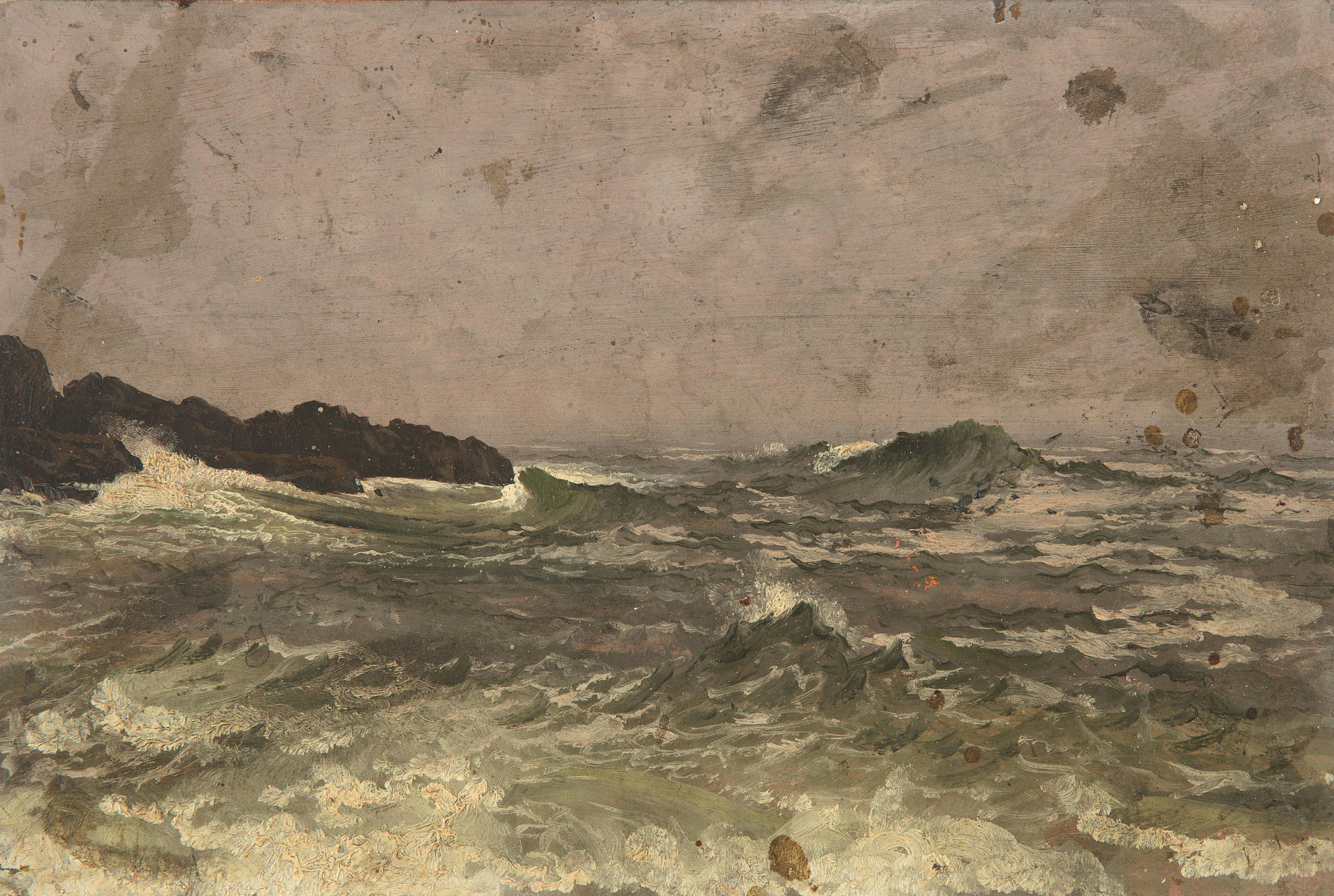
Frederic Edwin Church, Maine Coast, Mt. Desert Island, 1850s. Oil and graphite on cardboard. Smithsonian American Art Museum.
Frederic Edwin Church sketched the coast of Mount Desert Island in Maine in the 1850s, as storm clouds broke over the sea at sunset. It is a small oil, full of the drama of his famous big canvases.
Its warm sunset tones suit a living room with brass, rust or terracotta accents.
7. A View Toward Cader Idris
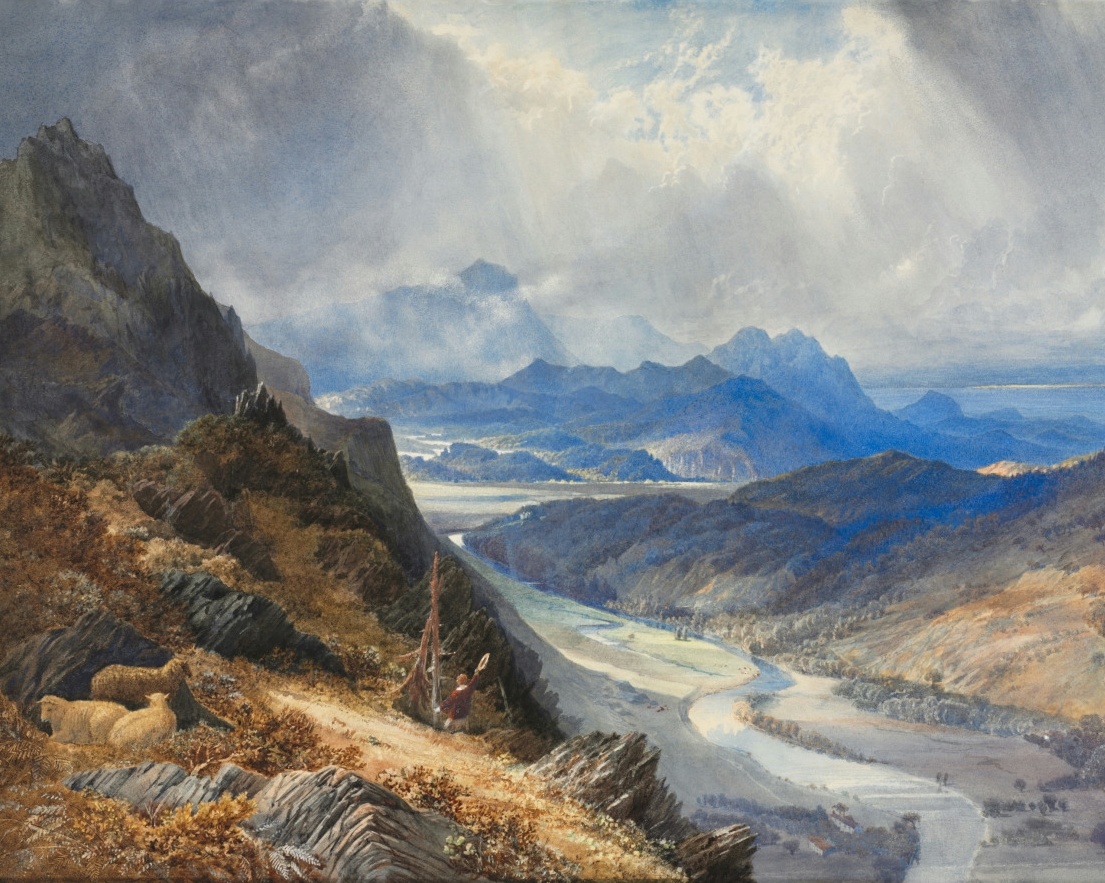
William Turner, A View Toward Cader Idris, c. 1850. Watercolor with scratch-away, heightened with white. Cleveland Museum of Art.
William Turner of Oxford, not to be confused with his famous namesake, painted the mountains of Wales in watercolour. Around 1850 he looked from Moel Cynwich over the Mawddach valley toward Cader Idris, with light breaking through the clouds.
A soft, wide view for a calm living room in grey, blue and sand.
8. Festival in Piazza Navona
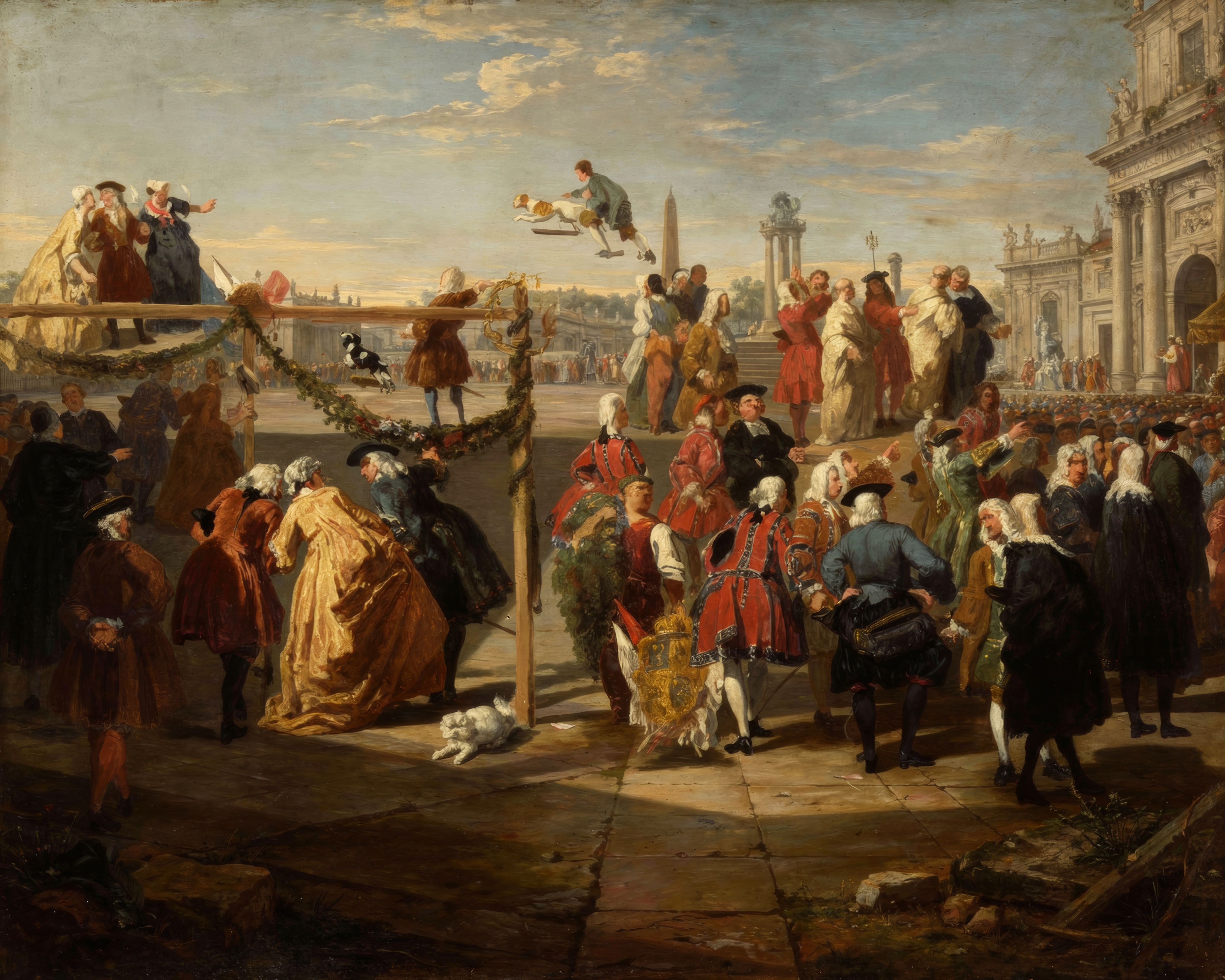
Giovanni Paolo Panini, Festival in Piazza Navona, 1729. Oil on canvas. Art Institute of Chicago.
Panini’s festival of 1729 is full of tiny people, carriages and fountains, so it keeps giving at any size. Printed large, you can find a new detail every time you pass.
A rich, warm picture for a formal living room or above a fireplace.
9. The Grand Canal and Rialto Bridge
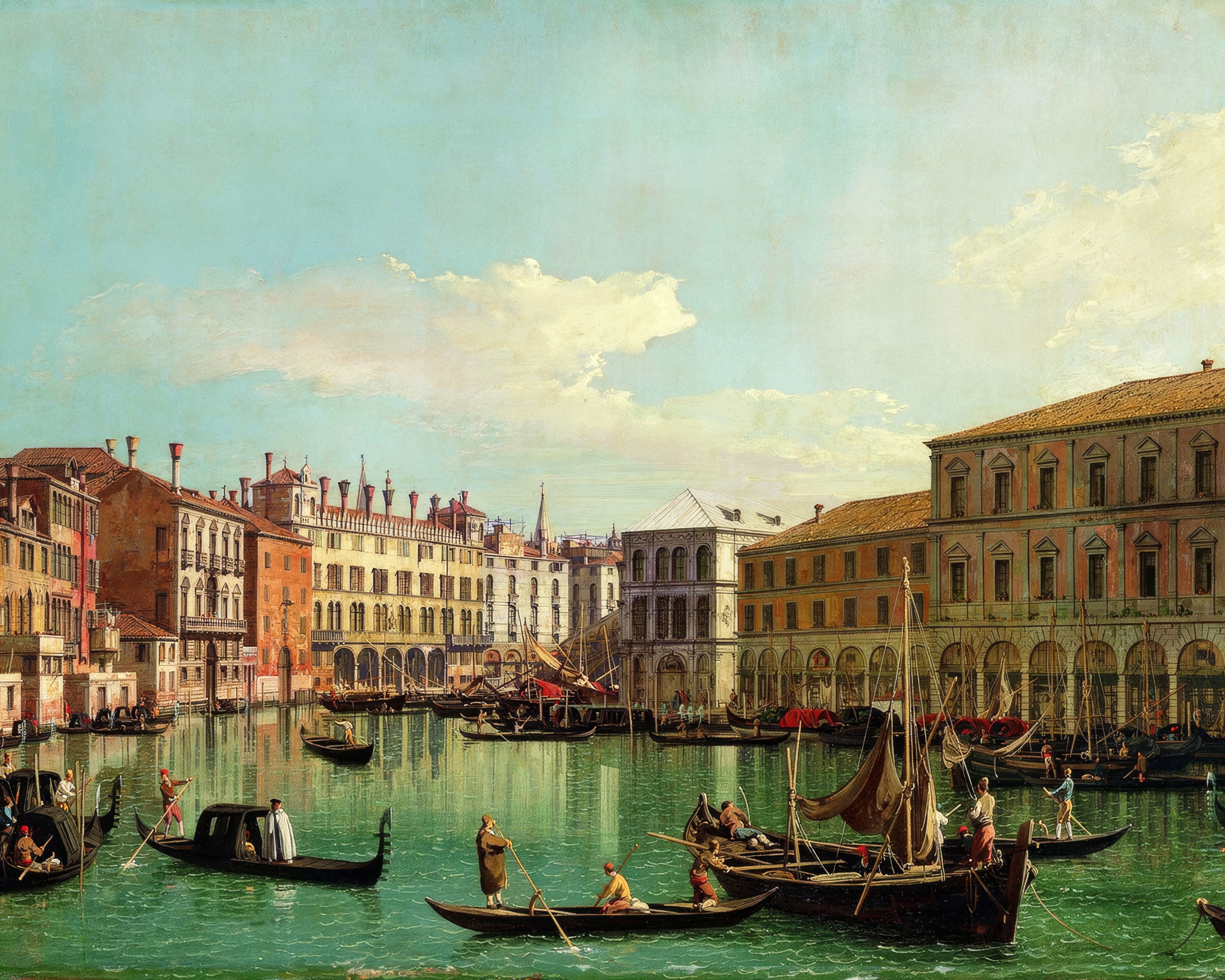
Canaletto, The Grand Canal and Rialto Bridge, 1730s. Oil on canvas. The Metropolitan Museum of Art, New York.
Canaletto’s views were painted to be the centrepiece of a room, and the light and perspective of this Grand Canal of the 1730s hold up beautifully at large size.
A bright, architectural picture for above a sofa in a classic room.
10. Sunrise with Sea Monsters
J. M. W. Turner, Sunrise with Sea Monsters, c. 1845. Oil on canvas. Tate, London.
Late in life J. M. W. Turner painted pictures of almost pure light. In Sunrise with Sea Monsters of about 1845 the sun dissolves sea and sky, and strange shapes surface in the foreground.
An almost abstract picture that works in a modern living room as well as a classic one.
Before you order, tape a sheet of paper or painter’s tape on the wall at the size you are considering and live with it for a day. Large prints look best with a generous margin of wall around them, so leave at least 30 centimetres to the nearest corner or window. And choose a picture whose palette picks up something already in the room. For more ideas, see living room wall art and horizontal wall art.
Questions
How big should wall art be in a living room?
Above furniture, aim for about two thirds of the furniture’s width. On a bare wall, choose a piece about half to two thirds of the wall’s width, with at least 30 centimetres of clear wall around it.
Is one large picture better than several small ones?
For a calm, confident room, yes. One large picture creates a single focal point. Several small pictures work too, but they need to be grouped tightly so they read as one shape.
Which paintings look best as large prints?
Wide landscapes, seascapes and city views with depth and detail. They were often painted large in the first place, and the museum scans hold their detail at big sizes.
What size is oversized wall art?
Anything over about 100 centimetres on its longest side is usually considered oversized. Prints of 120 to 150 centimetres wide suit most living room walls above a sofa.