Cat art prints: ten whole pictures worth looking at
Ten historic cat pictures by Henriëtte Ronner-Knip, with practical ways to choose a print by composition, colour and scale.
Cat art prints can offer more than a recognisable feline silhouette. In Henriëtte Ronner-Knip's pictures, a paw touches an object, a head emerges from shadow, and several small bodies make a rhythm across a table or window. Looking at the whole work reveals those relationships; a cropped face would tell a different story.
This selection stays with one painter so the differences between the pictures become easier to compare. Some are lively group scenes, others quieter studies of an individual kitten. Choose according to the kind of attention you want to give the picture, not just the number or colour of cats. The historical work remains the subject of the print; if you want your own animal pictured, that is a separate portrait decision.
1. Kittens Playing: several points of interest
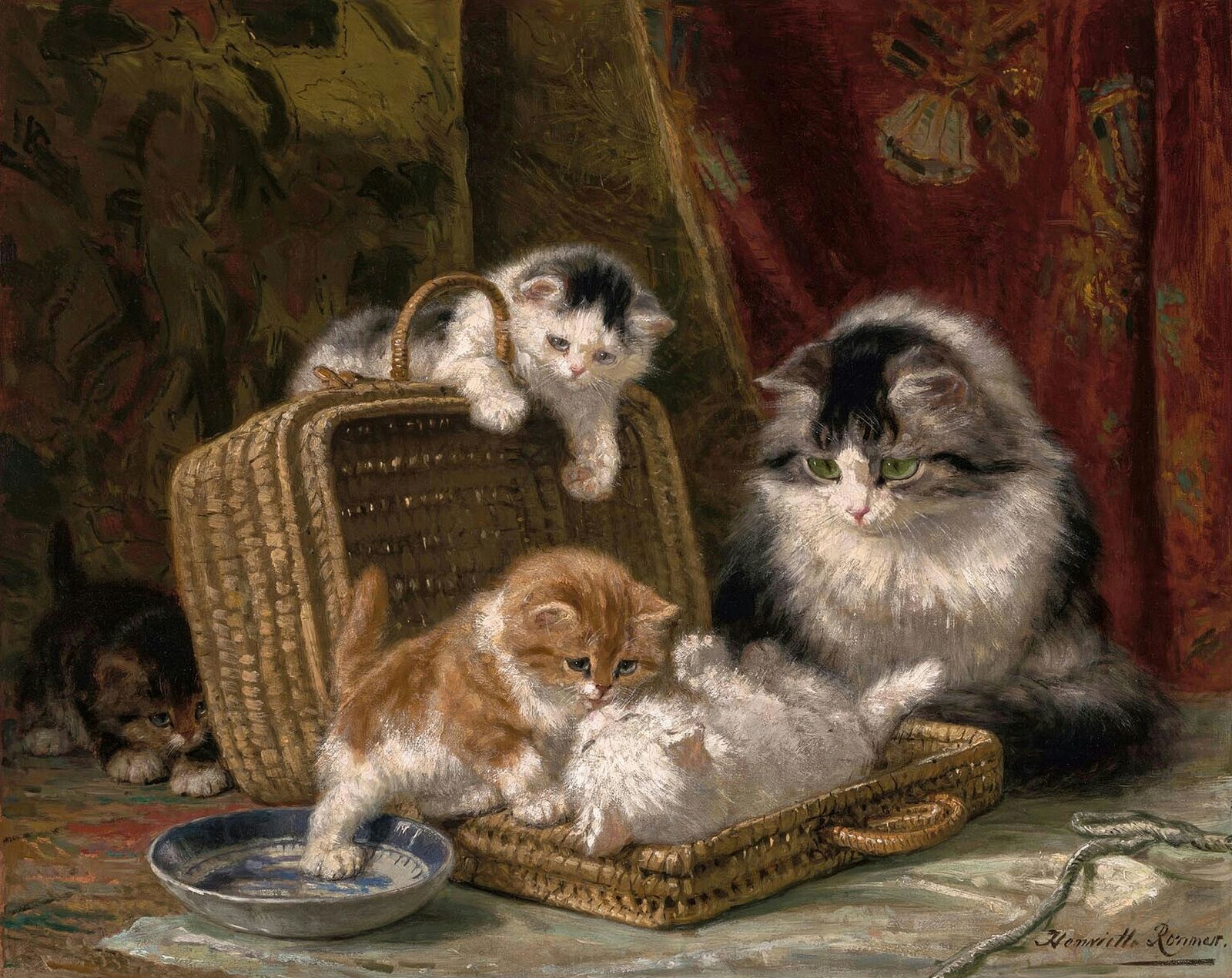
Kittens playing · Henriëtte Ronner-Knip · c. 1880 · Museum Boijmans Van Beuningen, Rotterdam. Prepared for print by Surrealium at Vaxholm Fortress, Sweden.
The small animals turn in different directions, making the eye move around the picture rather than settle on a single central face. That distributed activity suits a viewer who enjoys returning to a work and noticing another gesture. Before choosing a print, look at the whole composition at a smaller size and check whether the interactions still read from the distance where you expect to see it.
2. Cat with Kittens: a window around the group
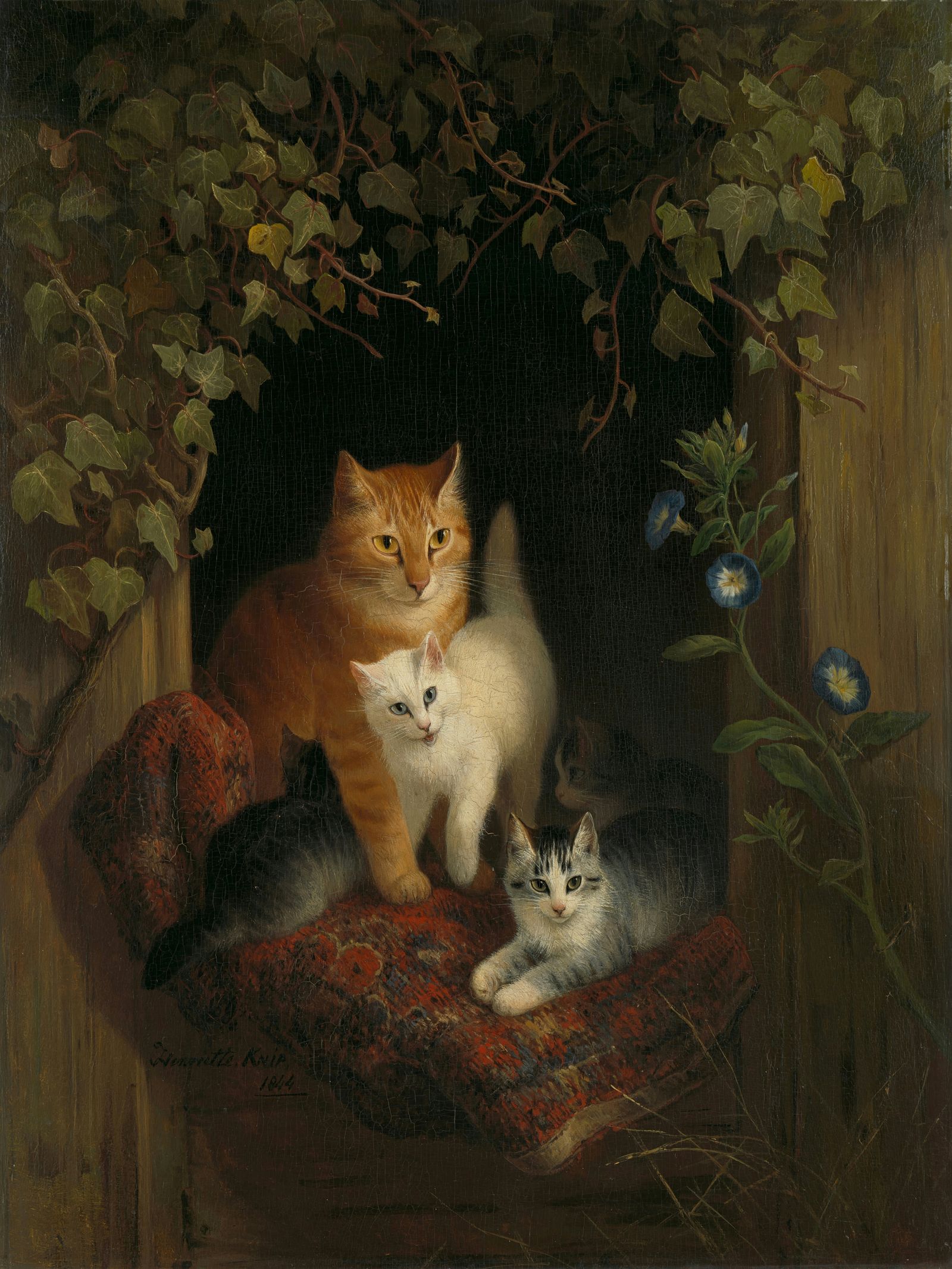
Cat with Kittens · Henriëtte Ronner-Knip · 1844 · Rijksmuseum, Amsterdam. Prepared for print by Surrealium at Vaxholm Fortress, Sweden.
The dark opening surrounds the adult cat and kittens, while leaves and the blanket soften the edge of the scene. The architecture gives the group a strong frame inside the artwork itself. Preserve that full arrangement when considering a print, because cutting down to the animals would remove the sheltering space that makes their warm and pale coats stand out so clearly.
3. Cat with Five Kittens: variety within a family
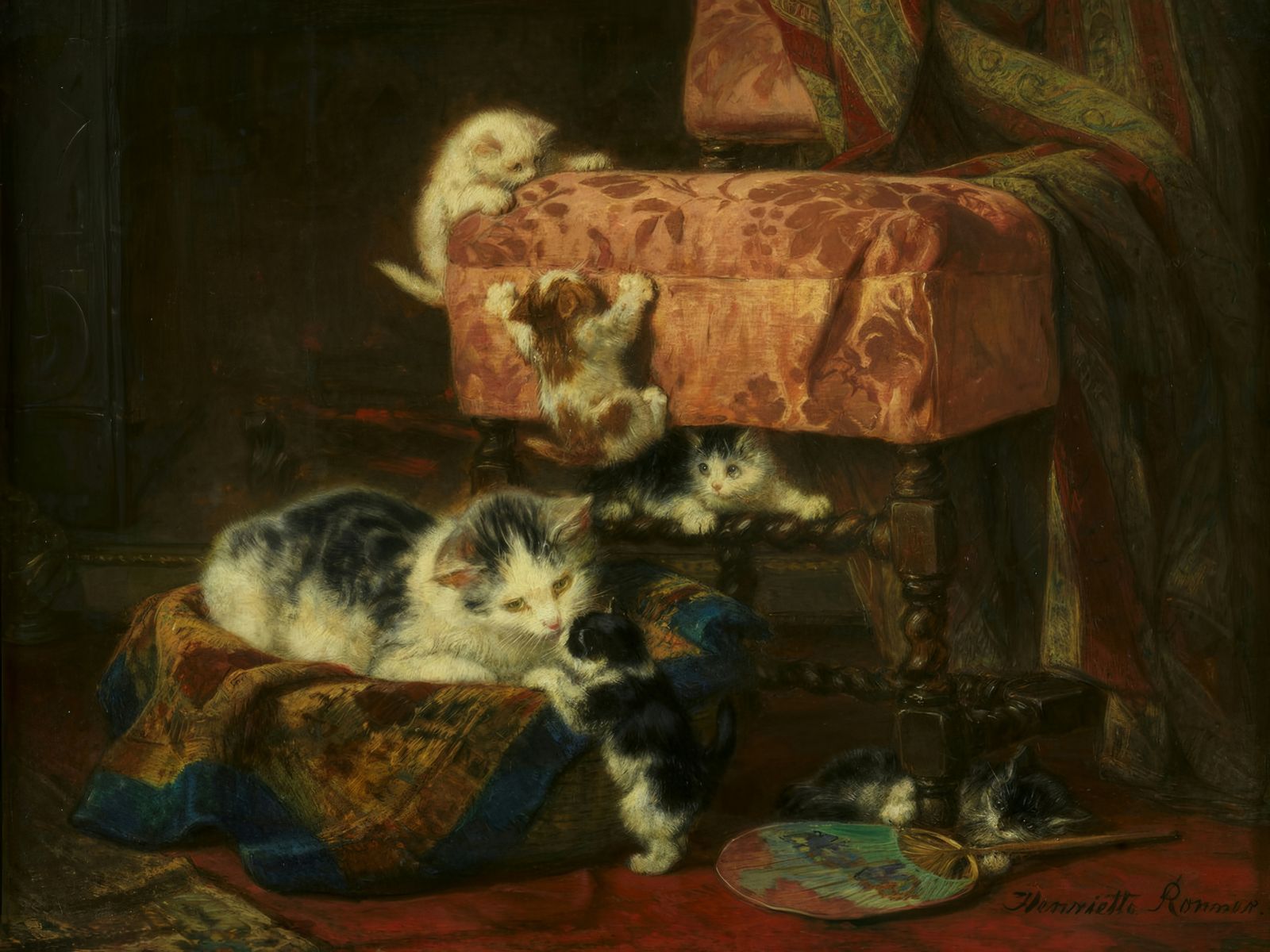
Cat with Five Kittens · Henriëtte Ronner-Knip · 1890 · Noordbrabants Museum. Prepared for print by Surrealium at Vaxholm Fortress, Sweden.
The adult and the smaller cats form a varied gathering, with differences of colour and pose keeping the group from becoming a repeated pattern. This is a useful choice for someone who likes a picture with several small stories happening at once. Give it enough viewing space for the quieter animals to remain visible rather than judging the work only by its most prominent face.
4. Kitten Lying Down: a horizontal pause
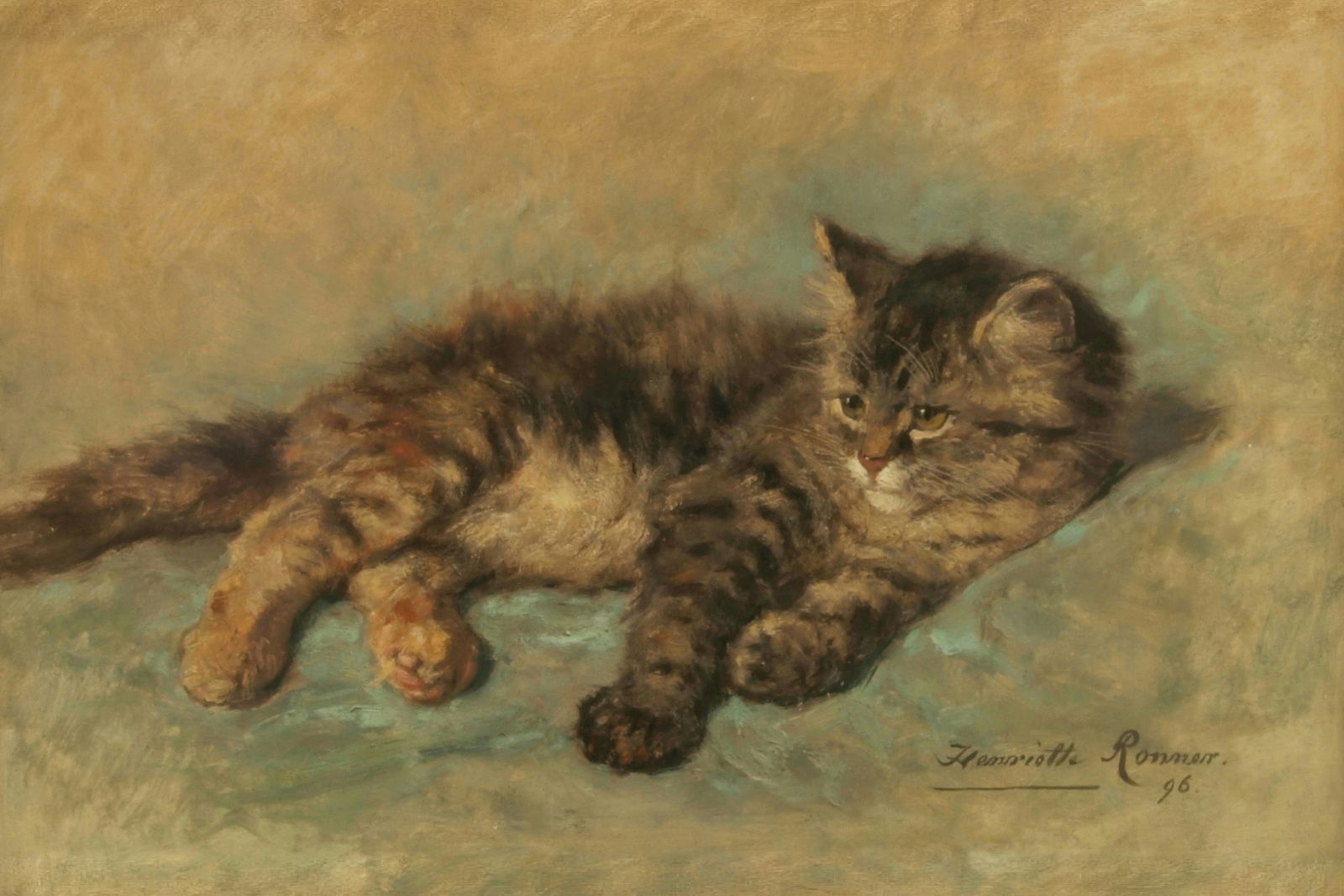
Kitten Lying Down · Henriëtte Ronner-Knip · 1896 · Teylers Museum, Haarlem (KS 155, 1896). Prepared for print by Surrealium at Vaxholm Fortress, Sweden.
The resting kitten stretches across the surface, making the picture feel low and settled. Its long shape is part of the appeal, so compare the whole image with the proportions of the place where you intend to hang it. A print does not need to fill every available inch; a smaller complete composition can be more satisfying than forcing a horizontal work into a narrow gap.
5. Curiosity: a concentrated study
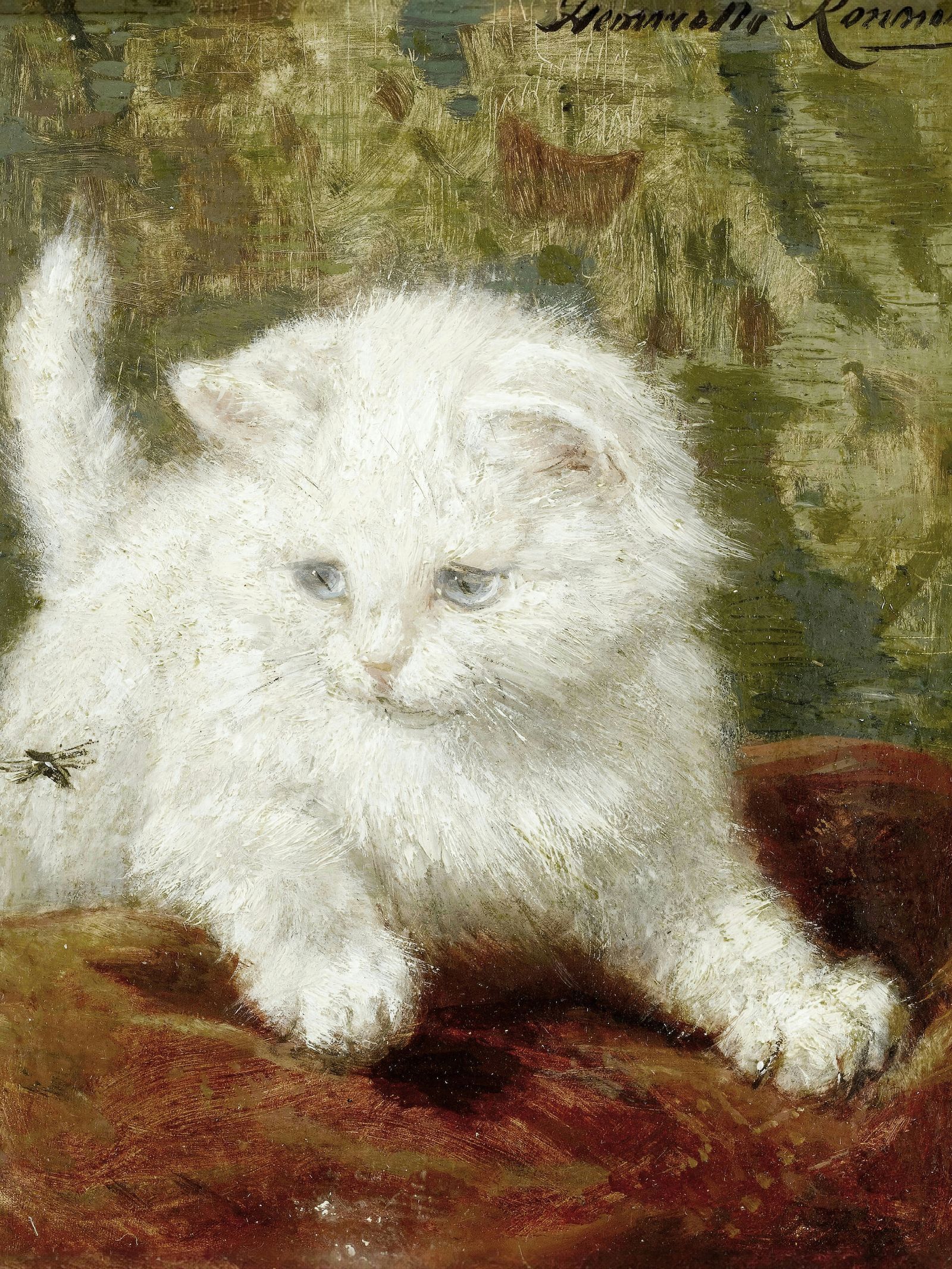
Curiosity · Henriëtte Ronner-Knip · 1889 · Private collection. Prepared for print by Surrealium at Vaxholm Fortress, Sweden.
The pale kitten holds the centre of attention, with subtle differences in fur and shadow doing much of the work. This quieter picture rewards a closer look rather than a crowded display of competing subjects. Consider whether it will be seen from nearby, where the delicate face and coat remain legible, or across a room where a stronger silhouette might serve your preference better.
6. Three Kittens Playing with a Letter Box: an object to share
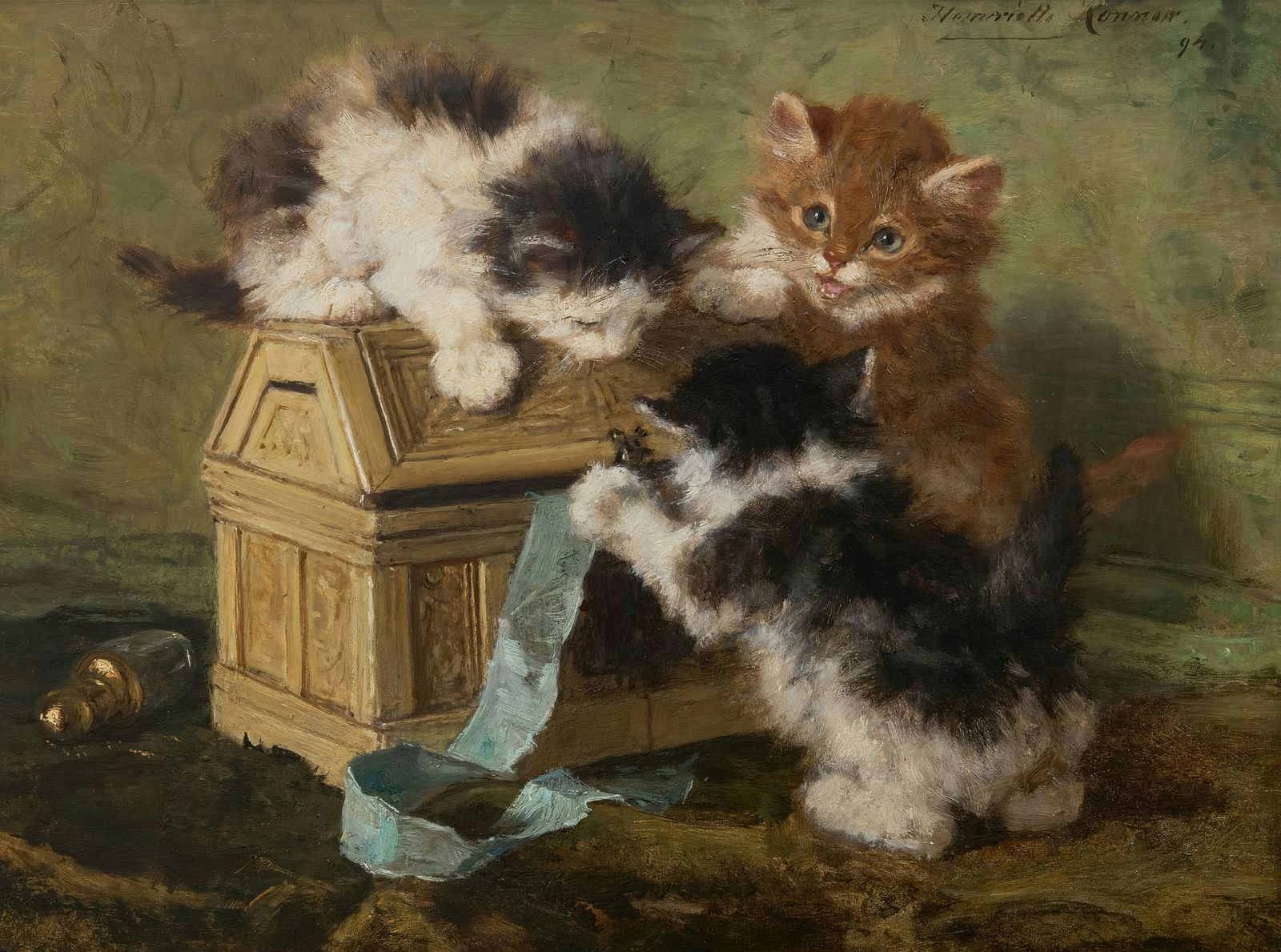
Three Kittens Playing with a Letter Box · Henriëtte Ronner-Knip · 1894 · Holding collection unrecorded; Wikimedia Commons source. Prepared for print by Surrealium at Vaxholm Fortress, Sweden.
The letter box gives the kittens something around which to gather, creating a small sequence of investigations. The object matters because it connects the animals' movements, not because it supplies a fashionable decorative theme. Look at the paws and the intervals between bodies before choosing the print; those relationships are what distinguish this scene from a general picture of three cats.
7. Kitten Playing with a Jardinière: a difference of scale
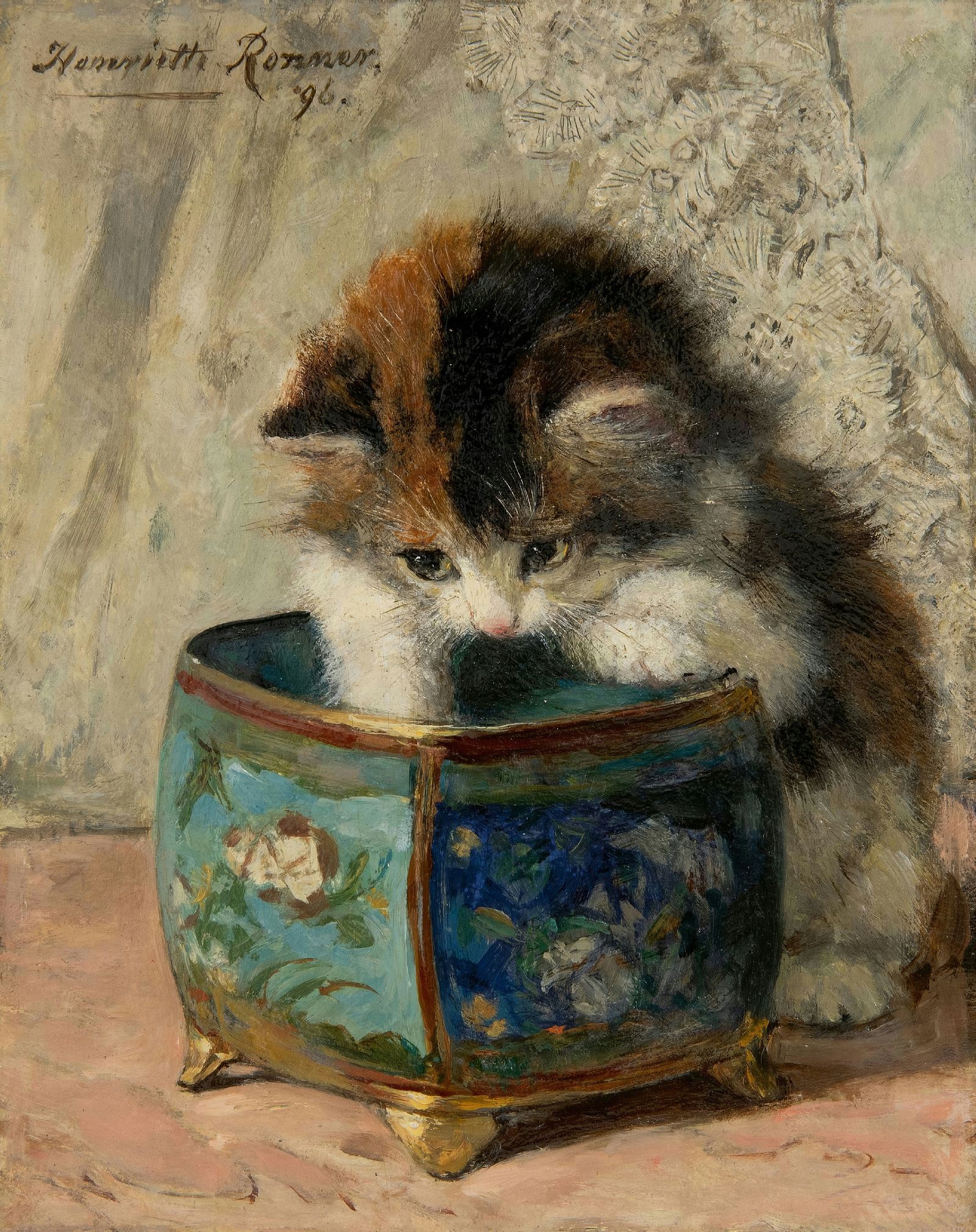
Kitten Playing with a Jardinière · Henriëtte Ronner-Knip · 1896 · Holding collection unrecorded; Wikimedia Commons source. Prepared for print by Surrealium at Vaxholm Fortress, Sweden.
The container is large beside the kitten, making the animal's reach and small body especially clear. The picture's interest lies in that imbalance between a familiar object and an inquisitive creature. Choose it if you enjoy the gesture and the surrounding shape together, and keep the vessel visible rather than treating it as background that can be removed without changing the work.
8. Kittens at Play: a lively arrangement
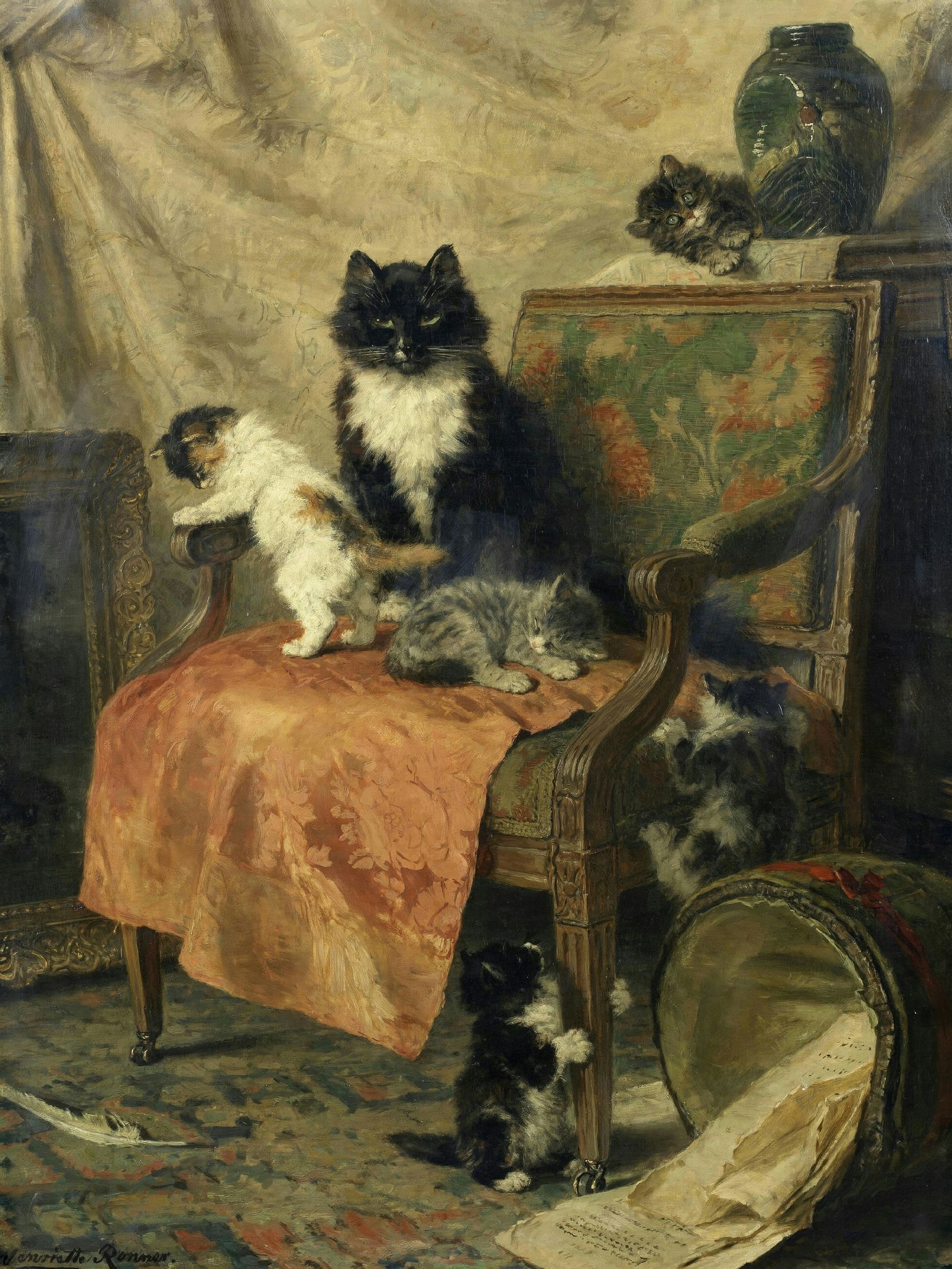
Kittens at Play · Henriëtte Ronner-Knip · 1897 · Private collection. Prepared for print by Surrealium at Vaxholm Fortress, Sweden.
The animals occupy different parts of the setting, so their activity can be read as a group rather than a row of separate portraits. A print of this kind offers movement without needing a highly saturated palette or a dramatic subject. Try viewing the complete image beside a quieter cat study to decide whether you prefer a scene to explore or one face to meet.
9. A Cat with Three Kittens: attention moving between animals
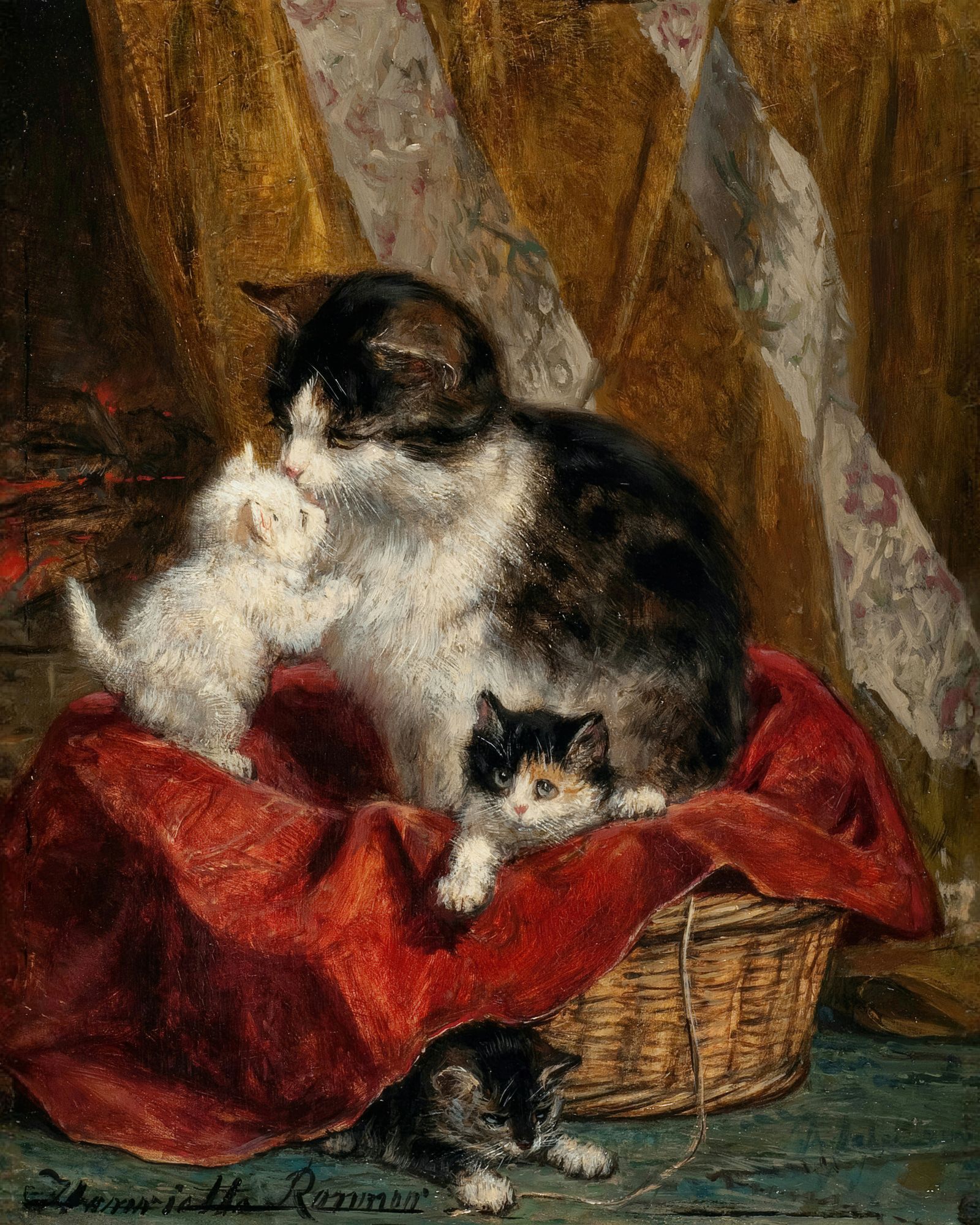
A Cat with Three Kittens · Henriëtte Ronner-Knip · 1889 · Cultural Heritage Agency of the Netherlands. Prepared for print by Surrealium at Vaxholm Fortress, Sweden.
The adult and kittens do not all direct their attention the same way, which keeps the scene open and natural. That variety can appeal to someone who knows how rarely several cats agree to pose together. The work is strongest when its whole group remains visible, so choose a display position that lets you take in the arrangement without furniture obscuring its lower edge.
10. New Tenants: the watcher and the newcomers
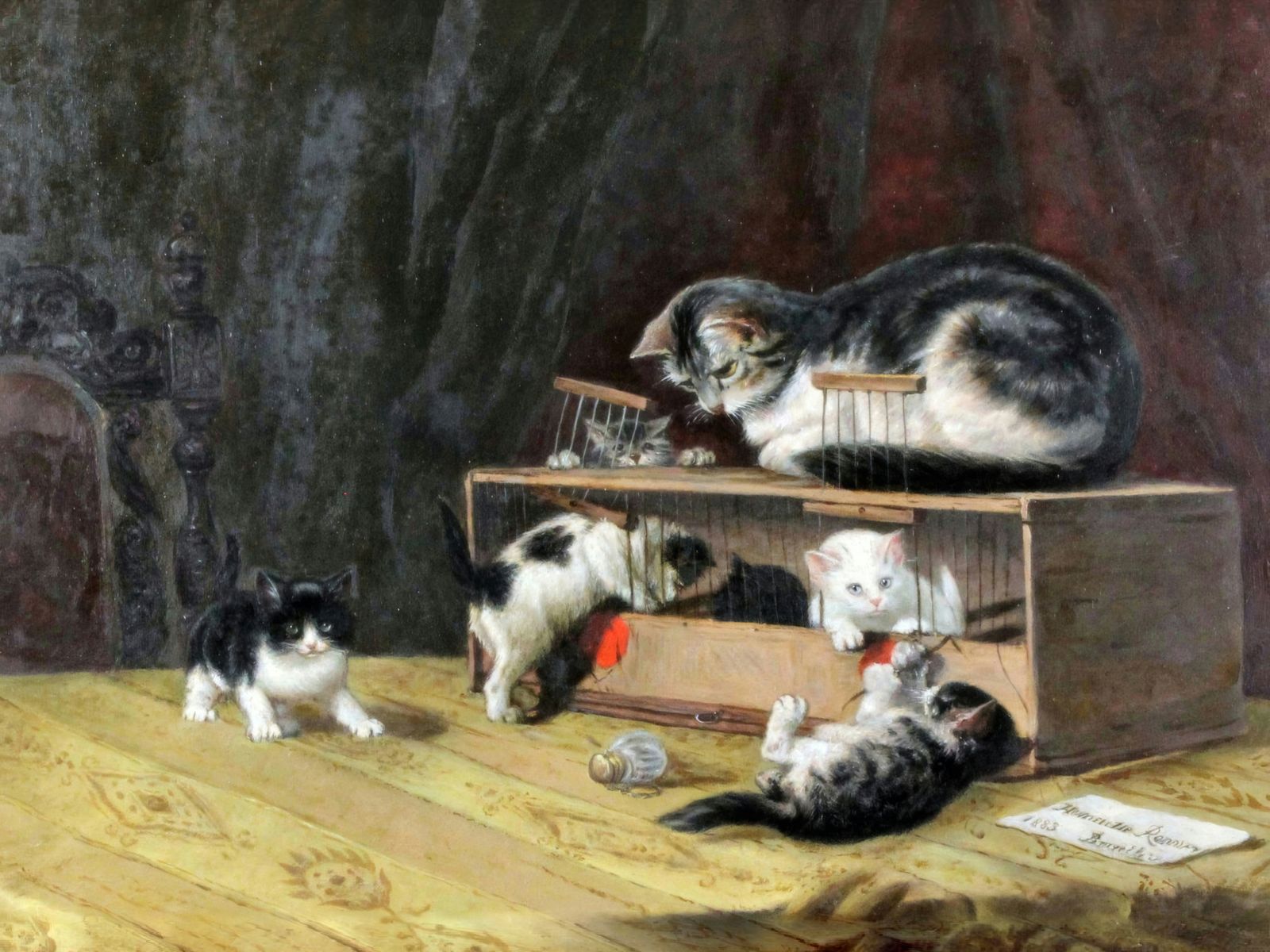
New Tenants · Henriëtte Ronner-Knip · 1883 · Holding collection unrecorded; Wikimedia Commons source. Prepared for print by Surrealium at Vaxholm Fortress, Sweden.
A watchful adult anchors the scene while the kittens investigate the space around it. The title encourages a small domestic story, but the visible contrast between stillness and movement is enough to enjoy without inventing personalities for every animal. It is a useful final comparison with the quieter resting kitten: both reward looking, but they offer very different rhythms for a wall.
Choose the composition first, then check the available print options on that artwork's page. Compare the whole picture with the wall, including the space around it, and keep its original proportions in mind. A group scene may reward a different viewing distance from a small study of a face. The individual links below each work lead to that historic artwork; the collection is the next step when you want to compare more pictures.
Explore a wider history through famous cat paintings, or compare orange cat pictures with the Siamese portrait guide. If the subject should be your own animal, the pet portrait styles guide explains that direction. The complete Kittens Playing is a useful first comparison.
- Are these prints custom portraits of my cat?
- No. They reproduce the historic works shown and captioned here. A custom portrait starts with your own photograph and is a different choice. Decide whether you want an existing artwork or a likeness of a particular animal before choosing a route.
- How do I choose between a single cat and a group scene?
- Compare the way you look at them. A single subject often gives one clear point of attention; a group can offer small interactions across the picture. Neither is inherently better for a room, and the complete composition matters more than the number of animals.
- Should a cat print match the colour of my room?
- Colour can help a picture sit comfortably in a space, but it need not match every furnishing. Begin with a work you want to keep looking at. Then compare its light and dark areas, overall proportions and viewing distance with the place available.