Siamese cat painting: light, markings and a clear gaze
Ten historic cat pictures offer lessons for a Siamese portrait, from pale fur and dark markings to the direction of the eyes.
A Siamese cat painting succeeds when the face remains individual. The relationship between the darker mask, the pale body and the eyes matters, but so do the precise ear shape, nose and posture of the cat in your photograph. Strong colour effects can hide those distinctions if the source image is already too dark or too warmly lit.
These ten historic works show cats with different coats and companions. None is presented as a verified historic portrait of a Siamese cat. Their value is comparative: a white kitten shows how to retain detail in pale fur, a dark cat shows how eyes and edges emerge, and a group scene shows why the direction of attention matters. Use those lessons to judge your own reference rather than copying a different animal's appearance.
1. Pale fur still contains shadows
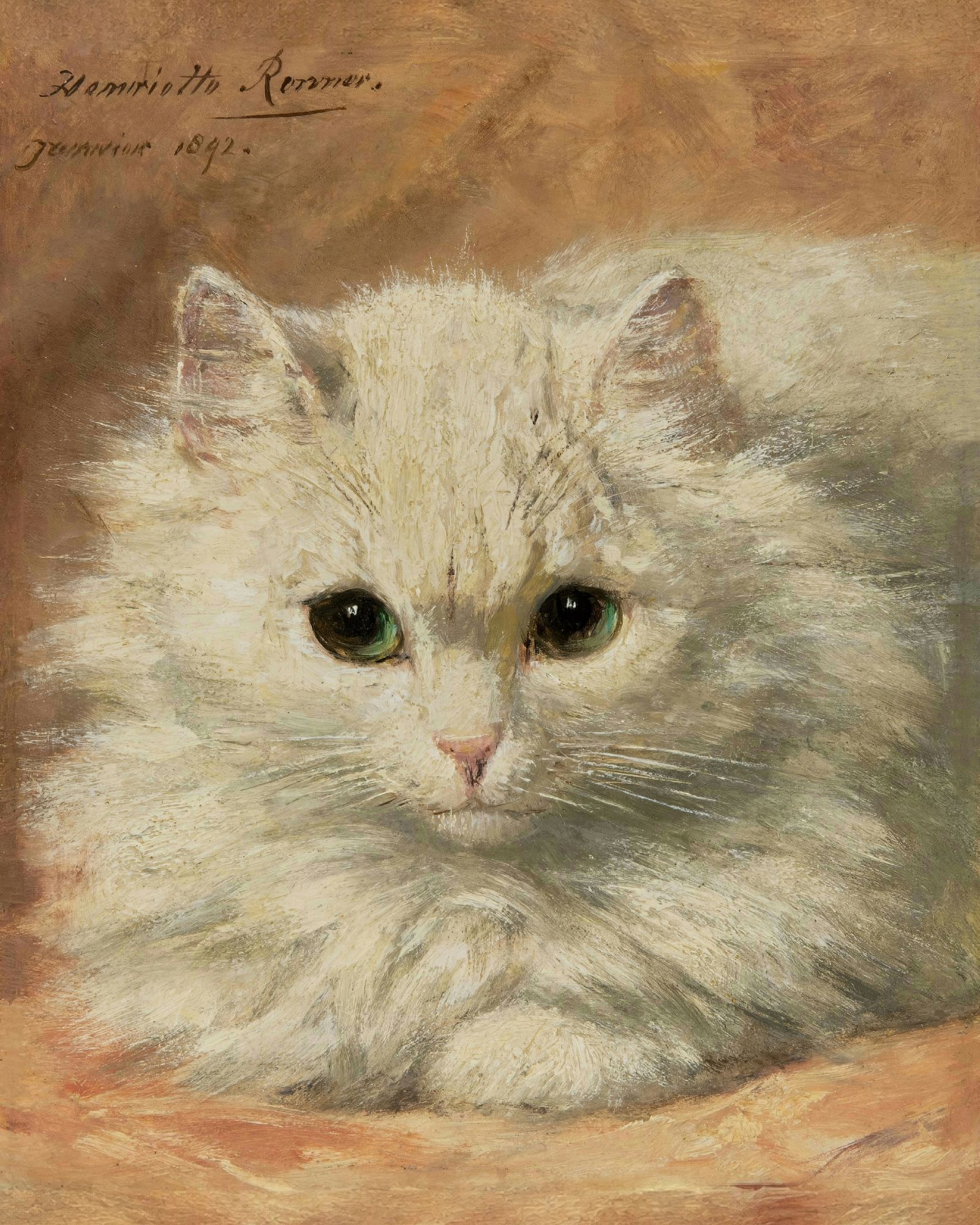
Head of a White Angora Kitten · Henriëtte Ronner-Knip · 1892 · Holding collection unrecorded; Wikimedia Commons source. Prepared for print by Surrealium at Vaxholm Fortress, Sweden.
Ronner-Knip's Head of a White Angora Kitten keeps the small face distinct within a light, fluffy coat. The pictured animal is an Angora kitten, not a Siamese, but the delicate changes of tone offer a useful comparison for the pale areas of a Siamese body. Choose a photograph in which the chest and cheeks retain detail rather than becoming flat white patches in strong sunlight.
2. A cat held close
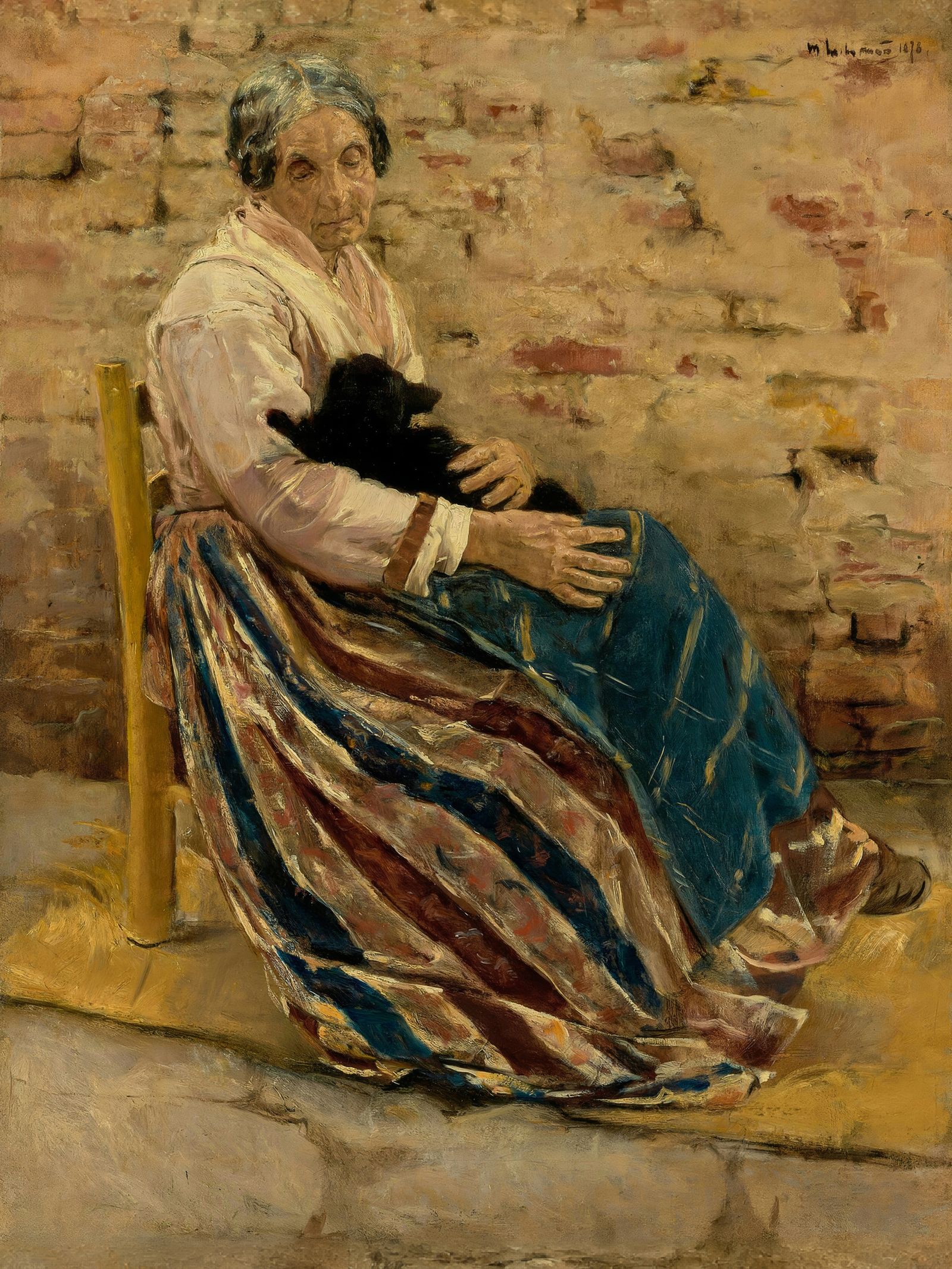
An Old Woman with Cat · Max Liebermann · 1878 · J. Paul Getty Museum, Los Angeles. Prepared for print by Surrealium at Vaxholm Fortress, Sweden.
An Old Woman with Cat makes the animal part of a close human relationship, with the surrounding figure giving scale to the small head. If your intended portrait includes an owner, make sure both faces can be read in the photograph. The cat's dark facial markings should not disappear into the person's clothing, and a comfortable hold matters more than making both subjects face the camera.
3. The sitter and the companion
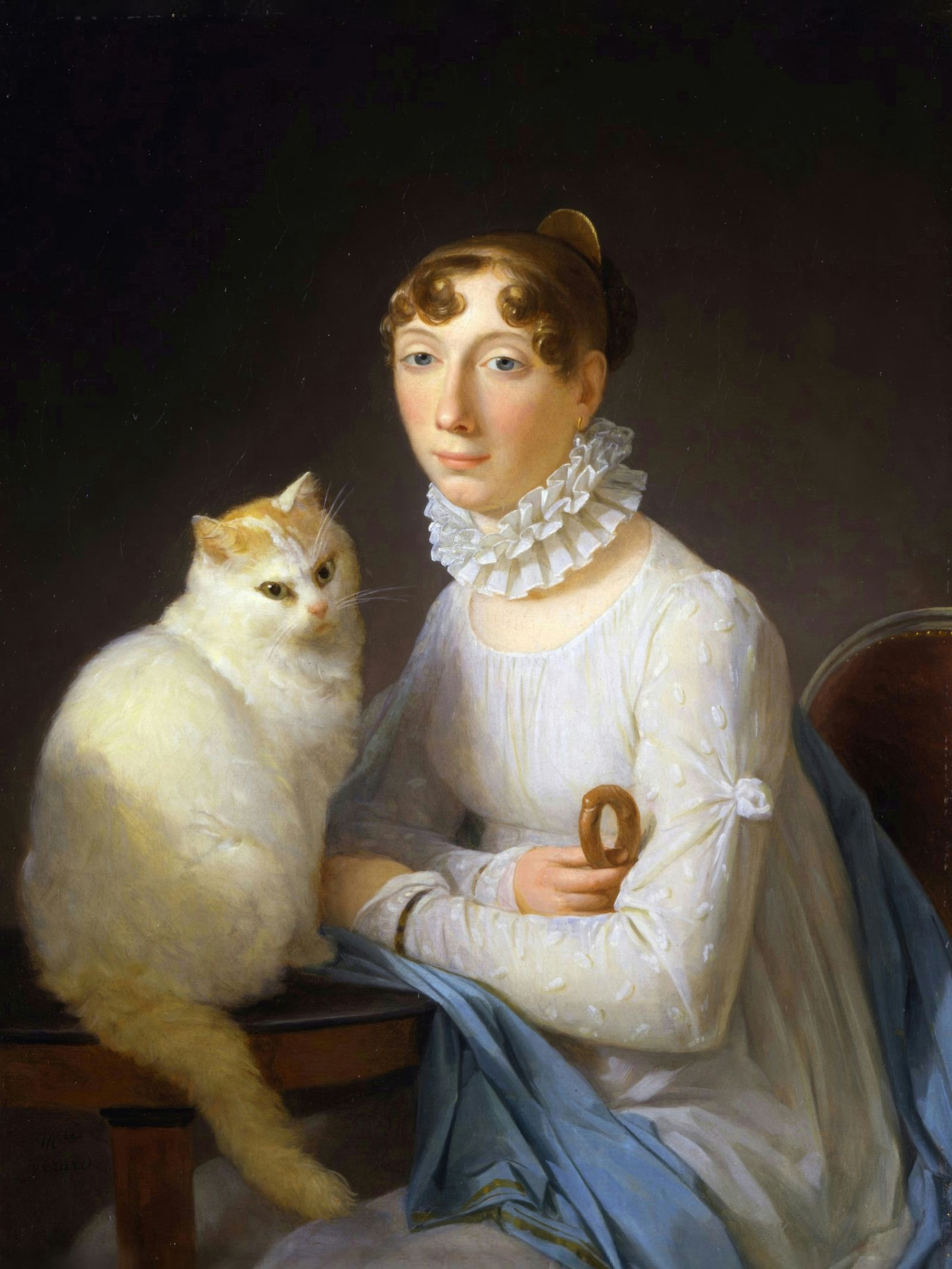
Lady with her Cat · Marguerite Gérard · Before 1837 · Holding collection unrecorded; Wikimedia Commons source. Prepared for print by Surrealium at Vaxholm Fortress, Sweden.
Marguerite Gérard places the cat beside a woman whose clothing and posture also demand attention. The animal remains a companion within the scene rather than an accessory with no identity of its own. For a portrait of a Siamese with a person, decide which subject should lead, then choose a photograph that gives the cat enough space for its ears, eyes and darker muzzle to register.
4. A pale animal against clothing
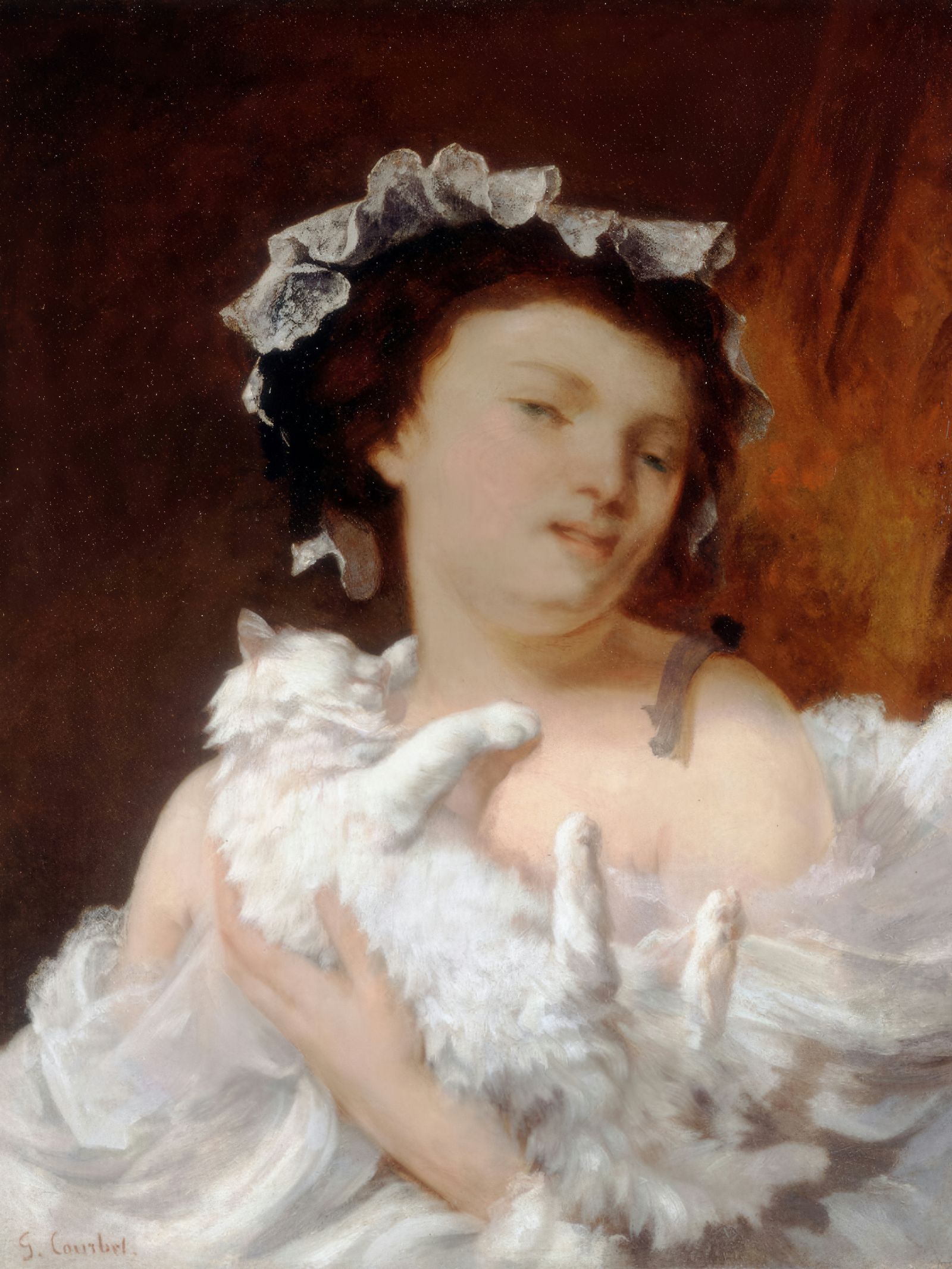
Woman with a Cat · Gustave Courbet · 1864 · Worcester Art Museum. Prepared for print by Surrealium at Vaxholm Fortress, Sweden.
Woman with a Cat uses the contrast between the animal and the sitter's clothes to help the small body read clearly. This is a practical lesson for photographing a cat with pale fur and darker points: the best background may be the quiet fabric already nearby. Avoid a patterned surface that crosses the outline so insistently that the cat's actual shape becomes difficult to follow.
5. Dark faces need more than bright eyes
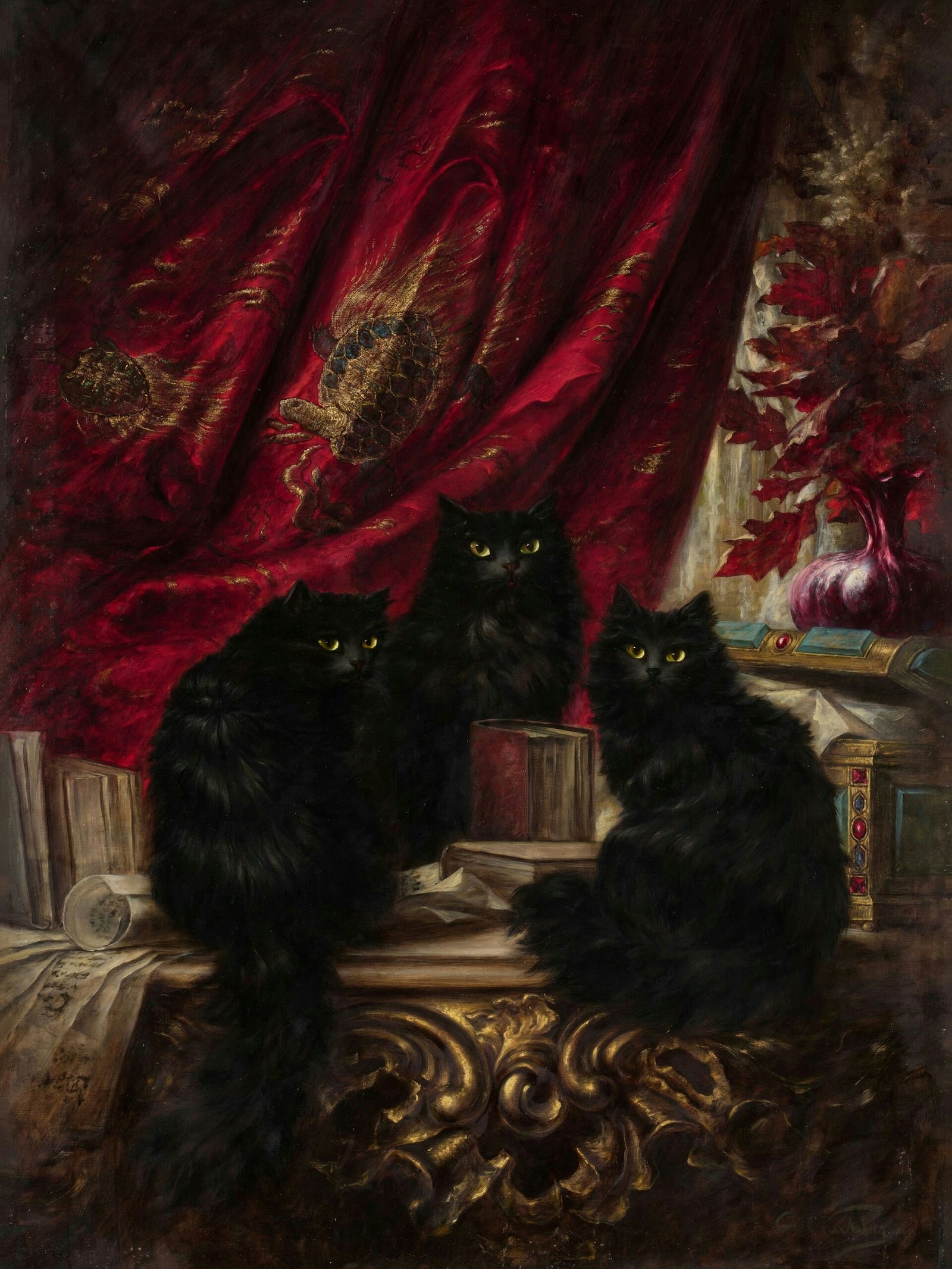
Three Black Cats · Carl Kahler · Late 19th century · Private collection. Prepared for print by Surrealium at Vaxholm Fortress, Sweden.
Kahler's Three Black Cats offers several views of dark fur, with highlights and edges carrying information as well as the eyes. In a Siamese portrait, the mask needs that same range of visible tone. A photograph that records only two bright eyes in a black patch leaves less to work with than one showing the bridge of the nose, cheek contours and whisker pads.
6. A body directed towards something
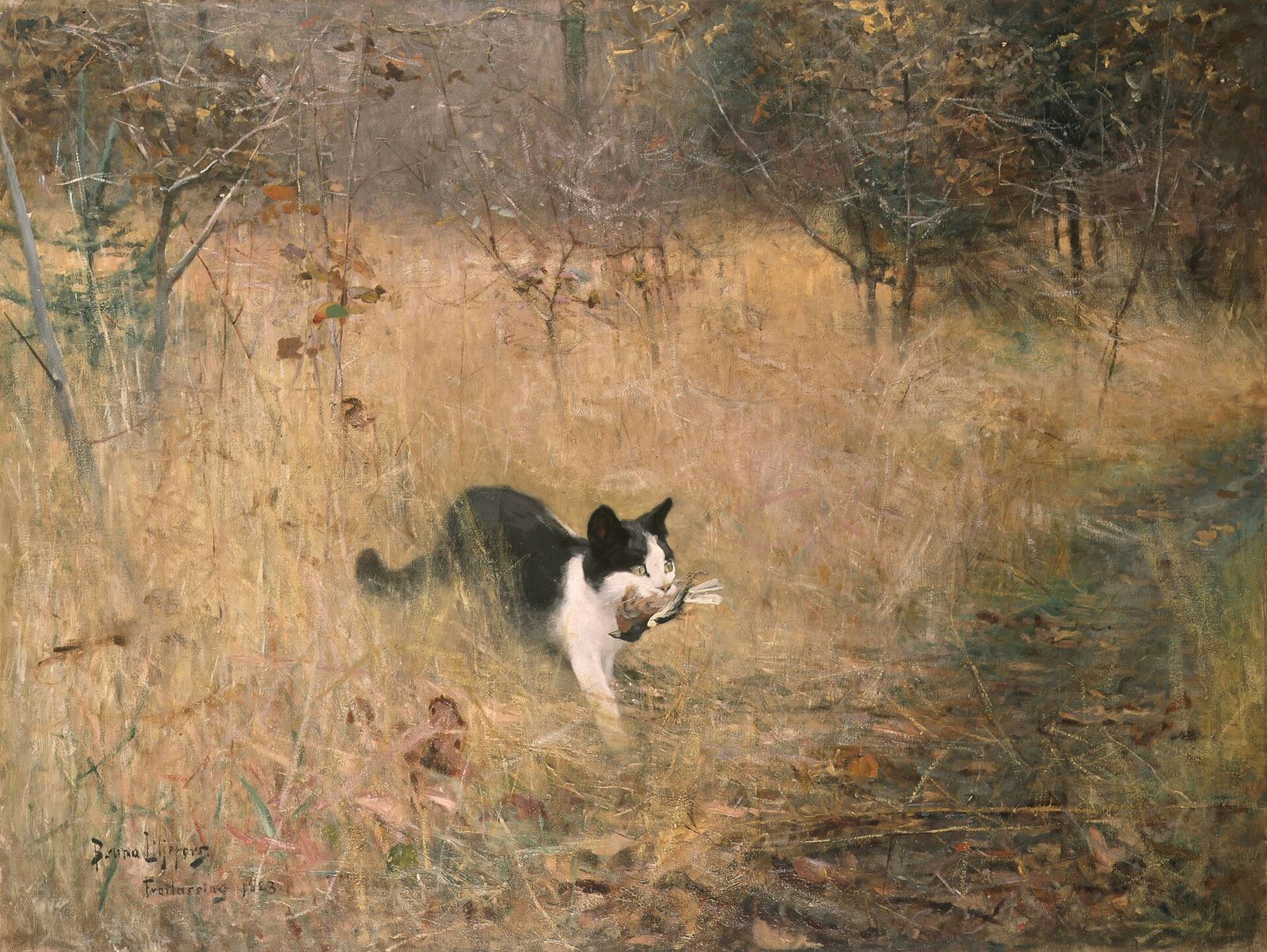
Cat Hunting Birds · Bruno Liljefors · 1883 · Gothenburg Museum of Art. Prepared for print by Surrealium at Vaxholm Fortress, Sweden.
In Cat Hunting Birds, the animal's attention and low posture give the scene its tension. A portrait need not use a hunting subject to borrow the clarity of that directional pose. If your cat watches a window or a toy, photograph the pause before it moves; the angle of the ears and the line from shoulders to head can communicate alertness without an invented dramatic expression.
7. The animal in a larger setting
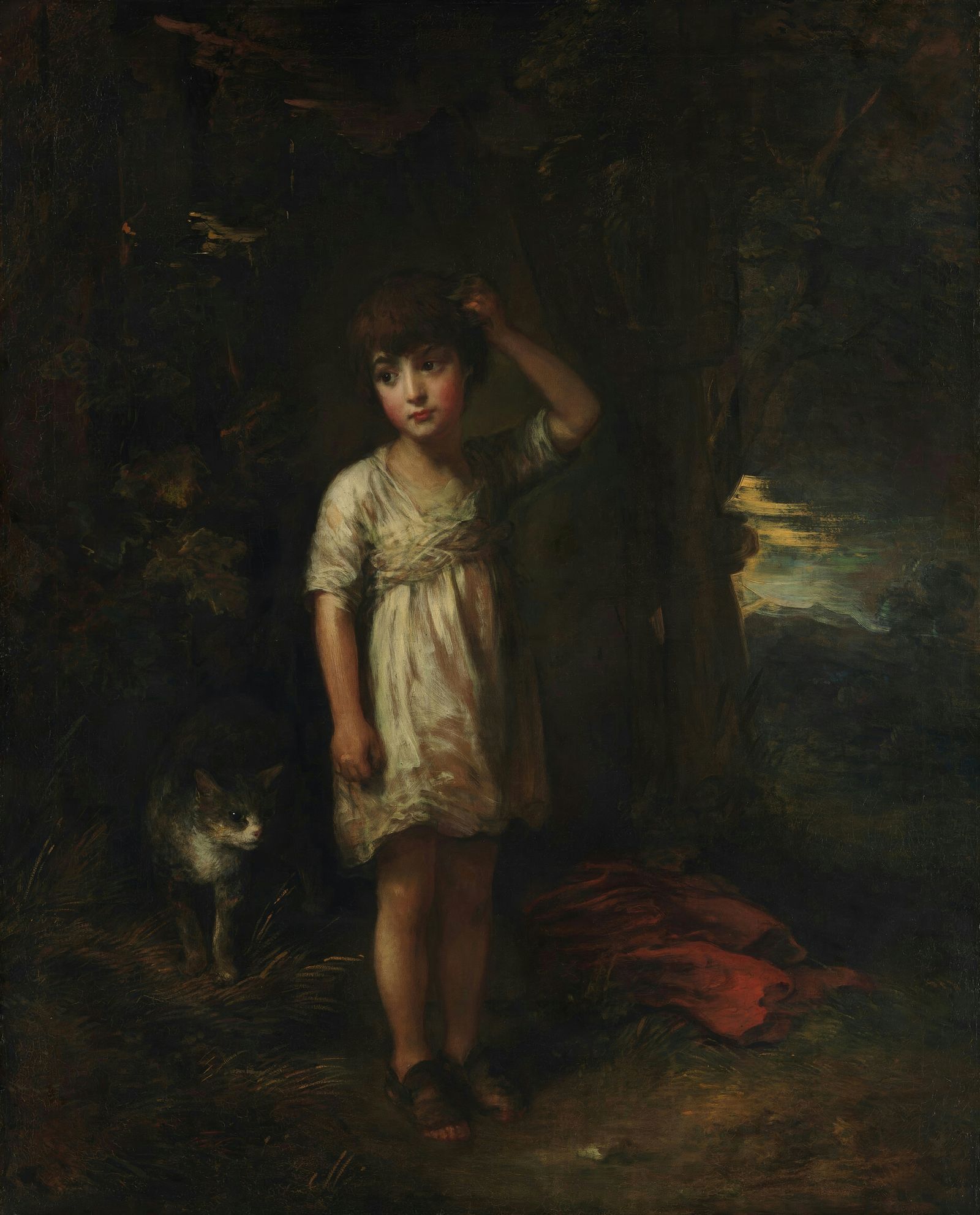
A Boy with a Cat—Morning · Thomas Gainsborough · 1787 · Metropolitan Museum of Art, New York. Prepared for print by Surrealium at Vaxholm Fortress, Sweden.
Gainsborough's A Boy with a Cat places the small companion within a much larger outdoor composition. The scale difference is useful when deciding whether a photograph of your cat in a room gives it enough importance. A beautiful setting is not sufficient if the identifying face occupies only a tiny part of the image, especially when the darker mask needs clear detail.
8. A comfortable lap
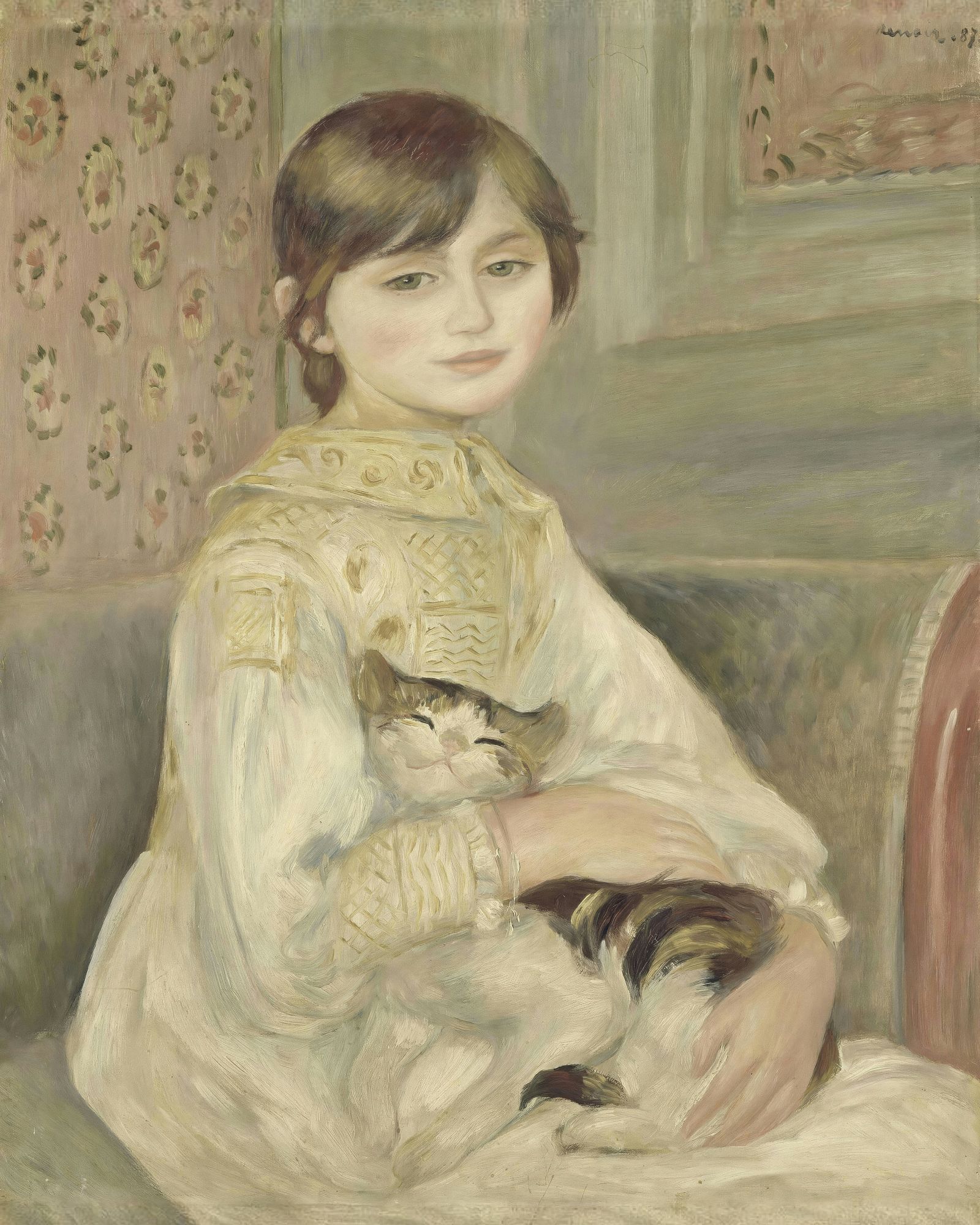
Julie Manet · Pierre-Auguste Renoir · 1887 · Musée d'Orsay, Paris. Prepared for print by Surrealium at Vaxholm Fortress, Sweden.
Renoir's Julie Manet shows the child holding a cat whose relaxed face and tucked body remain part of the portrait. The closeness comes from the actual arrangement of the subjects, not from making the animal perform affection for the viewer. For a Siamese that enjoys a lap, choose a photograph taken in that familiar position and keep the hands from obscuring the face.
9. Separating the cat from the objects
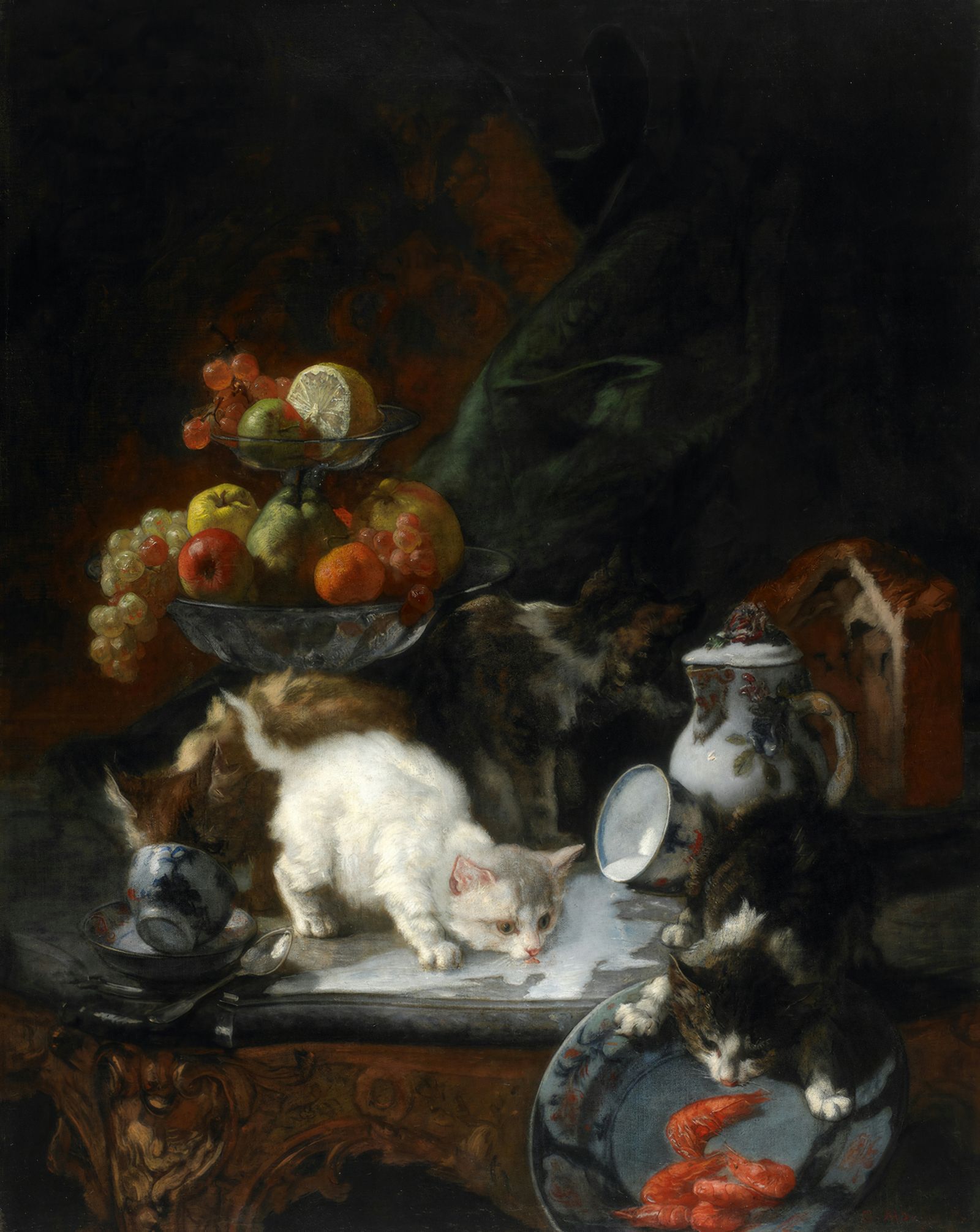
Cats on a Console · Charles Monginot · 1859 · Centre national des arts plastiques, Paris. Prepared for print by Surrealium at Vaxholm Fortress, Sweden.
In Cats on a Console, pale and dark animals move among vessels, fruit and rich surfaces. The picture offers a useful test of how quickly an eye can find a cat amid a complicated setting. If your source photograph contains a patterned cushion, reflective objects or bright ornaments, compare it with a simpler view before assuming that more detail will make the portrait more personal.
10. A clear boundary in a pale landscape
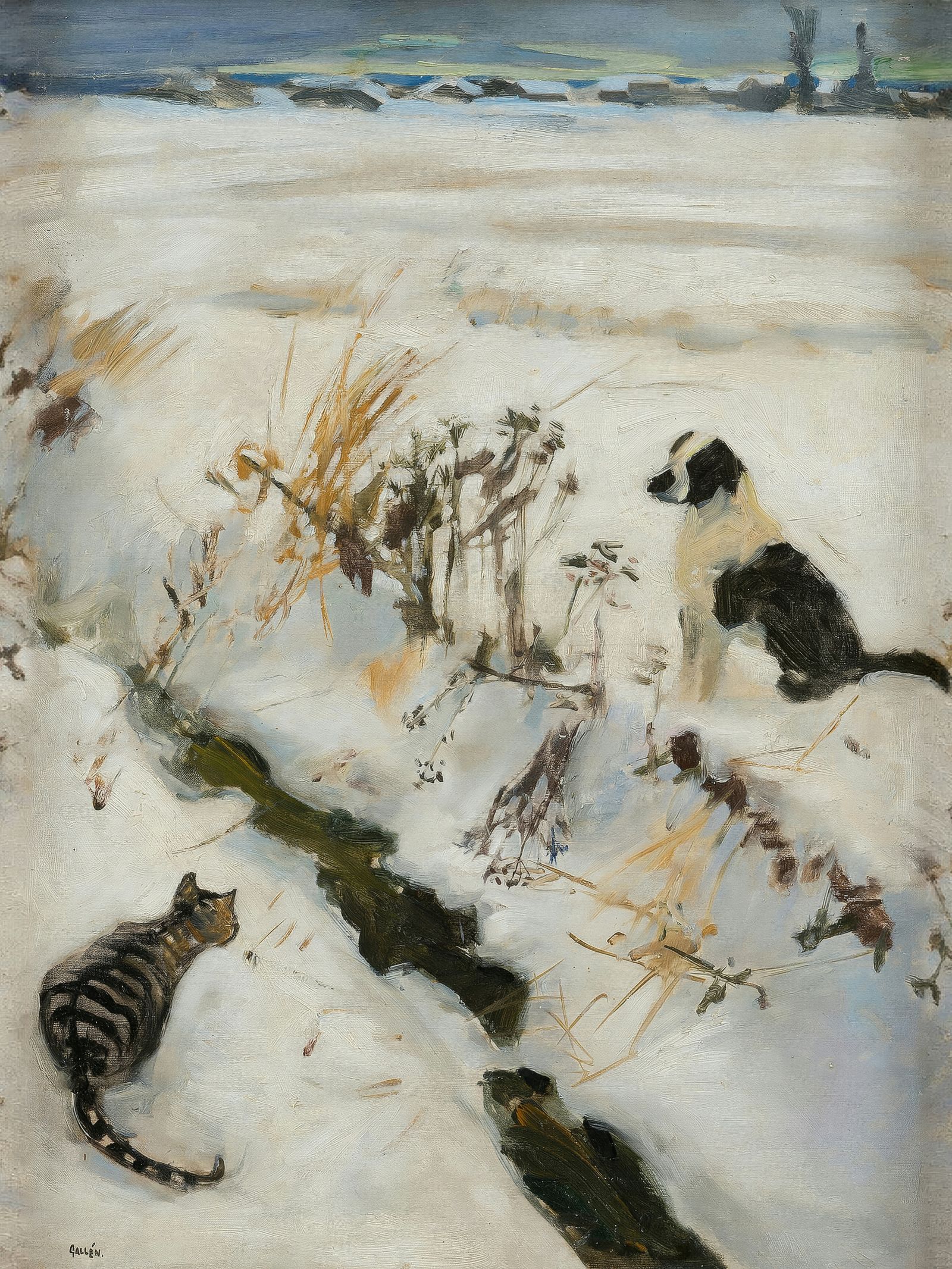
Cat and Dog · Akseli Gallen-Kallela · 1890s · Private collection. Prepared for print by Surrealium at Vaxholm Fortress, Sweden.
Gallen-Kallela's Cat and Dog sets the animals on opposite sides of a narrow dark division in the snow. The surrounding white makes their outlines important, while the distance between them explains the encounter. For a pale-bodied cat, a quiet background can similarly clarify the darker tail, ears and feet, provided the body itself retains enough tone to remain solid.
Start with a photograph in which you can see the face without brightening it dramatically. Check the pale coat, darker areas and eyes separately, then consider them together. A portrait style can change the handling of colour and brushwork; it should still leave the cat's own features as the point of recognition. The Fable pet portrait route lets you begin with that particular photograph rather than a generic breed picture.
Begin with the custom cat portrait guide and compare the wider pet styles. The orange cat guide considers a different colour problem, while famous cat paintings gives the historic subjects more room. Examine Julie Manet for the relationship between a cat and its sitter.
- Do I need a photograph with the cat looking forward?
- No. A slight turn can show the shape of the muzzle and ears clearly. What matters is that the visible eye, face markings and outline remain readable. Avoid selecting a straight-on photograph merely because it is symmetrical if another view looks much more like your cat.
- Why does pale fur look yellow in my photograph?
- Indoor light can give the whole photograph a warm cast. Compare it with an unfiltered image taken in even daylight before deciding which reference best represents the cat. Do not use a strong filter simply to make the eyes or dark markings more dramatic.
- Can a historic cat painting prove a modern breed identity?
- Not on appearance alone. This story uses the catalogue’s titles and treats the works as visual references. A pale coat or dark face in an old picture is not sufficient evidence for relabelling the animal as a Siamese.