Orange cat painting: ten lessons in colour and character
Look at ten historic cat pictures to choose the light, pose and colour for a portrait of your own orange cat.
An orange cat painting needs more than a generous dose of orange. The pale muzzle, the shape around the eyes, the curve of the back and the particular places where stripes interrupt the fur are what make one cat different from another. A photograph in clear, even light gives those details a chance to survive a change of style.
Henriëtte Ronner-Knip's cat pictures make a useful looking exercise. Some contain ginger cats; others show pale or darker companions whose contrast helps us see how warm fur reads. They are not ten pictures of the same breed, nor examples of finished Fable portraits. Look first at the relationships between fur, background and light, then choose a photograph of your own cat that preserves its individual markings.
1. A warm coat against a dark opening
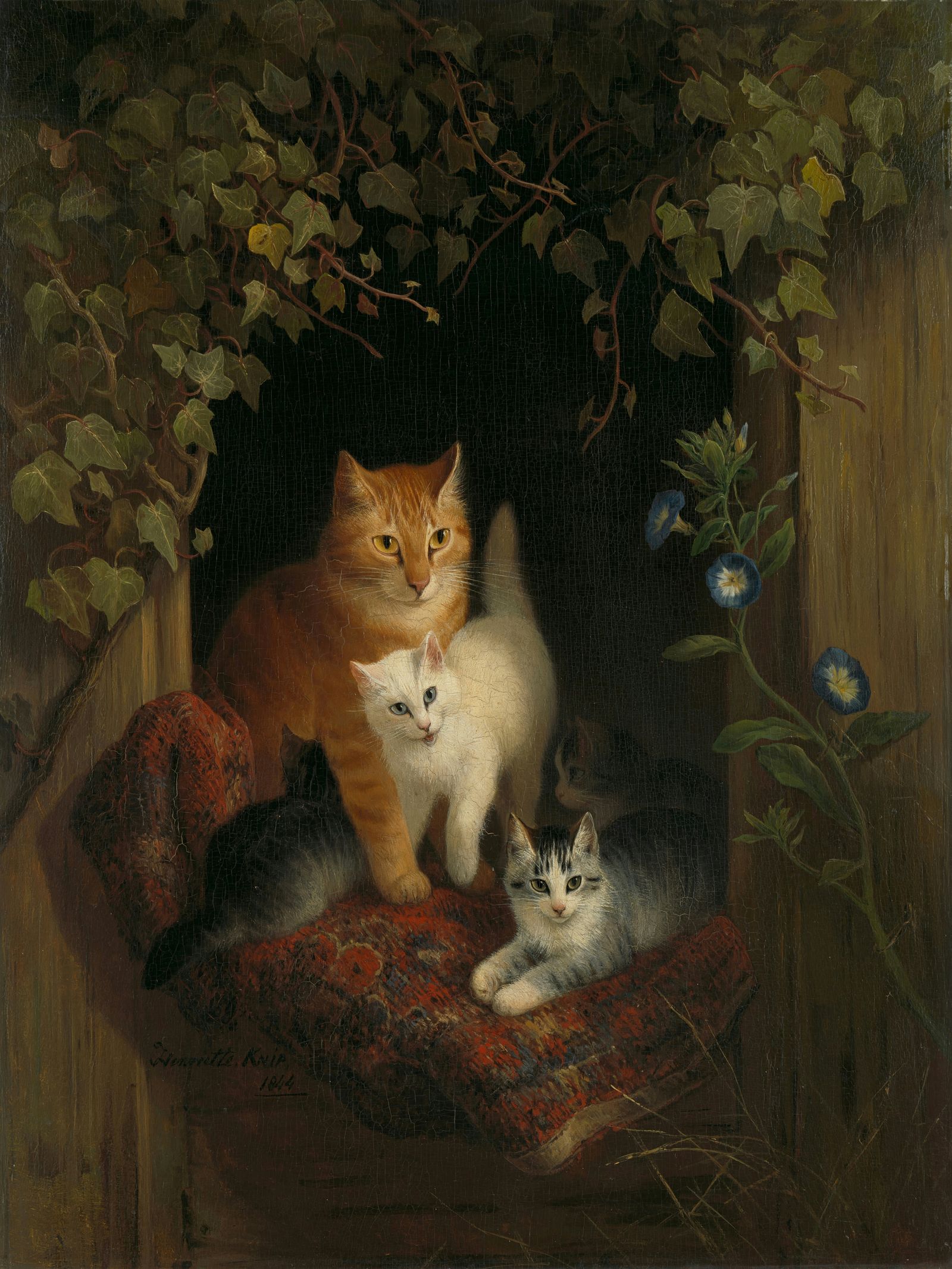
Cat with Kittens · Henriëtte Ronner-Knip · 1844 · Rijksmuseum, Amsterdam. Prepared for print by Surrealium at Vaxholm Fortress, Sweden.
The adult cat in Cat with Kittens stands above the smaller animals in a dark window, its warm fur pulling the eye forward. The leaves and the blanket help establish the setting without turning the animal into a decorative motif. For a ginger cat portrait, keep a little separation between the outline and the background so the body remains readable beyond the bright face.
2. Several cats, several identities
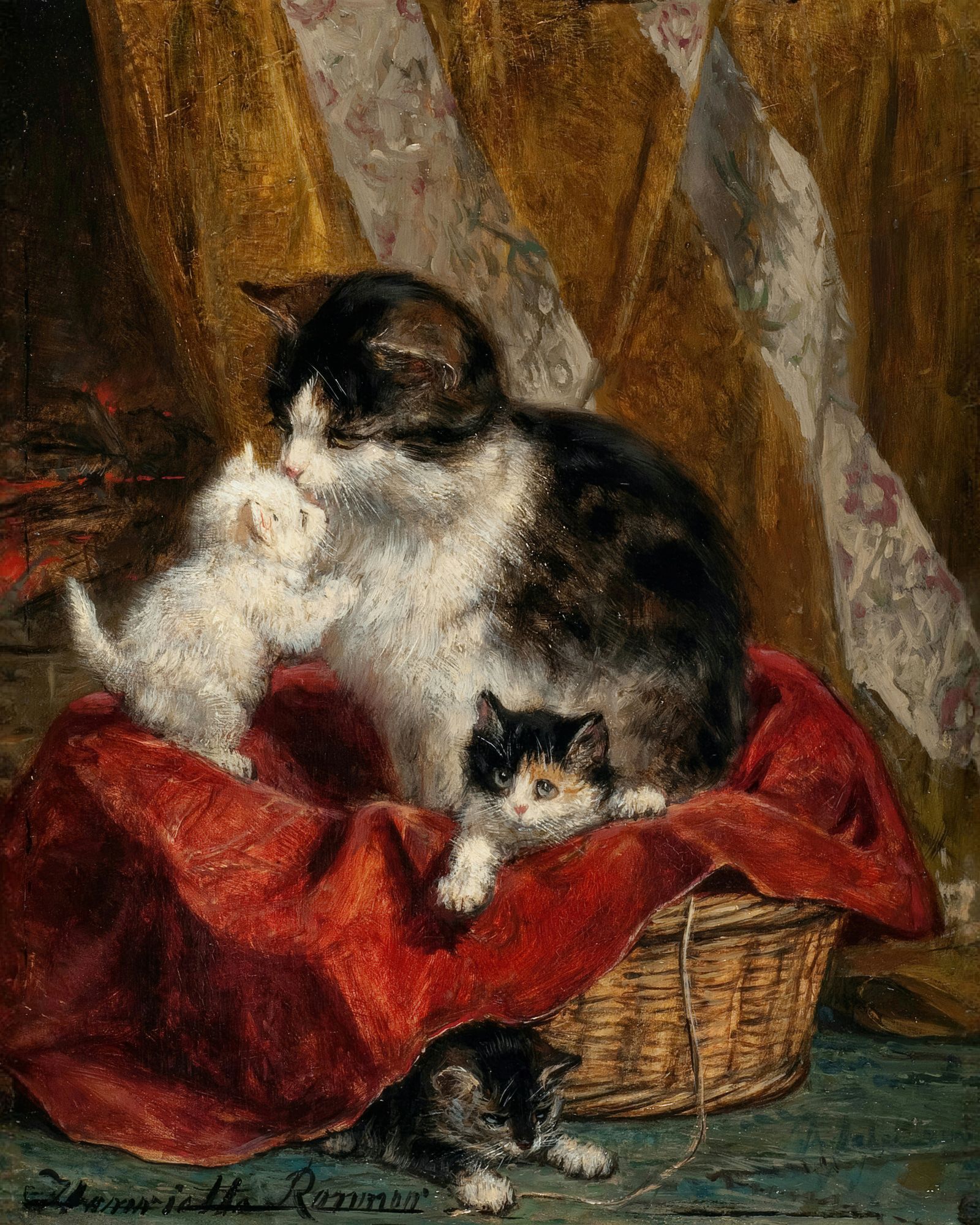
A Cat with Three Kittens · Henriëtte Ronner-Knip · 1889 · Cultural Heritage Agency of the Netherlands. Prepared for print by Surrealium at Vaxholm Fortress, Sweden.
A Cat with Three Kittens gives each small animal a different position, rather than treating the group as a repeating pattern. When one orange cat lives with paler or darker companions, the differences between them are part of the subject. Choose a photograph in which their faces and bodies can be distinguished, and decide whether the portrait should celebrate the group or give one cat the lead.
3. Warmth beside white fur
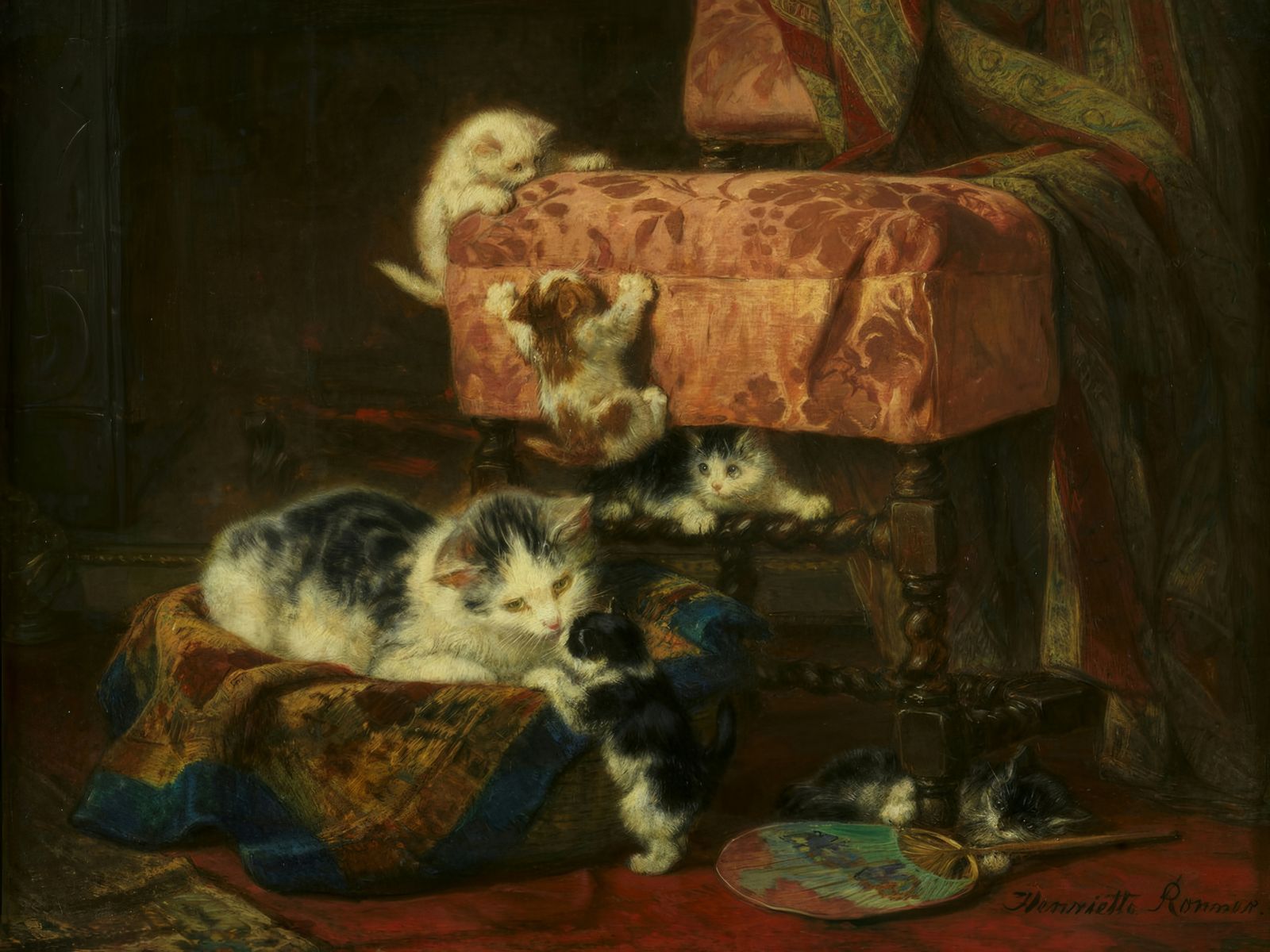
Cat with Five Kittens · Henriëtte Ronner-Knip · 1890 · Noordbrabants Museum. Prepared for print by Surrealium at Vaxholm Fortress, Sweden.
In Cat with Five Kittens, the darker adult and the light coats of the kittens create a spread of tones across the composition. Orange fur can look especially vivid beside cream or white, but those light areas still need visible texture. Avoid a source photograph in which sunlit patches have become featureless white, since a warm overall colour cannot replace the missing information.
4. Movement without a costume
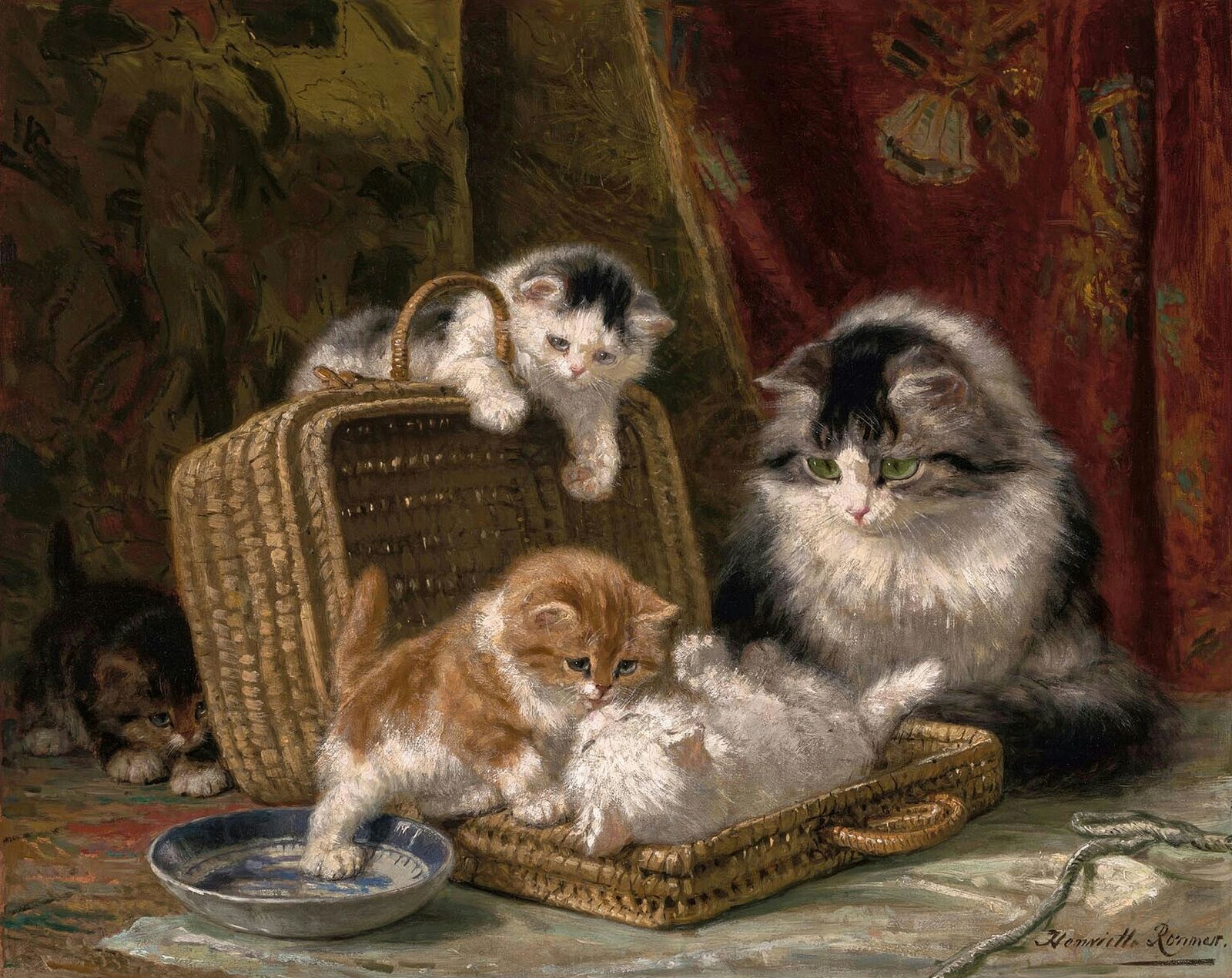
Kittens playing · Henriëtte Ronner-Knip · c. 1880 · Museum Boijmans Van Beuningen, Rotterdam. Prepared for print by Surrealium at Vaxholm Fortress, Sweden.
Kittens Playing finds interest in the animals' small turns, paws and shifting attention. There is plenty of character without assigning them human roles or dressing them for a scene. For a playful orange cat, a photograph taken just before or after a leap may give a more legible pose than the blurred instant of movement itself, while still preserving the sense of curiosity.
5. The low, resting shape
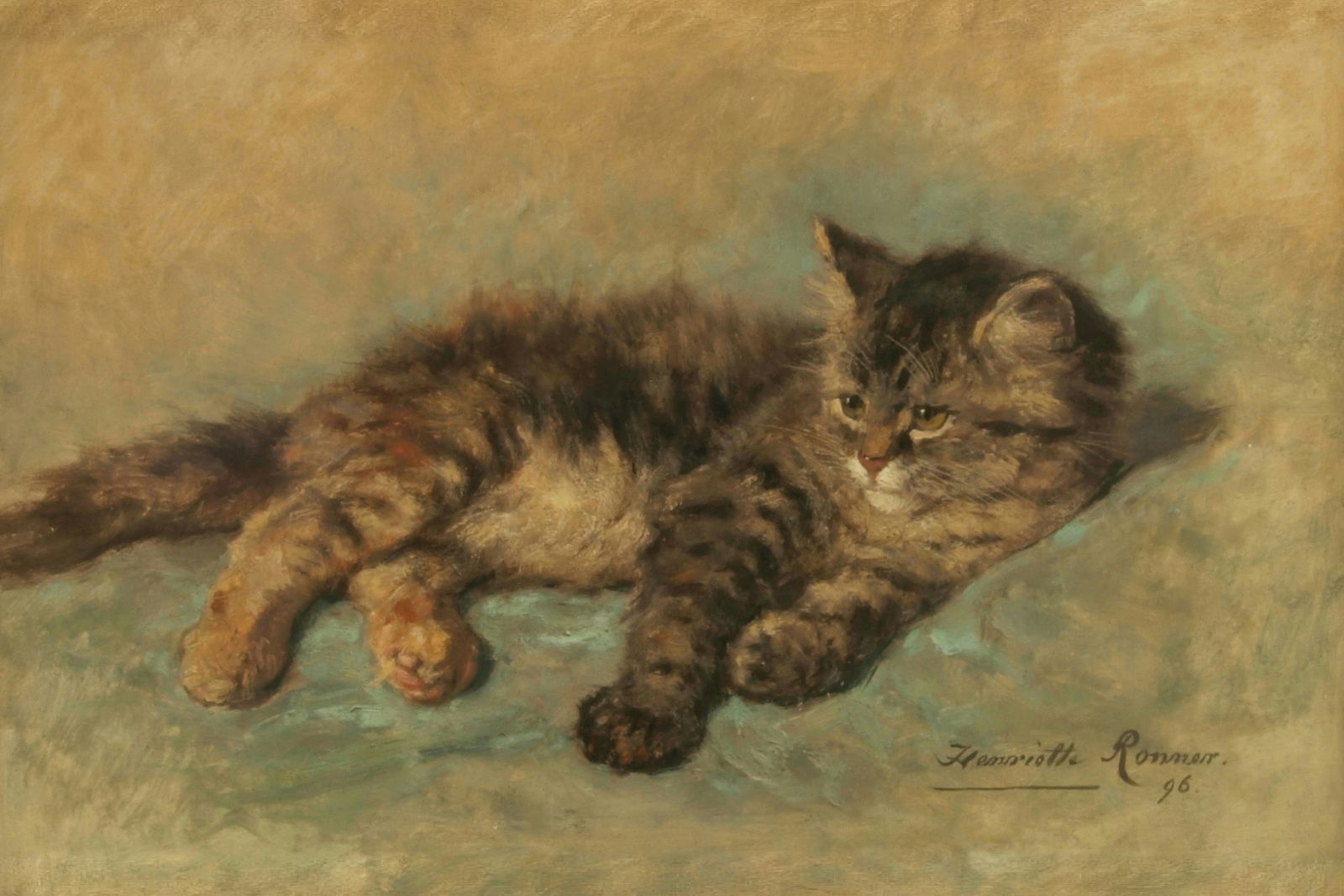
Kitten Lying Down · Henriëtte Ronner-Knip · 1896 · Teylers Museum, Haarlem (KS 155, 1896). Prepared for print by Surrealium at Vaxholm Fortress, Sweden.
Kitten Lying Down spreads the small body along a horizontal surface, keeping the face close to the level of the paws. That low viewpoint makes a useful alternative to looking down on a cat from standing height. If yours regularly rests with its chin near its feet, photograph that familiar shape from nearby without pressing the phone so close that the face becomes enlarged.
6. Pale fur as a colour check
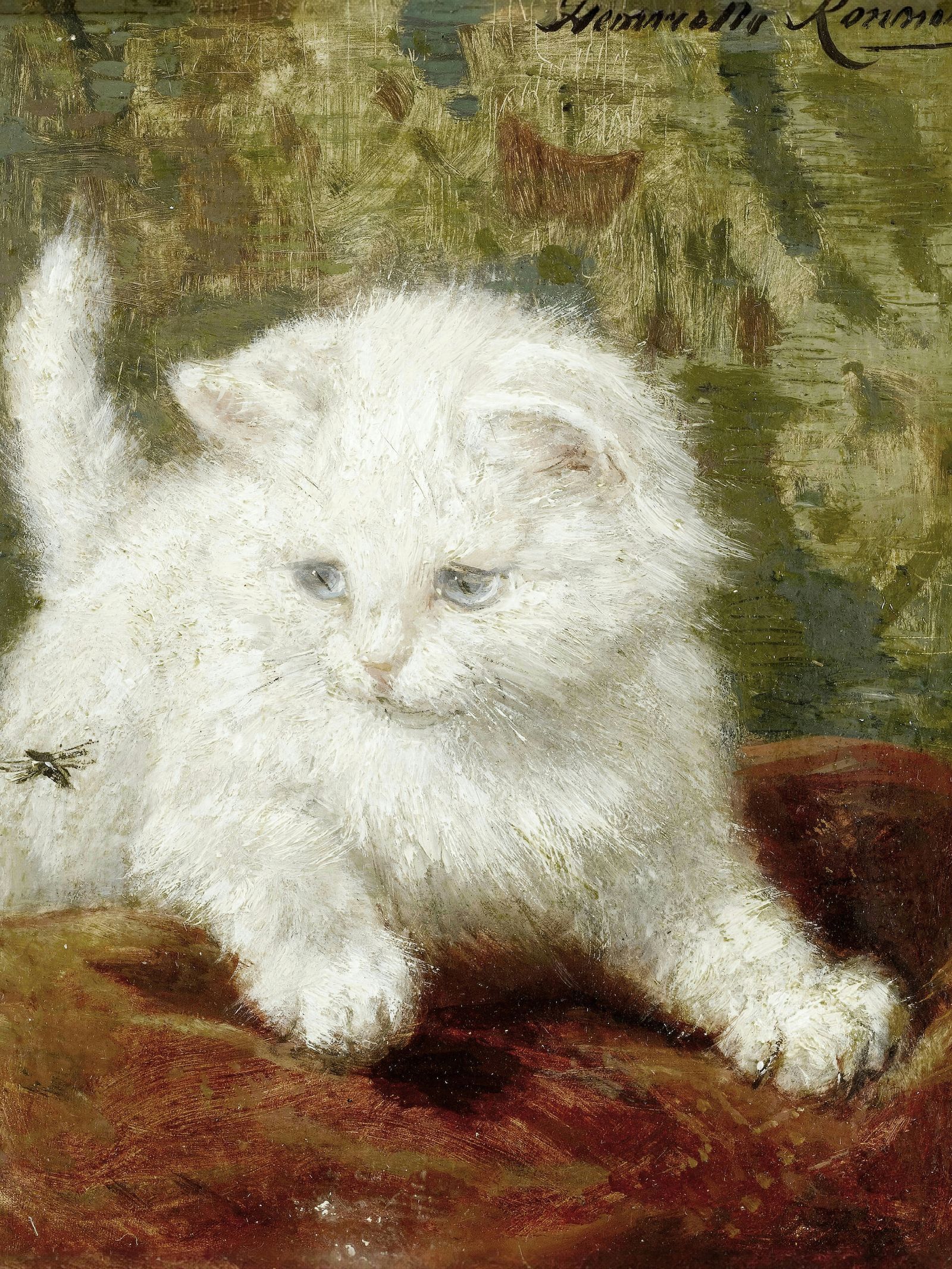
Curiosity · Henriëtte Ronner-Knip · 1889 · Private collection. Prepared for print by Surrealium at Vaxholm Fortress, Sweden.
Curiosity centres a light kitten, so the subtle warmth and shadow in the coat become easier to notice than an obvious orange patch. Use that restraint when judging the pale areas of your own cat's chest and muzzle. A portrait can retain an amber overall mood while allowing those white areas to stay distinct, instead of colouring every part of the animal the same shade.
7. A prop that earns its place
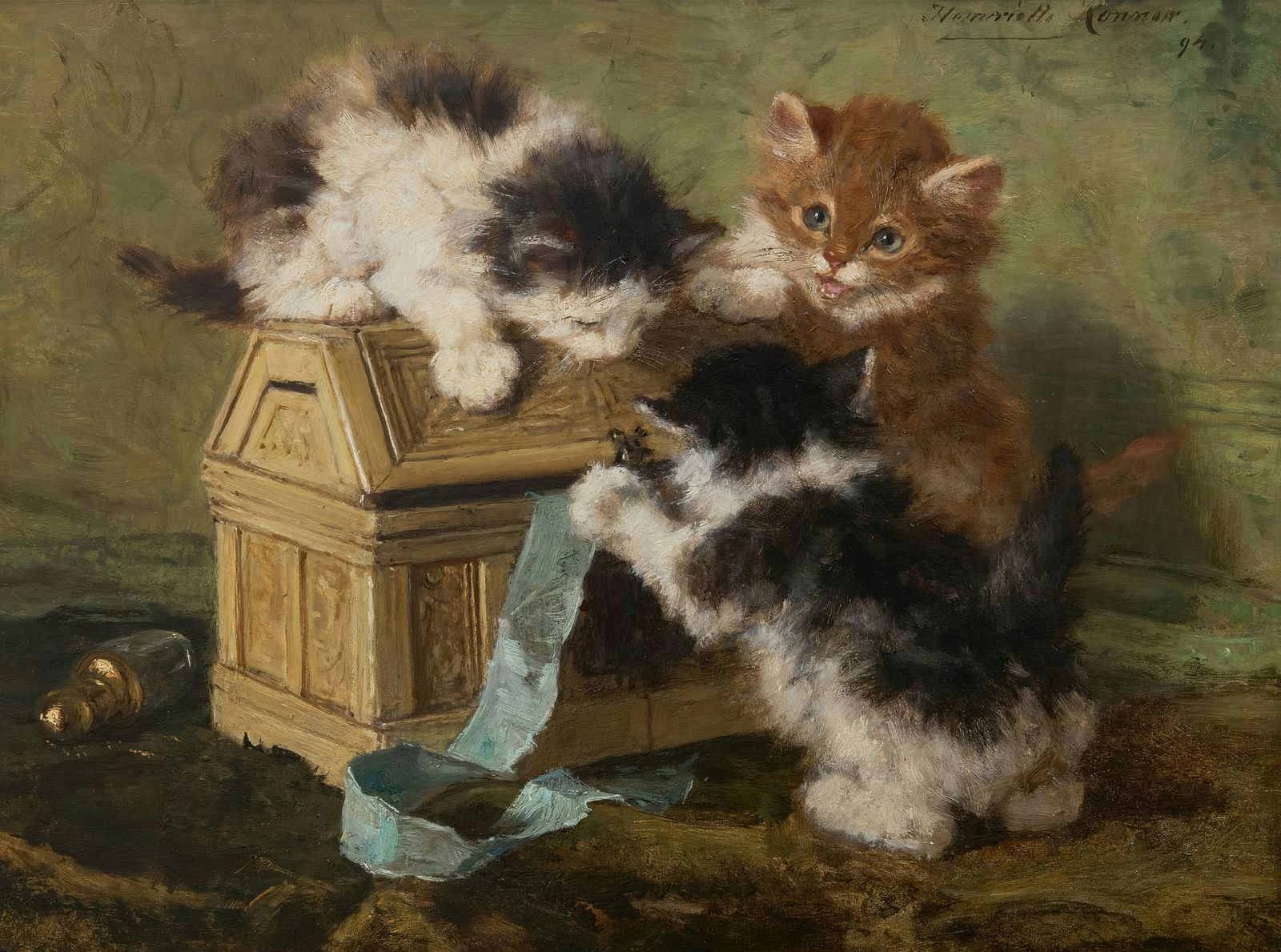
Three Kittens Playing with a Letter Box · Henriëtte Ronner-Knip · 1894 · Holding collection unrecorded; Wikimedia Commons source. Prepared for print by Surrealium at Vaxholm Fortress, Sweden.
Three Kittens Playing with a Letter Box gives the animals a shared object to investigate, creating several small directions of attention. An object in your own photograph should have the same practical reason to be there: a favourite toy, a familiar basket or the corner of a box. Keep it secondary to the cat, especially when warm cardboard and ginger fur could otherwise merge.
8. The curve beside the container
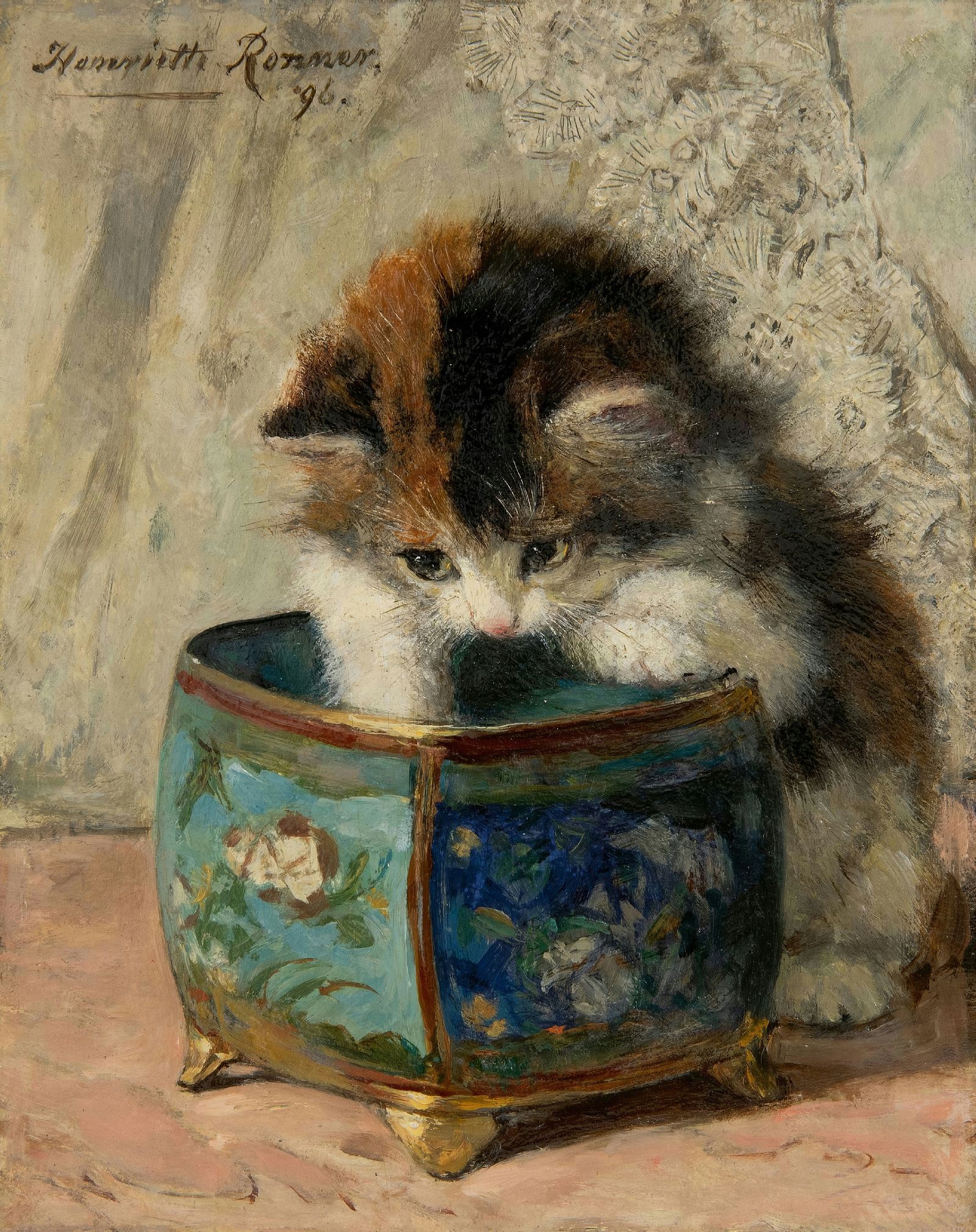
Kitten Playing with a Jardinière · Henriëtte Ronner-Knip · 1896 · Holding collection unrecorded; Wikimedia Commons source. Prepared for print by Surrealium at Vaxholm Fortress, Sweden.
Kitten Playing with a Jardinière uses the large vessel to make the kitten's smaller body and reaching gesture visible. The contrast is about scale and shape, not about giving the animal a human occupation. If a photograph includes a plant pot or piece of furniture, leave enough of it visible to explain the pose, and make sure it does not hide the identifying face markings.
9. A group with breathing space
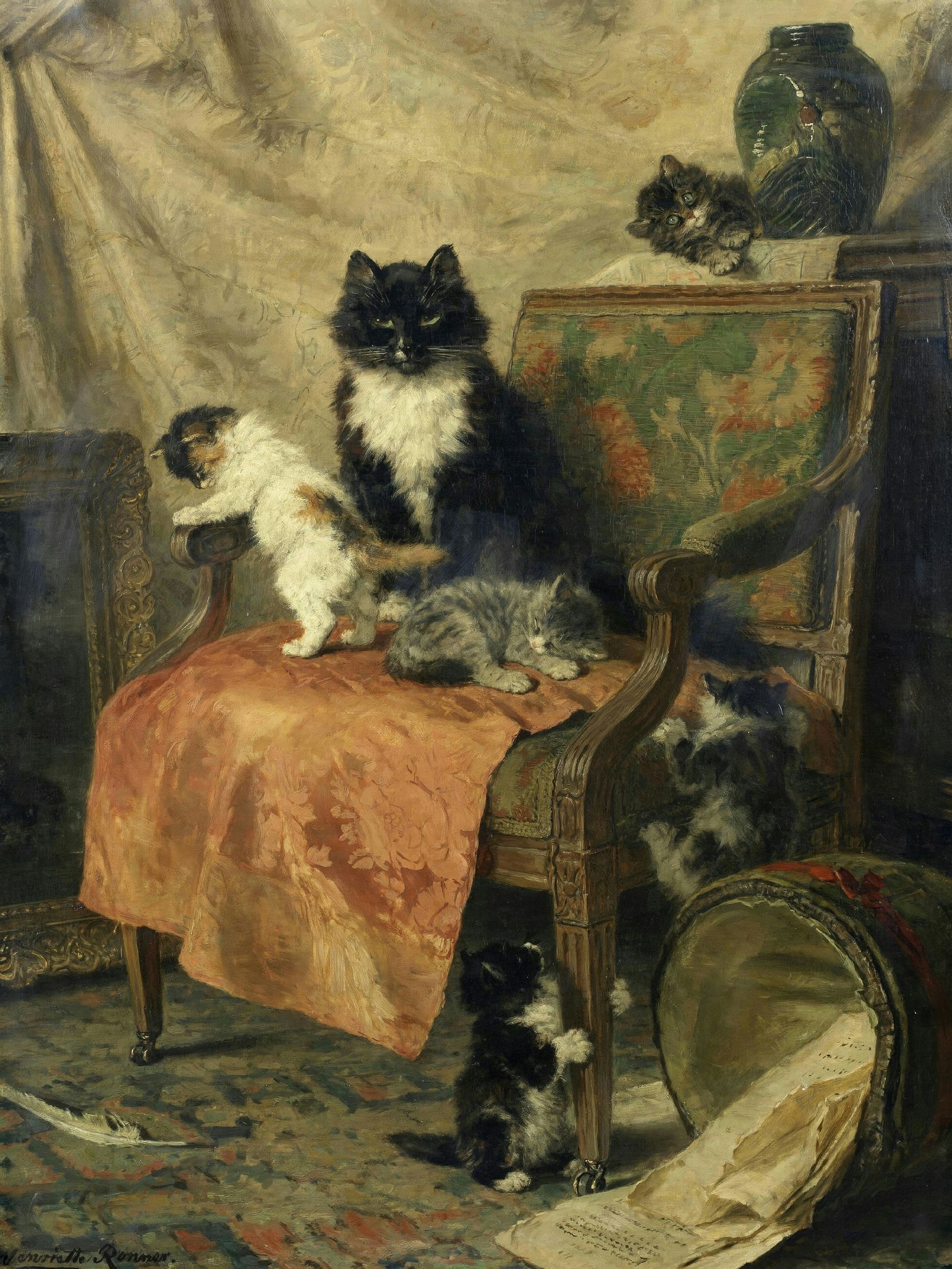
Kittens at Play · Henriëtte Ronner-Knip · 1897 · Private collection. Prepared for print by Surrealium at Vaxholm Fortress, Sweden.
Kittens at Play distributes small bodies around the setting, leaving intervals that help each movement register. A busy photograph can lose that clarity when toys, blankets and furniture all demand attention at once. Before choosing a portrait source, reduce the view to the cat's outline and a few important surroundings in your mind; if you cannot find the subject quickly, try a simpler photograph.
10. The watcher and the explorers
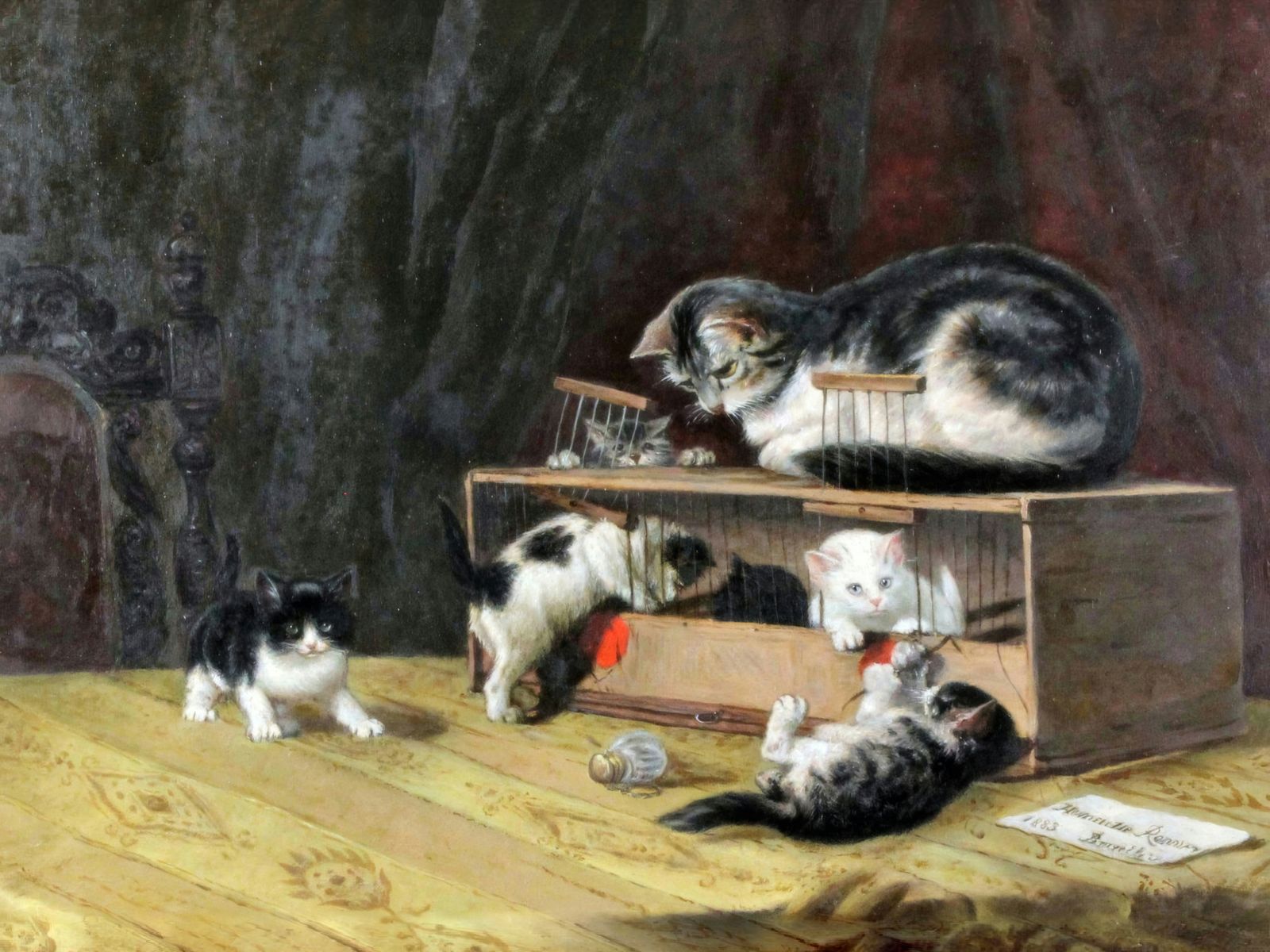
New Tenants · Henriëtte Ronner-Knip · 1883 · Holding collection unrecorded; Wikimedia Commons source. Prepared for print by Surrealium at Vaxholm Fortress, Sweden.
New Tenants contrasts the adult cat's watchful position with the kittens' activity around it. That difference in energy can be more personal than any general idea about ginger cats being mischievous or sociable. Choose the posture your cat actually returns to, whether it is an alert lookout or an unhurried sprawl, and let the portrait's character come from observation rather than a colour stereotype.
Compare two or three photographs before choosing a style. Look for the familiar face shape, readable stripes and a complete enough outline to explain the pose. If warm indoor lighting has turned the white muzzle yellow, a daylight photograph may be a clearer reference. Fable makes a portrait from your photo; the historic works here help you discuss colour and composition, while the photograph supplies the cat you know.
The broader cat portrait guide covers choosing the subject, and our pet portrait styles guide compares approaches. For a different challenge, see Siamese cat portraits; for historic works to hang as they are, browse cat art prints. Look closely at the whole Cat with Kittens before deciding which details matter in your own picture.
- Are orange cats a particular breed?
- This guide treats orange as a coat colour, not a breed identification. The historic pictures are captioned by their catalogue titles. For a portrait, the useful information is your own cat’s visible markings and proportions rather than a label applied from a painting.
- What background works with orange fur?
- A quiet background with enough contrast to separate the outline is a good starting point. Look at the ears, back and tail as well as the face. There is no single correct complementary colour: a familiar dark chair or a pale wall may work better than a decorative colour scheme.
- Can I use a photograph of several cats?
- Begin with a photograph in which each cat can be seen clearly and decide which animals belong in the portrait. A partly hidden face or a blurred kitten gives less reliable information. Keep the group’s actual differences instead of expecting colour alone to identify them.