Christmas gifts for dad, for the father who wants nothing
His dog painted like a Landseer, his horse like a Stubbs, his house like a Constable, or dad himself in Courbet’s pose: twelve masterworks behind Fable’s portrait styles, and the photo each one needs.
Dad says he does not want anything. What he means is that he does not want more things. A portrait is different: it is about the people, animals and places he cares about, and it does not need batteries.
Each of the twelve masterworks below is the starting point of one of Fable’s portrait styles. Send a photo and see a free preview, or order the original painting as a print. For each one we say which photo works best.
1. Self-Portrait with a Black Dog
Gustave Courbet, Self-Portrait with a Black Dog, 1842. Oil on canvas. Petit Palais, Paris.
Courbet painted himself at 23 on a hillside near his home with his black spaniel and his pipe. It is the perfect portrait of a man and his dog, with just the right amount of swagger.
Best photo: dad sitting outdoors with the dog right beside him.
Create your portrait in this style
2. Portrait of Guidobaldo II della Rovere
Agnolo Bronzino, Portrait of Guidobaldo II della Rovere, 1531. Oil on canvas. Palazzo Pitti, Florence.
Bronzino painted the young Duke of Urbino in gleaming armour with his hand on his dog’s head. It is pure Renaissance power and a wonderfully tongue-in-cheek gift.
Best photo: dad standing, hand on his dog, looking straight at the camera.
Create your portrait in this style
3. The Grey Horse
Philips Wouwerman, The Grey Horse, 1646. Oil on canvas. Rijksmuseum, Amsterdam.
Philips Wouwerman was the great Dutch painter of horses. His grey horse stands patiently on a country path beside its owner, with a little dog at their feet.
Best photo: dad standing beside his horse, with the whole horse in the picture.
Create your portrait in this style
4. Man with Lance Riding through the Snow
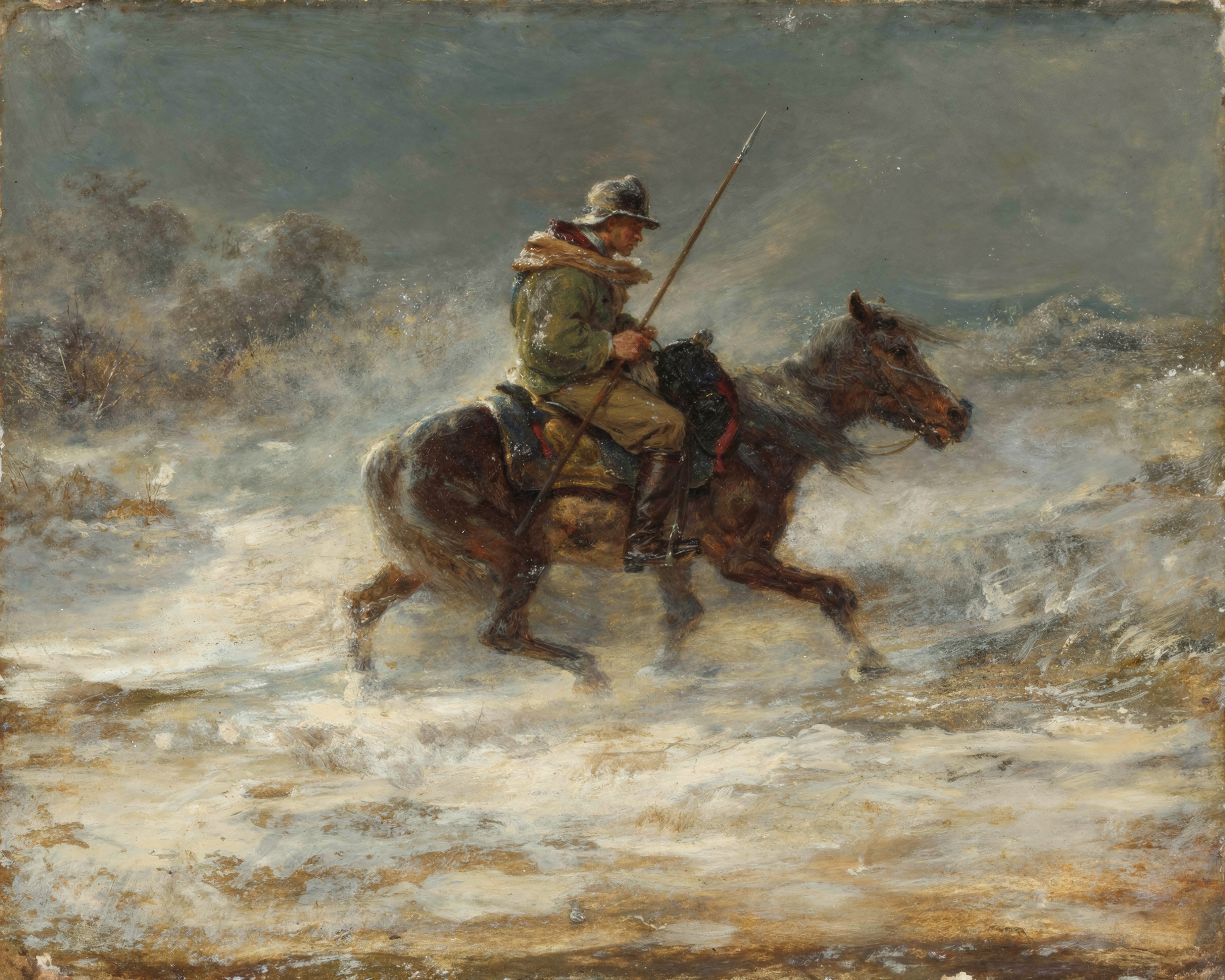
Adolphe Schreyer, Man with Lance Riding through the Snow, c. 1880. Oil on canvas. Art Institute of Chicago.
Adolphe Schreyer painted riders and horses battling the elements. This lone rider pushing through snow has all the drama of a winter epic.
Best photo: a horse in motion, ideally in winter, seen from the side.
Create your portrait in this style
5. Sleeping Bloodhound
Edwin Landseer, Sleeping Bloodhound, 1835. Oil on canvas. Tate, London.
Landseer painted this bloodhound, Countess, after she died in 1835, lying as if asleep. It is a tender picture of a loyal dog at rest.
Best photo: dad’s dog stretched out asleep; also a beautiful memorial portrait.
Create your portrait in this style
6. A Couple of Foxhounds
George Stubbs, A Couple of Foxhounds, 1792. Oil on canvas. Tate, London.
Stubbs painted these two hounds in 1792 with the precision of an anatomist and the feeling of a dog lover. The pair is a lovely format if dad has two dogs.
Best photo: two dogs standing side by side, seen from the side.
Create your portrait in this style
7. Bay Hunter by a Lake
George Stubbs, Bay Hunter by a Lake, 1787. Oil on canvas. Tate, London.
George Stubbs was the greatest horse painter who ever lived. His bay hunter stands in perfect profile by a still lake, every muscle exact.
Best photo: a horse standing in profile, on level ground, in good light.
Create your portrait in this style
8. Dignity and Impudence
Edwin Landseer, Dignity and Impudence, 1839. Oil on canvas. Tate, London.
Landseer’s most famous double dog portrait: a solemn bloodhound and a cheeky white terrier sharing one kennel. Every family with a big dog and a small dog sees themselves in it.
Best photo: a big dog and a small dog together, both looking toward the camera.
Create your portrait in this style
9. Malvern Hall
John Constable, Malvern Hall, 1821. Oil on canvas. Clark Art Institute.
Constable painted Malvern Hall for the family who owned it, a portrait of a house as much as a landscape. The style made from it turns a photo of dad’s house into a Constable.
Best photo: the house from the front or across the garden, on a bright day.
Create your portrait in this style
10. Villa at Trouville
Gustave Caillebotte, Villa at Trouville, 1882. Oil on canvas.
Caillebotte painted this seaside villa in Normandy in 1882, half hidden in summer green. The style suits a holiday home or a house surrounded by garden.
Best photo: the house with trees around it, taken from the garden.
Create your portrait in this style
11. Still Life with Fruit, Glassware, and a Wanli Bowl
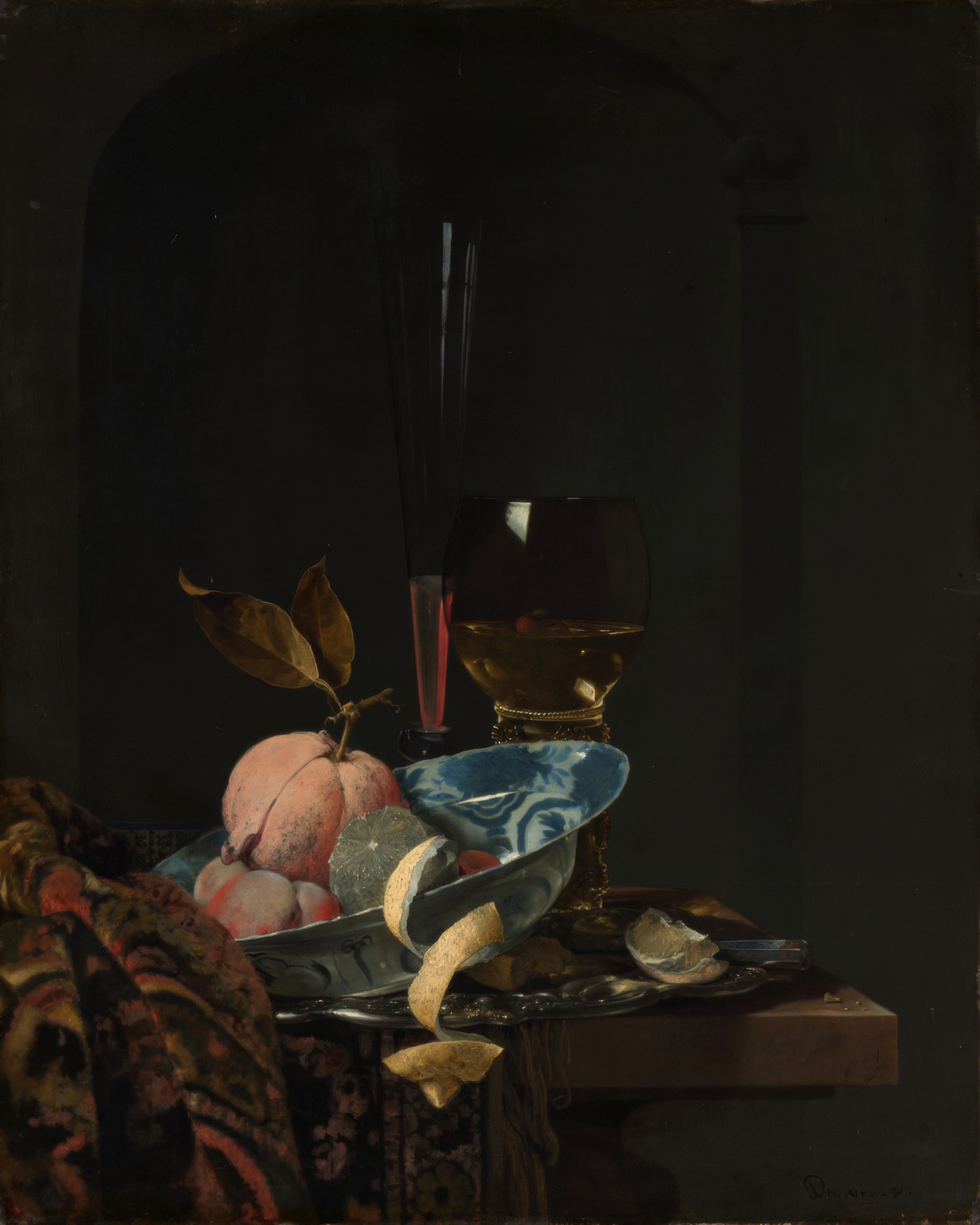
Willem Kalf, Still Life with Fruit, Glassware, and a Wanli Bowl, 1659. Oil on canvas. The Metropolitan Museum of Art, New York.
Willem Kalf painted luxury: Venetian glass, Chinese porcelain and a lemon peeled in a long spiral. The style made from it paints dad’s own treasures, his wine glasses, his whisky, his tools, in the same golden light.
Best photo: a few of his favourite objects on a table, lit from one side.
Create your portrait in this style
12. Old Father Christmas
William Ewart Lockhart, Old Father Christmas, before 1900. Oil on canvas. The Hunterian, University of Glasgow.
Lockhart painted Father Christmas as a jovial old man in a holly crown, raising a glass. If dad has a beard, this is his Christmas portrait.
Best photo: dad seated, smiling, glass in hand.
Create your portrait in this style
For a dad who wants nothing, choose the thing he loves most: his dog, his horse, his house or his family. Send a photo, see the free preview, and order in time for Christmas.
Questions
What do you get a dad who wants nothing?
Something personal rather than practical: a portrait of his dog, his house or the family, made from a photo you already have.
Can I get a portrait of dad and his dog together?
Yes. Styles such as Courbet’s Self-Portrait with a Black Dog or Bronzino’s Guidobaldo della Rovere are made for a person and a dog together. Use a photo where both are close together and well lit.
How long does a printed portrait take to arrive?
Printed portraits take several working days to make and ship, so order by mid December for Christmas. The digital portrait arrives as soon as it is ready.