Christmas gifts for grandma: ten ways to remember childhood
Ten paintings of children and family visits help you choose a portrait that remembers the child as they are, without a forced pose.
Christmas gifts for grandma need not turn her into a stereotype. She may love a formal portrait, a funny photograph, a garden scene or something she can keep on a small shelf. Start with what she actually notices about her grandchildren: a particular expression, the way they sit with a book, the dog that follows them, or the excitement of arriving at her door.
These historical paintings offer ten different ways of seeing childhood. They are references for mood and composition, not a claim that a child should behave like a painted sitter. Choose a current photograph that the family is comfortable using, and let the child look like themselves. If several grandchildren are involved, decide how to include them fairly before choosing a treatment or a format.
For a related starting point, read Christmas portrait gift for grandparents, gifts for grandparents.
1. The visit she looks forward to
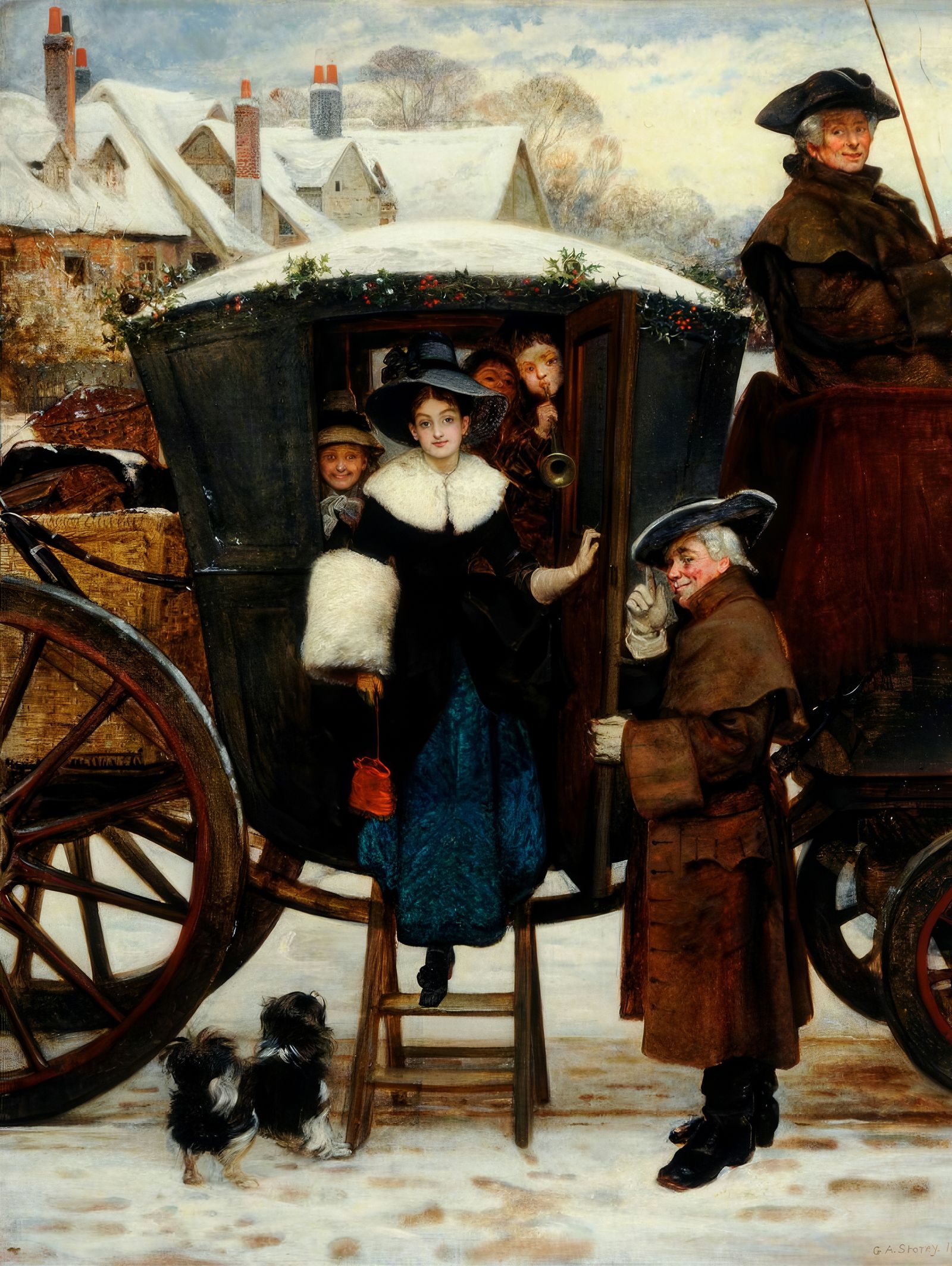
Grandmamma's Christmas Visitors — George Adolphus Storey, 1873. Sheffield Museums (VIS.1432). Prepared for print by Surrealium at Vaxholm Fortress, Sweden.
Storey’s Grandmamma’s Christmas Visitors catches children at the carriage steps, with the journey almost over and the welcome about to begin. The painting makes anticipation visible without showing the whole reunion. A portrait gift based on a real visit can carry the same feeling, especially when the note names the small ritual that makes arriving at grandma’s house different from arriving anywhere else.
Create a family portrait · Explore this artwork
2. A child allowed to stand quietly
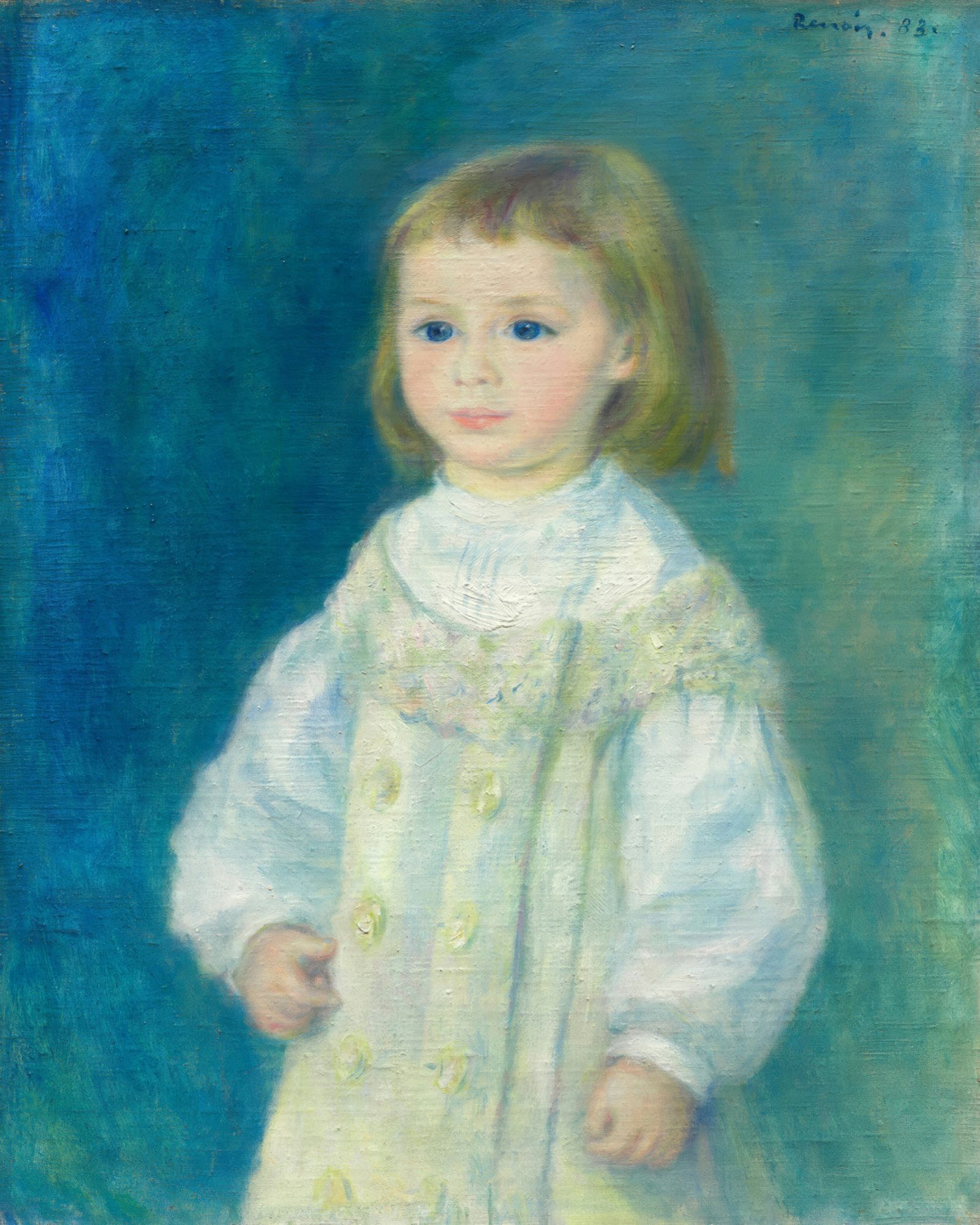
Lucie Berard (Child in White) — Pierre-Auguste Renoir, 1883. Art Institute of Chicago. Prepared for print by Surrealium at Vaxholm Fortress, Sweden.
Renoir’s Lucie Bérard stands in a white dress against a blue background, with her hands held naturally at different heights. There is no need for a broad smile to make the image engaging. If grandma recognises a child most readily in a thoughtful expression, use that photograph rather than selecting a technically tidier smile that nobody in the family quite believes.
Create a family portrait · Explore this artwork
3. Something found in the garden
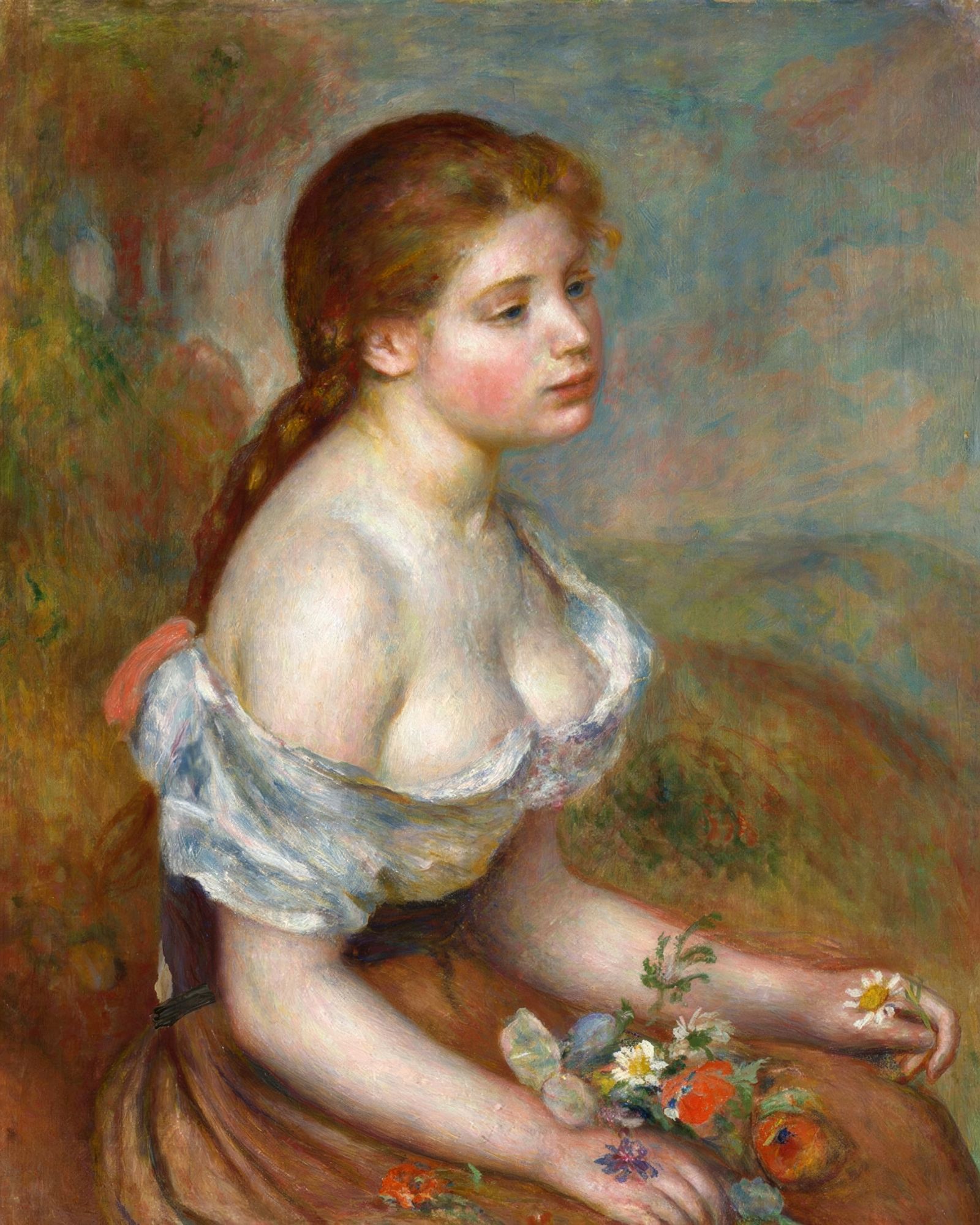
A Young Girl with Daisies — Auguste Renoir, 1889. The Metropolitan Museum of Art, New York. Restored by Surrealium at Vaxholm Fortress, Sweden.
The girl with daisies holds the flowers low, leaving her face and turned shoulders as the main focus. The small bouquet provides context without becoming a costume. For a child who brings grandma leaves, stones or flowers, a photograph with one familiar object can be more personal than a festive prop bought for the occasion; keep the object from obscuring the hands or face.
Create a family portrait · Explore this artwork
4. A wonderfully unceremonious seat
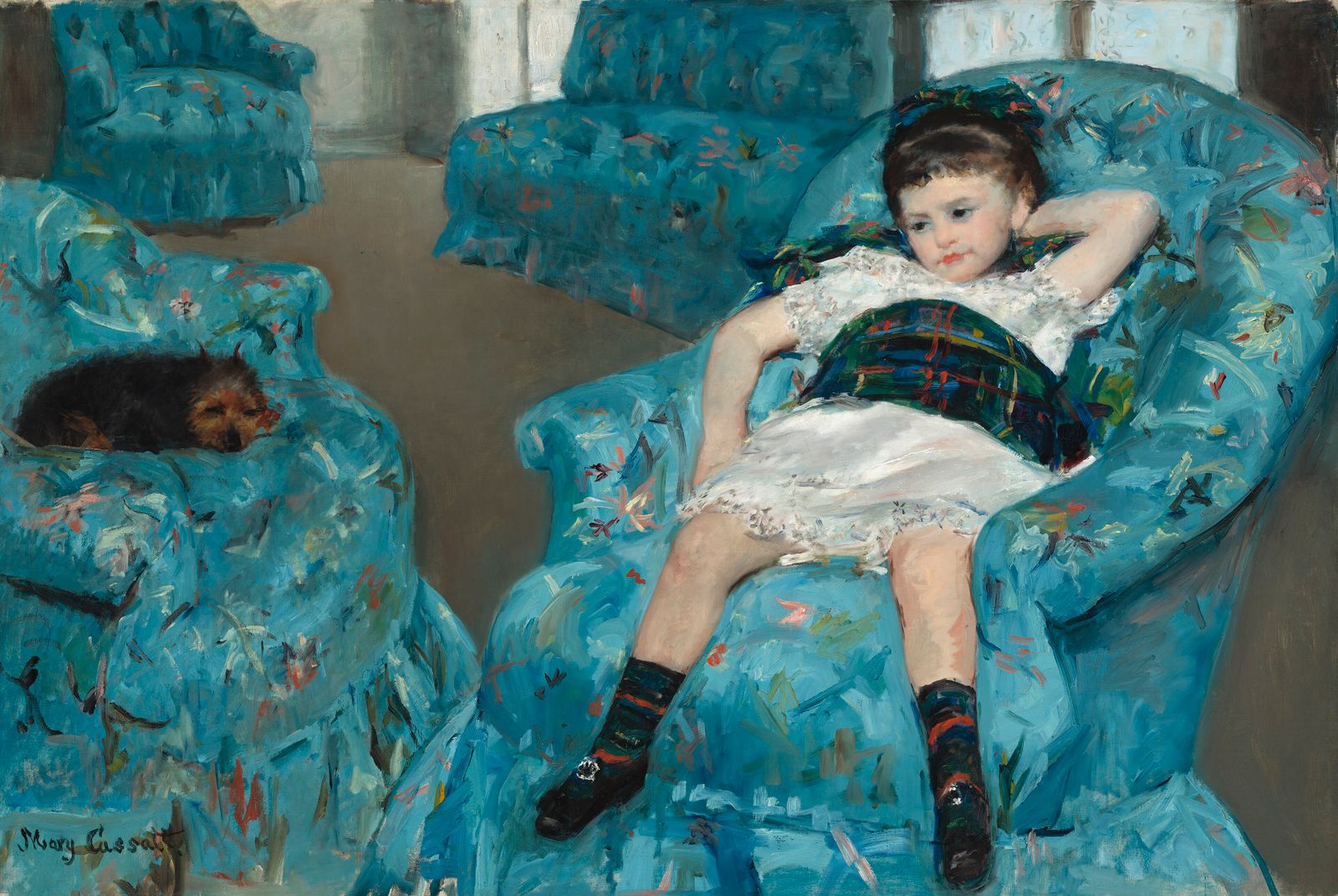
Little Girl in a Blue Armchair — Mary Cassatt, 1878. National Gallery of Art, Washington, Collection of Mr. and Mrs. Paul Mellon. Prepared for print by Surrealium at Vaxholm Fortress, Sweden.
Cassatt’s little girl sprawls in a blue armchair while the room’s other chairs and a dog occupy their own spaces. The posture gives the child a presence that a stiff pose would lose. This is a useful reference for a grandparent who enjoys the child’s independence, though the photograph you choose should still show the face clearly and be one the child is happy to share.
Create a family portrait · Explore this artwork
5. A moment of concentration
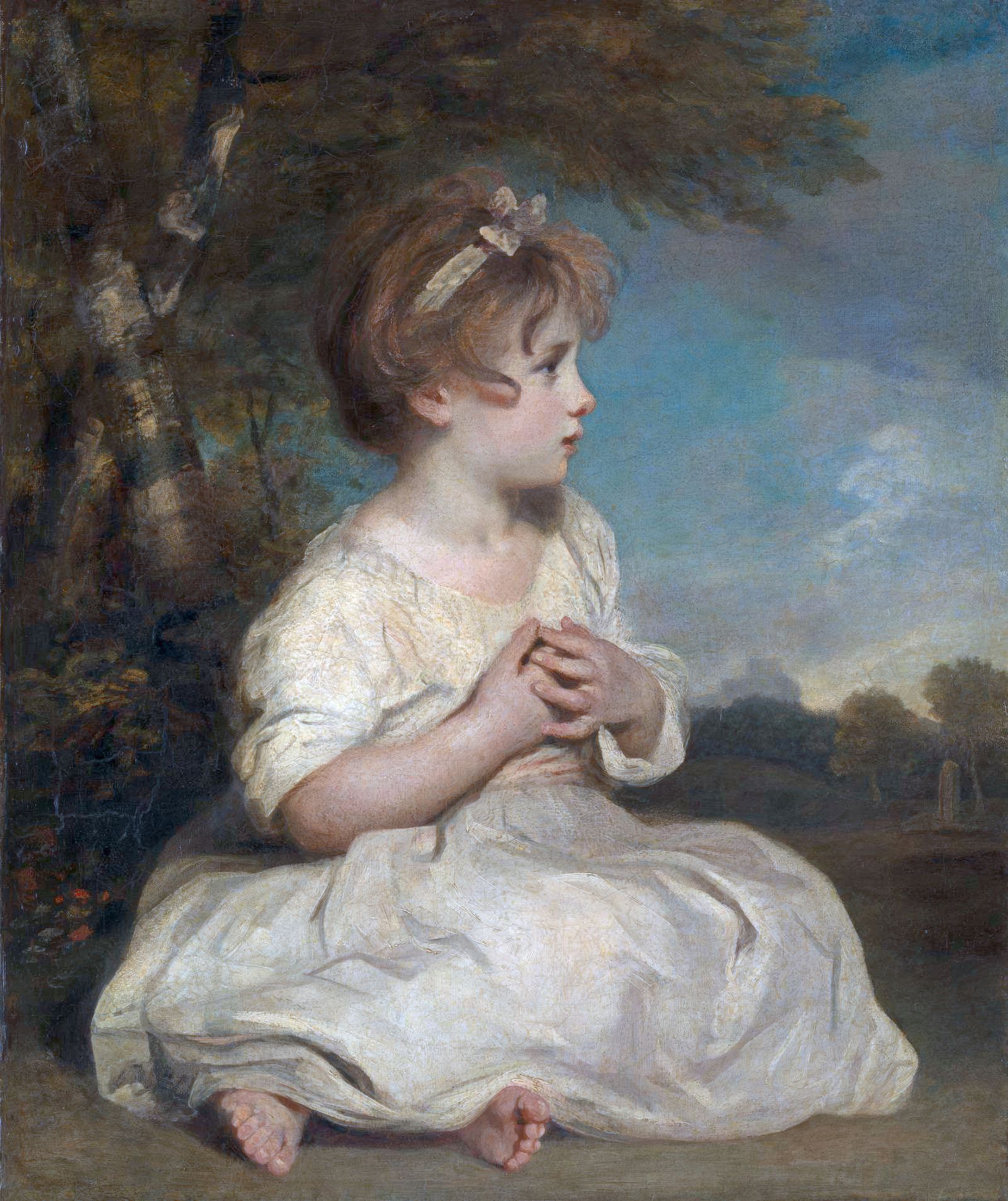
The Age of Innocence — Joshua Reynolds, c. 1788. Tate, London. Prepared for print by Surrealium at Vaxholm Fortress, Sweden.
Reynolds’s seated child looks to one side with her hands together, surrounded by a landscape that does not compete with her face. The picture suggests that a quiet pause can be enough. Choose a photograph with a recognisable expression and avoid adding a sentimental story the child did not experience; your note can explain why this particular moment made you think of grandma.
Create a family portrait · Explore this artwork
6. For someone who enjoys a little grandeur
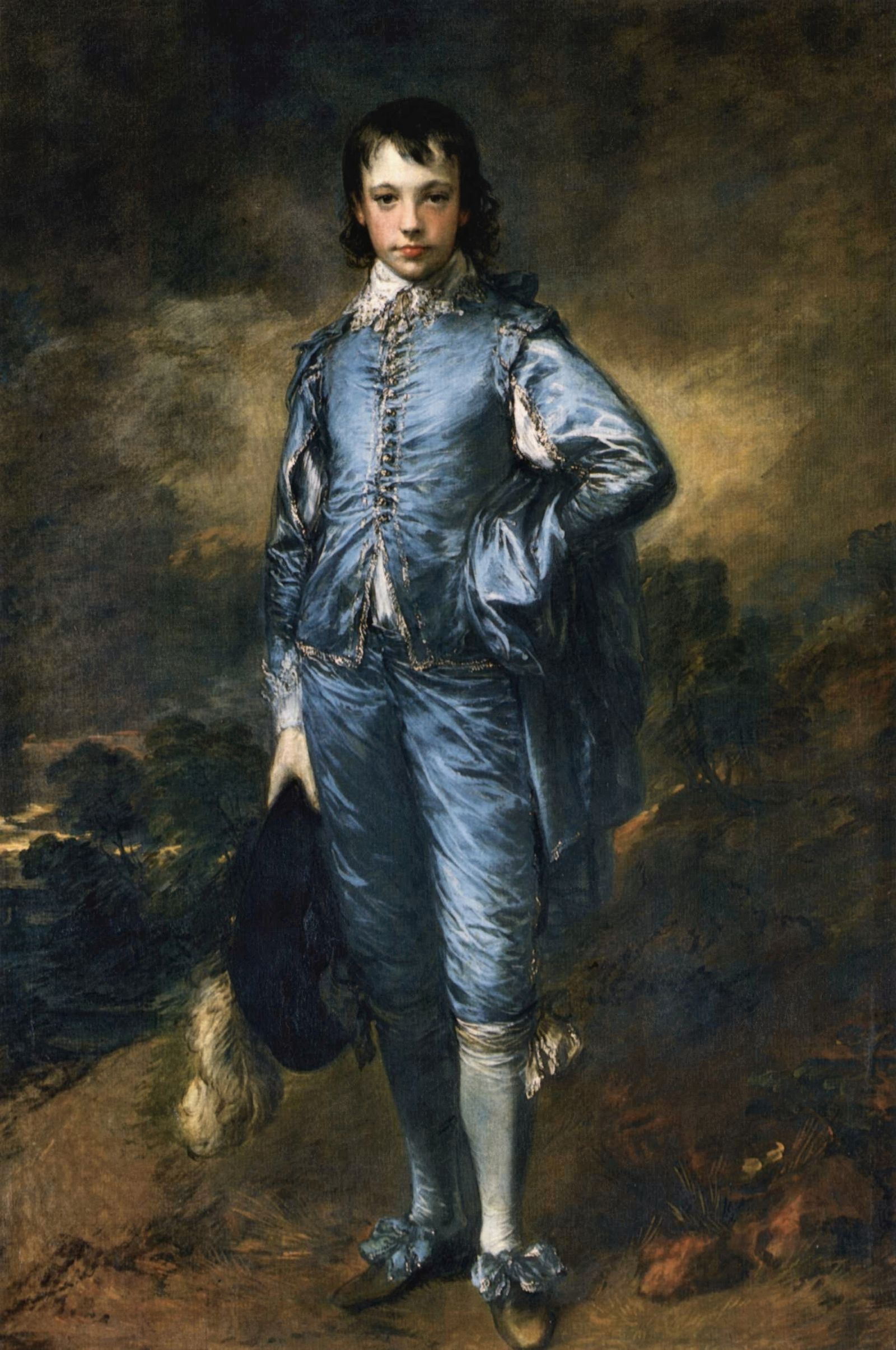
The Blue Boy — Thomas Gainsborough, c. 1770. The Huntington Library, Art Museum and Botanical Gardens, San Marino. Prepared for print by Surrealium at Vaxholm Fortress, Sweden.
Gainsborough’s Blue Boy fills the tall canvas with a confident standing figure and the changing sheen of blue clothing. It is a direction for a family that enjoys formal dress and theatrical portraits. The useful lesson is the clear silhouette and space around the body, not an expectation that a child must wear historical clothes or maintain an adult’s solemn expression.
Create a family portrait · Explore this artwork
7. The small helper
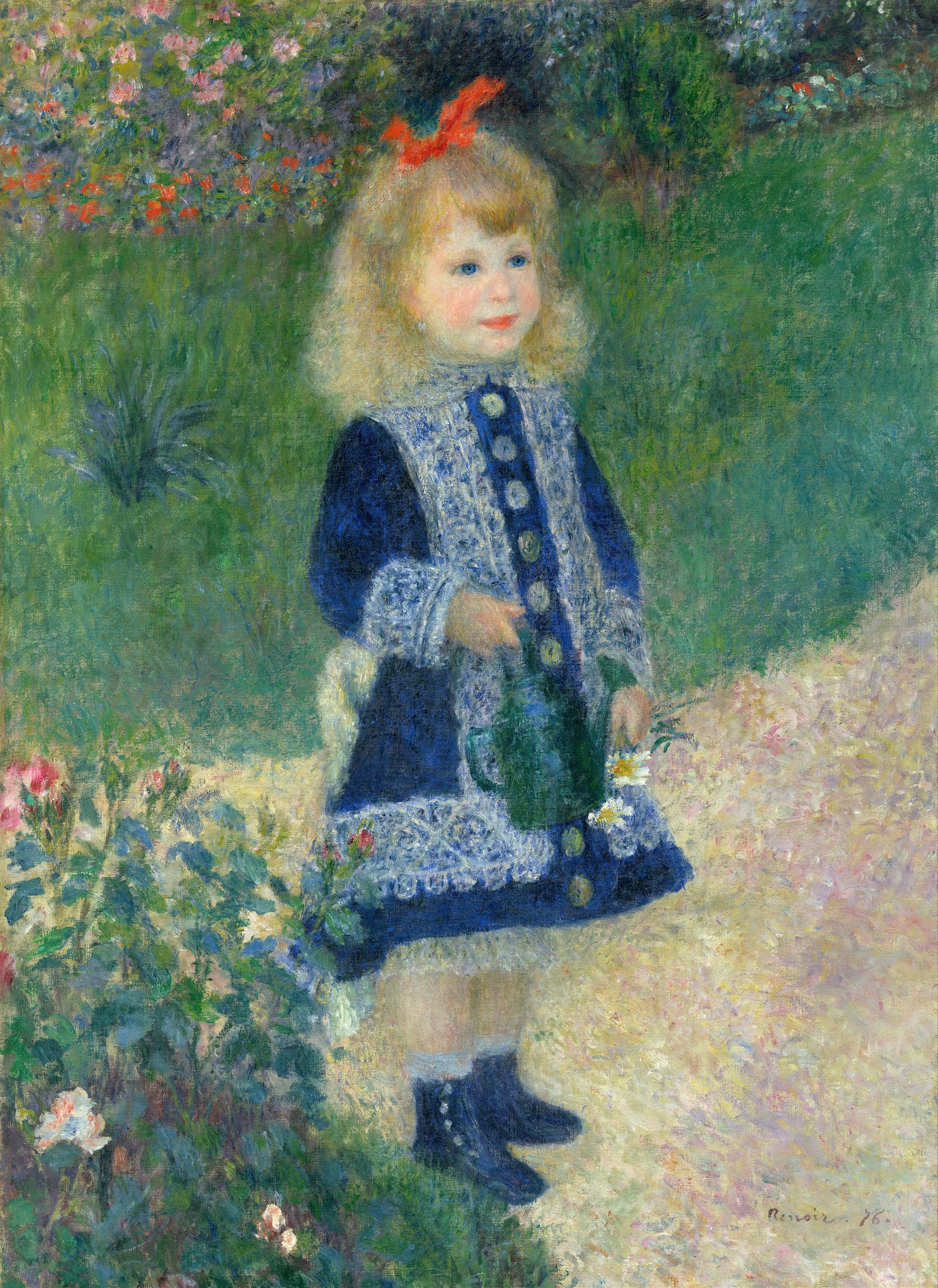
A Girl with a Watering Can — Pierre-Auguste Renoir, 1876. National Gallery of Art, Washington, Chester Dale Collection. Prepared for print by Surrealium at Vaxholm Fortress, Sweden.
Renoir’s girl with a watering can stands on a garden path, her bright clothing and practical object giving the portrait a cheerful purpose. It fits a grandchild who follows grandma around the garden or insists on helping. A photograph from that shared activity will mean more than an imitation of the painting, particularly if the note recalls what they planted or watered together.
Create a family portrait · Explore this artwork
8. Siblings who occupy different worlds
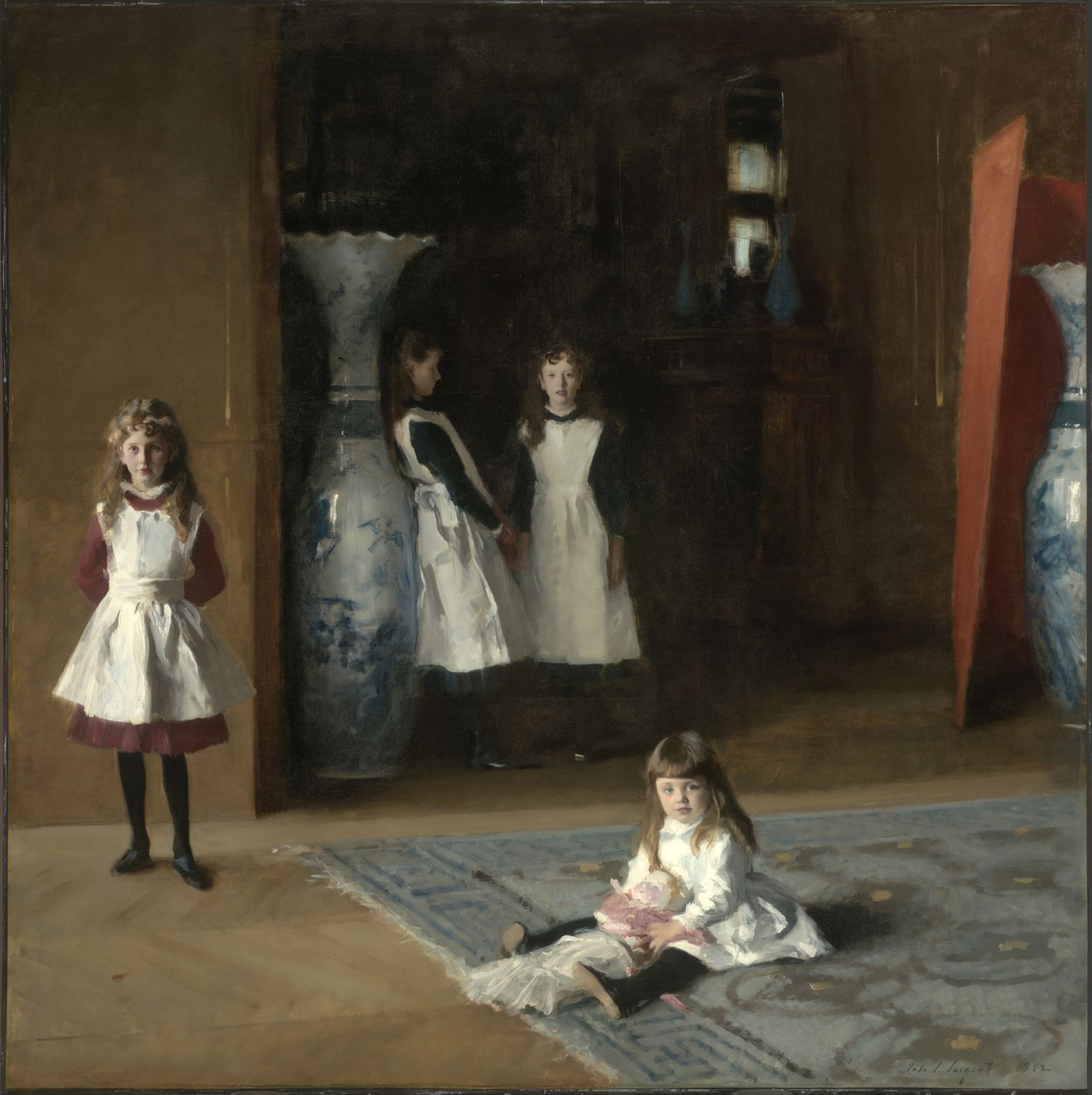
The Daughters of Edward Darley Boit — John Singer Sargent, 1882. Museum of Fine Arts, Boston. Prepared for print by Surrealium at Vaxholm Fortress, Sweden.
Sargent’s Boit daughters are distributed across a room, with some near the viewer and others partly absorbed into the darker interior. The painting acknowledges that children in one family do not all perform the same role. For a group portrait, seek a photograph where each child is visible and comfortable, rather than insisting on identical expressions or arranging everyone solely by height.
Create a family portrait · Explore this artwork
9. A child and the animals nearby
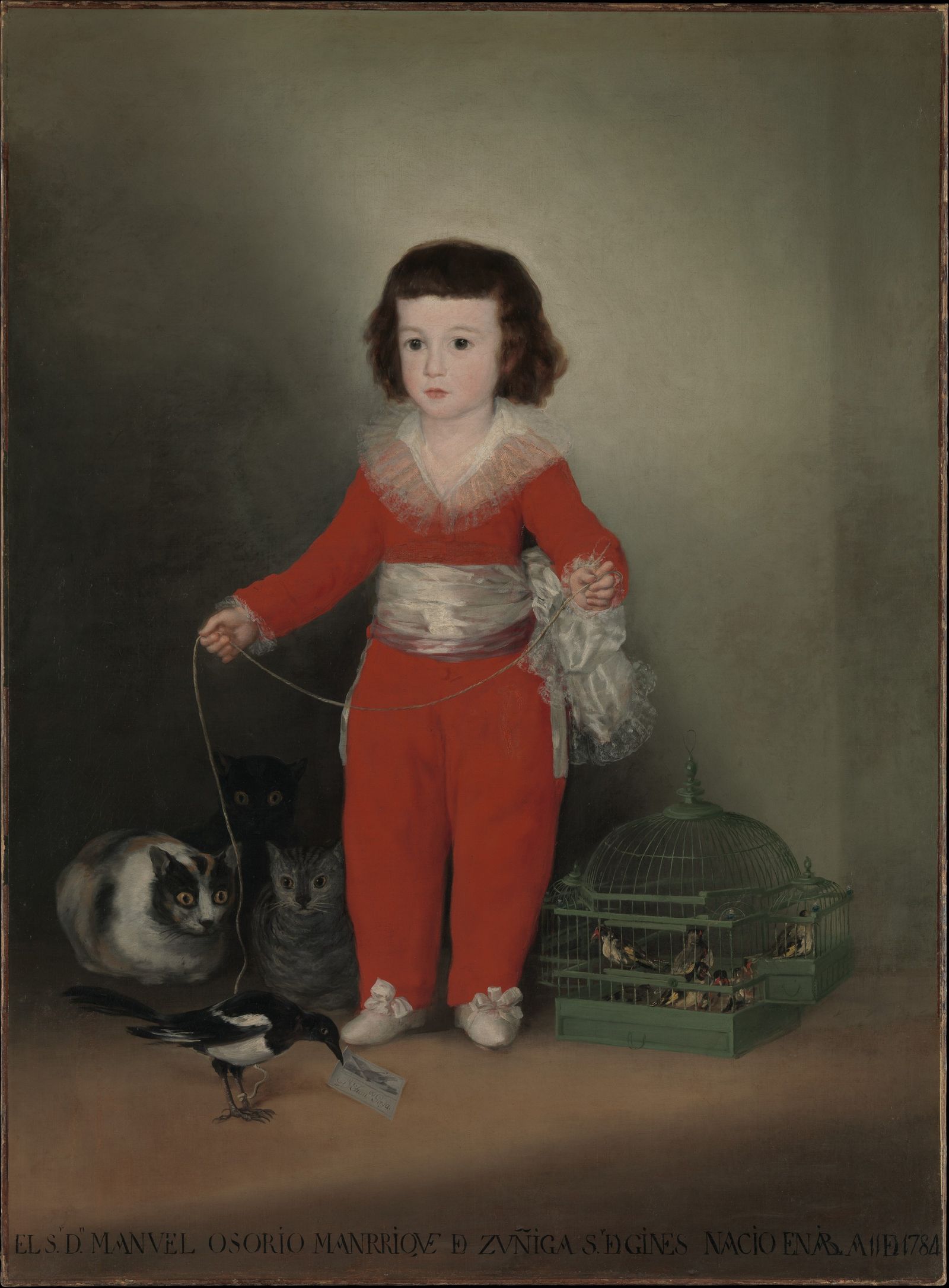
Manuel Osorio Manrique de Zuñiga — Francisco de Goya, 1787–88. The Metropolitan Museum of Art, New York. Prepared for print by Surrealium at Vaxholm Fortress, Sweden.
Goya’s young Manuel stands in red with birds and cats around him, creating a portrait full of competing attention. It is worth looking at the animals as carefully as the sitter, because they give the picture a tension beyond its formal pose. For your own gift, keep pets in a comfortable natural position and choose the photograph for the child’s connection with them, not for a complicated tableau.
Create a family portrait · Explore this artwork
10. A portrait with breathing room
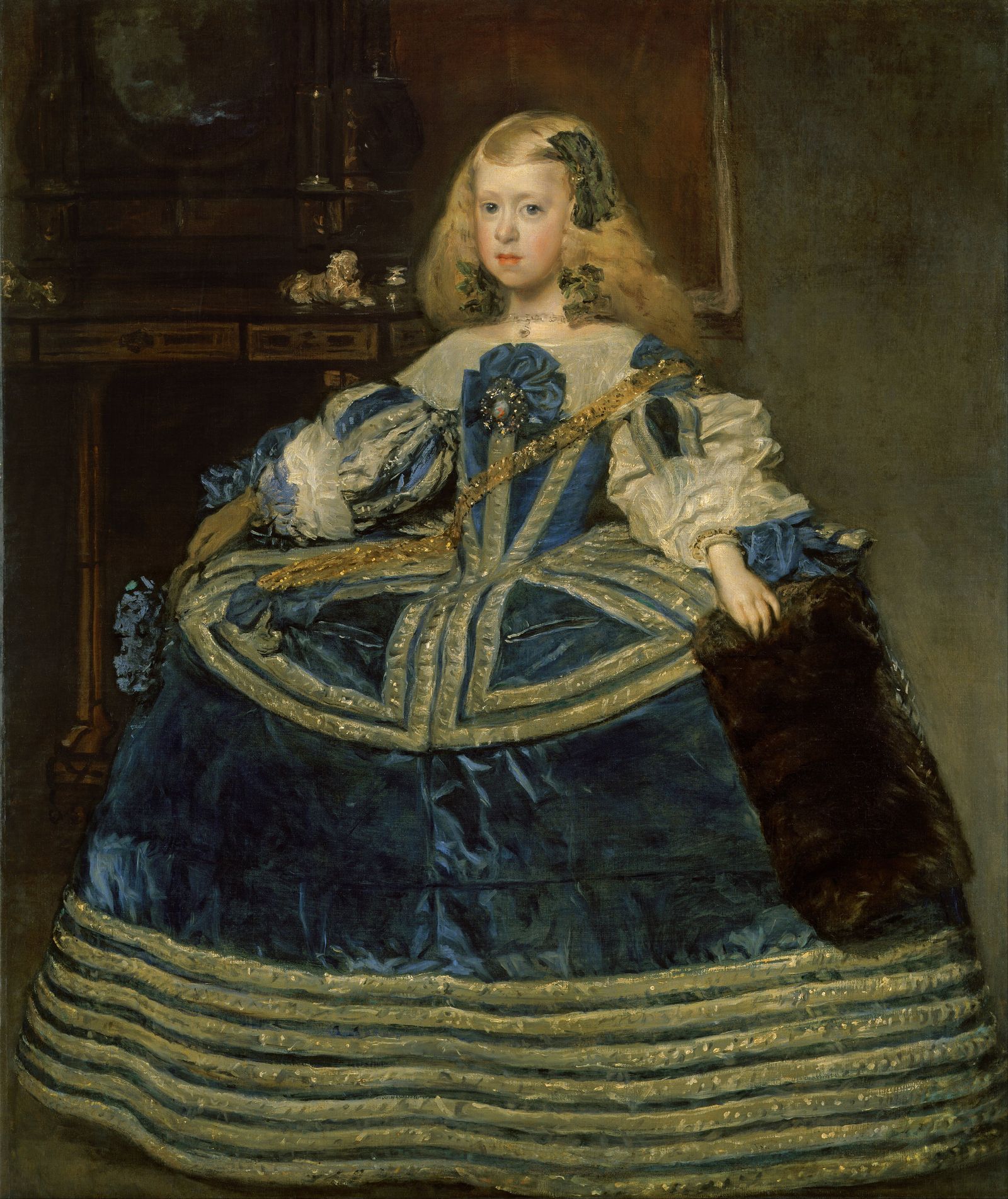
Infanta Margarita Teresa in a Blue Dress — Diego Velázquez, 1659. Kunsthistorisches Museum, Vienna. Prepared for print by Surrealium at Vaxholm Fortress, Sweden.
Velázquez’s young infanta stands inside a wide dress whose blue details organise the lower half of the picture. The full figure matters: removing the surrounding space would change the balance. If grandma prefers a ceremonial portrait, preview it whole and choose a format that respects the composition, while remembering that the child in your photograph should remain the subject rather than the borrowed costume.
Create a family portrait · Explore this artwork
Before choosing a photograph, consider where grandma might put the finished portrait and whether she would prefer to help choose it. Ask the family about permissions and names, and avoid using a child’s public social-media image simply because it is easy to find. A brief note can carry the occasion, the year and the memory while leaving the picture uncluttered. If there are several grandchildren, a series chosen with equal care may be more thoughtful than squeezing everyone into a single unsuitable frame.
Continue with family gift choices, gifts for new grandparents.
- What can I give grandma that feels personal?
- Choose a photograph connected to something she shares with the child: visits, reading, a pet or a garden. A portrait becomes personal through that connection, not simply through adding a name to a generic design.
- Is a portrait of one grandchild unfair to the others?
- It depends on the occasion and the family. For a general Christmas gift, discuss a group portrait or a balanced series. Avoid making a surprise that leaves somebody feeling unintentionally excluded.
- Should I use an old photograph or a recent one?
- Use the image that best serves the memory you want to give. A recent photograph records the child now; an older one can recall a particular visit. Check that the original file is clear enough before deciding.
- Do children need Christmas outfits for a portrait gift?
- No. Familiar clothing and a natural expression often make a stronger connection. The Christmas occasion can be expressed in your accompanying message, leaving the portrait suitable to enjoy throughout the year.