Valentine’s gifts for her: ten ways to frame a memory
Ten art references for Valentine’s gifts for her, with practical ways to choose a couple photograph and a portrait mood.
Valentine’s gifts for her become more personal when they reflect how she sees your life together. Perhaps she loves dressing for an evening out; perhaps the photograph she keeps returning to was taken during an ordinary walk. A couple portrait can hold either kind of memory, provided the choice begins with her preferences rather than a list of supposed feminine tastes.
The paintings here are ten different starting points for that decision. Some offer closeness, others movement or generous space. They are historical pictures, not Fable customer examples, and they do not establish which individual portrait treatment is available at checkout. Use them to decide what matters in the photograph you bring. Romantic art for Valentine’s Day explores the theme more broadly, while our personalized gifts guide considers the role of an individual memory.
Before selecting an image, think about where she might put the portrait. A lively view of an evening out tells a different story from a quiet image for a bedroom. Neither is more romantic by definition; the connection comes from recognising something that is already yours.
1. An evening seen from the front row
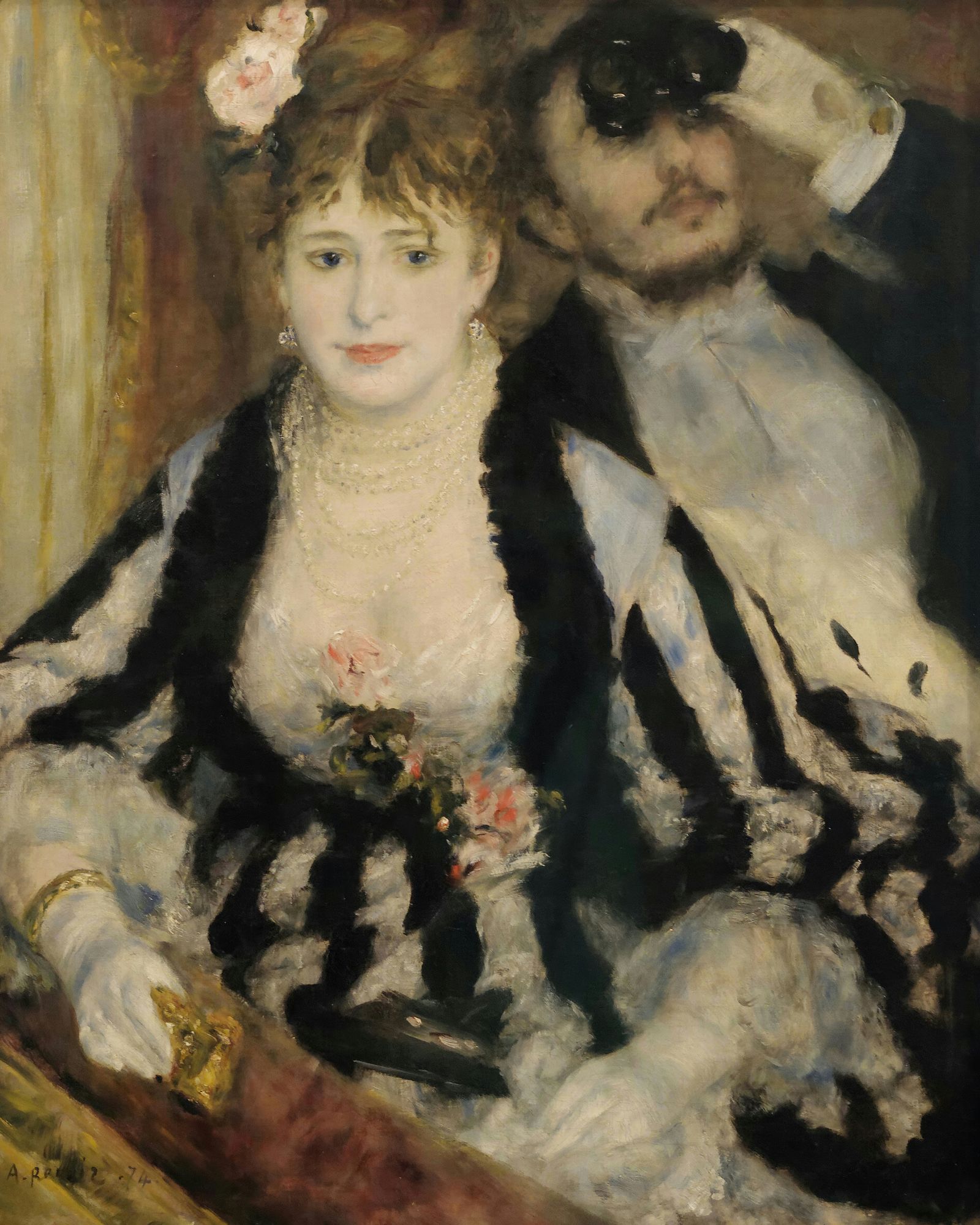
La Loge · Pierre-Auguste Renoir, 1874 · Courtauld Gallery, London. Prepared for print by Surrealium at Vaxholm Fortress, Sweden.
Renoir’s La Loge gives the woman a direct, composed presence in the foreground while the man behind her raises his glasses. The striped dress, flowers and overlapping figures create an occasion without requiring both people to look in the same direction. If a concert or theatre evening matters to you, choose a photograph that preserves each person’s expression; the point is the shared outing, not an imitation of nineteenth-century social status.
2. Something only the two of you know
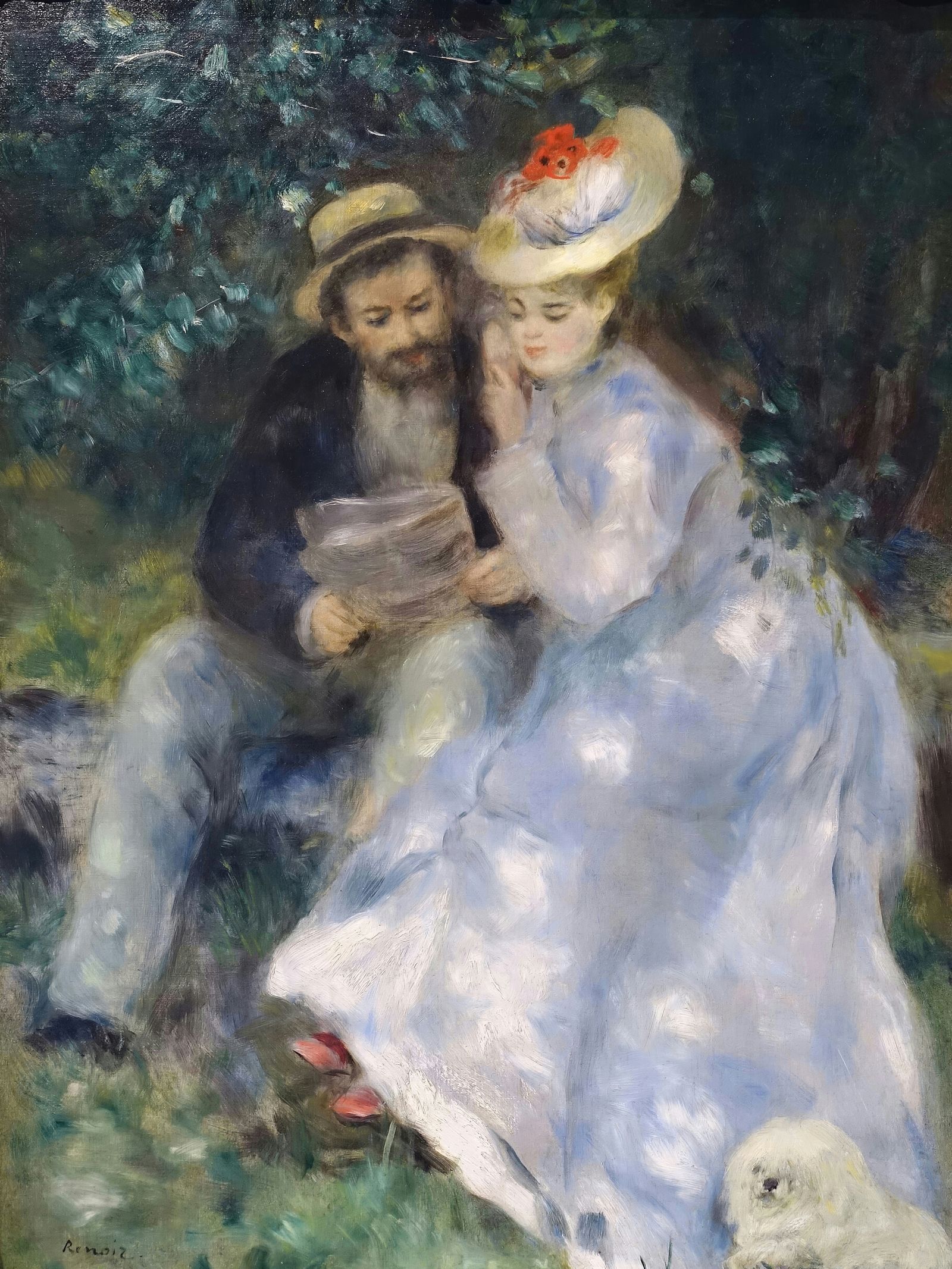
Confidences · Pierre-Auguste Renoir, c. 1874 · Portland Museum of Art, Maine. Prepared for print by Surrealium at Vaxholm Fortress, Sweden.
Confidences brings two figures close over a paper in a green outdoor setting, with their heads inclined towards the same small object. That shared focus offers a useful alternative to a photograph in which everyone performs for the camera. A portrait idea might begin with reading, planning a journey or looking at an old photograph together, but use an actual source image and keep any private words out of the picture unless you want them included.
3. An embrace held within architecture
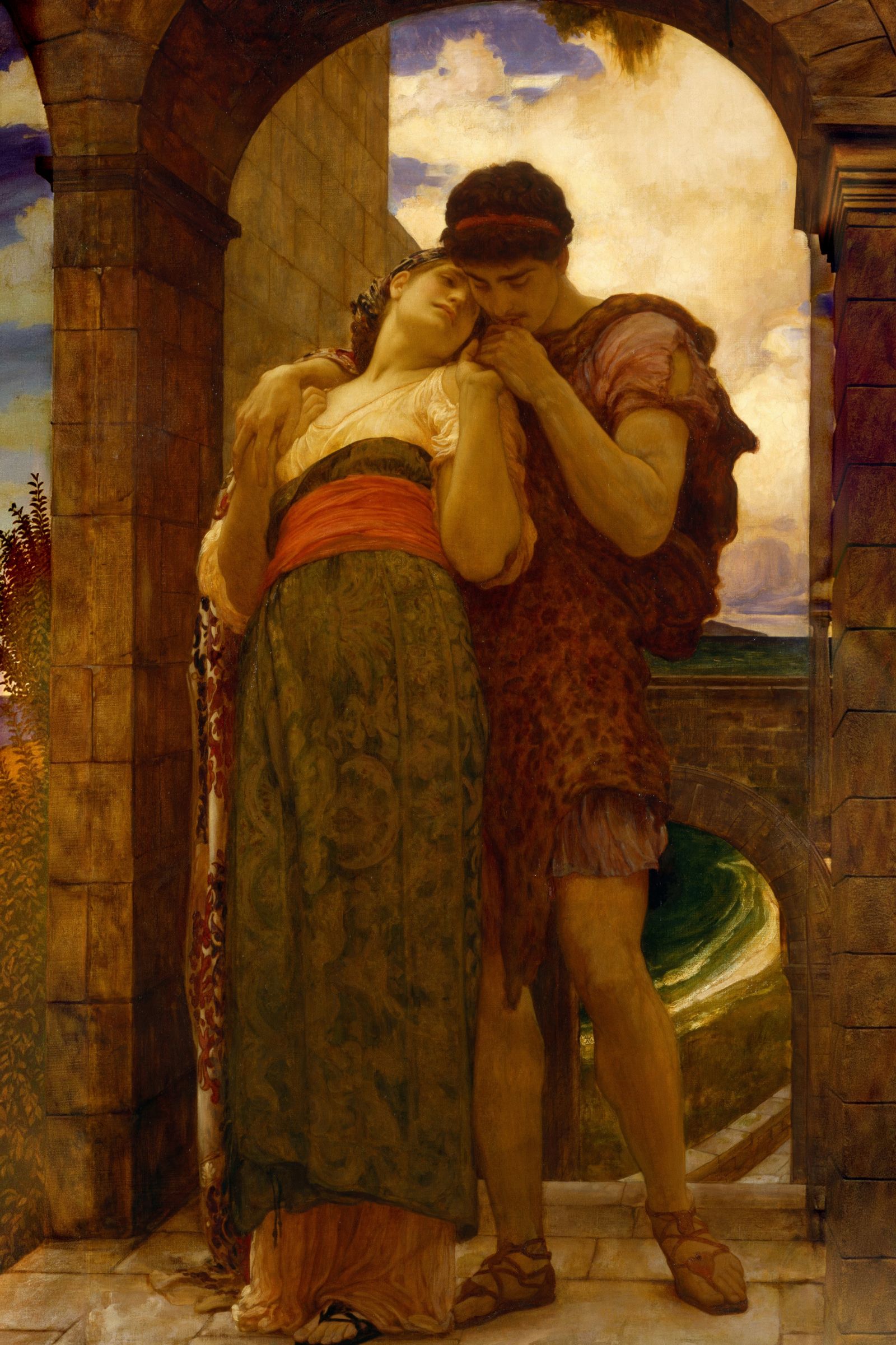
Wedded · Frederic Leighton, 1882 · Art Gallery of New South Wales, Sydney. Prepared for print by Surrealium at Vaxholm Fortress, Sweden.
Leighton’s Wedded sets the couple beneath an arch, with the woman leaning into the man and their hands joined near their faces. The tall composition makes the gesture feel sheltered, while the open distance keeps it from becoming visually cramped. If you favour a close couple photograph, check that both faces and the contact between the hands remain clear; an affectionate pose loses its particularity when fingers or features disappear into a blur.
4. A close view without an elaborate setting
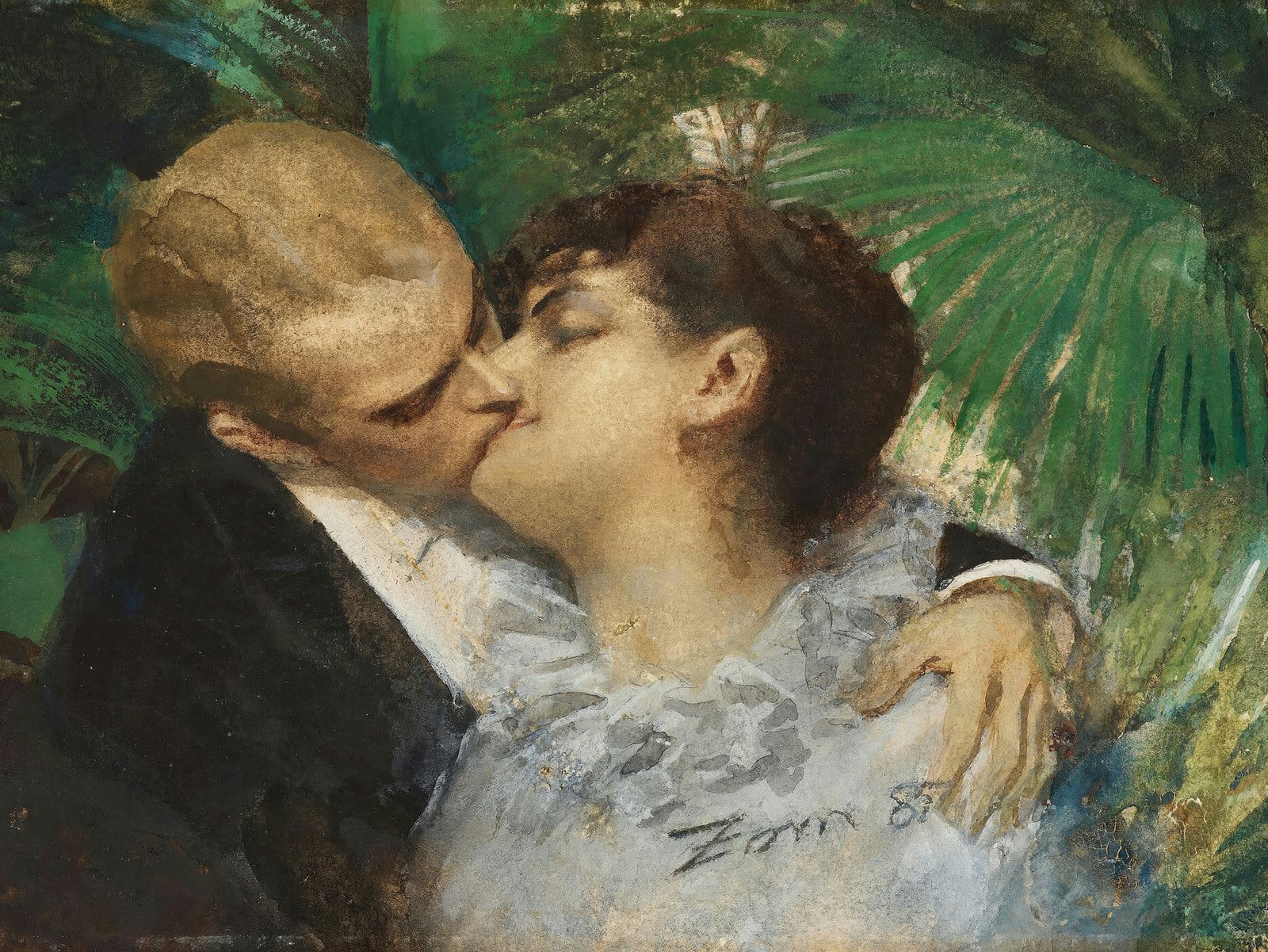
The Embrace · Anders Zorn, 1882–83 · Private collection. Prepared for print by Surrealium at Vaxholm Fortress, Sweden.
The Embrace concentrates on a kiss and the sweep of an arm, leaving the surrounding greenery secondary. Its close arrangement can help you decide whether the memory is carried mainly by touch or by a recognisable place. Use a photograph both people like and have agreed to share, especially for an intimate portrait; a meaningful image does not have to be the most public or most dramatic photograph in the album.
5. A walk with room for individual character
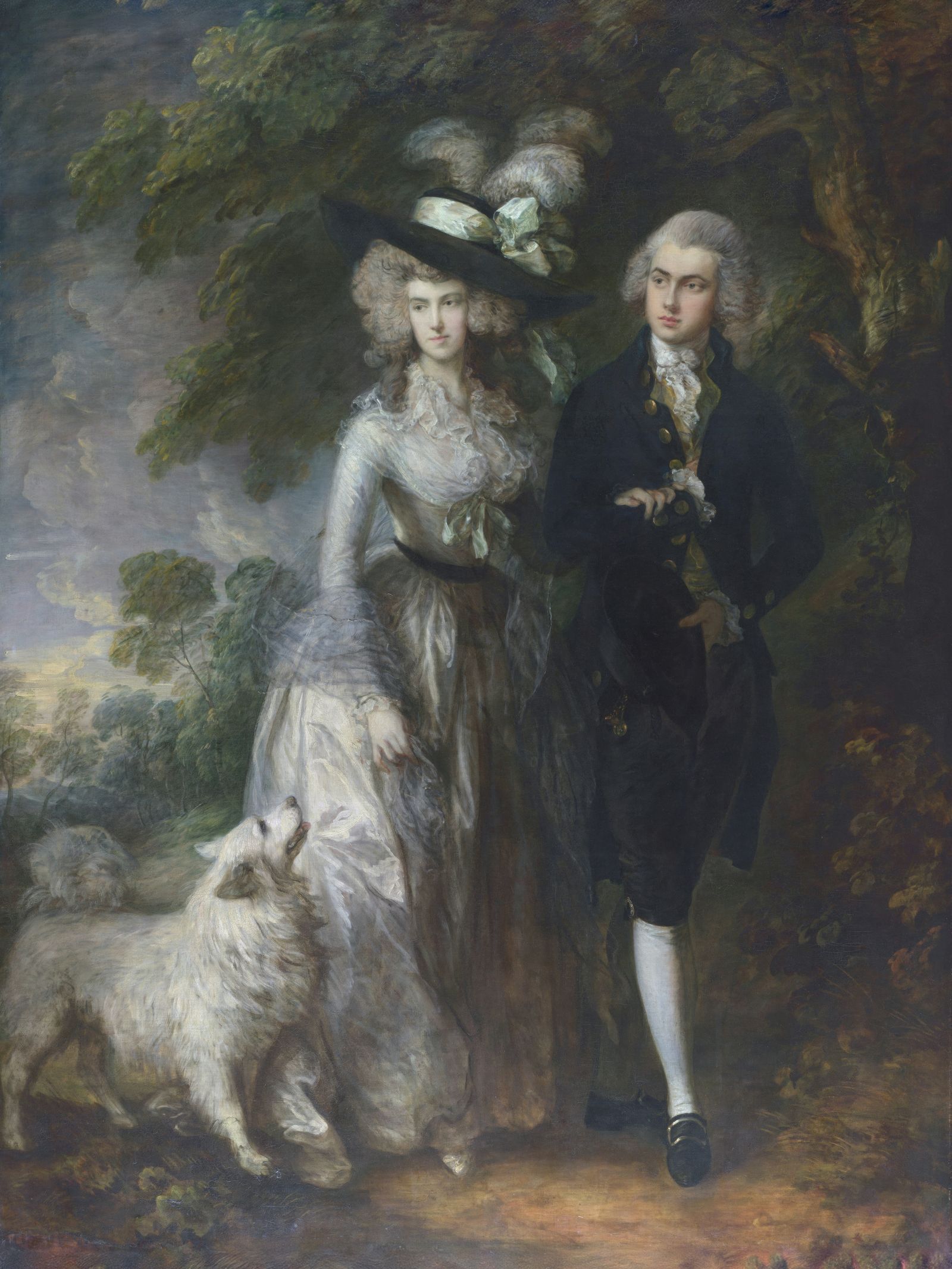
The Morning Walk (Mr and Mrs William Hallett) · Thomas Gainsborough, 1785 · National Gallery, London. Prepared for print by Surrealium at Vaxholm Fortress, Sweden.
Gainsborough’s The Morning Walk links a standing couple through their arms, while a white dog and the loose foliage soften the formal dress. The pair belong together without becoming a single symmetrical shape, and each retains a distinct stance. For a couple portrait, choose a photograph with some space around the figures and think about whether an actual shared setting should remain visible rather than adding every possible symbol of the relationship.
6. The feeling of a dance
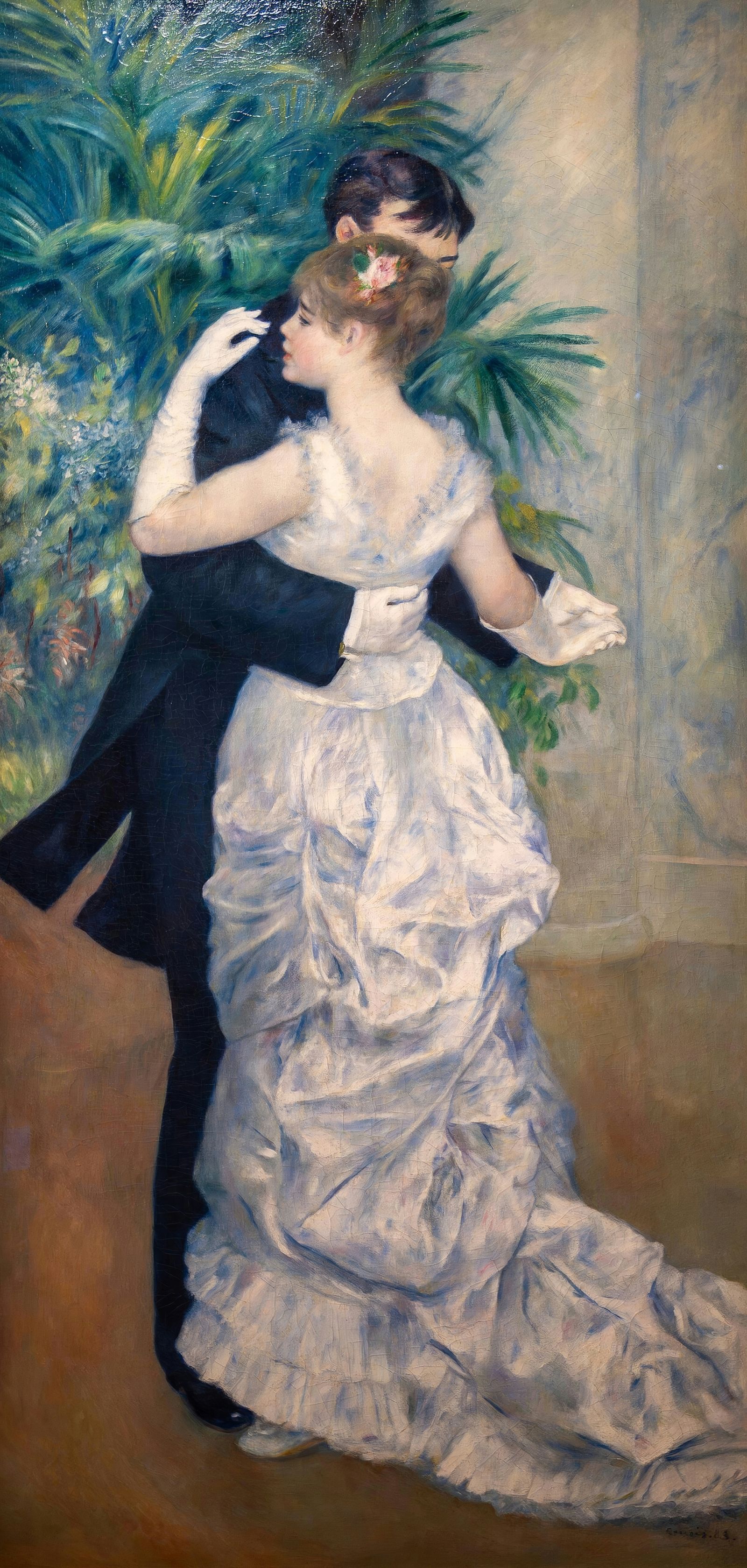
Dance in the City · Pierre-Auguste Renoir, 1883 · Musée d'Orsay, Paris. Prepared for print by Surrealium at Vaxholm Fortress, Sweden.
Renoir’s Dance in the City builds its composition around the turning pair and the pale sweep of the woman’s dress. The man’s dark clothing gives the movement a firm edge, while the plants suggest an interior beyond the immediate embrace. A photograph from a dance can be a lovely source if it catches faces clearly; motion is part of the memory, but severe blur may hide the features you most want to preserve.
7. Romance within working life
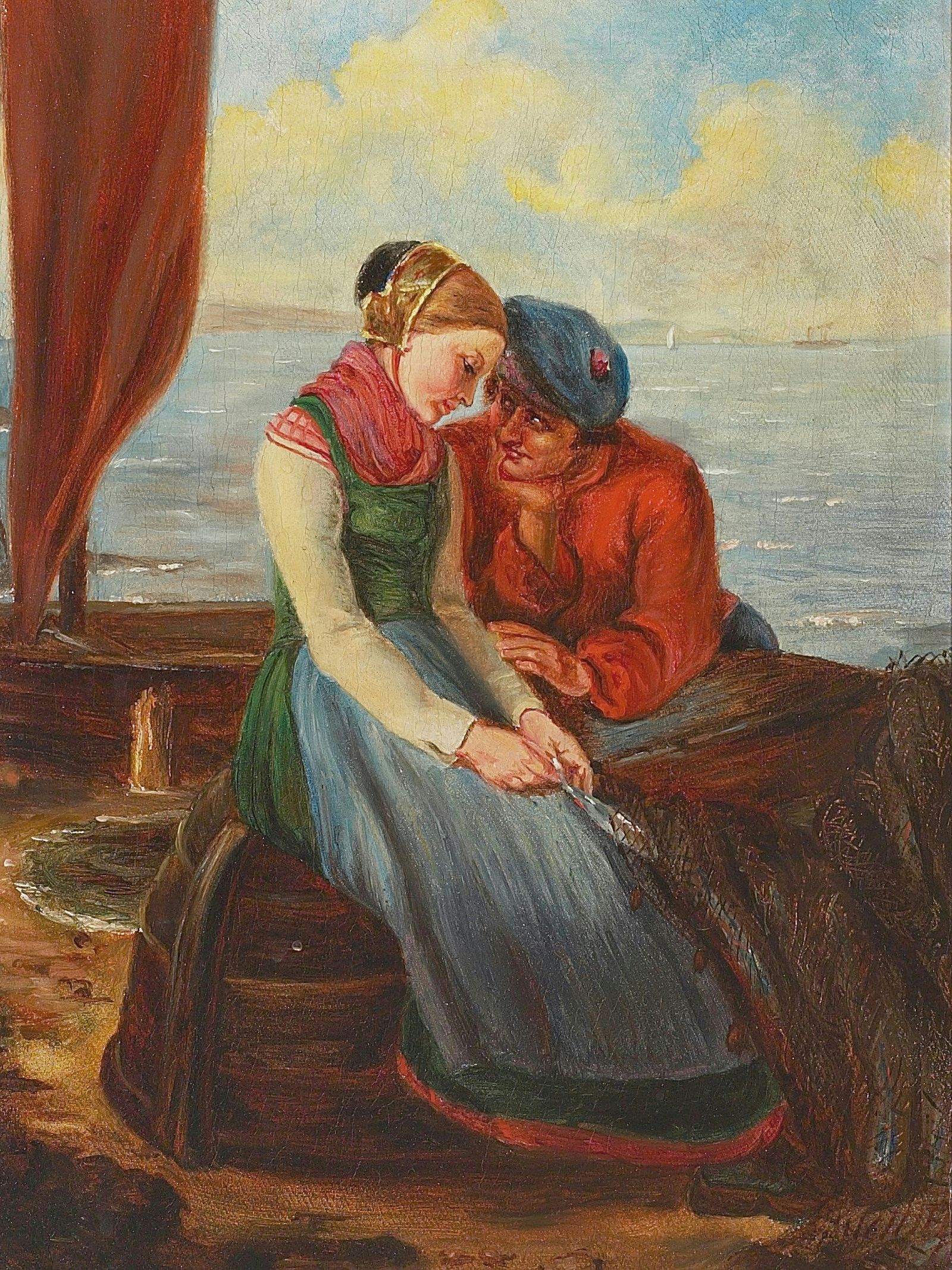
A Proposal: Fisherman and Fisher Girl · Kristian Zahrtmann, c. 1863 · Private collection. Prepared for print by Surrealium at Vaxholm Fortress, Sweden.
Zahrtmann’s proposal scene places a fisherman beside a woman with a net, their close conversation set against boats and the sea. The encounter feels rooted in a place where practical tasks continue around affection. This can prompt a portrait based on your everyday partnership: choose a photograph from a workshop, kitchen or garden if it represents your life together, rather than assuming that a meaningful gift needs an expensive-looking occasion.
8. A horizon you share
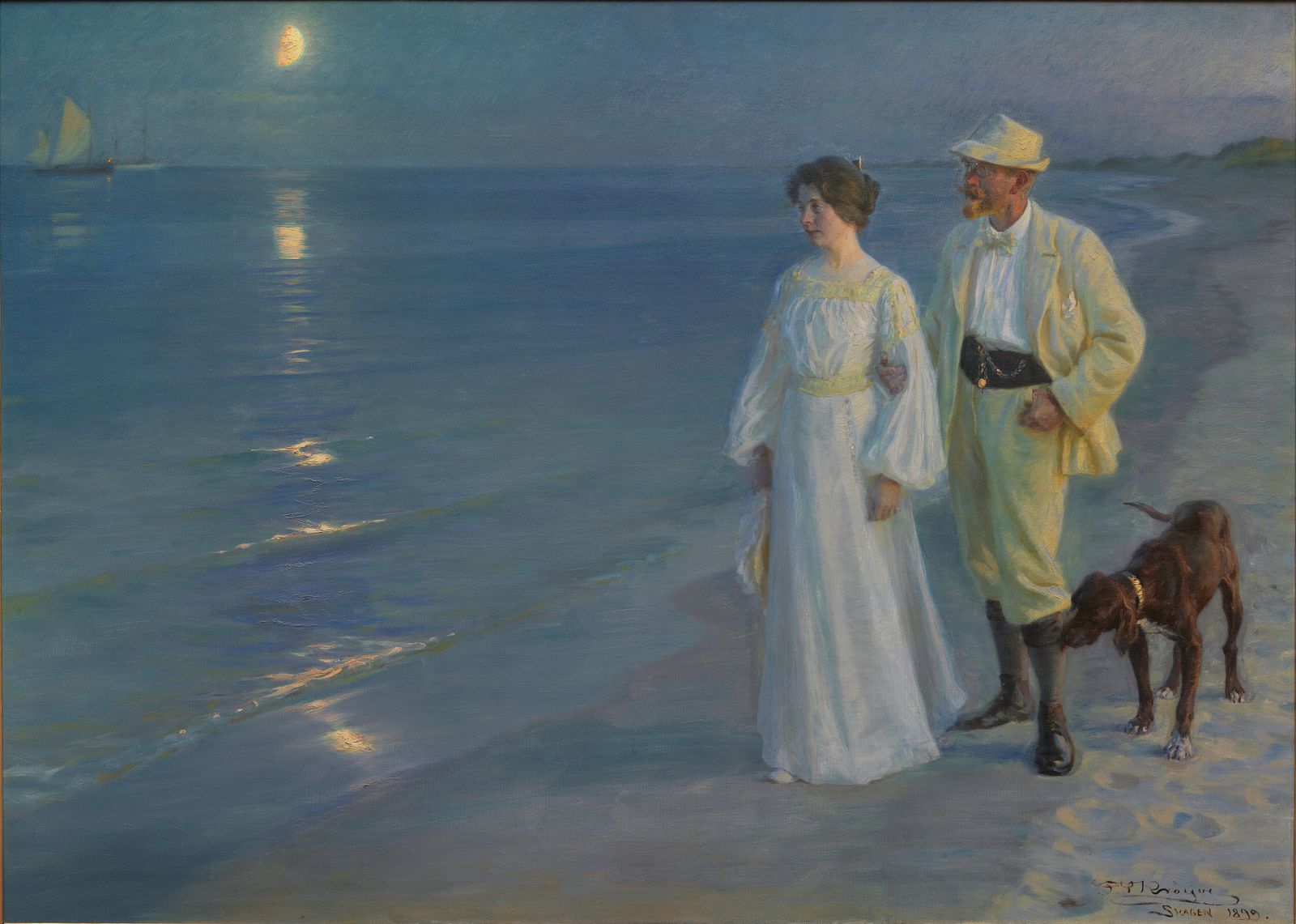
Summer Evening on Skagen's Beach · Peder Severin Krøyer, 1899 · Hirschsprung Collection, Copenhagen. Prepared for print by Surrealium at Vaxholm Fortress, Sweden.
In Krøyer’s beach scene, the couple walk together beside the water, with a dog close to them and a pale moon above the sea. The wide spaces allow the setting to become part of the relationship, rather than a background that could be exchanged for any other. Choose this direction when a coastline or evening walk has a specific memory attached, and begin with a photograph that provides enough detail for both people to remain recognisable.
9. A playful afternoon
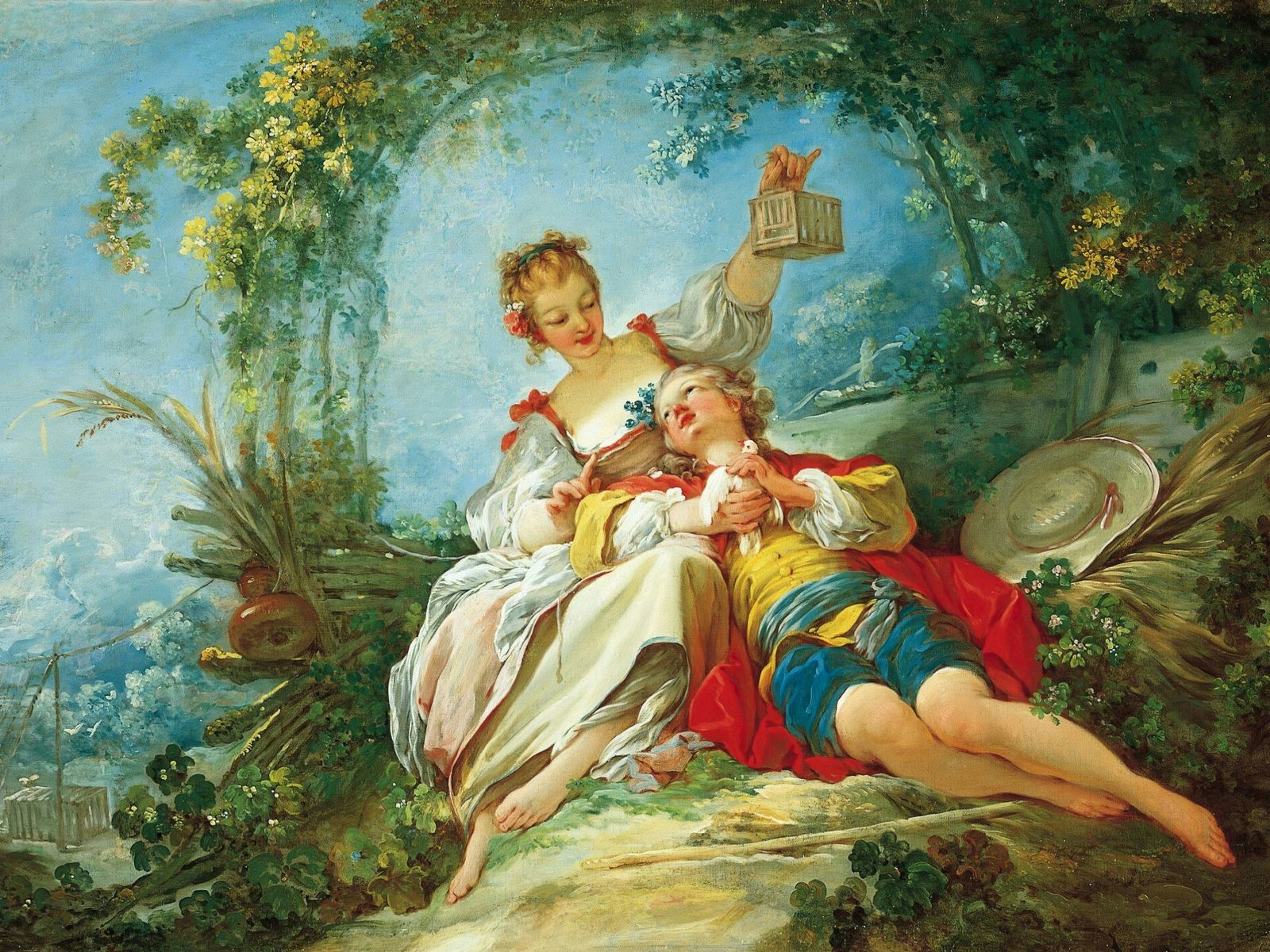
The Happy Lovers · Jean-Honoré Fragonard, c. 1760–65 · Norton Simon Museum. Prepared for print by Surrealium at Vaxholm Fortress, Sweden.
Fragonard’s The Happy Lovers arranges the pair amid foliage, with a small birdcage held above them and a broad sweep of pale fabric below. The image offers a theatrical version of flirtation, full of curved lines and lively changes of direction. It can serve as a reference for lightness rather than solemn romance, but let the recipient’s taste set the tone; someone who prefers understatement may enjoy a much simpler photograph and a shorter accompanying note.
10. Being together while doing different things
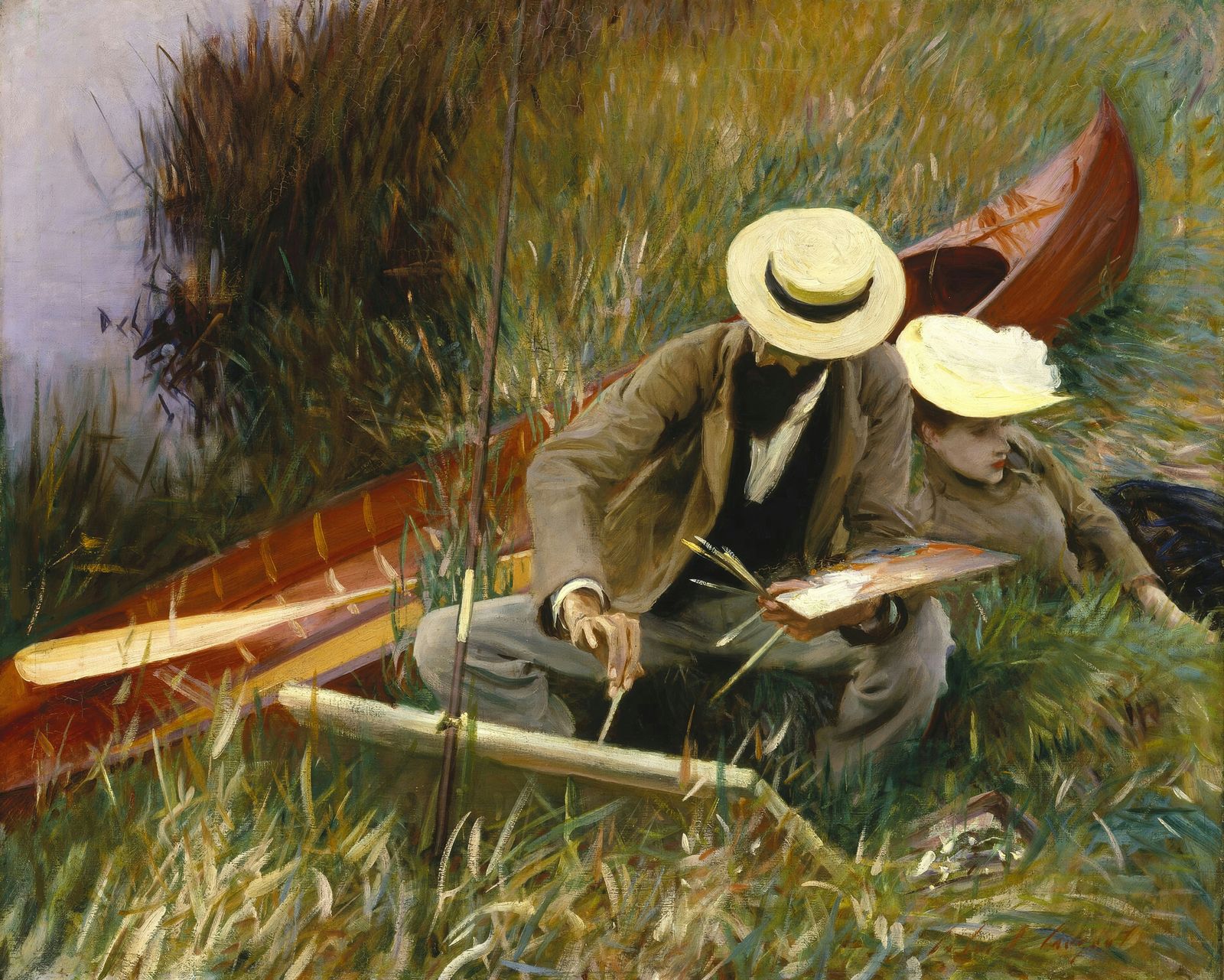
An Out-of-Doors Study (Paul Helleu and his Wife) · John Singer Sargent, 1889 · Brooklyn Museum. Prepared for print by Surrealium at Vaxholm Fortress, Sweden.
Sargent’s outdoor study places Paul Helleu at work with his wife beside him, the boat, grass and hats creating a loose network of diagonals. The figures share their time without needing to turn away from their separate interests. For a portrait idea, look through photographs of ordinary companionship as well as celebrations; reading beside someone who is drawing, or resting after a shared outing, can say more about a relationship than a carefully rehearsed pose.
A good next step is to place two or three possible photographs beside one another and ask which feels most like her. Study the whole La Loge composition if the theatre scene appeals, or read Valentine’s gifts for him for quieter references built around travel and shared routines. Our couple portrait guide can help you turn that preference into a clear brief. Keep the final choice focused on one moment, with a note that explains why you chose it.
- Which photograph should I use for a couple portrait?
- Choose a clear image both people like, with faces large enough to inspect and expressions that feel familiar. A photograph from an ordinary day can be as meaningful as a wedding or holiday image.
- Does a romantic portrait need a kiss or an embrace?
- No. Shared attention, a walk or the way two people occupy a room can express companionship. Choose the kind of closeness that fits the recipient rather than treating a particular pose as compulsory.
- Can these ideas suit relationships beyond the historical couples shown?
- Yes. The paintings are references for composition, colour and attention. Their historical sitters do not define who can create a couple portrait or which relationships deserve to be pictured.