Valentine’s gifts for him: ten portrait ideas
Choose Valentine’s gifts for him through ten historical pictures of companionship, from a shared walk to a quiet evening.
Valentine’s gifts for him can begin with a moment you already share: a walk taken without a destination, a journey by water, or the comfortable silence after a long day. A couple portrait makes that memory visible. The useful question is not which picture looks most expensive, but which arrangement feels like the two of you.
These ten historical works offer different answers. They are references for mood and composition, not examples of customers or promises that every detail can be reproduced. Start with a clear photograph in which both people are easy to recognise, then decide whether you want the intimacy of a close view or the breathing space of a landscape. Our guide to romantic art for Valentine’s Day gives the wider setting; personalized gifts helps when you are still choosing the kind of keepsake.
Use his actual interests as your guide. A man who loves the sea may prefer a horizon to a formal suit. Someone who dislikes being photographed may enjoy choosing the source photograph with you. The gift can include that conversation.
1. A walk that belongs to you
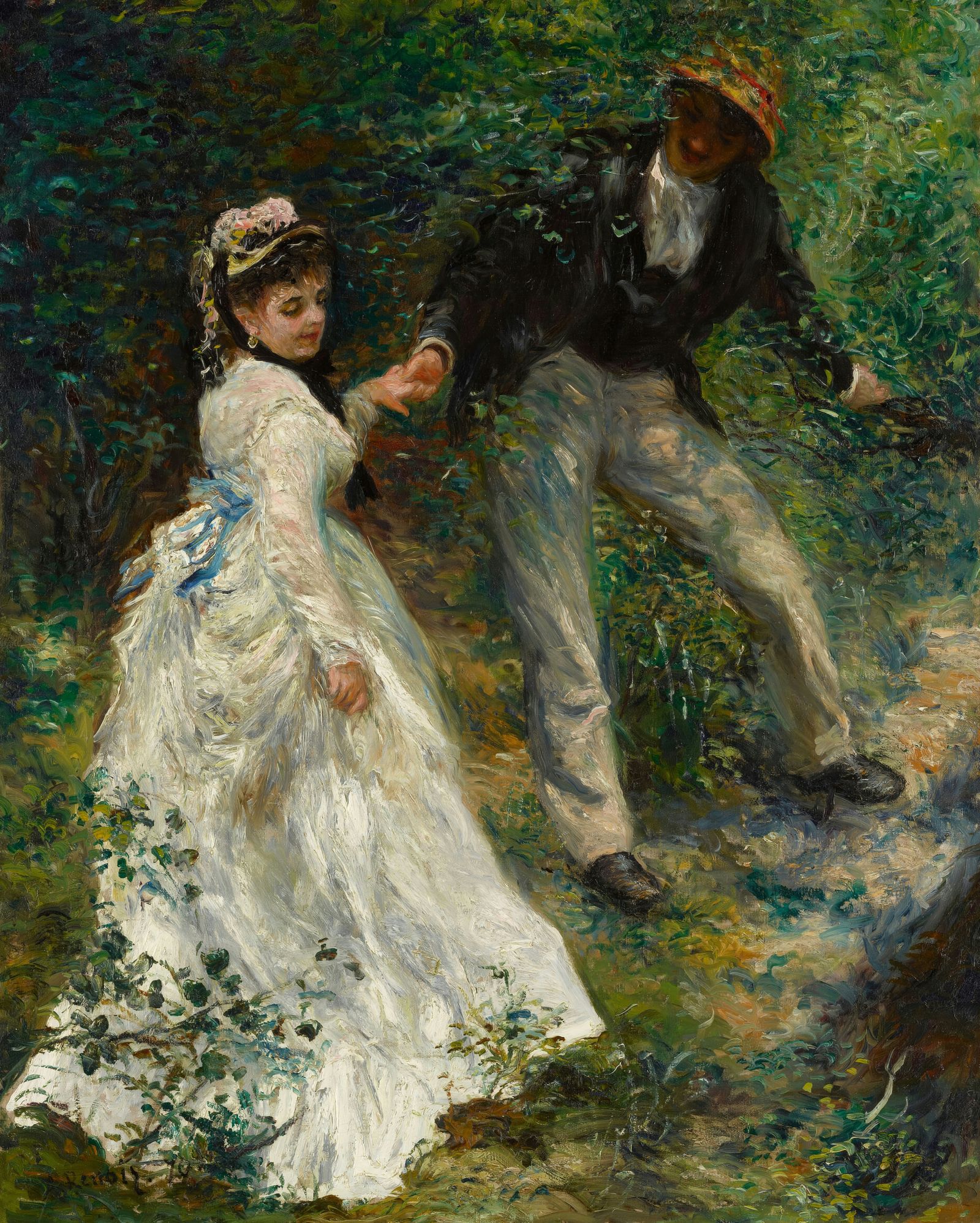
La Promenade · Pierre-Auguste Renoir, 1870 · J. Paul Getty Museum, Los Angeles. Prepared for print by Surrealium at Vaxholm Fortress, Sweden.
In Renoir’s La Promenade, an offered hand draws the pair through a leafy opening, while the pale dress gathers broken patches of light. The connection comes from movement and attention rather than two faces squarely presented to a camera. For a portrait idea, choose a photograph from a familiar walk with enough space around both bodies to preserve the gesture; the route matters because it is yours, not because it resembles a famous garden.
2. A companionable silence
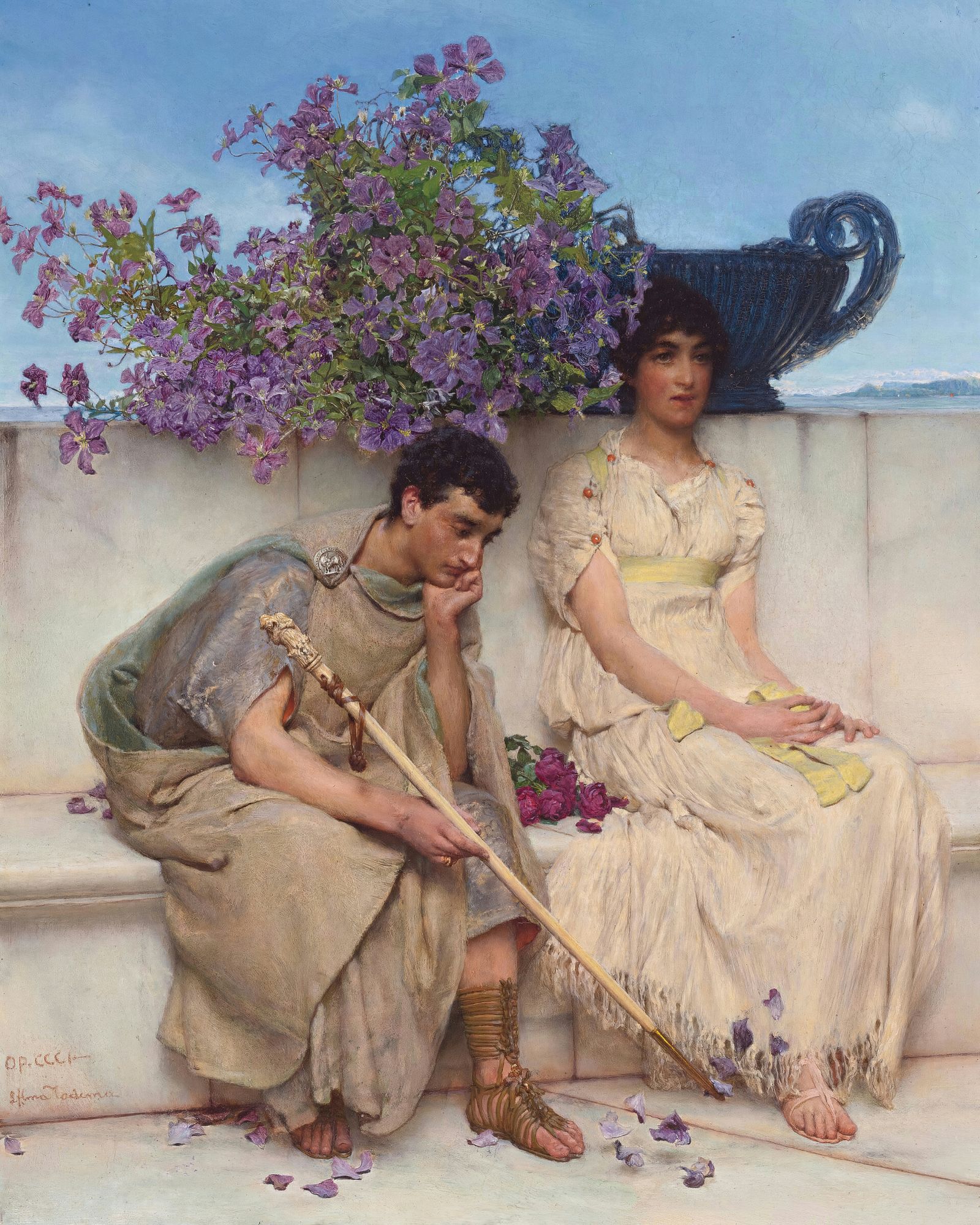
An Eloquent Silence · Lawrence Alma-Tadema, 1890 · Private collection. Prepared for print by Surrealium at Vaxholm Fortress, Sweden.
Alma-Tadema places two people beside pale stone and a tumbling mass of purple flowers in An Eloquent Silence. Their bodies share the bench, but their poses remain distinct, leaving room for two separate temperaments within the same scene. This is a useful reference if your favourite photograph is quiet rather than demonstrative: keep the slight difference in gaze and avoid turning every face into an identical celebratory smile.
3. A small shelter in a wide landscape
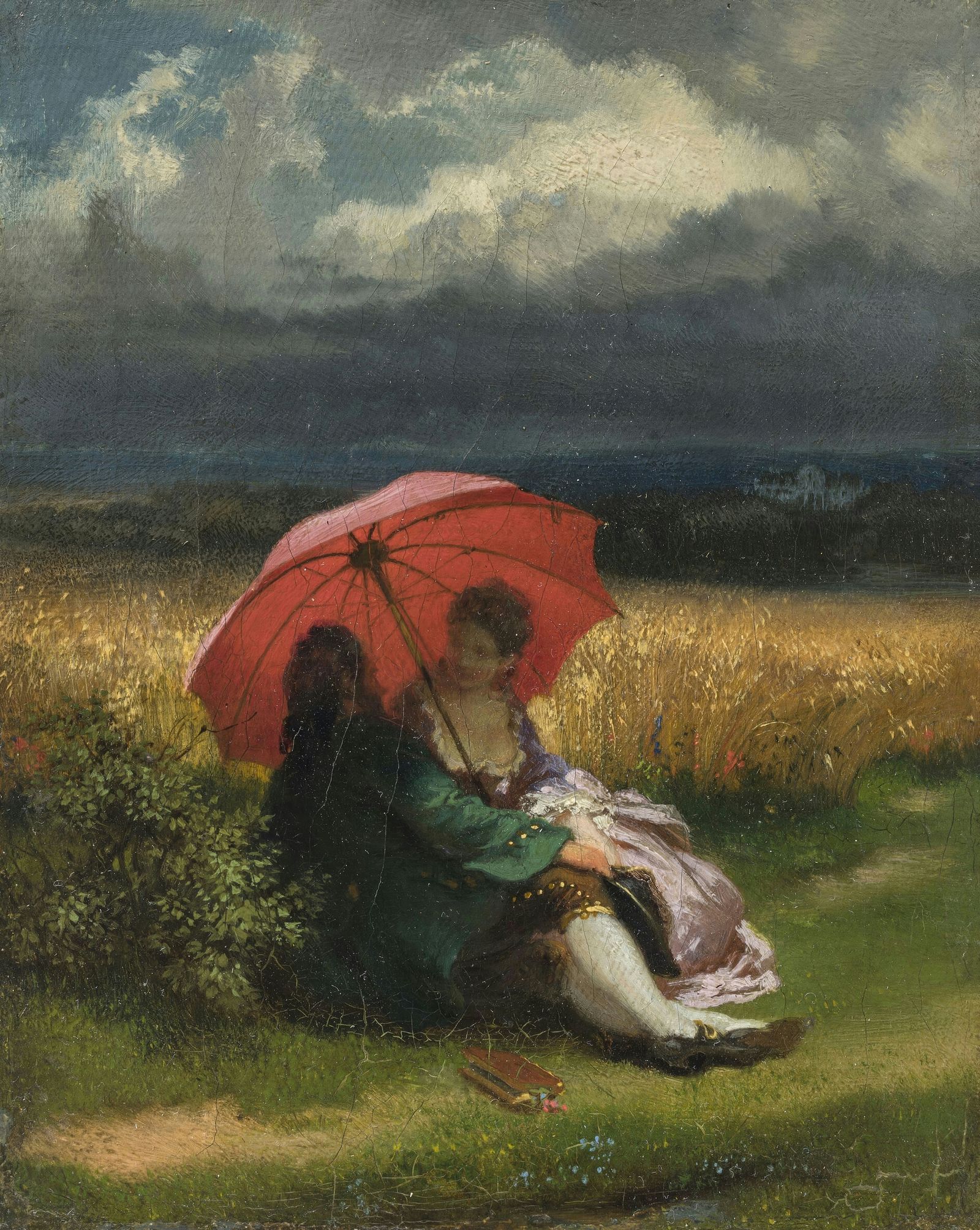
In the Summer (The Red Parasol) · Josef Mánes, 1855 · National Gallery Prague. Prepared for print by Surrealium at Vaxholm Fortress, Sweden.
The red parasol in Courbet’s summer scene makes a compact roof above the seated pair, with a broad field and a darkening sky beyond. That contrast gives the figures their closeness without requiring an embrace or a kiss. Think of a picnic, a bench or a pause during a journey, and choose a source photograph where the shared place remains legible instead of reducing the memory to two isolated heads.
4. A journey facing the same way
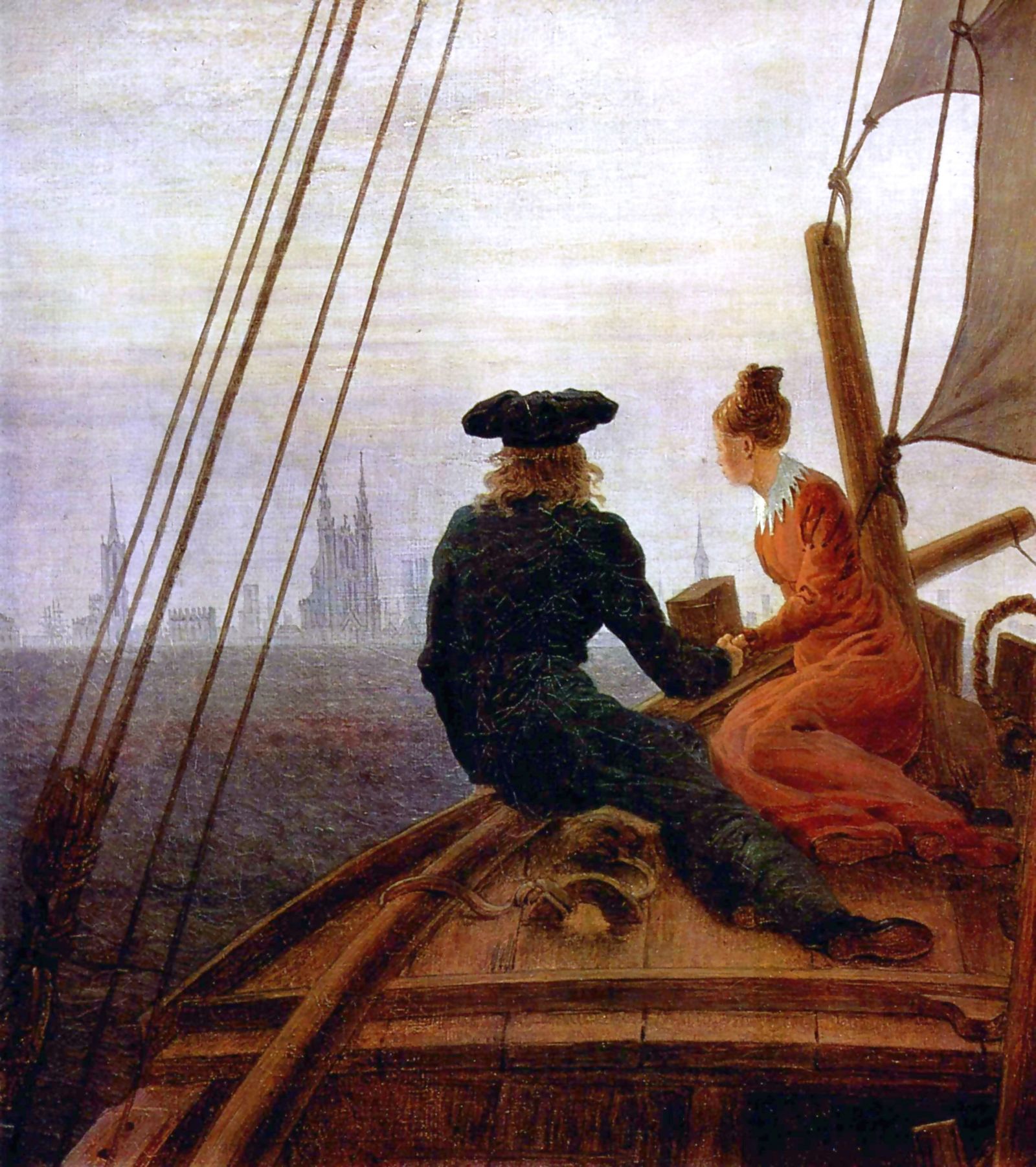
On the Sailing Boat · Caspar David Friedrich, 1818 · Hermitage, St Petersburg. Prepared for print by Surrealium at Vaxholm Fortress, Sweden.
Friedrich’s On the Sailing Boat looks past two seated figures towards the distance, with ropes rising through the composition. Their shared direction carries the relationship, even though the viewer cannot study their expressions in the usual portrait manner. For a recognisable Fable portrait, begin with visible faces and treat this painting as a reference for the atmosphere of travel; a wholly rear-facing holiday photograph provides less information about likeness.
5. The ordinary afternoon worth keeping
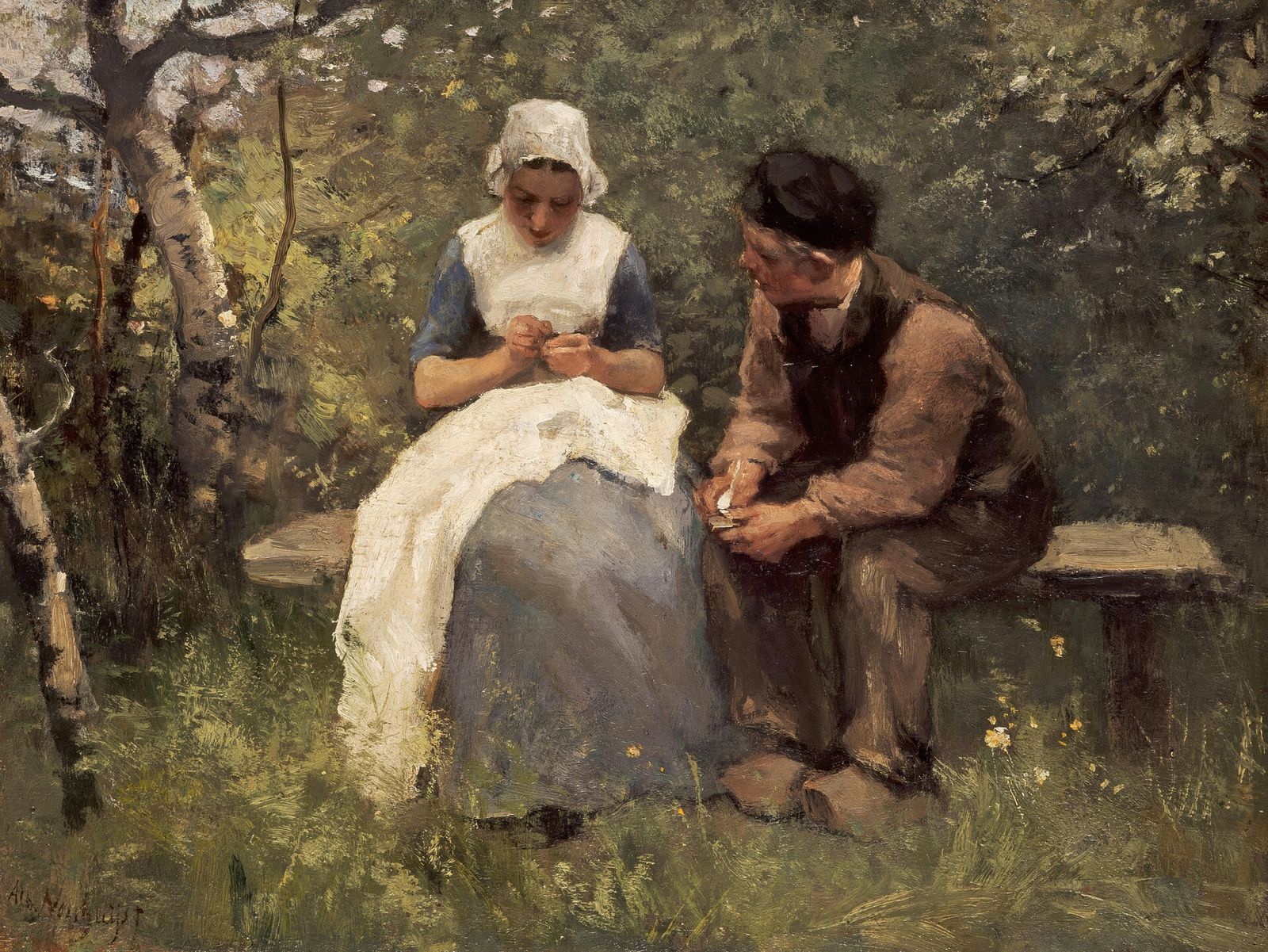
The Old, Old Story · Albert Neuhuys, 1872–95 · National Galleries of Scotland. Prepared for print by Surrealium at Vaxholm Fortress, Sweden.
In The Old, Old Story, a seated woman attends to her hands while a man leans nearby on the bench. The leafy setting and unhurried arrangement make the encounter feel like part of a longer afternoon. A modest memory can work better than an elaborate occasion: choose a photograph from the garden, the allotment or a favourite café, then explain why that place belongs to the story you want the portrait to tell.
6. Spring without a borrowed costume
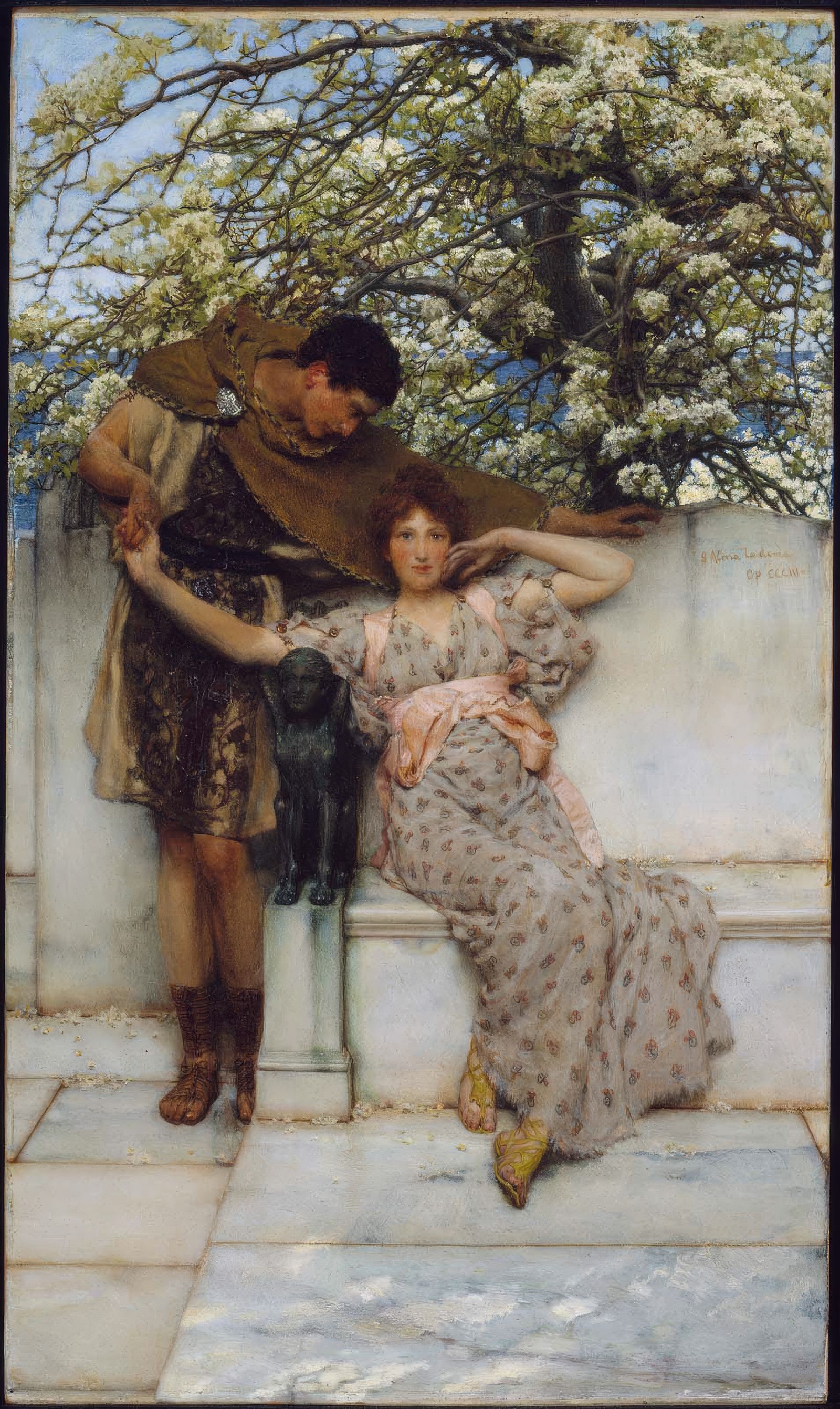
Promise of Spring · Lawrence Alma-Tadema, 1890 · Museum of Fine Arts, Boston. Prepared for print by Surrealium at Vaxholm Fortress, Sweden.
Promise of Spring sets a standing figure beside a seated woman beneath flowering branches, with pale stone steps opening below them. The composition offers a clear difference in height and a gentle enclosure of blossom, both worth noticing before the historical dress. Borrow the relationship between the figures and their surroundings as a visual idea, while choosing a portrait treatment that feels comfortable to the recipient rather than assuming he wants period clothing.
7. A smile directed at someone
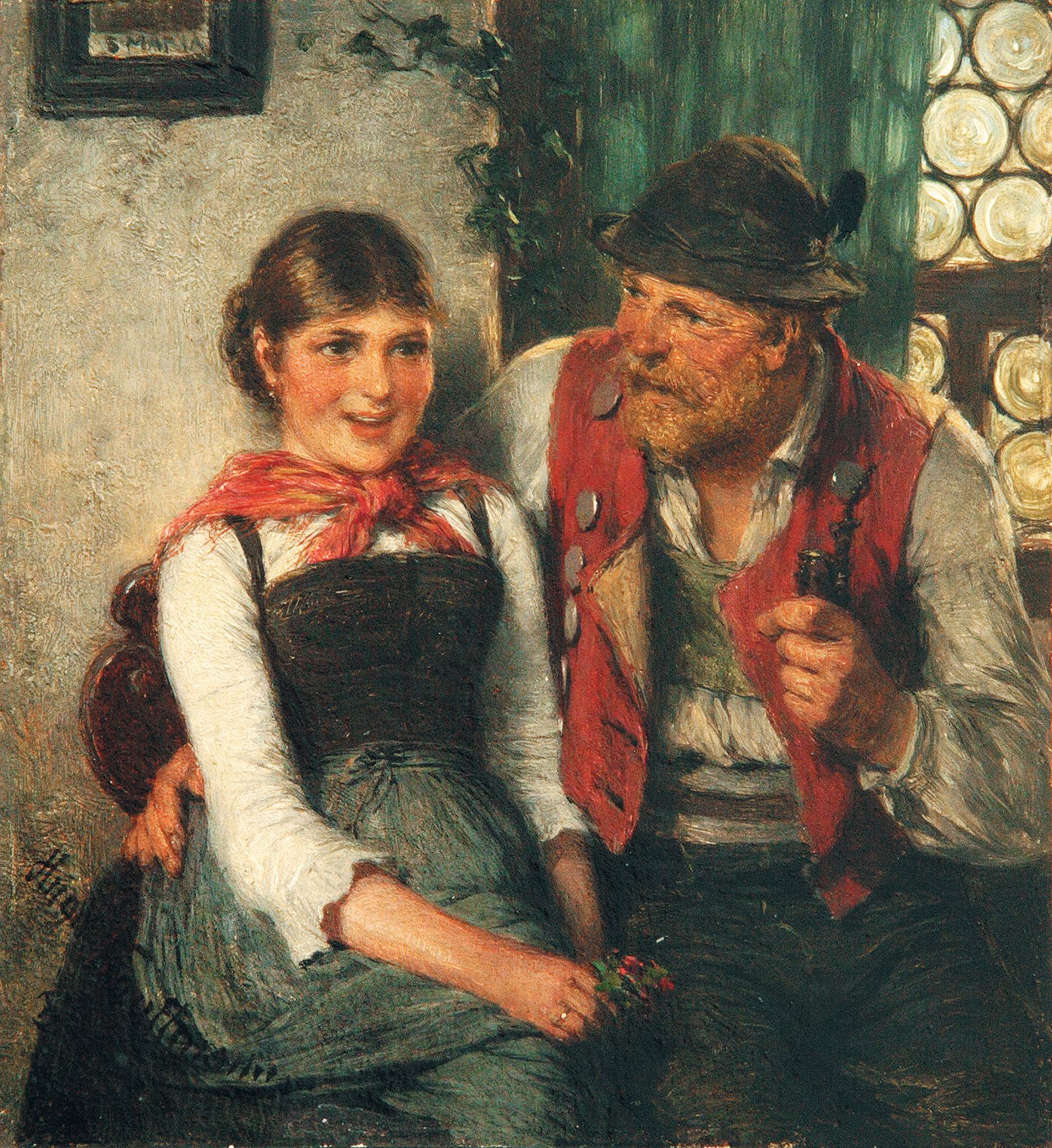
Young Happiness · Hugo Kauffmann, 1885 · Private collection. Prepared for print by Surrealium at Vaxholm Fortress, Sweden.
Young Happiness places the pair close together, with the man turned towards the woman and her bright scarf anchoring the colour. The liveliness comes from that unequal exchange of attention: one looks, the other seems caught in a response. When selecting a photograph, keep a genuine expression even if it is less symmetrical than a formal pose; a familiar smile often carries more of a person than a technically tidy arrangement.
8. Music as a shared language
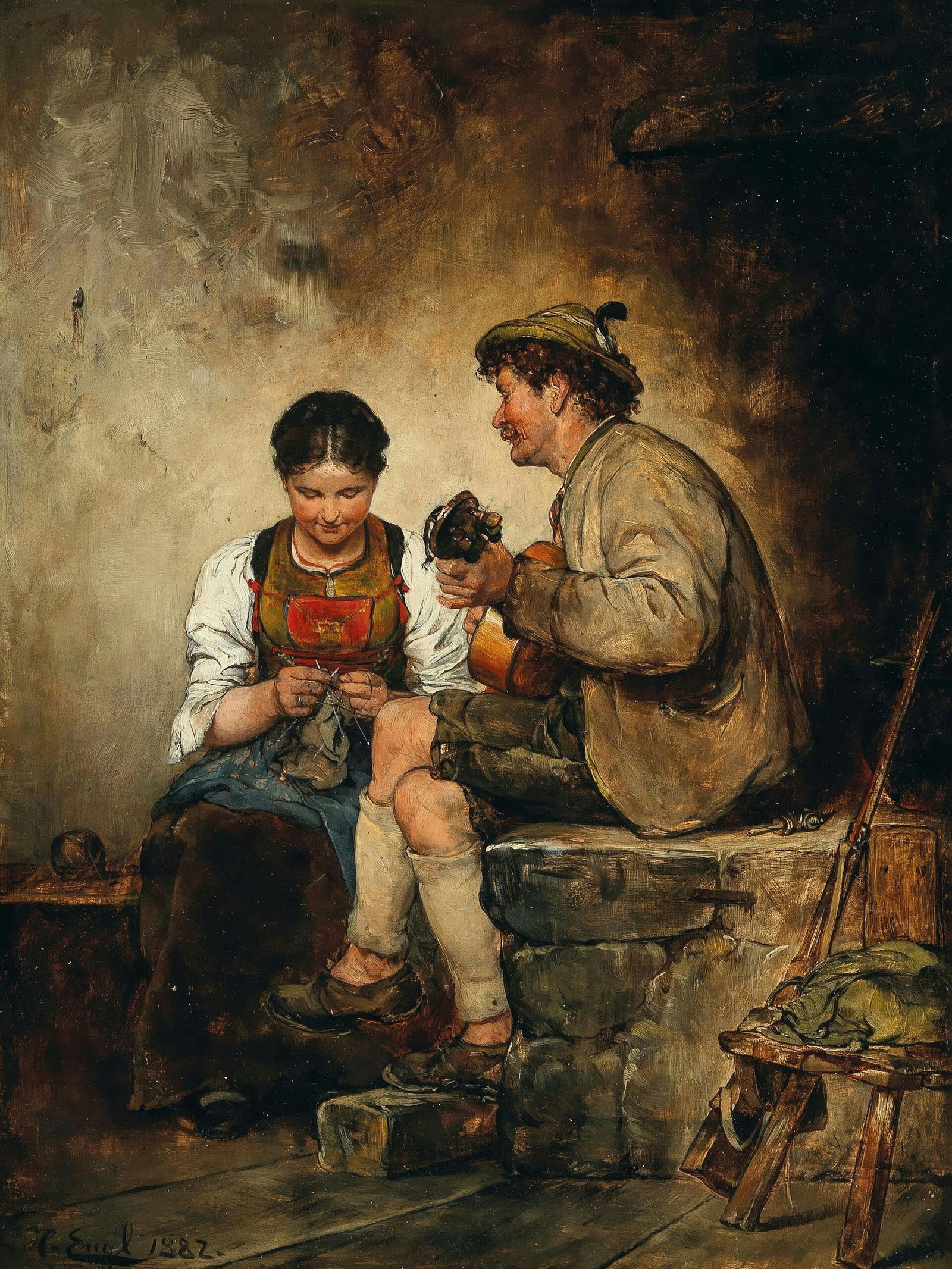
A Serenade in the Parlour · Hugo Engl, 1882 · Private collection. Prepared for print by Surrealium at Vaxholm Fortress, Sweden.
A Serenade in the Parlour brings an instrument into a close interior scene, with the musician turned towards his seated companion. The instrument is part of the relationship between the figures rather than an accessory placed beside them to announce a hobby. If music belongs to your life together, choose a photograph that shows an actual shared occasion, and let the portrait preserve the memory without promising a precise reconstruction of an instrument’s smallest mechanics.
9. Lightness for the person who dislikes ceremony
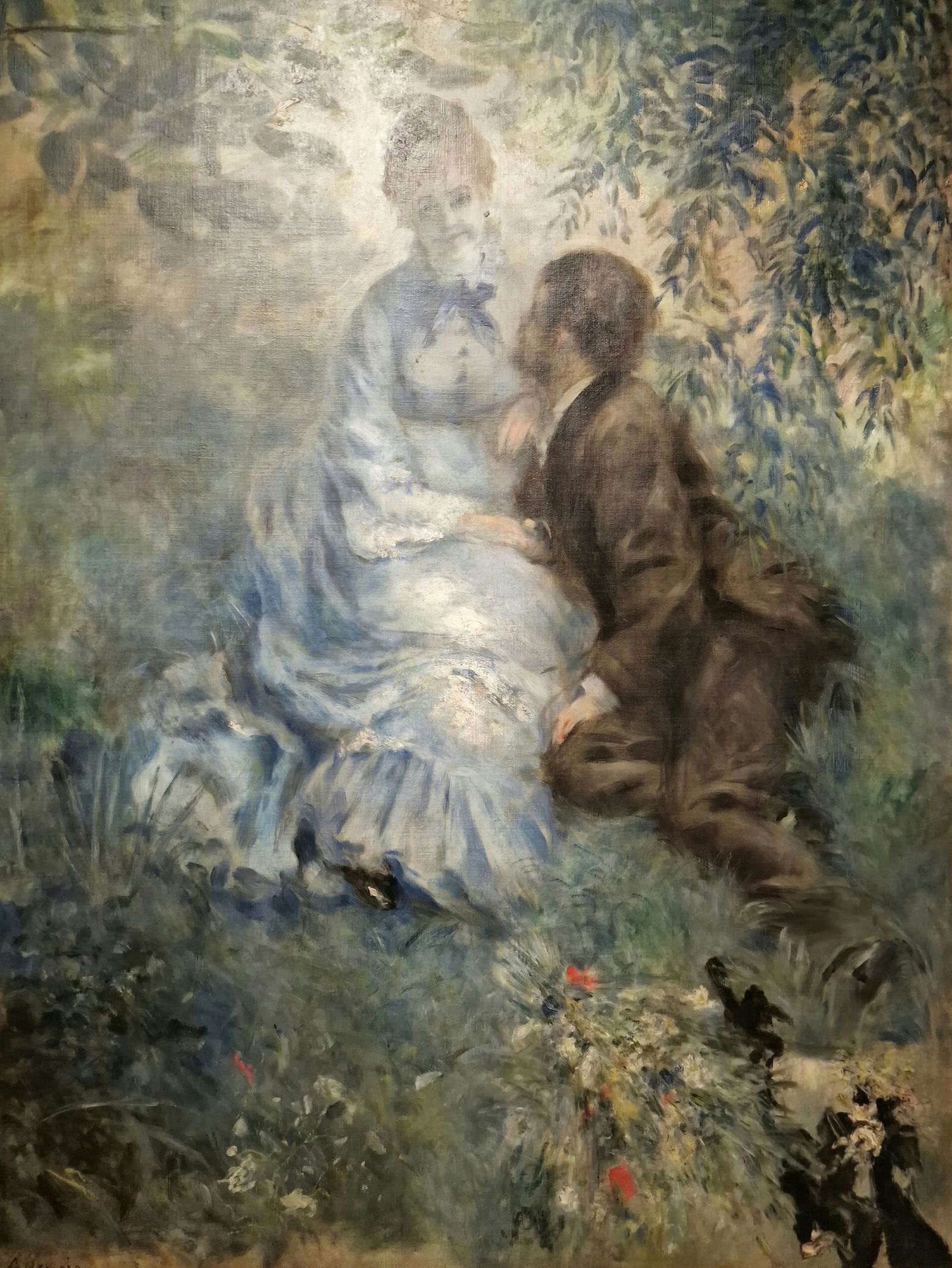
The Lovers · Pierre-Auguste Renoir, 1875 · National Gallery Prague. Prepared for print by Surrealium at Vaxholm Fortress, Sweden.
Renoir’s The Lovers dissolves the garden into light touches around a seated couple, giving the scene a loose, passing quality. Their proximity matters more than a grand architectural setting or a polished performance for an audience. This is a helpful direction for someone who would never choose a ceremonial portrait: look for soft daylight, comfortable clothes and a photograph taken during a conversation rather than during instructions to pose.
10. A farewell with a personal meaning
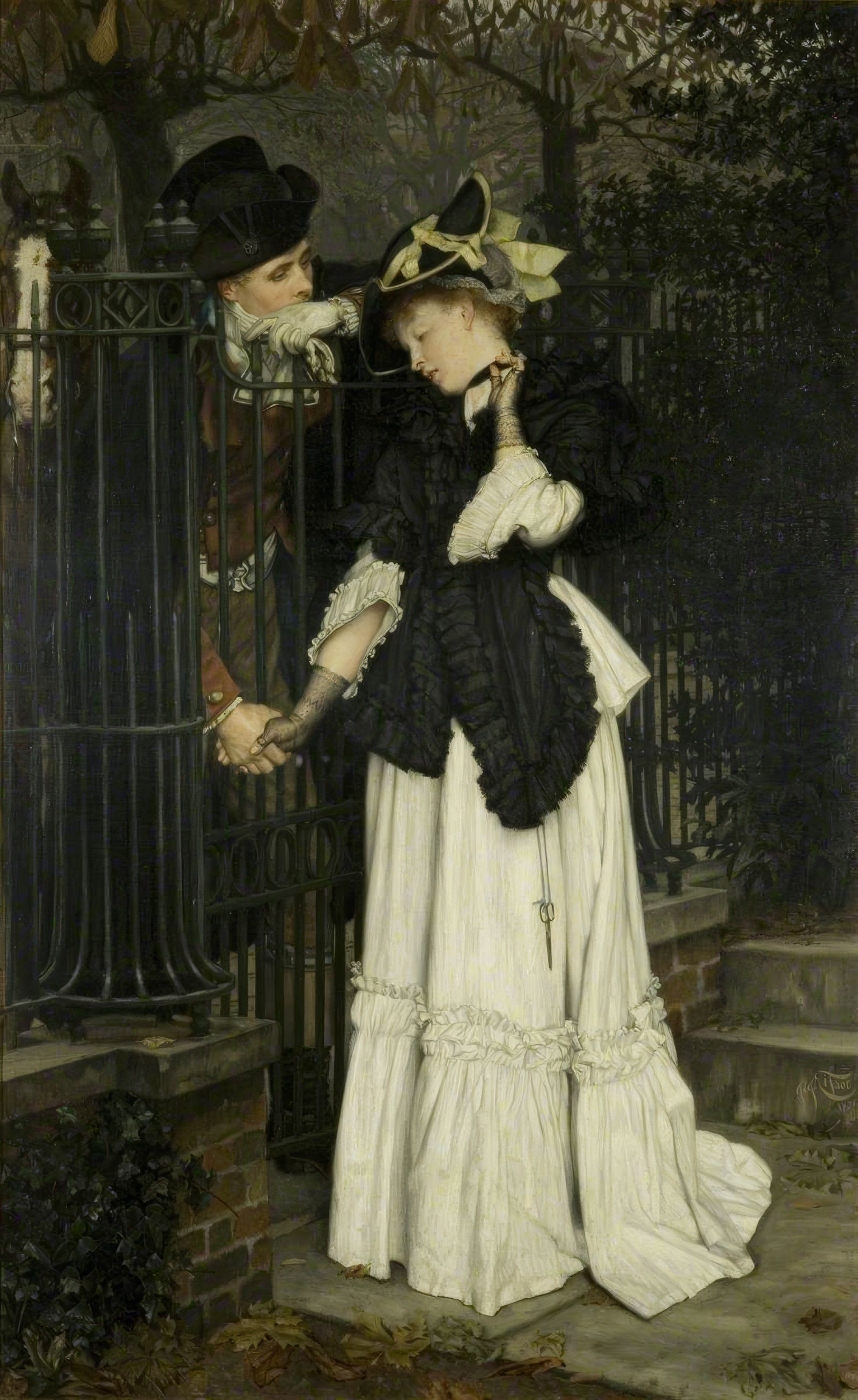
Les Adieux (The Farewells) · James Tissot, 1871 · Bristol Museum and Art Gallery. Prepared for print by Surrealium at Vaxholm Fortress, Sweden.
In Les Adieux, a gate separates the standing figures while a hand reaches across the boundary. The setting makes a small gesture carry the scene, which can resonate with a relationship shaped by journeys or time apart. Use the painting as a prompt for a specific memory rather than a ready-made story about your relationship, and choose a source photograph whose emotional meaning you can explain in a sentence alongside the finished portrait.
Before starting, narrow the choice to one photograph and one mood. The La Promenade masterwork is useful for studying the whole arrangement, while couple portrait ideas offers another way to think about a shared image. Compare the direction for Valentine’s gifts for her if you are deciding together; none of these visual approaches depends on gender. A short note explaining the memory can make the gift more personal than an extra decorative detail.
- What makes a couple portrait a thoughtful Valentine’s gift?
- A photograph connected to a real shared experience gives the portrait a clear purpose. Choose an expression and setting the recipient recognises, and add your own account of why you kept that moment.
- Should a Valentine’s portrait be a surprise?
- It can be, but choosing the photograph together is often part of the pleasure. If he has strong preferences about his appearance or the pictures displayed at home, ask which image he would enjoy living with.
- Are these historical couples Fable customer examples?
- No. They are historical artworks used to explain composition and mood. Your portrait begins with your own photograph; the paintings are not evidence of a customer commission or a guarantee of an identical result.