Couple poses: find closeness without forcing it
Read the distance, hands and shared attention in historic paintings, then prepare natural reference photos for a couple portrait.
Couple poses are most convincing when they give two people something natural to do together. Standing close is only one option. Walking, reading, looking towards the same view or pausing beside an activity can make the relationship visible without asking either person to perform an exaggerated expression.
Historic paintings offer useful observations about distance and attention. They are not rigid instructions for bodies, and the couples shown should not be treated as a rule about who belongs in a portrait. Take the compositional idea that suits your relationship, then make room for your own height, comfort, mobility and way of being together.
Share an activity instead of a smile
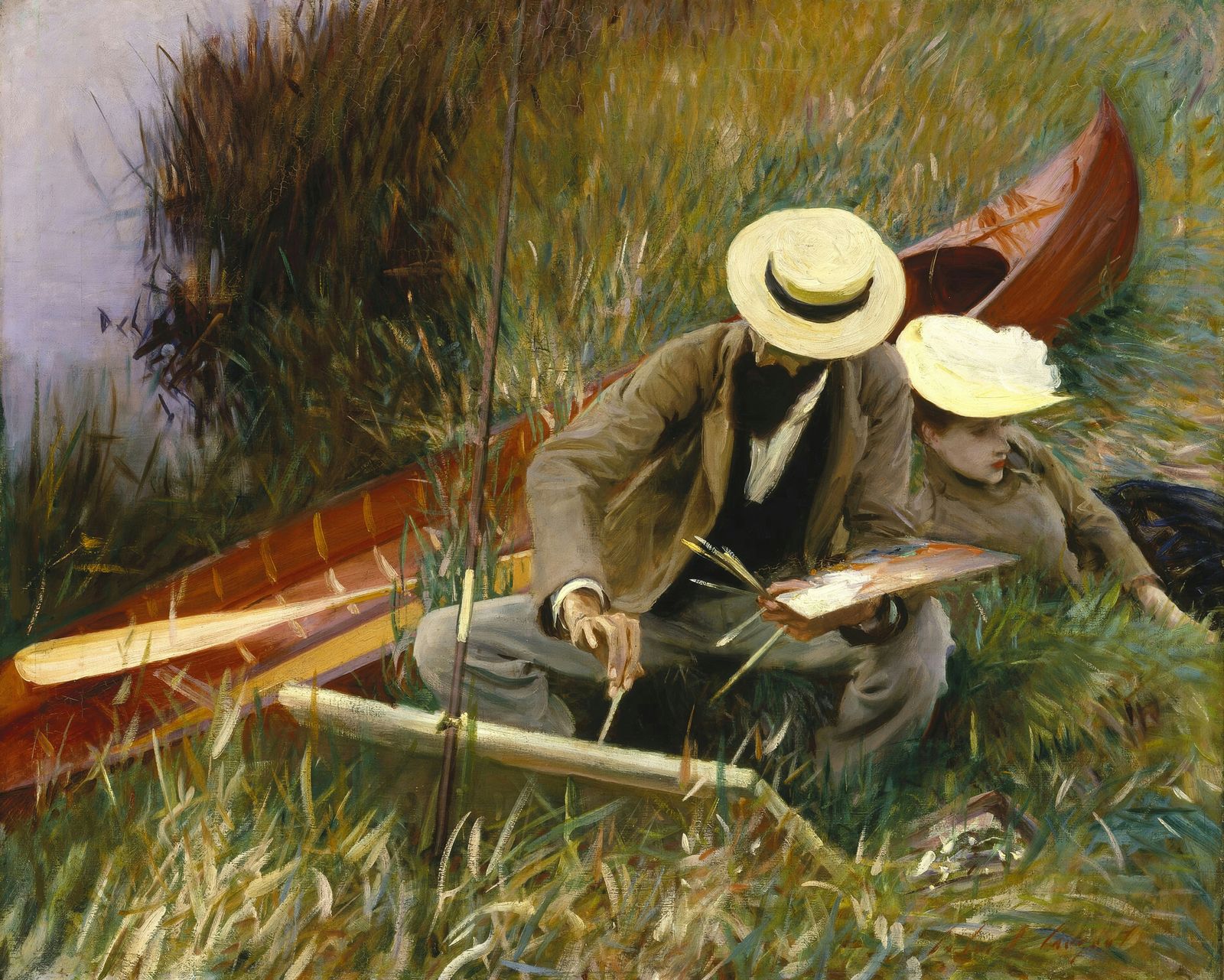
An Out-of-Doors Study (Paul Helleu and his Wife) · John Singer Sargent · 1889 · Brooklyn Museum. Prepared for print by Surrealium at Vaxholm Fortress, Sweden
In John Singer Sargent's An Out-of-Doors Study, the figures occupy a low, close arrangement around an outdoor activity. Hats, clothing and the surrounding ground create a pattern, while the people do not both turn outwards to address the viewer. Their shared space is enough to connect them.
For a reference photograph, a simple activity can make the pose easier to inhabit. Sit together with a book, pause during a conversation or look towards something just outside the frame. Avoid introducing an object solely to fill a hand. It should make the posture more natural, not more complicated. Check that faces remain visible and that a hat, book or shoulder has not hidden the features you want the portrait to preserve. An unforced moment still needs a useful photograph.
Decide where attention goes
Two people can look at each other, look towards the viewer or share an outward direction. Each creates a different relationship within the picture. Mutual eye contact can feel intimate, while a shared outward gaze can suggest companionship without turning the image into a private scene the viewer interrupts.
Try the options briefly and notice which feels comfortable. Do not insist on eye contact if it produces strained smiles or awkward neck angles. It is also possible for one person to look towards the other while the second looks away; the asymmetry can be interesting when it feels natural. The important question is whether the arrangement makes sense for the two people. A pose should not require one partner to become an accessory whose only job is to admire the other.
Let walking establish a rhythm
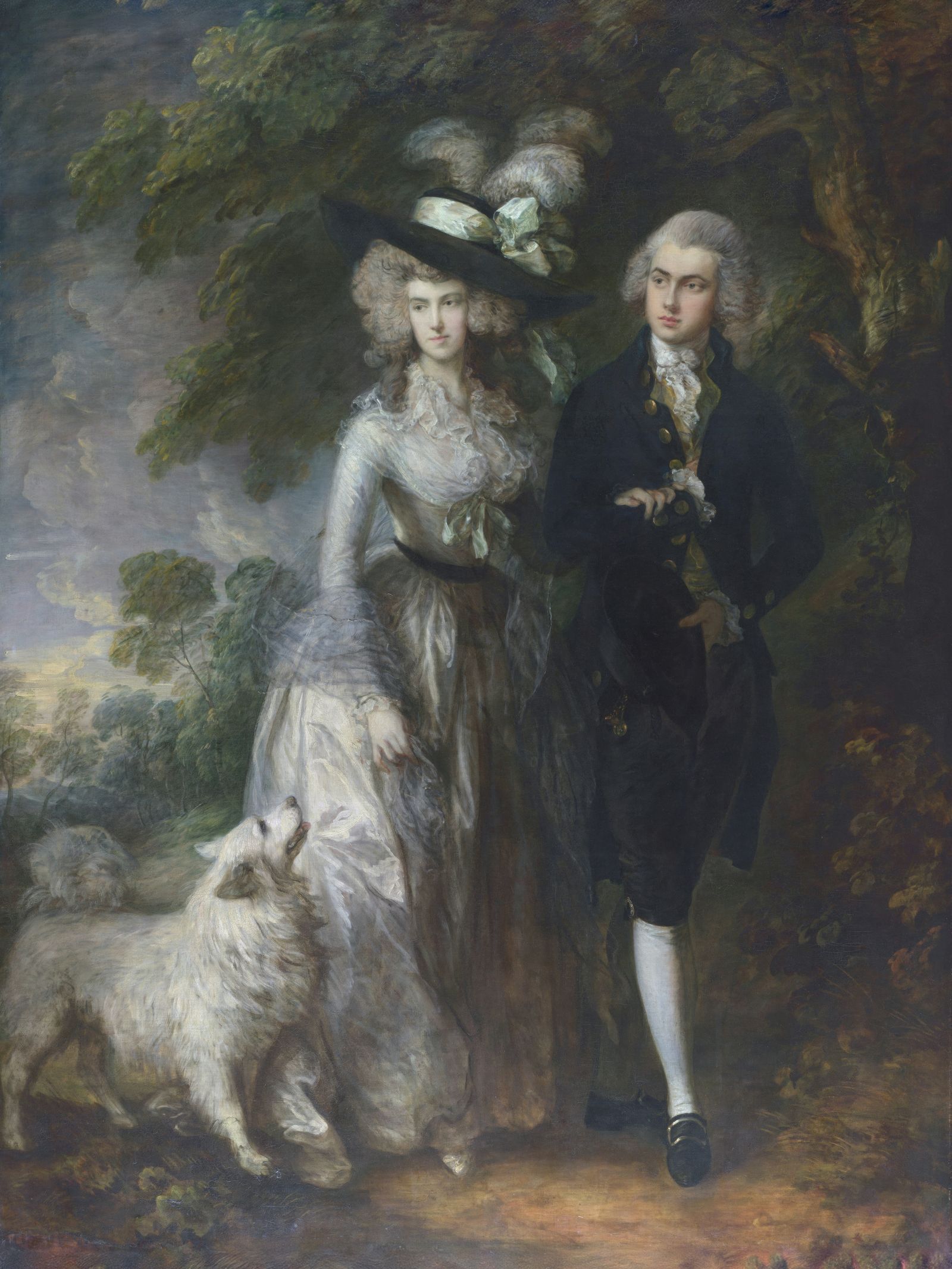
The Morning Walk (Mr and Mrs William Hallett) · Thomas Gainsborough · 1785 · National Gallery, London. Prepared for print by Surrealium at Vaxholm Fortress, Sweden
Gainsborough's The Morning Walk places the couple together within a wooded setting, with a dog nearby. Their linked arrangement gives the figures a shared direction. Clothing and landscape contribute movement without separating the people into unrelated poses.
A walking photograph can be a useful reference if it catches a clear moment rather than motion blur. Walk slowly, keep the faces in usable light and take several frames without demanding that every one be perfect. If walking is not comfortable, the same idea can be adapted to standing or sitting with a shared direction of attention. The compositional principle is companionship in space, not a particular physical ability. Choose a position both people can hold comfortably and stop if the pose becomes tiring.
Give hands a clear place
Hands often become awkward when people are told only to stand close and look affectionate. Give them a natural resting place: on a lap, lightly together or around an object already meaningful to the scene. A small connection can be enough. It need not become a tightly interlocked arrangement that is difficult to read.
Check each person's hands separately in the source photo. Make sure fingers are not hidden in confusing overlaps and that an arm does not appear to belong to the wrong body. Clothing can complicate this when sleeves and coats are similar in colour. If the pose feels tangled, separate the hands slightly or simplify the gesture. The aim is a readable relationship, not the greatest possible amount of physical contact. People can look close while leaving each other comfortable room.
Sit at a useful angle
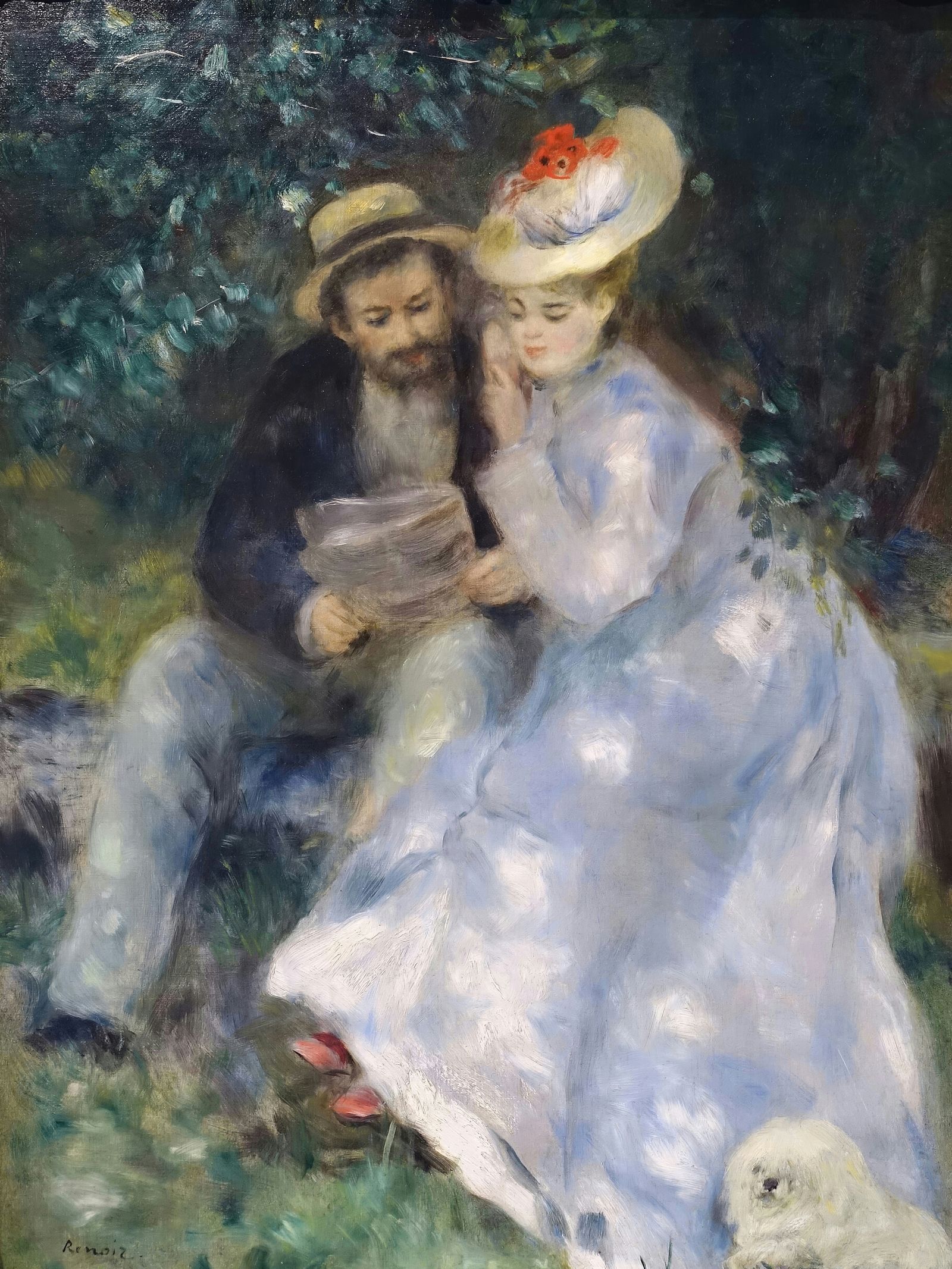
Confidences · Pierre-Auguste Renoir · c. 1874 · Portland Museum of Art, Maine. Prepared for print by Surrealium at Vaxholm Fortress, Sweden
Renoir's Confidences connects the figures through a shared paper and their proximity. The seated arrangement makes a small activity central to the picture. It shows how attention can travel between faces and an object without both sitters facing the viewer squarely.
When taking a seated reference, turn the bodies enough that both faces remain visible. A slight difference in angle can prevent a rigid side-by-side effect, but avoid twisting one person into an uncomfortable position for the sake of symmetry. Check the height of the seat and the direction of the light. A table can give hands a place to rest, yet it can also hide too much of the body. Use the simplest arrangement that explains the connection you want the portrait to hold.
Keep the setting in proportion
A dramatic landscape can be beautiful, but a couple portrait needs enough information about the people. If they occupy a tiny part of a wide photograph, the setting may be clearer than their faces. Move closer for the main reference while retaining enough body and surroundings to explain the pose.
Choose a background that does not create confusing lines through heads or shoulders. Matching clothes are optional; readable separation is more useful than identical colours. Think about the mood you want without assuming that it requires a particular location. A quiet corner with good light may be a better source than a spectacular place photographed in harsh shadow. The eventual portrait can have its own atmosphere, but the source needs to show the people in a way that can be understood.
Offer a hand without staging a performance
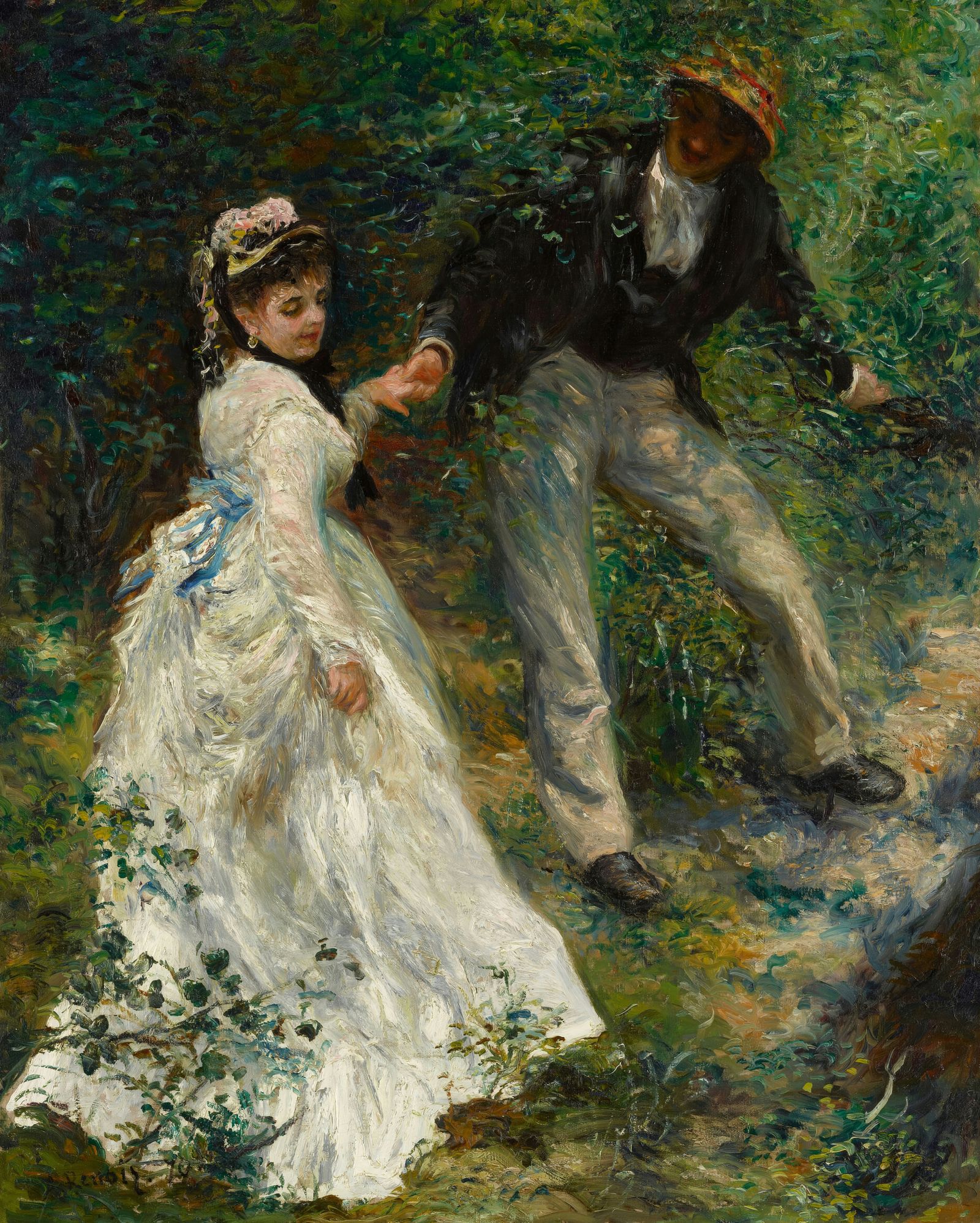
La Promenade · Pierre-Auguste Renoir · 1870 · J. Paul Getty Museum, Los Angeles. Prepared for print by Surrealium at Vaxholm Fortress, Sweden
Renoir's La Promenade turns an offered hand into a connection across the composition. The figures occupy different positions on the wooded path, and the gesture links them. It is worth studying the space between them as much as the point of contact.
For a contemporary couple, borrow the idea of a small, readable gesture rather than trying to reenact the painting. One person can offer a hand while both remain comfortable and fully visible. Do not recreate a precarious step or uneven ground merely for the picture. Once you have a few clear photographs, compare the expressions before the background. The best choice may be the least theatrical frame: the one in which both people look like themselves and the relationship between them is easy to read.
Continue with anniversary portrait ideas: choosing a couple portrait from your photos, romantic wall art for couples: ten masterworks for a wedding or anniversary, custom portrait: choose the person before the style, renaissance portrait: presence without a grand pose, and the full catalogue record for An Out-of-Doors Study (Paul Helleu and his Wife).
Open the couple portrait route with a clear photograph and one compositional intention: shared attention, a gentle connection or a comfortable seated arrangement. The historic works help you notice possibilities. Your own relationship determines which of those possibilities feels right.
- What are easy couple poses for people who dislike posing?
- Try a simple shared activity or a comfortable seated arrangement. Give hands a natural place and allow a shared outward gaze instead of insisting on direct eye contact. The aim is a clear photograph of two people at ease.
- Should both people look at the camera?
- They can, but it is not necessary. Looking towards each other or towards the same view creates a different kind of connection. Choose the option that keeps both faces visible and feels natural to the couple.
- How can we avoid awkward hands?
- Simplify the gesture. Rest hands on laps, hold them lightly or use an object that genuinely belongs in the scene. Check the photograph for confusing overlaps and hidden fingers before selecting it as a reference.
- Do these historic paintings represent available couple styles?
- They are visual references for pose and composition. Use Fable’s couple portrait route to inspect the current options. The article does not present the paintings as personalised results or promise that each is an individual selectable style.