Custom portrait: choose the person before the style
A practical route from a useful photograph to a portrait brief, with separate choices for individuals, couples, families and pets.
A custom portrait starts with a person you recognise, not with a style label. Before choosing the setting or clothing, decide which expression, gesture or relationship you want the image to preserve. A clear photograph and a short, specific intention give you a better basis for judging the result than a long collection of decorative requests.
Historic portraits are useful comparisons because they show how many different things a likeness can do. It can be close and quiet, formal and expansive, or organised around the relationship between several figures. The paintings in this guide are references; they are not examples of personalised customer results.
Identify what must remain recognisable
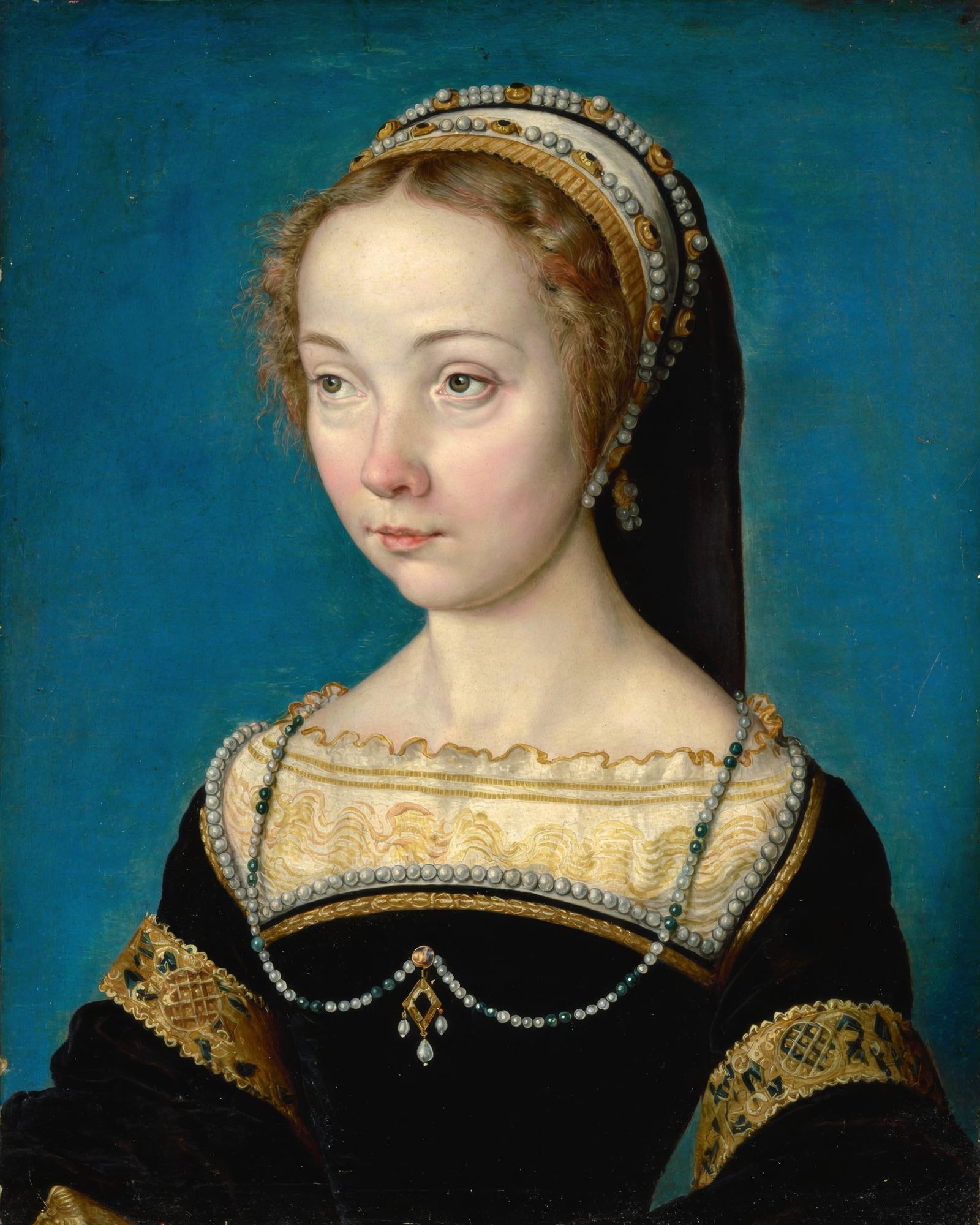
Portrait of a Woman · Corneille de Lyon · c. 1540 · Cleveland Museum of Art. Restored by Surrealium at Vaxholm Fortress, Sweden
Corneille de Lyon's small portrait makes the face the centre of a compact arrangement. Clothing and ground support that encounter without requiring a large narrative setting. It provides a useful starting point for a contemporary brief: what is the feature or expression that makes this person unmistakably themselves?
Write down two or three observations in ordinary language. Perhaps it is the way they hold their head, their natural smile or the shape of their hair around the face. Do not turn the list into an attempt to redesign them. If the portrait is a gift, consider whether they would be comfortable with the source photograph and the intended presentation. A recognisable likeness can be affectionate without making the sitter younger, grander or more conventionally glamorous than they wish to appear.
Choose a photograph with useful information
Use a photograph in which the face is clear, the eyes are visible and the angle suits the portrait you want. Strong filters, motion blur and deep shadows can remove details that matter. A larger file is useful only if the underlying picture is sharp; enlarging a blurred face does not reveal information that was never captured.
Look beyond the face when the pose matters. Include the shoulders and hands if you want their relationship preserved. Avoid a source where an arm is cut off in the middle of a gesture or another person's hand crosses the sitter without explanation. You do not need a professional photograph. A natural image taken in good light may give a more useful account of the person than a heavily processed image chosen only because its colours look dramatic.
Separate expression from atmosphere
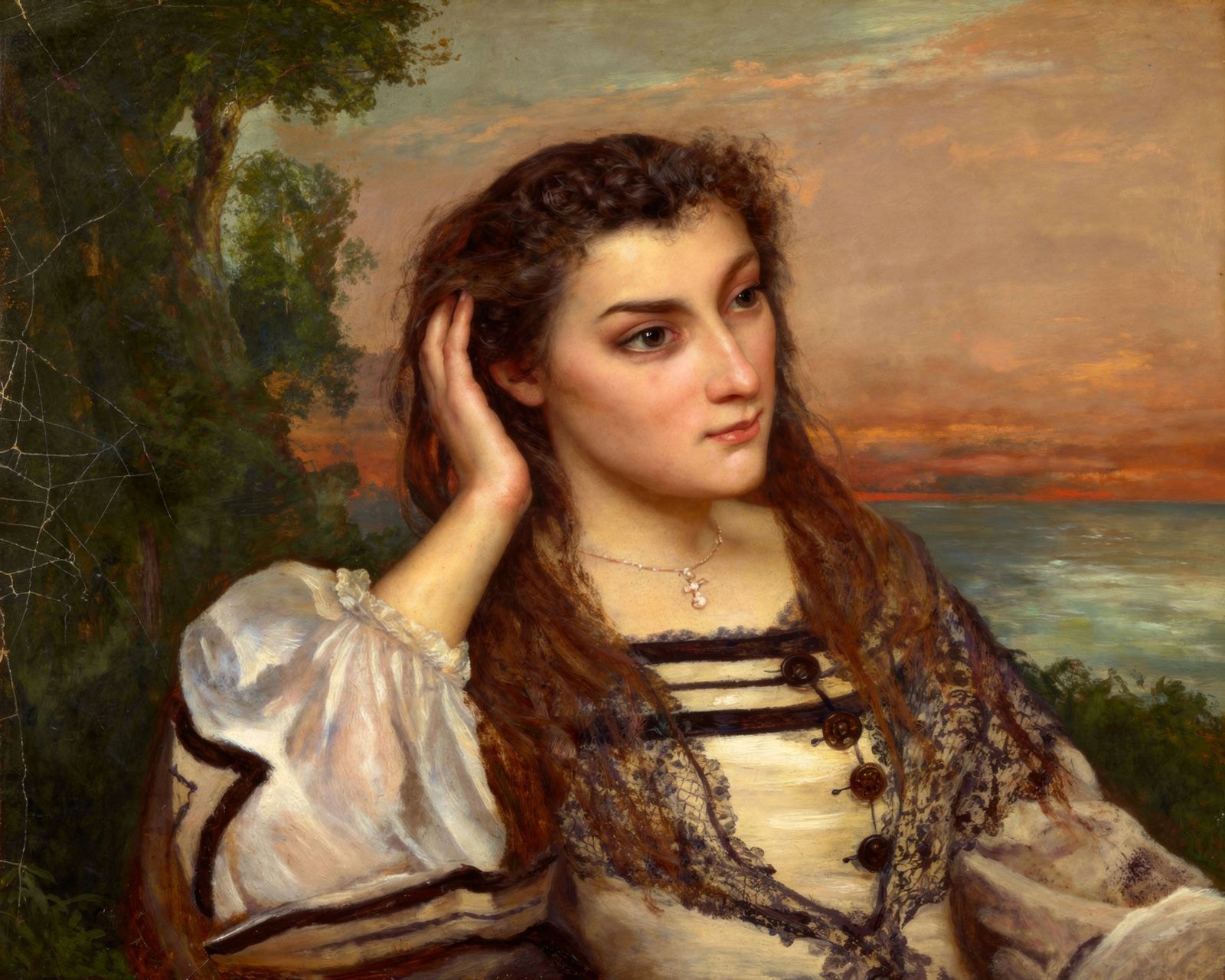
Rêverie (Portrait of Gabrielle Borreau) · Gustave Courbet · 1862 · Art Institute of Chicago. Restored by Surrealium at Vaxholm Fortress, Sweden
Courbet's Reverie gives the sitter a quiet, inward-looking presence. The hand near the head and the surrounding tones contribute to that atmosphere. It would be a mistake to conclude that every person who enjoys the painting wants to be shown with the same expression.
Distinguish the mood you admire from the face you want to preserve. You may like a subdued palette while preferring a lively expression. You may want a formal setting with a relaxed posture. State those choices separately in your brief. When reviewing a preview, ask first whether the person remains recognisable, then whether the image's atmosphere supports that likeness. A coherent portrait brings both together; an impressive setting cannot compensate for an expression that feels unlike the intended sitter.
Choose the right subject route
An individual portrait, a couple portrait, a family grouping and a pet portrait involve different relationships within the frame. Begin with the corresponding subject route instead of trying to make one person's arrangement serve every situation. The number of figures affects the space available for faces, gestures and background.
For a group, decide who belongs in the picture and which relationships matter. Equal visual prominence may be more appropriate than a hierarchy borrowed from a historic composition. For a pet, think about posture, ears, markings and the angle at which you know the animal best. Keep the pet naturally posed. The aim is not to dress an animal as a person or to assign a theatrical role, but to make a portrait that feels connected to the individual you know.
Give a family enough room
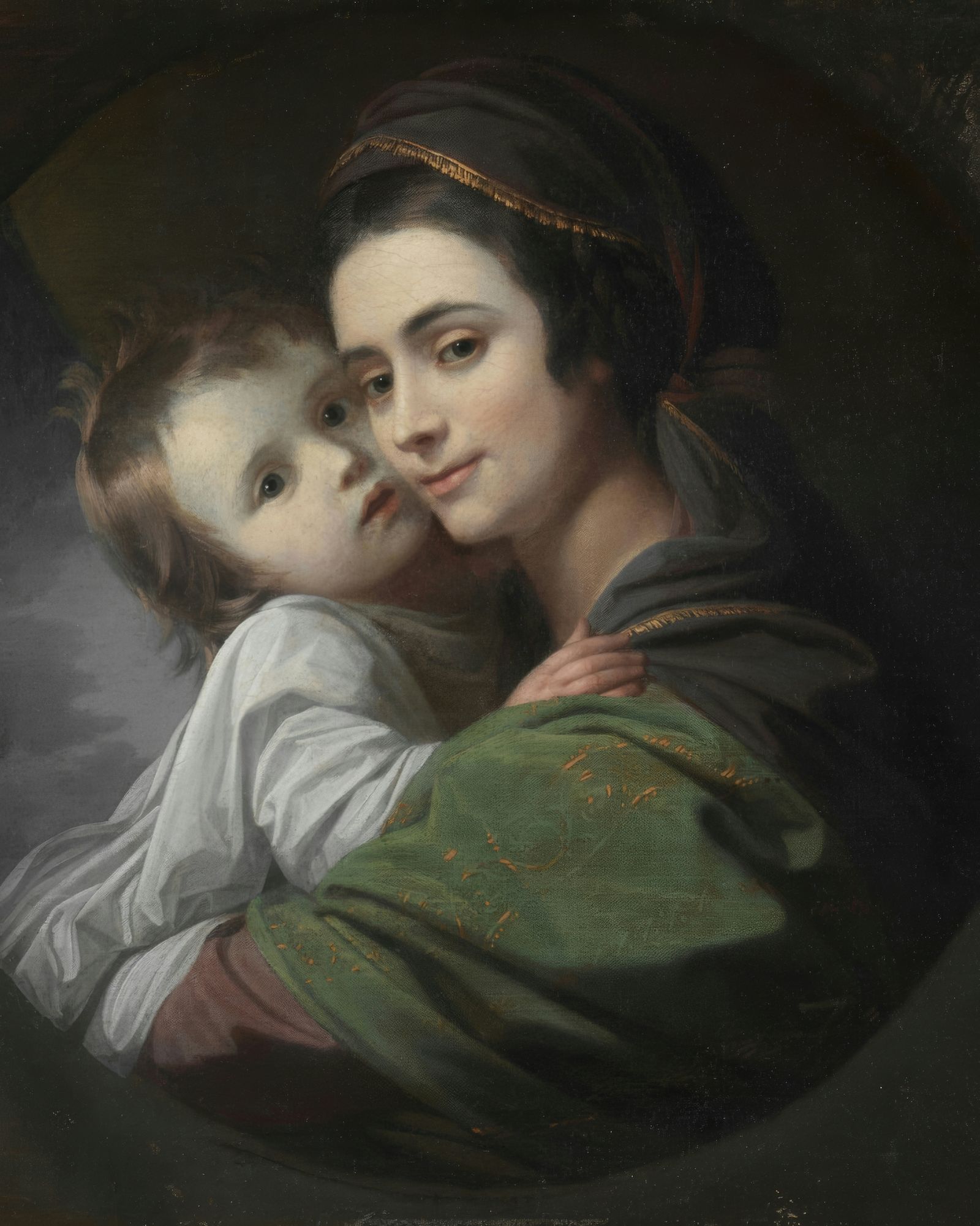
Elizabeth Shewell West and Her Son, Raphael · Benjamin West · c. 1770 · Cleveland Museum of Art. Prepared for print by Surrealium at Vaxholm Fortress, Sweden
Benjamin West's image of Elizabeth Shewell West and their son makes closeness the organising idea. The figures' physical relationship gives the composition its meaning. It is a different task from placing two unrelated headshots beside one another in a shared background.
For a family portrait, choose source material that explains how the people belong together. Similar lighting and compatible camera angles can make the references easier to compare. Check that every face is sufficiently visible and that no one is included merely as a partial figure at the edge. If the portrait is a collective gift, agree the group before beginning. The most difficult late change may be a disagreement about who should appear, rather than a minor adjustment to colour or setting.
Use references as questions, not promises
A historic reference can help you ask whether you prefer a close face, an open landscape, a seated figure or a more formal arrangement. It does not prove that every work is offered as a portrait style or that every composition suits every photograph. Compare the actual current options before deciding.
Keep a short list of qualities instead of a pile of conflicting reference images. “Quiet background, clear eyes, natural shoulders” is easier to assess than several unrelated period labels. At the preview stage, check the face, hands, body proportions and any important objects, then view the entire image at a smaller size. The close inspection finds details; the smaller view reveals balance. Both matter. Do not judge the portrait only by the most attractive area while overlooking a problem elsewhere in the composition.
For pets, preserve the animal's own character
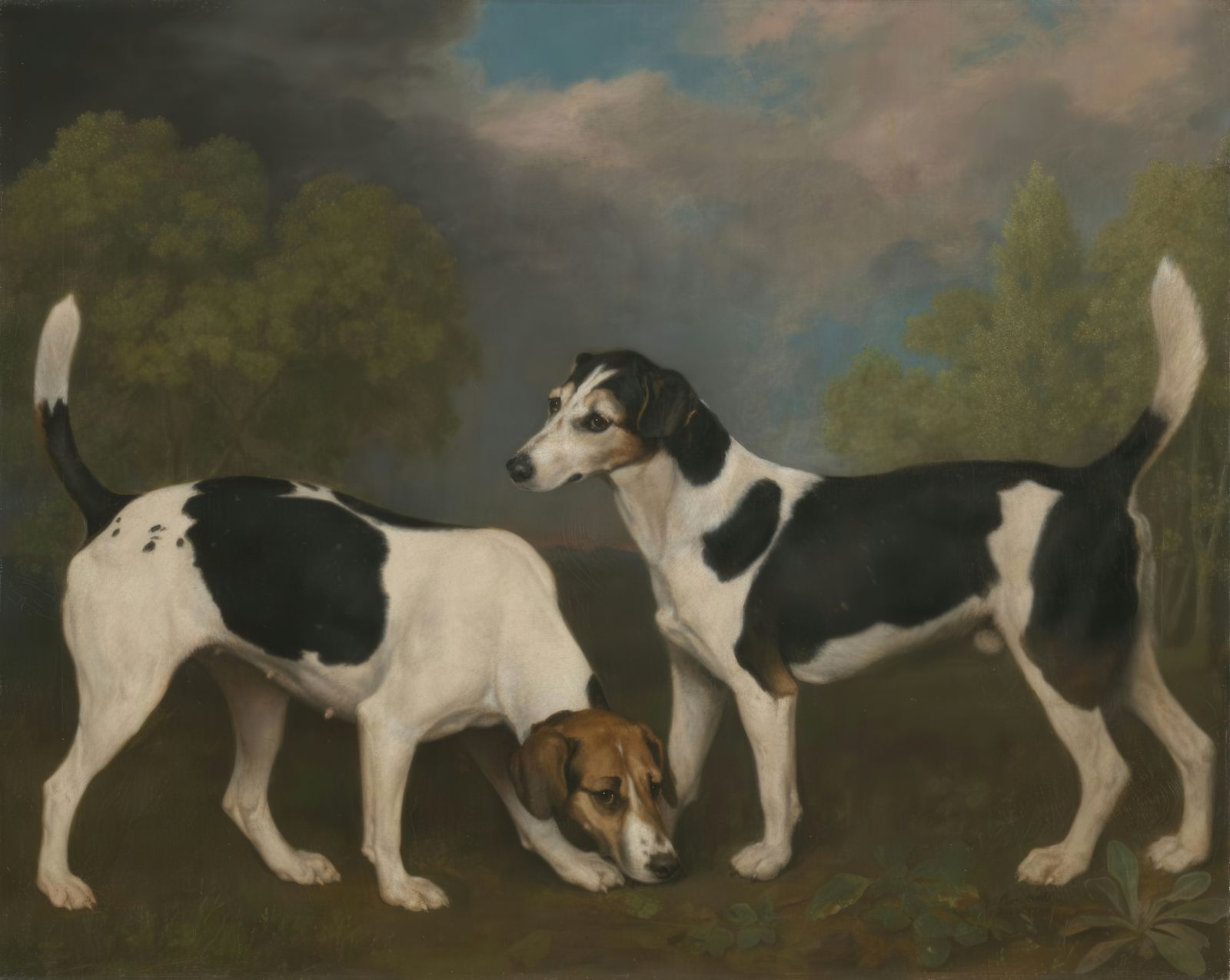
A Couple of Foxhounds · George Stubbs · 1792 · Tate, London. Prepared for print by Surrealium at Vaxholm Fortress, Sweden
George Stubbs's pair of foxhounds offers two distinct positions within one landscape. The animals remain animals: their stance, attention and relationship to the ground carry the picture. The work is a historic reference, not evidence that a specific Fable result will reproduce its arrangement.
A useful pet source photo shows the animal's eyes, muzzle, coat markings and characteristic posture. Photograph near the pet's level when possible, and avoid a wide-angle view that makes the head or paws disproportionately large. Do not force an uncomfortable pose for the sake of the photograph. A familiar seated or resting position can be more expressive than a staged performance. When you review the portrait, compare the details that identify this particular animal rather than accepting a generic example of its breed or colouring.
Continue with the Fable Difference, aI pet portrait or traditional art commission: which should you choose?, renaissance portrait: presence without a grand pose, the full catalogue record for Portrait of a Woman, and the portrait direction based on Elizabeth Shewell West and Her Son, Raphael.
Explore by portrait direction
Renaissance portrait of yourself: how the Renaissance painted a face, and how to sit for one · Medieval portrait from a photo: manuscripts, panels and the look of the Middle Ages · Couple portrait ideas: twenty poses painters used for two people · Baroque portrait from a photo: candlelight, velvet and van Dyck's poise · Sympathy gifts that will still matter in a year · Oil painting from a photo: what a good portrait keeps, and what it changes · Family portrait poses that worked for three hundred years · Famous paintings of women: thirty portraits across five centuries · Memorial gifts: keeping a face present, gently · John Singer Sargent's portraits, from Madame X to Carnation, Lily, Lily, Rose · AI portrait generators versus a painted portrait: what to check before you pay · Mary Cassatt's mothers and children · A watercolour-like portrait? What a painted portrait from a photo can and cannot be · Marie Antoinette's portraits and the woman Vigée Le Brun painted · Tudor portraits: how Henry VIII, Anne Boleyn and Elizabeth I were painted · George Washington's portraits: Stuart, Peale and the face Americans know
Begin with the subject and a clear source photograph, then explore the current portrait directions. Keep the brief short enough to judge: recognisable features, a suitable pose and an atmosphere that belongs to the person or pet. The style should help those choices hold together.
- What is the best photo for a custom portrait?
- Choose a sharp, well-lit photograph with an unobstructed face and the angle you want. Include enough of the body to explain an important pose. Avoid strong filters and images where shadows hide essential features.
- Can a custom portrait include a couple or family?
- Use the appropriate subject route and agree who should appear before beginning. Compare the clarity, lighting and angles of the reference photographs. A coherent grouping needs attention to the relationship between figures as well as to each face.
- Do I need to know an art period before choosing?
- No. You can begin with visual preferences such as a quiet background, a close composition or a warmer palette. The historic references help you describe those choices; the current style library shows the options available.
- What should I check in a portrait preview?
- Check identity first, then expression, hands, proportions and meaningful details. Finally view the whole image at a smaller size. A portrait needs both convincing individual features and a composition that holds together.