Mary Cassatt paintings, prints and six comparisons
Four Mary Cassatt works and six pictures by her contemporaries reveal different ways to portray children, care and everyday attention.
Mary Cassatt paintings can make an ordinary posture feel worth studying: a child sprawls across a chair, or an adult turns towards a small person held close. Her prints offer another way of arranging these encounters, with clear shapes and patterned surfaces doing work that paint handles differently. The medium and the individual work matter more than a general label of maternal tenderness.
This selection begins with four Cassatt works, including prints, then makes six clearly identified comparisons with Morisot, Renoir and Manet. Those later pictures are not by Cassatt. They broaden the question of how artists picture private life, and they help show how a formal family group differs from a passing moment or a solitary child.
For a personal portrait, these works are references for attention and composition, not customer examples. The custom portrait guide explains the broader starting point, and mother and daughter gifts considers one particular relationship. Begin with the person’s actual character: a restless child need not be turned into a solemn miniature adult to belong in a portrait.
1. Cassatt: Little Girl in a Blue Armchair
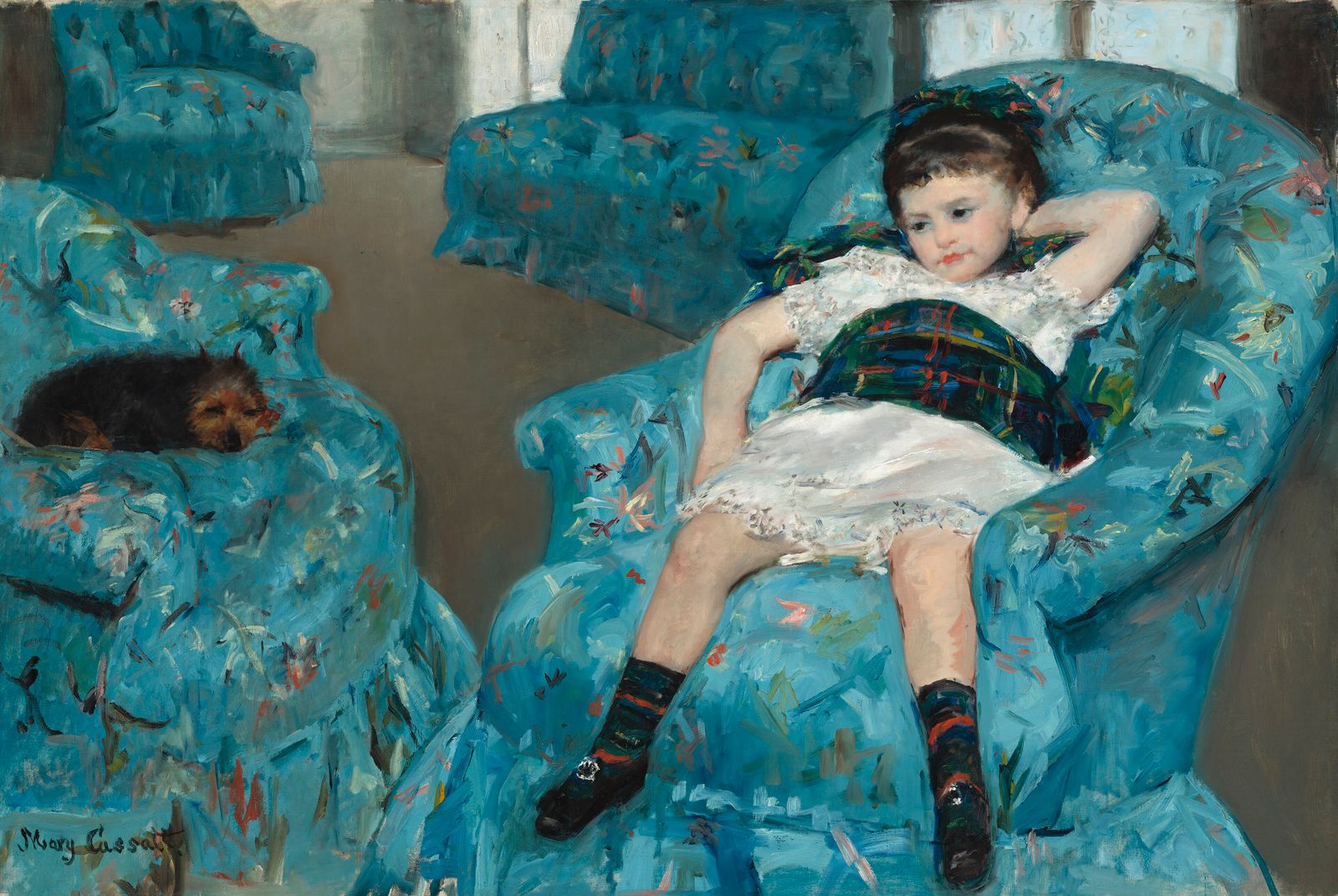
Little Girl in a Blue Armchair · Mary Cassatt, 1878 · National Gallery of Art, Washington, Collection of Mr. and Mrs. Paul Mellon. Prepared for print by Surrealium at Vaxholm Fortress, Sweden.
The child stretches across a large blue chair, with another chair and a small dog occupying the space beside her. The furniture’s repeated pattern nearly surrounds the figure, yet the spread of her limbs gives her a distinct, unceremonious presence. For a portrait idea, this is a reminder that a natural posture can be the point of the picture; a photograph of a child resting or daydreaming may preserve more character than a pose held only for the camera.
2. Cassatt: Woman Bathing
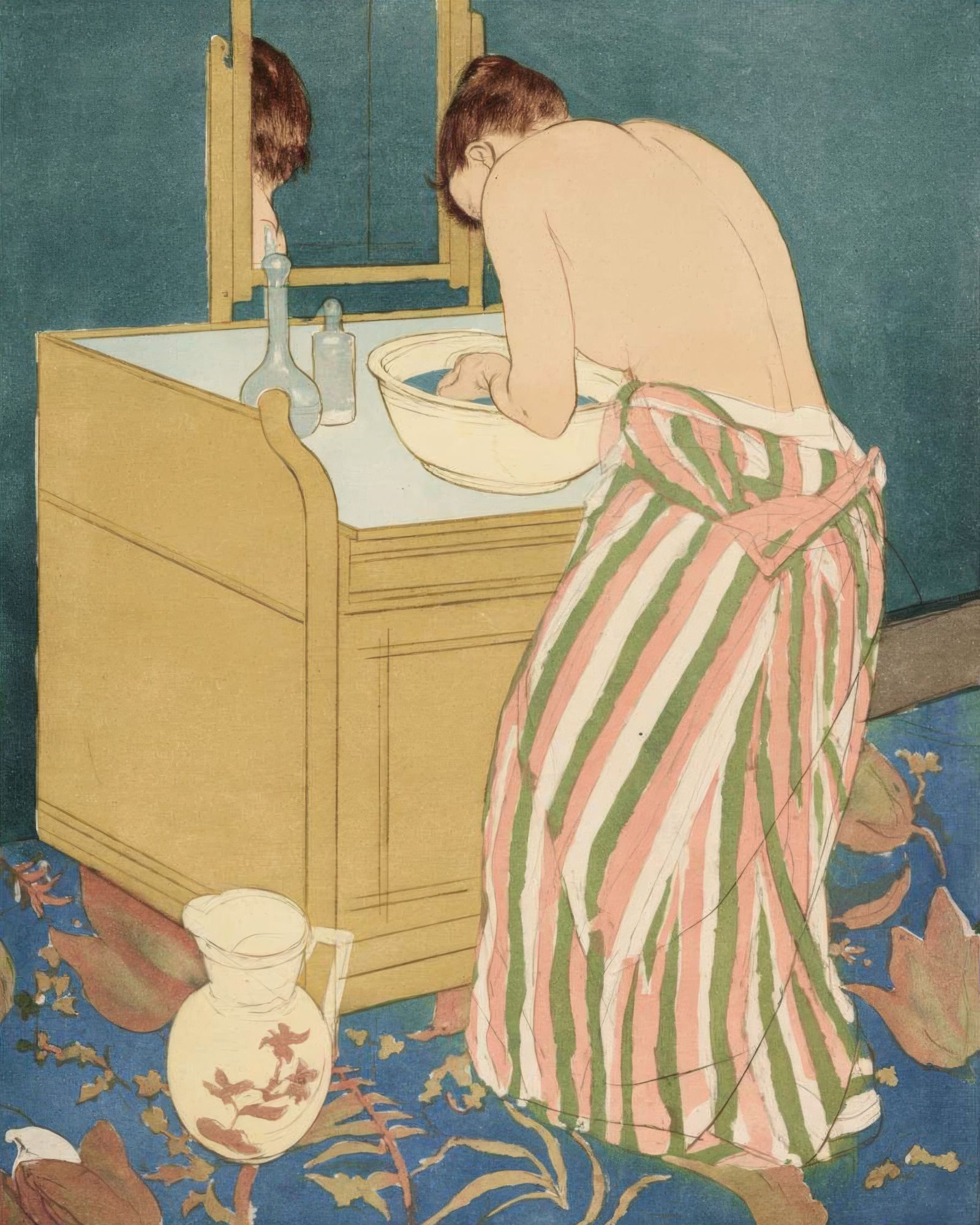
Woman Bathing · Mary Cassatt, 1890–91 · Art Institute of Chicago. Restored by Surrealium at Vaxholm Fortress, Sweden.
In Woman Bathing, the figure leans over a basin before a mirror, with stripes, flat colour and the furniture’s firm edges shaping the scene. This is a print, and its organised surfaces should not be described as the brushwork of an oil painting. Notice how the turned back and repeated reflection make the viewer’s position more complicated than a direct portrait encounter; the image gives an everyday action its own structure without requiring the figure to acknowledge us.
3. Cassatt: Gathering Fruit
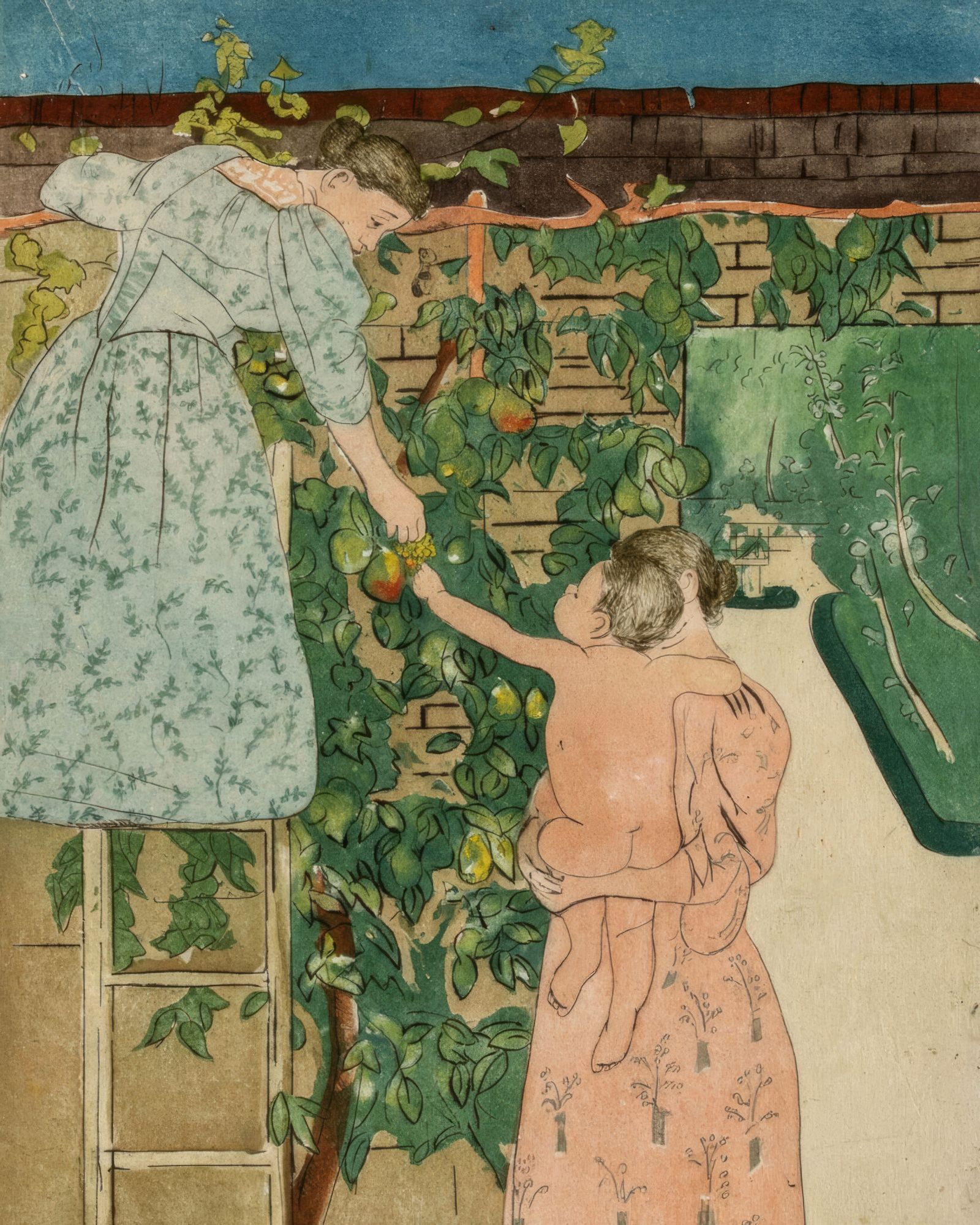
Gathering Fruit · Mary Cassatt, c. 1893 · Terra Foundation for American Art, on loan to Harvard Art Museums. Restored by Surrealium at Vaxholm Fortress, Sweden.
Gathering Fruit brings two adults and a small child into a garden arrangement, with an extended arm connecting the group to the fruit above. Patterned clothing and broad leaves create a dense surface, while the reaching action gives the eye a clear route through it. The work is a print, not another Cassatt oil painting; comparing its outlined shapes with Little Girl in a Blue Armchair makes the difference in medium visible while keeping their shared interest in bodily relationships in view.
4. Cassatt: Peasant Mother and Child
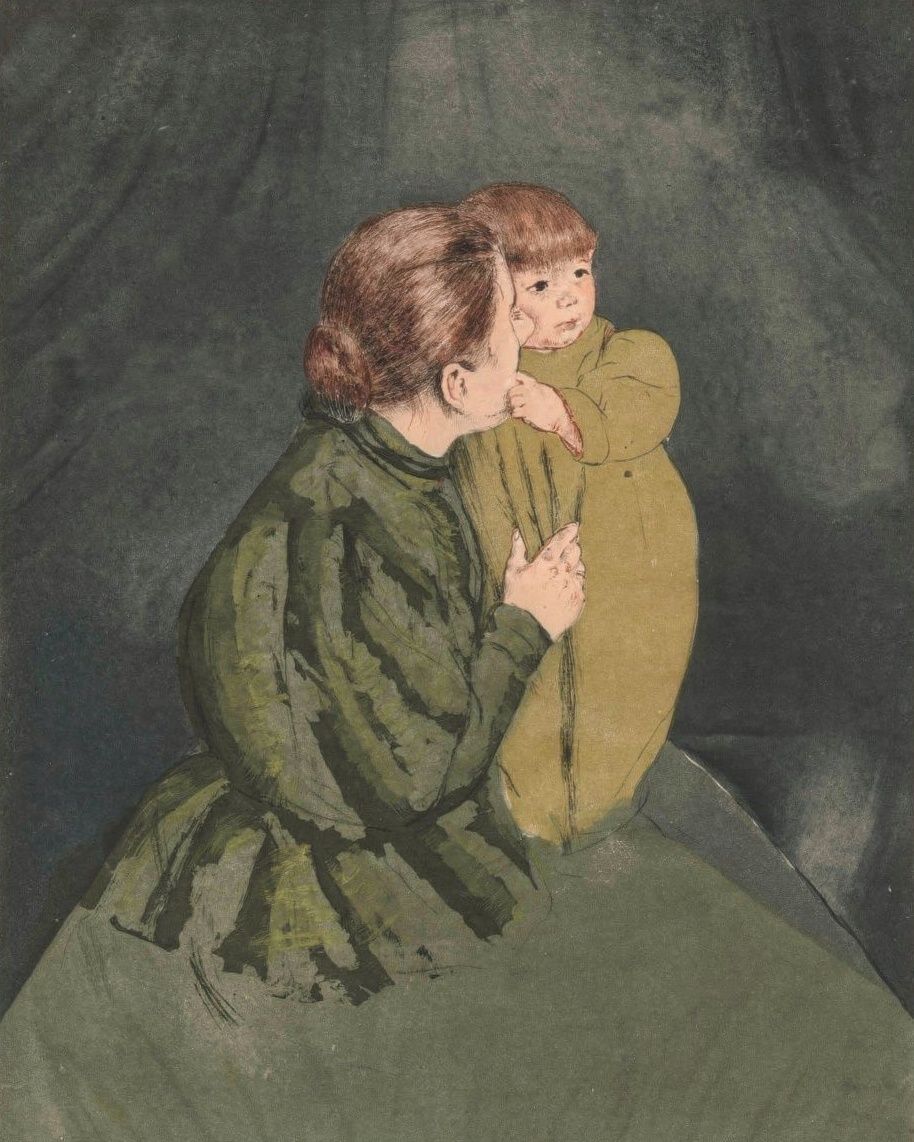
Peasant Mother and Child · Mary Cassatt, c. 1894 · Art Institute of Chicago. Restored by Surrealium at Vaxholm Fortress, Sweden.
The adult turns towards the child held close, with the small face rising above the larger figure’s shoulder. The narrow range of colours keeps attention on their proximity and the meeting of heads rather than on a busy room. This is a useful reference for a portrait built around care: choose a photograph where the relationship between the bodies is clear, and let a familiar way of holding or leaning carry the image instead of adding symbolic objects to explain it.
5. Comparison: Morisot’s Woman at Her Toilette
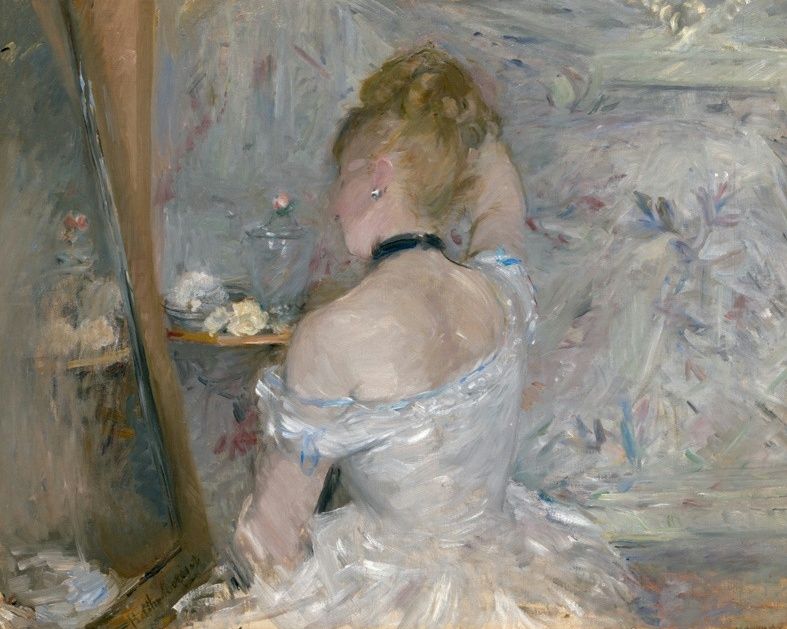
Woman at Her Toilette · Berthe Morisot, 1875–80 · Art Institute of Chicago. Restored by Surrealium at Vaxholm Fortress, Sweden.
Morisot’s seated woman turns away from the viewer towards a mirror, with pale fabric and loose marks spreading around the shoulders. The picture is a comparison by another artist, and its broken painted surface differs from the clear divisions in Cassatt’s bathing print. Look at how the mirror, exposed back and surrounding room establish a private action; the comparison helps distinguish two artists’ ways of giving a quiet domestic moment a strong pictorial presence.
6. Comparison: Morisot’s In the Dining Room
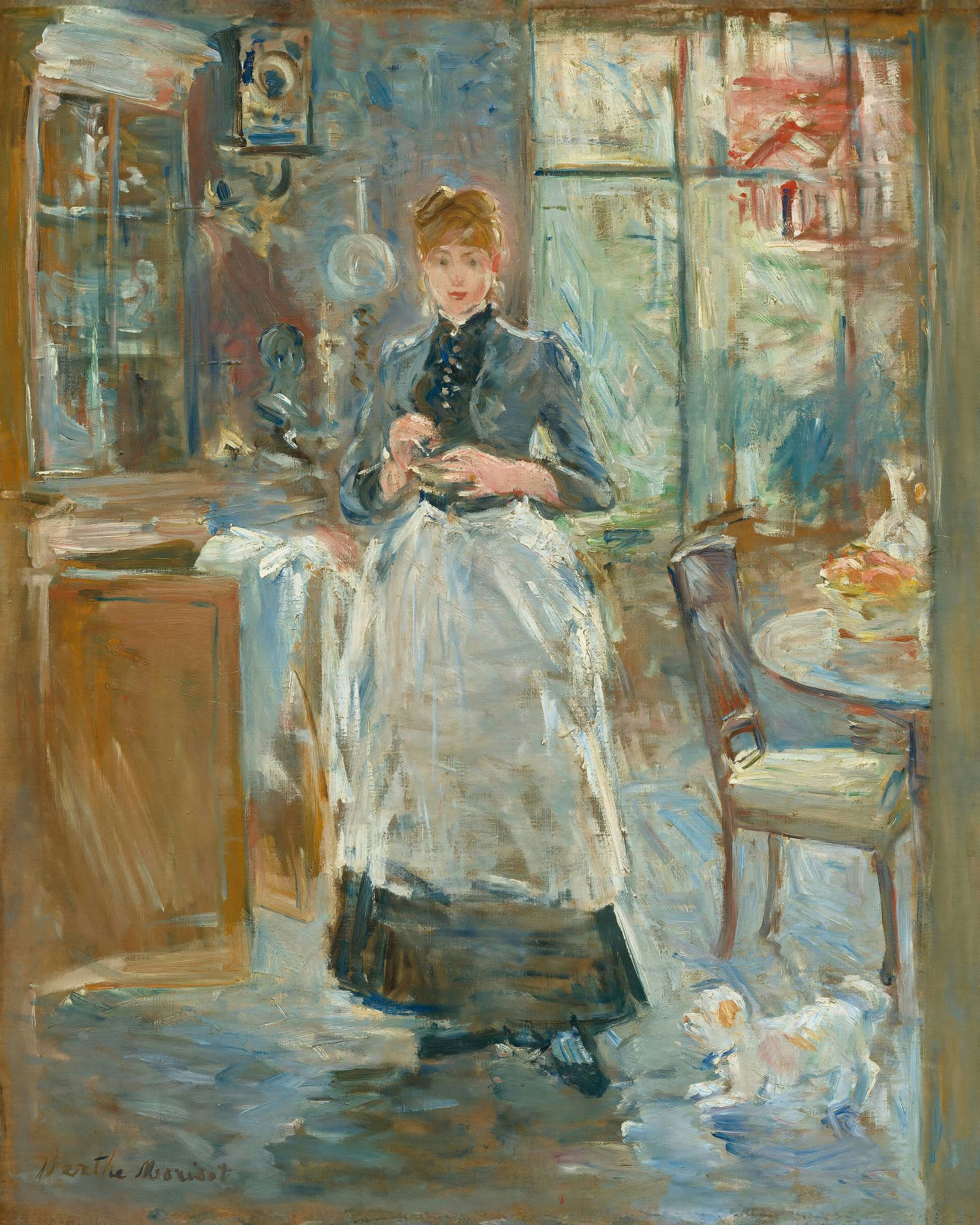
In the Dining Room · Berthe Morisot, 1886 · National Gallery of Art, Washington. Prepared for print by Surrealium at Vaxholm Fortress, Sweden.
The standing figure in In the Dining Room is surrounded by reflective objects, furniture and patches of light. Her hands occupy a small but important area near the centre, holding attention amid the more restless marks of the interior. A portrait reference need not remove every sign of everyday life: one familiar room can give a person context, provided the face and gesture remain readable rather than becoming lost among all the objects you hope to include.
7. Comparison: Morisot’s Woman in a Garden
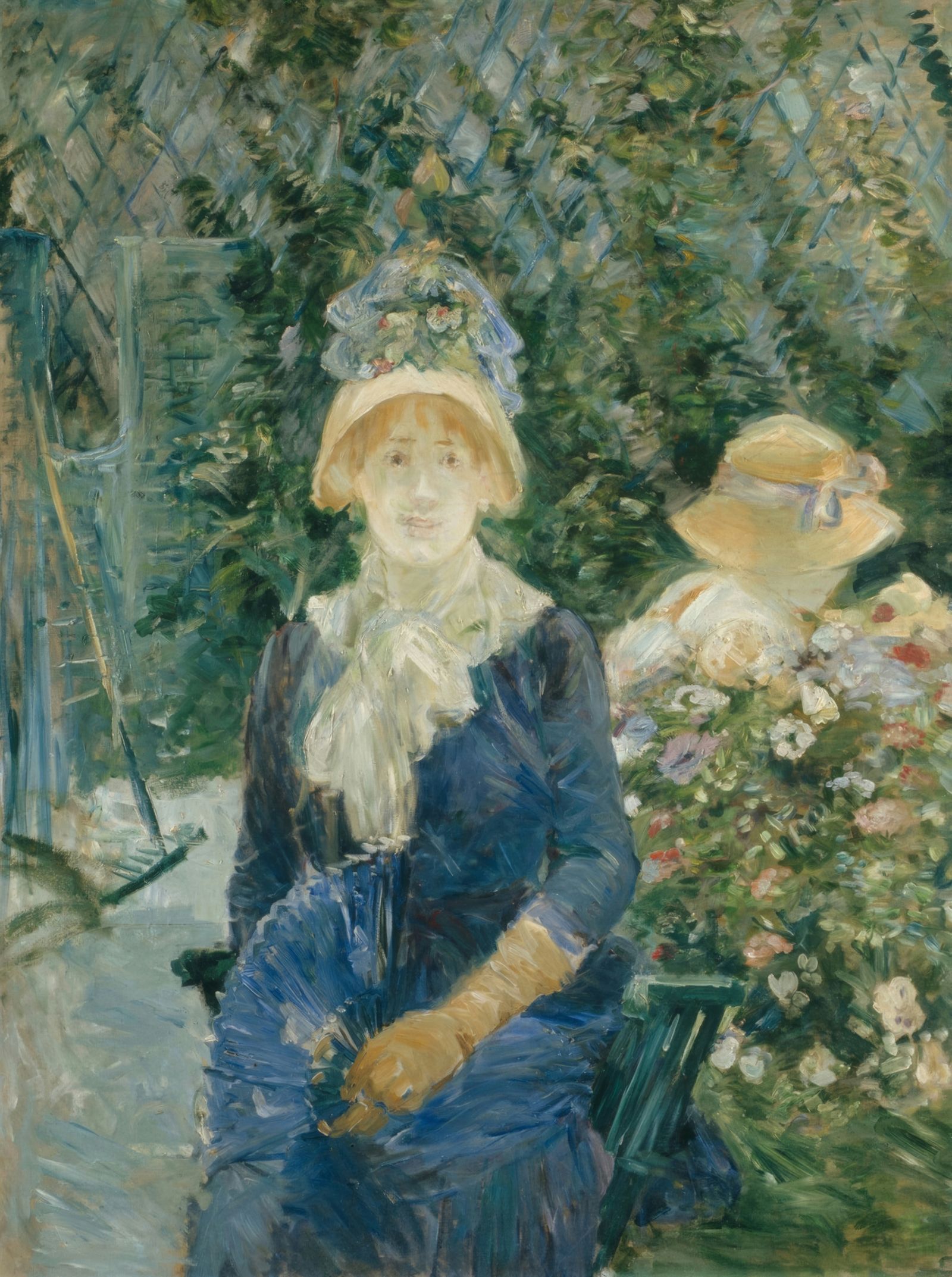
Woman in a Garden · Berthe Morisot, 1882–83 · Art Institute of Chicago. Prepared for print by Surrealium at Vaxholm Fortress, Sweden.
A seated woman looks towards the viewer beneath a pale hat, while another figure turns away among the surrounding foliage. The two directions of attention make the garden feel occupied rather than merely decorative. Compare that arrangement with Cassatt’s close mother-and-child group: here the people share a setting while retaining separate visual roles, which can be a useful idea for a portrait of companions who do not want to be arranged in identical poses.
8. Comparison: Renoir’s Madame Charpentier and her children
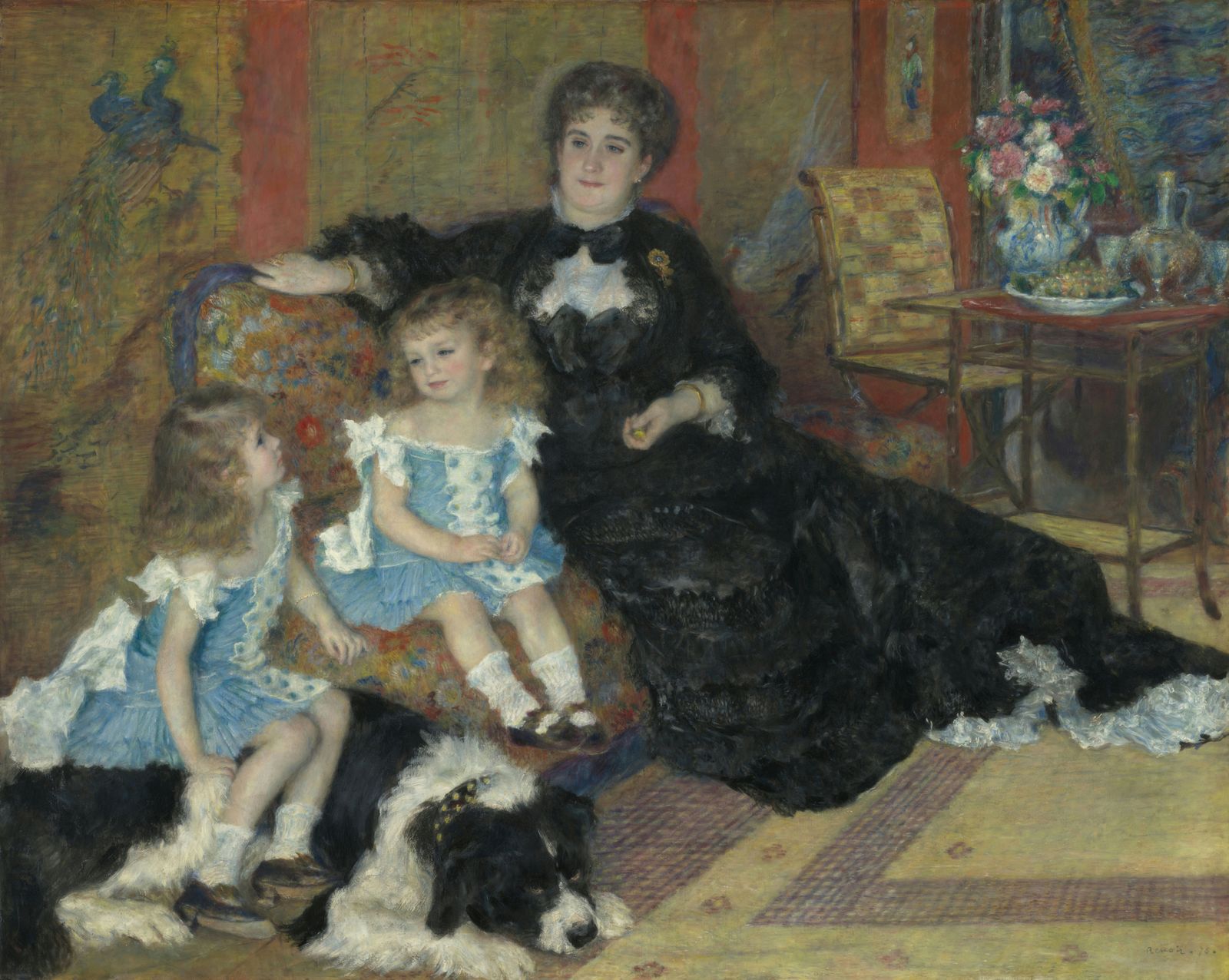
Madame Charpentier and Her Children · Auguste Renoir, 1878 · The Metropolitan Museum of Art. Prepared for print by Surrealium at Vaxholm Fortress, Sweden.
Renoir places the family within a richly furnished room, with the children and a large dog spread across the lower part of the composition. The broad arrangement gives each figure a place while keeping the group connected through proximity and colour. For a family portrait, study the whole painting rather than a crop of the faces; the available Charpentier family style is grounded in this same work, and the original composition explains its family setting.
9. Comparison: Renoir’s Lucie Bérard
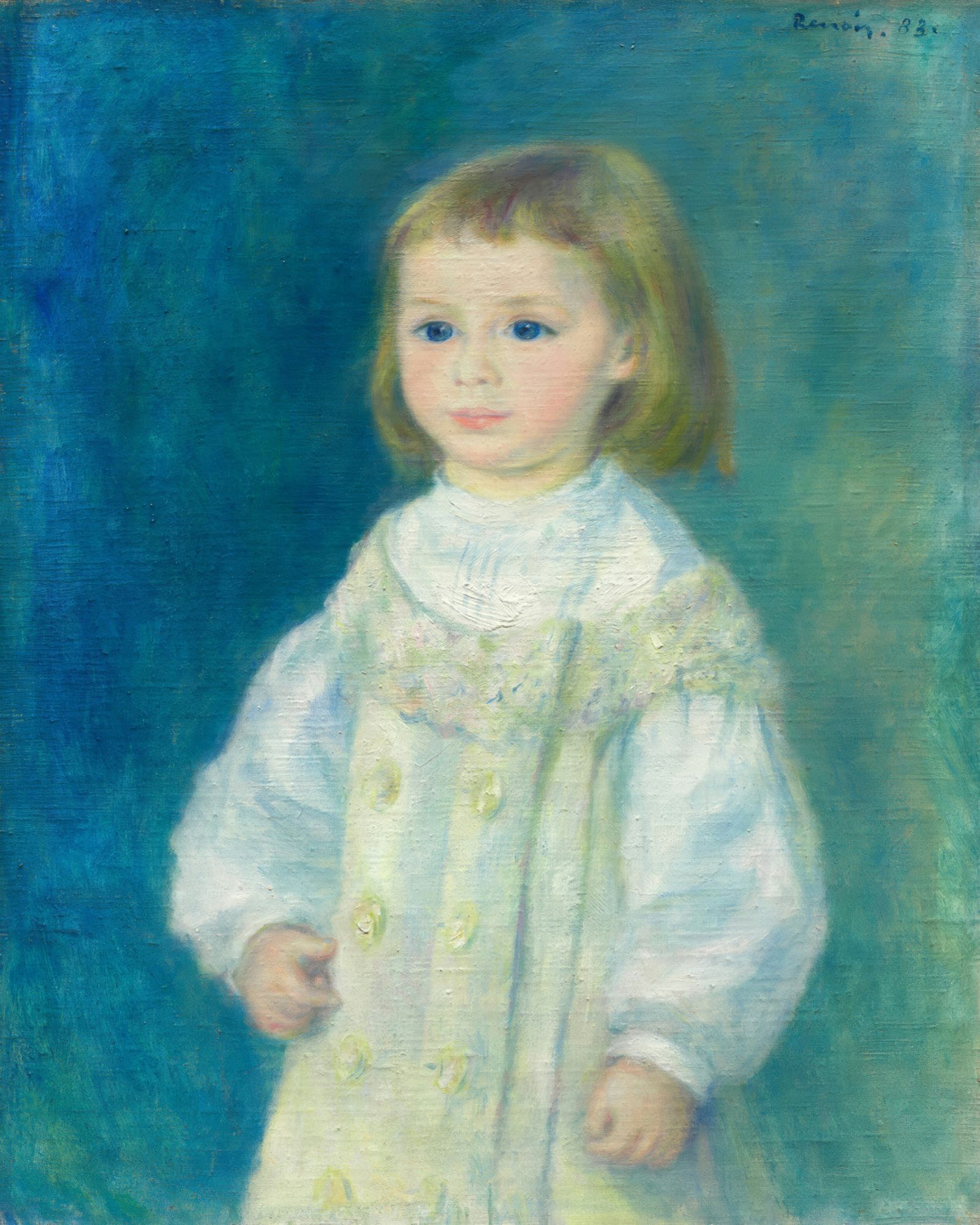
Lucie Berard (Child in White) · Pierre-Auguste Renoir, 1883 · Art Institute of Chicago. Prepared for print by Surrealium at Vaxholm Fortress, Sweden.
The child stands in pale clothing against a blue background, with the head and hands providing small points of definition within a softly painted surface. Unlike the opening Cassatt picture, this portrait gives the child a relatively upright, self-contained presence. Neither approach is a universal model for childhood; compare them with the photograph you actually have and decide whether a contained standing pose or a more relaxed bodily arrangement feels closer to the person you know.
10. Comparison: Manet’s Monet family in their garden
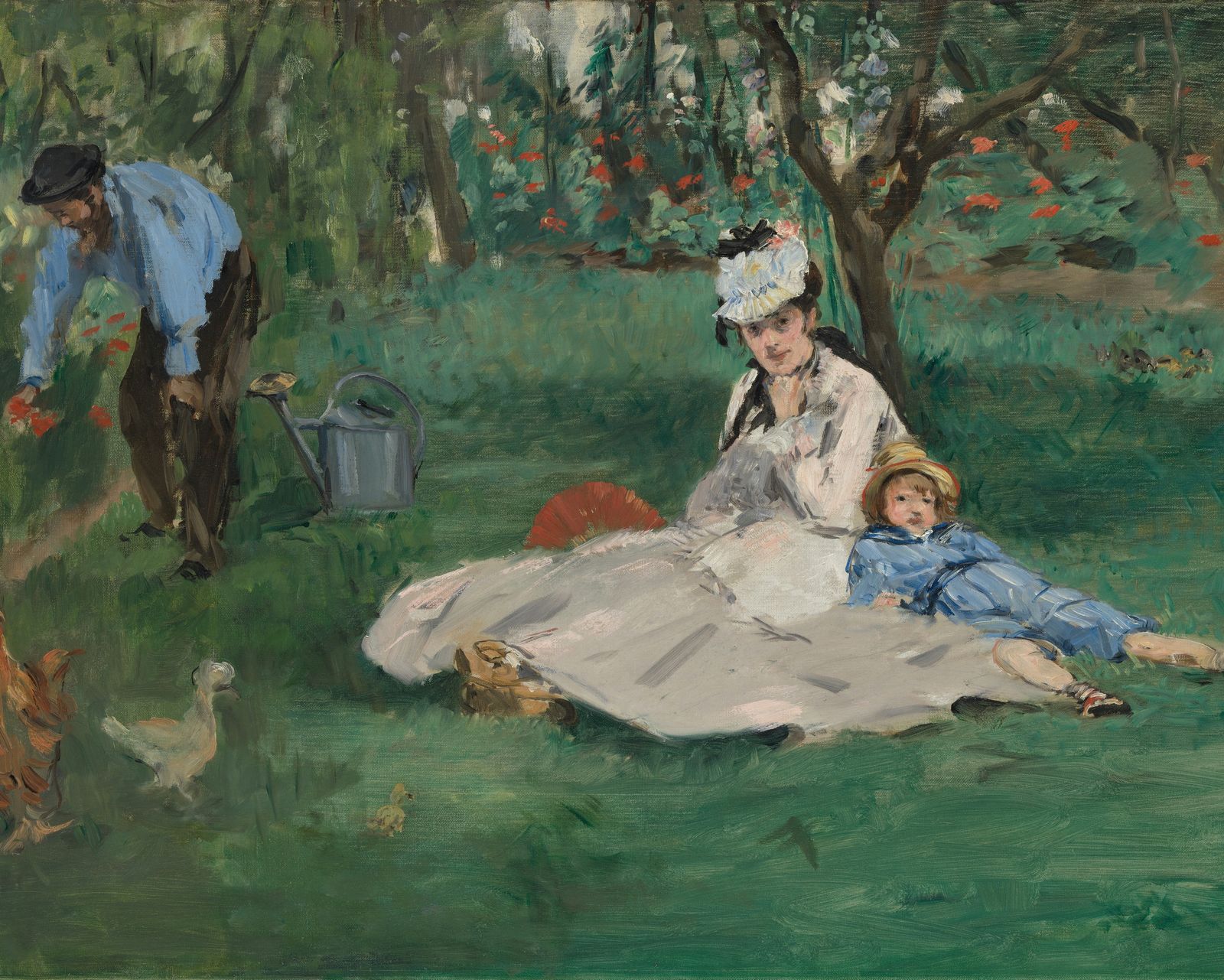
The Monet Family in Their Garden at Argenteuil · Edouard Manet, 1874 · The Metropolitan Museum of Art. Restored by Surrealium at Vaxholm Fortress, Sweden.
Manet places the seated woman and child on the grass, while a standing figure works at the edge of the scene. The surrounding greenery gives the group room to exist without turning every person towards the viewer. This is a family picture by Manet, not by Cassatt or Monet, and the distinction matters; as a portrait reference it suggests the value of a shared setting where different people remain engaged in different parts of ordinary life.
The Little Girl in a Blue Armchair masterwork is worth revisiting after the more formal groups. Its relaxed pose offers one answer, not a rule. Manet paintings and prints continues the comparison, while the family portrait painting guide helps translate a shared scene into a personal brief. Choose the relationship you want to preserve first, then the atmosphere; clear, familiar faces matter more than a collection of borrowed historical props.
- Are all ten works by Mary Cassatt?
- No. The first four are Cassatt works. The remaining six are explicitly labelled comparisons by Berthe Morisot, Renoir and Manet, included to explore different approaches to everyday and family life.
- Did Cassatt make prints as well as paintings?
- Yes. Woman Bathing and Gathering Fruit are prints in this selection. Their clear areas of colour and line should be discussed as part of their printmaking medium.
- Does a child need a formal pose for a portrait?
- No. A familiar resting, standing or attentive pose may be more convincing. Start with a clear photograph the family likes, with the child’s face visible and the body’s natural proportions preserved.