Medieval portrait: looking beyond the costume
A guide to late medieval faces, sacred settings and later revivals, with honest labels for each kind of image.
A medieval portrait search can lead to very different things: a historic likeness, a sacred figure, a later artist's imagined Middle Ages or a contemporary portrait with period references. Keeping those categories separate makes the pictures more interesting, not less. A nineteenth-century knight is evidence of a later fascination with the past, not a surviving medieval sitter.
The works here let you compare those distinctions. Look first at the figure's scale, gaze and setting. Then read the date and attribution. If you want a contemporary portrait, take a clear visual idea from the reference while preserving the identity and expression of the person in your photograph.
Begin with a face, not a period label
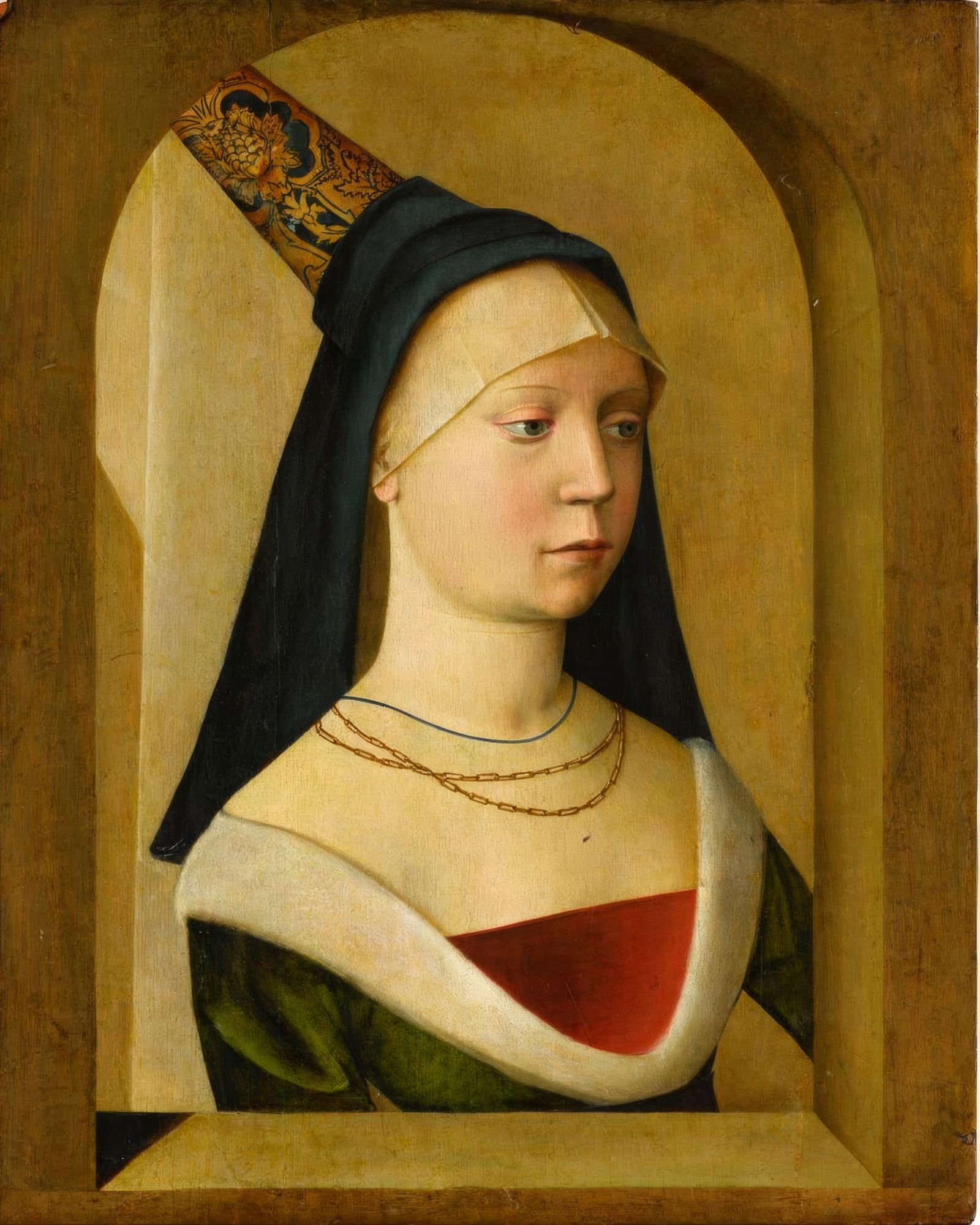
Portrait of a Woman · Netherlandish or French · ca. 1470–80 · The Metropolitan Museum of Art. Restored by Surrealium at Vaxholm Fortress, Sweden
The woman in this late fifteenth-century portrait appears beneath a painted architectural surround. Her headdress and veil make a strong silhouette, but her face remains the centre of attention. The painted arch belongs to the composition; it should be seen with the figure rather than removed to isolate the head.
Observe the relationship between the pale fabric, darker clothing and skin. A limited set of contrasts can organise a portrait without a complicated background. If this kind of restraint appeals to you, describe it directly. “A clear face, a quiet setting and a strong fabric silhouette” communicates more than an undifferentiated request for something medieval. It also helps you avoid piling unrelated objects into the scene merely because each seems old: a crown, a sword and a manuscript do not automatically belong together.
Understand why categories overlap
Art-historical period boundaries do not change on one universal date. Late medieval and Renaissance practices can overlap across places and kinds of object. A catalogue may group a fifteenth-century work under Renaissance while a viewer notices features associated with late medieval portraiture. The caption's date and attribution are more useful than forcing every picture into a rigid visual formula.
For that reason, this guide uses particular works as references rather than claiming to display a complete medieval portrait tradition. The distinction is especially important when a sacred image appears beside a secular likeness. Both can offer lessons about attention, clothing and space, but they were not necessarily made for the same purpose. A contemporary portrait brief can borrow a compositional idea without claiming that the reference was originally a personal portrait commission.
Sacred figures are not anonymous costume models
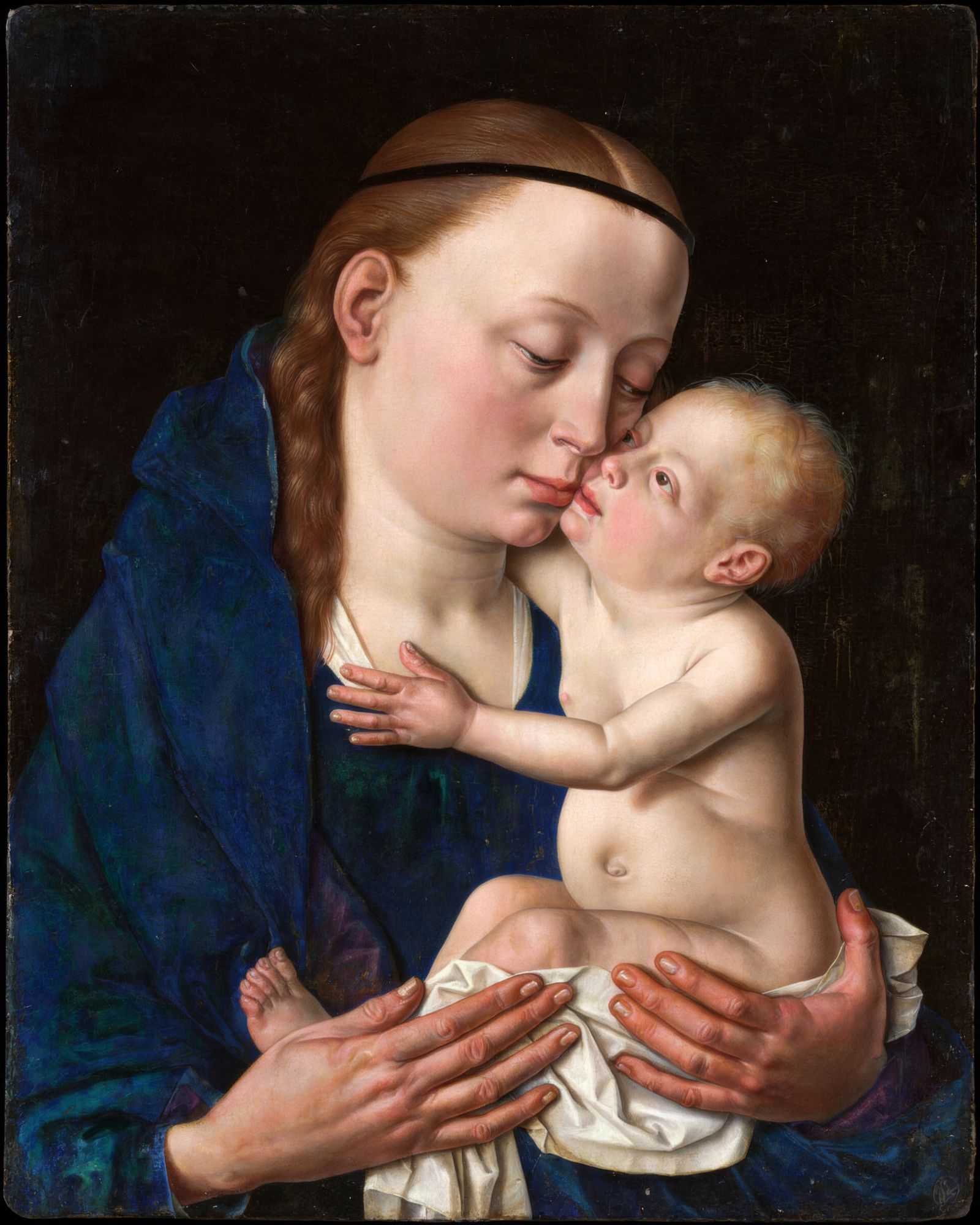
Virgin and Child · Dieric Bouts · ca. 1455–60 · The Metropolitan Museum of Art. Restored by Surrealium at Vaxholm Fortress, Sweden
Dieric Bouts's Virgin and Child belongs to a religious subject. The closeness of the two figures and the quiet arrangement of their gestures should be read within that context. It is not simply a picture of a mother in old clothes. The subject named in the museum record is part of the work's identity.
If you are drawn to the tenderness of such an arrangement, distinguish that response from a request to reproduce its religious meaning. A modern family portrait may use a close grouping while having a different purpose. Equally, a viewer who values the sacred subject should not find it erased from the caption. Name the work accurately, look at the whole image and be explicit about which quality you are discussing: pose, intimacy, colour or iconography.
Describe materials without inventing status
Clothing can help establish a figure's outline and place the image within a historical setting. It does not give us permission to invent a sitter's occupation, character or rank. A richly painted fabric is visible; a story about what its wearer believed may require evidence the picture alone cannot provide.
Apply the same care to a contemporary brief. You can ask for restrained drapery, a pale veil-like shape or a dark background without constructing an imaginary noble ancestry for the person. Do not mistake the apparent precision of a decorative object for historical accuracy. If an exact reconstruction matters, it needs a separate source-based process. For a personal portrait, coherent composition and recognisable features may be more useful goals than a claim that every accessory belongs to a particular decade.
Look at an interior as a complete setting
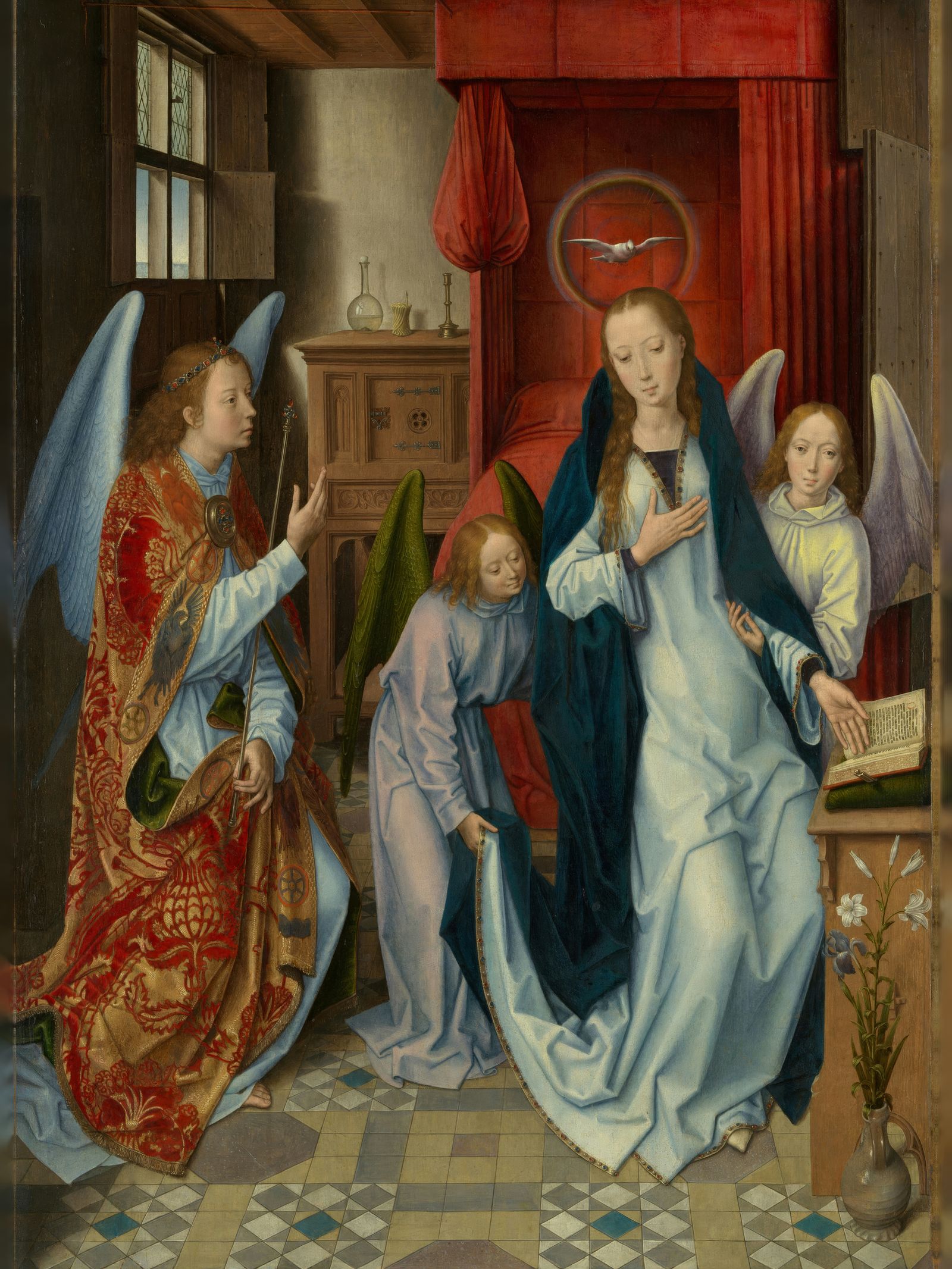
The Annunciation · Hans Memling · 1480–89 · The Metropolitan Museum of Art. Prepared for print by Surrealium at Vaxholm Fortress, Sweden
Hans Memling's Annunciation brings sacred figures into a carefully described interior. Architecture and furnishings establish a space in which the figures act. Their placement is not interchangeable: the relationship between them and their surroundings carries the subject. Seeing the entire composition preserves that relationship.
This offers a practical lesson even when the intended portrait has no religious theme. Decide how much room a background needs and what role it plays. A small figure in a substantial interior produces a different experience from a face filling the frame. If your source photograph contains only a tight headshot, keep expectations about a complex body pose grounded. Begin with the available information and the current portrait options rather than assuming that an elaborate setting will solve every missing detail.
Recognise the medieval revival
Later artists repeatedly imagined medieval stories, clothing and romance. Their works can be beautiful references, but the date belongs in the foreground. A Victorian interpretation reflects the choices of its own maker and period. Calling it an authentic medieval portrait would hide the very history that makes the image distinctive.
For a contemporary portrait, “inspired by a later medieval revival” can be a perfectly useful description. It is simply different from “based on a medieval likeness.” Decide which you mean. If your attraction is to woodland colour, dramatic drapery or a literary atmosphere, say so. That makes the brief clearer and avoids suggesting that every romantic image with a knight gives a factual account of medieval life or of the people who lived it.
Read a later story before borrowing its mood
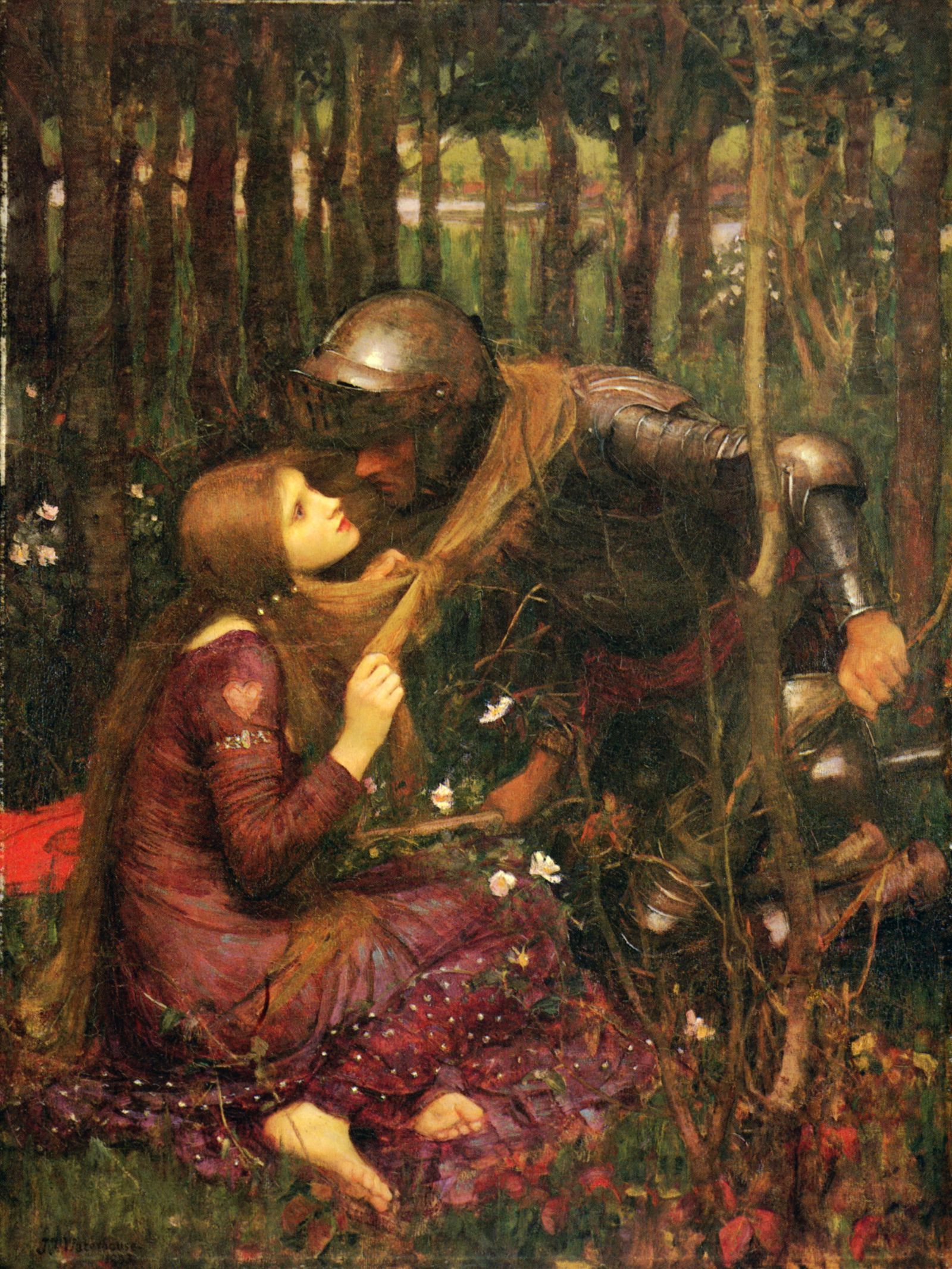
La Belle Dame sans Merci · John William Waterhouse · 1893 · Hessisches Landesmuseum, Darmstadt. Prepared for print by Surrealium at Vaxholm Fortress, Sweden
John William Waterhouse's La Belle Dame sans Merci is dated 1893. The knight and woman in the wood belong to a later literary and visual imagining of the Middle Ages. The close encounter and rich red fabric can draw the eye, but the picture should not be presented as a straightforward record of medieval courtship or an uncomplicated wedding scene.
When choosing any narrative reference, learn its subject before turning it into a celebration. A picture that looks romantic at first glance can carry tension, separation or danger. You may still value its colour or arrangement, but make that an informed choice. For a personal portrait, start with the relationship you want to express now, then find a current style that supports it without importing a story the recipient would not welcome.
Continue with medieval art prints, with the late-Gothic and Renaissance boundaries kept clear, knights and ladies: ten paintings of medieval romance, custom portrait: choose the person before the style, renaissance portrait: presence without a grand pose, and the full catalogue record for Portrait of a Woman.
Use the style library to compare the current portrait directions, with the historic references clearly distinguished from later revivals. A useful brief names a pose, a palette and an atmosphere. It does not need an invented title or ancestry to give the person a memorable place in the picture.
- Were portraits made in the Middle Ages?
- Medieval art includes representations of particular people as well as sacred and ideal figures. This guide concentrates on a small group of catalogue references near the late medieval period and on a clearly dated later revival; it is not a complete survey.
- Is a Victorian knight painting medieval art?
- It is a later interpretation of a medieval subject. The distinction matters: a work made in 1893 tells us about its nineteenth-century artist as well as the story it depicts. Keep the actual date in its caption.
- Can a medieval-inspired portrait be simple?
- Yes. A quiet ground, restrained colour and a clear facial silhouette can supply the qualities you want. Elaborate props are optional, and a contemporary portrait need not invent rank or a historic biography for its sitter.
- Should I use a religious painting as a portrait reference?
- Only with an understanding of its subject and the intended recipient’s preferences. You can discuss the arrangement of figures without stripping away the sacred identity of the original. Choose a different reference when that context would be uncomfortable.