Medieval art prints, with the late-Gothic and Renaissance boundaries kept clear
medieval art prints: Ten catalogue works with their own dates, subjects and clearly identified image versions.
Medieval art prints is a broad search that often reaches into late-Gothic and Northern Renaissance work. Those labels should not be collapsed into one era. This selection begins with Schongauer, Rogier and Memling, then includes Bosch and Dürer as named comparisons at the boundary. The individual catalogue date, attribution and medium remain more precise than any shopping label.
The works below also arrive in different displayed versions. Some historical prints are offered as contemporary colour interpretations, clearly identified in the captions; the added colour is not presented as an original medieval palette. Use the list to choose a subject and a kind of looking, then follow the specific masterwork for its source information and current print options. A modern reproduction can be enjoyed honestly without pretending to be an antique impression or flattening several centuries into a single decorative mood.
1. An elephant in the late-Gothic imagination
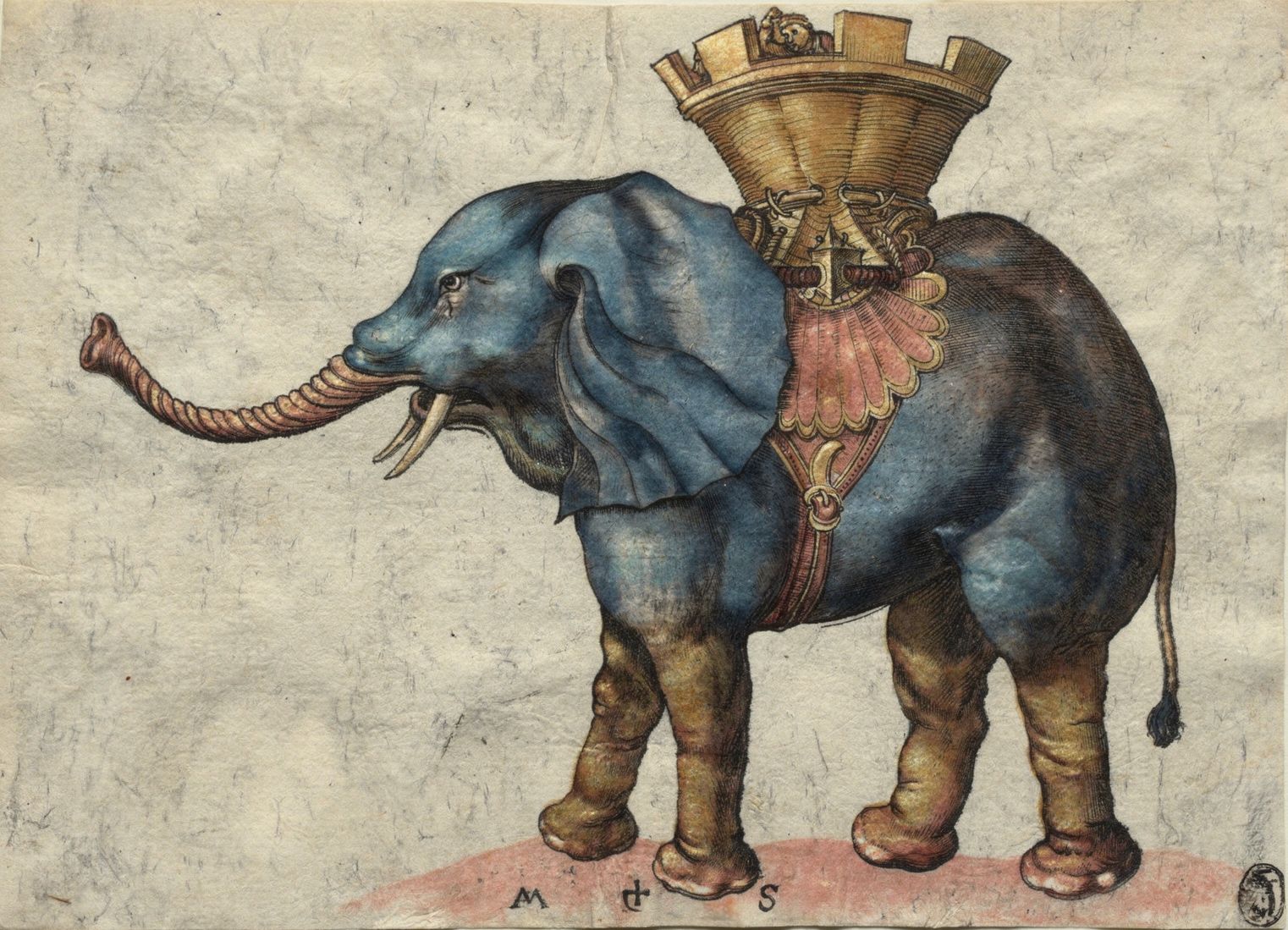
An Elephant with Howdah · artist: Martin Schongauer (German, c. 1450–1491) · c. 1485 · Cleveland Museum of Art · Fable contemporary colour interpretation after the historical work
Schongauer's named subject offers a different route from saints and devotional figures. Choose it if the animal and its historical representation interest you. Read the catalogue page for the source medium and the version offered; a contemporary colour interpretation is not evidence of an original coloured impression. Keep the complete animal and surrounding composition visible when planning a print, rather than selecting a frame that trims it into a decorative fragment.
2. Saint George as a narrative picture
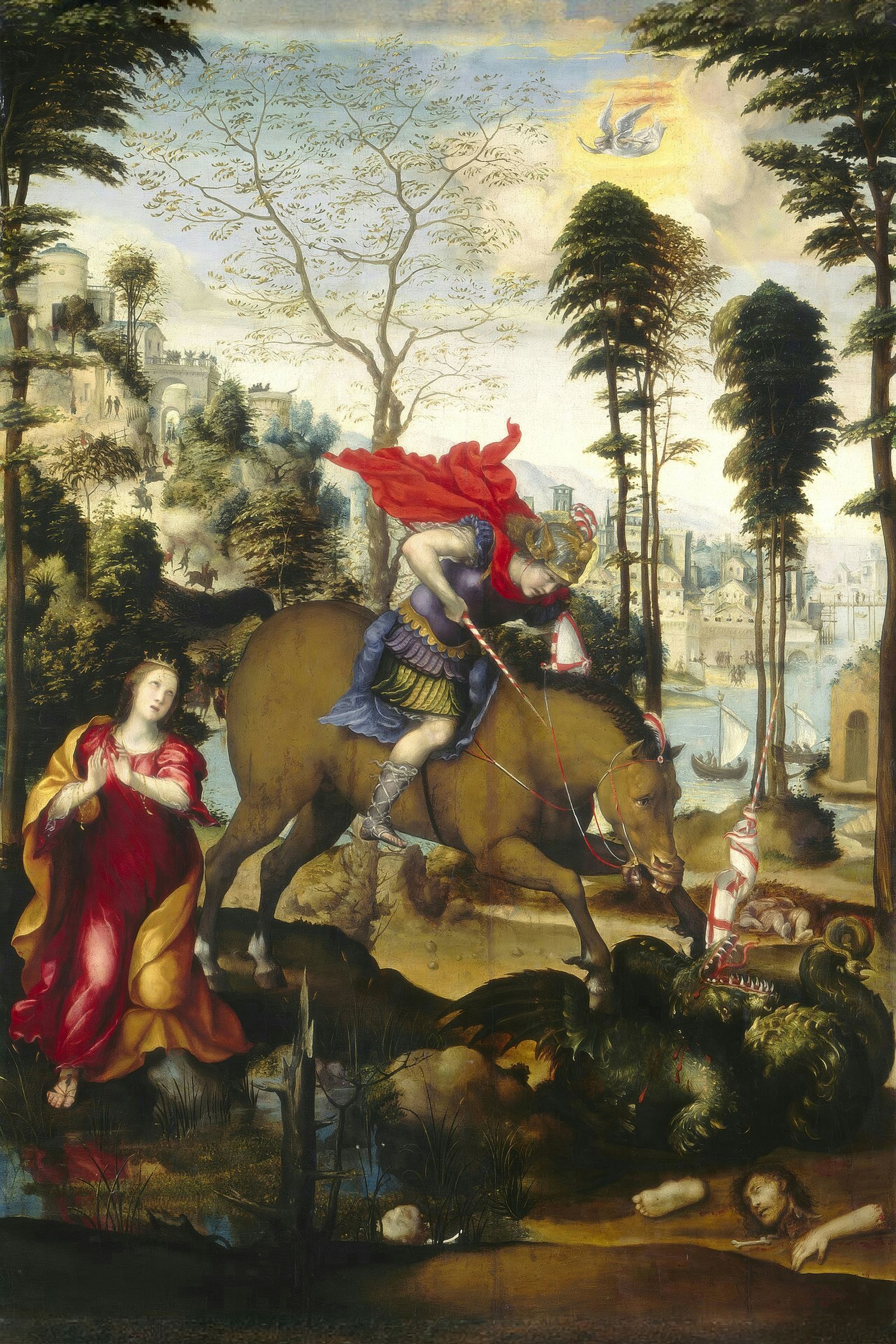
Saint George and the Dragon · Sodoma · probably 1518 · National Gallery of Art, Washington
Rogier van der Weyden's subject belongs to a recognisable sacred story, but the picture should be chosen as a specific work rather than a generic medieval motif. Inspect the full scene and the holding collection's catalogue information. Consider whether you want a religious narrative in the intended room. A reproduction can preserve the work's complete composition while its source attribution remains part of the information you keep with it.
3. The angel as one part of an Annunciation
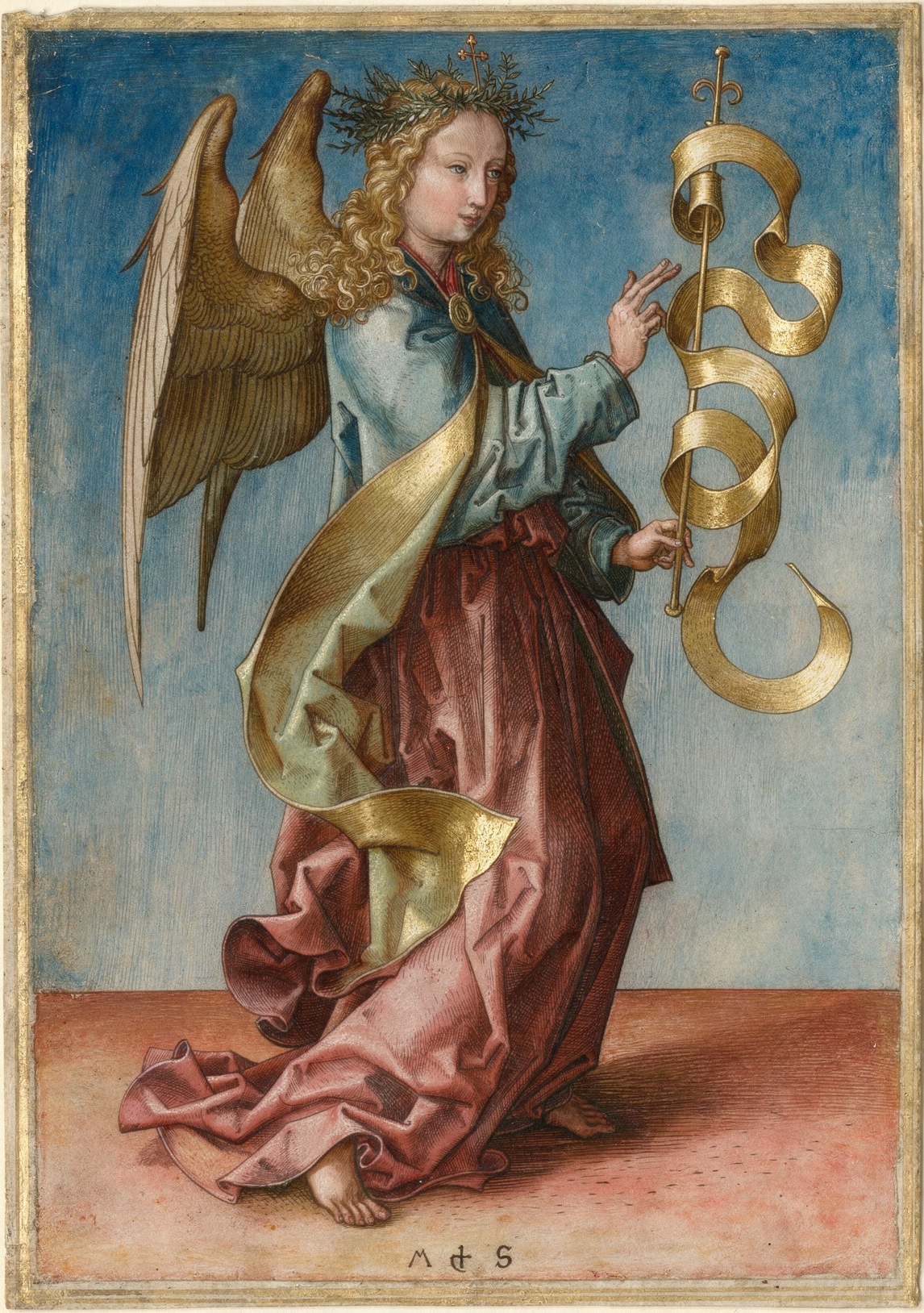
The Angel of the Annunciation · artist: Martin Schongauer (German, c. 1450–1491) · c. 1470–75 · Cleveland Museum of Art · Fable contemporary colour interpretation after the historical work
A separately catalogued angel image invites close looking at a figure and its role. Read the source information before assuming the work was conceived as a standalone wall painting. The medium matters, as does the displayed version. If the catalogue offers contemporary colour after a historical print, choose that knowingly. Its appeal can be real without presenting the modern colour decisions as the original artist's surviving palette.
4. A griffin for a reader of imagined beasts
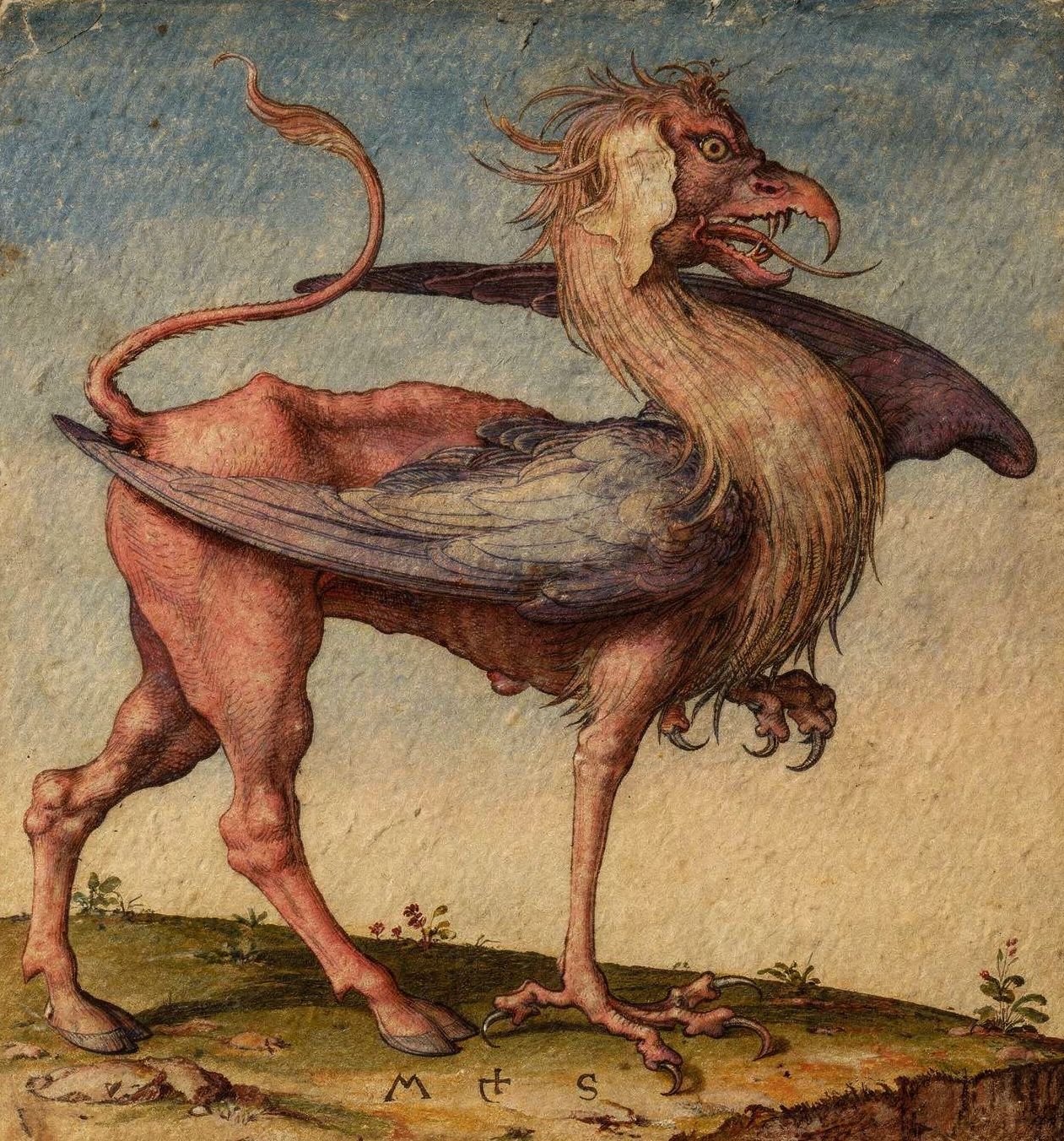
The Griffin · artist: Martin Schongauer (German, c. 1450–1491) · c. 1480–90 · Cleveland Museum of Art · Fable contemporary colour interpretation after the historical work
Schongauer's griffin may appeal to someone who enjoys creatures and the visual imagination of older art. Choose it for the work itself rather than calling every fantastic animal heraldic. The catalogue record identifies its source and medium. If the displayed image is an interpretive colour version, preserve that description. A gift note can explain the recipient's interest in beasts without inventing a historical symbolism for every anatomical detail.
5. Saint Anthony and a demanding subject
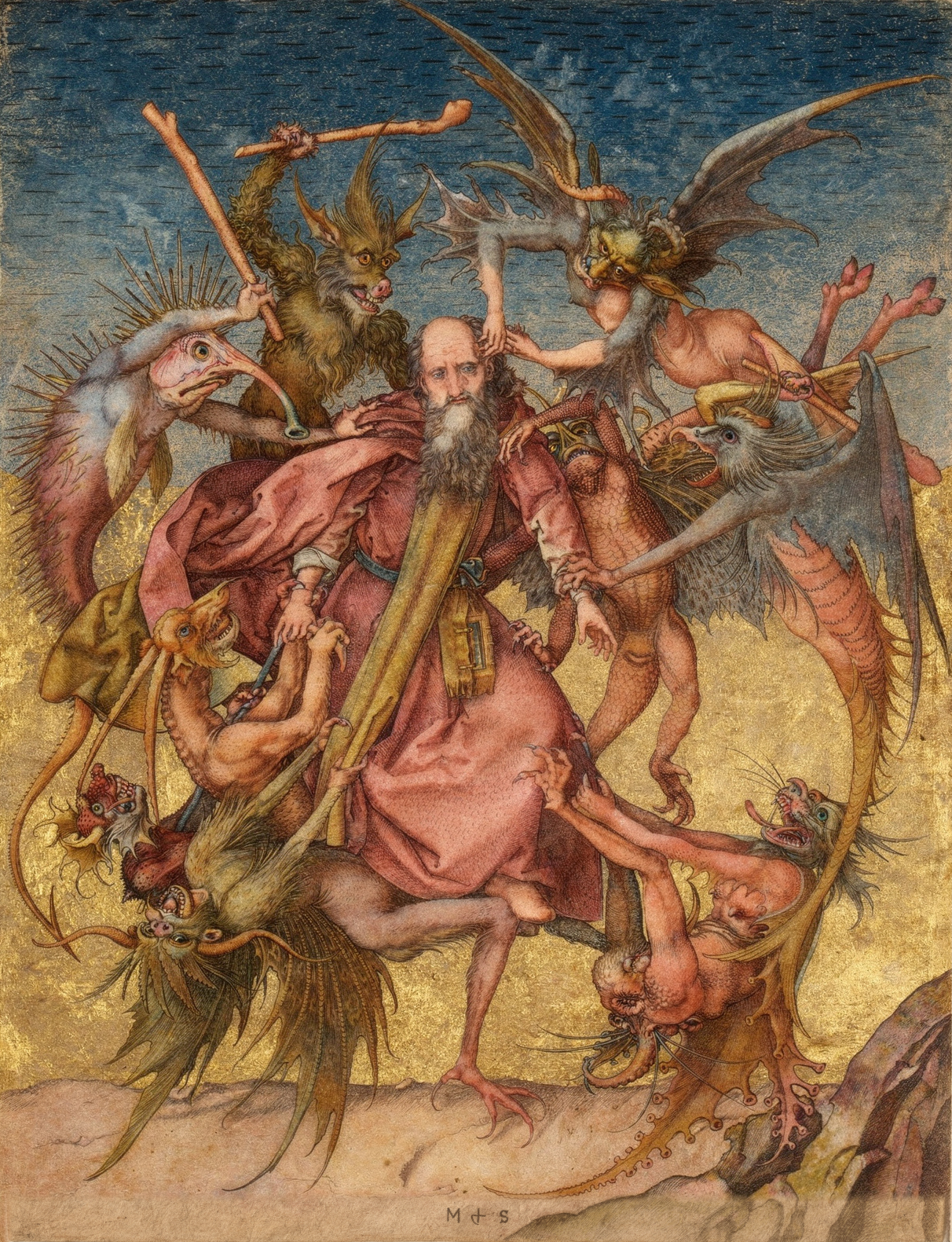
The Temptation of Saint Anthony · artist: Martin Schongauer (German, c. 1450–1491) · 1470–75 · Cleveland Museum of Art · Fable contemporary colour interpretation after the historical work
A temptation scene may reward time and close inspection. It may also be too unsettling for a bedroom or a gift recipient who prefers quieter pictures. Look at the full work before buying, and read the source caption rather than choosing from a small thumbnail. The modern reproduction and any colour interpretation should remain distinct from the historical print that supplied the image.
6. A small devotional subject
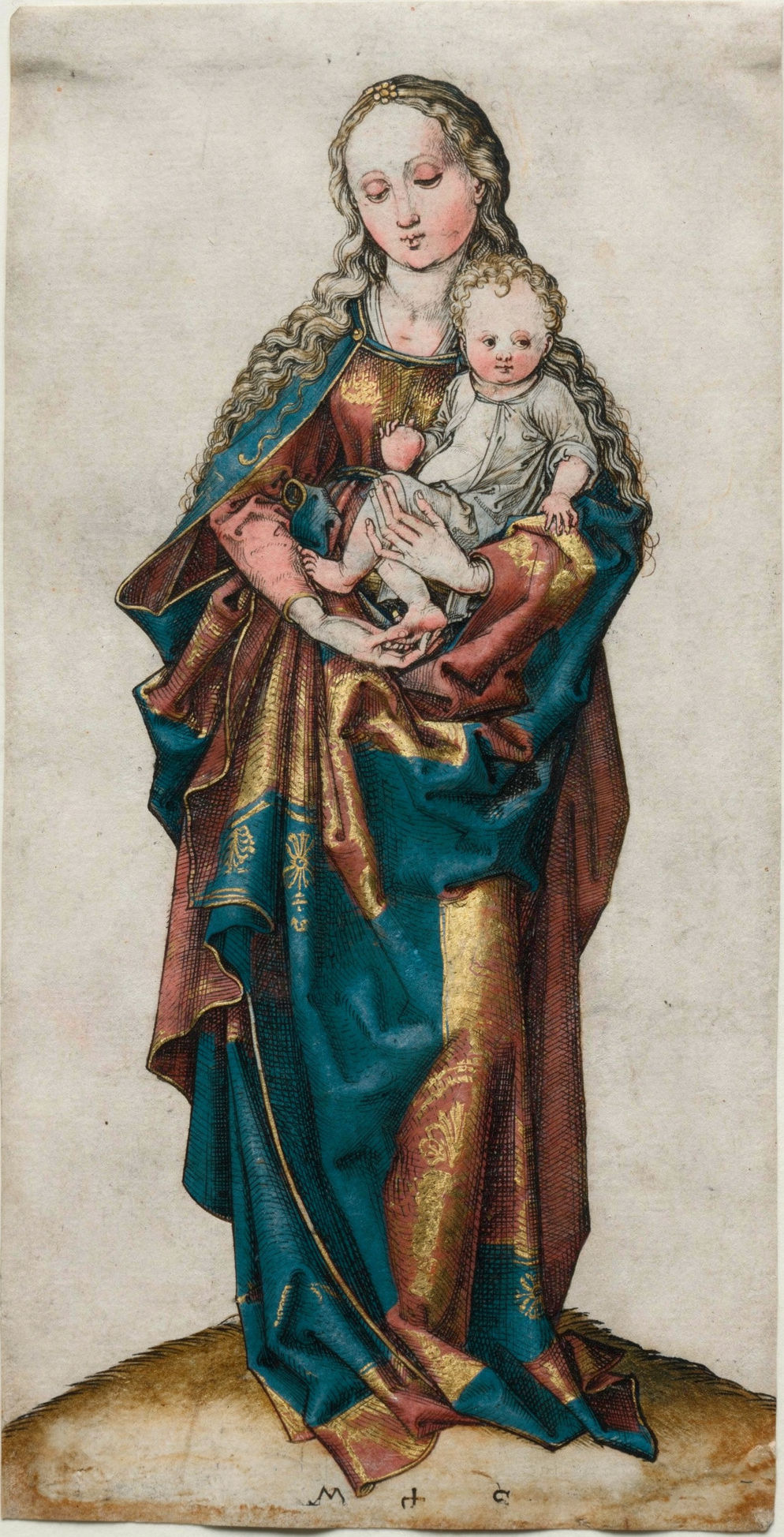
The Virgin and Child with an Apple · artist: Martin Schongauer (German, c. 1450–1491) · c. 1475 · Cleveland Museum of Art · Fable contemporary colour interpretation after the historical work
The Virgin and Child with an Apple offers another point of entry into a late-Gothic print tradition. Choose it with awareness of its devotional subject. A small, carefully placed print can be effective when viewers can approach it, but confirm the offered dimensions and image detail first. Avoid reducing the work to a decorative apple motif; the figures and their relationship are part of its identity.
7. The Virgin of the Annunciation as a figure study
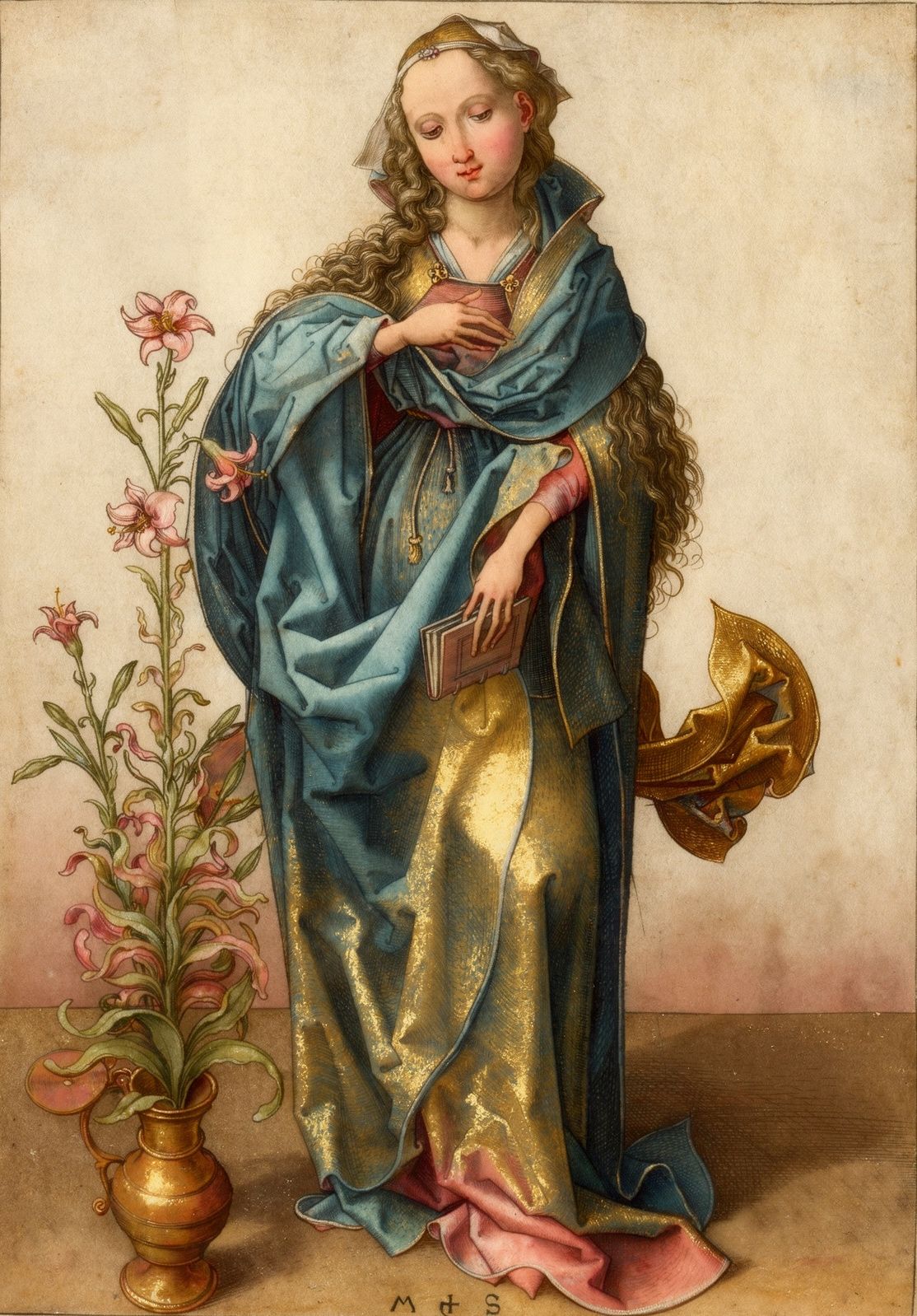
The Virgin of the Annunciation · artist: Martin Schongauer (German, c. 1450–1491) · 1470–80 · Cleveland Museum of Art · Fable contemporary colour interpretation after the historical work
This figure can be compared with the angel above without assuming that any two print pages form a matching commercial pair. Check the exact source descriptions, proportions and offered sizes. If you choose both, use space and presentation to connect them while keeping each whole. Where the catalogue labels a contemporary colour interpretation, that label belongs with the work rather than disappearing once it becomes a gift.
8. Memling’s Annunciation, chosen as a complete work
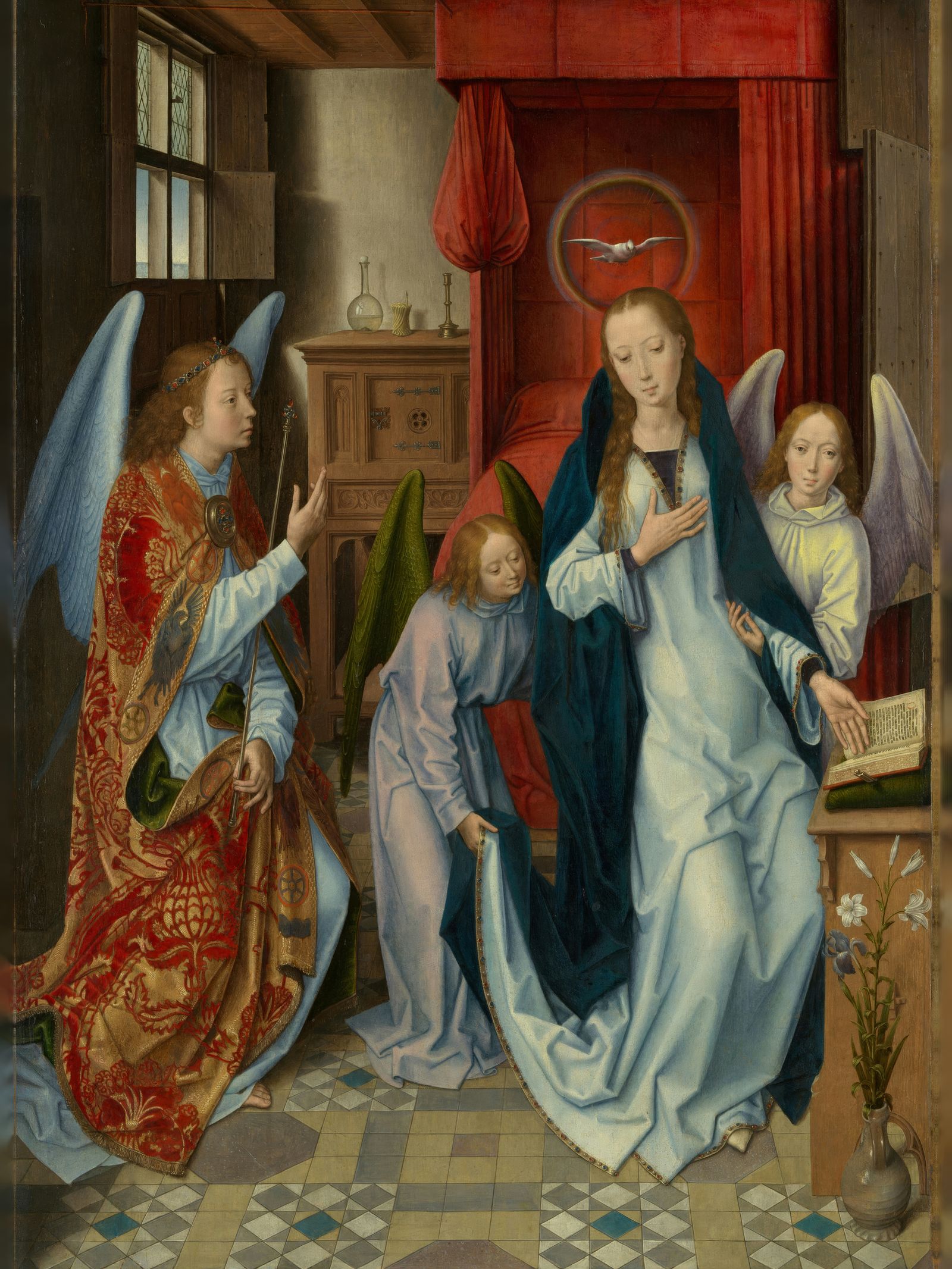
The Annunciation · Hans Memling · 1480–89 · The Metropolitan Museum of Art
Memling offers a painting to compare with the print-based subjects above. The change of medium is part of the choice, so inspect the catalogue record and complete image. A late-medieval or early-Northern-Renaissance search can bring together different kinds of work, but their dates and attributions should remain specific. Choose the named painting for its own composition rather than treating the period label as a guarantee of one visual style.
9. Bosch without reducing him to monsters
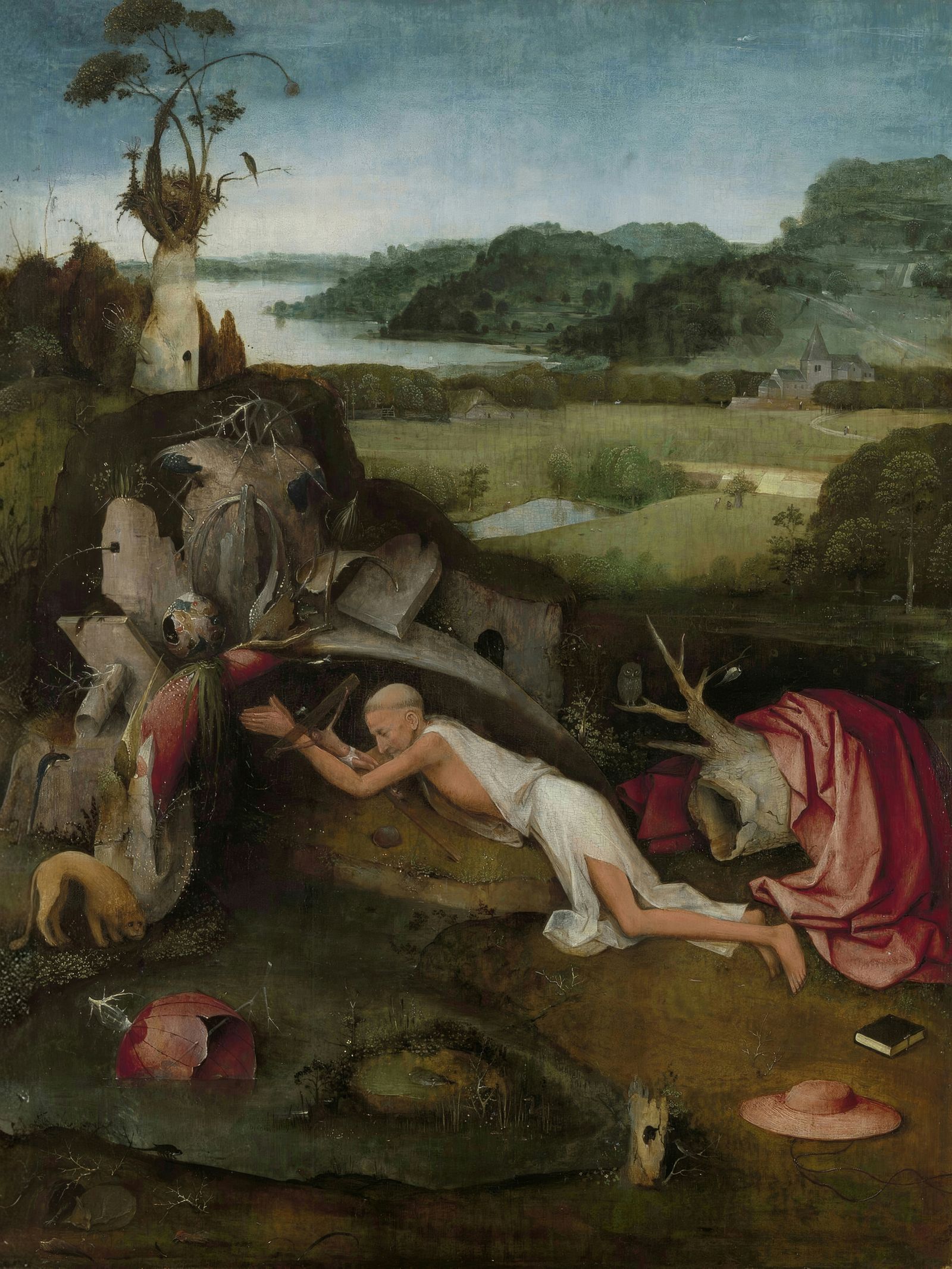
Saint Jerome at Prayer · Hieronymus Bosch · c. 1485–1495 · Museum of Fine Arts Ghent
Saint Jerome at Prayer offers a route into Bosch that begins with a named devotional subject. Read the catalogue attribution and inspect the whole work. Do not assume that every Bosch-related image is an intact original composition rather than a detail, workshop work or modern interpretation. The source page matters. For a print, keep the full catalogued image visible and choose a size suited to the time you want to spend with it.
10. Dürer at the Northern Renaissance boundary
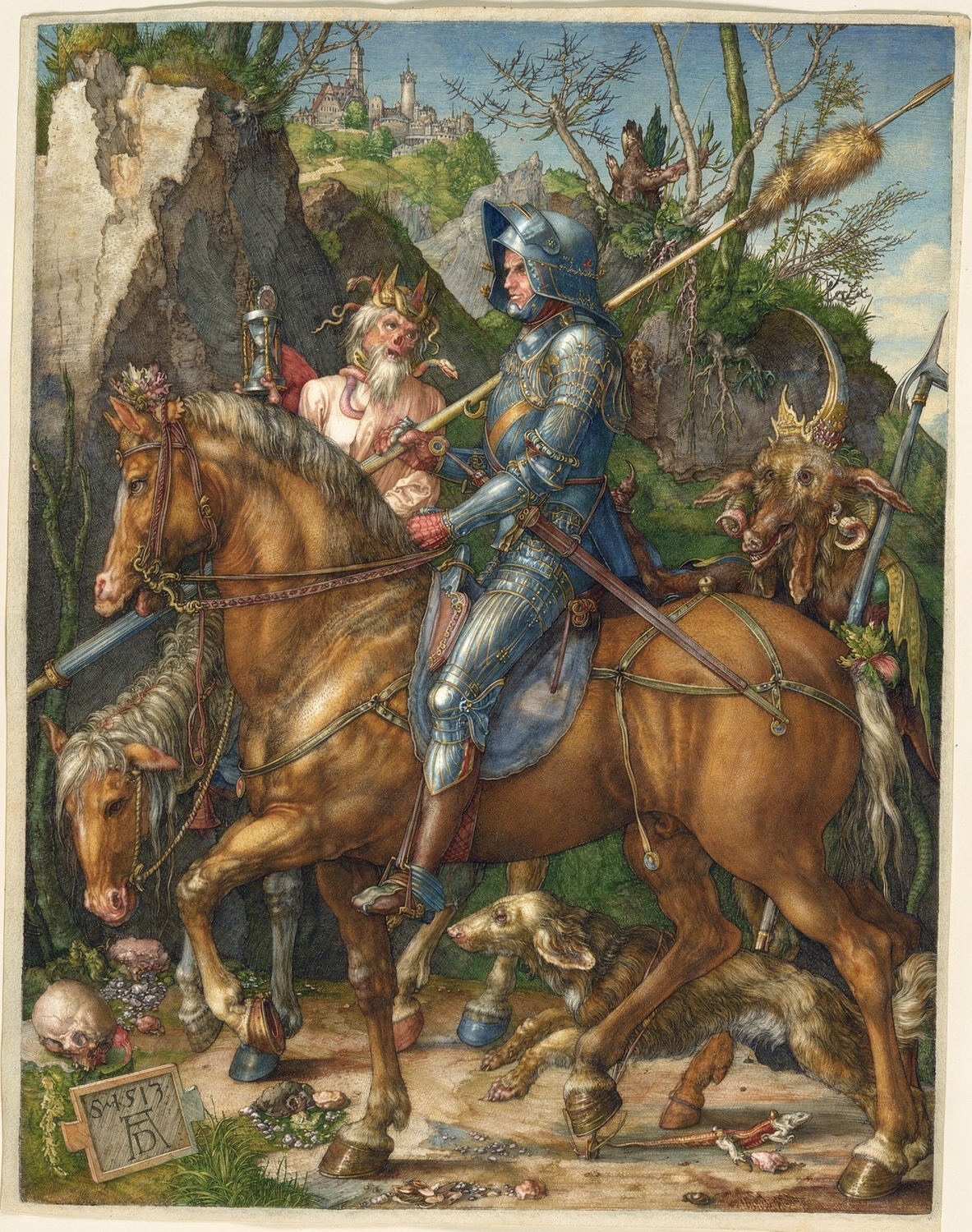
Knight, Death, and the Devil · Artist: Albrecht Dürer · 1513 · The Metropolitan Museum of Art · Fable contemporary colour interpretation after the historical work
Knight, Death, and the Devil belongs here as a clearly identified Northern Renaissance comparison, not as a work relabelled medieval. It can help you decide whether your interest is in a late-Gothic atmosphere, a historical period or a particular artist's printmaking. Read the medium and source date on the catalogue page. Any contemporary colour version should be chosen with that distinction visible, rather than mistaken for an original impression.
Choose the work whose subject you want to keep seeing, then read its own catalogue record before ordering. The period, medium, attribution and displayed version all help explain what you are buying. Keep the artwork whole, compare the current print dimensions and plan the frame afterwards. If your interest is strictly in medieval work, use the dates to narrow your choice; if you also enjoy Northern Renaissance prints, let that be explicit. A coherent wall can include both without making them historically interchangeable.
Explore historical masterworks
- Are all these works medieval?
- No. The selection includes late-Gothic work and clearly identified Northern Renaissance comparisons. Read each catalogue date and attribution rather than relying on a broad shopping term. Dürer is not relabelled as a medieval artist here.
- Are the coloured prints shown in their original colours?
- Some catalogue images are contemporary colour interpretations of historical sources. Their captions say so. Those colours should not be presented as original impressions or evidence of the historical printmaker’s palette.
- Am I buying an antique print?
- The current ordering pages offer modern reproductions or identified contemporary interpretations of the catalogue works. Read the live product description, version and format before purchasing. Keep the historical source attribution with the image.