Baroque portrait: light, gesture and a sense of occasion
Read the movement and restraint in Baroque portraits before choosing a direction for a contemporary likeness.
A baroque portrait can make a small gesture feel expansive. A turn of the shoulder, a bright cuff or a hand emerging from a dark sleeve gives the sitter a presence beyond the outline of the face. The effect is not always theatrical. Some of the most engaging portraits hold movement in reserve and let a restrained expression carry the encounter.
These historic works offer a way to compare that range. Look at the whole composition before selecting a detail. The pose, clothing, light and surrounding space depend on one another; removing the figure from that structure can change the quality that first attracted you.
Start with the balance of the body
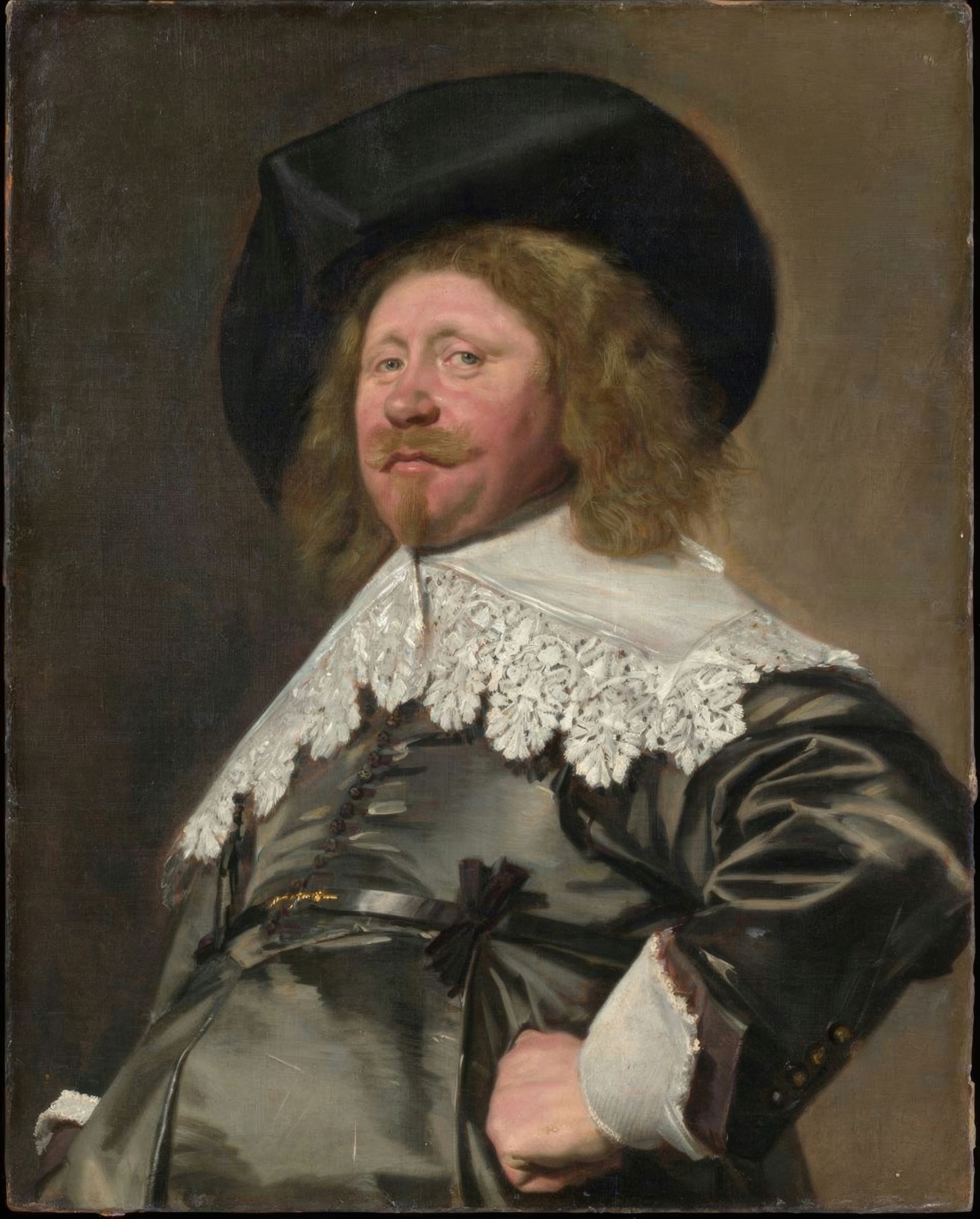
Portrait of a Man, Possibly Nicolaes van Voorhout · Frans Hals · ca. 1636–38 · The Metropolitan Museum of Art. Restored by Surrealium at Vaxholm Fortress, Sweden
Frans Hals's man stands with a broad hat, pale collar and a confident relationship between shoulder and arm. The head does not float above a decorative costume: the body's position makes the expression feel part of a person occupying space. The hand at the hip contributes to that effect.
For a contemporary portrait, look for a source photograph that explains the pose clearly. A face photographed from one angle and shoulders twisting in another may be intentional, but it should be legible. Notice whether the sitter seems at ease. Baroque inspiration does not require an exaggerated expression or a commanding gesture. It can come from a simple shift in weight, a clear direction of light and enough room around the figure for the pose to make sense.
Let highlights guide attention
Pale cuffs and collars can punctuate a dark composition. They draw the eye towards the face and hands, joining the parts of a portrait that often carry its most recognisable gestures. The effect depends on proportion: if every surface is equally bright, there is little hierarchy left for the eye to follow.
When reviewing a source photo, prefer visible facial information to dramatic shadows that erase an eye or the edge of the mouth. You can be attracted to a dark historic painting while still choosing a well-lit contemporary photograph. Darkness in the final atmosphere and missing information in the source are different things. Describe the mood you like, but keep the person's features available. A portrait should remain a likeness when viewed without the surrounding clothing and ornament.
Examine a quieter encounter
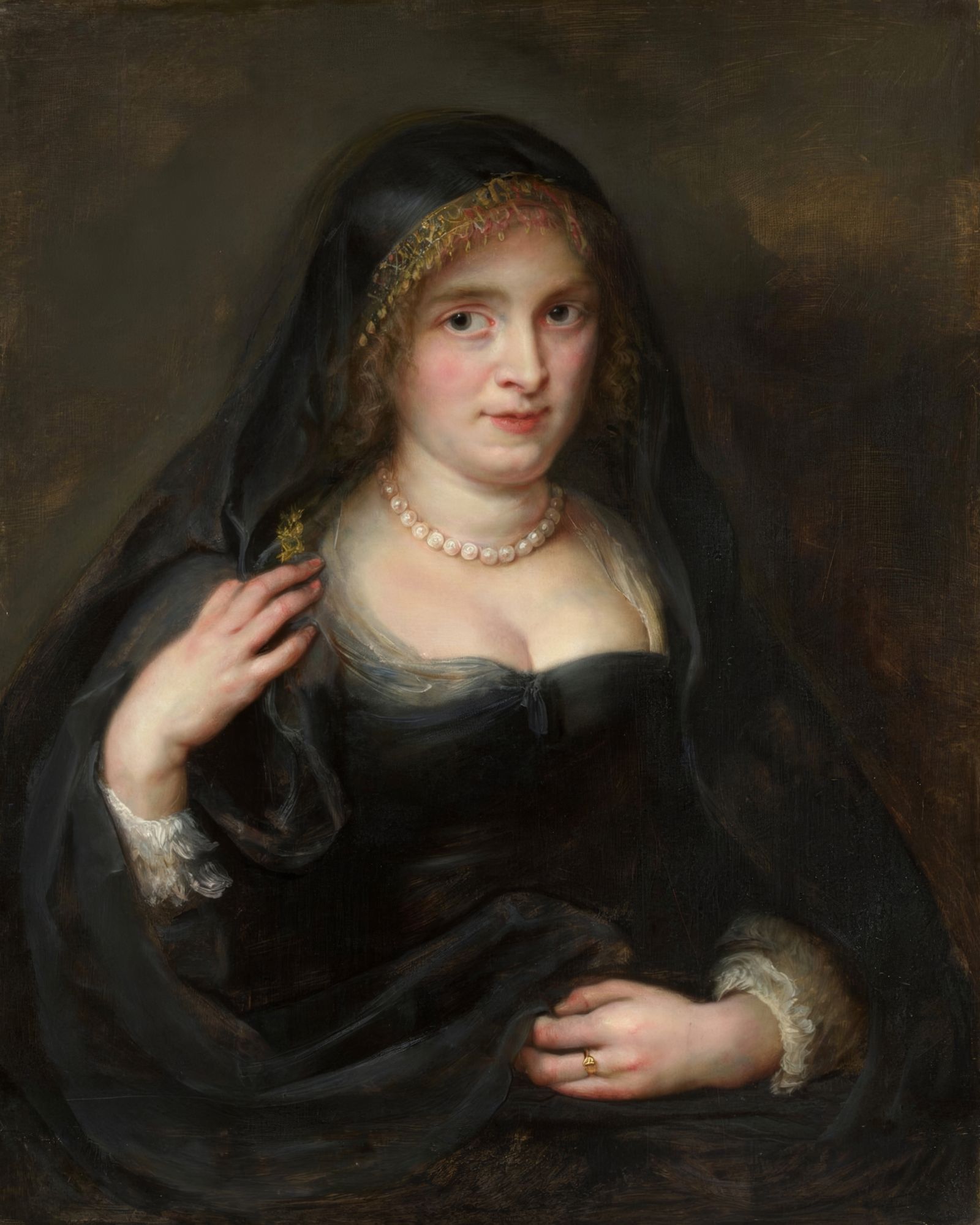
Portrait of a Woman, Probably Susanna Lunden · Peter Paul Rubens · ca. 1625–27 · The Metropolitan Museum of Art. Restored by Surrealium at Vaxholm Fortress, Sweden
The portrait traditionally identified as Susanna Lunden offers a different kind of presence. Dark clothing and a pale, carefully rendered face bring attention to the sitter's expression and the position of her hand. The identification remains qualified in the catalogue, and the caption should preserve that caution.
A quiet image like this is useful when someone likes the richness of Baroque art but would not recognise themselves in an imposing ceremonial pose. Rather than asking for “more drama,” name the actual quality that appeals: a dark ground, luminous skin, a restrained gesture or a limited palette. Each can guide a decision. None requires an invented account of the sitter's personality. A calm expression is something we see; a claim about the person's private thoughts is something else.
Distinguish occasion from character
Formal dress and a grand setting can establish an occasion. They do not prove that the sitter was proud, severe, generous or unhappy. Portraits are constructed images, and a viewer's response should not become an unsupported biography. It is more accurate to describe the effect of a pose than to diagnose the person behind it.
The same restraint is helpful in a gift. Ask whether the recipient would enjoy formality, humour, intimacy or a quieter likeness. Do not assume that a milestone birthday calls for a throne-like setting, or that an older person wants to look stern. Choose the portrait's relationship with the viewer deliberately. A direct gaze and a relaxed hand can feel personal even within elaborate clothing, while excessive props can make the individual secondary to the spectacle.
Look at fabric as movement
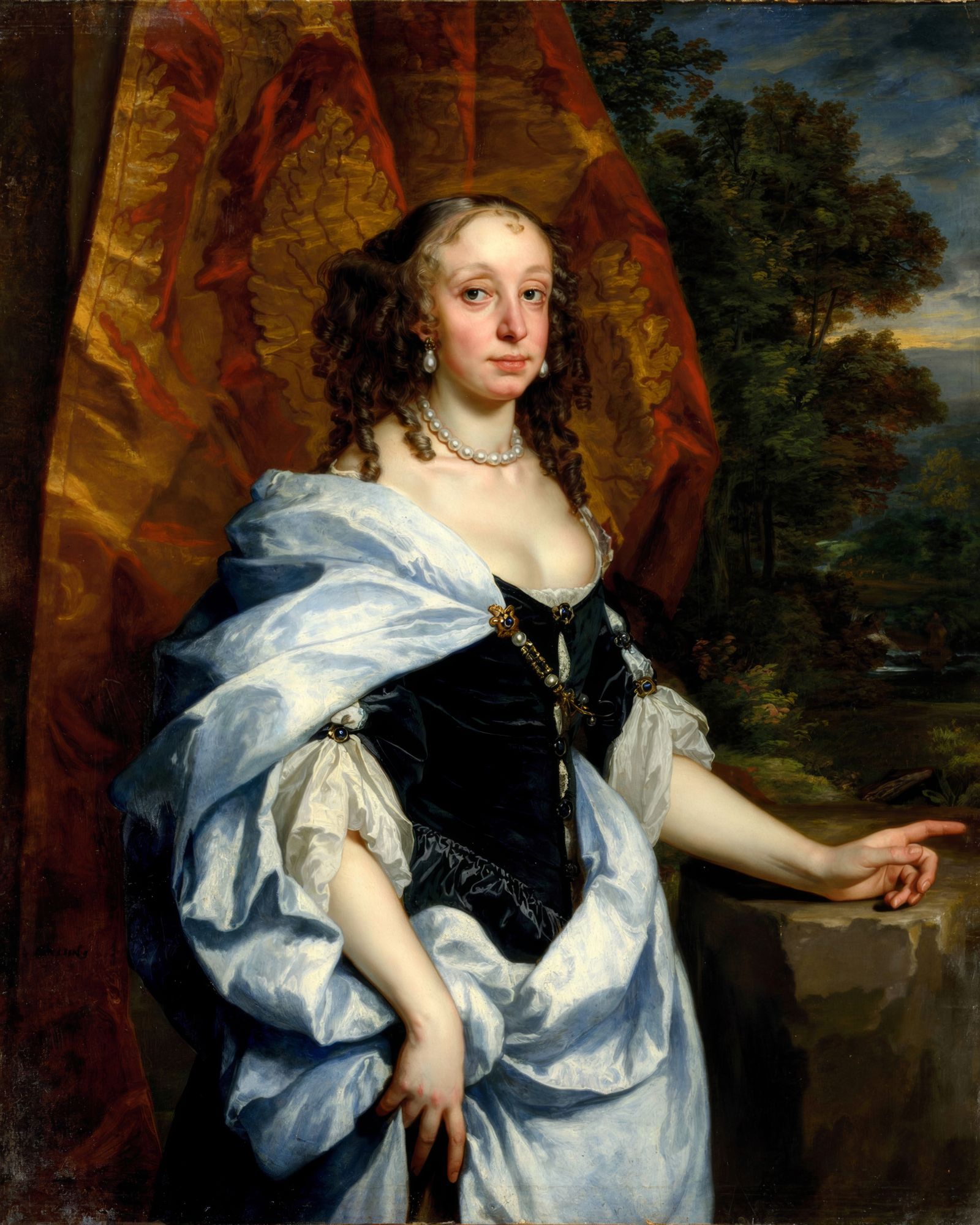
Portrait of Mrs. Leneve · Peter Lely · c. 1657 · Cleveland Museum of Art. Restored by Surrealium at Vaxholm Fortress, Sweden
Peter Lely's portrait of Mrs Leneve uses flowing fabric and a setting that opens beyond the figure. The folds do more than announce a material: they carry the eye across the body and connect the person with the surrounding space. Their direction contributes to the composition's sense of movement.
If this is the quality you want, describe the movement rather than collecting a list of fabrics. A sweeping diagonal, an open shoulder line or a calmer arrangement of sleeves may be the useful observation. Check the current style options for how they handle the whole figure. A beautiful historic drape is not a guarantee that any source photograph will suit the same pose. Start with the person, then judge whether the chosen arrangement supports their expression and posture.
Give the hands a separate review
Hands can disappear into the overall pleasure of a portrait until a small inconsistency becomes difficult to ignore. Review their size, position and relationship to sleeves or objects. A hand should have a clear reason to be where it is, whether resting against the body or lightly holding something.
Choose a source photo with an understandable gesture and avoid unnecessary objects in a brief. If an object matters personally, explain that significance and check its placement in the preview. Otherwise, a simpler pose may be stronger. Review the full image at a modest size as well as inspecting details. A close view can reveal a problem with fingers, but only the whole composition shows whether the gesture directs attention towards the person or sends it away.
Make room for restraint
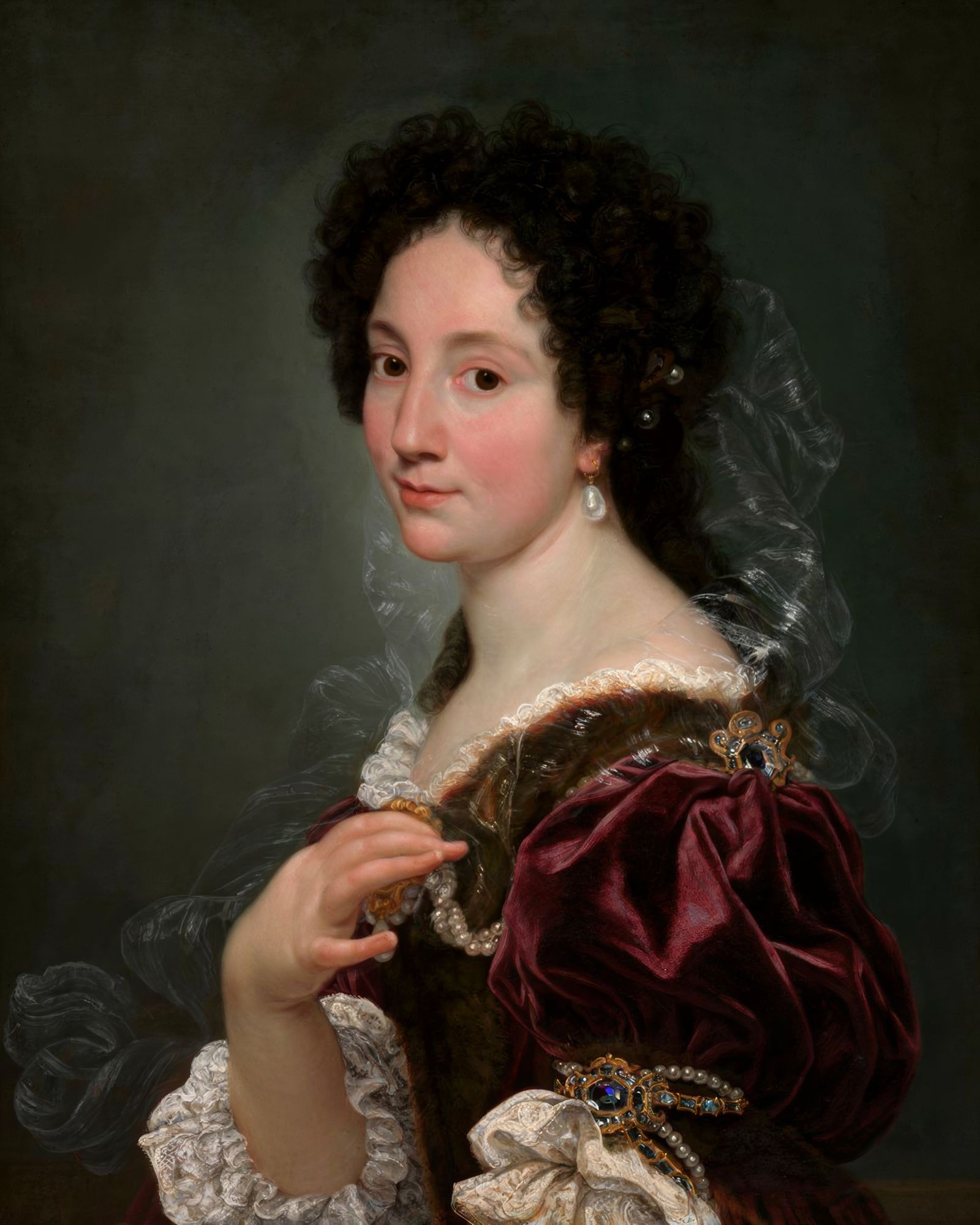
Portrait of a Woman · Giovanni Battista Gaulli · ca. 1670s · The Metropolitan Museum of Art. Restored by Surrealium at Vaxholm Fortress, Sweden
Giovanni Battista Gaulli's woman brings a pale cuff and a raised hand into a dark, close composition. There is enough contrast to articulate the gesture without turning the background into a competing subject. Compare the arrangement with Lely's more open setting and Hals's broader stance. The period contains different ways to construct presence.
That range is useful when choosing a contemporary portrait. You do not have to accept every convention associated with a broad label. Decide whether you want the face close, the body more fully present or the setting to contribute a story. Carry those preferences into the current style library and keep the historic works correctly labelled as references. The final judgement is whether the resulting portrait feels coherent and recognisable, not whether it contains the greatest number of period signals.
Continue with 4 Baroque masterpieces: the warmth of Rubens, the presence of Velázquez, presence or Baroque Red? Compare two current pet portrait styles, custom portrait: choose the person before the style, renaissance portrait: presence without a grand pose, and the full catalogue record for Portrait of a Man, Possibly Nicolaes van Voorhout.
Explore the available portrait styles with a short brief: a clear source photo, the degree of formality you want and one or two compositional qualities you admire. Baroque art supplies a vocabulary of light and gesture. The person in your photograph should remain the reason to use it.
- Does a Baroque portrait need a dramatic pose?
- No. Historic portraits range from expansive gestures to restrained, close encounters. A dark setting, selective highlights or a subtle turn can create presence without an exaggerated expression. Compare particular paintings rather than treating the period as one fixed costume.
- What photo works for a Baroque-inspired portrait?
- Use a clear photograph with visible facial features and an understandable pose. Deep shadows and strong filters can hide information. Include the hands if they are important to the arrangement you want.
- Are the paintings shown here Fable portrait results?
- No. They are historic masterworks with their own artists and dates. They illustrate compositional choices. Consult the current style pages for the portrait directions offered by Fable.
- How do I choose between a dark and an open background?
- Consider whether you want attention concentrated on the face or shared with a setting. Then compare the whole image at the size you expect to view it. Neither arrangement is automatically more personal or more historically authentic.