Family portrait poses that keep everyone recognisable
Five historic family pictures show how to arrange height, hands, shared activity and space when choosing a photograph for a portrait.
Family portrait poses work best when they make the relationships clear without asking everyone to perform the same expression. A standing adult, a seated child and a person looking towards someone else can belong in one picture. The useful question is whether each face remains readable and whether the arrangement feels comfortable for the people in it.
Five historic works offer practical comparisons. They are pictures of particular households and sitters, not universal models of what a family should look like. Use them to notice height, distance, hands and shared attention, then adapt the ideas to the people you want pictured. Friends, chosen family and households of different sizes deserve the same care. The final reference should show your actual group rather than force it into somebody else's history.
Vary height without hiding faces
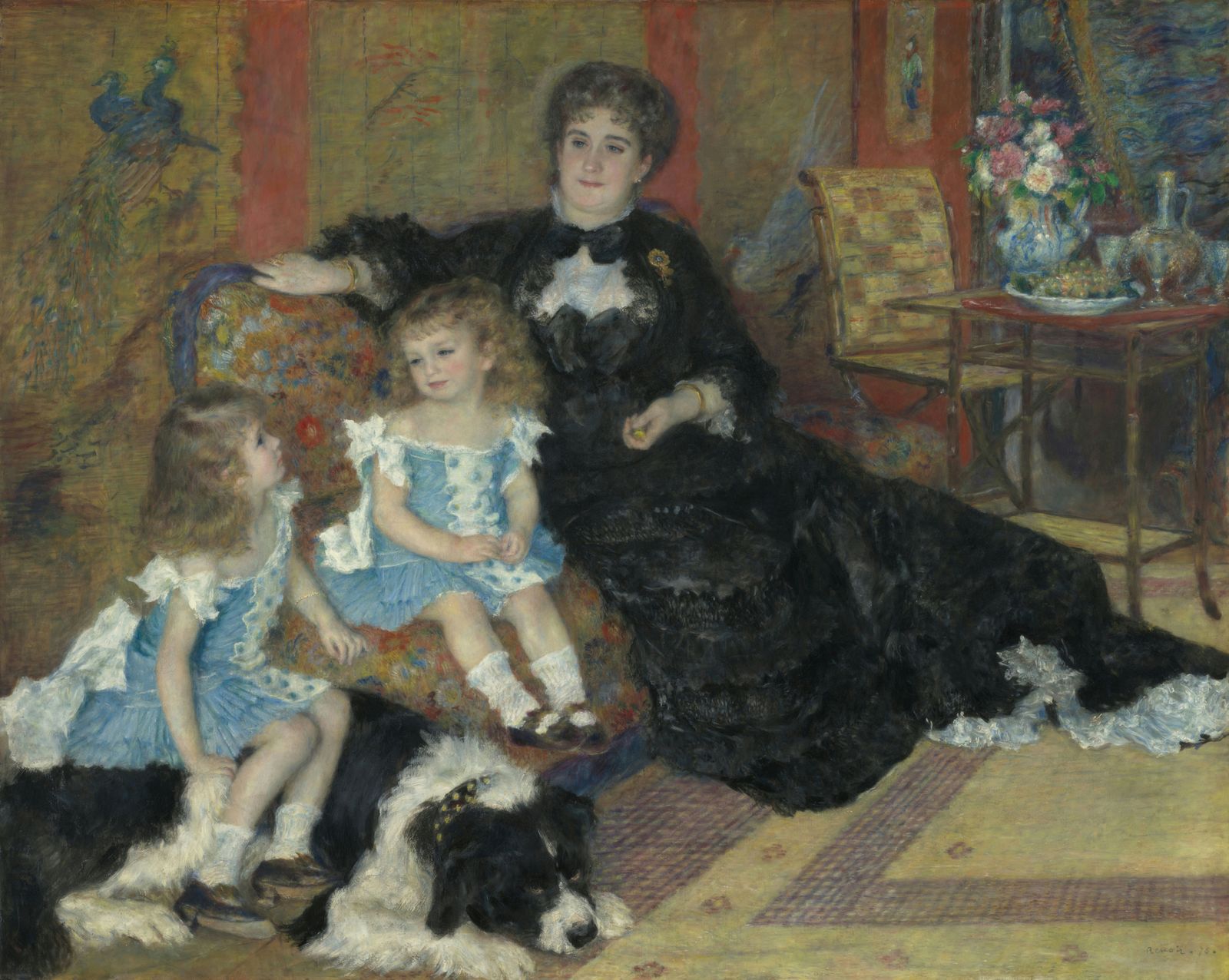
Madame Charpentier and Her Children · Auguste Renoir · 1878 · The Metropolitan Museum of Art. Prepared for print by Surrealium at Vaxholm Fortress, Sweden.
Renoir's Madame Charpentier and Her Children gives the seated adult, children and dog different positions across the room. The variation keeps the group active while the faces remain distinct. The picture is useful as a lesson in arranging people at more than one level, rather than lining every head along the same horizontal band.
For a photograph, compare sitting and standing positions that people can hold comfortably. Look for a clear gap around each face, especially when a taller person's shoulder overlaps someone nearer the camera. The arrangement should make the group easier to read. It should not require a child to balance in an awkward place or an adult to maintain a strained posture simply to achieve a tidy shape.
Check the edges of the group
The outer figures determine how a group feels contained within the photograph. A person pressed against the edge may seem accidentally cut away from everyone else, even when the central faces are clear. Leave enough room to understand their shoulders, hands and connection to the group.
Look at the whole reference before concentrating on individual expressions. Is an arm cut off at an unclear point? Does a chair seem to disappear beneath someone? Is the smallest person hidden by a sleeve? These are practical questions about what the image shows. A relaxed, slightly irregular group with visible bodies is often a better reference than a tightly packed arrangement whose appealing smiles conceal confusing overlaps.
Let people share a place differently
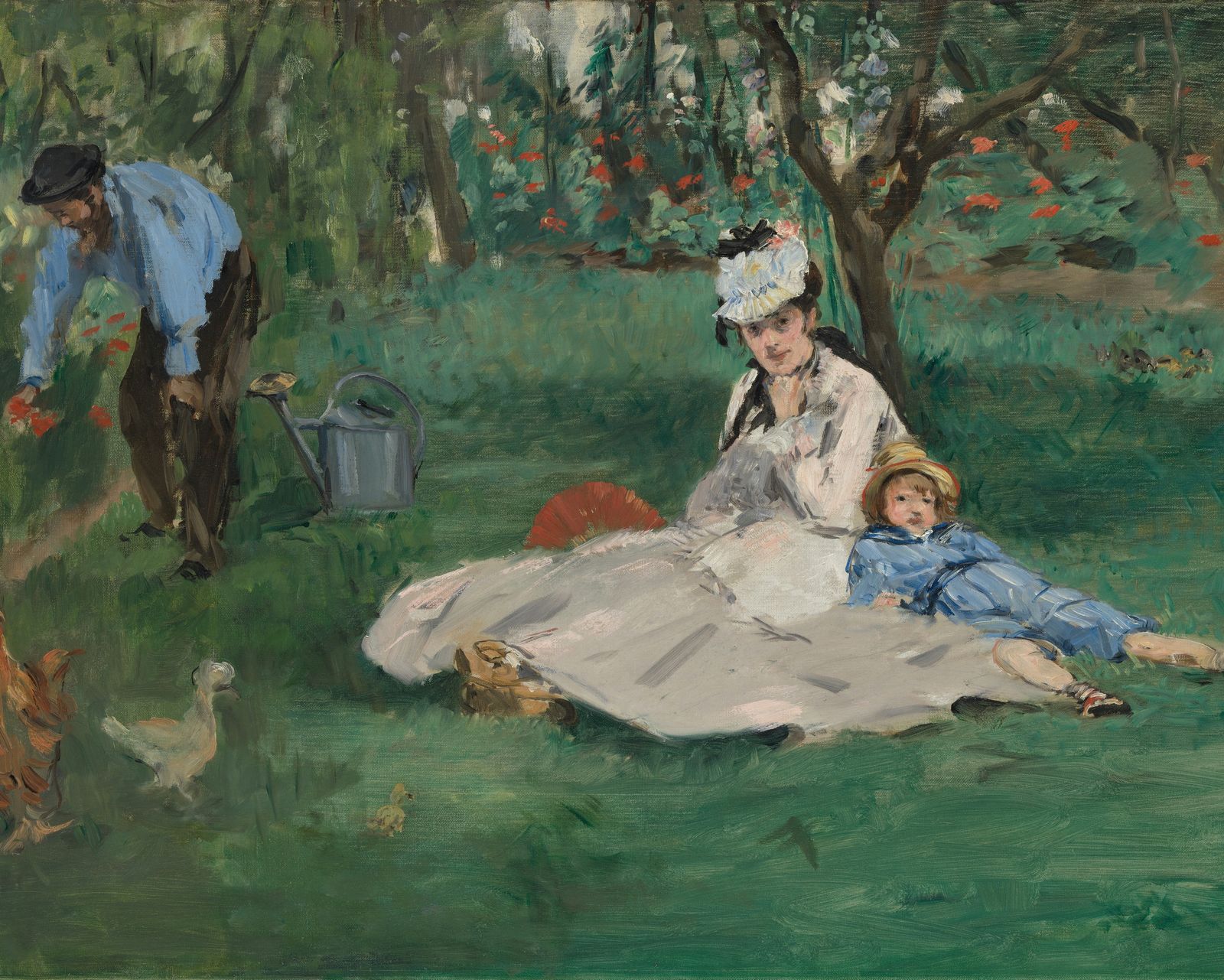
The Monet Family in Their Garden at Argenteuil · Edouard Manet · 1874 · The Metropolitan Museum of Art. Restored by Surrealium at Vaxholm Fortress, Sweden.
Manet's Monet family picture spreads the figures through the garden at Argenteuil. A seated woman and child occupy the foreground, while another figure bends towards work farther left. The people belong to the same place without all doing the same thing or facing the viewer together.
A family photograph can use that kind of shared setting when the activity matters. Someone tending a plant, another sitting nearby and a child looking towards them may form a convincing group. Keep the important faces visible enough for the intended portrait, and decide whether the gift is primarily about a close likeness or the experience of spending time together. Those aims can lead to different photographs.
Use a simple shared activity
An activity gives people somewhere to direct their hands and attention. Reading a book, looking at a garden or sitting together at a table can reduce the pressure to invent a pose. Choose something already familiar to the group rather than introducing an elaborate prop that requires everyone to act.
Check that the activity supports the faces instead of hiding them. A large book held too high or a person bending completely away may remove the detail needed for a portrait. Take time to compare several moments if you are choosing from an existing sequence. The best reference may be the pause between gestures, when the relationship remains visible and the important features are easier to read.
Let a real gesture connect different heights
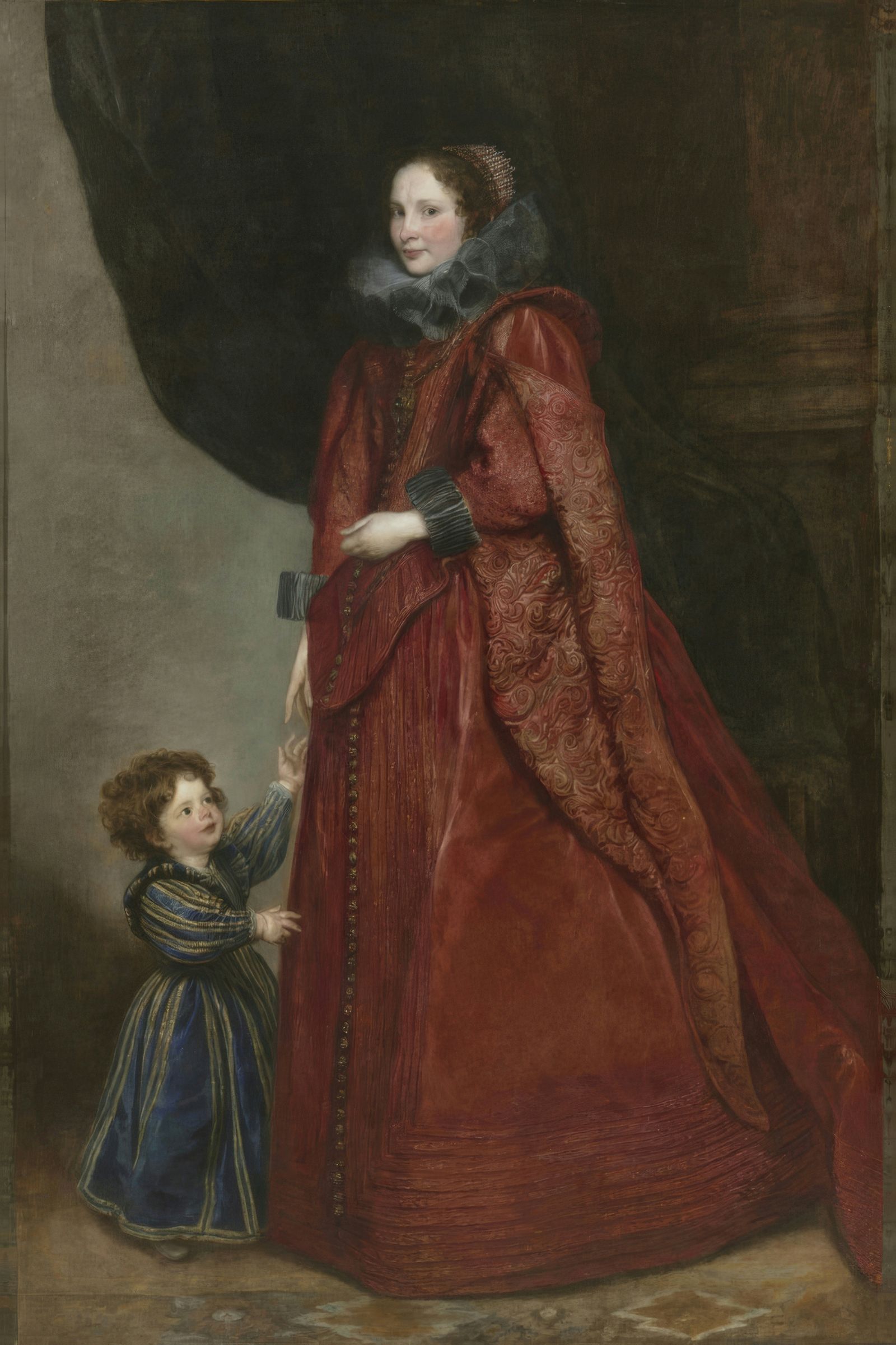
A Genoese Lady with Her Child · Anthony van Dyck · c. 1623–25 · The Cleveland Museum of Art. Prepared for print by Surrealium at Vaxholm Fortress, Sweden.
Van Dyck's A Genoese Lady with Her Child places the adult high within a tall composition, with the child reaching towards her hand below. Their difference in scale is part of the subject. The connection is not achieved by bringing their heads to the same level, but by giving the small gesture enough clarity.
For a group with adults and children, look for similarly natural points of contact: a held hand, a child leaning against a knee or a shoulder turned towards someone. Do not arrange contact that the people dislike. The photograph should preserve a comfortable relationship, and a little space between people can be equally truthful when that is how they prefer to stand.
Keep hands understandable
Hands are easy to overlook when everyone is concentrating on faces. In a group they can overlap, disappear behind a body or seem to belong to the wrong person. Look at them deliberately before choosing the reference, following each visible arm to its hand.
A resting hand on a lap or shoulder can help connect the group, but it does not need to become a symbol. Avoid asking people to hold an unfamiliar object merely to fill an empty area. If a hand is naturally outside the photograph, consider whether the crop still explains the pose. What matters is that the visible arrangement makes sense, so the portrait begins with a clear account of where people are and how they are supported.
Closeness does not require matching gazes
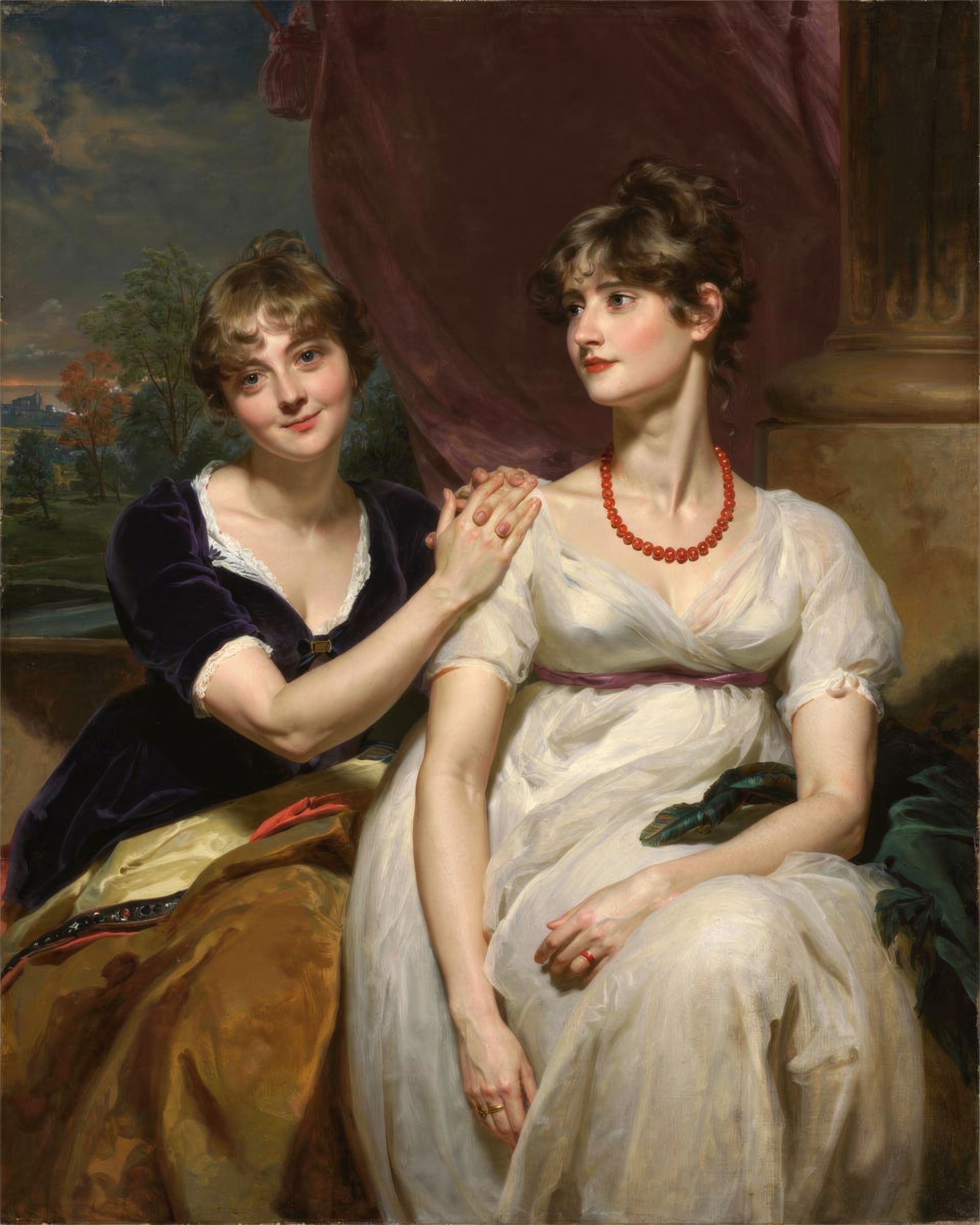
Portrait of Charlotte and Sarah Carteret-Hardy · Thomas Lawrence · 1801 · The Cleveland Museum of Art. Restored by Surrealium at Vaxholm Fortress, Sweden.
Lawrence's Charlotte and Sarah Carteret-Hardy places the two sitters close, with one hand resting near the other's shoulder. Their faces turn in different directions, so the relationship is carried through proximity and gesture rather than a pair of identical smiles. The varied attention keeps both people individual.
For siblings, partners or friends, compare a photograph where both look outward with one where their attention differs. Neither is automatically better. Choose the image that resembles how they are together, while keeping the visible faces clear enough for the kind of portrait you want. A slight turn can add information about a face; a complete turn away changes the emphasis towards the relationship or setting.
Give each person a readable share
A group portrait need not allocate exactly the same area to every person, but it should make the intended participants recognisable. Look for a small face that has become little more than a bright spot in the distance, or a person whose eyes are lost in deep shadow. Decide whether the available image supports the size and detail you hope to see.
This is particularly useful when combining a large household with a favourite location. A wide view may explain the place beautifully while making the people too small for a close likeness. You may prefer a nearer photograph, or accept that the gift is a picture of the group in its setting. State that choice clearly rather than asking one image to fulfil incompatible aims.
Let the room explain the gathering
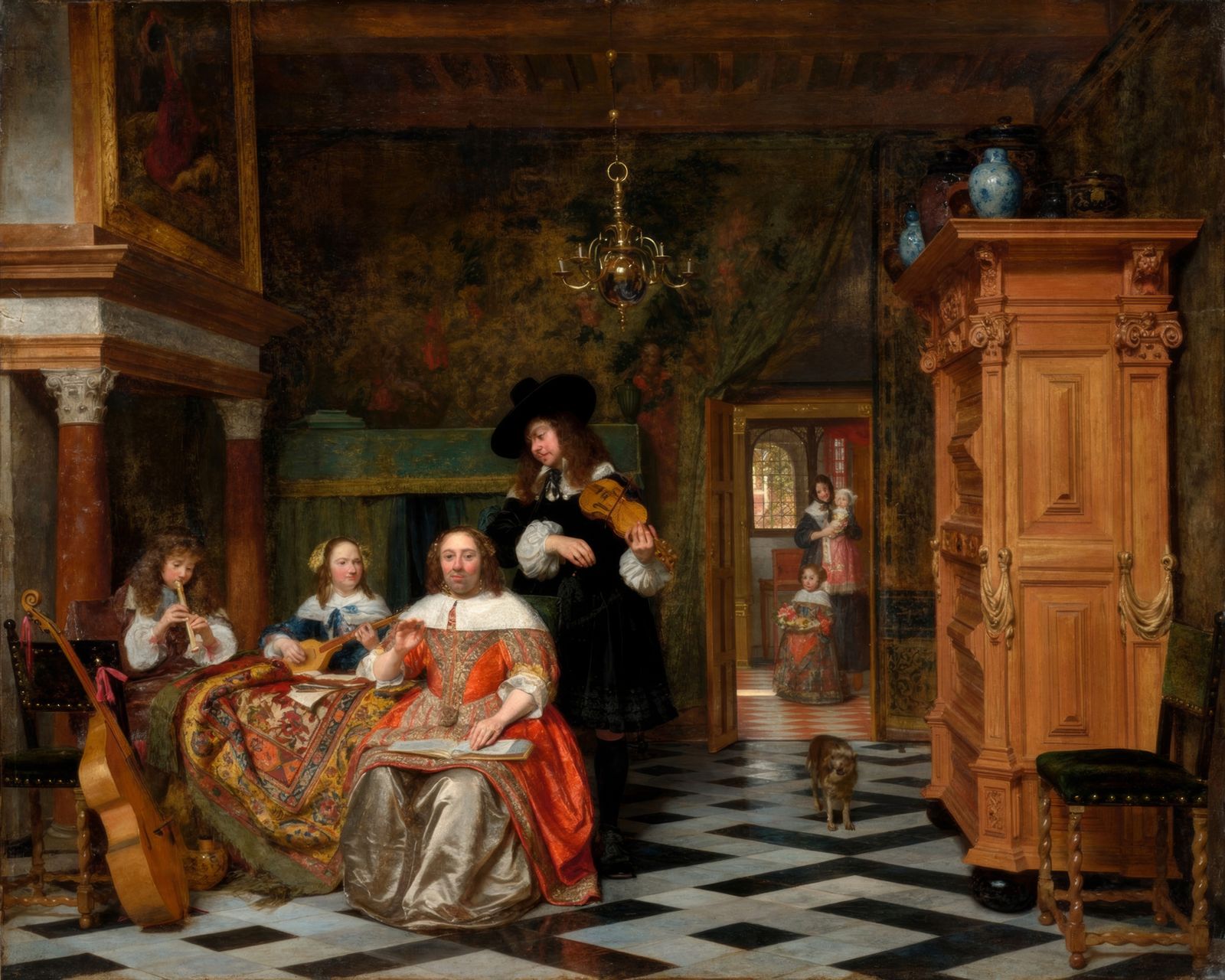
Portrait of a Family Playing Music · Pieter de Hooch · 1663 · The Cleveland Museum of Art. Restored by Surrealium at Vaxholm Fortress, Sweden.
Pieter de Hooch's Family Playing Music places the participants among instruments, furniture, patterned flooring and a view into another space. The room gives the group a setting in which their positions make sense. Looking at the whole work reveals connections that would be lost by cropping tightly around the nearest faces.
A familiar room can do similar work in a family reference. A table edge explains where people sit; a sofa supports their bodies; an instrument may explain their attention. Retain those details when they matter, while checking that bright objects do not compete with the people. The aim is a clear group in a meaningful place, not an inventory of every possession in the room.
Choose the photograph together
When possible, let the people being pictured see the short list. One person may dislike a photograph that everyone else considers flattering, or prefer a quieter expression that feels more familiar. Giving them a choice makes the portrait a shared decision rather than a surprise judgement about how the family ought to appear.
Keep the selection small and concrete. Compare who is visible, which relationship leads and how much setting each image retains. Once you have chosen, use the style to support those qualities instead of trying to solve every uncertainty through decoration. A well-chosen reference does not need a perfect family narrative; it needs the particular people and connections you have agreed to keep.
Begin with a photograph that shows each person clearly and preserves the relationship you care about. Check faces, hands and the outside edges, then ask whether the setting earns its space. When the group is comfortable with that choice, the family portrait route is the next step. The historic works remain references for seeing, while your photograph supplies the actual family.
Read the family portrait overview and family photograph guide, then compare the broader custom portrait choices. The oil-style portrait guide separates the reference from the treatment. Look at Renoir's whole family picture and its family style.
- Does everyone need to look at the camera?
- No. Different directions of attention can make a group feel natural, provided the important faces remain readable. A photograph of people looking towards one another may emphasise their relationship more than a formal outward gaze.
- Is sitting or standing better for a family portrait?
- Either can work. Choose positions people can hold comfortably and compare how the different heights fit together. Chairs and sofas can help explain the arrangement, but they should not hide the smallest faces or make the bodies difficult to follow.
- What should I check before choosing a group photograph?
- Look at each face, follow the visible hands and arms, and inspect the edges of the group. Then consider whether the setting matters. A clear relationship and comfortable posture are more useful than a rigidly symmetrical arrangement.