70th birthday gift ideas: a life seen through pictures
Ten family paintings suggest 70th birthday gifts built around the recipient’s relationships, interests and preferred photographs.
Useful 70th birthday gift ideas begin with the person, not a ready-made picture of what seventy looks like. They may want a family portrait, a likeness of themselves, a picture of a pet or an artwork with no commemorative message at all. Ask what they would enjoy keeping before deciding that a large family gathering must be the answer.
These ten works show different ways people share a picture: around a table, beside a child, outdoors or within a carefully arranged group. They are historic scenes rather than templates for a particular age. Use them to discuss who belongs in the photograph, which relationships matter, and whether the gift should record a present-day moment or revisit a favourite memory.
1. The table everyone recognises
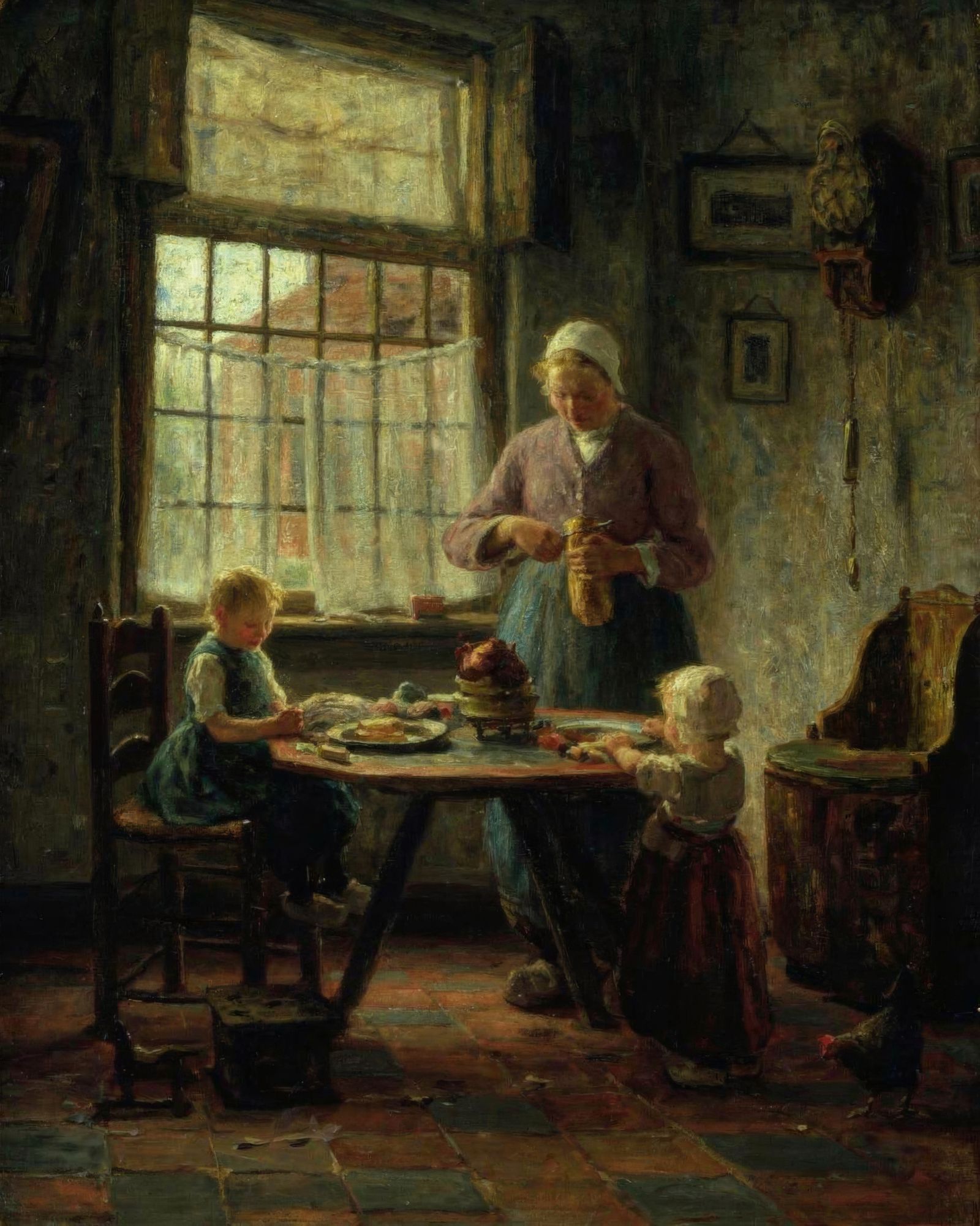
A Family Meal · Evert Pieters · 1890s (?) · Art Institute of Chicago. Restored by Surrealium at Vaxholm Fortress, Sweden.
Pieters's A Family Meal gathers the household around an ordinary table, with small differences in attention keeping the scene alive. A birthday portrait can similarly begin with a familiar meal rather than a formal lineup. Choose a photograph in which the recipient remains visible and central to the memory, without assuming they must sit at the head of the table or perform a ceremonial role.
2. A gesture of everyday care
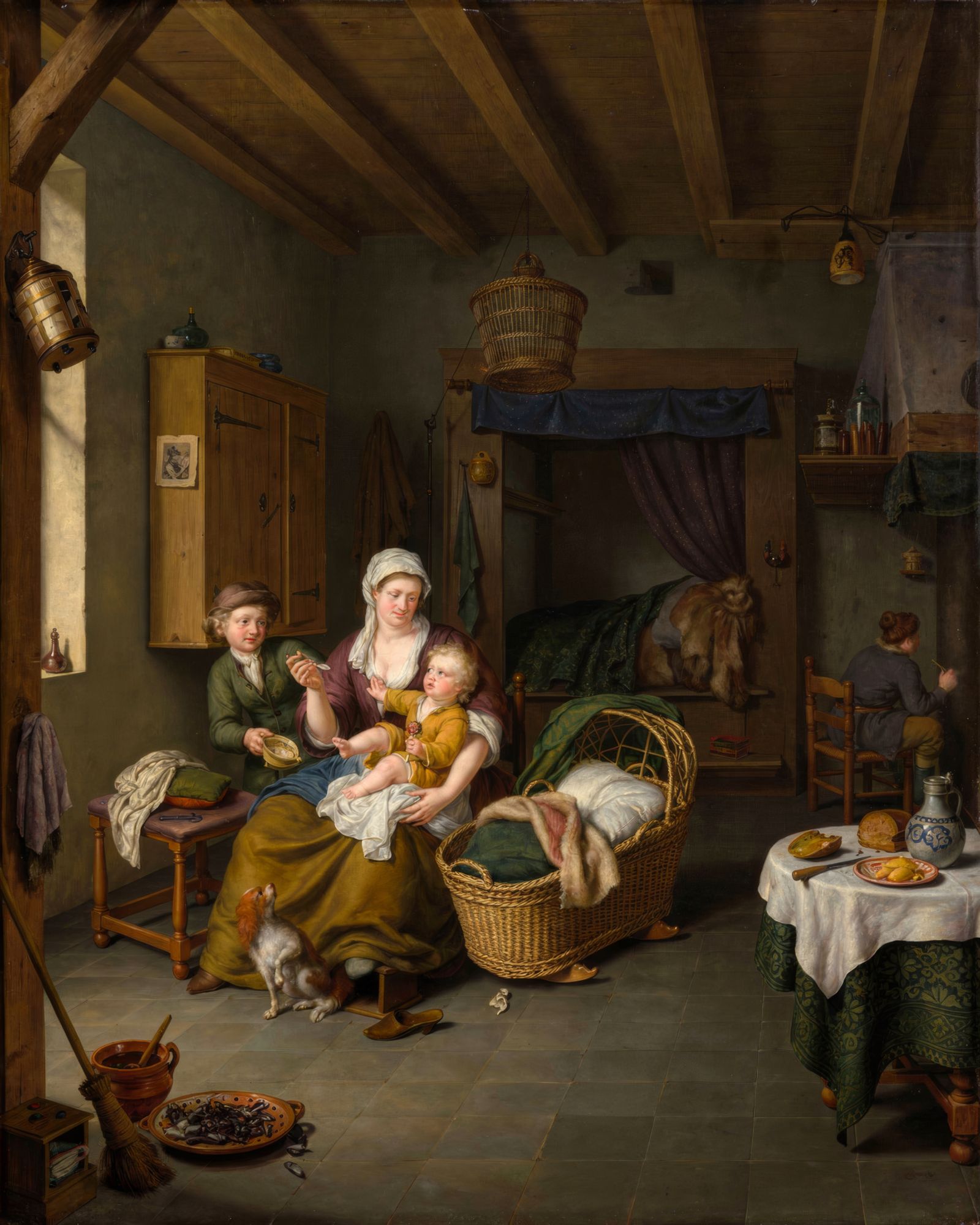
A Mother Feeding her Child (The Happy Mother) · Willem van Mieris · 1707 · Art Institute of Chicago. Restored by Surrealium at Vaxholm Fortress, Sweden.
Van Mieris's A Mother Feeding Her Child gives the room and its ordinary objects as much specificity as the figures. The scene is useful when a family wants to remember care through an actual gesture rather than a general tribute. Ask which photograph the recipient values, and avoid choosing a caregiving image solely because you think it defines their role in the family.
3. A different scale of intimacy
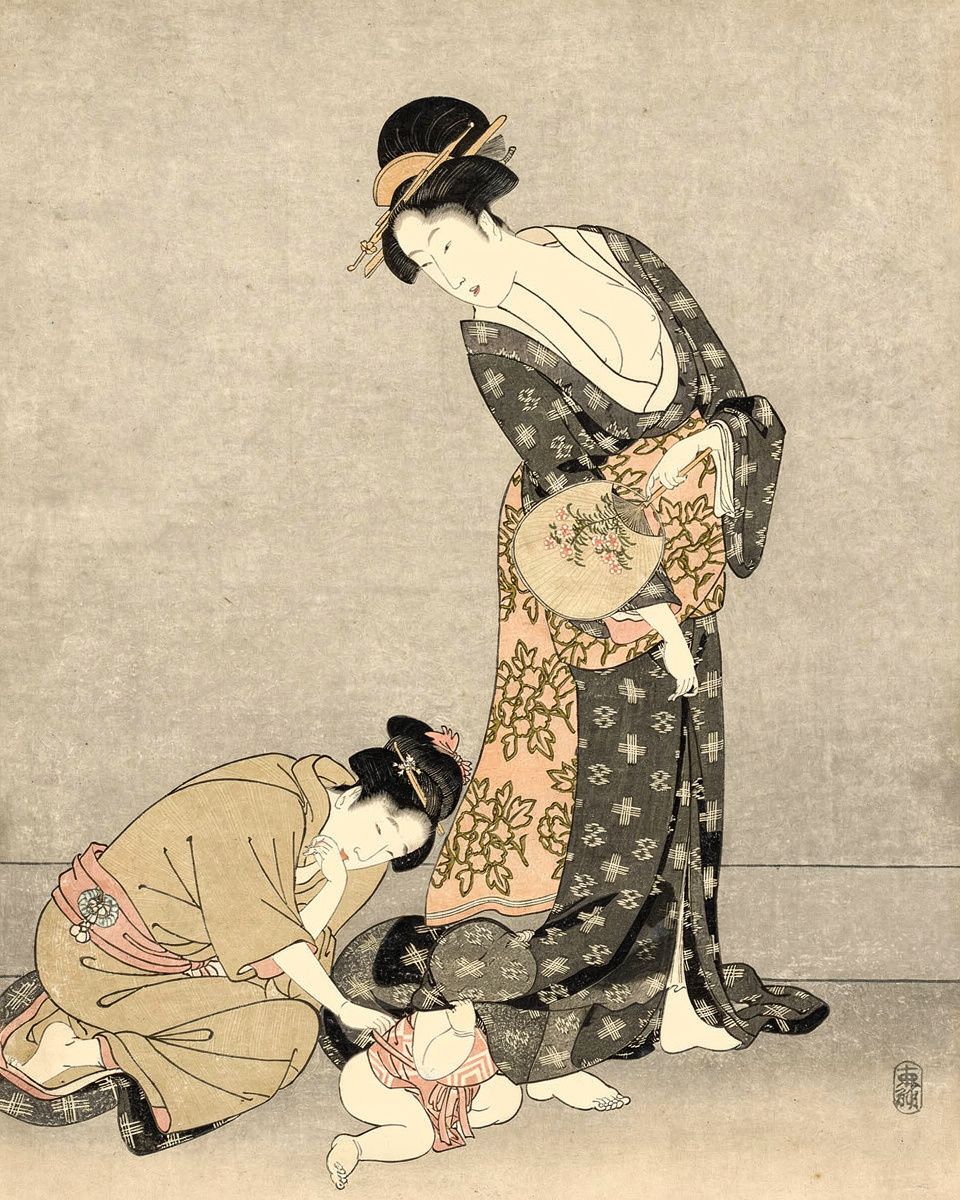
Mother and Child · Kitagawa Utamaro 喜多川 歌麿 · c. 1800 · Art Institute of Chicago. Restored by Surrealium at Vaxholm Fortress, Sweden.
Utamaro's Mother and Child places a small child between two adult women, one bending down while the other stands above. This offers a contrast to a large group portrait full of furniture and faces. A seventy-year milestone does not require every relative to appear in one image; a small, meaningful relationship can be a complete subject in its own right.
4. A familiar face beside a child
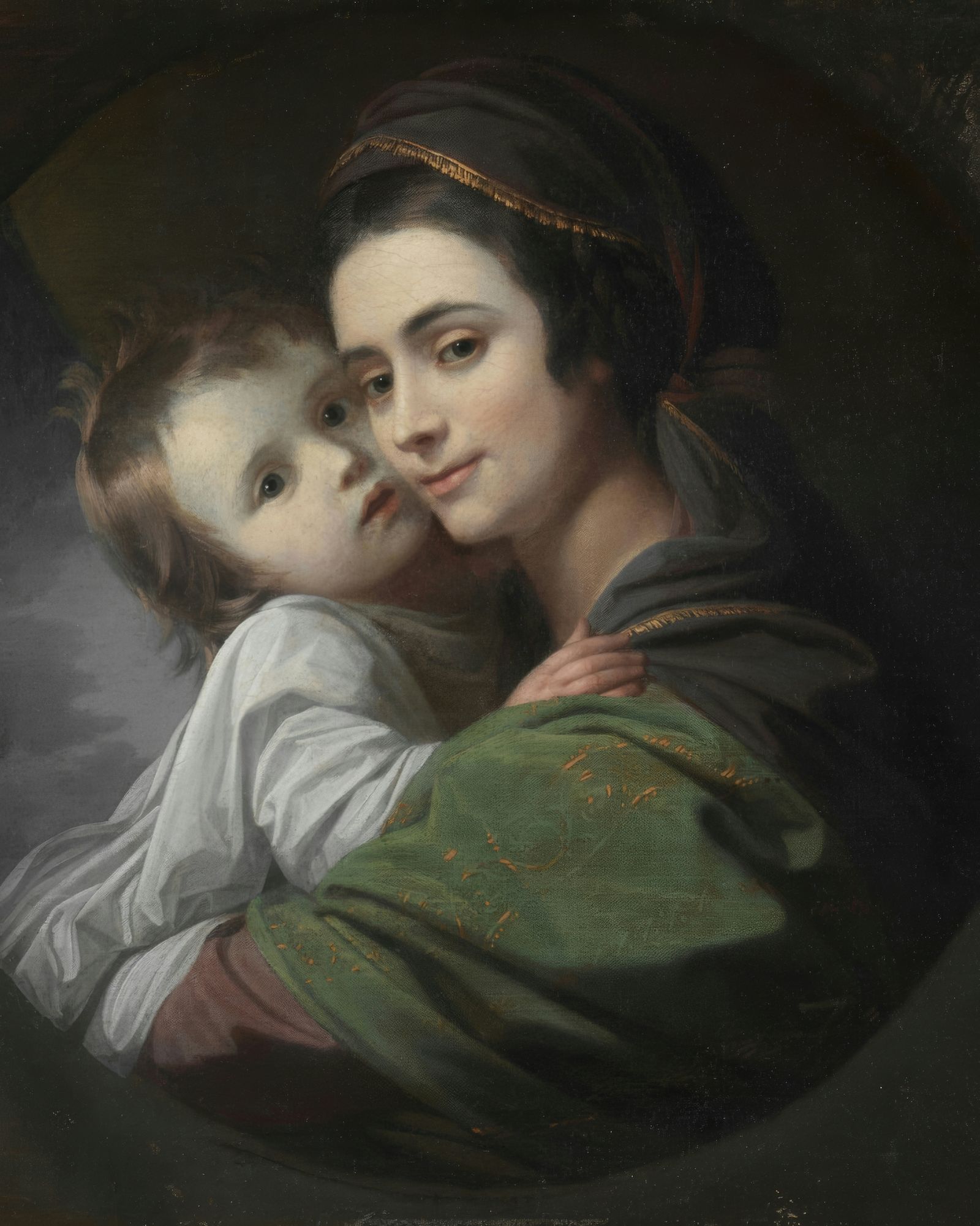
Elizabeth Shewell West and Her Son, Raphael · Benjamin West · c. 1770 · The Cleveland Museum of Art. Prepared for print by Surrealium at Vaxholm Fortress, Sweden.
West's Elizabeth Shewell West and Her Son Raphael keeps the adult and child close enough for their faces to speak to one another. For a birthday gift, a photograph from an earlier period may have a similar value. Confirm that the recipient likes that image of themselves, rather than assuming that an old family favourite is also the version they most want to display.
5. Different heights within one group
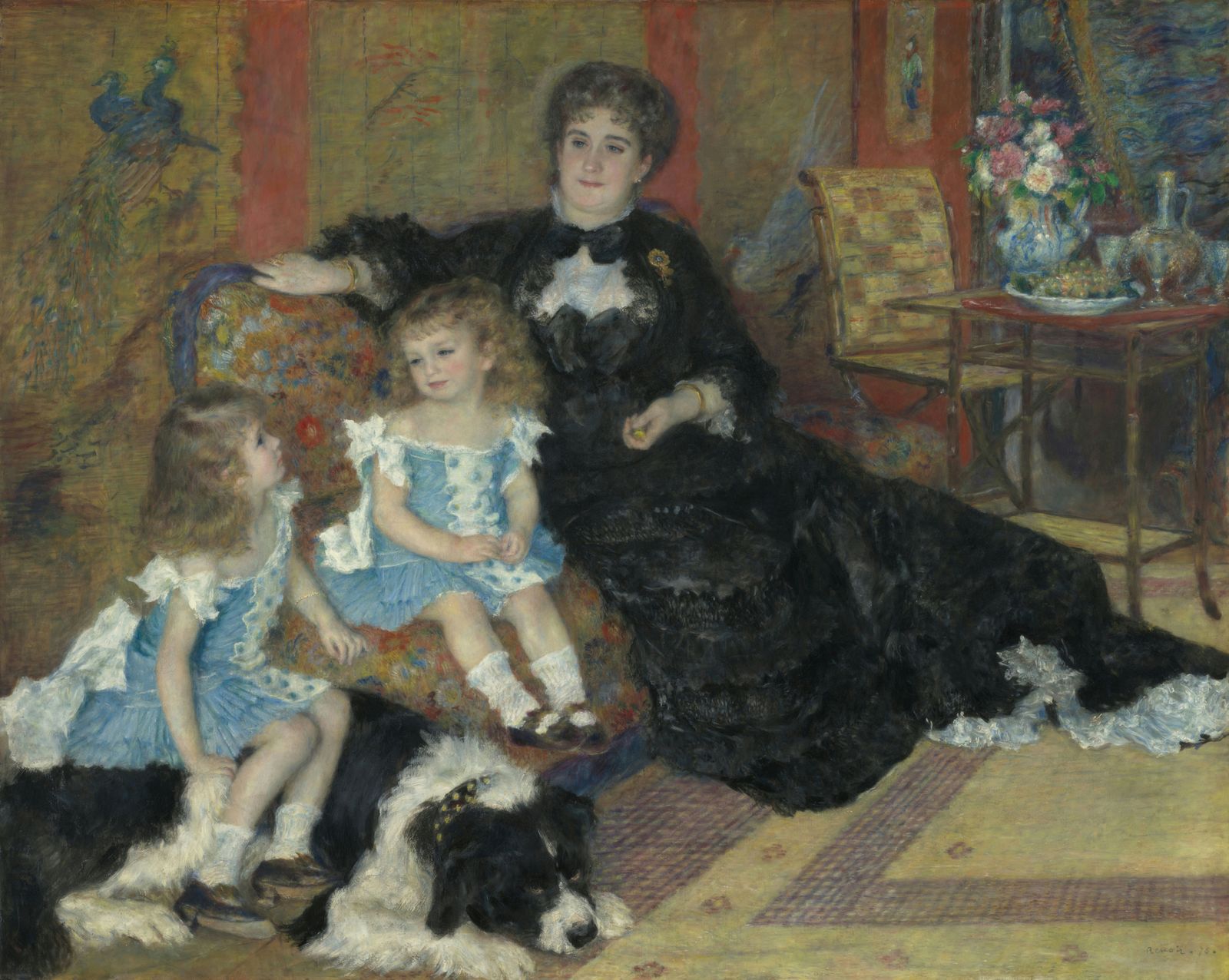
Madame Charpentier and Her Children · Auguste Renoir · 1878 · The Metropolitan Museum of Art. Prepared for print by Surrealium at Vaxholm Fortress, Sweden.
Renoir's Madame Charpentier and Her Children gives the seated adult, children and dog distinct positions within a shared room. The arrangement shows how a family picture can accommodate different scales without lining everyone up. If the birthday portrait includes several generations, look for a photograph where the faces are clear and the group feels connected, with no person reduced to an indistinct figure behind someone else.
6. A garden afternoon
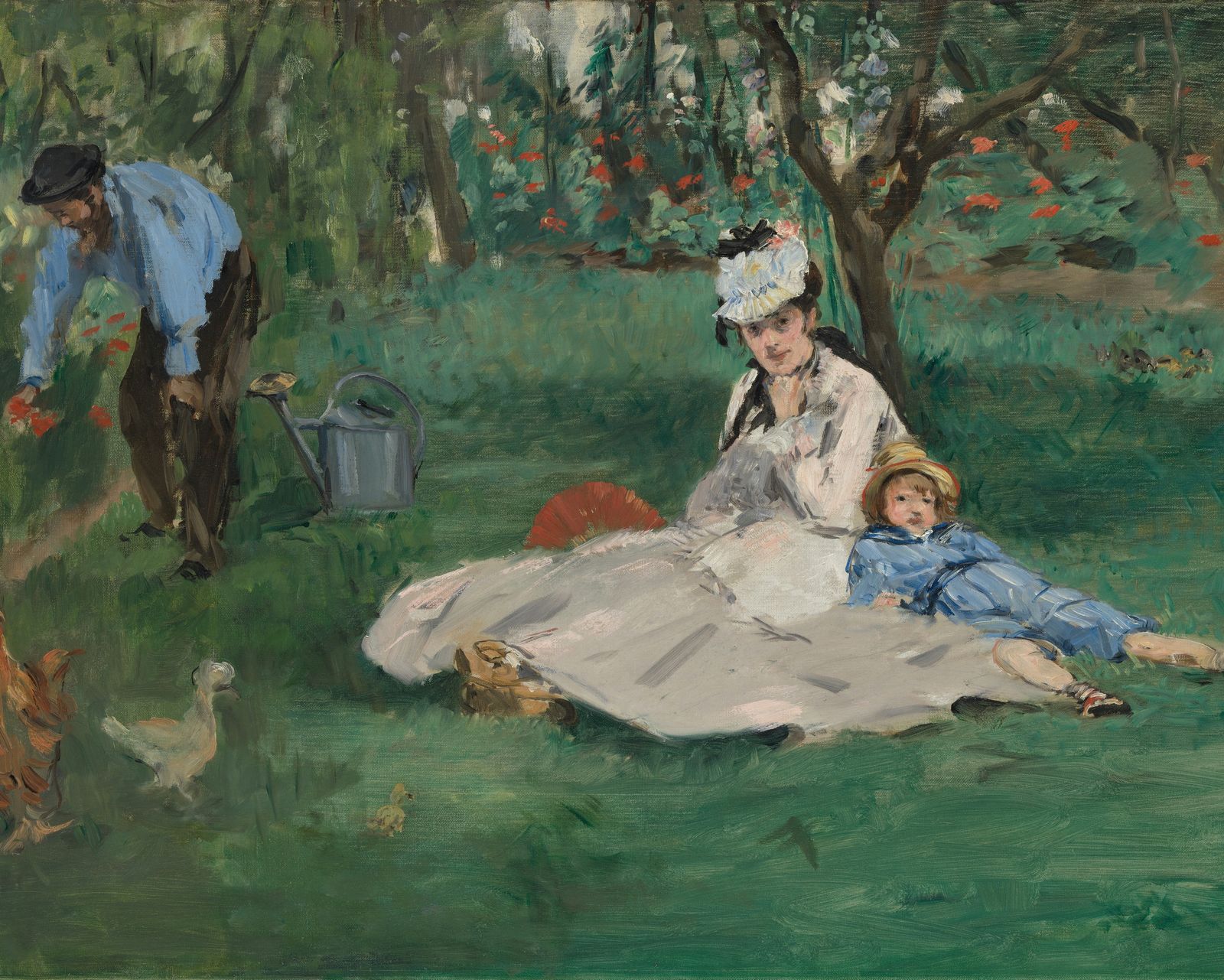
The Monet Family in Their Garden at Argenteuil · Edouard Manet · 1874 · The Metropolitan Museum of Art. Restored by Surrealium at Vaxholm Fortress, Sweden.
Manet's Monet family picture lets a parent, child and working adult occupy different parts of a green outdoor setting. The shared place holds the group together even though their activities differ. A garden or holiday photograph can work in the same way when it reflects the recipient's own interests, especially if they would prefer a relaxed scene to a formal studio-style arrangement.
7. Two people with a shared history
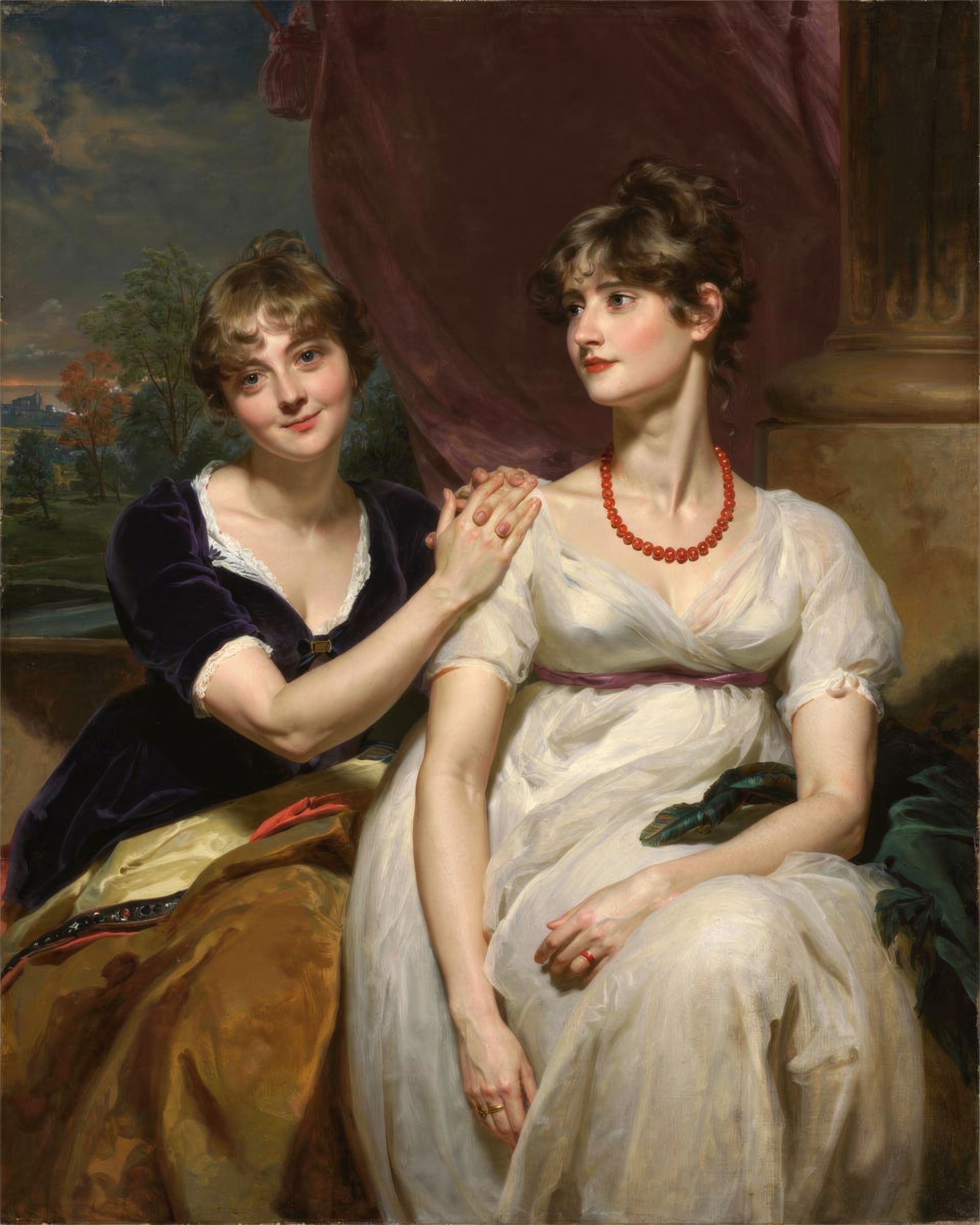
Portrait of Charlotte and Sarah Carteret-Hardy · Thomas Lawrence · 1801 · The Cleveland Museum of Art. Restored by Surrealium at Vaxholm Fortress, Sweden.
Lawrence's Charlotte and Sarah Carteret-Hardy shows the sitters close together, their hands and differing gazes creating a sense of relationship. A portrait of siblings or longstanding friends may be a better seventieth birthday gift than a large family group. Ask which connection the recipient wants to celebrate, and use a photograph that gives both people a clear and comfortable presence.
8. Care carried in the body
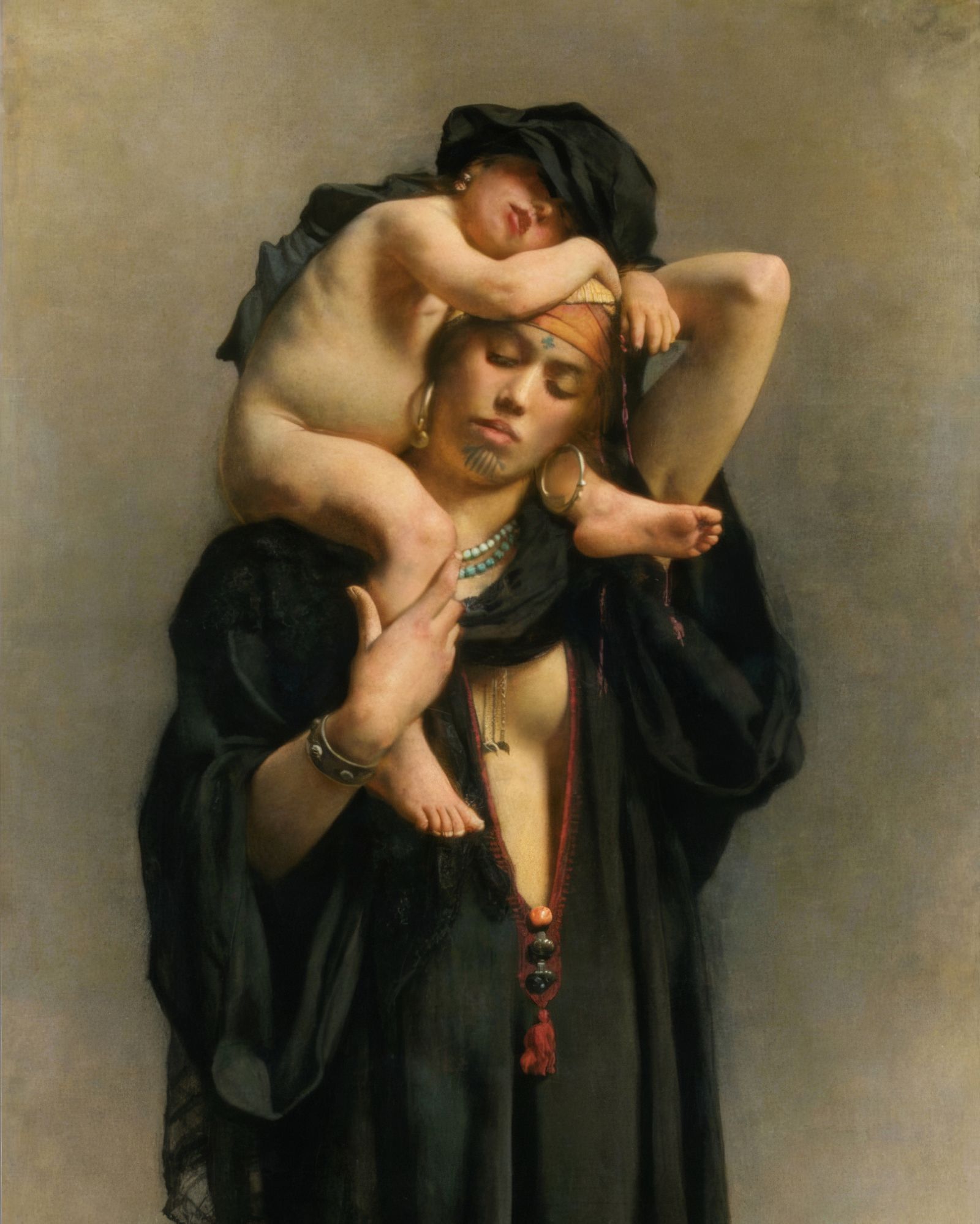
An Egyptian Peasant Woman and Her Child · Léon Bonnat · 1869–70 · The Metropolitan Museum of Art. Restored by Surrealium at Vaxholm Fortress, Sweden.
Bonnat's Egyptian Peasant Woman and Her Child makes the child's position against the adult an essential part of the composition. The catalogue's historic title is retained, while the visual lesson is the clarity of the relationship between two bodies. For a family portrait, choose a photograph in which the support and contact are easy to read, without borrowing assumptions about the pictured people's lives.
9. A close view without a grand setting
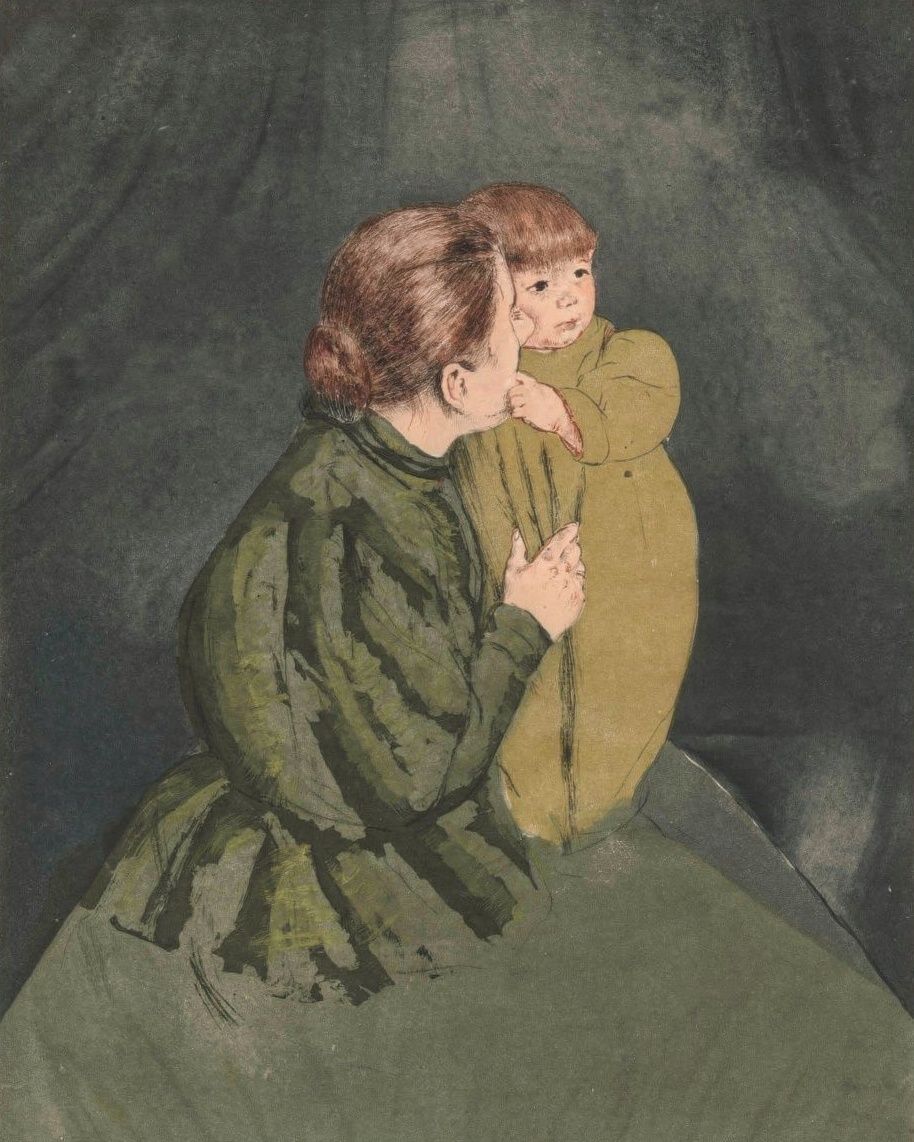
Peasant Mother and Child · Mary Cassatt · c. 1894 · Art Institute of Chicago. Restored by Surrealium at Vaxholm Fortress, Sweden.
Cassatt's Peasant Mother and Child concentrates on the figures, using a limited setting to keep their proximity legible. This is a useful alternative when the photograph's emotional value lies in a face beside another face rather than a location. A small group can hold attention without an elaborate backdrop, provided the chosen image shows the expressions and gestures the recipient actually recognises.
10. A family arrangement with distinct individuals
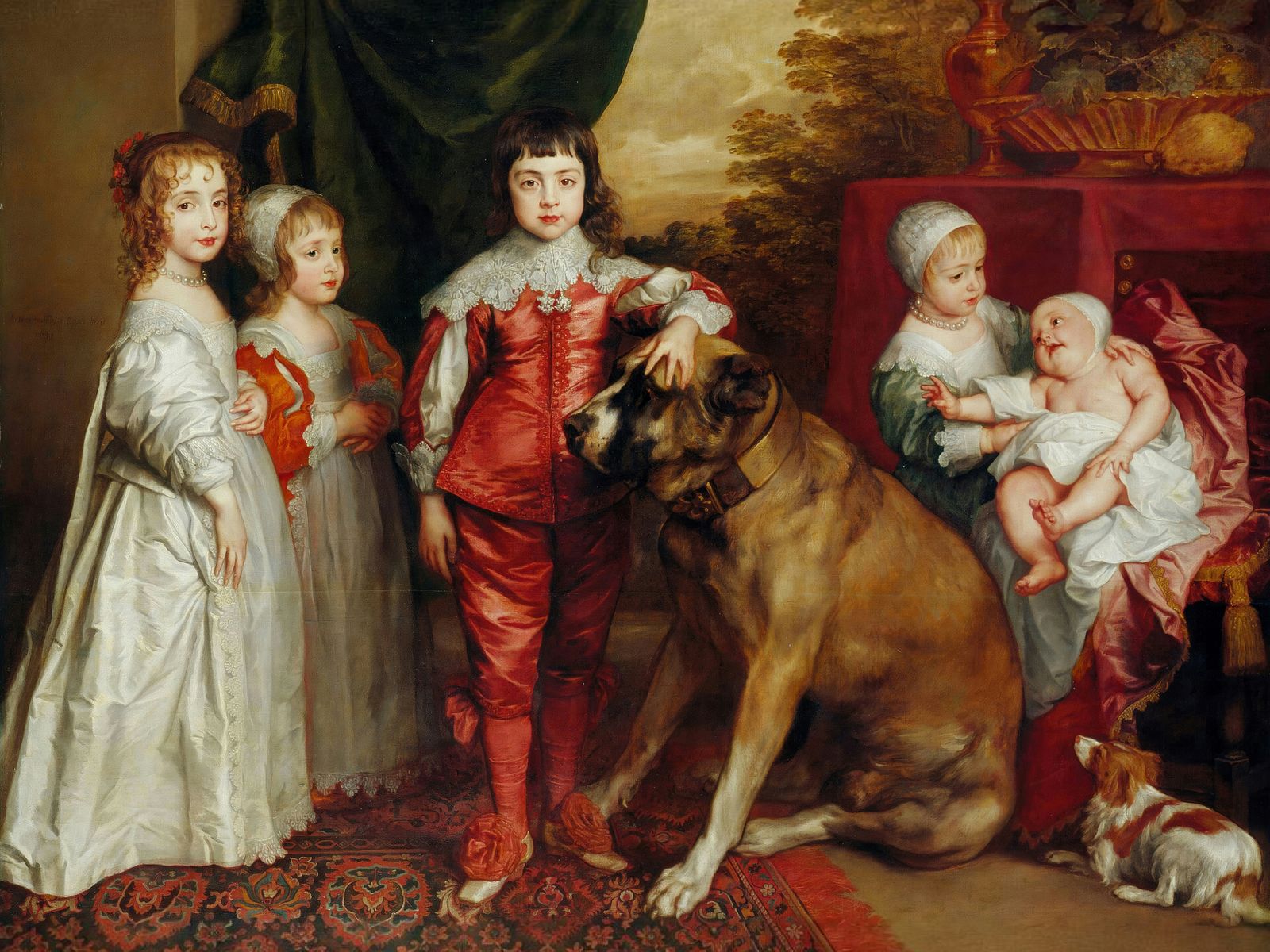
The Five Eldest Children of Charles I · Anthony van Dyck · 1637 · Royal Collection. Prepared for print by Surrealium at Vaxholm Fortress, Sweden.
Van Dyck's Five Eldest Children of Charles I gives each child a place within the group, while the dog provides a substantial lower shape. The royal sitters are specific historical people, not a model for turning a modern family into a hierarchy. Borrow the principle of clear spacing and varied height, and keep each person's identity visible instead of treating the group as a decorative pattern.
Make a short selection of photographs and let the recipient help choose. Include at least one image that reflects their own interest rather than only their role as a parent or grandparent. Check names, relationships and the people to include before starting a portrait. The birthday supplies the occasion; the photograph supplies the subject, and the recipient should have room to decide how publicly or privately they want to keep it.
Compare the neighbouring sixtieth birthday guide and eightieth birthday ideas, then our broader personal gifts. The ninetieth birthday story also begins with choice. You can examine A Family Meal and its family portrait style to compare the historic source with a creation route.
- What makes a good seventieth birthday portrait?
- A photograph the recipient likes is the strongest starting point. It may show a family group, one important relationship or the person on their own. Clear faces and a recognisable setting matter more than including every generation or adding a large number to the image.
- Do all family members need to be included?
- No. Decide what the picture is about before deciding how many people belong in it. A portrait of two people can celebrate a relationship fully. If you do choose a group, make sure everyone agrees on the photograph and that no important face is obscured.
- Can an older photograph be more suitable than a new one?
- It can be if the recipient values the memory and likes that image of themselves. Check the quality of the available file and avoid assuming an old photograph can reveal details that are not present. A recent picture may offer a clearer likeness, while an older one may carry a particular story.