Sharaku: ten portraits of actors in character
Ten Sharaku prints show how a hand, a mouth or a patterned robe can turn an actor portrait into a charged encounter.
Sharaku makes an actor’s face feel difficult to ignore. A narrowed eye, a projecting jaw or a hand held near the chest can dominate a sheet even when the surrounding costume is richly patterned. These are portraits of performers in roles, so the image asks us to distinguish the person represented from the character being performed.
The ten prints below offer close views, full-length figures and a scene with more than one actor. Their variety matters: a famous bust portrait is not a complete account of Sharaku’s way of arranging a picture. Follow the museum’s identification in each caption, including actor and role where supplied, without turning a dramatic expression into a diagnosis of the performer’s private personality.
For the wider medium, begin with Japanese woodblock prints. The neighbouring stories on Utamaro and Hokusai offer useful comparisons, while the Edo-era collection places these sheets among other printed subjects. Here the starting point is smaller: look at the face, then the hands, then the shapes that make the costume occupy space.
1. Ichikawa Yaozō III as Hachiman
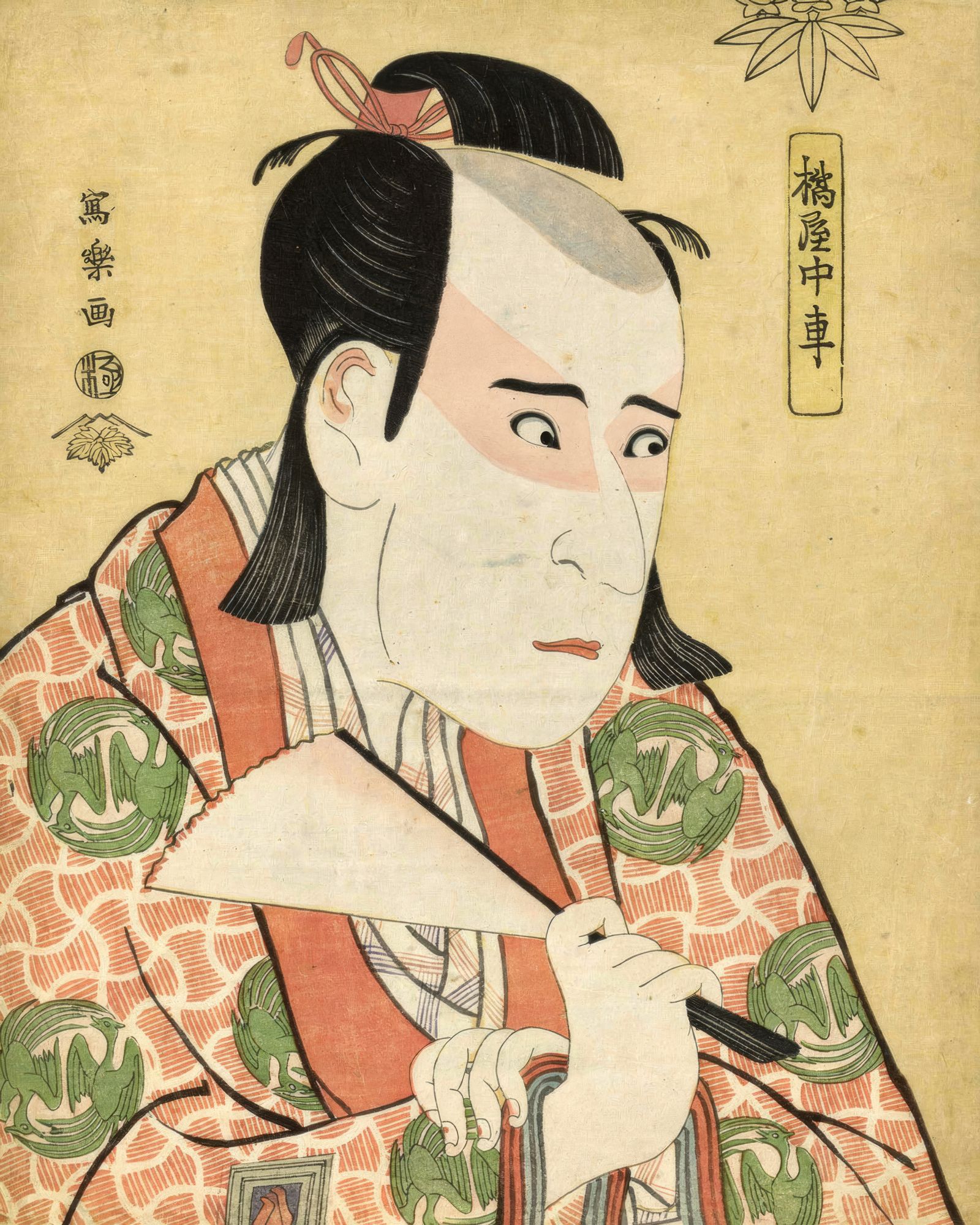
The Actor Ichikawa Yaozo III · Toshusai Sharaku 東洲斎 写楽, 1794 · Art Institute of Chicago. Restored by Surrealium at Vaxholm Fortress, Sweden.
The actor turns his head while holding a slim object near his chest, with a densely patterned robe spreading below the pale face. The long sweep of the nose and the sharply changing line of the mouth give the expression a particular tension. Rather than treating the pattern as background decoration, notice how its busy surface makes the comparatively open face stand out; the portrait depends on both the concentrated features and the broader rhythm of the clothing.
2. Arashi Ryūzō and Morita Kan’ya in a shared scene
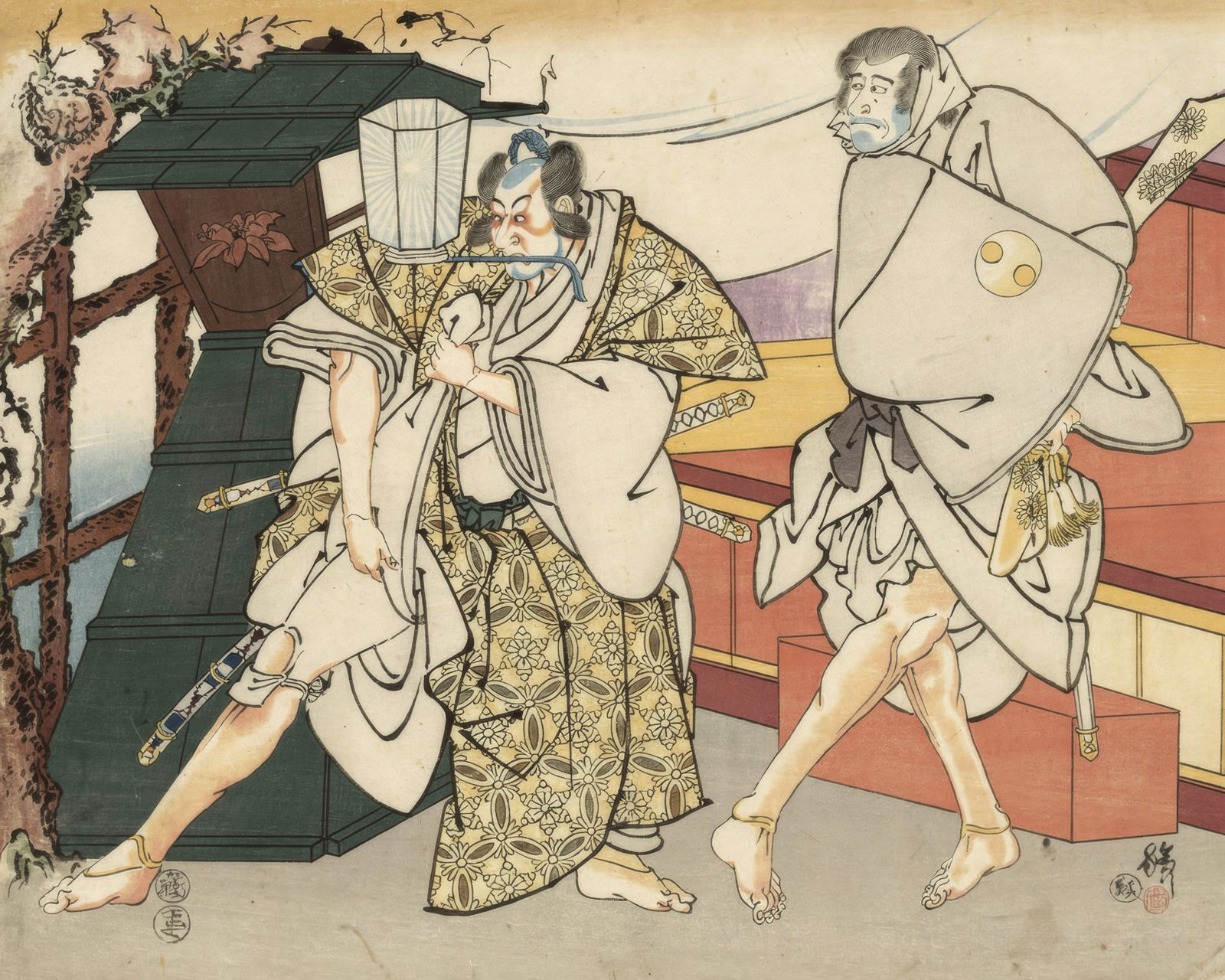
The Actors Arashi Ryuzo and Morita Kanya VIII · Toshusai Sharaku 東洲斎 写楽, 1794 · Art Institute of Chicago. Restored by Surrealium at Vaxholm Fortress, Sweden.
Two actors occupy a wider composition, their figures set near an architectural structure and a flowering branch. The difference in their postures gives the sheet a movement that the close bust portraits do not need to establish in the same way. Follow the angles of the legs, sleeves and heads before trying to reconstruct the play; the museum identification anchors the scene, while the visible arrangement lets you understand how the figures respond to each other.
3. Ichikawa Danjūrō VI as Fuwa no Bansaku
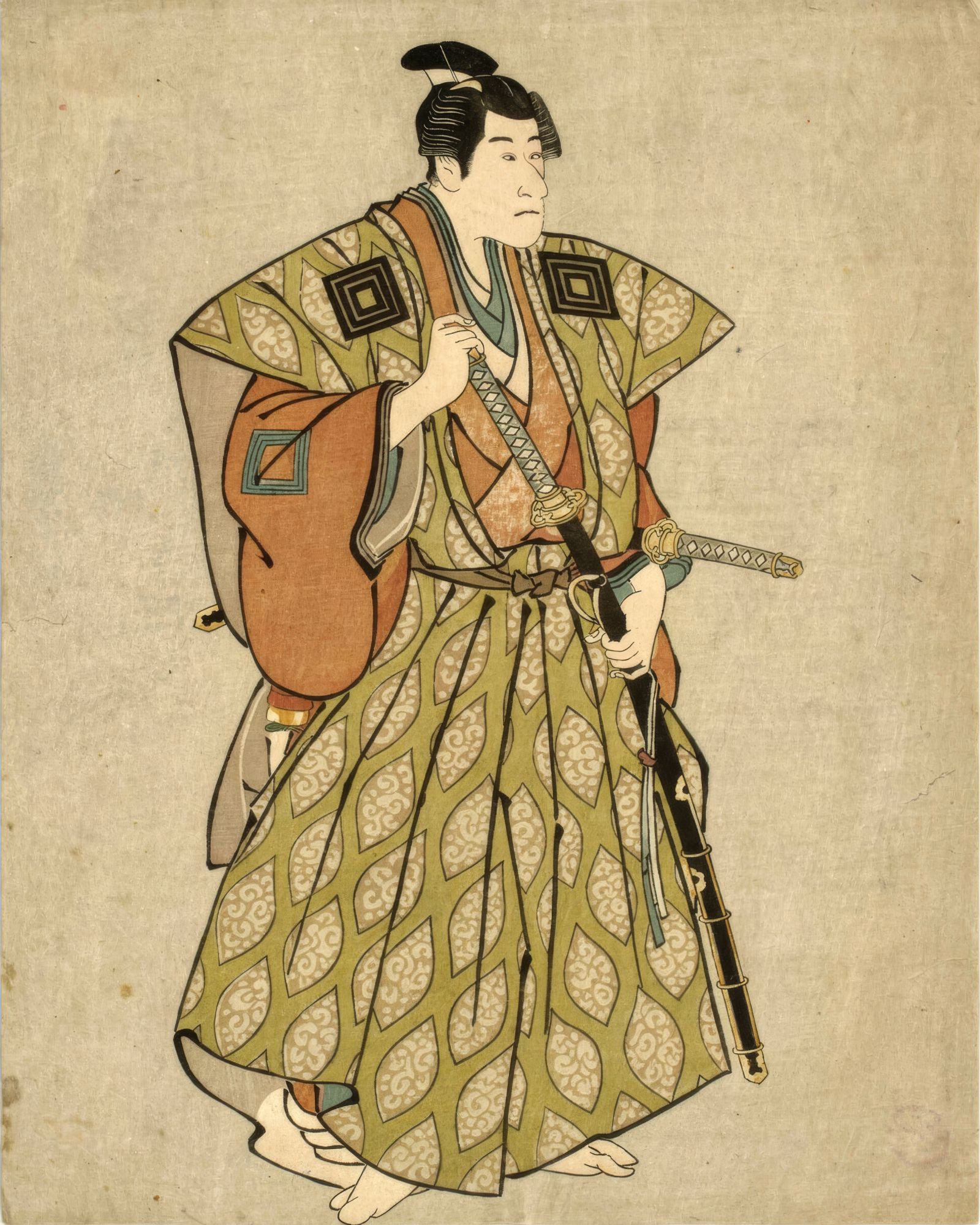
The actor Ichikawa Danjuro VI as Fuwa no Bansaku · Toshusai Sharaku 東洲斎 写楽, 1794 · Art Institute of Chicago. Restored by Surrealium at Vaxholm Fortress, Sweden.
The standing figure fills a tall sheet, with broad sleeves and repeated patterns making the robe a substantial part of the portrait. The face is relatively small, so character also emerges through the stance and the way the clothing enlarges the body. This is a useful counterpoint to a close-up: step back and read the silhouette first, then return to the details that distinguish one patterned area from another without losing the overall vertical structure.
4. Segawa Kikunojō III and a companion
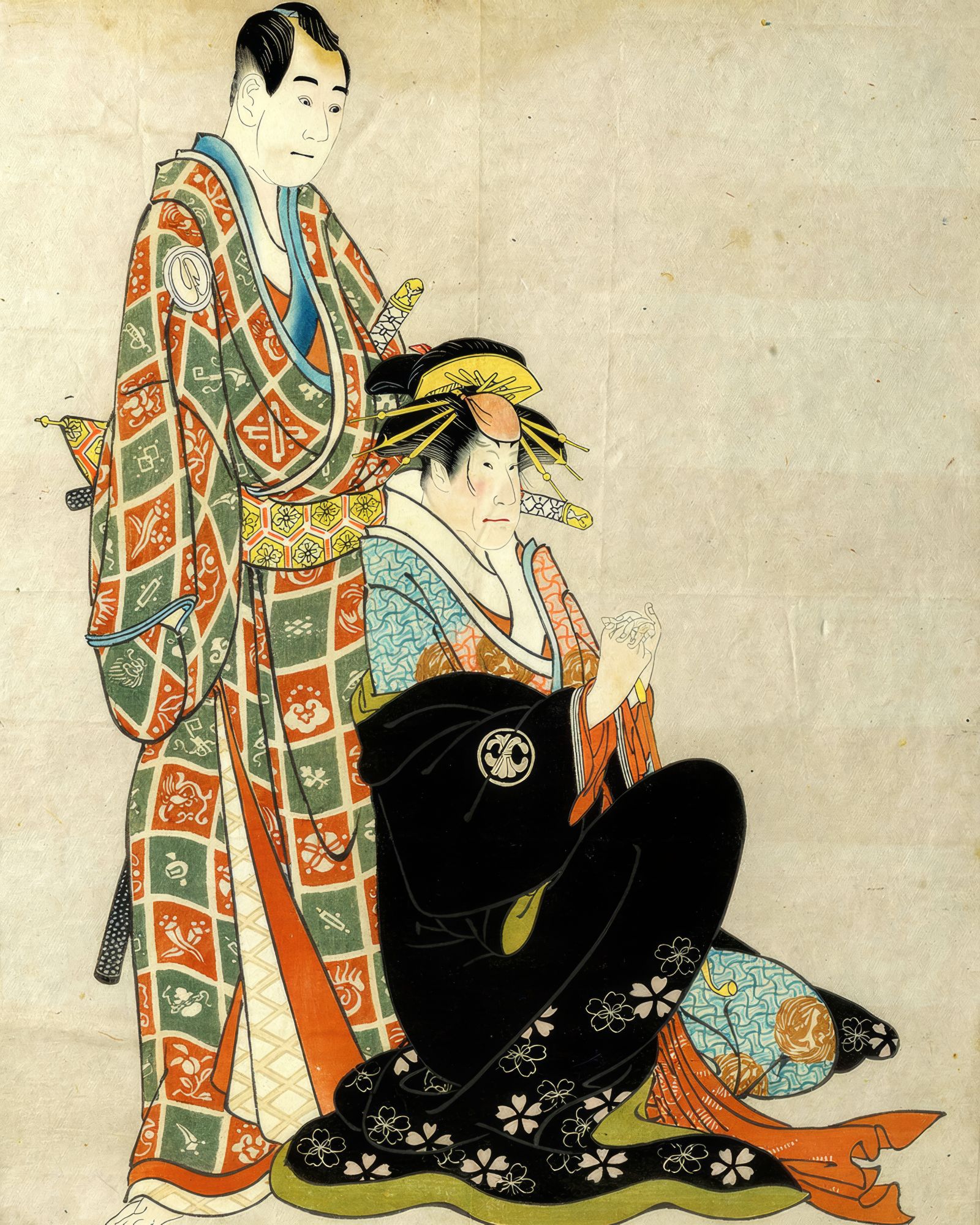
The Actors Katsuragi and Motoharu · Toshusai Sharaku 東洲斎 写楽, 1794 · Art Institute of Chicago. Restored by Surrealium at Vaxholm Fortress, Sweden.
The two figures overlap within a narrow upright composition, one standing and the other lower in the foreground. Their patterned clothing creates several competing directions, but the difference in height makes the relationship readable. Look at where the bodies meet and where they remain separate; the picture uses overlap to establish a scene, while the distinct faces and gestures prevent the figures from dissolving into a single decorative surface.
5. Ichikawa Yaozō III as Tanabe Bunzō
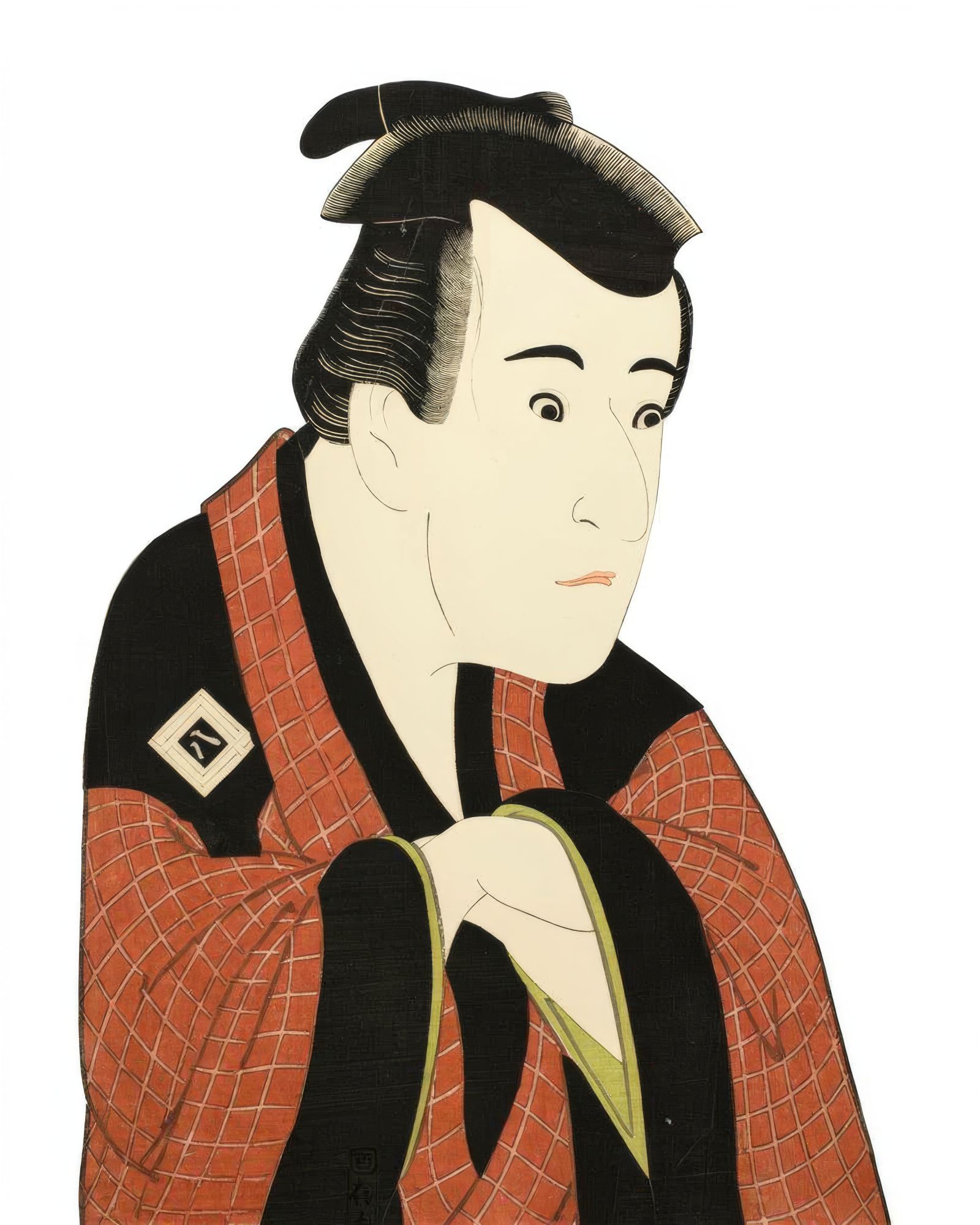
The actor Ichikawa Yaozo III as Tanabe Bunzo · Toshusai Sharaku 東洲斎 写楽, 1794 · Art Institute of Chicago. Restored by Surrealium at Vaxholm Fortress, Sweden.
A pale face emerges above a red checked garment and a dark central band, with the head turned away from a direct frontal encounter. The sharply angled eyebrows and the compressed mouth carry much of the immediate effect. Compare this sheet with the opening Yaozō portrait: the actor’s name connects the images, but the roles and arrangements differ, reminding us that a theatrical portrait can show a performer through more than one invented identity.
6. Iwai Hanshirō IV as the wet nurse Shigenoi
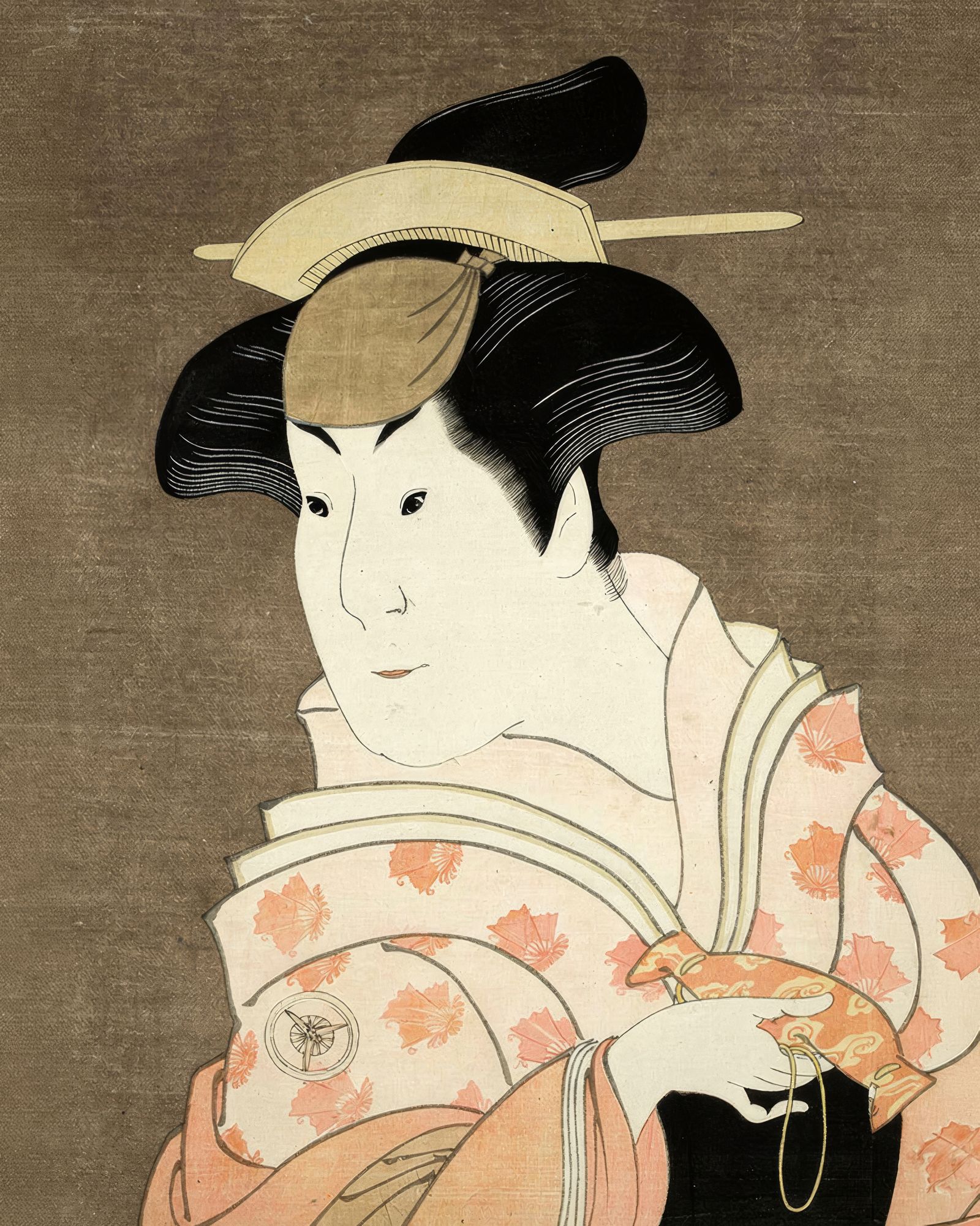
The actor Iwai Hanshiro IV as the wet nurse Shigenoi · Toshusai Sharaku 東洲斎 写楽, 1794 · Art Institute of Chicago. Restored by Surrealium at Vaxholm Fortress, Sweden.
The figure holds a dark object low in the image, while a pale patterned robe frames the face and a substantial hairstyle rises above it. The museum title identifies the performed role, which is more useful than inferring the sitter’s personal life from appearance alone. Notice how the repeated small motifs on the clothing set a slower rhythm beneath the face; the broad open areas around the eyes and cheeks keep the expression distinct.
7. Morita Kan’ya VIII as the palanquin bearer Uguisu
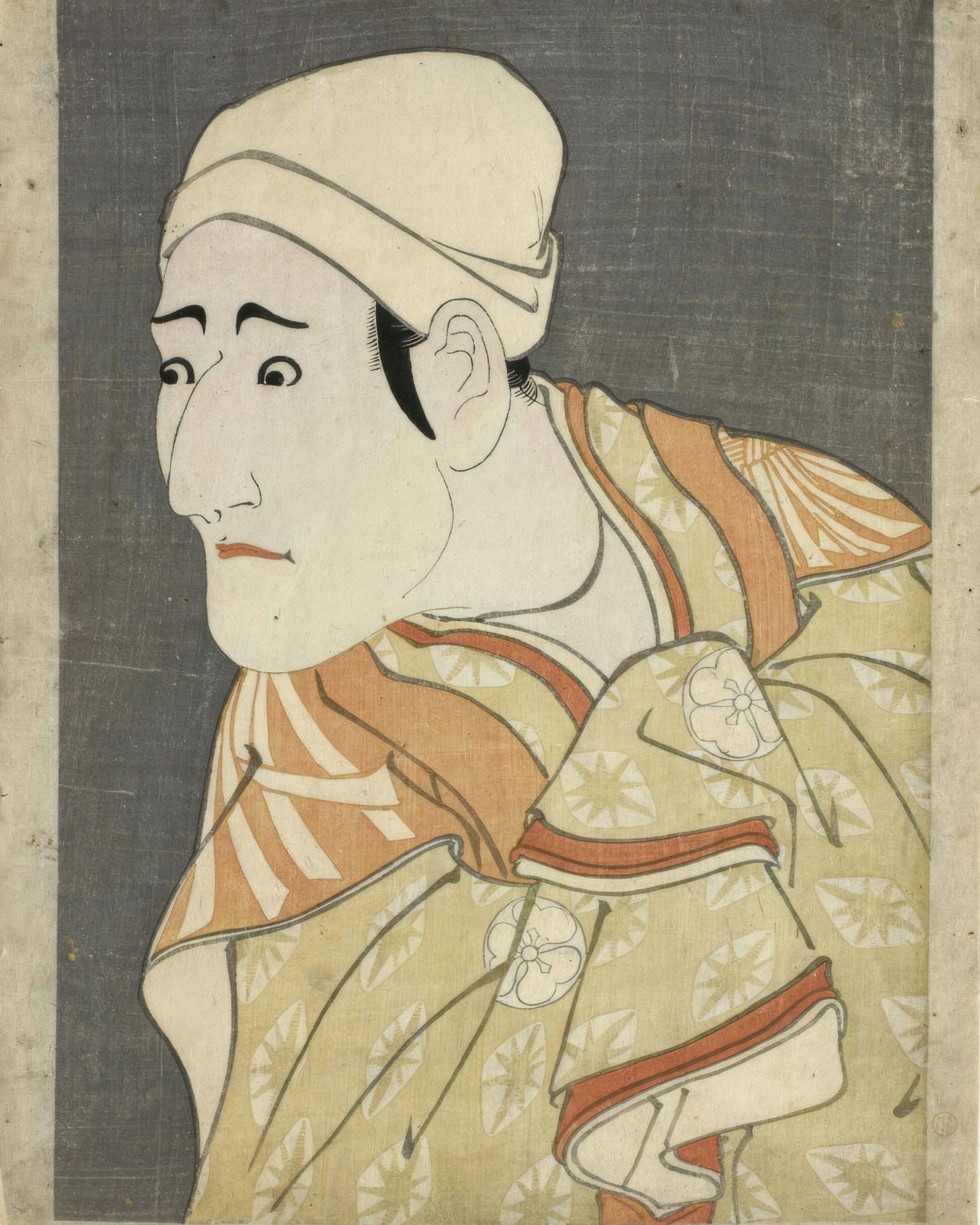
The Actor Morita Kan'ya VIII · Toshusai Sharaku 東洲斎 写楽, 1794 · Art Institute of Chicago. Restored by Surrealium at Vaxholm Fortress, Sweden.
A tied head covering and strongly patterned clothing give this portrait a different silhouette from the elaborately dressed figures elsewhere in the selection. The head turns to the side, while the folded and layered fabric introduces a sequence of angular shapes below it. Looking across these prints, the differences in costume help distinguish roles, but the strongest impression still comes from the meeting of a few facial lines and the particular tilt of a head.
8. Nakayama Tomisaburō as the courtesan Miyagino
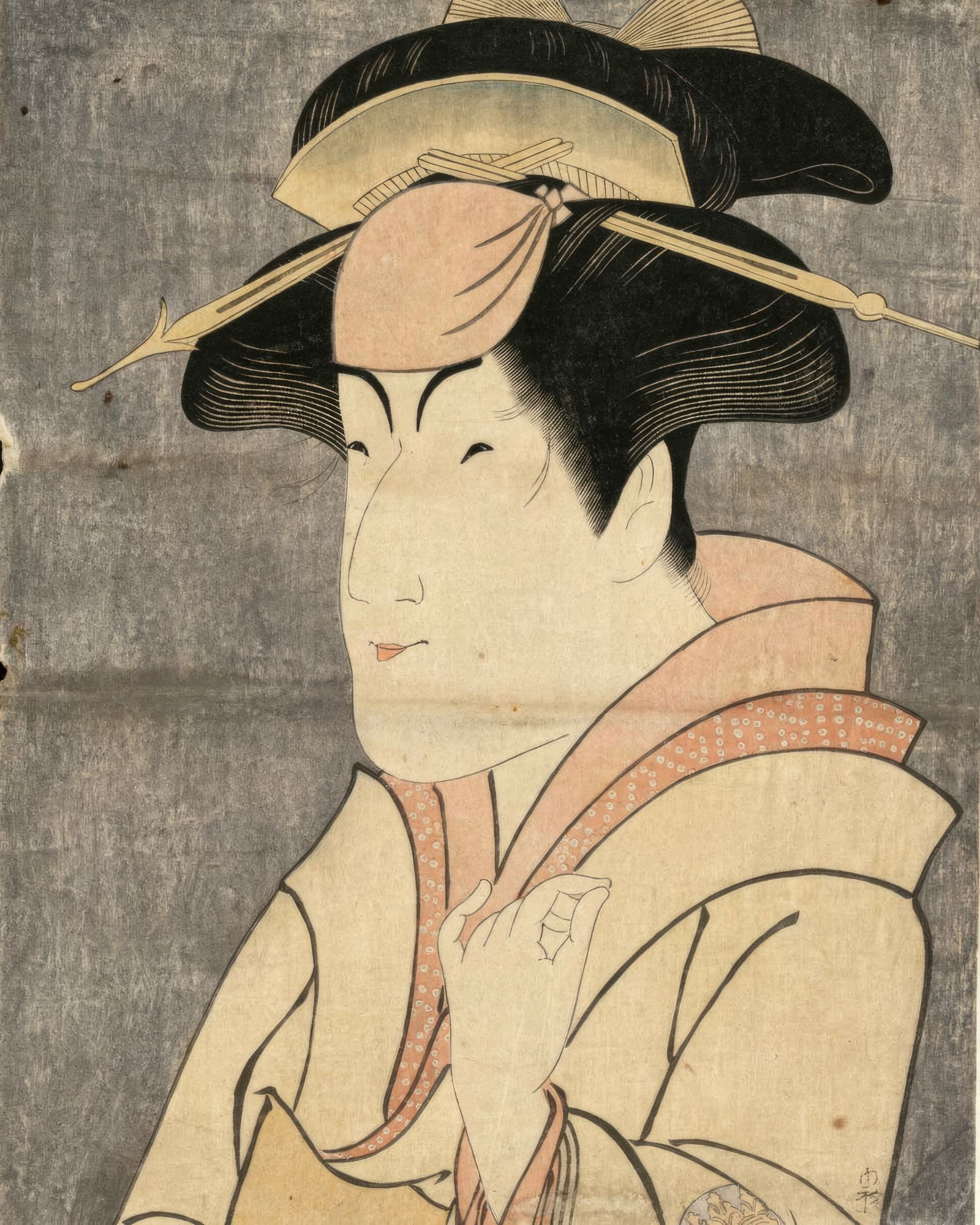
The Courtesan Miyagino · Tōshūsai Sharaku, Late Edo period, 1794 (5th month) · Harvard Art Museums. Restored by Surrealium at Vaxholm Fortress, Sweden.
Hair ornaments extend across the upper part of the sheet, creating a broad horizontal rhythm above the turned face. The pale clothing and restrained colour allow the darker hair and fine facial contours to remain prominent. Keep the actor-and-role identification together when discussing the work: it is a performance portrait, and the contrast between elaborate presentation and a small change of expression is part of what makes the image worth sustained attention.
9. Sawamura Sōjūrō III as Ōgishi Kurando
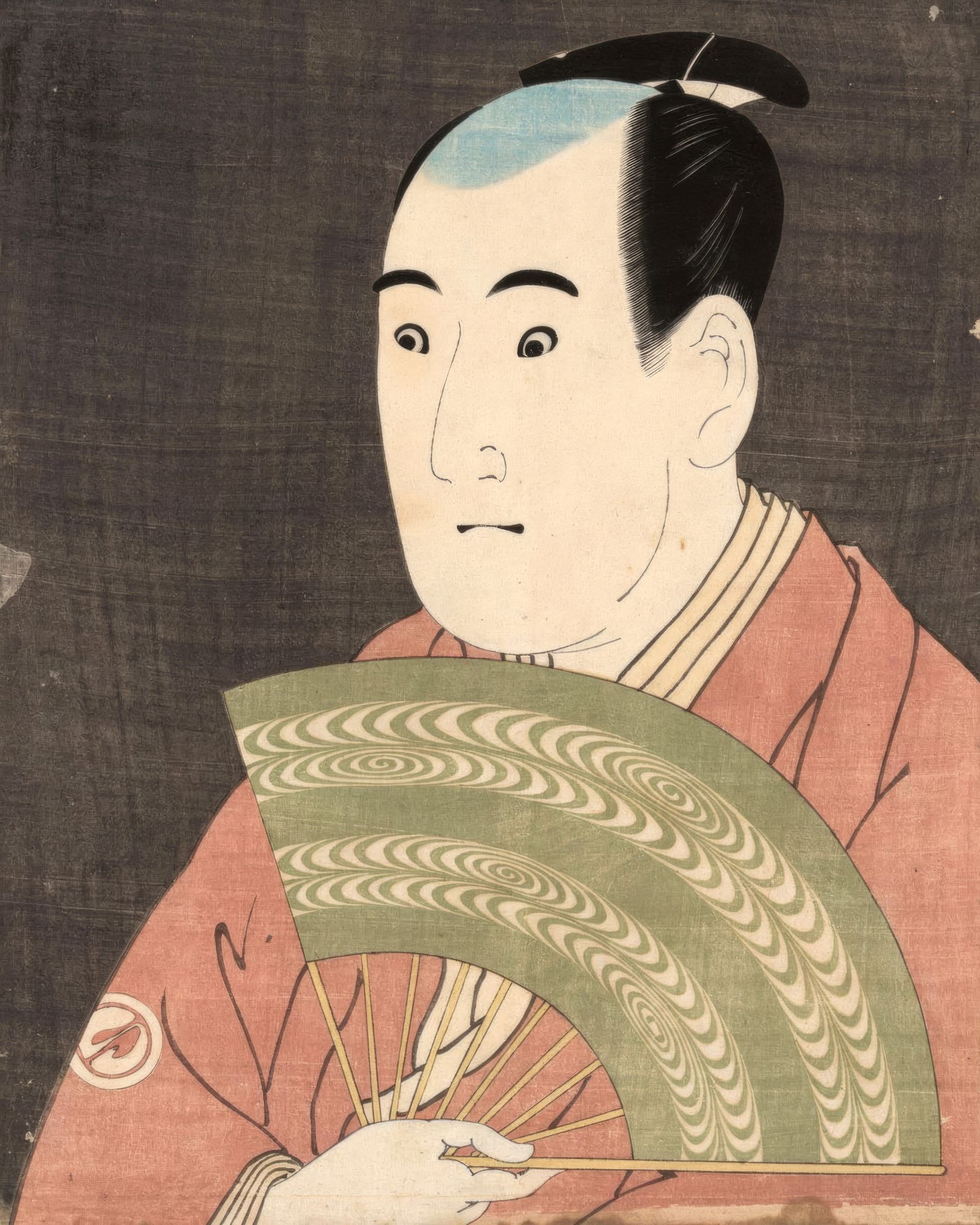
The actor Sawamura Sojuro III as Ogishi Kurando · Toshusai Sharaku 東洲斎 写楽, 1794 · Art Institute of Chicago. Restored by Surrealium at Vaxholm Fortress, Sweden.
A large patterned fan occupies the lower foreground, partly interrupting the robe and creating another surface between the figure and the viewer. The face remains clear above it, with the mouth and eyes giving the head a concentrated presence. Compare the fan’s broad curve with the straighter edges of the garment; the object does more than identify an accessory, because its shape changes the balance of the entire lower half of the portrait.
10. Ichikawa Omezō I as Tomita Hyōtarō
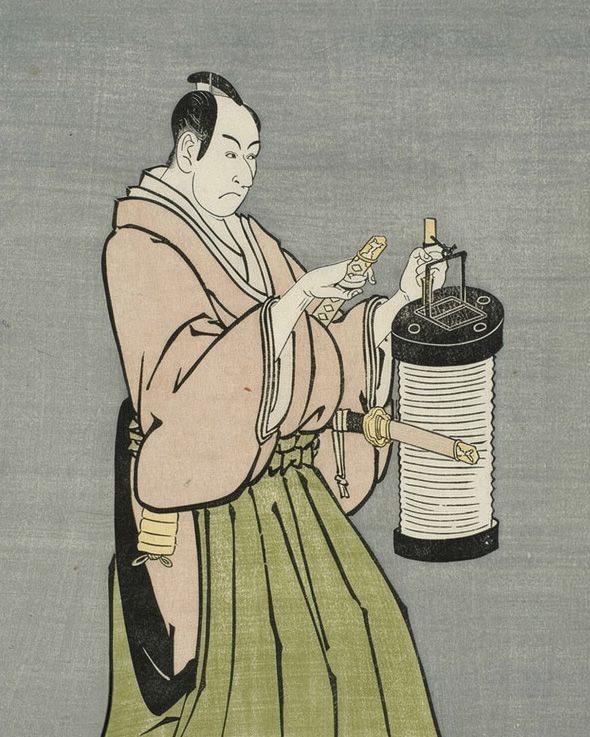
The Actor Ichikawa Omezo · Toshusai Sharaku 東洲斎 写楽, 1794 (Kansei 6) · Art Institute of Chicago. Restored by Surrealium at Vaxholm Fortress, Sweden.
The actor stands beside a tall cylindrical object, with one hand raised and the other contributing to a closely observed action. A relatively plain grey ground leaves the costume, face and object to establish the scene without much surrounding architecture. This final sheet returns attention to the relationship between a person and something handled or attended to; the portrait is not only a face, but a body engaged in a specific moment of performance.
Read the full Yaozō as Hachiman print before comparing its face with the other portraits. A small change in the angle of a hand or the weight of a dark shape can alter the whole encounter. These works also belong within the larger history of portrait pictures, although their theatrical purpose is particular. When choosing a print, keep the full sheet visible: the robe, inscription and surrounding space help the face do its work.
- Who was Sharaku?
- Tōshūsai Sharaku was a Japanese print artist associated with actor portraits published in 1794–95. The surviving works provide firmer ground for discussion than speculative accounts of the artist’s identity.
- Are these portraits of actors or fictional characters?
- They picture named actors performing named roles. Both parts of the identification matter, because the expression and costume belong to a theatrical representation rather than a neutral record of private life.
- Are Sharaku’s prints paintings?
- No. These are woodblock prints. Their outlines, colour areas and printed surfaces should be understood in relation to that medium, even when a modern reproduction is chosen for display at home.