Hokusai beyond the Great Wave: 14 prints to know
The Great Wave made Hokusai the most famous artist in Asia, but it is one print among thousands. Here are fourteen more: views of Fuji, ghosts, flowers, cranes and poems.
Katsushika Hokusai worked for seventy years, changed his name more than thirty times and called himself, near the end, an old man mad about drawing. He was over seventy when he published the Thirty-six Views of Mount Fuji, the series that includes The Great Wave off Kanagawa, and he kept inventing until he died at eighty-eight.
The Great Wave is the print everyone knows, but the rest of his work is just as daring and much less familiar. The fourteen prints below come from the Art Institute of Chicago, the Cleveland Museum of Art and the V&A: more views of Fuji and the sea, his famous ghost prints, his large flowers, and his illustrations of classical poems. Each can be ordered as a print from the museum’s scan.
1. The Fisherman at Kajikazawa
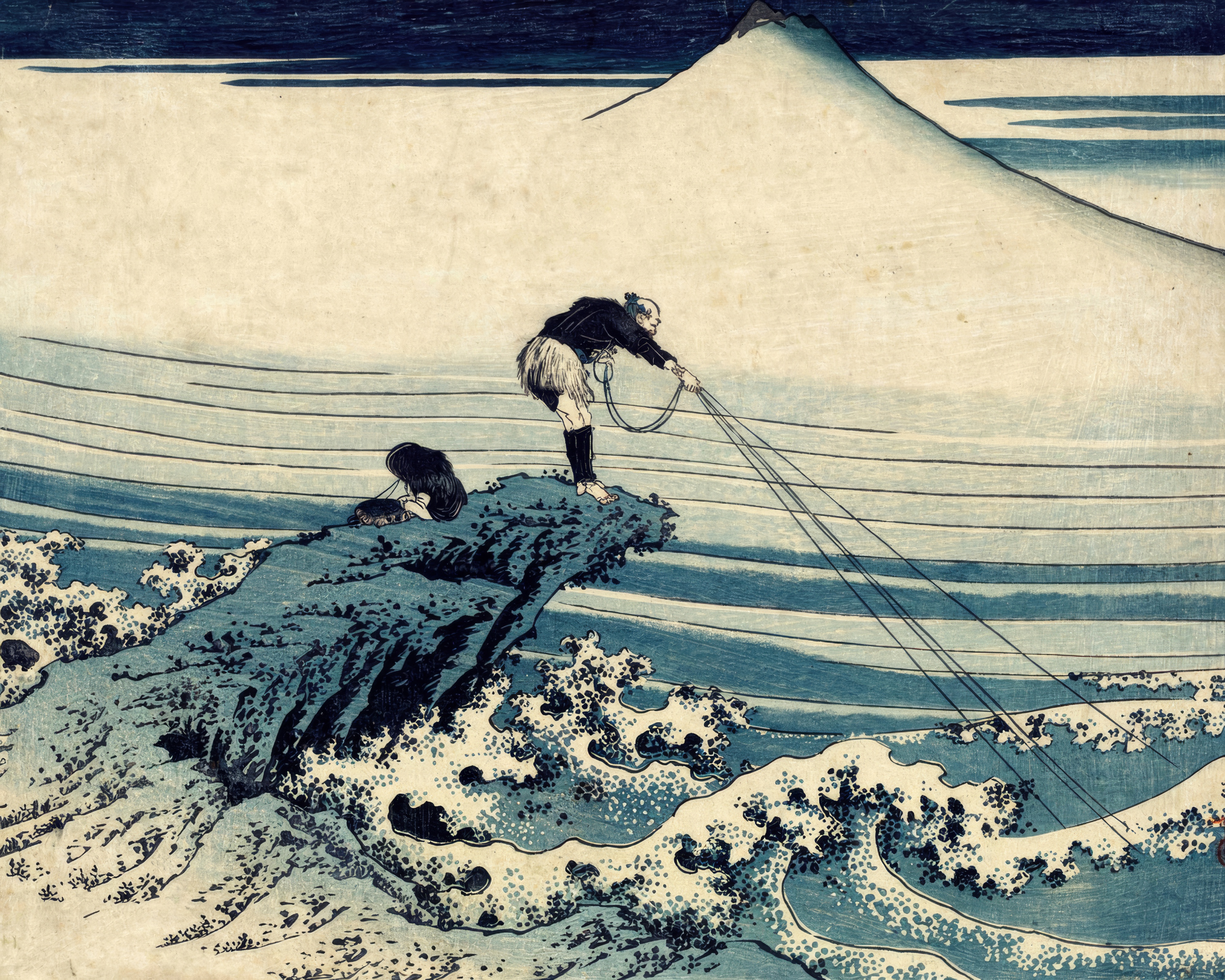
Katsushika Hokusai, The Fisherman at Kajikazawa, c. 1830/33. Color woodblock print; oban. Art Institute of Chicago.
From the Thirty-six Views of Mount Fuji, the same series as The Great Wave. A fisherman on a rock and the lines of his net form a triangle that mirrors Fuji above the mist. Many collectors think it the most beautiful print in the series.
If you love The Great Wave, this is the print to hang beside it: same series, same blue, and far less often seen.
2. Fishing Boats at Choshi
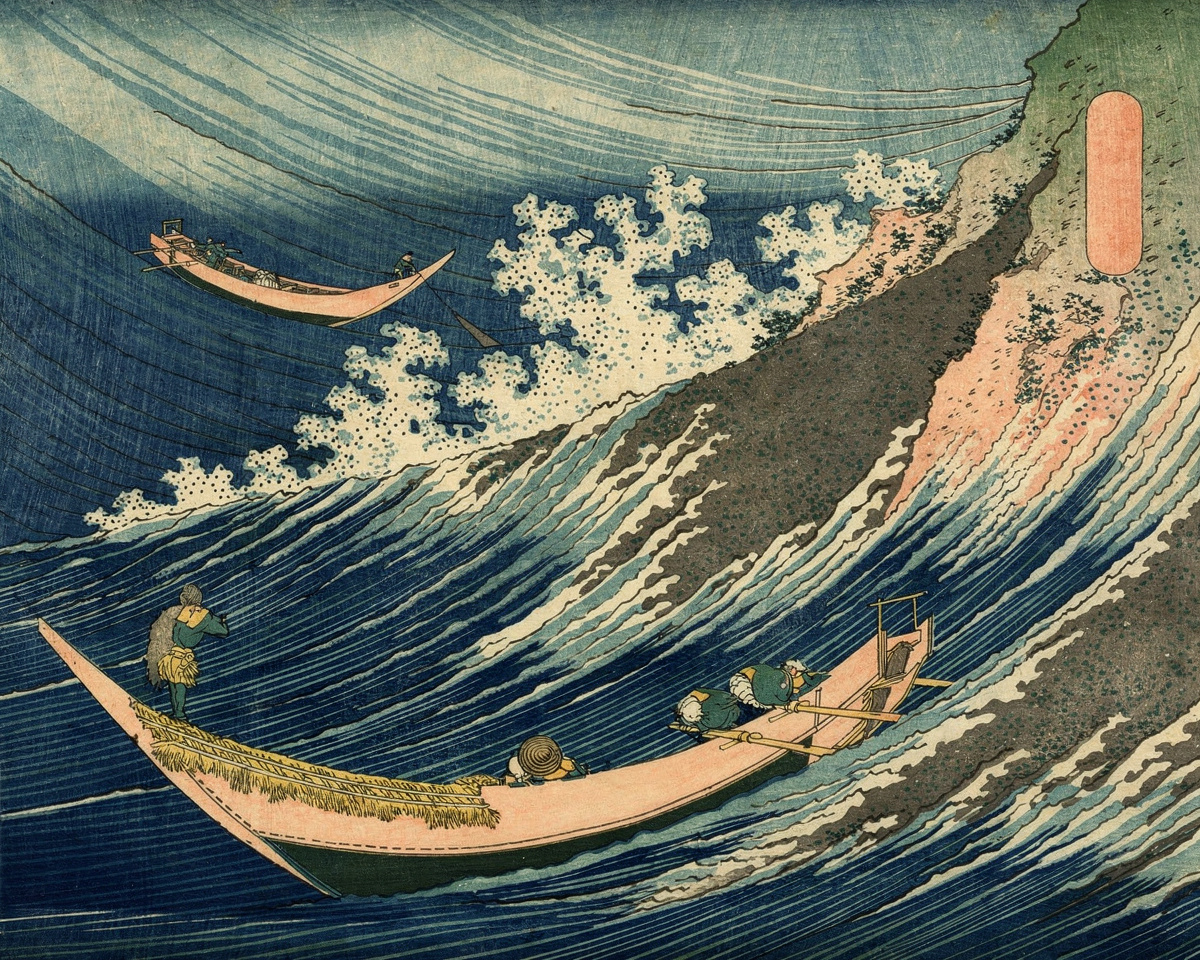
Katsushika Hokusai, Fishing Boats at Choshi, c. 1833/34. Colour woodblock print. Art Institute of Chicago.
Hokusai returned to the sea again and again. Here, from his series One Thousand Pictures of the Ocean, fishermen off Choshi row through swells that curl like the claws of the Great Wave.
3. Sunset over Ryogoku Bridge
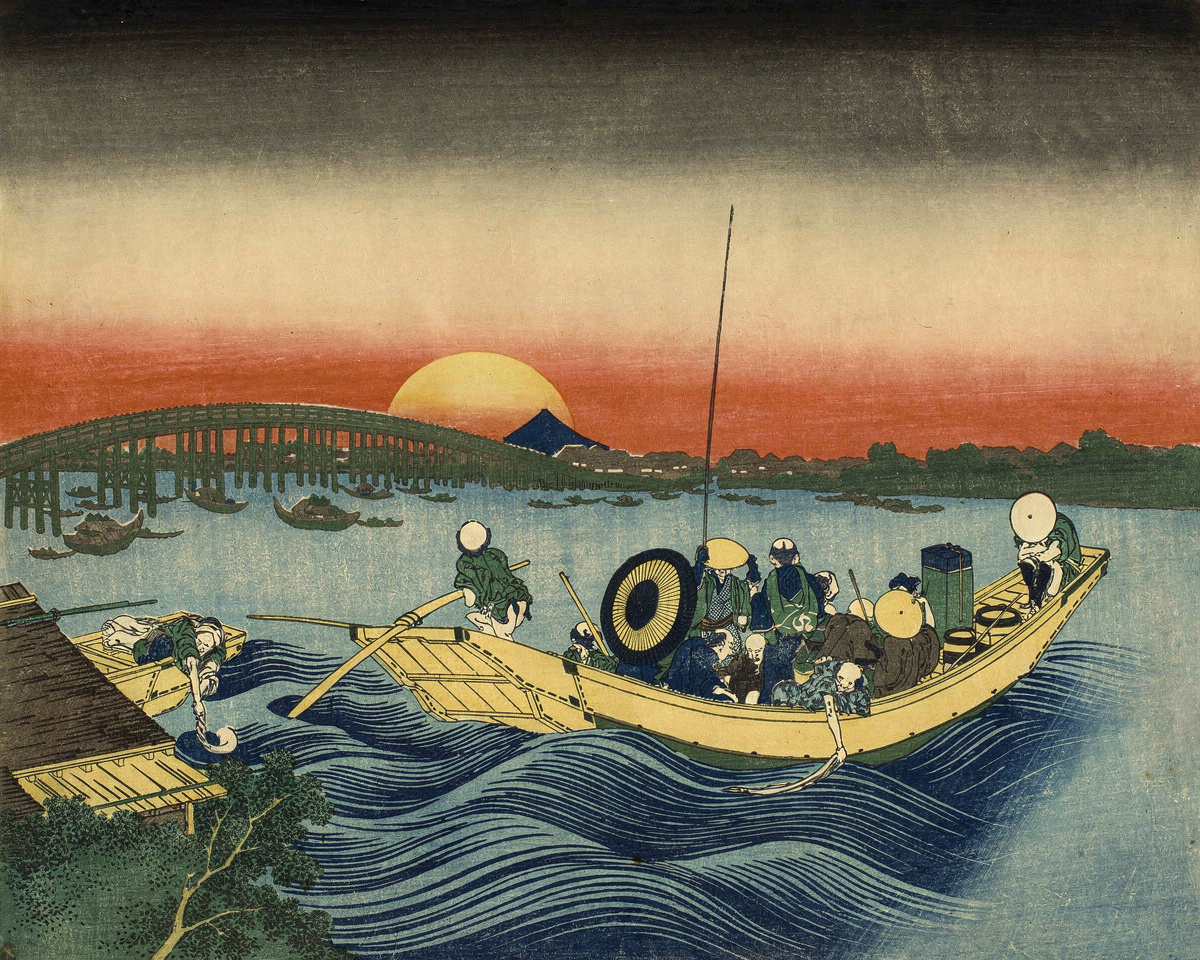
Katsushika Hokusai, Sunset over Ryogoku Bridge, c. 1830/33. Color woodblock print; oban. Art Institute of Chicago.
Another of the Thirty-six Views. A ferry full of people heads home across the Sumida River as the sun sets, the long Ryōgoku Bridge stretched across the water and a dark Fuji far beyond.
4. Fuji from Ushibori, Province of Hitachi
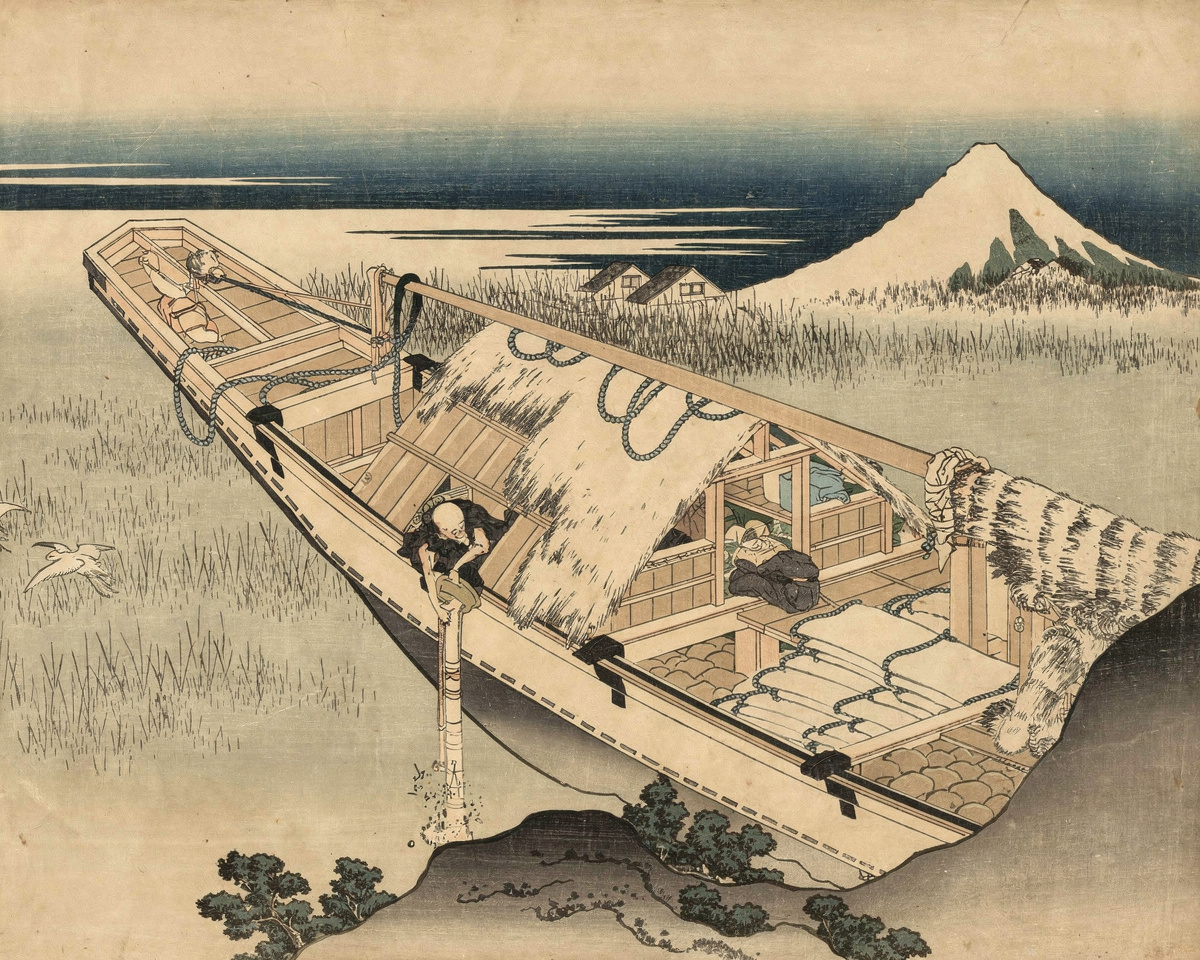
Katsushika Hokusai, Fuji from Ushibori, Province of Hitachi, 1760–1849. Color woodblock print. Cleveland Museum of Art.
In the marshes at Ushibori a boatman rinses rice over the side and two white herons fly up, startled. Fuji sits small and pale on the horizon. It is one of the quietest prints in the series, and one of the most delicate.
5. The Lantern Ghost
Katsushika Hokusai, The Lantern Ghost, c. 1831–32. Colour woodblock print.
Around 1831 Hokusai began a series called One Hundred Ghost Stories and finished only five. The most famous shows Oiwa, a wronged wife poisoned by her husband, whose face appears in a torn paper lantern. It is pure horror, and pure design.
a print that turns a reading corner or a study into a talking point.
6. Kohada Koheiji
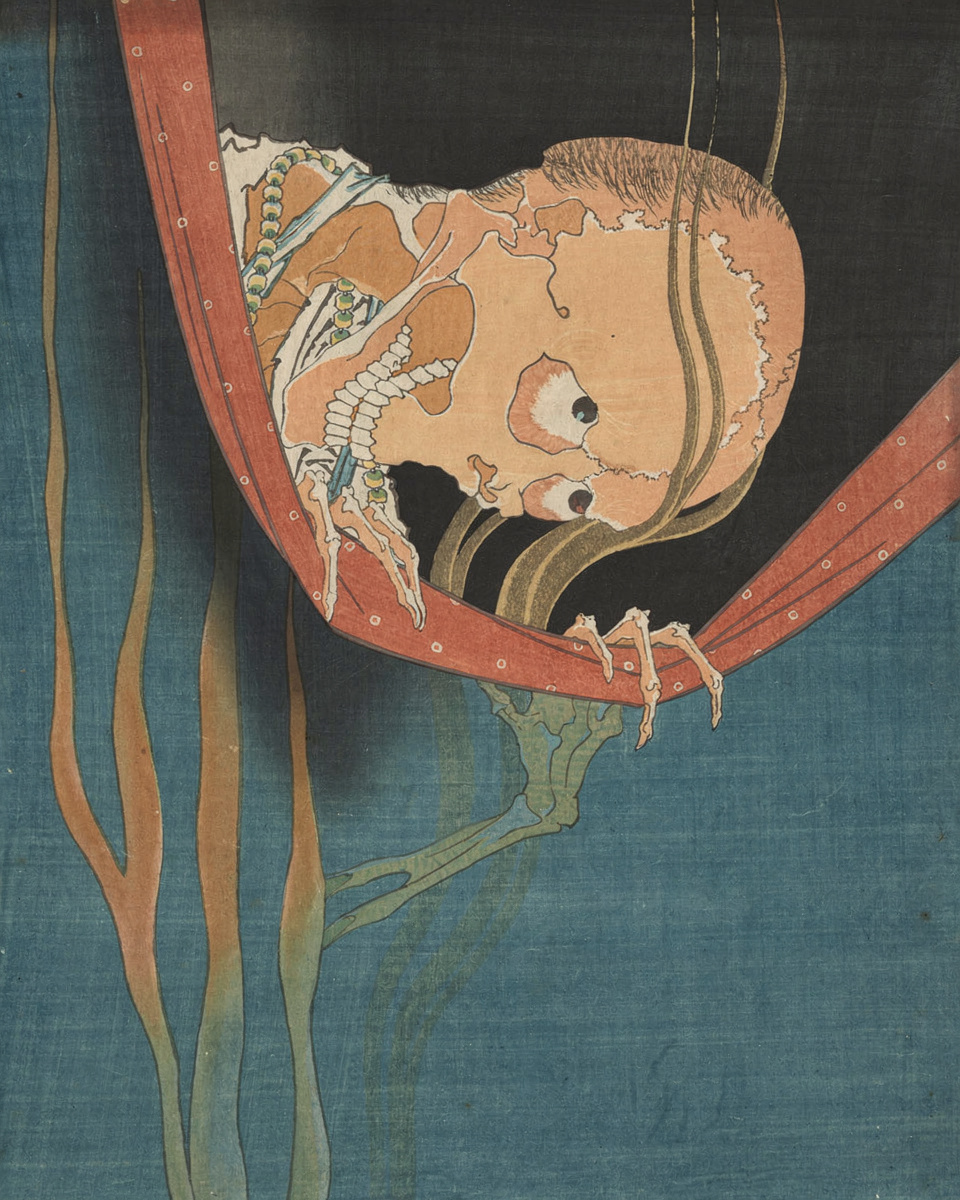
Katsushika Hokusai, Kohada Koheiji, 1831-32. Color woodblock print; chuban. Art Institute of Chicago.
Kohada Koheiji was an actor murdered by his wife’s lover. In Hokusai’s print his skeletal ghost peers over the mosquito net where the couple sleep. The cool green net and the bony fingers make it one of the most unsettling images in Japanese art.
7. The Mansion of the Plates
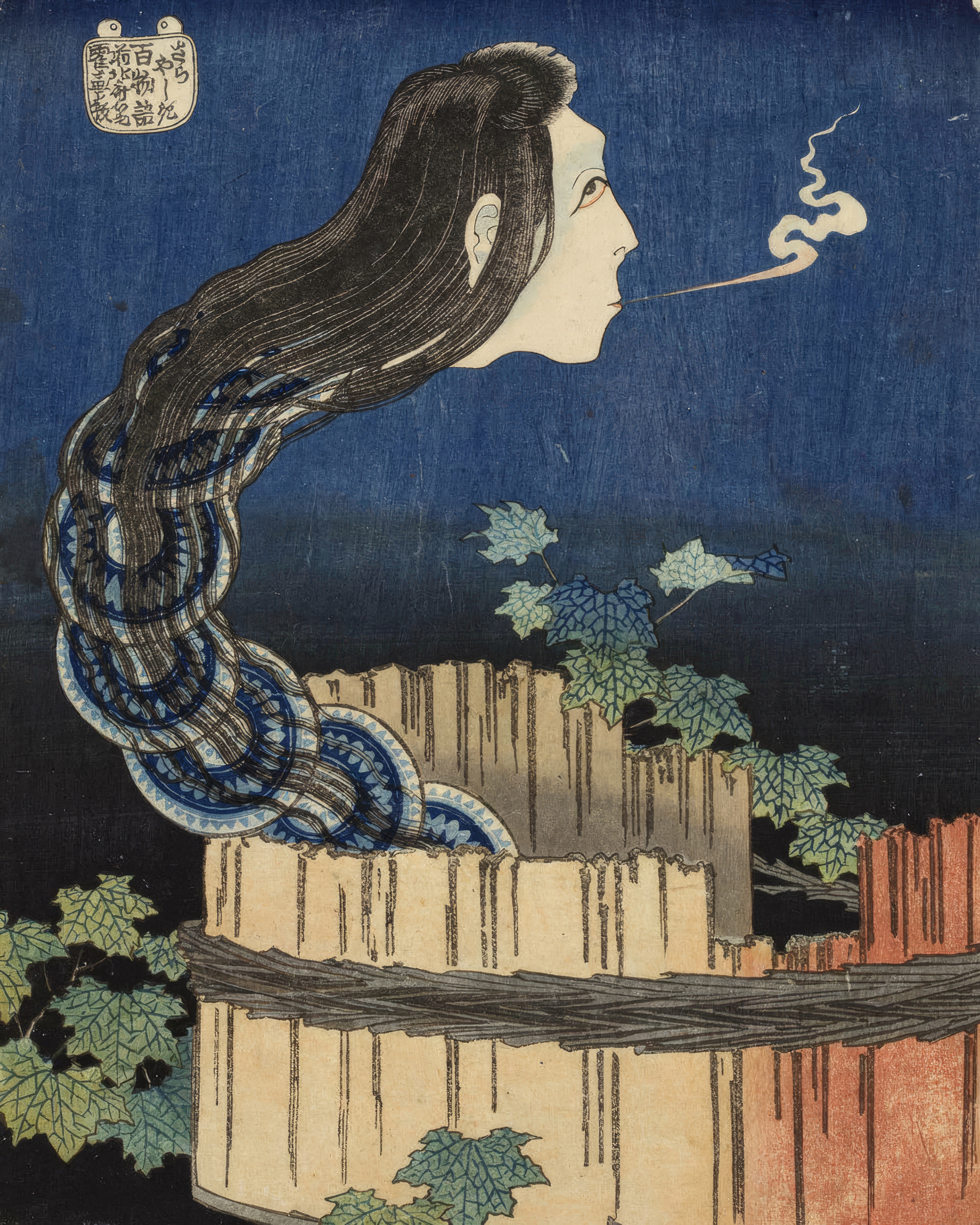
Katsushika Hokusai, The Mansion of the Plates, 1831-32. Color woodblock print; chuban. Art Institute of Chicago.
Okiku was a servant thrown into a well after being accused of breaking one of ten precious plates. Every night her ghost rises to count them, and Hokusai turns her into a long, curling neck made of the plates themselves.
8. Hydrangea and Swallow
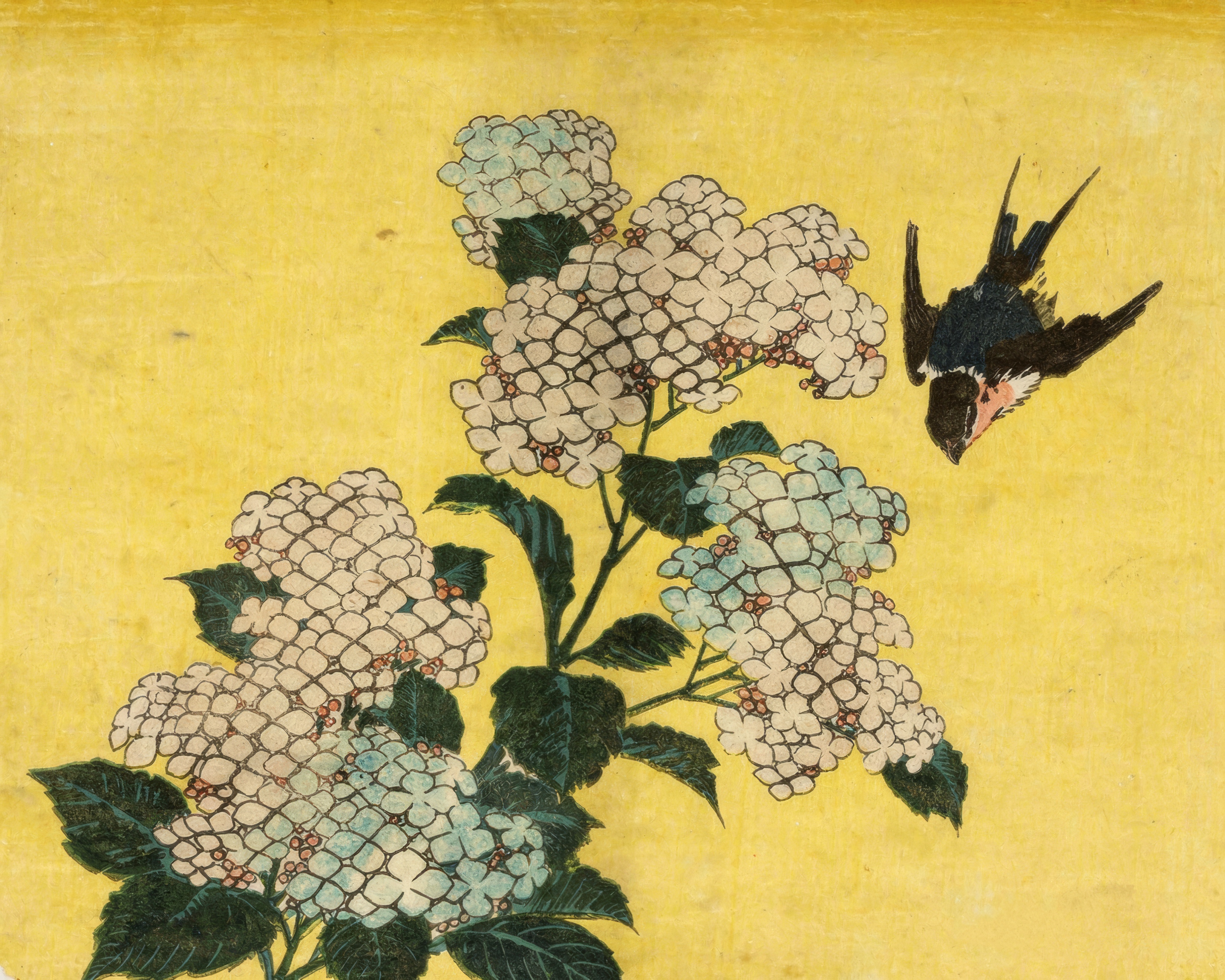
Katsushika Hokusai, Hydrangea and Swallow, c. 1833/34. Color woodblock print; oban. Art Institute of Chicago.
Hokusai’s large flower series is the gentlest work of his life: ten prints, each a single flower seen close up with a bird or insect. Here a swallow swoops past a pale blue hydrangea in early summer.
The large flowers suit a kitchen, dining room or bedroom, alone or as a set of three.
9. Chrysanthemum and Horsefly
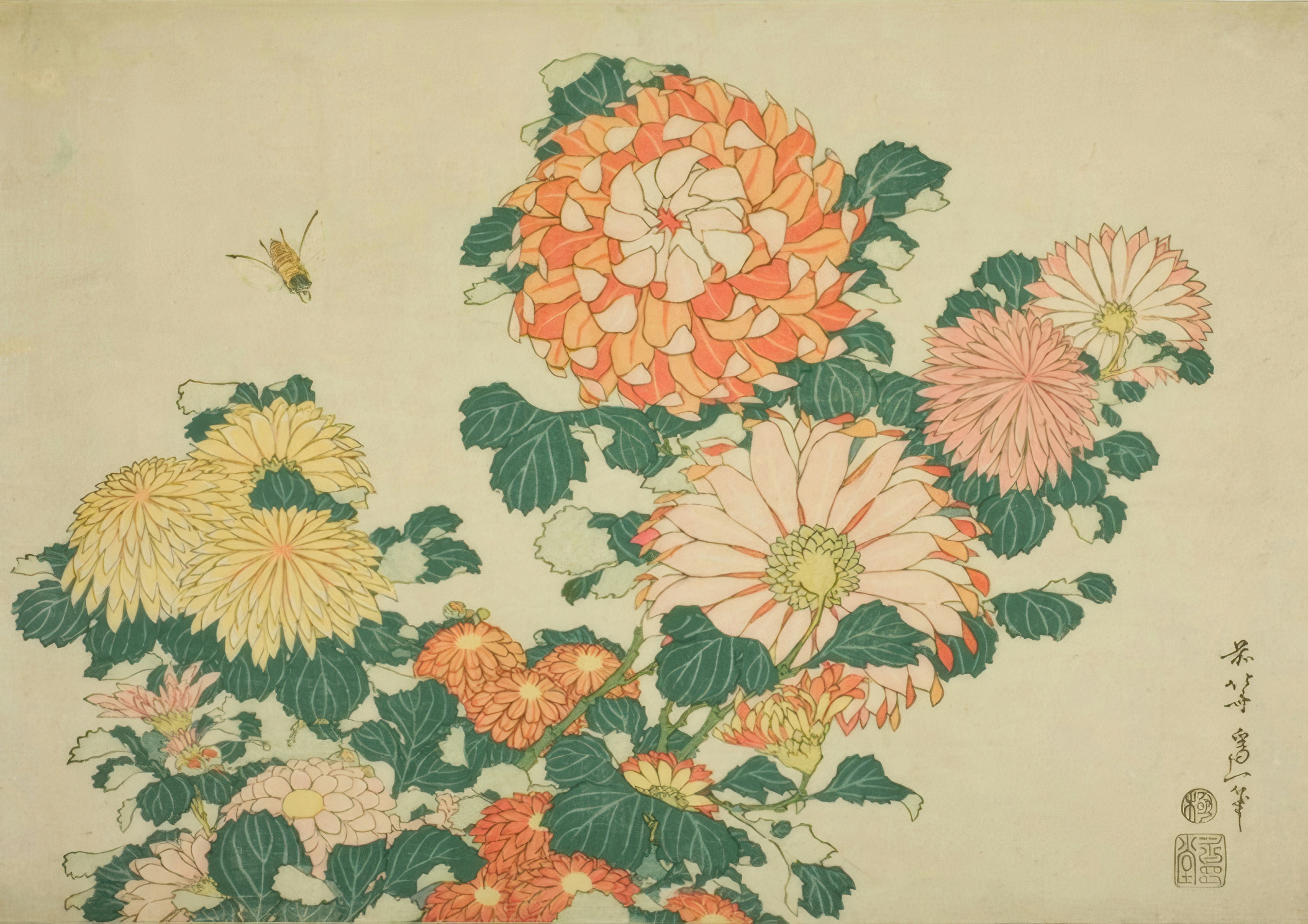
Katsushika Hokusai, Chrysanthemum and Horsefly, c. 1831–33. Color woodblock print, oban. Art Institute of Chicago.
The chrysanthemum is the flower of autumn and of the Japanese imperial family. Hokusai bends a whole spray of them in the wind, with a tiny horsefly hovering above, to show that even a grand flower is part of the ordinary world.
10. Cranes on snow-covered pine
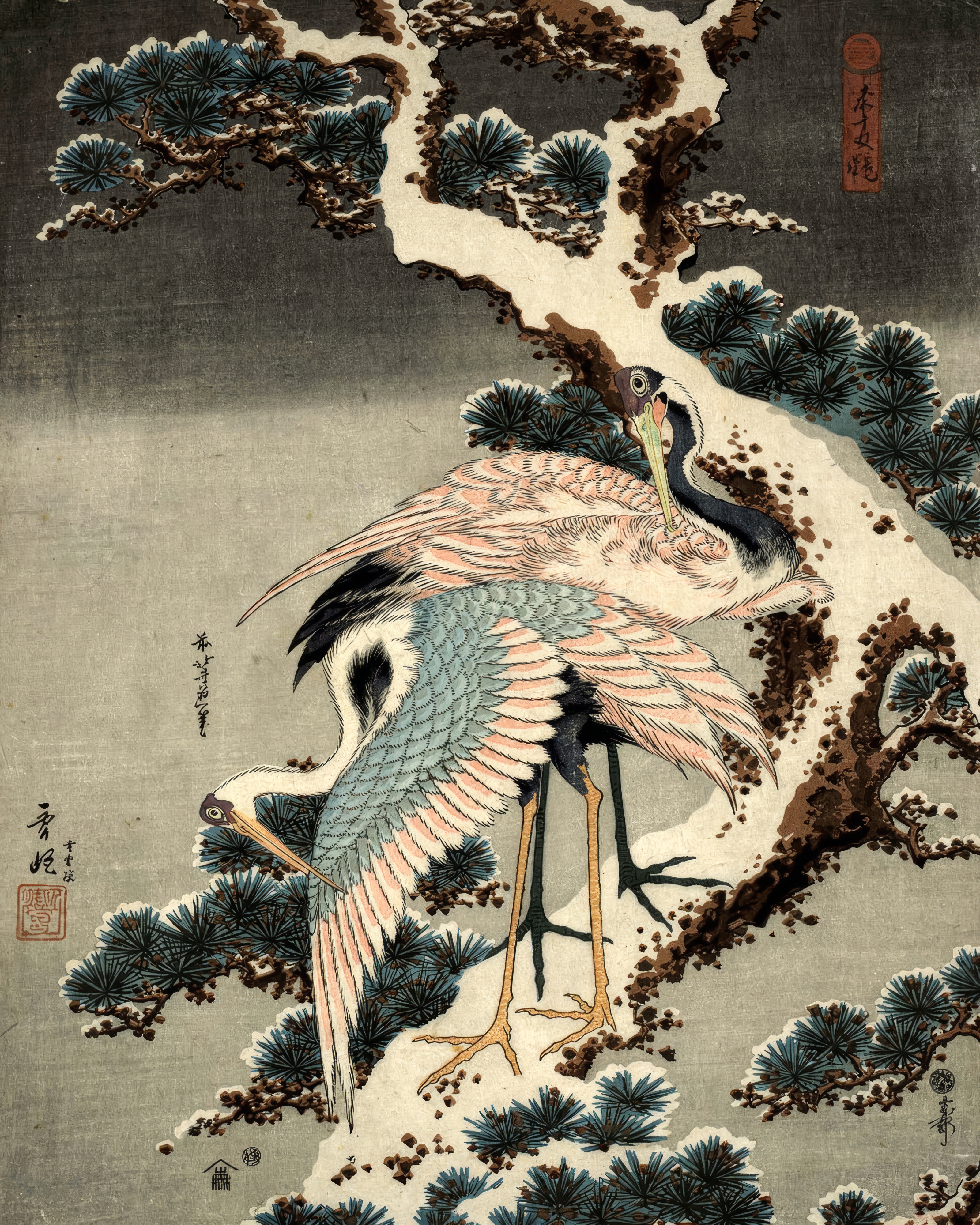
Katsushika Hokusai, Cranes on snow-covered pine, c. 1834. Color woodblock print; vertical nagaban. Art Institute of Chicago.
Cranes stood for long life and pines for constancy, so together they made a picture of good fortune. In this tall, narrow print two cranes perch on a snowy branch, drawn with very few lines.
A wonderful print for a birthday or wedding gift, since it means long life and constancy.
11. A Peasant Crossing a Bridge
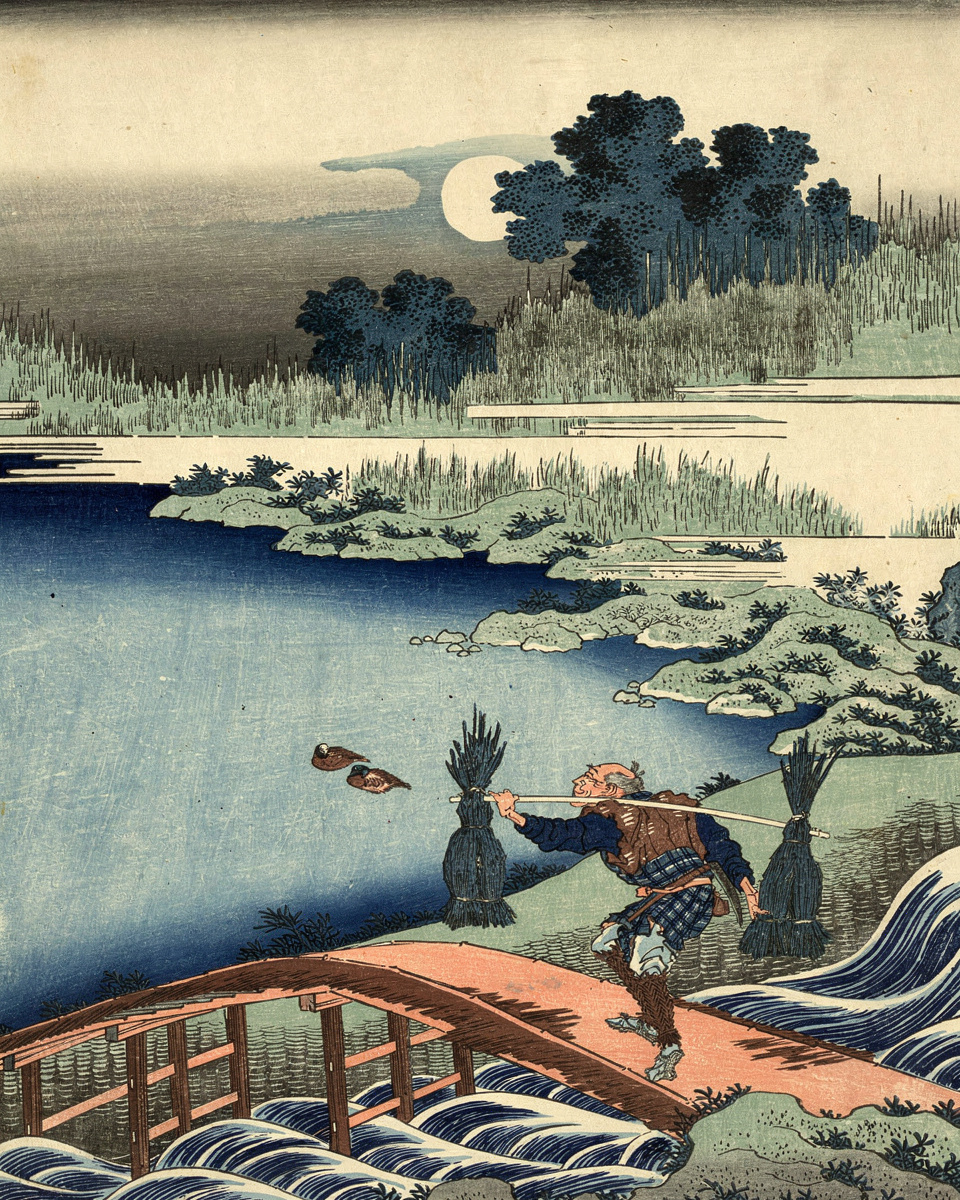
Katsushika Hokusai, A Peasant Crossing a Bridge, late 1830s. Color woodblock print; nagaban. Art Institute of Chicago.
From A True Mirror of Chinese and Japanese Poems, a series of tall prints that illustrate classical verses. A lone traveller crosses a little bridge in snow, and the whole landscape turns blue and white around him.
12. Akashi Bay at Night
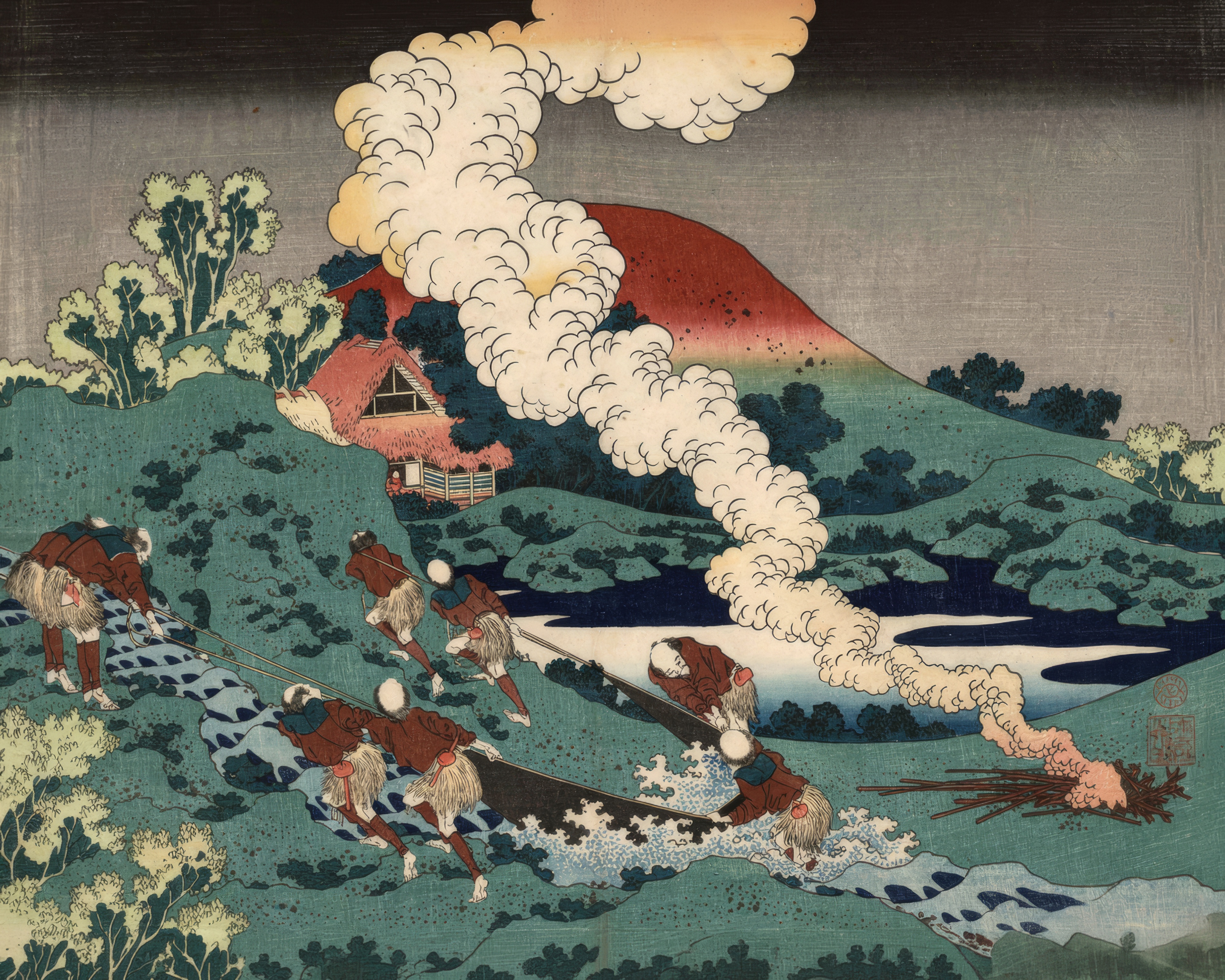
Katsushika Hokusai, Akashi Bay at Night, 1835–36. Color woodblock print. Cleveland Museum of Art.
Late in life Hokusai began to illustrate One Hundred Poems by One Hundred Poets, the most famous anthology in Japan. This print answers a verse by Kakinomoto no Hitomaro about a boat vanishing among the islands of Akashi Bay in the morning mist.
13. The Tea House at Mariko
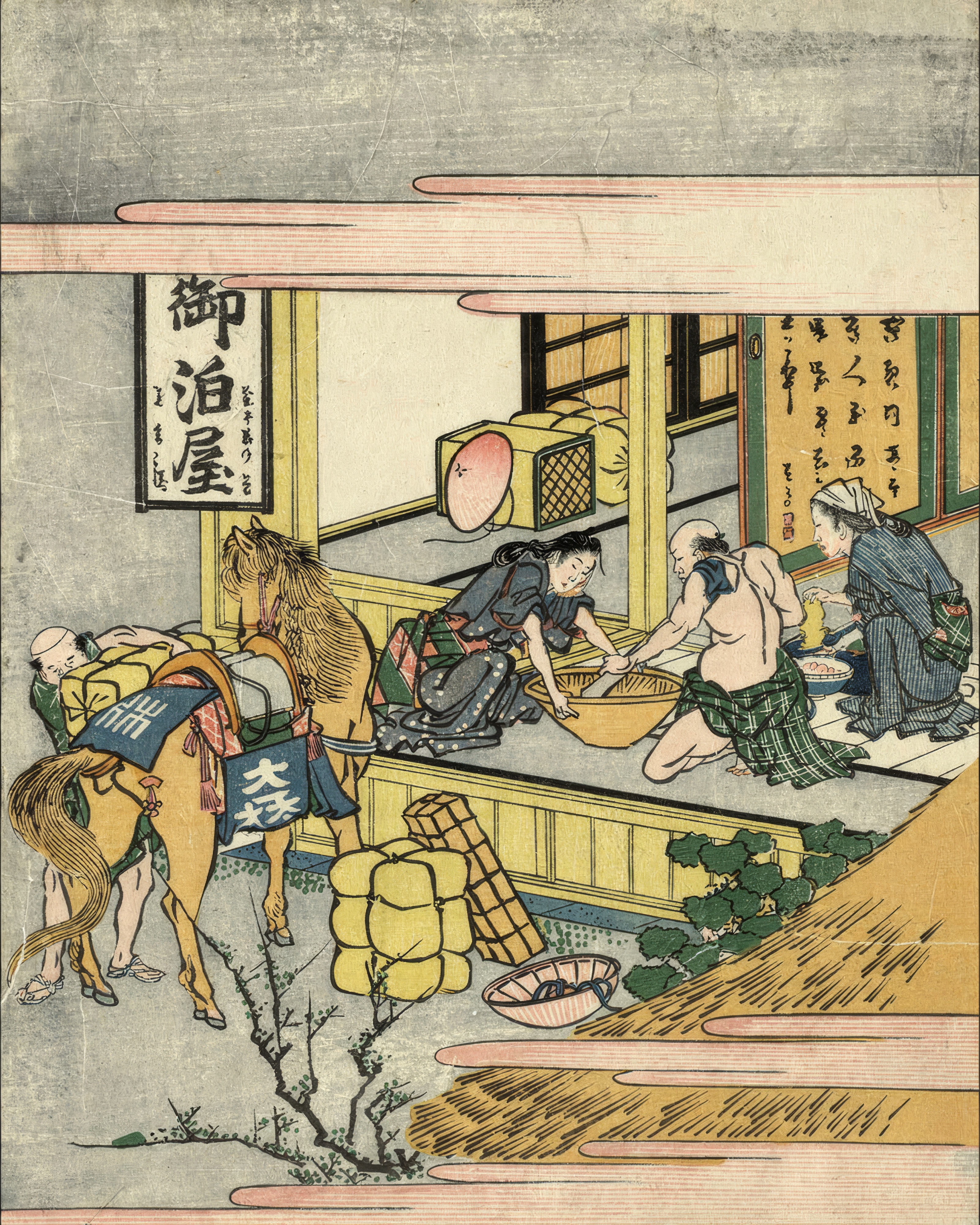
Katsushika Hokusai, The Tea House at Mariko, c. 1806. Color woodblock print; chuban. Art Institute of Chicago.
Long before Hiroshige made the road famous, Hokusai drew its fifty-three stations in small prints. At Mariko, known for its grated yam soup, two travellers sit down to eat while the woman of the house serves.
14. Chickens and Asiatic Dayflowers
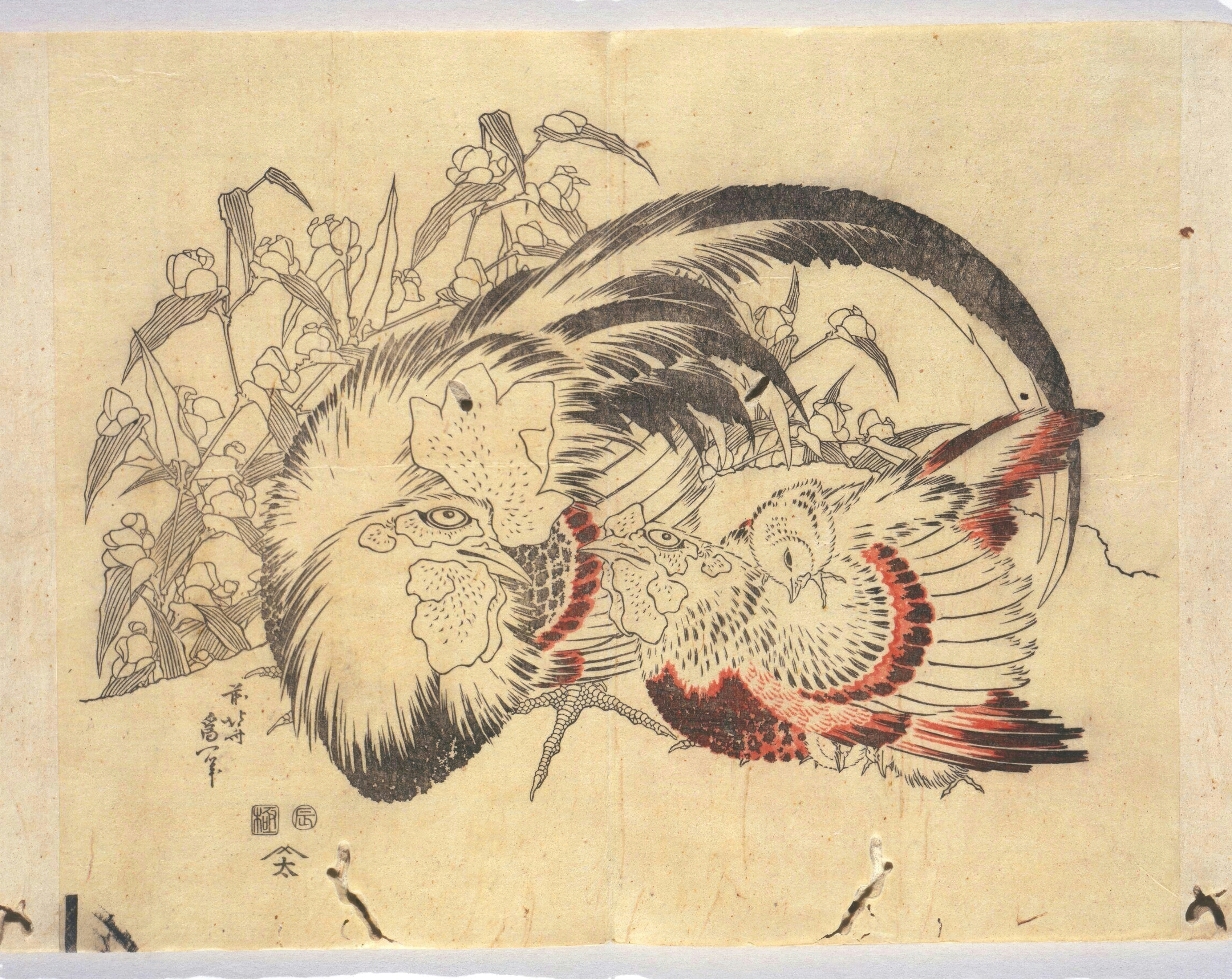
Katsushika Hokusai, Chickens and Asiatic Dayflowers, 1832. Victoria and Albert Museum, London.
Hokusai was as good with animals as with landscapes. A rooster and a hen forage under bright blue dayflowers in a print that shows how much a few strong colours can do.
Hokusai’s prints were made in series, so they look best in groups. Three of the large flowers in a row suit a kitchen or a dining room; two views of Fuji and the sea suit a hallway; a single ghost print is a striking choice for a study or a reading corner. For the wider world of Edo prints, read our guide to Japanese woodblock prints.
Questions
What is Hokusai famous for?
Hokusai is famous for The Great Wave off Kanagawa and the series it belongs to, Thirty-six Views of Mount Fuji, published around 1830 to 1833. He also made the Hokusai Manga sketchbooks, series of waterfalls, bridges, flowers, ghosts and poems, and thousands of paintings and book illustrations.
Is The Great Wave part of a series?
Yes. It is one of the Thirty-six Views of Mount Fuji, which in the end ran to forty-six prints. The Fisherman at Kajikazawa and Fishing Boats at Choshi in this list belong to the same years and the same blue.
Why are Hokusai prints so blue?
Around 1830 a new synthetic pigment, Prussian blue, became cheap in Japan. Hokusai and his publishers built whole series around it, and its deep, lasting blue became the colour of the Fuji views.
How do I hang a group of Hokusai prints?
Use the same mount and frame for each, keep the gaps between them narrow and even, and hang the group with its centre at eye level. Prints of one series hang best in a straight row.