Utamaro: ten prints, ten ways of looking
Meet Utamaro through ten historic prints: combs, clothes, letters, gardens and the arrangements that make each image distinct.
Utamaro is often introduced through the beautiful women of Japanese woodblock prints, but a closer look begins with what the figures are doing. A comb passes in front of a face. Someone bends over a letter. A group gathers around a game or shares the open air. Hands, sleeves and objects create relationships that a label such as “beauty” can flatten if we stop there.
These ten prints come from Fable's existing collection. They include close figures, interiors and broad outdoor scenes, and the differences matter. A print is the result of a collaborative process involving design, cutting, printing and publication, not simply an oil painting on different paper. For that wider context, begin with Japanese woodblock prints. Here the focus stays on the visible arrangement of each work and on the distance between an image of social life and direct access to a sitter's private thoughts.
1. Woman Holding a Tortoise-shell Hair-comb
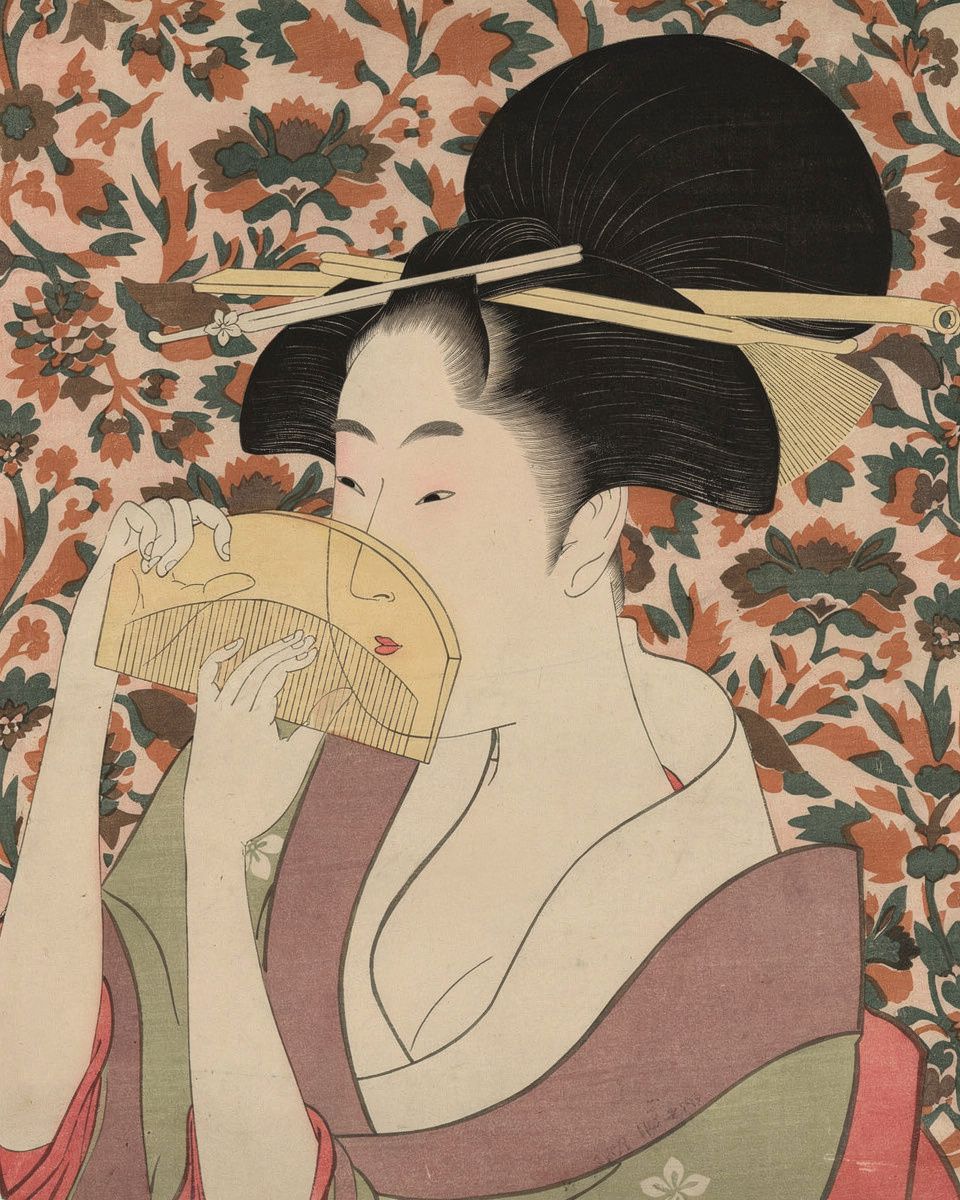
Woman Holding a Tortoise-shell Hair-comb · Kitagawa Utamaro 喜多川 歌麿, c. 1795/96 · Art Institute of Chicago. Restored by Surrealium at Vaxholm Fortress, Sweden.
The comb crosses the lower part of the face, bringing hand, object and features into a close arrangement beneath the large dark shape of the hair. Pattern fills the surrounding surface, so the pale face becomes a place for the eye to pause. The gesture can feel intimate without telling us exactly what the woman thinks; look at the different curves of comb, fingers and cheek before turning the image into a general statement about beauty.
2. Drawing Lots for Prizes
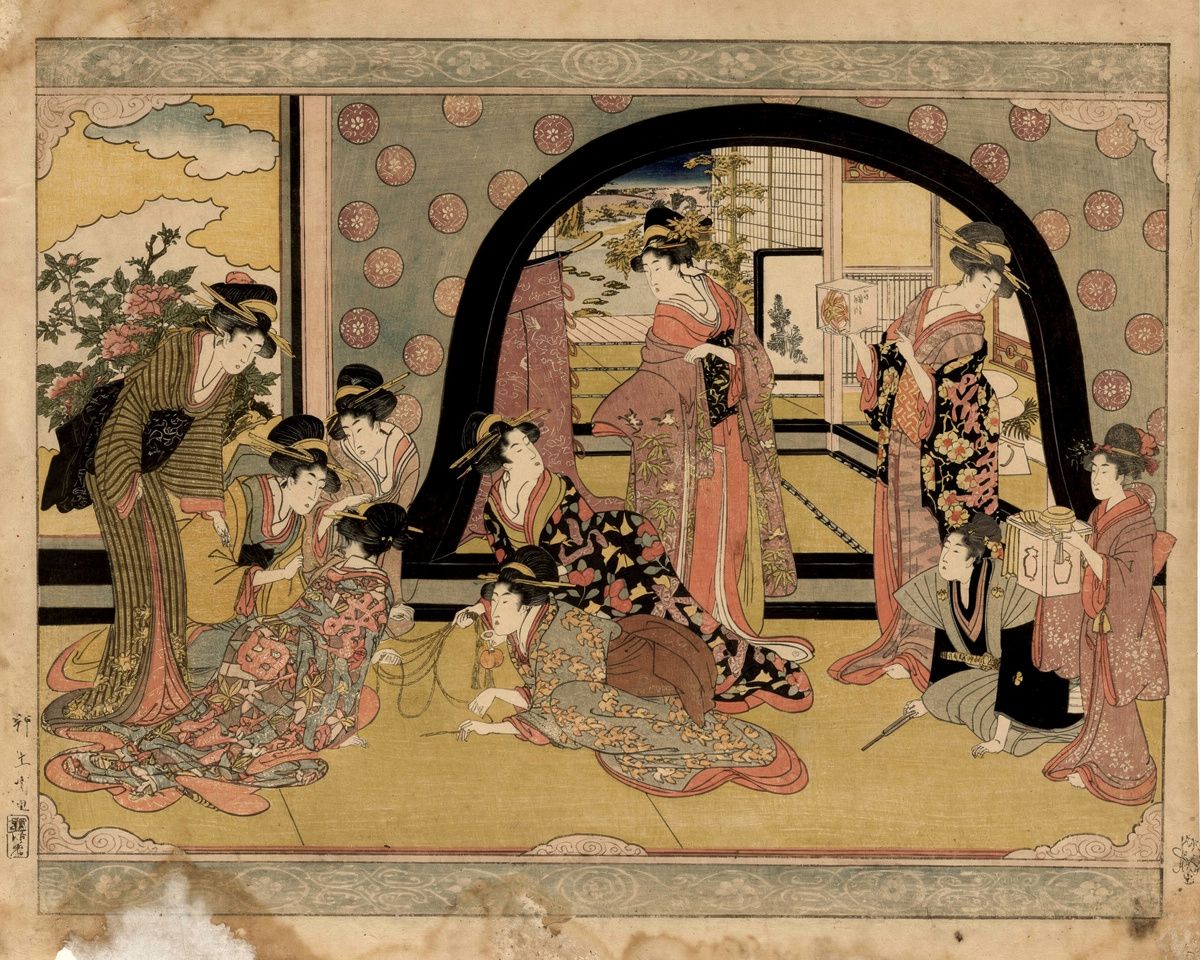
Drawing Lots for Prizes (Ho biki) · Kitagawa Utamaro 喜多川 歌麿, c. 1798 · Art Institute of Chicago. Restored by Surrealium at Vaxholm Fortress, Sweden.
A group fills an interior arranged around a large rounded opening, with patterned robes and small objects creating several centres of attention. The title supplies the activity, while the image lets us follow how people gather around it. Give the composition time at full width: a small thumbnail can make the crowd seem like ornament, but the positions of heads, hands and bodies distinguish one participant's role in the scene from another's.
3. Enjoying the Cool in a Garden
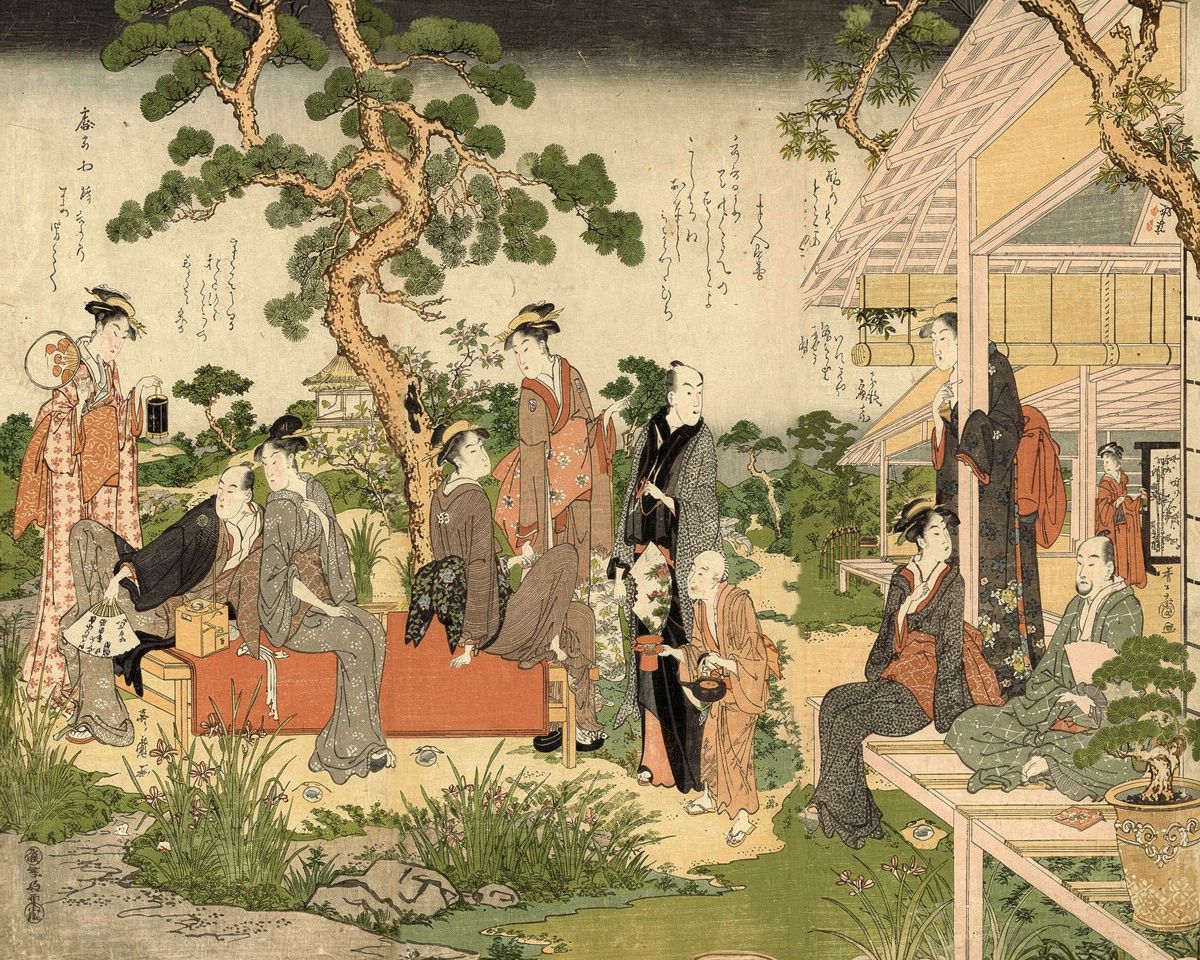
Enjoying the Cool in a Garden · Kitagawa Utamaro 喜多川 歌麿, c. 1788/90 · Art Institute of Chicago. Restored by Surrealium at Vaxholm Fortress, Sweden.
Figures gather among trees, furniture and architectural edges, with the open space of the garden connecting separate conversations and activities. The picture's breadth is part of its meaning, since no single face needs to carry the whole scene. When looking at a print of this kind, move from one small group to the next and notice how the artist keeps the eye travelling through the setting rather than fixing it on a central portrait.
4. Hinazuru of the Keizetsuro
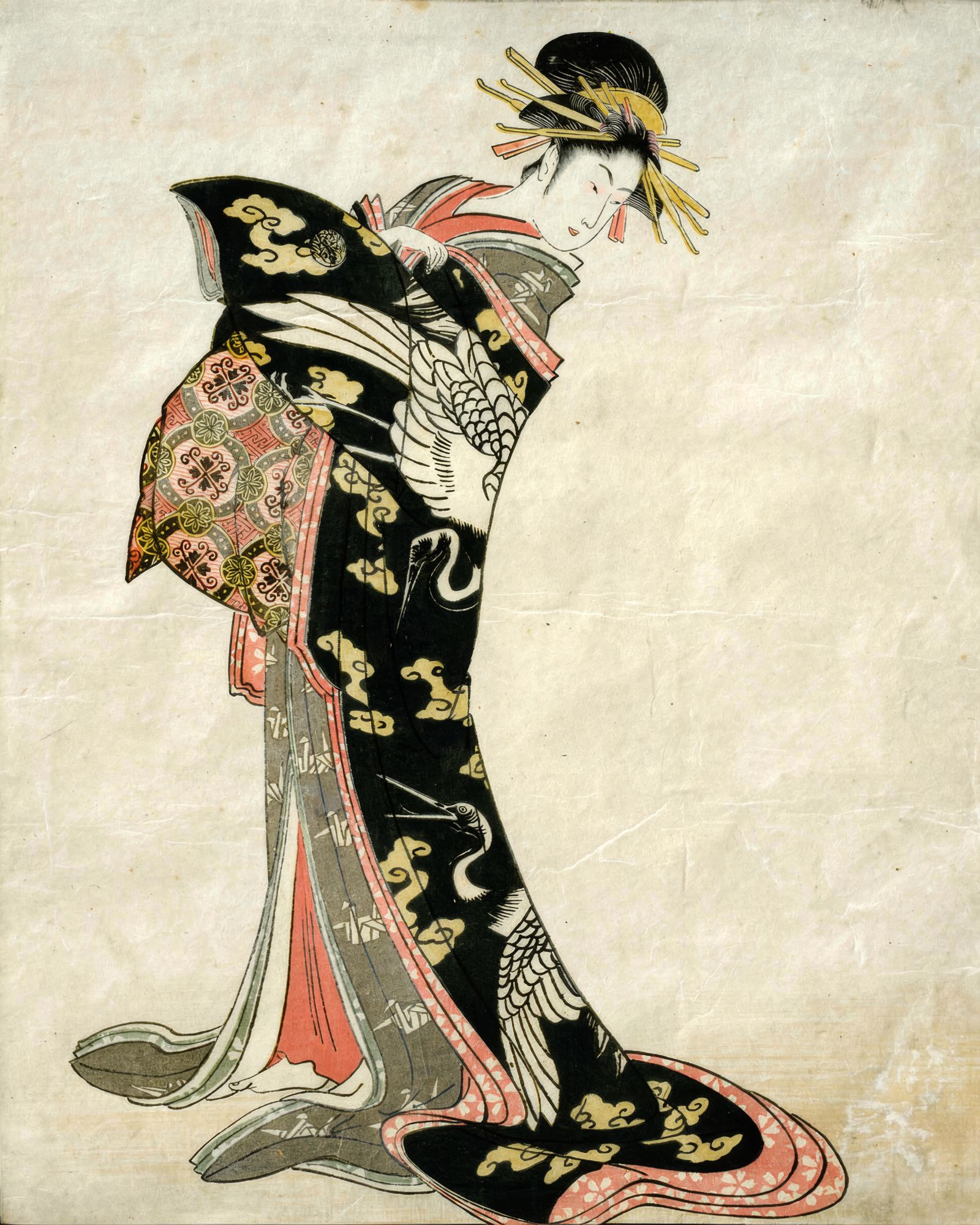
Hinazuru of the Keizetsuro · Kitagawa Utamaro 喜多川 歌麿, c. 1795 · Art Institute of Chicago. Restored by Surrealium at Vaxholm Fortress, Sweden.
The standing figure's elaborate robe creates a strong dark field animated by large patterns and contrasting edges. Her slight turn and the arrangement of hair ornaments interrupt what could otherwise become a flat display of clothing. The recorded name and establishment should stay attached to the work: replacing them with a generic romantic title would remove information about the image's particular social world, even if the viewer first responds to its colour and line.
5. Beneath Ryogoku Bridge
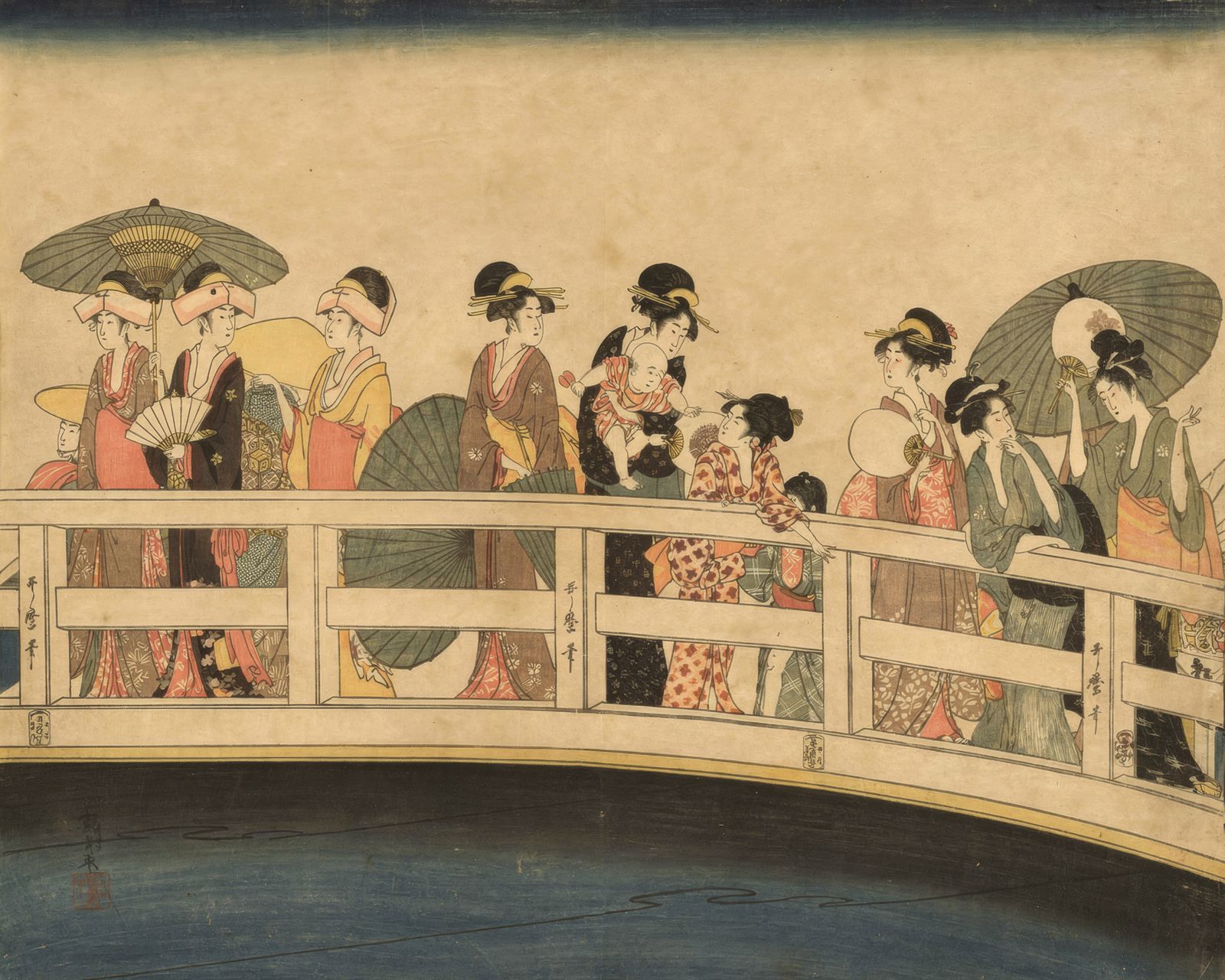
Beneath Ryogoku Bridge · Kitagawa Utamaro 喜多川 歌麿, c. 1795/96 · Art Institute of Chicago. Restored by Surrealium at Vaxholm Fortress, Sweden.
The broad bridge rail divides the image while a procession of figures, hats and parasols moves across the upper part of the scene. Water below gives the crowd a different scale and makes the built structure an organising line. This is a useful counterpoint to Utamaro's close faces: the print shows how rhythm can come from repeated bodies and accessories across a wide surface, not only from the elegant outline of one sitter.
6. After the Bath
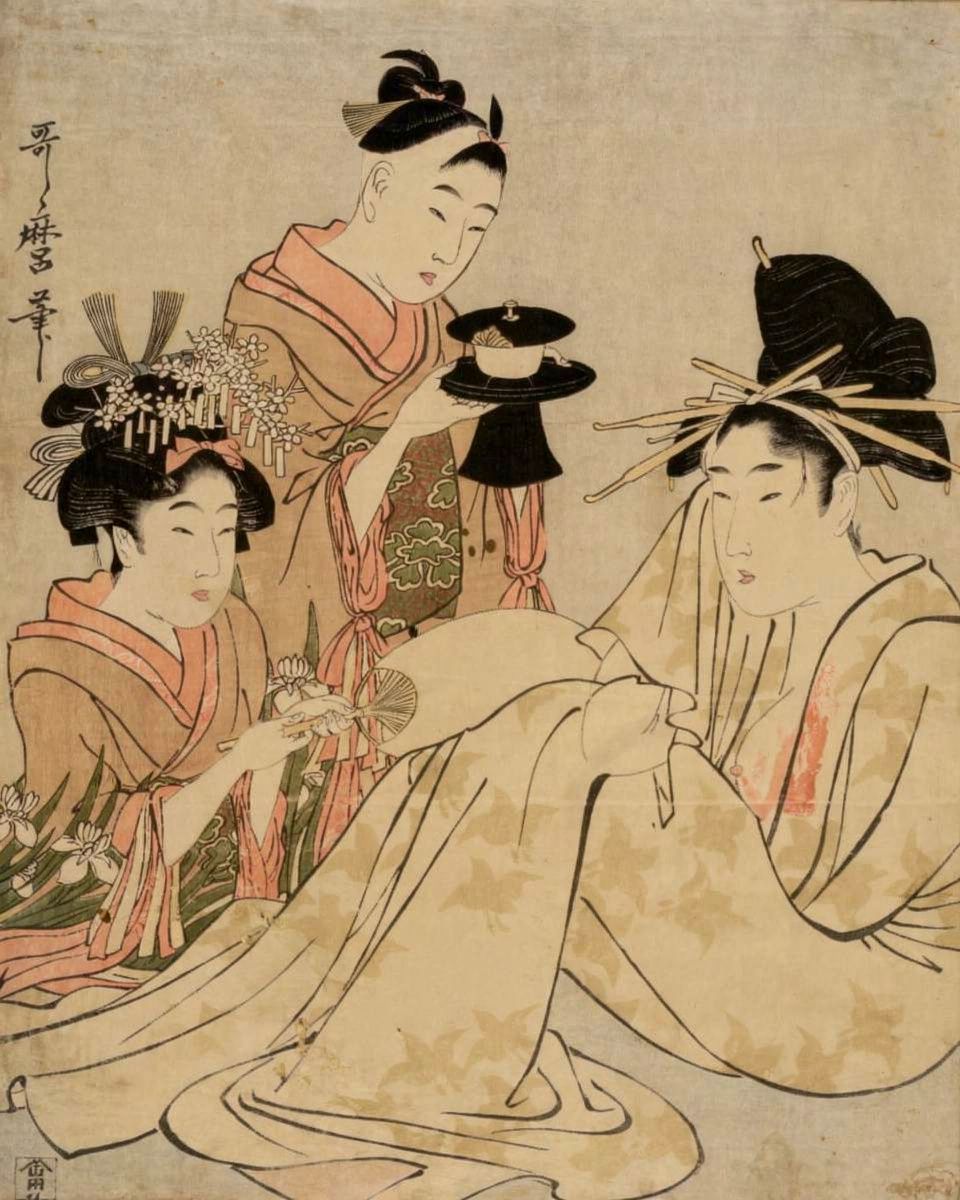
After the Bath · Kitagawa Utamaro 喜多川歌麿, Ômiya Gonkurô, c. 1799-1800 (Kansei 11-12) · Harvard Art Museums. Restored by Surrealium at Vaxholm Fortress, Sweden.
The central figure sits with the robe loosened while other women occupy the surrounding space, bringing different kinds of attention into a compact group. The print gives fabric, hair and hands enough detail to make the everyday activity legible. Avoid treating the scene as an invitation to invent a private biography; its interest lies in the relations the artist has drawn, including the way one figure's movement leads the eye towards another.
7. Procession at the Foot of Mount Fuji
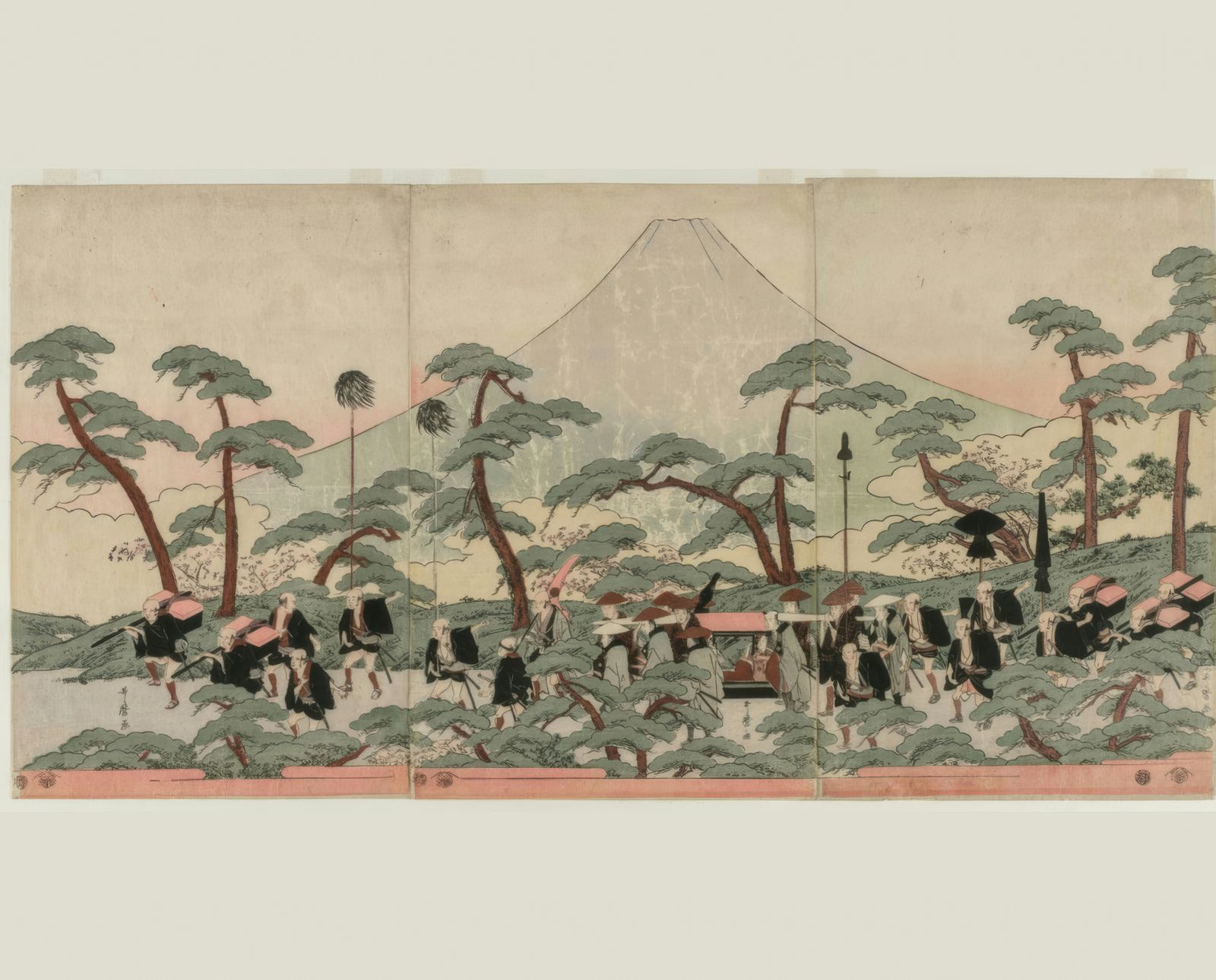
Procession at the Foot of Mount Fuji · Kitagawa Utamaro, 1792 or 1793 · Cleveland Museum of Art. Restored by Surrealium at Vaxholm Fortress, Sweden.
The long format allows a procession to extend beneath trees and the distant mountain, with the figures becoming a repeating rhythm across the landscape. The mountain's familiar shape does not erase the people below it; their movement gives the scene its scale and direction. Keep the whole wide composition when viewing it, because narrowing the image to Fuji alone would turn a social and spatial arrangement into a quite different kind of landscape.
8. The Courtesan Karauta
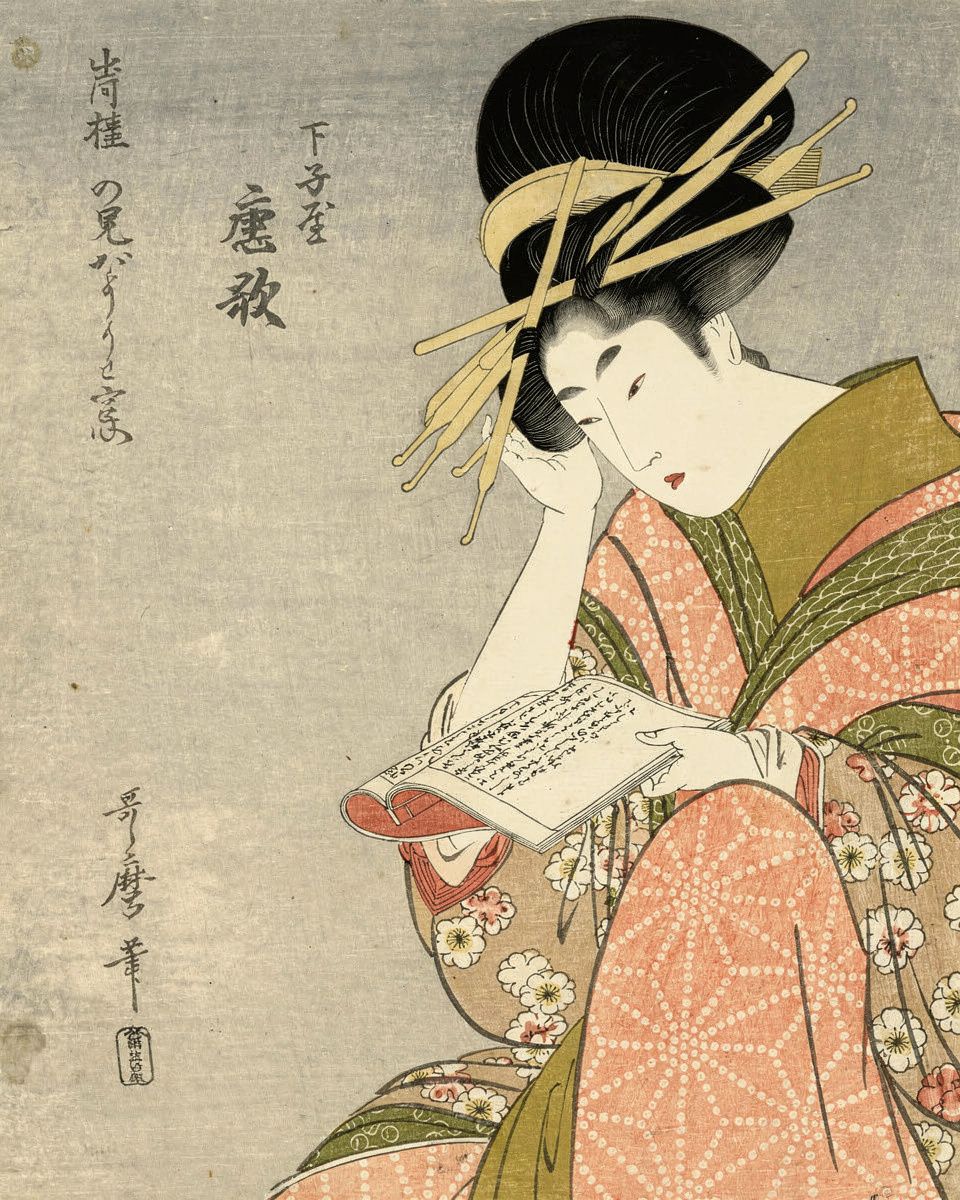
The Courtesan Karauta · Kitagawa Utamaro, late 1790s · Cleveland Museum of Art. Restored by Surrealium at Vaxholm Fortress, Sweden.
Karauta looks down towards a sheet held close to her body, with the line of the writing echoed by the fine edges of sleeves and hair ornaments. The document gives the figure an activity without giving the viewer permission to claim her exact emotions. Notice how the print balances the dark mass of hair with the patterned lower half; the face sits between those areas as part of a designed surface, not as a photograph detached from its setting.
9. The Hour of the Monkey
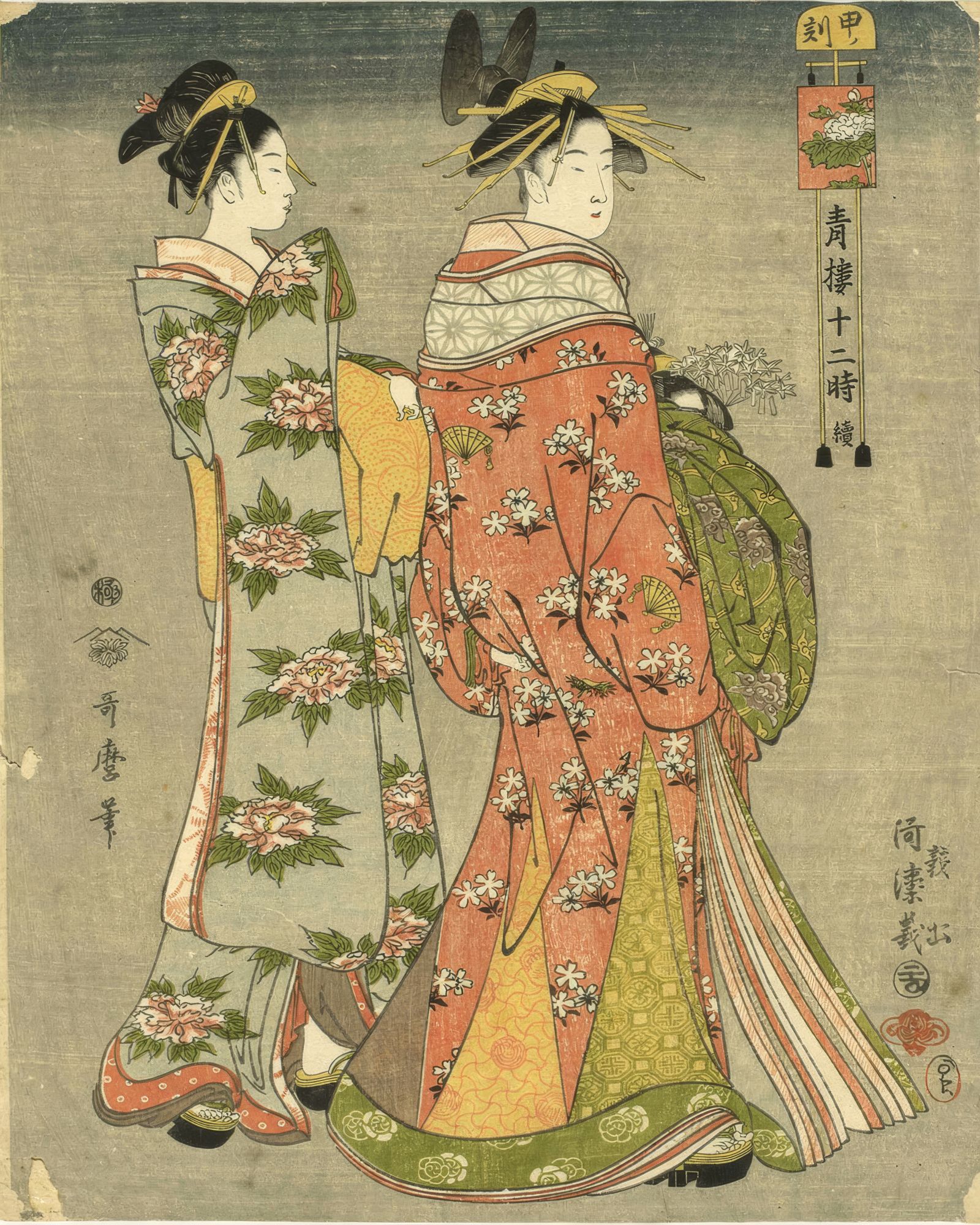
The Hour of the Monkey · Kitagawa Utamaro 喜多川 歌麿, c. 1794 · Art Institute of Chicago. Restored by Surrealium at Vaxholm Fortress, Sweden.
Two standing women turn in different directions, their patterned robes creating a dense field of flowers, bands and folds. The title belongs to a series organised around hours, which is more specific than a free-floating picture of fashionable dress. Compare the space between the faces with the much fuller area of clothing below them, and let the contrast show how the artist directs attention without needing a dramatic event.
10. Chushingura: Act II
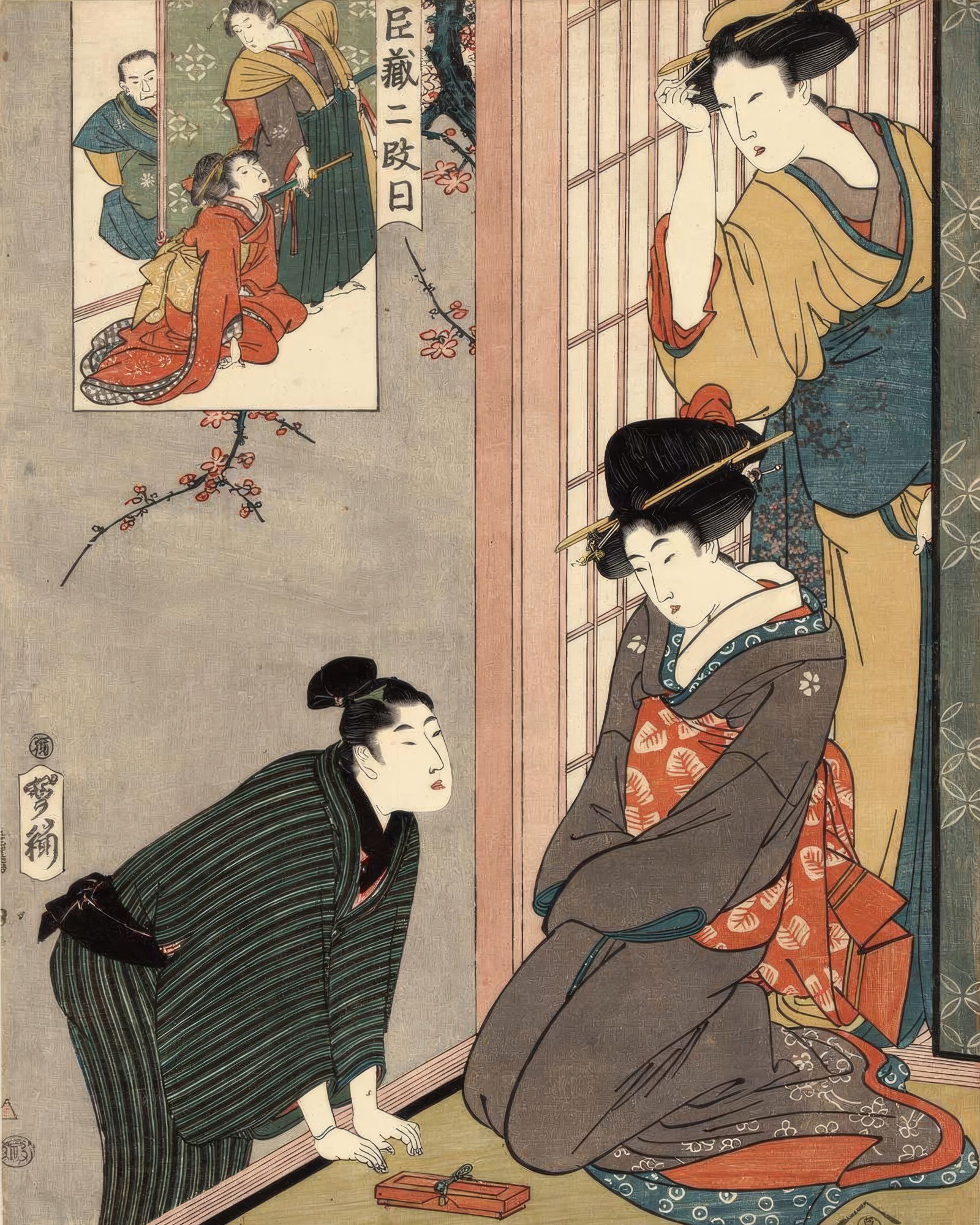
Chushingura: Act II of The Storehouse of Loyalty · Kitagawa Utamaro, late 1790s · Cleveland Museum of Art. Restored by Surrealium at Vaxholm Fortress, Sweden.
Three figures occupy the foreground while a smaller inset scene appears above, inviting the viewer to read more than one level of representation. The title connects the print to a dramatic narrative, so its gestures are not simply a record of an ordinary meeting. Even without recounting the entire play, you can distinguish the kneeling and standing positions, the different directions of looking and the role of the inset in making the sheet a layered image.
The most rewarding question is often a small one: what changes if the comb is lowered, the paper is removed or the bridge rail disappears? Objects and lines do much of the work that a modern viewer may first assign to expression. Compare this approach with Hokusai's paintings and prints and Redon's monochrome inventions, then return to the woman with the comb. The Japanese collection offers other works to compare at their own proportions, with names and titles kept attached to the pictures.
- Who was Utamaro?
- Kitagawa Utamaro was a Japanese artist associated with ukiyo-e, especially images of women. His prints include close figures, domestic activities, entertainment scenes and broader compositions rather than one repeated type of portrait.
- Are these paintings or woodblock prints?
- The works selected here are prints. Their colour and line come through a printmaking process, so the medium should remain in the description even when the image is later reproduced as a wall print.
- Are Utamaro’s women all identifiable portraits?
- Some titles name people or establishments, while others identify activities or series. A recognisable type of dress or gesture does not by itself establish a sitter’s identity or tell us her private feelings.