Graduation gifts: ten pictures for a new chapter
Graduation gifts with a personal connection: ten works about reading, independence and looking ahead, plus a route to a portrait.
Graduation gifts can mark more than a qualification. A picture can remember the long hours of reading, a friendship formed along the way or the first room someone will make their own. The ten works below offer different starting points, from a Japanese reader to an American landscape. None was originally painted to celebrate a modern graduation: the connection comes from what you and the recipient recognise in it.
Begin with the person rather than the ceremony. A devoted reader may enjoy a quiet interior; someone moving away may prefer an open landscape. If you want the graduate themselves in the picture, the graduation portrait guide explains that route, and the portrait-from-photo guide helps with the source image. You can also compare these originals in Masterworks. Keep room, taste and the meaning of your accompanying note in mind before choosing. The personalized gifts guide offers a wider starting point when the connection matters more than the occasion.
1. A reader absorbed in her own world — Hokusai
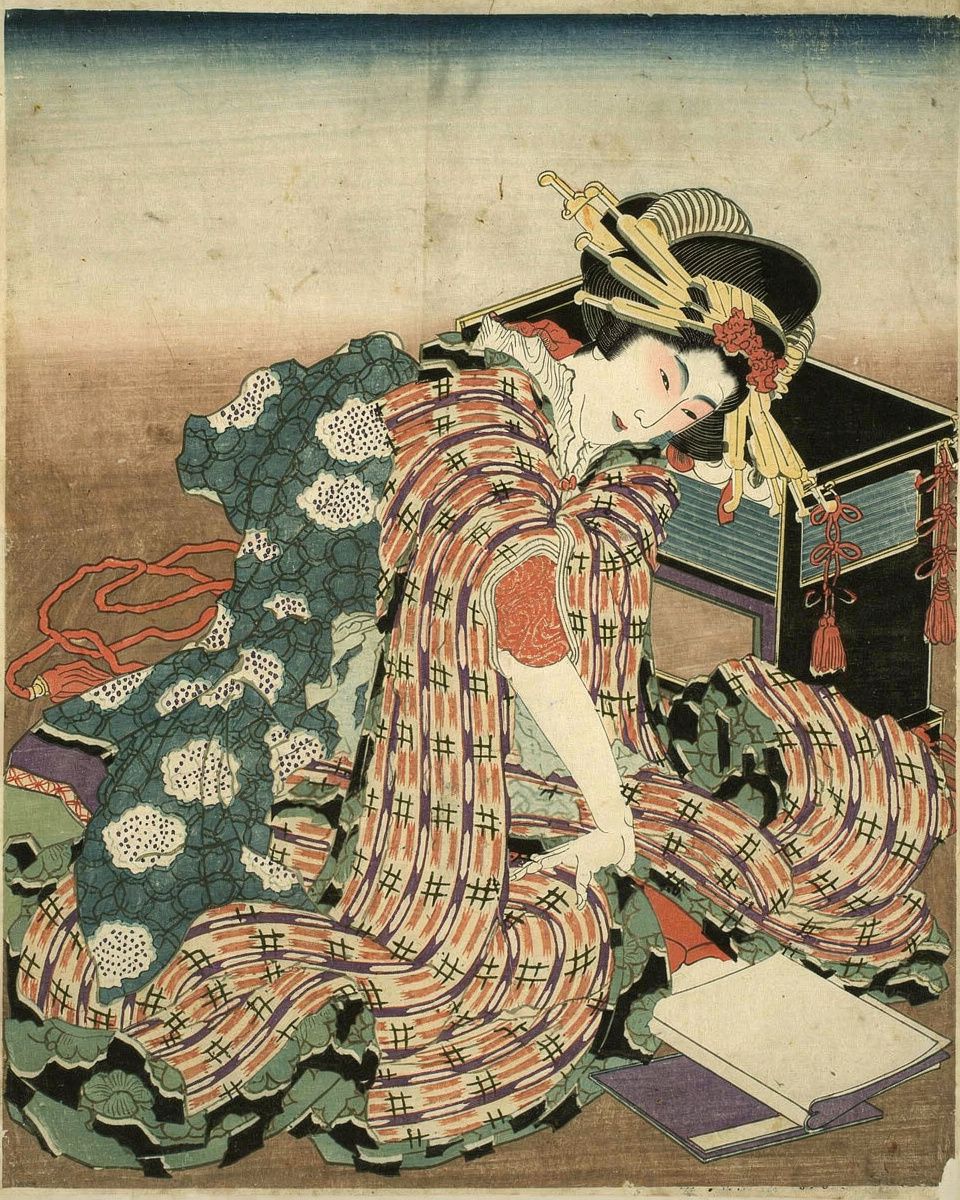
Young woman reading "The Pillow Book (makura no soshi)" · Katsushika Hokusai 葛飾 北斎 Japanese, 1760-1849, 1822 · Art Institute of Chicago. Restored by Surrealium at Vaxholm Fortress, Sweden.
Hokusai’s reader brings a literary subject into an intimate, carefully patterned scene, with the book becoming part of the figure’s arrangement rather than an academic trophy. The contrast between the small printed marks and the larger shapes of clothing rewards a close look, which makes this a thoughtful starting point for someone who loves language or illustration. Its title names The Pillow Book, so the connection is to a particular reading culture rather than to studying in general. Choose it for the pleasure of sustained attention, and write a note about the book or conversation that connects you to the graduate.
2. Reading as companionship — Suzuki Harunobu
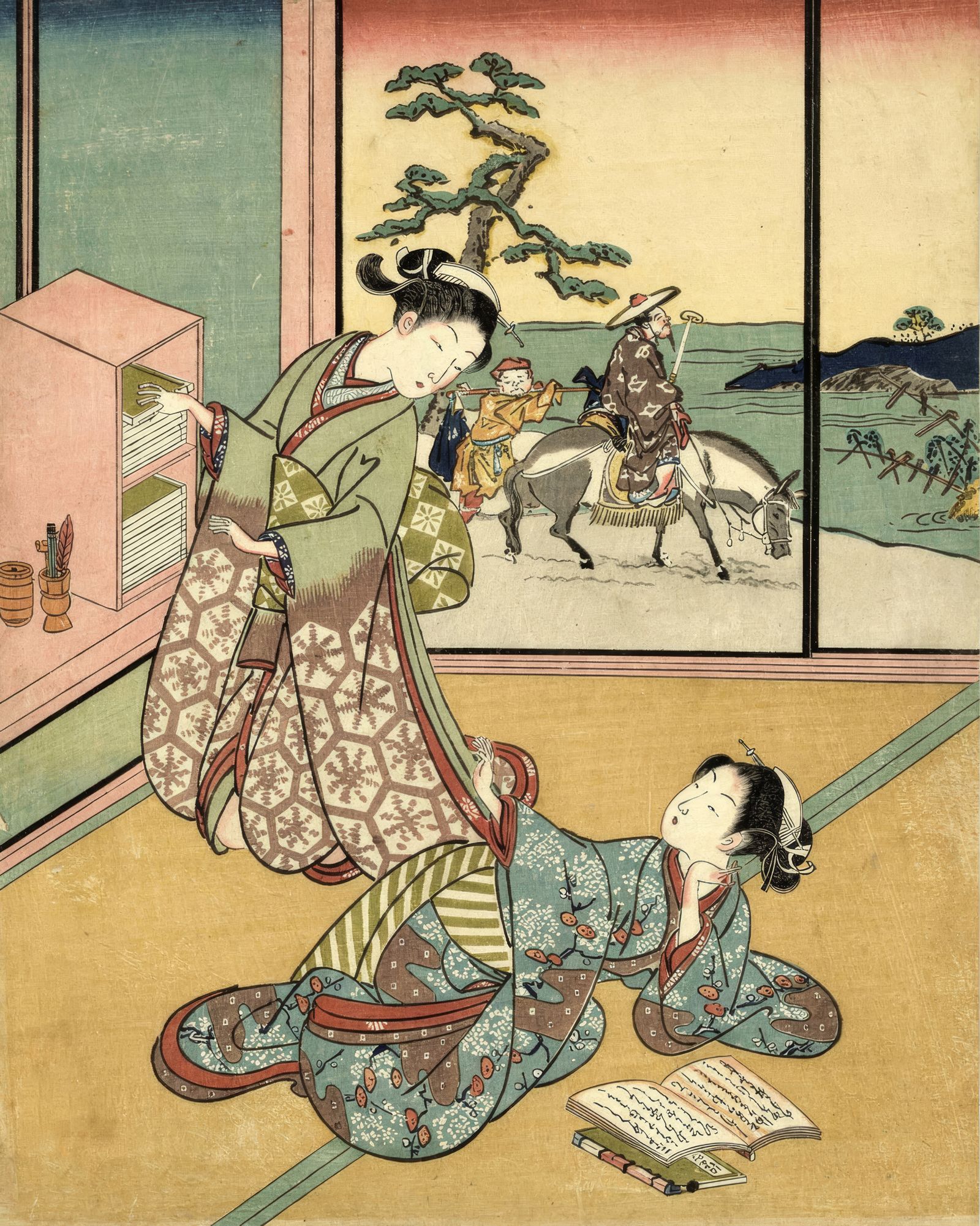
Two Young Women Reading Books · Suzuki Harunobu 鈴木 春信 Japanese, 1725-1770, c. 1767/68 · Art Institute of Chicago. Prepared for print by Surrealium at Vaxholm Fortress, Sweden.
Harunobu gives reading a shared setting, with two figures and their books forming a compact exchange of attention. The fine contours and patterned fabrics make the space feel composed without turning the women into interchangeable symbols of learning. For friends graduating together, this can suggest the companionship behind an achievement: someone who listened, explained a difficult passage or sat nearby through a long afternoon. The most personal part of the gift may be a specific memory in your note, rather than an attempt to make the eighteenth-century scene represent a modern classroom.
3. A familiar corner — Carl Larsson
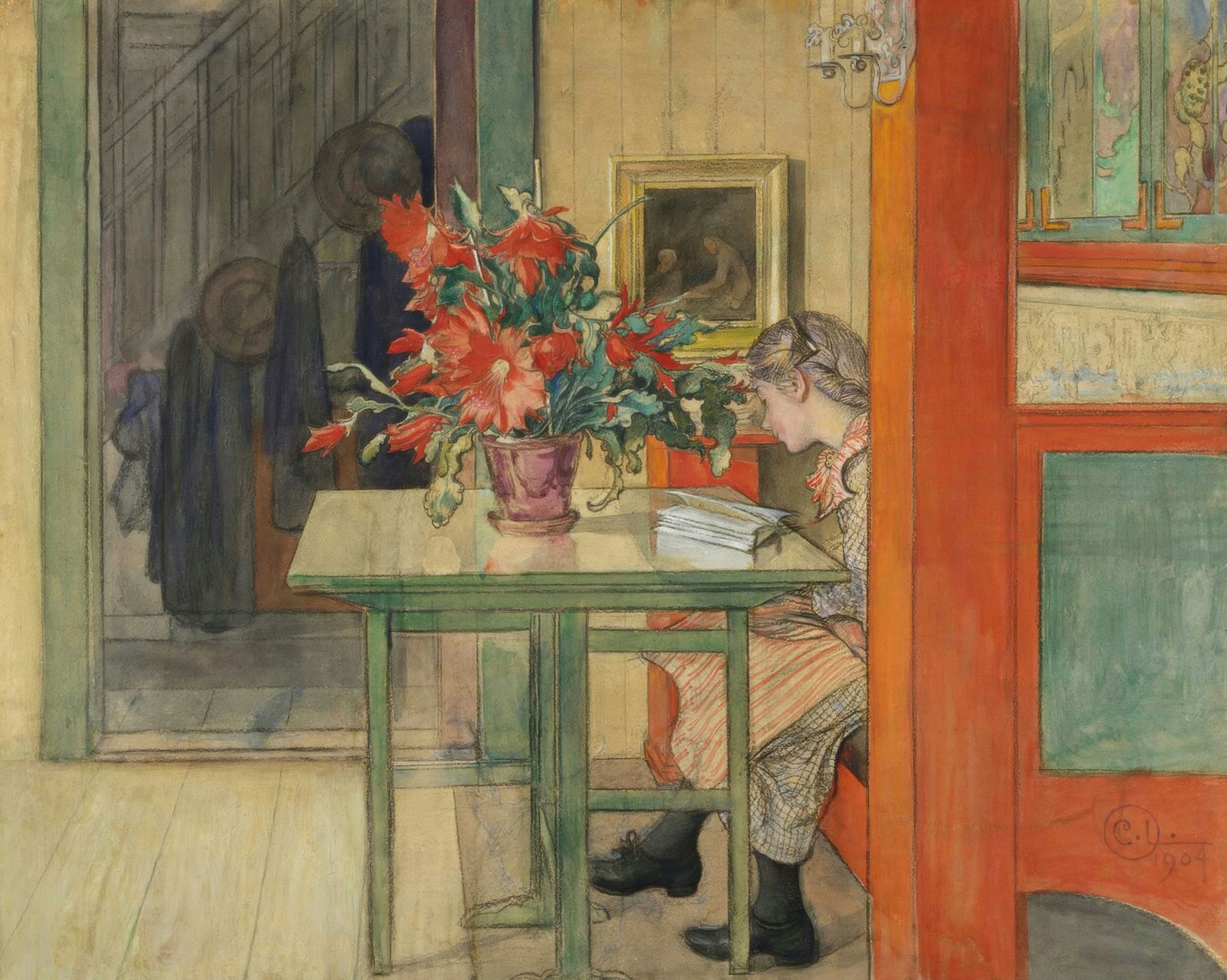
Lisbeth Reading · Carl Larsson, 1904 · Nationalmuseum, Stockholm. Prepared for print by Surrealium at Vaxholm Fortress, Sweden.
Larsson’s Lisbeth Reading belongs to the artist’s pictures of domestic life, where a recognisable person and a lived-in setting matter as much as the activity. It offers an alternative to ceremonial grandeur: achievement can grow out of ordinary days and familiar furniture. Consider it for someone whose happiest study place was home, especially if they are about to establish a new one elsewhere. Look at the complete composition before deciding on a place for it, because the surrounding room contributes to the feeling of settled attention rather than serving as expendable background.
4. A book with an emotional life — Bernard d’Agesci

Lady Reading the Letters of Heloise and Abelard · Bernard d'Agesci, c. 1780 · Art Institute of Chicago. Prepared for print by Surrealium at Vaxholm Fortress, Sweden.
The title identifies the reader’s text as the letters of Heloise and Abelard, bringing emotional and literary associations into an elegant eighteenth-century interior. Her posture and the treatment of fabric make reading visible as an experience, not simply as evidence that she owns books. This could suit a graduate in literature, history or another subject pursued with strong personal feeling, provided they enjoy the painting’s theatrical character. It is also a reminder to choose a work for the person’s actual taste rather than treating every image containing a book as an equally suitable present.
5. Words spoken aloud — Jean-Baptiste Wicar
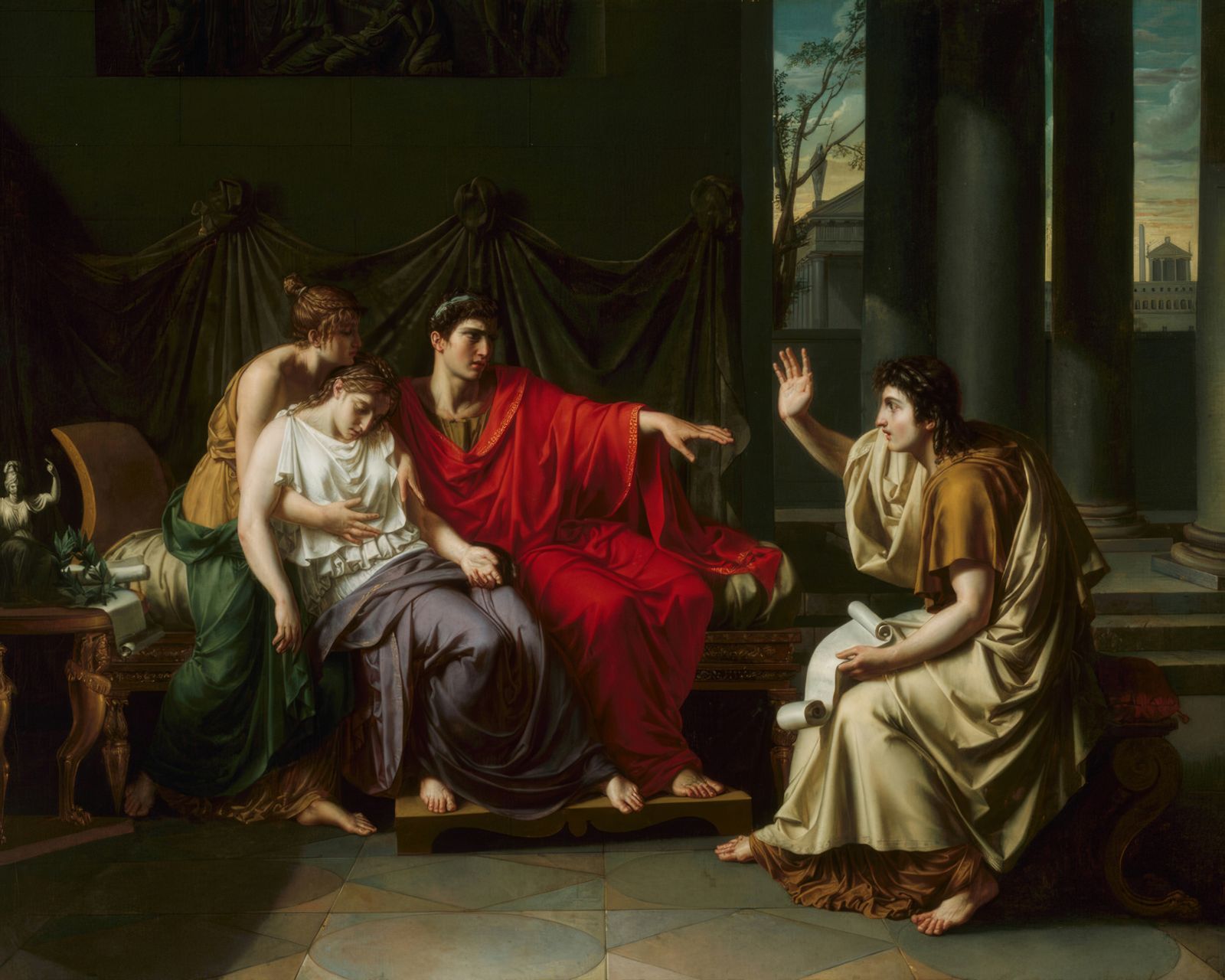
Virgil Reading the Aeneid · Jean Baptiste Joseph Wicar, 1790–93 · Art Institute of Chicago. Prepared for print by Surrealium at Vaxholm Fortress, Sweden.
Wicar turns an episode involving Virgil’s Aeneid into a staged encounter between a reader and an audience. The arrangement of bodies and gestures makes the effect of words the subject of the picture, moving beyond the solitary reader at a desk. A graduate who loves theatre, classics or public speaking may find that dramatic exchange more compelling than a quiet study scene. Let the work’s historical subject stay intact in your description, then explain your own connection to it: perhaps the confidence gained by speaking in public or the pleasure of being heard.
6. Learning outside the study — Chen Hongshou
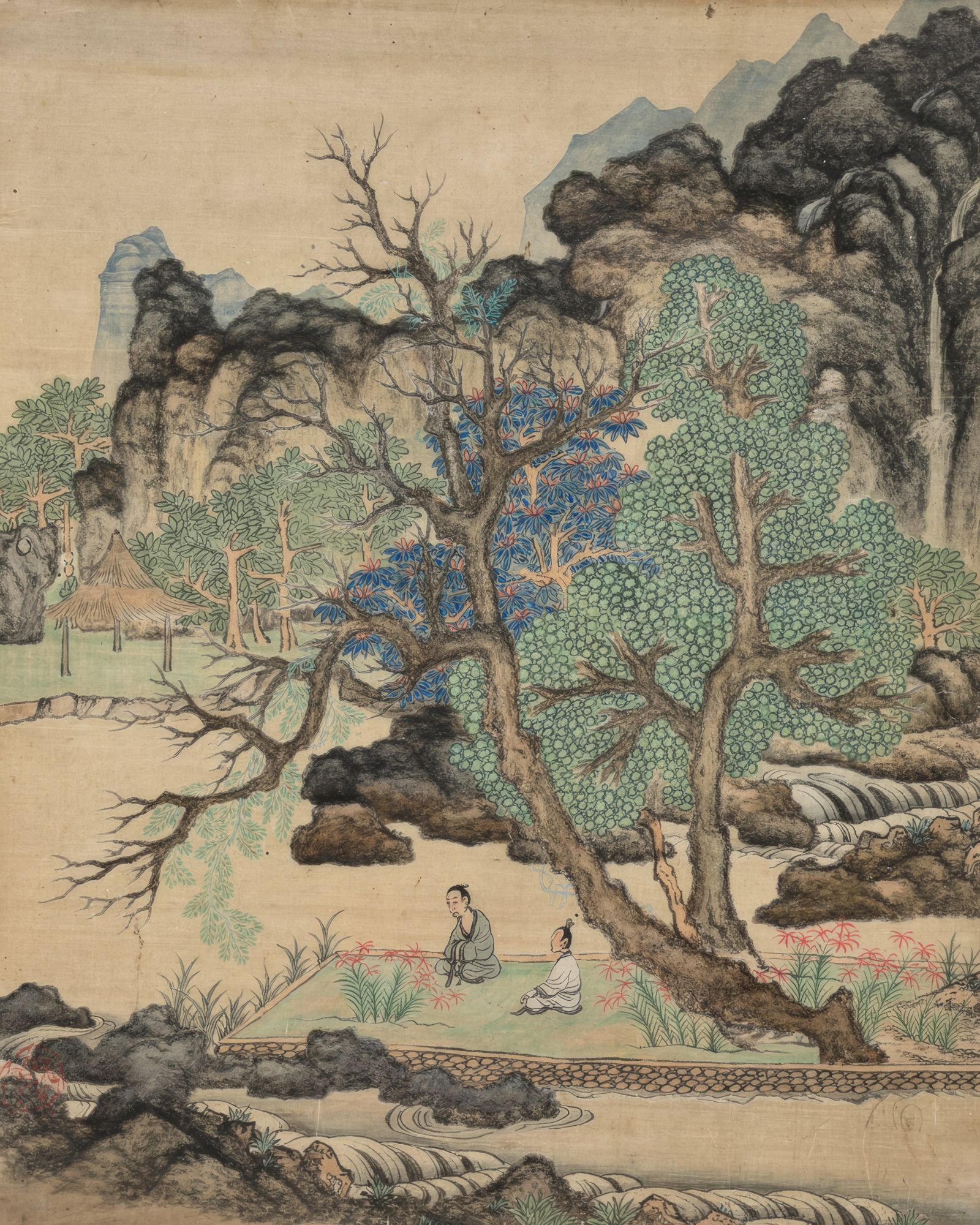
Paintings after Ancient Masters: Scholars in a Garden · Chen Hongshou, 1598–1652 · Cleveland Museum of Art. Restored by Surrealium at Vaxholm Fortress, Sweden.
Chen Hongshou’s scholars occupy a garden setting, allowing landscape, figures and the spaces between them to share the task of holding attention. The picture suggests that cultivated life includes conversation and looking, not only the accumulation of written knowledge. For a graduate ready to step away from a desk, it can be an appealing change of pace without becoming a literal illustration of a future career. Notice the relation between the small figures and their surroundings, and keep that spaciousness when considering how the whole work might sit in a room.
7. A place with breathing room — George Inness
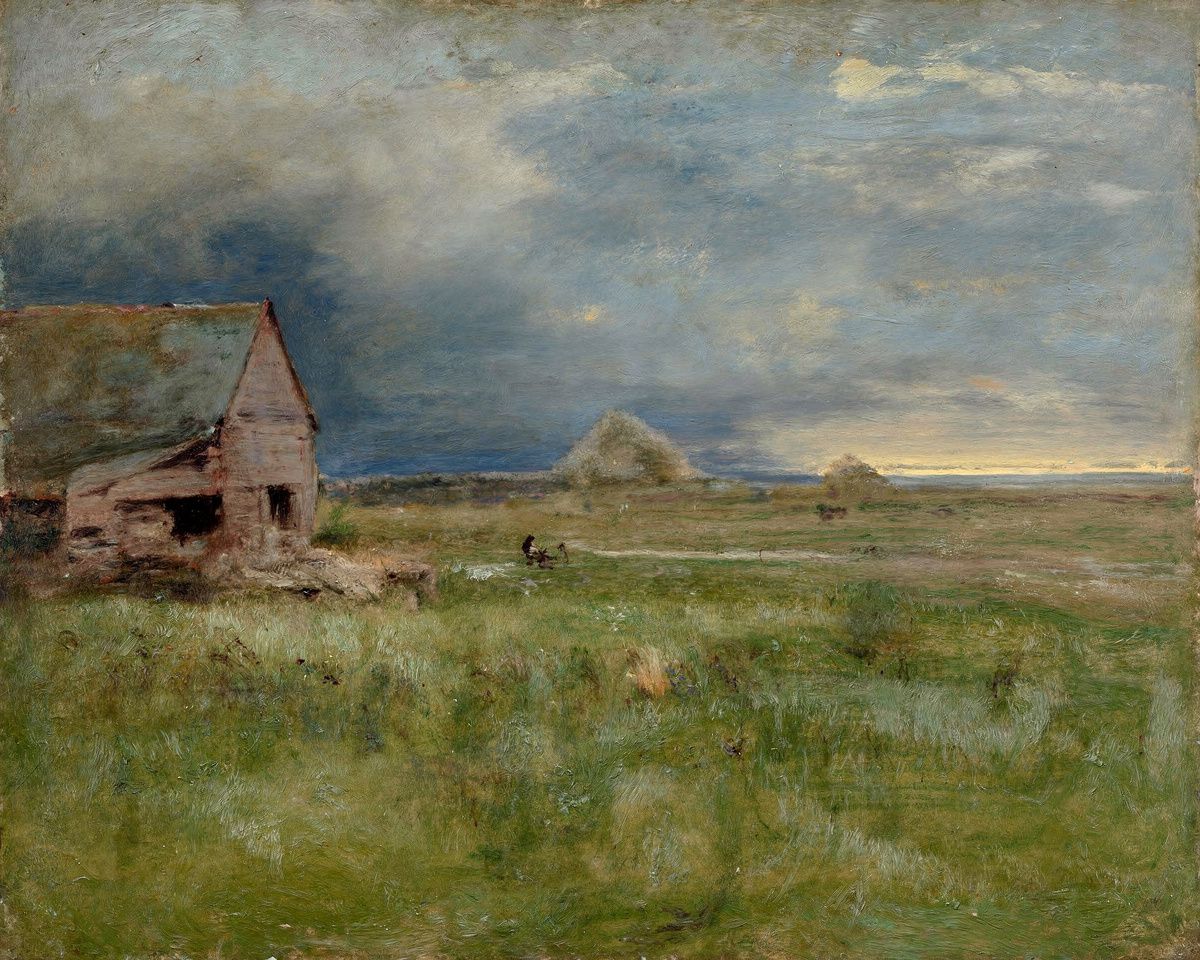
The Lonely Farm, Nantucket · George Inness, 1892 · Art Institute of Chicago. Restored by Surrealium at Vaxholm Fortress, Sweden.
Inness’s Nantucket landscape offers a broad setting in which habitation feels part of a larger atmosphere. Its appeal as a graduation gift lies in the possibility of quiet after sustained effort, rather than in any claim that a landscape predicts a peaceful future. Choose it for someone who is drawn to muted colour and open ground, perhaps a walker or a person moving to a busy city. The George Inness selection offers other moods by the same painter if this particular sense of distance feels too solitary for the recipient.
8. The first windowsill — Carl Larsson
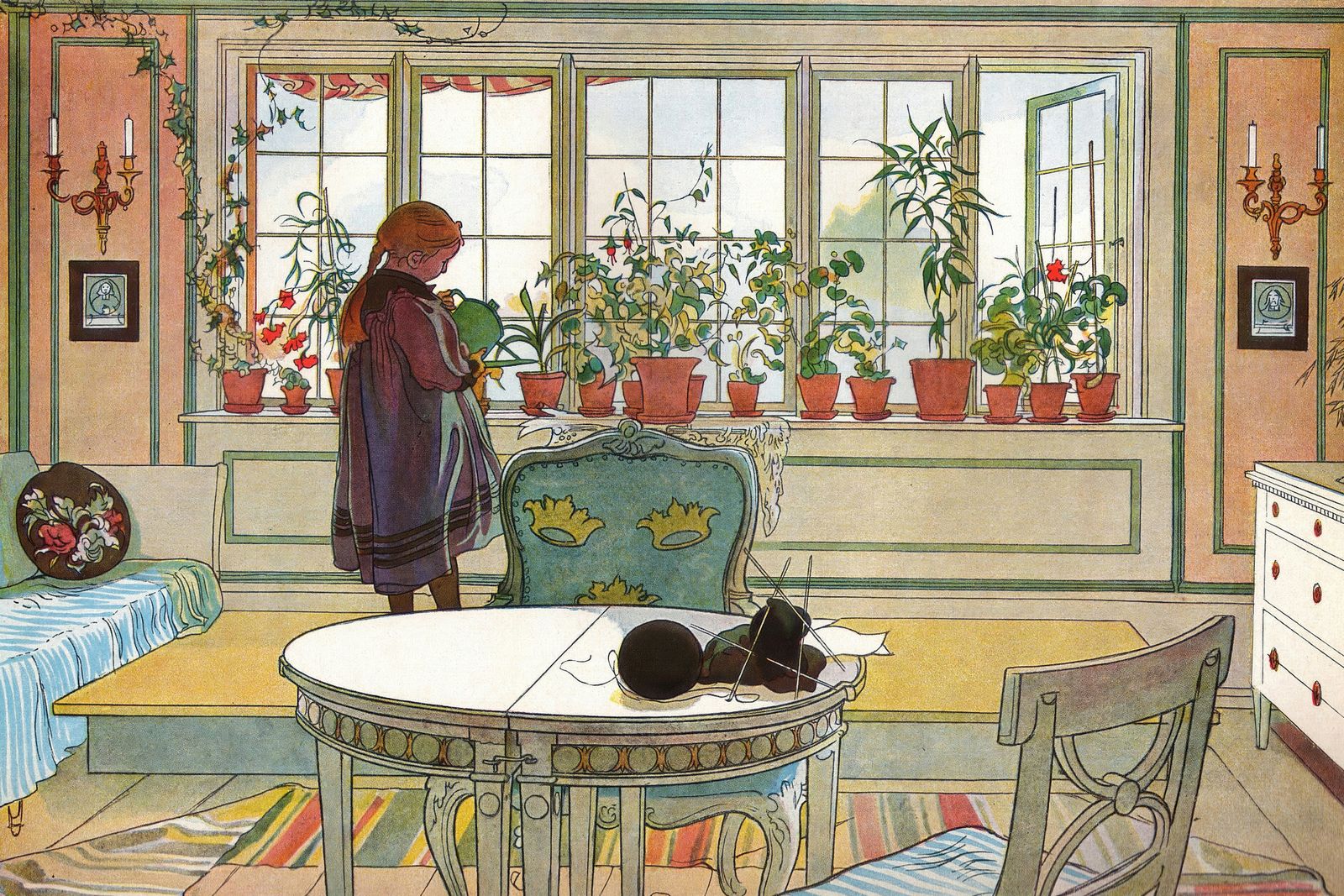
Flowers on the Windowsill. From A Home · Carl Larsson, 1894 · Nationalmuseum, Stockholm. Prepared for print by Surrealium at Vaxholm Fortress, Sweden.
Flowers on a windowsill turn a small part of a home into something worth sustained attention. Larsson’s picture can speak to a graduate furnishing a first room, where one plant, one window and a little daylight may carry more meaning than a grand address. Its domestic scale of feeling makes it suitable for someone who values everyday rituals, although the final choice should still follow their preferred colours and surroundings. Pair the picture with a note about making a place one’s own, rather than with an assumption about where or how the graduate should live.
9. A reader made of books — Giuseppe Arcimboldo
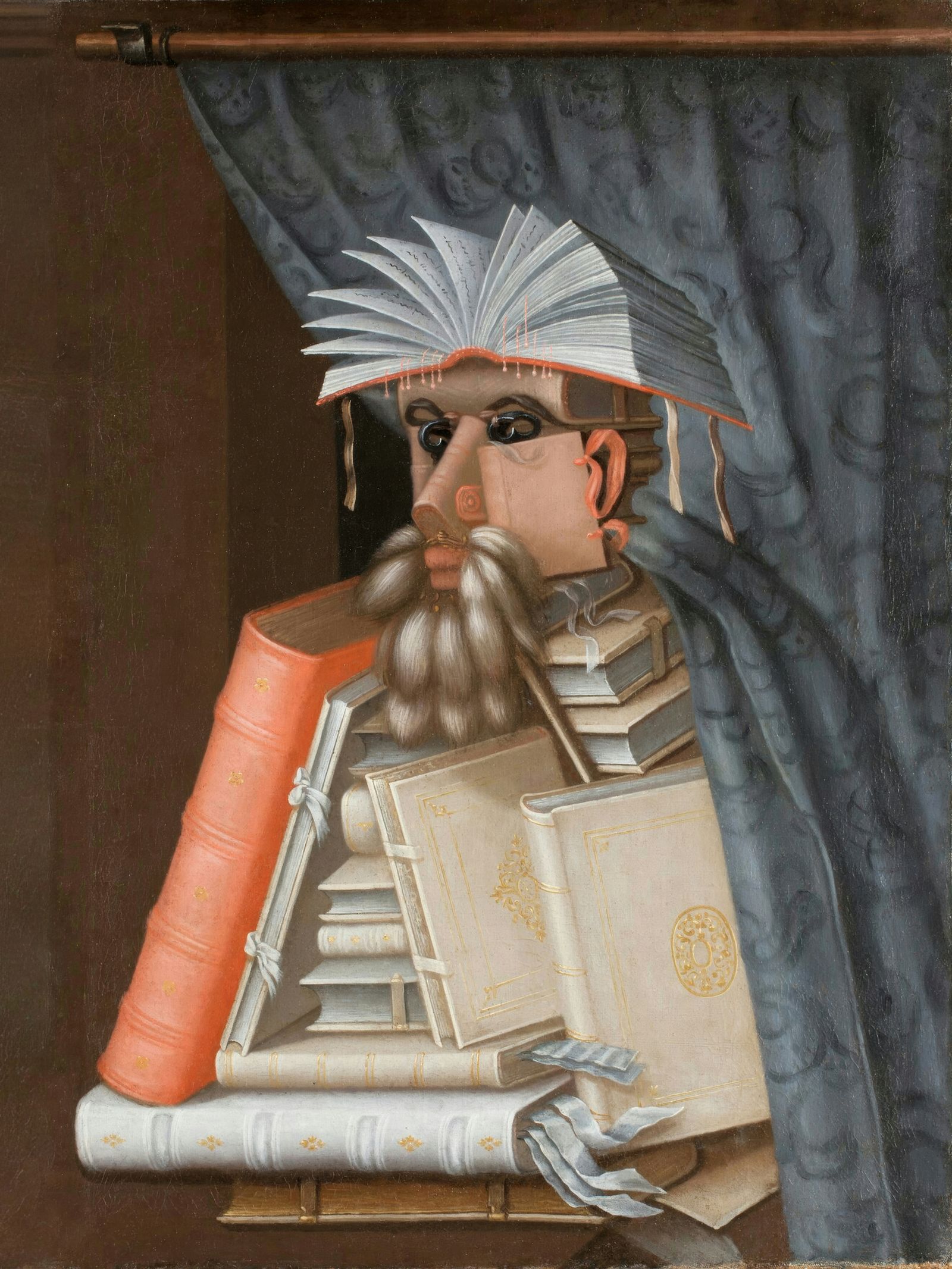
The Librarian · Giuseppe Arcimboldo, c. 1566 · Skokloster Castle. Prepared for print by Surrealium at Vaxholm Fortress, Sweden.
Arcimboldo’s Librarian constructs a human likeness from books and related objects, creating a visual joke that remains legible while its parts keep their separate identities. It suits someone who enjoys puzzles, unusual portraits or the physical presence of a crowded bookshelf. The humour is specific enough that it is worth checking whether the recipient enjoys being associated with their subject outside work, rather than assuming a bookish person always wants another book-themed object. Our Arcimboldo story looks more closely at how this kind of composite face holds together.
10. A person with a chosen presence — Salvator Rosa
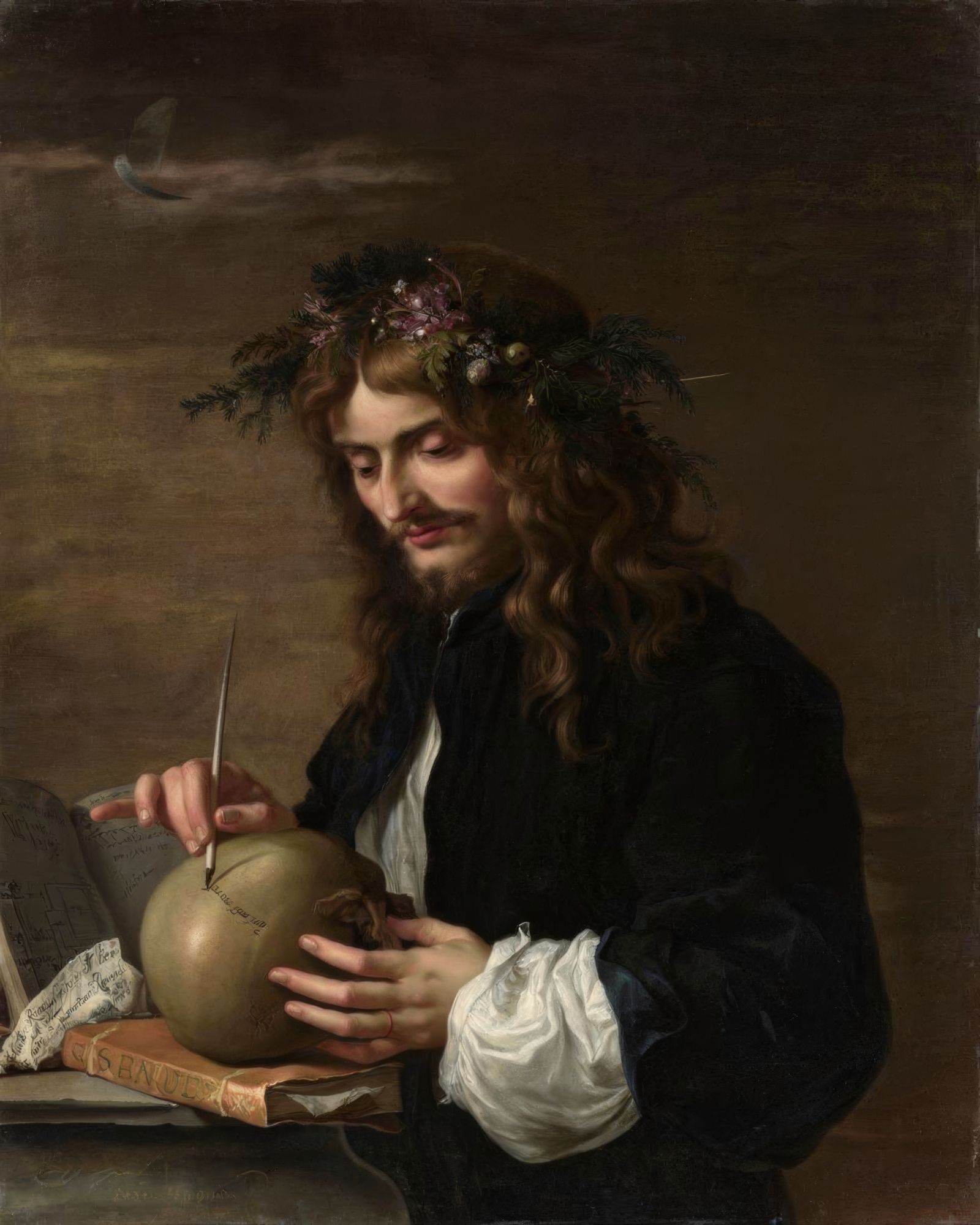
Self-Portrait · Salvator Rosa, ca. 1647 · The Metropolitan Museum of Art. Prepared for print by Surrealium at Vaxholm Fortress, Sweden.
Rosa’s self-portrait presents an artist through dress, pose and the objects he holds, making self-presentation part of the subject. It provides a useful final comparison if you are considering a portrait of the graduate: what should the picture communicate beyond the fact that they wore a gown on one particular day? A clear source photograph and a familiar expression may matter more than an abundance of symbolic props. Use the historic painting as a prompt for deciding what feels characteristic, while allowing the new portrait to belong to the person being celebrated.
Choose one connection you can explain in an ordinary sentence. “This reminded me of the room where you finished your dissertation” is more personal than a general claim that art represents success. If none of these works feels like the graduate, begin with a photograph you both value and create a graduation portrait instead.
- Should a graduation gift show the graduation ceremony?
- It can, but a favourite activity, place or everyday photograph may be more characteristic of the graduate. Let their taste guide the choice.
- Are these paintings about graduation?
- No. They are historic works selected for possible connections with reading, independence and making a home. Those gift connections are contemporary interpretations.
- How do I choose between a print and a portrait?
- Choose a print when a particular artwork is the attraction. Choose a portrait when the graduate’s own likeness or a shared photograph is central to the gift.