George Inness: ten landscapes, changing light
George Inness paintings from early landscape detail to late atmosphere, with ten complete works and ways to look closely.
George Inness made landscape feel like a condition of attention. A mill, a group of trees or a patch of open ground could remain recognisable while light softened its edges and changed its emotional weight. These ten works follow that movement without treating his early paintings as merely practice for the late ones. The detailed structures and small figures matter in their own right.
Born in 1825 and working until 1894, Inness encountered both American landscape traditions and European painting, including the French artists associated with Barbizon. His later pictures invite comparison with famous landscape paintings, but their particular strength is the uncertainty between an object and the atmosphere around it. Explore the complete works in Masterworks, and use the Realism collection to compare his work with other nineteenth-century approaches. A landscape that opens slowly may reward a place where you regularly pause.
1. Crossing the Ford — a route through the landscape
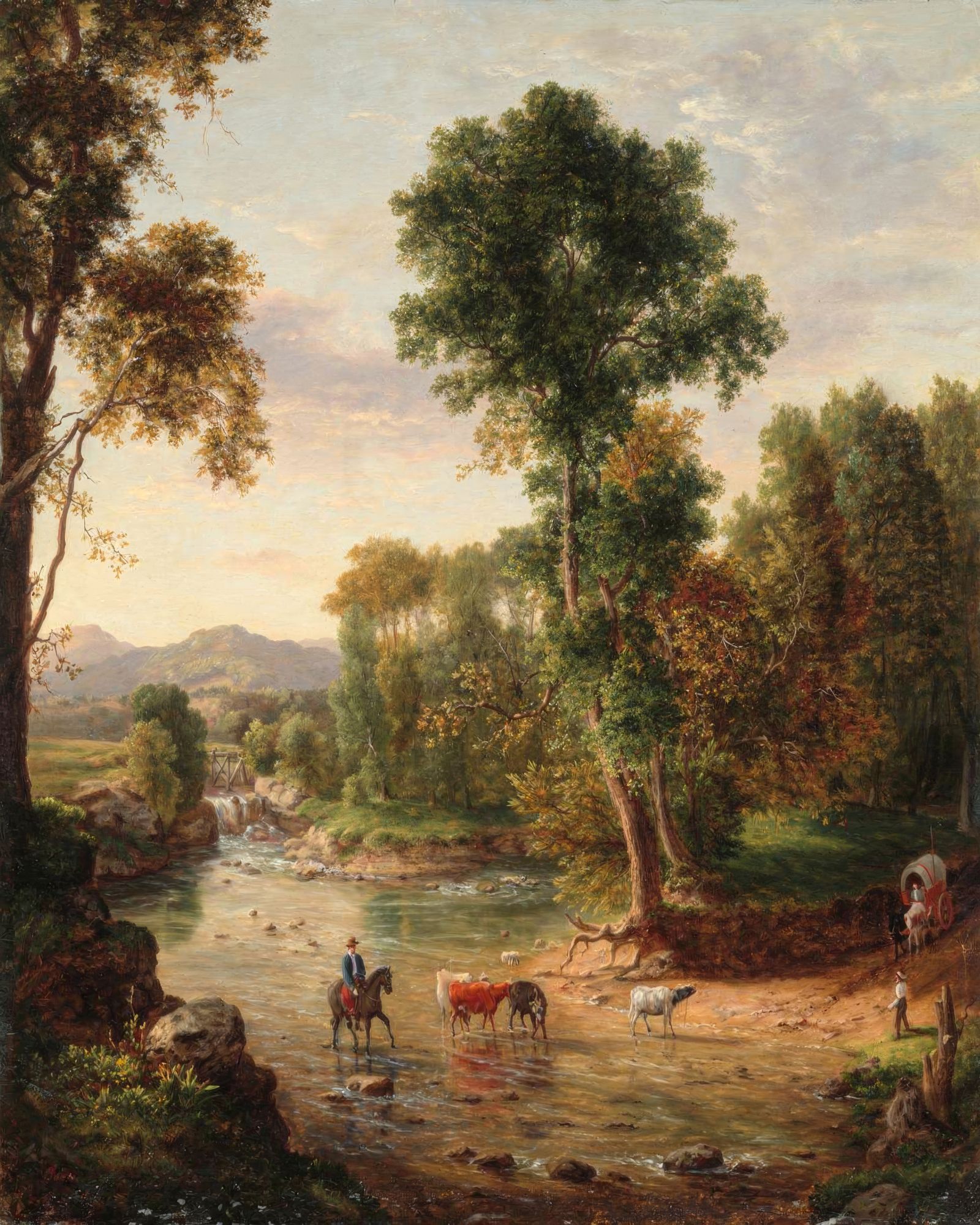
Crossing the Ford · George Inness, 1848 · Art Institute of Chicago. Prepared for print by Surrealium at Vaxholm Fortress, Sweden.
The ford gives the scene a practical problem: people and animals must find a way across water. Inness lets that small activity establish scale while the surrounding landscape supplies a larger rhythm of trees, ground and sky. Rather than looking only for a picturesque view, follow the route that a body could actually take through the composition and notice where progress slows. This early work is a useful starting point because its readable incident makes clear how a landscape can hold both an immediate task and a much wider field of attention.
2. The Old Mill — a building held by its surroundings
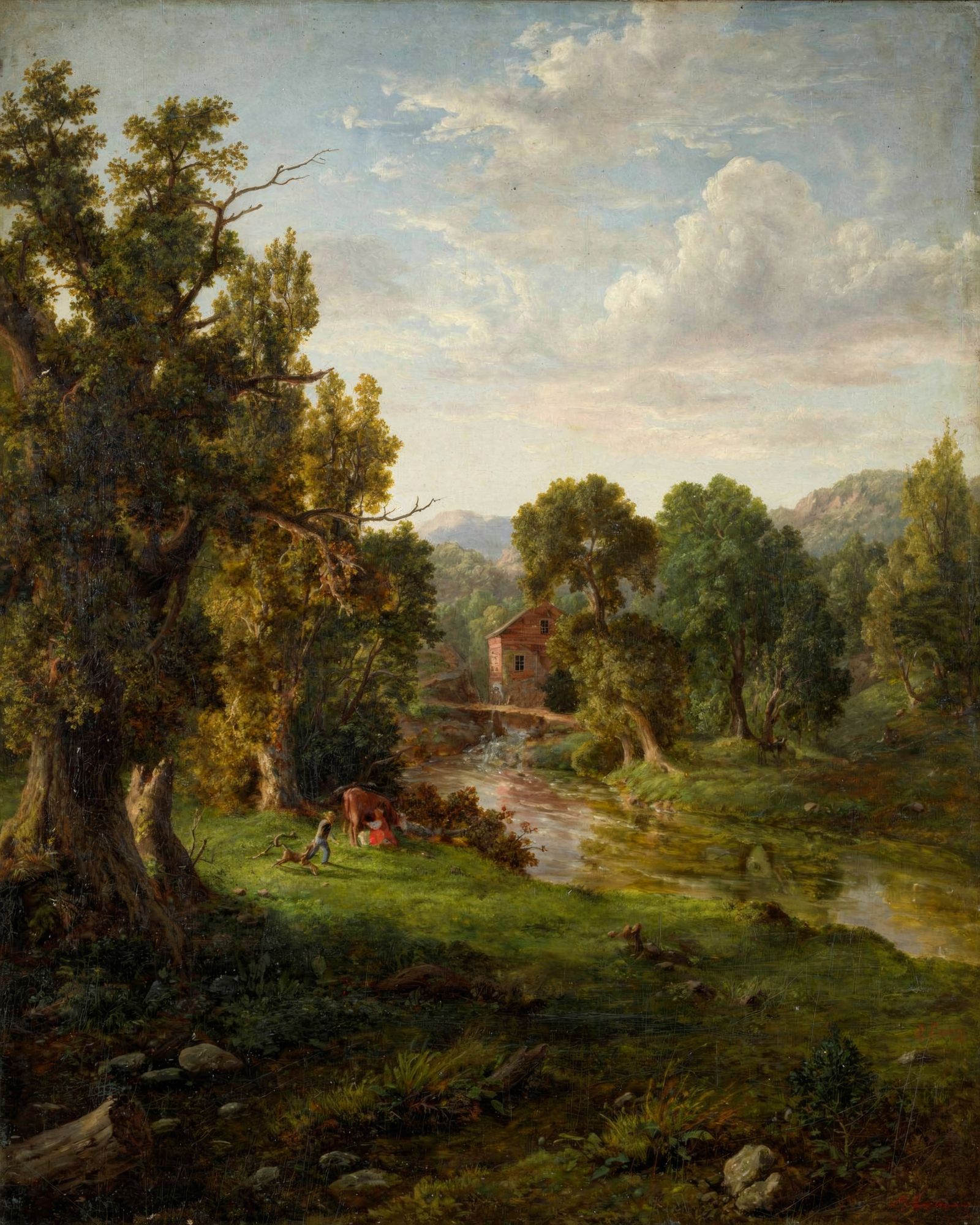
The Old Mill · George Inness, 1849 · Art Institute of Chicago. Prepared for print by Surrealium at Vaxholm Fortress, Sweden.
A mill joins architecture to the conditions of a place, and Inness’s treatment encourages us to look beyond the building’s outline. Vegetation, water and changes of tone connect the structure to the scene rather than leaving it as an isolated landmark. The picture rewards a viewer who likes to discover how a landscape is organised, moving from a recognisable object into the less easily named spaces around it. Compare its relatively explicit structure with the later Mill Pond below, where the title still supplies a human association but atmosphere takes on greater weight.
3. A Winter Sky — weather becomes the subject
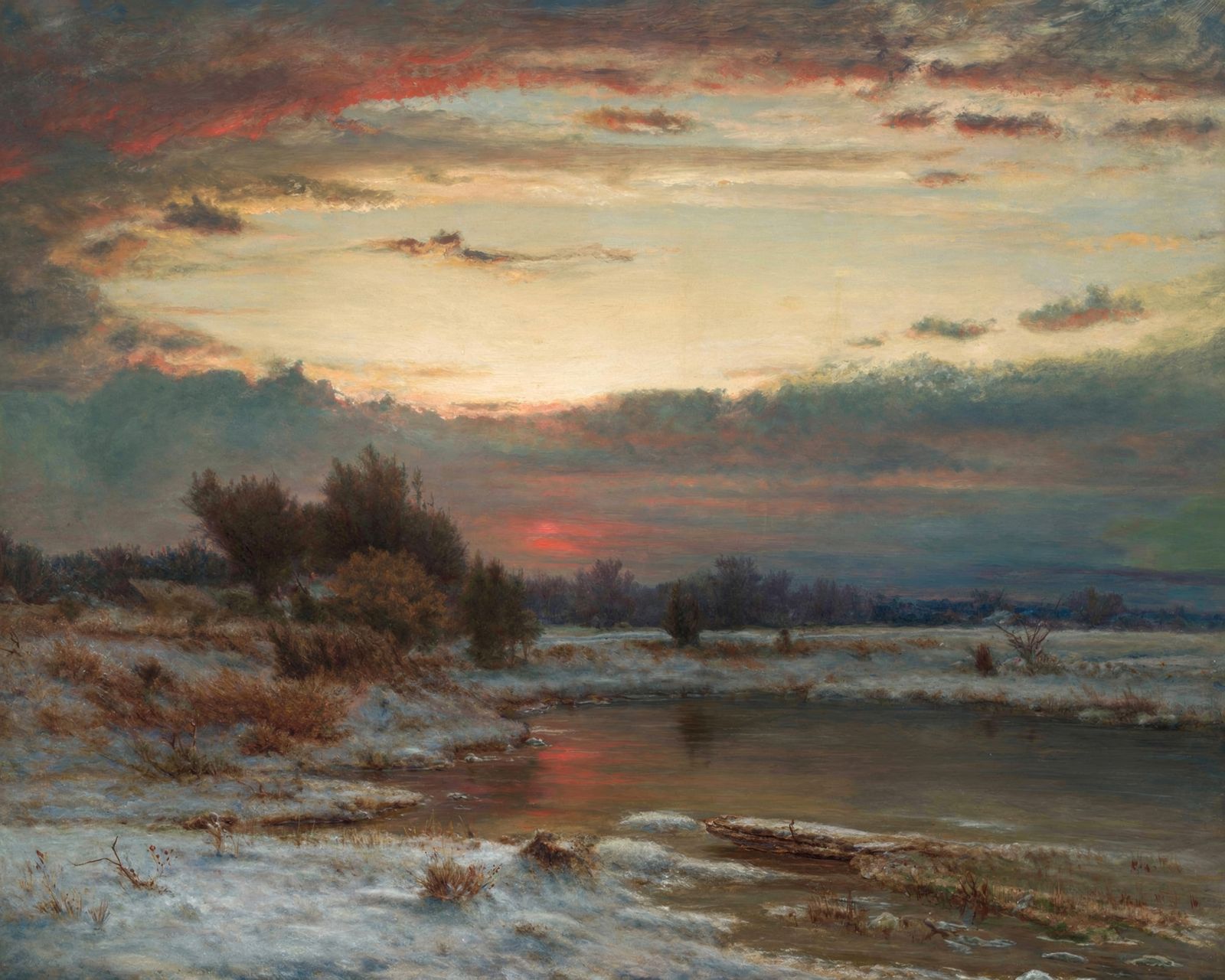
A Winter Sky · George Inness, 1866 · Cleveland Museum of Art. Restored by Surrealium at Vaxholm Fortress, Sweden.
The title directs attention upward, where a winter atmosphere changes the feeling of the land beneath it. Instead of expecting snow to provide the whole seasonal message, watch the relationship between the sky’s light and the darker forms near the ground. The painting can feel spacious without requiring a panoramic inventory of distant landmarks, because weather itself supplies depth and movement. It is a particularly useful work for considering how a restrained range of colour can remain varied when the differences in warmth, density and brightness are allowed to register slowly.
4. The Sisters — figures within a garden
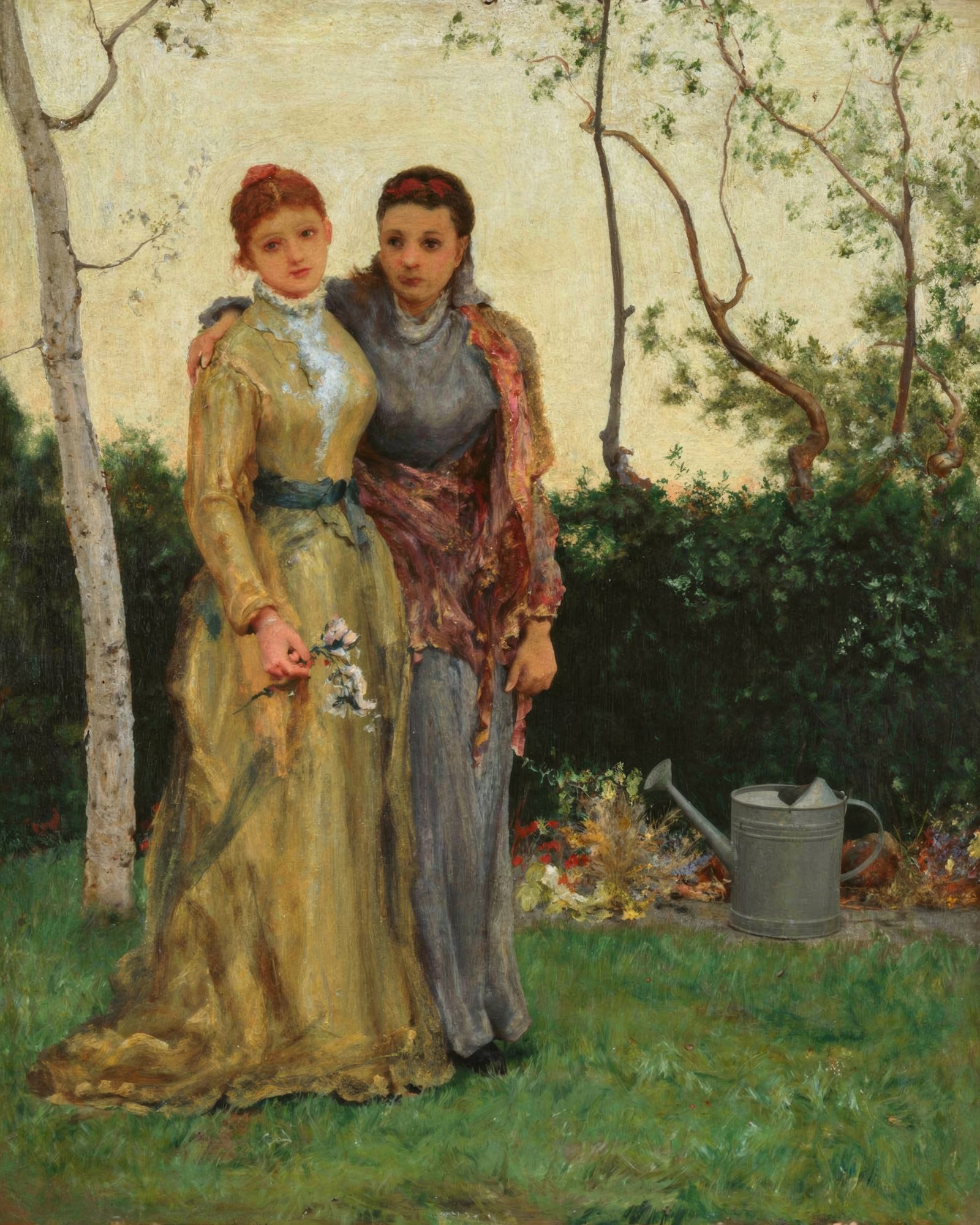
The Sisters · George Inness, 1882 · Art Institute of Chicago. Restored by Surrealium at Vaxholm Fortress, Sweden.
This is a garden scene with two girls, a reminder that Inness’s interest in landscape did not exclude the intimate scale of human company. The figures belong to the surrounding greenery rather than standing before it like sitters against a painted backdrop. Look at how the eye moves between their presence and the neighbouring patches of light, where the garden can briefly become more insistent than the people. The work complicates a simple opposition between figure painting and landscape, making a shared outdoor space the subject that joins them.
5. A Silver Morning — a colour that describes light
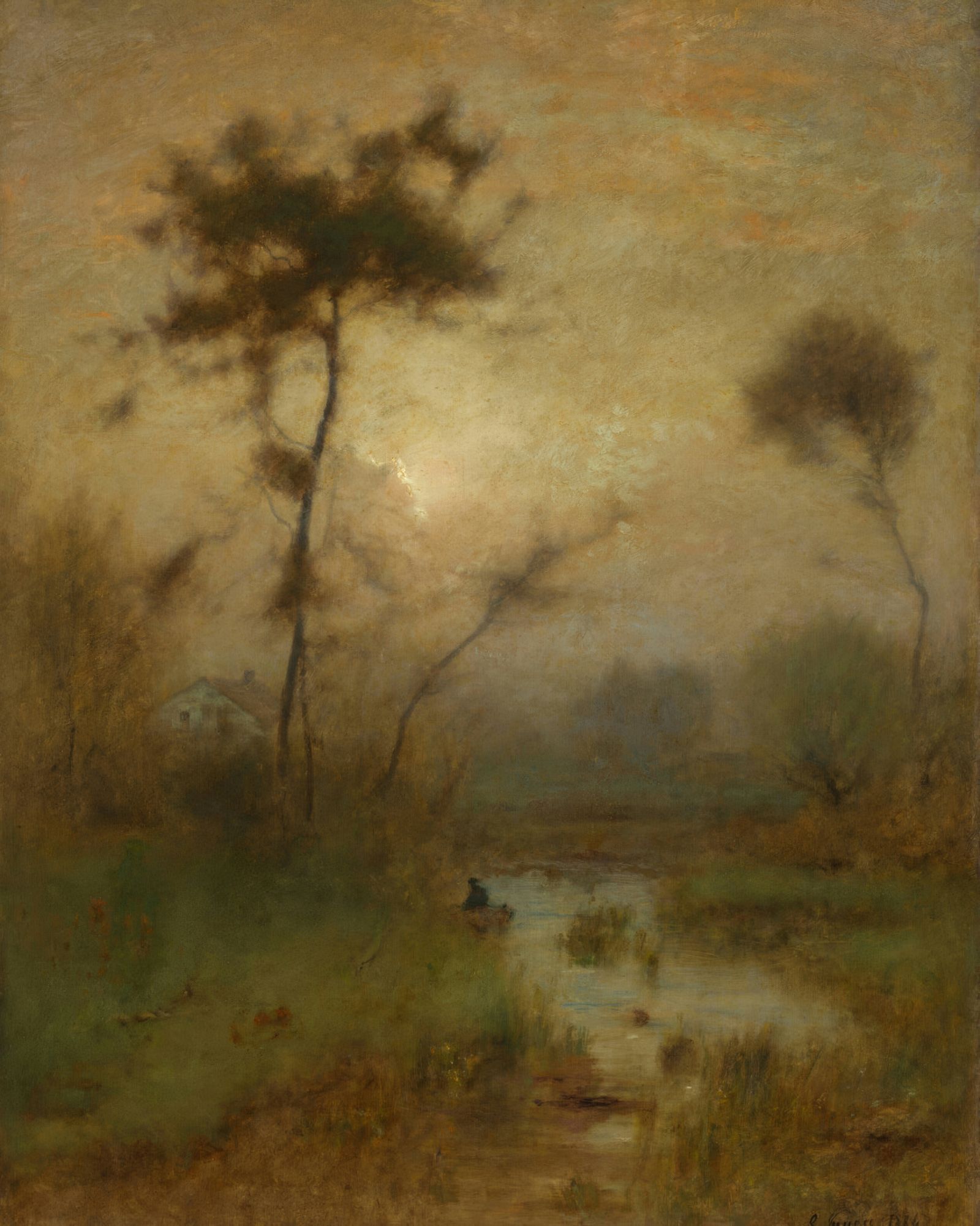
A Silver Morning · George Inness, 1886 · Art Institute of Chicago. Prepared for print by Surrealium at Vaxholm Fortress, Sweden.
Silver in the title describes a luminous effect more than a catalogue of objects made from a particular material. Inness gives the morning a tonal coherence, allowing separate parts of the scene to seem touched by the same air. Try looking first at the lightest areas and then at the darker forms that make those passages visible, without rushing to identify every feature. The result is a landscape in which the time of day feels distributed across the whole surface rather than announced by one conspicuous sun or brightly coloured cloud.
6. The Mill Pond — still water, softened boundaries
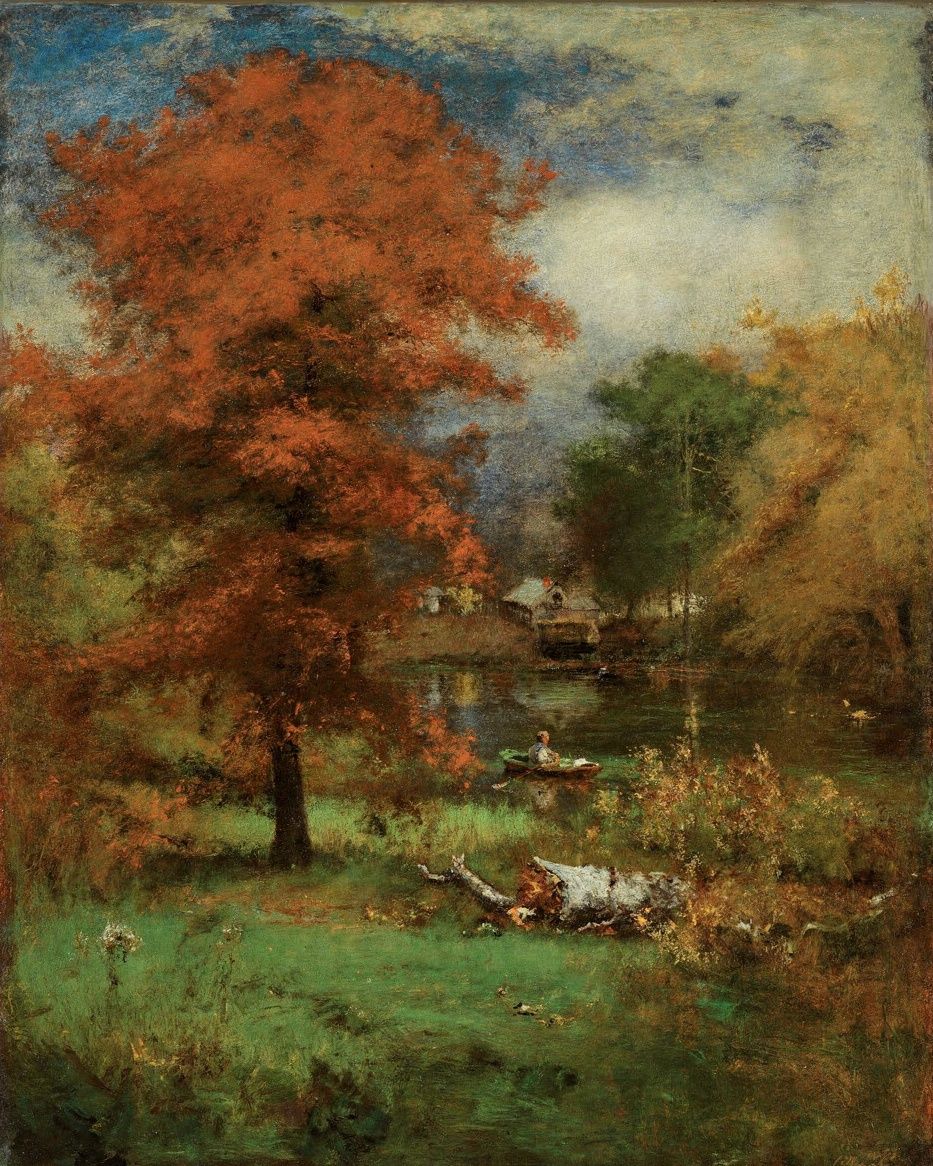
The Mill Pond · George Inness, 1889 · Art Institute of Chicago. Prepared for print by Surrealium at Vaxholm Fortress, Sweden.
A pond creates an opportunity to compare solid ground with its less stable appearance in water. Inness uses the scene to make boundaries feel permeable: a form may be identifiable while its edge remains difficult to pin down. That uncertainty need not be solved, because it is part of the painting’s invitation to keep looking rather than to finish a visual checklist. Beside the earlier Old Mill, the work shows how a related landscape subject can move from the clarity of a place with functions towards the accumulated feeling of a place in particular light.
7. Moonrise — a small light in a large field
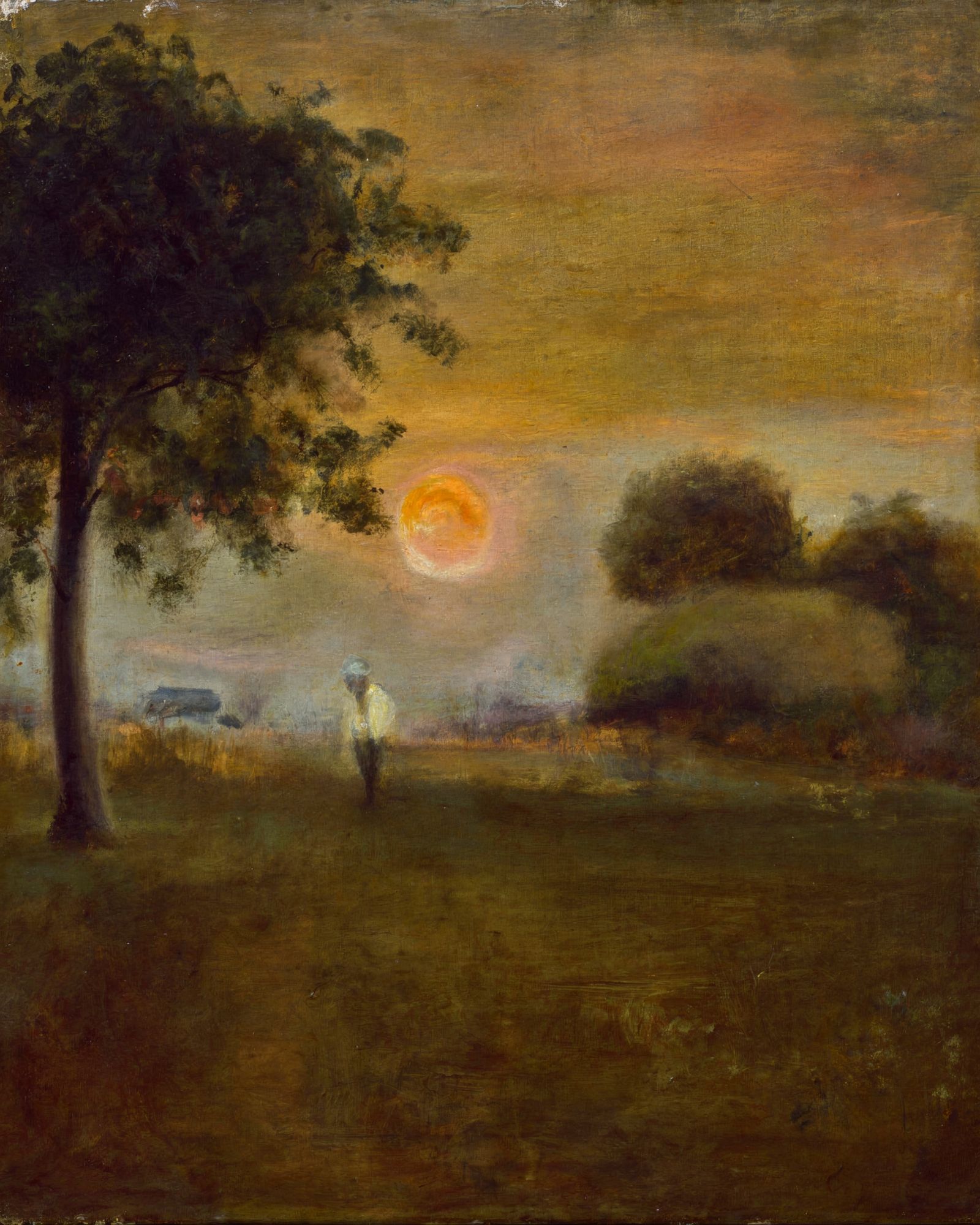
Moonrise · George Inness, 1891 · Art Institute of Chicago. Restored by Surrealium at Vaxholm Fortress, Sweden.
The rising moon gives the eye a point of orientation without explaining everything beneath it. Darker masses and the remaining light in the sky establish a mood that depends on their relation, rather than on a detailed description of nocturnal activity. Resist treating the moon as a symbol with one fixed meaning; its scale, position and brightness are already doing concrete work in the composition. The Whistler story offers a different approach to tonal arrangement if you are interested in how a limited palette can organise an entire picture.
8. Sunny Autumn Day — warmth without an inventory
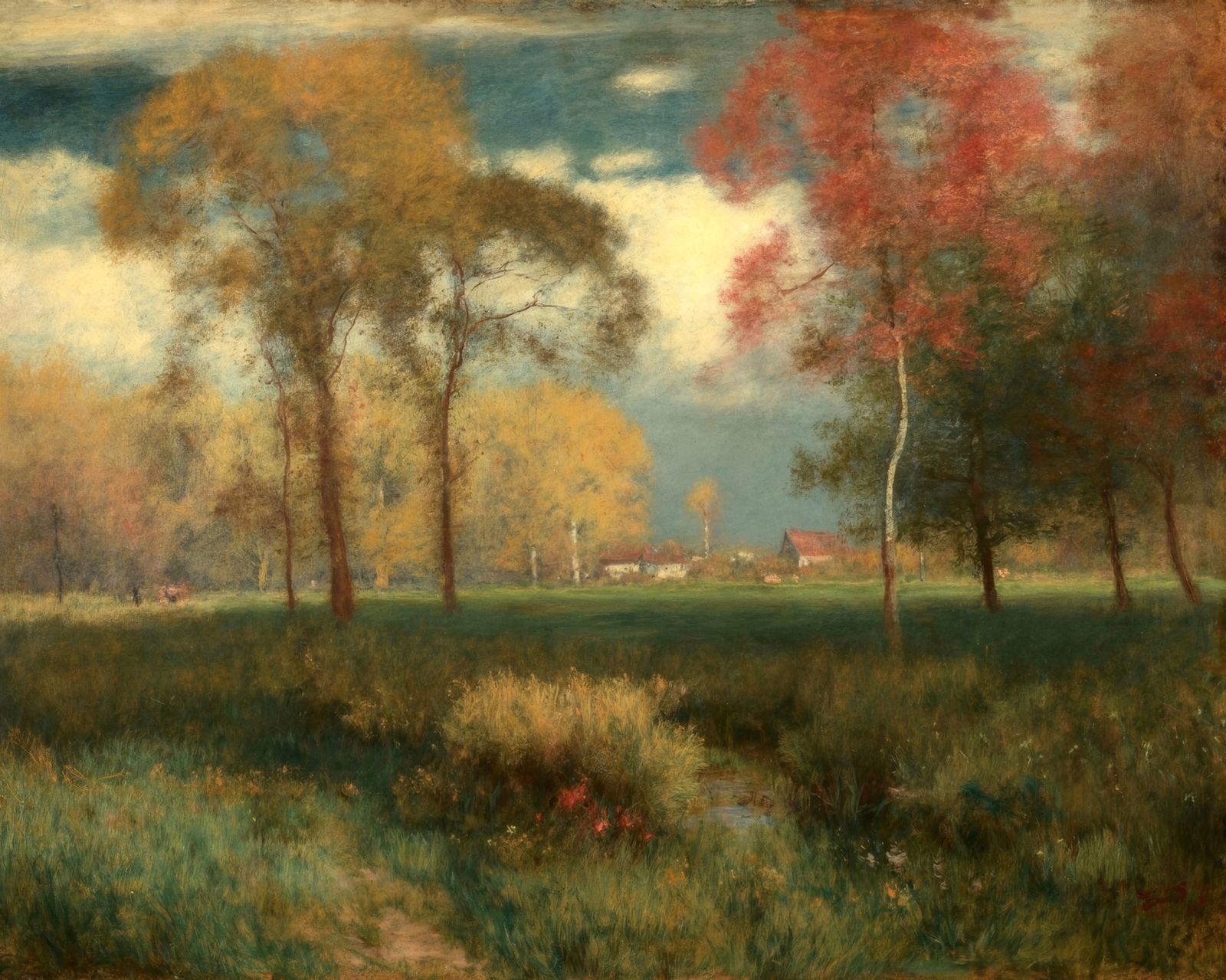
Sunny Autumn Day · George Inness, 1892 · Cleveland Museum of Art. Restored by Surrealium at Vaxholm Fortress, Sweden.
Autumn colour becomes a broad sensation in this late landscape rather than a demand to count individual leaves. Light seems to move through the forms, making the painting feel inhabited by weather even where the surface gives relatively little precise information. Stand back, or reduce the image on your screen, and see which masses remain distinct before returning to the smaller passages. That change of viewing distance is useful with Inness because the larger relations often hold the composition together more strongly than a collection of isolated details would.
9. The Lonely Farm, Nantucket — habitation at a distance
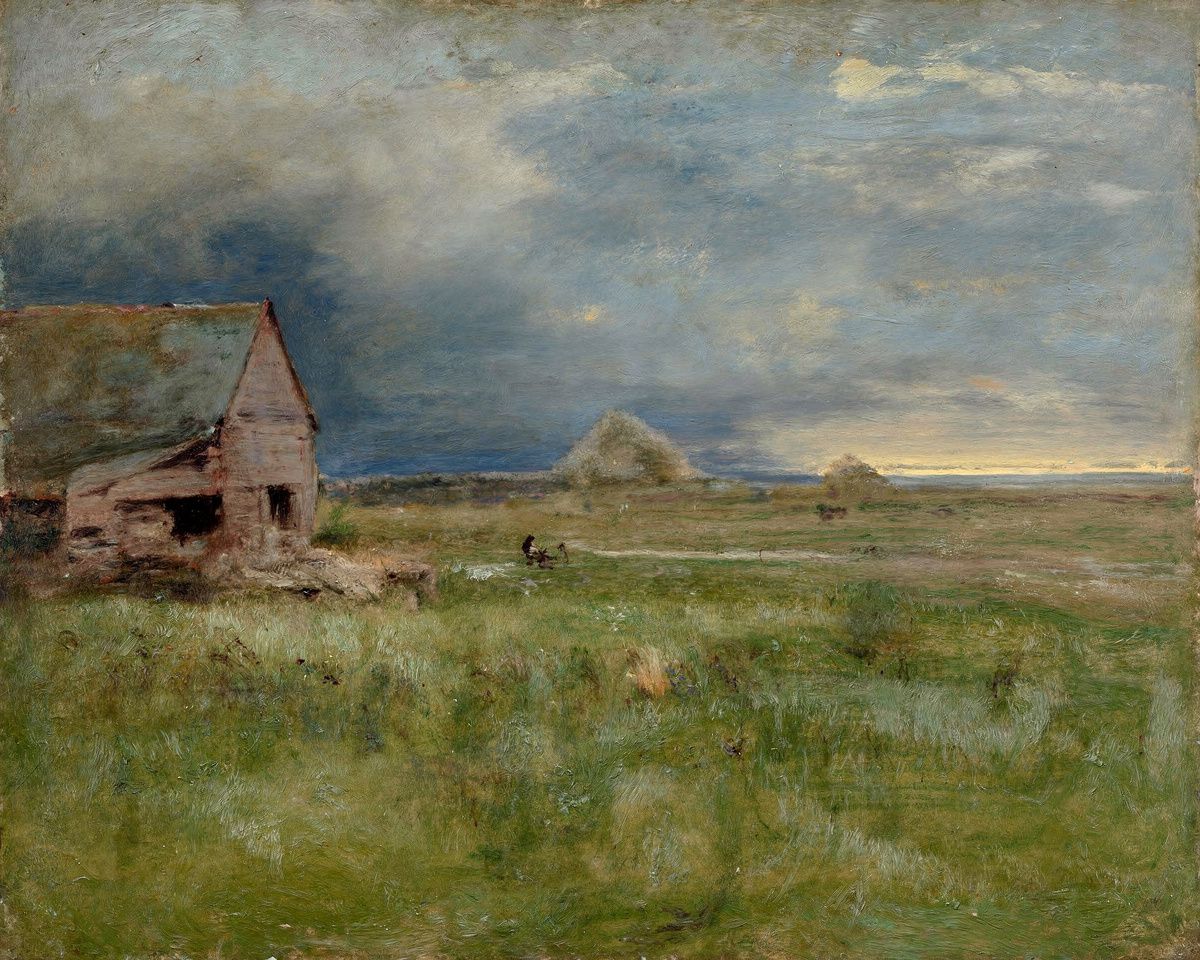
The Lonely Farm, Nantucket · George Inness, 1892 · Art Institute of Chicago. Restored by Surrealium at Vaxholm Fortress, Sweden.
The farm gives the landscape a human name, but the surrounding space prevents the building from becoming the whole story. Its distance can suggest solitude, although that is a response to the arrangement rather than evidence about the occupants’ lives. Look at how much room Inness leaves around the signs of habitation and how the sky participates in the balance. If you are drawn to pictures that allow a room to feel less crowded, this is a useful work to compare with more densely wooded scenes before making a choice.
10. Autumn Woods — looking into a living screen
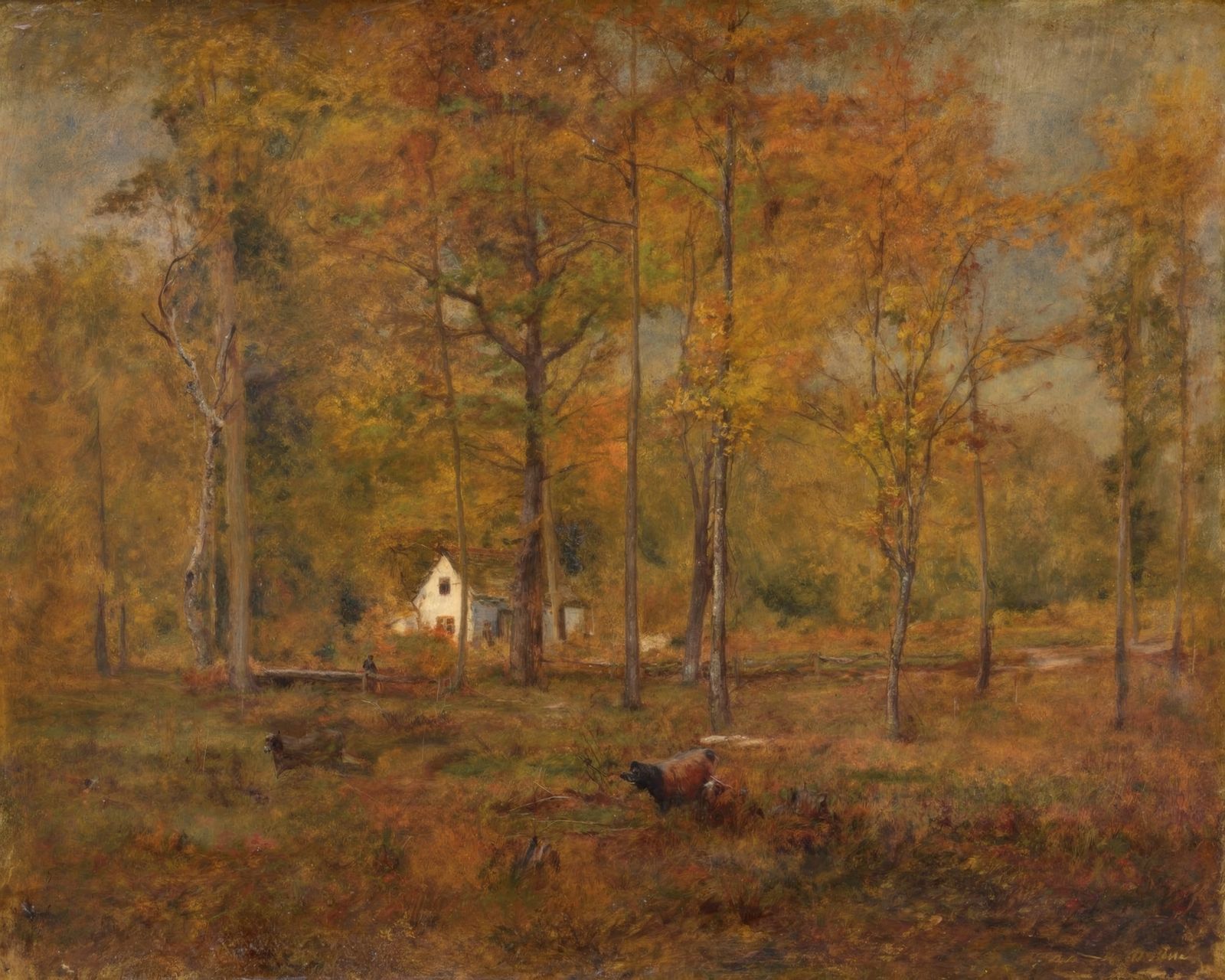
Autumn Woods · George Inness, 1891–94 · Art Institute of Chicago. Prepared for print by Surrealium at Vaxholm Fortress, Sweden.
Trees gather into a screen of trunks, foliage and changing light, giving the eye several possible paths rather than one obvious destination. Inness’s late handling allows some forms to emerge while others remain held within the overall atmosphere. The pleasure is partly in that uneven disclosure: one patch becomes clear, then a neighbouring passage draws attention back into uncertainty. Compare it with the open Nantucket landscape to decide whether you prefer a view that releases the eye towards distance or one that keeps it moving within a closer field of colour.
Inness’s changing touch is easier to see when the whole picture remains visible. Compare one early work with one late work, then describe what happens to edges, light and human scale. The Arcimboldo story offers a contrasting exercise in recognition: objects there become faces, while forms here often soften into air. Explore the paintings in Masterworks.
- Was George Inness a Hudson River School painter?
- His early work is often discussed alongside that tradition. His career also involved European influences and a later emphasis on atmosphere that resists a single narrow label.
- Are all these works landscapes without people?
- No. The Sisters includes two girls in a garden, and other scenes contain small figures or signs of human activity.
- What should I look for in a late Inness painting?
- Begin with the large areas of light and dark, then examine where edges sharpen or soften. Let uncertain passages remain uncertain long enough to affect the whole view.